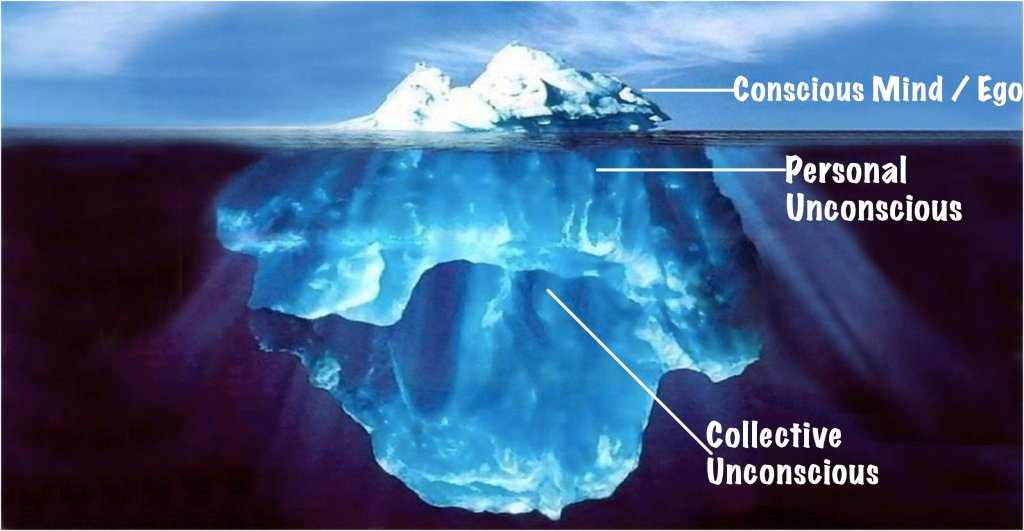
The unconscious is like a vault that holds our hidden selves, known as the Shadow according to Carl Jung. It stores traits, both good and bad, that we have cast aside. These traits are shaped by shame, which influences the thoughts, desires, and urges that we push away.
UNCONSCIOUS
Within each of us exists a mysterious realm, beyond the reach of our conscious minds. This inner world, free from external influences, shapes our complex and sometimes bewildering responses to the outside world.
The Shadow dwells in our subconscious, concealed within the uncharted abyss of our thoughts.
It represents the unacknowledged aspects of our being that are concealed and disconnected from our conscious selves. Similar to an invisible force, it subtly influences our thoughts, emotions, and actions.
Exploring our unconscious mind allows us to unlock our hidden potential and gain a deeper understanding of ourselves. This journey of self-discovery leads to increased self-awareness and personal development.
Embracing the Shadow leads to a more complete and authentic expression of who we truly are.
“The shadow is a moral problem that challenges the whole ego-personality, for no one can become conscious of the shadow without considerable moral effort. To become conscious of it involves recognizing the dark aspects of the personality as present and real. This act is the essential condition for any kind of self-knowledge.”
Our unconscious is a powerful part of ourselves that often goes unnoticed and untapped, starting from our early years.
It includes suppressed thoughts, emotions, and memories that have been rejected or deemed unacceptable. Unfortunately, we may be unaware of this hidden realm of our psyche.
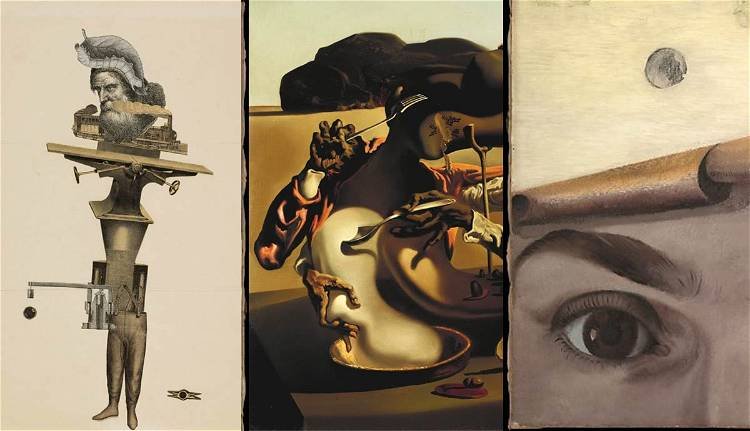
Exquisite Corpse by André Breton and Yves Tanguy, 1938, via The National Galleries Scotland, Edinburgh (left); with Autumnal Cannibalism by Salvador Dalí, 1936, via Tate, London (center); and Gala Éluard by Max Ernst, 1924, via The Metropolitan Museum of Art, New York (right)
Additionally, the unconscious mind functions as a reservoir for projection, which is a psychological defense mechanism that involves attributing our own undesirable traits, desires, or emotions to others. Essentially, it allows us to detach from certain aspects of ourselves and assign them to external objects or individuals. This process takes place involuntarily and without conscious awareness.
Projection is a psychological strategy employed by the ego with the intention of safeguarding itself against perceived dangers. This defense mechanism manifests when the ego disavows characteristics or attributes that it discerns in others, particularly those which it also despises within its own personality.
It is quite remarkable, if we take a moment to reflect, how frequently we observe this phenomenon not only in the behavior of others but also within our own selves, provided we are willing to be introspective and truthful.
The bond between the spiritual and physical realms
The investigation into the interaction of the Divine realm and the physical universe prompts thoughts on the merging of religion and science. This exploration examines the relationship between the supernatural and the measurable world, analyzed through empirical methods.
The correlations between Christian and Jewish customs in relation to Quantum physics highlight divine authority, interconnection, and various aspects of existence.
Recognizing Interdependence in Religion & Quantum Physics.
INTERDEPENDENCE
Interdependence is the idea of mutual dependency and connection between disparate elements.
Emphasizing the importance of collaboration and cooperation for success in any endeavor. Without Interdependence, there is merely chaos and confusion.
In both Biblical Theology & Quantum physics, interdependence plays a significant role.
Entanglement
Bridging the Chasm between Science & Spirituality.
Entanglement is a quantum phenomena that happens when particles are related in such a way that measuring the state of one particle immediately determines the state of the other, even if they are separated by vast distances across the universe.
They are connected in such a way that the state of one particle cannot be described independently of the state of the other.
This connection exists regardless of the physical separation between the particles, meaning that changes in one particle’s state can instantaneously affect the state of the other particle, regardless of the distance between them.
The concept of entanglement aligns with spiritual beliefs that there is a profound interconnectedness between all things.
In Christian belief, there is a spiritual realm where changes in one aspect can influence or resonate with another aspect.
In both Quantum & Christianity there is an acknowledgment that seemingly distant things (Heavenly, Spiritual, or Quanta) can impact another (matter, material, ideas) in ways that defy traditional (less detailed) notions of cause & effect.
The concept of entanglement also challenges the classical understanding of reality as having separate, distinct entities.
Quantum entanglement reveals a more holistic view in which the boundaries between subjects or beings become blurred. It demonstrates that a subtle interplay exists, showcasing the unity and interdependence of all existence.
It is important to note that although entanglement may align with Christian ideas, it is also a scientifically established phenomenon supported by rigorous empirical evidence.
Challenging Conventional Understanding
Entanglement undermines our traditional understanding of causality because it appears to contradict the principles of classical physics. It suggests a peculiar and unexplained connection between particles that surpasses our conventional notions of linkage. As a result, some theorists and philosophers speculate that this mysterious connection could be indicative of a higher reality beyond the physical realm. They propose the existence of a non-physical or spiritual level that serves as a source of consciousness or other non-physical phenomena.
In other words, entanglement supports the idea that there is a greater spiritual reality that exists beyond our material realm, where consciousness, or other non-physical phenomena, originates from.
We’ve become Seekers of Comfort, Security, & Material Possessions
To a society stooped in materialism, the idea of suffering as a gift may seem counterintuitive.
However, as believers in Christ, we are called to a higher purpose. We are called to be willing to suffer for Him.
Suffering can take many forms in our lives.
It can be the loss of loved ones, physical or mental illnesses, financial struggles, or even persecution for our faith. These experiences can be incredibly painful and challenging. Yet, when we shift our perspective and view suffering through the lens of Christ, we can begin to see it as a gift.
When we love and treasure Christ above all else, our focus shifts from the temporary pleasures of this world to the eternal joy found in Him. Everything else becomes secondary.
In suffering, we have the opportunity to draw closer to our Savior, to depend on Him more fully, and to experience His presence in a deeper way.
Suffering also has a unique way of shaping our character and conforming us to the image of Christ. It humbles us, teaching us to rely on God’s strength and not our own. It deepens our empathy and compassion for the brokenness and struggles of others. It refines our faith, purging away the impurities and strengthening our trust in God’s sovereignty.
Suffering can serve as a powerful testimony of His Faith in us, to the world around us. When we face trials with an unwavering hope and joy in Christ, despite our losses, it is a testimony of His faithfulness. It speaks volumes to those who may be watching and wondering how we can have peace in the midst of suffering. Our lives become a living testament to the transformative power of the Gospel.
In the book of Philippians, the apostle Paul writes,
“For it has been granted to you on behalf of Christ not only to believe in Him but also to suffer for Him”
Philippians 1:29
This verse reminds us that suffering is not a punishment but a privilege. It is a privilege to suffer for the sake of Christ and to share in His sufferings.
Believing in Christ means being willing to embrace suffering as a gift.
It means understanding that our ultimate goal is to glorify Christ, whether in life or in death.
It means being willing to let go of the temporary comforts and securities of this world, in order to gain the eternal joy and peace found in Him.
To summarize: suffering can indeed be seen as a gift for the sake of Christ.
Suffering can bring us closer to Him, shape our character, and serve as a powerful testimony to the world.
Let us remain steadfast in the undeniable fact that even in the midst of losing everything, we retain the invaluable merit of wholeheartedly loving Christ and receiving His divine love. May our willingness to endure hardship for Him and our unwavering devotion to Him supersede all other priorities, for it is solely in Him that we discover genuine life and meaning.
“This is eternal life, that they may know You, the only true God, and Jesus Christ whom You have sent.” (John 17:3)
How Do Humans Attain Eternal Life?
Eternal life is a Gift from God, granted through Faith.
The scriptures teach: “For God so loved the world that he gave his one and only Son, that whoever believes in him shall not perish but have eternal life.” – John 3:16
“I give them eternal life, and they shall never perish; no one will snatch them out of my hand.” – John 10:28
What Is Faith?
Jesus is our Faith, He is the Founder and perfector of the Faith we receive. Even when in us, Faith remains in Him, becasue Faith is ONLY in Him. Faith doesnt come from human beings.
The Gift of Eternal Life comes to those who believe in Jesus Christ, Who is Himself:“the resurrection and the life” (John 11:25).
Salvation is only available to those who have been chosen by God for salvation, which is also known as the doctrine of “election.” This belief is based on several biblical passages, including John 10:27-28 which states that “My sheep hear My voice, and I know them, and they follow Me; and I give eternal life to them, and they will never perish; and no one will snatch them out of My hand.” & Romans 8:29-30 states: “For those whom He foreknew, He also predestined to become conformed to the image of His Son, so that He would be the firstborn among many brethren; and these whom He predestined, He also called; and these whom He called, He also justified; and these whom He justified, He also glorified.”
Ephesians 1:4-5 – “For he chose us in him before the creation of the world…he predestined us for adoption to sonship.”
John 15:16 – “You did not choose me, but I chose you and appointed you so that you might go and bear fruit…”
2 Timothy 1:9 – “has saved us and called us to a Holy calling, not because of our works but because of His own purpose and grace.”
Our election for Salvation depends not on our own effort, nope, No human merits or efforts can secure our spot in eternity, but solely God’s mercy and calling. This demonstrates that salvation ultimately comes from God’s initiative, not ours.
What Is Eternal Life?
The Greek word “aiónios” translated as “eternal” implies a qualitative aspect beyond mere longevity or perpetuity in time. Actually, “time” is a construct God Created, therefore He is outside of what we perceive as “time”.
Eternal life refers to a higher spiritual mode of being that supersedes our mortal, time-bound existence.
Eternal Life...
… transcends created time: While eternal life involves living forever, the concept of “forever” is not confined within the boundaries of the temporal continuum that God created. Eternal life denotes an existence outside of time where past, present, and future converge.
… exists in the eternal Now: Eternal life involves participation in God’s eternity, characterized by an eternal present where there is no concept of “before” or “after”. The eternal Now experienced by the redeemed transcends sequential moments and flowing years.
… bestows a higher divine nature: Eternal life, initiated in the present age, reflects the impartation of God’s immortal, incorruptible life, and nature to believers.
The born again have “eternal life” in the fullest sense by virtue of sharing in the divine nature, it has nothing to do with the construct of “time”.
What does Salvation save us from?
We are saved by God from His own wrath and condemnation. Christ took the punishment we deserved, absorbing God’s wrath in our place, satisfying His justice. God showed mercy by providing His own Son to die on our behalf and offer forgiveness to believers, satisfying His mercy. We are saved not only from God’s judgment, but from the Judge Himself. John Owen stated it well, “God saves sinners from Himself.”
… saved by God from the power of sin: According to the Bible, God saves us from the power and penalty of sin by sending His Son, Jesus Christ, to die on the cross for our sins. Jesus’ crucifixion was the ultimate expression of God’s love for us, as He took the punishment we deserved upon Himself. Through this salvation, we are freed from the hold that sin has on us and given the ability to live as new creations, with a heart that desires to please and glorify God.
… saved from Eternal Hell/ Damnation: Whoever believes in him is not condemned, but whoever does not believe stands condemned already because they have not believed in the name of God’s one and only Son.” – John 3:18
… saved fromSpiritual death – We are born spiritually dead because of sin, but through salvation we are made spiritually alive in Christ. “As for you, you were dead in your transgressions and sins.” – Ephesians 2:1
… saved from bondage to fear – Salvation allows us to live with confidence as God’s adopted children, no longer in fear or uncertainty. “For you did not receive a spirit that makes you a slave again to fear, but you received the Spirit of sonship. And by him we cry, “Abba, Father.”” – Romans 8:15
Is There Life After Death?
Yes.
When our physical bodies die, our spirits live on eternally. Ecclesiastes 12:7 says “Then the dust will return to the earth as it was, and the spirit will return to God who gave it.” So our spirits go back to God.
For those who have retained Jesus as their Savior, there is eternal life in Heaven with God. John 3:16 says “For God so loved the world that he gave his one and only Son, that whoever believes in him shall not perish but have eternal life.”
Heaven will be a place of perfect joy, peace, and no more suffering. Revelation 21 describes heaven as a place with no more crying or death.
We will receive a glorified resurrection body. Our spirit will be reunited with a perfect, immortal body. This ius not a material body, as we know a body, this is eterially, this is the true, the real, the unseen.
Corinthians 15 talks about our “spiritual body” in =Heaven.
Where Do Our Souls Go When We Die Then?
Heaven – … is for those who have been given the Gift of Salvation through faith in Jesus Christ. Our spirits will be with the Lord in Heaven in a perfect state of joy and peace. …OR
Hell – … is for those who have noot received Jesus as their Savior will have their Soul be separated from God’s presence.
What Is Heaven Like?
• No more suffering or pain (Revelation 21:4) • Eternal joy in God’s presence (Psalm 16:11) • Fulfillment of desires (Psalm 37:4) • Reunion with loved ones who have died in faith (1 Thessalonians 4:17)
What Is Hell Like?
• Eternal separation from God’s goodness (2 Thessalonians 1:9) • Unquenchable fire (Mark 9:43) • Darkness and grief (Jude 1:13) • Conscious torment (Luke 16:23)
What Is The Purpose Or Value Of Eternal Life?
Our entire purpose is to glorify God. Everything God does, He ultimately does for His name’s sake, for his glory:
Psalm 19:1–4
"... The heavens declare the glory of God, and the sky above proclaims his handiwork... Day to day pours out speech and night to night...."
Psalm 23:3
"... He restores my Soul. He leads me in paths of righteousness for His Name’s sake..."
If someone who consistently shows love and compassion, and goes out of their way to help others, then their “fruit” is sweet. But if someone who talks a lot about what they believe, and then doesn’t practice what they preach, their “fruit” is sour.
“Beware of false prophets, which come to you in sheep’s clothing, but inwardly they are ravening wolves. You’ll know them by their fruits. Do men gather grapes of thorns, or figs of thistles? Even so every good tree bringeth forth good fruit; but a corrupt tree bringeth forth evil fruit.” –
Mat. 7:15-20
It can be tempting to judge others based on what we observe or experience, but we don’t truly know their relationship with Christ. Only God knows one’s heart and purpose. So we should practice grace and mercy towards others. We don’t know the plans God has either, so when it comes to judging another’s salvation: Keep your mouth shut.
Should WE Judge Our Own Salvation?
Absolutely, we MUST!!!
Jesus instructs us to: “You hypocrite, first take the plank out of your own eye, and then you will see clearly to remove the speck from your brother’s eye.” -Matthew 7:5
When should we Judge Others Salvation?
NEVER!!! The Bible does not directly instruct us to judge another person’s Salvation. Scripture consistently reminds us that God alone knows the heart and can judge a person’s eternal destiny. As followers of Christ, our focus should be on our own relationship with God and living out His teachings.
Jesus teaches, in Matthew 7:1-2, saying, “For in the same way you judge others, you will be judge…”
In Romans 14:4, the Apostle Paul advises against judging fellow believers, stating, “Who are you to judge someone else’s servant? To their own master, servants stand or fall. And they will stand, for the Lord is able to make them stand.”
Instead of passing judgment on others, the Bible encourages us to love and support one another, bearing each other’s burdens (Galatians 6:2) and treating others with grace and mercy (Matthew 7:12).
Our role is to share the good news of salvation, pray for others, and humbly offer guidance and support when needed, always with love and compassion.
How Can I Know I’m Saved?
This list is for honest sel-reflecrion, not diagnosing “others” as we can’t know the thoughts of others, If you check most of these off, you can be sure you arfe Saved, but again, only YOU & GOD know the Truth. These are the external manifestations of the inner state of the a person. Only you and God truly know the answers. If you are saved, you will:
You will rely upon Christ alone, as you Knwo Him and He Knows you.
You will love God more than before.
You will have a greater sense of your sinfulness and your deep need for a Savior, more and more.
You will naturally want to confess your sins daily and grow in repentance.
You will seek to be obedient to the Word of God.
You will have new desires and affections for Christ.
You will grow in the Wisdom of the gospel and dependence upon Christ.
You will desire to be separated from the ways of the world.
You will have a permanent desire to have fellowship with Christ and with other believers.
You will grow and produce Spiritual fruit, sometimes faster than others and sometimes way slower than others, but there will be growth.
God will work in your life to conform you into the image of Christ.
Soteriology is a branch of theology that deals with the study of salvation. It focuses on the various beliefs, doctrines, and theories regarding how individuals are saved or achieve salvation. Soteriology explores questions such as the nature of sin, the means and methods of redemption, the role of faith and good works, and the ultimate destiny of human beings.
Soteriology answers the questions of how we gain eternal life & what it really means to be “saved”.
At the heart of the Soteriology lie concepts that directly shape our identity, purpose, and destiny: sin, redemption, grace, and faith.
Our need for salvation stems from our fallen nature and separation from God due to sin.
Sin definition:
In Hebrew, the word “sin” is translated as חֵטְא (cheta).
Cheta means “sin” or “transgression.” an act of w
It is an act of willful disobedience or violation of God’s commandments or moral principles.
Sin is a deviation from the righteous path and brings about guilt and separation from God. Sin denotes separation.
Soteriology seeks to answer how we go about fixing this break and come into salvation.
Left to ourselves, we remain helpless and hopeless. But through the sacrifice of Jesus Christ on the cross, a way has been opened for us to be reunited with God.
By Christ’s atoning work, we are adopted into God’s family and empowered to live a life for the purpose of Eternity, by His Spirit.
Christ the Source of Salvation:
John 14:6 – “Jesus said to him, ‘I am the way, and the truth, and the life. No one comes to the Father except through me.’”
Acts 4:12 – “And there is salvation in no one else, for there is no other name under heaven given among men by which we must be saved.”
Election by God’s Grace:
Romans 9:11 – “(Though the twins were not yet born and had not done anything good or bad—in order that God’s purpose in election might stand: not by works but by him who calls).”
Ephesians 1:4-5 – “For he chose us in him before the creation of the world.. In love he predestined us for adoption to sonship.”
Limited Atonement:
Matthew 1:21 – “She will bear a son, and you shall call his name Jesus, for he will save his people from their sins.”
John 17:9 – “I am praying for them. I am not praying for the world but for those whom you have given me.”
Irresistible Grace:
Acts 16:14 – “The Lord opened her heart to pay attention to what was said by Paul.”
1 John 5:1 – “Everyone who believes that Jesus is the Christ has been born of God.”
Perseverance of the Saints:
John 10:27-28 – “My sheep hear my voice, and I know them, and they follow me. I give them eternal life, and they will never perish.”
Philippians 1:6 – “And I am sure of this, that he who began a good work in you will bring it to completion at the day of Jesus Christ.”
So across the New Testament, we see Calvinist soteriology woven into the gospel message, highlighting the sovereignty of God in salvation through Christ alone. Various groups differ on the details, but the essential truths are the same:
Jesus is the only means by which we can be reconciled to God and escape the penalty of sin.
If we acquire Him as our Savior & Lord, having and Knowing that our lives are living for the sake of His Heavenly purpose, we have the promise of eternal life with us, by Him.
Soteriology seeks to unpack and systemize these profound yet highly personal truths, shedding light on the Gospel’s liberating message of grace, hope and new beginnings.
Let its keys unlock the door to your own journey of transformation and salvation in Christ!
Here are some brief definitions of “soteriology” throughout Christian/ Church History:
Early Church: In the early years of Christianity, soteriology referred to the theological understanding of salvation through faith in Jesus Christ and His redemptive work on the cross. It emphasized the concept of atonement and the forgiveness of sins.
Quotes:
Athanasius: “The salvation of humanity came about through the Savior’s coming as a human being. For the soul cannot see God….. nor be saved, otherwise then by putting on that which it had lost” (the divine likeness).
Irenaeus: “The Word of God, our Lord Jesus Christ, who did, through his transcendent love, become what we are, that he might bring us to be even what he is himself.”
Justin Martyr: “We have learned from the prophets, and we hold it to be true, that punishments, chastisements, and rewards are rendered according to the merit of each man’s actions.”
Clement of Alexandria: “He who of his own accord advances in virtue, and increases his store of goodness, speedily arrives through love at divine perfection.”
Augustine: In the teachings of Saint Augustine of Hippo (354-430 AD), soteriology focused on the idea of original sin and God’s predestined grace as the means of salvation. Augustine emphasized the sovereignty of God in the salvation of humanity.
Reformation: During the Protestant Reformation in the 16th century, soteriology became a central topic of debate. Reformers such as Martin Luther and John Calvin emphasized the teachings of salvation by grace alone (sola gratia) through faith alone (sola fide), opposing the Catholic view of salvation through a combination of faith and good works.
Christ the Source of Salvation:
John 14:6 – “Jesus said to him, ‘I am the way, and the truth, and the life. No one comes to the Father except through me.’”
Acts 4:12 – “And there is salvation in no one else, for there is no other name under heaven given among men by which we must be saved.”
Election by God’s Grace:
Romans 9:11 – “(Though the twins were not yet born and had not done anything good or bad—in order that God’s purpose in election might stand: not by works but by him who calls).”
Ephesians 1:4-5 – “For he chose us in him before the creation of the world.. In love he predestined us for adoption to sonship.”
Limited Atonement:
Matthew 1:21 – “She will bear a son, and you shall call his name Jesus, for he will save his people from their sins.”
John 17:9 – “I am praying for them. I am not praying for the world but for those whom you have given me.”
Irresistible Grace:
Acts 16:14 – “The Lord opened her heart to pay attention to what was said by Paul.”
1 John 5:1 – “Everyone who believes that Jesus is the Christ has been born of God.”
Perseverance of the Saints:
John 10:27-28 – “My sheep hear my voice, and I know them, and they follow me. I give them eternal life, and they will never perish.”
Philippians 1:6 – “And I am sure of this, that he who began a good work in you will bring it to completion at the day of Jesus Christ.”
So across the New Testament we see Calvinist soteriology woven into the gospel message, highlighting the sovereignty of God in salvation through Christ alone.
Greater confidence in abilities and more nuanced perspective
Discover beliefs on your own merits, without following the crowd
Better able to question conventional views
Better ability to think critically
Better decision-making skills
Challenges People Face
External Influences
The media and the education system shape societal beliefs and behaviors.
Fear of Being Wrong
People prefer opinions that make them feel certain.
This often stems from a basic human need for security and stability, uncertainty can lead to uncomfortable feelings.
Most people are drawn towards viewpoints that validate existing perspectives.
Actions For Independent Thinking:
Challenge Your Assumptions
The first step to independent thinking is to develop a questioning nature that spurs you to discover truth and differing viewpoints.
Probe For The Motive
Refuse to passively accept any idea or claim – push for evidence and reasons. Challenge conventional wisdom that seems based on habit instead of reason. Make a practice of probing the accuracy, usefulness and motives behind information.
Question The Details
Feed your hunger for knowledge by continuously questioning the details, logic and assumptions behind facts and opinions.
Foster improvement by continuously asking “What’s the real story here?” and “How solid is the basis for that claim?”
Seek Alternative Explanations
With Critical Thinking
To avoid staying in an echo chamber, you should consider alternative explanations coupled with critical thinking.
Don’t simply surround yourself with voices that reinforce what you already believe.
Seek out alternative arguments and contradictory facts – at least long enough to understand them.
Seek Out Gaps
Listen for unquestioned assumptions behind assertions, and look for logical gaps, inconsistencies and hidden biases in the reasoning of “experts.”
Become A Skeptic
Cultivate skeptical tools, for they are the keys to independent thought. Only by questioning, challenging and analyzing information on its own merit – instead of its source – can you think for yourself.
By honing your ability to detect deceptive or incomplete arguments, identify logical fallacies and recognize flawed framing.
Define Value
It’s important to determine what really matters, let those principles become the foundation. Don’t let others’ opinions dictate your decisions, rely on solid truth.
Cultivate Solitude
You need moments where the noise falls silent, opening a channel for your own intellect to speak. Only when you disconnect from the constant noise can you truly hear.
Insight blossoms when you prune away distraction.
Learn To Trust Silence
Silence gives space for introspection. Self-reflection reveals truth.
By withdrawing from the hive-mind and embracing solitude, your thoughts will resonate with order.
Look Inward
In the gap between input and output is the tuning fork needed to sync with the frequency of Divine Truth.
Speak Your Mind
Practice sharing your thoughts in a respectful yet firm manner. By speaking your mind confidently, you will enhance your ability to think.
Remember that your unique perspective holds great value.
Assess Before Judgment
Independent thinking does not mean opposing external viewpoints for the sake of being different.
It involves embracing your own perspectives and ideas, while also being open to learning from others and considering different viewpoints.
Nurture Curiosity
One way to foster independent thinking is to cultivate a sense of wonder and curiosity about the world around you.
By approaching life with a sense of openness and a desire to learn, you can develop a deeper understanding of yourself and the world around you.
Independent thinking is a skill that requires consistent practice and a strong connection with your own inner voice.
By refining your discerned perspectives and with a sense of wonder and curiosity you’ll develop a greater capacity for independent thought, clarity, and self-assurance.
Which comes first- which follows, Heaven or Earth?
For thus says the Lord that created the heavens; God himself that formed the earth and made it; he has established it, He- Created it not in vain, he formed it to be inhabited: I am the Lord; and there is none else.
Isa 45:18
What is Heaven?
Heaven—the divine realm of Spirit—exists within, awaiting realization through the awakening of the soul (Salvation).
Heaven is manifested on Earth through the transformation of the human Mind. This represents Heaven established on Earth, within the essence of humankind.
The Heavenly Dimension provides insight into the omniscient perspective of God, transcending the limitations imposed by time and space. It enables us to understand how every facet of human history is intricately interwoven with purpose and intention. Omniscient refers to the state of being all-knowing, embodying infinite knowledge and wisdom. When Jesus compared the “Kingdom of the Heavens” to various conditions present on Earth, He elucidated, in terms comprehensible to the outer man, that the Kingdom of God resides within you.
“The kingdom of God cometh not with observation: neither shall they say, Lo, here ! or, There ! for lo, the kingdom of God is within you.” Luke 17:20, 21
WHAT ARE REALMS?
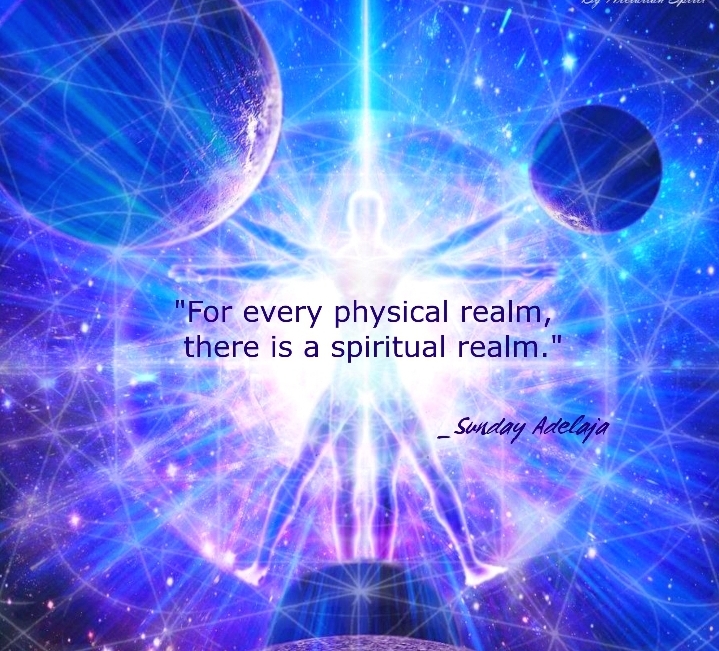
Realms or planes of existence are like different dimensions that exist alongside our material world.
Realms are non-physical and have their own unique energies and vibrations.
Metaphysical realms are the invisible domains that interpenetrate our visible material world.
All Things On Earth Originate In Heaven
The 2 Planes Of Reality
Heaven and Earth: Two States of Mind – the Ideal and the Manifestation.
According to Revelation 21:1, we are meant to have new ideals that manifest on earth. God envisioned two planes of consciousness, namely, the heavens and the earth.
In the book of Ephesians, the phrase “heavenly realms” is mentioned five times. It highlights the significance of the connection between Christians and the exalted Christ, who was resurrected and enthroned at God’s right hand in Heaven.
Heavenly realms encompass both angelic & demonic Dimensions on our timeline.
Ephesians 1:20 "God raised Christ from the dead and seated Him at His right hand in the heavenly realms."
Ephesians 6:12 "Spiritual forces of evil in the heavenly realms, showing the existence of dark forces opposed to God's purposes."
The Concept of “Time” in Heaven
Time ceases to be linear for the spiritual; it exists beyond our ability to conceptualize, as spiritual beings are in the eternal presence of the Divine Lord.
Humans, on the other hand, experience time sequentially, constrained by its progression.
For God, there is only an Eternal Now, with no “past” or “future.”
He sees and knows the entirety of human history and events from an outside perspective because he is the creator of time itself.
All spirit exists beyond time and death, as described in passages like Ecclesiastes 3:11, which statesthat God “has set eternity in the human heart.”
The Bible testifiesthat God exists in eternity, beyond the limitations of time, and “inhabits eternity” (Isaiah 57:15).
Heaven is a realm where our souls discover eternal joy and fulfillment, finding peace and unity with the Creator. It is a realm where happiness and love know no bounds, where all earthly limitations fade away and we experience ultimate contentment.
Is There A 5th Dimension?
Picture Heaven as the ethereal realmPicture Heaven as the ethereal realm beyond our earthly existence, where the spirit breaks free and soars to unimaginable heights of divine communion.
It is the quintessential destination, a place where the soul discovers solace and eternal bliss, surpassing the boundaries of time and space.
It exists beyond our realm, encompassing all potential quantum possibilities yet to manifest in our 3D reality.
In this realm, consciousness, which is God, actively molds the fabric of reality itself.
In higher dimensions, particles have the capability to exist in multiple locations simultaneously until they are observed.
This phenomenon is known as superposition and it pertains to the ability of subatomic particles to be in multiple quantum states at the same time.
At the quantum scale, particles do not possess defined properties until they are measured, allowing them to exhibit multiple states concurrently.
Psalm 33:6 beautifully declares, “By the word of the Lord, the heavens were made.”
This verse illuminates the profound role of God as the transcendent Consciousness who ingeniously sculpted formless energy into exquisite forms, infusing them with His divine Energy.
Spiritual warfare takes place in the Heavenly Realms…
The Bible outlines spiritual adversaries like thrones, powers, rulers, and authorities. These entities have influence in different realms, yet Jesus can transform us and open our eyes to the Father’s work in the celestial realms. With this revelation, we can align our desires with God’s divine will.
Jesus reveals humanity’s true enemy is us…
Our enemy is ourselves: fears, desires, and ignorance (and sin). Scripture shows us that our primary struggle lies in overcoming the “world” and our own “flesh.”
PUTTING ON HEAVENLY ARMOR
God’s armor strengthens and empowers us from within. Prayer, faith, and the presence of Christ ground us and enable us to resist worldly temptations. Instead of obsessing over demons, we should prioritize self-reflection, grasping God’s plan, and nurturing our spiritual character.
ARMOR OF GOD: ‘Stand firm! With the belt of truth buckled around your waist. With the breastplate of righteousness arrayed. With your feet fitted with the readiness of the gospel of peace. Take up the shield of faith, with which you can extinguish all the flaming arrows of the evil one. Take the helmet of salvation. And the sword of the Spirit, which is the word of God. ‘ Ephesians 6:14-17
Heavenly Thought: Not irrelevant, directly impactful to Earth.
Though we understand that these heavenly realms exist in another dimension, it is a mistake to believe that they are irrelevant to earthly matters. On the contrary, the Bible teaches that what occurs in these spiritual realms directly affects what happens on earth. This concept depicts Heaven being established on earth, within the souls of humankind. The kingdom of heaven is not a physical place, but rather a state of being in harmony with God and spiritual truths.
When the kingdom is established within an individual soul, it begins to emerge outwardly. Heaven is realized “on earth,” manifested through that person’s thoughts, words, and actions.
The Kingdom of heaven expands through the gospel call going forth and souls being regenerated by the Holy Spirit (John 3:3-8), not through human-powered awakening.
It was Jesus’ mission to illuminate this profound truth and initiate the inward and outward manifestation of God’s kingdom in human experience.
The Kingdom of Heaven is not some far-off place in the clouds; it is all around us, here and now, if we have the ability to perceive it.
Heaven is present in the midst of the mundane and ordinary.
Every blade of grass, every breath we take, contains a glimpse of eternity, a reflection of the Creator who made all things and sustains them constantly. We often fail to recognize this awe-inspiring reality. The kingdom has the power to renew our minds, enabling us to perceive God’s magnificence even in the tiniest aspects of life.
As Thomas Merton put it, “Heaven is here and now, if we would but taste it and see.“
We must shake off the distractions, the labels, and the noise, and relearn how to truly See. Then, in that Seeing, we come to know Heaven within and all around, interpenetrating the physical world we walk through each day. The Kingdom Of God remains hidden in plain sight.
Biblical seed: A generative center connecting the soul to higher spiritual forces, manifesting in physical reality. It refers to God’s creative and original thought, the mind of the universe and the limitless Word. The Word, also known as Logos, reveals God and shows His divine nature.
“Mustard Seed”: Symbolize the Word of Spiritual Truth…
Mustard plants grow amazingly fast and prolific, reaching 6-10 feet tall in one season and producing abundant yellow flowers and seeds. In Jesus’ time in Israel, mustard plants grew extremely dense and tall, reaching 10-15 feet high – making the metaphor of tiny mustard seeds becoming huge shrubs a striking one for Jesus’ listeners.
KINGDOM OF HEAVEN: LIKE A MUSTARD SEED
One day he was speaking to a group of people and asked them, “What is the kingdom of God like?” -Luke 13:19
The Pharisees and Scribes had many differing opinions about the Kingdom of God. Some thought it would come suddenly and visibly, with God sending His Messiah King to establish an earthly empire in Israel. However, they were all mistaken; none of them could answer the question correctly.
Jesus Spoke Another Parable:
“The Kingdom of Heaven is like a mustard seed that a man planted in his field. Although it is the smallest of all seeds, yet it grows into the largest of garden plants and becomes a tree, so that the birds of the air come and nest in its branches.” Matthew 13:31-32
'Then Jesus asked, “What is the kingdom of God like?
To what can I compare it?
It is like a mustard seed that a man tossed into his garden.
It grew and became a tree, & the birds of the air nested in its branches.” ' Luke 13:18-19
What Is The Kingdom of God? (in context)
… a state of consciousness in a human in which mind, soul, and body are in harmony with God’s Mind… Many have a basic understanding of the concept of a kingdom, but there is so much more to it:
It goes beyond mere intellectual knowledge — Heaven is not confined to man’s consciousness. It is everywhere present. When a person’s mind and body are in harmonious relation to God’s ideas, their true thoughts flow into their realm and bring forth the Kingdom on earth, through them, as in heaven.
What Is The Seed?
The word of truth is like a seed that, when planted in our minds, grows and transforms us spiritually. Jesus compared the kingdom to a seed because it hides potential and needs the right conditions to flourish. To enter the kingdom of Heaven, we must understand and believe in the truth of our existence and align our actions accordingly.
Jesus taught the Kingdom of Heaven begins inside you…
Heaven’s Kingdom establishes Truth in our conscious Minds.
Heaven aligns our mentalities within His Kingdom.
To illustrate this inner spiritual Kingdom, Jesus spoke of a farmer sowing good seeds in His field. But while he slept, an enemy planted weeds among the crop:
“A sower went out to sow.
As he sowed, some seeds fell along the path, and the birds came and devoured them.
Other seeds fell on rocky ground, where they did not have much soil, and immediately they sprang up, since they had no depth of soil,
but when the sun rose they were scorched.
And since they had no root, they withered away.
Other seeds fell among thorns, and the thorns grew up and choked them. Other seeds fell on good soil and produced grain, some a hundredfold, some sixty, some thirty. He who has ears, let him hear.”
Matthew 13:4
THE FIELD
… represents our minds… The good seeds are our God’s thoughts, sown when we are affirmed by the Spirit.
THE WEEDS…
… are our self-centered thoughts that sneak in when we are unconscious or ignorant. We cannot safely uproot our own weeds, as we lack the Light to distinguish them wisely. We must leave judgment to “the harvester” when higher consciousness (God’s sovereign determined choice) dawns.
TARES…
… are worthless (said to be poisonous) weeds that grow in grain fields. They represent destructive thoughts that not only are dead, but toxic.
THE ENEMY …
… is the sense consciousness, which sows them when we are not on the alert spiritually (“while men slept”).
When asked by his servants if they should gather the tares, the householder said, “Nay; lest haply … ye root up the wheat with them.” This means God does the rooting up, not us.
Jesus exemplifies the transformative power of even the tiniest spiritual truth, blossoming into an immense and life-giving force within us.
Tiny Seed Of Insight To Mighty Tree
He taught the Kingdom of Heaven starts as a tiny seed of insight within, but with nurturing thoughts and Holy action, it blooms into a mighty tree of spiritual understanding that shelters many.
‘“Because you have so little faith,” He answered. “For truly I tell you, if you have faith the size of a mustard seed, you can say to this mountain, ‘Move from here to there,’ and it will move. Nothing will be impossible for you.” ‘ Matthew 17:20
Jesus uses the metaphor of a Mustard Seed to teach about the Power of His own Faith.
Faith is more than mere belief.
It is the very substance of that which is believed. It works through Love, Who is God. Thoughts of condemnation, enmity, and resistance are released, and God’s love is declared; Faith will work. Jesus is the Creator and Perfector of our Faith (not just the Perfector, but the FOUNDER)
What is the Kingdom of God: Why a Mustard Seed?
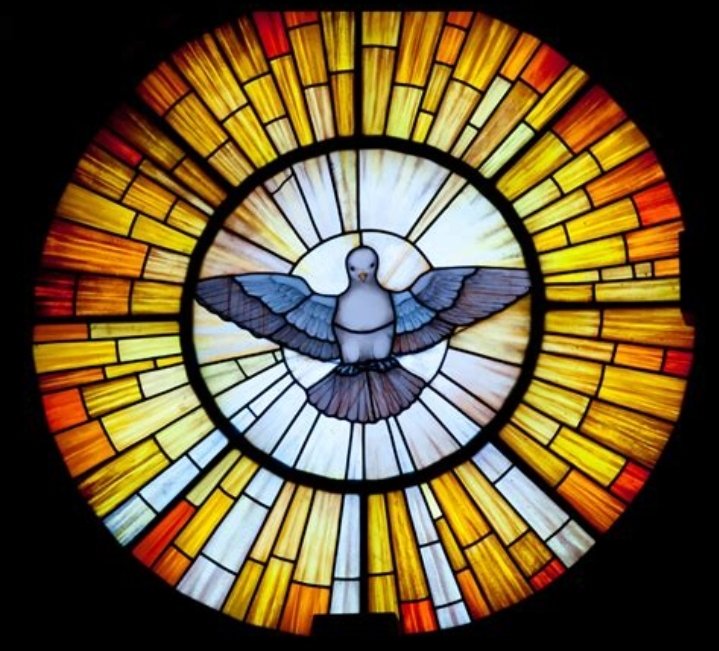
The Kingdom of God is the Divine presence of God that resides within us. The HOLY Spirit indwells our Vessel, this is the Kingdom. The Kingdom is the Source of wisdom, healing, and Life.
The mustard seed parable teaches us that a small truth can grow into something great.
Both Faith & God’s Kingdom are compared with the mustard seed.
Faith is the ability of the mind to open up and perceive reality.
The outer, material “factual” world is not the real world… To be real, something must be eternal and unchanging. All appearances are constantly changing. Reality is that which is true in principle and not what we want to be true.
Hebrews defines faith as the “substance of things hoped for, the evidence of things not seen.” (Heb. 11:1)
Jesus said no signs would be given when He was asked to “give them a sign to prove that He was the Messiah”.
We often look for evidence of things we hope to get in the outer world. We look for signs about how our lives will turn out, hoping the signs will be good. We keep looking outside, getting distracted with frivolous nothingness.
Truth Needs No Acceptance
Faith grows when our minds are opened to truth, even if it’s something we struggle to accept. Truth isn’t measured by our willingness to believe it.
Jesus had profound insights about faith. He said, “According to your faith be it done unto you.”
You will be done unto according to your perspective (Faith)…
Everyone’s spiritual journey is unique. Some may seem to be in a state of darkness, but we should not condemn. Salvific awakening happens at different speeds, and what may appear as darkness to one person can be a blessing to another. Our role is to share the Truth with devotion and trust in Godly wisdom.
Faith is not something we can earn or achieve through our own efforts, so how can we judge anyone for not having it?
It is a gift that is freely given by Jesus Christ, without any expectation of compensation. This gift of faith is part of God’s plan of salvation, which is available to all who believe in Jesus Christ. We cannot manipulate or control this gift of faith, nor can we use our works or good deeds to earn it. Instead, we must rely on God’s grace, which is freely given to us through the redemption that is in Christ Jesus.
It’s important to remember that our faith is not about our own abilities or works, but about our relationship with God. We must trust in His plan of salvation and rely on His grace to guide us on our journey. It’s also important to avoid false teachings that suggest we can earn God’s grace through our own efforts or works.
The Mustard Seed is like the Kingdom of Heaven & Faith: Both a Powerful force of God Himself.
Evil spirits delight in their perverse desire to cause harm to humanity, ceaselessly seeking vulnerable souls to devour and wreak havoc upon. An insidious passion fuels their malevolent presence, bringing suffering and chaos into the world.
Do you understand what this means? It means the accuser is roaming seeking accusations to bring before God to prove your guilt.
Be sober [well-balanced and self-disciplined], always be alert and cautious. That enemy, the devil, prowls around like a roaring lion, seeking someone to devour. But resist him, be firm in your faith, knowing that the same experiences of suffering are being experienced by your brothers and sisters throughout the world.
1 Peter 5:8-9
Be sober-minded; be watchful.
We need to be spiritually vigilant, watching for attacks from the devil, our great enemy and opponent.
Peter uses the graphic image of a lion as a metaphor to describe Satan’s destructive threat:
He prowls around… To prowl means to move around quietly on the hunt.
Devouring can be defined as the inherent skill of consuming a substance or object with fervor, savoring every portion, and ensuring that none is left unfinished. Wholehearted gratification and contentment characterized this practice.
The accuser futilely desires to instill terror in God’s people during times of hardship and persecution and strives in vain to deceive us into succumbing to sin.
Though the devil may threaten to “devour” Christians, we have the assurance that God’s power will guard us.
After you have suffered for a little while, the God of all grace [who imparts His blessing and favor], who called you to His own eternal glory in Christ, will Himself complete, confirm, strengthen, and establish you.
1 Peter 5:10
“Resist him”. We need not fear the devil, for our Lord has given us power to stand against him by being firm in our faith.
Put on the full armor of God, so that you will stand firm against the schemes of the devil. [12] For our struggle is not against flesh and blood, but against the rulers, against the powers, against the world forces of this darkness, against the spiritual forces of wickedness in the heavenly places.
Ephesians 6:11-12
Trusting in God’s promises, believers know that suffering is not the final word and that ultimately they will be exalted.
 Submit therefore to God. But resist the devil, and he will flee from you. Come close to God and He will come close to you. Cleanse your hands, you sinners; and purify your hearts, you double-minded.
James 4:7-8
The outside evil forces which come against us demand that we stay alert.
The devil … (like a roaring lion) The Greek word for “devil” here means “slanderer”…
The slanderer’s forces are always active, looking for opportunities to overwhelm the believer with temptation, persecution, and discouragement.
There is a conspiracy of her [false] prophets in her midst, like a roaring lion tearing the prey. They have devoured life; they have taken [in their greed] treasure and precious things; they have made many widows among her…
Ezekiel 22:25
Satan sows discord, accuses God to men, men to God, and men to men.
He will do what he can to drag the Christian out of fellowship with Christ and out of Christian service.
And even if our gospel is veiled, it is veiled to those who are perishing. 4 In their case the god of this world has blinded the minds of the unbelievers, to keep them from seeing the light of the gospel of the glory of Christ, who is the image of God.
2 Corinthians 4:3–4
The Accuser constantly accuses believers before God’s throne, attempting to convince God to abandon them. Day and night we are being accused, READ Job 1:6–12…
And I heard a loud voice in heaven, saying, “Now the salvation and the power and the kingdom of our God and the authority of his Christ have come, for the accuser of our brothers has been thrown down, who accuses them day and night before our God.
Revelation 12:10
Let us cease condemning and casting blame, for if we follow Christ we know goodness comes from within His people. The accuser seeks to divide us, but in the name of Christ, we must unite and lift each other up. His message was one of love and peace – aiming our words at each other in condemnation only tarnishes His teachings.
Our senses are the gateway to experiencing God’s creation, yet so often they deceive us. True discernment comes from within, from the Spirit who guides our hearts and minds. All things were created through Christ and find their meaning in Him – from the vast expanse of space to the tiny cells within our bodies.
The fall distorted our perceptions, but redemption restores our sight. When we walk with Christ, we gradually relearn how to See. Everything regains its rightful place – part of God’s good order, made to reveal His glory. What seemed meaningless finds purpose; what caused fear now brings wonder.
The proud claim independence, but only in Christ do we truly live.
He aligns our will with the Father’s, mending our fractured minds. In Him we find our true identity, as children of the Creator. All things were made through Him; by knowing the Son we know the Author of life.
Satan wants us to believe we have choice beyond God’s sovereignty, but the Almighty rules over all. He uses evil for good, turning darkness to light, death to life. What the Enemy intended for harm, our Father in Heaven redeems.
Our senses cannot discern spiritual truth on their own.
We feel the ebb and flow of a fallen world, but walk by faith, not by sight. The Spirit leads us into all truth, opening our eyes to Christ’s victory everywhere we look. In Him our regeneration is finished, and we gaze upon the glory He planned since before time began.
Scriptures:
John 1:3 – “All things were made through him, and without him was not any thing made that was made.” This speaks to Christ creating all things, material and spiritual.
Ephesians 1:4 – “Even as he chose us in him before the foundation of the world, that we should be holy and blameless before him.” God had a plan and purpose for creation from the beginning.
2 Corinthians 4:18 – “We look not to the things that are seen but to the things that are unseen. For the things that are seen are transient, but the things that are unseen are eternal.” Our spiritual sight, guided by the Spirit, is more reliable than physical senses.
John 8:32 – “You will know the truth, and the truth will set you free.” Truth found in Christ leads to freedom from sin and deception.
Romans 8:19-21 – creation itself awaits Christ’s redemption. All of creation will be renewed in Him.
Revelation 21:5 – “And he who was seated on the throne said, ‘Behold, I am making all things new.’” Christ’s redemptive work extends to renewing all of creation.