patterns underlie life, and when you understand the patterns, you understand yourself more deeply.
Geometric forms, patterns, and ratios found throughout nature, art, and architecture hold spiritual significance.
A SYMBOLIC LANGUAGE + BLUEPRINT
Symbolizing order, harmony, and the very foundation of existence, reflecting deep truths about the universe and even the human psyche.
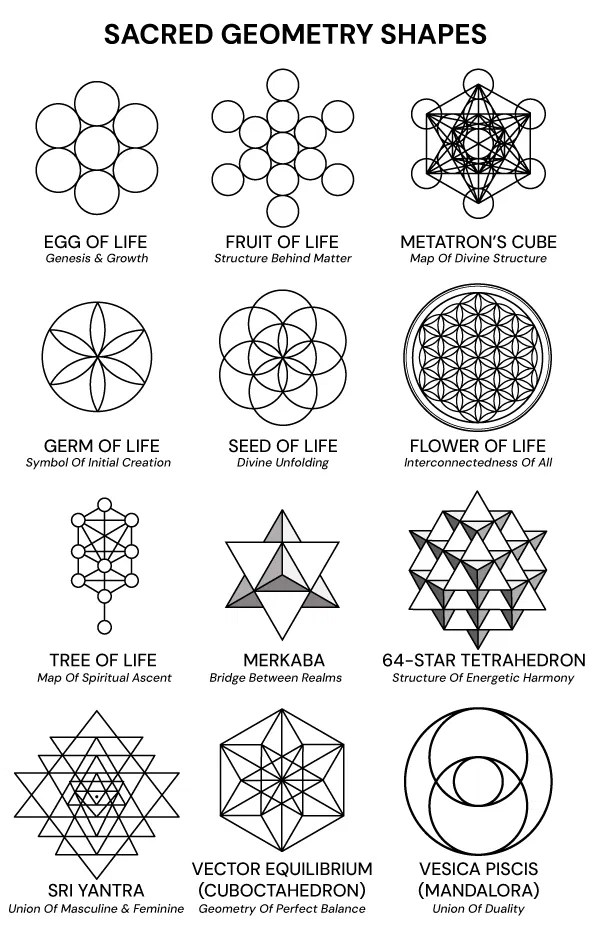
Pythagoras’ Contribution
Pythagoras’ school of philosophy believed that numbers were the ultimate reality underlying all things.
Believing that mathematical relationships could explain not only physical phenomena but also abstract concepts like justice and the soul.
This laid the groundwork for the study of sacred geometry as we understand it today, establishing a bridge between the tangible world of forms and the intangible realm of ideas.
Plato’s Contribution
Building upon Pythagorean ideas, Plato developed the concept of sacred geometry through his theory of Forms.
In this framework the physical world we perceive is a shadow, an imperfect reflection of the higher realm of pure ideas or forms.
According to Plato, geometric shapes and mathematical ratios were not human inventions but eternal, unchanging truths that existed independently of human perception.
Geometric patterns connect everything and communicate with everything: the seen as well as the Unseen.
Geometry is found everywhere in nature.
Learning basic geometry will help you see the world differently.
Sacred Geometry interlinks these fields:
- science
- art
- psychology
- philosophy
- spirituality
Meaning Within Geometry
Through it, you’ll discover meaning.
The hidden designs in sacred geometry encapsulate all meaning in a language that is foreign to most of us.
Fundamental Principles of Sacred Geometry
The fundamental principles of sacred geometry are rooted in the idea that specific shapes and patterns embody the essential structure of the universe.
Key principles:
- Unity and Wholeness: Sacred geometry emphasizes the interconnectedness of all things, suggesting that every entity is part of a larger whole, reflecting the unity of existence.
- The Golden Ratio: Known by the Greek letter phi (φ), the golden ratio (approximately 1.618) is a mathematical ratio frequently found in nature, art, and architecture. It represents ideal beauty and harmony.
- Patterns of Creation: Central shapes such as the circle, triangle, and square each possess unique characteristics and meanings, revealing fundamental truths about the nature of creation.
- Fractals and Recursion: Sacred geometry acknowledges the concept of fractals, where shapes repeat at various scales, illustrating how smaller parts reflect the larger whole.
- Harmonics and Proportions: Relationships among different geometric forms yield harmonious proportions, highlighting balance and symmetry in both physical and spiritual contexts.
- Symbolism: Each geometric shape holds specific symbolic significance. For instance, the circle represents eternity and completeness, while the triangle symbolizes the trinity and the balance between physical and spiritual realms.
- Meditative Practices: Sacred geometry often serves as a focal point for meditation and spiritual practices. Contemplation of these shapes and patterns aims to connect individuals with deeper universal truths and energies.
- Architectural Significance: Many ancient structures and sacred sites incorporate principles of sacred geometry, as their designs are believed to resonate with spiritual truths and the harmonious order of the universe.
By exploring these fundamental principles, we gain a deeper appreciation for the beauty of the universe and the connections between all things.
Each of these forms whispers of a sacred order that exists beneath the apparent chaos of existence.
Furthermore, each shape embodies a unique language of intention for those who are attuned to its message.
It serves as a reminder that creation is not a random occurrence but rather a deeply meaningful process, rich with purpose and significance.
By engaging with these principles, we can gain insight into the interconnectedness of all things and the underlying patterns that govern our universe.
deep, symbolic essence of shapes and proportions, often seen as the divine blueprint behind all creation.
These forms are more than patterns—
…they are keys unlocking the universal harmony that binds the visible and invisible.
Found in the architecture of temples and cathedrals or the spiral of a shell and the web of a honeycomb, they whisper of a sacred order beneath the chaos.
Each shape holds a language of intention for those who listen, it reminds us that creation is not random but deeply meaningful
Sacred Geometry- Mathematics
Sacred Geometry is the study of mathematical patterns found in nature, religious structures, and cosmology.
Sacred geometry can be discovered and found anywhere in the universe.
Sacred geometry consists of mathematical shapes and patterns.

Some examples are:
- the Flower of Life
- Vitruvian Man
- Mona Lisa
- labyrinths
- the Parthenon
- Rosslyn Chapel
- the Great Pyramid
- crop circles
- mandalas
- the Milky Way…
The Blueprint Of Creation
Sacred Geometry is believed to be the blueprint of creation and the origin of all form.
Sacred geometry explores the energy patterns that create and unify all things.
Nikola Tesla said,
“The day science begins to study non-physical phenomena, it will make more progress in one decade than in all the previous centuries of its existence.”
Manly P. Hall puts it another way:
“The obstacles which confront present-day scientific research are largely the result of prejudicial limitations imposed by those who are unwilling to accept that which transcends the concrete perceptions of the five primary human senses.”
Contemplation on Sacred Geometry Reveals Wisdom
The observation and contemplation of Sacred Geometric shapes are proposed to reveal profound insights, foster a connection to life, and augment one’s awareness of higher consciousness and self-awareness.
Geometry Amplifies Spirituality
Sacred geometry amplifies our connection to spirit, creating harmony within ourselves and between us and the outside world.
Healing Properties of Sacred Geometry
It is used in Holistic Practices.
Sacred geometric shapes are believed to have healing and meditation benefits.
Sacred Geometry reveals the mysteries of the universe through the language of shapes, patterns, and proportions.
/det
Be inspired by the beauty and wisdom of sacred geometry, uncover new insights and revelations that will enrich your life and expand your consciousness.
Embrace the mysteries of sacred geometry and let your soul soar to new heights of understanding and enlightenment.
Dive into the building blocks of this ancient wisdom with these insightful resources:
https://www.thefactsite.com/incredible-works-sacred-geometry/
The Flower of Life
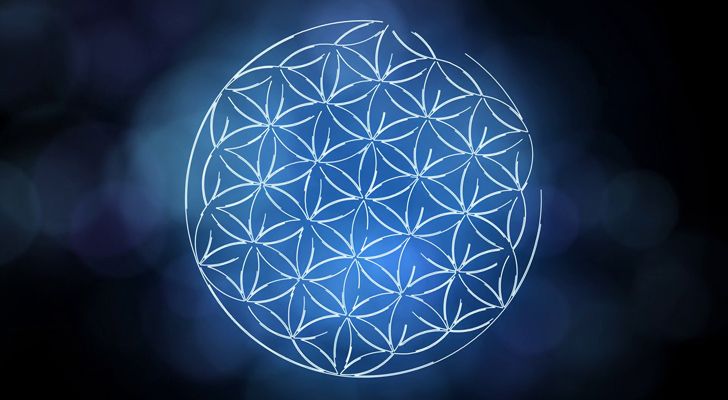
It’s formed from many circles overlapping each other in a consistent pattern and made of all five Platonic solids and Metatron’s Cube.
The Golden Ratio: Livio, M. (2002, October 22). The Golden Ratio: Phi, 1.618, and Fibonacci in Math, Nature, Art, Design, and Life. Live Science. [Link: https://www.livescience.com/37704-phi-golden-ratio.html%5D
This article offers a comprehensive exploration of the Golden Ratio, providing a clear explanation of its mathematical basis and demonstrating its prevalence in various domains, from natural phenomena to artistic compositions.
Fibonacci Sequence: Khan Academy. (n.d.). The Fibonacci Sequence. [Video]. Khan Academy. [Link: [invalid URL removed]]
This Khan Academy video provides a concise and engaging introduction to the Fibonacci sequence, highlighting its relationship to the Golden Ratio and illustrating its presence in natural forms such as pinecones and sunflowers.
Platonic Solids: Wolfram Demonstrations Project. (n.d.). Platonic Solids. [Interactive Website]. Wolfram Research. [Link: https://demonstrations.wolfram.com/PlatonicSolids/%5D
This interactive website, developed by Wolfram Research, allows users to visualize and manipulate the five Platonic Solids in three dimensions, providing a dynamic tool for understanding their geometric properties.
Sacred Geometry in the Natural World
Discover the inherent harmony and order present in nature through these captivating examples:
The Geometry of Flowers: [Image Gallery] Explore the intricate patterns and spiral arrangements of petals in various flowers, revealing the presence of the Golden Ratio and Fibonacci sequence. [Link: [invalid URL removed]]
Crystals and Sacred Geometry: [Article] Learn how the atomic structures of crystals reflect sacred geometric principles, creating stunning forms with unique energetic properties. [Link: [invalid URL removed]]
The Human Body and Divine Proportion: [Video] Explore the fascinating ways in which the Golden Ratio appears in the proportions of the human body, from the face to the limbs. [Link: [invalid URL removed]]
Sacred Geometry in Human Creation
Witness the intentional application of sacred geometric principles in art and architecture throughout history:
The Great Pyramid of Giza: [Website] Delve into the precise measurements and astronomical alignments of this ancient wonder, revealing its connection to the Golden Ratio and Pi. [Link: [invalid URL removed]]
Stonehenge: [Virtual Tour] Experience the grandeur of Stonehenge and learn about the geometric relationships between its stones and their possible astronomical significance. [Link: https://www.english-heritage.org.uk/visit/places/stonehenge/history-and-stories/stonehenge360/%5D
Gothic Cathedrals and Rose Windows: [Image Gallery] Marvel at the intricate beauty of rose windows found in Gothic cathedrals, showcasing the use of sacred geometry to create harmonious and spiritually uplifting spaces. [Link: [invalid URL removed]]
Delving Deeper
For those seeking a more profound understanding of sacred geometry, explore these resources:
Books:
Lawlor, R. (1982). Sacred Geometry: Philosophy and Practice. Thames & Hudson.
Schneider, M. S. (1994). A Beginner’s Guide to Constructing the Universe: The Mathematical Archetypes of Nature, Art, and Science. Harper Perennial.
Websites:
The Geometry Code
Sacred Geometry International
Online Courses: Explore online learning platforms like Coursera and Udemy for courses on sacred geometry, symbolism, and related topics.
This resource page is a starting point for your exploration of sacred geometry. As you delve deeper into this fascinating subject, you’ll discover its profound implications for understanding the universe and our place within it.
https://archit.web.ox.ac.uk/files/astudyontheculturalheritagemanagementandcontentsutilizationv2pdf-0
http://smb.yazd.ac.ir/article_2662.html
Sacred Geometry is a Visual Language
Sacred geometry is a visual language that transcends cultural and religious boundaries, communicating universal truths through geometric patterns and symbols. By studying the intricate relationships between shapes and proportions, we can tap into the underlying order and harmony of the universe. This ancient practice not only provides a framework for understanding the natural world but also offers a means of connecting with the divine. Through the language of sacred geometry, we can explore the interconnectedness of all things and gain a deeper insight into the mysteries of existence.
Metaphysical Significance of Geometric Forms
These geometric forms were believed to hold profound cosmic and metaphysical significance.
The use of sacred geometry can be traced back to ancient civilizations, including the Egyptians, Greeks, and Mayans, who incorporated geometric principles into their architecture, art, and religious symbolism.
Egyptian Geometry
The Egyptians used geometry in the design of their pyramids and temples, considering them sacred spaces for communing with the gods. They believed that geometric shapes held spiritual significance and used them extensively in their religious practices and artwork.
The harmony inherent in geometry was recognized in Ancient Egypt as the most cogent expression of a divine plan that underlies the world—a metaphysical plan that determines the physical.
To the Ancient Egyptians, geometry was the means by which humanity could understand the mysteries of the divine order.
Greek:
Geometry played a crucial role in Greek philosophy and mathematics. Greek philosophers, such as Pythagoras, saw geometric shapes as representations of universal truths.
The Greeks used geometry in their architecture, art, and philosophical pursuits, recognizing the inherent beauty and harmony in geometric forms [[1]](https://theenlightenmentjourney.com/the-circle-symbolism-in-sacred-geometry/) [[2]](https://edu.rsc.org/resources/principles-of-egyptian-art/1622.article).
Mayans:
The Mayans also employed sacred geometry in their art, architecture, and spiritual practices. They used geometric patterns, such as the Flower of Life and the Seed of Life, in their carvings and pottery.
Sacred geometry was an integral part of their cultural expression and understanding of the universe.
These ancient civilizations believed that geometric principles reflected the underlying order and harmony of the cosmos. By incorporating geometric shapes and proportions into their creations, they sought to connect with the divine and convey profound spiritual meanings.
One of the most well-known examples of sacred geometry is the Flower of Life, which consists of overlapping circles arranged in a symmetrical pattern. This symbol has been found in various ancient sites around the world and is believed to represent the interconnectedness of all life.
In addition to its aesthetic and symbolic qualities, sacred geometry is also believed to have practical applications. Some claim that the study and meditation on sacred geometric shapes can lead to spiritual insights, enhanced consciousness, and a deeper understanding of the universe.
The Flower of Life, a complex geometric pattern, is considered a blueprint for all creation, containing the basic building blocks of life itself.
These symbols and patterns are not merely decorative; they are believed to hold deep spiritual significance and resonate with the fundamental truths of the universe.
By studying and contemplating these forms, one can gain insights into the interconnectedness of all things, the divine order of creation, and the underlying principles that govern reality.
Sacred geometry is also closely associated with the golden ratio.
The golden ratio is believed to embody harmony and balance, and it appears in nature, art, and architecture.
Many architectural structures, such as the Parthenon in Athens, exhibit proportions based on the golden ratio.
READ: The Mathematics and Architecture of the Parthenon: Unlocking the Secrets of Ancient Greece
Golden Ratio
phi
The Golden Ratio is a mathematical proportion found in everything from seashells to galaxies, is often used in sacred geometry to create harmonious and aesthetically pleasing designs.

Golden Ratio employs intricate patterns, ratios, and proportions found in nature and the cosmos.
The golden ratio is a ratio between two numbers that equals approximately 1.618.
Known as phi, this ratio is closely associated with the Fibonacci sequence, a series of numbers where each number is the sum of the two preceding numbers.
The golden ratio has a rich history, with its first known mention dating back to around 300 BCE in Euclid’s Elements. However, it wasn’t until Italian mathematician Luca Pacioli’s book De divina proportione in 1509, with illustrations by Leonardo da Vinci, that the golden ratio gained widespread recognition.
Proponents of the golden ratio argue that it is aesthetically pleasing because it is prevalent in the natural world. From nautilus shells to pine cone seeds, examples of the golden ratio can be found in various aspects of nature. Artists and designers have also incorporated the golden ratio into their work, with Le Corbusier and Salvador Dali being notable examples. While there is no concrete evidence that the use of the golden ratio is superior to other proportions, it can serve as a helpful guideline for creating balanced and orderly compositions.
Using the golden ratio in art and graphic design can help create visually appealing and well-composed work. By guiding the placement of elements and ensuring proper spacing, the golden ratio can assist in avoiding clutter and achieving a harmonious design. While it is not a strict rule to be followed, the golden ratio can be a useful tool for designers to create balance and order in their work.
Ultimately, the golden ratio is a versatile concept that can be applied creatively in various fields. Whether used as a guiding principle for composition or as a basis for design, the golden ratio can help artists and designers achieve aesthetically pleasing results. By understanding the relationship between blank space and focal points, creators can use the golden ratio to enhance the visual appeal of their work. With tools like Adobe Illustrator, designers can bring their golden ratio-inspired creations to life, ensuring that every element is balanced and well-composed.
Read more
Flower of Life

The Flower Of Life symbol is a geometric form that turns up in Sacred Geometry.
The flower of life is an ancient symbol in many cultures.
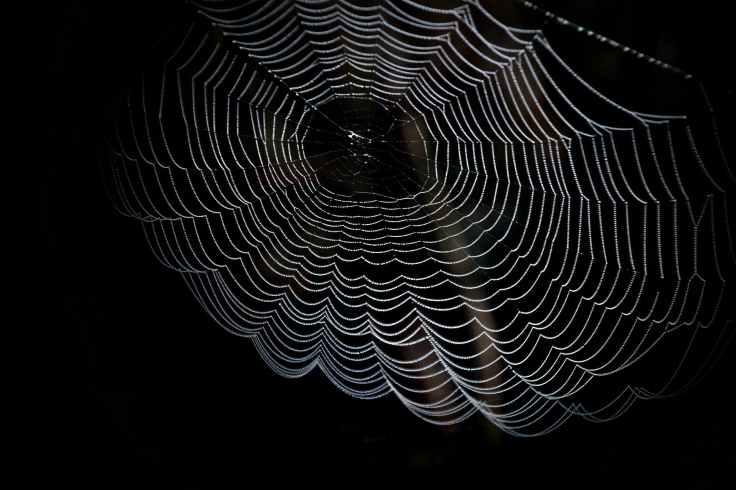
Symbolic meanings into geometric shapes including natural forms – the nautilus, the circle, the honeycomb are common examples.
Sacred geometry is heavily influenced in mathematics; by proportions, numerical relationships and ratios.
It relates to mathematical, proportional relationships, such as; Fibonacci sequences, Pythagoras, Phi (golden ratio) and platonic solids.
Sacred Geometry pattens exist in Nature, Art, Science, Music and Architecture; religious structures, paintings, religious art such as Mandalas and Yantras. Sacred Geometry turn ups in Cymatics a lot!
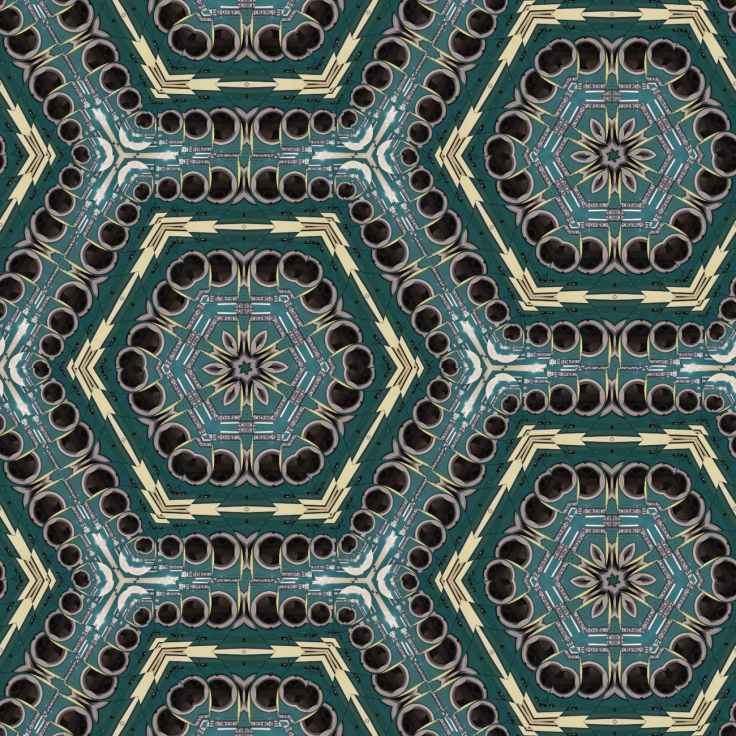
Cymatics is the study of visible sound and vibration.
The Chladni patterns that emerge are named after Ernst Chladni, who was involved in the earliest experiments with sand and metal plates.
Hans Jenny looked at Chladni’s work and developed on it, demonstrating that the sound could form not only symmetrical patterns but that they could change and flow.
Cymatics can be seen in sand, in water, in fire.
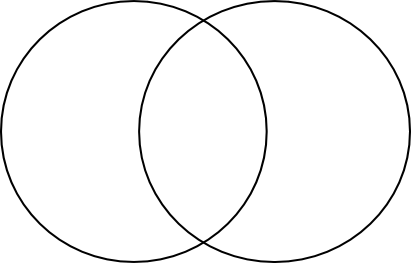
The Vesica Pisces
– meaning the bladder of a fish.
The circles represent the Zygote. The fusion of the egg and the sperm- the first point of creation of new life.
It contains overlapping circles, combining a hexagonal, flower like shape.
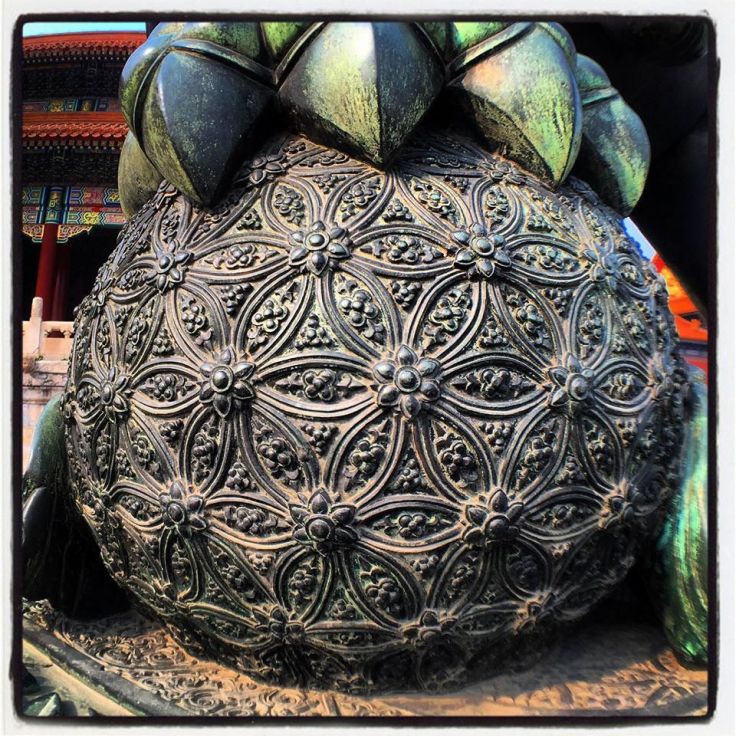
It is used in many cultures and religions around the world.
- Osirian temples in Eygpt
- Temples in India
- churches and cathedrals all over Europe.
The most well-known religious symbols, such as:
- the cross from Christianity
- the Tree of Life
- Kabbalah from Judaism
- the Celtic Spiral
- Hindu Swastika
- Chinese Yin Yang symbol.
All within the flower of life.
Leonardo Da Vinci studied it, using it’s mathematical principles of the Golden Ration to inform his work.
The flower of life symbolises creation and it reminds us of our interconnection.
We all come from the same blue print.
It represents the cycle of life.
Universal Interconnectedness
The Flower of Life symbol serves as an embodiment of the circle of life, illustrating the interconnected nature of the universe.
This symbol represents a synthesis of foundational geometric shapes, including the Seed of Life, the Egg of Life, and the Fruit of Life, and is perceived as a blueprint for existence.
Encountered in diverse religious contexts, the Flower of Life is often found adorning sacred spaces across multiple cultures, underscoring its ubiquitous spiritual significance.
Seed of Life: The Genesis Emblem
Consisting of seven interlinked circles, the Seed of Life symbolizes the seven days of creation with the central circle epitomizing divine origin.
This pattern is not only integral to the Flower of Life but is also a historical motif discovered within the ancient Egyptian context, signifying its longstanding esoteric importance.
Hamsa: The Hand of Fortune and Protection
The Hamsa symbol, portrayed as a human hand, is revered for its auspicious properties including luck, health, protection, and prosperity.
Adopted across multiple cultures in the Middle East and Africa, it also goes by names like the Hand of Fatima and the Hand of Miriam, reflecting its widespread cultural resonance.
Tree of Life: The Cosmos-Human Nexus
The Tree of Life, delineated through ten points linked with intersecting lines from seven circles, encapsulates man’s connection to the cosmos and the divine nature.
Egg of Life: Symbol of Vital Beginnings
Resembling a cellular cluster, the Egg of Life depicts seven circles akin to embryonic development, devoid of overlapping complexity.
It stands as a cultural icon of health, fertility, and stability, signifying life’s equilibrium from the earliest stages and serving as a foundation for various developmental aspects, including music.
Metatron’s Cube: The Matrix of Existence
Metatron’s Cube, a sophisticated structure incorporating all five Platonic solids, embodies the dynamics of creation by integrating both masculine and feminine principles.
The cube’s connection to the Archangel Metatron, associated with the energetics of creation, enhances its spiritual stature, especially when visualized in practices like the Merkaba Meditation.
Vesica Piscis: Realtional and Spiritual Harmony
Vesica Piscis, formed by the intersection of two circles, exemplifies the blending of physical and spiritual realms, while also symbolizing beginning and fertility.
Its association with Christ’s Ichthys symbol exemplifies the cross-religious significance, particularly in Christianity.
Star of David: Emblem of Divine and Human Connection
The synthesis of two equilateral triangles within the Star of David results in a six-pointed star, serving as a Jewish emblem of the linkage between the divine, human existence, and revelation.
Its historical roots can be traced back to King Solomon’s era, with the symbol also being embraced for its calming and contemplative qualities.
Platonic Solids: Foundations of Physical Reality
As the fundamental structures within the molecular architecture of the universe, the Platonic Solids, each associated with one of the elements, reinforce the belief in geometric underpinnings within all physical matter.
These shapes, in their three-dimensional forms named after Plato, include the Cube representing earth, Tetrahedron representing fire, Octahedron representing air, Icosahedron representing water, and Dodecahedron representing the aether.
Extra Elemental Shapes: Agents of Energetic Alignment
The Hexahedron, or cube, part of the Platonic solids, promotes grounding energy, aiding in focus and stress reduction by aligning personal energy with the earth.
The Icosahedron, with its twenty faces, stands for fluidity and emotional flow, linked to the Sacral Chakra, thus inspiring freedom and creativity.
The Tetrahedron, a symbol of fire, speaks to passion and invigorating energy; it is associated with the Sun, imparting the potential for boundless energy utilization.
The Octahedron, embodying air, is related to the Heart Chakra, fostering compassion and spiritual understanding, while the Dodecahedron, symbolizing ether, is connected to intuition and cosmic consciousness.
Whats the best frequency?
Circle Symbolism, Geometric Pattens Influence, Patterns of Universe, Unravel Mysteries of Sacred Geometry
