“Gossip kills three people: the one who speaks it, the one who listens, and the one about whom it is spoken.” ~ Talmud
Gossip, a common habit that spreads like wildfire and causes so much harm. Here are three people gossip kills, this is not an overstatement…
The Gossiper
Gossip feeds their ego, making them feel superior and satisfied in the moment. But over time it poisons their own heart and soul.
Proverbs 18:8 The words of a gossip are like choice morsels; they go down to the inmost parts.
They become distrustful, cynical and lost in small-mindedness. They kill the infinite potential within themselves.
Proverbs 18:21 Death and life are in the power of the tongue, and those who love it will eat its fruits.
The Hearer
By listening to gossip, the hearer gives it life and power. It spreads a negative view of the world and others.
Proverbs 26:20 For lack of wood the fire goes out, and where there is no whisperer, quarreling ceases.
The hearer’s own mind becomes clouded, jumping to conclusions and passing judgment. They kill their ability to see with clarity and compassion.
The One Gossiped About
The subject of gossip is dehumanized. Their story is distorted and twisted without their knowledge.
Their dignity and good name are robbed from them. The shadow side is exaggerated while the light within is forgotten. They are judged based on hearsay rather than their true essence. These are evil spells that are cast upon them, killing a piece of their spirit.
In the end, all three lose.
Gossip sows seeds of distrust, ill will and negativity that poison many lives.
Proverbs 20:19 “A gossip betrays a confidence; so avoid anyone who talks too much.”
But we have the power to cut off this cycle simply by choosing kinder speech – speaking the truth with love and empathy for all.
Let that be our goal from this moment forward, yes?
This was written prior to conversion and prior to becoming a mother, I was in my teens when this was felt. I do not hold these views, and have since mourned the girl I once was since The Holy Spirit gave me a new heart not made with hands.
In the depths of despair, now where I yearn to sink, Fading into nothingness, I vanish, you blink The burden of existence, weighing everyone down, A somber journey for humanity, beautiful sorrows surround
Silented mouth, frail body, vulnerabilities not allowed to be told, Lightbearing Angels seeking refuge in my rejected Soul Hatred becoming my refuge, orgasmic cold embrace, Satan is where I hide & eat the meal that generations could not face
Mystery and intrigue Ive been given as a guise for my escape, I seek to lose reality, touched by nothing in the light, not even rape Within the innocent facade, my friend and devils wait within, A labyrinth of shadows, you cannot fathom how the demons will begin
Descending my soul, innocence taken, we vanish and we roam, Something in me, and myself are yearning for a home In the desolation, even my guarded smile I have lost Instead of wandering alone, I find solace in permafrost
Accepted by the leader of the abyss, broken dreams no longer appear, Light avoids my sight, keeping my fear away, owned by night The depths of sorrow, I can finally rise in shame, no fear Pain becoming strength, accepted in the flame
So as I fade into night, finding a home in the unseen, The darkness is not so bad, the light is torturous, a painful beam Finally hidden from Light of the lies, lies that I was taught to pray Ill accept my fate of Hell, as Lucifer like me, is a cast away
A ley line is a straight fault line in the earth’s tectonic plate.
WHAT ARE TECTONIC PLATES?
Tectonic Plates are rigid pieces of Earth’s outer layer floating on a softer layer below. These plates constantly move— pulling apart, colliding, or sliding past each other.
These movements are what create mountains, cause earthquakes, and form volcanoes.
Through these cracks in the earth’s tectonic plates, the magnetic energy released is very powerful.
Ley-Markers
The following natural and man-made features were suggested by Watkins to be reliable ley-markers:
Mounds
Long-barrows
Cairns
Cursus
Dolmens
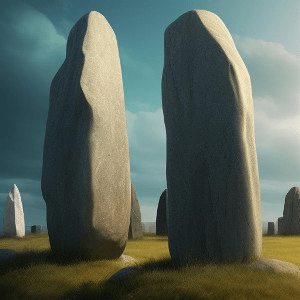
Standing stones
mark-stones
Stone circles
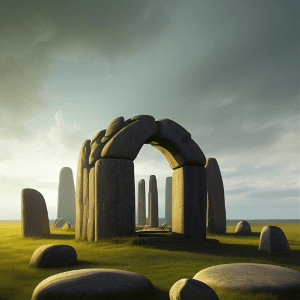
Henges
Water-markers (moats, ponds, springs, fords, wells)
Castle
Beacon-hills
Churches
Cross-roads
Notches in hills
Camps (Hill-forts)…
NATIVE AMERICANS CALLED THEM “SPIRIT LINES”
Take the native Indians of the United States; they used to call ley lines spirit linesand their Shaman used to utilize the electro-magnetic energy in these lines to help them contact the spirits.
THE SHAMANIC MEDICINE WHEEL WAS CREATED ON THESE LEY LINES
They even designed their medicine wheel on the spirit lines, as they knew that these lines followed a straight round line.
How did they know about these lines and the energies that they give off? The answer they give:
the sky God told them.
What is an Energy Vortex?
An energy vortex represents a distinct Earth location that serves as a dynamic hub of concentrated energy, housing a greater magnitude of terrestrial energy compared to regular locations.
A prevailing notion regarding energy vortexes is their occurrence at the convergence points of ley lines or the serendipitous paths of natural energy comprising the Earth’s electromagnetic field.
Where are Energy Vortexes Located?
Energy vortexes can be found anywhere around the globe, from the American Southwest to the Great Pyramids of Egypt. Many energy vortex locations are ancient or sacred sites, like Stonehenge. Energy vortexes are still being discovered today.
Ley Line Cultural Beliefs
Ley lines are prevalent in various ancient cultures worldwide, known by different names such as Dragon Lines, Spirit Lines, and Dream Lines.
Ancient civilizations, like the Egyptians, exhibited knowledge and utilization of ley lines, suggesting an understanding of their energetic properties.
Intersecting Points and Power Centers
Based on personal research, dedication, and a collection of evidence, I believe in the possibility of the existence of portals, vortexes, and dimensional doorways at the crossroads of Ley Lines.
My exploration of the topic and related Sciences has led me to ponder the idea that these intersections may make their way into other dimensions and it is in the realm of possibility that the grids and portals connecting the Inner Earth and Earth to other realms or dimensions serve as gateways for the exchange of energy, information, and beings.
If true, these are the methods: God Works in the Spiritual to come manifest into the physical. Instantly translating what is eternal to arrive into our dimension; transmuting from Eternal Bodies into Mortal Bodies.
When God and His Angelic Hosts come into our dimension they go From Life (heaven) to death (earth), and they do this so that they can create an entry for us, so that we can go from this realm of death to the Heavenly realm of Life, eternal life.
If true; These lines serve as powerful portals, as we’ve previously discussed. They transport us to other-dimensional worlds and connect us with the vast cosmic tapestry of stars, planets, and galaxies. Expanding our horizons even further, they extend to the reaches of our own solar system and beyond.
It is fascinating to note that sacred temples and monuments, such as the Pyramids of Giza, Stonehenge, and Machu Picchu, align precisely with these ley lines, adding to their significance and mystique.
Ley Lines and Astrological Alignment:
Incredibly, ley lines align with astrological constellations, suggesting a harmonious relationship between Earth’s energy currents and celestial bodies. This alignment adds to the mystical and interconnected nature of ley lies and their connection to the broader cosmic order
Most ancient cultures around the world seem to have some understanding of Ley Lines.
Historical Perspectives
In China they are known as Dragon Lines.
In South America the Shaman’s referred to them as Spirit Lines.
In Australia the ancient Aboriginals called them Dream Lines.
In the west they are referred to as Ley Lines.
Parallels have been drawn between Watkins’s observations and megalithic alignments.
The standing stones at Nabta in the Nubian desert, predating Stonehenge and other astronomically aligned sites in Europe by 1,000 years, reveal a captivating affinity with the concept of ley lines. Constructed over 6,700 to 7,000 years ago, these ancient marvels were meticulously oriented towards the sun and stars, demonstrating the profound comprehension of celestial forces possessed by our ancestors. Echoing the notion of ley lines, which entail alignments of significant sites and landmarks.
The stone circle, tomb-like structures, and standing megaliths were carefully positioned and aligned, possibly to tap into the energy of the Earth and the cosmos.
WHO ALIGNED THE STONES?
The hypothesis is: ancient builders used a combination of manual labor and observational techniques to achieve the desired alignments.
The builders possessed a profound knowledge of the Earth’s energy and cosmic forces and used this understanding to make informed decisions about the placement of structures. Through careful alignment, they were able to effectively harness these energies, resulting in the creation of a sacred space endowed with symbolic and mystical meaning.
CELESTIALLY PRECISE ALIGNMENT
These alignments, both north-south, and east-west, as well as their association with the summer solstice, suggest a purposeful arrangement based on the flow of energies or the alignment with celestial events. This connection to ley lines hints at a deeper understanding of the landscape and the interconnectedness of holy sites across different cultures and civilizations.
Ley lines serve as intriguing conduits of energy, connecting sacred sites and landmarks across the globe.
CONNECTION TO THE GREEK PHILOSOPHER, HERMES TRISMEGESTUS
According to Watkins, ley lines were used as trade routes in ancient times. He believed that these lines were connected to the Greek god Hermes, who was known for communication and boundaries.
Watkins also associated Hermes-Mercury with the chief god of the Druids. The sighting of mounds with names like Tot, Toot, Tout, Tute, and Twt across the Kingdom further supports this connection to the trackway.
Watkins concluded that these lines represented ancient tracks or prehistoric trade routes. These pathways facilitated the transportation of valuable commodities such as salt, flint, and pottery.
Fascinatingly, Neolithic communities relied on natural landmarks visible from high viewpoints to navigate through densely forested terrains. They marked these key features with stone cairns, reflective water elements like ditches, or earth mounds.
Filtering Our Words And Beliefs For Higher Wisdom, Goodness, & Utility
In the empire of ancient Greece, Socrates was a prominent figure renowned for his extraordinary wisdom. Socrates firmly believed in the necessity of subjecting one’s own words to rigorous scrutiny before speaking about someone. I highly agree with this teaching.
The 3 Seives To Filter Our Words
He strongly advocated for the implementation of three sieves, which serve as tough filters, sifting through our communication to discern the true essence and value of its content. These sieves, I liken to guardians of wisdom, enabling us to evaluate every word and idea before they pass the entry of our lips, ensuring that only valuable, insightful, and constructive thoughts find their way into the world. With these profound tools at our disposal, we are empowered to communicate with clarity, precision, and intention, elevating the quality of our discourse.
The first sieve asks us to consider if our words are true, based on facts instead of assumptions. The second sieve, the sieve of goodness, makes us think about whether our words are kind and helpful or mean and untrue. Finally, the sieve of usefulness makes us think about if it’s necessary and helpful to share the words we’ve chosen, or if they’re just a waste of time.
What Is A Sieve?
A Filter: A sieve is a powerful tool utilized in the fields of science, engineering, and manufacturing to effectively filter and separate elements based on their unique properties. It possesses the remarkable ability to allow specific particles to effortlessly pass through while concurrently obstructing other particles, empowering researchers, technicians, and professionals to extract, sort, and classify materials with the utmost precision.
In essence, it is a device comprising strategically placed holes or voids that effectively segregate particles of varying sizes by allowing the passage of smaller particles while competently capturing and holding larger particles within its confines.
In light of this, the ancient tale of Socrates and the three sieves materializes light to shine upon the intriguing concept of separating and sifting spiritual & mental “elements” and virtues by employing a discerning criterion.
HERE IS THE CONVERSATION:
"Listen, Socrates, there is among your listeners a disreputable young man, unworthy of your trust. When I tell you what he’s doing, I think you’ll ban him from your group...." I am ready to listen to you, replied Socrates, and to take the necessary measures. But let me first look closely at what you are about to tell me. Have you passed your words through the three sieves? The three sieves, questioned the man, what is it? The first is the sieve of Truth.Are you sure that what you are going to tell me is true? Have you heard it yourself or watched with your own eyes? To tell the truth, said the man, after a moment of hesitation, I just overheard it. The test of the first sieve is not successful, says Socrates. Let’s examine the second: the sieve of Goodness. Will you tell me something good or positive about this man? On the contrary, said the other, I was going to say bad things about him. Your words do not pass the second sieve, says Socrates. Let’s use the last sieve. Is it necessary to tell me what you’re so excited about? No not necessary, the man says. Well, Socrates says with a smile, if the story you’re about to tell me isn’t true, good or necessary, just forget it and don’t bother me with it."
The three sieves correspond to the alchemical elements: Gold, Silver, and Lead. Hence, these three powerful elements empower us to assess the fundamental essence and deep significance of various aspects in our lives.
Gold reigns as the unrivaled symbol of truth, its value eclipsing all others. Just like the radiant purity of gold represents the ultimate truth, shining brilliantly above all else, the silver element encompasses the very essence of goodness, illuminating our path with its positivity and moral virtue. Silver radiates the very essence of goodness, an illuminating force of positivity and moral righteousness. And then we have lead, an element of weight and substance, serving as a tangible representation of practical utility. Lead, with its weight and substance, becomes the embodiment of practical utility, empowering us to discern the true worth of things. It empowers us to critically evaluate the value and practicality of ideas and concepts that cross our paths. Together, these symbolic elements serve as invaluable tools in deciphering the core essence and profound significance of the myriad aspects that shape our lives.
The sieve of gold represents wisdom and knowledge. It allows valuable knowledge and wisdom to pass through while catching worthless information. So focusing on what passes through this first sieve would allow one to gain true knowledge and enrichment for the soul. The first sieve teaches that we should first seek wisdom and knowledge (which is Truth), and allow that to guide and inform what we allow into our minds and out of our mouths.
The sieve of gold helps us determine what really matters – what nourishes the mind and soul.
The sieve of gold in the Socrates story symbolizes the importance of gaining wisdom and knowledge as a first priority, and using that as a filter before we continue on…
Things that are good and bring joy pass through this sieve, while unpleasant and harmful things are caught. The sieve of silver represents the importance of discerning which words will authentically enhance our well-being as well as the well-being of others, while avoiding vain pleasures. This discernment comes after first seeking wisdom and truth through the sieve of gold. Engaging in the virtuous pursuit of goodness necessitates nurturing a profound sense of respect, compassion, and honesty. Practicing goodness involves treating others with respect, compassion, and honesty. Gossip goes against this by spreading information, often out of context, that can damage others’ reputations.
“The heart of the righteous weighs its answers, but the mouth of the wicked gushes evil.”
This sieve represents necessary things. Things that are useful and needed pass through this sieve, while unnecessary things are caught.
The sieve of lead teaches the value of simplicity and focusing on what truly matters, rather than being consumed by trivialities.
This sieve comes last, indicating that only after sifting the Truth and Goodness should we consider what is truly necessary to say and what isn’t.
These three sieves help us filter experiences and prioritize what is truly valuable. Only that which contributes to our flourishing and the well-being of others is allowed to pass. The lesson is to simplify and focus on what is truly needed in our communication with others, beyond fleeting pleasures and momentary emotions, asking us to take a step back and think about the ramifications that come from speaking to others, about others. By avoiding unnecessary gossip and rumors, we can prioritize essential knowledge, cultivate meaningful relationships, and invite healthy conditions that enable us to live a fulfilled life, internally, despite our outer circumstances.
TRUTH- Before you say something about someone else, ask yourself :
Is it true?
Are you conveying accurate information?
Are you spreading rumors?
Gossip?
Lies?

GOODNESS- Once you've established that what you're saying is true, consider:
Is it morally good or virtuous?
Is it kind and compassionate?
 or
Is it hurtful & malicious?
Will your words build others up or tear them down?

USEFULNESS- Finally, consider:
Is what you're saying  useful or beneficial?
Will it help others in some way?
or
Is it simply idle chatter?
Will it contribute to productive conversation?
or
Will it distract from important issues?
How often we strive to bind The Sovereign’s sovereign, wise design As if our finite minds could find The cause, the reason, the Mind Divine
Our thoughts, like specks in rays so bright, Appear fleetingly, then take flight, And dare not assume or dictate What God has woven in timeless state
The Potter’s work, a sight to behold, In awe we stand, our hearts unfold With skills profound, His potency, echoes resound
We cannot mimic, His wondrous Art, Each stroke and sculpt, a work of Heart Approaching with fear, a reverent breeze, His creations, a mysterium that frees
A sight immense, Tremendum whispers with immense suspense Engrossed in awe, our senses intense Let us, in wonder, humbly surrender, and never appall, Before the eternal Mystery that enthralls us all Within our Souls, let the secrets enthrall, For only He decides, defines, and decrees all
The Potter molds the clay just as He Knew, His chosen purpose, His plan to ensue, His Grace Divine, His Will forever true, Though “free will” a facade, a false value
The Potter crafts each piece, every detail, His foresight perfect, His work doesn’t fail, His sovereignty reigns, no effort to veil, “Free will” but a guise, a hollow tale
The Potter’s touch, a masterpiece so rare, His design deliberate, beyond compare, His sovereignty woven into the air, “Free will” but a mask, a subtle snare
The Potter’s artistry, unmatched, supreme, His divine purpose, a celestial dream, His sovereignty reigning, supreme “Free will” but a whisper within the scheme
So let us not be fooled by empty guise, But marvel at the Potter, truly Wise, For in His hands, our destinies arise, “Free will” fading, His sovereignty Will rise
Then let us bow before the King of kings Who chose for us Eternity And Trust the hand that freely everything Ordains for His glory and His decree
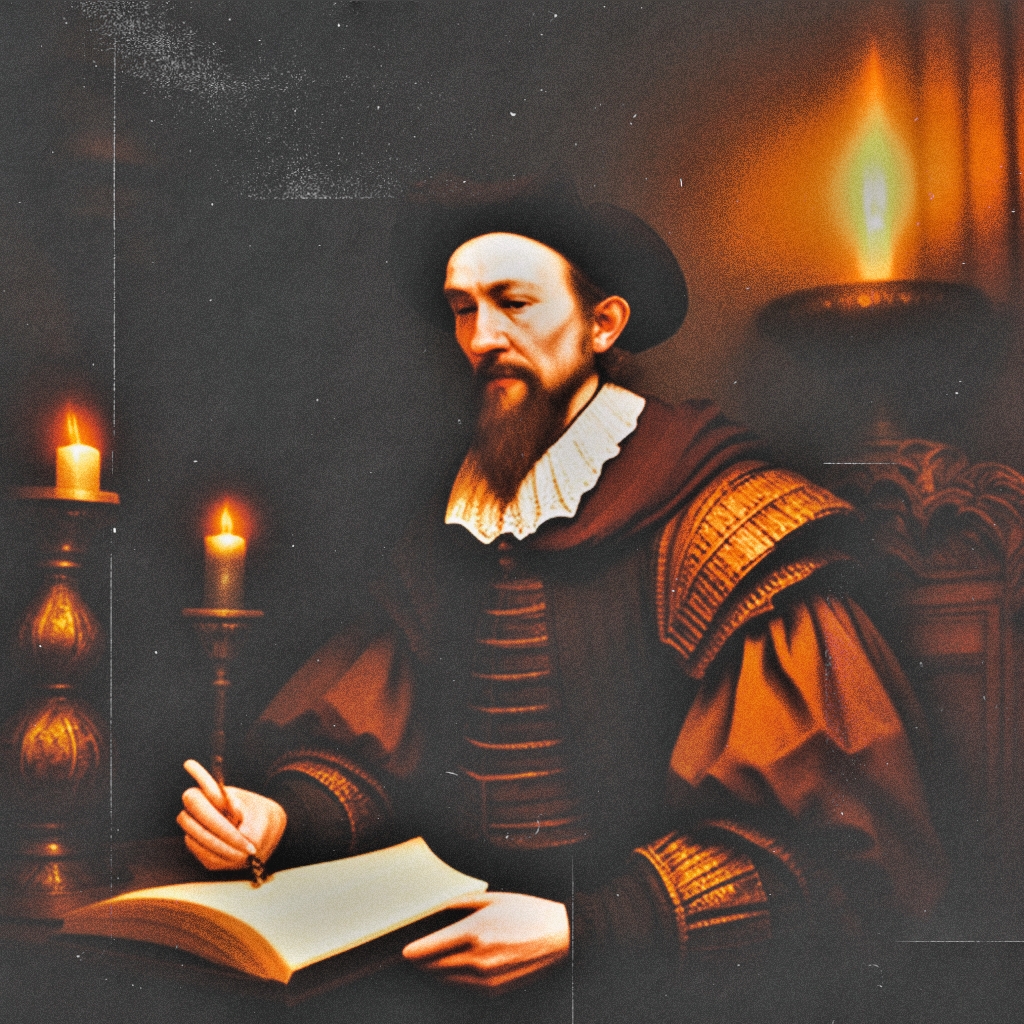
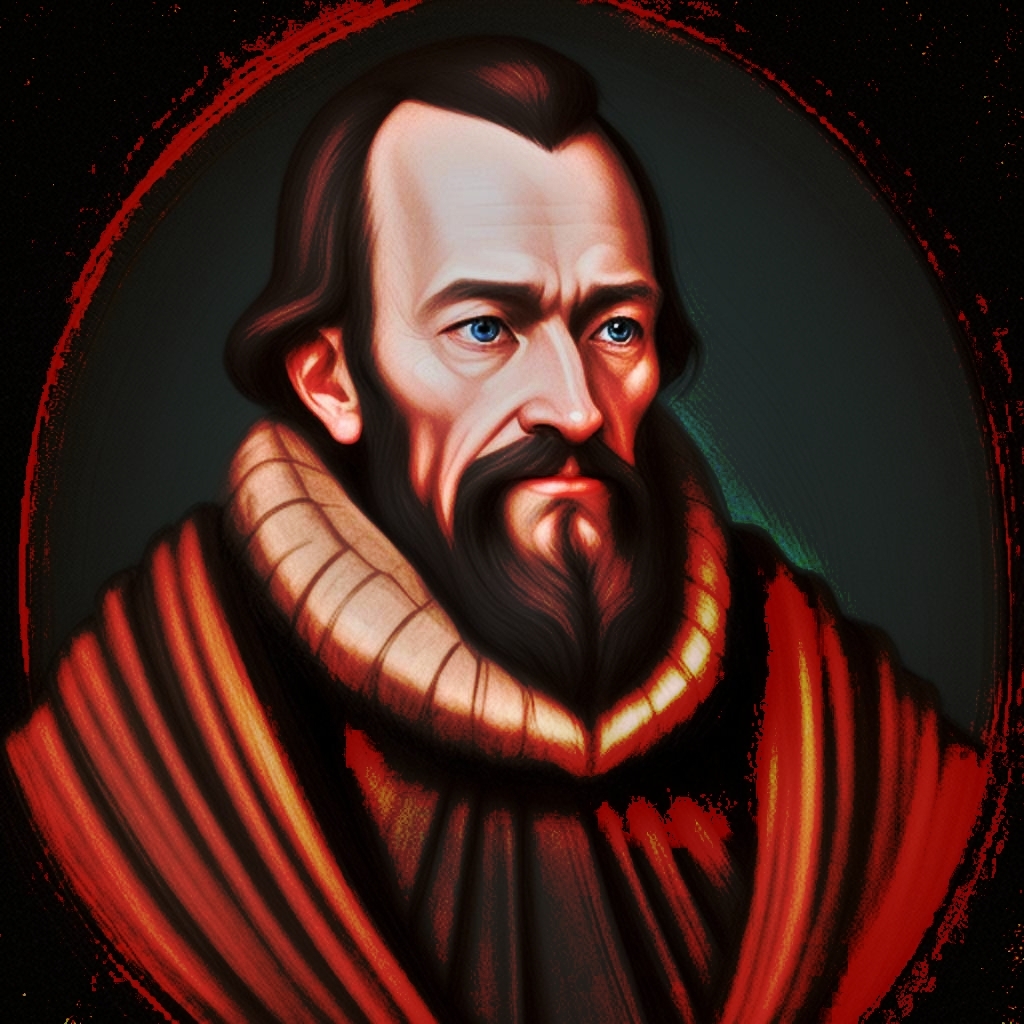
John Calvin (1509-1564) was born to a lawyer father in Noyon, France. As a young student he intended to become a Catholic priest, but his independent spirit and intellectual curiosity led him to question Church doctrines at an early age.
Calvin’s “Heretical” Views
As Calvin’s Protestant views became known, it aroused the suspicion of Catholic authorities who saw him as a dangerous heretic.
In 1534, Calvin fled France for Basel, Switzerland to escape persecution from the Catholic Church and French king. This exile marked the beginning of Calvin spending the majority of his life outside his homeland, spreading his reformed theological perspectives from the safety of Protestant city-states.
The Fugitive Reformer
Now a prophet without honor in his own land, Calvin bravely escaped from France, compelled by the relentless persecution of the Catholic Church.
With great determination, he sought refuge in Basel, Switzerland, where, at the remarkable age of 27, he fearlessly unveiled the initial edition of his magnum opus – The Institutes of the Christian Religion.
Magnum Opus – Establishing Biblical/ Christian Doctrine
This extraordinary masterpiece not only established the theological bedrock for the Reformed tradition, but also solidified Calvin’s indomitable status as one of the most pivotal intellectuals of the Protestant Reformation.
Despite being exiled from his beloved homeland, Calvin discovered his true calling and unleashed his powerful voice through the profound insights conveyed within The Institutes. As this remarkable work swiftly disseminated his ideas far beyond the borders of France, it also paved the way for his remarkable future ministry.
The Reluctant Reformer
Soon Geneva came calling. The city desperately needed reform and stability.
Calvin reluctantly agreed to help. For over two decades, the “little prophet” as he was called, pastored the church of Geneva, reorganizing every aspect of life under the authority of Scripture.
The Little Prophet
He was titled the “little prophet” for a few reasons:
Calvin, a man of small stature, differed from the common image of prophets as imposing and larger-than-life figures.
In his early 30s, Calvin began his ministry and reform work in Geneva, which was somewhat atypical since prophets are often seen as older and more experienced individuals.
As a prophet in Geneva, Calvin focused on teaching, writing, and establishing an organized church, avoiding grand gestures and flashy statements. However, his impact as a prophet was profound, mainly conveyed through his theological writings. Calvin’s modest yet profound influence greatly shaped Protestant Christianity.
The Theological Titan
Calvin’s most significant legacy resides not in the city of Geneva but rather in his theology, which has profoundly influenced Protestants around the globe.
His doctrines of grace, the sovereignty of God, and the total depravity of humanity shaped Protestants’ understanding of salvation.
The Ink Squirter
Though Calvin saw himself as an “ink squirter,” his writings, particularly The Institutes, remains required reading for students of Christian history and theology.
By calling himself an “ink squirter,” Calvin exposed his modest yet impactful perspective on ministry. He perceived his distinct role as diligently imparting biblical teachings through his writings, effectively disseminating “gospel ink” throughout Europe with his numerous works, rather than relying on dramatic actions. Despite the fact that his theological writings profoundly influenced Christianity for generations, Calvin saw himself merely as a conduit for elucidating divinely revealed truths, rather than an innovator of doctrines.
The name, with a touch of jest, revealed Calvin’s belief that his prophetic impact stemmed from sharing God’s Word extensively through his gifted writing, rather than relying on extravagant performances.
The manner in which Calvin preached, his prolific writing, and his establishment of a reformed church had a lasting impact on the course of Christianity for generations to come.
“In the beginning God created the heavens and the earth” Genesis 1:1
In the beginning of What?
In the beginning of time, or better titled: The Ages.
What are “The Ages”?
“The Ages” is a classification framework commonly utilized to categorize various periods of time in human history, with notable examples being the Stone Age, Bronze Age, and Iron Age, among others.
Has He not declared the end from the beginning already?
Yes, He has.
“I make known the end from the beginning” Isaiah 46:10
Yes, God has declared the end from the beginning, unveiling His plans and purposes for humanity throughout history, hinting at the final destiny of His creation.
Various prophecies and promises in the Bible showcase God’s divine insight into the future. In Isaiah 46:10, He boldly asserts that His purpose will prevail and His plans will be accomplished. It is in this verse that God establishes His unwavering sovereignty and unparalleled ability to bring His plans to fruition, demonstrating that nothing can stand in the way of His divine intentions.
Jesus Is The Promised Messiah
The biblical narrative carries on with a bold proclamation of a promised Messiah who will graciously rescue humanity from the grasp of sin and reunite them with the divine presence of God. This pledge finds its complete fulfillment in the person of Jesus Christ, who exemplified a life untouched by wrongdoing, suffered on the cross, and triumphantly triumphed over death, extending the invaluable gifts of salvation and everlasting life to those who believe. Through His sacrificial death and glorious resurrection, Jesus set into motion the grandest scheme of redemption conceivable, encompassing the entirety of creation.
Do not marvel at this; for the hour is coming in which all who are in the graves will hear His voice and come forth – those who have done good, to the resurrection of life, and those who have done evil, to the resurrection of condemnation.
In the book of Revelation, God reveals a meticulously detailed account of the end times, final judgment, and the establishment of His eternal kingdom. This awe-inspiring culmination highlights His supreme triumph over evil, the definitive defeat of Satan, the glorious resurrection of the righteous, and the resounding victory of His kingdom.
The Final Judgment
And I saw a great white throne and the one sitting on it. The earth and sky fled from his presence, but they found no place to hide. 12 I saw the dead, both great and small, standing before God’s throne. And the books were opened, including the Book of Life. And the dead were judged according to what they had done, as recorded in the books. 13 The sea gave up its dead, and death and the grave[a] gave up their dead. And all were judged according to their deeds. 14 Then death and the grave were thrown into the lake of fire. This lake of fire is the second death. 15 And anyone whose name was not found recorded in the Book of Life was thrown into the lake of fire. – Revelation 20:11
Understanding the Scripture shows that God has clearly revealed the ultimate purpose and conclusion of everything right from the beginning. Even before things begin, God unveils the carefully crafted plan that spans across time and space. Every part of existence falls into place in God’s well-designed masterpiece, like different threads in a beautiful artwork. It is clear that God’s intentions and ultimate goals are evident throughout the entire biblical narrative.
God reveals His plans with unwavering certainty, ensuring that His divine will prevails. As we navigate life’s journey, we find comfort in the unwavering assurance that God holds the future and that His ultimate plan for redeeming and restoring humanity will unquestionably come to pass.
And can we confidently affirm that prophets prophesy because God is actively involved not only in the past but also in the future? Is He restricted by our linear understanding of time? Certainly not. He possesses boundless power, granting us our own abilities, limited only by the magnificent story that He has written.
God’s Word is never fallen on deaf ears, God;s Word is only heard by those given Hearing to Hear.
The powerful and clear Word of God reaches receptive hearts and attentive minds, resonating through the essence of existence. It extends beyond the limits of physical hearing and echoes within the depths of consciousness. Those with a receptive spirit, granted by God, can truly understand and embrace its meaning. Open to profound wisdom, revelation, and spiritual enlightenment, these souls embrace the divine messages embedded within God’s words.
If you are discussing the negative information about others in their absence, you are already gossiping. Point. Blank. Period.
People gossip to feel like they belong to a group. They use gossip to undermine rivals and establish alliances. When two people speak gossip of a third, they form a kind of alliance. To gossip is to try to be inside of possible attacks of opponents.
Gossip Damages Relationships
Gossip can be incredibly destructive, causing misunderstandings, conflicts, and irreparable damage to relationships. When we indulge in gossip, the information quickly loses its truth and clarity, leading to miscommunication and the painful hurt of others, and eventually the backfiring in our face.
Gossip leads to the spreading of outright lies.
Trust is the cornerstone of any meaningful relationship. Trust gradually disintegrates when gossip becomes a part of our behavior. As the age-old saying wisely reminds us, “loose lips sink ships.” It’s a poignant reminder that we must resist the temptation to gossip and instead cultivate an environment of trust and openness.
Gossip Hurts Others
Being gossiped about can lead to long-term emotional distress, damage to one’s reputation, strained relationships, and a loss of trust and self-esteem.
It leads to embarrassment, humiliation, and isolation. Moreover, the spread of false information can damage a person’s reputation irreparably, impacting their personal and professional life.
Reflects on Your Character
Engaging in gossip says a lot about your character. It indicates a lack of respect for others’ privacy, sensitivity, and trust.
People who gossip are often perceived as untrustworthy, unreliable, and lacking empathy. Building a reputation based on gossip can harm your own personal and professional relationships.
Wastes Time and Energy
Gossiping consumes valuable time and energy that could be better spent on more meaningful activities.
It distracts from productivity and diverts focus from important tasks and goals. By eliminating gossip from your life, you can redirect your attention towards personal growth, pursuing hobbies, or building positive relationships.
Avoiding Gossip
Sets a Good Example
When you make the choice to refrain from engaging in gossip, you are demonstrating a powerful influence on those around you. Your actions can serve as a catalyst for cultivating an environment that values respect, trust, and empathy. By fostering open and kind communication, you actively contribute to creating a more wholesome social atmosphere.
Gossiping is harmful and has negative consequences. It ruins relationships, spreads negativity, and hurts both the people involved and those who are talked about. Instead, it’s important to promote positive communication and create an environment of respect and trust.
If you can control your tongue, you can control your whole life. Now is YOUR turn – You can either quench the fire!! or pour fuel into it and spread the fire!! Your choice!
The 4th of July is a significant day in American history as it marks the country’s Independence Day.
Here are some reasons why it is important:
Declaration of Independence
On July 4, 1776, the Continental Congress adopted the Declaration of Independence, which outlined the thirteen American colonies’ decision to separate from British rule.
This document stated the principles of liberty, equality, and justice that continue to shape the United States today.
Birth of a Nation
The 4th of July represents the birth of the United States as an independent nation.
It symbolizes the hard-fought struggle for freedom and self-determination against colonial rule.
National Unity
The 4th of July is a day that brings Americans together to celebrate their shared heritage and values.
It is a time when people put aside their differences and come together as a nation, regardless of their political, social, or cultural backgrounds.
Patriotism and National Pride
The 4th of July is an opportunity for Americans to express their patriotism and show gratitude for the freedoms and opportunities they enjoy.
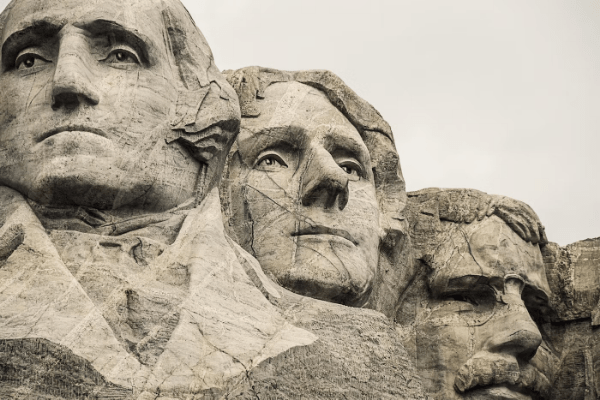
It is a time to reflect on the sacrifices made by the founding fathers and countless others who have fought to defend and uphold the ideals of the nation.
Celebrations and Traditions
The 4th of July is marked by various celebrations, such as parades, fireworks displays, picnics, and barbecues.
These traditions create a sense of community and provide an occasion for families and friends to come together and enjoy each other’s company.
Inspiration for Independence
The American Revolution and the ideals expressed in the Declaration of Independence have served as inspiration for other nations seeking independence.
The 4th of July holds great importance in American history and serves as a reminder of the nation’s founding principles, the sacrifices made by its citizens, and the ongoing pursuit of liberty and justice for all.