There is a kind of knowing that does not ask permission from the mind.
It does not build a case.
It does not cite its sources.
It arrives already finished — and you are left, afterward, trying to reverse-engineer a reasoning process that never actually happened, because there wasn’t one.
There was only recognition.
THIS IS INTUITION
And I want to be precise about what it is, because the word gets used carelessly — as a synonym for ‘hunch’, for ‘gut feeling’, for whatever unexamined impulse happens to walk through the door.
It is more disciplined than that.
It is older than that.
What the Word Actually Says
Intuitive: from the 1640s, meaning to perceive directly and immediately.
French intuitif. Medieval Latin intuitivus.
Beneath that, Latin intueri — to look at, to consider — built from in- (into) and the Proto-Indo-European root tueri, to look at, to watch over.
Sit with that construction for a second— TO LOOK INTO.
Not to look at something from the outside, the way the analytical mind does when it studies a thing and holds it at arm’s length.
TO LOOK INTO
Intuition was never framed, at its root, as a shortcut around understanding.
It was framed as a more direct route to the same place, perception without the detour through argument.
By 1833 the word had picked up its second meaning: self-evident.
Which tells you something about how intuitive knowledge behaves once it arrives.
It doesn’t feel like a conclusion you reached.
It feels like a fact you always had.
INTUITION’S ESSENCE
Intuition is knowledge acquired without recourse to conscious reasoning.
It costs little apparent effort, and it often arrives beneath the threshold of awareness. —you didn’t notice yourself knowing it, you just discovered that you already did.
I’ll say what I am convinced is objective reality and the rationalist minds reading this will resist:
Intuition is not knowledge in spite of the unconscious. It is knowledge because of it.
Subconscious Intuition
Somewhere beneath the noise of deliberate thought, pattern and truth are being recognized continuously, without your permission and without your effort.
Intuition is what it sounds like when that recognition finally surfaces loud enough to hear.
Call it whatever you want— Gnosis, Pattern Recognition …
Call it pattern-recognition if the word “gnosis” makes you nervous. I won’t argue about the name. I will insist on the thing.
The analytical mind — the part of you that constructs arguments, weighs pros and cons, wants everything justified before it’s trusted — is not the enemy of intuition.
But the analytical mind is not its source, either.
It is downstream.
It is the part of you that shows up afterward, translating a knowing into language, dressing it in reasons it can defend at a dinner party.
The knowing came first.
Four Intuitive Types Moving Through People
Not everyone’s intuition operates the same way.
I’ve watched these four show up distinctly enough, in myself and in the people I’ve cared about enough to study.
I think of these types less as a typology and more as four different instruments the same instinct can be played on.
1. ADAPTIVE INTUITION
Adaptive intuition moves fast, and it moves on experience — not analysis, experience, the kind that’s been lived through the body enough times to have left a residue.
It shows up when a situation is too time-compressed for deliberation, and it’s the one people instinctively turn to for guidance in a crisis, because it doesn’t destabilize when the ground does.
This is the intuition of someone who’s been through the fire enough times to recognize the smell of smoke before the alarm goes off.
2. OBSERVANT INTUITION
Observant intuition is quieter and more patient. It’s built on close attention — visual, sensory, environmental.
It notices the cue nobody else caught:
1. the tone that shifted & 2. the detail that doesn’t match the story being told.
People who carry this type tend to move cautiously, because they’re gathering before they’re deciding, and it often coexists with real artistic ability — the same faculty that reads a room can read a canvas, or make one.
3. ANALYTICAL INTUITION
Analytical intuition looks, from the outside, almost like its opposite — deliberate, unhurried, unwilling to move until every possibility has been turned over.
But it’s still intuition, not pure logic, because the “considering” isn’t a formal process; it’s a felt need to hold the question longer, even when it produces something that looks like indecision.
This is the instinct behind good lawyers and good detectives — not faster knowing, but knowing that refuses to close early.
4. QUESTIONING INTUITION
Questioning intuition is analytical intuition’s more skeptical cousin — the same refusal to rush, but anchored harder in fact and evidence rather than felt pattern.
It doesn’t trust a recognition until it can also verify it.
This is the instinct behind good accountants:
the sense that something’s off, followed immediately by the demand to prove it.
Why This Matters
None of these four are “more intuitive” than the others.
They’re the same faculty filtered through different relationships to time, evidence, and trust.
What they share is the thing the word has meant since the 1640s: direct perception.
A way of looking into something rather than only at it.
CULTURAL CONDITIONING
We’ve been trained — by a culture that worships the analysis it can show its work for — to distrust the knowing that arrives without a paper trail.
I’d ask you to consider the opposite: that the paper trail is the translation, not the source.
That the fastest, oldest, least defensible-sounding knowledge you have might also be the least corrupted.
It hasn’t been argued into a shape that’s convenient.
It’s just true, the way a self-evident thing is true — because you looked directly at it, and it looked back.
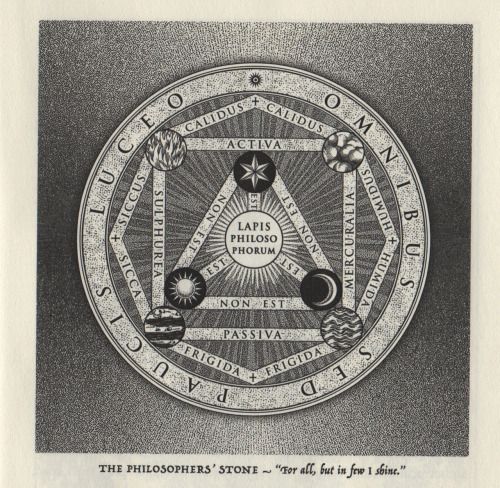
“When you see your matter going black, rejoice, you are at the beginning of the work.” — Rosarium Philosophorum
The traditional method of alchemy is divided into 5 stages:
STEP ONE
Nigredo —Blackening
The term “nigredo” comes from the Latin word for “black,” and its color is referring to the material color at this first stage of the process, which is often darkened.
The alchemist is observing or participating in the break down of the impurities that occur during Nigredo. This is the beginning of the distillation of raw materials.
This physical act represents the process of confronting one’s shadow self and the negative aspects of oneself.
This initial stage is one of dissolution and decay… confronting the raw, unrefined aspects of the self.
It’s a descent into darkness, a metaphorical death; old structures break down, making the route for the emergence of new beginnings.
Black —like fertile soil, chaotic, yet holds the potential for new growth.
STEP TWO
Albedo—Whitening
Albedo is the term used to describe the extent to which an object like a planet or moon reflects light.
Albedo emerges stark in contrast from the blackness of Nigredo.
A state of pristine whiteness, like the moon reflecting the sun’s light is found after Albedo.
Embodies clarity, a fresh perspective gained through the trials of the previous step. It’s a moment of reflection and the dawning of understanding.
STEP THREE
Citrinitas—Yellowing
The term “citrinitas” comes from the Latin word for “yellow,” and it refers to the color of the materials at this stage of the process, which is often yellow or orange.
At this stage, the alchemist is allowing the materials to be still… in Citrinita = self-growth + integration! 🍋✨ … think sitting water. Stagnation.
This yellowing is considered a bridge between Albedo and the final stage.
Citrinitas is associated with the rising sun, bringing with it warmth, light, and a sense of solar energy.
It represents the awakening of the intellect and intuition, a golden hue illuminating the path forward.
This stage signifies a growing awareness and the integration of newfound insights.
STEP FOUR
Rubedo—Reddening
The term “rubedo” comes from the Latin word for “red,” and its name refers to the color of the materials at this stage of the process, which is often red or reddish-gold.
A BLOODY MESS
In the Rubedo stage, the alchemist is completing the culmination of the alchemical process, its the stepping stone into the Philosopher’s Stone.
Rubedo also represents the perfect union of opposites, it is the merging of the spiritual and the material.
It is symbolized by the color red, signifying life, passion, and the ultimate realization of one’s true potential.
This stage embodies wholeness, completion, and the attainment of a higher state of being.
STEP FIVE
Lapis Philosophorum (Philosopher’s Stone)
The transcendent outcome, the perfected state.
Conclusion/ Overview
Nigredo (Blackening): The descent into shadow, where the old dissolves.
Albedo (Whitening): A purification, a dawning of clarity from the darkness.
Citrinitas (Yellowing): The sun’s touch, bringing illumination and understanding.
Rubedo (Reddening): The ultimate fusion, the attainment of wholeness.
Lapis Philosophorum (Philosopher’s Stone): The transcendent outcome, the perfected state.
Cognitive rigidity is the stubborn insistence that our way of thinking is the only way.
It shows up in small, everyday ways:
refusing to consider another perspective
dismissing evidence that challenges our beliefs
or sticking to habitual responses when flexibility is required.
It is mental inflexibility masquerading as certainty.
This rigidity is rarely neutral. It filters experience, allowing only what aligns with our preconceptions to pass through.
What we notice and refuse to notice is determined less by reality and more by the contours of our existing beliefs. The mind becomes its own jailer.
FILTERED VISION
Perceptual limitations compound this problem. Our senses, our expectations, and our biases shape what we perceive.
Two people can witness the same event and walk away with entirely different “realities,” each convinced theirs is the truth.
Culture, language, upbringing, and personal trauma all function like lenses, coloring everything we see.
When cognitive rigidity meets these perceptual filters, the feedback loop begins: our beliefs dictate what we perceive, and our perceptions reinforce our beliefs.
We become prisoners of our own limited frameworks, blind to the complexity—and often the truth—of the world around us.
Breaking the Loop
Escaping this loop is not about acquiring more information. It is about retraining the mind to see what it usually ignores:
Observe without judgment. Watch your thought patterns and notice when you shut down possibilities automatically.
Seek what challenges you. Engage with ideas and perspectives that make you uncomfortable.
Question your perception. Ask yourself what you might be missing, what biases are filtering your experience.
Embrace intellectual humility. Accept that your understanding is provisional, incomplete, and subject to correction.
The moment we recognize that perception is always partial, and thought is always provisional, the bars of the cage begin to loosen.
Clarity is not a gift; it is a discipline.
The Work of Liberation
This is the work of liberation: not avoiding rigidity, but confronting it; not denying perceptual limits, but piercing them.
The mind can be trained to perceive more, think more flexibly, and respond more intelligently.
It is uncomfortable, but truth always is.
We cannot see everything, but we can see more than we did yesterday.
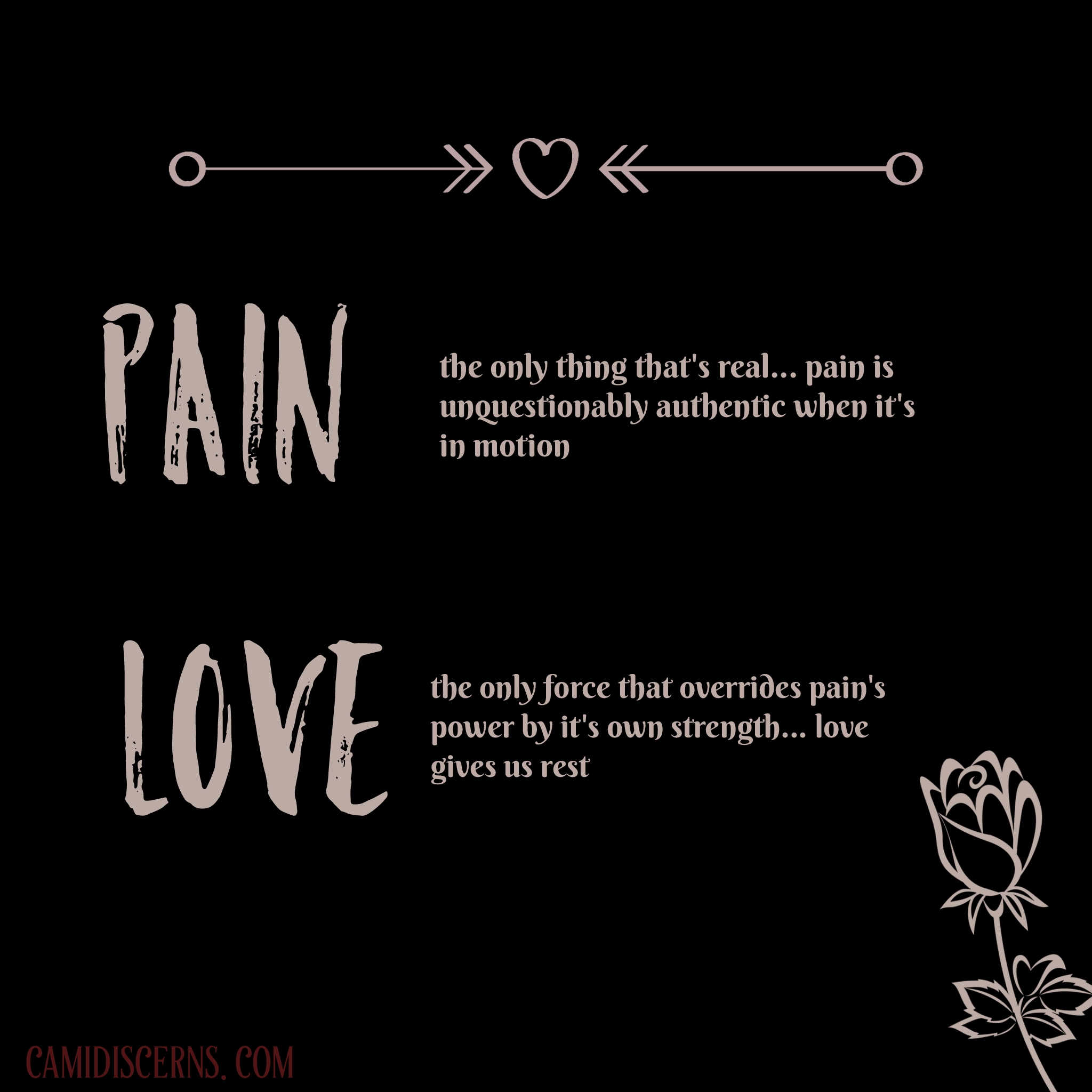
The Nature of Suffering: A Necessary Element of Existence
As much as we may wish otherwise, the reality is that suffering is an inescapable part of the human experience.
The age-old philosophical and religious observation that “life is suffering” points to a fundamental truth about the human condition.
Embracing Uncertainty and Impermanence
In the face of uncertainty and impermanence, we cultivate the qualities of empathy, humility, and inner strength that are vital for navigating the complexities of life.
It is through our struggles that we learn and grow, transforming our experiences into avenues for personal development.
Seeking Meaning in Suffering
Perhaps, in the end, it is not a life devoid of suffering that we should seek, but rather a life where suffering serves a purpose.
As Viktor Frankl articulated, fulfillment cannot be stripped of struggle; it is through confronting our darkest moments that we can truly experience the richness of life.
High vibration refers to a state of energy characterized by positive feelings, thoughts, and actions, in contrast to low vibration, which is linked to negativity and stress.
Vibrational Targets
People who resonate at a higher frequency often find themselves preyed upon by dark energies.
These negative forces can creep in, using manipulation and emotional depletion to exploit, brought about by those who carry unresolved pain.
This leaves a portal for a deep sense of weariness, causing emotional fatigue, as their bright light becomes a beacon for those who seek to drain their spirit.
PORTALS FOR LOW VIBRATIONAL FREQUENCIES TO ENTER:
1. Criticism & Gossip
High vibrational individuals, with their heightened awareness, can unintentionally stir unease in those around them.
As a result, they frequently endure harsh judgment and whispers behind their backs, feeling the weight of loneliness and misunderstanding.
This stems from deep-seated insecurity or a profound lack of understanding, as their genuine selves can seem like an unwelcome reminder to those who are not prepared to face their own inner struggles.
It’s a painful truth that the authenticity of some can evoke fear in others, revealing a heart-wrenching vulnerability that many are too afraid to acknowledge.
2. Isolation
Individuals with elevated vibrations frequently find themselves in a state of loneliness, as the profound depth of their awareness creates a chasm between them and others.
The struggle for connection leaves them feeling isolated and misunderstood, trapped in a world where their sensitivity and insight can be burdensome rather than a blessing.
3. Sadness
This profound disconnection weighs heavy on their hearts, leading to a sadness that lingers like a shadow, as they yearn for companionship that seems perpetually out of reach.
4. Naive Authenticity
Authentic energy forces others to face parts of themselves they may not want to see, leading to avoidance or rejection.
Their presence compels people to confront the darker corners of their souls, unearthing truths that are often too painful to acknowledge.
This can result in a heartbreaking tendency for others to turn away, retreating into denial or pushing them away in fear of vulnerability.
Protecting Energy
To maintain an elevated state of consciousness, you must prioritize self-care and boundary-setting.
This includes staying surrounded by those who share a similar energy and limiting interactions with those who drain or manipulate them.
While the journey of a high-vibrational person can lead to spiritual growth, it’s essential to acknowledge the difficulties they face, balancing their elevated state with the need for protection and self-preservation.
Sacred geometry is a field that not only explores the intricate patterns and shapes underlying creation, but defines it and holds within it the foundation of the origin.
From the simple elegance of the Vesica Piscis to the profound complexity of the Grid of Life, each symbol in this geometric art holds a wealth of meaning and nuance.
Let’s delve into these sacred geometric forms…
Vesica Piscis: The Intersection of Opposites
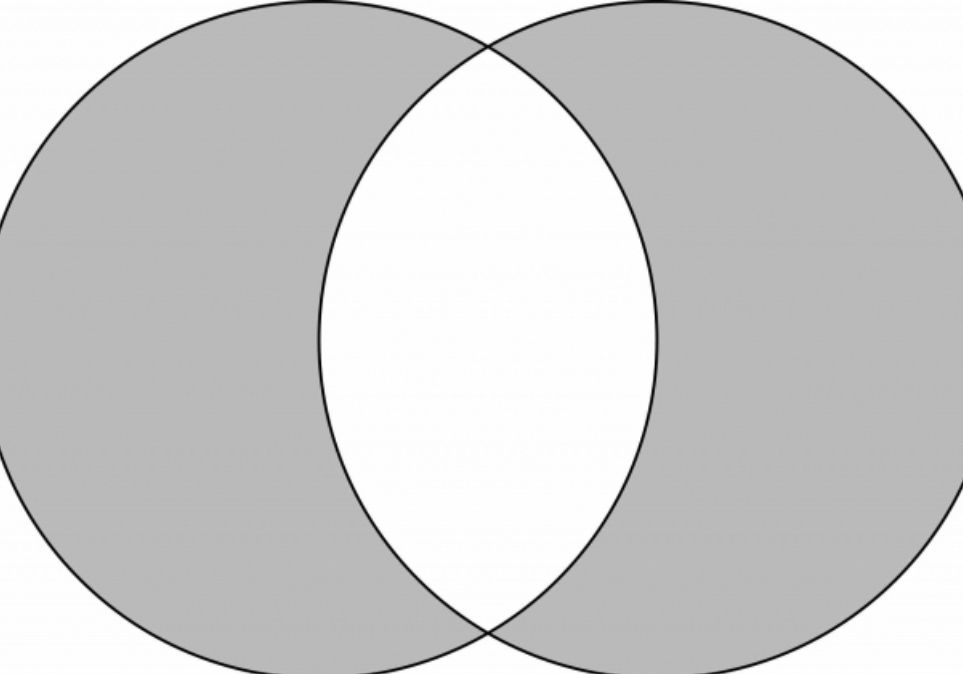
The Vesica Piscis, created by the intersection of two identical circles, represents the union of opposites.
Its proportions have influenced architectural masterpieces and are embedded in various artistic and organizational symbols throughout history.
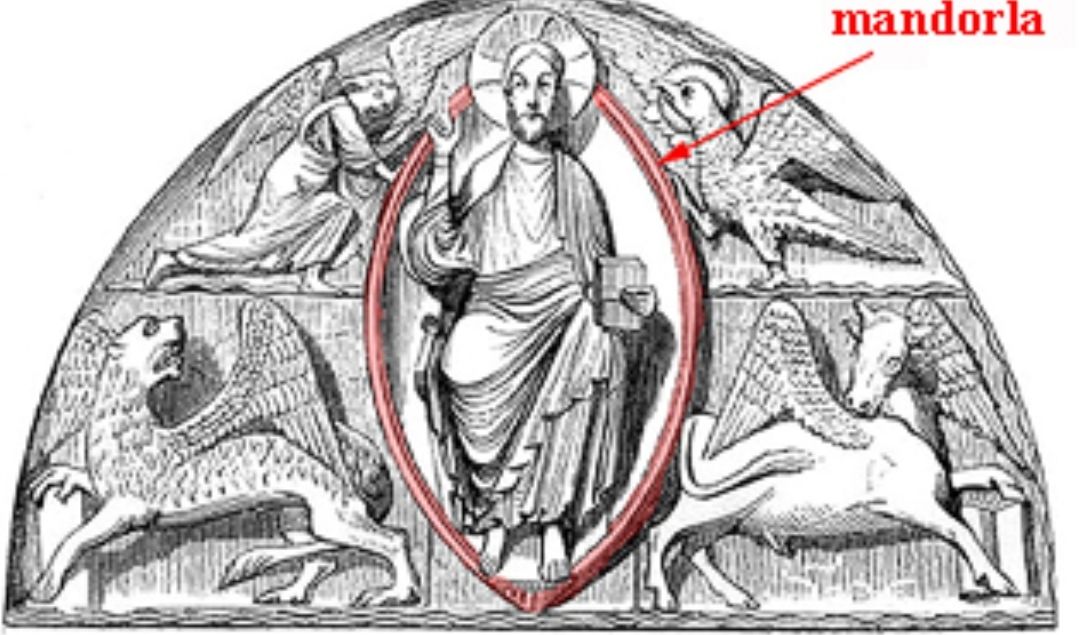
The mandorla is often seen in religious art and architecture.
MandorlaMandorla in Christian Art
The Mandorla is derived directly from the Vesica Piscis, symbolizing the canal of life, the vagina opening where all humanity derives.
This is intersection of the earthly and celestial realms. Earthly body delivered with soul inside
Seed of Life: The Essence of Creation
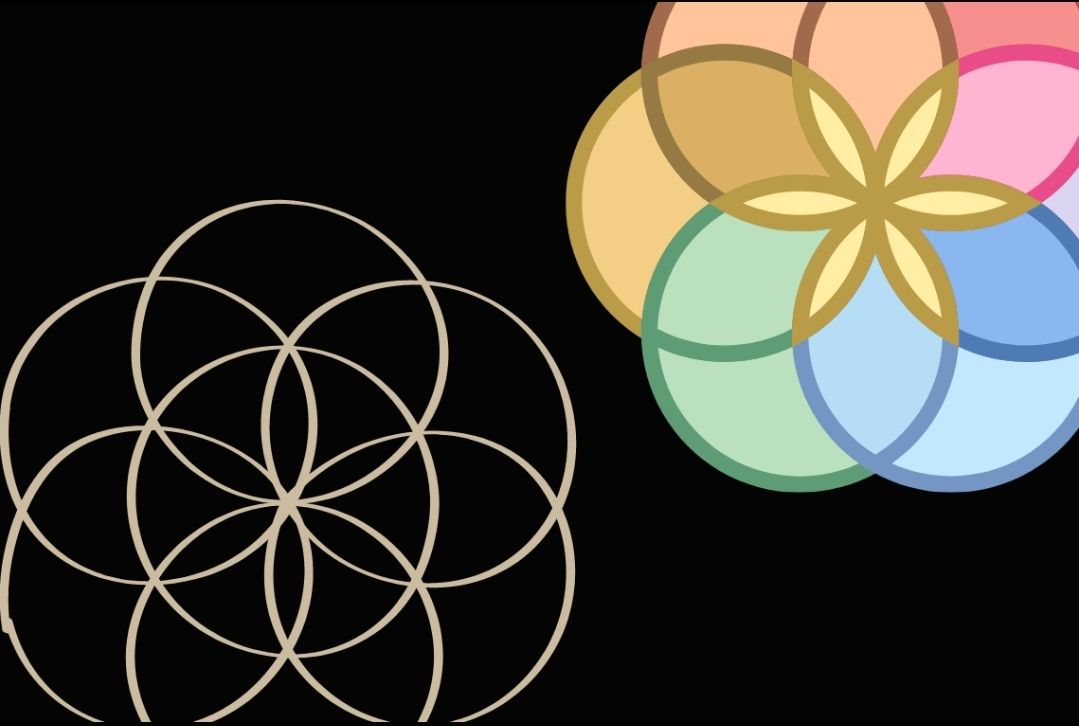
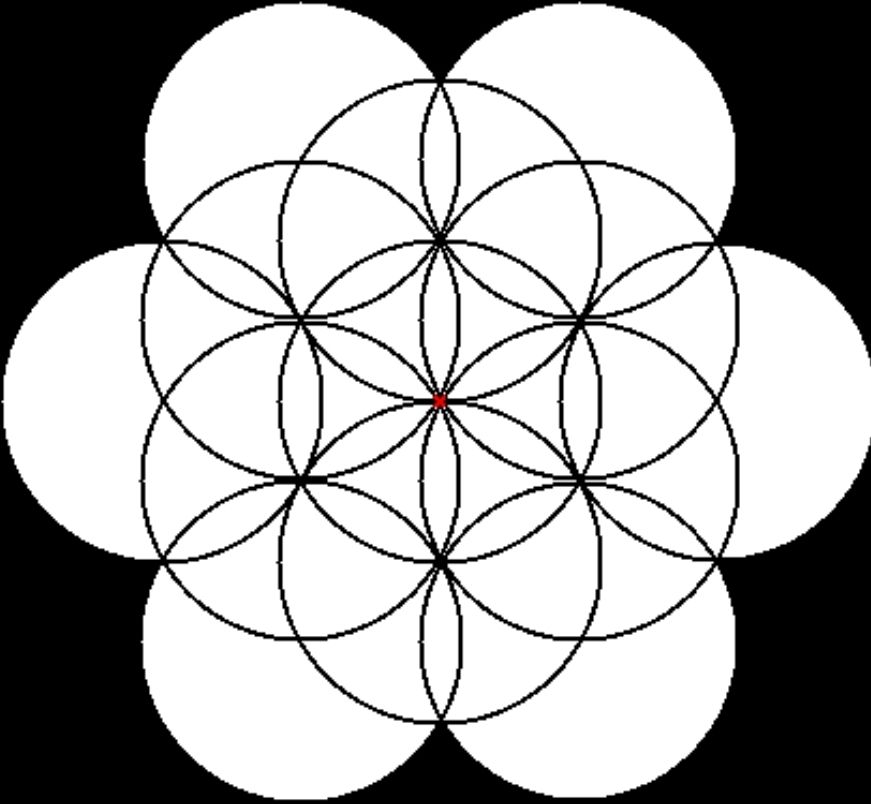
At the heart of sacred geometry lies the Seed of Life, a design made up of seven intertwined circles.
Its universal appeal can be witnessed in its widespread use across various religions and cultures.
Each overlapping circle represents a cell, a cycle, or even a day, culminating in the interconnected nature of life’s processes.
The Seed of Life speaks to the fundamental structures of life and existence, imbuing objects with a sense of protection and blessing.
Egg of Life: The Spark of New Life
Emerging from the Seed of Life, the Egg of Life symbolizes rebirth, fertility, and the spark of new life.
Seed of life is vagina, Ovulation is the substamce perfecting the environment for masculine seeding, increasing pleasure increases bodily ease and diversion.
By adding six more circles to the foundational Seed, the Egg of Life demonstrates how life and patterns expand and evolve.
Within the three-dimensional realm, the Egg of Life can be visualized through the eight spheres nestled within Metatron’s Cube, showcasing the versatility and interconnectedness of sacred geometric symbols.
Flower of Life: The Cosmic Blueprint
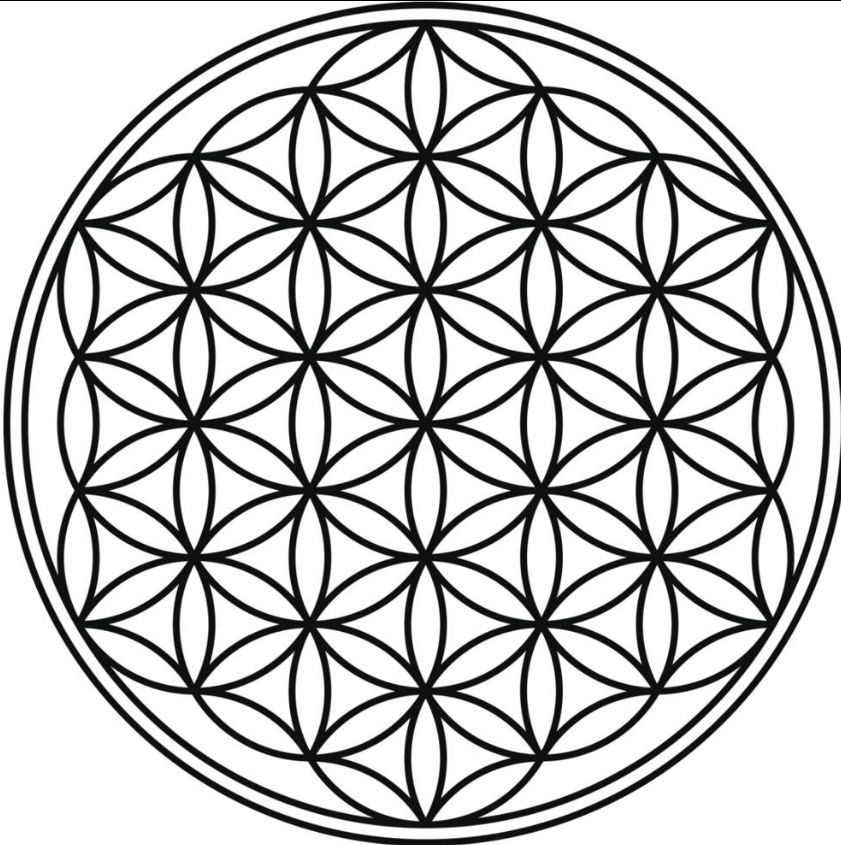
The Flower of Life, often depicted as a series of 19 interlocking circles, is believed to be the cosmic blueprint, encoding the very design of every atomic structure and life form.
Its presence across civilizations, from ancient Egypt to modern Japan, bears testament to its universal appeal.
JAPANESE FLOWER OF LIFE
Sephiroth
Tree of Life: The Interconnectedness of All Things
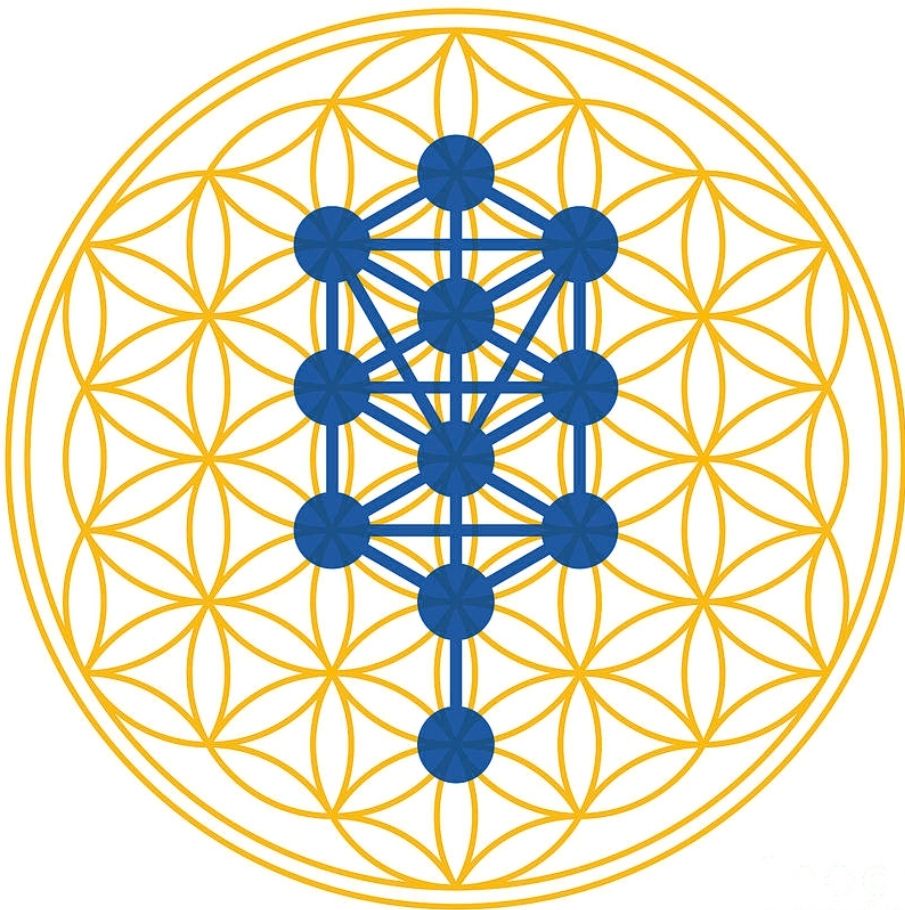
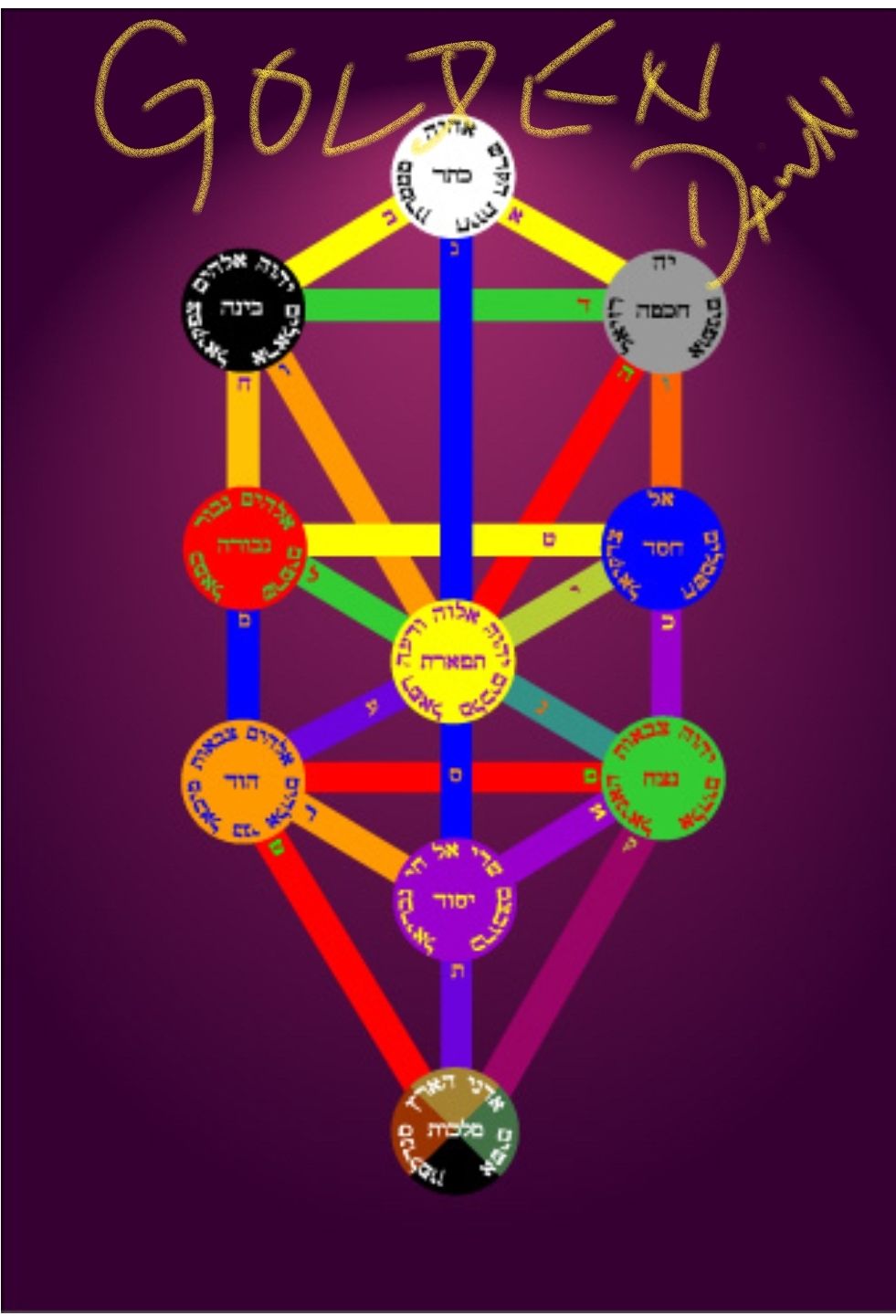
The Tree of Life represents numerous systems across varying cultures and religions, providing a hierarchical structure for all the forces in the Universe.
Its 10 spheres, called the “Sephiroth,” represent different qualities of the Soul, divided into three pillars: the Pillar of Severity, the Pillar of Mildness, and the Pillar of Mercy.
The Tree of Life reminds us that we are not alone in the Universe but rather part of a vast interconnected network.
Fruit of Life: The Holy of Holies
Emerging from the heart of the Flower of Life, the Fruit of Life comprises 13 interconnected spheres, often referred to as the ‘Holy of Holies.’
The 13 spheres symbolize unity and a transition between realms or dimensions, while the 78 lines that emerge when linking the centers of these circles fashion Metatron’s Cube, enclosing all five Platonic solids.
The Fruit of Life’s spheres symbolize the feminine aspects of creation, providing a foundation for the 78 masculine rays of creation.
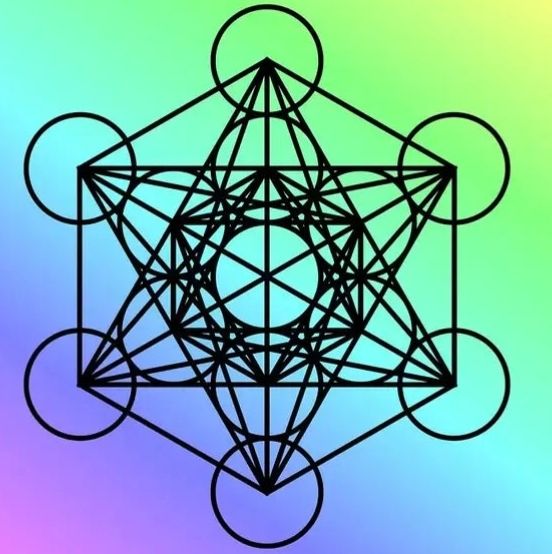
Metatron’s Cube: The Divine Blueprint
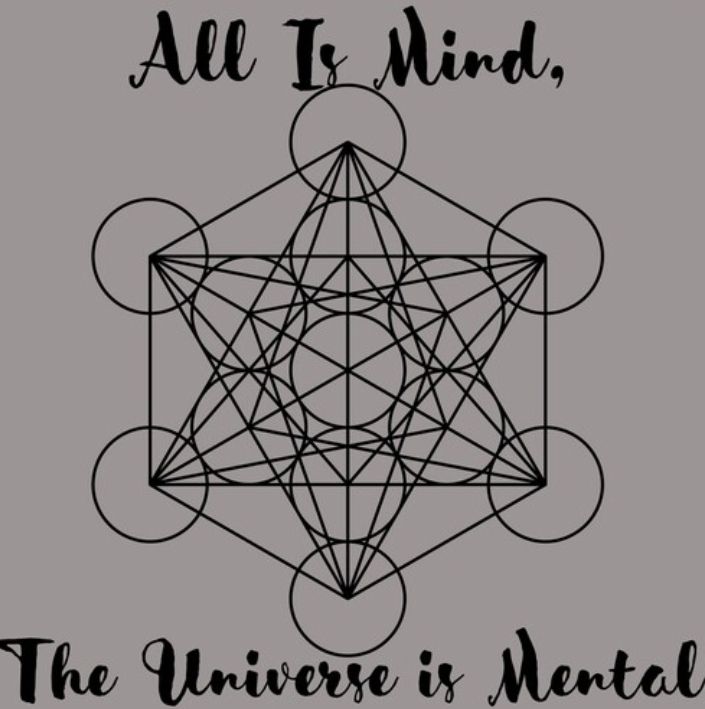
Metatron’s Cube, a geometric construct associated with the archangel Metatron, is a pivotal bridge, transforming 2-dimensional realities into 3-dimensional realms.
Within this complex geometric form, the five Platonic solids are discerned, positioning Metatron’s Cube as a testament to the divine blueprint upon which the cosmos is etched.
As quantum physics ventures deeper into understanding existence, it continually echoes the
Hermetic quote, “all is mind; the universe is mental,” with Metatron’s Cube in mind epitomizes the abstract, cognitive foundation of our universe.
Grid of Life: The Masculine Counterpart
The 64-tetrahedron, commonly termed as the ‘Grid of Life,’ is the masculine counterpart to the Flower of Life.
This geometric form, comprising 64 individual tetrahedrons, overlays the Flower of Life, symbolizing the convergence of space and time.
The allure of the Grid of Life transcends its geometric elegance, embedding itself in the mystique of the number 64, which recurrently surfaces in nature, mysticism, and human constructs, from genetic code to sacred texts.
The Grid of Life emphasizes the interconnectedness of all things and underscores its significance in our understanding of the universe.
Narcissists are known for their adeptness at emotional manipulation.
This skill allows them to maintain control over others and ensure their desire are met.
One of the most prevalent tactics employed by narcissists is gaslighting.
Gaslighting
Gaslighting is a form of psychological manipulation in which the narcissist distorts the reality of their partner, causing them to doubt their own perceptions and sanity.
Invalidation
Through invalidating their partner’s emotions and experiences, narcissists establish a power imbalance and reinforce their dominance in the relationship.
Projection
Another manipulative tactic employed by narcissists is projection.
When confronted with their own flaws or shortcomings, narcissists deflectblame onto their partners by projecting their own negative traits onto them.
This not only shifts the focus away from their own behavior but also allows them to maintain their self-image as faultless and superior.
Stonewalling
Stonewalling is a behavior commonly exhibited by narcissists when faced with conflict or criticism.
It involves withdrawing emotionally and shutting down communication as a means of maintaining control and avoiding accountability.
When a partner attempts to express their feelings or concerns, the narcissist may dismiss and invalidate them, leaving the partner feeling unheard and invisible.
Stonewalling serves as a powerful weapon in the narcissist’s arsenal, as it not only denies the partner’s emotions but also denies their very existence.
By refusing to engage in meaningful dialogue, the narcissist effectively shuts down any potential for growth or resolution in the relationship.
Mastering the nuance between perception and reality is not a passive philosophical exercise; it is the essential toolkit required to dismantle our own cognitive illusions and navigate our way out of profound hardship.
When you are in the trenches, survival depends on clarity.
By carefully distinguishing between seemingly identical ideas, you build an architecture of discernment… allowing you to separate the truth of a situation from the mental friction keeping you stuck.
Map vs. Territory
The first tool in this kit is recognizing that the crisis you are experiencing (the territory) is completely separate from the story you are telling yourself about it (the map).
The distinction between the map and the territory is a fundamental concept in rationality.
A map is a representation of reality, while the territory is the actual reality itself.
Why Does This Matter?
This distinction matters because it highlights the fact that our understanding of the world is always mediated through our mental models and representations.
We must be aware that our ‘maps‘ , no matter how detailed or accurate, are never identical to the ‘territory‘.
Recognizing that your map is flawed is the first step, but how does the map get drawn in the first place?
When we are struggling, our maps are rarely constructed from present reality. Instead, they are stitched together using outdated, unexamined assumptions.
To update your map, you must confront the difference between the mental debris you default to and the active awareness required to survive.
Cached Thoughts vs. Actual Thinking
CACHED THOUGHTS
Cached thoughts are the pre-existing beliefs and assumptions that we hold, gathering trash and holding into them like a computer holds onto cqche. This means these are thoughts that lack conscious awareness.
This Repository of ‘thoughts’ are mental shortcuts that we rely on to make sense of the world, with no thought as to if these thoughts are based in objective reality or not.
THINKING
In contrast, thinking involves actively questioning and challenging our cached thoughts, engaging in critical analysis, and seeking new information to refine our understanding.
When you rely on cached thoughts instead of active thinking, your internal world becomes an echo chamber. You begin to mistake your unexamined biases for universal laws. This is where hardship turns into self-sabotage—when you project your own internal friction onto the external territory and assume everyone else is navigating the same distortion.
Mind Projection Fallacy
The Mind Projection Fallacy is a cognitive bias that occurs when people assume that their personal beliefs, values, or perceptions are shared by others or represent objective reality. This fallacy suggests that people often confuse their own thoughts and feelings with universal truths and expect others to have the same thoughts and feelings.
The Mind Projection Fallacy can significantly distort one’s ability to discern.
When we project our own beliefs and emotions onto others, we fail to accurately discern their unique perspectives and experiences.
Here Are Some Examples Of How Mind Projection Impedes Ones Ability To Discern:
Overestimating Agreement: One may falsely believe that others share their opinions, leading to an overestimation of consensus and potentially causing miscommunication or conflict when differing perspectives are eventually revealed.
Inaccurate Assumptions: When projecting personal beliefs, individuals can make inaccurate assumptions about others’ thoughts and feelings, leading to misunderstandings and incorrect conclusions.
Inability to Empathize: By assuming that everyone thinks and feels similarly, individuals can struggle to put themselves in others’ shoes and empathize with their unique experiences and emotions.
Poor Decision-Making: Decision-making can become flawed when one assumes their perspective is universally shared, potentially leading to choices that are not inclusive or beneficial for all parties involved.
To overcome the Mind Projection Fallacy and improve discernment, it is crucial to foster empathy, seek out diverse perspectives, and practice open communication. By recognizing the influence of personal beliefs and emotions on perception, individuals can become more discerning and accurately understand the viewpoints of others.
The Halo Effect:

a cognitive bias where our overall impression of someone or something influences our judgments of their specific traits. This term, coined by psychologist Edward Thorndike in 1920, illustrates how positive perceptions in one area can positively affect our opinions in another.
Escaping this cycle of projection requires a radical shift in how you process information. You must start dissecting the narratives you encounter, both internal and external. To do this effectively and strip away the illusion, you have to separate the mere structure of a situation from its actual substance.
Syntax vs. Semantics
In the context of language and communication, syntax refers to the physical structure of a message.
Semantics refers to the meaning or intended relationship to the territory.
Understanding this distinction is crucial for effective communication.
Yet, grasping the intended meaning is only half the battle.
When you are fighting your way out of a difficult season, it is not enough to know what a situation means—you must understand its real-world impact.
You must discern the difference between the definition of a problem and the actual consequences it produces.
Semantics vs. Pragmatics
Semantics refers to the literal meaning of a message, while pragmatics refers to the intended result or effect of conveying that message.
This distinction is important because it highlights the fact that communication is not just about transmitting information, but also about influencing behavior and shaping outcomes.
Once you understand the practical effects of your situation, the next logical step is determining where to apply your energy to fix it.
This requires pinpointing your exact position on the battlefield.
Are you fighting the immediate symptom right in front of you, or the overarching system that created it?
Object-level vs. Meta-level
The object-level refers to the specific task or problem at hand, while the meta-level refers to the broader context or framework within which that task or problem is situated.
A good meta-level theory can help us get things right at the object level, but it is usually impossible to get things right at the meta level before making significant progress at the object level.
Ultimately, navigating through these layers of abstraction brings you to the core of all discernment.
When the mental debris is cleared, the projections are silenced, and the structure is separated from the impact, you are left with the final, most vital distinction required for true liberation.
Seeming vs. Being
We can only deal with how things seem to us, not how they are in absolute terms.
This is a humbling reminder of our limited perspective and the importance of maintaining a degree of epistemic humility.
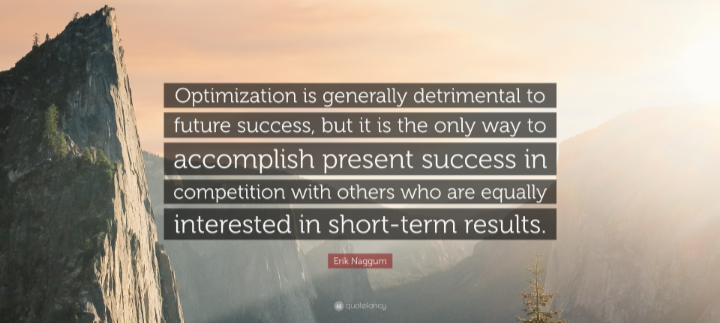
If we optimize too hard for things that seem good rather than things that are actually good, we may end up with suboptimal outcomes.
Signal vs. Noise
Not all information is created equal.
We often desire certain types of information while seeking to ignore others.
The distinction between signal and noise helps us focus on the most relevant and valuable information while filtering out the irrelevant or distracting.
Selection Effects
Selection effects occur when the evidence we have access to is filtered or biased in a particular way.
This can lead to distorted conclusions and faulty decision-making.
Understanding selection effects requires modeling where our information comes from and accounting for the processes that shape what we see.
What You Mean vs. What You Think You Mean
People often claim to have meant something slightly different than what was originally stated when their original position is challenged or refuted.
This automatic response, generated by our brains without conscious control, can be dangerous for clear thinking.
It is important to be aware of this tendency and to strive for consistency and honesty in our communication.
What You Mean vs. What Others Think You Mean
The illusion of transparency and the double illusion of transparency highlight the gap between what we think we are communicating and what others actually understand.
We often overestimate how clearly we convey our thoughts and feelings, while underestimating the extent to which others misinterpret our messages.
Effective communication requires being mindful of these biases and seeking feedback to ensure mutual understanding.
What You Optimize vs. What You Think You Optimize
Our actions are often driven by hidden motives and incentives that we may not be fully aware of.
Evolution, for example, optimizes for reproduction, but in doing so creates animals with a variety of goals that are correlated with reproduction.
Intrinsic motivation is generally stronger and more effective than extrinsic motivation.
Understanding the difference between what we think we optimize for and what we actually optimize for can help us align our actions with our true values and goals.
Stated Preferences vs. Revealed Preferences
Stated preferences are the preferences we explicitly express, while revealed preferences are the preferences we can infer from our actions.
These two types of preferences are often misaligned, with our actions not matching our stated beliefs or desires.
Recognizing this distinction can help us identify and address inconsistencies in our decision-making.
What You Achieve vs. What You Think You Achieve
Most of the consequences of our actions are unknown to us.
We often overestimate our ability to predict and control the outcomes of our decisions.
Effective action requires humility, openness to feedback, and a willingness to learn from experience.
It is impossible to optimize without proper feedback, so we must be vigilant in seeking out information about the actual results of our efforts.
What You Optimize vs. What You Actually Achieve
Consequentialism focuses on the expected consequences of our actions, rather than the actual consequences.
While it is important to consider the potential outcomes of our decisions, we must also be prepared to adapt and adjust our course based on the real-world results.
Rigid adherence to a particular optimization strategy can lead to suboptimal outcomes if it fails to account for the actual effects of our actions.
What You Seem Like vs. What You Are
Our external appearance and behavior may not always reflect our true nature or inner experience.
We may present a certain image to the world while privately struggling with doubts, fears, or contradictory impulses. Recognizing this distinction can help us cultivate self-awareness, authenticity, and empathy in our relationships with others.
What Other People Seem Like vs. What They Are
Similarly, we often make assumptions about others based on their outward behavior or reputation, without fully understanding their inner lives or the complex factors that shape their actions.
Assuming that we understand others is a common mistake that can lead to misunderstandings, prejudice, and missed opportunities for connection and growth.
What People Look Like vs. What They Think They Look Like
People tend to underestimate the gap between their stated preferences and their revealed preferences. We may claim to value certain qualities or characteristics in ourselves or others, but our actions often tell a different story. Recognizing this discrepancy can help us align our self-perception with reality and make more authentic choices.
What Your Brain Does vs. What You Think It Does
Our brains are complex, powerful, and often mysterious. We are running on “corrupted hardware” in the sense that our thought processes are shaped by social and evolutionary factors that can distort the truth. The brain’s machinations are fundamentally social, automatically engaging in signaling, face-saving, and other behaviors that can lead to biased or irrational decisions. While we must be skeptical of the outputs of our thought processes, we must also strike a balance between skepticism and action, particularly in situations that require quick thinking or decisive action.
Clever Argument vs. Truth-seeking
People often believe what they want to believe, a phenomenon known as motivated cognition.
Giving a smart person more information and more methods of argument may actually make their beliefs less accurate, because it provides them with more tools to construct clever arguments for what they want to believe.
The actual reason for believing something determines how well that belief correlates with the truth.
If you believe something because you want to, any arguments you make for that belief, no matter how strong they may sound, are devoid of informational context about the truth of the belief and should be ignored by a genuine truth-seeker.
Lumpers vs. Splitters
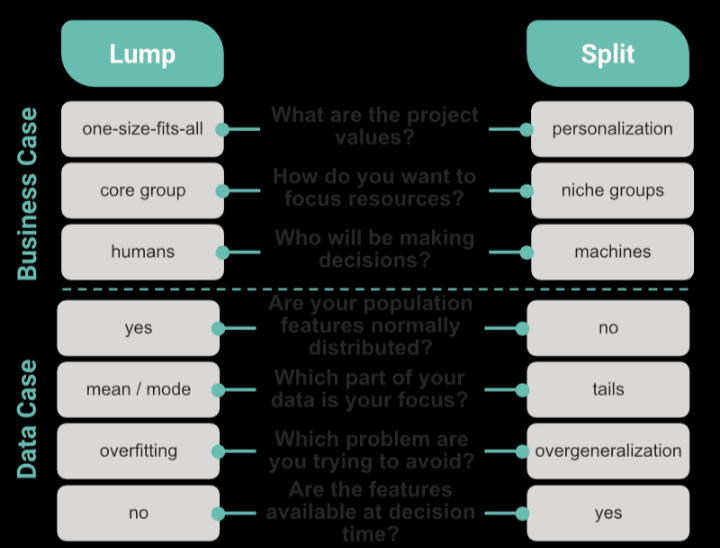
Lumpers are thinkers who attempt to fit things into overarching patterns, while splitters are thinkers who make as many distinctions as possible, recognizing the importance of being specific and getting the details right. The lumper mindset can be useful for identifying broad trends and connections, while the splitter mindset is essential for accurate analysis and nuanced understanding.
Fox vs. Hedgehog
The fox knows many things, while the hedgehog knows one big thing. Closely related to the lumper-splitter distinction, the fox mindset involves a broad array of knowledge and the ability to draw insights from diverse sources. The hedgehog mindset, in contrast, focuses on a single big idea and applies it everywhere. According to Tetlock’s research, the fox mindset is generally better for making accurate judgments in complex, uncertain situations.
Traps vs. Gardens
Well-kept gardens die by pacifism, meaning that conversations, societies, systems, and even thermodynamic equilibrium tend to slide toward disorder, conflict, and decay unless actively maintained.
Recognizing this distinction can help us be proactive in defending and nurturing the things we value, whether it’s a productive dialogue, a thriving community, or a well-functioning organization.
Nuanced thinking involves carefully distinguishing between seemingly similar concepts and recognizing the subtle differences that shape our understanding of the world.
By engaging in this kind of discernment, we can make more informed decisions, communicate more effectively, and develop a richer, more accurate perspective on the complex realities we navigate every day.
In my heart resides a girl named Rainne who carries a great burden.
Rainne is prone to analyzing everything, even the smallest nuances in a person’s voice.
What ignited Rainne’s passion for scrutinizing everything? What is the foundation of her elaborate thought process? Whence does it all emanate?
I think I know…
At the core of her receptive mind, constantly striving to comprehend a chaotic world, lies a pivotal moment: her birth.
Maternal Influence
Beginning with the individual who holds the utmost significance in the life of each young girl, namely the mother (or female guardian/caretaker), for it is through this bond that her character and cognitive abilities are honed.
Growing up in a chaotic environment due to her mother’s mental health issues, Rainne’s mother lacked the necessary support to reach her full potential.
The scars of her past continued to impact her parenting style and choices, making it difficult for her to break free from the cycle of dysfunction.
Living in the suffocating grip of unhealed trauma, she made a conscious decision to suppress the fiery rebellion of her wounded inner child.
Instead, she chose to remain in the shadow of resentment and defiance towards her mother, whose ignorance and neglect had contributed to the pain that lingered deep within her.
The scars of her past were etched into her being, a constant reminder of the battles she fought alone, yearning for love, understanding, and healing that seemed perpetually out of reach.
Despite the weight of her struggles, she kept a hard head, sadly hardening her heart…
Without knowing it:
Her primary focus remained on guiding her children on how to evade their personal trauma, since teaching them anything different would oblige her to confront the truth mirrored in a looking glass, a reality she chose to elude, punish, and push into the depths of darkness.
Rainne’s mother was traumatized, leading her to resist anything that sought to tear down walls, dismantle barriers, or open the heart to vulnerability.
The refusal was meant to safeguard her self-worth, on which Rainne’s mother heavily relied, with arrogance and a sense of moral superiority keeping her defenses intact.
These identities were profoundly rooted in her existence in an effort to offset the ominous weight of the maternal, generational curse.
The cycle of generational curses continues through the family line, with very few individuals able to recognize and break the pattern.
That is why Rainne found it fitting to claim the title of masochist.
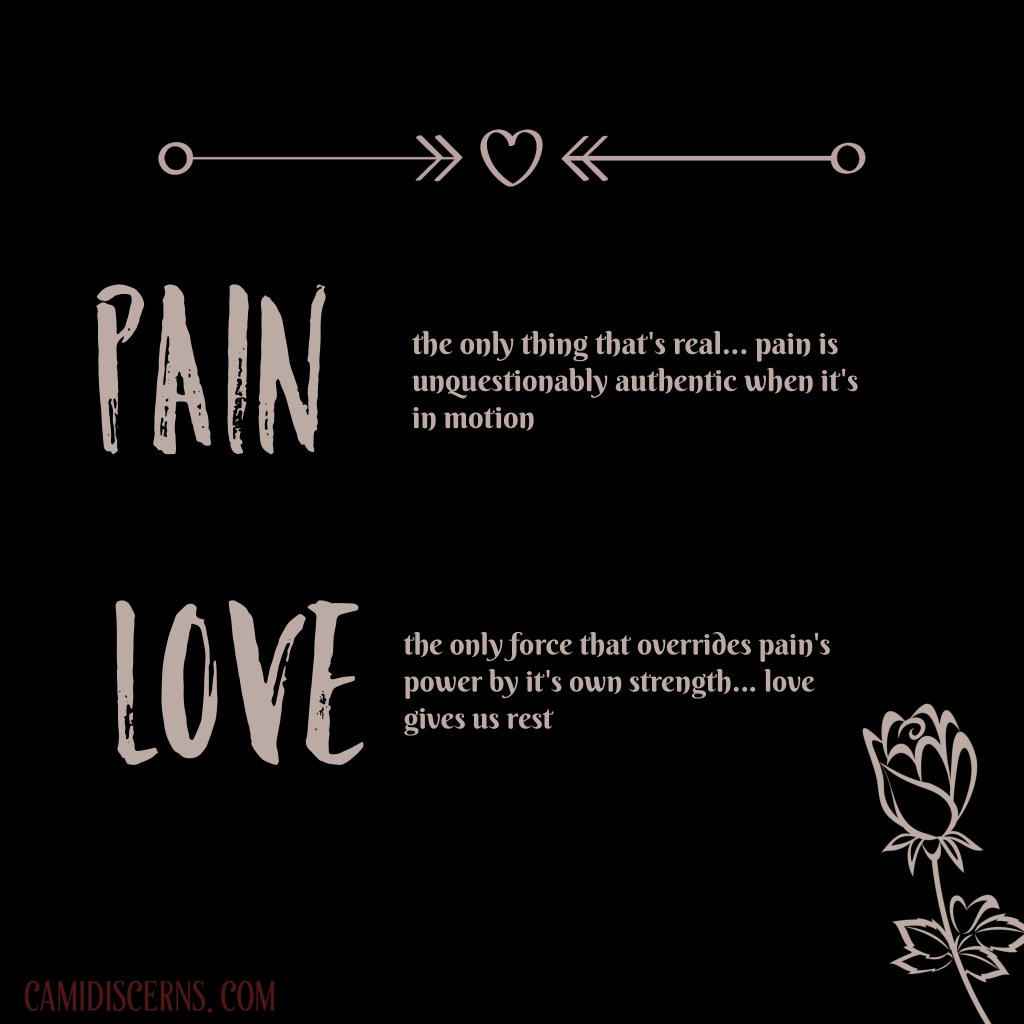
But to Rainne: Pain is significantly superior to confusion and chaos.
Personal Struggles and Empathy
That’s where Rainne truly comes into her own. Despite being burdened with these traumas, she courageously confronts her own pain and bravely shoulders her mother’s trauma, fully embracing the heaviness of it all.
Every horrifying narrative her mother relayed, every time the agony was gently dispersed into Rainne’s ears, her soul was deeply gashed, inserting within her the dread that was not hers to carry, lacking the tools to understand.
Rainne was akin to a sponge, a remarkable healer, she could sense herself soaking up her mother’s distress as she watched her mother’s anguish.
Experiencing it regularly decrease in her mother as it seeped into Rainne, deep within herself, her mother felt relief, yet unknowingly.
It was excruciating.
Rainne discovered tranquility in being the one suffering rather than watching her dear mother in unbearable agony.
Rainne was and knew she was a conduit of sorts and had been put into a position of learning how to heal, cope, practice self-control, and take ownership of hellish suffering.
Rainne was no professional, she was just a mere child… this profound psychological metamorphosis was in response to her mother’s inability and unaware void in teaching her skills to invoke resilience nor tools to process the big emotions and confusion.
Cognitive and Emotional Development
A person who is severely gaslit during their childhood brain formation inevitably learns to gaslight.
The small child who witnesses their caregiver’s extreme responses and anger will emulate this behavior, as they absorb and imitate the behaviors they witness while their young minds are still flexible and evolving.
That child doesn’t simply learn to overreact, but rather, they are deeply ingrained with the personality that becomes a fundamental aspect of their identity, as opposed to a conscious choice actively made.
Rainne’s meltdowns were like violent storms unleashing all at once, with screams so piercing they echoed through the house, and thrashing so wild it felt like she was a hurricane tearing everything in her path.
The intensity of her emotions seemed to consume her, leaving her trembling and drained when the storm finally passed.
It was as if she had no control over this inner turmoil that threatened to engulf her at any moment.
To this very day, the memory remains etched in her mind.
She yearned fiercely to break free from it, but a force within her always seized control, preventing her from thinking logically.
The concept of healthy coping techniques was foreign to her.
During periods of calm, she engaged in positive activities like crafting, singing, studying, and more.
However, the real challenge emerged during trying times when she encountered obstacles with no clear solutions, strategies, or guidance on how to navigate through them.
She had never witnessed anyone model healthy coping behavior, leaving her lost and without direction.
One cannot effectively teach coping skills if they have never been taught how to cope themselves.
Generational Trauma
So the generational way of dealing with issues, conflicts, and scuffles involves going to the extreme, hurling the harshest insults possible, and yearning for the other person to face harsh retribution for hurting our feelings, having to ensure they suffer, all their “deserved” guilt.
We use the logic of our stagnantly pent-up anger to react until a distraction comes about… only to then brush it all off as if it never occurred.
The resolution of all recurring, deep rooted problems was avoided since no solutions were easily within view, leading to the faulty strategy of persistent denial… the problem is disregarded, said to be “resolved“, so then hidden resentments would fester within a deflecting surface of self, maintaining a facade of “care” and compassion, concealing the inner turmoil…
Wounded souls we were yearning to break free from the self-imposed confinement, torn between conflicting thoughts, seeking distractions at every turn.
Early Awareness and Analysis of Adult Issues
Rainne knew adult issues from a young age.
Her parents would fight multiple times a week, they also drank which didn’t help.
Her young mind absorbed the complexities of their arguments like a sponge, dissecting each hurtful remark and dissecting the underlying emotions. An obsession it became, it was the only solid ground she could find strong enough to stand on, in her childish creativity.
It was as if she had a maturity far beyond her years, as she recognized the pain and misunderstandings that fueled their fights. The answers were ever before her, an 8 year old with no leverage.
While they simply brushed off the conflicts in the morning, she couldn’t shake the weight of their hate filed, damaging words and the lasting impact they had on each other.
It was a heavy burden for a child to bear, but she couldn’t help but feel responsible to bear it. Sure would have given her little life to bring peace and understanding to their fractured relationship, as she understood the fighting was not what it should have been.
They would talk and scream past the other, it would become something it isn’t.
They wouldn’t listen to one another, it would become a poop flinging contest.
Rainne’s knew the problem in grade school, but he parents couldn’t see it.
She knew what it was.
Despite her limited knowledge (because of her sheltered youth) of both herself and the world around her, Rainne acknowledged that to truly love, one must first comprehend oneself with purity and seek the others feelings without pretenses.
In a self denying mode of being, to preserve her own life and protect her family (her family was her life), she sacrificed her own identity, disowning her individuation and betraying her own future.
Naively believing she could salvage something meaningful in her parents marriage, in doing so she sought a dead end as her young mind remained steadfast in its misguided conviction.
The Quest for Order
In her psyche, she sought solutions that (by the creativity of her mind) made sense and seemed so perfect.
Her brain wasn’t set in the shadow; she wasn’t jaded by the rejection of her own inner child like her mother was. She had yet to know what a shadow was, but she was sure going into it.
The brokenness of her mother was so deep in denial of inadequacies, that any slight causing a negative emotion was reviled. So the root on which her family raised her rebuked authenticity, the very substance Rainne functioned, so secrecy became imperative to keep true to her self. Although stability and consistency were words foreign to Rainne, a spark within her Spirit thirsted for the key to attaining order and logic, a thirst to turn her family’s chaos into order, without knowing: the Philosopher’s Stone was the very thing she sought since grade school.
Her mind didn’t just linger in her mother’s shadows; she remained untouched by the contraction of the bitterness, yet turned to the natural rejection of her inner child, not like her mother was but almost.
The brokenness of her mother ran so deep that denial was the mode of familial operation… that any perceived criticism provoked an emotional response from the mother that bit like an angry viper and suffocated the air like a boa.
This balancing act was the foundation of Rainne’s upbringing.
Still, a yearning to convert her family’s disorder into harmony was the very object of her quest and became her demise, as well as her necessary dark night needed for a Salvation.
Paternal Influence
Her father was a latchkey kid who never grew up and lacked significant structure as a boy, so stability wasn’t instilled within him. He possessed a profound terror of perishing. Jew had a lot of love though, Rainne knew his love was true, as it was consistent, he was never cruel.
Rainne was nurtured and found comfort in him, in an environment suffused with fear. She was shown to tremble at the idea of death instead of embracing it, she would evade it.
She was brought up to dread the inescapable and to grasp onto fantasies and deceit. She knew this to be folly in her soul.
Rainne’s sophisticated cognitive process and critical disposition are strongly influenced by her childhood encounters with uncertainty, distress, and the intricate interpersonal relationships within her role models.
Rainne’s childhood was marked by the constant tension that lingered…
Her mother, haunted by past traumas, never fully addressed, existing in a perpetual state of anxiety and unrest.
In this environment of fear and unease, Rainne developed a heightened sense of vigilance and analytical processing.
She learned to diligently observe the world around her, deciphering underlying tensions and unspoken truths. Looking for patterns and breaks in patterns.
This skill became a vital tool for navigating her tumultuous and uncertain surroundings.
However, Rainne’s innate empathy and sensitivity added another layer to her complexity.
Despite the trauma and fear that surrounded her, she possessed a deep capacity for understanding and connecting with others.
This empathy allowed her to see beyond the surface, to recognize the pain and struggles that others experienced, even when they tried to mask them, even when they were mean to her.
Combining her keen analytical skills with her compassionate nature, Rainne became a master at unraveling the complexities of human emotions and motivations that are locked away in a person.
She sought to bring order to the chaos around her, to make sense of the contradictions and conflicts that seemed to define her world.
Rainne never lost sight of her ultimate goal: to create a sense of harmony and understanding in a world that often seemed tumultuous and unpredictable.
Her journey was one of constant self-discovery and growth, failure and lessons… as she learned to navigate the complexities of her own emotions and relationships while striving to bring a sense of peace and clarity to those around her.
Often chaos insued but awareness of the context within its faced at all face costs, she is still fighting for peace.
Sigmund Freud was an Austrian neurologist and the founder of psychoanalysis, a clinical method for treating psychopathology through dialogue between a patient and a psychoanalyst.
He formulated the theory of the Oedipus complex, proposed the existence of an unconscious mind, and developed the idea of the id, ego, and superego as structural components of the human psyche.
Additionally, Freud’s work significantly influenced the field of psychology and various aspects of Western culture.
Carl Jung
Carl Jung was a Swiss psychiatrist and psychoanalyst who founded analytical psychology.
He is known for his concepts of the collective unconscious, archetypes, and the process of individuation. Jung emphasized the significance of symbolism, mythology, and the integration of opposing forces within the psyche.
His work has had a profound impact on psychology, psychiatry, and various fields, influencing areas such as dream analysis, personality theory, and the study of cultural and religious symbolism.
The main differences between Sigmund Freud’s psychoanalysis and Carl Jung’s analytical psychology lie in their perspectives on the unconscious, the role of the libido, and the significance of the collective unconscious and cultural symbolism.
Freud’s psychoanalysis emphasizes the influence of early childhood experiences, the unconscious drive of the libido, and the concept of repression as a key mechanism shaping human behavior.
In contrast, Jung’s analytical psychology expands on the collective unconscious, archetypes, and the process of individuation, focusing on the integration of opposing forces and the pursuit of wholeness or self-realization.
Freud’s emphasis on the Oedipus complex and the role of sexual and aggressive instincts differs from Jung’s broader view of the unconscious, which includes personal and collective elements, as well as archetypal patterns that transcend individual experiences.
Jung’s approach places greater emphasis on spirituality, mythology, and the symbolism found in various cultures, in contrast to Freud’s more clinical and biological focus on human behavior and mental processes.
Analytical Psychology
Analytical psychology, also known as Jungian psychology, is a branch of psychology developed by Carl Jung that focuses on exploring the depths of the unconscious mind and understanding the individual’s journey towards psychological wholeness. It places a strong emphasis on the exploration of the collective unconscious, archetypes, and symbolic imagery. Analytical psychology recognizes the importance of spirituality and the transcendent aspects of human experience. It views the psyche as a dynamic and self-regulating system, seeking to integrate and balance both conscious and unconscious elements.
Analytical psychology, also known as Jungian psychology, and “regular” psychology, commonly referred to as mainstream psychology differ in several significant ways:
Analytical psychology delves into the collective unconscious, archetypes, and symbolic imagery.
Collective Unconscious
Concept within analytical psychology that refers to the shared reservoir of knowledge, experiences, and symbols that all individuals inherit as a result of their common humanity. It is believed to be a deep layer of the unconscious mind that contains archetypes, universal themes, and instincts that are shared by all human beings across cultures and throughout history. This collective unconscious is thought to influence our thoughts, feelings, and behaviors, shaping our perceptions of the world and guiding our behavior in ways that are often unconscious to us. Through exploring and understanding the symbols and patterns that arise from the collective unconscious, individuals can gain insights into themselves, their relationships, and their place in the larger human experience.
Archetypes
Jungian archetypes are deeply rooted and universally recognized patterns of symbols and images that reside within the collective unconscious. These archetypes, such as the Hero, the Shadow, the Wise Old Man, and the Mother, represent fundamental aspects of the human psyche and serve as primordial templates for understanding and interpreting our experiences. They are symbolic guides that help us navigate the complexities of life, providing us with insight into our deepest fears, desires, and potentials. Jungian archetypes offer a profound framework for self-discovery and personal transformation, allowing us to tap into the depths of our unconscious and unlock greater awareness and wholeness.
Symbolic Imagery
Jungian symbolic imagery is a cornerstone of analytical psychology, emphasizing the profound power and significance of symbols and their role in unlocking the depths of the unconscious mind. Symbols are potent manifestations of archetypes, universal patterns of meaning that tap into the collective unconscious. They speak a language beyond words, evoking profound emotions, insights, and connections to the wider human experience. Through exploring and understanding these symbolic images, individuals gain access to a rich tapestry of personal and collective meaning, diving into the depths of their own psyche, unraveling mysteries, and opening doors to self-discovery, healing, and transformation. Jungian symbolic imagery offers a bridge between the conscious and unconscious realms, allowing individuals to navigate the complexities of their inner world and find deeper understanding and integration.
Integration
Jungian integration is the process of merging and reconciling the conscious and unconscious aspects of the psyche, as proposed by Carl Jung in analytical psychology. It involves recognizing and embracing the shadow, the hidden and often repressed aspects of ourselves, and integrating them into our conscious awareness. By acknowledging and working with the shadow, we can uncover and integrate the valuable lessons it holds, leading to greater self-understanding and wholeness. Jungian integration also entails recognizing and exploring archetypal patterns and symbols that arise from the collective unconscious, allowing individuals to tap into a deeper level of consciousness and find meaning and purpose in their lives. Through this process, we may cultivate a sense of balance, authenticity, and personal growth, enabling us to fully realize our potentials and navigate the complexities of the human experience.
 The Nature of Suffering: A Necessary Element of Existence