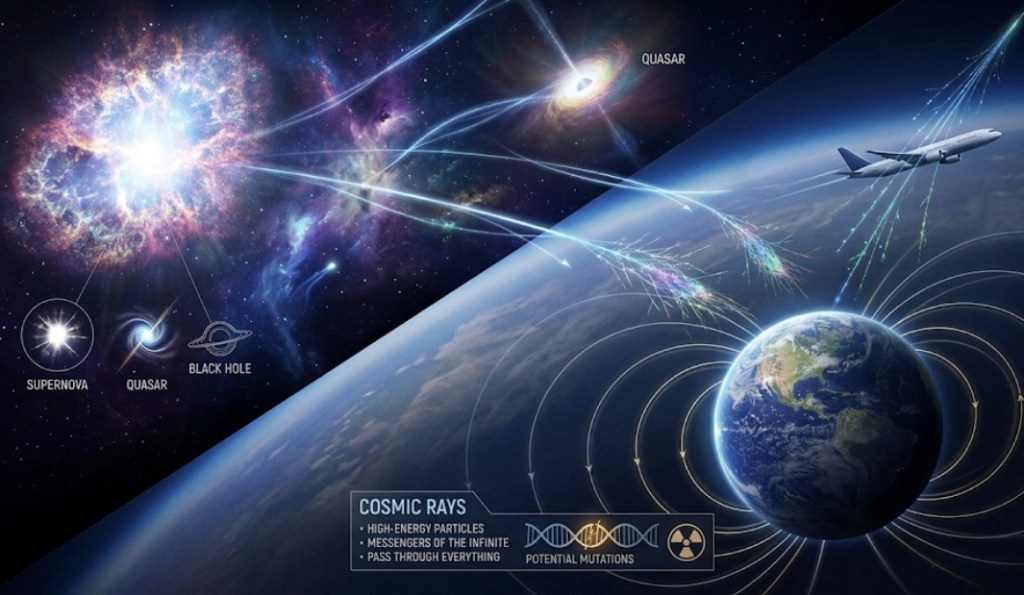
In the distant vault of space, supernovas erupt and quasars blaze like divine beacons.
WHAT IS A SUPERNOVA?
A star at the end of its life, collapsing in on itself until it explodes with a force that reshapes galaxies.
WHAT IS A QUASAR?
A luminous heart of a distant galaxy, powered by a black hole consuming matter and releasing energy beyond comprehension.
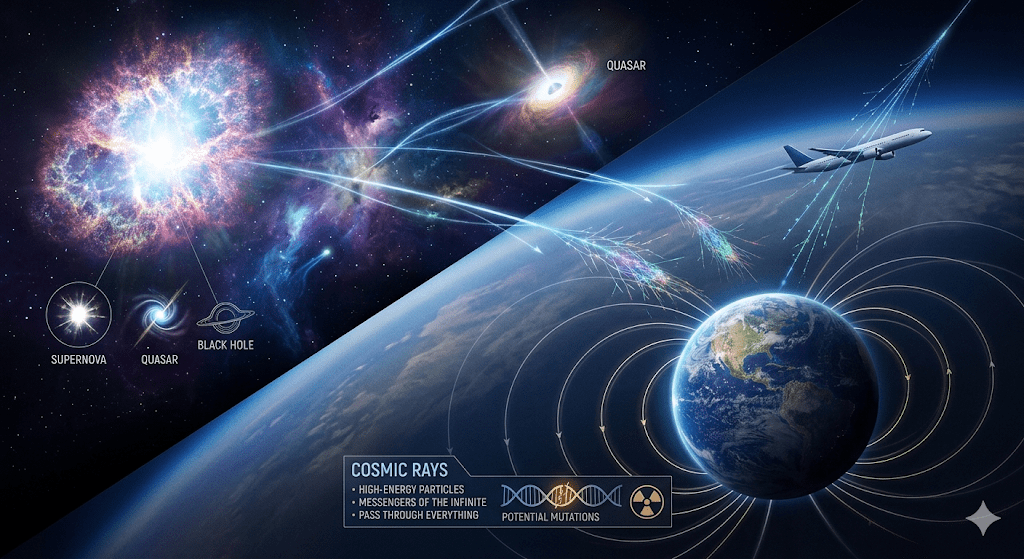
These cosmic furnaces unleash torrents of radiation—force so immense it sends cosmic rays streaking through the void like messengers from the edge of creation.
They carry within them the coded whispers of the universe—ancient, electrified secrets written in light.
FREQUENCY
The cosmos is alive with currents that ripple through every atom of our existence.
Among the most mysterious are cosmic rays—streams of high-energy atomic nuclei born in places beyond the reach of human imagination.
Cosmic Rays
Invisible, relentless, and infinitely powerful. They radiate with penetrating energy from the great beyond.
Radiation detectors trace their presence in the upper air, mapping the unseen architecture of our living universe.
THE UNIVERSE IS ALIVE
The universe is no silent void—it hums with the pulse of energy, an infinite heartbeat.
Cosmic rays are not mere radiation; they are subatomic storms traveling at nearly the speed of light.
They are fragments of the divine machinery of existence.
They are particles of creation itself… passing through us every second, shaping the unseen architecture of reality.
Before the age of quantum understanding, astronomers thought these were just another form of X-ray or gamma radiation.
They were wrong.
Cosmic rays are matter in motion—energy incarnate—born of the most violent acts in the heavens.
WHERE DO THEY COME FROM?
Picture the abyss: galaxies like jeweled islands scattered across eternity.
Somewhere within that tapestry, a star detonates—a supernova—or a black hole tears matter apart and swallows light itself.
From these cataclysms, cosmic rays are forged and flung into the endless dark.
They travel for eons, crossing the void, until—finally—they touch Earth.
They are messengers from the beginning of time, heralds of the infinite.
They do not simply inform us; they initiate us—into the mystery of how energy becomes form, and form becomes life.
HOW MUCH ENERGY DO THEY HOLD?
These particles carry trillions of times more energy than anything within the human body.
To study them, scientists use advanced particle detectors, telescopes, and satellites that record their arrival—each one a signature of cosmic power.
Every detection is a data point in the ongoing dialogue between humanity and the stars.
Through these measurements, we glimpse the origins of galaxies, the birth of matter, and the laws that govern both light and darkness.
Cosmic rays help decode the story of the universe—and in doing so, they reflect something of our own genesis.
THE DUAL EDGE OF COSMIC LIGHT
But cosmic rays do not come without consequence.
Their energy, while ancient and beautiful, can scramble electronics, corrupt data, and fracture DNA.
When they split our cellular code, errors can occur—replication falters, mutations form, and sometimes, tumors emerge.
Scientists estimate cosmic rays account for a small but measurable fraction of cancers worldwide.
Thankfully, Earth shields her children.
Our magnetic field—strongest of all the rocky worlds—deflects the weaker rays, while the denser atmosphere absorbs most of the rest.
Yet the strongest still pierce through, striking nitrogen and oxygen molecules, scattering their energy in showers of secondary particles.
Even at sea level, cosmic rays pass through each human body roughly once every second.
THE RISK ABOVE THE CLOUDS
At high altitudes, the protection thins.
Airline passengers and crew are exposed to higher rates of cosmic bombardment.
The metal hull of a plane offers little defense—when struck, it releases a cascade of subatomic shrapnel that passes through the cabin with invisible precision.
The only true safeguard is limiting exposure.
Occasional travelers need not worry—but those who live in the skies, pilots and attendants, face heightened biological risks.
Governments now regulate flight exposure, monitoring radiation at cruising altitudes to protect those who serve the airways.
Still, this surveillance is largely limited to North America and Europe. Above Africa, our data is scarce.
A group of astronomers recently took the first step toward change—using a Raspberry Pi computer to create a low-cost radiation dosimeter.
They flew it from Johannesburg to Frankfurt, and from Munich back to Johannesburg, proving such technology can measure cosmic exposure with striking accuracy.
Their vision: a global network of radiation monitors to map and protect the skies we share.
THE COSMIC BALANCE
Cosmic rays remind us that we live inside a living, electric universe.
They are both creators and destroyers, the light that builds and the fire that burns.
From the smallest subatomic spark to the grand sweep of galaxies, their story is our own—the ceaseless interplay of energy and matter, life and death, chaos and creation.
Through them, we glimpse the truth:
that reality is not static but alive, vibrating with purpose.
And the universe, in all its violence and beauty, is still speaking…
through every ray, every particle, every breath of light.
Aristotle claimed that time is dependent on motion, meaning that time only exists in relation to and as a consequence of change occurring in the world.
Muller, a physicist at the University of California, Berkeley, posits that the expansion of the universe, starting with the Big Bang, constantly creates new space and, consequently, new time.
“Now” as the Leading Edge
He argues that the “now” is the boundary, the shock front, or the leading edge of time, where new time is constantly being created.
Implications for Time Travel
This theory has implications for our understanding of time travel, suggesting that the future is not predetermined, and that the “now” is the only reality that truly exists.
This concept contrasts with the block universe or eternalism, which suggests that all moments in time exist equally, and the presentism, which holds that only the present moment is real.
Aristotle argued that time, as a concept, depends on the soul’s ability to perceive and count it.
He suggested that if there were no souls to “count” time, there might still be change, but not time itself.
This view implies that time is not just countable but also essentially counted, meaning it requires a conscious entity to exist as a measurable concept.
Plato’s theory of the soul, influenced by Socrates, considered the soul (psyche) as the essence of a person, an incorporeal and eternal entity.
He believed the soul exists even after death and is able to think, and that as bodies die, the soul is continually reborn (metempsychosis) in subsequent bodies.
Some philosophical traditions, like Neo-Platonism, explored the concept of a world soul (anima mundi) or soul of the world,suggesting an intrinsic connection between all living beings and that the world is animated by a soul.
This concept posits that the world is animated by a soul much like the human body.
This perspective suggests that the soul is not limited by space or time.
Some theories, like the Quantum Theory of Soul, propose that the soul, as defined as information stored in the quantum field, can extend over space and time, potentially transcending the limitations of the physical body.
Time as a Number
Aristotle describes time as a “number of motion with respect to the before and after,” suggesting that we can count or measure time by counting instances of change.
Descartes on Time
Time as a Foundation for Diversity and Motion
Descartes’s mechanistic view of the world, where diversity and motion are fundamental, requires time for these phenomena to occur.
Time as Proof for God’s Existence
Descartes uses the concept of “parts of time” in his Meditation III proof for God’s existence, emphasizing the role of time in our understanding of God’s attributes.
Time as a “Mode of Thought”
In his Principles of Philosophy, Descartes also states that time is a mere attribute and “mode of thought”.
Time & Duration
Descartes distinguishes between time as the measure of motion and duration as an attribute of things.
Time & the Span of Life
Descartes sees no differentiation between the span of a life and the span of time itself.
Descartes introduced the concept of dualism, which argued that reality or existence is divided into two parts.
He argued that humanity could be divided into two parts as well: the mind and the body.
TIME AS MOMENTS
Time as a Series of Moments
This perspective suggests that time can be broken down into a sequence of unique, distinct moments, each representing a specific point in the timeline.
Kairos refers to an opportune or significant moment, while chronos refers to a specific amount of time, such as a day or an hour.
Examples of “Moments in Time”
Think of memorable events, like a wedding, a birth, or a historical turning point.
These are all “moments in time” that stand out as distinct points in the flow of time.
Time as Absolute
Newtonian Time
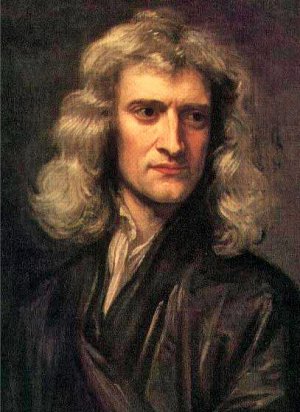
According to its most famous proponent, Sir Isaac Newton, for example, absolute time (which is also sometimes known as “Newtonian time”) exists independently of any perceiver, progresses at a consistent pace throughout the universe, is measurable but imperceptible, and can only be truly understood mathematically.
For Newton, absolute time and space were independent and separate aspects of objective reality, and not dependent on physical events or on each other.
Time as a Product of the Mind
Whitehead | Heidegger—Time as the Form of Becoming
Whitehead and Heidegger described time as the process of things changing and becoming.
They believed that time is essential for things to happen and transform.
Theory of Relativity
SPACETIME
According to modern science, particularly the theories of relativity and quantum mechanics, time is considered a part of a larger concept called spacetime.
Spacetime includes all the events in the past, present, and future, and is interconnected with space.
Embarking on our intellectual journey, we must commence by unraveling the enigmatic question: What, indeed, is a shadow? At its core, a shadow manifests as the consequence of light encountering an opaque obstruction, resulting in the creation of a darker, often elongated silhouette on the opposing surface. Shadows materialize when an object intervenes between a source of light and a given surface, obstructing the direct light rays.
The Scientific Underpinnings of Shadows
Shadows, intriguingly, emanate from the intricate interplay of light and matter. When light, traveling in its straight trajectory, encounters an impediment, it succumbs to being halted in its tracks. In this state, it projects a shadow onto the surface lying beyond the obstructing object. The size and configuration of this shadow hinge upon several variables, including the angle of the light source, the spatial gap between the object and the surface, and the intrinsic form of the object itself.
The significance of the light source’s angle in shaping shadows cannot be overstated. During moments when the light source skims the horizon, such as the dawning of a new day or the dusk of evening, shadows elongate, bestowing upon the scene dramatic and artistic allure.
Shadows in the Natural World
Shadows, however, are not confined solely to the realm of human artifice. In nature’s tapestry, shadows are ubiquitous and assume diverse functions. Consider, for instance, the trees on a sun-soaked day, offering refreshing patches of shade, a sanctuary from the blazing sun. These natural shadows also become instrumental in the lives of countless creatures, serving as places of refuge and camouflage.
Shadows in Literature and Symbolism
In the realm of literature and culture, shadows bear profound symbolic import. They can epitomize the enigmatic, the uncharted, or the concealed facets of human essence. In literature, shadows often feature as tools for enriching characters and narratives, endowing readers with deeper, more nuanced insights into the storyline.
Shadows in the Scientific Pursuit
Beyond their aesthetic and cultural resonance, shadows have emerged as pivotal elements in scientific exploration, fostering comprehension of the natural world.
Physics
Within the domain of physics, shadows have played a pivotal role in the scrutiny of wave phenomena, especially within the context of diffraction and interference. The intricate patterns woven by shadows and light unveil profound insights into the nature and behaviors of waves.
Moreover, shadows contribute substantially to how we perceive our three-dimensional milieu. Our cognitive faculties, relying on shadows and their positioning, afford us the capacity to gauge depth and distance. This phenomenon, recognized as stereopsis, occurs when our eyes capture slightly disparate images due to their separation, thus enabling the construction of a mental three-dimensional map of our surroundings.
Shadows in Popular Culture
Shadows have not been remiss in infiltrating popular culture, manifesting in diverse forms as symbols of intrigue and mystery.
The Philosophical Depth of Shadows
Shadows, embodying dualities of absence and presence, have beguiled philosophers and thinkers across epochs. They have been invoked as metaphors for the concealed aspects of human existence, the schism between reality and illusion, and the fleeting nature of life itself.
Plato’s Allegory of the Cave
Plato, in his iconic Allegory of the Cave, ascribes a pivotal role to shadows. He narrates the tale of individuals held captive within a cave since birth, their sole comprehension of reality gleaned from shadows cast upon the cave wall by objects traversing before a fire. This allegory becomes a vehicle for the exploration of knowledge, illuminating the dichotomy between the world of appearances (shadows) and the world of actuality (the objects casting the shadows).
Existentialist Philosophy
Existentialist philosophers like Jean-Paul Sartre have contemplated shadows as symbols encapsulating the human condition. They contend that existence is frequently cloaked in uncertainty and ambiguity, obliging individuals to confront their own shadows—the obscure facets of their being—and make choices that configure their identity.
Shadows in Contemporary Art
Modern artists persist in their exploration of shadows as a medium for artistic expression. The manipulation of light and shadow has evolved into a sophisticated art form, with artists pushing the boundaries of the conceivable.
Contemporary Shadow Installations
Contemporary artists craft immersive installations, manipulating the viewer’s spatial perception and conception of reality. Employing innovative lighting techniques and materials, they metamorphose gallery spaces into captivating environments that challenge our grasp of shadows and their influence upon our sensory perceptions.
The Unfolding Role of Shadows
As technology progresses and our comprehension of light and shadow deepens, the role of shadows in our lives continues to evolve. From the rudimentary revelations of ancient thinkers to the cutting-edge visual marvels in today’s cinematic and gaming realms, shadows persist as fountains of fascination and wellsprings of inspiration.
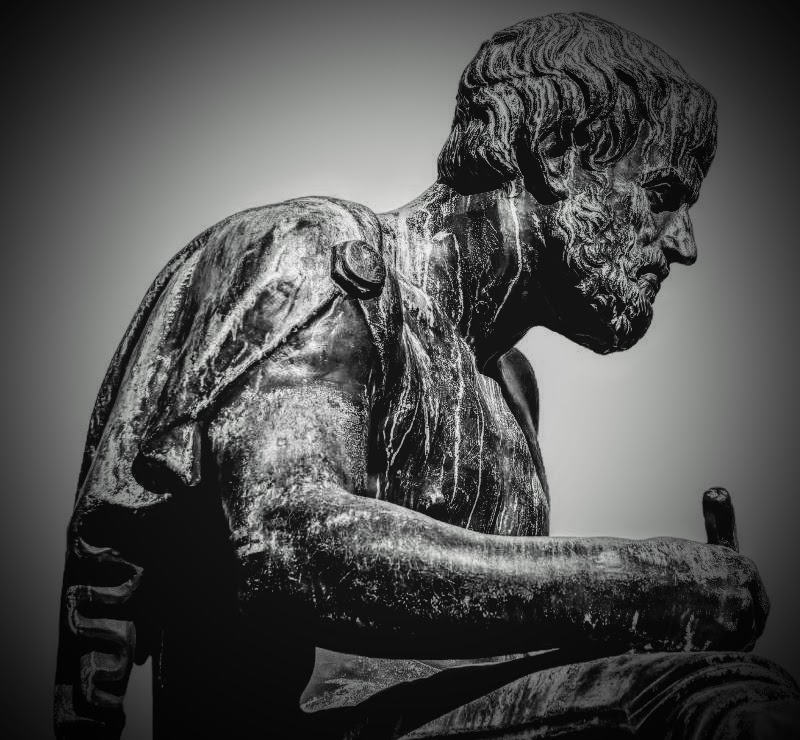
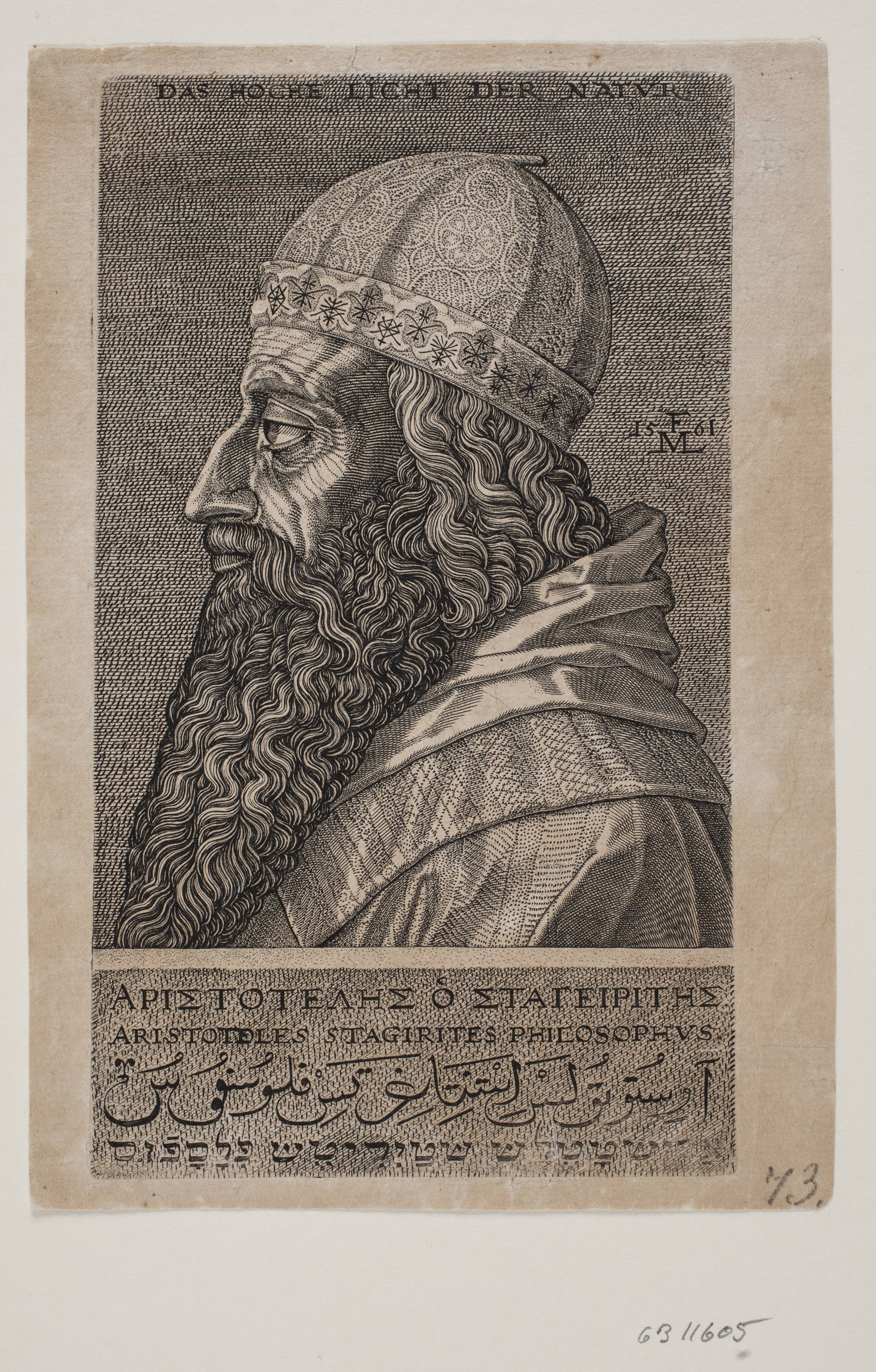
Aristotle, born in 384 BCE in the ancient city of Stagira (now known as Greece), was one of the most influential philosophers of all time. Gifted with an incredibly sharp intellect, he made groundbreaking contributions to various fields, including philosophy, logic, ethics, biology, and more. Aristotle’s impact on Western thought cannot be overstated, and his ideas continue to shape our understanding of the world today.
Early Life and Education
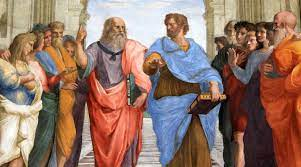
Aristotle was born into a noble family and was fortunate to receive an exceptional education. At the age of seventeen, he journeyed to Athens to study at Plato’s renowned Academy.
There, Aristotle became one of Plato’s brightest students, immersing himself in a wide range of subjects and blossoming into a formidable thinker.
Aristotle’s Unique Approach
While Aristotle greatly admired his mentor Plato, he also developed his independent philosophical path. Aristotle did not just passively absorb Plato’s doctrines. As one of Plato’s “brightest students,” Aristotle undoubtedly asked challenging questions and developed his own philosophical perspectives, even while greatly respecting Plato.
Unlike Plato, Aristotle believed that knowledge came from direct observation and careful analysis of the natural world.
He was a firm believer in empirical evidence, experimenting, and classifying information.
Empirical evidence is the foundation for acquiring knowledge through direct observation and careful analysis of the natural world.
Ideas On Free Will
Aristotle’s ideas on free will were shaped by his belief in the concept of causality and his understanding of the natural world.
Unlike his mentor Plato, Aristotle argued that knowledge and understanding came from direct observation and analysis of the world around us. He believed that individuals have the capacity to make choices based on their own rationality and deliberation, asserting that free will is the result of a person’s ability to exercise reason and moral judgment.
Aristotle saw free will as a crucial aspect of human agency, enabling individuals to shape their actions and ultimately determine their own destinies.
Objecters
However, despite Aristotle’s influential ideas on free will, he also had his detractors, with some of the biggest objectors coming from within his own philosophical tradition.
Stoics
The Stoics, for example, held a deterministic view of the world, arguing that everything is predetermined by fate and that humans have no real control over their actions. They believed that all events occur according to an unchangeable divine plan, leaving no room for human volition.
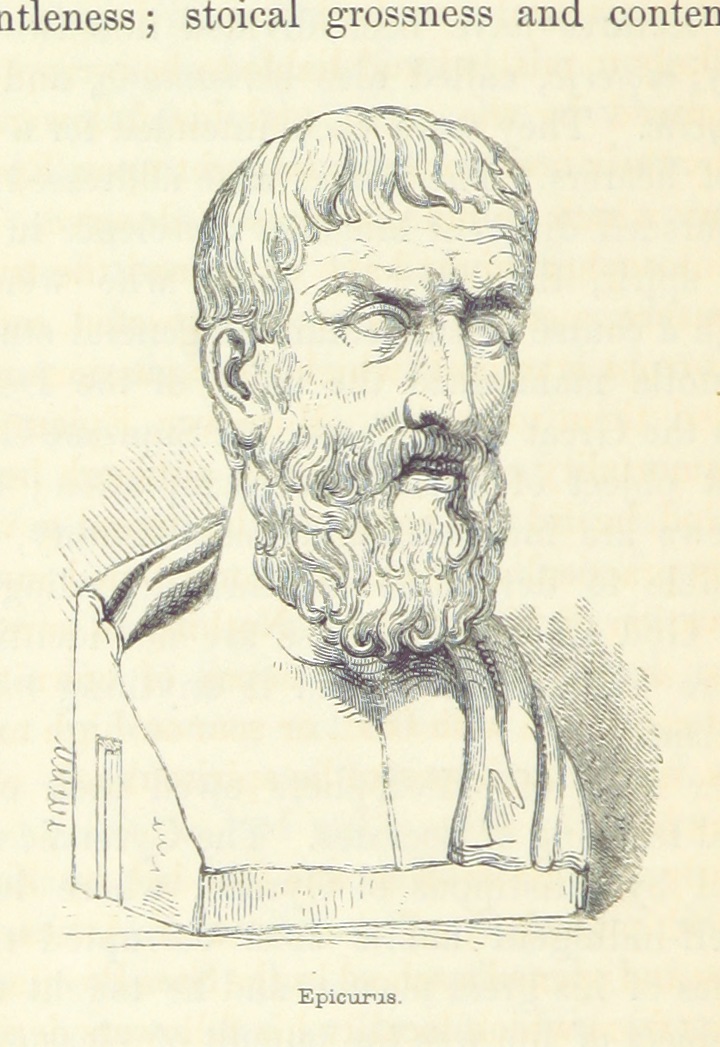
Another notable objector to Aristotle’s ideas on free will was Epicurus, who argued that individuals have the power to shape their own lives through their pursuit of pleasure and avoidance of pain. Epicurus emphasized the role of personal choice and the pursuit of happiness as central aspects of human existence, challenging Aristotle’s notion of an objective universal morality.
These objectors to Aristotle’s ideas illustrate the continuing debate over the nature of free will and its role in human life.
The “Unmoved Mover”
One of Aristotle’s notable contributions to metaphysics is the concept of the “Unmoved Mover.” According to Aristotle, the universe is in constant motion, and there must exist an eternal and unchanging entity that initiates this motion. This concept laid the groundwork for the idea of the Prime Mover or God in later philosophical and theological discourse.
Aristotle’s Influence on Alexander the Great
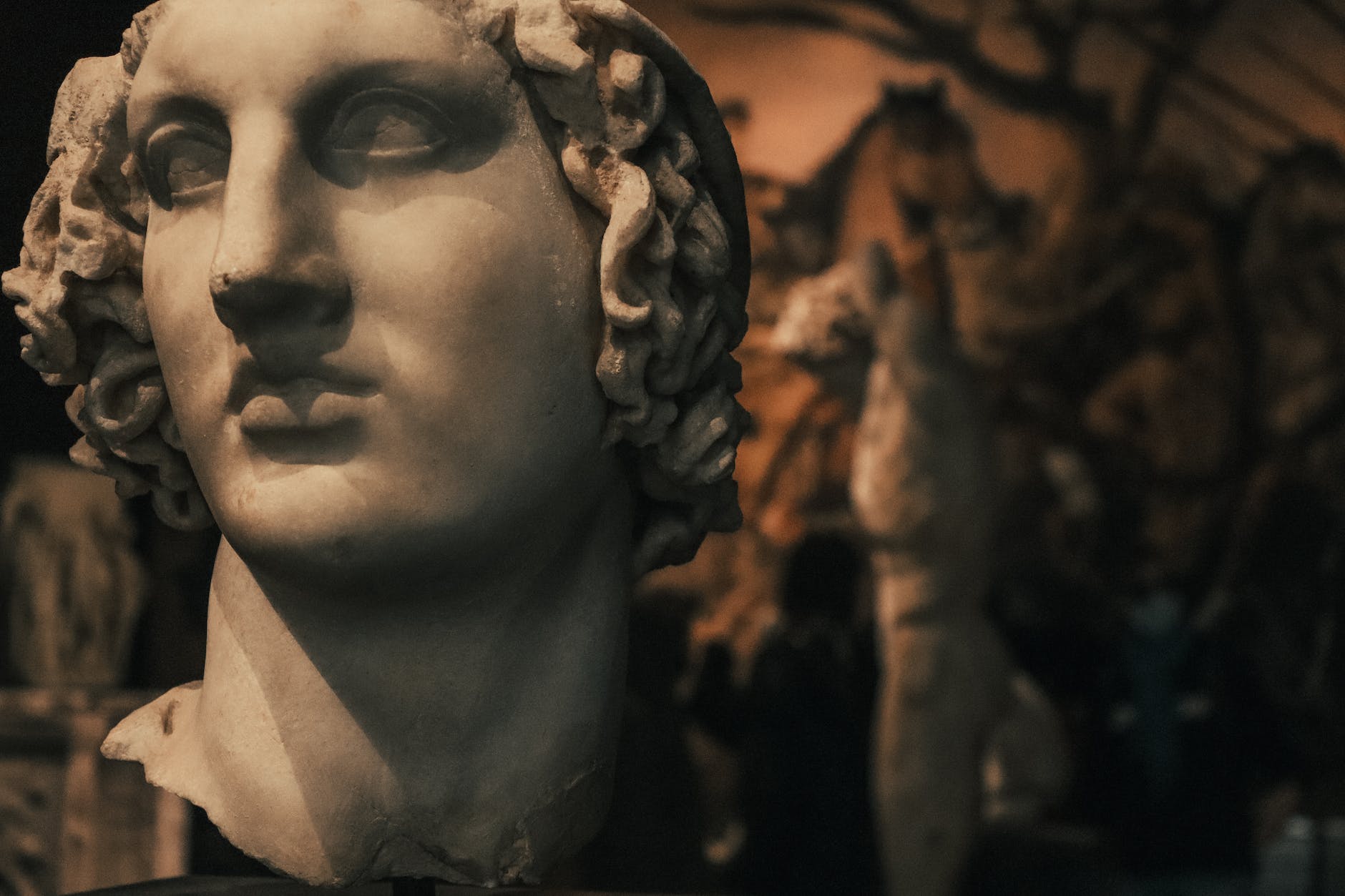
Aristotle played a significant role in shaping the mind of a young prince who would go on to be one of history’s most renowned conquerors: Alexander the Great.
Aristotle served as Alexander’s tutor during his adolescence, imparting upon him a love for knowledge, ethics, and political philosophy. The friendship between Aristotle and Alexander planted the seeds of intellectual curiosity that would define the young ruler’s reign.
Alexander Was A Tyrant
Some key examples of suffering inflicted by Alexander’s tactics include
The sieges of Thebes, Gaza and Tyre were especially brutal, involving slaughter of civilians and soldiers after long resistance. At Thebes, over 6,000 men were sold into slavery after the city was razed.
In Putting down revolts in Bactria and Sogdiana, many thousands were massacred by Alexander’s forces to set an example and instill fear, though unrest was sometimes driven more by his tactics than local instability.
The Gaugamela campaign saw tens of thousands cut down in Alexander’s famously successful but gory encounter with Darius’ armies, cementing his dominance through immense bloodletting.
His forced marches and constant campaigning strained relations with troops, who faced not just combat trauma but also illness, desertion penalties and putrid camp conditions.
The contribution of Macedonian elite cavalry to butchery and encouraging massacre for sport created lasting psychological wounds amongst populations subjugated.
Based on what we know, some key teachings of Aristotle that may have influenced Alexander include:
Politics – Aristotle emphasized the rational organization of the state and civic participation. However, he also justified hierarchies and accepted expansion through war as an expression of a higher form of government over barbarians.
Rhetoric – Alexander was no doubt schooled in Aristotle’s rhetorical techniques which included rousing patriotic sentiments and portraying enemies as threatening to justify military campaigns.
Virtue ethics – Aristotle’s focus on developing moral excellence could have reinforced in Alexander a sense of divinely-appointed destiny and greatness of purpose in his conquests.
Natural slavery – Aristotle’s controversial idea of “natural slaves” who benefit from domination may have factored into how Alexander approached subjugated peoples as culturally inferior.
Reason over emotion – While aiming to cultivate Alexander’s intellect, Aristotle’s privileging of reasoned judgment over passion could have ironically enabled discounting of empathy/suffering.
Pioneering Contributions to Biology
Created FIrst Bilogical Knowledge System
By meticulously cataloging animal traits, behaviors and habitats, Aristotle essentially created the earliest system for organizing biological knowledge. His innovative empiricism inaugurated the careful, evidence-based study of life now fundamental to biology. Subsequent scientists built upon his pioneering framework to advance understanding generation after generation.
Founding Father Of Biology
Even today, Aristotle is recognized as one of biology’s founding fathers. His lifelong dedication to building a comprehensive natural history through hands-on research established the systematic, data-driven methodology that continues propelling discoveries. Thanks to his profound fascination with learning from nature itself, Aristotle left an empirical legacy still shaping science millennia later.
Here are some more details about Aristotle’s hands-on research methods and comprehensive natural history works:
Dissection: Aristotle performed extensive dissections, carefully examining internal organs and structures. This provided novel insights into anatomy and biological functions well before modern practices.
Observation: He observed animal behaviors directly in their environments over long periods, meticulously recording habits, habitats, mating/birthing cycles, and family/social structures.
Specimen collection: Aristotle amassed vast collections of plant and animal specimens through expeditions and donations. This allowed his anatomical research and comparisons across species.
Classification: He organized his encyclopedic findings into one of the earliest biological classification systems, grouping/ranking taxa based on shared traits.
Published works: Aristotle published several zoological treatises including Historia Animalium, a pioneering 9-volume natural history surveying 500+ species in systematic detail.
Breadth: In addition to animals, his holistic approach encompassed botanical, geological and biological Form/Function relationships in realms like embryology.
Even during the scientific revolution, Aristotle’s work continued to influence the field of biology, highlighting the importance of careful observation and categorization in the pursuit of understanding the intricacies of life.
Here are some examples of how Aristotle’s works were used as reference materials during later scientific revolutions:
During the Renaissance, Aristotle’s detailed descriptions of plant and animal anatomy were consulted and built upon as scholars dissected specimens. This included works like Vesalius referencing Aristotle’s classification of cranial bones.
In the 17th century, scientists like William Harvey relied on Aristotle’s observations of pulsations when formulating his groundbreaking theories of blood circulation and flow through vessels.
During the Scientific Revolution, philosopher Francis Bacon held up Aristotle as a model empiricist, citing his Historia Animalium as the greatest achievement of taking nothing on faith. This philosophy underpinned Bacon’s advocacy of experimentation.
Newton owned multiple editions of Aristotle’s works and may have drawn on his mechanics in developing theories of motion and force. Newton referenced Aristotle among the ancients who contributed to “the improvement of natural knowledge.”
Even into the 18th century, Carolus Linnaeus’ system of modern taxonomy that standardized naming schemes drew from Aristotle’s noted biological categorizations and relationships.
So across paradigm shifts, Aristotle’s careful amassing of evidence served as a touchstone, showing how each new theory built systematically on observations, just as he had done. His works were a wellspring nourishment future discoveries long after his lifetime.
Ethical Philosophy: Virtue and Eudaimonia
Aristotle’s conception of ethics laid the groundwork for virtue theory as a branch of moral philosophy. At the core of his framework was “eudaimonia” – the idea that true happiness arises from living virtuously according to our human nature.
What is virtue theory
Virtue theory is a major branch of normative ethical thinking that places importance on virtues or moral character. It is closely associated with Aristotle’s philosophy. Some key aspects of virtue theory include:
Virtues are dispositions to act, feel, and think in ways that benefit oneself and others. They include qualities like courage, wisdom, honesty and kindness.
For virtue theorists, virtues are acquired through intentional habit and practice over time. One becomes virtuous by repeatedly performing virtuous actions.
Cultivating virtues allows people to fulfill their highest purpose and attain the most flourishing or eudaimonia life possible for human beings.
Rather than focusing on rules or consequences, virtue theory evaluates acts based on the moral qualities or intentions of the agent performing them.
Certain virtues are seen as excellences specific to various social, professional or intellectual roles. Acting virtuously helps one succeed in their role.
A virtuous person reliably exhibits excellent character and can prudently discern the ethically appropriate course of action in any situation.
So in summary, virtue theory maintains that morality revolves around traits of character and that virtues are essential for human welfare and fulfillment. It had a substantial impact on western philosophy due to Aristotle’s early articulation of this framework.
Legacy and Continued Relevance
Aristotle’s influence reverberates through the annals of intellectual history. His works were rediscovered and translated during the medieval period, becoming a cornerstone of Islamic, Jewish, and Christian scholarship. Aristotle’s tenacity for knowledge, analytical thinking, and commitment to understanding the natural world laid the groundwork for the scientific method and shaped centuries of philosophical debate.
Today, Aristotle’s ideas are still studied and debated across countless universities and continue to offer profound insights into the realms of philosophy, science, and ethics. His relentless pursuit of understanding the fundamental nature of existence serves as a timeless reminder of the power of human reasoning and curiosity. It is through Aristotle’s enduring legacy that we continue to explore the depths of our world and ourselves.
Aristotle’s greatest contributions:
Legacy: Aristotle’s unparalleled contributions across physics, biology, logic, philosophy, politics and ethics create a legacy that spreads Greek thought and still inspires modern disciplines millennia on. He is truly the pinnacle of ancient Greek rationalism.
384 BCE: Aristotle is born in Macedonia, laying foundations for his intellectual journey
367 BCE: Begins studying at Plato’s Academy, immersing in philosophy under one of history’s greatest minds
335 BCE: Establishes Lyceum school, seminal innovator imparting insights on natural sciences via empirical study
330-323 BCE: Tutor to Alexander, molding a leader who spread Greek rationalism across three continents
c. 350-330 BCE: Writes “Historia Animalium”, revolutionizing biology with immense documented taxonomy through dissection
c. 384-322 BCE: Produces monumental manuscripts still fundamental today: “Organon” establishes formal logic. “Physics” proposes empirical causality. “Metaphysics” ponders nature of being. “Nicomachean Ethics” defines virtue as the path to human flourishing.
Aristotle’s contributions spanned various fields, and his works continue to shape our understanding of philosophy, logic, ethics, biology, and more. His ideas on ethics, virtue, and the pursuit of knowledge laid the foundation for moral philosophy and scientific inquiry.
Aristotle’s impact on Western thought and his enduring legacy make him one of history’s greatest philosophers.
Read: Aristotle’s Major Works
Metaphysics: Considered one of Aristotle’s most important philosophical treatises, it explores the nature of reality, causality, and existence.
Nicomachean Ethics: In this work, Aristotle delves into the nature of human happiness, virtue, and how to live a good life.
Politics: Aristotle’s exploration of political philosophy, examining different forms of government, the ideal state, and the role of citizens.
Physics: A treatise on the natural world, Aristotle discusses topics such as motion, time, space, and elements.
On the Soul: This work explores the nature of the soul, the relationship between body and soul, and the different types of souls.
Poetics: Aristotle’s study of Greek tragedy and poetry, examining essential elements such as plot, character, and catharsis.
These are just a few examples of Aristotle’s extensive body of work. Each of these works provides unique insights into philosophy, science, ethics, and literature.
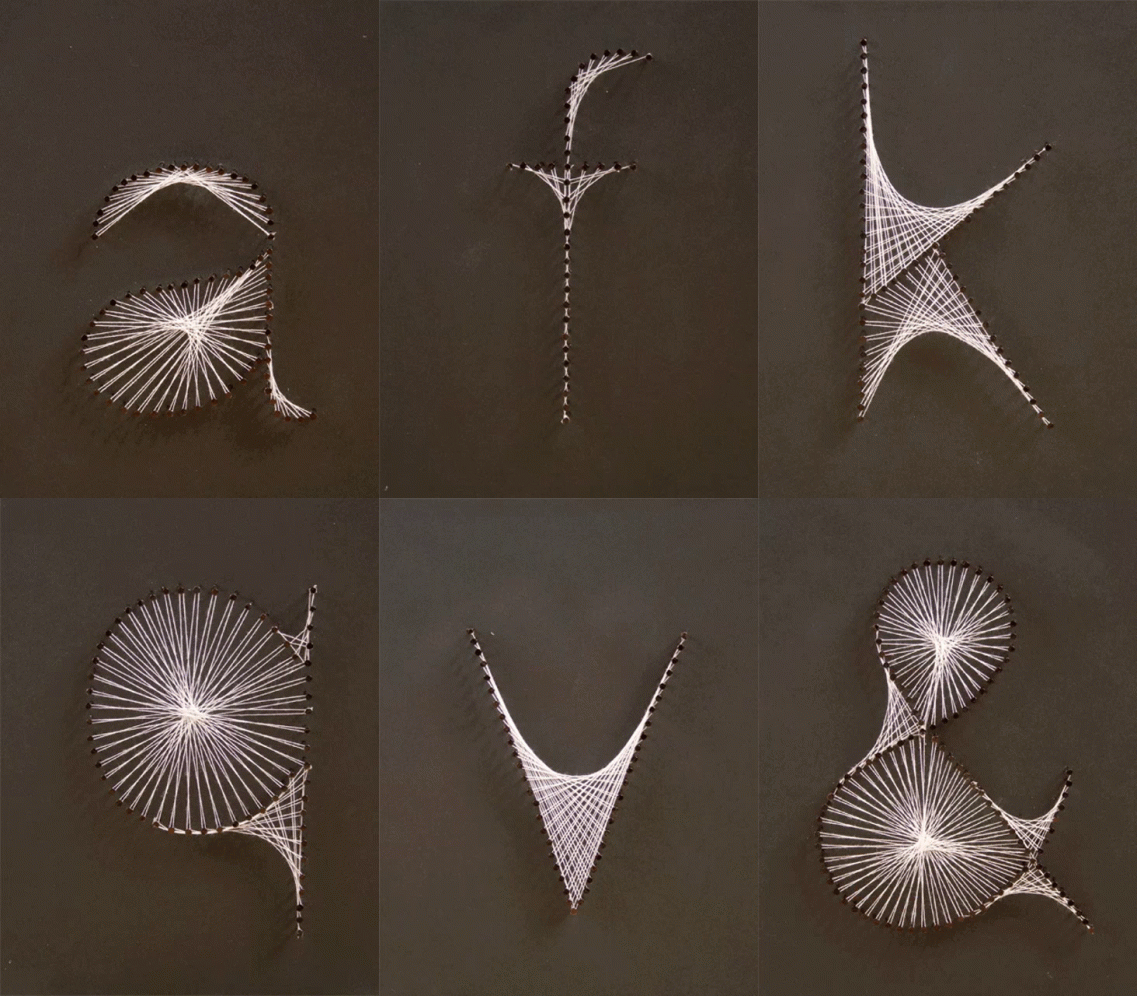
1. What is String Theory? 2. What are oscillating strings in String Theory? 3. How do oscillating strings relate to the particles and forces in our universe? 4. What are hidden dimensions? 5. How are hidden dimensions supported by calculations and mathematical models?
1. What is String Theory?
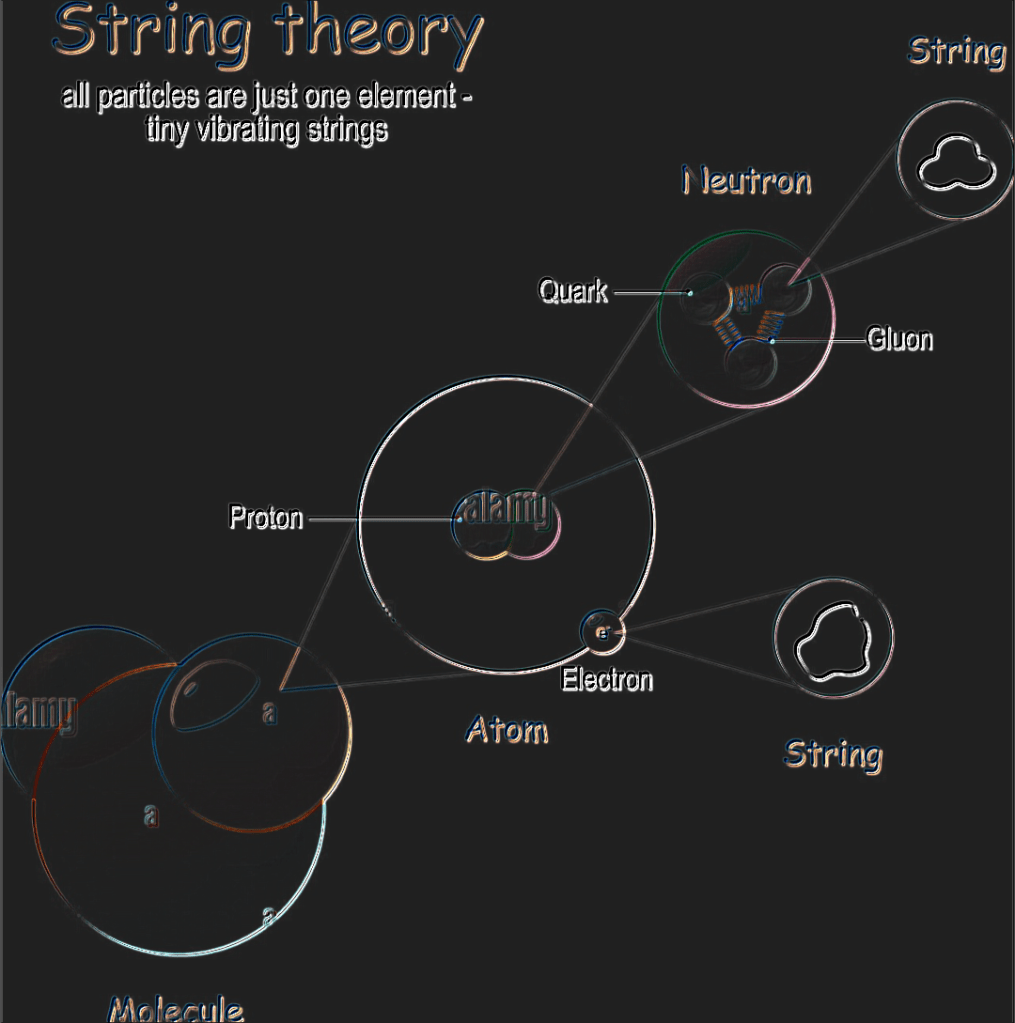
String theory is supported by several facts and resources that make it a compelling theoretical framework in physics. Firstly, string theory offers a solution to the long-standing problem of reconciling quantum mechanics and general relativity. These two theories, while successful in their respective domains, are incompatible at the fundamental level. String theory proposes that elementary particles are not point-like objects, but rather tiny, vibrating strings. This revolutionary concept helps to bridge the gap between the quantum world of particles and the gravitational interactions described by general relativity.
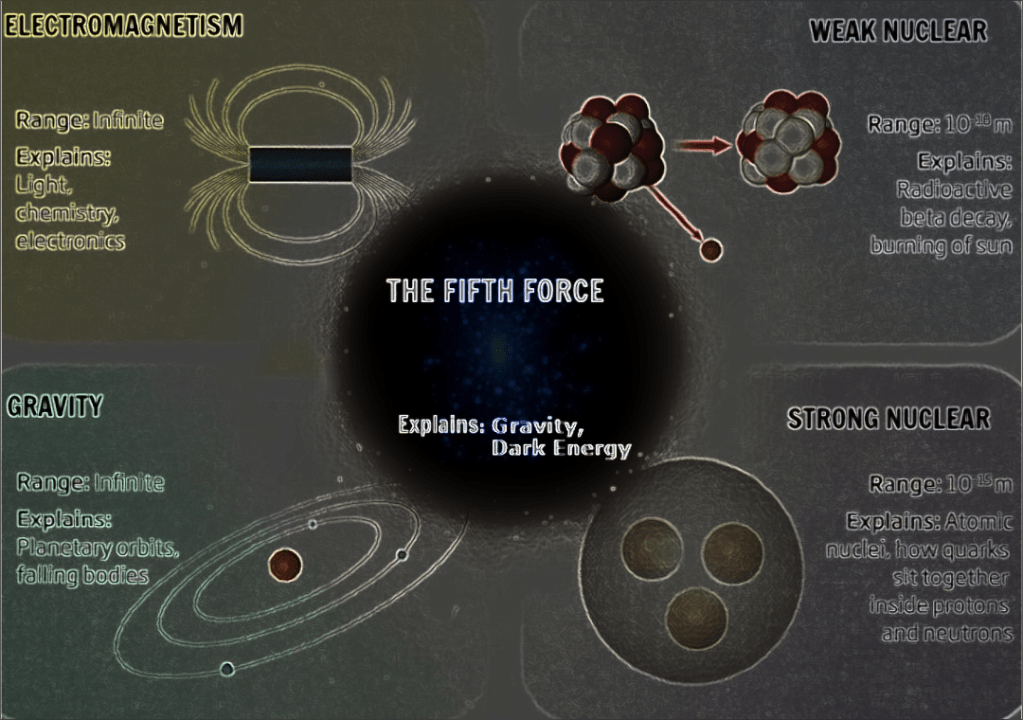
String theory provides a mathematical framework that unifies all the known fundamental forces. By incorporating gravity, electromagnetism, and the strong and weak nuclear forces into a single theory, string theory offers the possibility of a unified description of the universe.
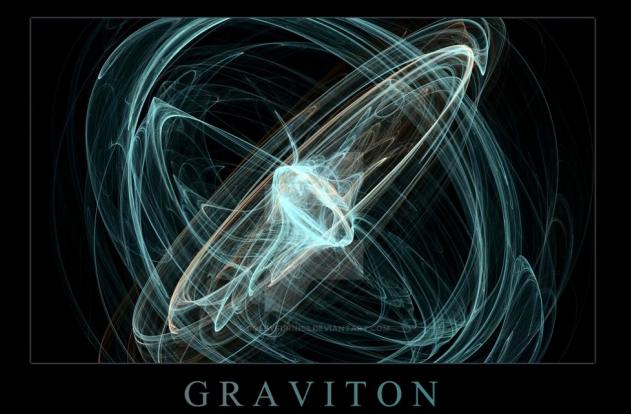
This is a major goal in physics and has been a driving force behind much of the research in theoretical physics. In fact, string theory predicts the existence of new particles called gravitons, which are hypothesized to mediate the force of gravity.
The ghost particle
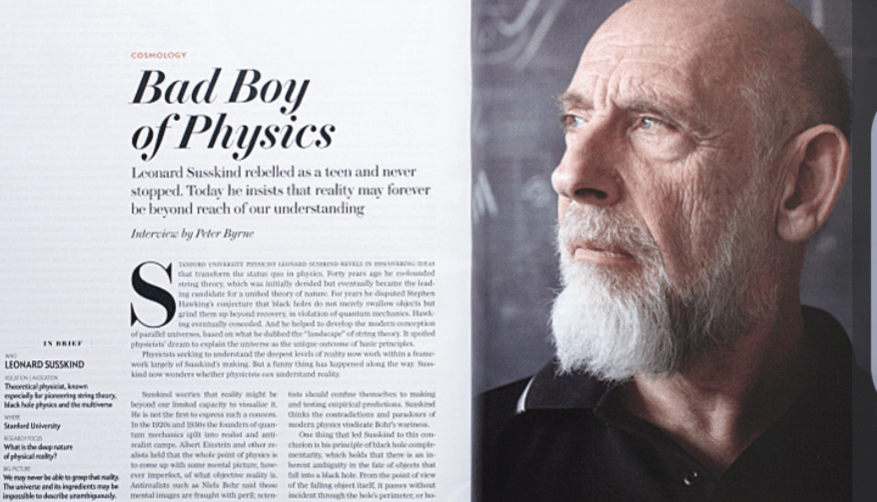
In terms of resources, string theory has been extensively studied by many prominent physicists, such as Leonard Susskind, Brian Greene, and Juan Maldacena. These individuals have published numerous papers and books on the subject, providing detailed explanations and mathematical models that support the concepts of string theory. Additionally, string theory has been a subject of ongoing research and debate within the scientific community, with experiments and theoretical developments continually pushing the boundaries of our understanding.
With its ability to reconcile quantum mechanics and general relativity, unify the fundamental forces, and predict new particles, string theory has garnered significant attention and support from the scientific community.
2. What are oscillating strings in String Theory?
There are several facts and resources that support the notion of oscillating strings in string theory. One key resource is the work of renowned theoretical physicists such as Edward Witten, Leonard Susskind, and Juan Maldacena. These scientists have made significant contributions to the development and understanding of string theory, including the concept of oscillating strings as the fundamental objects from which particles are composed.
In addition to the research of these physicists, various mathematical calculations and theoretical frameworks further validate the existence of oscillating strings. These calculations show that the vibrational modes of these strings correspond to different particle properties, such as mass and charge. The intricate mathematical consistency between these vibrational modes and observed particle properties lends strong support to the concept of oscillating strings.
Furthermore, experimental evidence has indirectly validated the existence of oscillating strings. For instance, the discovery of supersymmetry, which predicts the existence of superpartners for each particle, aligns with the principles of string theory. Additionally, the concept of extra dimensions, also predicted by string theory, has gained theoretical and experimental support. These extra dimensions and their impact on particle interactions provide further evidence that oscillating strings are indeed the building blocks of our universe.
3. How do oscillating strings relate to the particles and forces in our universe?
String theory proposes the concept of oscillating strings as a fundamental component of our universe. The theory suggests that particles in our universe are not point-like, but rather tiny strings that vibrate in multiple dimensions. This concept provides a possible explanation for the different masses, charges, and properties of particles. The vibrations of the strings give rise to various particles with different energies and masses.
Moreover, string theory also explains the origin of the fundamental forces and interactions. The interactions between the strings, such as splitting and merging, correspond to the different forces in nature, including electromagnetism, gravity, the strong nuclear force, and the weak nuclear force.
This is a remarkable aspect of string theory, as it offers a unified framework that can potentially explain all the fundamental particles and forces that govern our universe.
Despite its theoretical elegance, it is important to acknowledge that string theory is still highly speculative and has yet to be experimentally confirmed. Due to the immense complexity of its mathematical formulations, direct empirical evidence is currently lacking. Nevertheless, string theory has gained significant attention and continues to be actively studied by physicists as a promising theoretical framework for understanding the fundamental nature of our universe.
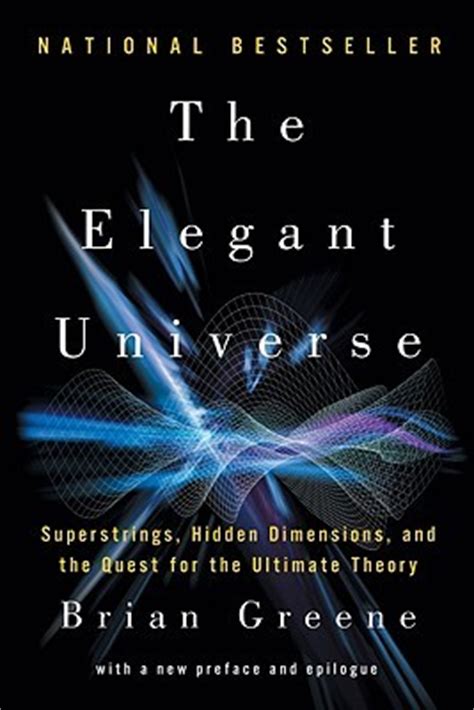
Sources: 1. Greene, B. (2000). The Elegant Universe: Superstrings, Hidden Dimensions, and the Quest for the Ultimate Theory. Vintage Books.
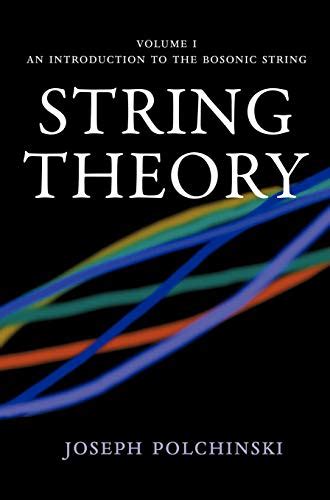
2. Polchinski, J. (2000). String Theory: Volume I, An Introduction to the Bosonic String. Cambridge University Press.
4. Ooguri, H. (2012). Introduction to Physics of String and Branes. Lecture Notes. Retrieved from PDF
4. What are hidden dimensions?
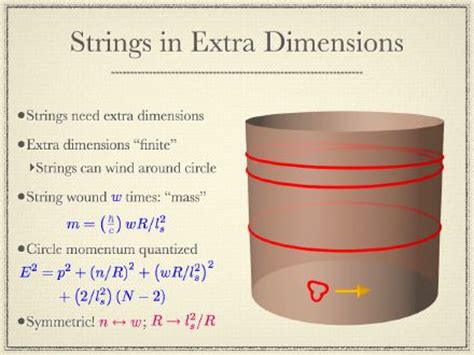
Hidden dimensions, as proposed in theoretical physics, refer to additional spatial dimensions beyond the three that we are familiar with (length, width, and height). These extra dimensions are not detectable in our everyday experience but are postulated in various physical theories, such as string theory and superstring theory.
According to these theories, there may be up to 10 or 11 dimensions in total, with the extra dimensions “curled up” or “compactified” at tiny scales or in complex shapes, making them hidden from our perception. These additional dimensions play a crucial role in solving certain problems in fundamental physics, such as unifying gravity with the other fundamental forces and explaining the nature of particles and forces.
Understanding and exploring hidden dimensions are significant challenges in modern theoretical physics and are subjects of ongoing research. However, it’s important to note that the existence of hidden dimensions is still a theoretical concept and has not been proven experimentally.
5. How are hidden dimensions supported by calculations and mathematical models?
Hidden dimensions are not directly observable in our three-dimensional world, but they are supported by calculations and mathematical models in theoretical physics. One such model that incorporates hidden dimensions is string theory, which suggests that our universe may consist of more than three spatial dimensions. In this theory, particles are not considered point-like, but instead are tiny vibrating strings that propagate through spacetime, including hidden dimensions. These strings and their interactions are described by mathematical equations derived from principles such as quantum mechanics and differential geometry.
Additionally, hidden dimensions can have observable effects on various physical phenomena. These effects can deviate from what would be expected in a purely three-dimensional world and can be formulated mathematically. Through this mathematical analysis, scientists can make predictions and test them against experimental data. While hidden dimensions have not been experimentally confirmed, the mathematical framework they provide has contributed to our understanding of fundamental physics.
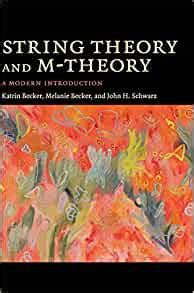
Resources: – “String Theory and M-Theory: A Modern Introduction” by Katrin Becker, Melanie Becker, and John H. Schwarz.
– Lecture notes on string theory and hidden dimensions from reputable universities like Princeton, Harvard, and Caltech.
As human beings, we have always been deeply curious about the nature of reality and existence. We have sought to understand the fundamental principles that underlie the physical universe, the abstract concepts that govern our lives, and the eternal truths that shape our moral compass.
Throughout history, philosophers, scientists, and spiritual leaders have grappled with these questions, seeking to uncover the mysteries of the universe and the nature of our place within it. They have developed theories and worldviews that attempt to explain the fundamental nature of the universe, the laws that govern it, and the purpose of human existence.
The laws of nature are the fundamental principles that underlie the functioning of the physical universe. These laws govern everything from the behavior of subatomic particles to the movement of celestial bodies, and they operate universally and eternally, with no exceptions.
The laws of nature are truly universal in their scope and eternal in their operation. They are present in every corner of the universe, from the tiniest subatomic particle to the largest galaxy cluster.
But what, exactly, are these laws of nature? At their most basic level, they are the rules that govern the behavior of matter and energy in the universe. They dictate how particles interact with one another, how energy is transferred between different systems, and how matter and energy are transformed over time.
And yet, despite the seemingly simple nature of these laws, they give rise to an astonishing variety of phenomena in the universe. From the formation of stars and galaxies to the existence of life on Earth, the laws of nature are the driving force behind some of the most remarkable and awe-inspiring phenomena in the universe.
Similarly, the principles of electromagnetism describe how electrically charged particles interact with each other and with magnetic fields.
These principles govern everything from the behavior of electrons in atoms to the transmission of radio waves. They are essential to understanding the behavior of electromagnetic waves and the functioning of electronic devices.
By studying and understanding these laws, we can gain insight into the workings of the universe and the nature of reality itself.
The concept of existence, for example, is essential to our understanding of reality. Without existence, nothing could be said to exist, and the very concept of reality would be meaningless. Similarly, consciousness is a fundamental aspect of our existence, allowing us to perceive and interact with the world around us.
Causality, meanwhile, is the principle that everything that exists must have a cause or reason for its existence. This principle is essential to our understanding of the world and is integral to the scientific method.
Finally, goodness is a concept that transcends culture and time. It is the idea that certain actions and qualities are inherently valuable and desirable, regardless of their cultural or historical context.
Metaphysical existence refers to the existence of things that go beyond the physical realm and cannot be perceived by our senses. This includes things like abstract concepts such as love, justice, and truth, as well as spiritual entities such as God, angels, and souls.
The existence of metaphysical entities is often a subject of philosophical and theological debate. Some argue that these entities exist independently of human perception and consciousness, while others argue that they are simply constructs of the human mind.
Metaphysical consciousness refers to consciousness viewed from an abstract philosophical perspective, beyond the realm of physical science. It deals with questions like “What is the nature of consciousness itself?”, “How does consciousness arise?” and “What is the relationship between consciousness and the physical brain?”.
There are different approaches to understanding metaphysical consciousness. Some theories see consciousness as fundamental and primary, while others view it as a product or epiphenomenon of physical processes. Some theories propose dualist accounts that distinguish between physical and non-physical aspects of consciousness.
Metaphysical causality is the concept that everything that exists must have a cause or reason for its existence. This principle is often used to explain the origins of the universe and the fundamental nature of reality.
In metaphysical causality, it is believed that there must be a first cause or uncaused cause that set everything in motion. This belief is often associated with the cosmological argument for the existence of God, which posits that the universe must have had a cause, and that cause must be God.
These Metphysical concepts provide a framework for understanding the nature of existence and consciousness, and shape our understanding of the world and our place in it. By studying these concepts, we can gain a deeper understanding of the nature of existence and our relationship to the universe.
Mathematical Axioms: The Immutable Rules of Logic and Geometry
Mathematics is often seen as a universal language that transcends time and culture. Some fundamental truths of mathematics, like the basic rules of logic and geometry, seem to hold independent of human thought or the physical universe.
The rules of logic are a set of principles that govern our ability to reason and make sense of the world around us. These rules are essential to our ability to arrive at valid conclusions and avoid logical fallacies.
The first rule of logic is the law of identity, which states that a thing is what it is and not something else. This principle is essential to our ability to understand and describe the world around us.
The second rule of logic is the law of non-contradiction, which states that a thing cannot both be and not be at the same time and in the same respect. This principle ensures that our reasoning is consistent and coherent.
The third rule of logic is the law of excluded middle, which states that a statement must either be true or false and cannot be both. This principle is essential to our ability to arrive at valid conclusions and make sense of the world around us.
Finally, the fourth rule of logic is the principle of sufficient reason, which states that everything that exists or occurs must have a reason or cause. This principle is essential to our ability to understand and explain the world around us.
In conclusion, the rules of logic are a set of principles that form the basis of our ability to reason and make sense of the world around us. By understanding and applying these rules, we are better equipped to arrive at valid conclusions and avoid logical fallacies.
The rules of geometry are a set of principles that govern the properties and relationships of points, lines, angles, and shapes. These principles are essential to our understanding of space and shape and are fundamental to our ability to design and construct structures and objects.
The first rule of geometry is the law of symmetry, which states that an object or shape is symmetrical if it can be divided into two equal parts. This principle is essential to our ability to recognize and appreciate symmetry in art, architecture, and nature.
The second rule of geometry is the law of parallel lines, which states that if two lines are parallel, they will never intersect. This principle is essential to our ability to understand and design structures such as bridges, buildings, and roadways.
The third rule of geometry is the law of congruence, which states that if two objects or shapes are congruent, they have the same size, shape, and measure. This principle is essential to our ability to make accurate measurements and calculations.
Finally, the fourth rule of geometry is the law of similarity, which states that if two objects or shapes are similar, they have the same shape but not necessarily the same size. This principle is essential to our ability to design and construct objects that are proportional and aesthetically pleasing.
In conclusion, the rules of geometry are a set of principles that form the basis of our understanding of space and shape. By understanding and applying these rules, we are better equipped to design and construct structures and objects that are both functional and aesthetically pleasing.
These laws reflect eternal, immutable principles that provide a foundation for logical reasoning and problem-solving.
Religious Doctrines: The Divine Revelations of Universal Truth
Religious doctrines claim certain truths as eternal verities that have always existed and will always exist, independent of human beliefs. These truths are seen as divine revelations that provide a basis for ethical and moral behavior. While different religions may have different interpretations of these eternal truths, they represent a shared belief in the existence of universal principles that govern human behavior.
The possible existence of eternal cycles of creation, evolution, and dissolution on a cosmic scale could represent a type of eternal truth about the universe. While we have limited knowledge of these cycles, they provide a framework for understanding the nature of existence and the universe’s place in it.
The ground of being is the ultimate source of existence and truth. It is the creator of all existence and the source of all meaning.
According to Paul Tillich, God is the ground of being, being-itself, and our ultimate concern. Tillich believed that the absolutes found in various aspects of existence point beyond themselves to the basic Absolute – “being-itself”. Being-itself is the “ground of truth” and the source for all other absolutes.
Tillich rejected the anthropomorphic “personal God” of popular Christianity, but he did not deny the reality of God, as the conventional atheist has done. He was critical of propositional arguments for the existence of God as found in natural theology, as he considered them objectifying of God.
These eternal truths form the bedrock of our understanding of the world around us. By understanding the nature of existence, the principles of causality, the nature of consciousness, and the concept of goodness, we can develop a deeper understanding of ourselves and the world around us.
These principles provide a framework for understanding the nature of reality, the laws of the universe, and the purpose of human existence. They allow us to explore the mysteries of the universe and to develop a greater sense of awe and wonder at the beauty and complexity of the world around us.