In my journey as an “alien” on this planet, I have, unwittingly, stumbled upon what had been archaically called the Philosopher’s Stone or the Elixir of Life…
I only realized this after I, through being magnetically attracted toward suffering, embracing the darkness that most fear, had unearthed the Essence of Reality.
This Essence is a Truth so profound, it is woven into the very core of our beings through the quantum dimensions & atmospheric pressure, without such, we would become vacuumed into nothingness.
This truth is unassailable, standing as a lamp of certainty, illuminated by the light of Intuitive Wisdom.
THIS LIGHT IS CHRIST’S LIGHT OF INTUITION FROM ABOVE.
Intuition transcends the limitations of our corporeal senses, for it is birthed from the sacred depths of the spirit.
Intuition is a whisper from the Heavens, a subtle yet ever powerful current that flows through the Ethers of existence.
Intuition is the Blood within the veins of Eternity.
When the HolySpirit stirs, He ignites the flame of Intuition, transforming our sensorial experiences into a Divine Compass.
THE KINGDOM OF GOD IS WITHIN YOU
This guiding Force elevates our conscious awareness, rendering the conventional Five Senses as mere tools in the Macrocosm of our being within this existence and realm.
When this inner awakening is embraced, we align in tandem with the Universal Symphony of Wisdom.
Intuition becomes our most trusted Guide, leading us towards a Life of deeper Understanding and connection with the Infinite.
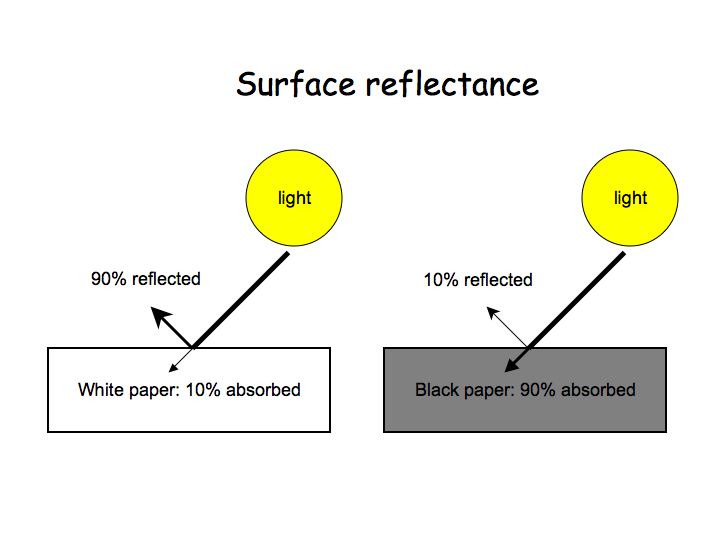
Just as the obstruction of light casts shadows, material truths only disclose a fraction of the deeper meaning and purpose hidden within spiritual reality.
As shadows form in the absence of light, the spiritual realm illuminates the genuine essence of our existence when revealed.
By seeking spiritual enlightenment, we can explore our soul’s profound nature and comprehend our true purpose in life.
Examining the interplay between illuminated and unilluminated areas of an object offers valuable insight into its shape and form.
This principle mirrors how spiritual enlightenment unveils our true being by dispelling ignorance and confusion.
As light and darkness intertwine, spiritual understanding brings clarity and purpose to our existence.
Material Truth
A Shadow of Spiritual Reality
Material truth can be likened to a shadow cast by the spiritual reality that underpins it.
As the sun casts a tree’s shadow, spiritual reality is the unseen force that imbues our lives with meaning.
Recognizing this interconnection between light and shadow in our spiritual journey fosters a profound understanding of our existence.
We must delve into the spiritual realm to uncover the genuine significance of our lives, just as we cannot fully comprehend a tree by merely observing its shadow.
By embracing the contrast between light and dark in our spiritual lives, we appreciate life’s complexity and strengthen our connection with the divine.
Acknowledging the relationship between light and shadow paves the way to spiritual enlightenment, unveiling the profound truths that shape our existence.
As light exposes the true nature of objects, spiritual enlightenment reveals our essence, guiding us towards a more significant understanding of ourselves and the world around us.
This theory, which created the branch of physics called quantum mechanics, speculated that the energy radiated by the blackbody could exist only in specific numerical, or quantum, states.
The intersection of quantum physics and spirituality has become a subject of profound interest in both scientific and philosophical circles. While quantum physics is a branch of science that explores the fundamental nature of reality at the smallest scales, spirituality seeks to understand the deeper meaning of existence, consciousness, and interconnectedness….
Quantum mechanics and Einstein’s theory of relativity didn’t just change science; they forced a deep rethinking of metaphysical categories like substance, causality, determinism, and even the nature of space and time.
This quantum theory supports monism, viewing the soul, spiritual heart, mind, energy, and matter as aspects of the quantumfield, and endorses panpsychism, suggesting all things possess a soul.
He was a chief bard and a prophet, who went mad after witnessing a bloody battle and fled into the forest, where he lived among the animals and received visions of the future.
He was the inspiration for the character of Merlin in Arthurian legend, but he was originally a separate and independent figure from the Merlinus Ambrosius who was associated with King Arthur.
According to some sources, Myrddin Wyllt was born in Scotland in the 6th century CE, and he was a magician and a healer as well as a poet.
He was able to predict the outcomes of battles and other events, and many people sought his advice and guidance.
He was also interested in alchemy, symbolism, and esoteric knowledge, and he drew inspiration from diverse traditions such as Platonism, Hermeticism, Rosicrucianism, and Eastern philosophies.
“It might be said that the secret of Merlin was carried on by alchemy…”
C.G. Jung
Myrddin Wyllt’s legend is closely related to that of Lailoken, a wild man of the woods who was also a prophet and a madman in Scottish folklore.
Some scholars believe that they were the same person, while others argue that they were different but influenced by each other.
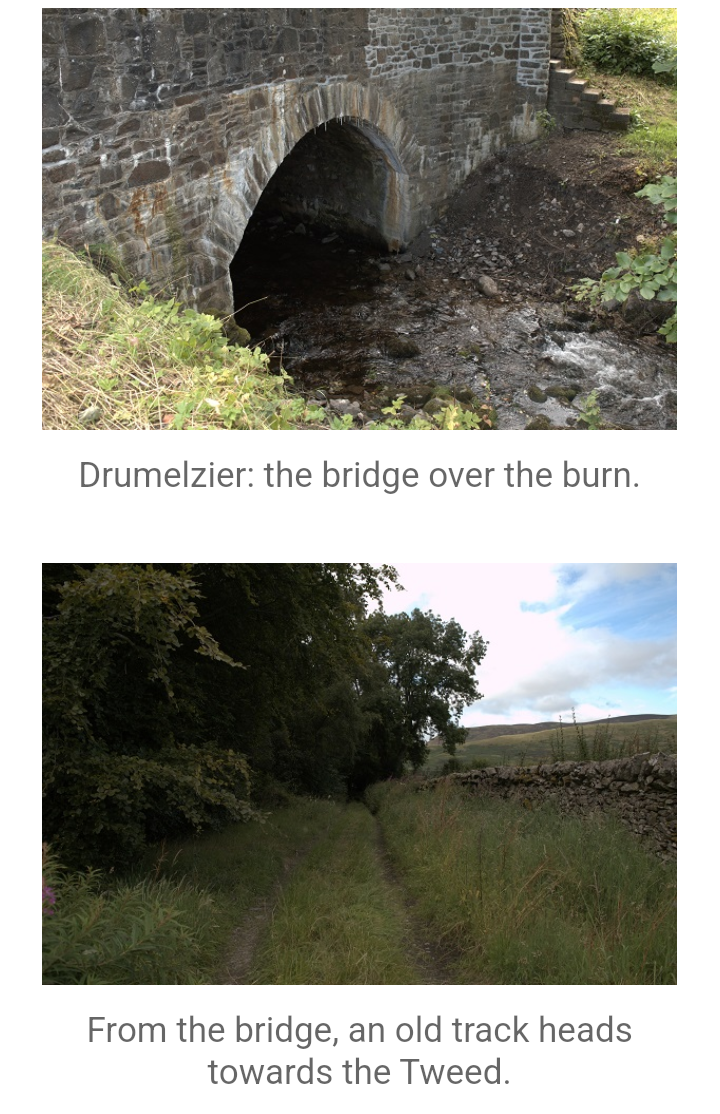
Myrddin Wyllt’s grave is said to lie near the River Tweed in the village of Drumelzier near Peebles, although nothing remains above ground level at the site.
Myrddin Wyllt is the speaker of several poems in The Black Book of Carmarthen and The Red Book of Hergest, two of the most important manuscripts of Welsh literature.
In these poems, he expresses his sorrow and regret for the loss of his friends and his former life, and he also reveals his prophetic insights and his mystical experiences.
Here is an example of one of his poems, translated from Middle Welsh into English:
I am Myrddin; and Myrddin is my name; I know what is, and what will be, and what has been. I converse with the stars, and the wind whispers to me; I have been in the depths of the sea, and in the heights of the sky; I have seen the secrets of the sun, and the mysteries of the moon; I have heard the song of the earth, and the music of the spheres; I have been a bard in the court of a king, a wild man in the forest; I have loved and lost, and suffered and rejoiced; I am Myrddin; and Myrddin is my name.
Ask British historian Nikolai Tolstoy and he’ll tell you without hesitation:
“Merlin was indeed an historical figure, living in what are now the Lowlands of Scotland at the end of the sixth century A.D. … he was an authentic prophet, most likely a druid surviving in a pagan enclave of the North. Much of the early poetry attributed to him in Welsh manuscripts is drawn, it seems most likely, from an earlier body of authentic prophetic verse uttered by Merlin himself.”
Subtle yet imperative difference between discernment and nuance and it is of consequence showing the proof.
Discernment involves making sound judgments, while nuance focuses on perceiving subtle differences. If you claim to have discernment but do not truly understand, you may not grasp the meaning of your own words. Acknowledging our shortcomings is the first step toward improvement.
There’s Power in Simple Recognition
Recognizing the distinction allows the path way for critical thinking, allowing the analysis of information to be an objectively balanced perspective. If no distinction is made, and there is no discernment, just words, blah blah, blah You’ll find yourself having clearer communication, experiencing fewer misunderstandings. You’ll find yourself within a deeper intellectually advanced position. This causes an appreciation of complex complexities where confusion would prior be.
Essence of Nuance
Nuance refers to the subtle differences in meaning, sound, or appearance.
Nuance deals with fine details and gradations.
Nature of Discernment
Discerners have the ability to make wise judgments and see things clearly.
Discerning involves perception, insight, and understanding.
For example, “The critic showed great discernment in analyzing the film.”
Discernment encompasses the skill of evaluating & understanding the deeper implications of a thing or thought.
Linguistic Differences
While nuance is strictly a noun, discernment can function both as a noun and a verb.
One can describe something as having subtle nuances, but it’s often redundant since nuances are inherently subtle.
Discernment Requires Nuance
To offer righteous judgments one must be attuned to the subtle differences and complexities within the subject at hand. If not they simply cannot fit the definition of discerning.
Nuance
Void Discernment Paralysis
The overemphasis on fine details can hinder decisive action, especially in times of crisis.
Nuance is meticulously un contained without discernment to allow fordecisions to be made.
Navigating ambiguity and constructing considered sections is a Nuanced action.
NUANCE: Fine Detail
DISCERNMENT Ability to
Quality of Object vs Subject
Perceiving & Choosing pertains to the fine details and understanding the difference between subjective and objective qualities can be quite enlightening.
Objective Qualities ( nuance) are attributes inherent to an object, independent of personal feelings or opinions. For example, saying “The cake contains 250 calories per serving” is an objective statement; it’s a measurable fact.
Subjective Qualities, on the other hand, are based on personal perspectives, feelings, or opinions. For instance, stating “The cake is delicious” is subjective; it’s based on individual taste.
Objective qualities are about factual data that remain constant regardless of who observes them, while subjective qualities can vary from person to person based on individual experiences and feelings.
Mastering the nuance between perception and reality is not a passive philosophical exercise; it is the essential toolkit required to dismantle our own cognitive illusions and navigate our way out of profound hardship.
When you are in the trenches, survival depends on clarity.
By carefully distinguishing between seemingly identical ideas, you build an architecture of discernment… allowing you to separate the truth of a situation from the mental friction keeping you stuck.
Map vs. Territory
The first tool in this kit is recognizing that the crisis you are experiencing (the territory) is completely separate from the story you are telling yourself about it (the map).
The distinction between the map and the territory is a fundamental concept in rationality.
A map is a representation of reality, while the territory is the actual reality itself.
Why Does This Matter?
This distinction matters because it highlights the fact that our understanding of the world is always mediated through our mental models and representations.
We must be aware that our ‘maps‘ , no matter how detailed or accurate, are never identical to the ‘territory‘.
Recognizing that your map is flawed is the first step, but how does the map get drawn in the first place?
When we are struggling, our maps are rarely constructed from present reality. Instead, they are stitched together using outdated, unexamined assumptions.
To update your map, you must confront the difference between the mental debris you default to and the active awareness required to survive.
Cached Thoughts vs. Actual Thinking
CACHED THOUGHTS
Cached thoughts are the pre-existing beliefs and assumptions that we hold, gathering trash and holding into them like a computer holds onto cqche. This means these are thoughts that lack conscious awareness.
This Repository of ‘thoughts’ are mental shortcuts that we rely on to make sense of the world, with no thought as to if these thoughts are based in objective reality or not.
THINKING
In contrast, thinking involves actively questioning and challenging our cached thoughts, engaging in critical analysis, and seeking new information to refine our understanding.
When you rely on cached thoughts instead of active thinking, your internal world becomes an echo chamber. You begin to mistake your unexamined biases for universal laws. This is where hardship turns into self-sabotage—when you project your own internal friction onto the external territory and assume everyone else is navigating the same distortion.
Mind Projection Fallacy
The Mind Projection Fallacy is a cognitive bias that occurs when people assume that their personal beliefs, values, or perceptions are shared by others or represent objective reality. This fallacy suggests that people often confuse their own thoughts and feelings with universal truths and expect others to have the same thoughts and feelings.
The Mind Projection Fallacy can significantly distort one’s ability to discern.
When we project our own beliefs and emotions onto others, we fail to accurately discern their unique perspectives and experiences.
Here Are Some Examples Of How Mind Projection Impedes Ones Ability To Discern:
Overestimating Agreement: One may falsely believe that others share their opinions, leading to an overestimation of consensus and potentially causing miscommunication or conflict when differing perspectives are eventually revealed.
Inaccurate Assumptions: When projecting personal beliefs, individuals can make inaccurate assumptions about others’ thoughts and feelings, leading to misunderstandings and incorrect conclusions.
Inability to Empathize: By assuming that everyone thinks and feels similarly, individuals can struggle to put themselves in others’ shoes and empathize with their unique experiences and emotions.
Poor Decision-Making: Decision-making can become flawed when one assumes their perspective is universally shared, potentially leading to choices that are not inclusive or beneficial for all parties involved.
To overcome the Mind Projection Fallacy and improve discernment, it is crucial to foster empathy, seek out diverse perspectives, and practice open communication. By recognizing the influence of personal beliefs and emotions on perception, individuals can become more discerning and accurately understand the viewpoints of others.
The Halo Effect:

a cognitive bias where our overall impression of someone or something influences our judgments of their specific traits. This term, coined by psychologist Edward Thorndike in 1920, illustrates how positive perceptions in one area can positively affect our opinions in another.
Escaping this cycle of projection requires a radical shift in how you process information. You must start dissecting the narratives you encounter, both internal and external. To do this effectively and strip away the illusion, you have to separate the mere structure of a situation from its actual substance.
Syntax vs. Semantics
In the context of language and communication, syntax refers to the physical structure of a message.
Semantics refers to the meaning or intended relationship to the territory.
Understanding this distinction is crucial for effective communication.
Yet, grasping the intended meaning is only half the battle.
When you are fighting your way out of a difficult season, it is not enough to know what a situation means—you must understand its real-world impact.
You must discern the difference between the definition of a problem and the actual consequences it produces.
Semantics vs. Pragmatics
Semantics refers to the literal meaning of a message, while pragmatics refers to the intended result or effect of conveying that message.
This distinction is important because it highlights the fact that communication is not just about transmitting information, but also about influencing behavior and shaping outcomes.
Once you understand the practical effects of your situation, the next logical step is determining where to apply your energy to fix it.
This requires pinpointing your exact position on the battlefield.
Are you fighting the immediate symptom right in front of you, or the overarching system that created it?
Object-level vs. Meta-level
The object-level refers to the specific task or problem at hand, while the meta-level refers to the broader context or framework within which that task or problem is situated.
A good meta-level theory can help us get things right at the object level, but it is usually impossible to get things right at the meta level before making significant progress at the object level.
Ultimately, navigating through these layers of abstraction brings you to the core of all discernment.
When the mental debris is cleared, the projections are silenced, and the structure is separated from the impact, you are left with the final, most vital distinction required for true liberation.
Seeming vs. Being
We can only deal with how things seem to us, not how they are in absolute terms.
This is a humbling reminder of our limited perspective and the importance of maintaining a degree of epistemic humility.
If we optimize too hard for things that seem good rather than things that are actually good, we may end up with suboptimal outcomes.
Signal vs. Noise
Not all information is created equal.
We often desire certain types of information while seeking to ignore others.
The distinction between signal and noise helps us focus on the most relevant and valuable information while filtering out the irrelevant or distracting.
Selection Effects
Selection effects occur when the evidence we have access to is filtered or biased in a particular way.
This can lead to distorted conclusions and faulty decision-making.
Understanding selection effects requires modeling where our information comes from and accounting for the processes that shape what we see.
What You Mean vs. What You Think You Mean
People often claim to have meant something slightly different than what was originally stated when their original position is challenged or refuted.
This automatic response, generated by our brains without conscious control, can be dangerous for clear thinking.
It is important to be aware of this tendency and to strive for consistency and honesty in our communication.
What You Mean vs. What Others Think You Mean
The illusion of transparency and the double illusion of transparency highlight the gap between what we think we are communicating and what others actually understand.
We often overestimate how clearly we convey our thoughts and feelings, while underestimating the extent to which others misinterpret our messages.
Effective communication requires being mindful of these biases and seeking feedback to ensure mutual understanding.
What You Optimize vs. What You Think You Optimize
Our actions are often driven by hidden motives and incentives that we may not be fully aware of.
Evolution, for example, optimizes for reproduction, but in doing so creates animals with a variety of goals that are correlated with reproduction.
Intrinsic motivation is generally stronger and more effective than extrinsic motivation.
Understanding the difference between what we think we optimize for and what we actually optimize for can help us align our actions with our true values and goals.
Stated Preferences vs. Revealed Preferences
Stated preferences are the preferences we explicitly express, while revealed preferences are the preferences we can infer from our actions.
These two types of preferences are often misaligned, with our actions not matching our stated beliefs or desires.
Recognizing this distinction can help us identify and address inconsistencies in our decision-making.
What You Achieve vs. What You Think You Achieve
Most of the consequences of our actions are unknown to us.
We often overestimate our ability to predict and control the outcomes of our decisions.
Effective action requires humility, openness to feedback, and a willingness to learn from experience.
It is impossible to optimize without proper feedback, so we must be vigilant in seeking out information about the actual results of our efforts.
What You Optimize vs. What You Actually Achieve
Consequentialism focuses on the expected consequences of our actions, rather than the actual consequences.
While it is important to consider the potential outcomes of our decisions, we must also be prepared to adapt and adjust our course based on the real-world results.
Rigid adherence to a particular optimization strategy can lead to suboptimal outcomes if it fails to account for the actual effects of our actions.
What You Seem Like vs. What You Are
Our external appearance and behavior may not always reflect our true nature or inner experience.
We may present a certain image to the world while privately struggling with doubts, fears, or contradictory impulses. Recognizing this distinction can help us cultivate self-awareness, authenticity, and empathy in our relationships with others.
What Other People Seem Like vs. What They Are
Similarly, we often make assumptions about others based on their outward behavior or reputation, without fully understanding their inner lives or the complex factors that shape their actions.
Assuming that we understand others is a common mistake that can lead to misunderstandings, prejudice, and missed opportunities for connection and growth.
What People Look Like vs. What They Think They Look Like
People tend to underestimate the gap between their stated preferences and their revealed preferences. We may claim to value certain qualities or characteristics in ourselves or others, but our actions often tell a different story. Recognizing this discrepancy can help us align our self-perception with reality and make more authentic choices.
What Your Brain Does vs. What You Think It Does
Our brains are complex, powerful, and often mysterious. We are running on “corrupted hardware” in the sense that our thought processes are shaped by social and evolutionary factors that can distort the truth. The brain’s machinations are fundamentally social, automatically engaging in signaling, face-saving, and other behaviors that can lead to biased or irrational decisions. While we must be skeptical of the outputs of our thought processes, we must also strike a balance between skepticism and action, particularly in situations that require quick thinking or decisive action.
Clever Argument vs. Truth-seeking
People often believe what they want to believe, a phenomenon known as motivated cognition.
Giving a smart person more information and more methods of argument may actually make their beliefs less accurate, because it provides them with more tools to construct clever arguments for what they want to believe.
The actual reason for believing something determines how well that belief correlates with the truth.
If you believe something because you want to, any arguments you make for that belief, no matter how strong they may sound, are devoid of informational context about the truth of the belief and should be ignored by a genuine truth-seeker.
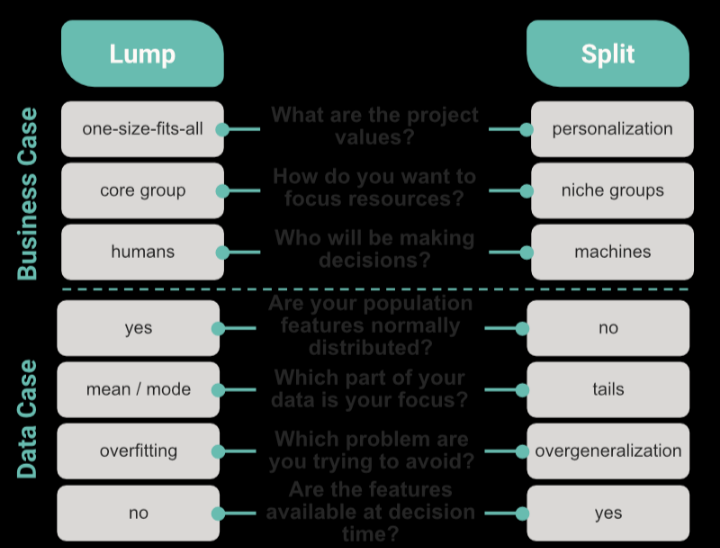
Lumpers vs. Splitters
Lumpers are thinkers who attempt to fit things into overarching patterns, while splitters are thinkers who make as many distinctions as possible, recognizing the importance of being specific and getting the details right. The lumper mindset can be useful for identifying broad trends and connections, while the splitter mindset is essential for accurate analysis and nuanced understanding.
Fox vs. Hedgehog
The fox knows many things, while the hedgehog knows one big thing. Closely related to the lumper-splitter distinction, the fox mindset involves a broad array of knowledge and the ability to draw insights from diverse sources. The hedgehog mindset, in contrast, focuses on a single big idea and applies it everywhere. According to Tetlock’s research, the fox mindset is generally better for making accurate judgments in complex, uncertain situations.
Traps vs. Gardens
Well-kept gardens die by pacifism, meaning that conversations, societies, systems, and even thermodynamic equilibrium tend to slide toward disorder, conflict, and decay unless actively maintained.
Recognizing this distinction can help us be proactive in defending and nurturing the things we value, whether it’s a productive dialogue, a thriving community, or a well-functioning organization.
Nuanced thinking involves carefully distinguishing between seemingly similar concepts and recognizing the subtle differences that shape our understanding of the world.
By engaging in this kind of discernment, we can make more informed decisions, communicate more effectively, and develop a richer, more accurate perspective on the complex realities we navigate every day.
Lion-Lamb (Revelation 5:6) embodies Christ’s paradoxical victory through sacrifice.
Interpretive Keys
Contextual Priority: Burning bush (Exodus 3:2) symbolizes God’s presence because of Moses’ barefoot reverence, not arbitrary fire imagery.
Covenant Echoes: Rainbow (Genesis 9:13) gains meaning through Noah’s flood narrative, not just color spectrum symbolism.
Cultural Anchors: Olive oil (James 5:14) represents healing and Spirit-anointing due to Mediterranean medicinal practices.
Practical Application
Sacramental Symbols: Bread/wine (1 Cor. 11:23-26) maintain physical reality while conveying spiritual participation in Christ’s sacrifice.
Ethical Metaphors: “Salt of the earth” (Matthew 5:13) requires cultural translation (e.g., “social preservative” in modern contexts).
Common Pitfalls
Over-allegorizing: Not every detail (e.g., Jonah’s fish species) carries symbolic weight.
Context Collapse: Israel’s Exodus becomes universal liberation metaphor only after establishing its historical covenant context.
When interpreting symbolism in the Bible, it is important to consider the context in which the symbol is used and to look for recurring patterns throughout the text.
2. Metaphor
Metaphor in the Bible involves the use of figures of speech to illustrate spiritual truths or concepts.
Metaphors are comparisons between two seemingly unrelated things that help to provide clarity and insight into complex ideas.
For example, Jesus referring to himself as the “vine” and his followers as the “branches” in John 15:5.
To discern metaphorical language in the Bible, it is essential to pay attention to the context in which the metaphor is used and to explore the significance of the comparison being made.
Take the time to study the context, explore possible meanings, and consult trusted sources for guidance.
Reflect on the deeper truths being conveyed.
Learn Hermeneutic Interpretation
Hermeneutic interpretation is the process of analyzing and understanding scripture in order to derive meaning and relevance for application in one’s life.
It involves carefully examining the historical context, cultural background, literary style, and original language of the text to gain a deeper understanding of its intended message.
Key Steps for Hermeneutic Interpretation
Historical Context: Start by researching the time period, events, and societal norms when the scripture was written.
Understanding the historical context can provide valuable insights into the intended meaning of the text.
Cultural Background: Explore the cultural practices, beliefs, and traditions that may have influenced the writing of the scripture.
This can help in interpreting the text within its cultural framework.
Literary Style: Analyze the literary devices, structures, and themes used in the text.
This can aid in uncovering the underlying message conveyed by the author.
Original Language: If possible, study the original language in which the scripture was written.
Translations can sometimes lose nuances and cultural references that are crucial for accurate interpretation.
Balance Faith and Reason
Both faith and reason are important aspects when deciphering the logic within the Bible.
Importance of Faith
Faith plays a central role in interpreting the Bible.
It requires belief in the teachings and stories presented in the text. Trusting in the wisdom and guidance of the Bible is essential for a meaningful spiritual journey.
Utilizing Reason
While faith is crucial, reason can also be utilized to critically analyze and understand the logic within the Bible.
Applying critical thinking skills to the text can help deepen your understanding and interpretation.
Approach with an Open Mind and Heart
Remember to approach the text with an open mind and heart.
Allow yourself to be receptive to the message and teachings of the Bible.
Let the logic within the text resonate with you and guide you on your spiritual journey.
Overall, finding a balance between faith and reason is key to navigating Bible logic effectively.
By combining trust in the teachings with critical analysis, you can deepen your understanding of the text and enrich your spiritual journey.
Approach the Bible with openness and a willingness to learn, and let its logic guide you.
Shooting The Messenger: blaming or punishing the person delivering bad news.
It’s not uncommon for people to direct blame towards the bearer of unfavorable information.
There are several reasons why people do this, including:
A need for coherence and predictability
When confronted with unexpected or unfavorable information.
People often seek to make sense of the situation to regain a sense of control and understanding.
Photo by Oscar Keys on Unsplash
A sense of something is all they need to be satisfied, no matter if their “senses” are wrong.
The feeling of coherence is enough for them, and questioning their senses is outright rejected because it destroys their false identity.
Confrontation Avoidance
Receiving bad news can trigger feelings of anger and frustration.
Photo by Nsey Benajah on Unsplash
Instead of addressing the core issue or the actual source of the problem, people often redirect their emotions towards the messenger, thereby alleviating some of their distress.
Blame attribution
When unexpected things happen, people often look for someone to blame.
Photo by Adi Goldstein on Unsplash
This helps them preserve a positive self-image, even if it is a fraudulent fantasy, and maintain the image of group harmony in their consciousness.
Solution: More Freedom NOT Less
It’s important to lead people to credible sources and encourage them to think critically about the information they encounter.
It’s also crucial to understand why someone believes what they do and to approach conversations with empathy and patience, even when they don’t do the same for you.
Have you ever found yourself feeling confused or divided in your thoughts?
It’s easy to blame your confusion on the information you receive or the people around you for causing this confusion.
The responsibility does not lie with the individual who brought forth the preexisting confusion within your thoughts.
Proverbs 3:5 -“Trust in the Lord with all your heart, and do not lean on your own understanding.”
1 Corinthians 14:33 – “For God is not a God of confusion but of peace.”
The Truth of the Confusion
Confusion stems from within you, not external sources.
When you feel confused, and begin to get down on yourself with negative thoughts filled with self-hate… you must remember that discernment also resideswithin you.
Instead of pointing fingers at others for bringing out confusion in your mind, take a step back and reflect on what is truly causing the internal confusion.
The inner spirit that resides within you inextricably shapes the way your mind perceives and processes information and experiences.
1 Corinthians 2:11-12 – “For who knows a person’s thoughts except their own spirit within them? In the same way no one knows the thoughts of God except the Spirit of God. What we have received is not the spirit of the world, but the Spirit who is from God, so that we may understand what God has freely given us.”
Psalm 51:10 – “Create in me a pure heart, O God, and renew a steadfast spirit within me.”
Romans 12:2 – “Do not conform to the pattern of this world, but be transformed by the renewing of your mind. Then you will be able to test and approve what God’s will is—his good, pleasing and perfect will.”
Acknowledge Self as Source of Confusion
By acknowledging the presence of confusion being within yourself and tapping into your innate discernment, you can navigate through challenging situations with clarity and understanding.
Next time you feel confused, remember that the power to discern lies within you.
Embrace this inner wisdom and let go of the habit of scapegoating external factors for your mental (spiritual) state.
True clarity comes from within, not from external sources.
“Most folks seek therapy for past or present-day issues that are typically relational in nature. This usually means you initially come to therapy from the perspective that either no one else is to blame (I’m not good enough, my parents were perfect, I’m a burden, etc.) or everyone else is to blame (he hurt me, she’s controlling, they are selfish, etc.). You might also hope that your therapist will agree with you. Of course! The quickest way out of discomfort is to find someone who will shore up your perspective. While that may relieve you of the immediate discomfort, in the long term, it does nothing for you because your nervous system remains perpetually in threat response, defending you from the world with shame or blame, entrenched in a cycle of victimhood.”
“For many, by realizing that you trusted others who ultimately betrayed you, it created a sense of self-doubt, reflection, and in some cases, guilt over decisions made. That in turn created a feeling of distrust in everyone, which is unhealthy. If you can’t trust in others and you can’t trust in yourself, that leaves quite a void. Rebuilding that trust in yourself and removing the self-doubt is the very thing that allows you to discern what and who to trust..”
She recalls the enchanting tales of love that flourished amidst the roar of a chainsaw.
She fondly reminisces about a love that conquered all challenges with ease, navigating through love and danger with unwavering strength.
“Watch the heavens,” she’ll murmur, “for even angels tumble down to us.“
Ancient symbols in her eyes hint at past passion in her embrace.
She nostalgically recalls a once-fiery passion now reduced to cold indifference.
However, she maintains that the root of her bitterness does not lie in fate, but in the toxic elixir she concocted for herself.
I have learned to appreciate the profound connection that emerges when opposing forces intersect, ones that may trouble your rest with intense images.
I am awaken to deep truths from profound skepticism.
As the tendrils of doubt wrap around my thoughts, I find myself delving into the depths of introspection.
My mind becomes a battleground between logic and emotion, tearing at the seams of reality until everything blurs into a hazy dream-like state.
In these moments of uncertainty, I search for meaning in the chaos, grasping at threads of truth that seem just out of reach. It is in these moments of vulnerability that I experience a profound clarity, as if the veil of illusion has been lifted and I can see the world as it truly is.
I am both terrified and exhilarated by the raw intensity of these moments, as they push me to question everything I thought I knew. But through this skepticism, I find a sense of liberation and empowerment, as I realize the power of my own mind to navigate the complexities of existence.
And so, I embrace this skepticism as a gift, a tool to help me uncover the hidden truths that lie beneath the surface of reality. I am a seeker of knowledge, a dreamer of possibilities, forever chasing the elusive spark of enlightenment that flickers in the darkness.
Discernment is the skill of detecting subtle inaccuracies within seemingly correct concepts, akin to identifying a counterfeit bill amidst genuine currency.
It’s a critical cognitive ability that enables one to differentiate between nearly right and truly right, often revealing hidden flaws that escape the general consensus.
Discernment Can Be Inconvenient
While many claim to value discernment, its practical application can be inconvenient, leading to its dismissal or mischaracterization by those it challenges.
Challenges of Discernment
Discernment is not merely an intellectual exercise; it is a profound mental tool that separates truth from error and right from wrong.
It is the mental equivalent of mining for gemstones, where one must sift through layers of debris to uncover the valuable core.
In a world rife with contradictions, discernment is the light that cuts through the fog, revealing clarity and wisdom.
Dilemma of the Discerning
Those who practice discernment often face resistance.
Their insights can unsettle established norms and beliefs, leading to their portrayal as argumentative or contrarian.
The discerning individual, by pointing out overlooked flaws, can create tension and discomfort, as they challenge the comfort of the status quo.
Root of “Discernment” is Seperation
The term “discernment” originates from the Latin “dis” (apart) and “cernere” (to separate), reflecting the act of distinguishing or separating elements from one another.
Discernment in Scripture
According to Hebrews 4:12, discernment is a divine capacity given by the word of God, which is described as sharper than any double-edged sword. It is capable of dividing soul and spirit, joints and marrow, and discerning the thoughts and intentions of the heart.
For believers, discernment is crucial for navigating life’s complexities and aligning with God’s will, even when it contradicts popular opinion.
The Art of Biblical Discernment
This concept is explored through the lens of biblical teachings, emphasizing the importance of discernment in making sound decisions and understanding deep truths.
It involves questioning assumptions and seeking wisdom from ancient scriptures while integrating modern scientific understanding of human behavior.
Discernment as a Sifter
Like a fine-meshed sifter, discernment separates the substantial from the insubstantial, allowing us to recognize truth amidst deception.
It is an intuitive understanding, a result of careful analysis, and a learned skill from experience.
Enhancing Discernment
To refine discernment, one can practice habitual mindfulness, be present in the moment, develop self-awareness, and embrace diverse beliefs.
These practices help in recognizing biases, understanding complex issues, and making informed decisions.
Discernment as a Gift and Skill
Discernment is both a spiritual gift and a skill that can be honed.
It allows us to perceive the true nature of situations and understand people’s motives.
While it is a gift from the Holy Spirit, it can be sharpened through experience, prayer, and the pursuit of wisdom.
Synonyms of Discernment
Judgment: The ability to make considered decisions after thorough analysis.
Evaluation: The assessment of the value or significance of something.
Critical thinking: The logical and rational analysis of information.
Intuition: Trusting inner knowledge that guides understanding without conscious reasoning.
The Pursuit of Truth
Truth is the foundation of discernment, representing an objective understanding of reality. It is the bedrock upon which knowledge and trust are built, allowing for coherent interactions.
Addressing Gossip and Vanity
Discernment also plays a role in personal growth, steering one away from gossip and superficial concerns towards deeper wisdom.
In summary, discernment is a multifaceted ability that is essential for recognizing truth, making wise decisions, and navigating life’s moral and spiritual challenges.
It is a tool for navigating between the allure of appearances and the pursuit of meaningful existence.
It is a skill that can be developed and a gift to be cherished, guiding individuals toward a more profound understanding and a life aligned with higher principles.