Category: Wisdom + Discernment

  • Logos

    Logos

    As a lover of language, I’m always on the lookout for words that can add depth and nuance to my writing and conversation.

    I’ll be sharing some of my favorite words that are a little off the beaten path.

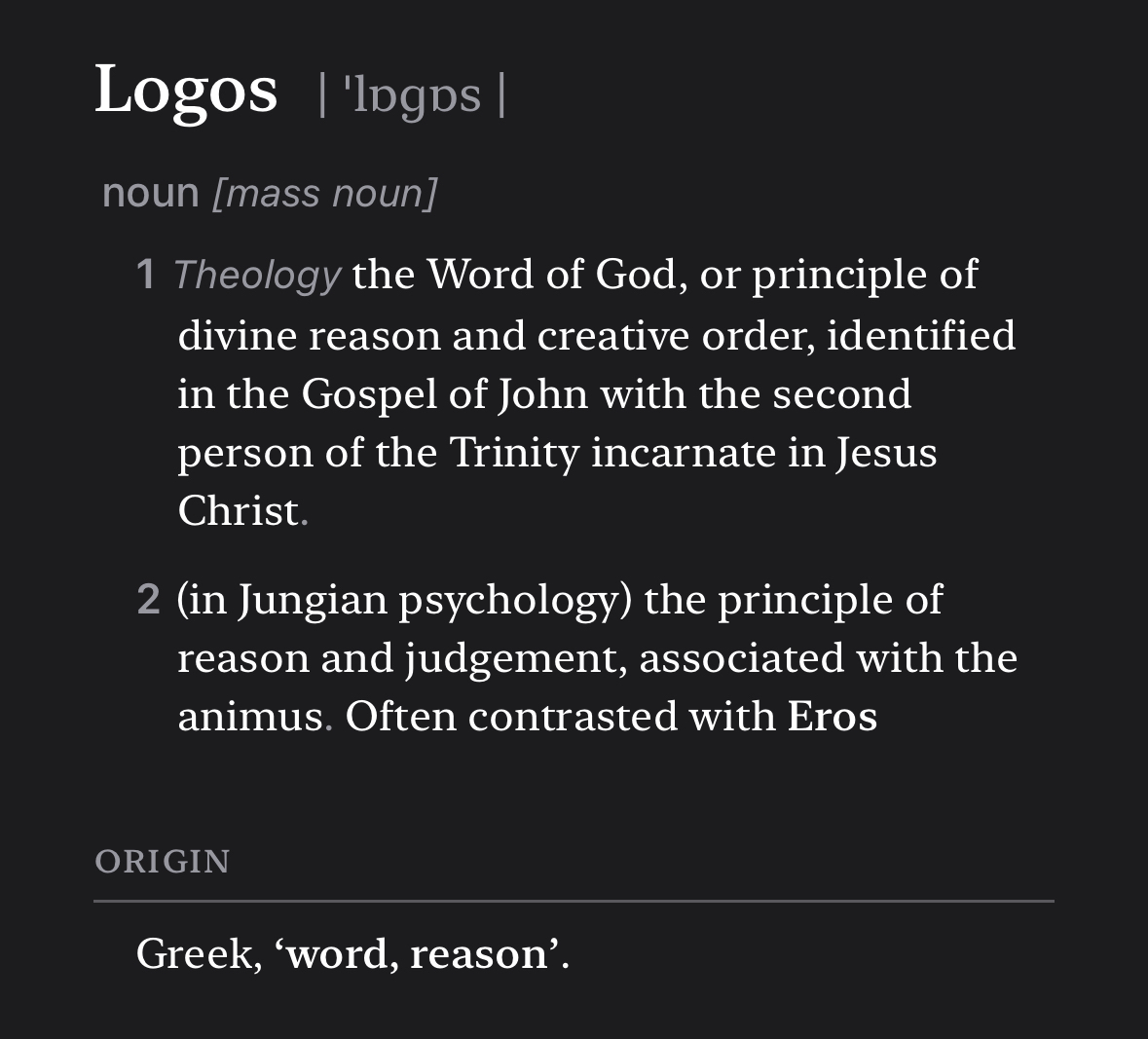
    ‘Logos’ Definition:

    FAVORITE SIMILAR WORDS:

    Nousphere: A comprehensive and all-encompassing intellectual framework.

    Gnosema: A deep and profound understanding that’s hard to put into words.

    Sophisma: A complex and nuanced intellectual framework.

    Noema: The object of thought or the content of consciousness.

    Episteme: A systematic and organized body of knowledge.


    FAVORITE HIDDEN GEMS

    I also discovered some other unusual words that caught my eye:

    Chthonix: A deep and profound understanding rooted in the earth or physical world.

    Axiomene: A self-evident and universal truth that’s the foundation of all knowledge.

    Gnomonix: A deep and profound understanding that can interpret and judge the world.

    Sophiurgy: A wise and skilled craftsmanship that can shape and create the world.

    Noetikos: A rational and intellectual understanding that’s the foundation of all knowledge.

    These words may not be part of your everyday vocabulary, but they can add a touch of elegance and sophistication to your writing and conversation.

  • High-Vibrational

    High-Vibrational

    High vibration refers to a state of energy characterized by positive feelings, thoughts, and actions, in contrast to low vibration, which is linked to negativity and stress.

    Vibrational Targets

    People who resonate at a higher frequency often find themselves preyed upon by dark energies.

    These negative forces can creep in, using manipulation and emotional depletion to exploit, brought about by those who carry unresolved pain.

    This leaves a portal for a deep sense of weariness, causing emotional fatigue, as their bright light becomes a beacon for those who seek to drain their spirit.

    PORTALS FOR LOW VIBRATIONAL FREQUENCIES TO ENTER:

    1. Criticism & Gossip

    High vibrational individuals, with their heightened awareness, can unintentionally stir unease in those around them.

    As a result, they frequently endure harsh judgment and whispers behind their backs, feeling the weight of loneliness and misunderstanding.

    This stems from deep-seated insecurity or a profound lack of understanding, as their genuine selves can seem like an unwelcome reminder to those who are not prepared to face their own inner struggles.

    It’s a painful truth that the authenticity of some can evoke fear in others, revealing a heart-wrenching vulnerability that many are too afraid to acknowledge.

    2. Isolation

    Individuals with elevated vibrations frequently find themselves in a state of loneliness, as the profound depth of their awareness creates a chasm between them and others.

    The struggle for connection leaves them feeling isolated and misunderstood, trapped in a world where their sensitivity and insight can be burdensome rather than a blessing.

    3. Sadness

    This profound disconnection weighs heavy on their hearts, leading to a sadness that lingers like a shadow, as they yearn for companionship that seems perpetually out of reach.

    4. Naive Authenticity

    Authentic energy forces others to face parts of themselves they may not want to see, leading to avoidance or rejection.

    Their presence compels people to confront the darker corners of their souls, unearthing truths that are often too painful to acknowledge.

    This can result in a heartbreaking tendency for others to turn away, retreating into denial or pushing them away in fear of vulnerability.

    Protecting Energy

    To maintain an elevated state of consciousness, you must prioritize self-care and boundary-setting.

    This includes staying surrounded by those who share a similar energy and limiting interactions with those who drain or manipulate them.

    While the journey of a high-vibrational person can lead to spiritual growth, it’s essential to acknowledge the difficulties they face, balancing their elevated state with the need for protection and self-preservation.

  • Sacred Geometrical Symbols

    Sacred Geometrical Symbols

    Vesica Piscis to the Grid of Life

    Sacred geometry is a field that not only explores the intricate patterns and shapes underlying creation, but defines it and holds within it the foundation of the origin.

    From the simple elegance of the Vesica Piscis to the profound complexity of the Grid of Life, each symbol in this geometric art holds a wealth of meaning and nuance.

    Let’s delve into these sacred geometric forms…

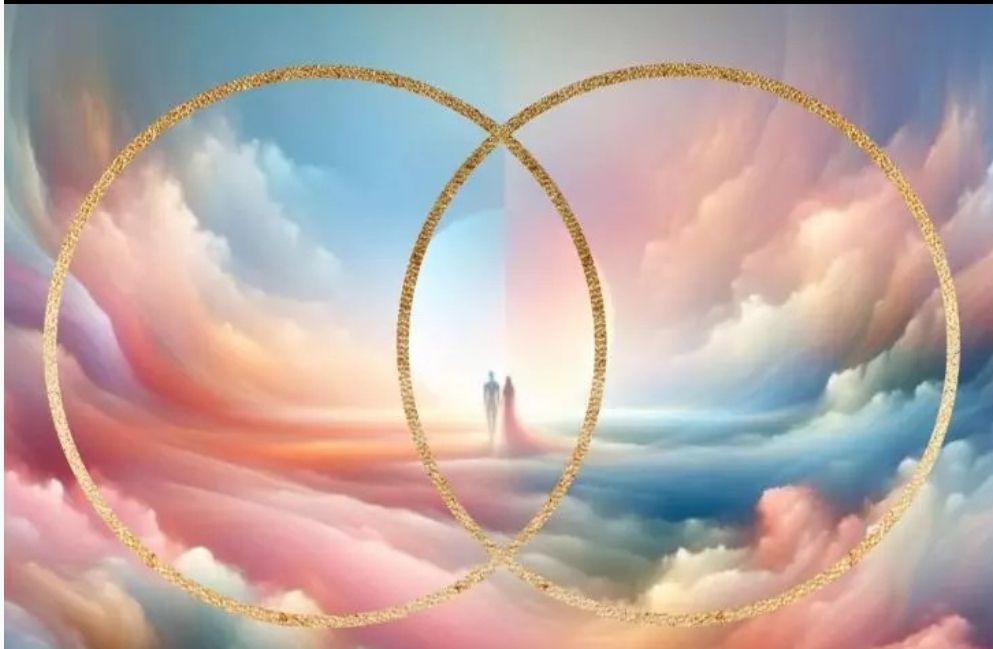
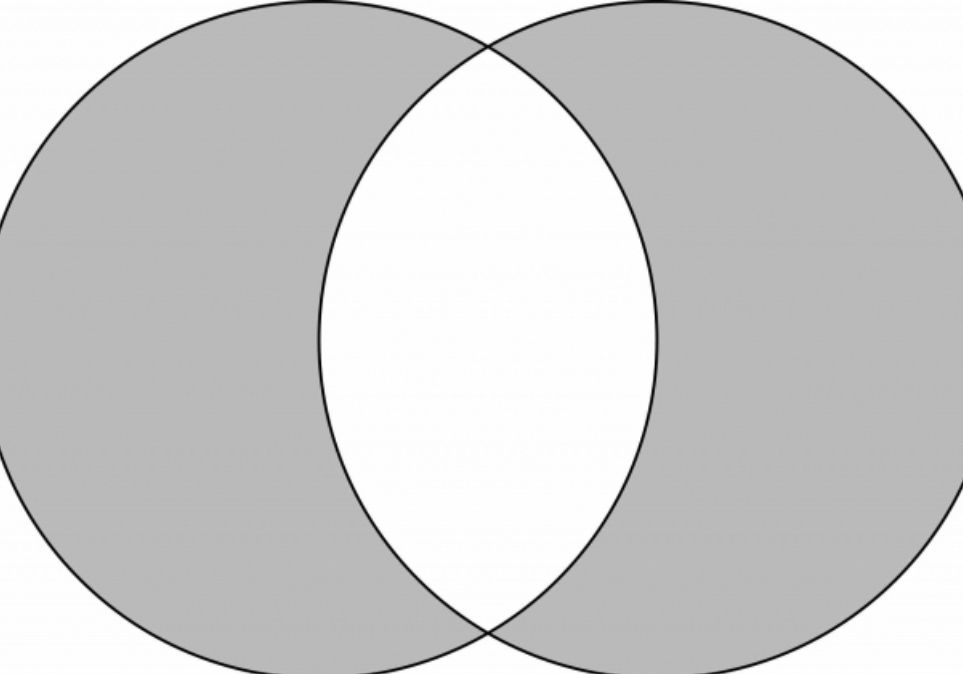
    Vesica Piscis: The Intersection of Opposites

    The Vesica Piscis, created by the intersection of two identical circles, represents the union of opposites.

    Its proportions have influenced architectural masterpieces and are embedded in various artistic and organizational symbols throughout history.

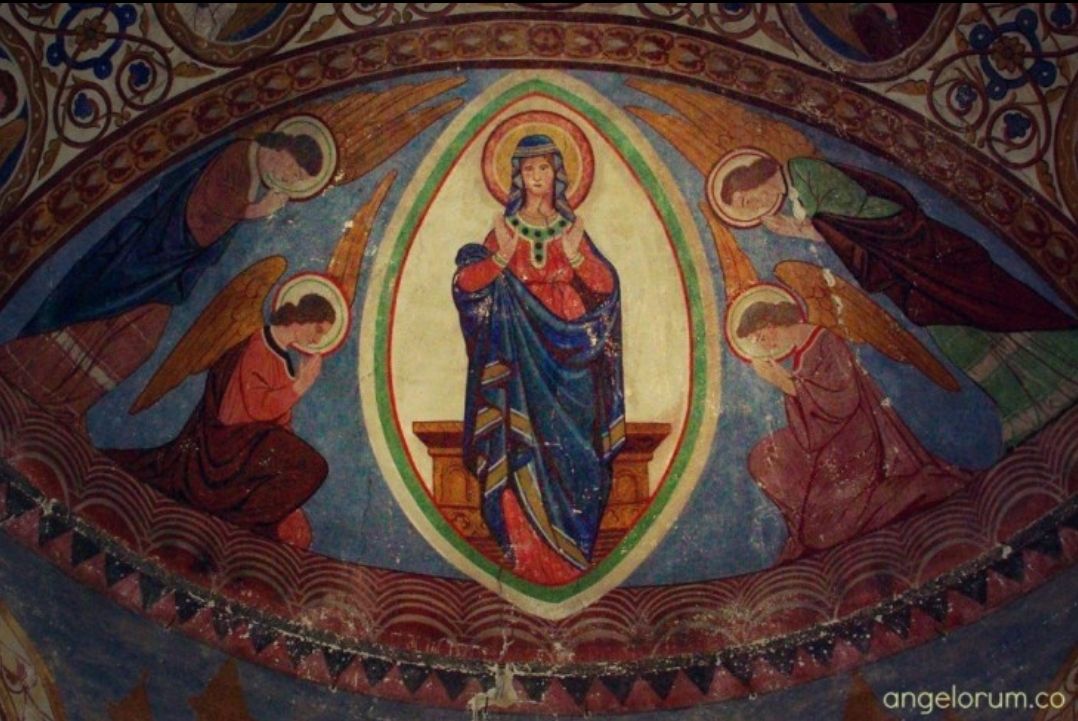
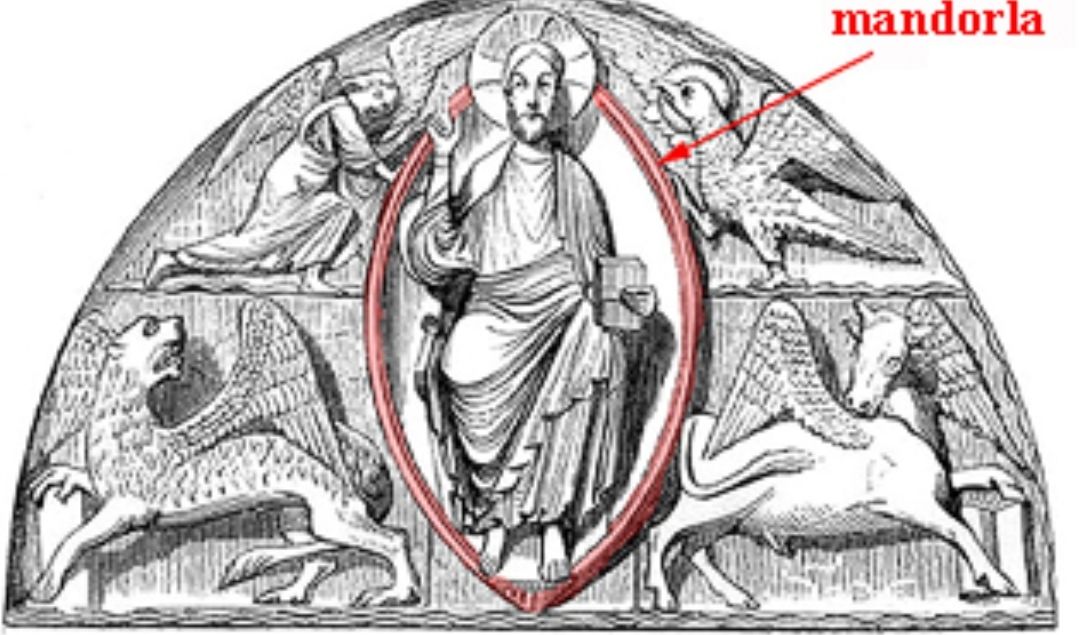
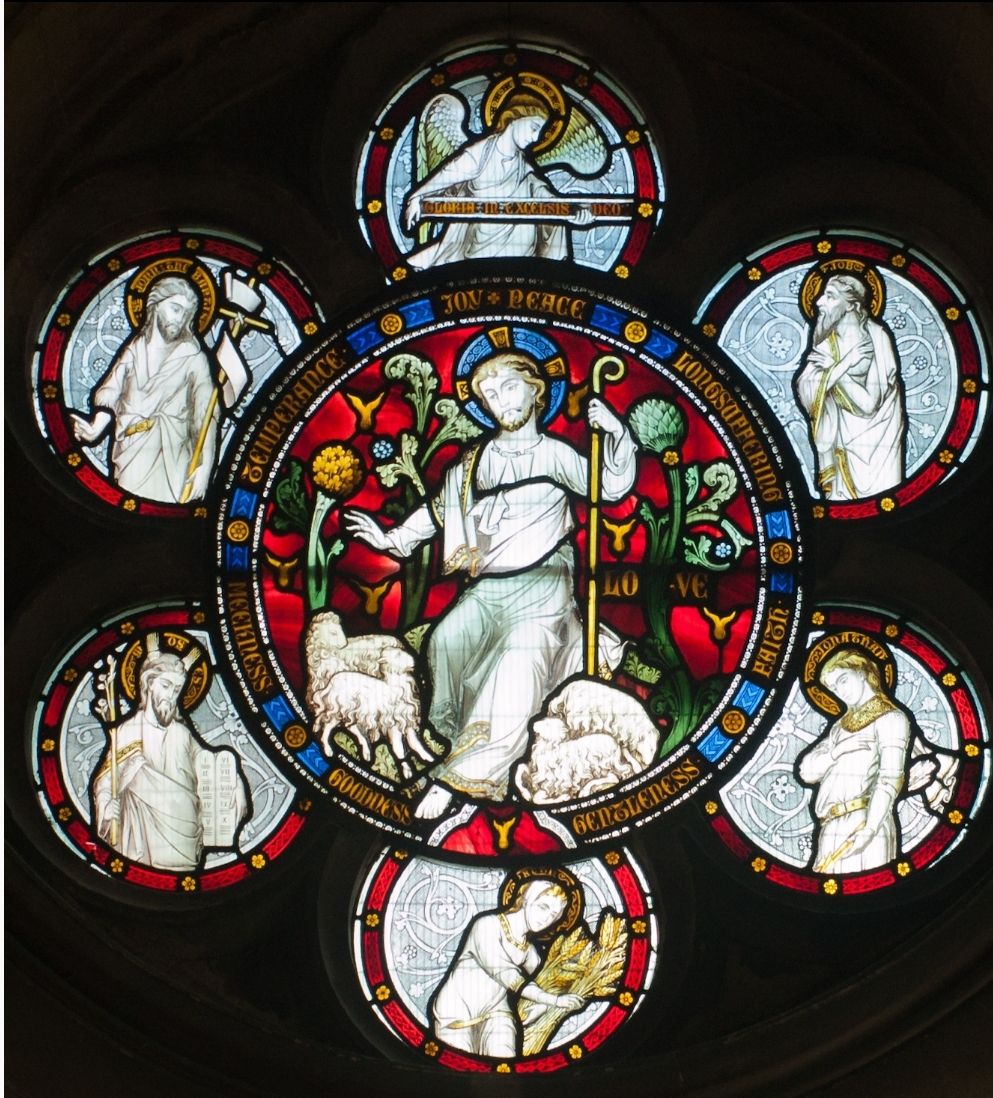
    The mandorla is often seen in religious art and architecture.

    Mandorla
    Mandorla in Christian Art

    The Mandorla is derived directly from the Vesica Piscis, symbolizing the canal of life, the vagina opening where all humanity derives.

    This is intersection of the earthly and celestial realms. Earthly body delivered with soul inside

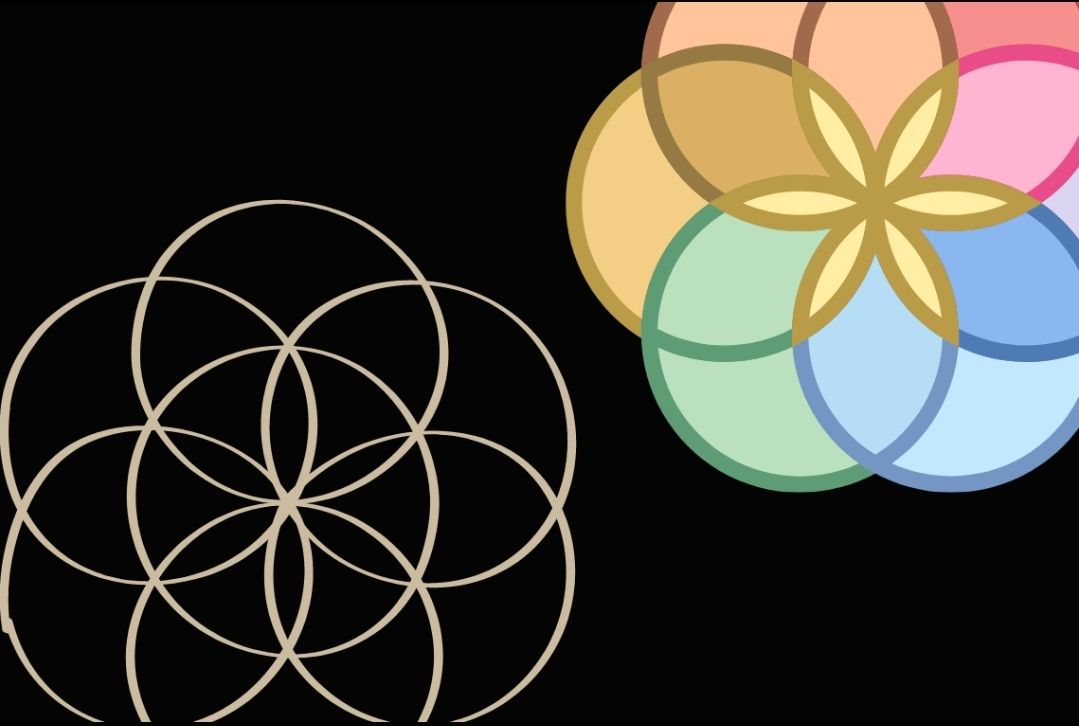
    Seed of Life: The Essence of Creation

    At the heart of sacred geometry lies the Seed of Life, a design made up of seven intertwined circles.

    Its universal appeal can be witnessed in its widespread use across various religions and cultures.

    Each overlapping circle represents a cell, a cycle, or even a day, culminating in the interconnected nature of life’s processes.

    The Seed of Life speaks to the fundamental structures of life and existence, imbuing objects with a sense of protection and blessing.

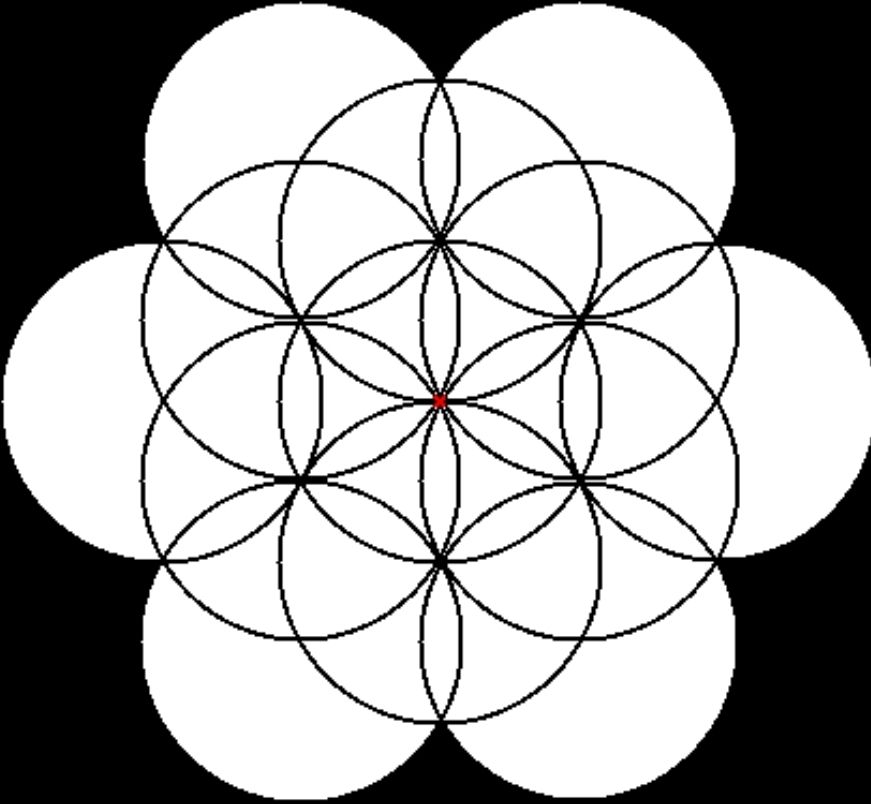
    Egg of Life: The Spark of New Life

    Emerging from the Seed of Life, the Egg of Life symbolizes rebirth, fertility, and the spark of new life.

    Seed of life is vagina, Ovulation is the substamce perfecting the environment for masculine seeding, increasing pleasure increases bodily ease and diversion.

    By adding six more circles to the foundational Seed, the Egg of Life demonstrates how life and patterns expand and evolve.

    Within the three-dimensional realm, the Egg of Life can be visualized through the eight spheres nestled within Metatron’s Cube, showcasing the versatility and interconnectedness of sacred geometric symbols.

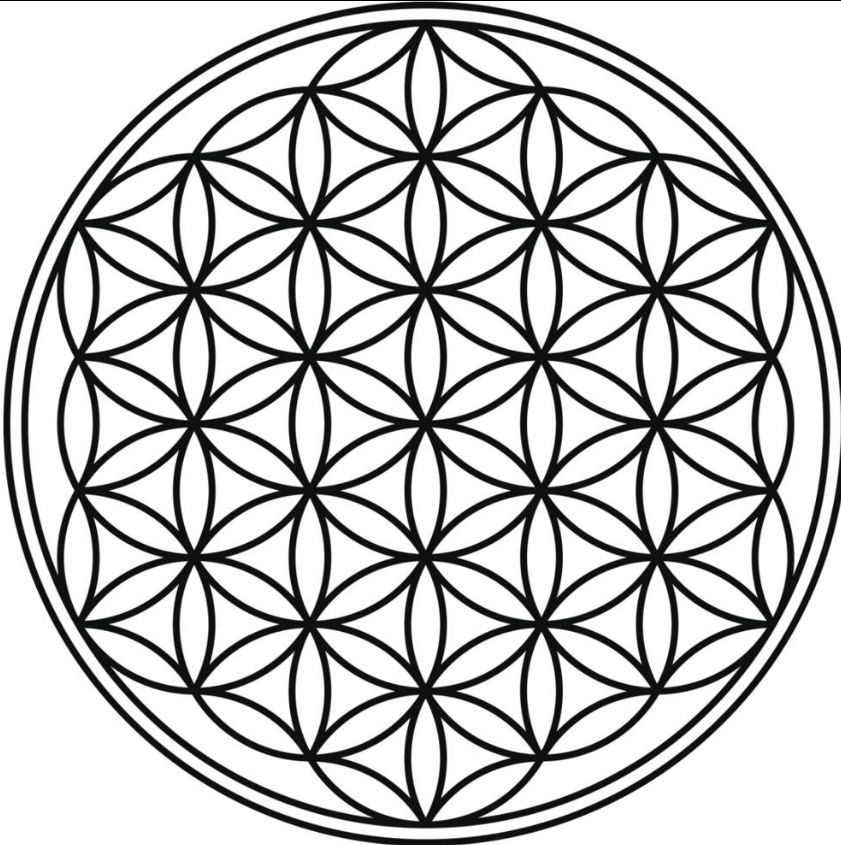
    Flower of Life: The Cosmic Blueprint

    The Flower of Life, often depicted as a series of 19 interlocking circles, is believed to be the cosmic blueprint, encoding the very design of every atomic structure and life form.

    Its presence across civilizations, from ancient Egypt to modern Japan, bears testament to its universal appeal.

    JAPANESE FLOWER OF LIFE

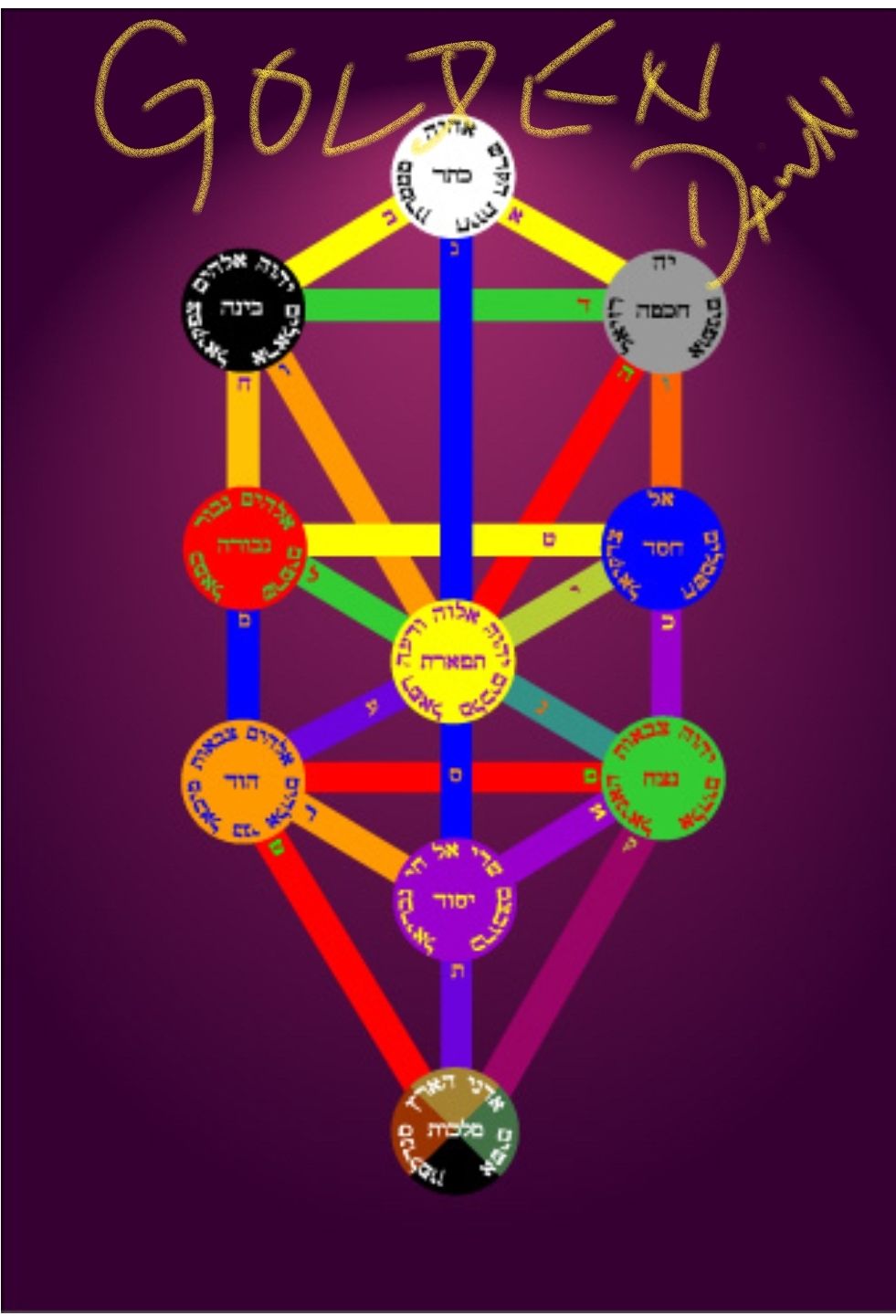
    Sephiroth

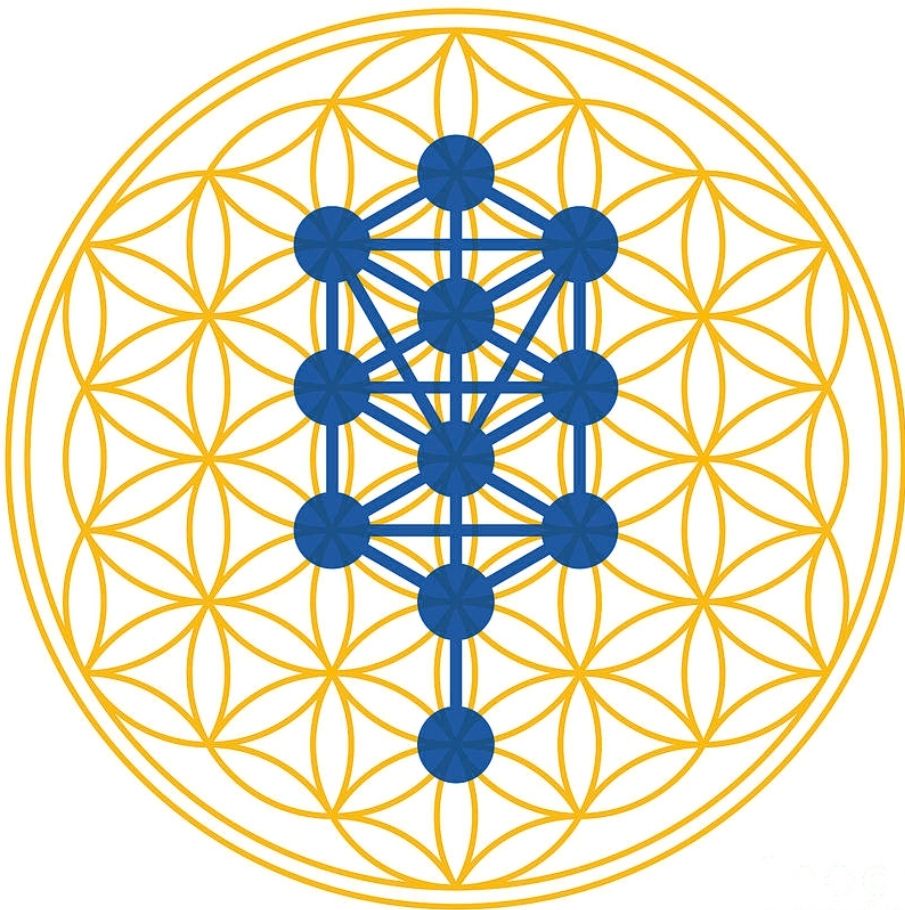
    Tree of Life: The Interconnectedness of All Things

    The Tree of Life represents numerous systems across varying cultures and religions, providing a hierarchical structure for all the forces in the Universe.

    Its 10 spheres, called the “Sephiroth,” represent different qualities of the Soul, divided into three pillars: the Pillar of Severity, the Pillar of Mildness, and the Pillar of Mercy.

    The Tree of Life reminds us that we are not alone in the Universe but rather part of a vast interconnected network.

    Fruit of Life: The Holy of Holies

    Emerging from the heart of the Flower of Life, the Fruit of Life comprises 13 interconnected spheres, often referred to as the ‘Holy of Holies.’

    The 13 spheres symbolize unity and a transition between realms or dimensions, while the 78 lines that emerge when linking the centers of these circles fashion Metatron’s Cube, enclosing all five Platonic solids.

    The Fruit of Life’s spheres symbolize the feminine aspects of creation, providing a foundation for the 78 masculine rays of creation.

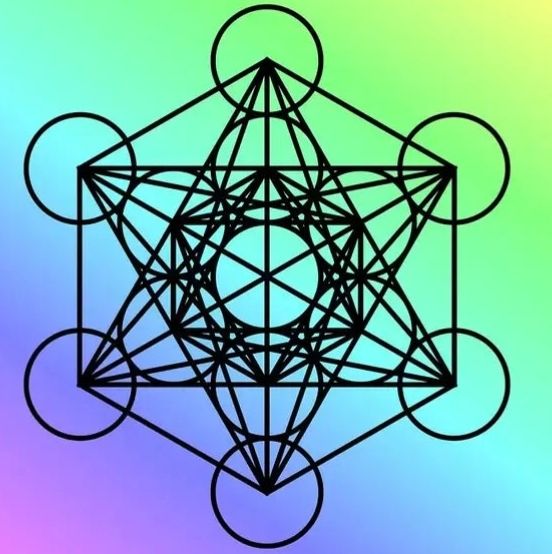
    Metatron’s Cube: The Divine Blueprint

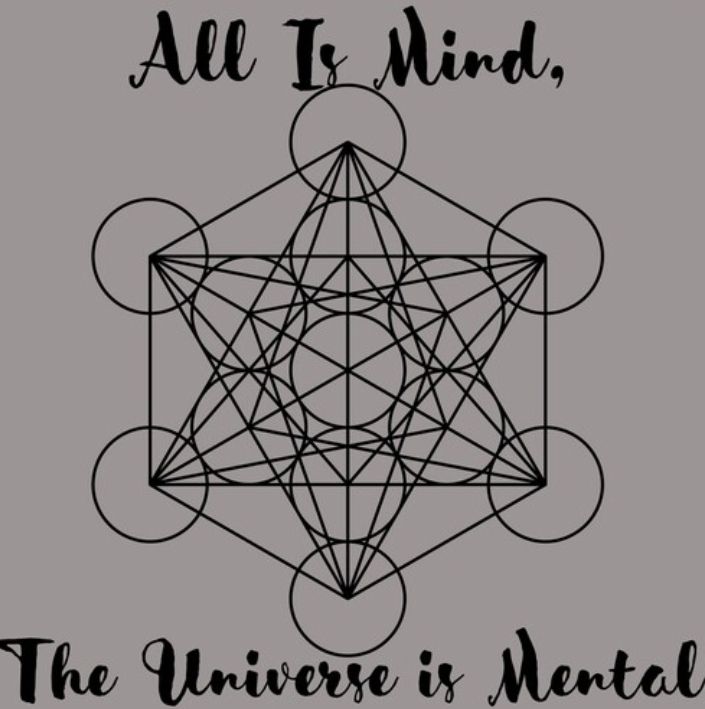
    Metatron’s Cube, a geometric construct associated with the archangel Metatron, is a pivotal bridge, transforming 2-dimensional realities into 3-dimensional realms.

    Within this complex geometric form, the five Platonic solids are discerned, positioning Metatron’s Cube as a testament to the divine blueprint upon which the cosmos is etched.

    As quantum physics ventures deeper into understanding existence, it continually echoes the

    Hermetic quote, “all is mind; the universe is mental,” with Metatron’s Cube in mind epitomizes the abstract, cognitive foundation of our universe.

    Grid of Life: The Masculine Counterpart

    The 64-tetrahedron, commonly termed as the ‘Grid of Life,’ is the masculine counterpart to the Flower of Life.

    This geometric form, comprising 64 individual tetrahedrons, overlays the Flower of Life, symbolizing the convergence of space and time.

    The allure of the Grid of Life transcends its geometric elegance, embedding itself in the mystique of the number 64, which recurrently surfaces in nature, mysticism, and human constructs, from genetic code to sacred texts.

    The Grid of Life emphasizes the interconnectedness of all things and underscores its significance in our understanding of the universe.

  • Verses  Energy Light. Frequency

    Verses Energy Light. Frequency

    Scripture obviously doesn’t describe God in direct quantum terms, as these terms are contemporary.

    Yet there are several Bible verses & theological concepts that do align with Spirit being Light and Energy.

    God in Scripture

    Light & Energy

    1 John 1:5: “God is light; in Him there is no darkness at all.” This verse directly describes God as light, emphasizing purity and the absence of darkness.


    1 Timothy 6:16: “He alone is immortal and dwells in unapproachable light, whom no man has seen or can see.” This verse speaks to the transcendent nature of God’s light, which is beyond human comprehension.


    John 8:12: “When Jesus spoke again to the people, he said, ‘I am the light of the world. Whoever follows me will never walk in darkness, but will have the light of life.’” Jesus, as the manifestation of God, is described as the light of the world.


    Genesis 1:3: “And God said, ‘Let there be light,’ and there was light.” This verse illustrates the power of God’s word to create light, a fundamental element of the universe.


    Sound & Light in Creation

    The Bible also contains references to creation through God’s spoken word, which can be interpreted as sound and light:

    Genesis 1:3: “And God said, ‘Let there be light,’ and there was light.”

    The act of speaking light into existence suggests a connection between sound and light in creation.

    John 1:1: “In the beginning was the Word, and the Word was with God, and the Word was God.”

    The term “Word” (Logos) implies the creative power of God’s speech.

    Revelation 4:5: “From the throne came flashes of lightning, rumblings, and peals of thunder.”

    This imagery combines light and sound to depict the divine presence.

    God’s Breath & Human Life

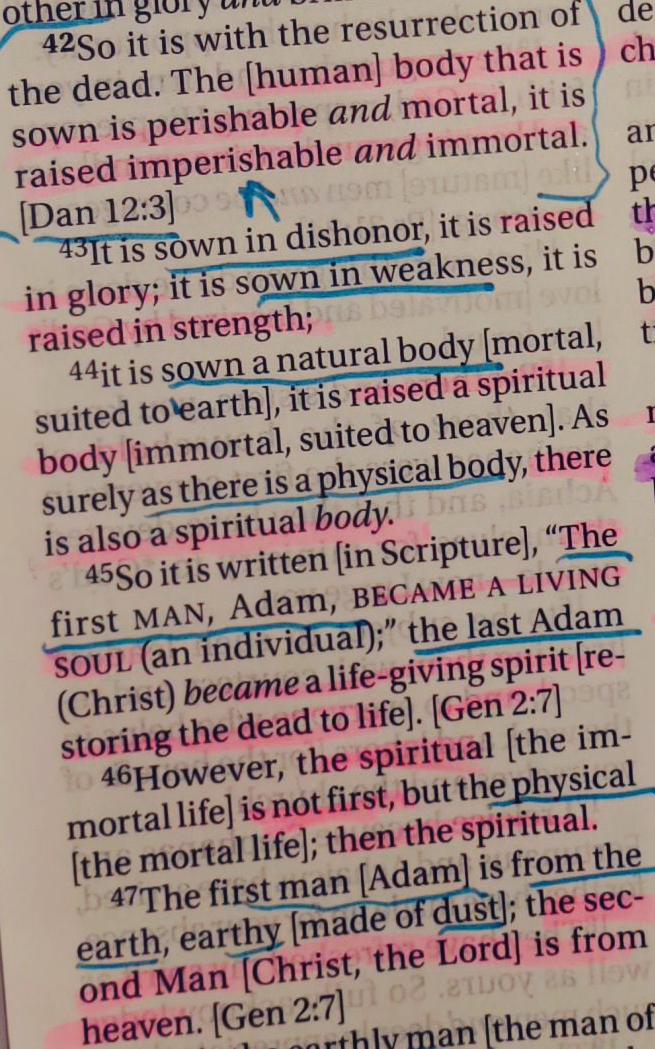
    Genesis 2:7: “Then the Lord God formed a man from the dust of the ground and breathed into his nostrils the breath of life, and the man became a living being.”

    Job 33:4: “The Spirit of God has made me; the breath of the Almighty gives me life.”

    Psalm 104:29: “When you hide your face, they are terrified; when you take away their breath, they die and return to the dust.”

    Quantum Theories

    in Relation to Scripture

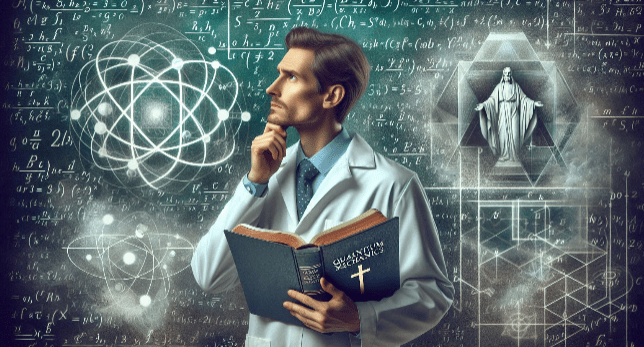
    Quantum mechanics, a branch of physics that deals with the behavior of matter and energy at the smallest scales, has profound implications that can intersect with theological concepts.

    While quantum theories are primarily scientific, they offer intriguing parallels and insights that can enrich our understanding of certain scriptural themes.

    Key Concepts in Quantum Mechanics

    1. Wave-Particle Duality: Particles such as electrons exhibit both wave-like and particle-like properties. This dual nature challenges our classical understanding of physics.
    2. Quantum Entanglement: When particles become entangled, the state of one particle instantaneously influences the state of another, regardless of distance. This phenomenon suggests a deep interconnectedness within the universe.
    3. Uncertainty Principle: Proposed by Werner Heisenberg, this principle states that certain pairs of properties, like position and momentum, cannot both be measured precisely at the same time.
    4. Superposition: Particles can exist in multiple states simultaneously until observed or measured, at which point they collapse into one state.

    God’s Omnipresence & Omniscience

    Quantum entanglement, which allows particles to influence each other instantaneously over vast distances, can be seen as a metaphor for God’s omnipresence and omniscience.

    The Bible speaks of God being everywhere and knowing all things:

    • Psalm 139:7-10: “Where can I go from your Spirit? Where can I flee from your presence? If I go up to the heavens, you are there; if I make my bed in the depths, you are there.”

    Quantum entanglement illustrates a form of connection that transcends physical space, much like the theological concept of God’s omnipresence.

    Creation & the Nature of Reality

    The concept of wave-particle duality and superposition aligns with the idea that reality is not always as it appears.

    This can be related to the biblical creation narrative, where God’s word brings forth existence from nothing:

    • Genesis 1:3: “And God said, ‘Let there be light,’ and there was light.”

    This act of creation by divine command suggests a reality that is fundamentally responsive to God’s will, much like how quantum particles exist in a state of potential until observed.

    The Multidimensional Universe

    Quantum physics suggests the possibility of multiple dimensions and parallel universes, which can be seen as aligning with biblical descriptions of spiritual realms:

    • Ephesians 6:12: “For our struggle is not against flesh and blood, but against the rulers, against the authorities, against the powers of this dark world and against the spiritual forces of evil in the heavenly realms.”

    The existence of unseen dimensions and realms in quantum theory parallels the biblical concept of a spiritual dimension that interacts with our physical world.

    Theological Implications

    1. Compatibility with Faith

    Quantum mechanics does not contradict the existence of God; rather, it can be seen as revealing the complexity and wonder of God’s creation.

    Many early pioneers of quantum physics, such as John Polkinghorne, were theists who saw their discoveries as illuminating God’s methods rather than eliminating His presence.

    2. Free Will and Predestination

    Quantum indeterminacy, where outcomes are probabilistic rather than deterministic, can offer a framework for understanding the coexistence of free will and divine sovereignty.

    The Bible speaks of God’s foreknowledge and predestination, yet also affirms human responsibility and choice:

    • Romans 8:29-30: “For those God foreknew he also predestined to be conformed to the image of his Son.”
    • Deuteronomy 30:19: “This day I call the heavens and the earth as witnesses against you that I have set before you life and death, blessings and curses. Now choose life, so that you and your children may live.”

    Quantum theory’s probabilistic nature can be seen as a metaphor for the balance between God’s sovereign plan and human free will.

    Quantum mechanics, with its counterintuitive and profound insights into the nature of reality, offers fascinating parallels to scriptural themes.

    While it remains a scientific discipline, its concepts can enrich theological discussions about God’s nature, the creation of the universe, and the interplay between divine sovereignty and human free will.

    Far from being incompatible, quantum theories can provide a deeper appreciation of the mysteries and wonders described in the Bible

  • The Essence of Truth + Intuition

    The Essence of Truth + Intuition

    In my journey as an “alien” on this planet, I have, unwittingly, stumbled upon what had been archaically called the Philosopher’s Stone or the Elixir of Life

    I only realized this after I, through being magnetically attracted toward suffering, embracing the darkness that most fear, had unearthed the Essence of Reality.


    This Essence is a Truth so profound, it is woven into the very core of our beings through the quantum dimensions & atmospheric pressure, without such, we would become vacuumed into nothingness.

    This truth is unassailable, standing as a lamp of certainty, illuminated by the light of Intuitive Wisdom.


    THIS LIGHT IS CHRIST’S LIGHT OF INTUITION FROM ABOVE.


    Intuition transcends the limitations of our corporeal senses, for it is birthed from the sacred depths of the spirit.

    Intuition is a whisper from the Heavens, a subtle yet ever powerful current that flows through the Ethers of existence.


    Intuition is the Blood within the veins of Eternity.

    When the Holy Spirit stirs, He ignites the flame of Intuition, transforming our sensorial experiences into a Divine Compass.


    THE KINGDOM OF GOD IS WITHIN YOU


    This guiding Force elevates our conscious awareness, rendering the conventional Five Senses as mere tools in the Macrocosm of our being within this existence and realm.

    When this inner awakening is embraced, we align in tandem with the Universal Symphony of Wisdom.


    Intuition becomes our most trusted Guide, leading us towards a Life of deeper Understanding and connection with the Infinite.

  • Light Has Power

    Light Has Power


    Unveiling Hidden Depths

    Just as the obstruction of light casts shadows, material truths only disclose a fraction of the deeper meaning and purpose hidden within spiritual reality.

    As shadows form in the absence of light, the spiritual realm illuminates the genuine essence of our existence when revealed.

    By seeking spiritual enlightenment, we can explore our soul’s profound nature and comprehend our true purpose in life.


    Contrast Provides Clarity

    Examining the interplay between illuminated and unilluminated areas of an object offers valuable insight into its shape and form.

    This principle mirrors how spiritual enlightenment unveils our true being by dispelling ignorance and confusion.

    As light and darkness intertwine, spiritual understanding brings clarity and purpose to our existence.


    Material Truth

    A Shadow of Spiritual Reality

    Material truth can be likened to a shadow cast by the spiritual reality that underpins it.

    As the sun casts a tree’s shadow, spiritual reality is the unseen force that imbues our lives with meaning.

    Recognizing this interconnection between light and shadow in our spiritual journey fosters a profound understanding of our existence.

    We must delve into the spiritual realm to uncover the genuine significance of our lives, just as we cannot fully comprehend a tree by merely observing its shadow.


    The Light of Spiritual Enlightenment

    By embracing the contrast between light and dark in our spiritual lives, we appreciate life’s complexity and strengthen our connection with the divine.

    Acknowledging the relationship between light and shadow paves the way to spiritual enlightenment, unveiling the profound truths that shape our existence.

    As light exposes the true nature of objects, spiritual enlightenment reveals our essence, guiding us towards a more significant understanding of ourselves and the world around us.

    RESEARCH

    21.1 Planck and Quantum Nature of Light – Physics | OpenStax

    This theory, which created the branch of physics called quantum mechanics, speculated that the energy radiated by the blackbody could exist only in specific numerical, or quantum, states.

    The Relationship Between Quantum Physics and Spirituality

    The intersection of quantum physics and spirituality has become a subject of profound interest in both scientific and philosophical circles. While quantum physics is a branch of science that explores the fundamental nature of reality at the smallest scales, spirituality seeks to understand the deeper meaning of existence, consciousness, and interconnectedness….

    Quantum Mechanics and Relativity’s Impact on Metaphysical Matter

    Quantum mechanics and Einstein’s theory of relativity didn’t just change science; they forced a deep rethinking of metaphysical categories like substance, causality, determinism, and even the nature of space and time.

     Quantum Theory of Soul – ResearchGate

    This quantum theory supports monism, viewing the soul, spiritual heart, mind, energy, and matter as aspects of the quantum field, and endorses panpsychism, suggesting all things possess a soul.

  • The Real Merlin

    The Real Merlin

    The real Merlin, often identified as Myrddin Wyllt, was a 6th-century figure from Welsh legend.

    Myrddin Wyllt

    Myrddin Wyllt was a legendary figure in medieval Welsh literature, who was also known as: Merlin the Wild, Merdhyn, & Marzhin Gouez.


    Resource

    He was a chief bard and a prophet, who went mad after witnessing a bloody battle and fled into the forest, where he lived among the animals and received visions of the future. 

    He was the inspiration for the character of Merlin in Arthurian legend, but he was originally a separate and independent figure from the Merlinus Ambrosius who was associated with King Arthur.

    According to some sources, Myrddin Wyllt was born in Scotland in the 6th century CE, and he was a magician and a healer as well as a poet.

    He was able to predict the outcomes of battles and other events, and many people sought his advice and guidance. 

    He was also interested in alchemy, symbolism, and esoteric knowledge, and he drew inspiration from diverse traditions such as Platonism, Hermeticism, Rosicrucianism, and Eastern philosophies.

    “It might be said that the secret of Merlin was carried on by alchemy…”

    C.G. Jung

    Myrddin Wyllt’s legend is closely related to that of Lailoken, a wild man of the woods who was also a prophet and a madman in Scottish folklore.

    Some scholars believe that they were the same person, while others argue that they were different but influenced by each other. 

    Myrddin Wyllt’s grave is said to lie near the River Tweed in the village of Drumelzier near Peebles, although nothing remains above ground level at the site.

    Myrddin Wyllt is the speaker of several poems in The Black Book of Carmarthen and The Red Book of Hergest, two of the most important manuscripts of Welsh literature.

    In these poems, he expresses his sorrow and regret for the loss of his friends and his former life, and he also reveals his prophetic insights and his mystical experiences.

    Here is an example of one of his poems, translated from Middle Welsh into English:

    I am Myrddin; and Myrddin is my name; I know what is, and what will be, and what has been. I converse with the stars, and the wind whispers to me; I have been in the depths of the sea, and in the heights of the sky; I have seen the secrets of the sun, and the mysteries of the moon; I have heard the song of the earth, and the music of the spheres; I have been a bard in the court of a king, a wild man in the forest; I have loved and lost, and suffered and rejoiced; I am Myrddin; and Myrddin is my name.

    Ask British historian Nikolai Tolstoy and he’ll tell you without hesitation:

    Merlin was indeed an historical figure, living in what are now the Lowlands of Scotland at the end of the sixth century A.D. … he was an authentic prophet, most likely a druid surviving in a pagan enclave of the North. Much of the early poetry attributed to him in Welsh manuscripts is drawn, it seems most likely, from an earlier body of authentic prophetic verse uttered by Merlin himself.”

    sourceThe Quest for Merlin


    Resources

    https://en.wikipedia.org/wiki/Myrddin_Wyllt

    https://folklore.wales/myrddin-wyllt/

    https://listverse.com/2016/09/11/10-reasons-the-legendary-merlin-could-be-real/

    https://mypoeticside.com/poets/myrddin-wyllt-poems

  • Nuance vs. Discernment

    Nuance vs. Discernment

    Subtle yet imperative difference between discernment and nuance and it is of consequence showing the proof.

    Discernment involves making sound judgments, while nuance focuses on perceiving subtle differences. If you claim to have discernment but do not truly understand, you may not grasp the meaning of your own words. Acknowledging our shortcomings is the first step toward improvement.

    There’s Power in Simple Recognition

    Recognizing the distinction allows the path way for critical thinking, allowing the analysis of information to be an objectively balanced perspective. If no distinction is made, and there is no discernment, just words, blah blah, blah You’ll find yourself having clearer communication, experiencing fewer misunderstandings. You’ll find yourself within a deeper intellectually advanced position. This causes an appreciation of complex complexities where confusion would prior be.

    Essence of Nuance

    Nuance refers to the subtle differences in meaning, sound, or appearance.

    Nuance deals with fine details and gradations.

    Nature of Discernment

    Discerners have the ability to make wise judgments and see things clearly.

    Discerning involves perception, insight, and understanding.

    For example, “The critic showed great discernment in analyzing the film.”

    Discernment encompasses the skill of evaluating & understanding the deeper implications of a thing or thought.

    Linguistic Differences

    While nuance is strictly a noun, discernment can function both as a noun and a verb.

    One can describe something as having subtle nuances, but it’s often redundant since nuances are inherently subtle.

    Discernment Requires Nuance

    To offer righteous judgments one must be attuned to the subtle differences and complexities within the subject at hand. If not they simply cannot fit the definition of discerning.

    Nuance

    Void Discernment Paralysis

    The overemphasis on fine details can hinder decisive action, especially in times of crisis.

    Nuance is meticulously un contained without discernment to allow fordecisions to be made.

    Navigating ambiguity and constructing considered sections is a Nuanced action.

    NUANCE: Fine Detail

    DISCERNMENT Ability to

    Quality of Object vs Subject

    Perceiving & Choosing pertains to the fine details and understanding the difference between subjective and objective qualities can be quite enlightening.

    Objective Qualities ( nuance) are attributes inherent to an object, independent of personal feelings or opinions. For example, saying “The cake contains 250 calories per serving” is an objective statement; it’s a measurable fact. 

    Subjective Qualities, on the other hand, are based on personal perspectives, feelings, or opinions. For instance, stating “The cake is delicious” is subjective; it’s based on individual taste. 

    Objective qualities are about factual data that remain constant regardless of who observes them, while subjective qualities can vary from person to person based on individual experiences and feelings.

  • Level Up On Scripture

    When reading the Bible, it is important to consider the following contexts in which the text was written.

    historical, cultural, and literary.

    Understanding the context can help illuminate the meaning and logic behind the various passages.

    Use of Symbolism & Metaphor

    1. SYMBOLISM

    Core Aspects of Biblical Symbolism

    Universal Archetypes:

    Water (purification), light (truth), and blood (life/sacrifice) appear across cultures but gain unique theological depth in scripture.

    Narrative Framing

    Stories like Jonah’s sea journey (Jonah 1-2) use physical peril to mirror spiritual rebellion and redemption.

    Prophetic Visions

    Ezekiel’s wheeled throne-chariot (Ezekiel 1) symbolizes divine mobility and sovereignty over human affairs.

    Christological Symbolism

    Lamb of God 
    (John 1:29): Subverts expectations by pairing sacrificial imagery with messianic authority.

    Vine & Branches 

    (John 15:5): Reinterprets Old Testament vineyard metaphors (Isaiah 5:7) as relational discipleship.

    Apocalyptic Layers

    The Book of Revelation employs:

    Numerology:

    7 (completion), 12 (covenant people), 144,000 (12x12x1000 = perfected community)

    Hybrid Creatures:

    Lion-Lamb (Revelation 5:6) embodies Christ’s paradoxical victory through sacrifice.

    Interpretive Keys

    Contextual Priority: Burning bush (Exodus 3:2) symbolizes God’s presence because of Moses’ barefoot reverence, not arbitrary fire imagery.

    Covenant Echoes: Rainbow (Genesis 9:13) gains meaning through Noah’s flood narrative, not just color spectrum symbolism.

    Cultural Anchors: Olive oil (James 5:14) represents healing and Spirit-anointing due to Mediterranean medicinal practices.

    Practical Application

    • Sacramental Symbols: Bread/wine (1 Cor. 11:23-26) maintain physical reality while conveying spiritual participation in Christ’s sacrifice.
    • Ethical Metaphors: “Salt of the earth” (Matthew 5:13) requires cultural translation (e.g., “social preservative” in modern contexts).

    Common Pitfalls

    • Over-allegorizing: Not every detail (e.g., Jonah’s fish species) carries symbolic weight.
    • Context Collapse: Israel’s Exodus becomes universal liberation metaphor only after establishing its historical covenant context.


    When interpreting symbolism in the Bible, it is important to consider the context in which the symbol is used and to look for recurring patterns throughout the text.

    2. Metaphor

    Metaphor in the Bible involves the use of figures of speech to illustrate spiritual truths or concepts.

    Metaphors are comparisons between two seemingly unrelated things that help to provide clarity and insight into complex ideas.

    For example, Jesus referring to himself as the “vine” and his followers as the “branches” in John 15:5.

    To discern metaphorical language in the Bible, it is essential to pay attention to the context in which the metaphor is used and to explore the significance of the comparison being made.

    Take the time to study the context, explore possible meanings, and consult trusted sources for guidance.

    Reflect on the deeper truths being conveyed.

    Learn Hermeneutic Interpretation

    Hermeneutic interpretation is the process of analyzing and understanding scripture in order to derive meaning and relevance for application in one’s life.

    It involves carefully examining the historical context, cultural background, literary style, and original language of the text to gain a deeper understanding of its intended message.

    Key Steps for Hermeneutic Interpretation

    Historical Context: Start by researching the time period, events, and societal norms when the scripture was written.

    Understanding the historical context can provide valuable insights into the intended meaning of the text.

    Cultural Background: Explore the cultural practices, beliefs, and traditions that may have influenced the writing of the scripture.

    This can help in interpreting the text within its cultural framework.

    Literary Style: Analyze the literary devices, structures, and themes used in the text.

    This can aid in uncovering the underlying message conveyed by the author.

    Original Language: If possible, study the original language in which the scripture was written.

    Translations can sometimes lose nuances and cultural references that are crucial for accurate interpretation.

    Balance Faith and Reason

    Both faith and reason are important aspects when deciphering the logic within the Bible.

    Importance of Faith

    Faith plays a central role in interpreting the Bible.

    It requires belief in the teachings and stories presented in the text. Trusting in the wisdom and guidance of the Bible is essential for a meaningful spiritual journey.

    Utilizing Reason

    While faith is crucial, reason can also be utilized to critically analyze and understand the logic within the Bible.

    Applying critical thinking skills to the text can help deepen your understanding and interpretation.

    Approach with an Open Mind and Heart

    Remember to approach the text with an open mind and heart.

    Allow yourself to be receptive to the message and teachings of the Bible.

    Let the logic within the text resonate with you and guide you on your spiritual journey.

    Overall, finding a balance between faith and reason is key to navigating Bible logic effectively.

    By combining trust in the teachings with critical analysis, you can deepen your understanding of the text and enrich your spiritual journey.

    Approach the Bible with openness and a willingness to learn, and let its logic guide you.

  • Don’t Shoot The Messenger

    Shooting The Messengerblaming or punishing the person delivering bad news.

    It’s not uncommon for people to direct blame towards the bearer of unfavorable information.

    There are several reasons why people do this, including:

    A need for coherence and predictability

    When confronted with unexpected or unfavorable information.

    People often seek to make sense of the situation to regain a sense of control and understanding.

    Photo by Oscar Keys on Unsplash

    A sense of something is all they need to be satisfied, no matter if their “senses” are wrong.

    The feeling of coherence is enough for them, and questioning their senses is outright rejected because it destroys their false identity.

    Confrontation Avoidance

    Receiving bad news can trigger feelings of anger and frustration.

    Photo by Nsey Benajah on Unsplash

    Instead of addressing the core issue or the actual source of the problem, people often redirect their emotions towards the messenger, thereby alleviating some of their distress.

    Blame attribution

    When unexpected things happen, people often look for someone to blame.

    Photo by Adi Goldstein on Unsplash

    This helps them preserve a positive self-image, even if it is a fraudulent fantasy, and maintain the image of group harmony in their consciousness.

    Solution: More Freedom NOT Less

    It’s important to lead people to credible sources and encourage them to think critically about the information they encounter.

    It’s also crucial to understand why someone believes what they do and to approach conversations with empathy and patience, even when they don’t do the same for you.