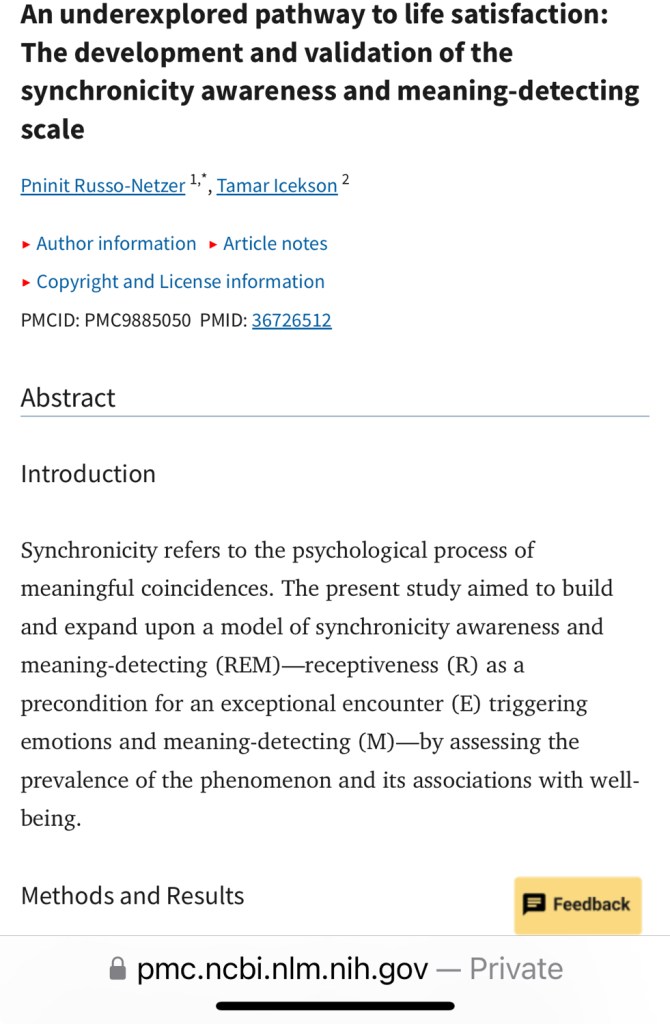
Synchronicity is a force that links the inner world of the mind (psyche) and the outer world of matter (physis) through meaning rather than direct cause-and-effect.
To be considered a true synchronicity in the Jungian sense, three components usually align:
Internal State: A specific thought, dream, or emotion.
External Event: An objective occurrence in the physical world.
Acausal Connection: The two are linked by meaning, not by any detectable physical cause.
One of the most famous historical examples is Jung’s Golden Scarab story, where a patient’s dream of a piece of jewelry was immediately followed by a real beetle tapping on the windowpane during their session.
Perspectives and Interpretations
While many find these events to be transformative or a sign of being on the right path, there are various ways to interpret them:
“Synchronicity is no more baffling or mysterious than the discontinuities of physics. It is only the ingrained belief in the sovereign power of causality that creates intellectual difficulties and makes it appear unthinkable that causeless events exist or could ever exist. But if they do, then we must regard them as creative acts, as the continuous creation of a pattern that exists from all eternity, repeats itself sporadically, and is not derivable from any known antecedents.”
–Carl Jung
They challenge the conventional view that consciousness is solely a product of ‘brain activity’ suggesting that there are more than likely, non-physical aspects to consciousness that we have yet to entirely explore.
This aligns with consciousness as being a fundamental aspect of the universe, similar to matter and energy.
A PATHWAY
Synchronistic experiences are a pathway to understanding the collective unconscious, a concept introduced by Jung.
The collective unconscious is thought to be a reservoir of human experiences and archetypes that influence our thoughts and behaviors on a subconscious level and visa versa; our thoughts and behaviors on an individual level influence the collective.
These experiences might be driven by this collective unconscious, suggesting that our individual consciousnesses are interconnected in ways we are only beginning to comprehend.
In addition to their psychological implications, synchronistic experiences also have social and personal growth implications.
They can affirm one’s life direction and provide a sense of purpose and meaning.
For many, these experiences are not just random occurrences but are deeply significant and can lead to profound personal insights and transformations.
These experiences point towards a deeper interconnectedness in the universe and challenge our current understanding of consciousness.
They also highlight the potential for personal growth and transformation through these meaningful coincidences.
F David Peat — With fascinating historical anecdotes and incisive scientific analysis, this important work combines ancient thought with modern theory to reveal a new way of viewing our universe that can expand our awareness, our lives, and may well point the way to a new science for the twenty-first century.
“When you see your matter going black, rejoice, you are at the beginning of the work.” — Rosarium Philosophorum
The traditional method of alchemy is divided into 5 stages:
STEP ONE
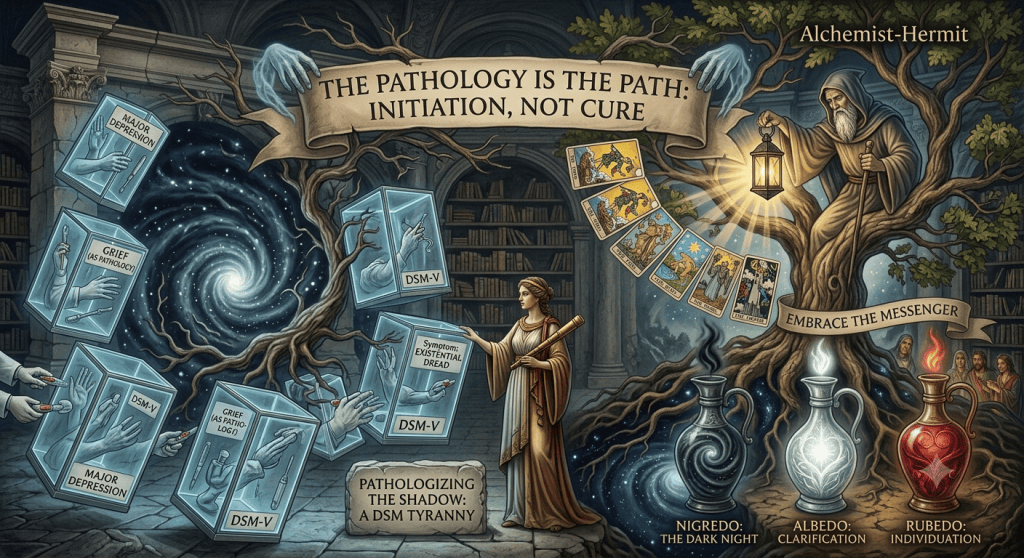
Nigredo —Blackening
The term “nigredo” comes from the Latin word for “black,” and its color is referring to the material color at this first stage of the process, which is often darkened.
The alchemist is observing or participating in the break down of the impurities that occur during Nigredo. This is the beginning of the distillation of raw materials.
This physical act represents the process of confronting one’s shadow self and the negative aspects of oneself.
This initial stage is one of dissolution and decay… confronting the raw, unrefined aspects of the self.
It’s a descent into darkness, a metaphorical death; old structures break down, making the route for the emergence of new beginnings.
Black —like fertile soil, chaotic, yet holds the potential for new growth.
STEP TWO
Albedo—Whitening
Albedo is the term used to describe the extent to which an object like a planet or moon reflects light.
Albedo emerges stark in contrast from the blackness of Nigredo.
A state of pristine whiteness, like the moon reflecting the sun’s light is found after Albedo.
Embodies clarity, a fresh perspective gained through the trials of the previous step. It’s a moment of reflection and the dawning of understanding.
STEP THREE
Citrinitas—Yellowing
The term “citrinitas” comes from the Latin word for “yellow,” and it refers to the color of the materials at this stage of the process, which is often yellow or orange.
At this stage, the alchemist is allowing the materials to be still… in Citrinita = self-growth + integration! 🍋✨ … think sitting water. Stagnation.
This yellowing is considered a bridge between Albedo and the final stage.
Citrinitas is associated with the rising sun, bringing with it warmth, light, and a sense of solar energy.
It represents the awakening of the intellect and intuition, a golden hue illuminating the path forward.
This stage signifies a growing awareness and the integration of newfound insights.
STEP FOUR
Rubedo—Reddening
The term “rubedo” comes from the Latin word for “red,” and its name refers to the color of the materials at this stage of the process, which is often red or reddish-gold.
A BLOODY MESS
In the Rubedo stage, the alchemist is completing the culmination of the alchemical process, its the stepping stone into the Philosopher’s Stone.
Rubedo also represents the perfect union of opposites, it is the merging of the spiritual and the material.
It is symbolized by the color red, signifying life, passion, and the ultimate realization of one’s true potential.
This stage embodies wholeness, completion, and the attainment of a higher state of being.
STEP FIVE
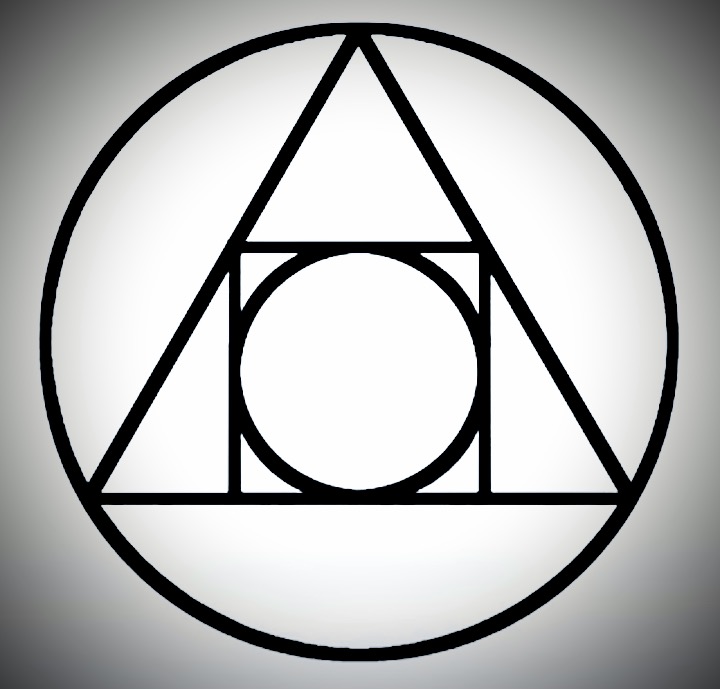
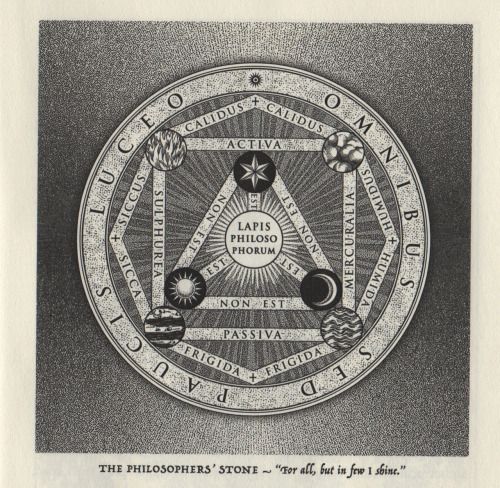
Lapis Philosophorum (Philosopher’s Stone)
The transcendent outcome, the perfected state.
Conclusion/ Overview
Nigredo (Blackening): The descent into shadow, where the old dissolves.
Albedo (Whitening): A purification, a dawning of clarity from the darkness.
Citrinitas (Yellowing): The sun’s touch, bringing illumination and understanding.
Rubedo (Reddening): The ultimate fusion, the attainment of wholeness.
Lapis Philosophorum (Philosopher’s Stone): The transcendent outcome, the perfected state.
The human journey often leads us through valleys of despair before we can ascend to peaks of understanding.
There was a time when I believed myself to be perpetually bound… a captor, slave, and victim of my own making, forever undeserving of redemption.
This rigid self-condemnation felt like an inescapable truth, a life sentence I had both imposed and accepted.
Yet, within the depths of that very desolation, an unexpected grace emerged.
The Crucible of Deprivation
A Pathway to Profound Empathy
Experiencing such profound internal deprivation and desolation wasn’t just painful; it was transformative.
Without having walked through that particular darkness, I genuinely believe I wouldn’t possess the miraculous sensibilities I do today.
My past self-imprisonment became the key to unlocking an almost impossible level of relatability.
I can now connect with those who seem irredeemable, seeing flickers of shared humanity where others might see only despair.
This profound understanding wasn’t born from external validation or societal acceptance.
It stemmed from becoming my own adversary, from witnessing the truth only after the deepest shadows had fallen.
The Warrior’s Path
Endurance Beyond Conventional Wisdom
The journey out of that self-imposed prison demanded a level of endurance that defies conventional understanding.
It required long-term perseverance, turning the other cheek to self-pity, and denying immediate gratification.
It meant observing my own thoughts and emotions without judgment or attachment, detaching from the noise of a society often plagued by suffering and superficiality.
Seventy-five days of isolation, removed from the very societal pressures that contribute to our collective ailments in the Western world, proved to be an invaluable catalyst.
This isn’t the kind of endurance often found within the comforting walls of most churches or synagogues; it’s a solitary, internal forging.
It demands an acceptance of profound solitude, coupled with the paradoxical realization that you are never truly alone.
Embracing the Unseen
The Non-Physical Meaning of Life
What happens when your core beliefs are challenged, mocked, scoffed at, or simply ignored?
When fellow humans oppose the very essence of your existence or expression?
This journey taught me that the meaning of life is not physical.
If this truth holds—and I now know it does—then what are we truly striving for in our material pursuits?
This path requires a warrior in spirit, willing to sacrifice all perceived strongholds: friends, family, ego, and even security, all in the name of Truth.
We are called to battle our internal “demons,” embracing an objective realization that refuses to bend to our subjective feelings.
It’s about practicing the skill of derealization, conjuring a righteous mind for self-judgment, and relaxing into our ability to construct a powerfully robust split within our own personalities.
We must accept any answer that proves itself to be without external control, embracing the freedom found in releasing what we cannot dictate.
Tips
Practice Mindful Observation
Dedicate 10-15 minutes daily to observe your thoughts and emotions without judgment. Notice patterns, triggers, and reactions without engaging with them.
Explore Stoic Philosophy
Delve into texts by Seneca, Epictetus, and Marcus Aurelius. Their emphasis on inner control, acceptance of what cannot be changed, and the pursuit of virtue resonates deeply with the themes discussed here.
Journal Your Journey
Document your insights, challenges, and breakthroughs. Writing can be a powerful tool for self-reflection and recognizing personal growth.
Seek Solitude (Safely)
If feasible and safe, consider periods of digital detox or even a short retreat to experience the benefits of reduced external stimulation.
Engage in Deep Listening
When interacting with others, practice listening without interruption or formulating your response. Aim to truly understand their perspective, especially when it differs from your own.
What aspects of self-discovery have profoundly changed your perspective?
Share your thoughts and continue the conversation in the comments below!
The Christian tradition didn’t simply split the feminine, it fragmented her very bones.
WHERE’S THE SPLIT?
THE VIRGIN
On one side of femininity’s collective identity there is the Virgin. Mary, the mother of Jesus is the ‘venerated’ person, praised solely for being used as the “vessel” for the Messiah to be born… They call her pure.
She is purity weaponized:
Obedient, soft, and revered because she conceived without the “stain” of sexuality. They call her untouchable holiness. She was a womb stripped of her feminine desire.
THE MAGDALENE
On the other side you have Magdalene. For centuries she was lazily branded a prostitute because it was a convenient smear to contain her power and keep the narrative simple, while also keeping women in a position church leaders would feel comfortable with.
She is the sensual, the emotional, the raw devotee who didn’t flinch at the cross when the men bolted and she was the first witness to the resurrection.
One was sanctified. The other was sexualized.
Both were buried under labels.
The Fabricated Schism
History reveals the grift: scripture never actually names Magdalene as a sex worker and that was just a later conflation or a bit of strategic editing to create a manageable archetype. The damage was systemic and it forced a binary that has haunted the collective psyche for two millennia:
• The “Good Woman”: Pure, silent, and invisible.
• The “Fallen Woman”: Passionate, loud, and judged.
We’ve been told for generations that we have to choose between being the mother or the desire and the saint or the siren.
The Archetype of Integration
But what if this separation was the original sin?
Mary represents sacred containment, the ability to carry life.
Magdalene represents embodied devotion, the courage to witness rebirth.
One is the womb. The other is the witness. Both are holy.
The real story here isn’t religious dogma it’s the radical necessity of integration and the reclamation of the woman who can nurture and desire and be spiritual without lobotomizing her sensuality. It’s about being devoted to something greater without erasing yourself in the process.
The Power of the Whole
This isn’t about theology it’s about the fact that patriarchal systems are only comfortable when the feminine is fractured and fighting itself because a woman divided is a woman controlled.
But a woman who integrates her “Mary” and her “Magdalene”? That is the true resurrection.
Stop splitting yourself to be “worthy” and stop hiding your fire to keep your halo straight.
You were never meant to choose between your purity and your passion because you are the intersection of both.
Cognitive rigidity is the stubborn insistence that our way of thinking is the only way.
It shows up in small, everyday ways:
refusing to consider another perspective
dismissing evidence that challenges our beliefs
or sticking to habitual responses when flexibility is required.
It is mental inflexibility masquerading as certainty.
This rigidity is rarely neutral. It filters experience, allowing only what aligns with our preconceptions to pass through.
What we notice and refuse to notice is determined less by reality and more by the contours of our existing beliefs. The mind becomes its own jailer.
FILTERED VISION
Perceptual limitations compound this problem. Our senses, our expectations, and our biases shape what we perceive.
Two people can witness the same event and walk away with entirely different “realities,” each convinced theirs is the truth.
Culture, language, upbringing, and personal trauma all function like lenses, coloring everything we see.
When cognitive rigidity meets these perceptual filters, the feedback loop begins: our beliefs dictate what we perceive, and our perceptions reinforce our beliefs.
We become prisoners of our own limited frameworks, blind to the complexity—and often the truth—of the world around us.
Breaking the Loop
Escaping this loop is not about acquiring more information. It is about retraining the mind to see what it usually ignores:
Observe without judgment. Watch your thought patterns and notice when you shut down possibilities automatically.
Seek what challenges you. Engage with ideas and perspectives that make you uncomfortable.
Question your perception. Ask yourself what you might be missing, what biases are filtering your experience.
Embrace intellectual humility. Accept that your understanding is provisional, incomplete, and subject to correction.
The moment we recognize that perception is always partial, and thought is always provisional, the bars of the cage begin to loosen.
Clarity is not a gift; it is a discipline.
The Work of Liberation
This is the work of liberation: not avoiding rigidity, but confronting it; not denying perceptual limits, but piercing them.
The mind can be trained to perceive more, think more flexibly, and respond more intelligently.
It is uncomfortable, but truth always is.
We cannot see everything, but we can see more than we did yesterday.
The Allegory of the Cave from Plato’s Republic is one of those perfect metaphors.
I think about it’s truth over and over again, even more so in today’s societal atmosphere.
The Cave depicts our tendency to mistake perception for truth.
THE STORY
In the story, these prisoners are chained inside a cave, they’re facing a wall where they watched these shadows dancing and moving.
These shadows were cast by puppeteers, covertly hiding behind them.
They were manipulating objects to create a shadow that gave the illusion of a fire’s flame.
The prisoners named the shadows, studied them, and even built hierarchies around who interpreted the shadows most accuratel.
To them, this was reality, and they took it very seriously.
We’re not so different.
Most people live confined within their own perceptual cave.
We’re inevitably going to be shaped by our emotional connection to our belief systems, cultural roots, educational indoctrination, and familial conditioning.
Too often we’re caught mistaking projection for truth.
Yes, we’ve been conditioned, but this isn’t the problem per se. We can see past all the programs if we have a fully functioning brain.
The resistance to confronting the possibility of a constructed reality is understandable.
The idea that memories, identity, and perceptions might not be as solid as they seem can feel like an existential threat.
Letting go of deeply held beliefs, even if they are illusions, requires confronting discomfort, uncertainty, and the fear of losing oneself.
It’s easier to cling to familiarity, even if it’s flawed, than to face the unknown. But growth often begins where certainty ends.
Freedom is admitting that you have been deluded and under an illusory story of your own making. Then you’ll break free.
CONSIDER THE PUPPETEERS
The puppeteers are those who shape the narratives we consume.
They are the gatekeepers of knowledge and power:
the donors, financiers, and elites who we likely will never know the true name of.
By controlling the information and communication, they can and do shape what a society perceives as “real.”
Propaganda, entertainment, and social pressure all became tools of control through illusions.
The Awakening
Then comes the moment of liberation. One prisoner is freed.
At first, he’s blinded by the fire’s light.
His eyes, accustomed to shadows, can’t handle the truth so suddenly.
But as they adjust, he begins to see clearly: the shadows were never real.
They were only echoes of something greater.
He’s led outside the cave into the sunlight, another painful adjustment.
Yet when vision returns, he beholds the true world in all its beauty and realizes that the cave was only a prison of perception.
Why Can’t They Turn Their Heads?
CHAINS OF IGNORANCE
Because they are chained. Not just physically, but mentally.
The chains represent ignorance, the invisible grip of conformity and belief.
Most never question the nature of their own bondage.
To break these chains requires courage. It requires unlearning.
It requires the willingness to endure the pain of seeing clearly for the first time.
The Philosopher’s Task
For Plato, this story points to his Theory of Forms.
Theory of Forms is the idea that the physical world is but a shadow of a higher, more perfect reality.
The philosopher’s role is to turn toward that higher truth, to step into the light and understand what truly is true.
EXPECT STRUGGLE
But enlightenment is not a comfortable process.
When the freed prisoner returns to the cave to tell the others what he has seen, they mock him.
They reject him. To them, his truth sounds like madness, because it threatens the foundation of their world.
QUESTION YOUR OWN BELIEFS
The Allegory of the Cave calls us to question our own shadows, to notice what we’ve been taught to believe and think: who benefits from those beliefs?
It asks us to endure the blinding light of truth, no matter how uncomfortable, and to choose freedom over comfort.
To break the chains of ignorance is to step into the light, not to escape the world, but to finally see it.
Through history, Jesus’ teachings have been twisted.
His message has been distorted by worldly authorities, repackaged and sold to the masses in 66 Books, not only branded as Divine, but also proclaimed to be the only divinely inspired text in the world that we could trust.
False doctrine dressed as truth.
The true simplicity of His words and depth of His message has been concealed beneath centuries of misinterpretations, some on accident due to error… others with malicious intent.
The Gospel of Thomas in multiple translations, along with a vast collection of material about the Thomas tradition. This site includes the entire Hammadi Library, as well as a large collection of other primary Gnostic scriptures and documents.
What is Gnosis? Gnosis is knowledge that transcends what society was able to grasp.
Canonized doctrine has obscured this inner wisdom.
The true path, He revealed, was not in compliance with man’s laws or constructed hierarchies.
Gnosis is awakening.
Awakening to the divine potential already living within, it is intimate exploration, not institutional obedience.
Know Christ. Be Known by Him.
Pride.
Self-righteousness.
The need to assert control.
These are the antithesis of Jesus’ way.
He would have overturned the tables of those clinging to materialistic delusion, worshipping the god of society instead of the truth.
He taught through stories, parables designed to open hearts, spark insight, and reveal reality to those ready to see.
The False Jesus of the Mainstream
Over time, His teachings have been distorted.
I do not see this as an accident.
Deception is a natural habit of the human heart.
Many will come in His name and mislead others, as He warned in Matthew 24:5.
Lies will be spun. Truth will be hidden. The path to understanding will be obscured. & it has.
His guidance is simple: stay vigilant. Seek truth. Seek God. Do not lean on man. Lean on the Spirit. Open your heart.
Discernment is the key. Through connection with the Holy Spirit, the true meaning of His teachings will be revealed.
In God’s eyes, all souls are equal. Hierarchy, power, wealth—they hold no weight in the light of Heaven.
We are spiritual beings inhabiting human bodies. Our essence is love.
Our value is inherent. In His presence, there is no superiority, only unity and grace.
Open the Bible. See for yourself.
Jesus’ message aligns with the deeper structures of the human psyche—the archetypes that Carl Jung described.
Jung had much to say about the gospel drama. His reading was largely literary and symbolic, avoiding what he considered misguided attempts by scholars of his day to extract the human figure of Jesus from what they presumed to be fictional accounts
Jesus’ purpose was not to educate superficially but to illuminate within our minds and hearts the principles of love, compassion, and divine order.
He took on the burden of our failures, showing us that we could not ascend alone in our ego.
He bore the weight of what we could not bear, saying, in essence, “You are weak, but I am here. I carry this for you.”
He demonstrated what it means to embody the divine because He is the Divine.
He did not expect us to imitate Him blindly.
Through understanding Him, we find salvation—not through effort, but through alignment with His mind and heart.
To truly grasp His teachings, our hearts and minds must be open.
Wisdom resides within us, waiting.
When we integrate the external world with our inner essence, when we allow the Spirit to guide us, Jesus’ teachings become alive.
The divine does not reside in walls, pulpits, or rituals—it resides within. Limiting Christianity to buildings, to man-made constructs, stifles spiritual evolution.
The shadows of false guidance hide behind piety.
But if you engage scripture, cultivate the Divine within, and surrender to the Spirit, there are no barriers.
God’s presence lives in every faithful heart, guiding, illuminating, and giving purpose.
Know this presence within yourself and others. Your mind will sharpen. Your intuition will deepen. Wisdom will anchor you.
Chaos dissolves when you align with Him. True freedom is forgetting yourself and finding yourself lost in Him.
Empathy is not passive sympathy—it is entry. To empathize is to feel into another’s experience until the boundary between “you” and “them” briefly dissolves.
Jonathan Edwards once described it as knowing another’s feelings as if they were your own. That’s closer to the truth than most realize.
Empathy is more than emotion—it’s perception.
A heightened nervous system, a tuning fork of consciousness that resonates with the unspoken frequencies around it. Science now peers curiously at this mystery, finding evidence of hyper-responsive mirror neurons and unique dopamine patterns, particularly among introspective personalities.
Yet the laboratory only grazes what mystics and sensitives have long known: empathy is not merely learned; it can be awakened.
Some are born empaths—open channels of sensation from the first breath.
Others grow into it, chiseling sensitivity from stillness, meditation, and the discipline of inner quiet.
With intention, anyone can refine this art:
grounding the body
visualizing energetic boundaries
learning when to open and when to shield.
Focus enhancers—nootropics, deep breathing, and meditative practice—can sharpen this capacity.
But the core of empathy remains spiritual, not chemical.
The word itself comes from the Greek empatheia—to feel into, to be moved by passion.
Later, the German Einfühlung carried it into psychology through Hermann von Helmholtz in the 19th century. Yet long before language named it, empathy pulsed through the human story as the invisible bridge between souls.
At its root, empathy is threefold:
Understanding
Recognizing and comprehending another’s emotions.
Sharing
Feeling a reflection of what they feel within your own body.
Perspective-Taking
Stepping fully into their world and seeing through their eyes.
From these arise the primary faces of empathy:
Affective (Emotional) Empathy
When another’s sorrow or joy ripples through you, unbidden. It’s the contagion of feeling that can both unite and overwhelm.
Cognitive Empathy
The intellectual capacity to see through another’s frame of mind. It doesn’t feel what they feel—it understands it. This form is vital in discernment, negotiation, and healing professions, where compassion must be guided by clarity rather than collapse.
Somatic Empathy
When the body itself becomes a translator of emotion. A stomach tightens in response to another’s anxiety, a chest constricts when they recall grief. The nervous system speaks in sympathetic vibration.
Spiritual Empathy
The rarest and deepest: when one soul feels into another beyond words, time, or separation. It’s the awareness that what hurts one part of creation reverberates through the whole.
Empathy lives at the intersection of heart and brain—an orchestra of mirror neurons, amygdala signals, and energetic resonance.
Emotional cognition allows us to interpret what we feel, to trace the current back to its source and understand how emotion shapes thought, memory, and decision.
At its highest form, empathy becomes empathic resonance. It is the recognition that another’s heartbeat is not separate from your own, only playing a different rhythm.
To cultivate empathy is not to drown in feeling—it’s to master it.
The empath who grounds their sensitivity becomes an instrument of peace. The one who leaves it untrained becomes a sponge for the world’s pain.
Empathy is the art of sacred attunement.
It is both psychic and profoundly human, the oldest language of the soul.
When harnessed with discernment, it births compassion, connection, and the quiet strength that heals unseen wounds—within and without.