Category: Wisdom + Discernment

  • Law Of Materiality VS Spirit

    Law Of Materiality VS Spirit

    Christ is the fulfillment of the law, bringing righteousness to all who believe in Him.

    He, through His Death, revealed the essence of the shadow’s Truth in Life—the Law is the shadow.

    Before Faith came (Faith is Christ), we were held captive (by sin) under the law, imprisoned until the coming Faith would be revealed.

    Faith was Revealed in Christ.
    Christ was revealed; He removed the veil that kept contained the Secret of the true Spiritual dimension, the Heavenly treasures—the Ethereal law…

    There is REAL Peace in His Spirit.

    He Himself is our peace, bringing Unity between The Father and His children through Christ…

    He has broken down in His own sinless flesh the separating wall of hostility and opposition between God and us, His people, by abolishing the law of commandments expressed in ordinances…
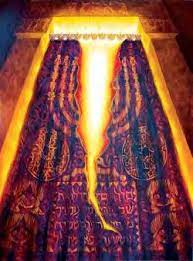
    Fisher Digital Publications
    Tearing of the Temple Curtain

    (Expressed in ordinances is how human ACTS) Ordinances are expressed through bodily effort. God got rid of the law of commandments that are expressed with the flesh (the material), but not the law of commands, as He intended from the Spirit. That’s why Paul says over and over: “with the Law of the Spirit”…

    In the book of John, Jesus said the flesh is of no profit.

    The Law, being instigated or initiated in the flesh (because the flesh is full of evil), is there to keep us stuck in this dimension (unable to expand into the Heavenly Realm because if we did, we would have been utterly destroyed). We were for a period unable to see the things of God. The law that kept us in constant shame was actually our guardian until Christ came. God gave us the Law as a guardian in order that we might be justified by faith. But now that faith has come, we are no longer under a guardian, for in Christ all who believe are sons of God, through faith.

    Many think God is evil for having His son come down to suffer and die, but that is the only way the flesh – the material – can be reconciled with one another. So Jesus was appointed to go on the cross and take in His flesh and unworthy death, taking what we deserve, so that His Father may be pleased because that’s the only way flesh can be reconciled with Spirit. He might create in Himself one new man in place of the two, so making peace…

    Who do we think we are, being literally matter, physical, temporal, telling the creator of ALL things is wrong or evil? He knows what needs to take place, He did create it. Formulate every formula.

    Bear one another’s burdens, and so fulfill the law of Christ. But now we are released from the law, having died to that which held us captive, so that we serve in the new way of the Spirit and not in the old way of the written code.

    He saved us, not because of works done by us in righteousness, but according to His own mercy, by the washing of regeneration and renewal of the Holy Spirit, so that being justified by His grace we might become heirs according to the hope of eternal life. Titus 3:5‭, ‬7

    So too at the present time, there is a remnant chosen by grace. But if it is by grace, it is no longer on the basis of works; otherwise, grace would no longer be grace. Yet we know that a person is not justified by works of the law but through faith in Jesus Christ, so we also have believed in Christ Jesus, in order to be justified by faith in Christ and not by works of the law because by works of the law, no one will be justified. I do not nullify the grace of God, for if righteousness were through the law, then Christ died for no purpose.

    Galatians 2:16‭, ‬21

  • What Is Empathy? According To Carl Rogers, Founder Of Humanistic Psychology…

    In 1957 Carl Rogers, one of the founders of humanistic psychology and psychotherapy wrote this:

    To sense the client’s private world as if it were your own, but without ever losing the “as if” quality—this is empathy, and this seems essential to therapy. To sense the client’s anger, fear, or confusion as if it were your own, yet without your own anger, fear, or confusion getting bound up in it, is the condition we are endeavoring to describe.

    “Over-identifying with the patient,” Rogers warns, may “distort understanding” and thus would “threaten” the entire “therapeutic process.”

    Avoiding enmeshment has always been crucial for practicing affective (and cognitive) empathy in counseling.

    Keywords:

    Carl Rogers: Carl Rogers was an influential American psychologist and psychotherapist. He is considered one of the founders of humanistic psychology and is known for his person-centered approach to therapy.

    Humanistic psychology: Humanistic psychology is a branch of psychology that emphasizes individual growth, self-determination, and personal experiences. It focuses on human potential, self-actualization, and the inherent worth and value of individuals.

    Psychotherapy: Psychotherapy refers to a range of therapeutic approaches that aim to improve mental health and well-being. It involves communication between a trained therapist and a client to explore thoughts, feelings, and behaviors and to facilitate positive changes.

    Enmeshment: a psychological term that refers to a type of unhealthy relationship dynamic characterized by blurred boundaries, lack of individual autonomy, and high levels of emotional dependency. It often involves a high degree of interdependence and fusion between individuals, resulting in limited personal differentiation and difficulty in maintaining healthy relationships outside the enmeshed system.

  • Philosophy For Beginners

    An Overview of Philosophy

    Philosophy breaks down into several domains that shed light on different aspects of existence.

    “Philosophy is not a mere intellectual pursuit or a collection of abstract concepts; it is a way of life, a constant questioning and exploration of the fundamental truths and mysteries of existence.”
    – Friedrich Nietzsche

    Overview

    Metaphysics

    Metaphysics studies fundamental notions like identity, time, causation and free will. It ponders the true nature of reality beyond sensations.

    Epistemology

    Epistemology investigates the origins, limits and validity of knowledge. It questions what we can actually know for certain.

    Ethics

    Ethics analyzes concepts like moral right and wrong, justice, virtue and duty to guide behaviors and actions.

    Political philosophy

    Political philosophy examines ideas surrounding government, lawmaking, civic participation and social policies.

    Aesthetics

    Aesthetics contemplates the essence of beauty in nature and art and what qualifies something as having artistic or creative worth.

    Delving into these branches unveils endless layers of insight on essential topics.

    For beginners, even surface-level awareness broadens understanding across diverse areas.

    Getting Started

    Resources and Methods:

    Read introductory textbooks on general histories, key ideas, and pioneers in the field to build foundational knowledge.

    Browse collections of short works by great philosophers like Plato, Aristotle, Descartes and Confucius to sample diverse perspectives.

    Follow philosophy podcasts and YouTube channels that simplify complex concepts for newcomers through visual aids.

    Join philosophy groups and forums to pose questions, learn from others and share thoughts.

    Write notes or journals reflecting on what sparks curiosity or challenges beliefs for continued personal growth.

    With dedication and an open mind, philosophy empowers novices to not only comprehend various perspectives but craft their own mature worldviews. Approaching this study with patience and enthusiasm ensures a rewarding start to the journey.

    lFor any beginner interested in strengthening critical skills, broadening perspectives or simply satisfying curiosity – the philosophical journey provides endless opportunities for enrichment.

    I hope this overview has inspired you to delve deeper through diligent study of history’s greatest minds, rigorous self-reflection and respectful dialog with other seekers of truth.

    Philosophy’s bounties are yours to uncovered – may your adventure be filled with wonder!

    Additional Resources:

    Thinking Through Philosophy: An Introduction, by James Fieser – Acclaimed introductory philosophy textbook


    Philosophy Talk: Long-running philosophy podcast with beginner-friendly discussions


    Sophia: Free online courses including intro philosophy courses with visual lessons


    Philosophy Tube: In-depth yet entertaining philosophy video essays on YouTube

    philosophy

  • God’s Breath

    God’s Breath

    The Supreme Power of God’s Will and Breath: Shaping the Earth and Influencing Spiritual Realms

    In the Greek language, the term for “God’s breath” is “πνεῦμα τοῦ Θεοῦ” (pneuma tou Theou).

    The word “πνεῦμα” (pneuma) refers to breath, wind, or spirit, and it is often used to denote the Holy Spirit in the New Testament.

    In the Hebrew language, the term for “God’s breath” is “רוח אלוהים” (ruach Elohim).

    The word “רוח” (ruach) means wind, breath, or spirit. It is used to describe the Spirit of God throughout the Old Testament.

    Both in Greek and Hebrew, the concept of “God’s breath” signifies the life-giving force and divine presence of God, which brings forth and sustains life, animates creation, and imparts wisdom and power.

    Earth, absent God’s foundational decree of transcendent transmittance, would exist in a state of non-functionality, shapelessness, and utter emptiness, much as it did prior to His proclamation, where His Will and breath held supreme power.

    How did God’s Will and breath hold supreme power over the Earth before His proclamation?

    As the Creator of all things, God’s Will represented His desires, intentions, and plans for the Earth. It was through His Will that the Earth was shaped and governed according to His divine purpose.

    God’s breath symbolizes the life-giving force that sustains and animates all creation. Just as God breathed life into Adam, His breath carries the power to bring forth and sustain life. Before His proclamation, God’s breath permeated the Earth, infusing it with vitality and order.

    The divine regulation of God extends its influence over both material and spiritual realms, providing the essential impetus for movement and the fundamental flow of existence.

    Material Realm; From Gravity To Cellular Biology

    In the material realm, God’s divine regulation establishes the laws and principles that govern the physical world.

    It is through His divine wisdom and knowledge that the intricate workings of the universe operate in perfect harmony.

    From the gravitational forces that hold celestial bodies in place to the intricate mechanisms of cellular processes, God’s divine regulation guides and sustains every aspect of the material world.

    Spiritual Realm

    God establishes principles and commandments that serve as beacons of righteousness and moral conduct.

    These moral guidelines provide a compass for beings to navigate their journey.

    Each individual is endowed with unique abilities, aptitudes, and talents that are Divinely ordained.

    These gifts are not merely random occurrences but are intricately woven into the tapestry of God’s divine plan.

    Through these gifts, individuals are empowered to serve a higher purpose, contribute to the well-being of others, and bring glory to God.

    God’s divine regulation influences the spiritual realm through the establishment of moral principles, the bestowment of spiritual gifts, and the facilitation of spiritual transformation.

    Moral Principles

    These principles act as a moral compass, guiding individuals towards actions that are aligned with God’s will and promoting harmonious relationships with others. By adhering to these moral principles, individuals cultivate a sense of virtue and righteousness, fostering spiritual growth and deepening their connection with the divine realm.

    Spiritual Gifts

    God bestows spiritual gifts upon individuals, which are unique abilities and talents that enable them to serve a higher purpose in the spiritual realm. These gifts are not only bestowed for personal benefit but also for the collective well-being of the spiritual community. Through the utilization of these gifts, individuals contribute to the advancement of God’s divine plan, spreading love, compassion, and wisdom to others. This interaction between spiritual gifts and the spiritual realm creates a dynamic exchange of energy, enhancing the overall spiritual landscape.

    Spiritual Transformation

    It is through divine intervention and guidance that individuals are able to transcend their limitations, overcome challenges, and evolve spiritually. God’s presence and influence permeate every aspect of their spiritual journey, nurturing their souls, and leading them towards a deeper understanding of themselves, the world, and their relationship with the divine.

    Without the holy static of His divine influence, the critical conductivity necessary for being and the basic energy required for biological motion would be absent.

    The very breath of God serves as a direct conduit for these fundamental abilities, emanating from the ultimate Source and bestowing vitality from the higher realms, sprinkling Grace into our lower dimension.

    In the words of Jesus in Greek, “whatever you bind on earth will have already been bound in heaven, and whatever you loose on earth will have already been released in heaven” (Matthew 18:18).

    As we pray, “may Your kingdom come (arrive), and your Will be done, on earth just as it is in Heaven” (Matthew 6:10), we acknowledge that Heaven not only influences but also orchestrates and regulates all activities on Earth.

  • GUIDE • Think For Yourself

    GUIDE • Think For Yourself

    Advantages of Independent Thinking:

    • Greater self-awareness and self-confidence
    • Greater confidence in abilities and more nuanced perspective
    • Discover beliefs on your own merits, without following the crowd
    • Better able to question conventional views
    • Better ability to think critically
    • Better decision-making skills

    Challenges People Face

    External Influences

    The media and the education system shape societal beliefs and behaviors.

    Fear of Being Wrong

    People prefer opinions that make them feel certain.

    This often stems from a basic human need for security and stability, uncertainty can lead to uncomfortable feelings.

    Most people are drawn towards viewpoints that validate existing perspectives.

    Actions For Independent Thinking:

    Challenge Your Assumptions

    The first step to independent thinking is to develop a questioning nature that spurs you to discover truth and differing viewpoints.

    Probe For The Motive

    Refuse to passively accept any idea or claim – push for evidence and reasons. Challenge conventional wisdom that seems based on habit instead of reason. Make a practice of probing the accuracy, usefulness and motives behind information.

    Question The Details

    Feed your hunger for knowledge by continuously questioning the details, logic and assumptions behind facts and opinions.

    Foster improvement by continuously asking “What’s the real story here?” and “How solid is the basis for that claim?”

    Seek Alternative Explanations

    With Critical Thinking

    To avoid staying in an echo chamber, you should consider alternative explanations coupled with critical thinking.

    Don’t simply surround yourself with voices that reinforce what you already believe.

    Seek out alternative arguments and contradictory facts – at least long enough to understand them.

    Seek Out Gaps

    Listen for unquestioned assumptions behind assertions, and look for logical gaps, inconsistencies and hidden biases in the reasoning of “experts.”

    Become A Skeptic

    Cultivate skeptical tools, for they are the keys to independent thought. Only by questioning, challenging and analyzing information on its own merit – instead of its source – can you think for yourself.

    By honing your ability to detect deceptive or incomplete arguments, identify logical fallacies and recognize flawed framing.

    Define Value

    It’s important to determine what really matters, let those principles become the foundation. Don’t let others’ opinions dictate your decisions, rely on solid truth.

    Cultivate Solitude

    You need moments where the noise falls silent, opening a channel for your own intellect to speak. Only when you disconnect from the constant noise can you truly hear.

    Insight blossoms when you prune away distraction.

    Learn To Trust Silence

    Silence gives space for introspection. Self-reflection reveals truth.

    By withdrawing from the hive-mind and embracing solitude, your thoughts will resonate with order.

    Look Inward

    In the gap between input and output is the tuning fork needed to sync with the frequency of Divine Truth.

    Speak Your Mind

    Practice sharing your thoughts in a respectful yet firm manner. By speaking your mind confidently, you will enhance your ability to think.

    Remember that your unique perspective holds great value.

    Assess Before Judgment

    Independent thinking does not mean opposing external viewpoints for the sake of being different.

    It involves embracing your own perspectives and ideas, while also being open to learning from others and considering different viewpoints.

    Nurture Curiosity

    One way to foster independent thinking is to cultivate a sense of wonder and curiosity about the world around you.

    By approaching life with a sense of openness and a desire to learn, you can develop a deeper understanding of yourself and the world around you.

    Independent thinking is a skill that requires consistent practice and a strong connection with your own inner voice.

    By refining your discerned perspectives and with a sense of wonder and curiosity you’ll develop a greater capacity for independent thought, clarity, and self-assurance.

  • Conscious and Subconscious: Microcosm versus Macrocosm

    Conscious and Subconscious: Microcosm versus Macrocosm

    Explore your consciousness and its different dimensions by looking within your 3-dimensional reality with truth and brutal honesty about yourself and your Creator.

    KEYWORDS

    MATERIAL: The physical world that we can see, touch, and feel. It is the world of matter, space and time. The material world is often seen as a reflection of the spiritual world, in the sense that it is a manifestation of the God.

    SPIRITUAL: The spiritual world is the non-physical world of spirits, energy, and consciousness. It is the world that we cannot see, touch, or feel, but that we may be able to experience through other means, such as intuition, dreams, and revelation.

    CONSCIOUS MIND: The aspect of the mind that we are aware of. It is the part of the mind that we knowingly use to think, feel, and make decisions. The conscious mind is a reflection of the subconscious mind, in the sense that it is a product of the subconscious mind.

    SUBCONSCIOUS MIND: The subconscious mind is the part of the mind that is not directly accessible to our awareness. It is the part of the mind that stores memories, emotions, and experiences that we are not consciously aware of.

    MICROCOSM: The microcosm is the small world, such as the human body, plants, dirt, etc.

    MACROCOSM: The macrocosm is the large world, such as the universe. They (Macro & Micro) are both part of the same reality, but they exist on different scales.

    Reflection: Reflection is the process by which light or sound waves bounce off an object’s surface. When light reflects off a smooth surface, it returns to the observer, generating an image beyond the surface.

    We, are that reflection, in our physical form.

    All of these different aspects of reality are interconnected and interdependent. They are all part of the same whole, and they all play a role in the unfolding of the universe.

    Conscious and Subconscious Minds

    Our conscious and subconscious minds mirror one another, revealing the truth when they function in their natural state.

    Aspects of consciousness, both within and beyond our physical selves, exist indistinguishably.

    However, worldly standards, mind manipulation, and trauma fracture our perception of these interconnected elements.

    Identical facets of consciousness always exist within our bodies and outside our bodies, although they may be fragmented in human perception due to society and trauma.

    These facets exist within each living organism and outside of them.

    Dimensions of Consciousness

    These two seemingly opposing dimensions of consciousness are mirroring each other within our minds.

    The mind, when accessed and run in its original settings, reveals to itself (yourself) the cosmically objective reality that is truth.

    As we ascend to higher dimensions, our ability to perceive the ethereal and spiritual realms becomes more potent, unlocking the fullness of clear vision.

    By examining ourselves within the confines of our three-dimensional reality, we effortlessly transition into the fifth dimension, embracing a heightened state of consciousness.

    The spirit world, existing beyond the 4th dimension, envelops us.

    Ethereal and Physical Dimensions

    To unlock the secrets of the Kingdom, it’s crucial to fuse the Ethereal and Physical perceptions.

    This exploration brings rapid growth, approaching the mysteries of reality.

    Bridging this divide is essential to expand your perspective, see the big picture and push the boundaries of consciousness.

    If ready to embrace the journey of a lifetime, uncover the universe’s secrets.

    The microcosm and macrocosm concept reflects the relationship between the conscious and subconscious minds.

    The conscious mind focuses on immediate thoughts and actions, while the subconscious mind influences our beliefs and behaviors without our full awareness.

    The subconscious shapes our thinking, and understanding this helps us gain insights for personal growth and self-awareness.

    The microcosm, or conscious mind, embodies the tangible manifestation of the vast and hidden macrocosm dwelling within the recesses of the mind.

    It continuously gathers data, whether intentionally or unintentionally.

    As one ascends to higher dimensions, their vision becomes more capable of perceiving the spirit world, which exists beyond the fifth dimension.

    The microcosm, synonymous with our conscious mind, captures the essence of the intangible and expansive macrocosm hidden within our mind’s depths, gathering information ceaselessly.

    The interconnectedness of different dimensions allows us to explore diverse facets of reality, expanding our understanding of ourselves and the world.

    By embracing this concept, we can delve into intriguing ideas such as parallel universes, alternate realities, and the possibility of unseen dimensions coexisting with our own.

    This exploration broadens our perspective, fostering a sense of curiosity and wonder that fuels our intellectual and spiritual growth.

    Embracing the freedom of God’s will and aligning with the natural, predestined order can bring profound transformation to our lives.

    While it may initially seem in opposition to the ego and our human nature, this journey leads us towards rebirth and transcendence.

    In this process, the ego and subjectivity dissolve, giving way to a greater understanding of our true selves.

    Through this metamorphosis, we ultimately overcome the cycle of death and experience a profound awakening.

    Armageddon, symbolizing the culmination of this transformative process, brings an end to the limitations of our mortal existence, opening doors to new possibilities and infinite spiritual growth. As death is put to death.