The Supreme Power of God’s Will and Breath: Shaping the Earth and Influencing Spiritual Realms
In the Greek language, the term for “God’s breath” is “πνεῦμα τοῦ Θεοῦ” (pneuma tou Theou).
The word “πνεῦμα” (pneuma) refers to breath, wind, or spirit, and it is often used to denote the Holy Spirit in the New Testament.
In the Hebrew language, the term for “God’s breath” is “רוח אלוהים” (ruach Elohim).
The word “רוח” (ruach) means wind, breath, or spirit. It is used to describe the Spirit of God throughout the Old Testament.
Both in Greek and Hebrew, the concept of “God’s breath” signifies the life-giving force and divine presence of God, which brings forth and sustains life, animates creation, and imparts wisdom and power.
Earth, absent God’s foundational decree of transcendent transmittance, would exist in a state of non-functionality, shapelessness, and utter emptiness, much as it did prior to His proclamation, where His Will and breath held supreme power.
How did God’s Will and breath hold supreme power over the Earth before His proclamation?
As the Creator of all things, God’s Will represented His desires, intentions, and plans for the Earth. It was through His Will that the Earth was shaped and governed according to His divine purpose.
God’s breath symbolizes the life-giving force that sustains and animates all creation. Just as God breathed life into Adam, His breath carries the power to bring forth and sustain life. Before His proclamation, God’s breath permeated the Earth, infusing it with vitality and order.
The divine regulation of God extends its influence over both material and spiritual realms, providing the essential impetus for movement and the fundamental flow of existence.
Material Realm; From Gravity To Cellular Biology
In the material realm, God’s divine regulation establishes the laws and principles that govern the physical world.
It is through His divine wisdom and knowledge that the intricate workings of the universe operate in perfect harmony.
From the gravitational forces that hold celestial bodies in place to the intricate mechanisms of cellular processes, God’s divine regulation guides and sustains every aspect of the material world.
Spiritual Realm
God establishes principles and commandments that serve as beacons of righteousness and moral conduct.
These moral guidelines provide a compass for beings to navigate their journey.
Each individual is endowed with unique abilities, aptitudes, and talents that are Divinely ordained.
These gifts are not merely random occurrences but are intricately woven into the tapestry of God’s divine plan.
Through these gifts, individuals are empowered to serve a higher purpose, contribute to the well-being of others, and bring glory to God.
God’s divine regulation influences the spiritual realm through the establishment of moral principles, the bestowment of spiritual gifts, and the facilitation of spiritual transformation.
Moral Principles
These principles act as a moral compass, guiding individuals towards actions that are aligned with God’s will and promoting harmonious relationships with others. By adhering to these moral principles, individuals cultivate a sense of virtue and righteousness, fostering spiritual growth and deepening their connection with the divine realm.
Spiritual Gifts
God bestows spiritual gifts upon individuals, which are unique abilities and talents that enable them to serve a higher purpose in the spiritual realm. These gifts are not only bestowed for personal benefit but also for the collective well-being of the spiritual community. Through the utilization of these gifts, individuals contribute to the advancement of God’s divine plan, spreading love, compassion, and wisdom to others. This interaction between spiritual gifts and the spiritual realm creates a dynamic exchange of energy, enhancing the overall spiritual landscape.
Spiritual Transformation
It is through divine intervention and guidance that individuals are able to transcend their limitations, overcome challenges, and evolve spiritually. God’s presence and influence permeate every aspect of their spiritual journey, nurturing their souls, and leading them towards a deeper understanding of themselves, the world, and their relationship with the divine.
Without the holy static of His divine influence, the critical conductivity necessary for being and the basic energy required for biological motion would be absent.
The very breath of God serves as a direct conduit for these fundamental abilities, emanating from the ultimate Source and bestowing vitality from the higher realms, sprinkling Grace into our lower dimension.
In the words of Jesus in Greek, “whatever you bind on earth will have already been bound in heaven, and whatever you loose on earth will have already been released in heaven” (Matthew 18:18).
As we pray, “may Your kingdom come (arrive), and your Will be done, on earth just as it is in Heaven” (Matthew 6:10), we acknowledge that Heaven not only influences but also orchestrates and regulates all activities on Earth.
An In-Depth Look at the Psychological and Emotional Damage Caused by Spreading Rumors
Keywords: Gossip: The act of spreading rumors or idle talk about the personal matters of others. Rumors: Unverified or exaggerated information about someone’s personal matters. Psychological damage: Harm caused to a person’s mental and emotional well-being. Emotional damage: Harm caused to a person’s feelings and emotions. Spiritual murder: The idea that gossip can dehumanize and destroy, causing significant harm to individuals and relationships. Dehumanize: To treat or depict someone as less than human, reducing their worth and dignity. Idle talk: Meaningless or frivolous conversation. Reputation: The beliefs or opinions held about someone’s character or behavior. Relationships: Connections and interactions between people. Careers: One’s professional occupation or vocation.
Main Points
1. Gossip is a form of spiritual murder that can dehumanize and destroy relationships, careers, and lives. 2. Gossip addicts the speaker and feeds their ego, causing cynicism, distrust, and a narrowed worldview. 3. Gossip infects relationships, causing drama and strained trust. 4. Those who listen to gossip contribute to its spread and degrade their ability for compassionate understanding. 5. Internalizing gossip warps perceptions, increases jumping to conclusions, and damages self-esteem. 6. Gossip objectifies and reduces the subjects, stripping away their dignity and degrading their reputation. 7. Gossip can cause lasting emotional scars, including shame, anxiety, depression, and loss of relationships. 8. It is our responsibility to approach private matters with empathy, wisdom, and care for humanity. 9. Refusing to spread or internalize gossip and treating people with kindness and compassion can have a positive impact.
Gossip seems like a harmless pastime on the surface, but its devastating effects run much deeper than most people realize.
Beyond hurting reputations or causing arguments between acquaintances, gossip is a form of spiritual murder that can dehumanize its victims and ultimately destroy relationships, careers, and even lives.
The Gossiper – Poisoning Mind and Soul
How Gossip Addicts the Speaker and Feeds Their Ego
For the gossipmonger, spreading rumors provides an all-too-brief dopamine rush as it satisfies their desire to feel superior to others.
However, this “idle thrill” comes at a steep cost, slowly poisoning their character over time. Regular gossip warps one’s perspectives, breeding cynicism, distrust, and a narrowed worldview. As they habitually discuss others’ perceived flaws, their own insecurities are left to fester. In moderation, idle chatter is harmless, but compulsive gossip is a true addiction that hardens hearts and clouds judgment.
To speak of others’ missteps while forgetting one’s own is the height of hypocrisy.
“Therefore you have no excuse, O man, every one of you who judges. For in passing judgment on another you condemn yourself, because you, the judge, practice the very same things.” – Romans 2:1
The Ripple Effects of Rumors on Relationships
Beyond harming just the gossiper’s psyche, their poisonous words infect relationships like a virus.
Once prey to this ego-boosting vice, they inevitably sabotage friendships with needless drama and strained trust. No social bond is left unscarred as harsh gossip taints others’ views of both its subject and the chatterer. While drama may seem entertaining in small doses, a steady diet destroys workplace harmony and derails personal growth. To spread rumors is a selfish act that seldom considers far-reaching consequences for all involved.
The Listener – Providing Kindling for Fire
How We Fuel Gossip’s Flames
Those who give ear to gossip play an active role in its spread, providing kindling to fan rumor’s flames into an all-consuming blaze. By showing interest in salacious details, we signal our approval and encourage more toxic talk. Our own judgments then become clouded as we absorb gossip’s distorted lens. Though we may feel righteous indignation, we degrade our ability for nuanced thought and compassionate understanding. Each eager listener breathes new life into rumors, allowing them to morph and grow beyond all truth. To cut gossip’s head, we must refuse to hang on its every word or spread what we hear.
The Psychological Impact of Internalizing Gossip
Internalizing gossip warps our perceptions, as studies show it increases jumping to conclusions and self-righteous attitudes.
We develop a scarcity mentality, perceiving others as competitors. Our relationships and work suffer as suspicion breeds where trust once flourished.
Gossip poisons our own wells by lowering self-esteem – if we consider the intimate details of others’ lives so fascinating, what does that say about our own?
While rumors may offer an exciting escape, the psychological damage to both listeners and subjects is very real and long-lasting.
The Victim – Dehumanization Through Distortion
How Gossip Objectifies and Reduces Humans
The subject of rumors endures the cruelest costs as gossip distorts, degrades, and dehumanizes.
Reduced to a source of lurid entertainment, their personal lives and struggles become public fodder, stripping away dignity. Nuanced backstories are replaced by caricature as only scandalous elements are reported. Complex human beings are shrunken to simplistic archetypes and judged based on limited leaks. This objectification disregards the very real pain of embarrassment, hurt feelings, and tarnished reputations.
Lasting Scars from Having One’s Name Dragged
Distorting or fabricating someone’s actions paints an damaging false picture that warps how they are perceived, sometimes permanently. Even if exonerated, scars of doubt may linger in others’ minds. The emotional toll of such character assassination can include shame, anxiety, depression, and loss of meaningful relationships. Beyond reputational harm, the psychological fallout from having one’s name tarnished must never be discounted. We have a duty to approach private matters, even perceived transgressions, with empathy, wisdom and care for humanity in all its complexity.
In closing, gossip poisons individuals by addicting the rumormonger, distorting perceptions in listeners, and degrading entire reputations of victims. But we possess the power to curb this vice by refusing to spread or internalize gossip, instead treating all people with the empathy, compassion and presumption of good faith that we wish for ourselves. A little kindness can go so much further than either idle talk or harsh judgment ever could.
– Proverbs 11:13: “A gossip betrays a confidence, but a trustworthy person keeps a secret.” – Proverbs 16:28: “A perverse person stirs up conflict, and a gossip separates close friends.” – Proverbs 17:4: “Wrongdoers eagerly listen to gossip; liars pay close attention to slander.” – Proverbs 20:19: “A gossip betrays a confidence; so avoid anyone who talks too much.” – Proverbs 26:20: “Without wood a fire goes out; without a gossip a quarrel dies down.” – Matthew 12:36: “But I tell you that everyone will have to give account on the day of judgment for every empty word they have spoken.” – James 1:26: “Those who consider themselves religious and yet do not keep a tight rein on their tongues deceive themselves, and their religion is worthless.”
Forgiveness is often misunderstood as a simple act of forgetting or overlooking past wrongs. However, the Bible and psychological studies tell us that it’s a complex emotional and spiritual journey. In this blog post, we’ll explore the intricate layers of forgiveness, supported by Biblical teachings, to understand its transformative power.
The Common Misconception: Is Forgiveness Just Forgetting?
“For I will forgive their wickedness and will remember their sins no more.” – Hebrews 8:12
One of the most prevalent misunderstandings about forgiveness is that it’s synonymous with forgetting. This is a simplistic view that doesn’t capture the essence of what the Bible teaches or what psychological studies have shown.
The Role of Memory in Forgiveness
The Bible tells us that God forgives and forgets our sins, but for humans, the process is more complex. Memory serves as a guide for future actions and decisions. True forgiveness changes the emotional weight of those memories, allowing us to remember without resentment.
Emotional and Intellectual Honesty: The Biblical Perspective
Therefore, confess your sins to one another and pray for one another, that you may be healed.” –
Forgiveness doesn’t mean overlooking past difficulties or pretending they never happened. This would be intellectually and emotionally dishonest, and it’s not what the Bible teaches.
The Importance of Acknowledging Past Wrongs
Acknowledging the past is crucial for authentic forgiveness. It aligns with the Biblical principle of confession and allows for genuine healing and reconciliation.
The Pitfalls of Self-Deception: A Barrier to True Forgiveness
“The heart is deceitful above all things and beyond cure. Who can understand it?” – Jeremiah 17:9
It’s tempting to deceive ourselves into painting a rosy picture of a situation or person to make forgiveness easier. However, this is not only emotionally complicated but also spiritually problematic.
Achieving Clarity Through Forgiveness
True forgiveness, as supported by Biblical teachings, allows us to see situations and people clearly. It enables us to learn valuable life lessons, fostering personal and spiritual growth.
The Transformative and Spiritual Power of Forgiveness
“Bear with each other and forgive one another if any of you has a grievance against someone. Forgive as the Lord forgave you.” – Colossians 3:13
Forgiveness is not just a psychological act but also a spiritual mandate. It’s a continuous process that leads to emotional peace and spiritual growth. By understanding the multifaceted nature of forgiveness, we not only free ourselves from the chains of resentment but also open doors to deeper, more meaningful connections with ourselves and others.
Are you a Christian seeking a deeper understanding of your faith? Do you desire to grow spiritually and engage more meaningfully with God? If so, studying theology is essential for your journey. In this blog post, we will explore the significance of theology in the lives of believers and why it should be an integral part of every Christian’s pursuit of God. From uncovering the character of God to discerning His will, from glorifying His holiness to appreciating His perfection, theology offers a framework for spiritual growth and enriches our worship. Join us as we delve into these seven compelling reasons why every Christian should study theology. Let’s embark on this exciting journey of discovery and deepen our faith together.
Reasons We Should All Study Theology:
1. To know the character of God.
God’s character is complex, encompassing attributes like love, justice, mercy, and truth. Seeking a deeper understanding of these attributes, how they interact, and how they are prioritized can guide our own development towards Christ-like virtues. However, our finite human minds can never fully comprehend an infinite God; thus, this goal must be pursued with humility.
“But let him who boasts boast about this: that they have the understanding to know me, that I am the Lord, who exercises kindness, justice and righteousness on earth, for in these I delight,” declares the Lord. – Jeremiah 9:24
2. To serve the will of God.
Christians need theology to serve the will of God because theology provides the framework and understanding necessary to discern God’s will. Serving God’s will invites ongoing study, prayer, and discernment within community as our understanding evolves. Interpreting scripture lies at the heart of theology.
“Do not conform to the pattern of this world, but be transformed by the renewing of your mind. Then you will be able to test and approve what God’s will is—his good, pleasing and perfect will.” – Romans 12:2
3. To glorify the holiness of God.
Theology can aid in glorifying the holiness of God by providing a deeper understanding of what constitutes God’s holiness and how we can reflect it in our lives. The concept of holiness varies among different theological traditions, but it generally involves moral purity, reverence, and imitating divine qualities such as justice, love, and compassion.
“Exalt the Lord our God and worship at his holy mountain, for the Lord our God is holy.” – Psalm 99:9
4. To enjoy the attributes of God.
God offers qualities like eternal life, unconditional love, and perfect justice that surpass human experience. Theology aids in enjoying God by broadening views of these attributes beyond literal terms to contemplate their spiritual implications. However, enjoyment must avoid objectifying God or claiming their full comprehension, as God remains a mystery.
“Taste and see that the Lord is good; blessed is the one who takes refuge in him.” – Psalm 34:8
5. To love the perfection of God.
To truly love the perfection of God, theology is needed. It allows us to explore the nature of God’s perfection and understand what it truly means. Is it absolute power, moral character, omniscience, or something else entirely? Through theology, we can delve into these questions with humility, knowing that our limited perspectives cannot fully grasp the fullness of God. Theology also helps us navigate the diverse interpretations and expressions of perfection within different theological traditions. Ultimately, theology enables us to deepen our love and appreciation for God’s perfection as we continue to grow in our relationship with Him.
“As for God, his way is perfect: The Lord’s word is flawless; he shields all who take refuge in him.” – Psalm 18:30
6. To absorb the Word of God.
Absorbing scripture involves complex theological tasks of interpretation within religious, cultural, and linguistic contexts. Tensions exist between literal and metaphorical readings, as well as evolving understandings of plenary inspiration. Theology digs deeper into these challenges to aid in a more complete absorption of the multi-faceted gem that is God’s Word.
“Your word is a lamp for my feet, a light on my path.” – Psalm 119:105
7. To worship the person of God.
Theology plays a crucial role in the worship of God by providing a deeper understanding and appreciation of His personhood. Through theological study, believers can explore the mysteries of God’s nature and attributes, such as the Trinity or the dual nature of Christ. These theological concepts guide and enrich the way we worship.
Furthermore, theology acknowledges the diversity of religious expression and the various ways people approach worship. Different theological traditions have their unique perspectives on how to best honor and worship God. By engaging in theological reflection, we gain a broader understanding of these perspectives and can appreciate the richness and beauty of God’s diverse creation.
Ultimately, theology enables us to approach worship with humility and awe, recognizing the limits of human knowledge in comprehending the divine. It guides us to hold reverence for the mysteries that surround God, allowing room for ongoing growth and revelation. Through theological study and reflection, we deepen our love and adoration for God, finding new ways to express our devotion and honor the One who is beyond our full understanding.
“Worship the Lord your God, and serve him only.” – Matthew 4:10
In conclusion, studying theology is essential for every Christian seeking a deeper understanding of their faith and a more meaningful relationship with God. Through theology, we can embark on an exciting journey of discovery, deepening our knowledge of God’s character, discerning His will, glorifying His holiness, enjoying His attributes, loving His perfection, absorbing His Word, and worshiping His personhood.
By studying theology, we open ourselves up to the vast richness and complexity of God’s nature and invite ongoing growth and revelation in our spiritual journey. It is through theological study and reflection that we cultivate humility, recognizing the limits of human knowledge in comprehending the divine. This humility enables us to approach worship with awe and reverence, honoring the mysteries that surround God and finding new ways to express our devotion.
As Christians, let us embrace the call to study theology, not to merely accumulate knowledge, but to allow it to transform us and enrich our walk with God. Let theology be a gateway to a deeper understanding of our faith and a means to engage more meaningfully with our Creator. Together, let us embark on this exciting journey of discovery and deepen our faith, as we seek to know and worship God more fully.
“But grow in the grace and knowledge of our Lord and Savior Jesus Christ. To him be glory both now and forever! Amen.” – 2 Peter 3:18
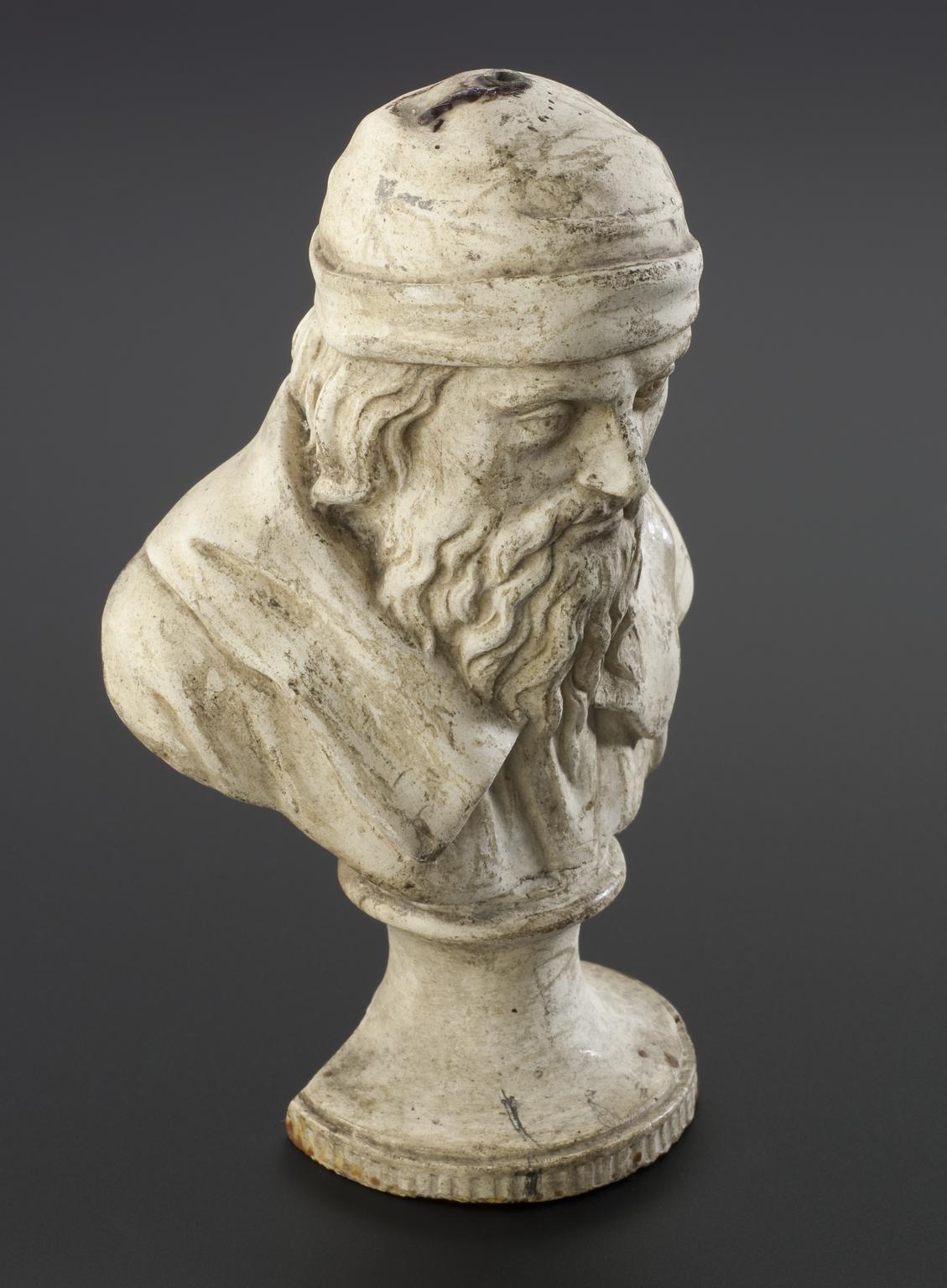
Aristotle, born in 384 BCE in the ancient city of Stagira (now known as Greece), was one of the most influential philosophers of all time. Gifted with an incredibly sharp intellect, he made groundbreaking contributions to various fields, including philosophy, logic, ethics, biology, and more. Aristotle’s impact on Western thought cannot be overstated, and his ideas continue to shape our understanding of the world today.
Early Life and Education
Aristotle was born into a noble family and was fortunate to receive an exceptional education. At the age of seventeen, he journeyed to Athens to study at Plato’s renowned Academy.
There, Aristotle became one of Plato’s brightest students, immersing himself in a wide range of subjects and blossoming into a formidable thinker.
Aristotle’s Unique Approach
While Aristotle greatly admired his mentor Plato, he also developed his independent philosophical path. Aristotle did not just passively absorb Plato’s doctrines. As one of Plato’s “brightest students,” Aristotle undoubtedly asked challenging questions and developed his own philosophical perspectives, even while greatly respecting Plato.
Unlike Plato, Aristotle believed that knowledge came from direct observation and careful analysis of the natural world.
He was a firm believer in empirical evidence, experimenting, and classifying information.
Empirical evidence is the foundation for acquiring knowledge through direct observation and careful analysis of the natural world.
Ideas On Free Will
Aristotle’s ideas on free will were shaped by his belief in the concept of causality and his understanding of the natural world.
Unlike his mentor Plato, Aristotle argued that knowledge and understanding came from direct observation and analysis of the world around us. He believed that individuals have the capacity to make choices based on their own rationality and deliberation, asserting that free will is the result of a person’s ability to exercise reason and moral judgment.
Aristotle saw free will as a crucial aspect of human agency, enabling individuals to shape their actions and ultimately determine their own destinies.
Objecters
However, despite Aristotle’s influential ideas on free will, he also had his detractors, with some of the biggest objectors coming from within his own philosophical tradition.
Stoics
The Stoics, for example, held a deterministic view of the world, arguing that everything is predetermined by fate and that humans have no real control over their actions. They believed that all events occur according to an unchangeable divine plan, leaving no room for human volition.
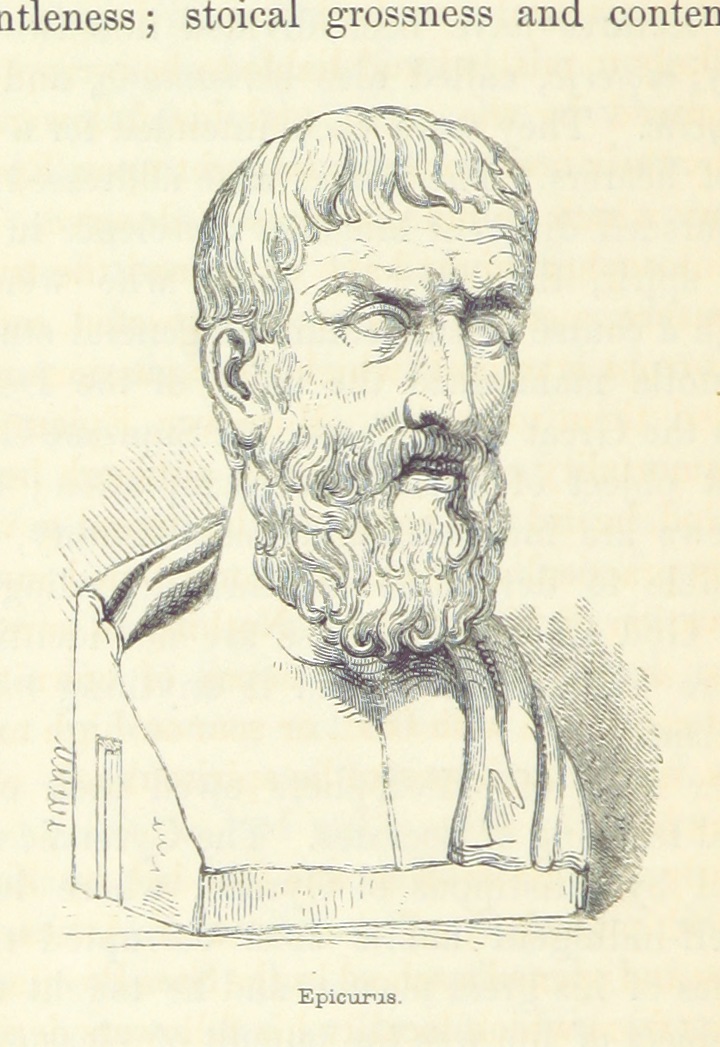
Another notable objector to Aristotle’s ideas on free will was Epicurus, who argued that individuals have the power to shape their own lives through their pursuit of pleasure and avoidance of pain. Epicurus emphasized the role of personal choice and the pursuit of happiness as central aspects of human existence, challenging Aristotle’s notion of an objective universal morality.
These objectors to Aristotle’s ideas illustrate the continuing debate over the nature of free will and its role in human life.
The “Unmoved Mover”
One of Aristotle’s notable contributions to metaphysics is the concept of the “Unmoved Mover.” According to Aristotle, the universe is in constant motion, and there must exist an eternal and unchanging entity that initiates this motion. This concept laid the groundwork for the idea of the Prime Mover or God in later philosophical and theological discourse.
Aristotle’s Influence on Alexander the Great
Aristotle played a significant role in shaping the mind of a young prince who would go on to be one of history’s most renowned conquerors: Alexander the Great.
Aristotle served as Alexander’s tutor during his adolescence, imparting upon him a love for knowledge, ethics, and political philosophy. The friendship between Aristotle and Alexander planted the seeds of intellectual curiosity that would define the young ruler’s reign.
Alexander Was A Tyrant
Some key examples of suffering inflicted by Alexander’s tactics include
The sieges of Thebes, Gaza and Tyre were especially brutal, involving slaughter of civilians and soldiers after long resistance. At Thebes, over 6,000 men were sold into slavery after the city was razed.
In Putting down revolts in Bactria and Sogdiana, many thousands were massacred by Alexander’s forces to set an example and instill fear, though unrest was sometimes driven more by his tactics than local instability.
The Gaugamela campaign saw tens of thousands cut down in Alexander’s famously successful but gory encounter with Darius’ armies, cementing his dominance through immense bloodletting.
His forced marches and constant campaigning strained relations with troops, who faced not just combat trauma but also illness, desertion penalties and putrid camp conditions.
The contribution of Macedonian elite cavalry to butchery and encouraging massacre for sport created lasting psychological wounds amongst populations subjugated.
Based on what we know, some key teachings of Aristotle that may have influenced Alexander include:
Politics – Aristotle emphasized the rational organization of the state and civic participation. However, he also justified hierarchies and accepted expansion through war as an expression of a higher form of government over barbarians.
Rhetoric – Alexander was no doubt schooled in Aristotle’s rhetorical techniques which included rousing patriotic sentiments and portraying enemies as threatening to justify military campaigns.
Virtue ethics – Aristotle’s focus on developing moral excellence could have reinforced in Alexander a sense of divinely-appointed destiny and greatness of purpose in his conquests.
Natural slavery – Aristotle’s controversial idea of “natural slaves” who benefit from domination may have factored into how Alexander approached subjugated peoples as culturally inferior.
Reason over emotion – While aiming to cultivate Alexander’s intellect, Aristotle’s privileging of reasoned judgment over passion could have ironically enabled discounting of empathy/suffering.
Pioneering Contributions to Biology
Created FIrst Bilogical Knowledge System
By meticulously cataloging animal traits, behaviors and habitats, Aristotle essentially created the earliest system for organizing biological knowledge. His innovative empiricism inaugurated the careful, evidence-based study of life now fundamental to biology. Subsequent scientists built upon his pioneering framework to advance understanding generation after generation.
Founding Father Of Biology
Even today, Aristotle is recognized as one of biology’s founding fathers. His lifelong dedication to building a comprehensive natural history through hands-on research established the systematic, data-driven methodology that continues propelling discoveries. Thanks to his profound fascination with learning from nature itself, Aristotle left an empirical legacy still shaping science millennia later.
Here are some more details about Aristotle’s hands-on research methods and comprehensive natural history works:
Dissection: Aristotle performed extensive dissections, carefully examining internal organs and structures. This provided novel insights into anatomy and biological functions well before modern practices.
Observation: He observed animal behaviors directly in their environments over long periods, meticulously recording habits, habitats, mating/birthing cycles, and family/social structures.
Specimen collection: Aristotle amassed vast collections of plant and animal specimens through expeditions and donations. This allowed his anatomical research and comparisons across species.
Classification: He organized his encyclopedic findings into one of the earliest biological classification systems, grouping/ranking taxa based on shared traits.
Published works: Aristotle published several zoological treatises including Historia Animalium, a pioneering 9-volume natural history surveying 500+ species in systematic detail.
Breadth: In addition to animals, his holistic approach encompassed botanical, geological and biological Form/Function relationships in realms like embryology.
Even during the scientific revolution, Aristotle’s work continued to influence the field of biology, highlighting the importance of careful observation and categorization in the pursuit of understanding the intricacies of life.
Here are some examples of how Aristotle’s works were used as reference materials during later scientific revolutions:
During the Renaissance, Aristotle’s detailed descriptions of plant and animal anatomy were consulted and built upon as scholars dissected specimens. This included works like Vesalius referencing Aristotle’s classification of cranial bones.
In the 17th century, scientists like William Harvey relied on Aristotle’s observations of pulsations when formulating his groundbreaking theories of blood circulation and flow through vessels.
During the Scientific Revolution, philosopher Francis Bacon held up Aristotle as a model empiricist, citing his Historia Animalium as the greatest achievement of taking nothing on faith. This philosophy underpinned Bacon’s advocacy of experimentation.
Newton owned multiple editions of Aristotle’s works and may have drawn on his mechanics in developing theories of motion and force. Newton referenced Aristotle among the ancients who contributed to “the improvement of natural knowledge.”
Even into the 18th century, Carolus Linnaeus’ system of modern taxonomy that standardized naming schemes drew from Aristotle’s noted biological categorizations and relationships.
So across paradigm shifts, Aristotle’s careful amassing of evidence served as a touchstone, showing how each new theory built systematically on observations, just as he had done. His works were a wellspring nourishment future discoveries long after his lifetime.
Ethical Philosophy: Virtue and Eudaimonia
Aristotle’s conception of ethics laid the groundwork for virtue theory as a branch of moral philosophy. At the core of his framework was “eudaimonia” – the idea that true happiness arises from living virtuously according to our human nature.
What is virtue theory
Virtue theory is a major branch of normative ethical thinking that places importance on virtues or moral character. It is closely associated with Aristotle’s philosophy. Some key aspects of virtue theory include:
Virtues are dispositions to act, feel, and think in ways that benefit oneself and others. They include qualities like courage, wisdom, honesty and kindness.
For virtue theorists, virtues are acquired through intentional habit and practice over time. One becomes virtuous by repeatedly performing virtuous actions.
Cultivating virtues allows people to fulfill their highest purpose and attain the most flourishing or eudaimonia life possible for human beings.
Rather than focusing on rules or consequences, virtue theory evaluates acts based on the moral qualities or intentions of the agent performing them.
Certain virtues are seen as excellences specific to various social, professional or intellectual roles. Acting virtuously helps one succeed in their role.
A virtuous person reliably exhibits excellent character and can prudently discern the ethically appropriate course of action in any situation.
So in summary, virtue theory maintains that morality revolves around traits of character and that virtues are essential for human welfare and fulfillment. It had a substantial impact on western philosophy due to Aristotle’s early articulation of this framework.
Legacy and Continued Relevance
Aristotle’s influence reverberates through the annals of intellectual history. His works were rediscovered and translated during the medieval period, becoming a cornerstone of Islamic, Jewish, and Christian scholarship. Aristotle’s tenacity for knowledge, analytical thinking, and commitment to understanding the natural world laid the groundwork for the scientific method and shaped centuries of philosophical debate.
Today, Aristotle’s ideas are still studied and debated across countless universities and continue to offer profound insights into the realms of philosophy, science, and ethics. His relentless pursuit of understanding the fundamental nature of existence serves as a timeless reminder of the power of human reasoning and curiosity. It is through Aristotle’s enduring legacy that we continue to explore the depths of our world and ourselves.
Aristotle’s greatest contributions:
Legacy: Aristotle’s unparalleled contributions across physics, biology, logic, philosophy, politics and ethics create a legacy that spreads Greek thought and still inspires modern disciplines millennia on. He is truly the pinnacle of ancient Greek rationalism.
384 BCE: Aristotle is born in Macedonia, laying foundations for his intellectual journey
367 BCE: Begins studying at Plato’s Academy, immersing in philosophy under one of history’s greatest minds
335 BCE: Establishes Lyceum school, seminal innovator imparting insights on natural sciences via empirical study
330-323 BCE: Tutor to Alexander, molding a leader who spread Greek rationalism across three continents
c. 350-330 BCE: Writes “Historia Animalium”, revolutionizing biology with immense documented taxonomy through dissection
c. 384-322 BCE: Produces monumental manuscripts still fundamental today: “Organon” establishes formal logic. “Physics” proposes empirical causality. “Metaphysics” ponders nature of being. “Nicomachean Ethics” defines virtue as the path to human flourishing.
Aristotle’s contributions spanned various fields, and his works continue to shape our understanding of philosophy, logic, ethics, biology, and more. His ideas on ethics, virtue, and the pursuit of knowledge laid the foundation for moral philosophy and scientific inquiry.
Aristotle’s impact on Western thought and his enduring legacy make him one of history’s greatest philosophers.
Read: Aristotle’s Major Works
Metaphysics: Considered one of Aristotle’s most important philosophical treatises, it explores the nature of reality, causality, and existence.
Nicomachean Ethics: In this work, Aristotle delves into the nature of human happiness, virtue, and how to live a good life.
Politics: Aristotle’s exploration of political philosophy, examining different forms of government, the ideal state, and the role of citizens.
Physics: A treatise on the natural world, Aristotle discusses topics such as motion, time, space, and elements.
On the Soul: This work explores the nature of the soul, the relationship between body and soul, and the different types of souls.
Poetics: Aristotle’s study of Greek tragedy and poetry, examining essential elements such as plot, character, and catharsis.
These are just a few examples of Aristotle’s extensive body of work. Each of these works provides unique insights into philosophy, science, ethics, and literature.
The complexity of the human experience is rooted in our interconnectedness.
The impact of the flesh being disconnected from the Spirit is death…
We’ll discuss how Sin is a state of separation.
There are unseen connections that bind us together, as human beings. I explore these simple thoughts as I seek unity amidst disconnection and fragmentation.
” … because the mind set on the flesh is hostile toward God; for it does not subject itself to the law of God, for it is not even able to do so…” Romans 8:7
One Body, Disconnected From One Another
The word “dissociation” means to be disconnected from others, from the world around you or from yourself. Dissociative disorders typically develop after short-term or long-term trauma.
After the Fall, humans became disassociated spiritually. We became separated from God.
That Is The Essence Of Sin
Sin, at its essence, can be understood as a state of disconnection and separation.
The concept of sin as separation is deeply rooted in the Bible and can be explored through the study of Hebrew language and cultural context. Let’s dive into this perspective:
Roots in Hebrew
In Hebrew, sin is described by the word “חַטָּאָה” (chaṭṭā’āh), which literally means “missing the mark” or “deviating from the path.” This implies a sense of being separated from the intended target or purpose, suggesting a state of disconnection.
Adam and Eve
The story of Adam and Eve in the book of Genesis portrays sin as the ultimate act of separation. When they disobeyed God’s commandment and ate from the forbidden tree, they were expelled from the Garden of Eden, experiencing a profound separation from God’s presence. It marked the beginning of spiritual disconnection and separation from the divine.
The Prodigal Son
In the parable of the prodigal son (Luke 15:11-32), Jesus illustrates sin as a state of separation between a wayward son and his father. The son demanded his inheritance, left home, and squandered his wealth in reckless living. As a consequence, he found himself distant from his father, living a life of despair and separation until he repented and returned to his father’s embrace.
The Prophets and Exile
The Hebrew Bible further explores sin as separation through prophetic accounts. During periods of rebellion and disobedience, Israelites experienced judgment and exile, marking a tangible separation from their homeland, God, and their covenantal blessings. Sin led to division, dislocation, and a rupture in their relationship with God and their community.
Restoration and Unity
Throughout the Bible, there is a consistent theme of God’s desire to restore the broken relationship caused by sin and reconcile humanity to Himself. This restoration implies a process of overcoming separation and bridging the gap between God and humanity through acts of forgiveness, atonement, and redemption.
By examining the Bible and delving into Hebrew language and cultural context, we can understand that sin is indeed portrayed as a state of disconnection and separation. It is depicted as a departure from the intended path or target, resulting in a loss of closeness with God, others, and one’s true self. However, the biblical narrative also offers hope for reconciliation and restoration, emphasizing God’s work to bring unity and healing to the brokenness caused by sin.
If you would like to further explore these topics, here are some additional resources:
You may ask how biblical discernment is art? Well…
Art Is
A form of self-expression, communication, and reflection of cultural values and beliefs. It can evoke emotions, provoke thought, challenge societal norms, and inspire creativity. Art serves both aesthetic and functional purposes and has the ability to capture the beauty and complexity of the human experience.
Discernment
… the ability to decipher objective differences among external and internal stimuli along relative dimensions, as well as being able to weed through correlations and patterns with wisdom.
Discerning is having the skill that you train your senses in to compare and contrast, void of any subjectivity or bias.
Krino is the Greek for Sin
… which means “to separate.”
Discernment, a gift from God, is the ability to distinguish truth from falsehood. It is closely tied with holiness, as discernment strives to gather what is true and discard what is false. Holiness, on the other hand, represents perfect integration and unity.
The Lord will and does subject His creations to exhaustive sifting procedure, similar to the division of wheat, for them to be purified enough for admission into the sacred and faultless Domain. Any elements that carry impurities or brokenness will be discarded into the fire or outer darkness. Our objective is to be complete and in perfect accord, wholly integrated.
“For you, God, tested us; you refined us like silver.” – Psalm 66:10
Drawing a parallel between the refining of silver and the trials sanctioned by God, this analogy reflects on the transformative power of challenges. Just as silver is subjected to heat in a furnace, its impurities are eradicated, leaving behind a valuable and pure metal. Similarly, God utilizes adversities and tests in our lives to shape our personality and purify our being. These trying experiences not only serve to strengthen our faith, but also impart crucial life lessons, ultimately guiding us towards a closer relationship with God.”,
“By likening the process of refining silver to the trials orchestrated by God, this analogy delves into the profound significance of adversity in our journey. Just as silver is melted within the searing heat of a furnace, all impurities are obliterated, resulting in the creation of a pure and precious metal.
In a similar vein, God employs challenges and hardships to sculpt and refine our character. These arduous trials play a pivotal role in strengthening our faith, imparting invaluable lessons, and inexorably leading us towards a deepened connection with God.
A Spiritual Gift Must Be Trained
to another the working of miracles, to another prophecy, to another the ability to distinguish between spirits, to another various kinds of tongues, to another the interpretation of tongues
In 1 Corinthians 12:10, discernment is exalted as a powerful spiritual gift, elevating certain individuals to the ability to discern between spirits. With this extraordinary ability, we can effectively navigate the intricate tapestry of matters of the heart, distinguishing the Holy Spirit’s work from that of liars and deceivers.
God grants His children a discerning lens necessary to identify the true origin and nature of most all encounters so we can separate fact from fiction, truth from deception, and divine inspiration from malicious imposters.
Exercising Gifts Bring Us Into Conscious Alignment With God
Through the exercise of the spiritual gift of discernment, believers come into conscious alignment with the Will of God, enabling them to confidently navigate the complex spiritual landscape and walk steadfastly in the path of truth.
Seek Discernment Get Discernment
Proverbs 2:3-5 states: “Yes, if you call out for insight and raise your voice for understanding, if you seek it like silver and search for it as for hidden treasures, then you will understand the fear of the LORD and find the knowledge of God.”
Discernment Is Wisdom
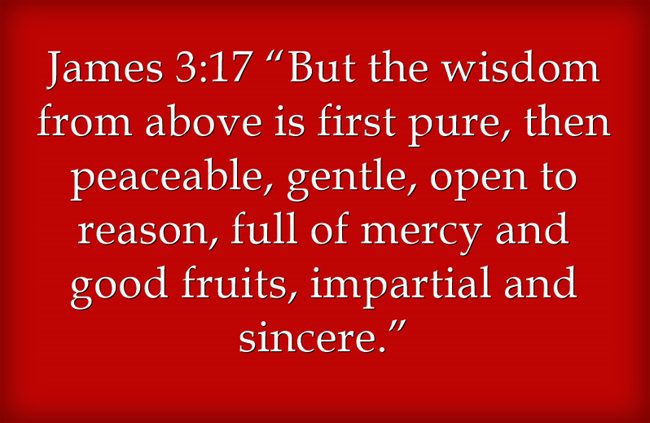
James 1:5 tells people to ask for wisdom (which includes discernment) from God: “If any of you lacks wisdom, let him ask of God, who gives to all liberally and without reproach, and it will be given to him.”
The Essence of Discernment
I will reiterate this defining factor of discernment:
Discernment is not just about making distinctions; it’s about making informed distinctions.
Sinclair Ferguson states: “True discernment means more than distinguishing right from wrong.”
Discernment also means distinguishing: The primary from the secondary, The permanent from the transient, The good from the better The better from the best
Discernment, as beautifully expressed in Psalm 119:66, plays a crucial role in our lives, empowering us to make wise and moral judgments. It enables us to carefully evaluate individuals, groups, or movements, discerning their moral and spiritual aspects.
Following the teachings of Jesus, we are encouraged to develop discernment while being mindful not to fall into the trap of judgmentalism, as emphasized in Matthew 7:1 and 7:6.
” …As a result, we are no longer to be children, tossed here and there by waves and carried about by every wind of doctrine, by the trickery of men, by craftiness in deceitful scheming..,. ” Ephesians 4:14
Discernment Gets Directly To Root
It allows us to sift through the complexities of any issue and get to the root of what really matters. Discernment liberates us from the constraints of dogmatic beliefs, societal expectations, and biased views. It brings into focus the subtle nuances that often get lost in the noise.
The Lord Is Our Wisdom
Proverbs 2:6-8: “For the Lord gives wisdom; from his mouth come knowledge and understanding; he stores up sound wisdom for the upright; he is a shield to those who walk in integrity, guarding the paths of justice and watching over the way of his saints.”
The Cognitive Framework of Discernment
At its core, discernment is cognitive in nature. It combines clear judgment with an ability to understand the subtleties or nuances of complex matters.
With discernment, you’re not merely separating things into neat categories of “right” and “wrong,” or “true” and “false.” You’re delving deeper to grasp the objective truth that might lie somewhere in between those simplistic binaries.
How to Practice Discernment
Experience:
Engage in different situations to gather a wide range of experiences. The more you see and do, the better you get at assessing future situations.
Proverbs 18:13:“To answer before listening— that is folly and shame.”
Reflect
Take time to think about your choices and their outcomes. Analyze what you could have done differently and why.
Proverbs 25:2: “It is the glory of God to conceal a matter; to search out a matter is the glory of kings.”
Seek Wisdom
Read widely, consult experts, and consider various perspectives to make well-informed decisions.
Proverbs 18:17:“The one who states his case first seems right, until the other comes and examines him.
Be Objective
Try to remove emotional bias and look at situations objectively. This can help you make better judgments.
Romans 12:2 –“Do not conform to the pattern of this world, but be transformed by the renewing of your mind. Then you will be able to test and approve what God’s will is—his good, pleasing and perfect will.”
Ask Questions
Always ask “why” and “how” to dig deeper into the matter at hand.
Proverbs 4:7:“Wisdom is the principal thing; therefore get wisdom: and with all thy getting get understanding.”
Listen
Be an active listener. This not only applies to conversations but also to your internal dialogue.
James 1:19:“Know this, my beloved brothers: let every person be quick to hear, slow to speak, slow to anger.”
Practice Mindfulness
Being present helps you absorb details that you might otherwise overlook.
Matthew 6:34:“Therefore do not worry about tomorrow, for tomorrow will worry about itself. Each day has enough trouble of its own.”
Consult and Collaborate
Surround yourself with people of different skills and perspectives. Their input can help refine your own discernment.
Proverbs 11:14: “Where there is no guidance, a people falls, but in an abundance of counselors there is safety.”
Test and Adjust
Don’t be afraid to make decisions. If you make a mistake, learn from it and adjust your approach.
2 Timothy 1:7: “For God has not given us a spirit of fear, but of power and of love and of a sound mind.”
Repeat
Consistently apply these steps to hone your discernment skills over time.
Proverbs 18:13: “He who answers before listening—that is his folly and his shame.” Mark 4:24: “Consider what you hear: with the measure you use, it will be measured to you, and still more will be added to you.”
The Unveiling
Once discernment has been applied, and the “veil” lifted, there is a certain finality to your understanding.
2 Corinthians 3:16: “But whenever anyone turns to the Lord, the veil is taken away.”
What Is This Veil?
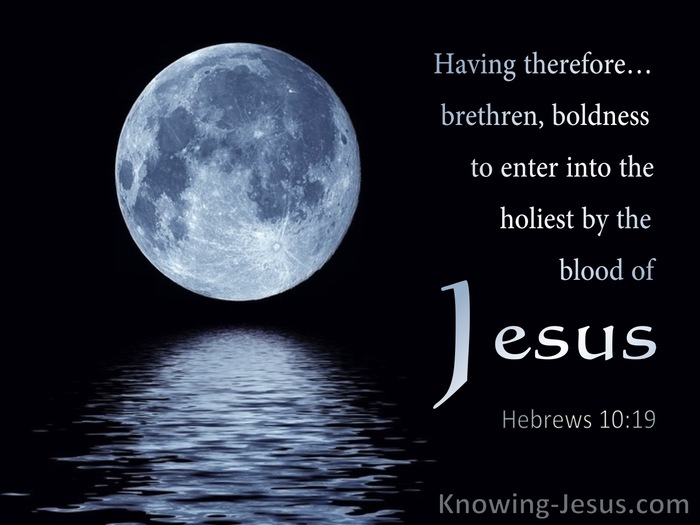
And behold, the veil of the temple was torn in two from top to bottom; and the earth shook and the rocks were split. -Matthew 27:51
The torn curtain holds profound significance as it symbolizes the separation between humanity and the divine presence of God.
In the Old Testament, the curtain that was torn was the barrier leading into the Most Holy Place, where God’s throne on earth resided, symbolized by the Ark of the Covenant. This sacred space was inaccessible except for the High Priest, who could enter once a year. The first curtain separated the Holy Place from the courtyard, which could be entered daily.
This symbolism carries immense weight. After the fall of Adam and Eve, they were expelled from the original dwelling of God, Eden. However, even then, God promised a Savior who would undo the consequences of the Fall. As instructed by God, Moses constructed a dwelling place, but it remained unapproachable except by the High Priest on the designated day.
I believe the temple is a symbol, representing the unavailability of direct access to the presence of God.
Yet, when Jesus came, the Divine became flesh and “tabernacled among us” (John 1:14). Through the breaking of Christ’s body, all barriers and separations were shattered.
Now, despite our unworthiness, arrogance, and impurity, we can enter into the very presence of the Living God, not just once a year, but at any moment.
1 Corinthians 2:14:“The natural person does not accept the things of the Spirit of God, for they are folly to him, and he is not able to understand them because they are spiritually discerned.”
Proverbs 29:2: “When the righteous thrive, the people rejoice; when the wicked rule, the people groan.”
2 Corinthians 3:16-18:“But whenever anyone turns to the Lord, the veil is taken away. Now the Lord is the Spirit, and where the Spirit of the Lord is, there is freedom. And we all, who with unveiled faces contemplate the Lord’s glory, are being transformed into his image with ever-increasing glory, which comes from the Lord, who is the Spirit.”
Discernment, while complex, becomes more intuitive with practice.
1 John 4:1: “Beloved, do not believe every spirit, but test the spirits to see whether they are from God, for many false prophets have gone out into the world.”
The word used for “test” (δοκιμάζω) conveys the idea of examination, scrutiny, or proving. It implies an active process of evaluating whether something aligns with truth or not. The term “spirits” (πνεύματα) refers to not only human spirits but also supernatural beings or ideologies.
By urging believers to test these spirits, the verse emphasizes the need to critically discern the origin, authenticity, and alignment of spiritual claims and teachings.
John warns that many false prophets, or deceivers, have emerged in the world, advocating distorted beliefs.
Philippians 1:9-10: “And this is my prayer: that your love may abound more and more in knowledge and depth of insight, so that you may be able to discern what is best and may be pure and blameless for the day of Christ.”
Greek Meaning Philippians 1:9-10
Philippians 1:9-10, written in Greek, expresses the Apostle Paul’s prayer for the Philippians to have their love grow in both knowledge (epignosis) and depth of insight (aisthesis). The use of “epignosis” implies a deep and experiential knowledge, emphasizing a profound understanding of Christ’s teachings. “Aisthesis” underscores the idea of discernment and perception, suggesting the ability to make wise decisions. Paul’s aim is for their love to be grounded in this rich knowledge and insight, enabling them to distinguish what is excellent and to live with moral purity, ultimately preparing them for the return of Christ, a central theme in his writings.
Paul links discernment to having our minds renewed in Romans 12:1-2: Do not conform to the pattern of this world, but be transformed by the renewing of your mind. Then you will be able to test and approve what God’s will is — his good, pleasing and perfect will.
As stated in Hebrews 5:14, ‘But solid food is for the mature, for those who have their powers of discernment trained by constant practice to distinguish good from evil.’ This profound wisdom reminds us of the importance of cultivating discernment in our lives. By honing our ability to distinguish between what is good and what is evil, we empower ourselves to navigate the complexities of our ever-evolving world
Prepare yourself for a mind-expanding journey as we delve into the captivating realm of quantum physics.
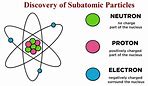
Quantum Physics: a captivating realm of scientific exploration, delves into the intricate interplay of matter and energy at the subatomic level, revealing the awe-inspiring concept of the observer effect and the profound influence of conscious presence on shaping the fabric of reality.
Within its intricate framework lies a concept known as the observer effect, which challenges our perception of reality and unveils the immense influence of our conscious presence.
In the mesmerizing realm of quantum physics, the observer effect asserts that the mere act of observation can shape the behavior of subatomic particles.
It suggests that our conscious presence has the remarkable capacity to mold the very fabric of reality itself.
This concept, rooted in quantum physics, aligns with the philosophical notion of a divine mind or higher consciousness, indicating that our thoughts, intentions, and focus intricately contribute to shaping the world around us.
The Divine Observer and the Creation of All Things
Within a spiritual context, the belief in a higher consciousness or a divine entity implies that this consciousness possesses an all-encompassing awareness, with the power to influence the physical world.
Drawing a parallel, the observer effect in quantum physics suggests that whether human or divine, consciousness plays a significant role in the manifestation of the physical world.
It prompts us to explore the intriguing relationship between quantum physics and determinism, offering insight into the intricate mechanisms shaping the fundamental nature of existence.
The observer effect in quantum physics brings a fascinating connection to spiritual beliefs. It implies that our thoughts and intentions have a profound impact on reality. By consciously focusing and aligning our desires, we can create powerful transformations in the physical world.
Quantum entanglement is a phenomenon in which particles become inseparably linked, resulting in instantaneous correlations regardless of distanc e.
The Web of Interconnectedness:
Another captivating phenomenon within quantum physics is quantum entanglement, where particles instantaneously affect each other regardless of distance. This concept mirrors the spiritual notion of interconnectedness, promoting empathy and unity.
Quantum entanglement suggests that at a fundamental level, all particles are intricately linked, symbolizing the interconnected nature of our existence. Understanding this profound interconnectedness fosters a sense of empathy and unity, encouraging us to recognize the importance of our actions and their impact on the collective human experience.
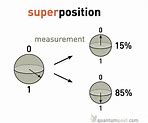
Quantum superposition is a fundamental principle in quantum mechanics where a particle exists in multiple states simultaneously until measured.
Embracing Limitless Possibilities
In the realm of quantum physics, we encounter the intriguing concept of quantum superposition, where particles exist in multiple states until observed.
This parallels the spiritual idea of limitless possibilities, inspiring personal growth and intention-driven change.
The enthralling interplay between quantum physics and spirituality unveils a new frontier of understanding, one that challenges conventional notions of reality and our place within it.
By bridging the realms of science and spirituality, we embark on a journey of exploration, expanding our perspectives and enriching our understanding of the intricate tapestry that weaves together the fabric of reality.
In a world captivated by charisma and self-assured confidence, the allure of narcissism’s mask is undeniable. Its polished facade, shimmering with charm and ambition, draws us in, tempting us to believe in the extraordinary. But what lies beneath this captivating exterior? In the depths of the shadows, hidden from the prying eyes, lies a truth that is often overlooked. It is here, within the hidden recesses of the self, that the reality of narcissism and society’s fascination with it truly reveals itself. As we embark on a journey through the psyche, we unravel the enigma of the mask, seeking to understand the forces that drive their need for identity and significance.
Here, we will explore the interconnectedness of personas, shadows, and the pursuit of self-actualization, shedding light on the complexities that lie beneath the alluring surface of narcissism’s mask.
First things first, what is narcissism and who is a narcissist?
While narcissism and narcissists are closely related, they are not the same.
Narcissism
Narcissism refers to a psychological trait characterized by an excessive and exaggerated sense of self-importance, a craving for admiration and attention, and a lack of empathy for others. It is a personality trait that can vary in intensity among individuals.
Narcissist
Narcissists, on the other hand, are individuals who display narcissistic traits at a more extreme level. They exhibit a persistent pattern of behavior that revolves around the pursuit of personal gratification, exploitation of others, and a deep need for validation and admiration. Narcissists embody the extreme end of the narcissism spectrum, making them diagnosable for NPD (Narcissistic Personality Disorder) displaying a consistent and pervasive pattern of self-centeredness and entitlement.
Shadow
Details
These can include aspects of our personality that we find unacceptable or undesirable, such as our fears, flaws, or dark impulses. The shadow is composed of unique characteristics that are typically opposite to our conscious attitudes and traits.
The shadow serves as a captivating mask for the narcissist, concealing within it the intriguing depths of the inner child—an enigma that remains hidden from the conscious realm of the narcissistic individual.
The Shadow can be likened to a dark cloud that traps the inner child we rejected during childhood. This inner child is trapped in this shadow; therefore your conscious mind doesn’t have any recollection of him or her. Although she or he is you, you are so disconnected from yourself and hidden in the Shadow that every time you are triggered, she comes out in the form of behavior, she acts out and is at the maturity level of the time he or she was locked away
The shadow encompasses the fears, flaws, vulnerabilities, and undesirable traits that the narcissist refuses to acknowledge or accept. The shadow often remains hidden beneath the masks (the polished facade and grandiose persona), contributing to the narcissist’s need to uphold the image of perfection and superiority. By denying their shadow, narcissists avoid confronting their own weaknesses and maintain their sense of inflated self-importance.
Mask
A mask refers to the persona or false identity that an individual creates and presents to the world to hide their true self, including their shadow aspects. The mask acts as a defense mechanism, allowing individuals to project a socially acceptable image while concealing their fears, flaws, or undesirable traits. It represents the part of ourselves that we want others to see and believe in, often characterized by exaggerated positive qualities or traits. However, behind the mask lies the shadow, the unconscious aspects of our personality that we have disowned or repressed. Embracing and integrating the shadow is a crucial step in the journey of self-discovery and psychological growth according to Jungian theory.
Jungian psychology reveals the shadowy depths beneath narcissistic masks. By understanding archetypes, personas, shadows, and the quest for self-actualization, we can grasp the inner workings of narcissistic behavior.
The Narcissist’s Shiny Persona
The narcissist projects an ideal persona to the world that hides fragile self-esteem. This persona is infused with the archetypes of Ruler, Creator, and Hero that reinforce illusions of brilliance, control, and grandeur.
But behind this gleaming façade lurks an enfeebled sense of self riddled with shame, anxiety, and inferiority. The glittering persona conceals weakness.
The Narcissist’s Dark Shadow
Jung referred to the unexplored corners of our being as our “shadows.” In order to maintain their carefully crafted personas, narcissists often reject any negative emotions or aspects of themselves, choosing to deny their shadows. Yet, these repressed shadows can have a corrosive effect and contribute to their inflated sense of self.
It is essential for psychological integration to acknowledge and accept our shadows. However, for narcissists, embracing their shadows feels like admitting defeat. They invest significant energy into suppressing their shadows and upholding the image of their flawless ego.
The Narcissist’s Failed Self
For Jung, the psyche’s goal is realizing the “Self,” our unified selfhood. But narcissism is stuck in ego. Integration of conscious and unconscious selves, like a Jedi, eludes them.
Without confronting their shadows and relinquishing ego supremacy, narcissists remain fractured souls striving to mask fragility behind temporary personas. Their struggle for wholeness continues.
Shedding New Light on Narcissism’s Shadows
create paragraph: Shedding New Light on Narcissism’s Shadows and the arduous task it is for those unwilling to
If you are dealing with this type of insidious torture and being gaslit consistently by those who only feign empathy but are hollow, worldly shells, dependent on their external to fulfill internal, know you aren’t alone. Your reward will be great in Heaven. Keep your eyes up!
Immersed in the realms of philosophy, my soul awakens to the allure of unraveling life’s most profound enigmas. With fervent curiosity, I delve into the labyrinth of existence, enticed by the mesmerizing intricacies that await my exploration. – Camille
Love of Wisdom [Philos – Sophia]
The word “philosophy” has its roots in ancient Greece, where it emerged from the combination of two Greek words: “philos” meaning “love” and “sophia” meaning “wisdom” or “knowledge.” Thus, philosophy can be understood as the love or pursuit of wisdom.
Socrates
It was the renowned philosopher Socrates, along with his disciples Plato and Aristotle, who solidified the foundations of philosophy as a distinct field of study.
During the time of Socrates, philosophy encompassed a wide range of topics, including ethics, metaphysics, epistemology, and politics. It was a holistic discipline that sought to understand the nature of reality, the principles of knowledge, the foundations of morality, and the structures of society.
Over the centuries, philosophy evolved and branched out into various philosophical schools and movements, each with its own unique perspectives and areas of focus.
From the Stoics and Epicureans of ancient Rome to the rationalists and empiricists of the Enlightenment era, philosophers have delved into different philosophical traditions and schools of thought.
The Stoics & Epicureans of ancient Rome
The philosophy of the Stoics originated in ancient Rome and is rooted in the teachings of prominent philosophers such as Zeno of Citium, Epictetus, and Marcus Aurelius.
Stoicism emphasizes the importance of living in accordance with nature and accepting the things that are beyond our control. Central to Stoic philosophy is the belief that virtue is the highest good and that wisdom, courage, justice, and temperance are essential virtues to cultivate in order to live a fulfilling and virtuous life. Stoics also emphasize the importance of developing resilience and inner tranquility in the face of adversity, teaching that true happiness comes from within and is independent of external circumstances. Through their teachings, the Stoics sought to provide a practical philosophy that offers guidance for leading a meaningful life in harmony with the natural order of the universe.
The philosophy of the Epicureans, originating in ancient Rome and influenced by the teachings of the Greek philosopher Epicurus, champions the pursuit of pleasure as the ultimate goal of life.
However, this pursuit of pleasure goes beyond mere hedonism, as Epicureans emphasize the importance of attaining a state of tranquility and freedom from pain, both physical and mental. They advocate for a life of moderation, simplicity, and a focus on the present moment. Epicureans believe that true pleasure is found in the absence of fear, anxiety, and unnecessary desires. By cultivating a sense of gratitude, cultivating friendships, and engaging in intellectual pursuits, the Epicureans aimed to live a life of contentment and inner peace.
Wide Array
Philosophy explores a wide array of subjects, from logic and aesthetics to philosophy of science and philosophy of mind. Philosophers engage in rigorous analysis, critical thinking, and logical reasoning to unravel the complexities of human existence and the mysteries of the universe.
Logic & Aesthetics
Logic is a branch of philosophy that deals with the principles of valid reasoning and sound argumentation. It examines the structure and patterns of reasoning, aiming to provide clear and coherent methods for evaluating the truth or falsehood of statements. Through the study of logic, philosophers seek to uncover the rules that govern rational thought, enabling us to distinguish between valid and fallacious arguments, identify common logical fallacies, and engage in deductive and inductive reasoning. By understanding the principles of logic, we can navigate the complexities of philosophical inquiry and enhance our ability to critically analyze and evaluate information in various domains of knowledge.
“Be diligent to present yourself approved to God, a worker who does not need to be ashamed, rightly dividing the word of truth.” – 2 Timothy 2:15
Philosophy of Science
The philosophy of science is a branch of philosophy that examines the nature, methods, and implications of scientific knowledge. It explores fundamental questions about the nature of scientific theories, the role of observation and experimentation, and the relationship between science and other areas of knowledge.
“For since the creation of the world God’s invisible qualities—his eternal power and divine nature—have been clearly seen, being understood from what has been made, so that people are without excuse.” – Romans 1:20
Aesthetics philosophy is a branch of philosophy that explores beauty, art, and the nature of our aesthetic experiences. It seeks to understand the principles and criteria underlying our judgments of what is aesthetically pleasing. Aesthetics philosophers ask questions about the nature of artistic expression, the role of emotions in our aesthetic responses, and the relationship between art and morality. By delving into the complexities of aesthetics, philosophers aim to unravel the subjective and objective aspects of beauty, enhancing our understanding and appreciation of the artistic creations that enrich our lives.
“Finally, brothers and sisters, whatever is true, whatever is noble, whatever is right, whatever is pure, whatever is lovely, whatever is admirable—if anything is excellent or praiseworthy—think about such things.” – Philippians 4:8
Philosophy of Mind
The philosophy of mind is a branch of philosophy that seeks to understand the nature of the mind, consciousness, and mental phenomena. It investigates questions such as the relationship between the mind and the body, the nature of subjective experiences, and the possibility of artificial intelligence.
“Do not conform to the pattern of this world, but be transformed by the renewing of your mind. Then you will be able to test and approve what God’s will is—his good, pleasing and perfect will.” – Romans 12:2
Philosophy Is Inescapable
Philosophy, as the pursuit of fundamental questions about existence, knowledge, ethics, and reality, is inescapable. It underlies the very fabric of human thought and actions, shaping our worldview and influencing our decisions. Whether consciously or subconsciously, we all engage in philosophical inquiries, reflecting on our purpose in life, the nature of truth, and the values we hold. Even when we are not explicitly discussing philosophical ideas, our beliefs and assumptions about the world are rooted in philosophical frameworks. Thus, while one may try to evade or disregard philosophy, its presence remains ubiquitous, pervading every aspect of our lives and the questions we ask about the nature of our existence.
How philosophy can be applied in practical situations, illuminating its transformative power in our daily lives:
Ethical Decision-Making: Philosophy equips us with ethical frameworks and moral reasoning tools to navigate complex dilemmas. When faced with an ethical decision, we can draw upon philosophical principles such as utilitarianism, deontology, or virtue ethics to weigh the consequences, consider our values, and make informed choices that align with our moral compass.
Critical Thinking and Problem Solving: Philosophy nurtures critical thinking skills, enabling us to analyze and evaluate information objectively. In practical situations, this ability allows us to assess arguments, identify logical fallacies, and make sound judgments. Whether it is evaluating the credibility of a news source or solving a complex problem, philosophical training enhances our ability to think critically and make well-informed decisions.
Personal Development and Self-Reflection: Philosophy encourages introspection and self-examination. By engaging with philosophical concepts such as existentialism or Stoicism, we gain insights into our values, purpose, and personal growth. Through philosophical practices like journaling, meditation, or philosophical counseling, we can cultivate self-awareness, resilience, and emotional well-being.
Constructive Dialogue and Conflict Resolution: Philosophy fosters skills necessary for engaging in meaningful dialogue and resolving conflicts. By applying principles of argumentation and logical reasoning, we can navigate disagreements with intellectual rigor and respect for diverse perspectives. Philosophical techniques such as the Socratic Method promote open-mindedness, active listening, and the exploration of shared values, facilitating constructive dialogue and conflict resolution.
Philosophical Compatibility with Christianity
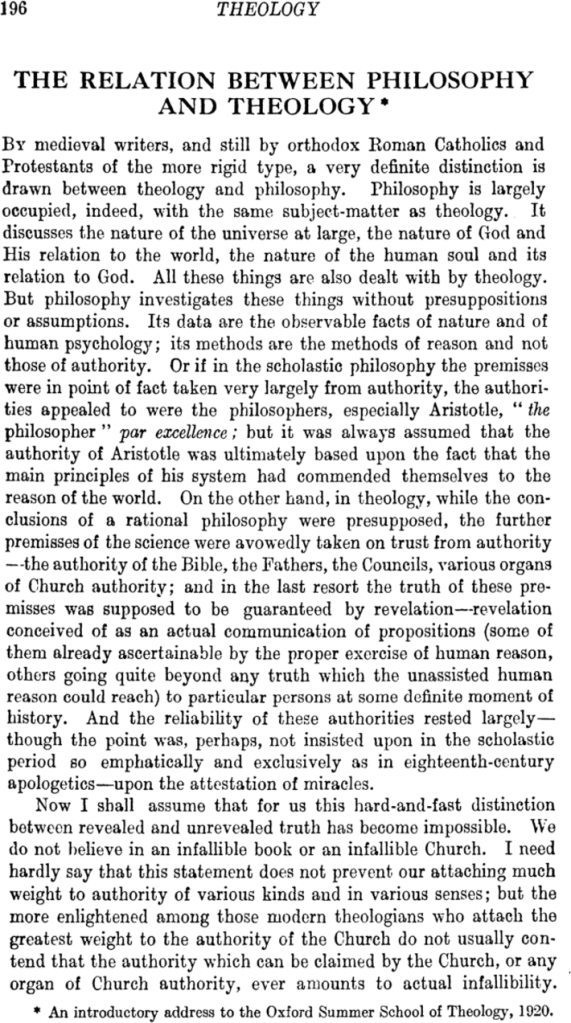
In the early centuries of the Christian era, theology and philosophy were inseparable disciplines.
Christian thinkers, such as Origen, Augustine of Hippo, and Thomas Aquinas, sought to reconcile the teachings of Christianity with the philosophical traditions of their time, particularly the works of ancient Greek philosophers like Plato and Aristotle.
During this period, theology was not conceived as a separate field of study but rather as a branch of philosophy.
It was known as “Christian philosophy” or “sacred philosophy” and aimed to explore the nature of God, the relationship between faith and reason, and the philosophical underpinnings of Christian doctrine.
Christian philosophers of the time drew upon the philosophical tools and concepts available to them to articulate and defend Christian beliefs. They engaged in profound philosophical inquiries, such as the nature of God, the problem of evil, the immortality of the soul, and the nature of divine revelation. These philosophical explorations formed the foundation of early Christian theology.
Thomas Aquinas
One notable example of the fusion of Christian philosophy and theology is the work of Thomas Aquinas, who sought to synthesize the teachings of Christianity with the philosophy of Aristotle.
Aquinas’s magnum opus, the Summa Theologica, exemplifies the integration of philosophical reasoning and theological doctrine.
In this monumental work, he utilized Aristotelian concepts and logic to expound upon Christian theology, addressing topics such as the existence of God, ethics, and the nature of the soul.
Philosophical inquiries foster deeper understanding of Biblical texts.
What are some specific biblical texts that are often studied in the context of biblical philosophy?
The Book of Genesis:
The opening chapters of Genesis offer profound philosophical reflections on creation, the nature of humanity, and the relationship between God and the world. These texts invite philosophical contemplation on topics such as the origin of the universe, the existence of God as the ultimate creator, and the moral implications of the human will.
“In the beginning, God created the heavens and the earth…God created humankind in his own image, in the image of God he created them; male and female he created them…And God saw everything that he had made, and behold, it was very good.” – Genesis 1:1, 27, 31
The Book of Job:
This book engages in a profound exploration of human suffering, theodicy, and the nature of divine justice. It raises philosophical questions regarding the problem of evil, the limits of human understanding, and the complexities of divine providence. The dialogue between Job, his friends, and God offers deep philosophical insights into the human condition and the mysteries of existence.
“Where were you when I laid the earth’s foundation? Tell me, if you understand. Who marked off its dimensions? Surely you know! Who stretched a measuring line across it?…Will the one who contends with the Almighty correct him? Let him who accuses God answer him!” – Job 38:4-5, 40:2
The Sermon on the Mount (Matthew 5-7):
In this renowned sermon, Jesus presents a series of ethical teachings and moral principles that have profound implications for philosophical contemplation. The teachings on love, forgiveness, and the pursuit of righteousness prompt philosophical reflections on ethics, virtue, and the nature of a just society.
“Blessed are the pure in heart, for they shall see God. Blessed are the peacemakers, for they shall be called sons of God. Blessed are those who are persecuted for righteousness’ sake, for theirs is the kingdom of heaven.” – Matthew 5:8-10
The Gospel of John:
This gospel contains profound philosophical themes, particularly in its prologue (John 1:1-18) where the concept of the Logos (Word) is presented. The Logos, understood as the divine reason or wisdom, invites philosophical contemplation on the relationship between God and the world, the nature of truth, and the possibility of divine revelation.
“In the beginning was the Word, and the Word was with God, and the Word was God. He was with God in the beginning. Through him all things were made; without him nothing was made that has been made…The Word became flesh and made his dwelling among us. We have seen his glory, the glory of the one and only Son, who came from the Father, full of grace and truth.” – John 1:1-3, 14
The Book of Ecclesiastes:
This introspective book reflects on the meaning and purpose of life, the nature of human striving, and the transient nature of worldly pursuits. It raises philosophical questions about the nature of happiness, the pursuit of wisdom, and the existential challenges of the human experience.
“Vanity of vanities, says the Preacher, vanity of vanities! All is vanity. What does man gain by all the toil at which he toils under the sun?…I have seen everything that is done under the sun, and behold, all is vanity and a striving after wind.” – Ecclesiastes 1:2, 14
In conclusion, philosophy, with its timeless pursuit of wisdom, offers us a profound journey of intellectual exploration. From the ancient Greeks to the modern day, philosophers have grappled with humanity’s most profound enigmas, seeking to understand the nature of existence, knowledge, ethics, and reality.
Philosophy permeates every facet of our lives, shaping our decision-making, enhancing our critical thinking skills, nurturing personal growth, fostering constructive dialogue, and guiding our ethical conduct. With its compatibility with scripture and its ability to foster deeper understanding within religious communities, philosophy continues to provoke thought and inspire meaningful contemplation. As we delve into the realms of philosophy, we awaken to the allure of unraveling life’s mysteries and embark on a transformative quest for wisdom and enlightenment.
Embracing philosophy, we empower ourselves to navigate the complexities of existence with clarity, curiosity, and a deeper understanding of the world around us.