“When you see your matter going black, rejoice, you are at the beginning of the work.” — Rosarium Philosophorum
The traditional method of alchemy is divided into 5 stages:
STEP ONE
Nigredo —Blackening
The term “nigredo” comes from the Latin word for “black,” and its color is referring to the material color at this first stage of the process, which is often darkened.
The alchemist is observing or participating in the break down of the impurities that occur during Nigredo. This is the beginning of the distillation of raw materials.
This physical act represents the process of confronting one’s shadow self and the negative aspects of oneself.
This initial stage is one of dissolution and decay… confronting the raw, unrefined aspects of the self.
It’s a descent into darkness, a metaphorical death; old structures break down, making the route for the emergence of new beginnings.
Black —like fertile soil, chaotic, yet holds the potential for new growth.
STEP TWO
Albedo—Whitening
Albedo is the term used to describe the extent to which an object like a planet or moon reflects light.
Albedo emerges stark in contrast from the blackness of Nigredo.
A state of pristine whiteness, like the moon reflecting the sun’s light is found after Albedo.
Embodies clarity, a fresh perspective gained through the trials of the previous step. It’s a moment of reflection and the dawning of understanding.
STEP THREE
Citrinitas—Yellowing
The term “citrinitas” comes from the Latin word for “yellow,” and it refers to the color of the materials at this stage of the process, which is often yellow or orange.
At this stage, the alchemist is allowing the materials to be still… in Citrinita = self-growth + integration! 🍋✨ … think sitting water. Stagnation.
This yellowing is considered a bridge between Albedo and the final stage.
Citrinitas is associated with the rising sun, bringing with it warmth, light, and a sense of solar energy.
It represents the awakening of the intellect and intuition, a golden hue illuminating the path forward.
This stage signifies a growing awareness and the integration of newfound insights.
STEP FOUR
Rubedo—Reddening
The term “rubedo” comes from the Latin word for “red,” and its name refers to the color of the materials at this stage of the process, which is often red or reddish-gold.
A BLOODY MESS
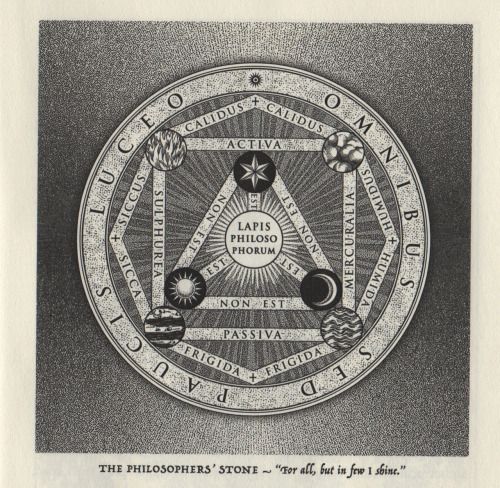
In the Rubedo stage, the alchemist is completing the culmination of the alchemical process, its the stepping stone into the Philosopher’s Stone.
Rubedo also represents the perfect union of opposites, it is the merging of the spiritual and the material.
It is symbolized by the color red, signifying life, passion, and the ultimate realization of one’s true potential.
This stage embodies wholeness, completion, and the attainment of a higher state of being.
STEP FIVE
Lapis Philosophorum (Philosopher’s Stone)
The transcendent outcome, the perfected state.
Conclusion/ Overview
Nigredo (Blackening): The descent into shadow, where the old dissolves.
Albedo (Whitening): A purification, a dawning of clarity from the darkness.
Citrinitas (Yellowing): The sun’s touch, bringing illumination and understanding.
Rubedo (Reddening): The ultimate fusion, the attainment of wholeness.
Lapis Philosophorum (Philosopher’s Stone): The transcendent outcome, the perfected state.
Cognitive rigidity is the stubborn insistence that our way of thinking is the only way.
It shows up in small, everyday ways:
refusing to consider another perspective
dismissing evidence that challenges our beliefs
or sticking to habitual responses when flexibility is required.
It is mental inflexibility masquerading as certainty.
This rigidity is rarely neutral. It filters experience, allowing only what aligns with our preconceptions to pass through.
What we notice and refuse to notice is determined less by reality and more by the contours of our existing beliefs. The mind becomes its own jailer.
FILTERED VISION
Perceptual limitations compound this problem. Our senses, our expectations, and our biases shape what we perceive.
Two people can witness the same event and walk away with entirely different “realities,” each convinced theirs is the truth.
Culture, language, upbringing, and personal trauma all function like lenses, coloring everything we see.
When cognitive rigidity meets these perceptual filters, the feedback loop begins: our beliefs dictate what we perceive, and our perceptions reinforce our beliefs.
We become prisoners of our own limited frameworks, blind to the complexity—and often the truth—of the world around us.
Breaking the Loop
Escaping this loop is not about acquiring more information. It is about retraining the mind to see what it usually ignores:
Observe without judgment. Watch your thought patterns and notice when you shut down possibilities automatically.
Seek what challenges you. Engage with ideas and perspectives that make you uncomfortable.
Question your perception. Ask yourself what you might be missing, what biases are filtering your experience.
Embrace intellectual humility. Accept that your understanding is provisional, incomplete, and subject to correction.
The moment we recognize that perception is always partial, and thought is always provisional, the bars of the cage begin to loosen.
Clarity is not a gift; it is a discipline.
The Work of Liberation
This is the work of liberation: not avoiding rigidity, but confronting it; not denying perceptual limits, but piercing them.
The mind can be trained to perceive more, think more flexibly, and respond more intelligently.
It is uncomfortable, but truth always is.
We cannot see everything, but we can see more than we did yesterday.
The Nature of Suffering: A Necessary Element of Existence

As much as we may wish otherwise, the reality is that suffering is an inescapable part of the human experience.
The age-old philosophical and religious observation that “life is suffering” points to a fundamental truth about the human condition.
Embracing Uncertainty and Impermanence
In the face of uncertainty and impermanence, we cultivate the qualities of empathy, humility, and inner strength that are vital for navigating the complexities of life.
It is through our struggles that we learn and grow, transforming our experiences into avenues for personal development.
Seeking Meaning in Suffering
Perhaps, in the end, it is not a life devoid of suffering that we should seek, but rather a life where suffering serves a purpose.
As Viktor Frankl articulated, fulfillment cannot be stripped of struggle; it is through confronting our darkest moments that we can truly experience the richness of life.
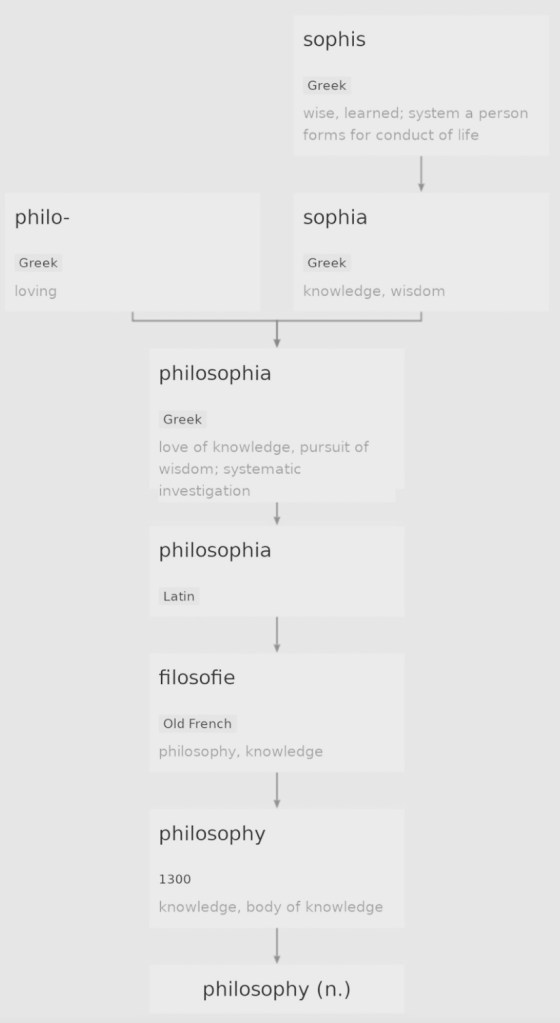
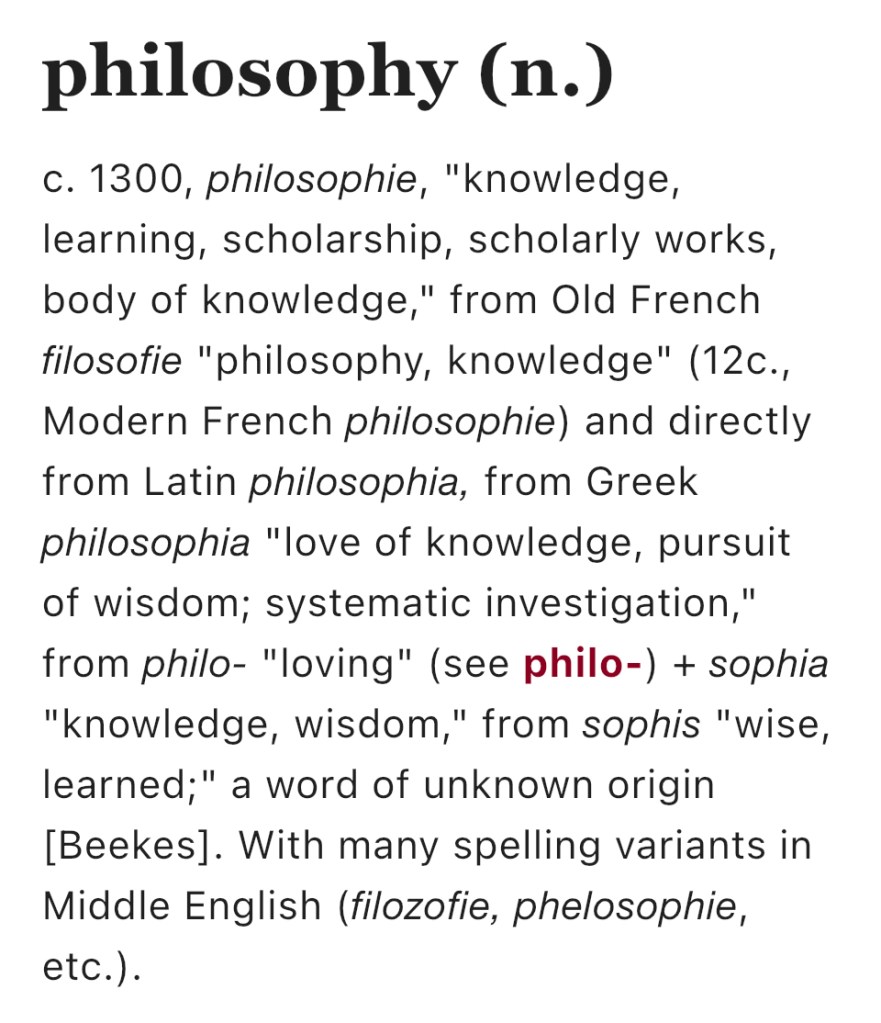
“Philo” (love) + “Sophia” (wisdom) The Love of Wisdom
From The Etymological Dictionary:
Philosophy Is Not Limited to Academia
Philosophy is for you and me and even the dude down the road.
Why Philosophy Is Good To Take Part In?
You’ll Ask The Right Questions
Philosophy empowers you to inquire thoughtfully and meaningfully.
You’ll Find Meaning and Purpose
Delve into what truly matters in life.
You’ll Develop Critical Thinking
Enhance your ability to analyze and evaluate arguments.
Navigate Ethical Dilemmas ⚖️🤔✨
Tackle complex moral issues with clarity and insight.
Philosophy helps you unravel the mysteries of life’s fundamental questions..
Expand your mind, ignite your curiosity, and awaken the philosopher within you, you’ll be sure to discover the truth about yourself and the world around you.
The term “philosophy” is from its ancient Greek roots.
In Greek Mythology, Sophia was associated with wisdom and knowledge.
She embodies the idea of understanding and insight, representing a deeper connection to the universe and the divine.
Many Greeks woo would seek her guidance in times of uncertainty, hoping to gain clarity in their lives. They understood Wisdom is not just about knowledge, but, more so, about the ability to see beyond the surface. The richness of her meaning caused a greater appreciation for the complexities of life.
Sophia is closely associated with the concept of “phronēsis,” which means practical wisdom.
The term “philosophia” was brought to prominence by Plato and his mentor Socrates, who underscored the pursuit of wisdom as a fundamental guiding principle for a meaningful life.
Socrates was famously declared the wisest man by the Oracle because of this:
Socrates recognized his own ignorance.
The philosophical pursuit of wisdom is through questioning and dialogue.
The Pythian Oracle
The Pythian Oracle was a priestess who delivered prophecies from the god Apollo at his temple in Delphi, Greece. She was also called Pythia, which was the original name of Delphi.
She entered a trance-like state and spoke cryptic messages that were interpreted by the priests. The oracle was consulted by many ancient Greeks for advice on war, politics, colonization, and religion. The oracle’s influence lasted from the 8th to the 4th century BCE, when it was banned by the Roman emperor Theodosius I.
Philo of Alexandria, a Hellenized Jew, attempted to harmonize Greek philosophy with Jewish scripture. He used “Sophia” to denote both human and divine wisdom, integrating it with the concept of “Logos” (Word), which later influenced Christian theology.
In Christian theology, “Sophia” was personified as Divine Wisdom, often equated with Christ. This interpretation is evident in the writings of the Church Fathers, who identified Christ as the Wisdom of God, a concept rooted in the New Testament.
Philo-Sophia:
Revising Philosophy: The book "Philo-Sophia: Wisdom Goddess Traditions" by Debashish Banerji and Robert McDermott explores the divine feminine aspect of wisdom. It argues for a revision of philosophy to include mystical, intuitive, emotional, performative, and collective knowledge, moving beyond the patriarchal and rational objectification that has dominated traditional academic philosophy.
Engage in existential musings as we examine the purpose and significance of our existence in the grand tapestry of the universe.
PHILOSOPHY IS INTIMATELY CONNECTED TO THE PURSUIT OF KNOWLEDGE, TRUTH, ETHICS, SPIRITUALITY, AND LIFE’S DEEPER MEANINGS.
Epistemology
Epistemology is the study of knowledge, justification, and the relationship between the two.
It explores questions such as:
What does it mean to be justified?
Is knowledge justified?
Is there such thing as true belief?
Can we have justified beliefs at all?
Epistemologists debate the role of internal and external factors in justification, the permissibility of different doxastic attitudes, and how we use our knowledge to acquire more knowledge.
The value of knowledge is the mission to uncover in Epistemology.
Metaphilosophy
Metaphilosophy is the study of philosophy itself, exploring questions about the nature of philosophical inquiry and the epistemology of philosophy.
It examines whether philosophy aims to discover objective truths about the external world or is more focused on understanding words and concepts.
It also considers the possibility of armchair philosophical knowledge and the relationship between empirical science and philosophy.
Philosophy Of Mind
The philosophy of mind covers all philosophical topics about the mind and mental states. Its subtopics can be divided in two main ways. First, by the traditional divisions drawn between kinds of mental states:
1. Divisions are drawn between:
… consciousness, intentionality, perception, and other states and processes. types of phil
2. Quotations are asked about these activities regarding their nature.
Study the relation between the mental and the physical and questions regarding our knowledge of the activities, the relationship between them.
Philosophy of mind overlaps with the philosophy of cognitive science and the philosophy of action.
Further Study:
Examples Of Philosophic Disciplines:
Metaphysics… or the study of reality.
Ethics… or the study of what is morally right & good.
Epistemology… or the study of how we know reality.
Logic… or the study of good arguments.
Aesthetics… or the Philosophy of Art.
The concept of “love of wisdom” can be defined as the pursuit and admiration of knowledge, guided by a deep affection and appreciation for intellectual exploration.
In my journey as an “alien” on this planet, I have, unwittingly, stumbled upon what had been archaically called the Philosopher’s Stone or the Elixir of Life…
I only realized this after I, through being magnetically attracted toward suffering, embracing the darkness that most fear, had unearthed the Essence of Reality.
This Essence is a Truth so profound, it is woven into the very core of our beings through the quantum dimensions & atmospheric pressure, without such, we would become vacuumed into nothingness.
This truth is unassailable, standing as a lamp of certainty, illuminated by the light of Intuitive Wisdom.
THIS LIGHT IS CHRIST’S LIGHT OF INTUITION FROM ABOVE.
Intuition transcends the limitations of our corporeal senses, for it is birthed from the sacred depths of the spirit.
Intuition is a whisper from the Heavens, a subtle yet ever powerful current that flows through the Ethers of existence.
Intuition is the Blood within the veins of Eternity.
When the HolySpirit stirs, He ignites the flame of Intuition, transforming our sensorial experiences into a Divine Compass.
THE KINGDOM OF GOD IS WITHIN YOU
This guiding Force elevates our conscious awareness, rendering the conventional Five Senses as mere tools in the Macrocosm of our being within this existence and realm.
When this inner awakening is embraced, we align in tandem with the Universal Symphony of Wisdom.
Intuition becomes our most trusted Guide, leading us towards a Life of deeper Understanding and connection with the Infinite.
Sigmund Freud was an Austrian neurologist and the founder of psychoanalysis, a clinical method for treating psychopathology through dialogue between a patient and a psychoanalyst.
He formulated the theory of the Oedipus complex, proposed the existence of an unconscious mind, and developed the idea of the id, ego, and superego as structural components of the human psyche.
Additionally, Freud’s work significantly influenced the field of psychology and various aspects of Western culture.
Carl Jung
Carl Jung was a Swiss psychiatrist and psychoanalyst who founded analytical psychology.
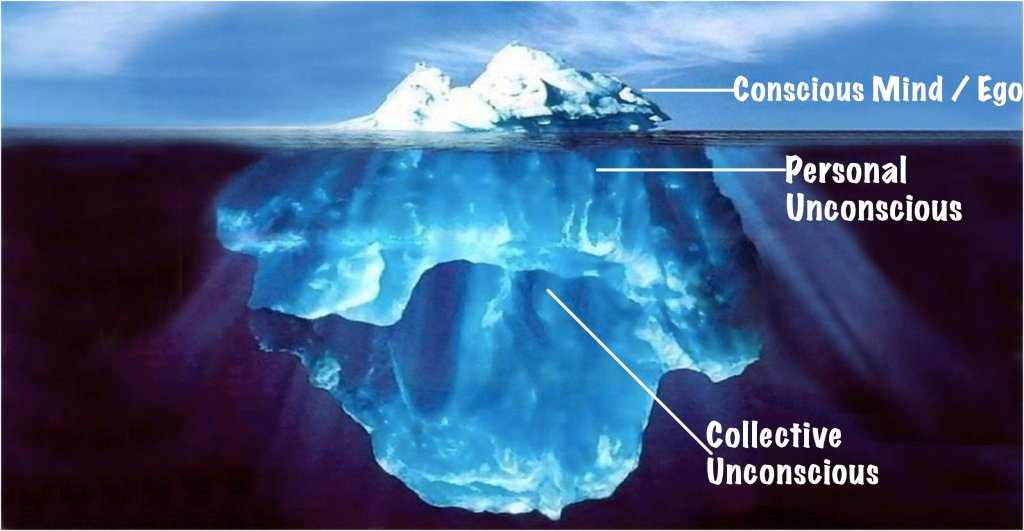
He is known for his concepts of the collective unconscious, archetypes, and the process of individuation. Jung emphasized the significance of symbolism, mythology, and the integration of opposing forces within the psyche.
His work has had a profound impact on psychology, psychiatry, and various fields, influencing areas such as dream analysis, personality theory, and the study of cultural and religious symbolism.
The main differences between Sigmund Freud’s psychoanalysis and Carl Jung’s analytical psychology lie in their perspectives on the unconscious, the role of the libido, and the significance of the collective unconscious and cultural symbolism.
Freud’s psychoanalysis emphasizes the influence of early childhood experiences, the unconscious drive of the libido, and the concept of repression as a key mechanism shaping human behavior.
In contrast, Jung’s analytical psychology expands on the collective unconscious, archetypes, and the process of individuation, focusing on the integration of opposing forces and the pursuit of wholeness or self-realization.
Freud’s emphasis on the Oedipus complex and the role of sexual and aggressive instincts differs from Jung’s broader view of the unconscious, which includes personal and collective elements, as well as archetypal patterns that transcend individual experiences.
Jung’s approach places greater emphasis on spirituality, mythology, and the symbolism found in various cultures, in contrast to Freud’s more clinical and biological focus on human behavior and mental processes.
Analytical Psychology
Analytical psychology, also known as Jungian psychology, is a branch of psychology developed by Carl Jung that focuses on exploring the depths of the unconscious mind and understanding the individual’s journey towards psychological wholeness. It places a strong emphasis on the exploration of the collective unconscious, archetypes, and symbolic imagery. Analytical psychology recognizes the importance of spirituality and the transcendent aspects of human experience. It views the psyche as a dynamic and self-regulating system, seeking to integrate and balance both conscious and unconscious elements.
Analytical psychology, also known as Jungian psychology, and “regular” psychology, commonly referred to as mainstream psychology differ in several significant ways:
Analytical psychology delves into the collective unconscious, archetypes, and symbolic imagery.
Collective Unconscious
Concept within analytical psychology that refers to the shared reservoir of knowledge, experiences, and symbols that all individuals inherit as a result of their common humanity. It is believed to be a deep layer of the unconscious mind that contains archetypes, universal themes, and instincts that are shared by all human beings across cultures and throughout history. This collective unconscious is thought to influence our thoughts, feelings, and behaviors, shaping our perceptions of the world and guiding our behavior in ways that are often unconscious to us. Through exploring and understanding the symbols and patterns that arise from the collective unconscious, individuals can gain insights into themselves, their relationships, and their place in the larger human experience.
Archetypes
Jungian archetypes are deeply rooted and universally recognized patterns of symbols and images that reside within the collective unconscious. These archetypes, such as the Hero, the Shadow, the Wise Old Man, and the Mother, represent fundamental aspects of the human psyche and serve as primordial templates for understanding and interpreting our experiences. They are symbolic guides that help us navigate the complexities of life, providing us with insight into our deepest fears, desires, and potentials. Jungian archetypes offer a profound framework for self-discovery and personal transformation, allowing us to tap into the depths of our unconscious and unlock greater awareness and wholeness.
Symbolic Imagery
Jungian symbolic imagery is a cornerstone of analytical psychology, emphasizing the profound power and significance of symbols and their role in unlocking the depths of the unconscious mind. Symbols are potent manifestations of archetypes, universal patterns of meaning that tap into the collective unconscious. They speak a language beyond words, evoking profound emotions, insights, and connections to the wider human experience. Through exploring and understanding these symbolic images, individuals gain access to a rich tapestry of personal and collective meaning, diving into the depths of their own psyche, unraveling mysteries, and opening doors to self-discovery, healing, and transformation. Jungian symbolic imagery offers a bridge between the conscious and unconscious realms, allowing individuals to navigate the complexities of their inner world and find deeper understanding and integration.
Integration
Jungian integration is the process of merging and reconciling the conscious and unconscious aspects of the psyche, as proposed by Carl Jung in analytical psychology. It involves recognizing and embracing the shadow, the hidden and often repressed aspects of ourselves, and integrating them into our conscious awareness. By acknowledging and working with the shadow, we can uncover and integrate the valuable lessons it holds, leading to greater self-understanding and wholeness. Jungian integration also entails recognizing and exploring archetypal patterns and symbols that arise from the collective unconscious, allowing individuals to tap into a deeper level of consciousness and find meaning and purpose in their lives. Through this process, we may cultivate a sense of balance, authenticity, and personal growth, enabling us to fully realize our potentials and navigate the complexities of the human experience.
The complexity of the human experience is rooted in our interconnectedness.
The impact of the flesh being disconnected from the Spirit is death…
We’ll discuss how Sin is a state of separation.
There are unseen connections that bind us together, as human beings. I explore these simple thoughts as I seek unity amidst disconnection and fragmentation.
” … because the mind set on the flesh is hostile toward God; for it does not subject itself to the law of God, for it is not even able to do so…” Romans 8:7
One Body, Disconnected From One Another
The word “dissociation” means to be disconnected from others, from the world around you or from yourself. Dissociative disorders typically develop after short-term or long-term trauma.
After the Fall, humans became disassociated spiritually. We became separated from God.
That Is The Essence Of Sin
Sin, at its essence, can be understood as a state of disconnection and separation.
The concept of sin as separation is deeply rooted in the Bible and can be explored through the study of Hebrew language and cultural context. Let’s dive into this perspective:
Roots in Hebrew
In Hebrew, sin is described by the word “חַטָּאָה” (chaṭṭā’āh), which literally means “missing the mark” or “deviating from the path.” This implies a sense of being separated from the intended target or purpose, suggesting a state of disconnection.
Adam and Eve
The story of Adam and Eve in the book of Genesis portrays sin as the ultimate act of separation. When they disobeyed God’s commandment and ate from the forbidden tree, they were expelled from the Garden of Eden, experiencing a profound separation from God’s presence. It marked the beginning of spiritual disconnection and separation from the divine.
The Prodigal Son
In the parable of the prodigal son (Luke 15:11-32), Jesus illustrates sin as a state of separation between a wayward son and his father. The son demanded his inheritance, left home, and squandered his wealth in reckless living. As a consequence, he found himself distant from his father, living a life of despair and separation until he repented and returned to his father’s embrace.
The Prophets and Exile
The Hebrew Bible further explores sin as separation through prophetic accounts. During periods of rebellion and disobedience, Israelites experienced judgment and exile, marking a tangible separation from their homeland, God, and their covenantal blessings. Sin led to division, dislocation, and a rupture in their relationship with God and their community.
Restoration and Unity
Throughout the Bible, there is a consistent theme of God’s desire to restore the broken relationship caused by sin and reconcile humanity to Himself. This restoration implies a process of overcoming separation and bridging the gap between God and humanity through acts of forgiveness, atonement, and redemption.
By examining the Bible and delving into Hebrew language and cultural context, we can understand that sin is indeed portrayed as a state of disconnection and separation. It is depicted as a departure from the intended path or target, resulting in a loss of closeness with God, others, and one’s true self. However, the biblical narrative also offers hope for reconciliation and restoration, emphasizing God’s work to bring unity and healing to the brokenness caused by sin.
If you would like to further explore these topics, here are some additional resources:
The unconscious is like a vault that holds our hidden selves, known as the Shadow according to Carl Jung. It stores traits, both good and bad, that we have cast aside. These traits are shaped by shame, which influences the thoughts, desires, and urges that we push away.
UNCONSCIOUS
Within each of us exists a mysterious realm, beyond the reach of our conscious minds. This inner world, free from external influences, shapes our complex and sometimes bewildering responses to the outside world.
The Shadow dwells in our subconscious, concealed within the uncharted abyss of our thoughts.
It represents the unacknowledged aspects of our being that are concealed and disconnected from our conscious selves. Similar to an invisible force, it subtly influences our thoughts, emotions, and actions.
Exploring our unconscious mind allows us to unlock our hidden potential and gain a deeper understanding of ourselves. This journey of self-discovery leads to increased self-awareness and personal development.
Embracing the Shadow leads to a more complete and authentic expression of who we truly are.
“The shadow is a moral problem that challenges the whole ego-personality, for no one can become conscious of the shadow without considerable moral effort. To become conscious of it involves recognizing the dark aspects of the personality as present and real. This act is the essential condition for any kind of self-knowledge.”
Our unconscious is a powerful part of ourselves that often goes unnoticed and untapped, starting from our early years.
It includes suppressed thoughts, emotions, and memories that have been rejected or deemed unacceptable. Unfortunately, we may be unaware of this hidden realm of our psyche.
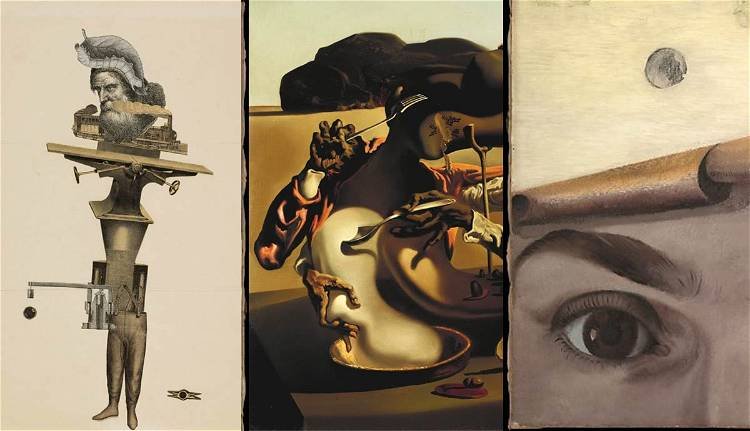
Exquisite Corpse by André Breton and Yves Tanguy, 1938, via The National Galleries Scotland, Edinburgh (left); with Autumnal Cannibalism by Salvador Dalí, 1936, via Tate, London (center); and Gala Éluard by Max Ernst, 1924, via The Metropolitan Museum of Art, New York (right)
Additionally, the unconscious mind functions as a reservoir for projection, which is a psychological defense mechanism that involves attributing our own undesirable traits, desires, or emotions to others. Essentially, it allows us to detach from certain aspects of ourselves and assign them to external objects or individuals. This process takes place involuntarily and without conscious awareness.
Projection is a psychological strategy employed by the ego with the intention of safeguarding itself against perceived dangers. This defense mechanism manifests when the ego disavows characteristics or attributes that it discerns in others, particularly those which it also despises within its own personality.
It is quite remarkable, if we take a moment to reflect, how frequently we observe this phenomenon not only in the behavior of others but also within our own selves, provided we are willing to be introspective and truthful.
If so, then you must believe He knows the beginning from the end.
The Bible tells us that God declares the beginning from the end and that He knows all things.
In Isaiah 46:10, God says,
“My purpose will stand, and I will do all that I please.”
This verse tells us that God has a plan and He knows what He is doing.
God’s plan for our lives is to bring us closer to Him and to enable us to live in His will. He knows the beginning from the end, and He will guide us through the journey. We can trust in Him and His plan for our lives.
God is in control and knows the beginning from the end so that we can trust Him and His plan for our lives.