“When you see your matter going black, rejoice, you are at the beginning of the work.” — Rosarium Philosophorum
The traditional method of alchemy is divided into 5 stages:
STEP ONE
Nigredo —Blackening
The term “nigredo” comes from the Latin word for “black,” and its color is referring to the material color at this first stage of the process, which is often darkened.
The alchemist is observing or participating in the break down of the impurities that occur during Nigredo. This is the beginning of the distillation of raw materials.
This physical act represents the process of confronting one’s shadow self and the negative aspects of oneself.
This initial stage is one of dissolution and decay… confronting the raw, unrefined aspects of the self.
It’s a descent into darkness, a metaphorical death; old structures break down, making the route for the emergence of new beginnings.
Black —like fertile soil, chaotic, yet holds the potential for new growth.
STEP TWO
Albedo—Whitening
Albedo is the term used to describe the extent to which an object like a planet or moon reflects light.
Albedo emerges stark in contrast from the blackness of Nigredo.
A state of pristine whiteness, like the moon reflecting the sun’s light is found after Albedo.
Embodies clarity, a fresh perspective gained through the trials of the previous step. It’s a moment of reflection and the dawning of understanding.
STEP THREE
Citrinitas—Yellowing
The term “citrinitas” comes from the Latin word for “yellow,” and it refers to the color of the materials at this stage of the process, which is often yellow or orange.
At this stage, the alchemist is allowing the materials to be still… in Citrinita = self-growth + integration! 🍋✨ … think sitting water. Stagnation.
This yellowing is considered a bridge between Albedo and the final stage.
Citrinitas is associated with the rising sun, bringing with it warmth, light, and a sense of solar energy.
It represents the awakening of the intellect and intuition, a golden hue illuminating the path forward.
This stage signifies a growing awareness and the integration of newfound insights.
STEP FOUR
Rubedo—Reddening
The term “rubedo” comes from the Latin word for “red,” and its name refers to the color of the materials at this stage of the process, which is often red or reddish-gold.
A BLOODY MESS
In the Rubedo stage, the alchemist is completing the culmination of the alchemical process, its the stepping stone into the Philosopher’s Stone.
Rubedo also represents the perfect union of opposites, it is the merging of the spiritual and the material.
It is symbolized by the color red, signifying life, passion, and the ultimate realization of one’s true potential.
This stage embodies wholeness, completion, and the attainment of a higher state of being.
STEP FIVE
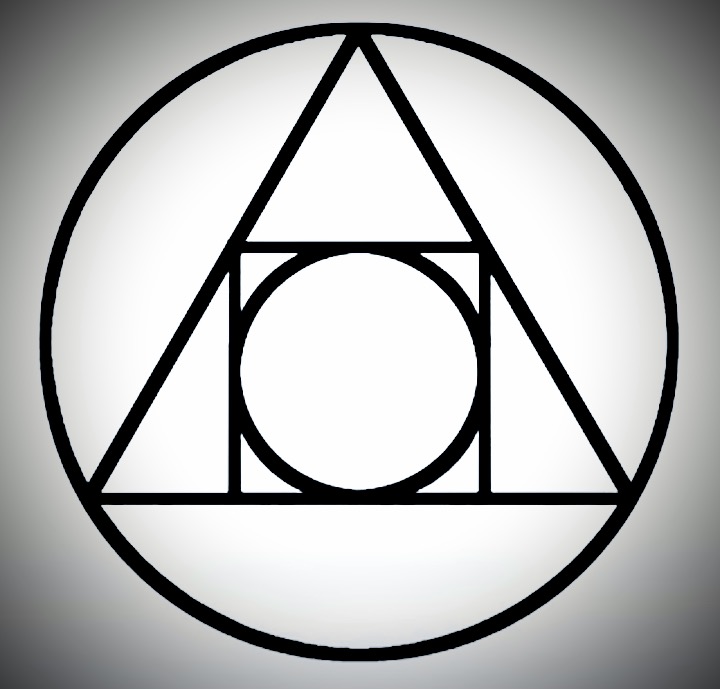
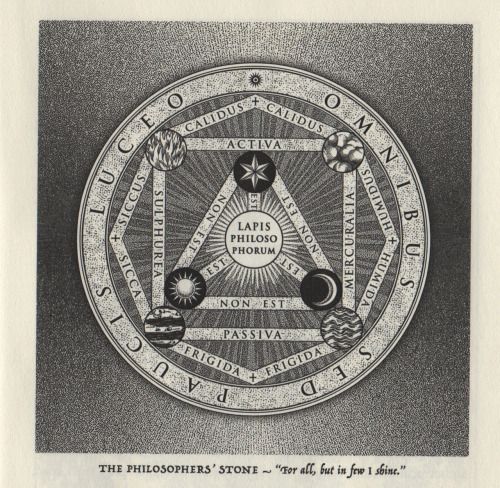
Lapis Philosophorum (Philosopher’s Stone)
The transcendent outcome, the perfected state.
Conclusion/ Overview
Nigredo (Blackening): The descent into shadow, where the old dissolves.
Albedo (Whitening): A purification, a dawning of clarity from the darkness.
Citrinitas (Yellowing): The sun’s touch, bringing illumination and understanding.
Rubedo (Reddening): The ultimate fusion, the attainment of wholeness.
Lapis Philosophorum (Philosopher’s Stone): The transcendent outcome, the perfected state.
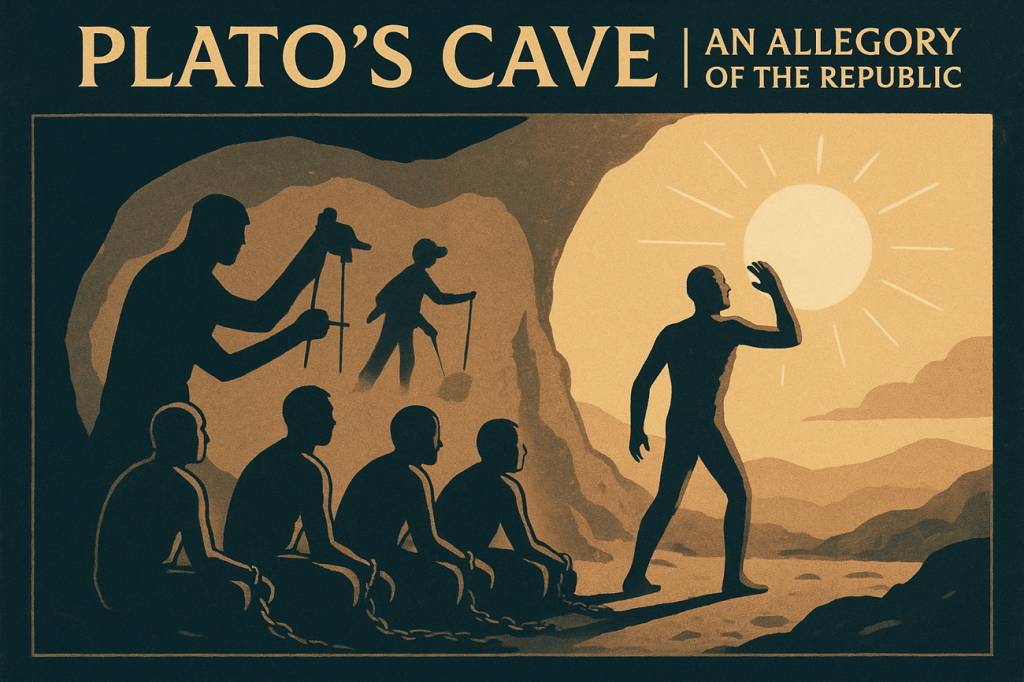
The Allegory of the Cave from Plato’s Republic is one of those perfect metaphors.
I think about it’s truth over and over again, even more so in today’s societal atmosphere.
The Cave depicts our tendency to mistake perception for truth.
THE STORY
In the story, these prisoners are chained inside a cave, they’re facing a wall where they watched these shadows dancing and moving.
These shadows were cast by puppeteers, covertly hiding behind them.
They were manipulating objects to create a shadow that gave the illusion of a fire’s flame.
The prisoners named the shadows, studied them, and even built hierarchies around who interpreted the shadows most accuratel.
To them, this was reality, and they took it very seriously.
We’re not so different.
Most people live confined within their own perceptual cave.
We’re inevitably going to be shaped by our emotional connection to our belief systems, cultural roots, educational indoctrination, and familial conditioning.
Too often we’re caught mistaking projection for truth.
Yes, we’ve been conditioned, but this isn’t the problem per se. We can see past all the programs if we have a fully functioning brain.
The resistance to confronting the possibility of a constructed reality is understandable.
The idea that memories, identity, and perceptions might not be as solid as they seem can feel like an existential threat.
Letting go of deeply held beliefs, even if they are illusions, requires confronting discomfort, uncertainty, and the fear of losing oneself.
It’s easier to cling to familiarity, even if it’s flawed, than to face the unknown. But growth often begins where certainty ends.
Freedom is admitting that you have been deluded and under an illusory story of your own making. Then you’ll break free.
CONSIDER THE PUPPETEERS
The puppeteers are those who shape the narratives we consume.
They are the gatekeepers of knowledge and power:
the donors, financiers, and elites who we likely will never know the true name of.
By controlling the information and communication, they can and do shape what a society perceives as “real.”
Propaganda, entertainment, and social pressure all became tools of control through illusions.
The Awakening
Then comes the moment of liberation. One prisoner is freed.
At first, he’s blinded by the fire’s light.
His eyes, accustomed to shadows, can’t handle the truth so suddenly.
But as they adjust, he begins to see clearly: the shadows were never real.
They were only echoes of something greater.
He’s led outside the cave into the sunlight, another painful adjustment.
Yet when vision returns, he beholds the true world in all its beauty and realizes that the cave was only a prison of perception.
Why Can’t They Turn Their Heads?
CHAINS OF IGNORANCE
Because they are chained. Not just physically, but mentally.
The chains represent ignorance, the invisible grip of conformity and belief.
Most never question the nature of their own bondage.
To break these chains requires courage. It requires unlearning.
It requires the willingness to endure the pain of seeing clearly for the first time.
The Philosopher’s Task
For Plato, this story points to his Theory of Forms.
Theory of Forms is the idea that the physical world is but a shadow of a higher, more perfect reality.
The philosopher’s role is to turn toward that higher truth, to step into the light and understand what truly is true.
EXPECT STRUGGLE
But enlightenment is not a comfortable process.
When the freed prisoner returns to the cave to tell the others what he has seen, they mock him.
They reject him. To them, his truth sounds like madness, because it threatens the foundation of their world.
QUESTION YOUR OWN BELIEFS
The Allegory of the Cave calls us to question our own shadows, to notice what we’ve been taught to believe and think: who benefits from those beliefs?
It asks us to endure the blinding light of truth, no matter how uncomfortable, and to choose freedom over comfort.
To break the chains of ignorance is to step into the light, not to escape the world, but to finally see it.
Carl Jung, the renowned Swiss psychiatrist and psychoanalyst, made significant contributions to the understanding of art and its psychological dimensions.
Key aspects of his work related to art & the psyche:
Collective Unconscious + Visual Art:
Jung proposed the concept of the collective unconscious, which suggests that certain universal symbols and archetypes are shared across cultures and generations.
Visual art often taps into these archetypal images, providing a means for individuals to express and explore their inner worlds.
Jung believed that art could reveal latent memories from our ancient past and help us understand our responses to the environment.
Jung believed that art itself had no inherent meaning; instead, it was the artistic process that mattered.
Artists grappled with an “artistic impulse,” akin to a kind of madness—an irresistible force that drove them to create.
Through this process, artists found temporary relief and a way to express their psychological condition.
Jung’s own experiences as both a psychologist and an artist informed his understanding of this delicate balance between completion and incompleteness in artistic expression.
His approach to art was deeply rooted in his theories of the unconscious mind and symbolism.
Jung believed that art was a powerful medium for expressing the unconscious, serving as a bridge between the conscious and unconscious realms.
He saw artistic creation as a process that tapped into universal symbols and archetypes, which he termed the collective unconscious.
This perspective allowed for a unique interpretation of visual art, providing insights into both the artist’s psyche and broader cultural meanings.
Jung’s own artistic endeavors, such as his Alchemical Tower at Bollingen, exemplified his belief in the transformative power of creative expression. This personal project was a physical manifestation of his inner psychological journey.
In analyzing artworks, Jung developed a method of symbolic interpretation that became a tool for understanding an individual’s mental functioning and social behavior.
His approach to symbolism in art emphasized the importance of psychic content and its vital role in human life and culture.
Jung’s ideas have influenced various fields, including music composition. His cognitive functions system has been used to understand different composers’ psychological tendencies and creative processes.
This application of Jungian theory demonstrates the enduring relevance of his ideas in interpreting artistic creation across various mediums.
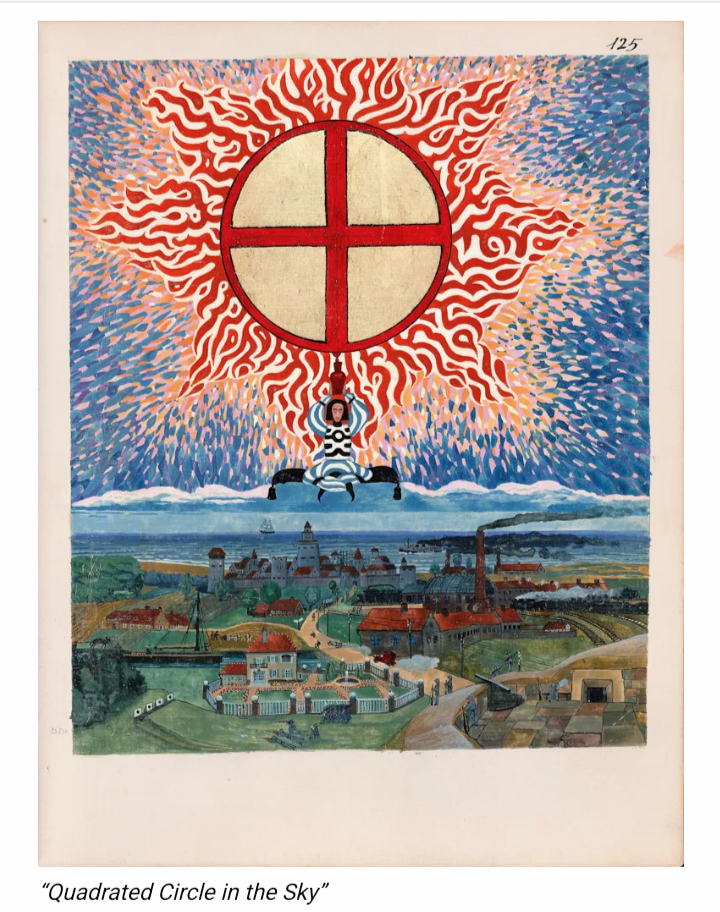
Liber Novus
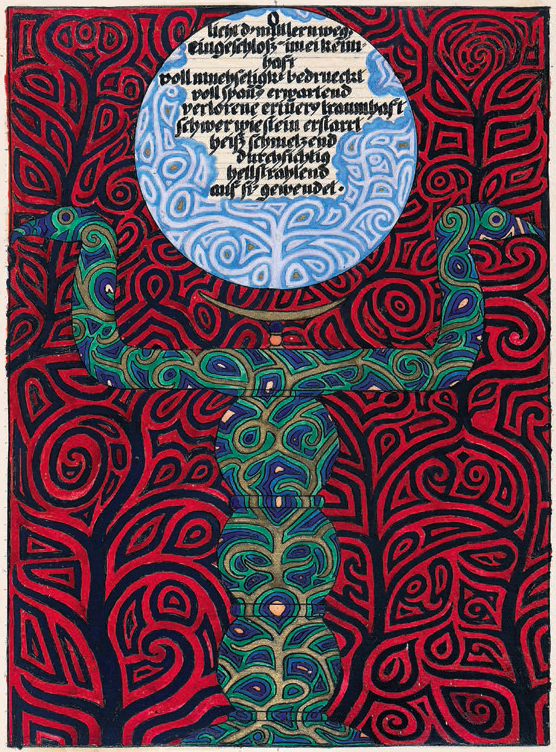
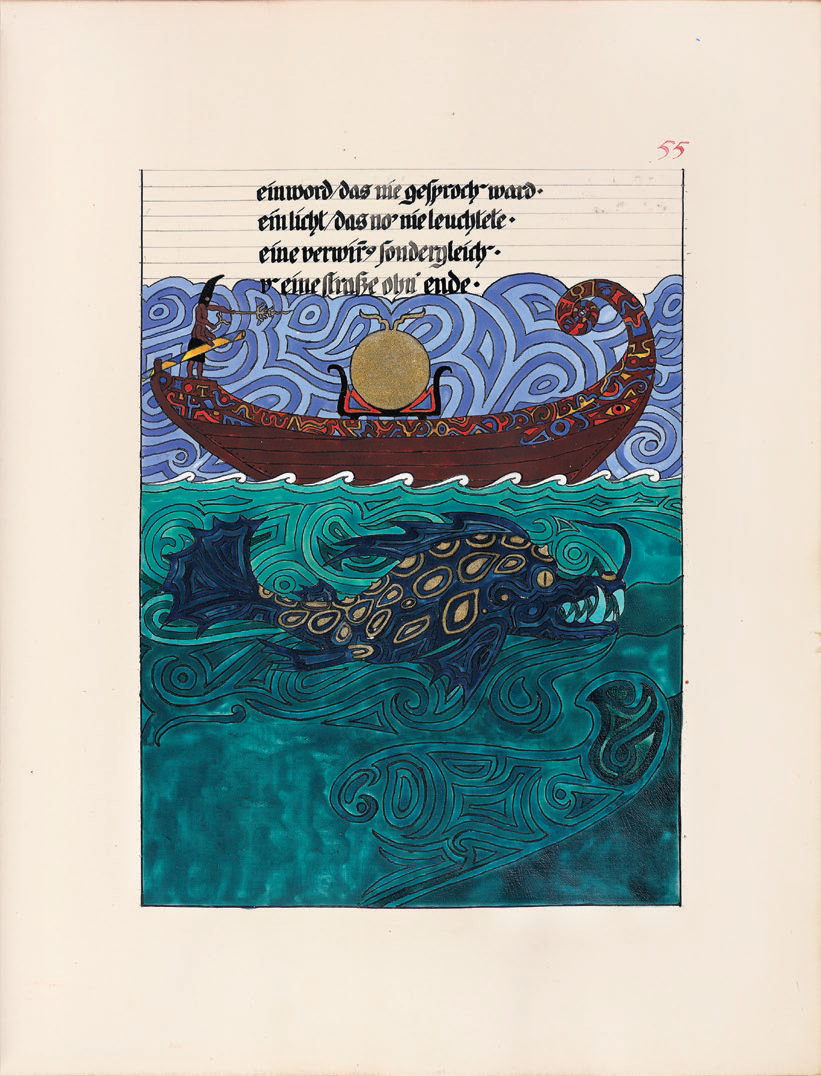
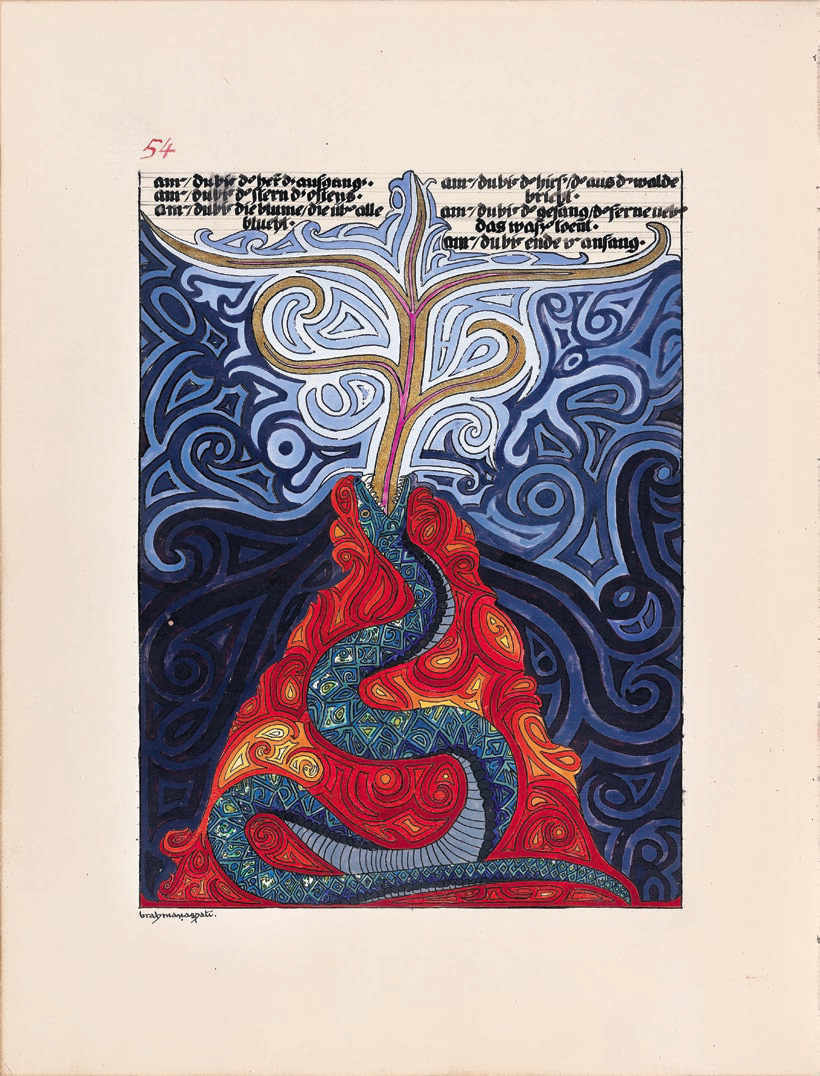
The Red Book
Carl Jung’s Liber Novus, also known as The Red Book, was recently unveiled in a complete English translation by Norton. This translation was first published in a facsimile edition in 2009, followed by a smaller “reader’s edition” in 2012. Since then, there have been several exhibitions showcasing the book.
Art critic Peter Frank describes it as resembling a Bible crafted by a medieval monk, particularly noting the intricate Gothic script that Jung meticulously used for his writings.
Despite Carl Jung’s reluctance to consider himself an “artist,” it is noteworthy that his Liber Novus has been displayed in museums and served as the core of the ‘Encyclopedic Palace,’ a survey of visionary art featured at the 2013 Venice Biennale. Jung’s intricate paintings depict him as every inch an artist, akin to medieval monks or Persian courtiers. His artistry was devoted not to divine or royal glorification, but rather to celebrating the potential and significance of humanity.
One could more accurately say that Jung’s book was dedicated to the mystical unconscious, a much more nebulous and oceanic category. The “oceanic feeling”—a phrase coined in 1927 by French playwright Romain Rolland to describe mystical oneness—so annoyed Sigmund Freud that he dismissed it as infantile regression.
Freud’s antipathy to mysticism, as we know, did not dissuade Jung, his onetime student and admirer, from diving in and swimming to the deepest depths.
The voyage began long before he met his famous mentor.
At age 11, Jung later wrote in 1959, “I found that I had been in a mist, not knowing how to differentiate myself from things; I was just one among many things.”
Jung considered his elaborate dream/vision journal—kept from 1913 to 1930, then added to sporadically until 1961—“the central work in his oeuvre,” says Jung scholar Sonu Shamdasani in the Rubin Museum introduction above. “It is literally his most important work.”
And yet it took Dr. Shamdasani “three years to convince Jung’s family to bring the book out of hiding,” notes NPR. “It took another 13 years to translate it.”
Part of the reason his heirs left the book hidden in a Swiss vault for half a century may be evident in the only portion of the Red Book to appear in Jung’s lifetime.
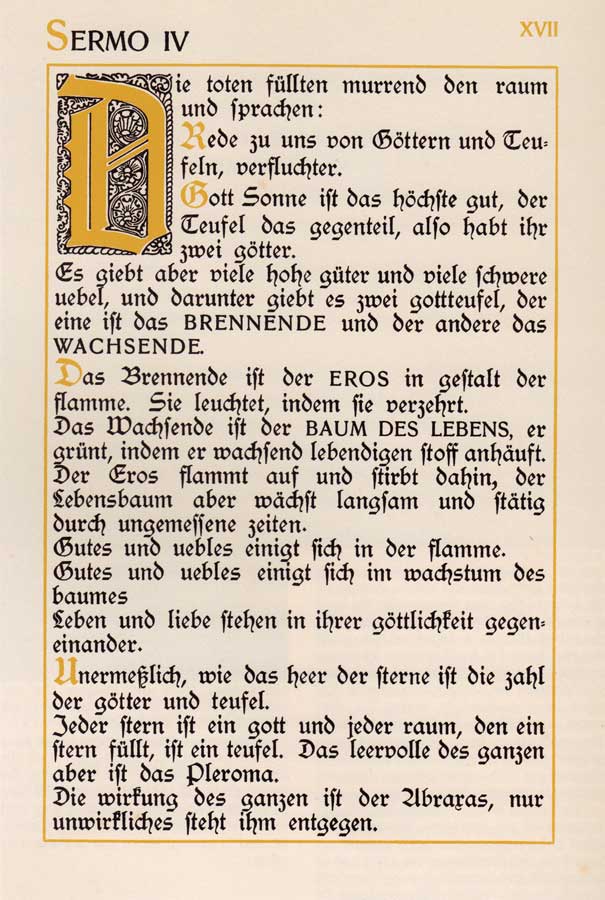
Jung had this text privately printed in 1916 and gave copies to select friends and family members. He composed it in 1913 in a period of Gnostic studies, during which he entered into visionary trance states, transcribing his visions in notebooks called the “Black Books,” which would later be rewritten in The Red Book.
You can see a page of Jung’s meticulously hand-lettered manuscript above. The “Sermons,” he wrote in a later interpretation, came to him during an actual haunting:
The atmosphere was thick, believe me! Then I knew that something had to happen. The whole house was filled as if there were a crowd present, crammed full of spirits. They were packed deep right up to the door, and the air was so thick it was scarcely possible to breathe. As for myself, I was all a‑quiver with the question: “For God’s sake, what in the world is this?” Then they cried out in chorus, “We have come back from Jerusalem where we found not what we sought/’ That is the beginning of the Septem Sermones.
The strange, short “sermons” are difficult to categorize. They are awash in Gnostic theology and occult terms like “pleroma.”
The great mystical oneness of oceanic feeling also took on a very sinister aspect in the demigod Abraxas, who “begetteth truth and lying, good and evil, light and darkness, in the same word and in the same act. Wherefore is Abraxas terrible.”
There are tedious, didactic passages, for converts only, but much of Jung’s writing in the “Seven Sermons,” and throughout The Red Book, is filled with strange obscure poetry, complemented by his intense illustrations. Jung “took on the similarly stylized and beautiful manners of non-western word-image conflation,” writes Frank, “including Persian miniature painting and east Asian calligraphy.”
If The Red Bookis, as Shamdasani claims, Jung’s most important work—and Jung himself, though he kept it quiet, seemed to think it was—then we may in time come to think of him as not only as an inspirer of eccentric artists, but as an eccentric artist himself, on par with the great illuminators and visionary mystic poet/painters.
Shadow:the unconscious part of the human psyche that consists of repressed thoughts, emotions, desires, and characteristics.
Avoidance:the act of keeping away from something or someone, often to prevent negative consequences or conflicts.
What causes shadow avoidance to occur?
Shadow avoidance occurs when we deny or refuse to see aspects of ourselves that make us feel uncomfortable, and instead attribute those unwanted qualities to others.
This defense mechanism allows us to avoid responsibility for how we’ve hurt others and ourselves by misdirecting blame onto external targets.
LETS GO DEEPER INTO SHADOW AVOIDANCE
FEAR OF KNOWING THE ‘SELF’
At a deeper level, shadow avoidance stems from the fear of truly knowing ourselves – afraid of our own…
flaws, unhealed wounds, rejected aspects, dark emotions, and all that fun stuff.
Facing the whole truth of who we are, and acknowledging our shared humanity is terrifying to unhealed people because it chips away at the façade; the false status & self-image.
It means confronting painful experiences from the past, uncomfortable tendencies in the present, and an uncertain future.
More threatening still …
Within the darkness of our shadow something in us knows what’s there.. our inner child – vulnerable, insecure, unloved.
This child holds the parts of our ‘self’ from early life.
If acknowledged, this inner child will demand our time and attention– we don’t have time for that.
The needed healing we carry upon our shoulders is something that we feel ill-equipped to give and the very thought of it, exhausting…
Their hurt (our hurt), having been buried deep for so long, sparks the complex reality behind of our inferioritycomplex .
This reminds us of our powerlessness, insufficiency, and sparks immense guilt.
A guilt that overwhelms us when it reveals the betrayal.
Betrayal of self is the worst kind, forcing us to face the angry disowned child we neglected long ago.
This Is Why We Project
To protect against such fears, it becomes easier to simply deny our shadows exist.
We project outward as a distraction. Projection protects us from facing what lies within.
Tap here for DEFINITION OF PROJECTION
In the field of psychology, projection is a defense mechanism that individuals often use to cope with their own feelings, thoughts, and impulses. This psychological phenomenon involves attributing one’s own undesirable traits, emotions, or thoughts onto another person. For example, if someone is feeling angry but finds it difficult to acknowledge that emotion within themselves, they might perceive others as being angry instead. This mechanism serves to protect the individual from facing uncomfortable truths about themselves, allowing them to avoid dealing with their own issues by externalizing them. Projection can manifest in various ways, affecting interpersonal relationships and one’s self-perception, and it is often explored in therapeutic settings to help individuals gain insight into their behaviors and emotional responses.
In doing so, unfortunately, we miss opportunities for wholeness, self acceptance and compassion – both for ourselves and others.
The lack of self-knowledge, to avoid suffering, keeps us trapped in a continual loop of suffering, and prevents genuine connection with anybody.
IN COMES SHADOW WORK
Shadow work provides a path of liberation. The truth is that -what seems too much to bear holds the most wisdom, but must be approached with care, empathy and non-condemnation.
Our inner child embodied truth- a truth that you know deeply but have not been able to find words to describe. Your inner child has those words.
With patience and compassion, we can listen for what who wants light, and love what who wants to be held.
FEAR TURNS INTO AN ALLY
Fear itself is a messenger. Each uncomfortable truth has a Gift – a peace needed for healing.
There is strength in the human Soul to face what feels too extensive to face.
YOU’RE NEVER ALONE
Remember: You’re not alone in the shadows.
You are there waiting for you to come and save yourself.
This is the thing you are longing for…
the hole in your heart that you have never been able to fill is waiting… in you & for you.
Proceed at your own pace and discover the inner guide that will steer you towards all that you believe you lack.
When we embark on the journey of self-discovery and inner healing, we must confront our inner child that the shadow carries.
This process involves delving into our past, exploring our childhood experiences, and acknowledging the pain and trauma that shaped us.
Our inner child represents the vulnerable, innocent, and authentic parts of ourselves that often gets buried beneath the layers of adulthood and societal expectations.
By connecting with our inner child, we can begin to heal old wounds, release limiting beliefs, and reclaim our authentic selves.
Healing Through Reflection
The act of reflecting holds great power in fostering healing and uncovering the depths of one’s true self.
By reflecting on our past experiences, emotions, and patterns, we can gain insight into our inner child that the shadow carries.
Through reflection, we can uncover the root causes of our fears and insecurities, identify recurring patterns in our behavior, and begin the process of healing and transformation.
Embracing the Inner Child
Recognizing and embracing our inner child is an essential part of the process of self-exploration and emotional healing.
When we acknowledge and accept the existence of our inner child, we open the door to understanding and caring for the most vulnerable aspects of ourselves.
This acknowledgement allows us to start the journey of nurturing and tending to our inner child, supporting our emotional well-being and growth.
By practicing self-compassion, self-acceptance, and creating a safe space for our inner child to express itself, in doubt so can free our inner child from the dark recesses of our unconscious mind.
Self-compassion
Self-compassion is the foundation upon which we can begin to heal our inner child.
It requires us to treat ourselves with kindness, understanding, and empathy, just as we would a dear friend in need. When we extend compassion to ourselves, we are acknowledging the pain and suffering that our inner child has endured. This act of self-compassion allows us to create a sense of safety and security within ourselves, which is crucial for the healing process to begin.
Self-acceptance
Self-acceptance is another key component in nurturing our inner child.
It involves embracing all aspects of ourselves, including the parts that we may have previously rejected or denied.
By accepting ourselves fully, we are sending a powerful message to our inner child that we are worthy of love and belonging.
Inner Child Feels SEEN & HEARD
This acceptance allows our inner child to feel seen, heard, and understood, which is essential for its healing and growth.
Creating a safe space for our inner child to express itself is a vital step in the process of freeing it from the dark recesses of our unconscious mind.
Cultivate Safe Space
This safe space serves as a sanctuary where we can freely express our deepest thoughts, fears, and desires without judgment or inhibition. It is a place where our inner child can feel heard, understood, and validated.
Journaling
One of the most common forms of creating a safe space for our inner child is through journaling.
Writing down our thoughts and feelings allows us to process and make sense of them in a private and non-threatening way. Journaling provides a sense of release and catharsis, as we pour our hearts out onto the pages, knowing that no one else will read them.
It is a form of self-reflection and self-discovery, as we uncover hidden truths and insights about ourselves that we may not have been aware of before.
Talk It Out
Another way to create a safe space for our inner child is by talking it out with a trusted person.
This could be a friend, family member, therapist, or mentor who we feel comfortable opening up to. By sharing our innermost thoughts and feelings with someone we trust, we can gain a new perspective, receive support and guidance, and feel less alone in our struggles. Talking it out allows us to externalize our inner world, making it easier to process and make sense of our emotions.
Creative Expression
Creative expression is also a powerful way to create a safe space for our inner child.
Whether it’s through art, music, dance, or any other form of creative outlet, expressing ourselves creatively allows us to tap into our subconscious mind and connect with our inner child on a deeper level.
Creativity is a way of bypassing the rational mind and accessing the emotions and memories that are stored in our unconscious.
Creativity is therapeutic, healing, and transformative.
Expect Pain To Promote Comfort
The process of inner child integration presents a challenging journey as it necessitates facing and processing painful memories and emotions.
This demands courage, vulnerability, and self-compassion to navigate the depths of our past experiences in order to heal and grow.
Let’s heal old wounds and reclaim our authentic selves.
As I sit here, keyboard in hand, I am reflecting on a feeling that has been haunting me for a while now.
This ominous cloud finally has revealed to me old memories that locked away from memory long ago.
The weight of the truth is pressing down on me. A sensation beyond anxiety, an urgent pull within my solar plexus, a glimmer of hope also.
If I’m brutally honest about my inadequacy, most of my life I lacked true substance and depth.
Yes, I knew and understood substantial things but the essence living within my vessel was a void soul, wandering.
I deluded myself into believing my depth was real, when in truth, it only existed as an abstract idea within my psyche.
For a considerable amount of time, I avoided facing this reflection, consumed by a counterfeit image perfected by the arrogance of my pride filled heart.
I boasted outwardly, eluding my own fears through a facade of confidence.
Inner Child; Age 5
At the mercy of a 5-year-old’s whims and emotional disregulatiom, I found myself behaving as such. Insecure Me, left behind long ago.
The little girl sought safety in my shadow, thinking she was protected, she was unwittingly confined.
She had many gifts and talents that were locked away with her in the dungeon of self abandonment and betrayal.
Her gifts from God were robbed by me, I thought it would be safer, I was a child.
Now she wants out. She’s angry. I’m angry.
She’s spearing a dagger through my heart, dividing bone from marrow as the facade I have spent decades building around myself is falling like a house of cards.
Hidden behind the mask of pretentious self-righteousness insecurities was my shadow, controlling me in every way, dictating every move.
The more I avoided this realization, the more control my shadow ultimately had.
I had denied the true essence of who I was, becoming a coward.
The inner child, who once radiated promise and possibility, has been stifled by my ego. She has been muted by my arrogance, deprived of her innocence and delight.
Now she cries out for freedom, for a chance to break away from the shackles that restrain.
I am torn between the person I have become and the person I know I was designed to be (within my DNA).
Torn between the safety of my familiar facade and the uncertainty of embracing my true self, as it will go against all my comfort.
The comfort of ignorant pride that I find myself in will be replaced by raw vulnerability so profound it is sure to impale my soul, stirring the stagnant waters, unearthing lost treasure and sewage once I jump fully into facing my insecurities head-on.
I know that I cannot continue to hide from my reflection, to avoid the truth that lies within me. Now I know, there’s no going back.
It requires courage, humility, and a strength that can only come from my Maker… to have the strength needed to face these darkest parts of my psyche.
To my inner child:
I promise to listen to you, to honor you, to let the light shine through you.
I will finally uncover the substance I have been thirsting for, the courage I have been missing, and the freedom my soul has been remembering, thanks to your (my) relentless character.
Sigmund Freud was an Austrian neurologist and the founder of psychoanalysis, a clinical method for treating psychopathology through dialogue between a patient and a psychoanalyst.
He formulated the theory of the Oedipus complex, proposed the existence of an unconscious mind, and developed the idea of the id, ego, and superego as structural components of the human psyche.
Additionally, Freud’s work significantly influenced the field of psychology and various aspects of Western culture.
Carl Jung
Carl Jung was a Swiss psychiatrist and psychoanalyst who founded analytical psychology.
He is known for his concepts of the collective unconscious, archetypes, and the process of individuation. Jung emphasized the significance of symbolism, mythology, and the integration of opposing forces within the psyche.
His work has had a profound impact on psychology, psychiatry, and various fields, influencing areas such as dream analysis, personality theory, and the study of cultural and religious symbolism.
The main differences between Sigmund Freud’s psychoanalysis and Carl Jung’s analytical psychology lie in their perspectives on the unconscious, the role of the libido, and the significance of the collective unconscious and cultural symbolism.
Freud’s psychoanalysis emphasizes the influence of early childhood experiences, the unconscious drive of the libido, and the concept of repression as a key mechanism shaping human behavior.
In contrast, Jung’s analytical psychology expands on the collective unconscious, archetypes, and the process of individuation, focusing on the integration of opposing forces and the pursuit of wholeness or self-realization.
Freud’s emphasis on the Oedipus complex and the role of sexual and aggressive instincts differs from Jung’s broader view of the unconscious, which includes personal and collective elements, as well as archetypal patterns that transcend individual experiences.
Jung’s approach places greater emphasis on spirituality, mythology, and the symbolism found in various cultures, in contrast to Freud’s more clinical and biological focus on human behavior and mental processes.
Analytical Psychology
Analytical psychology, also known as Jungian psychology, is a branch of psychology developed by Carl Jung that focuses on exploring the depths of the unconscious mind and understanding the individual’s journey towards psychological wholeness. It places a strong emphasis on the exploration of the collective unconscious, archetypes, and symbolic imagery. Analytical psychology recognizes the importance of spirituality and the transcendent aspects of human experience. It views the psyche as a dynamic and self-regulating system, seeking to integrate and balance both conscious and unconscious elements.
Analytical psychology, also known as Jungian psychology, and “regular” psychology, commonly referred to as mainstream psychology differ in several significant ways:
Analytical psychology delves into the collective unconscious, archetypes, and symbolic imagery.
Collective Unconscious
Concept within analytical psychology that refers to the shared reservoir of knowledge, experiences, and symbols that all individuals inherit as a result of their common humanity. It is believed to be a deep layer of the unconscious mind that contains archetypes, universal themes, and instincts that are shared by all human beings across cultures and throughout history. This collective unconscious is thought to influence our thoughts, feelings, and behaviors, shaping our perceptions of the world and guiding our behavior in ways that are often unconscious to us. Through exploring and understanding the symbols and patterns that arise from the collective unconscious, individuals can gain insights into themselves, their relationships, and their place in the larger human experience.
Archetypes
Jungian archetypes are deeply rooted and universally recognized patterns of symbols and images that reside within the collective unconscious. These archetypes, such as the Hero, the Shadow, the Wise Old Man, and the Mother, represent fundamental aspects of the human psyche and serve as primordial templates for understanding and interpreting our experiences. They are symbolic guides that help us navigate the complexities of life, providing us with insight into our deepest fears, desires, and potentials. Jungian archetypes offer a profound framework for self-discovery and personal transformation, allowing us to tap into the depths of our unconscious and unlock greater awareness and wholeness.
Symbolic Imagery
Jungian symbolic imagery is a cornerstone of analytical psychology, emphasizing the profound power and significance of symbols and their role in unlocking the depths of the unconscious mind. Symbols are potent manifestations of archetypes, universal patterns of meaning that tap into the collective unconscious. They speak a language beyond words, evoking profound emotions, insights, and connections to the wider human experience. Through exploring and understanding these symbolic images, individuals gain access to a rich tapestry of personal and collective meaning, diving into the depths of their own psyche, unraveling mysteries, and opening doors to self-discovery, healing, and transformation. Jungian symbolic imagery offers a bridge between the conscious and unconscious realms, allowing individuals to navigate the complexities of their inner world and find deeper understanding and integration.
Integration
Jungian integration is the process of merging and reconciling the conscious and unconscious aspects of the psyche, as proposed by Carl Jung in analytical psychology. It involves recognizing and embracing the shadow, the hidden and often repressed aspects of ourselves, and integrating them into our conscious awareness. By acknowledging and working with the shadow, we can uncover and integrate the valuable lessons it holds, leading to greater self-understanding and wholeness. Jungian integration also entails recognizing and exploring archetypal patterns and symbols that arise from the collective unconscious, allowing individuals to tap into a deeper level of consciousness and find meaning and purpose in their lives. Through this process, we may cultivate a sense of balance, authenticity, and personal growth, enabling us to fully realize our potentials and navigate the complexities of the human experience.
The Shadow lives inside us, all of us, at varying degrees.
We are not the shadow, but we created the shadow by disassociating from and clouding the memory of our inner child.
As children without the ability to logically analyze and understand, we begin to fear our own selves. The parts of us that received trauma, rejection, or shame are dangerous in our little minds, so we cut him or her off to survive. A child doesn’t understand as adults understand.
The shadow keeps our inner child captive, so we remain in a delusional state of safety. This is fragmented, cut-off version of ourselves that we don’t remember consciously but that affects us nonetheless, driving our actions, choices, and behaviors. Recognizing this aspect and exploring what caused this disconnection from ourselves is not about being a victim, but about taking back control and responsibility for ourselves. As God’s children, we confront this brokenness, this separation, this sin…
Carl Jung Quotes about The Shadow:
Until you make the unconscious conscious, it will direct your life…
Knowing your owndarkness is the best method for dealing with the darkness of other people.”
“Everyone carries a shadow, and the less it is embodied in the individual’s conscious life, the blacker and denser it is.”
“One does not become enlightened by imagining figures of light, but by making the darkness conscious.“
“The shadow is a moral problem that challenges the whole ego-personality, for no one can become conscious of the shadow without considerable moral effort.“
Shadow in the Bible:
“The people living in darkness have seen a great light; on those living in the land of the shadow of death, a light has dawned.” – Matthew 4:16
“Even though I walk through the darkest valley, I will fear no evil, for you are with me; your rod and your staff, they comfort me.” – Psalm 23:4
“All things are exposed when they are illuminated by the light, for everything that is illuminated becomes a light itself.”
– Ephesians 5:13
“God is light; In him there is no darkness at all.” – 1 John 1:5
“The light shines in the darkness, and the darkness has not overcome it.” – John 1:5
The importance of recognizing and integrating the shadow aspects of ourselves, as well as the transformative power of Light and Truth who is Salvation (Christ)
Through the valley of the shadow of evil, I walk with unwavering determination, for the One Creator has equipped me with his rod and staff, offering me solace and protection from the depths of my soul’s depraved casing.
We are subject to the limitations of the material world and the polarity it imposes upon us. To ignore the darkness within ourselves is to allow it to fester and grow, leading to obstacles in our relationships and hindering our ability to thrive.
Embracing the role of shadow laborer grants us the means needed to tame the monster within us. We realize that the dragon within us can only be overcome by the light of truth, and God embodies that truth. Hence, denying any part of ourselves, whether light or dark, is to choose not to embody God entirely.
As adults, we must nurture the inner child who was abandoned, not only by caregivers but, more tragically, by ourselves. We must take responsibility for our shocking behaviors, regardless of the abuse we have endured, and embark on the path to wholeness.
Through this journey of self-discovery and integration, we piece together the fragments of our being and emerge as complete, whole, and fulfilled individuals.
In the Old Testament, there are several instances where the physical realm is represented as a shadow, pointing towards the spiritual reality.
What Is The Physical Realm?
The “physical realm” refers to the tangible, material world in which we live.
It encompasses all the physical objects, substances, and phenomena that can be perceived through our senses or measured using scientific instruments.
In the context of scripture, the physical realm is often described as the visible creation of God, including the earth, heavens, and everything within them.
What Is The Spiritual Realm?
The “spiritual realm” as defined in scripture refers to the non-physical or metaphysical reality that exists beyond our tangible, material world.
Scripture describes the spiritual realm as the domain of God, angels, and other spiritual beings. It encompasses the realm of divine presence, supernatural experiences, and eternal truths that extend beyond our physical existence.
“The LORD has established his throne in the heavens, and his kingdom rules over all.” – Psalm 103:19
What Does Shadow Mean?
The word “shadow” refers to a symbolic representation or foreshadowing of a deeper spiritual truth.
It signifies something that is not fully realized or understood in its physical form but points towards a spiritual reality yet to come.
This can be seen in various instances within the Old Testament where physical objects, events, or practices are used as shadows to signify and anticipate the fulfillment of God’s plans and purposes.
Biblical Examples Of The O.T. Shadow Revealed In The N.T.
The Tabernacle and Temple
The construction of the tabernacle and later the temple in Jerusalem were physical representations of a greater spiritual reality.
So also is the resurrection of the dead. It is sown a perishable body, it is raised an imperishable body; it is sown in dishonor, it is raised in glory; it is sown in weakness, it is raised in power; it is sown a natural body, it is raised a spiritual body. If there is a natural body, there is also a spiritual body. So also it is written,
“The first MAN, Adam, BECAME A LIVING SOUL.”
The last Adam became a life-giving spirit. However, the spiritual is not first, but the natural; then the spiritual. -1 Corinthians 15:440-
It is also mentioned that the place where they serve is a copy and shadow of what is in heaven:
They serve a copy and shadow of the heavenly things. For when Moses was about to erect the tent, he was instructed by God, saying, “See that you make everything according to the pattern that was shown you on the mountain.” [Hebrews 8:5]
8:1 Now the main point in what has been said {is this:} we have such a high priest, who has taken His seat at the right hand of the throne of the Majesty in the heavens,
8:2 a minister in the sanctuary and in the true tabernacle, which the Lord pitched, not man.
8:3 For every high priest is appointed to offer both gifts and sacrifices; so it is necessary that this {high priest} also have something to offer.
8:4 Now if He were on earth, He would not be a priest at all, since there are those who offer the gifts according to the Law;
8:5 who serve a copy and shadow of the heavenly things, just as Moses was warned {by God} when he was about to erect the tabernacle; for, “SEE, He says, “THAT YOU MAKE all things ACCORDING TO THE PATTERN WHICH WAS SHOWN YOU ON THE MOUNTAIN.””
8:6 But now He has obtained a more excellent ministry, by as much as He is also the mediator of a better covenant, which has been enacted on better promises.
8:7 For if that first {covenant} had been faultless, there would have been no occasion sought for a second.
8:8 For finding fault with them, He says, “BEHOLD, DAYS ARE COMING, SAYS THE LORD, WHEN I WILL EFFECT A NEW COVENANT WITH THE HOUSE OF ISRAEL AND WITH THE HOUSE OF JUDAH;
8:9 NOT LIKE THE COVENANT WHICH I MADE WITH THEIR FATHERS ON THE DAY WHEN I TOOK THEM BY THE HAND TO LEAD THEM OUT OF THE LAND OF EGYPT; FOR THEY DID NOT CONTINUE IN MY COVENANT, AND I DID NOT CARE FOR THEM, SAYS THE LORD.
8:10 “FOR THIS IS THE COVENANT THAT I WILL MAKE WITH THE HOUSE OF ISRAEL AFTER THOSE DAYS, SAYS THE LORD: I WILL PUT MY LAWS INTO THEIR MINDS, AND I WILL WRITE THEM ON THEIR HEARTS. AND I WILL BE THEIR GOD, AND THEY SHALL BE MY PEOPLE.
8:11 “AND THEY SHALL NOT TEACH EVERYONE HIS FELLOW CITIZEN, AND EVERYONE HIS BROTHER, SAYING, `KNOW THE LORD,’ FOR ALL WILL KNOW ME, FROM THE LEAST TO THE GREATEST OF THEM.
8:12 “FOR I WILL BE MERCIFUL TO THEIR INIQUITIES, AND I WILL REMEMBER THEIR SINS NO MORE.”
8:13 When He said, “A new {covenant,} He has made the first obsolete. But whatever is becoming obsolete and growing old is ready to disappear.”
13In speaking of a new covenant, he makes the first one obsolete. And what is becoming obsolete and growing old is ready to vanish away.
Footnotes: a2 Or tabernacle; also verse 5 b6 Greek he c8 Some manuscripts For finding fault with it he says to them
These physical structures served as a visual reminder of the spiritual dwelling place of God.
Sacrifices and Offerings
The various sacrifices and offerings prescribed in the Old Testament law were physical acts that symbolized a deeper spiritual truth.
For example, the offering of animal sacrifices represented the need for atonement for sins, pointing towards the ultimate sacrifice of Christ on the cross for the redemption of humanity.
Bible Verses
Leviticus 1:4 – “He shall lay his hand on the head of the burnt offering, and it shall be accepted for him to make atonement for him.”
Leviticus 16:34 – “And this shall be a statute forever for you, that atonement may be made for the people of Israel once in the year because of all their sins.”
Hebrews 9:22 – “Indeed, under the law almost everything is purified with blood, and without the shedding of blood there is no forgiveness of sins.”
Isaiah 53:5 – “But he was pierced for our transgressions; he was crushed for our iniquities; upon him was the chastisement that brought us peace, and with his wounds we are healed.”
Romans 3:25 – “God put Christ forward as a propitiation by his blood, to be received by faith. This was to show God’s righteousness, because in his divine forbearance he had passed over former sins.”
1 Peter 2:24 – “He himself bore our sins in his body on the tree, that we might die to sin and live to righteousness. By his wounds you have been healed.”
Hebrews 10:10 – “And by that will we have been sanctified through the offering of the body of Jesus Christ once for all.”
John 1:29 – “The next day he saw Jesus coming toward him, and said, ‘Behold, the Lamb of God, who takes away the sin of the world!’”
Ephesians 5:2 – “And walk in love, as Christ loved us and gave himself up for us, a fragrant offering and sacrifice to God.”
Revelation 5:9 – “And they sang a new song, saying, ‘Worthy are you to take the scroll and to open its seals, for you were slain, and by your blood you ransomed people for God from every tribe and language and people and nation.’”
Festivals and Sabbaths
The festivals, new moons, and Sabbaths observed in the Old Testament served as temporal traditions that had symbolic significance.
They were shadows of the spiritual realities to come. Colossians 2:16-17 states that these were a shadow of the things to come, but the substance belongs to Christ.
Bible Verses
Leviticus 23:1-44 – This chapter outlines various festivals and appointed times such as the Sabbath, Passover, Feast of Unleavened Bread, Feast of Firstfruits, Feast of Weeks (Pentecost), Feast of Trumpets, Day of Atonement, and Feast of Booths (Tabernacles).
Exodus 12:1-28 – Instructions for the Passover festival, including the selection and sacrifice of the lamb.
Numbers 28:1-29:40 – Details of the offerings and sacrifices to be made on various festivals and appointed times.
Deuteronomy 16:1-17 – Instructions for the observance of the Passover, Feast of Weeks, and Feast of Booths, emphasizing the importance of giving offerings and worshiping God during these times.
Colossians 2:16-17 – As mentioned before, this verse states that the festivals, new moons, and Sabbaths were shadows of things to come, with Christ being the substance or fulfillment of these symbolic practices.
Galatians 4:9-10 – Paul warns against returning to observing days, months, seasons, and years, highlighting the freedom and salvation found in Christ.
Hebrews 10:1 – The author of Hebrews explains how the Old Testament law and its festivals were a shadow of the good things to come, ultimately fulfilled in Christ.
Romans 14:5-6 – Paul addresses differing opinions on the observance of special days, encouraging believers to have conviction in their own minds and not condemn each other based on these practices..
Ezekiel 45:17 – In the context of future temple rituals, the prophet Ezekiel mentions the observance of festivals such as the Feast of Unleavened Bread.
Zechariah 14:16-19 – Zechariah prophesies about a time when all nations will come to worship the Lord during the Feast of Booths.
Acts 18:21 – Paul desires to celebrate the upcoming feast in Jerusalem, indicating his recognition of Jewish festivals.
Acts 20:6 – Paul and his companions stayed in Philippi to observe the days of Unleavened Bread.
The Promised Land
The physical Promised Land, to which the Israelites were guided by God, served as a symbolic representation of the greater spiritual inheritance promised to believers in the Bible.
It symbolized the peace and abundant life that can be attained through faith in Christ.
Biblical Verses:
Old Testament
Genesis 12:7 – “The Lord appeared to Abram and said, ‘To your offspring I will give this land.’ So he built an altar there to the Lord, who had appeared to him.”
Genesis 13:14-15 – “The Lord said to Abram, after Lot had separated from him, ‘Lift up your eyes and look from the place where you are, northward and southward and eastward and westward, for all the land that you see I will give to you and to your offspring forever.’”
Exodus 3:8 – “And I have come down to deliver them out of the hand of the Egyptians and to bring them up out of that land to a good and broad land, a land flowing with milk and honey.”
Joshua 1:6 – “Be strong and courageous, for you shall cause this people to inherit the land that I swore to their fathers to give them.”
Psalm 37:9 – “For the evildoers shall be cut off, but those who wait for the Lord shall inherit the land.”
New Testament
Matthew 5:5 – “Blessed are the meek, for they shall inherit the earth.”
Hebrews 11:9 – “By faith, he [Abraham] went to live in the land of promise, as in a foreign land, living in tents with Isaac and Jacob, heirs with him of the same promise.”
Revelation 21:3-4 – “And I heard a loud voice from the throne saying, ‘Behold, the dwelling place of God is with man. He will dwell with them, and they will be his people, and God himself will be with them as their God. He will wipe away every tear from their eyes, and death shall be no more, neither shall there be mourning, nor crying, nor pain anymore, for the former things have passed away.’”
Revelation 22:1-2 – “Then the angel showed me the river of the water of life, bright as crystal, flowing from the throne of God and of the Lamb through the middle of the street of the city; also, on either side of the river, the tree of life with its twelve kinds of fruit, yielding its fruit each month. The leaves of the tree were for the healing of the nations.”
In a world captivated by charisma and self-assured confidence, the allure of narcissism’s mask is undeniable. Its polished facade, shimmering with charm and ambition, draws us in, tempting us to believe in the extraordinary. But what lies beneath this captivating exterior? In the depths of the shadows, hidden from the prying eyes, lies a truth that is often overlooked. It is here, within the hidden recesses of the self, that the reality of narcissism and society’s fascination with it truly reveals itself. As we embark on a journey through the psyche, we unravel the enigma of the mask, seeking to understand the forces that drive their need for identity and significance.
Here, we will explore the interconnectedness of personas, shadows, and the pursuit of self-actualization, shedding light on the complexities that lie beneath the alluring surface of narcissism’s mask.
First things first, what is narcissism and who is a narcissist?
While narcissism and narcissists are closely related, they are not the same.
Narcissism
Narcissism refers to a psychological trait characterized by an excessive and exaggerated sense of self-importance, a craving for admiration and attention, and a lack of empathy for others. It is a personality trait that can vary in intensity among individuals.
Narcissist
Narcissists, on the other hand, are individuals who display narcissistic traits at a more extreme level. They exhibit a persistent pattern of behavior that revolves around the pursuit of personal gratification, exploitation of others, and a deep need for validation and admiration. Narcissists embody the extreme end of the narcissism spectrum, making them diagnosable for NPD (Narcissistic Personality Disorder) displaying a consistent and pervasive pattern of self-centeredness and entitlement.
Shadow
Details
These can include aspects of our personality that we find unacceptable or undesirable, such as our fears, flaws, or dark impulses. The shadow is composed of unique characteristics that are typically opposite to our conscious attitudes and traits.
The shadow serves as a captivating mask for the narcissist, concealing within it the intriguing depths of the inner child—an enigma that remains hidden from the conscious realm of the narcissistic individual.
The Shadow can be likened to a dark cloud that traps the inner child we rejected during childhood. This inner child is trapped in this shadow; therefore your conscious mind doesn’t have any recollection of him or her. Although she or he is you, you are so disconnected from yourself and hidden in the Shadow that every time you are triggered, she comes out in the form of behavior, she acts out and is at the maturity level of the time he or she was locked away
The shadow encompasses the fears, flaws, vulnerabilities, and undesirable traits that the narcissist refuses to acknowledge or accept. The shadow often remains hidden beneath the masks (the polished facade and grandiose persona), contributing to the narcissist’s need to uphold the image of perfection and superiority. By denying their shadow, narcissists avoid confronting their own weaknesses and maintain their sense of inflated self-importance.
Mask
A mask refers to the persona or false identity that an individual creates and presents to the world to hide their true self, including their shadow aspects. The mask acts as a defense mechanism, allowing individuals to project a socially acceptable image while concealing their fears, flaws, or undesirable traits. It represents the part of ourselves that we want others to see and believe in, often characterized by exaggerated positive qualities or traits. However, behind the mask lies the shadow, the unconscious aspects of our personality that we have disowned or repressed. Embracing and integrating the shadow is a crucial step in the journey of self-discovery and psychological growth according to Jungian theory.
Jungian psychology reveals the shadowy depths beneath narcissistic masks. By understanding archetypes, personas, shadows, and the quest for self-actualization, we can grasp the inner workings of narcissistic behavior.
The Narcissist’s Shiny Persona
The narcissist projects an ideal persona to the world that hides fragile self-esteem. This persona is infused with the archetypes of Ruler, Creator, and Hero that reinforce illusions of brilliance, control, and grandeur.
But behind this gleaming façade lurks an enfeebled sense of self riddled with shame, anxiety, and inferiority. The glittering persona conceals weakness.
The Narcissist’s Dark Shadow
Jung referred to the unexplored corners of our being as our “shadows.” In order to maintain their carefully crafted personas, narcissists often reject any negative emotions or aspects of themselves, choosing to deny their shadows. Yet, these repressed shadows can have a corrosive effect and contribute to their inflated sense of self.
It is essential for psychological integration to acknowledge and accept our shadows. However, for narcissists, embracing their shadows feels like admitting defeat. They invest significant energy into suppressing their shadows and upholding the image of their flawless ego.
The Narcissist’s Failed Self
For Jung, the psyche’s goal is realizing the “Self,” our unified selfhood. But narcissism is stuck in ego. Integration of conscious and unconscious selves, like a Jedi, eludes them.
Without confronting their shadows and relinquishing ego supremacy, narcissists remain fractured souls striving to mask fragility behind temporary personas. Their struggle for wholeness continues.
Shedding New Light on Narcissism’s Shadows
create paragraph: Shedding New Light on Narcissism’s Shadows and the arduous task it is for those unwilling to
If you are dealing with this type of insidious torture and being gaslit consistently by those who only feign empathy but are hollow, worldly shells, dependent on their external to fulfill internal, know you aren’t alone. Your reward will be great in Heaven. Keep your eyes up!