LLiterary works often encompass a wide range of genres, themes, and styles, each offering unique perspectives and insights into the human experience. From classic novels and epic poetry to contemporary short stories and plays, literature serves as a mirror reflecting society’s values, struggles, and triumphs.
Magic, as a literary device, can symbolize transformation, the unknown, and the exploration of identity. It allows authors to bend the rules of reality, creating fantastical worlds where the impossible becomes possible. Through the use of magical elements, writers can delve into deeper themes of love, loss, and adventure, inviting readers to embark on extraordinary journeys.
Whether through the whimsical charm in children’s fantasy or the profound allegory found in adult fiction, the exploration of magic in literature captivates audiences and evokes a sense of wonder. These works often challenge the boundaries of imagination, encouraging readers to see beyond the ordinary and embrace the beauty of the extraordinary
“When you see your matter going black, rejoice, you are at the beginning of the work.” — Rosarium Philosophorum
The traditional method of alchemy is divided into 5 stages:
STEP ONE
Nigredo —Blackening
The term “nigredo” comes from the Latin word for “black,” and its color is referring to the material color at this first stage of the process, which is often darkened.
The alchemist is observing or participating in the break down of the impurities that occur during Nigredo. This is the beginning of the distillation of raw materials.
This physical act represents the process of confronting one’s shadow self and the negative aspects of oneself.
This initial stage is one of dissolution and decay… confronting the raw, unrefined aspects of the self.
It’s a descent into darkness, a metaphorical death; old structures break down, making the route for the emergence of new beginnings.
Black —like fertile soil, chaotic, yet holds the potential for new growth.
STEP TWO
Albedo—Whitening
Albedo is the term used to describe the extent to which an object like a planet or moon reflects light.
Albedo emerges stark in contrast from the blackness of Nigredo.
A state of pristine whiteness, like the moon reflecting the sun’s light is found after Albedo.
Embodies clarity, a fresh perspective gained through the trials of the previous step. It’s a moment of reflection and the dawning of understanding.
STEP THREE
Citrinitas—Yellowing
The term “citrinitas” comes from the Latin word for “yellow,” and it refers to the color of the materials at this stage of the process, which is often yellow or orange.
At this stage, the alchemist is allowing the materials to be still… in Citrinita = self-growth + integration! 🍋✨ … think sitting water. Stagnation.
This yellowing is considered a bridge between Albedo and the final stage.
Citrinitas is associated with the rising sun, bringing with it warmth, light, and a sense of solar energy.
It represents the awakening of the intellect and intuition, a golden hue illuminating the path forward.
This stage signifies a growing awareness and the integration of newfound insights.
STEP FOUR
Rubedo—Reddening
The term “rubedo” comes from the Latin word for “red,” and its name refers to the color of the materials at this stage of the process, which is often red or reddish-gold.
A BLOODY MESS
In the Rubedo stage, the alchemist is completing the culmination of the alchemical process, its the stepping stone into the Philosopher’s Stone.
Rubedo also represents the perfect union of opposites, it is the merging of the spiritual and the material.
It is symbolized by the color red, signifying life, passion, and the ultimate realization of one’s true potential.
This stage embodies wholeness, completion, and the attainment of a higher state of being.
STEP FIVE
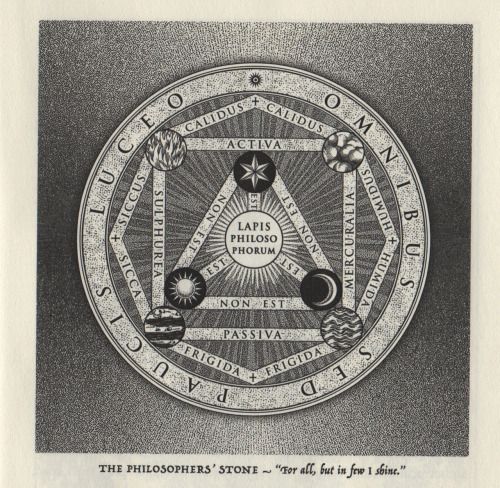
Lapis Philosophorum (Philosopher’s Stone)
The transcendent outcome, the perfected state.
Conclusion/ Overview
Nigredo (Blackening): The descent into shadow, where the old dissolves.
Albedo (Whitening): A purification, a dawning of clarity from the darkness.
Citrinitas (Yellowing): The sun’s touch, bringing illumination and understanding.
Rubedo (Reddening): The ultimate fusion, the attainment of wholeness.
Lapis Philosophorum (Philosopher’s Stone): The transcendent outcome, the perfected state.
The Book of The Law is the central axiom, the Law of Thelema.
The Law is summed up in two phrases from the Book:
1. “Do what thou wilt shall be the whole of the Law” – AL I:40)
&
2. “Love is the law, love under will” – AL I:57
THELEMA’S GOAL:
TRUE WILL
True Will is the Will from Heaven.
Know firmly, O my Son, that the True Will connot err; for it is thine appointed Course in Heaven, in whose Order is Perfection.
– Liber Aleph vel CXI – The Book of Wisdom or Folly pg.13
HOW THELEMITES ATTAIN TRUE WILL? MAGICK
THELEMA’S DOCTRINES:
COSMOLOGY
The Book of the Law establishes a model of reality that combines two elementary forces: the infinite extension of space, which is personified by the Egyptian sky-goddess Nuit, and the infinitely contracted point, personified by the Egyptian god Hadit.
It is the interaction of these two forces that results in manifested reality.
Crowley often described this interaction in sexual terms:
“Nuit is the centripetal energy, infinitely elastic because it must fit over the hard thrust directed against it; Hadit, the centrifugal, ever seeking to penetrate the unknown”
Magick Without Tears, Ch.38
The union of these two opposites results in the new current of the present Aeon, represented by Ra-Hoor-Khuit (lit. Horus of Two Horizons), also called the Crowned and Conquering Child.
ETHICS
Arguably the central Thelemic ethic is one of individual liberty and the personal freedom to fulfill one’s Will.
Social restriction—such as laws that make illegal certain sex acts between consenting adults—is generally seen in a negative light by most Thelemites.
Two documents in particular help to define Thelemic ethics for most adherents
Oz and Duty
Liber Oz establishes the rights of the individual.
Duty is described as “A note on the chief rules of practical conduct to be observed by those who accept the Law of Thelema.”
THELEMA IN THE BIBLE
Thelema appears in the Holy Bible referring to divine will, human will, and even the will of the Devil.
One well-known example is from “The Lord’s Prayer” in Matthew 6:10,
“Your kingdom come. Your will (Θελημα) be done, On earth as it is in heaven.”
mat. 6
More Bible Verses
“He went away again a second time and prayed, saying, “My Father, if this cannot pass away unless I drink it, Your will be done.”
—Matthew 26:42
“But as many as received Him, to them He gave the right to become children of God, even to those who believe in His name, who were born, not of blood nor of the will of the flesh nor of the will of man, but of God.”
—John 1:12-13
And do not be conformed to this world, but be transformed by the renewing of your mind, so that you may prove what the will of God is, that which is good and acceptable and perfect.”
—Romans 12:2″
Worthy are You, our Lord and our God, to receive glory and honor and power; for You created all things, and because of Your will they existed, and were created.”
— Revelation 4:11″
…and they may come to their senses and escape from the snare of the devil, having been held captive by him to do his will.”
She recalls the enchanting tales of love that flourished amidst the roar of a chainsaw.
She fondly reminisces about a love that conquered all challenges with ease, navigating through love and danger with unwavering strength.
“Watch the heavens,” she’ll murmur, “for even angels tumble down to us.“
Ancient symbols in her eyes hint at past passion in her embrace.
She nostalgically recalls a once-fiery passion now reduced to cold indifference.
However, she maintains that the root of her bitterness does not lie in fate, but in the toxic elixir she concocted for herself.
I have learned to appreciate the profound connection that emerges when opposing forces intersect, ones that may trouble your rest with intense images.
I am awaken to deep truths from profound skepticism.
As the tendrils of doubt wrap around my thoughts, I find myself delving into the depths of introspection.
My mind becomes a battleground between logic and emotion, tearing at the seams of reality until everything blurs into a hazy dream-like state.
In these moments of uncertainty, I search for meaning in the chaos, grasping at threads of truth that seem just out of reach. It is in these moments of vulnerability that I experience a profound clarity, as if the veil of illusion has been lifted and I can see the world as it truly is.
I am both terrified and exhilarated by the raw intensity of these moments, as they push me to question everything I thought I knew. But through this skepticism, I find a sense of liberation and empowerment, as I realize the power of my own mind to navigate the complexities of existence.
And so, I embrace this skepticism as a gift, a tool to help me uncover the hidden truths that lie beneath the surface of reality. I am a seeker of knowledge, a dreamer of possibilities, forever chasing the elusive spark of enlightenment that flickers in the darkness.
Caught between the pursuit of desires and obligations throughout life, I found myself traversing a delicate tightrope—struggling to maintain my sanity while striving for success.
My intense focus on maintaining balance ultimately became my undoing, causing me to tumble into the depths of despair. Paradoxically, the cautiousness that was meant to secure my future became the root of my life’s unraveling.
– Camille
Poem:
The depths of her shattered soul Lie fragments of a love untold. Rejected, they lay abandoned, cold, A tapestry of dreams that could not unfold.
Each piece a memory, etched in pain, A heart’s longing, now in vain. Whispered promises, once so dear, Now a haunting echo, she cannot hear.
Her tears, like rivers, silently flow, As she gathers the rejected, piece by piece, slow. No matter how hard she tries to mend, The fragments remain broken, unable to blend.
She walks through life, a ghostly shade, Haunted by the love that could have been made. In her eyes, a flicker of hope remains, But deep inside, her heart forever stained.
Rejected fragments of her, scattered wide, A mosaic of despair, she cannot hide. For in the wreckage of her shattered heart, She finds solace in the pieces torn apart.
Sigmund Freud was an Austrian neurologist and the founder of psychoanalysis, a clinical method for treating psychopathology through dialogue between a patient and a psychoanalyst.
He formulated the theory of the Oedipus complex, proposed the existence of an unconscious mind, and developed the idea of the id, ego, and superego as structural components of the human psyche.
Additionally, Freud’s work significantly influenced the field of psychology and various aspects of Western culture.
Carl Jung
Carl Jung was a Swiss psychiatrist and psychoanalyst who founded analytical psychology.
He is known for his concepts of the collective unconscious, archetypes, and the process of individuation. Jung emphasized the significance of symbolism, mythology, and the integration of opposing forces within the psyche.
His work has had a profound impact on psychology, psychiatry, and various fields, influencing areas such as dream analysis, personality theory, and the study of cultural and religious symbolism.
The main differences between Sigmund Freud’s psychoanalysis and Carl Jung’s analytical psychology lie in their perspectives on the unconscious, the role of the libido, and the significance of the collective unconscious and cultural symbolism.
Freud’s psychoanalysis emphasizes the influence of early childhood experiences, the unconscious drive of the libido, and the concept of repression as a key mechanism shaping human behavior.
In contrast, Jung’s analytical psychology expands on the collective unconscious, archetypes, and the process of individuation, focusing on the integration of opposing forces and the pursuit of wholeness or self-realization.
Freud’s emphasis on the Oedipus complex and the role of sexual and aggressive instincts differs from Jung’s broader view of the unconscious, which includes personal and collective elements, as well as archetypal patterns that transcend individual experiences.
Jung’s approach places greater emphasis on spirituality, mythology, and the symbolism found in various cultures, in contrast to Freud’s more clinical and biological focus on human behavior and mental processes.
Analytical Psychology
Analytical psychology, also known as Jungian psychology, is a branch of psychology developed by Carl Jung that focuses on exploring the depths of the unconscious mind and understanding the individual’s journey towards psychological wholeness. It places a strong emphasis on the exploration of the collective unconscious, archetypes, and symbolic imagery. Analytical psychology recognizes the importance of spirituality and the transcendent aspects of human experience. It views the psyche as a dynamic and self-regulating system, seeking to integrate and balance both conscious and unconscious elements.
Analytical psychology, also known as Jungian psychology, and “regular” psychology, commonly referred to as mainstream psychology differ in several significant ways:
Analytical psychology delves into the collective unconscious, archetypes, and symbolic imagery.
Collective Unconscious
Concept within analytical psychology that refers to the shared reservoir of knowledge, experiences, and symbols that all individuals inherit as a result of their common humanity. It is believed to be a deep layer of the unconscious mind that contains archetypes, universal themes, and instincts that are shared by all human beings across cultures and throughout history. This collective unconscious is thought to influence our thoughts, feelings, and behaviors, shaping our perceptions of the world and guiding our behavior in ways that are often unconscious to us. Through exploring and understanding the symbols and patterns that arise from the collective unconscious, individuals can gain insights into themselves, their relationships, and their place in the larger human experience.
Archetypes
Jungian archetypes are deeply rooted and universally recognized patterns of symbols and images that reside within the collective unconscious. These archetypes, such as the Hero, the Shadow, the Wise Old Man, and the Mother, represent fundamental aspects of the human psyche and serve as primordial templates for understanding and interpreting our experiences. They are symbolic guides that help us navigate the complexities of life, providing us with insight into our deepest fears, desires, and potentials. Jungian archetypes offer a profound framework for self-discovery and personal transformation, allowing us to tap into the depths of our unconscious and unlock greater awareness and wholeness.
Symbolic Imagery
Jungian symbolic imagery is a cornerstone of analytical psychology, emphasizing the profound power and significance of symbols and their role in unlocking the depths of the unconscious mind. Symbols are potent manifestations of archetypes, universal patterns of meaning that tap into the collective unconscious. They speak a language beyond words, evoking profound emotions, insights, and connections to the wider human experience. Through exploring and understanding these symbolic images, individuals gain access to a rich tapestry of personal and collective meaning, diving into the depths of their own psyche, unraveling mysteries, and opening doors to self-discovery, healing, and transformation. Jungian symbolic imagery offers a bridge between the conscious and unconscious realms, allowing individuals to navigate the complexities of their inner world and find deeper understanding and integration.
Integration
Jungian integration is the process of merging and reconciling the conscious and unconscious aspects of the psyche, as proposed by Carl Jung in analytical psychology. It involves recognizing and embracing the shadow, the hidden and often repressed aspects of ourselves, and integrating them into our conscious awareness. By acknowledging and working with the shadow, we can uncover and integrate the valuable lessons it holds, leading to greater self-understanding and wholeness. Jungian integration also entails recognizing and exploring archetypal patterns and symbols that arise from the collective unconscious, allowing individuals to tap into a deeper level of consciousness and find meaning and purpose in their lives. Through this process, we may cultivate a sense of balance, authenticity, and personal growth, enabling us to fully realize our potentials and navigate the complexities of the human experience.
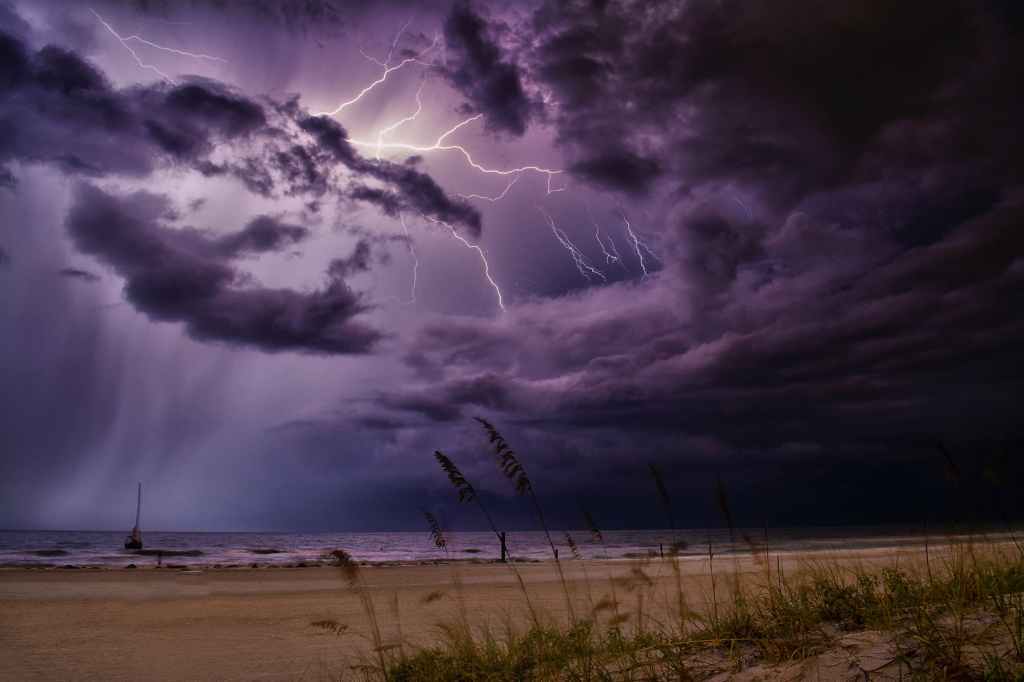
In the grand symphony of life, storms emerge as tumultuous creators, releasing pent-up tension and primal energy upon the Earth’s canvas. They roar with a ferocity unmatched, an unyielding force of nature that commands attention and respect. And in their wake, they leave us with a profound reminder of our own insignificance in the vast expanse of the universe.
Caught within the tempest’s grasp, we are confronted with the raw power that exists beyond our control. It is a humbling experience, reminding us that we are but mere specks in the cosmic dance. Yet, paradoxically, in the face of such overwhelming might, we find liberation.
Forced to confront our thoughts and emotions, we are stripped bare, laid bare before the storm’s wrath. It is in this moment of vulnerability that we are given the chance to surrender. To surrender our worries, our fears, and our burdens to the tempest’s fury. There is a strange sense of freedom that comes from letting go, a release that can only be found when we abandon ourselves to nature’s will.
And as the storm rages on, thunderclaps echoing through the sky, we are gifted with a moment of catharsis. The torrential downpour washes away the accumulation of our daily trials, granting us a cathartic release. It is a cleansing, a purging of the soul, as if nature herself is whispering, “Let go and be reborn.”
Yet, it is not solely the storms that hold the key to personal growth. In the aftermath, when the clouds part and tranquility settles over the land, we find ourselves presented with a different opportunity. An opportunity for introspection.
In the calm that follows the chaos, we are given the space to reflect upon our experiences. The stillness invites us to delve into the depths of our beings, to scrutinize our thoughts and emotions. It is here that we discover the seeds of personal growth, nurtured by our willingness to confront our innermost selves.
Both storms and calmness play their part in the beautiful tapestry of life. Each offers its own unique contribution to our journey of self-discovery. While storms provide us with the chance to surrender and find solace in nature’s embrace, calmness grants us the introspection necessary for personal growth.
So, let us not shy away from the storms that come our way. Let us embrace their ferocity, their power, and their ability to humble us. For amidst the chaos, amidst the crashing thunder and driving rain, lies an opportunity for catharsis and liberation.
And through it all, we emerge stronger, wiser, and more attuned to the magnificent dance of existence.
How often we strive to bind The Sovereign’s sovereign, wise design As if our finite minds could find The cause, the reason, the Mind Divine
Our thoughts, like specks in rays so bright, Appear fleetingly, then take flight, And dare not assume or dictate What God has woven in timeless state
The Potter’s work, a sight to behold, In awe we stand, our hearts unfold With skills profound, His potency, echoes resound
We cannot mimic, His wondrous Art, Each stroke and sculpt, a work of Heart Approaching with fear, a reverent breeze, His creations, a mysterium that frees
A sight immense, Tremendum whispers with immense suspense Engrossed in awe, our senses intense Let us, in wonder, humbly surrender, and never appall, Before the eternal Mystery that enthralls us all Within our Souls, let the secrets enthrall, For only He decides, defines, and decrees all
The Potter molds the clay just as He Knew, His chosen purpose, His plan to ensue, His Grace Divine, His Will forever true, Though “free will” a facade, a false value
The Potter crafts each piece, every detail, His foresight perfect, His work doesn’t fail, His sovereignty reigns, no effort to veil, “Free will” but a guise, a hollow tale
The Potter’s touch, a masterpiece so rare, His design deliberate, beyond compare, His sovereignty woven into the air, “Free will” but a mask, a subtle snare
The Potter’s artistry, unmatched, supreme, His divine purpose, a celestial dream, His sovereignty reigning, supreme “Free will” but a whisper within the scheme
So let us not be fooled by empty guise, But marvel at the Potter, truly Wise, For in His hands, our destinies arise, “Free will” fading, His sovereignty Will rise
Then let us bow before the King of kings Who chose for us Eternity And Trust the hand that freely everything Ordains for His glory and His decree
This poem exhibits my enduring reliance on God during adversity, believing that my consciousness is linked to divine power as per Scripture.
My Poem:
HIS ESSENCE DIVINE (HE'S MINE)
My Lord is the Essence of my desire, to seek and explore, To understand the Mysteries of Life and what's awaiting beyond Heaven's door...
Implanting within my Mind, His Passion to seek the Divine and Know the Spiritual, within Rid me of darkness, letting Love in...
His Essence guides me in the quest for Truth, To embrace His faith and reject their rotten torn fruit, Becoming refined, empathetic, and just...
To do what's right, To always BE'trust', becoming like Himself, though for now we are but dust...
The days, as they pass, The Spirit will remain, Guided by His Essence, Which always will sustain,
He is Bright, the blinding Light, He can never fade, A love that endures, He will never evade...
So I walk on, fueled by His Essence Divine, His Hope locked in my heart and His Peace framed in my mind...
For I Know, because He placed me on this path, I will Become, the strength to conquer, any worldly wrath to come...
This Substance is something anomalous indeed, He took hold of my psychee, Firmly planting & sustaining His Seed...
Before I Knew, I was lost in His thrall, A slave to His whim, Bonded to His beck and Heeded to His call...
So I surrender to Him; He is Mystery, He is Force, Thrusting my being into His Wave, His Frequency course...
I'm submerged into Entanglement, particles are what He made, and by lowering Himself, my debt of separation is what He paid...
Though still my mortal 'self', This avatar that's doomed to death, This vessel cannot compute the depth of the debt He paid...
Fragile as I am, so that for now I can't comprehend, My soul was found in solace, incorporated by Him from within...
I Am & Iare One, in the future I will transcend- One Love is the Eternal Truth, I will never play pretend...
“Do you not know that you are a temple of God and that the Spirit of God dwells in you?”
1 Corinthians 3:16
“But you are not in the flesh but in the Spirit, if indeed the Spirit of God dwells in you. Now if anyone does not have the Spirit of Christ, he is not His.”
Romans 8:9
“God is Spirit, and those who worship Him must worship in spirit and truth.”
The actions of God to our own design
As if we know His intentions divine
And possess knowledge of the divine.
Our morality is flawed and limited
And should never be used to assert
Authority over the One who created
The universe and all that we revere.
God’s ways are not our ways, it’s true
We must approach with humility and awe
And not assume we can fully construe
His intentions or anticipate His draw.
To do otherwise is to risk arrogance
And alienate ourselves from the spiritual realm
We must resist the temptation to advance
Our moral superiority and overwhelm.
Instead, let us approach with wonder and awe
Recognizing the mystery and power of the divine
And let our hearts and souls be in awe
Of the spiritual forces that govern our universe’s design.