“If those who lead you say to you, ‘See, the kingdom is in the sky,’ then the birds of the sky will precede you. If they say to you, ‘It is in the sea,’ then the fish will precede you. Rather, the kingdom is inside of you, and it is outside of you. When you come to know yourselves, then you will become known, and you will realize that it is you who are the sons of the living father. But if you will not know yourselves, you dwell in poverty and it is you who are that poverty.
– Gospel of Thomas
That statement alone invites us to read Scripture as more than just historical narrative or morality anecdotes.
THE KINGDOM OF HEAVEN IS WITHIN
An esoteric reading of the Bible treats it as a psychological and spiritual map.
The Bible is a manual for how the human mind operates and how the soul evolves.
Every character, event, and place represents an aspect of the human experience.
The Bible isn’t just about people in other eras and lands; it’s about you.
What Esoteric Doesn’t Mean
“Esoteric” doesn’t mean abstract or mystical for the sake of being mysterious.
Esoteric Does Mean:
It means looking beyond the literal to uncover the spiritual truth within.
Esoteric Parables
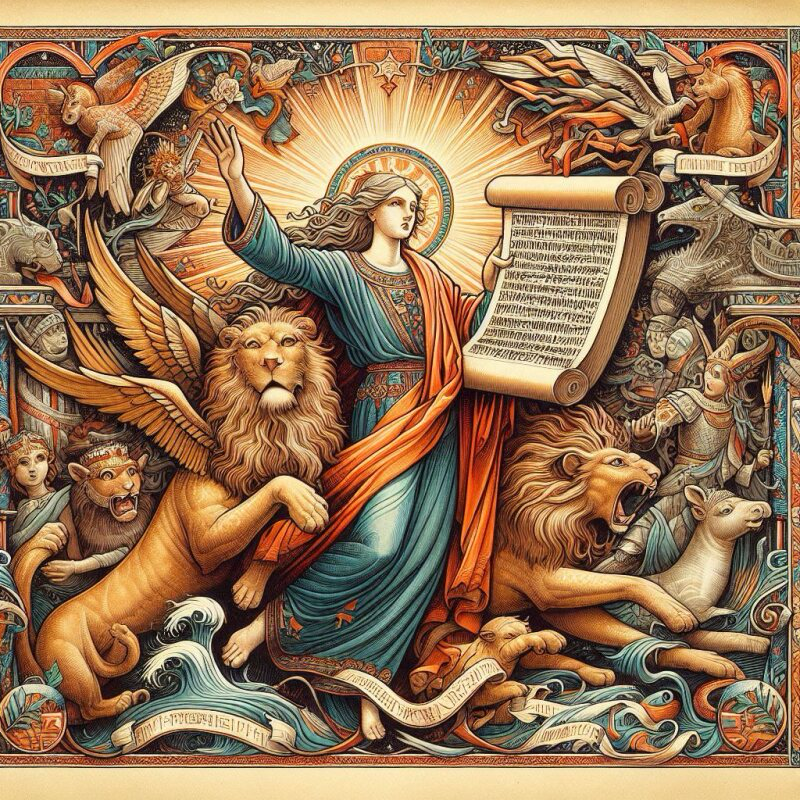
Jesus often taught using parables—stories layered with symbolic meaning.
“Though seeing, they do not see;
though hearing, they do not hear”
These weren’t just teaching tools.
…they were keys, designed to open deeper levels of understanding.
He told his disciples directly:
“It has been given to you to know the mysteries of the kingdom of heaven, but to them it has not been given.”
That distinction matters.
The outer story speaks to the crowd.
The inner story speaks to the seeker.
The prodigal son:
On the surface, it’s a touching story of forgiveness—a father welcoming back his wayward son.
But if that’s all you see, you’ve only read the first layer, the exoteric.
On an esoteric level, it’s about the human psyche (soul) drifting away from spiritual truth—squandering its inheritance.
We trade our Soul’s Divine essence for the outer worlds fake luxury.
The Return of the Son
When the “son” returns, it’s a symbol of returning to higher consciousness, to alignment with the Divine source, our Father in Heaven.
The “father’s house” isn’t a physical home.
The Fathers house is the original state of spiritual awareness we’re meant to live from.
You can find beautiful wisdom in the Bible at the surface level, but if you never look for the second upper-story, you’re missing its true power.
The real spiritual meaning isn’t obvious.
It’s concealed in plain sight.
Most theologians don’t teach this—
I don’t think they’ve ever learned to read it this way or they’ve become so indoctrinated that they avoid it in fear of becoming a “heretic”.
to exercise restraining or directing influence over : REGULATE
Grace
unmerited divine assistance given to humans for their regeneration or sanctification
Let me make this clear up front: if L
I’m not here to justify sin but to justify grace.
There’s a difference, and if you can’t tell the two apart, you’ve been discipled by control of man—not Christ.
As a follower of Christ there is never a circumstance where it’s your task to correct someone with any kind of force.
Correction by coercion is not correction —it’s pride wrapped in scripture.
If you’re truly moved by the Holy Spirit, the only thing you’ve been given authority to do is speak truth in love.
Anything beyond that is spiritual trespassing.
But we’re watching the same old sickness play out again in a modern tone.
People stomping around with scripture in one hand and a gavel in the other, throwing stones in the name of holiness—meanwhile hiding from their own shadows.
Condemning others becomes a convenient way to avoid your own reflection.
You execute their punishment prematurely just so you don’t have to face your own.
And that’s not discernment. That’s ego in a Jesus costume.
Here’s the thing: You are not God.
You don’t get to decide the weight of someone’s guilt and the verdict you assign will be the same assignment you’ll receive.
“For with the judgment you pronounce you will be judged, and with the measure you use it will be measured to you.” – Matthew 7:2
You don’t get to issue divine sentences based on your human discomfort.
You have no moral authority above another human — I mean; you remain confined to that dying meat suit.
“For we do not wrestle against flesh and blood, but against the rulers, against the authorities, against the cosmic powers over this present darkness, against the spiritual forces of evil in the heavenly places.” Ephesians 6:12
You’re not protecting the gospel—you’re perverting it.
Grace isn’t a license for sin. But GRACE is the ONLY bridge to healing.
And you don’t get to burn that bridge for anyone and get away with it… let alone earn the ability to have any pride in your work.
“Pride goes before destruction, and a haughty spirit before a fall.” -Proverbs 16:18
You want to know what really makes me sick?
That the loudest people in the modern church are often the furthest from Christ’s heart.
“When words are many, transgression is not lacking, but whoever restrains his lips is prudent.” – Proverbs 10:19
Jesus railed against this—
“They tie up heavy burdens, hard to bear, and they lay them on people’s shoulders, but they themselves are not willing to move them with their finger.” Matthew 23:4
“Woe to you, scribes and Pharisees, hypocrites! For you are like whitewashed tombs, which outwardly appear beautiful, but within are full of dead people’s bones and all uncleanness. So you also outwardly appear righteous to others, but within you are full of hypocrisy and lawlessness.”
Matthew 23:27-28
those choosing dominance over love
“There is no fear in love, but perfect love casts out fear. For fear has to do with punishment, and whoever fears has not been perfected in love.”
– 1 John 4:18
those who forsake mercy
“Blessed are the merciful, for they shall receive mercy.”
Matthew 5:7
And yet, here they are again, wearing His name like a badge while they crucify people He died to set free.
“Father, forgive them, for they know not what they do.”
Jesus – Luke 23:34
The real tragedy?
Many believe they are doing God’s work, but they are not; they are merely doing their work. They are so surrounded by validation and applause that they fail to recognize it. The crowd has blinded them.
“Not everyone who says to me, ‘Lord, Lord,’ will enter the kingdom of heaven, but the one who does the will of my Father who is in heaven.” -Matthew 7:21
Listen: society is not where it’s supposed to be.
And neither is the church.
Now, will you hear this?Probably not.And I’m not expecting you to.
The truth about the truth…
The truth rarely gets a warm welcome when it threatens the throne you built for yourself.
But I’ll say it anyway.
Even the people you mock
the ones you write off
the ones whose lives you condemn from a distance
God came for the
giants
misfits
mystics
addicts
artists
outcasts—
They are no different than you.
Their moral sin may look different. Their wounds may be externally louder. They may hide less of their ugly parts than you…
but at least they aren’t tucked safely behind holy jargon to excuse cruelty.
“For we have all sinned and fall short of the glory of God.” – Romans 3:23
And if it offends you that Jesus may have used unconventional methods to expand perception, then what you worship is safety, not truth.
The image of Jesus most people hold is wrong and wrung through centuries of:
ideological whitewashing
beautified marketing
sanitized Sunday School summaries.
He’s often pictured as an ethereal peace-giver, universally adored, calmly glowing in a ‘soft sepia light’.
But this wasn’t the Jesus known to his followers. Not even close.
In fact, many who encountered Jesus in the flesh found him either;
confusing, at best
mentally unstable, at worst.
He wasn’t simply controversial, he was considered a threat to both religious orthodoxy and social order.
The sanitized version of Christ so many cling to was shaped after the cross, after the church industrial complex took control of his narrative.
Let’s take a scalpel to the original reactions—the raw, unsettling perceptions of Jesus while he was still walking the earth.
His Family Thought He’d Lost His Mind
The Gospel of Mark pulls no punches. In Mark 3:21, we’re told that Jesus’ own family said:
“He is out of his mind.”
Yes, his own bloodline. Not strangers. Not critics. His family. Pause there…
Imagine. Imagine the weight of that.
You’ve awoken to a Divine Knowing, a consciousness that cracks open reality—and the people who know your voice best say:
“You’ve snapped.”
It wasn’t mockery from outsiders that came first; it was internal doubt.
His kin likely feared he’d gone mad with something akin to messianic delusion.
Or perhaps they were embarrassed by his sudden rise as a controversial street-preacher confronting the Government and Church…
He spoke vehemently against both Rome and the temple elite.
Religious Leaders:
“You’re Breaking the Law and Blaspheming“
The religious class didn’t just dislike Jesus—they actively plotted his removal.
The scribes and Pharisees viewed him as a heretic, accusing him of;
violating the Sabbath
flouting Mosaic Law
daring to forgive sins.
—a divine prerogative.
His miracles weren’t applauded; they were denounced as works of Beelzebub.
Let that settle: divine acts being interpreted as demonic.
… this was normal folk… the acceptable people… The community.
This wasn’t petty disagreement. This was existential threat-level panic from the religious hierarchy.
They saw in Jesus… not just a radical voice—but someone who dismantled their very grip on sacred authority.
Public Whispers: “He Has a Demon and Is Mad“
John 10:20 captures this damning public sentiment:
“He has a demon and is mad; why listen to him?”
These weren’t elite theologians.
These were everyday observers—
neighbors
townsfolk
bystanders.
Jesus’ words, while layered with profound gnosis (wisdom), sounded unhinged to the average ear.
And truthfully, wouldn’t they today? I mean… They do.
Imagine someone saying,
“Before Abraham was, I am.”
Or calling God their literal Father, claiming to bring not peace but a sword.
If spoken in today’s marketplace, they’d be dismissed as spiritually schizophrenic, or worse.
So what’s changed? Only the power structure that codified his words.
Outside the Bible: Even More Scathing Views
This doubt wasn’t exclusive to Jewish contemporaries.
Roman voices and philosophers took their shots, too.
Talmud
The Talmud contains cryptic but deeply derogatory references to Jesus—branding him a sorcerer who led Israel astray.
He is also said in the Talmud to be swimming in hot excrements.
These weren’t passive critiques.
They were sharp rejections by those who saw his influence as spiritually treacherous.
Roman Philosophers
Roman historian Tacitus referred to Christianity as a “pernicious superstition,” blaming the followers of Christ for corrupting public morals.
To Roman minds, Christ’s followers were:
irrational fanatics clinging to a crucified troublemaker.
Celsus
And then there’s Celsus, the ancient philosopher and intellectual, who reportedly called Jesus
“small, ugly, and undistinguished,”
claiming his father was a Roman soldier—a jab meant to invalidate his divine paternity and tarnish the virgin birth narrative.
Jesus wasn’t revered by the intellectual elite of his time.
He was;
mocked
dismissed
vilified.
Why This Matters
This isn’t about shock value or anti-Christian rhetoric. It’s about truth-telling.
When we sanitize the narrative of Jesus to make him palatable. We also:
rob Him of the radical edge that threatened anti Christ power
offended institutions
deny the painful fact that he alienated his own family.
His teachings were revolutionary because they disrupted—not because they fit neatly within pre-existing paradigms.
So when you feel like your awakening makes others uncomfortable when your truth sounds like madness to the masses take comfort. You’re in excellent company.
Because the real Jesus wasn’t crucified for being nice. He was crucified because he challenged the lies. And many thought he was insane for doing so. Truth rarely sounds sane to those who live comfortably in delusion.
“And you will be hated by all for my name’s sake. But the one who endures to the end will be saved.”
Are we propelled by fate, driven by choice, or guided by a delicate dance between the two?
Each path offers its own mystique, summoning us to dissect the interplay of destiny, fate, and free-will in shaping our lives and reality as a whole.
The Emergence of Fate
Fate represents the unseen architecture of our lives—a cosmic design that envelopes every step we take.
It is the orchestrator of synchronicities and signs, suggesting that our experiences might be part of a grand laid out structure, initiated by a higher intelligence.
This invisible thread forms the backdrop of our existence, like a silent script written in the stars that sometimes we see how it dictates our journey.
The Empowerment of Choice
Contrasting fate is the power of choice—
our conscious ability to deliberate
decide
and act.
In every fleeting moment, we stand at a crossroads, armed with the power to transform potentiality into reality.
Our choices…
…whether deliberate
…or spontaneous.
Choice carves new pathway, through a predetermined framework, affirming our unique role as co-creators of our destinies.
The Synthesis
A Cosmic Dance
The truth, as I perceive it, lies not in the isolated domains of fate or choice, but in their connection, no matter how chaotic or volatile it appears.
FATE IS AN ALREADY SET STAGE
Fate sets the stage by placing us in a world of infinite complexities, yet within this arena, our choices illuminate the power of agency.
Within fate your decisions become the act in the play that redefine the script with each break in line, as sin aka duality, causes is to forget choosing this character… MORE ON THAT IN ANOTHER ARTICLE…
Fate merges the predetermined decision we made with the human self in all our duality.
Embracing The Interplay
Every decision— it can be a choice of…
love
defiance
surrender or
inquiry…
These decisions serve as compelling evidence of the capacity for transformation. The inherent power within us shapes the circumstances we encounter, establishing a structure of cause and effect that upholds duality and sin.
While the forces of fate may direct the overarching narrative, it is within our responses that true freedom is forged.
DESTINY + CONSCIOUS AWARENESS
The co-operation between destiny and conscious choice is…
where meaning is born
where chaos finds order
where wisdom is ultimately distilled.
We have a profound power to navigate the realms of existence.
We are neither bound by the currents of destiny nor are we lost in the illusion of unbridled freedom.
We are the artisans of our own lives, crafting purpose from the interplay of the inevitable and the intentional as they are One.
Aristotle claimed that time is dependent on motion, meaning that time only exists in relation to and as a consequence of change occurring in the world.
Muller, a physicist at the University of California, Berkeley, posits that the expansion of the universe, starting with the Big Bang, constantly creates new space and, consequently, new time.
“Now” as the Leading Edge
He argues that the “now” is the boundary, the shock front, or the leading edge of time, where new time is constantly being created.
Implications for Time Travel
This theory has implications for our understanding of time travel, suggesting that the future is not predetermined, and that the “now” is the only reality that truly exists.
This concept contrasts with the block universe or eternalism, which suggests that all moments in time exist equally, and the presentism, which holds that only the present moment is real.
Aristotle argued that time, as a concept, depends on the soul’s ability to perceive and count it.
He suggested that if there were no souls to “count” time, there might still be change, but not time itself.
This view implies that time is not just countable but also essentially counted, meaning it requires a conscious entity to exist as a measurable concept.
Plato’s theory of the soul, influenced by Socrates, considered the soul (psyche) as the essence of a person, an incorporeal and eternal entity.
He believed the soul exists even after death and is able to think, and that as bodies die, the soul is continually reborn (metempsychosis) in subsequent bodies.
Some philosophical traditions, like Neo-Platonism, explored the concept of a world soul (anima mundi) or soul of the world,suggesting an intrinsic connection between all living beings and that the world is animated by a soul.
This concept posits that the world is animated by a soul much like the human body.
This perspective suggests that the soul is not limited by space or time.
Some theories, like the Quantum Theory of Soul, propose that the soul, as defined as information stored in the quantum field, can extend over space and time, potentially transcending the limitations of the physical body.
Time as a Number
Aristotle describes time as a “number of motion with respect to the before and after,” suggesting that we can count or measure time by counting instances of change.
Descartes on Time
Time as a Foundation for Diversity and Motion
Descartes’s mechanistic view of the world, where diversity and motion are fundamental, requires time for these phenomena to occur.
Time as Proof for God’s Existence
Descartes uses the concept of “parts of time” in his Meditation III proof for God’s existence, emphasizing the role of time in our understanding of God’s attributes.
Time as a “Mode of Thought”
In his Principles of Philosophy, Descartes also states that time is a mere attribute and “mode of thought”.
Time & Duration
Descartes distinguishes between time as the measure of motion and duration as an attribute of things.
Time & the Span of Life
Descartes sees no differentiation between the span of a life and the span of time itself.
Descartes introduced the concept of dualism, which argued that reality or existence is divided into two parts.
He argued that humanity could be divided into two parts as well: the mind and the body.
TIME AS MOMENTS
Time as a Series of Moments
This perspective suggests that time can be broken down into a sequence of unique, distinct moments, each representing a specific point in the timeline.
Kairos refers to an opportune or significant moment, while chronos refers to a specific amount of time, such as a day or an hour.
Examples of “Moments in Time”
Think of memorable events, like a wedding, a birth, or a historical turning point.
These are all “moments in time” that stand out as distinct points in the flow of time.
Time as Absolute
Newtonian Time
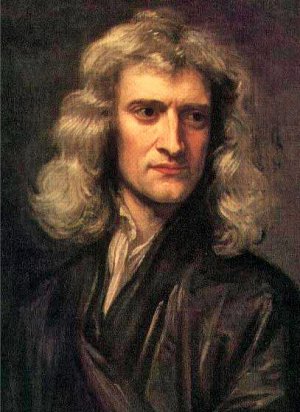
According to its most famous proponent, Sir Isaac Newton, for example, absolute time (which is also sometimes known as “Newtonian time”) exists independently of any perceiver, progresses at a consistent pace throughout the universe, is measurable but imperceptible, and can only be truly understood mathematically.
For Newton, absolute time and space were independent and separate aspects of objective reality, and not dependent on physical events or on each other.
Time as a Product of the Mind
Whitehead | Heidegger—Time as the Form of Becoming
Whitehead and Heidegger described time as the process of things changing and becoming.
They believed that time is essential for things to happen and transform.
Theory of Relativity
SPACETIME
According to modern science, particularly the theories of relativity and quantum mechanics, time is considered a part of a larger concept called spacetime.
Spacetime includes all the events in the past, present, and future, and is interconnected with space.
The word “archetype” comes from the Greek word ἀρχή (arche), meaning “origin” or “beginning”.
In literature, an archetype is a recurring pattern, motif, or symbol that appears in stories, myths, and folklore.
These archetypes can take the form of characters, settings, or plot elements, and they often represent universal themes and ideas.
According to Jungian psychology, there are seven feminine archetypes that play significant roles in modern society:
the Mother
the Maiden
the Queen
the Huntress
the Wise Woman
the Sage
the Lover
⬆️READ FOR FREE ⬆️
These archetypes illustrate various dimensions of the feminine experience and play a significant role in the diversity of individuality and expressions of women in contemporary society.
The Maiden Archetype
The Maiden Archetype symbolizes youth, innocence, and potential; she embodies the qualities of exploration and discovery.
She represents new beginnings and the pursuit of dreams, often characterized by a sense of adventure and curiosity about the world.
With an open heart and a mind ready to embrace the unknown, the Maiden invites us to step out of our comfort zones and seek out the experiences that shape our lives, reminding us that every journey holds the promise of growth and transformation.
The most famous maiden archetype in Greek mythology is Princess Andromeda, who was chained to a rock as a sacrifice to a sea monster. She is saved by the hero Perseus and marries him.
The Queen Archetype
The Queen archetype represents authority, power, and responsibility.
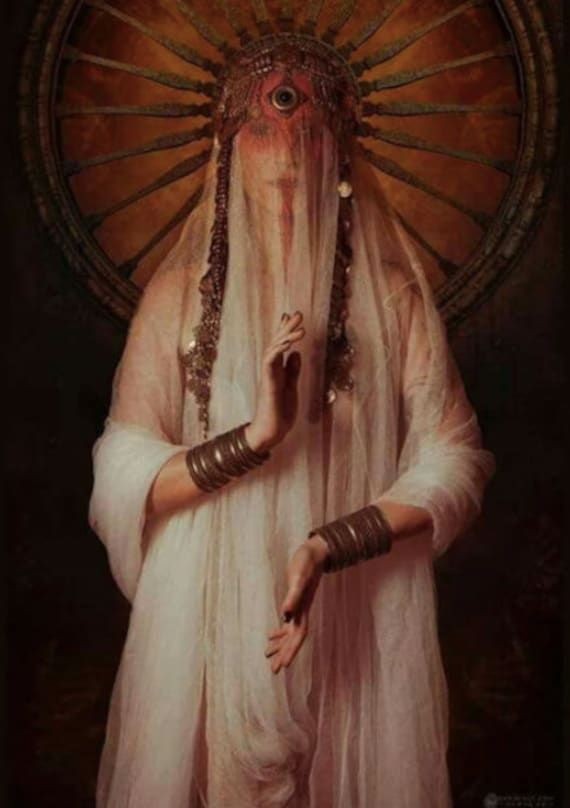
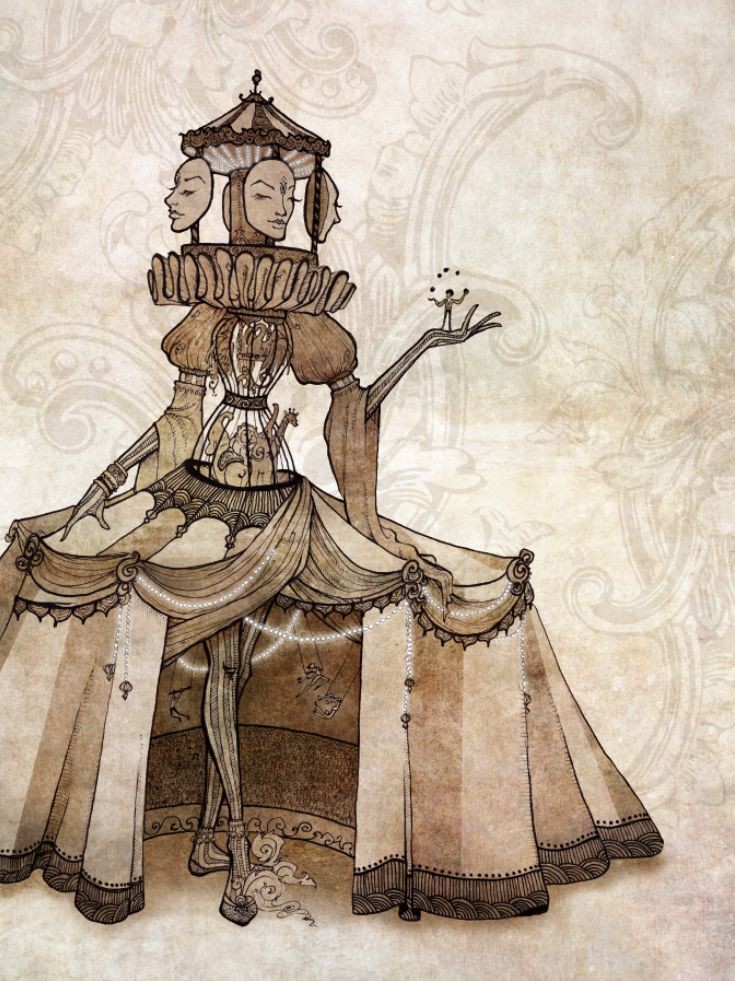
She is a leader and a figure of confidence, embodying traits such as:
decisiveness
strength
the ability to inspire others.
The Queen is often associated with:
the pursuit of justice
the welfare of her domain
The Huntress Archetype
This archetype embodies:
independence
self-sufficiency
the pursuit of goals.
The Huntress is often portrayed as a warrior or a protector who:
values freedom
Has the courage to break societal norms
Has ambition
Has the determination to forge her own path.
The Wise Woman Archetype
Representing wisdom and intuition, the Wise Woman:
Embodies ancient knowledge
A healer and mentor
Insightful
Introspective
shares her wisdom
The Sage Archetype
Closely related to the Wise Woman, the Sage represents intellectual depth and understanding.
The Sage archetype often seeks knowledge and truth, embodying the pursuit of enlightenment and the dissemination of ideas that can empower others.
The Lover Archetype
The Lover archetype is associated with passion, intimacy, and connection.
This archetype values relationships and emotional expression, emphasizing the importance of love, romance, and sensuality in a fulfilling life.
Together, these archetypes account for the major differences among women, as each woman may resonate more strongly with specific archetypes based on their personal experiences, values, and choices.
Understanding these archetypes can help us navigate our identities to better embrace the multifaceted nature of femininity in contemporary society.
LEAVE A COMMENT DOWN BELOW
3 responses to “Feminine Archetypes”
Anonymous
I love this format you are using – concise rundown of the archetypes delivered with an image heavy style that compels me forward. The images conjure great emotion appropriate to the subject matter and complement the individual stories without fail. More like this please!
Absolutely. 💯
I believe we all embody various archetypes within us, each manifesting in different degrees depending on the context. As you mentioned, these archetypes emerge appropriately for each setting.
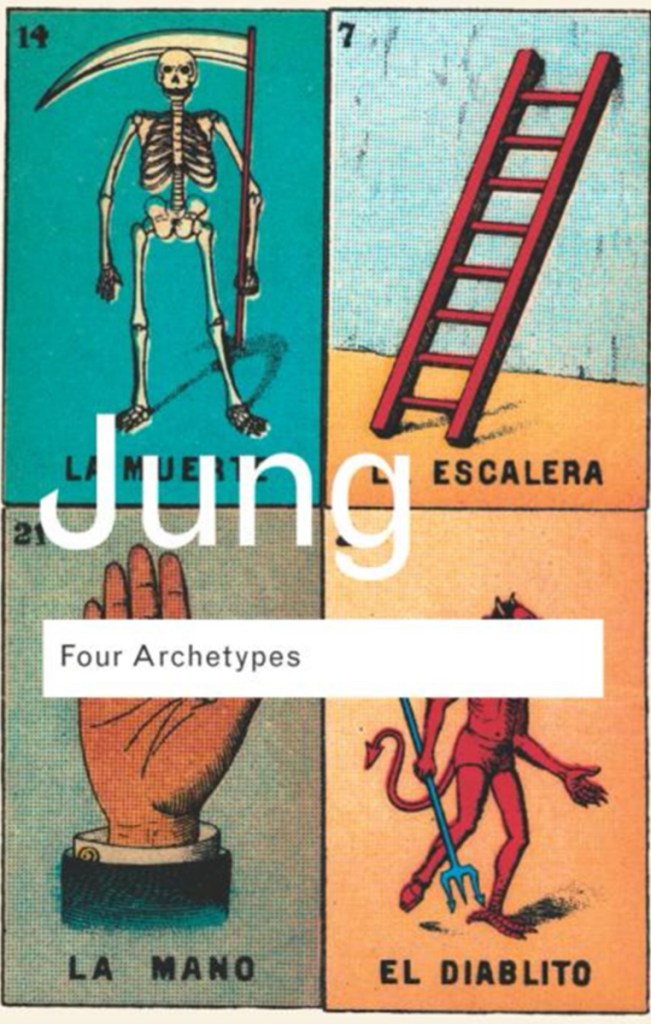
Carl Jung spoke much on this:
“The archetypes are the living system of reactions and aptitudes that determine the individual’s life in invisible ways.” — Carl Jung
I LOVE THIS JUNG QUOTE:
“Archetypes are like riverbeds which dry up when the water deserts them, but which it can find again at any time. An archetype is something like an old watercourse along which the water of life has flowed for centuries, digging a deep channel for itself.”
— Jung, The Archetypes and the Collective Unconscious
Thank you for your comment; it inspired deeper insight.













Leave a Reply