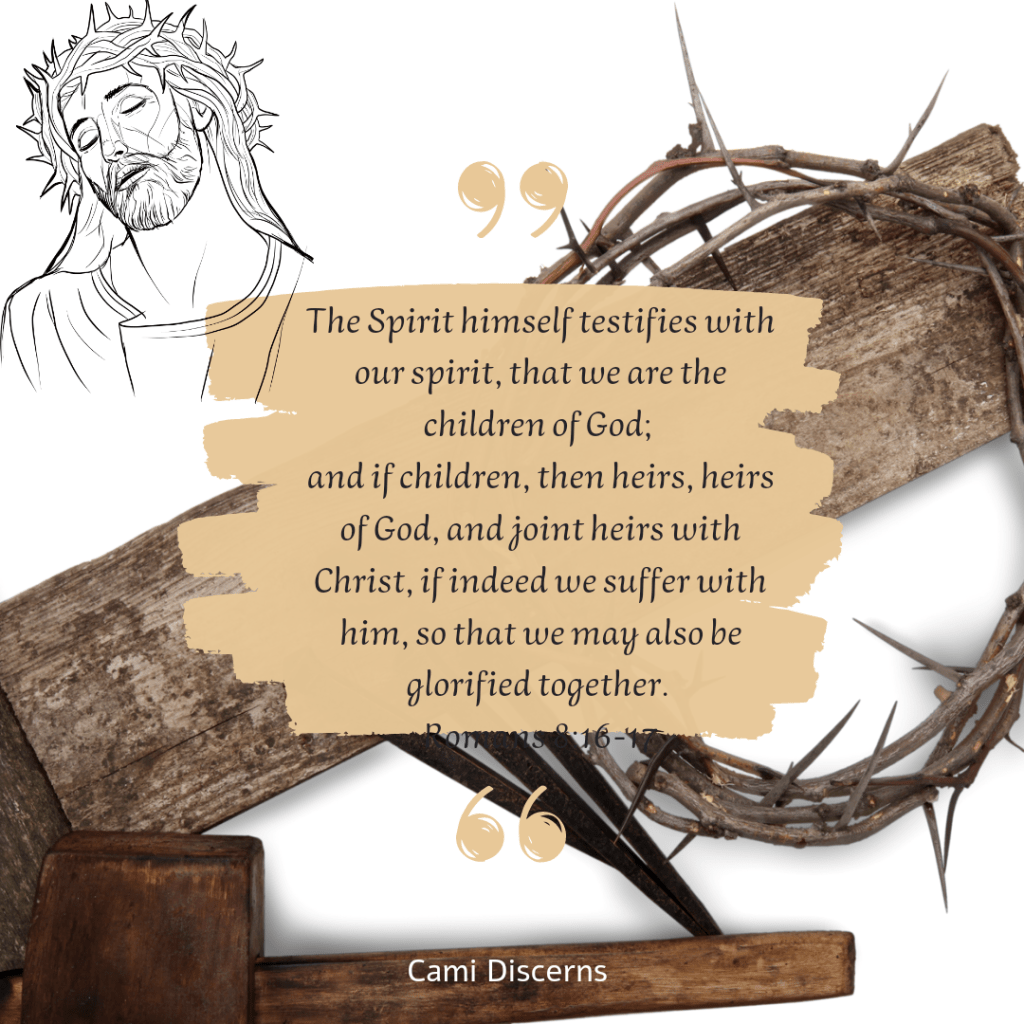
The term “pain” has its roots in the Latin word “poena,” which means punishment or penalty. This term evolved through Old French as “paine,” which referred to suffering or distress. The connection between pain and punishment likely arises from the ancient belief that pain could be a consequence of wrongdoing or an affliction to be endured. Over time, the meaning expanded to encompass physical discomfort and emotional suffering, leading to its current usage in English.
The Nature of Suffering: A Necessary Element of Existence
As much as we may wish otherwise, the reality is that suffering is an inescapable part of the human experience.
The age-old philosophical and religious observation that “life is suffering” points to a fundamental truth about the human condition.
Embracing Uncertainty and Impermanence
In the face of uncertainty and impermanence, we cultivate the qualities of empathy, humility, and inner strength that are vital for navigating the complexities of life.
It is through our struggles that we learn and grow, transforming our experiences into avenues for personal development.
Seeking Meaning in Suffering
Perhaps, in the end, it is not a life devoid of suffering that we should seek, but rather a life where suffering serves a purpose.
As Viktor Frankl articulated, fulfillment cannot be stripped of struggle; it is through confronting our darkest moments that we can truly experience the richness of life.
When first confronted with awareness into my sinful nature, I lacked the level of discernment needed to grasp its weight.
The corruption within is not merely a moral failing nor a series of poor preferences; it is the State of Human Beings—a distortion of what we see in the mirror…
Face to face with the soul- you find a deformed reflection looking back at you. Something your waking mind never saw.
You are disobedient and rebellious, torn between your conflicting desires, double-minded in your ways.
2 Oppositional Forces
For me, one part yearned for deep and meaningful purpose, yet another aspect was incessantly seduced by chaos, easily bated by danger, pain, and fearful things.
I was repulsed by who I thought I was in comparison to this monstrosity. This was the truth. In that moment, every bit of evil’s horrific vices surfaced; I despised my compulsion toward gore, a freak for intensity.
I hated it. I loved it.
Many decades ago, when all of this happened, I had no relationship with God, the Creator of Spirit. I didn’t grasp what such a connection would involve.
The extremes I experienced transformed my perspective.
Looking back, I can clearly see that before my descent into the depths of Hell, I was being prepared for something Holy.
I need to be reassembled correctly, but first, we must disassemble.
Looking back, I can see.
I was primed for my humiliation ritual, a necessary step for someone with such inflated pride.
Transmutation is Suffering
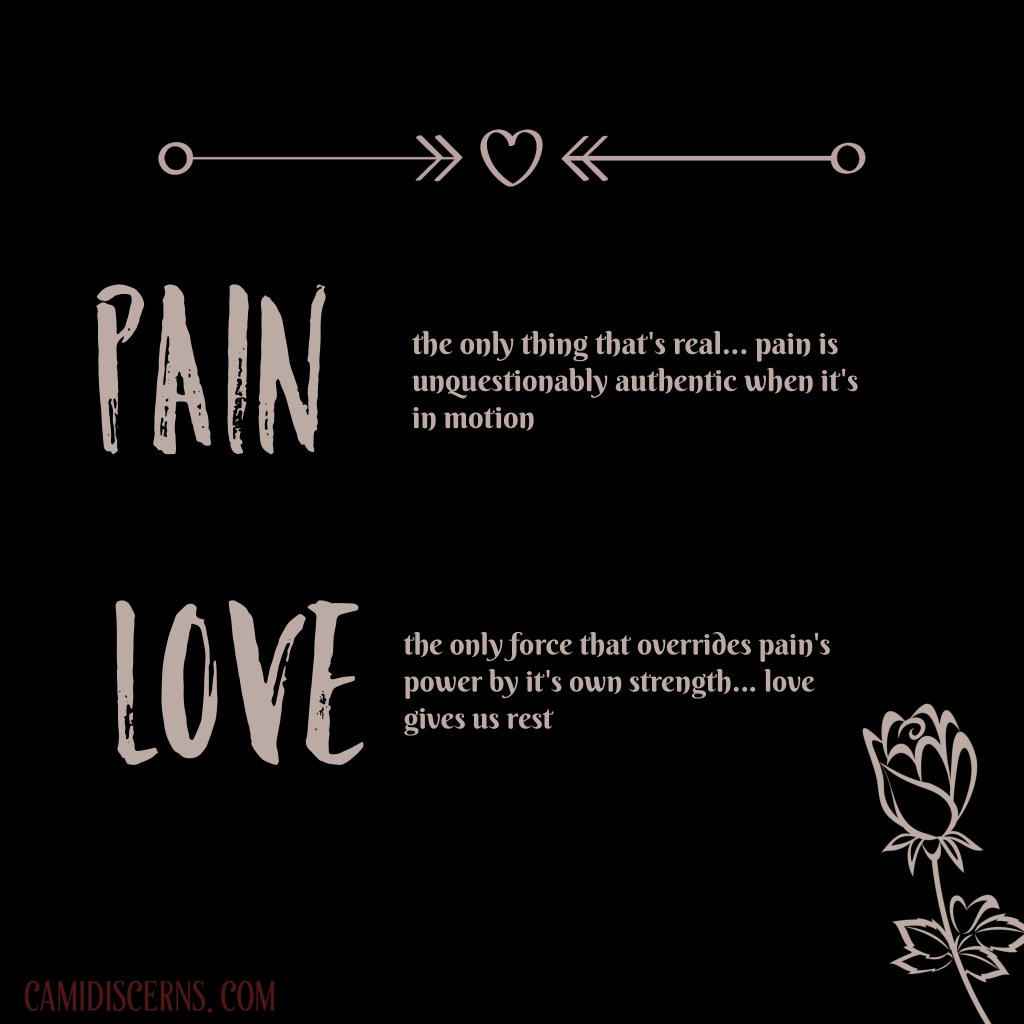
Without pain there cannot be growth.
When suffering is truly understood, it can either transmute the soul from flesh to spirit or lead it toward total entropy as the body decays.
Give me anguish then..
Under the loudened silence and heavy weight of invisible sufferring, the lowness is trifling.
Key🔑
How to Transcend Suffering: A Step-by-Step Process
1. Step Back to Observe
Begin by positioning yourself at the periphery of your conscious awareness.
Detach slightly from your immediate thoughts and emotions, allowing you to observe your inner landscape without judgment.
2. Embrace the Essence:
Transition into a state of deep presence by surrendering to the very essence of existence. In this space, open your mind to the subtle resonances of Being Raptured—recognize that even your suffering carries an illuminating quality that elevates it from mere pain to profound transformation.
3. Reframe Negative Polarity:
Understand that the challenges you face, the Negative Polarity, serve a purposeful role. Rather than resisting these forces, see them as essential tools that refine your spirit and prepare you for the transformative Gift of Duality.
4. Acknowledge the Paradox:
Accept the inherent paradox in Duality. Realize that by embracing both light and darkness, the Soul comes to recognize that the physical form is not separate but merely a temporary expression. This awareness guides you toward the understanding that your body—and all forms—inevitably returns to its original source, marking the end of dualistic separation.
5. Internalize and Reflect:
Continually return to this process. Reflect on each step and integrate this awareness into your daily life. Over time, allow this practice to transform suffering into a catalyst for spiritual growth and enlightenment.
By following these steps, you actively engage in a process that not only alleviates suffering but also deepens your understanding of your self and the greater scheme of existence.
High vibration refers to a state of energy characterized by positive feelings, thoughts, and actions, in contrast to low vibration, which is linked to negativity and stress.
Vibrational Targets
People who resonate at a higher frequency often find themselves preyed upon by dark energies.
These negative forces can creep in, using manipulation and emotional depletion to exploit, brought about by those who carry unresolved pain.
This leaves a portal for a deep sense of weariness, causing emotional fatigue, as their bright light becomes a beacon for those who seek to drain their spirit.
PORTALS FOR LOW VIBRATIONAL FREQUENCIES TO ENTER:
1. Criticism & Gossip
High vibrational individuals, with their heightened awareness, can unintentionally stir unease in those around them.
As a result, they frequently endure harsh judgment and whispers behind their backs, feeling the weight of loneliness and misunderstanding.
This stems from deep-seated insecurity or a profound lack of understanding, as their genuine selves can seem like an unwelcome reminder to those who are not prepared to face their own inner struggles.
It’s a painful truth that the authenticity of some can evoke fear in others, revealing a heart-wrenching vulnerability that many are too afraid to acknowledge.
2. Isolation
Individuals with elevated vibrations frequently find themselves in a state of loneliness, as the profound depth of their awareness creates a chasm between them and others.
The struggle for connection leaves them feeling isolated and misunderstood, trapped in a world where their sensitivity and insight can be burdensome rather than a blessing.
3. Sadness
This profound disconnection weighs heavy on their hearts, leading to a sadness that lingers like a shadow, as they yearn for companionship that seems perpetually out of reach.
4. Naive Authenticity
Authentic energy forces others to face parts of themselves they may not want to see, leading to avoidance or rejection.
Their presence compels people to confront the darker corners of their souls, unearthing truths that are often too painful to acknowledge.
This can result in a heartbreaking tendency for others to turn away, retreating into denial or pushing them away in fear of vulnerability.
Protecting Energy
To maintain an elevated state of consciousness, you must prioritize self-care and boundary-setting.
This includes staying surrounded by those who share a similar energy and limiting interactions with those who drain or manipulate them.
While the journey of a high-vibrational person can lead to spiritual growth, it’s essential to acknowledge the difficulties they face, balancing their elevated state with the need for protection and self-preservation.
In my heart resides a girl named Rainne who carries a great burden.
Rainne is prone to analyzing everything, even the smallest nuances in a person’s voice.
What ignited Rainne’s passion for scrutinizing everything? What is the foundation of her elaborate thought process? Whence does it all emanate?
I think I know…
At the core of her receptive mind, constantly striving to comprehend a chaotic world, lies a pivotal moment: her birth.
Maternal Influence
Beginning with the individual who holds the utmost significance in the life of each young girl, namely the mother (or female guardian/caretaker), for it is through this bond that her character and cognitive abilities are honed.
Growing up in a chaotic environment due to her mother’s mental health issues, Rainne’s mother lacked the necessary support to reach her full potential.
The scars of her past continued to impact her parenting style and choices, making it difficult for her to break free from the cycle of dysfunction.
Living in the suffocating grip of unhealed trauma, she made a conscious decision to suppress the fiery rebellion of her wounded inner child.
Instead, she chose to remain in the shadow of resentment and defiance towards her mother, whose ignorance and neglect had contributed to the pain that lingered deep within her.
The scars of her past were etched into her being, a constant reminder of the battles she fought alone, yearning for love, understanding, and healing that seemed perpetually out of reach.
Despite the weight of her struggles, she kept a hard head, sadly hardening her heart…
Without knowing it:
Her primary focus remained on guiding her children on how to evade their personal trauma, since teaching them anything different would oblige her to confront the truth mirrored in a looking glass, a reality she chose to elude, punish, and push into the depths of darkness.
Rainne’s mother was traumatized, leading her to resist anything that sought to tear down walls, dismantle barriers, or open the heart to vulnerability.
The refusal was meant to safeguard her self-worth, on which Rainne’s mother heavily relied, with arrogance and a sense of moral superiority keeping her defenses intact.
These identities were profoundly rooted in her existence in an effort to offset the ominous weight of the maternal, generational curse.
The cycle of generational curses continues through the family line, with very few individuals able to recognize and break the pattern.
That is why Rainne found it fitting to claim the title of masochist.
But to Rainne: Pain is significantly superior to confusion and chaos.
Personal Struggles and Empathy
That’s where Rainne truly comes into her own. Despite being burdened with these traumas, she courageously confronts her own pain and bravely shoulders her mother’s trauma, fully embracing the heaviness of it all.
Every horrifying narrative her mother relayed, every time the agony was gently dispersed into Rainne’s ears, her soul was deeply gashed, inserting within her the dread that was not hers to carry, lacking the tools to understand.
Rainne was akin to a sponge, a remarkable healer, she could sense herself soaking up her mother’s distress as she watched her mother’s anguish.
Experiencing it regularly decrease in her mother as it seeped into Rainne, deep within herself, her mother felt relief, yet unknowingly.
It was excruciating.
Rainne discovered tranquility in being the one suffering rather than watching her dear mother in unbearable agony.
Rainne was and knew she was a conduit of sorts and had been put into a position of learning how to heal, cope, practice self-control, and take ownership of hellish suffering.
Rainne was no professional, she was just a mere child… this profound psychological metamorphosis was in response to her mother’s inability and unaware void in teaching her skills to invoke resilience nor tools to process the big emotions and confusion.
Cognitive and Emotional Development
A person who is severely gaslit during their childhood brain formation inevitably learns to gaslight.
The small child who witnesses their caregiver’s extreme responses and anger will emulate this behavior, as they absorb and imitate the behaviors they witness while their young minds are still flexible and evolving.
That child doesn’t simply learn to overreact, but rather, they are deeply ingrained with the personality that becomes a fundamental aspect of their identity, as opposed to a conscious choice actively made.
Rainne’s meltdowns were like violent storms unleashing all at once, with screams so piercing they echoed through the house, and thrashing so wild it felt like she was a hurricane tearing everything in her path.
The intensity of her emotions seemed to consume her, leaving her trembling and drained when the storm finally passed.
It was as if she had no control over this inner turmoil that threatened to engulf her at any moment.
To this very day, the memory remains etched in her mind.
She yearned fiercely to break free from it, but a force within her always seized control, preventing her from thinking logically.
The concept of healthy coping techniques was foreign to her.
During periods of calm, she engaged in positive activities like crafting, singing, studying, and more.
However, the real challenge emerged during trying times when she encountered obstacles with no clear solutions, strategies, or guidance on how to navigate through them.
She had never witnessed anyone model healthy coping behavior, leaving her lost and without direction.
One cannot effectively teach coping skills if they have never been taught how to cope themselves.
Generational Trauma
So the generational way of dealing with issues, conflicts, and scuffles involves going to the extreme, hurling the harshest insults possible, and yearning for the other person to face harsh retribution for hurting our feelings, having to ensure they suffer, all their “deserved” guilt.
We use the logic of our stagnantly pent-up anger to react until a distraction comes about… only to then brush it all off as if it never occurred.
The resolution of all recurring, deep rooted problems was avoided since no solutions were easily within view, leading to the faulty strategy of persistent denial… the problem is disregarded, said to be “resolved“, so then hidden resentments would fester within a deflecting surface of self, maintaining a facade of “care” and compassion, concealing the inner turmoil…
Wounded souls we were yearning to break free from the self-imposed confinement, torn between conflicting thoughts, seeking distractions at every turn.
Early Awareness and Analysis of Adult Issues
Rainne knew adult issues from a young age.
Her parents would fight multiple times a week, they also drank which didn’t help.
Her young mind absorbed the complexities of their arguments like a sponge, dissecting each hurtful remark and dissecting the underlying emotions. An obsession it became, it was the only solid ground she could find strong enough to stand on, in her childish creativity.
It was as if she had a maturity far beyond her years, as she recognized the pain and misunderstandings that fueled their fights. The answers were ever before her, an 8 year old with no leverage.
While they simply brushed off the conflicts in the morning, she couldn’t shake the weight of their hate filed, damaging words and the lasting impact they had on each other.
It was a heavy burden for a child to bear, but she couldn’t help but feel responsible to bear it. Sure would have given her little life to bring peace and understanding to their fractured relationship, as she understood the fighting was not what it should have been.
They would talk and scream past the other, it would become something it isn’t.
They wouldn’t listen to one another, it would become a poop flinging contest.
Rainne’s knew the problem in grade school, but he parents couldn’t see it.
She knew what it was.
Despite her limited knowledge (because of her sheltered youth) of both herself and the world around her, Rainne acknowledged that to truly love, one must first comprehend oneself with purity and seek the others feelings without pretenses.
In a self denying mode of being, to preserve her own life and protect her family (her family was her life), she sacrificed her own identity, disowning her individuation and betraying her own future.
Naively believing she could salvage something meaningful in her parents marriage, in doing so she sought a dead end as her young mind remained steadfast in its misguided conviction.
The Quest for Order
In her psyche, she sought solutions that (by the creativity of her mind) made sense and seemed so perfect.
Her brain wasn’t set in the shadow; she wasn’t jaded by the rejection of her own inner child like her mother was. She had yet to know what a shadow was, but she was sure going into it.
The brokenness of her mother was so deep in denial of inadequacies, that any slight causing a negative emotion was reviled. So the root on which her family raised her rebuked authenticity, the very substance Rainne functioned, so secrecy became imperative to keep true to her self. Although stability and consistency were words foreign to Rainne, a spark within her Spirit thirsted for the key to attaining order and logic, a thirst to turn her family’s chaos into order, without knowing: the Philosopher’s Stone was the very thing she sought since grade school.
Her mind didn’t just linger in her mother’s shadows; she remained untouched by the contraction of the bitterness, yet turned to the natural rejection of her inner child, not like her mother was but almost.
The brokenness of her mother ran so deep that denial was the mode of familial operation… that any perceived criticism provoked an emotional response from the mother that bit like an angry viper and suffocated the air like a boa.
This balancing act was the foundation of Rainne’s upbringing.
Still, a yearning to convert her family’s disorder into harmony was the very object of her quest and became her demise, as well as her necessary dark night needed for a Salvation.
Paternal Influence
Her father was a latchkey kid who never grew up and lacked significant structure as a boy, so stability wasn’t instilled within him. He possessed a profound terror of perishing. Jew had a lot of love though, Rainne knew his love was true, as it was consistent, he was never cruel.
Rainne was nurtured and found comfort in him, in an environment suffused with fear. She was shown to tremble at the idea of death instead of embracing it, she would evade it.
She was brought up to dread the inescapable and to grasp onto fantasies and deceit. She knew this to be folly in her soul.
Rainne’s sophisticated cognitive process and critical disposition are strongly influenced by her childhood encounters with uncertainty, distress, and the intricate interpersonal relationships within her role models.
Rainne’s childhood was marked by the constant tension that lingered…
Her mother, haunted by past traumas, never fully addressed, existing in a perpetual state of anxiety and unrest.
In this environment of fear and unease, Rainne developed a heightened sense of vigilance and analytical processing.
She learned to diligently observe the world around her, deciphering underlying tensions and unspoken truths. Looking for patterns and breaks in patterns.
This skill became a vital tool for navigating her tumultuous and uncertain surroundings.
However, Rainne’s innate empathy and sensitivity added another layer to her complexity.
Despite the trauma and fear that surrounded her, she possessed a deep capacity for understanding and connecting with others.
This empathy allowed her to see beyond the surface, to recognize the pain and struggles that others experienced, even when they tried to mask them, even when they were mean to her.
Combining her keen analytical skills with her compassionate nature, Rainne became a master at unraveling the complexities of human emotions and motivations that are locked away in a person.
She sought to bring order to the chaos around her, to make sense of the contradictions and conflicts that seemed to define her world.
Rainne never lost sight of her ultimate goal: to create a sense of harmony and understanding in a world that often seemed tumultuous and unpredictable.
Her journey was one of constant self-discovery and growth, failure and lessons… as she learned to navigate the complexities of her own emotions and relationships while striving to bring a sense of peace and clarity to those around her.
Often chaos insued but awareness of the context within its faced at all face costs, she is still fighting for peace.
Caught between the pursuit of desires and obligations throughout life, I found myself traversing a delicate tightrope—struggling to maintain my sanity while striving for success.
My intense focus on maintaining balance ultimately became my undoing, causing me to tumble into the depths of despair. Paradoxically, the cautiousness that was meant to secure my future became the root of my life’s unraveling.
– Camille
Poem:
The depths of her shattered soul Lie fragments of a love untold. Rejected, they lay abandoned, cold, A tapestry of dreams that could not unfold.
Each piece a memory, etched in pain, A heart’s longing, now in vain. Whispered promises, once so dear, Now a haunting echo, she cannot hear.
Her tears, like rivers, silently flow, As she gathers the rejected, piece by piece, slow. No matter how hard she tries to mend, The fragments remain broken, unable to blend.
She walks through life, a ghostly shade, Haunted by the love that could have been made. In her eyes, a flicker of hope remains, But deep inside, her heart forever stained.
Rejected fragments of her, scattered wide, A mosaic of despair, she cannot hide. For in the wreckage of her shattered heart, She finds solace in the pieces torn apart.
If you feel that God is reproving you, be assured that it is a sign of His love. Although reproof is painful and causes your strength to dwindle, it is evidence that God is invested in your eternal Salvation and is guiding you towards His Kingdom and away from this world.
God’s reproof is a clear demonstration of His care and concern for your well-being.
Remember, for His Sheep His love is unconditional and His reproof should be embraced it with confidence and gratitude.
Meditate On This Scripture:
“How happy and FORTUNATE is the man whom God reproves, So DO NOT DESPISE or reject the DISCIPLINE of the Almighty [SUBJECTING YOU TO TRIAL AND SUFFERING].
For He inflicts pain…
BUT He binds up and gives relief.
He wounds…
BUT His hands also heal.
He will rescue you from six troubles; Even in seven, EVIL WILL NOT TOUCH YOU.
In famine He will redeem you from death, And in war from the power of the sword.
You will be hidden from the scourge of the tongue, And YOU WILL NOT BE AFRAID of destruction when it comes.
You will laugh at violence and famine, And you will not be afraid of the wild beasts of the earth.
For YOU WILL BE IN HARMONY WITH THE STONES OF THE FIELD, AND THE BEASTS OF THE FIELD WILL BE AT PEACE WITH YOU.
Behold this; WE HAVE INVESTIGATED IT, and IT IS TRUE.
We’ve become Seekers of Comfort, Security, & Material Possessions
To a society stooped in materialism, the idea of suffering as a gift may seem counterintuitive.
However, as believers in Christ, we are called to a higher purpose. We are called to be willing to suffer for Him.
Suffering can take many forms in our lives.
It can be the loss of loved ones, physical or mental illnesses, financial struggles, or even persecution for our faith. These experiences can be incredibly painful and challenging. Yet, when we shift our perspective and view suffering through the lens of Christ, we can begin to see it as a gift.
When we love and treasure Christ above all else, our focus shifts from the temporary pleasures of this world to the eternal joy found in Him. Everything else becomes secondary.
In suffering, we have the opportunity to draw closer to our Savior, to depend on Him more fully, and to experience His presence in a deeper way.
Suffering also has a unique way of shaping our character and conforming us to the image of Christ. It humbles us, teaching us to rely on God’s strength and not our own. It deepens our empathy and compassion for the brokenness and struggles of others. It refines our faith, purging away the impurities and strengthening our trust in God’s sovereignty.
Suffering can serve as a powerful testimony of His Faith in us, to the world around us. When we face trials with an unwavering hope and joy in Christ, despite our losses, it is a testimony of His faithfulness. It speaks volumes to those who may be watching and wondering how we can have peace in the midst of suffering. Our lives become a living testament to the transformative power of the Gospel.
In the book of Philippians, the apostle Paul writes,
“For it has been granted to you on behalf of Christ not only to believe in Him but also to suffer for Him”
Philippians 1:29
This verse reminds us that suffering is not a punishment but a privilege. It is a privilege to suffer for the sake of Christ and to share in His sufferings.
Believing in Christ means being willing to embrace suffering as a gift.
It means understanding that our ultimate goal is to glorify Christ, whether in life or in death.
It means being willing to let go of the temporary comforts and securities of this world, in order to gain the eternal joy and peace found in Him.
To summarize: suffering can indeed be seen as a gift for the sake of Christ.
Suffering can bring us closer to Him, shape our character, and serve as a powerful testimony to the world.
Let us remain steadfast in the undeniable fact that even in the midst of losing everything, we retain the invaluable merit of wholeheartedly loving Christ and receiving His divine love. May our willingness to endure hardship for Him and our unwavering devotion to Him supersede all other priorities, for it is solely in Him that we discover genuine life and meaning.
To read the original text online I have created a weblink so you don’t have to download it. 🔗St. John Dark Night Of The Soul
ST JOHN OF THE CROSS OVERVIEW
St. John of the Cross was not only a Spanish mystic from the Middle Ages but also a prominent figure in the Catholic Church. He was a Carmelite friar and a close friend of St. Teresa of Avila, another mystic and reformer of the Church.
However, his views and teachings were not always well-received by the Church authorities, and he was eventually captured and tortured for his beliefs.
During his imprisonment, St. John of the Cross experienced a profound spiritual crisis, which he later described as the “night of the soul.” This phrase has since become interchangeable with a period of severe spiritual struggle and doubt, often characterized by a feeling of desertion by God.
Despite his suffering, St. John of the Cross continued to write and teach, and his works profoundly influenced Christian spirituality. His most famous work, “The Dark Night of the Soul,” is a poetic and philosophical exploration of the nature of God and the human soul and has been praised for its profound insights into the mysteries of faith. Today, St. John of the Cross is recognized as one of the greatest mystics and spiritual writers in the Christian tradition. His teachings continue to inspire and challenge believers worldwide.
“In the twilight of life, God will not judge us on our earthly possessions and human successes, but on how well we have loved.” – John of the Cross
He coined a phrase to depict a moment when a person confronts agonizing trials that shake the core of their being.
My Experience
I have some firsthand experience with existence and consciousness. Nothing is more devastating than realizing what you thought you had was never really yours, leaving you at square one. It feels like death. Rebuilding is excruciating, especially with unsympathetic people around you who aren’t self-aware enough to care. During a dark night of the soul, escape and hopelessness can seem impossible.
Don’t lose hope in the dark night. It’s not punishment, it’s just the start of something new.
A DARK NIGHT CALLS YOU IN TO CHANGE
“We are afflicted in every way, but not crushed; perplexed, but not driven to despair; persecuted, but not forsaken; struck down, but not destroyed; always carrying in the body the death of Jesus, so that the life of Jesus may also be manifested in our bodies”(2 Cor. 4:7–10)
The dark night doesn’t just call for a reassessment, it forces you to question everything – who you are, what you know, and what you have. You may find that material possessions mean nothing at all.
I form light and create darkness; I make well-being and create calamity; I am the LORD, who does all these things. “Shower, O heavens, from above, and let the clouds rain down righteousness; let the earth open, that salvation and righteousness may bear fruit; let the earth cause them both to sprout; I the LORD have created it. Woe to him who strives with him who formed him, a pot among earthen pots! Does the clay say to him who forms it, ‘What are you making?’ or ‘Your work has no handles’? Isaiah 45:7–9
The dark night of the soul can be a spiritual death, leading some to resort to suicide. However, for those who endure, it can be a doorway to a freer, more self-realized existence with a stronger faith and clearer understanding of sin.
“Very truly I tell you Pharisees, anyone who does not enter the sheep pen by the gate, but climbs in by some other way, is a thief and a robber… The one who enters by the gate is the shepherd of the sheep… Therefore Jesus said again, “Very truly I tell you, I am the gate for the sheep. John 10:1,2,7
To navigate the dark night of the soul, one must persist and surrender. It’s akin to being “baptized in fire” as Scripture suggests – either we are consumed or refined, with no other options. There’s no sugar-coating or avoiding this experience, and even finding the strength to try can be a challenge. The only way to move forward is to go through it, or risk being stuck in it indefinitely.
Questions To Ask Yourself If You Are Experiencing A Dark Night Of The Soul
What subjective beliefs do you hold about life? What entitlements do you feel? What surface beliefs and personas do you identify with that may not align with your core self? What beliefs do you fear questioning because they conflict with your support system?
The Enigmatic Allure of a Dark Night
The allure of a dark night beckons you to delve into the depths of life and access profound wisdom. It challenges you to tap into the Mind of God and rely solely on the Word of God, all by the Will of God. From the darkness, you have the opportunity to catch a tiny glimpse of the incredible feat that God accomplished over the face of the deep. It’s mind-boggling to fathom how God, through the Power of His Word, created something out of nothing and declared it GOOD. Even the mere prospect of a dark night can make us shed our skin and leap into the unknown.
Arise, cry aloud in the night
At the beginning of the night watches;
Pour out your heart like water
Before the presence of the Lord;
Lift up your hands to Him
For the life of your little ones
Who are faint because of hunger
At the head of every street.”
— Lamentations 2:19
I am the man who has seen affliction
Because of the rod of His wrath.
He has driven me and made me walk
In darkness and not in light.
Surely against me He has turned His hand
Repeatedly all the day.
He has caused my flesh and my skin to waste away,
He has broken my bones.
He has besieged and encompassed me with bitterness and hardship.
In dark places He has made me dwell,
Like those who have long been dead.
He has walled me in so that I cannot go out;
He has made my chain heavy.
Even when I cry out and call for help,
He shuts out my prayer.
He has blocked my ways with hewn stone;
He has made my paths crooked.
He is to me like a bear lying in wait,
Like a lion in secret places.
He has turned aside my ways and torn me to pieces;
He has made me desolate.
He bent His bow
And set me as a target for the arrow.
He made the arrows of His quiver
To enter into my inward parts.
I have become a laughingstock to all my people,
Their mocking song all the day.
He has filled me with bitterness,
He has made me drunk with wormwood.
He has broken my teeth with gravel;
He has made me cower in the dust.
My soul has been rejected from peace;
I have forgotten happiness.
So I say, “My strength has perished,
And so has my hope from the Lord.”
Remember my affliction and my wandering, the wormwood and bitterness.
Surely my soul remembers
And is bowed down within me.
This I recall to my mind,
Therefore I have hope.
The Lord’s lovingkindnesses indeed never cease,
For His compassions never fail.
They are new every morning;
Great is Your faithfulness.
“The Lord is my portion,” says my soul,
“Therefore I have hope in Him.”
The Lord is good to those who wait for Him,
To the person who seeks Him.
It is good that he waits silently
For the salvation of the Lord.
— Lamentations 3:1-26
For the Lord will not reject forever,
For if He causes grief,
Then He will have compassion
According to His abundant lovingkindness.
— Lamentations 3:31-32
How dark the gold has become, How the pure gold has changed! The sacred stones are poured out At the corner of every street. The precious sons of Zion, Weighed against fine gold, How they are regarded as earthen jars, The work of a potter’s hands! — Lamentations 4:1-2
“The sacrifice you desire is a broken spirit. You will not reject a broken and repentant heart, O God”.
Psalm 51:17
How We Should Think Of Our Suffering Is Opposed To How We Feel
Our pain may result from God’s Decision for our ultimate benefit, even if we cannot perceive it in the present moment.
Despite Paul’s prayers for his ‘thorn’ to be removed, God did not take it away, but instead told Paul, “My grace is sufficient for you, for my power is made perfect in weakness.”
God’s power is most evident in our moments of weakness.
And He has said to me, “My grace is sufficient for you, for power is perfected in weakness.” Most gladly, therefore, I will rather boast about my weaknesses, so that the power of Christ may dwell in me. 2 Corinthians 12:9
God keeps track of our sorrows and collects our tears in a bottle.
“You keep track of all my sorrows. You have collected all my tears in your bottle. You have recorded each one in your book.” -Psalm 56:8
God is on our side if we are His and He is our shelter from danger.
“God is our refuge and strength, an ever-present help in trouble. Therefore we will not fear, though the earth gives way and the mountains fall into the heart of the sea, though its waters roar and foam and the mountains quake with their surging.” Psalm 46:1-3
The Lord supports and lifts those who are struggling and stumbling bowed low.
The Lord sustains all who fall And raises up all who are bowed down. Psalm 145:14
“When he falls, he will not be hurled headlong, Because the Lord is the One who holds his hand.” Psalm 37:24
God grants the requests of those who revere Him, He listens to their pleas, and He rescues them, according to His Will.
He will fulfill the desire of those who fear Him; He will also hear their cry and will save them. Psalm 145:19
Why A Broken And Contrite Spirit?
God is not impressed by outward shows of religiosity or ritualistic sacrifices unless they are accompanied by genuine repentance and a humble heart. Rather, God is concerned with the inner state of a person’s heart, seeking a contrite and humble spirit that is committed to living according to His will.
We Will Be Filled With Joy And Peace
Remaining is a state of humility enables us to draw near to Him, worship Him, and turn away from our sins, allowing us to align our hearts with God and be filled with joy and peace in Him.
Hone In On It
What A Contrite Heart Looks Like
Is characterized by deep regret and sorrow. Seeks absolution and reconciliation. Exhibits compassion and mercy. Abandons arrogance and self-importance. Manifests authentic humility and meekness. Is genuinely penitent. Ready and willing to renounce sinful behavior.
So to keep me from becoming conceited because of the surpassing greatness of the revelations, a thorn was given me in the flesh, a messenger of Satan to harass me, to keep me from becoming conceited. Three times I pleaded with the Lord about this, that it should leave me. But he said to me, “My grace is sufficient for you, for my power is made perfect in weakness.” Therefore, I will boast all the more gladly of my weaknesses, so that the power of Christ may rest upon me. For the sake of Christ, then, I am content with weaknesses, insults, hardships, persecutions, and calamities. For when I am weak, then I am strong.
2 Corinthians 12:7-10
Why Does God Give A Thorn In The Flesh?
God uses the “thorn in the flesh” to test and humble us, just like He did with Paul.
He knows that without it, many of us would stray from Him.
Therefore, He allows us to face trials, tribulations, and pain to keep us close to Himself. God
The thorn in the flesh is a symbol of the sufferings and afflictions we experience in life.
These trials are meant to purify and refine us, helping us to grow in faith and dependence on God.
They also serve as a reminder of our own weakness and mortality, as well as our need for the redeeming work of Christ.
Enduring suffering with patience and trust in God is crucial for developing a deeper relationship with Him and growing in spiritual maturity.
The thorn in the flesh can be seen as a means of drawing us closer to God and allowing us to experience His transformative power in our lives.
How Is God’s Power Made Perfect In Weakness?
God’s power is made perfect in weakness because it is in our moments of weakness that we recognize our complete dependence on Him. When we are weak, we are humbled and acknowledge that our own strength is insufficient. It is in this state of humility that we allow God to work in us and through us.
When we surrender our weaknesses to God, He can demonstrate His strength and power in our lives. He can transform our weaknesses into opportunities for His glory to be revealed. When we rely on God’s strength rather than our own, His power becomes evident in our words, actions, and the way we navigate challenges.
God’s power is not limited by our limitations. In fact, it is often through our weaknesses that His power is most clearly displayed. When we are weak, God’s strength sustains us, strengthens us, and enables us to persevere. Our weaknesses provide the opportunity for God to showcase His power, which goes beyond what we could ever achieve on our own.
By acknowledging our weaknesses and relying on God’s strength, we invite His power to work in us and through us. We become vessels through which God’s power is manifested, and His power is made perfect in our weakness.
God’s power is most evident in our moments of weakness and vulnerability. When we are weak and unable to rely on our strength, we depend on God’s power and provision.
When we recognize our impediments and deficiencies and trust in God’s strength, we can experience His power working in and through us.
Why Did Paul Boast In His Afflictions?
In Paul’s perspective, boasting in weakness is an important aspect of Christian discipleship. It signifies his understanding of the gospel and his recognition of his own limitations. Paul believed that his weaknesses were not a hindrance to the church, but an opportunity for God’s power to be demonstrated. By embracing his weaknesses, he directed attention to the true source of his strength, which is God. This humility and reliance on God’s grace are vital for all Christian disciples. Paul’s boasting in weakness was not an act of pride but a profound understanding of the gospel.
What does it mean that God counts and keeps our tears in a jar?
A Little Bit Of History
The concept of God caring about our pain and collecting our tears showcases His profound intimacy and involvement in our lives.
In ancient Jewish thought, tears held significance as a potent medium for spiritual connection with God. Different types of tears were believed to possess their own spiritual meanings and purposes. Grateful tears of joy symbolized our deep appreciation towards God, while tears of sorrow served as a cathartic release of negative emotions and a way to seek solace in God during times of anguish.
Psalm 56:8 beautifully captures this sentiment as it implores, “Record my misery; list my tears on your scroll – are they not in your record?” This verse emphasizes the belief that God acknowledges and takes note of our sufferings, assuring us that our tears are not in vain.
Hence, tears held a remarkable reverence in ancient Jewish faith, being seen as a bridge between humanity and the divine. They were regarded as a means to beseech divine blessings and mercy, and served as a profound method of communication with God, particularly in moments of distress.
How Do Our Enemies Retreat When We Call Out To God?
When we humbly seek God’s assistance, His divine intervention can bring about remarkable outcomes, akin to the inspiring episodes recounted in the Bible. Take, for instance, the legendary account of David and Goliath. Empowered by God’s unwavering support, David fearlessly confronted the formidable giant, triumphing against all odds. In our own lives, beseeching God for aid can result in similar victories, manifesting as the disarmament or weakening of our adversaries. These triumphs can unfold through both natural means—a surprising turn of events favoring our cause—and supernatural interventions, wherein God’s miraculous touch alters the course of events. Furthermore, when we petition God for assistance and extend forgiveness towards our enemies, we may witness a transformative change of heart, leading to reconciliation and restoration.
Assuredly, we can place our unwavering trust in God’s unfathomable power, knowing that He is capable of orchestrating triumphs in ways that surpass our comprehension.
The Lord Upholds Those Who Are Bowed Down
The Lord is compassionate and merciful, upholding those who are bowed down with burden and adversity. Here are a few examples that demonstrate His faithfulness:
Job: Despite enduring immense suffering and loss, Job remained faithful and humble. The Lord upheld him through his trials, restoring and blessing him abundantly in the end.
Hannah: Hannah was a woman who longed for a child but faced the constant torment of infertility. In her distress, she poured out her heart to God and He heard her cry. The Lord blessed her with a son, Samuel, who played a significant role in Israel’s history.
Joseph: Joseph experienced betrayal and injustice at the hands of his brothers, being sold into slavery and enduring imprisonment. Through it all, God was with Joseph, upholding him even in the darkest moments. Eventually, Joseph rose to a position of power and was able to save his family and his people from famine.
Ruth: Ruth was a foreigner who faced numerous hardships, including the loss of her husband. Despite her difficult circumstances, Ruth remained loyal and faithful. God blessed her with a new family and a place in the lineage of Jesus Christ.
David: David faced many trials throughout his life, including persecution from King Saul and personal failures. Yet, God upheld David, protecting him from harm and establishing him as a great king of Israel.
Revealing God’s compassionate care for those facing adversity. He upholds and raises them, providing strength and hope.
This encourages us to trust in God’s unchanging love and find comfort in His guidance. It is a testament to His enduring grace and calls us to serve with compassion and rest confidently in His care.
Fearfully Call On God With Love, In Truth & He Will Hear You & Will Be Near To You, Fulfilling Your Desires, Preserving You
“The Lord is near to all who call on him, to all who call on him in truth. He fulfills the desires of those who fear him; he hears their cry and saves them. The Lord watches over all who love him, but all the wicked he will destroy.”
Psalm 145:18-20
We can trust that He will answer our prayers in His perfect timing and way. REMEMBER; His ways are not our ways.
PRAYER FOR THE SUFFRING:
Heavenly Father,
We humbly come before You, seeking Your boundless mercy and grace to pour upon all those who are suffering.
As a loving and compassionate God, we know that You deeply care for Your children and their pain and sorrow.
We implore You to reveal Your comfort and peace to those who are hurting, guiding them to find hope and strength in You, according to Your perfect will.
Grant them the courage to persevere through difficult times and empower them to trust in Your goodness and faithfulness. Help them to open their hearts and minds to the assurance of Your presence.
Provide for their eternal needs and instill in them the resilience needed to face their fears with unwavering faith.
May they find their strength in You, knowing that You are the source of their hope and joy.
We express our gratitude for Your loving-kindness and boundless compassion.
We ask that You continue to bless those who are suffering, bringing them comfort, peace, and healing.
In the mighty name of Jesus, we pray. Amen.
“You keep track of all my sorrows. You have collected all my tears in your bottle. You have recorded each one in your book. My enemies will retreat when I call to you for help. This I know: God is on my side!”
 The Nature of Suffering: A Necessary Element of Existence