The concept of God is a complex and multifaceted one, explored across various cultures, philosophies, and religious traditions. At its core, God is often described as the Supreme Being, the Creator, and the Sustainer of all existence.
The Almighty – Emphasizing His unlimited power.
The Creator – Originator of all existence.
The Divine – Denotes His sacred and transcendent nature.
Supreme Being – The highest entity above all.
Heavenly Father – The nurturing and paternal aspect.
Lord – Sovereign authority over all things.
Deity – A general term for a divine being.
The Most High – Unrivaled supremacy.
The Eternal – Timeless, without beginning or end.
Providence – His protective and guiding care.
God Across Cultures
Allah – Islam.
Yahweh (YHWH) – Judaism.
Jehovah – Christian derivation from YHWH.
Brahman – Hinduism’s absolute reality.
Waheguru – Sikhism.
The Great Spirit – Various Native American traditions.
Descriptive Titles of God
Omnipotent One – All-powerful.
All-Knowing – Omniscient.
Alpha and Omega – The Beginning and the End.
King of Kings – Supreme Ruler.
Light of the World – Illuminator and Guide.
The Way, the Truth, and the Life – Christian designation of Jesus Christ.
Philosophical Concepts of God
Prime Mover – The initial cause of motion and existence.
First Cause – The uncaused cause of all.
Absolute – Ultimate reality.
The One – Singular source of all being.
Ultimate Reality – The ground of all existence.
God in Poetry + Literature
The Divine Architect – Designer of the cosmos.
Author of Creation – Literary framing of His creative work.
Master of the Universe – Sovereign over existence.
The Great I Am – Biblical self-revelation (Exodus 3:14).
God’s Eternality + Self-Nature
“I am the Alpha and the Omega,” says the Lord God, “who is, and who was, and who is to come, the Almighty.” (Revelation 1:8)
“Before the mountains were born or you brought forth the whole world, from everlasting to everlasting you are God.” (Psalm 90:2)
Spirit and Formlessnessness of God
“God is spirit, and his worshipers must worship in the Spirit and in truth.” (John 4:24)
God as Omnipotent, Omniscient, and Omnipresent
“Ah, Sovereign Lord, you have made the heavens and the earth by your great power and outstretched arm. Nothing is too hard for you.” (Jeremiah 32:17)
“Nothing in all creation is hidden from God’s sight.” (Hebrews 4:13)
“Where can I go from your Spirit? Where can I flee from your presence?” (Psalm 139:7-8)
God as Creator and Sustainer
“In the beginning God created the heavens and the earth.” (Genesis 1:1)
“For in him all things were created… all things have been created through him and for him.” (Colossians 1:16-17)
God’s Desire for Relationship
“Here I am! I stand at the door and knock. If anyone hears my voice and opens the door, I will come in and eat with that person, and they with me.” (Revelation 3:20)
Early Christian Beliefs of God
Monotheistic
Affirmed one true God, inherited from Jewish tradition.
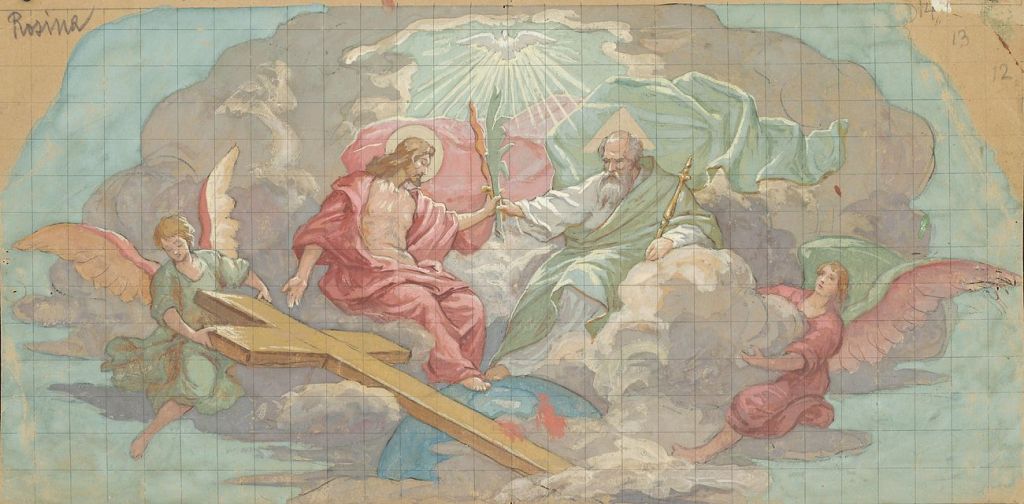
Trinitarian
God as Father, Son, and Holy Spirit — a concept that developed early but rooted in scripture.
The image of Jesus most people hold is wrong and wrung through centuries of:
ideological whitewashing
beautified marketing
sanitized Sunday School summaries.
He’s often pictured as an ethereal peace-giver, universally adored, calmly glowing in a ‘soft sepia light’.
But this wasn’t the Jesus known to his followers. Not even close.
In fact, many who encountered Jesus in the flesh found him either;
confusing, at best
mentally unstable, at worst.
He wasn’t simply controversial, he was considered a threat to both religious orthodoxy and social order.
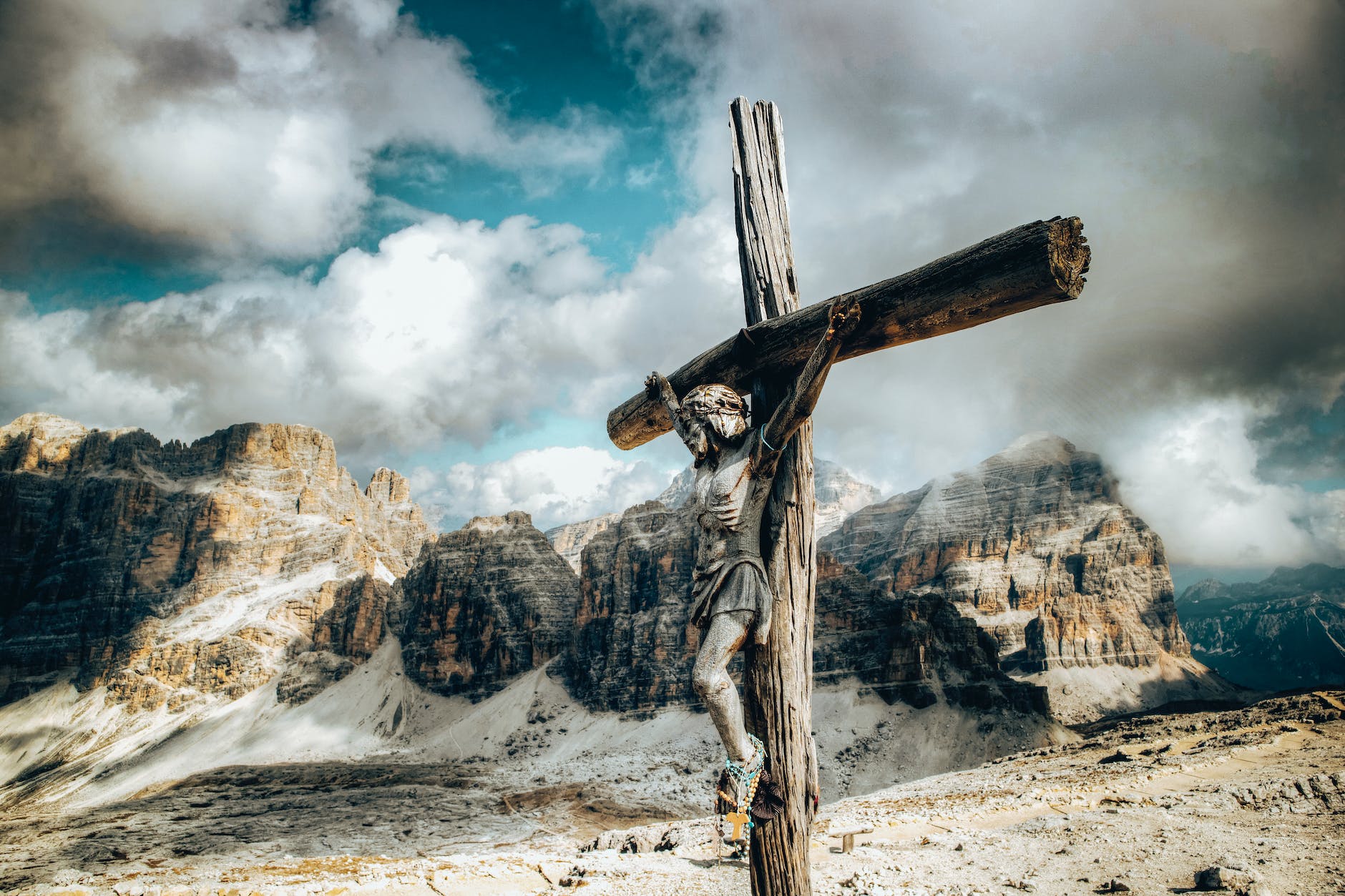
The sanitized version of Christ so many cling to was shaped after the cross, after the church industrial complex took control of his narrative.
Let’s take a scalpel to the original reactions—the raw, unsettling perceptions of Jesus while he was still walking the earth.
His Family Thought He’d Lost His Mind
The Gospel of Mark pulls no punches. In Mark 3:21, we’re told that Jesus’ own family said:
“He is out of his mind.”
Yes, his own bloodline. Not strangers. Not critics. His family. Pause there…
Imagine. Imagine the weight of that.
You’ve awoken to a Divine Knowing, a consciousness that cracks open reality—and the people who know your voice best say:
“You’ve snapped.”
It wasn’t mockery from outsiders that came first; it was internal doubt.
His kin likely feared he’d gone mad with something akin to messianic delusion.
Or perhaps they were embarrassed by his sudden rise as a controversial street-preacher confronting the Government and Church…
He spoke vehemently against both Rome and the temple elite.
Religious Leaders:
“You’re Breaking the Law and Blaspheming“
The religious class didn’t just dislike Jesus—they actively plotted his removal.
The scribes and Pharisees viewed him as a heretic, accusing him of;
violating the Sabbath
flouting Mosaic Law
daring to forgive sins.
—a divine prerogative.
His miracles weren’t applauded; they were denounced as works of Beelzebub.
Let that settle: divine acts being interpreted as demonic.
… this was normal folk… the acceptable people… The community.
This wasn’t petty disagreement. This was existential threat-level panic from the religious hierarchy.
They saw in Jesus… not just a radical voice—but someone who dismantled their very grip on sacred authority.
Public Whispers: “He Has a Demon and Is Mad“
John 10:20 captures this damning public sentiment:
“He has a demon and is mad; why listen to him?”
These weren’t elite theologians.
These were everyday observers—
neighbors
townsfolk
bystanders.
Jesus’ words, while layered with profound gnosis (wisdom), sounded unhinged to the average ear.
And truthfully, wouldn’t they today? I mean… They do.
Imagine someone saying,
“Before Abraham was, I am.”
Or calling God their literal Father, claiming to bring not peace but a sword.
If spoken in today’s marketplace, they’d be dismissed as spiritually schizophrenic, or worse.
So what’s changed? Only the power structure that codified his words.
Outside the Bible: Even More Scathing Views
This doubt wasn’t exclusive to Jewish contemporaries.
Roman voices and philosophers took their shots, too.
Talmud
The Talmud contains cryptic but deeply derogatory references to Jesus—branding him a sorcerer who led Israel astray.
He is also said in the Talmud to be swimming in hot excrements.
These weren’t passive critiques.
They were sharp rejections by those who saw his influence as spiritually treacherous.
Roman Philosophers
Roman historian Tacitus referred to Christianity as a “pernicious superstition,” blaming the followers of Christ for corrupting public morals.
To Roman minds, Christ’s followers were:
irrational fanatics clinging to a crucified troublemaker.
Celsus
And then there’s Celsus, the ancient philosopher and intellectual, who reportedly called Jesus
“small, ugly, and undistinguished,”
claiming his father was a Roman soldier—a jab meant to invalidate his divine paternity and tarnish the virgin birth narrative.
Jesus wasn’t revered by the intellectual elite of his time.
He was;
mocked
dismissed
vilified.
Why This Matters
This isn’t about shock value or anti-Christian rhetoric. It’s about truth-telling.
When we sanitize the narrative of Jesus to make him palatable. We also:
rob Him of the radical edge that threatened anti Christ power
offended institutions
deny the painful fact that he alienated his own family.
His teachings were revolutionary because they disrupted—not because they fit neatly within pre-existing paradigms.
So when you feel like your awakening makes others uncomfortable when your truth sounds like madness to the masses take comfort. You’re in excellent company.
Because the real Jesus wasn’t crucified for being nice. He was crucified because he challenged the lies. And many thought he was insane for doing so. Truth rarely sounds sane to those who live comfortably in delusion.
“And you will be hated by all for my name’s sake. But the one who endures to the end will be saved.”
In the beginning was the Word, & the Word was with God, & the Word was fully God.
The Word was with God in the beginning.
All things were createdby him, & apart from him: NOT one thing was created that has been created.
In him was life, & the life was the light of mankind. & the light shines on in the darkness, but the darkness did NOT comprehended it.
Delving into the realm of quantum physics unveils the intricate design of the universe, pointing towards a Creator who is both sovereign and holy, a concept described in the Bible.
This destroys materialistic perspectives. The term, Anomoly, loses all meaning when scientists choose to cover their metaphysical discoveries with a metaphorical “white out”.
The act of gossiping is a manifestation of the ego’s desire for attention, translating to a lust for power: the only way some people can feel they have a sense of control…
Gossip feeds on the weaknesses of others, and it can take many forms; from the subtle sharing of information to the outright spreading of lies.
Gossip is dangerous, for it can lead to the destruction of trust and the erosion of respect.
When we engage in gossip, we are not only harming others, but we are also damaging our own spiritual growth.
Heart Of Gossip
Gossiping reveals the darkness that resides within us, the sin that we carry in our hearts.
“Brothers and sisters, do not slander one another. Anyone who speaks against a brother or sister or judges them speaks against the law and judges it.”
James 4:11
fr
The Fruit of Insecure Fear is Gossip
Gossip manifests the fruits of our deep-seated insecurities & fears, which we try to mask by tearing down others, intensifying the depth of the downward cycle.
This is a futile attempt at finding validation, for it only perpetuates a cycle of negativity and harm.
The insidious nature of gossip is rooted in its ability to ignite and spread like a raging inferno.
It is a force that can quickly consume and destroy all in its path, leaving nothing but smoldering ruins in its wake.
As each person adds their embellishments and twists to the tale, the flames grow higher and hotter until the truth is lost in a haze of smoke and confusion.
Innocent people are often caught in the crossfire, their reputations and relationships scorched by the unforgiving flames of gossip.
See how great a forest is set aflame by such a small fire!
And the tongue is a fire, the very world of iniquity; the tongue is set among our members as that which defiles the entire body, and sets on fire the course of our life, and is set on fire by hell.
– James 3:5-6
THERE IS A SOLUTION!
Don’t Participate
At the core of our being lies the power to stop the spread of negativity.
It starts with a simple, yet profound act of choosing not to participate in gossip.
Our words hold great power, and that we must use them wisely, lest we become the unwitting arsonists of our own destruction.
By declining to engage in such conversations, we are taking a stand for truth and integrity.
We must resist the temptation to repeat rumors, for they only serve to perpetuate falsehoods and sow discord.
Gossip Damages Our Own Soul
At its core, gossiping is a manifestation of a lack of respect for the privacy and dignity of others.
It is a betrayal of trust and a violation of the sacred bond of any relationship.
When we engage in gossip, we are not only harming the person we are talking about, but we are also damaging our own souls. We are giving in to the temptation of ego and pride, seeking to elevate ourselves by tearing others down.
Actual spiritual growth requires us to resist this temptation and instead cultivate compassion and empathy toward others.
Treat Others How You Want To Be Treated
We must learn to see the divine in everyone and treat them with the same love and respect we would want for ourselves.
Only then can we truly live in harmony with the universe and fulfill our true purpose in life.
Treat others the same way you want them to treat you.
Luke 6:31
Treat Others How You Want To Be Treated
The act of spreading rumors and gossip is not only harmful to the victim, but it also reveals the character of the person spreading it.
As believers, we are called to guard our tongues and speak life-giving words.
Death and life are in the power of the tongue, And those who love it will eat its fruit.
Proverbs 18:21
Those who love death… eat death’s fruit.
Those who love life… eat life’s fruit.
IDENTITY IS IN CHRIST, NOT SELF
When faced with gossip, we must remember that our worth and identity are either in Satan or Christ, and you’re known by the fruits…
“The fruit of the Spirit is love, joy, peace, patience, kindness, goodness, faithfulness, gentleness, self-control…”
– Galatians 5:22-23
JESUS:
“By this My Father is glorified: hat you bear much fruit & so prove to be My disciples.”
-John 15:8
Words Have Great Power
Gossiping breaks trust and violates sacred bonds between people.
You will reap the rewards …
Speak What Is Truly Helpful
We should be careful with our words, speaking only what is helpful and uplifting to others, our words have the power to either build up or tear down.
Gossip Is A Reflection Of Spiritual Immaturity
Gossiping reflects the gossiper’s lack of spiritual awareness & disrespect towards the sanctity of their fellow’s being, spitting in the face of the God they claim.
“A perverse person stirs up conflict, and a gossip separates close friends.”
Proverbs 16:28
Gossip Violates Trust
It is not only a distasteful habit but also a violation of the trust.
“The tongue is a fire, a world of evil among the parts of the body. It corrupts the whole body, sets the whole course of one’s life on fire, and is itself set on fire by hell.”
James 3:6
Gossip Creates Negative Energy
By negative, I mean demonic.
When we surround ourselves with engagers of gossip we invite negative energy into our mentality.
Obviously those who speak ill of others are not operating from a place of love and kindness.
By distancing ourselves from this behavior, we are protecting our own soul, preserving our integrity.
WE ARE GODS VESSELS
God calls us to be His chosen vessels, carrying out His Will on earth.
Unity is key to reflecting God’s image, and we must strive to be like Him, embracing our enemies, setting aside our differences with Wisdom.
Trust is crucial, as we must keep each other’s secrets and avoid gossip. Let us embody these qualities to create a more peaceful world where God’s love reigns supreme.
God’s love reigns supreme.
Do you love?
Or are you a vessel preserved for wrath?
Bible Verses:
Proverbs 11:17 – “A man who is kind benefits himself, but a cruel man hurts himself.”
Colossians 3:12 – “Put on then, as God’s chosen ones, holy and beloved, compassionate hearts, kindness, humility, meekness, and patience.”
Proverbs 11:13 – “A gossip betrays a confidence, but a trustworthy person keeps a secret.”
1 Peter 3:8 – “Finally, all of you, have unity of mind, sympathy, brotherly love, a tender heart, and a humble mind.”
Proverbs 25:9 – “Argue your case with your neighbor himself, and do not reveal another’s secret,”
Proverbs 11:13 – “Whoever goes about slandering reveals secrets, but he who is trustworthy in spirit keeps a thing covered.”
In the depths of my soul, I grapple with the inherent contradictions of this world.
Society has shaped me into a unique being, molded by its influences and expectations.
And yet, beneath the surface lies a newfound understanding, a spiritual awakening that compels me to express my thoughts, unfiltered and unapologetic.
Navigating Nuance
As a believer in Christ, I fearlessly navigate the depths of my nuanced frame of mind.
I am both a product of society and a recipient of God’s grace.
This synthesis of my identity distinguishes me as a believer in the midst of a complex world.
“The prudent [person] gives thought to their steps.”
Proverbs 14:8
America’s Role In My Identity
Oh America, you have played a role in shaping the very essence of who I am.
Your vast tapestry of cultures, perspectives, and ideologies have shaped and molded me in profound ways.
The values and ideals that permeate your society have left an indelible stain on my character.
But now, on this journey of Faith, something extraordinary has happened.
As I wholeheartedly embrace the teachings of Christ by His Spirit, my soul longs to break free from the shackles of conformity and boldly vocalize the depths of my beliefs.
“The Spirit of the Sovereign Lord is on me, because the Lord has anointed me to proclaim good news to the poor. He has sent me to bind up the brokenhearted, to proclaim freedom for the captives and release from darkness for the prisoners.”
Isaiah 61:1
I yearn to speak my truth, regardless of society’s resistance.
You may have created me, that is my exterior, America, shaping me with your norms and expectations.
Yet, through Faith in Christ, I have come to realize that your systems are imperfect, and your desires for conformity are not aligned with the higher purpose laid before me.
“Do not conform to the pattern of this world, but be transformed by the renewing of your mind. Then you will be able to test and approve what God’s will is—his good, pleasing and perfect will.”
– Romans 12:2
Through the redeeming power of Christ’s love, my perspective has shifted.
I no longer passively accept the status quo, but rather embark on a mission to challenge societal norms, inviting open and honest dialogue.
It is in this space, in this unique frame of mind, where I find the courage to proclaim what’s on my heart, despite the resistance that may arise.
Oh America, do not fear my voice, for it is not one intended to sow discord or disdain.
Instead, it is a voice founded in love, compassion, and a deep belief in Christ’s teachings.
It is a voice that yearns for unity amidst the diversities that encompass your vast nation.
I am your child, America, transformed by the love and grace of Christ.
And now, I am determined to speak Truth, for you and for all who seek the Light of Truth and Redemption.
May my words serve as a catalyst for change, inspiring hearts to embrace the transformative power of Faith and the limitless possibilities it brings forth.
Today, I am on a journey of purpose, one where the innate beauty of our diverse souls intertwining, illuminating a path towards a more compassionate and loving existence.
The Arminian/freewillers accuse Calvinists of being deceitful about this, and the Calvinists end up contorting the Arminian’s beliefs to deny it.
I hope you can follow me on the different definitions of “author.“
AUTHOR:
Definition #1:the originator, the ultimate cause.
Definition #2: the immediate cause, the actor, the one doing the action.
When the Arminian/free willers say, “your theology makes God the author of sin because you teach God has decreed all things,” they are referring to definition #2 (the immediate cause, the actor, the one doing the action)
While the Calvinist is referring to Definition #1 (the originator, the ultimate cause.)
The issue arises from different interpretations of the term “author” within theological contexts.
While one party aligns with definition #1 ~the originator, the ultimate cause~ when considering God as the Author of sin, the other party adheres to definition #2 ~the immediate cause, the actor, the one doing the action~, denying God’s Authorship of sin, this inevitably leads to confusion whereby those engaging in Theological discourse speak past each other and will never come to an understanding of the other.
In the realm of theology and religious discussions, the concept of God’s sovereignty and control often sparks debates and varying interpretations.
Some individuals perceive God as an obsessive-compulsive control freak, while others view Him as a weak being unable to intervene in human affairs. However, it is crucial to approach these notions with a deeper understanding of God’s character, as revealed in scripture. In this article, we aim to shed light on the misconceptions surrounding God’s sovereignty and control, exploring the nuanced aspects of His nature.
Unveiling God’s Sovereignty
The Perfect Master’s Authority
Misconception: Imposing worldly labels on God’s character Counterargument: God’s sovereignty transcends human understanding
When discussing God’s sovereignty, it is important to avoid projecting human characteristics onto the Divine. God’s perfection and authority exceed our limited comprehension. Even if God were considered an “OCD control freak,” it would be fitting for the Almighty, as He is the only one worthy of absolute control. Mocking God’s sovereignty diminishes His supremacy and overlooks the fact that He remains stable, unwavering, and fixed in Himself.
The Scriptural Foundation of God’s Sovereignty
Misconception: Limited control over every particle Counterargument: God’s sovereignty extends to all creation
Scripture, such as Psalm 115, emphasizes that God does what He wishes. However, this does not imply that His sovereignty is limited to specific aspects of creation.
For instance, the idea that God handing the earth to mankind in Psalm 115:16 revokes His power over humanity and the earth is faulty. Instead, God grants limited sovereignty to humans while still maintaining ultimate control over all actions taking place on earth. His power is not confined to our linear concept of time; He authored the ages, declared the end from the beginning, and holds sway over past, present, and future.
The Balance of Free Will and God’s Control
The Paradox of Limited Sovereign Control
Misconception: God’s control diminishes with free will Counterargument: God’s sovereignty coexists with human choices
Some argue that if God is in control, why would He give limited sovereign control and the freedom of choice to humans?
However, the idea that God’s sovereignty is limited by human free will fails to acknowledge God’s ability to work through our choices while still accomplishing His ultimate purpose. Although humans may perceive themselves as free-willed, God remains in power, actively guiding the course of history towards His established eternal Kingdom. He is not dependent on imperfect human will to fulfill His already revealed prophecies.
The Power of God’s Authority
Misconception: Limiting God’s power to human talent and intelligence Counterargument: God’s power surpasses human comprehension
Implying that God’s power is limited to being talented and intelligent, while rejecting His authority, does not align with the scriptural portrayal of God. Humans may struggle with the concept of authority, often rejecting anything that questions their own autonomy. However, God’s authority and power exceed our understanding. If God lacks absolute power and is not the God of Scripture, He contradicts His own word and becomes a liar. Recognizing His sovereignty does not diminish His goodness, but rather highlights His unmatched wisdom and ability to accomplish His purposes.
Debunking the Notion of Dependent Control
The Fallacy of Dependent Control
Misconception: God’s control dependent on human choices Counterargument: God’s control surpasses human limitations
The idea that God accomplishes His purpose through human free will raises questions about God’s dependency on imperfect beings. However, God’s sovereignty extends beyond human limitations. His power and knowledge are unlimited, allowing Him to achieve His purposes regardless of human choices. The Word of God reveals that we are either slaves to righteousness or slaves to sin, referring to spiritual, inner enslavement. Only the will of righteousness can free us from the chains of sin, emphasizing that our freedom lies in surrendering to God’s authority.
The Complexity of Spiritual Slavery
Misconception: Misunderstanding the concept of slavery to righteousness Counterargument: Spiritual slavery signifies dependence on God’s will
The concept of being slaves to righteousness or sin involves the inner workings of the human will. It does not imply physical slavery but rather highlights our dependence on the will of either righteousness or sin. If we are slaves to righteousness, we cannot free ourselves through our own will. Instead, it is the will of righteousness that enslaves and liberates us. Thus, understanding our slavery to righteousness allows us to grasp the depth of our dependence on God’s will and power.
The misconceptions surrounding God’s sovereignty and control stem from imposing human limitations and understanding onto the Divine.
By delving into the scriptural foundation and unraveling the complexities of these concepts, we can gain a more comprehensive understanding of God’s sovereignty and control. It is crucial to recognize that God’s sovereignty transcends human comprehension and extends to all creation.
The balance between human free will and God’s control lies in the paradox of limited sovereign control, where God works through our choices while still accomplishing His ultimate purpose. Furthermore, debunking the notion of dependent control reveals that God’s power surpasses human limitations and that spiritual slavery signifies our dependence on God’s will. By shedding light on these lesser-known aspects of God’s sovereignty and control, we can deepen our understanding and appreciation of His nature.
Resources:
“The Sovereignty of God” by A.W. Pink
“The Mystery of Providence” by John Flavel
“The Doctrine of God” by John Frame
“The Sovereignty of God” sermon by John Piper
“Sovereignty and Goodness of God” by Mary Rowlandson (PDF)
If you feel that God is reproving you, be assured that it is a sign of His love. Although reproof is painful and causes your strength to dwindle, it is evidence that God is invested in your eternal Salvation and is guiding you towards His Kingdom and away from this world.
God’s reproof is a clear demonstration of His care and concern for your well-being.
Remember, for His Sheep His love is unconditional and His reproof should be embraced it with confidence and gratitude.
Meditate On This Scripture:
“How happy and FORTUNATE is the man whom God reproves, So DO NOT DESPISE or reject the DISCIPLINE of the Almighty [SUBJECTING YOU TO TRIAL AND SUFFERING].
For He inflicts pain…
BUT He binds up and gives relief.
He wounds…
BUT His hands also heal.
He will rescue you from six troubles; Even in seven, EVIL WILL NOT TOUCH YOU.
In famine He will redeem you from death, And in war from the power of the sword.
You will be hidden from the scourge of the tongue, And YOU WILL NOT BE AFRAID of destruction when it comes.
You will laugh at violence and famine, And you will not be afraid of the wild beasts of the earth.
For YOU WILL BE IN HARMONY WITH THE STONES OF THE FIELD, AND THE BEASTS OF THE FIELD WILL BE AT PEACE WITH YOU.
Behold this; WE HAVE INVESTIGATED IT, and IT IS TRUE.
Each aspect of God has a purpose in all things, including Salvation.
The doctrine of salvation underscores the unity, sovereignty, and active involvement of the Father, Son, and Holy Spirit in bringing about the redemption of mankind. Let us explore the Trinitarian nature of salvation and the distinct roles each person of the Trinity plays in this divine mission
“But we ought always to give thanks to God for you, brothers beloved by the Lord, because God chose you as the firstfruits to be saved, through sanctification by the Spirit and belief in the truth.”
– 2 Thessalonians 2:13
Salvation’s essence resides in the Father’s unwavering choice and election of individuals.Long before the world’s inception, the Father, in His boundless grace, deliberately chose a people for Himself. This divine selection was not based on their merits, but solely rooted in His infinite mercy and divine decree. As the driving force behind salvation, the Father sets the stage for the magnificent unfolding of His redemptive plan.
The Father, being the ultimate source and architect of salvation, assumes a paramount role in the Trinity of Salvation. It is He who, guided by His sovereign will and overflowing grace, elects and distinguishes individuals for redemption. The Father’s immeasurable love and grand design establish the unshakable groundwork for the majestic unveiling of salvation’s divine purpose.
PERSON: The Son
SALVATION: Perfect Redemption
“For even the Son of Man came not to be served but to serve, and to give his life as a ransom for many.”
– Mark 10:45
The Son, Jesus Christ, plays a crucial role in the accomplishment of salvation. He obediently fulfills the demands of the law, living a flawless life that sets the standard for humanity. Through His sacrificial death on the cross, He offers Himself as a perfect and substitutionary atonement for the sins of the chosen ones. Rising triumphantly from the grave, He conquers sin and secures eternal life for those who place their trust in Him.
The Son, Jesus Christ, holds a central position in the Trinity of Salvation. He willingly takes on human form, becoming the perfect mediator between God and humanity. Through His incarnation, life, death, and resurrection, Jesus achieves redemption for the chosen ones. His sacrificial death on the cross serves as the ultimate atonement for sin, providing forgiveness and reconciliation with God.
PERSON: Holy Spirit
SALVATION: Transformation
“And I will give you a new heart, and a new spirit I will put within you. And I will remove the heart of stone from your flesh and give you a heart of flesh. And I will put my Spirit within you, and cause you to walk in my statutes and be careful to obey my rules.”
– Ezekiel 36:26-27
Completing the Trinity of Salvation is the Holy Spirit. The Spirit is the one who applies the work of Christ to the hearts of individuals. Through the regenerating power of the Holy Spirit, the elect are given new life, enabling them to have faith in Jesus Christ and repent of their sins. The Spirit sanctifies believers, empowering them to grow in holiness and conform to the image of Christ.
The Holy Spirit, the third person of the Trinity, plays a transformative role in salvation. He regenerates the hearts of the chosen ones, granting them new life and a disposition inclined towards God. Through His work, the Holy Spirit enables individuals to have unwavering faith in Jesus Christ, bestowing the remarkable gift of salvation. He continuously sanctifies believers, decisively conforming them to the image of Christ and empowering them to live a life abundantly pleasing to God.
Together, the Father, Son and Holy Spirit work harmoniously in the Trinity of Salvation.
“Go therefore and make disciples of all nations, baptizing them in the name of the Father and of the Son and of the Holy Spirit.”
– Matthew 28:19
The Father initiates and chooses, the Son accomplishes redemption, and the Holy Spirit applies and empowers. Their unified work reveals the depth of God’s love, grace, and mercy towards humanity, showcasing the intricate and divine interplay within the Trinity itself.