Category: Philosophical | Philosophy

Magic, in many ways, is the manifestation of our deepest desires and aspirations. It captivates our imagination and challenges our understanding of reality. Philosophically, magic represents the boundary between the known and the unknown, inviting us to question the nature of existence and our place within it. It pushes us to explore the unseen forces that govern our lives and to consider the possibility that there is more to the universe than what meets the eye.

At its core, magic can symbolize transformation and the potential for change. Whether in the metaphorical sense of personal growth or in fantastical narratives where characters undergo profound journeys, magic underlines our capacity to alter the fabric of our lives. It speaks to the power of belief, imagination, and the human spirit, encouraging us to dream beyond the ordinary and envision new realities. Ultimately, magic serves as a reminder of the wonders of existence, prompting us to embrace mystery and cultivate a sense of wonder about the world around us.

  • Aquinas vs Augustine: Exploring Their Perspectives on Theology and Free Will

    Aquinas vs Augustine: Exploring Their Perspectives on Theology and Free Will

    Theologians Thomas Aquinas and Augustine of Hippo stand as titans in the history of Christian thought, offering profound insights on various theological topics. Their perspectives on theology and free will have captivated scholars and sparked ongoing debates. In this article, we will delve into the divergent viewpoints of Aquinas and Augustine, shedding light on the nuances of their theological frameworks and the significance of their contributions.

    Further Reading:

    https://ideaexchange.uakron.edu/cgi/viewcontent.cgi?article=2387&context=honors_research_projects

    Augustine’s Understanding of Free Will

    Augustine, often referred to as one of the most influential thinkers in Christian history, approached the concept of free will from a distinctive angle. He posited that due to the inherent fallen nature of humanity, human beings are incapable of choosing genuine good without the transformative grace of God.

    Augustine believed that all humans are born with a deep inclination towards evil, known as “original sin,” which stems from the disobedience of Adam and Eve in the Garden of Eden. This fallen nature, according to Augustine, renders human free will deeply wounded and inclined towards evil.

    Contrary to Aquinas, Augustine emphasized the primacy of divine grace in the salvation of humanity.

    He argued that God’s grace is necessary for the regeneration and redemption of individuals, as human efforts alone are insufficient to overcome the pervasive effects of sin. Augustine’s theological framework, often referred to as “divine determinism,” places a greater emphasis on God’s sovereignty and predestination, with human choice being ultimately subject to God’s will.

    Aquinas’s Concept of Free Will

    In contrast to Augustine’s more pessimistic view of free will, Aquinas approached the concept with a more optimistic lens. He proposed that human beings possess the capacity for true freedom and the ability to choose between good and evil.

    Aquinas argued that God created human beings with free will, granting them the ability to make moral choices. He believed that free will is essential for the exercise of virtues and the pursuit of moral excellence. According to Aquinas, human actions are a result of deliberation and choice, allowing individuals to cooperate with the divine plan and live a virtuous life.

    Moreover, Aquinas posited that human free will is compatible with God’s divine foreknowledge. He argued that God’s knowledge of our choices does not diminish our freedom but rather transcends time itself. In Aquinas’s view, God’s omniscience and human free will exist harmoniously within a comprehensive divine plan.

    Theological Implications and Ongoing Debate

    The contrasting views of Aquinas and Augustine on free will have far-reaching implications for theological thought. While Augustine emphasized the fallen nature of humanity and the necessity of divine grace, Aquinas placed greater emphasis on human agency and the compatibility of free will with God’s attributes.

    These differing perspectives continue to inspire lively debates among theologians.

    Some argue for the compatibility of free will and divine sovereignty, building upon Aquinas’s framework. Others align more closely with Augustine’s emphasis on divine determinism and the essentiality of God’s grace for salvation.

    The ongoing dialogue between proponents of both viewpoints enriches our understanding of the complexities of human choice, divine grace, and the interplay between them. It invites us to explore the profound mysteries of faith from different angles and appreciate the multiplicity of theological perspectives.

    Thomas Aquinas and Augustine of Hippo have left an indelible mark on the theological landscape through their distinct perspectives on free will and theology.

    While Augustine emphasized the fallen nature of humanity and the necessity of divine grace, Aquinas advocated for the existence of true human freedom and its compatibility with God’s attributes.

    Their divergent viewpoints continue to inspire theological exploration and spark intellectual debates. The ongoing dialogue surrounding their perspectives enriches our understanding of the complexities of human choice, divine grace, and the intricacies of theological thought. By delving into the depths of their ideas, we gain profound insights into the nature of faith and the profound mysteries that lie at the heart of Christian theology.

    Resources:

    Saint Augustine – Stanford Encyclopedia of Philosophy

    Augustine and the Pelagian Controversy

    Handout: Augustine on the Will, Sin and Grace

    Martin Luther’s Trinitarian Hermeneutic of Freedom

  • Immanuel Kant: Unraveling the Depths of Knowledge In The Critique Of Pure Reason

    Immanuel Kant: Unraveling the Depths of Knowledge In The Critique Of Pure Reason

    Who is Immanuel Kant?

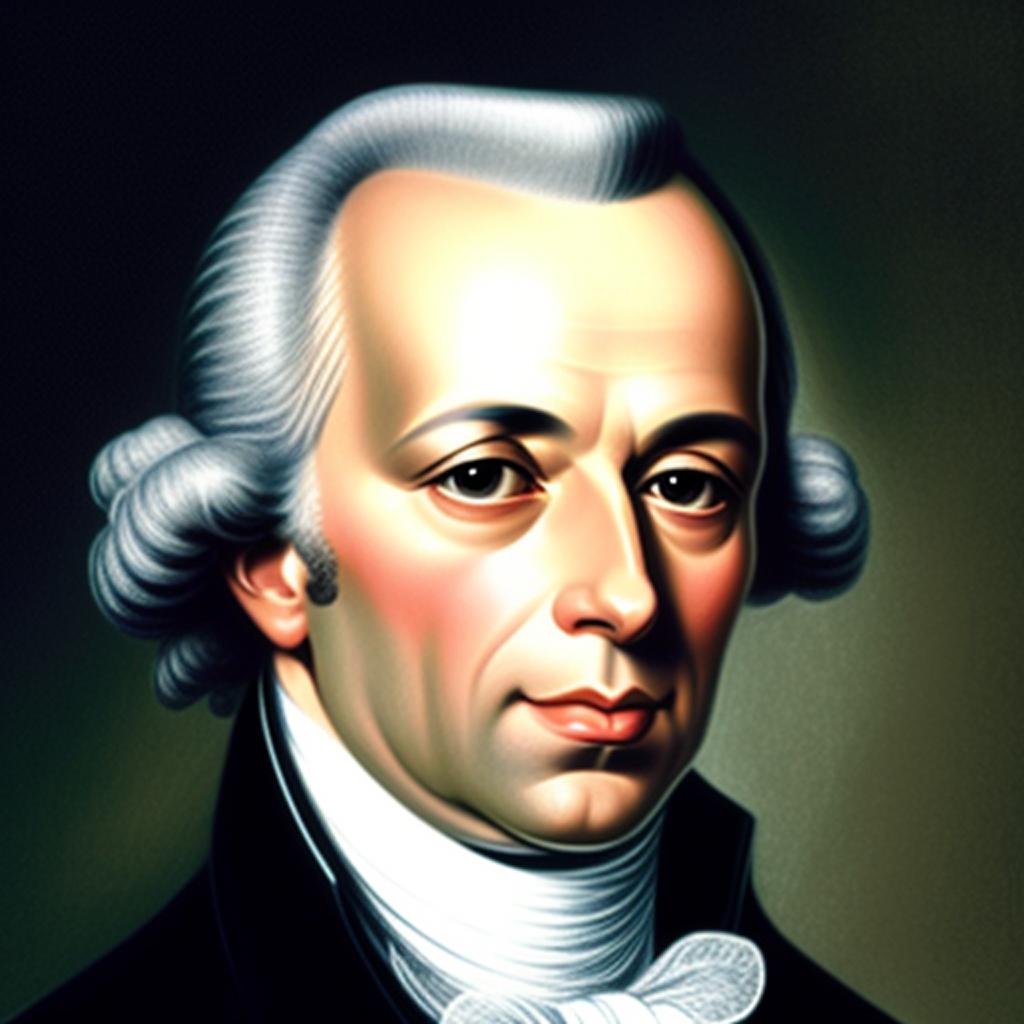
    Immanuel Kant, a prominent philosopher of the Enlightenment era, revolutionized our understanding of knowledge, ethics, and metaphysics. His influential work, the Critique of Pure Reason, explores the limits and possibilities of human cognition. Kant’s concept of the “categorical imperative” serves as a universal moral compass. His legacy as a beacon of enlightenment challenges us to critically examine our existence.

    In this article, we will delve into Kant’s masterpiece, the Critique of Pure Reason, where he explores the nature of knowledge. Kant’s argument emphasizes the interplay between our innate concepts and the sensory experiences that shape our understanding of the world. Let us embark on a journey to unravel the depths of Kant’s philosophical insights.

    Read Free: Critique of Pure Reason

    The Interplay of Innate Concepts and Sensory Experiences:

    Kant posits that our comprehension of the world is not solely reliant on our sensory encounters.

    Instead, he argues for the existence of a priori knowledge, which is inherent and independent of empirical observation. A notable example is the concept of causality, which we grasp even before we have any specific sensory experiences relating to it. This suggests that our understanding of the world is deeply influenced by our innate concepts, which in turn are shaped by reason.

    Many scholars also support Kant’s stance by asserting that our sensory experiences are molded by our pre-existing concepts.

    Read:

    Some notable scholars who endorse this stance include:

    1. John McDowell: McDowell, a contemporary philosopher, embraces Kant’s idea that our conceptual framework shapes our perceptual experiences. He argues for the inseparability of conceptual understanding and sensory perception, emphasizing the role of our pre-existing concepts in structuring our experience of the world.
    2. Hilary Putnam: Putnam, a prominent philosopher of mind and language, aligns with Kant’s view that our concepts influence the way we perceive and interpret the world. He emphasizes the significance of our conceptual schemes in determining the content and meaning of our sensory experiences.
    3. Robert Hanna: Hanna, a Kantian scholar and philosopher, extensively explores the relationship between concepts and perception. He supports Kant’s contention that our pre-existing concepts shape our sensory experiences, emphasizing the role of our cognitive faculties in constructing our understanding of reality.
    4. Patricia Kitcher: Kitcher, a philosopher known for her work on Kant, acknowledges the importance of our conceptual frameworks in shaping our perceptual experiences. She emphasizes the active role of our cognitive capacities in structuring our understanding of the world.

    These esteemed scholars fervently uphold Kant’s concept, making invaluable contributions to the ever-evolving discourse and advancement of Kantian philosophy. With meticulous scrutiny and profound exploration, they fortify the profound impact our pre-existing concepts exert on our perception and understanding of the world that surrounds us.

    Organizing Experiences through Innate Concepts:

    According to Kant, our minds possess the innate capacity to organize and structure our experiences in a manner consistent with our inherent concepts.

    This is evident when different individuals interpret the same sensory experiences differently, based on their unique pre-existing concepts.

    Sebastian Gardner’s book, “Kant and the Critique of Pure Reason,” provides a comprehensive analysis of Kant’s work, shedding light on the significance of both innate concepts and sensory experiences in shaping our understanding of the world. Gardner’s insights further reinforce Kant’s argument, highlighting the intricate relationship between our innate concepts and the interpretation of our experiences.

    Kant argues that while sensory experience provides the raw data, it is our innate concepts that enable us to comprehend and interpret that data.

    These concepts act as organizing principles, guiding our perception and giving shape to our understanding of reality.

    The individual variations in how we interpret sensory experiences arise from the unique combination and configuration of our pre-existing concepts.

    Each person’s conceptual framework is influenced by their own cognitive capacities, cultural background, education, and personal experiences.

    These factors contribute to shaping the specific lens through which they perceive and interpret the world.

    Example:

    For example, when two people observe a sunset, their interpretations may differ based on their conceptual frameworks. One person might focus on the aesthetic beauty and evoke emotions of tranquility, while another might analyze the scientific phenomena behind the colors and atmospheric conditions.

    This diversity of interpretation highlights the subjective nature of perception and the role of our pre-existing concepts in shaping our understanding. Kant’s philosophy prompts us to recognize and appreciate the multiplicity of perspectives that arise from these individual conceptual frameworks.

    Furthermore, Kant’s emphasis on the interplay between our innate concepts and sensory experiences challenges us to reflect on the limitations and biases inherent in our understanding. It encourages us to critically examine the ways in which our conceptual frameworks influence our interpretations and to strive for a more nuanced and comprehensive comprehension of the world.

    In essence, Kant’s philosophy illuminates the intricate relationship between our innate concepts and sensory experiences, highlighting the subjective nature of perception and the role of our pre-existing frameworks in shaping our understanding. By acknowledging and exploring these dynamics, we gain a deeper appreciation for the complexities of human cognition and the rich tapestry of individual perspectives.

    The Intricate Pathways of Kant’s Philosophy:

    Immanuel Kant’s meticulous analysis delves into the intricate pathways through which our thoughts navigate in the vast realm of philosophy. With an intellectual prowess that leaves no stone unturned, he challenges us to question the sources of our knowledge and to embark on a profound exploration of the interplay between our innate concepts and sensory experiences.

    The Critique of Pure Reason shines a light on the profound relationship between our a priori knowledge and the shaping influence of our reason. He beckons us to delve into the very foundations of knowledge, urging us to question the assumptions that underpin our understanding of the world.

    Through his intricate analysis, Kant extends an invitation to embark on a transformative journey of self-reflection and intellectual exploration. He unveils a framework that allows us to grasp the complexities of human understanding and glimpse the profound depths of knowledge that lie within the realm of philosophy.

    Let us embrace the wisdom bestowed upon us by Kant and continue our relentless pursuit of unraveling the mysteries that philosophy holds. For it is through this pursuit that we shall unlock the true essence and purpose of our existence.

    If you’re interested in further exploring Immanuel Kant’s philosophy, here are a few other notable books and resources that delve into his profound ideas:

    1. “Kant: A Very Short Introduction” by Roger Scruton: This concise yet enlightening book provides an accessible introduction to Kant’s philosophy, offering a clear overview of his key concepts and arguments.
    2. “Kant’s Transcendental Idealism: An Interpretation and Defense” by Henry E. Allison: This comprehensive work delves into Kant’s transcendental idealism, examining the intricate nuances of his metaphysical and epistemological system.
    3. “Kant and the Problem of Metaphysics” by Martin Heidegger: Heidegger, a prominent philosopher in his own right, engages with Kant’s philosophy in this thought-provoking text, providing a unique interpretation and critique of Kant’s transcendental philosophy.
    4. “Kant’s Ethical Thought” by Allen W. Wood: For those interested in Kant’s moral philosophy, this book offers a thorough exploration of his ethical thought, focusing on his concept of moral duty and the categorical imperative.
    5. “The Cambridge Companion to Kant” edited by Paul Guyer: This collection of essays by various scholars provides a comprehensive overview of Kant’s philosophy, covering a wide range of topics including metaphysics, epistemology, ethics, and aesthetics.

    These resources, among others, will provide you with a deeper understanding of Kant’s philosophical ideas and their implications. They serve as valuable companions in unraveling the complexities of Kant’s thought and engaging in further intellectual exploration.

    More Resources:

    Kant’s Account of Reason – Stanford Encyclopedia of Philosophy

    Immanuel Kant: Biography, Philosopher, Critique of Pure …

  • The Path to Wisdom: Embracing Foolishness as a Catalyst for Growth

    The Path to Wisdom: Embracing Foolishness as a Catalyst for Growth

    In our quest for wisdom, we often overlook the valuable lessons that foolishness can impart.

    The journey towards true enlightenment requires experiencing both the heights of wisdom and the depths of foolishness. It is through the pain and humility of our own foolish actions that we gain a profound understanding of our flaws and the arrogance that often accompanies them.

    But how can embracing foolishness be a catalyst for growth, you may wonder? It is in our moments of folly that we are confronted with the stark reality of our own limitations. These moments serve as powerful wake-up calls, forcing us to reevaluate our beliefs and behaviors. Only by acknowledging our own foolishness can we start to rectify our shortcomings and embark on a path of true growth.

    Yet, so often we are resistant to admitting our own foolish actions. We fear being judged or seen as weak by others. However, true wisdom is not found in the opinions of others, but rather in our ability to recognize and learn from our mistakes.

    Here are some key insights into how embracing foolishness can pave the way to wisdom:

    1. Cultivating Humility

    Foolishness humbles us in profound ways. By accepting our own fallibility, we develop a sense of humility that enables us to learn from others. It opens our hearts and minds to different perspectives, fostering a greater understanding of the world around us.

    2. Embracing Vulnerability

    Acknowledging our foolishness requires vulnerability. It involves letting go of ego and embracing our imperfections. When we embrace vulnerability, we create opportunities for deeper connections and meaningful growth.

    3. Gaining Self-Awareness

    Moments of foolishness provide invaluable opportunities for self-reflection. They shed light on the aspects of ourselves that need improvement or development. By recognizing our own weaknesses, we can strive to become better versions of ourselves.

    4. Developing Resilience

    Mistakes and failures are inevitable in life. Embracing foolishness teaches us resilience — the ability to bounce back from setbacks and use them as stepping stones to success. It fosters an unwavering determination to persevere, despite the challenges we face.

    5. Expanding Creativity

    Foolishness often arises from thinking outside the box and taking risks. Embracing foolishness encourages us to tap into our creative potential, freeing us from the constraints of convention and encouraging innovative thinking.

    Conclusion

    In our journey towards wisdom, it is crucial to recognize the transformative power of foolishness. Rather than shying away from our own mistakes and blunders, we should embrace them as opportunities for growth. By cultivating humility, embracing vulnerability, gaining self-awareness, developing resilience, and expanding creativity, we can unlock the true potential of wisdom.

    So, let us not shy away from the lessons foolishness has to offer. Embrace your own folly and embark on the path to true wisdom. Remember, the road to enlightenment is paved with both wisdom and foolishness, and it is through embracing both that we can ultimately become wiser, more compassionate beings.

  • Demystifying the Basics of String Theory: Questions. Answered.

    Demystifying the Basics of String Theory: Questions. Answered.

    1. What is String Theory?
    2. What are oscillating strings in String Theory?
    3. How do oscillating strings relate to the particles and forces in our universe?
    4. What are hidden dimensions?
    5. How are hidden dimensions supported by calculations and mathematical models?

    1. What is String Theory?

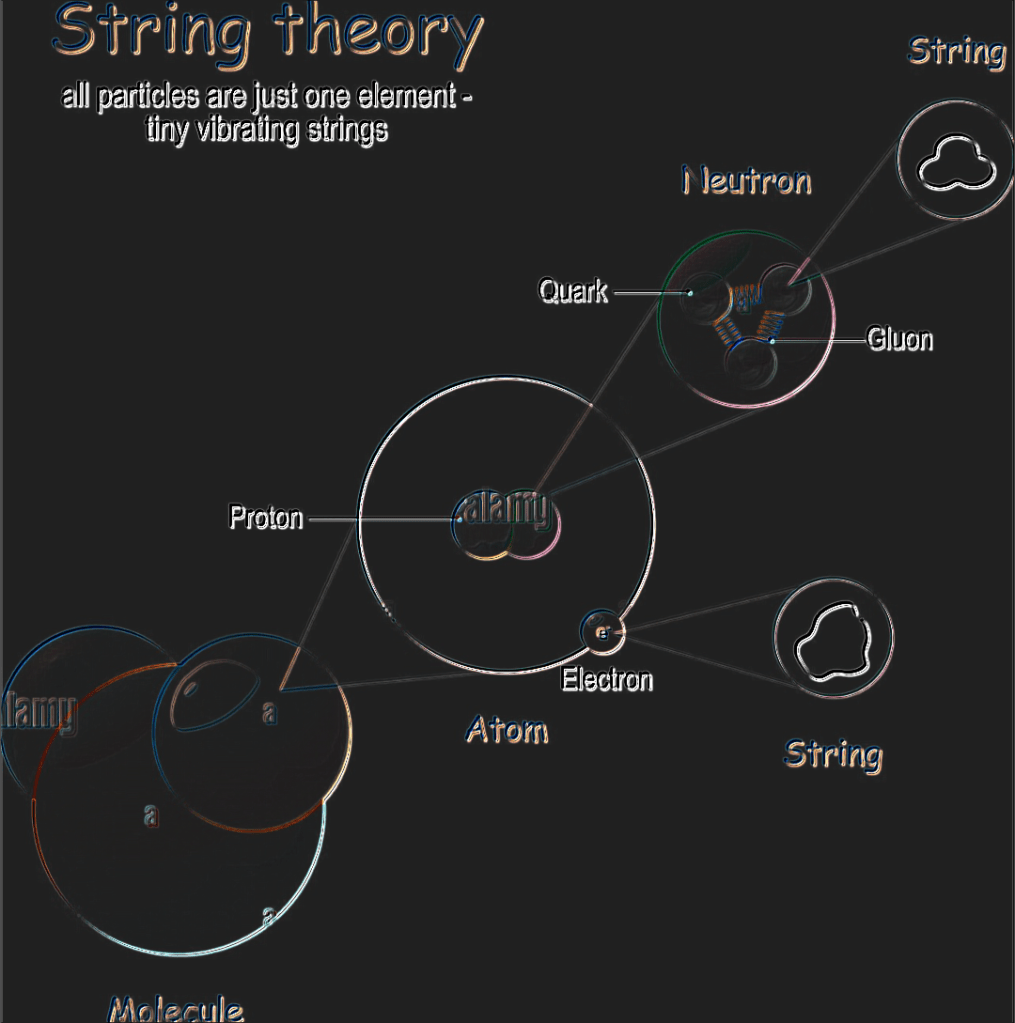
    String theory is supported by several facts and resources that make it a compelling theoretical framework in physics. Firstly, string theory offers a solution to the long-standing problem of reconciling quantum mechanics and general relativity. These two theories, while successful in their respective domains, are incompatible at the fundamental level. String theory proposes that elementary particles are not point-like objects, but rather tiny, vibrating strings. This revolutionary concept helps to bridge the gap between the quantum world of particles and the gravitational interactions described by general relativity.

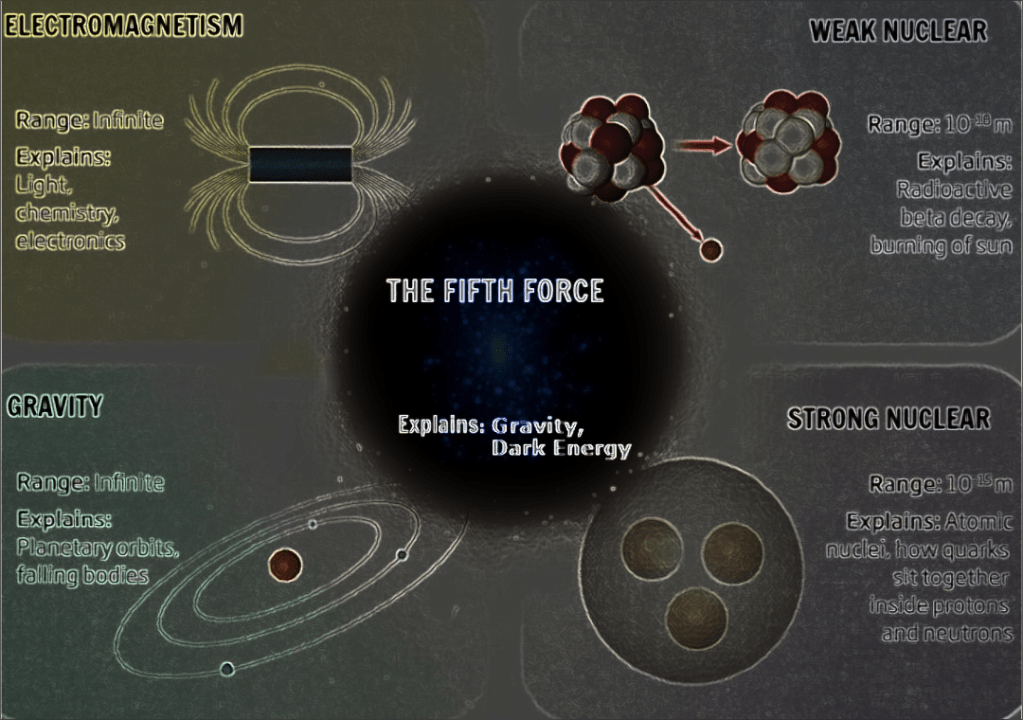
    String theory provides a mathematical framework that unifies all the known fundamental forces. By incorporating gravity, electromagnetism, and the strong and weak nuclear forces into a single theory, string theory offers the possibility of a unified description of the universe.

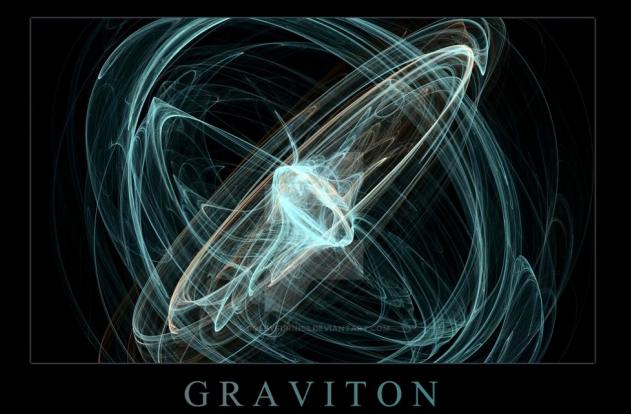
    This is a major goal in physics and has been a driving force behind much of the research in theoretical physics. In fact, string theory predicts the existence of new particles called gravitons, which are hypothesized to mediate the force of gravity.

    The ghost particle


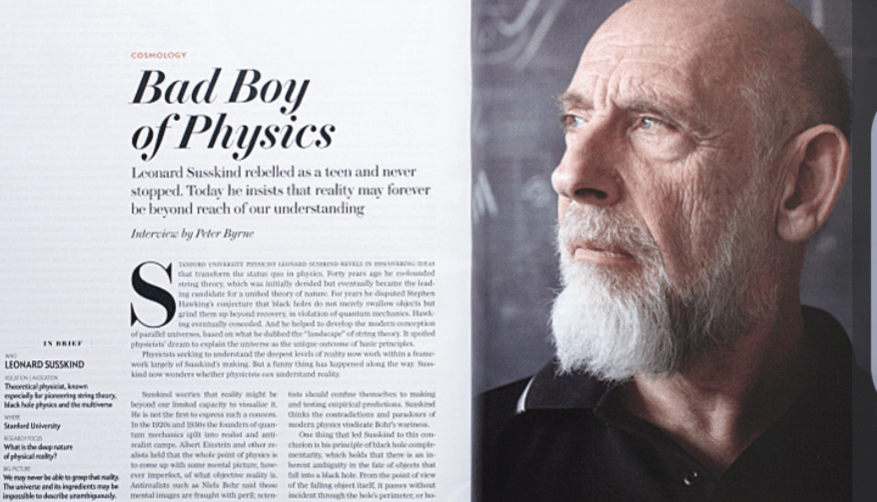
    In terms of resources, string theory has been extensively studied by many prominent physicists, such as Leonard Susskind, Brian Greene, and Juan Maldacena. These individuals have published numerous papers and books on the subject, providing detailed explanations and mathematical models that support the concepts of string theory. Additionally, string theory has been a subject of ongoing research and debate within the scientific community, with experiments and theoretical developments continually pushing the boundaries of our understanding.

    With its ability to reconcile quantum mechanics and general relativity, unify the fundamental forces, and predict new particles, string theory has garnered significant attention and support from the scientific community.

    2. What are oscillating strings in String Theory?

    There are several facts and resources that support the notion of oscillating strings in string theory. One key resource is the work of renowned theoretical physicists such as Edward Witten, Leonard Susskind, and Juan Maldacena. These scientists have made significant contributions to the development and understanding of string theory, including the concept of oscillating strings as the fundamental objects from which particles are composed.

    In addition to the research of these physicists, various mathematical calculations and theoretical frameworks further validate the existence of oscillating strings. These calculations show that the vibrational modes of these strings correspond to different particle properties, such as mass and charge. The intricate mathematical consistency between these vibrational modes and observed particle properties lends strong support to the concept of oscillating strings.

    Furthermore, experimental evidence has indirectly validated the existence of oscillating strings. For instance, the discovery of supersymmetry, which predicts the existence of superpartners for each particle, aligns with the principles of string theory. Additionally, the concept of extra dimensions, also predicted by string theory, has gained theoretical and experimental support. These extra dimensions and their impact on particle interactions provide further evidence that oscillating strings are indeed the building blocks of our universe.

    3. How do oscillating strings relate to the particles and forces in our universe?

    String theory proposes the concept of oscillating strings as a fundamental component of our universe. The theory suggests that particles in our universe are not point-like, but rather tiny strings that vibrate in multiple dimensions. This concept provides a possible explanation for the different masses, charges, and properties of particles. The vibrations of the strings give rise to various particles with different energies and masses.

    Moreover, string theory also explains the origin of the fundamental forces and interactions. The interactions between the strings, such as splitting and merging, correspond to the different forces in nature, including electromagnetism, gravity, the strong nuclear force, and the weak nuclear force.

    This is a remarkable aspect of string theory, as it offers a unified framework that can potentially explain all the fundamental particles and forces that govern our universe.

    Despite its theoretical elegance, it is important to acknowledge that string theory is still highly speculative and has yet to be experimentally confirmed. Due to the immense complexity of its mathematical formulations, direct empirical evidence is currently lacking. Nevertheless, string theory has gained significant attention and continues to be actively studied by physicists as a promising theoretical framework for understanding the fundamental nature of our universe.

    Sources:
    1. Greene, B. (2000). The Elegant Universe: Superstrings, Hidden Dimensions, and the Quest for the Ultimate Theory. Vintage Books.


    2. Polchinski, J. (2000). String Theory: Volume I, An Introduction to the Bosonic String. Cambridge University Press.


    4. Ooguri, H. (2012). Introduction to Physics of String and Branes. Lecture Notes. Retrieved from PDF

    4. What are hidden dimensions?

    Hidden dimensions, as proposed in theoretical physics, refer to additional spatial dimensions beyond the three that we are familiar with (length, width, and height). These extra dimensions are not detectable in our everyday experience but are postulated in various physical theories, such as string theory and superstring theory.

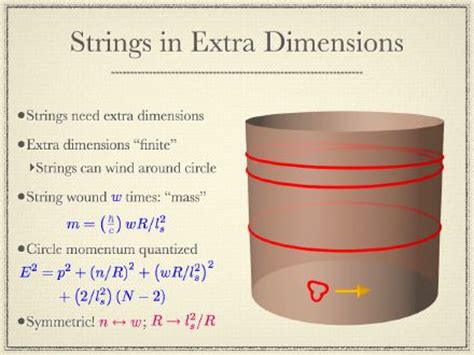
    According to these theories, there may be up to 10 or 11 dimensions in total, with the extra dimensions “curled up” or “compactified” at tiny scales or in complex shapes, making them hidden from our perception. These additional dimensions play a crucial role in solving certain problems in fundamental physics, such as unifying gravity with the other fundamental forces and explaining the nature of particles and forces.


    Understanding and exploring hidden dimensions are significant challenges in modern theoretical physics and are subjects of ongoing research. However, it’s important to note that the existence of hidden dimensions is still a theoretical concept and has not been proven experimentally.

    5. How are hidden dimensions supported by calculations and mathematical models?

    Hidden dimensions are not directly observable in our three-dimensional world, but they are supported by calculations and mathematical models in theoretical physics. One such model that incorporates hidden dimensions is string theory, which suggests that our universe may consist of more than three spatial dimensions. In this theory, particles are not considered point-like, but instead are tiny vibrating strings that propagate through spacetime, including hidden dimensions. These strings and their interactions are described by mathematical equations derived from principles such as quantum mechanics and differential geometry.

    Additionally, hidden dimensions can have observable effects on various physical phenomena. These effects can deviate from what would be expected in a purely three-dimensional world and can be formulated mathematically. Through this mathematical analysis, scientists can make predictions and test them against experimental data. While hidden dimensions have not been experimentally confirmed, the mathematical framework they provide has contributed to our understanding of fundamental physics.


    Resources:
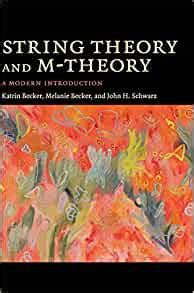
    – “String Theory and M-Theory: A Modern Introduction” by Katrin Becker, Melanie Becker, and John H. Schwarz.


    – Lecture notes on string theory and hidden dimensions from reputable universities like Princeton, Harvard, and Caltech.

  • Determinism: Interplay of Wisdom and Logic

    Determinism: Interplay of Wisdom and Logic

    In a world filled with uncertainties, the concept of determinism offers a compelling perspective on the nature of causality and human agency.

    From the philosophical debates among thinkers to discussions within the scientific community, determinism has sparked curiosity and controversy alike.


    The term “determinism” originates from the Latin word “determinare,” which means “to limit” or “to set boundaries.”

    It can be traced back to the 17th century when it was first used in the context of metaphysics.

    Every event or action is caused by prior events or actions, and there is a predetermined sequence of cause and effect in the universe. As we cannot comprehend the fullness of this reality because of our spatial bodily limits, yet it’s clear that all events, actions, thoughts, and creations are ultimately determined by the creator of His creation. The ultimate determiner and decider of fate is not the “free” human will or personal choice of man, but God’s Will, in whom is actually free and who created the ability to make decisions, forming every brain synapse and calculation that transpires within our mind. Apart from His fabric, nothing is.

    Determinism has been a subject of debate among philosophers, scientists, and theologians because man insists that his will is powerful.

    We are in a constant power struggle, not with each other, but with our God.

    We effeminate Him and weaken Him into a puppy dog who is only gushy, spineless, and lovey-dovey when our God is a Lion, a Shepherd, a Force that can’t be overcome.

    Many different variations and interpretations of determinism exist, ranging from strict determinism, which asserts that all events are fully predetermined and predictable, to compatibilism, which argues that determinism can coexist with free will.

    I am a strict determinist if I had to give my beliefs a “label” when I am speaking from a spiritual perspective. From Heaven, all of Earth is determined. Any freedom in the will of man, in actuality, is giving free will to the lost, free will to the blind, stupid, and attributing free will to the determining factors of the spiritually dead humans. If this were actually true, definitively, it would be, in my opinion, one of the worst things God could do to us… it would cause all men to be annihilated quicker than we would know what happened.

    God is the God of Order.

    He has ownership and control. We can trust Him; His hands are never tied.

    Determinism is, to this day, a central topic of inquiry in philosophy, science, theology and other fields of study.

    All events on the earth are predetermined and guided by causal laws, God is in charge, if He is not, we cant trust Him and we cant be sure of the finsl outcome> God is beyond comprehension in not only love but POWER.

    Causal laws are fundamental principles that explain the cause-and-effect relationships between events or phenomena in the universe.

    Determinism challenges free will and asserts that all actions are ultimately governed by external factors, even if internally manifested. However, some argue that the Spirit of God within man is the driving force behind our actions. According to this perspective, God performs the work, and we simply act it out.

    My journey Towards Embracing Determinism:

    The Argument for Determinism: Understanding the Interplay of Wisdom and Logic

    There is an underlying order to the universe where every action is the inevitable result of prior causes. God is a God of what?? ORDER.

    The Principle of Causality: At the heart of determinism lies the principle of causality, which suggests that every event has a cause. By comprehending this fundamental principle, we can observe that the entire universe operates based on a series of interconnected causes and effects. Applying wisdom and logical reasoning, one can understand that if everything is caused by something else, our choices and actions must also be a consequence of prior causes.

    The Chain of Determination: Consider the complex web of causes and effects that shape our lives. Every decision we make, every action we take, is the outcome of a myriad of preceding factors, such as genetics, upbringing, education, environment, and personal experiences. Wisdom dictates that these factors greatly shape our thoughts, behaviors, and ultimately, our decisions. Thus, it can be argued that our actions are not solely products of our free will but rather part of an intricate chain of determination.

    The Illusion of Free Will: Reflecting upon the concept of free will, we encounter some thought-provoking questions. Can we genuinely claim to possess free will when our choices are influenced by a multitude of external factors beyond our control? Can we truly act independently of the predispositions and circumstances that shape us? By logically analyzing the conditions that govern our decision-making process, wisdom reveals the illusion of complete autonomy and reinforces the deterministic viewpoint.

    Scientific and Philosophical Perspectives: The deterministic argument finds support from various scientific and philosophical disciplines. In physics, for instance, the principles of causality and determinism are embedded in classical mechanics and its successor, quantum mechanics. From a philosophical standpoint, renowned thinkers such as Spinoza, Laplace, and Nietzsche have all expounded upon the idea of determinism, offering persuasive arguments anchored in reason and wisdom.

    Appreciating the Sovereignty of God:

    God’s sovereignty is the divine attribute that highlights His unmatched authority and dominion, signifying His supreme power and complete control over all aspects of creation.

    The compatibility of determinism and God’s sovereignty:

    God’s sovereignty and determinism do not negate God’s love. Just because God knows how events will unfold and how humans will act does not mean that God does not genuinely love and care for His creation. God’s love can still manifest in creating a world with order and purpose, in providing guidance and support, and in offering redemption and forgiveness for human actions.

    Even if human actions are determined, individuals still experience a sense of choice and responsibility for their actions. They still make decisions, have intentions, and bear the consequences of their choices. In this sense, while individuals may not have ultimate control over their actions, they still have relative control and can make moral choices.

    Even if everything is predetermined, the love and compassion humans show towards each other can still hold value and significance. The actions of individuals can still have real and tangible effects on the lives of others, and God works in and through these actions to bring about His purposes.

    Biblical support for God’s sovereignty:

    1) Psalm 115:3- “Our God is in the heavens; he does all that he pleases.”

    This verse clearly states that God does whatever he desires, indicating his complete sovereignty over all things.

    2) Isaiah 46:9-10- “I am God, and there is no other; I am God, and there is none like me, declaring the end from the beginning and from ancient times things not yet done, saying, ‘My counsel shall stand, and I will accomplish all my purpose.’”

    These verses emphasize God’s unique nature and his ability to declare and bring about his plans from the beginning to the end.

    3) Proverbs 19:21- “Many are the plans in the mind of a man, but it is the purpose of the Lord that will stand.”

    This verse highlights how human plans may exist, but ultimately it is God’s purpose that will prevail, reinforcing his sovereign control.

    4) Ephesians 1:11- “In him we have obtained an inheritance, having been predestined according to the purpose of him who works all things according to the counsel of his will.”

    This verse speaks of God’s predestined plan and his ability to work all things in accordance with his will, illustrating his sovereignty.

    5) Daniel 4:35- “All the inhabitants of the earth are accounted as nothing, and he does according to his will among the host of heaven and among the inhabitants of the earth; and none can stay his hand or say to him, ‘What have you done?’”

    This passage emphasizes God’s authority and power, indicating that no one can hinder or question his actions.

    6) Romans 9:15-16- “For he says to Moses, ‘I will have mercy on whom I have mercy, and I will have compassion on whom I have compassion.’ So then it depends not on human will or exertion but on God, who has mercy.”

    These verses emphasize God’s right to show mercy and compassion as he sees fit, indicating his sovereignty over human will and actions.

    7) Job 42:2- “I know that you can do all things, and that no purpose of yours can be thwarted.”

    This statement by Job acknowledges God’s ability to accomplish all things and affirms that his purposes cannot be hindered, highlighting his sovereignty.

    8) Matthew 19:26- “But Jesus looked at them and said, ‘With man this is impossible, but with God all things are possible.’”


    Skepticism I Face In Others When Defending God’s Total Sovereignty

    Some believers struggle with the concept of an all-powerful God who allows suffering and evil to exist in the world and even utilizes said evil for His purposes. They may question why God, who is believed to be loving and just, would allow these things to happen.

    Others may feel uncertain about God’s sovereignty because they have experienced personal hardships or unanswered prayers, leading them to doubt God’s control over their lives.

    Additionally, skepticism may arise from theological debates or differing interpretations of Scripture, with believers holding different views on the extent of God’s sovereignty and human free will.

    Skepticism of God’s sovereignty among fellow believers can be a natural result of wrestling with complex theological questions and grappling with personal experiences.

    Common objections to determinism

    Free Will

    The objection to determinism lies in the belief in free will. Critics argue that if determinism is true, human beings lack genuine choices and the ability to make autonomous decisions. This challenges the existence of free will, which is seen as a necessary condition for determinism. Another concern raised by believers is how determinism aligns with a love for God. If all choices and actions are predetermined, believers argue, we lack true freedom to choose or love God.

    An authentic love for God requires the ability to consciously choose and commit to Him, but determinism uncovers that our choices are predetermined by God, and causality but as long as we are conscous we are accountable.

    Personal Identity

    Determinism also raises questions about personal identity and individuality. If our entire lives are predetermined, it implies that our actions, thoughts, and experiences are predestined. This objection challenges the concept of personal autonomy and the uniqueness of each individual. I will continue on this topic coming soon.

    Creativity and Innovation

    Detractors argue that determinism undermines the possibility of creativity and innovation. If all events are determined, there is no room for genuine novelty or originality. Critics claim that creativity depends on the ability to break free from determinism and introduce new ideas and actions. I will elaborate in another article.

    Scientific Indeterminacy

    Some objections to determinism are rooted in quantum physics. Quantum indeterminacy suggests that at the fundamental level of reality, certain events are random and unpredictable. Critics argue that this randomness undermines the deterministic understanding of the universe. This is nonsense, explanation coming soon.

    Human Experience

    Another objection stems from the subjective experience of human beings. Critics argue that our experience of making choices, deliberating on options, and having a sense of agency contradicts the notion of determinism. They suggest that this subjective element of human experience cannot be reconciled with a deterministic worldview. This is materialistic.

    Practical Implications

    Determinism also raises concerns regarding its practical implications. If all events are predetermined and beyond human control, it may lead to a fatalistic attitude, resignation, and a lack of motivation to strive for change or improvement.

    Reconciling determinism and personal relationship with God

    For anyone ewho has embraced determinism have not only deepened our understanding of God’s love and providence but has also revealed the intricate ways in which divine plans unfold, guiding our lives with unwavering precision and purpose.

    It is important to note that my convictions are not based on blind faith or arbitrary beliefs. They are firmly grounded in both biblical teachings and logical reasoning. Determinism aligns perfectly with the core principles of the Bible, recognizing that God alone deserves worship. Furthermore, it harmonizes with the logical and scientific concept of cause and effect. This principle suggests that every event has a cause, and every cause has an effect. By accepting determinism, I must reject the notion of free will and the idea that we possess independent control over the course of our lives.

    My unwavering commitment to a deterministic worldview is the result of a comprehensive understanding that integrates biblical teachings, logical reasoning, and even principles from the field of physics. These diverse sources of knowledge converge to support the conclusion that our lives are governed by external forces beyond our control. Determinism asserts that every state of affairs, including human events, actions, and decisions, is the inevitable consequence of antecedent states of affairs. In other words, all events and actions are determined by predetermined causes and conditions. With complete knowledge of all relevant factors and conditions at a given moment, one can accurately predict future events according to determinism.

    Now, the question arises: How do determinists reconcile personal responsibility? We recognize that individuals are indeed responsible for their actions, even if those actions are influenced by external factors. Personal responsibility involves understanding and accepting the consequences of our choices and behaviors, which are shaped by various factors such as genetics, environment, past experiences, and societal conditioning.

    Determinism emphasizes the role of causality and acknowledges that every action has a cause. We understand that choices are made based on unique circumstances and are influenced by factors beyond an individual’s control. However, personal responsibility extends beyond mere acknowledgment of external influences. It also entails considering the impact of our actions on others and society as a whole.

    Determinism does not excuse individuals from the consequences of their actions; instead, it encourages a deeper understanding of the complex web of causality in our lives. By recognizing the multitude of factors that contribute to our actions, we can cultivate empathy, compassion, and a sense of accountability for our choices.

  • Unveiling the Enigmatic Tapestry: Delving into the Profound Interplay between Mythology and Extraterrestrial Enigmas

    Unveiling the Enigmatic Tapestry: Delving into the Profound Interplay between Mythology and Extraterrestrial Enigmas


    From the very inception of human civilization, the art of storytelling has served as a profound tool to elucidate the enigmatic facets of our world. These narratives, often woven into the intricate tapestry of mythology, have captivated our collective imagination with tales of divine beings, epic battles, and mystical realms.

    However, what if these myths transcended the realm of fiction?

    What if they held within them profound hints that bridge our connection with extraterrestrial beings and the existence of ethereal domains?

    While the notion of intertwining mythology with extraterrestrial possibilities may initially appear fanciful, a deeper exploration reveals striking parallels and tantalizing connections. Across diverse ancient cultures, mythologies share uncanny resemblances, prompting us to question whether these tales possess deeper meanings beyond face value.

    Throughout numerous mythologies, we encounter the concept of gods and goddesses descending from celestial realms.

    Mesopotamian texts, ancient and revered, speak of the Annunaki, divine entities believed to have originated from the stars themselves. Similarly, the Hindu religion offers a captivating narrative, intertwining gods and celestial beings. Deities like Indra, wielding the power of lightning, resided in the celestial realm of Svarga, showcasing an undeniable connection between divinity and the cosmos.

    The mythologies of the Ancient Greeks and Romans paint a vivid picture of gods dwelling atop Mount Olympus and interacting with humankind.

    The revered figures of Egyptian mythology, such as Osiris and Isis, are said to have descended from the heavens, bringing forth advanced knowledge in agriculture, medicine, and various societal advancements.

    Critics may dismiss these myths as mere products of human imagination, attempts to rationalize natural phenomena. However, the convergence between mythology and contemporary accounts of extraterrestrial encounters is too compelling to overlook.

    Ancient cave paintings, intricate carvings, and archaic texts often depict enigmatic beings with elongated heads or humanoid figures clad in attire that could be interpreted as space suits.

    Furthermore, these ancient texts frequently recount encounters with beings possessing knowledge and technology far surpassing the understanding of their time. In the pages of the Mahabharata, an ancient Indian epic, descriptions of flying chariots known as Vimanas emerge, capable of traversing the skies and even space. Strikingly reminiscent of modern-day UFO sightings, these accounts push us to reconsider the boundaries of our understanding.

    Beyond mere physical resemblances, the connection between mythology and contemporary extraterrestrial encounters extends to the realms of intellect and spirituality. Both mythological deities and present-day extraterrestrial entities are often portrayed as possessing advanced intellectual and spiritual prowess. They possess the ability to traverse vast distances and wield knowledge far beyond human grasp.However, it is crucial to approach these connections with a discerning eye. Drawing definitive conclusions based solely on mythology and anecdotal evidence would be imprudent. Yet, the exploration of these enthralling possibilities compels us to challenge the limits of our comprehension and contemplate the profound notion that we may not be alone in the vast expanse of the universe.

    Perhaps, instead of relegating science and mythology to separate domains, it is time to converge these realms of knowledge. By intertwining the threads of these captivating narratives, we may unravel new insights into our own origins and the potential existence of extraterrestrial beings.

    In essence, the ethereal interplay between mythology and extraterrestrial possibilities beckons us towards an enthralling avenue of exploration. Through the examination of the remarkable parallels between ancient myths and contemporary encounters, we can transcend our preconceived notions and venture into the vast expanses of reality’s limits. While the answers may elude us for now, the profound journey of unraveling the mysteries of heavenly realms unveils the boundless potential of human curiosity and our relentless desire to comprehend the enigmas of the cosmos.

    However, it is crucial to approach these connections with a discerning eye. Drawing definitive conclusions based solely on mythology and anecdotal evidence would be imprudent. Yet, the exploration of these enthralling possibilities compels us to challenge the limits of our comprehension and contemplate the profound notion that we may not be alone in the vast expanse of the universe.

    Perhaps, instead of relegating science and mythology to separate domains, it is time to converge these realms of knowledge. By intertwining the threads of these captivating narratives, we may unravel new insights into our own origins and the potential existence of extraterrestrial beings.

    In essence, the ethereal interplay between mythology and extraterrestrial possibilities beckons us towards an enthralling avenue of exploration. Through the examination of the remarkable parallels between ancient myths and contemporary encounters, we can transcend our preconceived notions and venture into the vast expanses of reality’s limits.

    While the answers may elude us for now, the profound journey of unraveling the mysteries of heavenly realms unveils the boundless potential of human curiosity and our relentless desire to comprehend the enigmas of the cosmos.

  • Quantum Entanglement: Fabric Of God

    Quantum Entanglement: Fabric Of God

    Quantum entanglement is an effect of the behaviour of particles.

    When we talk about particles, we are referring to small segments of material and matter.

    The quantum level is where the spin and position of one particle can influence another particle, regardless of the distance between them.

    This cannot be described within the confines of standard physics.

    Nevertheless, it serves as a direct manifestation of the Divine Spirit that unifies and sustains all physical elements.

    The spiritual essence of God transcends the constraints of the physical world and brings unity to all things in relation to Himself.

    2 Chronicles 20:6: “O Lord, God of our ancestors, are you not the God who is in heaven? You rule over all the kingdoms of the nations. Power and might are in your hand, and no one can withstand you.”

  • Intellectual Giants: Famous Philosophers

    Intellectual Giants: Famous Philosophers

    Famous philosophers have played a significant role in shaping our understanding of the world and the deep questions that arise within it.

    These intellectual giants have delved into issues of existence, knowledge, morality, and the nature of reality. By exploring these fundamental concepts, they have provided profound insights and influenced countless individuals across generations.

    One such iconic philosopher is Socrates, whose famous Socratic method of questioning aimed to stimulate critical thinking and self-reflection.

    Socrates sought to uncover the essence of truth, morality, and virtue by engaging in dialectic conversations with his students and fellow citizens.

    Through his inquiries, he challenged conventional wisdom and encouraged individuals to question their own beliefs, allowing for personal growth and the pursuit of knowledge.

    Another notable philosopher is Rene Descartes, who is often regarded as the father of modern philosophy.

    Descartes revolutionized philosophical inquiry by emphasizing the importance of doubt and skepticism in the pursuit of true knowledge.

    Through his famous statement, “I think, therefore I am,” Descartes highlighted the indubitable truth of one’s own existence and laid the groundwork for the mind-body problem, examining the relationship between the immaterial mind and the physical body.

    Immanuel Kant, a pivotal figure in Western philosophy, dedicated his work to ethical theories and the nature of human reason.

    Kant aimed to establish a universal moral framework by emphasizing the intrinsic value of each individual and promoting the concept of autonomy.

    His categorical imperative, which states that one should act only according to principles that could be universally applied, offers an ethical guide for making decisions and evaluating one’s actions.

    The influential philosopher Friedrich Nietzsche questioned traditional values and morality, advocating for a reevaluation of our ethical systems and the concept of truth.

    Nietzsche challenged the prevailing notions of good and evil and argued for the affirmation of life’s inherent power and potential.

    He proposed the concept of the “Übermensch” or the “Superman,” an individual who transcends societal constraints and embraces their own individuality and creativity.

    These brief glimpses into the philosophies of these famous thinkers barely scratch the surface of their profound and comprehensive contributions to the field of philosophy. Each philosopher brings their unique perspective and intellectual rigor to the table, inspiring deeper contemplation and reflection on the fundamental questions that define our human experience.

    The legacies of these philosophers continue to shape our understanding of the world, offering guidance and insights to navigate the complexities of life.

  • Connection: Transcendental & Material Plane

    Connection: Transcendental & Material Plane

    The bond between the spiritual and physical realms

    The investigation into the interaction of the Divine realm and the physical universe prompts thoughts on the merging of religion and science. This exploration examines the relationship between the supernatural and the measurable world, analyzed through empirical methods.

    🔗Read: Prayer and Entangled Quantum States

    The correlations between Christian and Jewish customs in relation to Quantum physics highlight divine authority, interconnection, and various aspects of existence.

    Recognizing Interdependence in Religion & Quantum Physics.

    INTERDEPENDENCE

    Interdependence is the idea of mutual dependency and connection between disparate elements.

    Emphasizing the importance of collaboration and cooperation for success in any endeavor. Without Interdependence, there is merely chaos and confusion.

    In both Biblical Theology & Quantum physics, interdependence plays a significant role.

    Entanglement

    Bridging the Chasm between Science & Spirituality.

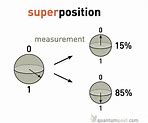
    Entanglement is a quantum phenomena that happens when particles are related in such a way that measuring the state of one particle immediately determines the state of the other, even if they are separated by vast distances across the universe.


    They are connected in such a way that the state of one particle cannot be described independently of the state of the other.

    This connection exists regardless of the physical separation between the particles, meaning that changes in one particle’s state can instantaneously affect the state of the other particle, regardless of the distance between them.

    The concept of entanglement aligns with spiritual beliefs that there is a profound interconnectedness between all things.

    In Christian belief, there is a spiritual realm where changes in one aspect can influence or resonate with another aspect.

    In both Quantum & Christianity there is an acknowledgment that seemingly distant things (Heavenly, Spiritual, or Quanta) can impact another (matter, material, ideas) in ways that defy traditional (less detailed) notions of cause & effect.

    The concept of entanglement also challenges the classical understanding of reality as having separate, distinct entities.

    Quantum entanglement reveals a more holistic view in which the boundaries between subjects or beings become blurred. It demonstrates that a subtle interplay exists, showcasing the unity and interdependence of all existence.

    It is important to note that although entanglement may align with Christian ideas, it is also a scientifically established phenomenon supported by rigorous empirical evidence.

    Challenging Conventional Understanding

    Entanglement undermines our traditional understanding of causality because it appears to contradict the principles of classical physics. It suggests a peculiar and unexplained connection between particles that surpasses our conventional notions of linkage. As a result, some theorists and philosophers speculate that this mysterious connection could be indicative of a higher reality beyond the physical realm. They propose the existence of a non-physical or spiritual level that serves as a source of consciousness or other non-physical phenomena.

    In other words, entanglement supports the idea that there is a greater spiritual reality that exists beyond our material realm, where consciousness, or other non-physical phenomena, originates from.

  • GUIDE • Think For Yourself

    GUIDE • Think For Yourself

    Advantages of Independent Thinking:

    • Greater self-awareness and self-confidence
    • Greater confidence in abilities and more nuanced perspective
    • Discover beliefs on your own merits, without following the crowd
    • Better able to question conventional views
    • Better ability to think critically
    • Better decision-making skills

    Challenges People Face

    External Influences

    The media and the education system shape societal beliefs and behaviors.

    Fear of Being Wrong

    People prefer opinions that make them feel certain.

    This often stems from a basic human need for security and stability, uncertainty can lead to uncomfortable feelings.

    Most people are drawn towards viewpoints that validate existing perspectives.

    Actions For Independent Thinking:

    Challenge Your Assumptions

    The first step to independent thinking is to develop a questioning nature that spurs you to discover truth and differing viewpoints.

    Probe For The Motive

    Refuse to passively accept any idea or claim – push for evidence and reasons. Challenge conventional wisdom that seems based on habit instead of reason. Make a practice of probing the accuracy, usefulness and motives behind information.

    Question The Details

    Feed your hunger for knowledge by continuously questioning the details, logic and assumptions behind facts and opinions.

    Foster improvement by continuously asking “What’s the real story here?” and “How solid is the basis for that claim?”

    Seek Alternative Explanations

    With Critical Thinking

    To avoid staying in an echo chamber, you should consider alternative explanations coupled with critical thinking.

    Don’t simply surround yourself with voices that reinforce what you already believe.

    Seek out alternative arguments and contradictory facts – at least long enough to understand them.

    Seek Out Gaps

    Listen for unquestioned assumptions behind assertions, and look for logical gaps, inconsistencies and hidden biases in the reasoning of “experts.”

    Become A Skeptic

    Cultivate skeptical tools, for they are the keys to independent thought. Only by questioning, challenging and analyzing information on its own merit – instead of its source – can you think for yourself.

    By honing your ability to detect deceptive or incomplete arguments, identify logical fallacies and recognize flawed framing.

    Define Value

    It’s important to determine what really matters, let those principles become the foundation. Don’t let others’ opinions dictate your decisions, rely on solid truth.

    Cultivate Solitude

    You need moments where the noise falls silent, opening a channel for your own intellect to speak. Only when you disconnect from the constant noise can you truly hear.

    Insight blossoms when you prune away distraction.

    Learn To Trust Silence

    Silence gives space for introspection. Self-reflection reveals truth.

    By withdrawing from the hive-mind and embracing solitude, your thoughts will resonate with order.

    Look Inward

    In the gap between input and output is the tuning fork needed to sync with the frequency of Divine Truth.

    Speak Your Mind

    Practice sharing your thoughts in a respectful yet firm manner. By speaking your mind confidently, you will enhance your ability to think.

    Remember that your unique perspective holds great value.

    Assess Before Judgment

    Independent thinking does not mean opposing external viewpoints for the sake of being different.

    It involves embracing your own perspectives and ideas, while also being open to learning from others and considering different viewpoints.

    Nurture Curiosity

    One way to foster independent thinking is to cultivate a sense of wonder and curiosity about the world around you.

    By approaching life with a sense of openness and a desire to learn, you can develop a deeper understanding of yourself and the world around you.

    Independent thinking is a skill that requires consistent practice and a strong connection with your own inner voice.

    By refining your discerned perspectives and with a sense of wonder and curiosity you’ll develop a greater capacity for independent thought, clarity, and self-assurance.