In ancient times, the term was not limited to what we think of as philosophy today. It encompassed a wide range of inquiries and disciplines, including natural science, ethics, politics, metaphysics, and logic. The philosophers of Ancient Greece sought wisdom in various domains of life and knowledge.
The word made its way into Latin as “philosophia,” and then into Old French as “filosofie,” before finally entering Middle English as “philosophie.” Over time, as various academic disciplines emerged and specialized, the scope of what is considered philosophy narrowed to become more aligned with the study of fundamental questions concerning existence, knowledge, values, reason, and mind that we associate with the term today.
The Hippocratic Oath, an ancient ethical code, is credited to the renowned Greek physician Hippocrates who lived around 400 BCE. This oath stands as one of the oldest historical documents dating back to the 5th century B.C.
The Oath Had 4 Parts:
A pledge to pagan deities
A list of positive obligations.
A list of negative obligations.
A concluding piety.
Each section has ethical implications.
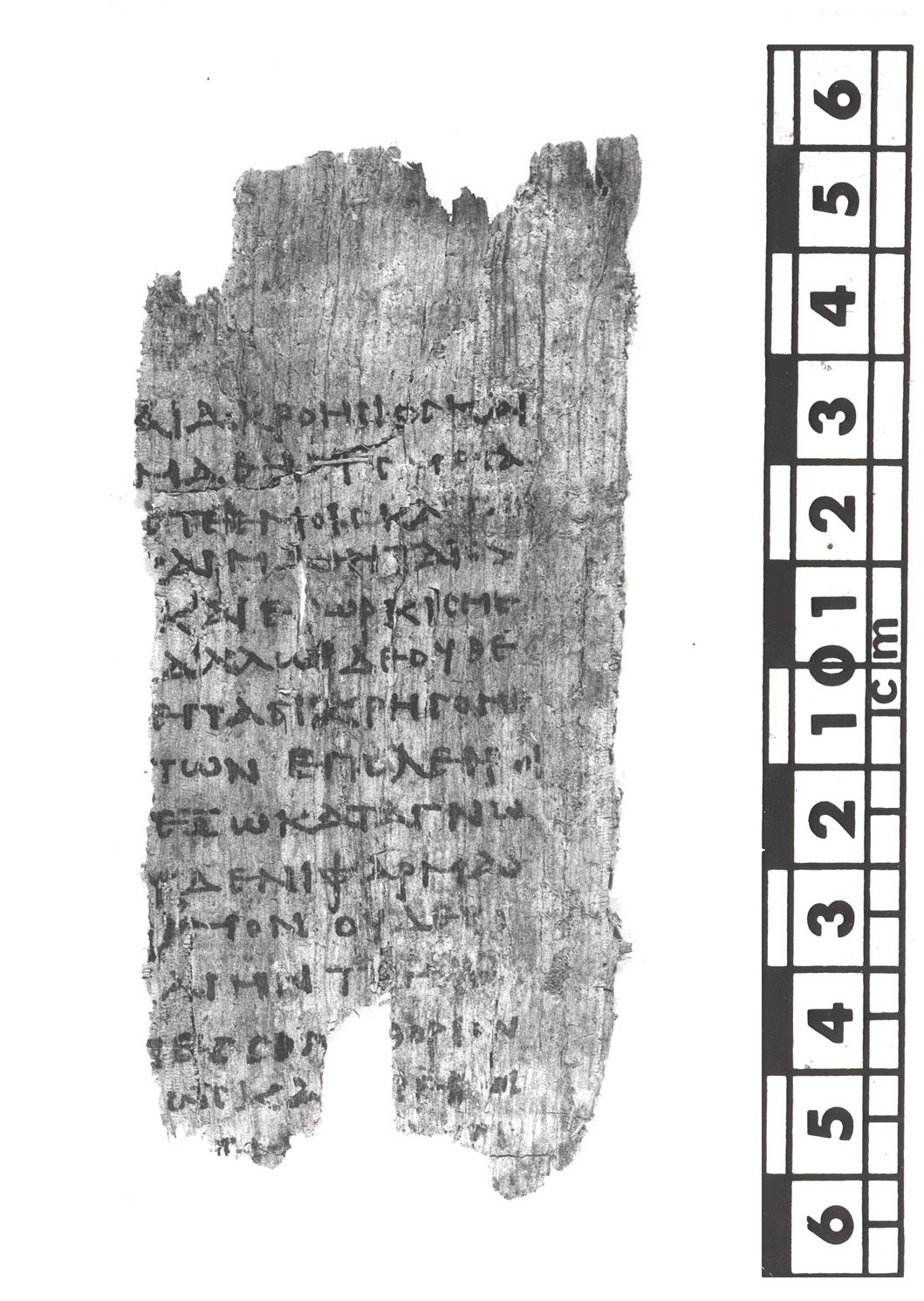
“Oxyrhyncus Papyrus 2547” a fragment of the Hippocratic oath written in Greek in Egypt about 275 CE.
This manuscript was found in a body of manuscripts, called the Hippocratic Collection (Corpus Hippocraticum), survived until modern times. In addition to containing information on medical matters, the collection embodied a code of principles for the teachers of medicine and for their students. This code, or a fragment of it, has been handed down in various versions through generations of physicians as the Hippocratic oath.
I swear by Apollo the physician, and Aesculapius, and Hygieia and Panacea and all the gods and goddesses as my witnesses, that, according to my ability and judgement, I will keep this Oath and this contract:
To hold him who taught me this art equally dear to me as my parents, to be a partner in life with him, and to fulfill his needs when required; to look upon his offspring as equals to my own siblings, and to teach them this art, if they shall wish to learn it, without fee or contract; and that by the set rules, lectures, and every other mode of instruction, I will impart a knowledge of the art to my own sons, and those of my teachers, and to students bound by this contract and having sworn this Oath to the law of medicine, but to no others.
I will use those dietary regimens which will benefit my patients according to my greatest ability and judgement, and I will do no harm or injustice to them.
I will not give a lethal drug to anyone if I am asked, nor will I advise such a plan; and similarly I will not give a woman a pessary to cause an abortion.
In purity and according to divine law will I carry out my life and my art.
I will not use the knife, even upon those suffering from stones, but I will leave this to those who are trained in this craft.
Into whatever homes I go, I will enter them for the benefit of the sick, avoiding any voluntary act of impropriety or corruption, including the seduction of women or men, whether they are free men or slaves.
Whatever I see or hear in the lives of my patients, whether in connection with my professional practice or not, which ought not to be spoken of outside, I will keep secret, as considering all such things to be private.
So long as I maintain this Oath faithfully and without corruption, may it be granted to me to partake of life fully and the practice of my art, gaining the respect of all men for all time. However, should I transgress this Oath and violate it, may the opposite be my fate.
“Beloved, do not believe every spirit, but test the spirits to see whether they are from God, for many false prophets have gone out into the world.”
– 1 John 4:1
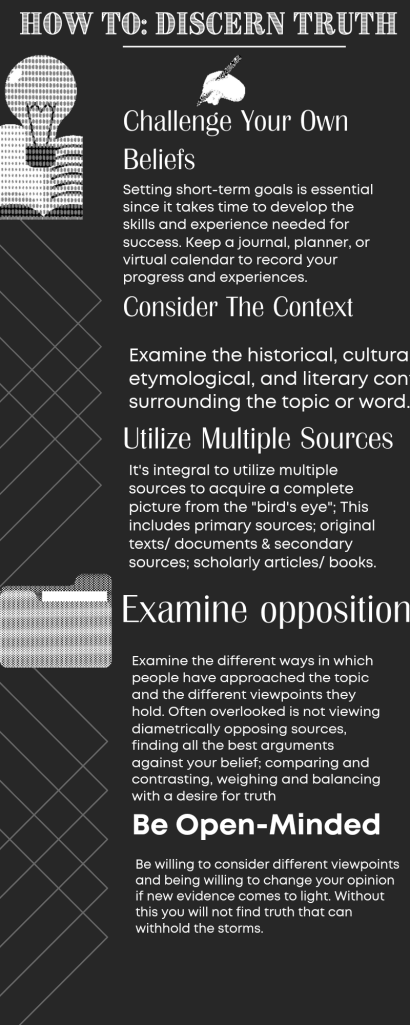
Strive to discern the truth by carefully weighing facts against subjective viewpoints.
Wisdom lies in recognizing what is objective and what stems from individual perceptions.
Embrace this distinction for a clearer understanding of information and beliefs.
Filtering through biases and seeking objective truth can lead to a deeper understanding of reality.
Embracing critical thinking and being open to alternative viewpoints can help refine one’s perception and enable more informed decision-making.
So, are you truly discerning the truth, or are you solely relying on your opinion?
It’s a question worth pondering in the pursuit of knowledge and wisdom.
“See to it that no one takes you captive through hollow and deceptive philosophy, which depends on human tradition and the elemental spiritual forces of this world rather than on Christ.”
The act of gossiping is a manifestation of the ego’s desire for attention, translating to a lust for power: the only way some people can feel they have a sense of control…
Gossip feeds on the weaknesses of others, and it can take many forms; from the subtle sharing of information to the outright spreading of lies.
Gossip is dangerous, for it can lead to the destruction of trust and the erosion of respect.
When we engage in gossip, we are not only harming others, but we are also damaging our own spiritual growth.
Heart Of Gossip
Gossiping reveals the darkness that resides within us, the sin that we carry in our hearts.
“Brothers and sisters, do not slander one another. Anyone who speaks against a brother or sister or judges them speaks against the law and judges it.”
James 4:11
fr
The Fruit of Insecure Fear is Gossip
Gossip manifests the fruits of our deep-seated insecurities & fears, which we try to mask by tearing down others, intensifying the depth of the downward cycle.
This is a futile attempt at finding validation, for it only perpetuates a cycle of negativity and harm.
The insidious nature of gossip is rooted in its ability to ignite and spread like a raging inferno.
It is a force that can quickly consume and destroy all in its path, leaving nothing but smoldering ruins in its wake.
As each person adds their embellishments and twists to the tale, the flames grow higher and hotter until the truth is lost in a haze of smoke and confusion.
Innocent people are often caught in the crossfire, their reputations and relationships scorched by the unforgiving flames of gossip.
See how great a forest is set aflame by such a small fire!
And the tongue is a fire, the very world of iniquity; the tongue is set among our members as that which defiles the entire body, and sets on fire the course of our life, and is set on fire by hell.
– James 3:5-6
THERE IS A SOLUTION!
Don’t Participate
At the core of our being lies the power to stop the spread of negativity.
It starts with a simple, yet profound act of choosing not to participate in gossip.
Our words hold great power, and that we must use them wisely, lest we become the unwitting arsonists of our own destruction.
By declining to engage in such conversations, we are taking a stand for truth and integrity.
We must resist the temptation to repeat rumors, for they only serve to perpetuate falsehoods and sow discord.
Gossip Damages Our Own Soul
At its core, gossiping is a manifestation of a lack of respect for the privacy and dignity of others.
It is a betrayal of trust and a violation of the sacred bond of any relationship.
When we engage in gossip, we are not only harming the person we are talking about, but we are also damaging our own souls. We are giving in to the temptation of ego and pride, seeking to elevate ourselves by tearing others down.
Actual spiritual growth requires us to resist this temptation and instead cultivate compassion and empathy toward others.
Treat Others How You Want To Be Treated
We must learn to see the divine in everyone and treat them with the same love and respect we would want for ourselves.
Only then can we truly live in harmony with the universe and fulfill our true purpose in life.
Treat others the same way you want them to treat you.
Luke 6:31
Treat Others How You Want To Be Treated
The act of spreading rumors and gossip is not only harmful to the victim, but it also reveals the character of the person spreading it.
As believers, we are called to guard our tongues and speak life-giving words.
Death and life are in the power of the tongue, And those who love it will eat its fruit.
Proverbs 18:21
Those who love death… eat death’s fruit.
Those who love life… eat life’s fruit.
IDENTITY IS IN CHRIST, NOT SELF
When faced with gossip, we must remember that our worth and identity are either in Satan or Christ, and you’re known by the fruits…
“The fruit of the Spirit is love, joy, peace, patience, kindness, goodness, faithfulness, gentleness, self-control…”
– Galatians 5:22-23
JESUS:
“By this My Father is glorified: hat you bear much fruit & so prove to be My disciples.”
-John 15:8
Words Have Great Power
Gossiping breaks trust and violates sacred bonds between people.
You will reap the rewards …
Speak What Is Truly Helpful
We should be careful with our words, speaking only what is helpful and uplifting to others, our words have the power to either build up or tear down.
Gossip Is A Reflection Of Spiritual Immaturity
Gossiping reflects the gossiper’s lack of spiritual awareness & disrespect towards the sanctity of their fellow’s being, spitting in the face of the God they claim.
“A perverse person stirs up conflict, and a gossip separates close friends.”
Proverbs 16:28
Gossip Violates Trust
It is not only a distasteful habit but also a violation of the trust.
“The tongue is a fire, a world of evil among the parts of the body. It corrupts the whole body, sets the whole course of one’s life on fire, and is itself set on fire by hell.”
James 3:6
Gossip Creates Negative Energy
By negative, I mean demonic.
When we surround ourselves with engagers of gossip we invite negative energy into our mentality.
Obviously those who speak ill of others are not operating from a place of love and kindness.
By distancing ourselves from this behavior, we are protecting our own soul, preserving our integrity.
WE ARE GODS VESSELS
God calls us to be His chosen vessels, carrying out His Will on earth.
Unity is key to reflecting God’s image, and we must strive to be like Him, embracing our enemies, setting aside our differences with Wisdom.
Trust is crucial, as we must keep each other’s secrets and avoid gossip. Let us embody these qualities to create a more peaceful world where God’s love reigns supreme.
God’s love reigns supreme.
Do you love?
Or are you a vessel preserved for wrath?
Bible Verses:
Proverbs 11:17 – “A man who is kind benefits himself, but a cruel man hurts himself.”
Colossians 3:12 – “Put on then, as God’s chosen ones, holy and beloved, compassionate hearts, kindness, humility, meekness, and patience.”
Proverbs 11:13 – “A gossip betrays a confidence, but a trustworthy person keeps a secret.”
1 Peter 3:8 – “Finally, all of you, have unity of mind, sympathy, brotherly love, a tender heart, and a humble mind.”
Proverbs 25:9 – “Argue your case with your neighbor himself, and do not reveal another’s secret,”
Proverbs 11:13 – “Whoever goes about slandering reveals secrets, but he who is trustworthy in spirit keeps a thing covered.”
“My sacrifice, O God, is a broken spirit; a broken and contrite heart you, God, will not despise.”
Psalm 51:17
Being used and broken by God is the only way we are fit to be within His presence, growing in Christ’s faith.
Suffering is not a sign of God’s displeasure or punishment on us, but rather a way of refining our character and preparing us for His Domain… it’s out of Love.
“Can I not do with you, Israel, as this potter does?” declares the LORD. “Like clay in the hand of the potter, so are you in my hand, Israel.”
Jeremiah 18:6
God uses broken people and things to accomplish His Will, because He is transforming us, like He did in Genesis, akin to the clay (although this is the Spiritual equivalent). We aren’t being “fixed”, He doesn’t “mend” us, He makes us New– this means death, first.
He does not look at our outward appearance or abilities, but at our obedience to Him, from the heart. The heart is only obedient be His decree.
He chooses the weak, the flawed, the broken, and the contrite to display His power and grace, revealing His Glory. Those who are already strong have no desire to forfeit their own strength.
“Man looks at the outward appearance, but the Lord looks at the heart.”
1 Samuel 16:7
God breaks us in different ways, such as through trials, temptations, failures, losses, disappointments, or persecution.
God Takes Away
God shapes us through the experiences of loss.
Many people reject this aspect of God. They believe that God would never subject us to such hardship, but in reality, He not only has the capacity to do so but actually does.
“Who has made man’s mouth? Who makes him dumb, or deaf, or seeing, or blind? Is it not the Lord?”
Exodus 4:11
God is inherently good, He is what literally defines the word “good” and he acts according to His own Will. Even Jesus said: “Why do you call me good? No one is good but the Father.”
Exposing Our Shame Reveals His Glory
The painful situations uncovers our inherent sinfulness, emphasizing our deep dependence on Him & His unwavering Grace.
This leaves us with only two options:
Succumb to wrath…
Faithfully entrust ourselves to His absolute sovereignty.
Furthermore, suffering serves as a means for us to identify with the pain endured by Christ, who was shattered for our sake on the cross.
Our Purpose: Reveal God’s Glory
God uses us in different ways, such as through our gifts, talents, passions, etc. These opportunities are only worthy if they glorify Him: from the heart.
He is worshipped when we bless others, because our hearts See God’s image in all people, even if we are in no position to help, our new nature just desires to do so.. This doesn’t mean it is of obligation, but of the heart of God’s Spirit within. Anything done out of duty is a sin.
Our purpose is to advance His kingdom.
Suffering increase the experience of joy, as the contrast increases the intensity.
Being used & broken by God is a cyclical process that never ends in this life.
When I say “broken by God,” I mean by His will and decree, though He uses multiple tools like the Adversary, demons, angels, and other humans…
God Is Still Fashioning You
We are constantly being shaped and molded by His hand, as He works in us and through us.
We are continually challenged and pushed to grow under His guidance, as He guides us through life like a shepherd, and rescues us from the dark forces of the world like a lifeguard saving us from treacherous waves.
The Uniqueness of His Flock
While God equips those He calls & chooses, the tools and timing may not match our expectations. As Isaiah 48:10 states:
God tests us..
“in the furnace of affliction… ”
… not leaving our metal impure but rather purifying our souls like fine gold.
The Refinement Process
Seeing our lives as a refining ritual provides perspective. Just as heat separates useful metal from dross, trials burn away our flaws.
Charles Spurgeon rightly said:
… hardships “dig up the soil, & let us see what we are made of.”
God uses troubles to chip away pride, selfishness, and reliance on human strength alone. This preparation perfects our nature for His service.
God Smashes Ego and Pride
It’s dangerously easy to wrongly claim credit for our skills rather than giving all glory to the power working through us.
When God calls out our weakness, we remember that our completeness depends on Him.
He wants spiritual brokenness, the kind of brokenness He can use. He wants godly sorrow that leads to repentance.
2 Corinthians 7:10
Suffering Builds Character
Embracing suffering makes us strong yet sympathetic to others’ struggles
Praise be to the God and Father of our Lord Jesus Christ, the Father of compassion and the God of all comfort, who comforts us in all our troubles, so that we can comfort those in any trouble with the comfort we ourselves receive from God.
2 Corinthians 1:3-4
Our scars enable us to identify with mankind’s anguish in a way comfortable lives cannot.
This empathy is crucial to authentically reach those in pain.
Refinement Shapes our Faith
Though dark valleys may confuse our finite perspective, abandoning ourselves to God’s plans develops trust in Him.
In this fearful surrender, true faith and spiritual maturity take root.
Socrates, a revered ancient Greek philosopher, met a tragic end at the hands of his own government.
Socrates fearlessly challenged the established order and traditional beliefs in Athens, primarily employing his unique Socratic method of questioning.
What Was The Established Order In Athens?
The established order was very similar to ours today in America.
Athens was a democracy.
Citizens directly participated in the decision-making process, collectively governing the city-state.
The government of Athens comprised various institutions, such as the popular assembly allowing adult male citizens to voice opinions and vote. Additionally, the city-state had the Boule council, made up of 500 randomly selected citizens who proposed laws and managed administrative affairs.
His Socratic Method, coupled with his unabashed criticism of authority, drew accusations of impiety and corrupting the youth, ultimately leading to his trial in 399 BCE.
When put on trial in 399 BCE in Athens, Socrates presented his defense by arguing that he had “not corrupted Athenian youth“, as his accusers claimed.
He argued that his “philosophy actually aimed to improve the moral and intellectual character of individuals, rather than leading them astray“.
Socrates began his defense by stating that he was “ignorant of the influence he had on other people and that he had never claimed to possess any wisdom or knowledge“.
He related a story in which the Oracle of Delphi described Socrates as the wisest man, leading him to conclude that:
True wisdom lies in acknowledging one’s own ignorance.
Socrates explained that his “primary goal was to engage in dialogue and question others in order to encourage critical thinking and self-examination“.
Furthermore, he argued that his “role as a philosopher was not to teach or indoctrinate, but to encourage individuals to think for themselves“.
He claimed that he “questioned and exposed the ignorance and inconsistencies of those who were regarded as wise in order to help others recognize their own lack of knowledge“.
Socrates believed that by questioning others, he was “helping them to seek wisdom and knowledge for themselves“.
Despite his defense, Socrates was found guilty by a jury of 500 Athenian citizens and sentenced to death by drinking poisonous hemlock.
Hemlock is a highly poisonous plant often used as a herbal remedy or poison, belonging to the coniferous family and characterized by small white flowers and feathery leaves.
Hemlock
His defense and subsequent execution became known as one of the most enduring stories of intellectual and philosophical martyrdom.
Choosing to adhere to the Athenian legal system, Socrates willingly drank hemlock, a widely recognized execution method of that time.
Socrates’ defiance of convention and his relentless pursuit of truth have left an indelible mark on the world of intellectual discourse.
Through his Socratic method, he revolutionized the way people approached questions, encouraging critical thinking and introspection.
Through his Socratic method, he revolutionized the way people approached questions, encouraging critical thinking and introspection.
Socratic Method
The Socratic method involves a dialogue between a questioner and a responder, where the questioner poses thought-provoking questions to the responder in order to elicit a deeper understanding of a topic or to challenge the responder’s beliefs and assumptions. The Socratic method encourages active participation and critical examination of ideas, leading to a more thorough exploration of a subject and the development of logical and reasoned arguments.
By challenging governmental authority and traditional beliefs, Socrates sparked important discussions that exposed the flaws in societal norms and fostered intellectual growth.
Despite his tragic fate, Socrates’ influence transcends time.
His ideas, recorded by his students Plato and Xenophon, continue to shape the foundations of Western philosophy.
Socrates’ emphasis on self-examination, the pursuit of truth, and the questioning of established beliefs paved the way for subsequent philosophers to build upon his legacy.
Socrates’ wisdom and teachings have served as a catalyst, encouraging generations of thinkers to challenge the status quo and seek the inherent truth in matters of ethics, morality, and knowledge.
The impact of his ideas on subsequent philosophers such as Aristotle, Descartes, and Kant cannot be overstated.
Even in the modern era, Socrates’ principles of critical thinking and self-reflection hold great relevance, guiding us in our quest for knowledge and personal growth.
In conclusion, Socrates paid the ultimate price for his relentless pursuit of truth and his challenge to established beliefs.
His trial and execution serve as reminders of the power struggle between conformity and intellectual progress.
His uncompromising quest for wisdom and his commitment to independent thought continue to inspire and shape the world of philosophy to this day and is a reminder to me why democracy sucks and America’s Constitutional Republic is so important to uphold.
Even though there are significant challenges ahead, we must decisively opt to conquer our fears. The complex interplay between the micro and macro dimensions of our existence ultimately merges at the micro level.
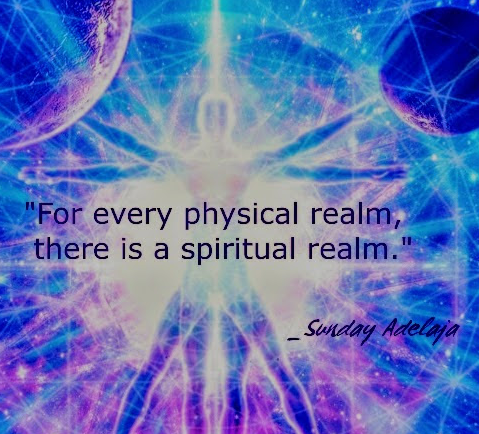
It is imperative to acknowledge and value the essential connection that exists between the celestial and tangible domains.
The vast expanse of the ethereal plane and the limited scope of the physical world are intrinsically connected, acting as stimuli for our individual development and progress.
Nurturing our understanding of this intense connection is important, as it fuels the flourishing of our Soul, which encapsulates the essence of our spiritual being.
By highlighting and strengthening the bond between these two dimensions, we unlock the key to unlocking the absolute Truth.
Without this symbiotic relationship, we impede our spiritual evolution.
This connection acts as a conduit for the exchange of energies and knowledge, enabling us to transcend the limitations of our earthly existence.
To construct and fortify our light body (soul), we must emphasize two fundamental aspects: a resilient heart center and a robust physical vessel.
These two components work harmoniously together, representing our earthly manifestation through which we learn to love and respect others.
Our heart center (soul) serves as the hub of our emotions, compassion, and empathy, while the physical body acts as the medium through which we experience and engage with the material world.
By nurturing our soul, we cultivate love, kindness, and understanding, empowering us to selflessly serve others. These acts of service not only contribute to the betterment of society, but also deepen our connection to the ethereal (Spiritual) realm.
Simultaneously, maintaining a strong and healthy physical body equips us to navigate the challenges and demands of our earthly existence. It provides a solid foundation for our spiritual growth and enables us to fully embody our earthly form.
Our journey through the darkest valleys requires us to confront and overcome the forces of evil while steadfastly refusing to succumb to fear.
By recognizing the profound significance of the connection between the ethereal and physical dimensions, we can nurture the growth of our light body. Through the harmonious integration of a resilient heart center and a capable physical body, we manifest our earthly form and learn to love and honor others through selfless acts of service.
Galatians 5:13 – “You, my brothers and sisters, were called to be free. But do not use your freedom to indulge the flesh; rather, serve one another humbly in love.”
1 Peter 4:10-11 – “Each of you should use whatever gift you have received to serve others, as faithful stewards of God’s grace in its various forms. If anyone speaks, they should do so as one who speaks the very words of God. If anyone serves, they should do so with the strength God provides, so that in all things God may be praised through Jesus Christ.”
Matthew 25:35-40 – “For I was hungry and you gave me something to eat, I was thirsty and you gave me something to drink, I was a stranger and you invited me in, I needed clothes and you clothed me, I was sick and you looked after me, I was in prison and you came to visit me.’ Then the righteous will answer him, ‘Lord, when did we see you hungry and feed you, or thirsty and give you something to drink? When did we see you a stranger and invite you in, or needing clothes and clothe you? When did we see you sick or in prison and go to visit you?’ The King will reply, ‘Truly I tell you, whatever you did for one of the least of these brothers and sisters of mine, you did for me.”
Mark 10:43-45 – “Not so with you. Instead, whoever wants to become great among you must be your servant, and whoever wants to be first must be slave of all. For even the Son of Man did not come to be served, but to serve, and to give his life as a ransom for many.”
In the world of philosophy and metaphysics, the concept of “various realms” has long been a subject of fascination and debate.
From ancient times to the present day, thinkers have grappled with the idea of multiple realms of existence, each with its own unique properties and characteristics. But what does it really mean for these realms to be “rooted in logic”?
EXAMPLES
Beginning with Leucippus and Democritus in the 5th century BCE, the concept was later expanded upon by Epicurus (341-270 BCE) and Lucretius (1st century BCE), who suggested the existence of multiple universes across time. In the 3rd century BCE, Chrysippus proposed the idea of an eternally regenerative world
Unpacking the Notion of Various Realms
When we speak of various realms, we are venturing into the realm of abstract thinking.
These realms may encompass different dimensions, planes of existence, or levels of reality.
They could be purely theoretical, as in the case of philosophical concepts, or they could be related to metaphysical or spiritual beliefs.
Dimension Definition
In the realm of mathematics and physics, a dimension refers to a measurable extent of a particular kind, such as length, breadth, height, or time. In a broader context, it can also denote a conceptual space or parameter within which events or phenomena occur and are measured.
In the field of metaphysics and philosophy, the concept of dimensions extends to encompass additional aspects of reality beyond those perceived through sensory experience, often exploring the potential existence of higher or alternative planes of being.
Planes of Existence
Planes of existence represent distinct levels or states of reality that are postulated to exist beyond the physical world apprehended through our ordinary senses. These planes may be conceived as alternative dimensions or realms inhabited by beings and energies different from those encountered in our everyday experience. In various spiritual and philosophical traditions, the idea of planes of existence is often intertwined with metaphysical concepts and cosmological theories, offering a framework for understanding the complexities of existence beyond the material realm.
The Role of Logic
Logic, as the study of reasoning and argumentation, plays a vital role in establishing the foundation of these diverse domains.
The application of logical principles enables us to scrutinize and comprehend the interconnections between different domains.
It facilitates the identification of patterns, the assessment of idea coherence, and the evaluation of the validity of claims related to these domains.
ROOTED IN LOGIC
Within this context, the expression “rooted in logic” conveys the idea that these diverse domains are not arbitrary or disordered, but rather possess a coherent structure.
Instead of being disjointed and haphazard, they are interconnected in a manner that is rational and comprehensible through logical frameworks.
Implications and Applications
Understanding the meaningful connection between various realms and logic has broad implications.
It can inform our philosophical inquiries, guide scientific exploration, and inspire creative endeavors.
By recognizing the logical underpinnings of these realms, we gain insights into the nature of reality, knowledge, and the human mind.
So, what are your thoughts on the idea of various realms rooted in logic?
How do you perceive their significance in our understanding of the world and our place within it?
Remember, the exploration of these realms is not just a philosophical quest, but an invitation to expand our cognitive horizons and embrace the wonder of existence.
Two branches of philosophy have wrestled with them most directly: metaphysics, which investigates the nature of being, existence, substance, and the fundamental structure of reality; and epistemology, which examines the nature, scope, and limits of human knowledge.
A writer exudes an unyielding dedication to intellectual exploration and a deep comprehension of the world. They skillfully entwine a variety of disciplines and ideas from influential minds throughout history to create captivating and thought-provoking written pieces.
Plato once wisely proclaimed,
“We can easily forgive a child who is afraid of the dark; the real tragedy of life is when men are afraid of the light.”
As writers, we often find solace in the darkness of our thoughts, weaving stories and crafting worlds in the quiet moments. While the darkness may offer a comforting shroud for creativity to flourish, the best writers also embrace the light. It is in the light that our words are illuminated, our stories shared, and our voices heard.
Embracing both the darkness and the light, writers can truly harness the full spectrum of their creative potential, crafting narratives that resonate deeply with readers and standing unafraid in the face of truth and vulnerability.
“One does not become enlightened by imagining figures of light, but by making the darkness conscious.”
– Carl Jung
A writer’s mission transcends mere imparting of information; it encompasses the conveyance of a deep comprehension of the human experience, shedding light on the complexities and wonders within our existence. Their words possess the potency to evoke emotions, ignite curiosity, and stimulate meaningful discourse.
Socrates once profoundly stated,
“The only true wisdom is in knowing you know nothing.”
Socrates, the influential philosopher of ancient Greece, encapsulated the essence of intellectual humility and the relentless pursuit of knowledge in this thought-provoking statement. Embracing the idea of perpetual learning and self-discovery, these words resonate deeply with writers who seek to explore the depths of human thought and experience through their craft.
“Learning never exhausts the mind.”
Leonardo Da Vinci
Deliberately separating their thoughts from their emotions, writers immerse themselves in the narrative, comprehending the journey, and deeply resonating with the intended audience. Their talent lies in shifting perspectives without imposing their own experiences or conclusions onto others.
With a profound understanding and reverence for the profound, a writer excels at unraveling complex concepts and rendering them into nuanced, easily digestible pieces. Their work exceeds ordinary comprehension, captivating the reader and guiding them to profound revelations and boundless wisdom.
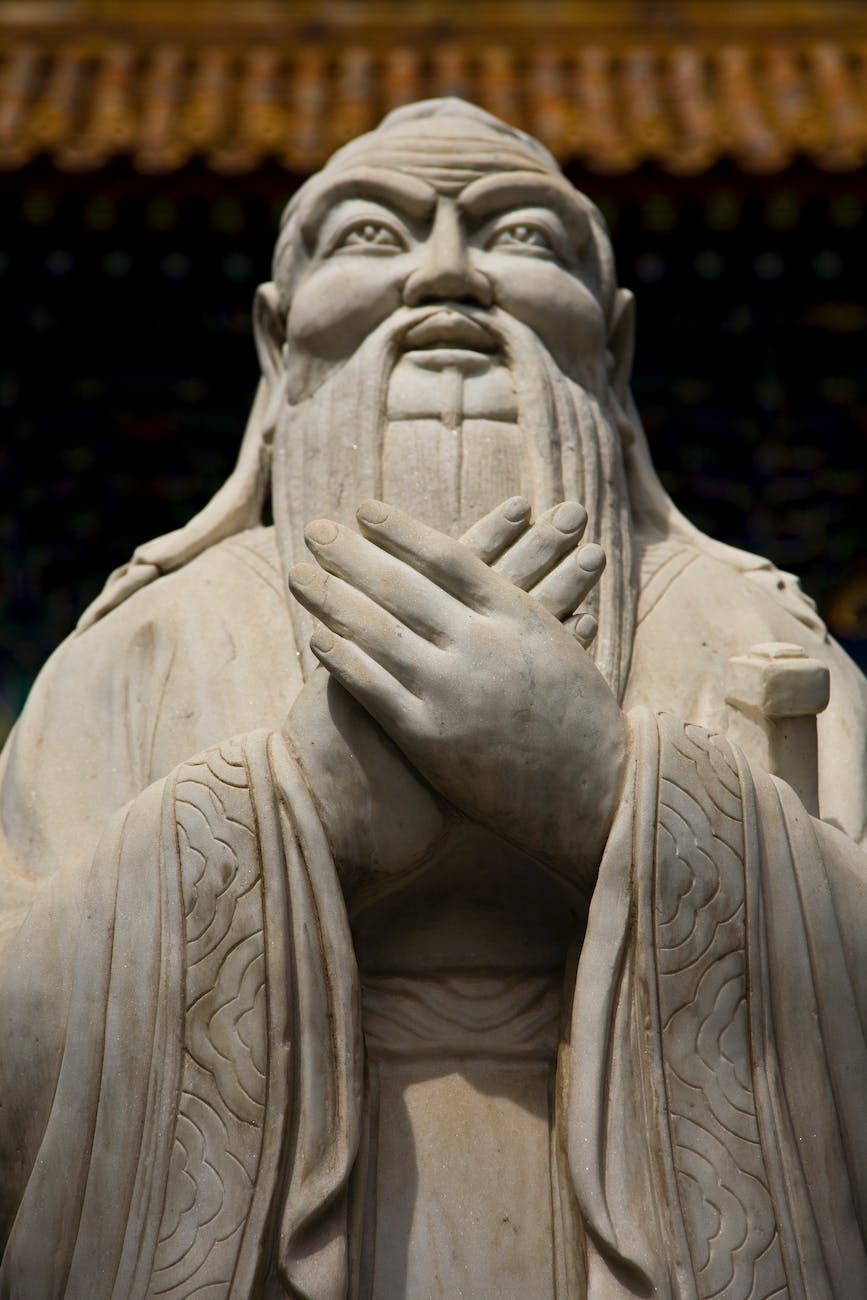
“The man who moves a mountain begins by carrying away small stones.”
Confucius
Confucius, the esteemed philosopher and teacher, imparted this timeless wisdom, encapsulating the essence of perseverance and gradual progress. As writers navigate the vast landscapes of imagination and intellect, this quote serves as a reminder that each word penned is a step towards achieving monumental feats in the literary world.
Writers epitomize a harmonious fusion of the spiritual and physical aspects of life, effortlessly bridging the gap between the ethereal and the earthly. Their portrayal of the unifying power of thoughtfulness exudes a profound elegance that captivates the mind and sparks intellectual curiosity.
Johannes Gutenberg, the inventor of the printing press, once expressed the essence of writing with the following words:
“Writing is the timeless legacy of humanity, immortalizing the depths of our knowledge and the breadth of our imagination in the indelible ink of history.”
A writer is not merely a wordsmith, but a visionary who leverages their talent and wisdom to inspire, transform, and shape perceptions. Through the might of their words, they strive to usher in positive change, push the boundaries of imagination, and leave an enduring impact on the world.
“Words are our most inexhaustible source of magic.” – J.K. Rowling
“The role of a writer is not to say what we all can say, but what we are unable to say.” – Anaïs Nin
“There is nothing to writing. All you do is sit down at a typewriter and bleed.” – Ernest Hemingway
“To survive, you must tell stories.” – Umberto Eco
“The scariest moment is always just before you start. After that, things can only get better.” – Stephen King
Our perception of reality is shaped by our senses, yet it is a fragile construct that can easily be deceived and corrupted.
This article explores the limitations and uncertainties of our perceived reality, questioning the accuracy and consistency of our individual perceptions.
Perception
Perception, as we understand it, is subjective and personal.
We cannot definitively know if our perception aligns with that of others.
Each person experiences the world through their unique set of senses, making it impossible to verify the objective truth of our perceived reality.
Certain Of Uncertainty
Even the concept of solidity and physical matter, which seems inherent in our everyday experiences, is not something we can be certain of.
We may feel something to be solid, but we lack a means to confirm if it is truly so or just a product of our sensory delusions.
Dreams An Example Of Delusions
Dreams provide a striking example of how our perceptions can create a convincing illusion of reality.
While dreaming, our experiences appear as vivid and tangible as when we are awake.
However, science has shown that humans frequently hallucinate, causing variations in our perceptions.
This further highlights the subjective nature of our perceived reality.
If we consider the possibility that our existence is a product of the Divine Mind, then that becomes the fundamental reality underlying our perceptions.
However, it is crucial to acknowledge that our subjective perception may not necessarily align with the Perceptions of the Divine, whom we conceive as the sovereign King of Spirit.
To gain a deeper understanding of the objective reality presented by God’s decree, we must turn to Scripture, guided by the Holy Spirit.
“Sanctify them by the truth; your word is truth…”
John 17:17
Man, with his fallible nature, cannot grasp the entirety of God’s perfect and unchangeable universal law.
By seeking guidance from the Holy text, we can strive to approach a more accurate perception of the underlying reality.
The nature of perceived reality is complex and elusive.
We rely on our senses, which are prone to error and subjective interpretation.
Our experiences and perceptions may differ from one another, making it difficult to ascertain a universally consistent reality.
Through the lens of Divinity, we can explore a deeper understanding of reality, guided by the Word of God and the indwelling presence of the Holy Spirit.
While we may strive to attain perfect harmony with the Divine, it is likely that our complete alignment will always elude us, so long as we remain limited and confined to the physical realm’s limits.
Isaiah 55:8-9 – “For my thoughts are not your thoughts, neither are your ways my ways, declares the Lord. For as the heavens are higher than the earth, so are my ways higher than your ways and my thoughts than your thoughts.”
Job 11:7-9 – “Can you find out the deep things of God? Can you find out the limit of the Almighty? It is higher than heaven—what can you do? Deeper than Sheol—what can you know? Its measure is longer than the earth and broader than the sea.”
Romans 11:33-34 – “Oh, the depth of the riches and wisdom and knowledge of God! How unsearchable are his judgments and how inscrutable his ways! For who has known the mind of the Lord, or who has been his counselor?”
1 Corinthians 13:12 –“For now we see in a mirror dimly, but then face to face. Now I know in part; then I shall know fully, even as I have been fully known.”
These verses highlight the limitations of human understanding and emphasize the vastness and incomprehensibility of God’s ways.
While we may strive to understand God’s perfect and unchangeable universal law, our human nature and limited perspective make it impossible to fully grasp it.
Beyond the observable world of material matter, there exists a realm that surpasses our animal senses and is filled with timeless principles of logic and measurement, the Laws of the Universe. Laws must have a Lawgiver.
Laws must have a Law giver.
Ultimate Reality Is Not “reality”
This Ethereal Domain represents the ultimate form of reality, serving as the very source of existence and the essence of being. It is the magnificent realm of the Most High, commonly known as Heaven.
Consciousness Shapes Observable Reality
The concept that reality is shaped by thoughts and beliefs is supported by scientific theories such as superpositioning and string theory.
The One Mind Of God Created All Things
Mind → Consciousness
Consciousness connects all things in the universe. God is Consciousness.
Everything is By (through, by the power of, by the Word of…)
The Will (Consciousness, Mind, Thought, Decision) of God.
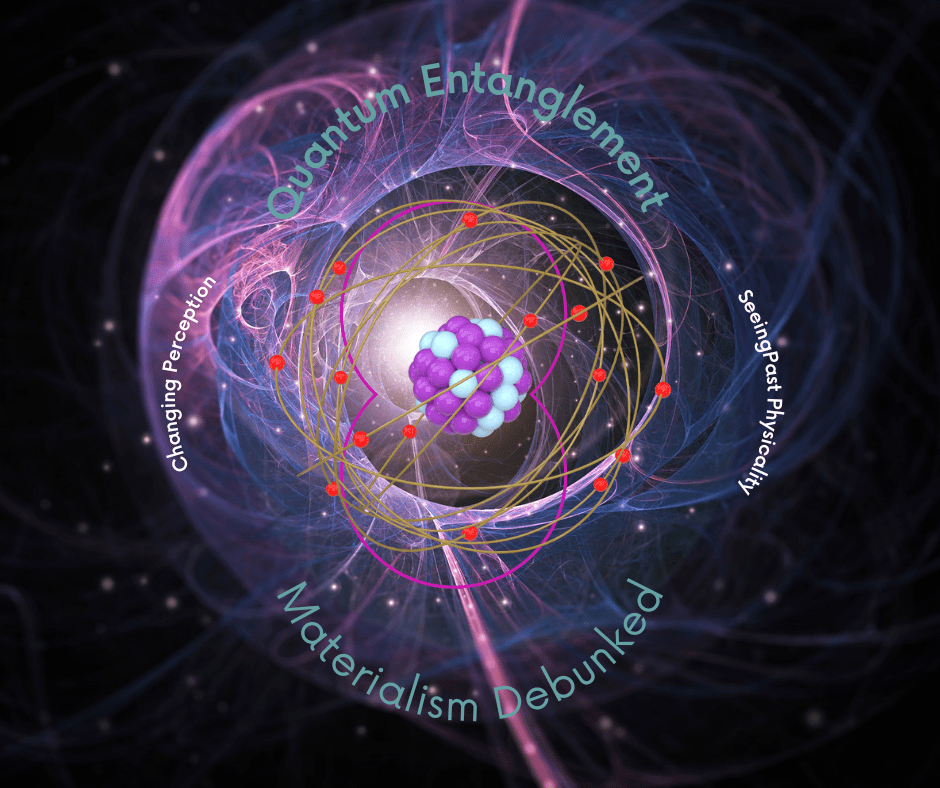
Quantum Entanglement
Quantum entanglement proves the interconnection between two particles, defying the barriers of the laws of physics according to materialists Science.
These particles are dependent on one another even when they are separated at vast distances and even dimensions.
Energetic Overlap Over All Things
Another area of overlap between quantum physics and spirituality is the concept of energy.
Energy is the fundamental force that governs everything in the universe.
Energy is the life force that connects us to the universe and each other. It is the very reason we can move, breathe, think, exist in space, etc.
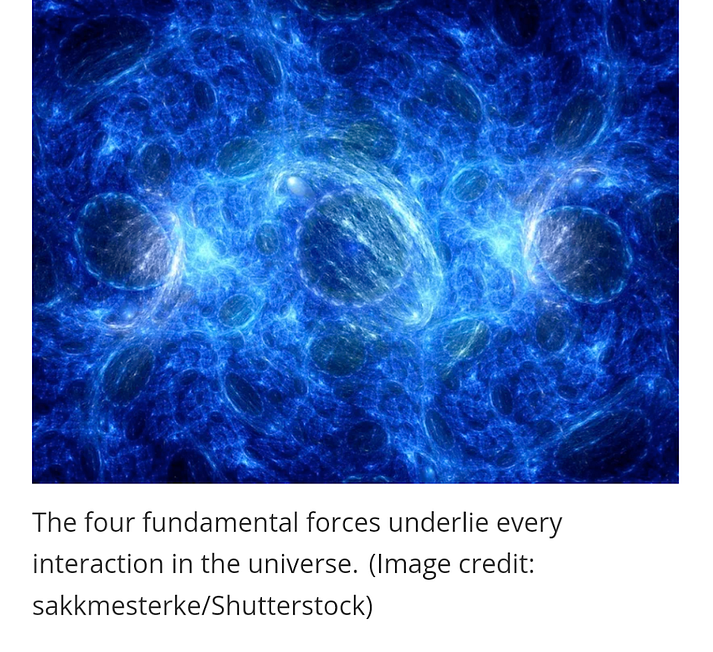
Four Forces Are God’s Four Winds
Then he said to me, “Prophesy to the breath; prophesy, son of man, and say to the breath, Thus says the Lord GOD: Come from the four winds, O breath, and breathe on these slain, that they may live.” — Ezekiel 37:9
Daniel declared, “I saw in my vision by night, and behold, the four winds of heaven were stirring up the great sea. –Daniel 7:2
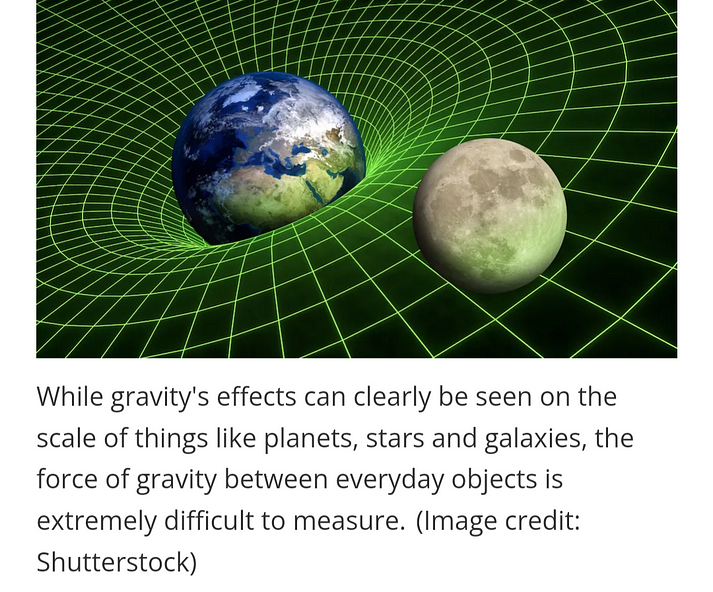
First Force: Gravity
Gravity is God
Gravity is the Force that binds us to the physical realm: Time and Space… He is also the obstacle that prevents us from transcending beyond Him.
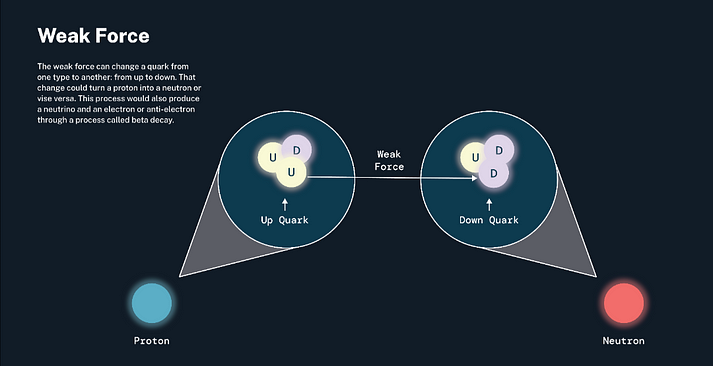
2nd Force: The Weak Force
God is the Weak Force
The weak force, also known as weak interaction, is a Force that is stronger than gravity.
However, it only operates over very short distances (as far as we humans know, from our limited ability to observe its effects).
This force acts on the subatomic level, and it plays a vital role in the Creation of elements and powering stars. The natural radiation present in the universe is primarily due to this Force.
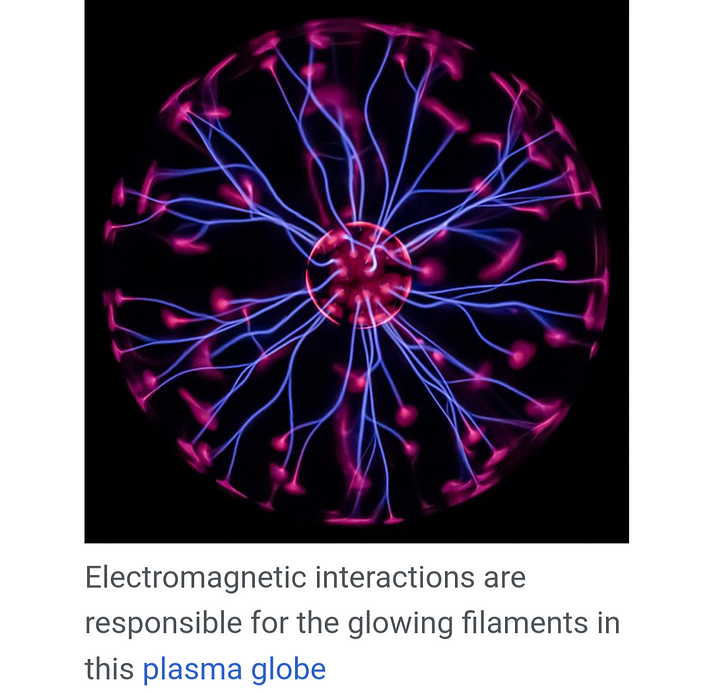
3rd Force: Electromagnetism
Again, This Is God
It is a force that arises between charged particles, such as electrons and protons, and is responsible for the interactions between them.
Electromagnetism encompasses both electricity and magnetism, as they are two sides of the same phenomenon.
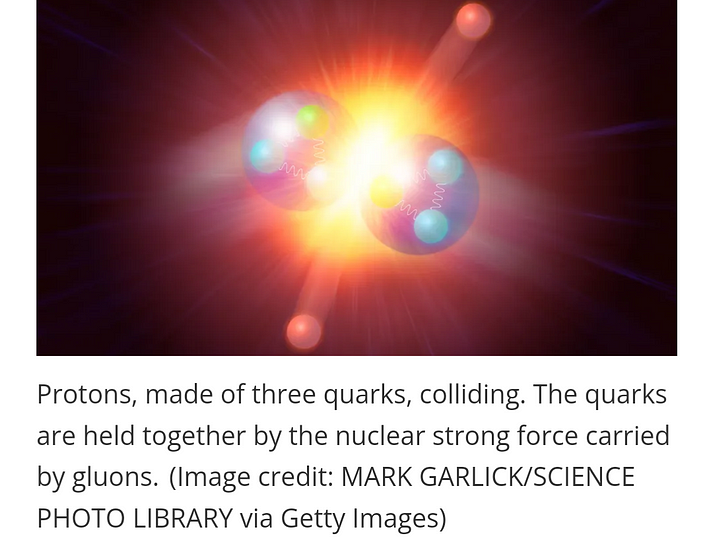
The 4th Force: Strong Force
God is The Strong Force
The strong force is the glue that binds the atoms together, the spark that ignites the stars, and the pulse that beats in the heart of matter.
It (He) is the Force that holds the quarks and gluons in a tight embrace, forming protons, neutrons, and other particles.
He is the Force that overcomes the repulsion of the electric charge, allowing nuclei to fuse and release enormous amounts of energy.
He is the force that shapes the universe, from the smallest scales to the largest.
“When all things are subjected to him, then the Son himself will also be subjected to him who put all things in subjection under him, that God may be all in all.”