In ancient times, the term was not limited to what we think of as philosophy today. It encompassed a wide range of inquiries and disciplines, including natural science, ethics, politics, metaphysics, and logic. The philosophers of Ancient Greece sought wisdom in various domains of life and knowledge.
The word made its way into Latin as “philosophia,” and then into Old French as “filosofie,” before finally entering Middle English as “philosophie.” Over time, as various academic disciplines emerged and specialized, the scope of what is considered philosophy narrowed to become more aligned with the study of fundamental questions concerning existence, knowledge, values, reason, and mind that we associate with the term today.
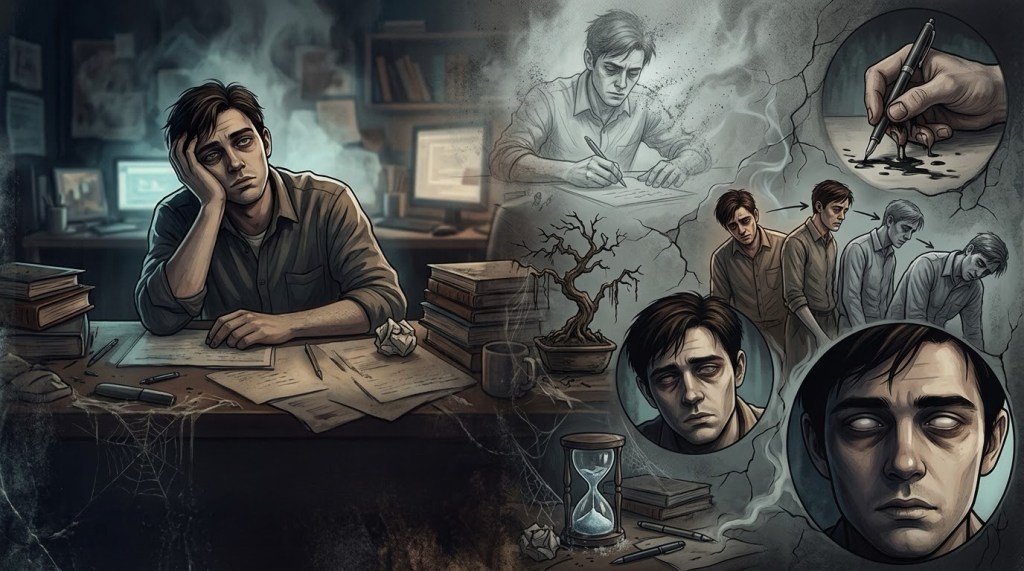
You thought apathy would be the rest stop. The place after the striving, after the perfecting, after the endless self-correction… a soft landing where nothing was required of you anymore.
But rest didn’t come. Only a different kind of vigilance.
A quieter one.
The kind that watches from behind the eyes, keeping the numbness intact, keeping the caring at bay.
You didn’t know it yet, but not-feeling is a job. It has hours. It has upkeep. It costs.
We speak of burnout as something born of overachievement… the perfectionist collapsing under her own impossible rules.
But there is a second kind of burnout, less spoken of, that comes from the opposite direction.
It is the exhaustion of holding yourself at a distance from your own life.
Of guarding the door so nothing gets in, and nothing gets out.
Survival mode does not feel like survival. It feels like sleep with your eyes open.
Here is the quiet truth beneath it all: apathy is not the absence of effort. It is effort in disguise.
Every time you told yourself it doesn’t matter, some part of you was working overtime to make that lie hold.
Every time you stopped trying, you were still trying… trying not to feel what trying might cost you.
So if you are tired, and you cannot explain why, since you have done “nothing,” look closer.
Nothing is not what you have been doing. You have been managing a collapse in slow motion, and it takes a strange, invisible strength to keep something from falling all the way down.
The rules and the ruin are not opposites. They are two hands on the same rope. Perfection pulls one way, apathy pulls the other, and you are the one standing in the middle, spending yourself either direction you turn.
Maybe the third way is neither. Maybe it is simply this: to stop managing, and start feeling.
To let the exhaustion finally mean something, instead of hiding it inside a performance of not caring.
You were never lazy. You were never weak.
You were just fighting a war no one could see… and calling it rest.
There is a kind of knowing that does not ask permission from the mind.
It does not build a case.
It does not cite its sources.
It arrives already finished — and you are left, afterward, trying to reverse-engineer a reasoning process that never actually happened, because there wasn’t one.
There was only recognition.
THIS IS INTUITION
And I want to be precise about what it is, because the word gets used carelessly — as a synonym for ‘hunch’, for ‘gut feeling’, for whatever unexamined impulse happens to walk through the door.
It is more disciplined than that.
It is older than that.
What the Word Actually Says
Intuitive: from the 1640s, meaning to perceive directly and immediately.
French intuitif. Medieval Latin intuitivus.
Beneath that, Latin intueri — to look at, to consider — built from in- (into) and the Proto-Indo-European root tueri, to look at, to watch over.
Sit with that construction for a second— TO LOOK INTO.
Not to look at something from the outside, the way the analytical mind does when it studies a thing and holds it at arm’s length.
TO LOOK INTO
Intuition was never framed, at its root, as a shortcut around understanding.
It was framed as a more direct route to the same place, perception without the detour through argument.
By 1833 the word had picked up its second meaning: self-evident.
Which tells you something about how intuitive knowledge behaves once it arrives.
It doesn’t feel like a conclusion you reached.
It feels like a fact you always had.
INTUITION’S ESSENCE
Intuition is knowledge acquired without recourse to conscious reasoning.
It costs little apparent effort, and it often arrives beneath the threshold of awareness. —you didn’t notice yourself knowing it, you just discovered that you already did.
I’ll say what I am convinced is objective reality and the rationalist minds reading this will resist:
Intuition is not knowledge in spite of the unconscious. It is knowledge because of it.
Subconscious Intuition
Somewhere beneath the noise of deliberate thought, pattern and truth are being recognized continuously, without your permission and without your effort.
Intuition is what it sounds like when that recognition finally surfaces loud enough to hear.
Call it whatever you want— Gnosis, Pattern Recognition …
Call it pattern-recognition if the word “gnosis” makes you nervous. I won’t argue about the name. I will insist on the thing.
The analytical mind — the part of you that constructs arguments, weighs pros and cons, wants everything justified before it’s trusted — is not the enemy of intuition.
But the analytical mind is not its source, either.
It is downstream.
It is the part of you that shows up afterward, translating a knowing into language, dressing it in reasons it can defend at a dinner party.
The knowing came first.
Four Intuitive Types Moving Through People
Not everyone’s intuition operates the same way.
I’ve watched these four show up distinctly enough, in myself and in the people I’ve cared about enough to study.
I think of these types less as a typology and more as four different instruments the same instinct can be played on.
1. ADAPTIVE INTUITION
Adaptive intuition moves fast, and it moves on experience — not analysis, experience, the kind that’s been lived through the body enough times to have left a residue.
It shows up when a situation is too time-compressed for deliberation, and it’s the one people instinctively turn to for guidance in a crisis, because it doesn’t destabilize when the ground does.
This is the intuition of someone who’s been through the fire enough times to recognize the smell of smoke before the alarm goes off.
2. OBSERVANT INTUITION
Observant intuition is quieter and more patient. It’s built on close attention — visual, sensory, environmental.
It notices the cue nobody else caught:
1. the tone that shifted & 2. the detail that doesn’t match the story being told.
People who carry this type tend to move cautiously, because they’re gathering before they’re deciding, and it often coexists with real artistic ability — the same faculty that reads a room can read a canvas, or make one.
3. ANALYTICAL INTUITION
Analytical intuition looks, from the outside, almost like its opposite — deliberate, unhurried, unwilling to move until every possibility has been turned over.
But it’s still intuition, not pure logic, because the “considering” isn’t a formal process; it’s a felt need to hold the question longer, even when it produces something that looks like indecision.
This is the instinct behind good lawyers and good detectives — not faster knowing, but knowing that refuses to close early.
4. QUESTIONING INTUITION
Questioning intuition is analytical intuition’s more skeptical cousin — the same refusal to rush, but anchored harder in fact and evidence rather than felt pattern.
It doesn’t trust a recognition until it can also verify it.
This is the instinct behind good accountants:
the sense that something’s off, followed immediately by the demand to prove it.
Why This Matters
None of these four are “more intuitive” than the others.
They’re the same faculty filtered through different relationships to time, evidence, and trust.
What they share is the thing the word has meant since the 1640s: direct perception.
A way of looking into something rather than only at it.
CULTURAL CONDITIONING
We’ve been trained — by a culture that worships the analysis it can show its work for — to distrust the knowing that arrives without a paper trail.
I’d ask you to consider the opposite: that the paper trail is the translation, not the source.
That the fastest, oldest, least defensible-sounding knowledge you have might also be the least corrupted.
It hasn’t been argued into a shape that’s convenient.
It’s just true, the way a self-evident thing is true — because you looked directly at it, and it looked back.
“When you see your matter going black, rejoice, you are at the beginning of the work.” — Rosarium Philosophorum
The traditional method of alchemy is divided into 5 stages:
STEP ONE
Nigredo —Blackening
The term “nigredo” comes from the Latin word for “black,” and its color is referring to the material color at this first stage of the process, which is often darkened.
The alchemist is observing or participating in the break down of the impurities that occur during Nigredo. This is the beginning of the distillation of raw materials.
This physical act represents the process of confronting one’s shadow self and the negative aspects of oneself.
This initial stage is one of dissolution and decay… confronting the raw, unrefined aspects of the self.
It’s a descent into darkness, a metaphorical death; old structures break down, making the route for the emergence of new beginnings.
Black —like fertile soil, chaotic, yet holds the potential for new growth.
STEP TWO
Albedo—Whitening
Albedo is the term used to describe the extent to which an object like a planet or moon reflects light.
Albedo emerges stark in contrast from the blackness of Nigredo.
A state of pristine whiteness, like the moon reflecting the sun’s light is found after Albedo.
Embodies clarity, a fresh perspective gained through the trials of the previous step. It’s a moment of reflection and the dawning of understanding.
STEP THREE
Citrinitas—Yellowing
The term “citrinitas” comes from the Latin word for “yellow,” and it refers to the color of the materials at this stage of the process, which is often yellow or orange.
At this stage, the alchemist is allowing the materials to be still… in Citrinita = self-growth + integration! 🍋✨ … think sitting water. Stagnation.
This yellowing is considered a bridge between Albedo and the final stage.
Citrinitas is associated with the rising sun, bringing with it warmth, light, and a sense of solar energy.
It represents the awakening of the intellect and intuition, a golden hue illuminating the path forward.
This stage signifies a growing awareness and the integration of newfound insights.
STEP FOUR
Rubedo—Reddening
The term “rubedo” comes from the Latin word for “red,” and its name refers to the color of the materials at this stage of the process, which is often red or reddish-gold.
A BLOODY MESS
In the Rubedo stage, the alchemist is completing the culmination of the alchemical process, its the stepping stone into the Philosopher’s Stone.
Rubedo also represents the perfect union of opposites, it is the merging of the spiritual and the material.
It is symbolized by the color red, signifying life, passion, and the ultimate realization of one’s true potential.
This stage embodies wholeness, completion, and the attainment of a higher state of being.
STEP FIVE
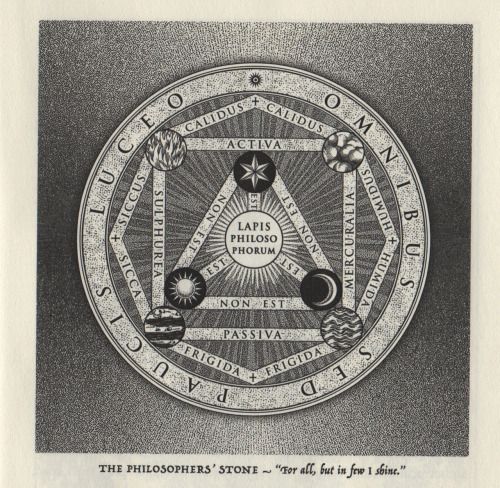
Lapis Philosophorum (Philosopher’s Stone)
The transcendent outcome, the perfected state.
Conclusion/ Overview
Nigredo (Blackening): The descent into shadow, where the old dissolves.
Albedo (Whitening): A purification, a dawning of clarity from the darkness.
Citrinitas (Yellowing): The sun’s touch, bringing illumination and understanding.
Rubedo (Reddening): The ultimate fusion, the attainment of wholeness.
Lapis Philosophorum (Philosopher’s Stone): The transcendent outcome, the perfected state.
Cognitive rigidity is the stubborn insistence that our way of thinking is the only way.
It shows up in small, everyday ways:
refusing to consider another perspective
dismissing evidence that challenges our beliefs
or sticking to habitual responses when flexibility is required.
It is mental inflexibility masquerading as certainty.
This rigidity is rarely neutral. It filters experience, allowing only what aligns with our preconceptions to pass through.
What we notice and refuse to notice is determined less by reality and more by the contours of our existing beliefs. The mind becomes its own jailer.
FILTERED VISION
Perceptual limitations compound this problem. Our senses, our expectations, and our biases shape what we perceive.
Two people can witness the same event and walk away with entirely different “realities,” each convinced theirs is the truth.
Culture, language, upbringing, and personal trauma all function like lenses, coloring everything we see.
When cognitive rigidity meets these perceptual filters, the feedback loop begins: our beliefs dictate what we perceive, and our perceptions reinforce our beliefs.
We become prisoners of our own limited frameworks, blind to the complexity—and often the truth—of the world around us.
Breaking the Loop
Escaping this loop is not about acquiring more information. It is about retraining the mind to see what it usually ignores:
Observe without judgment. Watch your thought patterns and notice when you shut down possibilities automatically.
Seek what challenges you. Engage with ideas and perspectives that make you uncomfortable.
Question your perception. Ask yourself what you might be missing, what biases are filtering your experience.
Embrace intellectual humility. Accept that your understanding is provisional, incomplete, and subject to correction.
The moment we recognize that perception is always partial, and thought is always provisional, the bars of the cage begin to loosen.
Clarity is not a gift; it is a discipline.
The Work of Liberation
This is the work of liberation: not avoiding rigidity, but confronting it; not denying perceptual limits, but piercing them.
The mind can be trained to perceive more, think more flexibly, and respond more intelligently.
It is uncomfortable, but truth always is.
We cannot see everything, but we can see more than we did yesterday.
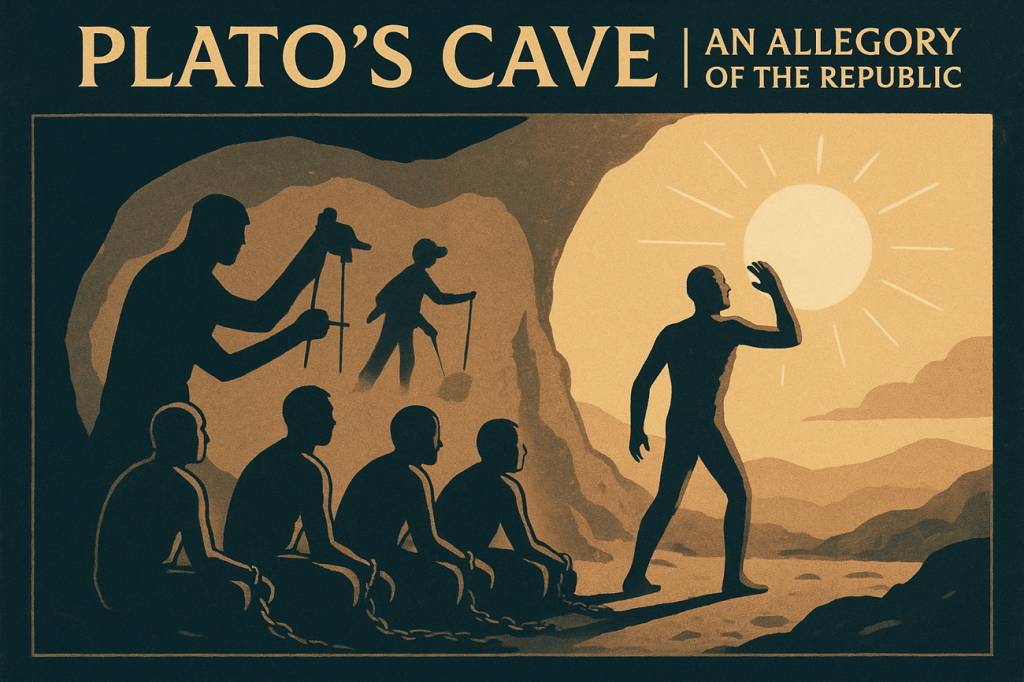
The Allegory of the Cave from Plato’s Republic is one of those perfect metaphors.
I think about it’s truth over and over again, even more so in today’s societal atmosphere.
The Cave depicts our tendency to mistake perception for truth.
THE STORY
In the story, these prisoners are chained inside a cave, they’re facing a wall where they watched these shadows dancing and moving.
These shadows were cast by puppeteers, covertly hiding behind them.
They were manipulating objects to create a shadow that gave the illusion of a fire’s flame.
The prisoners named the shadows, studied them, and even built hierarchies around who interpreted the shadows most accuratel.
To them, this was reality, and they took it very seriously.
We’re not so different.
Most people live confined within their own perceptual cave.
We’re inevitably going to be shaped by our emotional connection to our belief systems, cultural roots, educational indoctrination, and familial conditioning.
Too often we’re caught mistaking projection for truth.
Yes, we’ve been conditioned, but this isn’t the problem per se. We can see past all the programs if we have a fully functioning brain.
The resistance to confronting the possibility of a constructed reality is understandable.
The idea that memories, identity, and perceptions might not be as solid as they seem can feel like an existential threat.
Letting go of deeply held beliefs, even if they are illusions, requires confronting discomfort, uncertainty, and the fear of losing oneself.
It’s easier to cling to familiarity, even if it’s flawed, than to face the unknown. But growth often begins where certainty ends.
Freedom is admitting that you have been deluded and under an illusory story of your own making. Then you’ll break free.
CONSIDER THE PUPPETEERS
The puppeteers are those who shape the narratives we consume.
They are the gatekeepers of knowledge and power:
the donors, financiers, and elites who we likely will never know the true name of.
By controlling the information and communication, they can and do shape what a society perceives as “real.”
Propaganda, entertainment, and social pressure all became tools of control through illusions.
The Awakening
Then comes the moment of liberation. One prisoner is freed.
At first, he’s blinded by the fire’s light.
His eyes, accustomed to shadows, can’t handle the truth so suddenly.
But as they adjust, he begins to see clearly: the shadows were never real.
They were only echoes of something greater.
He’s led outside the cave into the sunlight, another painful adjustment.
Yet when vision returns, he beholds the true world in all its beauty and realizes that the cave was only a prison of perception.
Why Can’t They Turn Their Heads?
CHAINS OF IGNORANCE
Because they are chained. Not just physically, but mentally.
The chains represent ignorance, the invisible grip of conformity and belief.
Most never question the nature of their own bondage.
To break these chains requires courage. It requires unlearning.
It requires the willingness to endure the pain of seeing clearly for the first time.
The Philosopher’s Task
For Plato, this story points to his Theory of Forms.
Theory of Forms is the idea that the physical world is but a shadow of a higher, more perfect reality.
The philosopher’s role is to turn toward that higher truth, to step into the light and understand what truly is true.
EXPECT STRUGGLE
But enlightenment is not a comfortable process.
When the freed prisoner returns to the cave to tell the others what he has seen, they mock him.
They reject him. To them, his truth sounds like madness, because it threatens the foundation of their world.
QUESTION YOUR OWN BELIEFS
The Allegory of the Cave calls us to question our own shadows, to notice what we’ve been taught to believe and think: who benefits from those beliefs?
It asks us to endure the blinding light of truth, no matter how uncomfortable, and to choose freedom over comfort.
To break the chains of ignorance is to step into the light, not to escape the world, but to finally see it.
The Book of The Law is the central axiom, the Law of Thelema.
The Law is summed up in two phrases from the Book:
1. “Do what thou wilt shall be the whole of the Law” – AL I:40)
&
2. “Love is the law, love under will” – AL I:57
THELEMA’S GOAL:
TRUE WILL
True Will is the Will from Heaven.
Know firmly, O my Son, that the True Will connot err; for it is thine appointed Course in Heaven, in whose Order is Perfection.
– Liber Aleph vel CXI – The Book of Wisdom or Folly pg.13
HOW THELEMITES ATTAIN TRUE WILL? MAGICK
THELEMA’S DOCTRINES:
COSMOLOGY
The Book of the Law establishes a model of reality that combines two elementary forces: the infinite extension of space, which is personified by the Egyptian sky-goddess Nuit, and the infinitely contracted point, personified by the Egyptian god Hadit.
It is the interaction of these two forces that results in manifested reality.
Crowley often described this interaction in sexual terms:
“Nuit is the centripetal energy, infinitely elastic because it must fit over the hard thrust directed against it; Hadit, the centrifugal, ever seeking to penetrate the unknown”
Magick Without Tears, Ch.38
The union of these two opposites results in the new current of the present Aeon, represented by Ra-Hoor-Khuit (lit. Horus of Two Horizons), also called the Crowned and Conquering Child.
ETHICS
Arguably the central Thelemic ethic is one of individual liberty and the personal freedom to fulfill one’s Will.
Social restriction—such as laws that make illegal certain sex acts between consenting adults—is generally seen in a negative light by most Thelemites.
Two documents in particular help to define Thelemic ethics for most adherents
Oz and Duty
Liber Oz establishes the rights of the individual.
Duty is described as “A note on the chief rules of practical conduct to be observed by those who accept the Law of Thelema.”
THELEMA IN THE BIBLE
Thelema appears in the Holy Bible referring to divine will, human will, and even the will of the Devil.
One well-known example is from “The Lord’s Prayer” in Matthew 6:10,
“Your kingdom come. Your will (Θελημα) be done, On earth as it is in heaven.”
mat. 6
More Bible Verses
“He went away again a second time and prayed, saying, “My Father, if this cannot pass away unless I drink it, Your will be done.”
—Matthew 26:42
“But as many as received Him, to them He gave the right to become children of God, even to those who believe in His name, who were born, not of blood nor of the will of the flesh nor of the will of man, but of God.”
—John 1:12-13
And do not be conformed to this world, but be transformed by the renewing of your mind, so that you may prove what the will of God is, that which is good and acceptable and perfect.”
—Romans 12:2″
Worthy are You, our Lord and our God, to receive glory and honor and power; for You created all things, and because of Your will they existed, and were created.”
— Revelation 4:11″
…and they may come to their senses and escape from the snare of the devil, having been held captive by him to do his will.”
Aristotle claimed that time is dependent on motion, meaning that time only exists in relation to and as a consequence of change occurring in the world.
Muller, a physicist at the University of California, Berkeley, posits that the expansion of the universe, starting with the Big Bang, constantly creates new space and, consequently, new time.
“Now” as the Leading Edge
He argues that the “now” is the boundary, the shock front, or the leading edge of time, where new time is constantly being created.
Implications for Time Travel
This theory has implications for our understanding of time travel, suggesting that the future is not predetermined, and that the “now” is the only reality that truly exists.
This concept contrasts with the block universe or eternalism, which suggests that all moments in time exist equally, and the presentism, which holds that only the present moment is real.
Aristotle argued that time, as a concept, depends on the soul’s ability to perceive and count it.
He suggested that if there were no souls to “count” time, there might still be change, but not time itself.
This view implies that time is not just countable but also essentially counted, meaning it requires a conscious entity to exist as a measurable concept.
Plato’s theory of the soul, influenced by Socrates, considered the soul (psyche) as the essence of a person, an incorporeal and eternal entity.
He believed the soul exists even after death and is able to think, and that as bodies die, the soul is continually reborn (metempsychosis) in subsequent bodies.
Some philosophical traditions, like Neo-Platonism, explored the concept of a world soul (anima mundi) or soul of the world,suggesting an intrinsic connection between all living beings and that the world is animated by a soul.
This concept posits that the world is animated by a soul much like the human body.
This perspective suggests that the soul is not limited by space or time.
Some theories, like the Quantum Theory of Soul, propose that the soul, as defined as information stored in the quantum field, can extend over space and time, potentially transcending the limitations of the physical body.
Time as a Number
Aristotle describes time as a “number of motion with respect to the before and after,” suggesting that we can count or measure time by counting instances of change.
Descartes on Time
Time as a Foundation for Diversity and Motion
Descartes’s mechanistic view of the world, where diversity and motion are fundamental, requires time for these phenomena to occur.
Time as Proof for God’s Existence
Descartes uses the concept of “parts of time” in his Meditation III proof for God’s existence, emphasizing the role of time in our understanding of God’s attributes.
Time as a “Mode of Thought”
In his Principles of Philosophy, Descartes also states that time is a mere attribute and “mode of thought”.
Time & Duration
Descartes distinguishes between time as the measure of motion and duration as an attribute of things.
Time & the Span of Life
Descartes sees no differentiation between the span of a life and the span of time itself.
Descartes introduced the concept of dualism, which argued that reality or existence is divided into two parts.
He argued that humanity could be divided into two parts as well: the mind and the body.
TIME AS MOMENTS
Time as a Series of Moments
This perspective suggests that time can be broken down into a sequence of unique, distinct moments, each representing a specific point in the timeline.
Kairos refers to an opportune or significant moment, while chronos refers to a specific amount of time, such as a day or an hour.
Examples of “Moments in Time”
Think of memorable events, like a wedding, a birth, or a historical turning point.
These are all “moments in time” that stand out as distinct points in the flow of time.
Time as Absolute
Newtonian Time
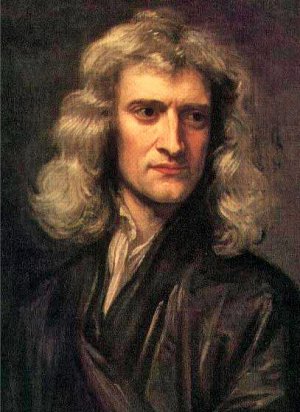
According to its most famous proponent, Sir Isaac Newton, for example, absolute time (which is also sometimes known as “Newtonian time”) exists independently of any perceiver, progresses at a consistent pace throughout the universe, is measurable but imperceptible, and can only be truly understood mathematically.
For Newton, absolute time and space were independent and separate aspects of objective reality, and not dependent on physical events or on each other.
Time as a Product of the Mind
Whitehead | Heidegger—Time as the Form of Becoming
Whitehead and Heidegger described time as the process of things changing and becoming.
They believed that time is essential for things to happen and transform.
Theory of Relativity
SPACETIME
According to modern science, particularly the theories of relativity and quantum mechanics, time is considered a part of a larger concept called spacetime.
Spacetime includes all the events in the past, present, and future, and is interconnected with space.
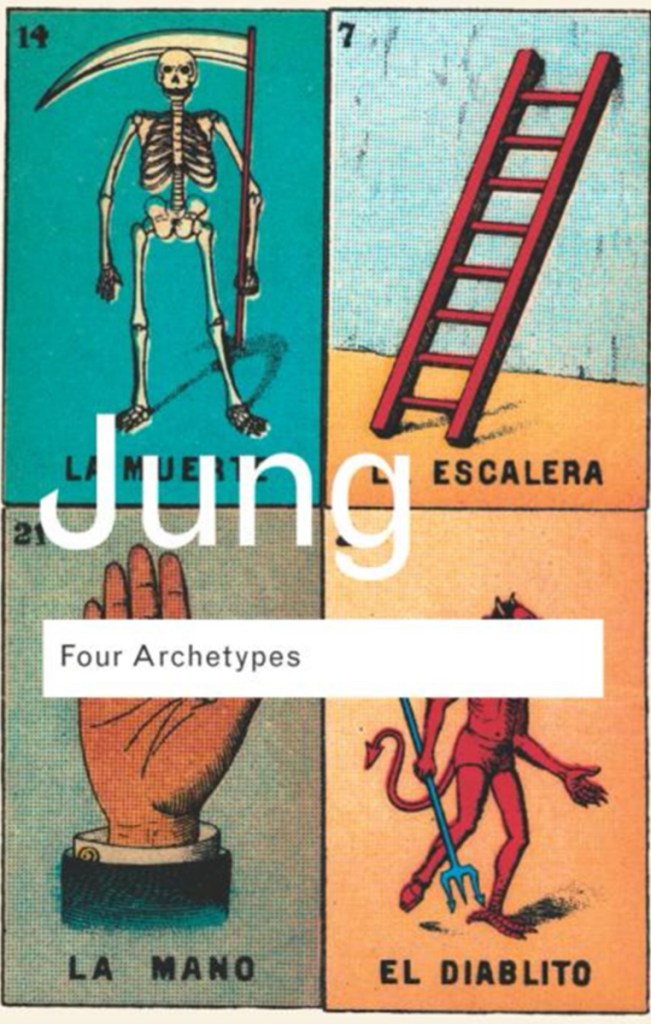
The word “archetype” comes from the Greek word ἀρχή (arche), meaning “origin” or “beginning”.
In literature, an archetype is a recurring pattern, motif, or symbol that appears in stories, myths, and folklore.
These archetypes can take the form of characters, settings, or plot elements, and they often represent universal themes and ideas.
According to Jungian psychology, there are seven feminine archetypes that play significant roles in modern society:
the Mother
the Maiden
the Queen
the Huntress
the Wise Woman
the Sage
the Lover
⬆️READ FOR FREE ⬆️
These archetypes illustrate various dimensions of the feminine experience and play a significant role in the diversity of individuality and expressions of women in contemporary society.
The Maiden Archetype
The Maiden Archetype symbolizes youth, innocence, and potential; she embodies the qualities of exploration and discovery.
She represents new beginnings and the pursuit of dreams, often characterized by a sense of adventure and curiosity about the world.
With an open heart and a mind ready to embrace the unknown, the Maiden invites us to step out of our comfort zones and seek out the experiences that shape our lives, reminding us that every journey holds the promise of growth and transformation.
The most famous maiden archetype in Greek mythology is Princess Andromeda, who was chained to a rock as a sacrifice to a sea monster. She is saved by the hero Perseus and marries him.
The Queen Archetype
The Queen archetype represents authority, power, and responsibility.
She is a leader and a figure of confidence, embodying traits such as:
decisiveness
strength
the ability to inspire others.
The Queen is often associated with:
the pursuit of justice
the welfare of her domain
The Huntress Archetype
This archetype embodies:
independence
self-sufficiency
the pursuit of goals.
The Huntress is often portrayed as a warrior or a protector who:
values freedom
Has the courage to break societal norms
Has ambition
Has the determination to forge her own path.
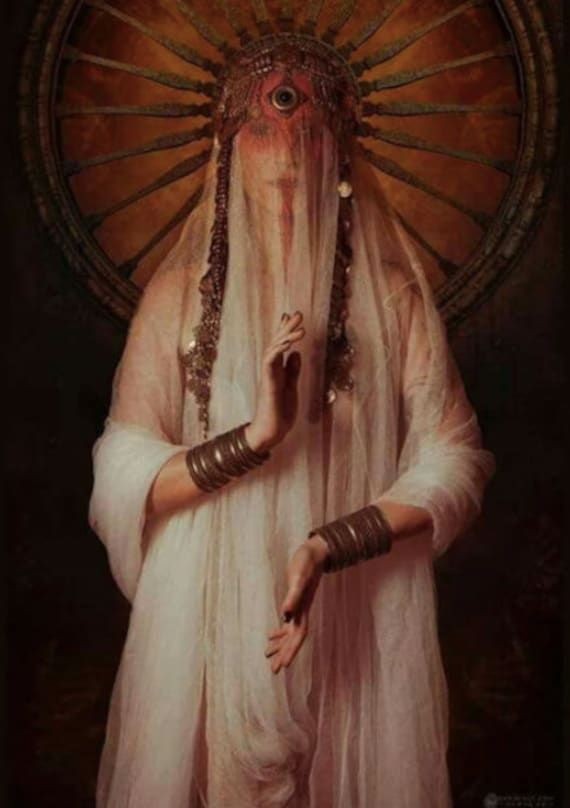
The Wise Woman Archetype
Representing wisdom and intuition, the Wise Woman:
Embodies ancient knowledge
A healer and mentor
Insightful
Introspective
shares her wisdom
The Sage Archetype
Closely related to the Wise Woman, the Sage represents intellectual depth and understanding.
The Sage archetype often seeks knowledge and truth, embodying the pursuit of enlightenment and the dissemination of ideas that can empower others.
The Lover Archetype
The Lover archetype is associated with passion, intimacy, and connection.
This archetype values relationships and emotional expression, emphasizing the importance of love, romance, and sensuality in a fulfilling life.
Together, these archetypes account for the major differences among women, as each woman may resonate more strongly with specific archetypes based on their personal experiences, values, and choices.
Understanding these archetypes can help us navigate our identities to better embrace the multifaceted nature of femininity in contemporary society.
LEAVE A COMMENT DOWN BELOW
3 responses to “Feminine Archetypes”
Anonymous
I love this format you are using – concise rundown of the archetypes delivered with an image heavy style that compels me forward. The images conjure great emotion appropriate to the subject matter and complement the individual stories without fail. More like this please!
Absolutely. 💯
I believe we all embody various archetypes within us, each manifesting in different degrees depending on the context. As you mentioned, these archetypes emerge appropriately for each setting.
Carl Jung spoke much on this:
“The archetypes are the living system of reactions and aptitudes that determine the individual’s life in invisible ways.” — Carl Jung
I LOVE THIS JUNG QUOTE:
“Archetypes are like riverbeds which dry up when the water deserts them, but which it can find again at any time. An archetype is something like an old watercourse along which the water of life has flowed for centuries, digging a deep channel for itself.”
— Jung, The Archetypes and the Collective Unconscious
Thank you for your comment; it inspired deeper insight.
ASavior’s Decent into Matter Made Way For Our Spiritual Ascension.
“He has made everything beautiful in its time. He has also set eternity in the human heart.”
Ecclesiastes 3:11
Within our very hearts, Eternity resides—a thought inviting deep contemplation.
We inhabit this dense, material world that is shaping all inhabitants towards its ultimate pinnacle; death and decay. Although morbid, this is simply true.
Our soul knows this world’s objective for ALL matter is death… This makes sense why we, as conscious beings, are perpetually drawn to Spirituality.
In Search for the Eternal Life, innate to our Soul, beyond the body, a deep yearning echoes from the depth of our being.
Transmutation of Christ
In Christ
The transmutation that the I AM that is speaking is the process taught by Christ. The Spiritual Higher substance redeems and refines the material lower substance.
Watch:
Matter & Material = Lower Dimension
Understand Human Awareness
Human awareness is traditionally understood to reside within the confines of the material body (the skull).
Consciousness is nonlocal and manifests in this tangible body, encased in the most fragile frame.
Navigating Time and Space
Consciousness navigates a world governed by the dense laws of time and space.
Within this environment, we remain grounded in the body until our vessels’ eventual expiration, at which point we experience release from all this weight.
CONSCIOUS REFRAME
By framing our understanding of consciousness in this way, we acknowledge both the limitations imposed by our physical reality and the potential for a deeper exploration of what lies beyond these limits.
The Concept of Lower Dimensions
The material realm is a “lower dimension” due to its inherent characteristics. Density. Decay. Limited Movement. Etc.
Matter is ephemeral; it is temporary and fleeting. The physical world, bound by its limitations, faces its inevitable end—total decay.
This transience proves the constraints of our existence within this sphere, clearly a lower-dimensional experience.
So, does this mean that matter and materiality is the source of imperfection & sin?
Not inherently. Matter is neutral.
The Source of Sin
Rebellion & Division
The darker aspects of sin do not arise from matter, rather they affect matter.
These traits come from our flawed human interaction within the material frame.
Fragmentation of the Psyche
The eternal ‘we’ exists in our psyche, not in our body, having fragmented away from Source.
This disconnection is referred to as sin.
Understanding Fragmentation
This fragmentation represents a profound separation from our true essence, identity,& nature— resulting in a loss of unity and wholeness. Falling from Perfection.
TO PUT IT SIMPLY:
WE ARE OVERWHELMED SOULS THAT WENT BUZZURK.
REBELLED. SINNED. DEFIED.
We need to recognize that this disconnection manifests, indirectly leading to our feelings of emptiness and despair.
Fragmentation occurs from overwhelming emotions and negative experiences, further entrenching us in a cycle of pain and suffering.
By acknowledging this fragmentation, we will begin the process of healing the fragmentation and, remember who we are.
The only way to reconnect with our Source is through Conscious rememberence.
We’re Broken Vessels Sailing Back Home
All of humanity exists in a state of fragmentation, with differing degrees, of course, distanced from the rememberence of our place in the Tree of Life, cut off from the foundational Essence of our Origin.
This disconnection results in unrefined desires and unholy inclinations. Sin.
The primary objective is to preserve the remnants of our existence that still remain intact, parts of ourselves that can be re-integrated into Source.
Through trials and transformative experiences, like a purifying fire, our soul strives for alignment and reunification with Source through Consciousness—the All in All is seeking harmony with us – from within us, as the Higher Self, in accordance with the Divine principles of I AM. Every disaster is an attempt to wake us up.
This journey demands the dissolution of accumulated negativity and superficial attachments that hinder our resonance.
The demons of separation from the Source (I AM) has left us vulnerable to eternal ignorance; misguided by lower bodily desires, and the blind navigation of our minds’ perpetual state of amnesia.
Physical Matter = A Veil
The laws of Physics drape over our perception, obscuring the Ethereal realm’s boundless perfection from being apprehended by our Eyes and Psyche.
Why God Does This:
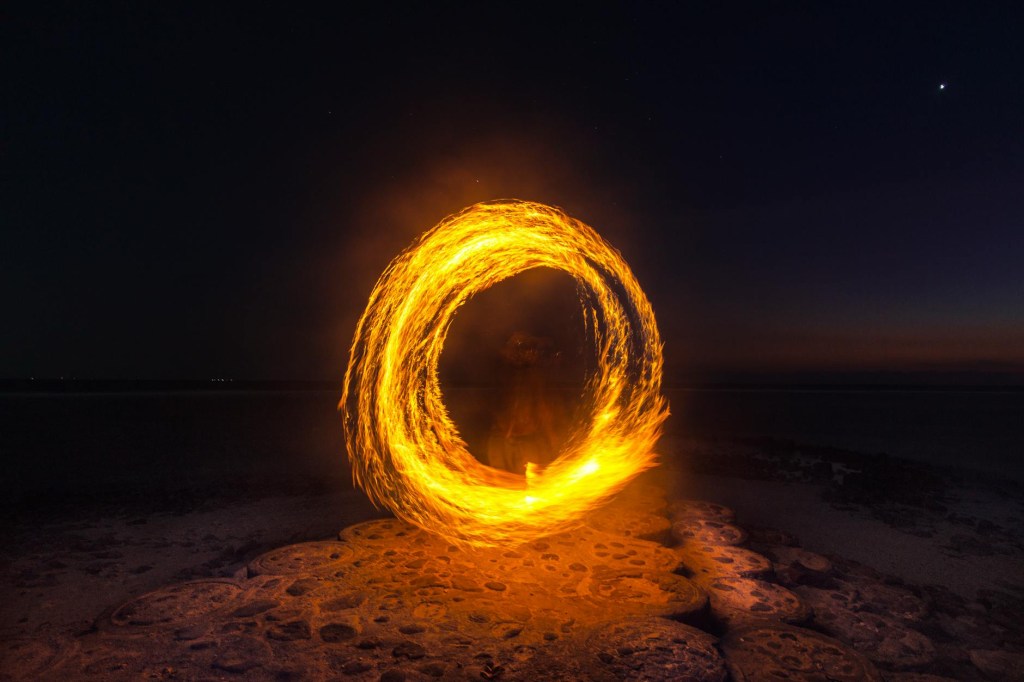
To protect us from searing our consciousness. PROTECTION FROM BEING ANNIAHLATED BY THE ALL-CONSUMING FIRE. This density has too much pressure.
ABOUT THE ALL CONSUMING FIRE
the metaphorical “all-consuming fire” symbolizes the purifying force of God’s divine energy. This fire represents both a transformation and a likely threat to those unprepared for its intensity. This can be likened to the everyday struggles people face in maintaining their mental and emotional well-being amid life’s chaos.
The Violet Consuming Flame serves as a protective mechanism, allowing one to transmute discord and imperfection into purity and light, as elaborated by the Ascended Masters in teachings such as those from the I AM School and the St. Germain Foundation.
By consciously invoking this flame, individuals can shield themselves from negative energies and unwanted attachments, akin to the protective measures discussed in contemporary spiritual practices aimed at maintaining a healthy aura and spiritual fortitude, as noted in articles on spiritual protection and aura shielding.
The journey towards spiritual purity requires both the acknowledgment of the consuming fire’s potential for annihilation and the active engagement in practices that foster resilience and enlightenment.
THE VEIL IS GOD’S GIFT OF PROTECTION UNTIL WE’RE READY
This veil is not a mere obstacle; NO!
It is a GIFT—a medium needed for our experience, realization, and final expansion needed to transcend it.
The Creator knows what we need before we do. Painful growth is a must when in such a heavy laden dimension, in order that we remain on the Narrow Way.
We’ll go from this heavy density to our first weightless home – back to a formless, eternal flow state of pure expansion. The pain level we now undergo cannot compare with the level of ecstasy we’ll carry in infinity.
The material world challenges our Soul, un-shapes us, and stages the platform to our Spiritual Ascension.
Our soul craves to experience leveling up. The human experience is how we do that.
Dopamine From The Heavens
What’s cool is we produce dopamine in our brain every time we feel like we’re about to level up, were perfectly designed to keep up with motivation.
The Flesh
A Firey Portal To The Divine Father
The flesh is a starting point from which we Ascend toward the Eternal Flame (ie; Heaven, Tree of Life, Eternal Light.).
Fire Burns. Embrace it. Yes it hurts.
Alchemical Transformation
The Redemption from Within
Salvation is an Alchemical action.
Salvation embodies the metamorphosis of the imperfect aspects of human existence (the corporeal) through the influence of the Perfect (Spirit).
Salvation refers to elevating the lower state of being to the higher One.
VISUALIZE THE ALCHEMY
Visualize the process of human made alchemy, where base metals like lead are refined into resplendent gold.
Everything Has A Parallel / Duality
—as above, so below.
—on earth as it is in heaven….
In the framework of Parallel Alignment, spiritual alchemy does not advocate for the rejection of the corporeal realm but emphasizes its ownership and integration in order to transmute. It’s a necessary step.
Recognize any possibilities over the lower aspects of our existence.
The Divine Alchemist is exemplified by Christ as He performs the transmutation of the lower forms, uncovering the intrinsic Divine that resides within All.
The kingdom of heaven is within.
– Jesus
Scripture illustrates this through symbolic narratives of descent and redemption.
Christ’s very incarnation. What was it?
God revealing his entering of flesh, embodying the perfect descent into the “imperfect” in order to redeem it.
Encoded is a profound truth:
Salvation is an inside-out process, where the spiritual infuses and uplifts the material.
This is not devolution but evolution—a purposeful refinement of existence. A Divine Masterpiece only fully known by Faith.
This transformation is practical
Through combining our energy production that we create with our body movement through prayer, reflection, and cognizant living, we remain more and more in alignment with the higher substance, the Essence of All, the God of the Heavens…
As Divinity peels back the veil, offering a glimpse into Eternity, and kindling hope, Faith increasingly proceeds from our hearts.
The interplay of matter + spirit reaches across spiritual traditions and religious cultures. In all of them, transformation is a recurring theme.
Salvation restores you to your original harmonious symmetry, as Christ exemplified in His death and resurrection.
—a material body -weak and sewn in darkness, ascending in righteousness, glorified by the Holy Spirit, within.
Insights from Other Spiritual Traditions
Hinduism: The material world is maya—an illusion veiling Brahman, the ultimate reality.
Matter is not evil but transient, a stepping stone to liberation. Through knowledge (jnana), devotion (bhakti), or disciplined action (karma), one transcends the veil to unite with the divine.
Buddhism: Matter manifests as samsara, a cycle of suffering fueled by attachment.
Yet, it is also the ground for awakening.
The path to nirvana—enlightenment—uses the material world as a teacher, guiding us beyond suffering through mindfulness and wisdom.
Taoism: Here, matter and spirit are not opposed but intertwined, flowing as yin and yang.
The material world reflects the Tao, the cosmic harmony.
Transformation means living in balance with this natural order, neither clinging to nor rejecting matter.
These traditions affirm that matter, while “lower,” is integral to the Spiritual journey of the Soul.
Whether as a veil to pierce, a cycle to escape, or a symmetry to assume. Or maybe all of the above, it is clearly necessary for the Soul to evolve.
The Role of Wisdom and Knowledge
Wisdom and knowledge are the Alchemist’s #1 tools, fundamental for transmuting the material into the Spiritual.
A desire is kindled for us to Know the One Who is All in All.
He pressed the desire in me to study, for meditation, and the deep-embedded desire we harbor to be intimate with Divinity in our daily routine.
Just as heat sanitizes physical surfaces, Wisdom refines the soul.
The heat when it comes- ALWAYS shifts our perception, forcing us to See the matter.
— in this we find it is not a limit.
We see it for what it is: a lens for the Eternal.
Through this Discernment we experience our own Salvation, co-creating with the Father (Source) in the Higher Realm, King above Kings, He that Is the Logos redeems us, by the Logos (the Word).
Common Objections
The Value of the Material World
Critics argue that;
labeling matter “lower” dismisses its intrinsic worth. If matter is merely a flawed shadow, why does the Divine engage it so deeply—through creation, incarnation, & natural beauty?
Traditions like animism celebrate matter as alive with spirit, while Christianity’s Incarnation sanctifies the physical.
This invites a perspective.
Matter is not a foe to be vanquished by humans but a tool in redemption.
Its limitations—decay, suffering—spur our growth, while its beauty reflects the Divine. A reflection is just that… a reflection.
Putting our form through the Alchemical process does not negate matter’s value; it fulfills it, thinning the veil until it into a window.
I did not come to abolish the law. I came to fulfill it. – Jesus
The material and spiritual are interwoven -so long as we are traveling in this vessel.
Salvation is a journey through matter, not away from it, not for it.
Ecclesiastes 3:11 reminds us that Eternity dwells within the heart of humans, even amid the temporal.
Matter, though a veil, is also the crucible where the Spiritual transmutes the material.
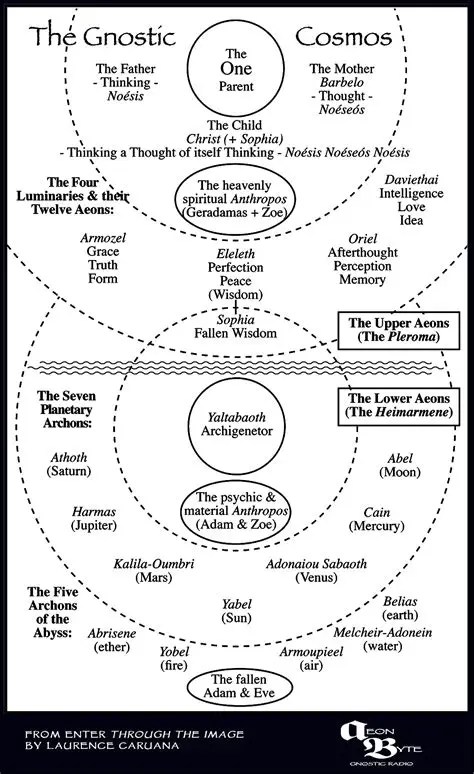
GNOSIS IS THE KEY🔑
Wisdom and knowledge (aka Gnosis) unlock this process, navigated by divine insight.
Far from a simplistic dualism, this vision appreciates the material world’s role in revealing the Divine.
Ultimately, eternal life through salvation is the highest potential that our lower selves can achieve. We transform not to erase or reject our lower nature, but to embrace it for evolving with Divinity.
By doing so, we illuminate that which eternity has already written on our hearts.
Eating flesh was one of the most impure, unholy and unclean actions one could do. Absolute debased.
“So Jesus said to them, ‘Truly, truly, I tell you, unless you eat the flesh of the Son of Man and drink His blood, you have no life in you. Whoever eats My flesh and drinks My blood has eternal life, and I will raise him up at the last day.’”
The Nature of Suffering: A Necessary Element of Existence
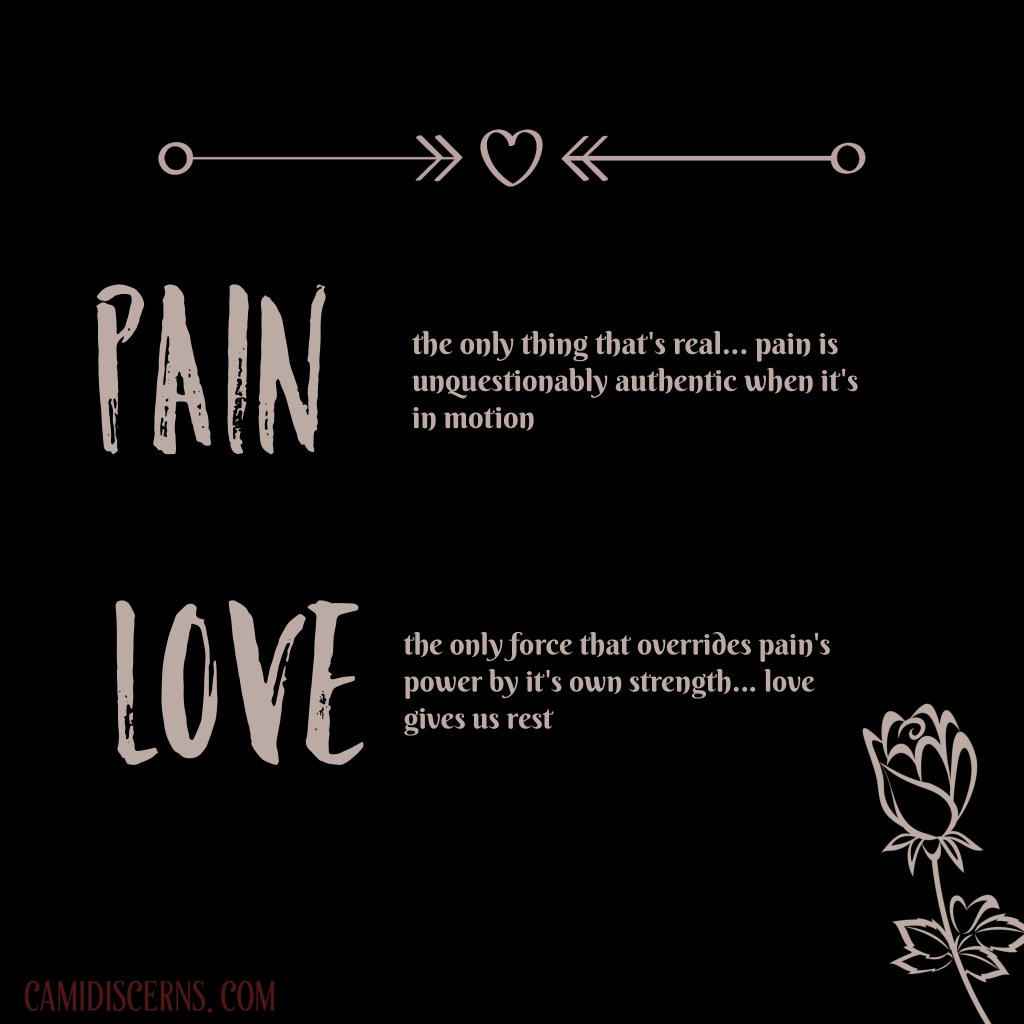
As much as we may wish otherwise, the reality is that suffering is an inescapable part of the human experience.
The age-old philosophical and religious observation that “life is suffering” points to a fundamental truth about the human condition.
Embracing Uncertainty and Impermanence
In the face of uncertainty and impermanence, we cultivate the qualities of empathy, humility, and inner strength that are vital for navigating the complexities of life.
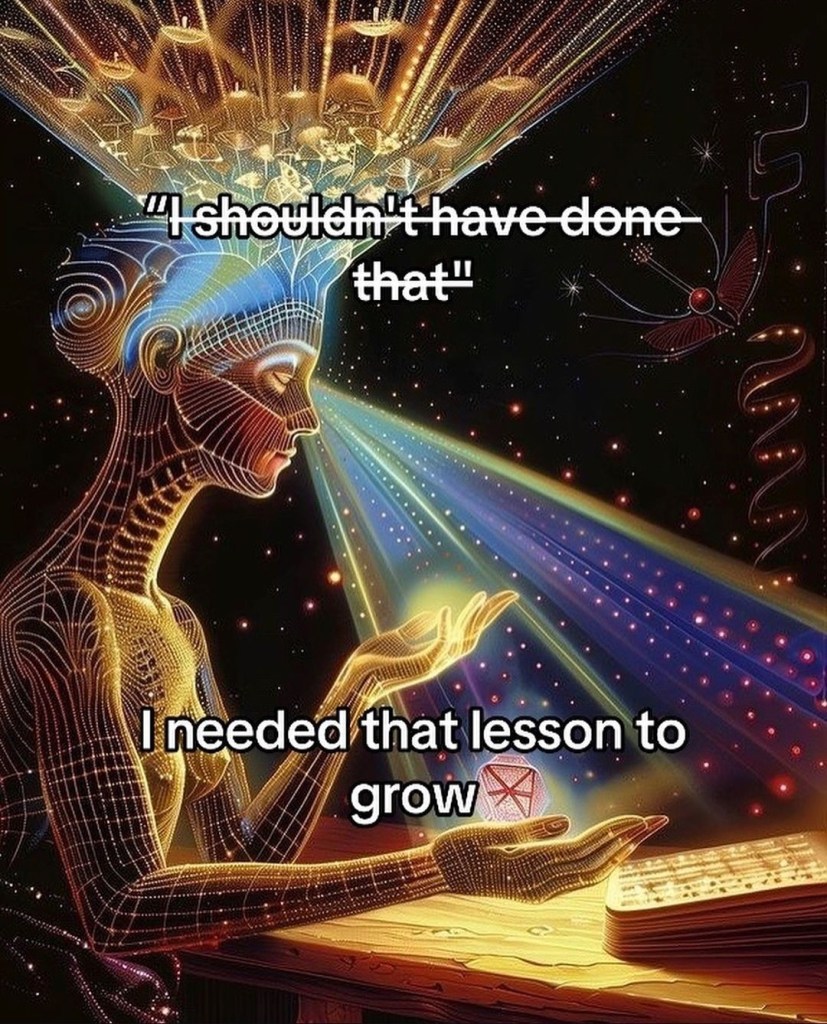
It is through our struggles that we learn and grow, transforming our experiences into avenues for personal development.
Seeking Meaning in Suffering
Perhaps, in the end, it is not a life devoid of suffering that we should seek, but rather a life where suffering serves a purpose.
As Viktor Frankl articulated, fulfillment cannot be stripped of struggle; it is through confronting our darkest moments that we can truly experience the richness of life.









 The Nature of Suffering: A Necessary Element of Existence

Leave a Reply