Category: Jesus The Christ

Theological and Scriptural interpretations

  • The Two Witnesses of Revelation 11: Elijah and Moses?

    The Two Witnesses of Revelation 11: Elijah and Moses?

    Revelation 11 in the Bible describes two witnesses who prophesy for God during a time of tribulation.

    “And I will give power to my two witnesses, and they will prophesy for 1,260 days, clothed in sackcloth.”

    Revelation 11:3

    crop woman lighting candle in dark room

    “These are the two olive trees and the two lampstands that stand before the Lord of the earth.”

    Revelation 11:4

    “If anyone tries to harm them, fire comes from their mouths and devours their enemies. This is how anyone who wants to harm them must die.”

    Revelation 11:5

    burning campfire with bright flames in nature

    So, who are the witnesses? Let’s take a look:

    Elijah, recorded in the Scriptures, was taken up to heaven in a whirlwind, without experiencing physical death.

    Moses, the renowned leader of the Israelites and the recipient of the Ten Commandments on Mount Sinai, is also considered a strong candidate for one of the witnesses.

    Although Moses did experience physical death, there is an account in the book of Jude that describes a dispute between the archangel Michael and the devil over the body of Moses.

    These two figures represent significant aspects of Israelite history and the prophetic tradition.

    Elijah embodies the spirit of prophecy and devotion, while Moses represents the law and the covenant between God and His chosen people.

    Elijah as One of the Witnesses

    There are several reasons why Elijah in particular is thought to be one of the two witnesses:

    In Jewish tradition, the role of Elijah preparing the way for the Messiah is derived from various biblical passages and religious interpretations. One of the key references is found in the Book of Malachi, specifically in Malachi 4:5-6, which states:

    “Behold, I will send you Elijah the prophet before the great and awesome day of the Lord comes. And he will turn the hearts of fathers to their children and the hearts of children to their fathers, lest I come and strike the land with a decree of utter destruction.”

    Malachi 4:5-6

    This passage is understood by many Jewish scholars to indicate that Elijah will appear before the arrival of the Messiah to reconcile relationships, mend divisions, and prepare the hearts of the people for the coming era of redemption.

    The concept of Elijah’s role as a harbinger of the Messiah gains even more weight through numerous references in the Hebrew Bible and Jewish texts.

    The Zohar, a fundamental text in Jewish mysticism, references Elijah in relation to the witnessing of divine secrets and revelations. It highlights the concept that Elijah receives these revelations and then reveals them to other righteous individuals.

    These references affirm the immense significance of Elijah in Jewish eschatology.

    Revelation positioning Elijah during end times would undoubtedly fulfill this prophecy.

    Elijah was taken up into heaven alive in a whirlwind, according to 2 Kings 2.

    “And it came to pass, when the Lord was about to take up Elijah into heaven by a whirlwind, that Elijah went with Elisha from Gilgal.”

    2 Kings 2:1

    This mirrors how the two witnesses of Revelation will be assumed into heaven after their death, not experiencing decay.

    Elijah demonstrated power over weather similar to the plagues the two witnesses inflict.

    He brought drought and fire from heaven down on his enemies.

    Moses as the Other Witness

    Compelling evidence also points to Moses representing the other witness:

    During the event of the Transfiguration, Jesus was accompanied by two significant figures from the Bible, Moses and Elijah.

    These three individuals can be regarded as a collective group. Moses showcased his extraordinary capacity to perform miracles through the use of his staff, which is comparable to the abilities possessed by the two witnesses. Notable feats performed by Moses include transforming water into blood and invoking devastating plagues of hail and fire.

    Jewish tradition at times links Moses’ death and assumption similar to Elijah to fulfill Deuteronomy 34:5-6.

    “So Moses the servant of the Lord died there in the land of Moab, according to the word of the Lord. And He buried him in a valley in the land of Moab, opposite Beth Peor; but no one knows his grave to this day.” This passage describes the death of Moses and his burial by God in an undisclosed location.

    Deuteronomy 34:5-6

    Witnesses Fulfill Biblical Roles

    Positioning Elijah and Moses as the two end times witnesses fulfills biblical prophecies and patterns, as they echo the miraculous acts performed by these prophets in the past. Furthermore, their assumption aligns with the uncertain endings described in their respective biblical narratives. By linking the two witnesses to Elijah and Moses, there is a theological consistency that draws from Jewish eschatological traditions, adding depth to the interpretation of end times events.

    More

    Symbolism and Numbers

    The witnesses’ 1,260 day prophesying period mirrors 3.5 “years” which is symbolic of testing/trial. Moses and Elijah’s Biblical roles correspond to this symbolic theme.

    In the Bible, the concept of a prophesying period of 1,260 days is mentioned in the book of Revelation. This period is often interpreted as a symbolic representation of a time of testing or trial. It is believed to signify a period of intense spiritual warfare and persecution for believers.

    The number 3.5 “years” is derived from dividing 1,260 days by 360 days, which was the average length of a biblical “prophetic year.”

    This period is considered to be half of a literal year, symbolizing a time of partial completion or fulfillment.Moses and Elijah, two prominent figures in the Bible, are often associated with this symbolic theme of testing and trial. Moses, in the Old Testament, led the Israelites through the wilderness for 40 years, which was a period of testing and refinement for the nation. His role as a leader and lawgiver exemplified the struggle and perseverance required in times of trial.

    Elijah, on the other hand, was a prophet known for his unwavering faith in God during a time of great apostasy in Israel. He confronted the prophets of Baal and endured persecution and isolation. His role represents the endurance and steadfastness required in the face of opposition and trials.Both Moses and Elijah also played significant roles in the Transfiguration event, where they appeared alongside Jesus and affirmed his mission. This event is often seen as a significant link between the Old and New Testaments, further highlighting the theme of testing and fulfillment.Overall, the 1,260 day prophesying period and the symbolism of 3.5 “years” serve to convey the idea of a time of intense testing and trial for believers. The roles of Moses and Elijah in the Bible correspond to this theme, exemplifying the perseverance and faith required in such times.

    Miracles

    Specific miracles performed by the witnesses like the ability to stop rain for 3.5 years mirrors Elijah’s confrontation with Baal’s prophets on Mount Carmel.

    In the book of 1 Kings, Elijah challenges the prophets of Baal to a contest to determine the true God. He prays for rain to be withheld from the land as a sign of God’s power. Miraculously, rain ceases for three and a half years, proving the validity of Elijah’s faith.

    Similarly, the witnesses in the context of the paragraph demonstrate their divine power by stopping the rain for an extended period. This parallel not only highlights the supernatural abilities of the witnesses but also draws a connection to the historicity and significance of biblical miracles.

    The ability to stop rain for 3.5 years, like Elijah’s confrontation with Baal’s prophets on Mount Carmel, serves as a powerful testament to the witnesses’ authority and connection to the divine. This specific miracle implies a direct challenge to false beliefs and idolatry, just as Elijah did. By stopping the rain, the witnesses demonstrate their ability to control the natural elements, further proving their divine mission and purpose.

    Their actions mirror the courageous and faith-filled actions of Elijah, emphasizing their role as spiritual leaders and their unwavering devotion to the truth. This parallel to a well-known biblical narrative gives credibility to the witnesses’ divine abilities and reinforces their role as messengers of God.

    Jewish Eschatology

    Writings like 4 Ezra, 2 Baruch, Targum Pseudo-Jonathan and more identify Elijah or Elijah/Moses as end times figures. Revelation draws from these traditions in its Jewish-Christian eschatological imagery and symbolism.

    Many writings from the Jewish and early Christian traditions, such as 4 Ezra, 2 Baruch, and Targum Pseudo-Jonathan, identify Elijah or Elijah/Moses as significant figures in the end times.

    These texts present Elijah as a prophet who will play a crucial role in the eschatological events, bringing about the restoration of Israel and the coming of the Messiah.

    In 4 Ezra, for example, Elijah is depicted as a symbol of hope and expectation, representing the restoration of the twelve tribes of Israel. Similarly, 2 Baruch portrays Elijah as the one who will deliver the people of Israel from their enemies and lead them to the promised land.

    The book of Revelation draws upon these traditions and incorporates them into its own Jewish-Christian eschatological imagery and symbolism. It utilizes the figure of Elijah as a symbol of prophecy and divine intervention in the end times.

    In Revelation, Elijah is represented as one of the two witnesses who will prophesy for 1,260 days before being killed and resurrected (Revelation 11:3-12). This imagery of Elijah as a witness and martyr echoes the Jewish belief that Elijah will play a crucial role in fulfilling God’s plan for the world.

    The book of Revelation also incorporates elements of Moses’ role in the Exodus story, portraying the figures of Elijah and Moses together as two powerful witnesses of God’s judgment and redemption (Revelation 15:1-4).

    These references to Elijah and Moses in Revelation serve to emphasize the continuity between God’s past actions in history and his final plans for the end times.

    Let me know in the comments what you think!
  • Arminianism and Calvinism

    Arminianism and Calvinism

    According to a recent survey conducted by the Pew Research Center, approximately 60% of Protestant congregations in the United States adhere to Arminian leaning theology, while only 36% adhere to Calvinist leaning theology.

    What are these two theologies?

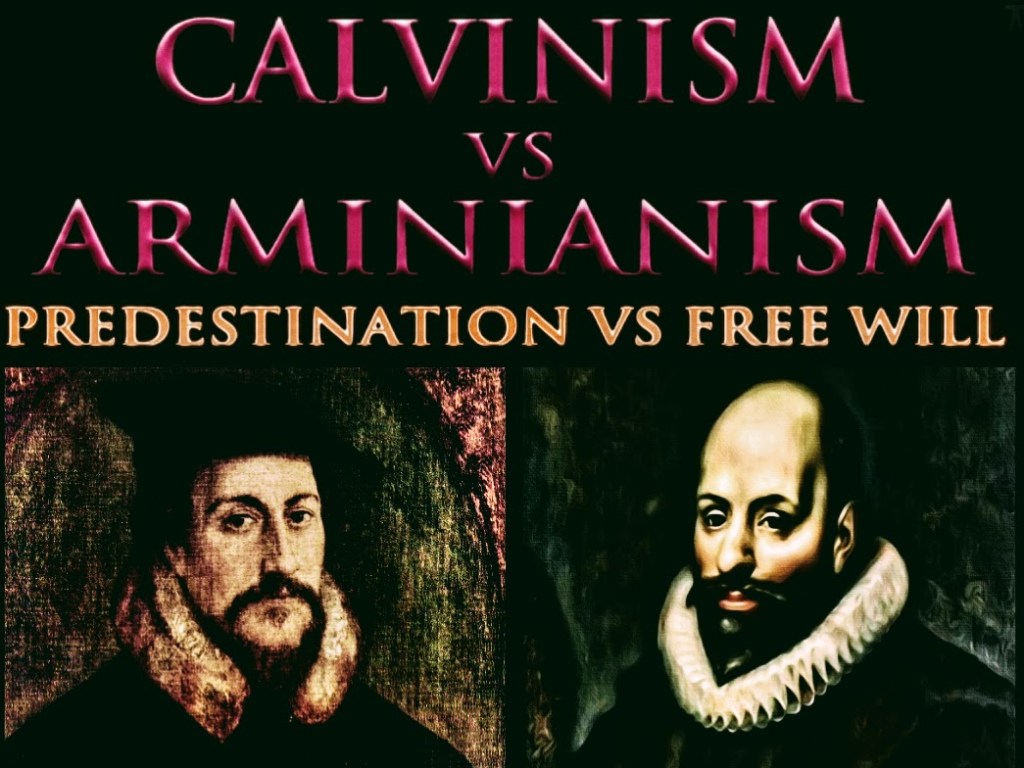
    Arminianism and Calvinism are two different views on how God relates to human salvation.


    Calvinism stresses God’s sovereignty and human predestination.

    Arminianism emphasizes human free will and human faith.


    Calvinism teaches that God chooses who will be saved without condition, that Christ died for the elect, and that grace is perfect saving ALL whom God chose from the beginning.

    Arminianism teaches that God chooses who will be saved based on their own foreseen faith, that Christ died for everyone, and that grace can be resisted by the sinner.

    Calvinism Overview

    Founder: Based on the teachings of John Calvin (1509-1564), a prominent figure in the Protestant Reformation.

    John Calvin

    Belief

    God’s Sovereignty: Calvinists emphasize unconditional, unlimited, and absolute sovereignty of God. Everything is predetermined by God’s will, and His foreknowledge is a result of His own planning.

    Man’s Depravity: Due to the Fall, humans are totally depraved and incapable of saving themselves. Salvation must be initiated by God.

    Election: Election is unconditional—God chooses some for salvation before the world’s foundation.

    Grace: God’s grace is irresistible; only it can draw the elect to salvation.

    Perseverance: The elect will persevere in faith.

    Arminianism Overview

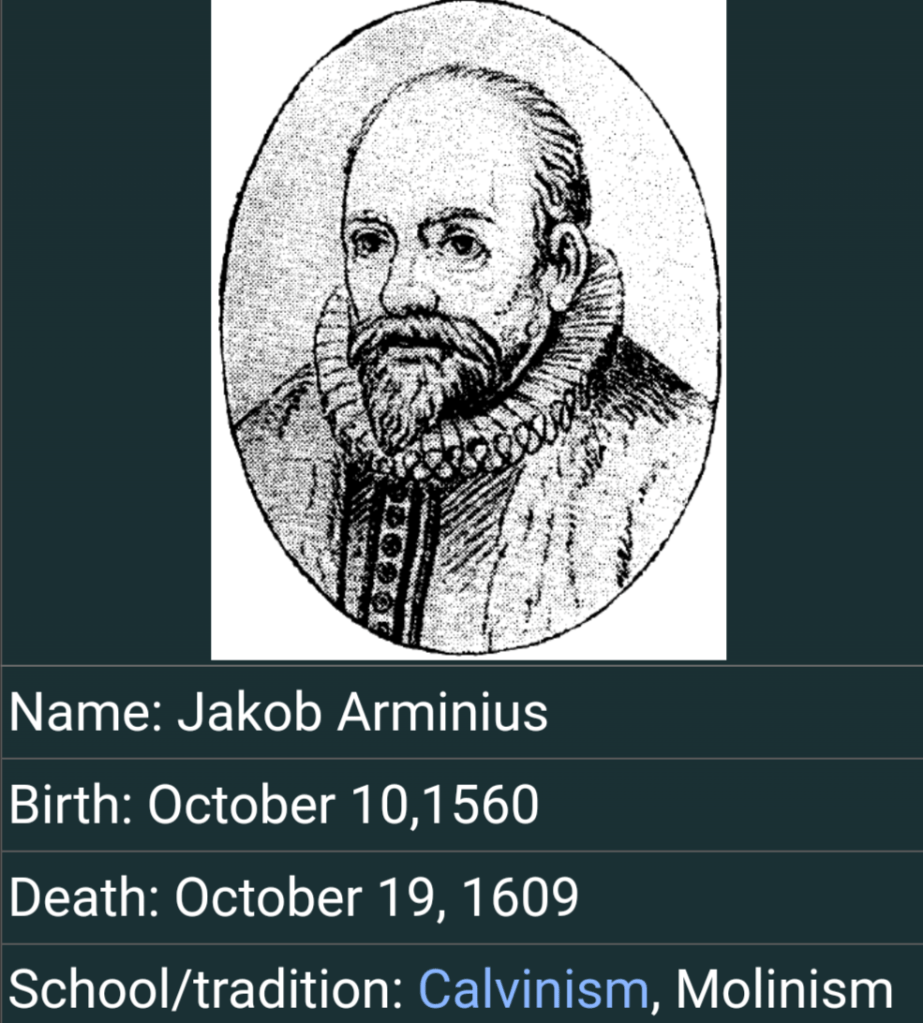
    Founder: Based on the views of Jacobus Arminius (1560-1609), a Dutch theologian.

    Beliefs

    God’s Sovereignty: Arminians believe God’s sovereignty is limited in correspondence with human freedom. His decrees are associated with His foreknowledge of human response.

    Man’s Depravity: Humans inherit a corrupted, depraved nature, but through prevenient grace, God enables them to respond to His call for salvation.

    Election: Election is conditional, based on God’s foreknowledge.

    Grace: God’s grace is resistible, and humans can choose to cooperate with it.

    Salvation: It can potentially be lost.

    In my understanding, Arminianism leans towards a more man-centered perspective, placing human agency and decision-making at the forefront of their faith, while Calvinism emphasizes a God-centered approach, emphasizing God’s sovereignty and trustworthy control over all things.

  • Who Were The Sadducees?

    Who Were The Sadducees?

    The historical context of the Sadducees can be understood within the broader context of the time of Christ and the New Testament era.

    During this period, Israel was under Roman control, and the Jewish people were divided into various religious and political groups.

    The Sadducees were a religiopolitical group that held significant power among the Jews in Israel.

    They were an aristocratic class connected with the temple in Jerusalem and held positions of authority, including chief priests and high priests. They also held the majority of seats in the Sanhedrin, the ruling council of the Jews.

    The Sadducees were known for their accommodation to Roman rule and their focus on politics rather than religion. They worked to maintain peace by aligning with the decisions of Rome. However, their close association with the Roman authorities and their wealth made them unpopular among the common people. The commoners tended to relate better to the Pharisees, another religious group that opposed the Sadducees.

    The Sadducees were known for their preservation of the authority of the written Word of God, particularly the books of Moses.

    However, they held doctrinal beliefs that contradicted Scripture.

    They denied the resurrection of the dead, the afterlife, and the existence of a spiritual world. These beliefs put them at odds with the apostles’ preaching, especially regarding the resurrection of Jesus.

    The Sadducees initially showed little concern for Jesus until they became afraid that His popularity might attract unwanted Roman attention. They then conspired with the Pharisees to put Jesus to death. The Sadducees are also mentioned in connection with the death of James, the half-brother of Jesus.

    The Sadducees ceased to exist as a group in AD 70 when Jerusalem and the temple were destroyed by the Romans. The lack of written descriptions from the Sadducees means that our knowledge of their beliefs and actions comes primarily from the Bible and secondhand sources.

    Historical records, including those of Josephus, portray the Sadducees as rude, arrogant, power-hungry, and quick to dispute with those who disagreed with them.

  • Are You or Someone You Know a Busybody?

    Are You or Someone You Know a Busybody?

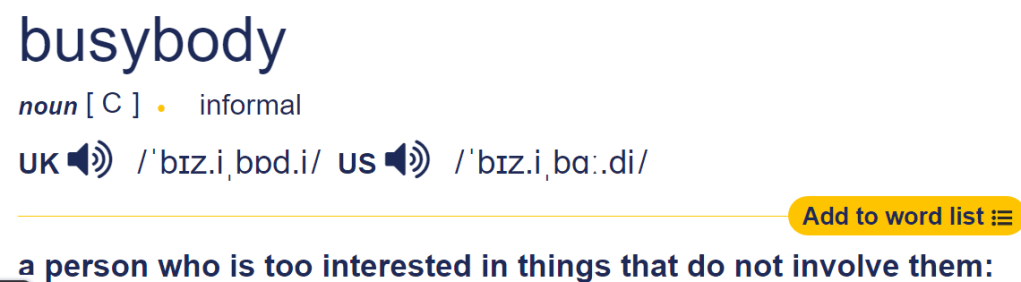
    A busybody is simply a person who meddles in the matters of others.

    They are brown-nosers.

    They don’t think twice before invading boundaries, rights, privacy, and ethical considerations — all in order to find or receive information that fits their (often negative, dramatic, and wrong) imagination… Over and over and over… From victim to victim, portraying altruism is seen as a “leader” or “helper” when in fact, they are wolves in sheep’s clothing.

    They show no compassion toward the “victim” outside of what will be seen, nor have any definitive respect for those “broken people” – as they gain their own identity from being an axiomatic godlike figure to those they perceive as needing them, they are addicted to the drama, they are manipulators to the core, and if they do not receive praises, expect silence, bitterness, and a redirect of their negative daggers toward you.

    They are often driven by an insatiable urge to enmesh themselves in the affairs of others, often having nothing to do with them. They can’t resist poking their nose into other people’s business, whether it be gossip, personal matters, or even professional affairs. The worst part of this is they won’t even admit it, and if they do, they’ll minimize it in order to distance themselves from the truth of it, or they will create a dramatization of someone’s personal problems and babble to everyone about that person’s plight, behind their back – sewing seeds of tares into the cracks of broke people, the easiest targets are always the authentic people because these are those in which the manipulating babbler knows won’t do the same in return, as this target is a person of character, solid in convictions.

    Busybodies gather information through eavesdropping and prying into private conversations – they also have their minions who they gossip to and badger for info in order to gain dirt or juice on said target. They are relentless in their pursuit of details and can coax information out of even the most tight-lipped individuals, even worse – they often will embellish details, creating possible repercussions for the target, unwarranted.

    According to Cambridge Dictionary

    This behavior often stems from their dissatisfaction with their lives, seeking fulfillment by involving themselves in the problems of others.

    What does the Bible say?

    The Bible provides strong warnings against such meddling busybodies.

    These are people that go around seeking the dirt on everyone, feigning concern about others, with an evil heart they m ake themselves appear “concerned”…

    At the same time they will also learn to be idle, going from house to house,being not only idle, but also gossips and busybodies, discussing things they should not mention. 

     Timothy 5:13

    These individuals display an unfortunate combination of contempt towards others and a lack of sound judgment. They have a tendency to judge others solely based on outward appearances or their own imagination, demonstrating a significant lack of understanding. Furthermore, they are highly talkative and incapable of keeping a secret. As a result, it is imperative to exercise caution when dealing with such individuals, as their behavior can be quite risky to navigate.

    He who reveals secrets is a constant gossip; avoid the one who babbles with his lips. 

    Proverbs 20:19

    Questions to Determine Meddling

    To help us recognize your possible tendency towards meddling, the Bible provides a series of questions that can be asked:

    If your purpose is not to proclaim the Gospel through your actions, then the answer is a resounding NO! Remember the words from Ephesians 6:19, “and also for me, that words may be given to me in opening my mouth boldly to proclaim the mystery of the gospel.” As for your question about whether you are qualified, let me remind you of Romans 14:10. If you are perfect and without blemish or blind spot, then go ahead and judge. But if not, it’s best to zip your mouth and refrain from passing judgment.

    • Is my true motivation to bring help, or do I only want to feel needed? (1 Corinthians 13:1)

    Consider this: Are you genuinely driven by the desire to assist others, or are you simply seeking validation and a sense of importance? Reflect on 1 Corinthians 13:1, which challenges us to evaluate the motives behind our actions.

    • Is this any of my business? (1 Timothy 5:13)

    \Whoever shows contempt for his neighbor lacks judgment, but a man of understanding remains silent. A gossip reveals a secret, but a trustworthy person keeps confidence.

    • How much of my “discussion” about the situation could be classified as gossip? (Proverbs 11:13)

    It’s essential to assess the nature of our conversations. Proverbs 11:13 reminds us to approach discussions with integrity and avoid engaging in gossip. Reflect on the content of your discussions and determine whether they align with this principle.

    • What was the result the last time I intruded in a situation that was not my problem? (Proverbs 26:11)

    Proverbs 26:11 encourages self-reflection regarding our involvement in situations that are not our own. Assess the outcome of your previous intrusion and consider whether it had a positive or negative impact. Learn from this experience as you evaluate your actions going forward.

    • Has my opinion been sought by those involved? (Proverbs 27:2)

    Take a moment to ponder Proverbs 27:2. Ask yourself whether your opinion has been genuinely sought by those directly involved in the situation. It is crucial to respect boundaries and offer advice or input only when it is genuinely desired.

    • Am I motivated by love for this person or by a sense of my own importance? (1 Corinthians 16:14)

    Reflect on your motivations using the wise counsel of 1 Corinthians 16:14. Ask yourself if your actions are driven by a sincere love and concern for the person involved or if they stem from a desire to boost your own ego or significance.

    • Am I basing my “help” on Scripture or on my own opinion? (Proverbs 16:25)

    Evaluate the foundation of your assistance by considering Proverbs 16:25. Reflect on whether your actions are rooted in the timeless wisdom of Scripture or solely based on your personal opinions. Strive to align your help with biblical principles.

    • Do I respond with anger when my “advice” is not accepted or found to be flawed? (Proverbs 17:10)

    Proverbs 17:10 encourages introspection about our emotional response when our advice is rejected or proven to be flawed. Evaluate whether your reaction aligns with wisdom or if it is tainted by anger. Seek to respond with grace and humility in such situations.

    Reflection and Avoiding Meddling

    By honestly reflecting on these questions, we can gain clarity on whether our involvement in the affairs of others crosses the line into meddling. If our motivation is rooted in a desire for personal fulfillment or a need to be at the center of other people’s issues, it is crucial to address these insecurities and allow God to deal with them. Recognizing our own flaws and seeking the guidance of trusted friends or pastors can help us gain objectivity and prevent us from becoming busybodies.

  • The Nature of Divine Control

    The Nature of Divine Control

    God’s control extends beyond human comprehension.

    While it can be challenging for humans to fully grasp the complexities of divine sovereignty, it is important to recognize that God’s ways are beyond our comprehension.

    In God’s meticulous control, there is room for human decision-making and rational thinking, as the writer wrote.

    His influence does not hinder our ability to make choices, but rather serves as a guiding force that works in harmony with our conscious autonomy.


    The Paradox of Evil

    God’s Use of Evil for His Purpose and Glory

    One intriguing aspect of God’s control is His use of evil to accomplish His divine purposes.

    Although God cannot perform evil Himself, He allows evil to exist in the world and uses it as a means to test and refine His people.

    An example of this can be seen in the story of Job, where Satan is given permission by God to test Job’s faith. In this instance, God does not directly tempt Job but allows Satan to tempt him, ultimately revealing Job’s unwavering faith and trust in God.

    It is crucial to understand that God’s use of evil does not make Him the author of evil.

    Evil comes from the choices and actions of humans and spiritual forces that oppose God. Although God allows it to exist for a while, He ultimately uses it for His good and glory. This may be hard to understand, but it shows the incredible wisdom of God.

    The Interplay between God’s Sovereignty and Human Will

    A Complex Relationship

    The relationship between God’s control and human free will is a complicated and nuanced subject. Critics argue that if God is in complete control, it undermines our rationality, relationships, and ability to make choices.

    While God’s sovereignty is absolute, He has granted human beings the ability to think rationally, form relationships, and make choices.

    These aspects of human experience are not abolished but rather influenced by God’s guiding hand. In the realm of salvation, God’s sovereignty and human will are not in opposition but rather work together.

    God, in His sovereignty, elects and chooses those who will be saved, but He also invites all to partake in His grace and salvation. The invitation is extended to all, and those who respond in faith and repentance experience the transformative power of God’s love.

    In conclusion, the meticulous control of God is a multifaceted aspect of His divine sovereignty. It is rooted in His perfect character, guided by His wisdom and love. While it may challenge human understanding, it does not negate human autonomy or rationality.

    Understanding God’s use of evil and His interaction with human will can shed light on the deep and complex nature of divine sovereignty. It challenges us to think about the mysteries of God and how He works in our lives. By recognizing God’s meticulous control, we are invited to contemplate the profound ways in which He is involved in our daily existence.

    Resources:

    1. Frame, John M. The Doctrine of God. P&R Publishing, 2002.
    2. Piper, John. “Are There Two Wills in God? Divine Election and God’s Desire for All to Be Saved.” Desiring God. Accessed November 2021. [https://www.desiringgod.org/articles/are-there-two-wills-in-god]
    3. Grudem, Wayne. Systematic Theology: An Introduction to Biblical Doctrine. Zondervan, 2000.
  • Debunking Misconceptions Surrounding God’s Sovereignty

    Debunking Misconceptions Surrounding God’s Sovereignty

    In the realm of theology and religious discussions, the concept of God’s sovereignty and control often sparks debates and varying interpretations.

    Some individuals perceive God as an obsessive-compulsive control freak, while others view Him as a weak being unable to intervene in human affairs. However, it is crucial to approach these notions with a deeper understanding of God’s character, as revealed in scripture. In this article, we aim to shed light on the misconceptions surrounding God’s sovereignty and control, exploring the nuanced aspects of His nature.

    Unveiling God’s Sovereignty

    lighted candles on black metal candle holder

    The Perfect Master’s Authority

    Misconception: Imposing worldly labels on God’s character
    Counterargument: God’s sovereignty transcends human understanding

    When discussing God’s sovereignty, it is important to avoid projecting human characteristics onto the Divine. God’s perfection and authority exceed our limited comprehension. Even if God were considered an “OCD control freak,” it would be fitting for the Almighty, as He is the only one worthy of absolute control. Mocking God’s sovereignty diminishes His supremacy and overlooks the fact that He remains stable, unwavering, and fixed in Himself.

    The Scriptural Foundation of God’s Sovereignty

    Misconception: Limited control over every particle
    Counterargument: God’s sovereignty extends to all creation

    Scripture, such as Psalm 115, emphasizes that God does what He wishes. However, this does not imply that His sovereignty is limited to specific aspects of creation.

    For instance, the idea that God handing the earth to mankind in Psalm 115:16 revokes His power over humanity and the earth is faulty. Instead, God grants limited sovereignty to humans while still maintaining ultimate control over all actions taking place on earth. His power is not confined to our linear concept of time; He authored the ages, declared the end from the beginning, and holds sway over past, present, and future.


    The Balance of Free Will and God’s Control

    The Paradox of Limited Sovereign Control

    Misconception: God’s control diminishes with free will
    Counterargument: God’s sovereignty coexists with human choices

    Some argue that if God is in control, why would He give limited sovereign control and the freedom of choice to humans?

    However, the idea that God’s sovereignty is limited by human free will fails to acknowledge God’s ability to work through our choices while still accomplishing His ultimate purpose. Although humans may perceive themselves as free-willed, God remains in power, actively guiding the course of history towards His established eternal Kingdom. He is not dependent on imperfect human will to fulfill His already revealed prophecies.

    The Power of God’s Authority

    Misconception: Limiting God’s power to human talent and intelligence
    Counterargument: God’s power surpasses human comprehension

    Implying that God’s power is limited to being talented and intelligent, while rejecting His authority, does not align with the scriptural portrayal of God. Humans may struggle with the concept of authority, often rejecting anything that questions their own autonomy. However, God’s authority and power exceed our understanding. If God lacks absolute power and is not the God of Scripture, He contradicts His own word and becomes a liar. Recognizing His sovereignty does not diminish His goodness, but rather highlights His unmatched wisdom and ability to accomplish His purposes.


    Debunking the Notion of Dependent Control

    The Fallacy of Dependent Control

    Misconception: God’s control dependent on human choices
    Counterargument: God’s control surpasses human limitations

    The idea that God accomplishes His purpose through human free will raises questions about God’s dependency on imperfect beings. However, God’s sovereignty extends beyond human limitations. His power and knowledge are unlimited, allowing Him to achieve His purposes regardless of human choices. The Word of God reveals that we are either slaves to righteousness or slaves to sin, referring to spiritual, inner enslavement. Only the will of righteousness can free us from the chains of sin, emphasizing that our freedom lies in surrendering to God’s authority.

    The Complexity of Spiritual Slavery

    Misconception: Misunderstanding the concept of slavery to righteousness
    Counterargument: Spiritual slavery signifies dependence on God’s will

    The concept of being slaves to righteousness or sin involves the inner workings of the human will. It does not imply physical slavery but rather highlights our dependence on the will of either righteousness or sin. If we are slaves to righteousness, we cannot free ourselves through our own will. Instead, it is the will of righteousness that enslaves and liberates us. Thus, understanding our slavery to righteousness allows us to grasp the depth of our dependence on God’s will and power.


    The misconceptions surrounding God’s sovereignty and control stem from imposing human limitations and understanding onto the Divine.

    By delving into the scriptural foundation and unraveling the complexities of these concepts, we can gain a more comprehensive understanding of God’s sovereignty and control. It is crucial to recognize that God’s sovereignty transcends human comprehension and extends to all creation.

    The balance between human free will and God’s control lies in the paradox of limited sovereign control, where God works through our choices while still accomplishing His ultimate purpose. Furthermore, debunking the notion of dependent control reveals that God’s power surpasses human limitations and that spiritual slavery signifies our dependence on God’s will. By shedding light on these lesser-known aspects of God’s sovereignty and control, we can deepen our understanding and appreciation of His nature.

    Resources:

    1. “The Sovereignty of God” by A.W. Pink
    2. “The Mystery of Providence” by John Flavel
    3. “The Doctrine of God” by John Frame
    4. “The Sovereignty of God” sermon by John Piper
    5. “Sovereignty and Goodness of God” by Mary Rowlandson (PDF)
  • God Is One – One Mind Created All Things

    God Is One – One Mind Created All Things

    We live in One mind, Who manifestos us into this dimension that we live in..

    All things being created by Him, were created for him; being made by his power, they were made according to his pleasure, and for his praise and glory. He not only created them all at first, but it is by the word of his power that they are upheld. 

    Colossians 1:16

    Sometimes, I find myself in awe when I reflect on this deep realization: We inhabit a single planet, where each of us goes through similar experiences, yet separately.

    We are all intricately connected, like the organs of a grand organism, bound together by the shared consciousness bestowed upon us by The Creator of ALL. It is truly a testament that we are guided by the infinite wisdom of Our Creator.

    We are bound by the same senses, yet each of us experiences them with a unique intensity. We share thoughts while undergoing diverse encounters, just as we encounter similar experiences with varied perspectives.

    The true impact of these encounters lies in the emotions and feelings that color our perception. It is this kaleidoscope of sentiments that determines the memories we create and cherish.

    Thoughts, ever fleeting, hold no tangible substance. They exist beyond the realm of the physical, devoid of materiality. However, they take shape within our minds, manifesting as words or images. In this translation, the intangible spiritual essence finds expression in the tangible world.

    It is through this miraculous connection that we, limited by the boundaries of the flesh, can comprehend and communicate the unseen. By the grace of God, we are bestowed with this extraordinary gift.

    As for what occupies my thoughts throughout the day, I ponder on the intricacies of life, the beauty of nature, and the connections we all share.

    I contemplate upon the wonders of the world and the mysteries of existence. It is a constant fascination that fuels my imagination and drives me to seek deeper understanding.

    What do you think about?

  • The Significance of Being a Watcher on the Wall

    The Significance of Being a Watcher on the Wall

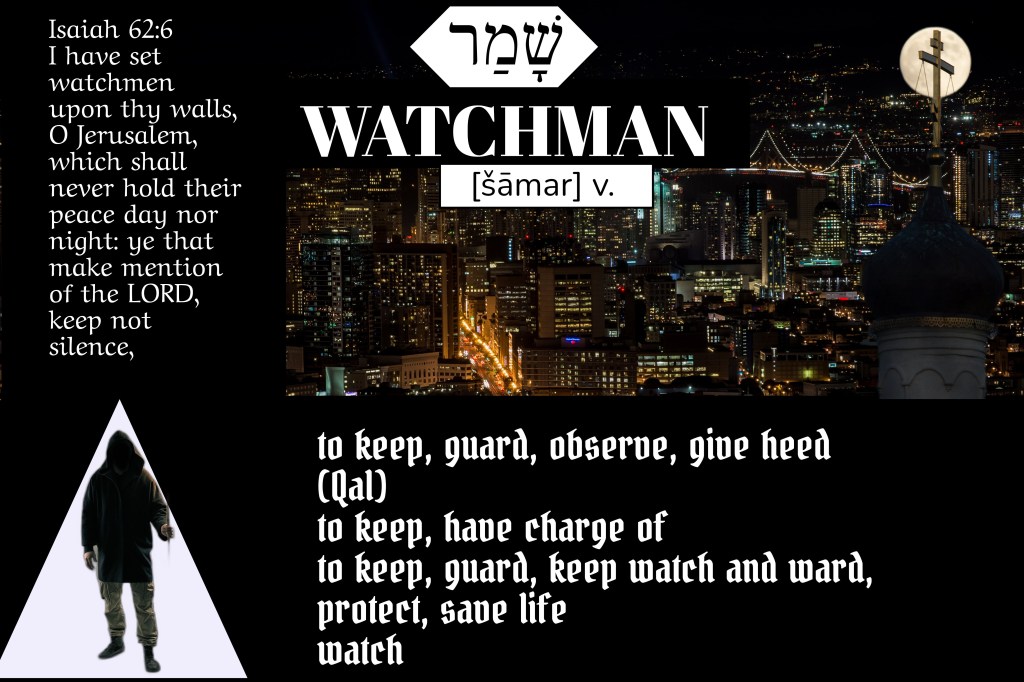
    The phrase “watcher on the wall” appears in scripture and implies the act of vigilantly observing, guarding, and protecting.

    It serves as a metaphor for staying alert, being responsible, and fulfilling our assigned roles diligently.

    Responsibility and Vigilance:

    The role of a watcher on the wall is one of great importance and responsibility.

    Scripture frequently emphasizes the need to be watchful for potential dangers, both physical and spiritual. Just as a watcher diligently scans the horizon for any impending threats, we are called to maintain a vigilant attitude in our own lives.

    This means staying aware of potential pitfalls, guarding against temptations, and protecting ourselves and others from harm.

    Discernment and Wisdom:

    Being a watcher on the wall is closely linked to having discernment and wisdom. In scripture, watchers were often portrayed as individuals with heightened senses, capable of detecting threats before they materialized.

    As modern-day “watchers,” we are urged to cultivate wisdom and discernment, allowing us to make informed decisions and recognize potential dangers.

    This requires attentiveness, seeking knowledge, and relying on both our intuition and the guidance of scripture.

    Accountability and Devotion:

    Being a watcher on the wall also implies a sense of accountability and devotion.

    Watchers were entrusted with an important task, and their dedication to fulfilling their duty was crucial.

  • Only Those Like Children Enter Heaven

    Only Those Like Children Enter Heaven

    What does God mean when He says we have to be like children to enter the Kingdom of God??

    unrecognizable toddler picking flowers in green garden

    Jesus:

    “I assure you and most solemnly say to you, unless you repent [that is, change your inner self—your old way of thinking, live changed lives]

    AND

    become like children [trusting, humble, and forgiving],

    You will never enter the kingdom of heaven.

    Therefore, whoever humbles himself like this child is the greatest in the kingdom of heaven.

    Whoever receives and welcomes one child like this in My name receives Me;

    but whoever causes one of these little ones who believe in Me to stumble and sin [by leading him away from My teaching], it would be better for him to have a heavy millstone [as large as one turned by a donkey] hung around his neck and to be drowned in the depth of the sea.

    Matthew 18:3‭-‬6

    Psalms- Simplicity of a Child

    Lord , my heart is not proud,

    nor my eyes haughty;

    Nor do I involve myself in great matters,

    Or in things too difficult for me.

    Surely I have calmed and quieted my soul; Like a weaned child [resting] with his mother

    My soul is like a weaned child within me [composed and freed from discontent].

    O Israel, hope in the Lord From this time forth and forever.

    Psalms 131:1‭-‬3

  • Do you feel like God is reproving you? Then God Loves You!

    Do you feel like God is reproving you? Then God Loves You!

    Yes!!! God’s Reproof is A Sign of Love

    If you feel that God is reproving you, be assured that it is a sign of His love. Although reproof is painful and causes your strength to dwindle, it is evidence that God is invested in your eternal Salvation and is guiding you towards His Kingdom and away from this world.

    God’s reproof is a clear demonstration of His care and concern for your well-being.

    Remember, for His Sheep His love is unconditional and His reproof should be embraced it with confidence and gratitude.

    Meditate On This Scripture:

    “How happy and FORTUNATE is the man whom God reproves, So DO NOT DESPISE or reject the DISCIPLINE of the Almighty [SUBJECTING YOU TO TRIAL AND SUFFERING].

    For He inflicts pain

    BUT He binds up and gives relief.

    He wounds…

    BUT His hands also heal.

    He will rescue you from six troubles; Even in seven, EVIL WILL NOT TOUCH YOU.

    In famine He will redeem you from death, And in war from the power of the sword.

    You will be hidden from the scourge of the tongue, And YOU WILL NOT BE AFRAID of destruction when it comes.

    You will laugh at violence and famine, And you will not be afraid of the wild beasts of the earth.

    For YOU WILL BE IN HARMONY WITH THE STONES OF THE FIELD, AND THE BEASTS OF THE FIELD WILL BE AT PEACE WITH YOU.

    Behold this; WE HAVE INVESTIGATED IT, and IT IS TRUE.

    HEAR AND HEED it, and KNOW FOR YOURSELF”

    Job 5:17‭-‬23‭, ‬27