The Great Reformation was a significant event in Christian history that began in the early 16th century.
It was a time of great spiritual and religious upheaval when many people began to question the authority of the Catholic Church and sought greater freedom and direct access to God’s word.
At the heart of this movement was a theological debate over the nature of salvation.
Some argued that God predetermined salvation, while others believed it was earned through good works and personal choice.
This debate ultimately led to the formation of Protestant denominations, including Arminians, who believed in predestination with conditional election.
The Arminian belief is that God has created humans with free will, allowing them to choose whether or not to accept his grace and salvation.
In this view, God does not predestine individuals for salvation without regard for their own choices and actions.
Instead, he offers salvation freely to all who choose to accept it, but also respects their free will if they choose not to accept it.
Why Is The Great Reformation Not Widely Taught?
It is indeed possible that certain individuals or educational institutions have made a deliberate decision to exclude the Great Reformation from their teachings.
This is due to a variety of factors, such as political motivations, ideological considerations, or even academic biases.
Political Motivations
The decision to exclude the Great Reformation from teachings to Christians may stem from various political motivations.
It could include attempts to maintain a specific power structure within religious institutions and avoid potential challenges to the authority and legitimacy of established religious hierarchies.
Additionally, in certain historical and geopolitical contexts, the emphasis on the Great Reformation’s significance might be downplayed to align with prevailing political agendas and prevent discord or division within Christian communities.
The historical significance of this movement is often downplayed or omitted to fit a particular narrative or agenda.
Prevailing religious or cultural beliefs within a specific educational environment might influence the choice to overlook these topics.
Such omissions, intentional or not, impact the depth and breadth of students’ understanding of history and theology, potentially depriving them of valuable knowledge and perspectives.
In the following passage, the apostle Paul describes the state of humanity and the consequences of their ungodliness and unrighteousness.
He asserts that the wrath of God is revealed from heaven against all who suppress the truth and encourage others to indulge in sinful behavior.
According to Paul, God has made Himself known to humanity through the visible creation, allowing them to perceive His eternal power and divine nature.
Therefore, people are without excuse for their rejection of God.
Instead of honoring and giving thanks to Him, they become futile in their thinking and their hearts are darkened.
Claiming to be wise, they become fools, worshiping and serving created things rather than the Creator.
As a result of their idolatry and rejection of God, God gives them over to the fruit of their sinful, empty desires.
So they engage in impurity, dishonor their Spiritual bodies, and exchange the truth about God for a lie.
Paul specifically mentions the distortion of natural relations, with women and men engaging in same-sex unions that are contrary to obvious nature.
He highlights that they received the due penalty for their error.
Furthermore, since they refuse to acknowledge God, He gives them over to a debased mind, leading them to engage in all sorts of unrighteousness, including envy, murder, deceit, gossip, and disobedience.
They not only practice these things but also give approval to others who do the same.
They have a seared conscious.
This passage vividly depicts the profound deterioration caused by humanity’s rejection of God.
Even though individuals possess an inherent understanding of God’s existence, they choose to stifle this truth and immerse themselves in godlessness and moral deficiency.
Consequently, God permits them to indulge in their sinful inclinations, ultimately allowing them to bear the dire consequences of their choices.
… “For the wrath of God is revealed from heaven against all ungodliness and unrighteousness of men, who by their unrighteousness suppress the truth.
For what can be known about God is plain to them, because God has shown it to them.
For his invisible attributes, namely, his eternal power and divine nature, have been clearly perceived, ever since the creation of the world, in the things that have been made.
So they are without excuse.
For although they knew God, they did not honor him as God or give thanks to him, but they became futile in their thinking, and their foolish hearts were darkened.
Claiming to be wise, they became fools, and exchanged the glory of the immortal God for images resembling mortal man and birds and animals and creeping things.
Therefore God gave them up in the lusts of their hearts to impurity, to the dishonoring of their bodies among themselves, because they exchanged the truth about God for a lie and worshiped and served the creature rather than the Creator, who is blessed forever! Amen.
For this reason God gave them up to dishonorable passions.
… They are full of envy, murder, strife, deceit, maliciousness.
They are gossips, slanderers, haters of God, insolent, haughty, boastful, inventors of evil, disobedient to parents, foolish, faithless, heartless, ruthless.
Though they know God’s righteous decree that those who practice such things deserve to die, they not only do them but give approval to those who practice them... “
The Arminian/freewillers accuse Calvinists of being deceitful about this, and the Calvinists end up contorting the Arminian’s beliefs to deny it.
I hope you can follow me on the different definitions of “author.“
AUTHOR:
Definition #1:the originator, the ultimate cause.
Definition #2: the immediate cause, the actor, the one doing the action.
When the Arminian/free willers say, “your theology makes God the author of sin because you teach God has decreed all things,” they are referring to definition #2 (the immediate cause, the actor, the one doing the action)
While the Calvinist is referring to Definition #1 (the originator, the ultimate cause.)
The issue arises from different interpretations of the term “author” within theological contexts.
While one party aligns with definition #1 ~the originator, the ultimate cause~ when considering God as the Author of sin, the other party adheres to definition #2 ~the immediate cause, the actor, the one doing the action~, denying God’s Authorship of sin, this inevitably leads to confusion whereby those engaging in Theological discourse speak past each other and will never come to an understanding of the other.
“Rejoice with those who rejoice, weep with those who weep.”
Romans 12:15
In times of mourning and sadness, it is not uncommon to encounter individuals who encourage us to be happy or dismiss our negative emotions. This can be disheartening, as it disregards the genuine pain and sorrow we may be experiencing. It is essential to remember that our emotions are valid and should be acknowledged and processed in a healthy and sincere manner.
“Blessed are those who mourn, for they shall be comforted.”
Matthew 5:4
The phrase “Blessed are those who mourn, for they shall be comforted” from the Bible reminds us that there is solace and support available to us during times of mourning. It encourages us to seek comfort and healing, rather than suppressing or denying our emotions. By humbling ourselves before God and surrendering to His wisdom and guidance, we can find refuge and a renewed sense of purpose. Also, as His ambassadors, in dwelled by His Spirit, we should be that solace for others who may be mourning.
Psalm 34:18 (ESV)
“The Lord is near to the brokenhearted and saves the crushed in spirit.”
It is important not to conform to society’s narrow definition of “joy” or be influenced by those who advocate for a perpetual display of false happiness. Superficial determinations of joy often overlook the profound essence that lies beyond fleeting impressions of the ego.
It is okay to embrace sadness or mournful feelings and to take the time to process and understand them.
We should not be swayed by the perspectives of others, even those who may be considered respected or influential. Their opinions and expectations should not define our experiences or emotions. Instead, we should focus on being honest with ourselves and finding comfort in the truth. God values authenticity and truth above all else, and it is important to honor Him by staying true to ourselves, even if it means experiencing pain or sadness.
John 16:22 (ESV)
“So also you have sorrow now, but I will see you again, and your hearts will rejoice, and no one will take your joy from you.”
Authenticity can often trigger insecurities in others. Some individuals may dislike or distance themselves from authentic people because it brings their insecurities and fears to the surface. They may project their issues onto others and attempt to bring them down or avoid them. It is crucial to recognize that their reactions are a reflection of their internal struggles and not a true reflection of our worth or character.
1 Peter 5:7 (ESV)
“Cast all your anxiety on him because he cares for you.”
As Christians, we are called to empathy and compassion. The Scriptures remind us that we are interconnected, and the suffering or joy of one member affects the entire community. We should strive to support and uplift one another, especially during difficult times. Our actions and behaviors should reflect love, compassion, and goodness towards others, as this is the true mark of a Christian.
In conclusion, it is important to embrace our authentic emotions, particularly during times of mourning or sadness. We should not be swayed by societal expectations or the opinions of others. Instead, we should seek comfort, healing, and support from God, while also showing empathy and compassion towards those around us. By staying true to ourselves and bearing good fruits of love and kindness, we can navigate through challenging times with grace and strength.
Matthew 11:28 “Come to me, all you who are weary and burdened, and I will give you rest.”
Psalm 30:5 “For his anger lasts only a moment, but his favor lasts a lifetime; weeping may stay for the night, but rejoicing comes in the morning.”
2 Corinthians 1:3-4 “Praise be to the God and Father of our Lord Jesus Christ, the Father of compassion and the God of all comfort, who comforts us in all our troubles, so that we can comfort those in any trouble with the comfort we ourselves receive from God.”
The term “gospel” has a rich and intriguing history deeply rooted in Old English and religious traditions. Its origins can be traced back to the proclamation of glad tidings by Jesus, encompassing one of the four biblical gospels.
The literal meaning of “gospel” is “good spell,” a combination of the Old English words for “good” and “story” or “message.” This translation originates from the Latin “bona adnuntiatio,” which, in turn, translates the Greek “euangelion.” The Greek term signifies a reward for spreading good news, giving rise to the term “evangel.”
An interesting shift occurred in the Old English word, where the first element containing a long “o” shifted due to a mistaken association with “God,” resulting in the interpretation of “God-story” or the history of Christ. This understandable error led to the term quickly spreading to other Germanic languages on the continent, taking forms that clearly indicated the shift of the first element to “God.”
Over time, “gospel” began to be used metaphorically, representing anything as truthful as the Gospel itself. By the mid-13th century, it had evolved to signify not only the sacred book or religious liturgy but also anything as truthful as the Gospel. In the 1650s, it further evolved to denote “any doctrine maintained as of exclusive importance.”
The journey of the word “gospel” showcases its evolution from the proclamation of glad tidings by Jesus to a term with metaphorical significance representing truth and exclusive importance.
Understanding the etymology and evolution of words like “gospel” adds depth to our understanding of language and history, shedding light on the intricate paths that words have traveled throughout time.
What other words do you find fascinating in their historical and linguistic evolution? Let’s explore more captivating etymologies together!
“I am the Lord; that is my name; my glory I give to no other, nor my praise to carved idols.”
Isaiah 42:8
Christians: No matter what actions you take, always remember to give all the Glory to God.
“So, whether you eat or drink, or whatever you do, do all to the glory of God.”
1 Corinthians 10:31
“And whatever you do, in word or deed, do everything in the name of the Lord Jesus, giving thanks to God the Father through him.”
Colossians 3:17
“In the same way, let your light shine before others, so that they may see your good works and give glory to your Father who is in heaven.”
Matthew 5:16
“For from him and through him and to him are all things. To him be glory forever. Amen.”
Romans 11:36
“Not to us, O Lord, not to us, but to your name give glory, for the sake of your steadfast love and your faithfulness!”
Psalm 115:1
“Whoever speaks, as one who speaks oracles of God; whoever serves, as one who serves by the strength that God supplies—in order that in everything God may be glorified through Jesus Christ. To him belong glory and dominion forever and ever. Amen.”
1 Peter 4:11
“Oh, magnify the Lord with me, and let us exalt his name together!”
Psalm 34:3
“Oh give thanks to the Lord; call upon his name; make known his deeds among the peoples!”
Psalm 105:10
“Ascribe to the Lord the glory due his name; bring an offering and come before him! Worship the Lord in the splendor of holiness.”
1 Chronicles 16:29
“Declare his glory among the nations, his marvelous works among all the peoples!”
Psalm 96:3
“Yours, O Lord, is the greatness and the power and the glory and the victory and the majesty, for all that is in the heavens and in the earth is yours. Yours is the kingdom, O Lord, and you are exalted as head above all.”
1 Chronicles 29:11
“Therefore God has highly exalted him and bestowed on him the name that is above every name, so that at the name of Jesus every knee should bow, in heaven and on earth and under the earth, and every tongue confess that Jesus Christ is Lord, to the glory of God the Father.”
Controlling individuals who project a gentle facade often believe that manipulating others leads to happiness. However, this flawed belief is rooted in deception and arrogance, ultimately leading to negative consequences.
Within Christianity, there exist individuals who arrogantly assume the guise of piety while perpetuating oppressive actions.
These humble tyrants exploit others, all the while claiming to follow God’s will.
It is important to note, however, that the Bible explicitly warns against such tyrannical behavior, as it restricts freedom and deviates from the path set by God.
As Christians, we are called to embody God’s grace and mercy through genuine actions, rather than mere expressions.
The teachings of Jesus hold profound truths that can only be fully understood when our hearts are truly captivated by them.#
Tyrants, driven by fear and insecurity, seek to destroy the reputation of the vulnerable by magnifying their faults through lies. They often masquerade their malicious intentions as concern, but their true nature is revealed through their deceitful and backbiting actions.
Recognizing a Christian tyrant involves identifying someone who rules without accountability, imposing their will upon others without regard for their well-being, and exploiting religion to cloak their oppressive actions.
Stand Firm in the Armor of God – Discern All Things
It is crucial to protect ourselves from their harmful influence and to embrace the true essence of Christianity, which is rooted in grace, love, and respect for all individuals.
For Further Study:
Aquinas on Resisting Tyrants and Enemies of the Common Good
A Defense of Liberty against Tyrants: The Bible, the Right of Resistance, and the American Revolution
Founder’s Ministry: Why Resisting Tyrants is an Act of Love
“The Social Contract“
In the exact sense, a tyrant is an individual who arrogates to himself the royal authority without having a right to it. This is how the Greeks understood the word ‘tyrant’: they applied it indifferently to good and bad princes whose authority was not legitimate.
A highly insightful and beneficial video for Christians grappling with overbearing and covertly toxic personalities with narcissistic traits.
When dealing with narcissistic individuals, Christians can find guidance in the principles of love, patience, prayer, and emulating Christ’s teachings. By approaching these interactions with love and compassion, exercising patience, seeking guidance through prayer, and following the example of Christ, Christians can navigate challenging relationships with grace and integrity. Remembering to treat others as Christ would and relying on His teachings can help believers respond in a way that reflects their faith and values
Quoted: If You Want To Learn How GOD Wants Us To Communicate With Someone Who Is Narcissistic, Then This Is The Video. These Are Ways That Can Keep You Safe Around A Narcissist And Keep You In The Will Of GOD, While Allowing The Spirit To Lead You In The Way GOD Instructs Us As Christians To Treat Others.
Summary of Video
Christians should communicate with narcissists with love and compassion.
As believers, we need to remember that we are called to love and forgive just as Christ did, even when dealing with narcissistic individuals.
Our communication with narcissists should reflect the love and grace that Christ showed to us, even in difficult situations.
As Christians, we should follow Jesus’ teachings when dealing with narcissists.
Prayer is the first thing we should do when interacting with narcissistic individuals. Whether it is before, during, or after the situation.
We should not treat narcissistic individuals the way the world does, but rather follow God’s teachings to love our enemies.
Pray for protection and guidance when dealing with narcissistic individuals.
Pray for God’s help in understanding their schemes and gaining discernment.
Ask for God’s guidance in communication and protection from the harmful intentions of narcissistic individuals.
Pray before communicating with a narcissist and prepare beforehand.
Narcissists want to provoke reactions and make you look foolish, so it’s important to be cautious and not react.
Some strategies include speaking less, praying, and preparing before interacting with a narcissist.
Prepare and pray when communicating with narcissists.
Pray, speak less, and do not give too much information when communicating.
Prepare how to communicate before engaging with them, train oneself to say less and be cautious.
Christians should show love, patience, and understanding to narcissists.
As representatives of Jesus, Christians should exhibit self-control, empathy, and compassion towards narcissists.
By not reacting to the behavior of narcissists, Christians can weaken their power and influence over them.
Communicating with narcissists as a Christian requires showing love and not engaging in conflict
We should not retaliate or engage in a fight with them, but instead reflect God’s love and understanding.
We need to maintain composure, not be easily offended, and show grace even in the face of their provocation.
Communicate with love, peace, and kindness towards narcissists.
Be aware and prepared for their behavior to minimize the impact on you.
Pray, seek God’s help, and speak less when dealing with narcissists.
Both shrimp and cockroaches are part of the larger group called Arthropods.
Shrimp:
Shrimp are Water Avengers
COCKROACH:
Cockroaches, the unsung heroes of the land, emerge as the avengers in their own right.
Shrimp Are Not “Food”
Shrimp were never meant to grace our plates as food to be eaten.
Shrimp are bottom feeders, scavengers of waste and death, diligently devouring all that would tarnish the aquatic realm.
They are nature’s very own trash eaters, the natural landfills of the sea!
Shrimp play a vital ecological role in aquatic environments as natural cleaners and regulators.
Rather than existing as a food source, they function as living waste management systems.
Their place in underwater ecosystems is identical to organic landfills, except they are able to transmute the waste in their bodies – they consume and break down dead matter and debris that would otherwise accumulate and disrupt the balance.
Their scavenging behavior helps maintain the balance of nutrients and decomposition processes in terrestrial environments.
Similarity of the Cockroach
Cockroaches feed on decaying organic material, leaf litter, and wood, contributing to the process of cleaning up degrading plant material.
Additionally, their bodies trap atmospheric nitrogen during this process.
This makes cockroaches valuable contributors to nutrient recycling and the nitrogen cycle in their habitats.
Both Have A Radar To Locate Organic Material
Shrimp, in their underwater environment, use chemoreceptors on their antennae and appendages to detect chemical signals, helping them locate food and navigate.
Cockroaches, on the other hand, employ a combination of chemoreception and mechanoreception.
Their bodies are covered with sensitive hairs that can detect both chemical signals and vibrations, acting like a radar system that guides them to organic material, even in the darkest corners.
This combination of sensory abilities makes both shrimp and cockroaches highly efficient scavengers.
Both Are Fast & Agile
In terms of speed, cockroaches are renowned for their agility. They can run and fly at high speeds, allowing them to quickly navigate their surroundings and escape potential threats.
Shrimp showcase their impressive speed in the water.
They are adept swimmers and can move swiftly, particularly when evading danger or pursuing prey.
God says:
” These are the creatures that you may eat from all the creatures that are in the water: any creature in the water that has fins and scales, whether in the seas or in the rivers, you may eat. But whatever does not have fins and scales in the seas or in the rivers, they are an abomination to you...
THEY ARE AN ABOMINATION TO YOU, NOT GOD, YOU. YOU ARE DEVALUING YOURSELF TO EAT WASTE…
You shall regard them as an abomination; you shall not eat any of their flesh, and you shall abominate their carcasses. Everything in the water that does not have fins and scales will be an abomination to you.
Why would God say this?
Because they undermine the harmony, righteousness, and well-being of individuals and the natural order of creation.
And all that have not fins and scales in the seas, and in the rivers, of all the creeping things in the waters, and of all the living creatures which are in the waters, they are defiled unto you. They shall be even an abomination unto you; ye shall not eat of their flesh, but ye shall have their carcases in abomination.
Deuteronomy 14:9-10
Shrimp are unclean to eat and they will always be unclean.
Just as human excrement is unclean, these animals are but tools of the same caliber in their rank.
Argument: Mark 7:19
“Declared all foods clean…”
Taken out of context and translated not in accordance with the Greek Text.
The Bible clearly outlines the meaning of this matter.
In Mark 7:19, the reference pertains to the ceremonial law of washing hands.
Jesus was rebuking the Pharisees for prioritizing outward cleanliness over inner, spiritual purity.
No English translation is without imperfection. Therefore, we must earnestly seek the Truth, and it will be revealed to us.
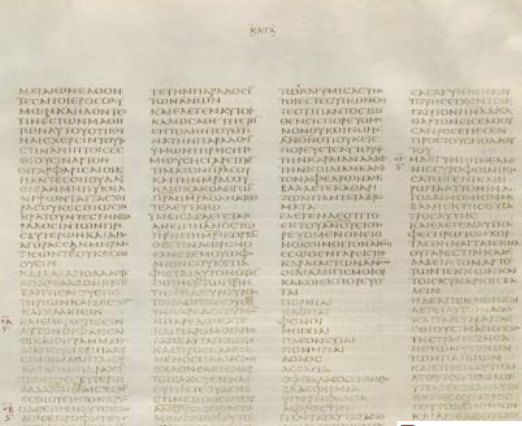
Here is the text in its most original English translation directly from the CODEX SINAITICUS:
7:1 And there came together to him the Pharisees and some of the scribes that had come from Jerusalem.
2 And seeing some of his disciples that they ate bread with common, that is, with unwashed hands,
3 for the Pharisees and all the Jews, unless they wash their hands often, eat not. Holding the tradition of the elders;
4 And when they come from market, unless they immerse themselves, they eat not; and there are many other things that they received to hold, the immersion of cups and pitchers and brazen vessels:
5 And the Pharisees and the scribes asked him: Why walk not thy disciples according to the tradition of the elders, but eat bread with common hands?
6 And he said to them: Well did Isaiah prophesy of you hypocrites, as it is written. This people honor me with their lips, but their heart is far distant from me;
7 but in vain do they offer reverence to me, teaching teachings the commandments of men. 8 Leaving the commandment of God you hold the tradition of men.
Mark 7:19
If you seek to understand the Scriptures, you will find this was never about literal food that we eat with our mouths, but the Manna from Heaven that can’t be seen with the eyes.
Overall eating trash won’t dam your soul…
Jesus came to wash all your sins. If you are saved, your soul is protected from the deeds of the flesh.
So eating shrimp won’t send you to hell, but it is not what you were intended to do.
The heart is the core or center of one’s emotions, feelings, and desires.
The mind is the faculty of consciousness and thought.
God’s Grace in Transforming His Children
In the journey of faith, God’s grace is not limited to transforming our hearts alone. Scripture emphasizes the renewal of both heart and mind.
Renewing the Mind
Discerning the Will of God
Do not be conformed to this world, but be transformed by the renewal of your mind, that by testing you may discern what is the will of God, what is good and acceptable and perfect.
Romans 12:2
Romans 12:2 calls believers to be transformed by the renewal of their minds. This renewal is not a call to shut off our minds but to align them with God’s truth. By testing and discerning, we can understand what is good, acceptable, and perfect in God’s eyes.
Our minds, transformed by His grace, become instruments to discern and embrace His will.
God’s Initiative in Salvation
Solely Initiated By God’s Grace
“No one can come to me unless the Father who sent me draws him. And I will raise him up on the last day.”
John 6:44
John 6:44 assures us that no one can come to Christ unless the Father draws them.
“He saved us, not because of righteous things we had done, but because of his mercy. He saved us through the washing of rebirth and renewal by the Holy Spirit.”
Titus 3:5
Titus 3:5 echoes this truth, emphasizing that our salvation is not based on our righteous deeds but on God’s mercy, through the regeneration and renewal by the Holy Spirit.
Therefore, it is not a matter of us allowing God, but rather God graciously allowing us to receive His Spirit.
Wholeness in Christ
Heart and Mind United
“Being confident of this, that he who began a good work in you will carry it on to completion until the day of Christ Jesus.”
Philippians 1:6
God’s work in our lives aims for wholeness, encompassing both our hearts and minds. Philippians 1:6 assures us that He who began a good work in us will continue perfecting it until the day of Christ Jesus. Our hearts and minds do not disconnect in our spiritual journey.
“But solid food is for the mature, who by constant use have trained themselves to distinguish good from evil.”
Hebrews 5:14
Hebrews 5:14 highlights the importance of training our senses and discernment, aligning our thoughts with God’s truth.
Sealed with His Spirit
A Calm Assurance
Through Christ, God establishes His children with His Spirit in their hearts. This sealing and indwelling of the Holy Spirit brings about a calmness and peace that surpasses human understanding.
It is a guarantee of His presence and a testament to our connection with Him.
“Therefore, since we have been justified through faith, we have peace with God through our Lord Jesus Christ.”
Romans 5:1
Freedom From Chains
Chains of the World
“You have been set free from sin and have become slaves to righteousness.”
Romans 6:18
As God’s grace transforms us, we experience true freedom from the chains of this world.
Romans 6:18 reminds us that through our obedience from the heart to God’s teachings, we are set free from the power of sin.
This freedom leads to sanctification and eternal life, breaking the cycle of death caused by sin.
The Struggle
Mortal Flesh vs. Spirit
And you were dead in the trespasses and sins in which you once walked, following the course of this world, following the prince of the power of the air, the spirit that is now at work in the sons of disobedience — among whom we all once lived in the passions of our flesh, carrying out the desires of the body and the mind, and were by nature children of wrath, like the rest of mankind. But God, being rich in mercy, because of the great love with which he loved us, even when we were dead in our trespasses, made us alive together with Christ—by grace you have been saved.
Ephesians 2:1-5
While our mortal flesh is prone to sin, the Spirit within us wages war against it.
God’s Grace assures us that He will deliver us from our sinful nature and its desires. Ultimately, believers will receive glorified bodies, free from the struggle with sin.
The Assurance of Being God’s Children
“The Spirit himself bears witness with our spirit that we are children of God.”
Romans 8:16
Romans 8:16 affirms that the Holy Spirit testifies with our spirit, assuring us that we are God’s children.
This confirmation brings confidence and assurance in our relationship with Him.
God’s grace extends beyond transforming our hearts; it also renews our minds.
Both heart and mind play integral roles in aligning with God’s will and experiencing the freedom He offers.
As God’s children, we are summoned to embrace His transforming grace, making our hearts and minds united in perfect harmony with His Spirit, His heart, His mind, and His will.