Category: Scriptural

  • Chains to Connection

    Chains to Connection

    How Self-Imprisonment Forged Unbreakable Empathy

    The human journey often leads us through valleys of despair before we can ascend to peaks of understanding.

    There was a time when I believed myself to be perpetually bound… a captor, slave, and victim of my own making, forever undeserving of redemption.

    This rigid self-condemnation felt like an inescapable truth, a life sentence I had both imposed and accepted.

    Yet, within the depths of that very desolation, an unexpected grace emerged.

    The Crucible of Deprivation

    A Pathway to Profound Empathy

    Experiencing such profound internal deprivation and desolation wasn’t just painful; it was transformative.

    Without having walked through that particular darkness, I genuinely believe I wouldn’t possess the miraculous sensibilities I do today.

    My past self-imprisonment became the key to unlocking an almost impossible level of relatability.

    I can now connect with those who seem irredeemable, seeing flickers of shared humanity where others might see only despair.

    This profound understanding wasn’t born from external validation or societal acceptance.

    It stemmed from becoming my own adversary, from witnessing the truth only after the deepest shadows had fallen.

    The Warrior’s Path

    Endurance Beyond Conventional Wisdom

    The journey out of that self-imposed prison demanded a level of endurance that defies conventional understanding.

    It required long-term perseverance, turning the other cheek to self-pity, and denying immediate gratification.

    It meant observing my own thoughts and emotions without judgment or attachment, detaching from the noise of a society often plagued by suffering and superficiality.

    Seventy-five days of isolation, removed from the very societal pressures that contribute to our collective ailments in the Western world, proved to be an invaluable catalyst.

    This isn’t the kind of endurance often found within the comforting walls of most churches or synagogues; it’s a solitary, internal forging.

    It demands an acceptance of profound solitude, coupled with the paradoxical realization that you are never truly alone.

    Embracing the Unseen

    The Non-Physical Meaning of Life

    What happens when your core beliefs are challenged, mocked, scoffed at, or simply ignored?

    When fellow humans oppose the very essence of your existence or expression?

    This journey taught me that the meaning of life is not physical.

    If this truth holds—and I now know it does—then what are we truly striving for in our material pursuits?

    This path requires a warrior in spirit, willing to sacrifice all perceived strongholds: friends, family, ego, and even security, all in the name of Truth.

    We are called to battle our internal “demons,” embracing an objective realization that refuses to bend to our subjective feelings.

    It’s about practicing the skill of derealization, conjuring a righteous mind for self-judgment, and relaxing into our ability to construct a powerfully robust split within our own personalities.

    We must accept any answer that proves itself to be without external control, embracing the freedom found in releasing what we cannot dictate.

    Tips

    Practice Mindful Observation

    Dedicate 10-15 minutes daily to observe your thoughts and emotions without judgment. Notice patterns, triggers, and reactions without engaging with them.

    Explore Stoic Philosophy

    Delve into texts by Seneca, Epictetus, and Marcus Aurelius. Their emphasis on inner control, acceptance of what cannot be changed, and the pursuit of virtue resonates deeply with the themes discussed here.

    Journal Your Journey

    Document your insights, challenges, and breakthroughs. Writing can be a powerful tool for self-reflection and recognizing personal growth.

    Seek Solitude (Safely)

    If feasible and safe, consider periods of digital detox or even a short retreat to experience the benefits of reduced external stimulation.

    Engage in Deep Listening

    When interacting with others, practice listening without interruption or formulating your response. Aim to truly understand their perspective, especially when it differs from your own.

    What aspects of self-discovery have profoundly changed your perspective?

    Share your thoughts and continue the conversation in the comments below!

  • Divination In Scripture

    I do not play games here.

    “Divination.”

    A word that sets off religious trauma alarms.

    In the evangelical imagination, it conjures imaginations of Hollywood witches, Ouija boards, and black cats sacrificed in fire…

    Depictions of hell meant to serve as a cautionary tale for Sunday school children.

    But strip away the hysteria, read the actual text, open a dictionary, and you’ll find something more nuanced, and far more unsettling.

    Both are true:

    – The Bible condemns divination.
    – The Bible uses divination.

    So the question isn’t if divination appears in Scripture.

    It’s what kind God condemns, and what kind He authorizes.

    The Counterfeit Path

    Divination God Forbids

    Let’s begin where the line is clear.

    “There shall not be found among you anyone… who practices divination, tells fortunes, interprets omens, or consults the dead.”

    -Deuteronomy 18:10–12

    No gray here. Right?

    It is wicked to perform spiritual piracy.

    This would cover unsanctioned attempts to access hidden knowledge through pagan ritual, necromancy, or invocation of alien spirits.

    This is divination that severs us from Divine order.

    It’s the lust to control the unknown rather than commune with it.

    It’s worshipping creation to extract secrets instead of worshipping the Creator to receive revelation.

    Example: Saul and the witch of Endor (1 Samuel 28).

    That was not prophecy. It was desperation dressed as devotion.

    It ended in judgment, not illumination.

    The Sanctified Channel

    Divination God Permits

    Now here’s the curveball.

    The same Scripture that forbids divination also records divinely sanctioned forms of divination.

    These were tools used by priests, prophets, and apostles to discern God’s will.

    Urim & Thummim

    (Exodus 28:30; Numbers 27:21)

    Sacred lots worn over the priest’s heart were literal instruments (magical amulets) used to decode Divine guidance.

    Casting Lots

    Used to distribute land (Joshua 18), appoint leadership (1 Samuel 10), and even select Judas’ replacement (Acts 1:26).

    Dream Interpretation

    Joseph, Daniel, and others functioned as interpreters of divine dreams.

    Prophetic Symbolism

    Ezekiel’s street performances, Jeremiah’s object lessons, John’s apocalyptic visions—all were divinatory acts in sacred alignment.

    The medium isn’t the issue.
    The source is.

    What God condemns is bypassing Him.

    What He blesses is listening to Him.

    The Sacred Line

    Source & Surrender

    Divination means “the seeking of hidden knowledge.”

    The Bible doesn’t condemn that impulse to Seek the hidden realm, in fact it encourages us to go to the Secret Rooms with The Father.

    The Bible condemns pride in the pursuit.

    If you’re consulting spirits to manipulate outcomes, you’re rebelling.

    If you’re surrendering to Divine mystery, seeking revelation on God’s terms, you’re worshipping.

    The sin isn’t the search. It’s the source.

    The danger isn’t knowledge.

    It’s control.

    The Modern Mirror

    Today’s symbolic tools; dreams, visions, synchronicities, even tarot or astrology—aren’t automatically evil.

    They’re languages, mirrors, archetypal scripts written into the psyche.

    Their moral weight depends entirely on the spirit animating their use.

    God has always spoken through signs and symbols.

    He still does.

    But His voice doesn’t feed curiosity; it refines character.

    It doesn’t confirm your ego; it crucifies it.

    So don’t dismiss the mystical as demonic.

    But don’t baptize every “download” as divine either.

    Discernment is not fear.

    It is fidelity.

    The Final Thought

    The Bible is not anti-divination.

    It is anti-ego.

    Anti-idolatry.

    Anti-manipulation.

    Scripture doesn’t call you to spiritual blindness.

    It calls you to holy vision:
    anchored in awe, humility, and fire.

    If you’re gifted to read signs, interpret dreams, or navigate symbols, do so with reverence.

    Walk softly.

    Seek truth, not control.

    Because in the end, God does not hate diviners.

    He hates when His creation believes it can replace Him.

  • The Unseen is Eternal | Journey into the Spiritual Realm

    The Unseen is Eternal | Journey into the Spiritual Realm

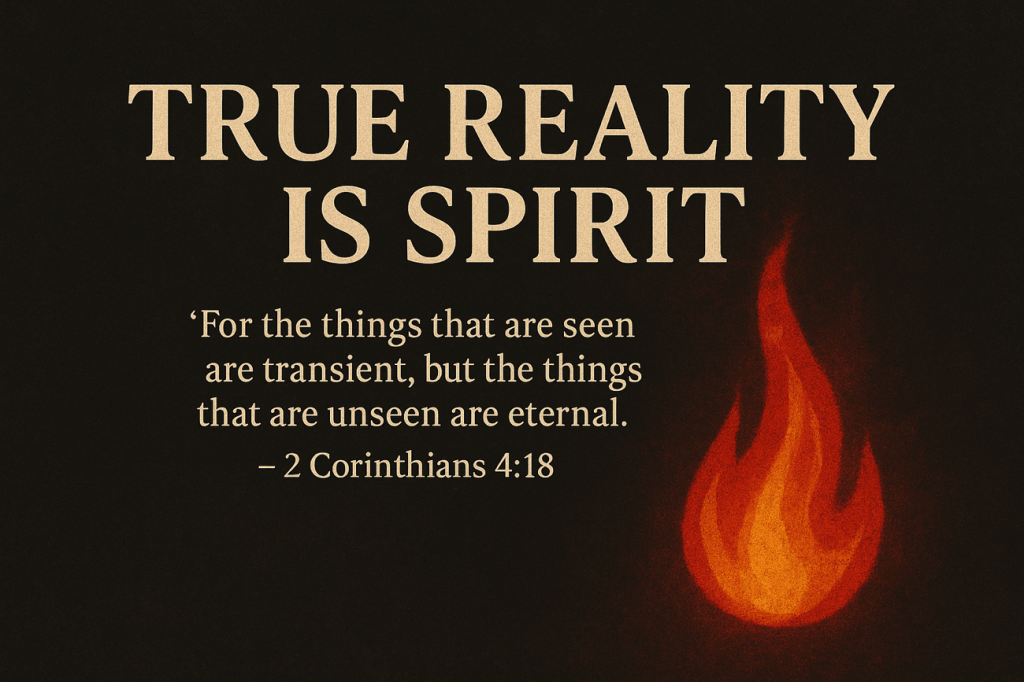
    Truth revealed through fire: The spiritual realm is the true substance; the physical realm is but a fleeting shadow.

    “For the things that are seen are transient, but the things that are unseen are eternal.”

    – 2 Corinthians 4:18

    What is seen is temporary. What is unseen—eternal.

    “Do not lay up for yourselves treasures on earth, where moth and rust destroy and where thieves break in and steal, but lay up for yourselves treasures in heaven, where neither moth nor rust destroys and where thieves do not break in and steal.”
    – Matthew 6:19-20

    The Old Testament, with all its laws, rituals, and symbols, was never the final word. It was a shadow, a foreshadowing.

    As Hebrews 10:1 declares,

    “The law is only a shadow of the good things to come—not the realities themselves.”

    These old systems—they’re rooted in flesh, bound by material signs—were copies, symbols, types.

    But the fullness? That belongs to Christ. The fullness of what???

    Colossians 2:17 says it without apology:

    “These are a shadow of the things to come, but the substance belongs to Christ.”

    Before faith came, we were imprisoned under the law—confined by flesh, chained to the visible.

    But now? The veil is torn.

    The light has come, and light exposes shadow for what it is: impermanent.

    As it is written in 2 Corinthians 3:6:

    “The letter kills, but the Spirit gives life.”

    We are not ministers of a fading covenant carved in stone, but of the living Spirit that resurrects the soul.

    Jesus is the Light of the World— not a symbol of light, but the Light itself.

    He reveals the spiritual reality behind the physical symbols.

    He exposes the temporary nature of the material and brings us into contact with what is eternal.

    Even the sacrifices—bloody and endless—were never the end goal.

    Hebrews 9:23 makes the distinction clear:

    “The copies of the heavenly things were purified with earthly sacrifices, but the heavenly things themselves require better sacrifices.”

    And that better sacrifice is Christ Himself—who did not enter a manmade sanctuary, but Heaven itself.

    This is the arc of the Gospel from creation to revelation, from shadow to light.

    “Again Jesus spoke to them, saying, ‘I am the light of the world. Whoever follows me will not walk in darkness, but will have the light of life.’”

    John 8:12

    From death to life.

    The physical was the womb. But birth comes through Spirit. This is what it means to be born twice.

    Truly, truly, I say to you, unless one is born of water (womb) and the Spirit, he cannot enter the kingdom of God.
    That which is born of the flesh is flesh, and that which is born of the Spirit is spirit.

    John 3:4-7

    What once served as a veil is now obsolete, abandoned, transcended.

    “No one puts a piece of unshrunk cloth on an old garment, for the patch tears away from the garment, and a worse tear is made. Neither is new wine put into old wineskins. If it is, the skins burst; and the wine is spilled, and the skins are destroyed. But new wine is put into fresh wineskins, and so both are preserved.”

    Matthew 9:16-17

    Christ has brought us from death into life—not metaphorically, but metaphysically.

    “Jesus said to her, ‘I am the resurrection and the life. Whoever believes in me, though he die, yet shall he live, and everyone who lives and believes in me shall never die. Do you believe this?’”

    John 11:25-26

    So I say let’s live no longer according to the flesh, but by the Spirit.

    Let us not cling to the image of humanness when we have access to the essence.

    Let us no longer fear the law and live by it, for we have entered into grace to live in.

    “For the law was given through Moses; grace and truth came through Jesus Christ.”

    John 1:17

    The goodness of God is not proven by material blessing, but by His initiation into the eternal.

    The physical is the symbol. The spiritual is the substance.

    “It is the Spirit who gives life; the flesh is no help at all. The words that I have spoken to you are spirit and life.”
    – John 6:63

    And through Christ, we are called to live in the Real not as contrived.

    “But the hour is coming, and is now here, when the true worshipers will worship the Father in spirit and truth, for the Father is seeking such people to worship him.”

    – John 4:23
  • Scripture Secrets

    Secrets of Scripture | Esoteric vs Exoteric


    Unlocking Spiritual Vision

    The Bible Operates On 2 Levels:

    1. The Exoteric

    —what’s seen on the surface—and…

    2. The Esoteric

    …the deeper inner meaning.

    THIS IMPLIES DUALITY.

    DUALITY INTERFERES WITH OUR SPIRITUAL CONDITION.


    Jesus:

    “If those who lead you say to you, ‘See, the kingdom is in the sky,’ then the birds of the sky will precede you. If they say to you, ‘It is in the sea,’ then the fish will precede you. Rather, the kingdom is inside of you, and it is outside of you. When you come to know yourselves, then you will become known, and you will realize that it is you who are the sons of the living father. But if you will not know yourselves, you dwell in poverty and it is you who are that poverty.

    – Gospel of Thomas

    That statement alone invites us to read Scripture as more than just historical narrative or morality anecdotes.

    THE KINGDOM OF HEAVEN IS WITHIN

    An esoteric reading of the Bible treats it as a psychological and spiritual map.

    The Bible is a manual for how the human mind operates and how the soul evolves.

    Every character, event, and place represents an aspect of the human experience.

    The Bible isn’t just about people in other eras and lands; it’s about you.

    What Esoteric Doesn’t Mean

    “Esoteric” doesn’t mean abstract or mystical for the sake of being mysterious.

    Esoteric Does Mean:

    It means looking beyond the literal to uncover the spiritual truth within.

    Esoteric Parables

    Jesus often taught using parables—stories layered with symbolic meaning.

    “Though seeing, they do not see;

    though hearing, they do not hear”

    These weren’t just teaching tools.

    they were keys, designed to open deeper levels of understanding.

    He told his disciples directly:

    “It has been given to you to know the mysteries of the kingdom of heaven, but to them it has not been given.”

    That distinction matters.

    The outer story speaks to the crowd.

    The inner story speaks to the seeker.

    The prodigal son:

    On the surface, it’s a touching story of forgiveness—a father welcoming back his wayward son.

    But if that’s all you see, you’ve only read the first layer, the exoteric.

    On an esoteric level, it’s about the human psyche (soul) drifting away from spiritual truth—squandering its inheritance.

    We trade our Soul’s Divine essence for the outer worlds fake luxury.

    The Return of the Son

    When the “son” returns, it’s a symbol of returning to higher consciousness, to alignment with the Divine source, our Father in Heaven.

    The “father’s house” isn’t a physical home.

    The Fathers house is the original state of spiritual awareness we’re meant to live from.

    You can find beautiful wisdom in the Bible at the surface level, but if you never look for the second upper-story, you’re missing its true power.

    The real spiritual meaning isn’t obvious.

    It’s concealed in plain sight.

    Most theologians don’t teach this—

    I don’t think they’ve ever learned to read it this way or they’ve become so indoctrinated that they avoid it in fear of becoming a “heretic”.

    RESOURCES

    How biblical dualism can help us to gain a better understanding of God’s perspective

  • Grace Vs Control

    Grace Vs Control


    Control

    to exercise restraining or directing influence over REGULATE

    Grace

    unmerited divine assistance given to humans for their regeneration or sanctification

    Let me make this clear up front: if L

    I’m not here to justify sin but to justify grace.

    There’s a difference, and if you can’t tell the two apart, you’ve been discipled by control of man—not Christ.

    As a follower of Christ there is never a circumstance where it’s your task to correct someone with any kind of force.

    Correction by coercion is not correction —it’s pride wrapped in scripture.

    If you’re truly moved by the Holy Spirit, the only thing you’ve been given authority to do is speak truth in love.

    Anything beyond that is spiritual trespassing.

    But we’re watching the same old sickness play out again in a modern tone.

    People stomping around with scripture in one hand and a gavel in the other, throwing stones in the name of holiness—meanwhile hiding from their own shadows.

    Condemning others becomes a convenient way to avoid your own reflection.

    You execute their punishment prematurely just so you don’t have to face your own.

    And that’s not discernment. That’s ego in a Jesus costume.

    Here’s the thing: You are not God.

    You don’t get to decide the weight of someone’s guilt and the verdict you assign will be the same assignment you’ll receive.

    “For with the judgment you pronounce you will be judged, and with the measure you use it will be measured to you.”
    – Matthew 7:2

    You don’t get to issue divine sentences based on your human discomfort.

    You have no moral authority above another human — I mean; you remain confined to that dying meat suit.

    “For we do not wrestle against flesh and blood, but against the rulers, against the authorities, against the cosmic powers over this present darkness, against the spiritual forces of evil in the heavenly places.” Ephesians 6:12

    You’re not protecting the gospel—you’re perverting it.

    Grace isn’t a license for sin. But GRACE is the ONLY bridge to healing.

    And you don’t get to burn that bridge for anyone and get away with it… let alone earn the ability to have any pride in your work.

    “Pride goes before destruction, and a haughty spirit before a fall.”
    -Proverbs 16:18

    You want to know what really makes me sick?

    That the loudest people in the modern church are often the furthest from Christ’s heart.

    “When words are many, transgression is not lacking, but whoever restrains his lips is prudent.”
    – Proverbs 10:19

    Jesus railed against this—

    “They tie up heavy burdens, hard to bear, and they lay them on people’s shoulders, but they themselves are not willing to move them with their finger.”
    Matthew 23:4

    “Woe to you, scribes and Pharisees, hypocrites! For you are like whitewashed tombs, which outwardly appear beautiful, but within are full of dead people’s bones and all uncleanness. So you also outwardly appear righteous to others, but within you are full of hypocrisy and lawlessness.”

    Matthew 23:27-28

    those choosing dominance over love

    “There is no fear in love, but perfect love casts out fear. For fear has to do with punishment, and whoever fears has not been perfected in love.”

    – 1 John 4:18

    those who forsake mercy

    “Blessed are the merciful, for they shall receive mercy.”

    Matthew 5:7

    And yet, here they are again, wearing His name like a badge while they crucify people He died to set free.

    “Father, forgive them, for they know not what they do.”

    Jesus – Luke 23:34

    The real tragedy?

    Many believe they are doing God’s work, but they are not; they are merely doing their work. They are so surrounded by validation and applause that they fail to recognize it. The crowd has blinded them.

    “Not everyone who says to me, ‘Lord, Lord,’ will enter the kingdom of heaven, but the one who does the will of my Father who is in heaven.”
    -Matthew 7:21

    Listen: society is not where it’s supposed to be.

    And neither is the church.

    Now, will you hear this? Probably not. And I’m not expecting you to.

    The truth about the truth…

    The truth rarely gets a warm welcome when it threatens the throne you built for yourself.

    But I’ll say it anyway.

    • Even the people you mock
    • the ones you write off
    • the ones whose lives you condemn from a distance

    God came for the

    • giants
    • misfits
    • mystics
    • addicts
    • artists
    • outcasts—

    They are no different than you.

    Their moral sin may look different. Their wounds may be externally louder. They may hide less of their ugly parts than you…

    but at least they aren’t tucked safely behind holy jargon to excuse cruelty.

    “For we have all sinned and fall short of the glory of God.” – Romans 3:23

    And if it offends you that Jesus may have used unconventional methods to expand perception, then what you worship is safety, not truth.

    Religiosity – man-made – fear-driven – repulsive!!!

    It stinks of control, not communion. It inspires rebellion, not reverence.

    So go ahead. Keep mandating your subjective umbilical rules.

    Keep enforcing your man made version of purity. But don’t be surprised when the ones who truly hear the Spirit reject your kingdom altogether.

    Because God’s kingdom is higher. And it doesn’t need your validation.

    Your voice? If it isn’t born of love… of Spirit, of truth?

    It’s just wind.

    It will die with your body… while the words rooted in heaven continue to echo into eternity.

    Now, I ask myself: What am I doing?

    I’m burning down the altars built to false gods. I’m standing in the gap where most stay silent.

    And if you don’t like it? Maybe it’s not for you.

  • Jesus

    Jesus

    Do You Think You Know Jesus?

    They Said Jesus Was
    Insane. Mad. Crazy. Strange.

    The image of Jesus most people hold is wrong and wrung through centuries of:

    • ideological whitewashing
    • beautified marketing
    • sanitized Sunday School summaries.

    He’s often pictured as an ethereal peace-giver, universally adored, calmly glowing in a ‘soft sepia light’.

    But this wasn’t the Jesus known to his followers. Not even close.

    In fact, many who encountered Jesus in the flesh found him either;

    1. confusing, at best
    2. mentally unstable, at worst.

    He wasn’t simply controversial, he was considered a threat to both religious orthodoxy and social order.

    The sanitized version of Christ so many cling to was shaped after the cross, after the church industrial complex took control of his narrative.

    Let’s take a scalpel to the original reactions—the raw, unsettling perceptions of Jesus while he was still walking the earth.

    His Family Thought He’d Lost His Mind

    The Gospel of Mark pulls no punches. In Mark 3:21, we’re told that Jesus’ own family said:

    “He is out of his mind.”


    Yes, his own bloodline. Not strangers. Not critics. His family. Pause there…

    Imagine. Imagine the weight of that.

    You’ve awoken to a Divine Knowing, a consciousness that cracks open reality—and the people who know your voice best say:

    “You’ve snapped.”


    It wasn’t mockery from outsiders that came first; it was internal doubt.

    His kin likely feared he’d gone mad with something akin to messianic delusion.

    Or perhaps they were embarrassed by his sudden rise as a controversial street-preacher confronting the Government and Church…

    He spoke vehemently against both Rome and the temple elite.

    Religious Leaders:

    “You’re Breaking the Law and Blaspheming

    The religious class didn’t just dislike Jesus—they actively plotted his removal.

    The scribes and Pharisees viewed him as a heretic, accusing him of;

    • violating the Sabbath
    • flouting Mosaic Law
    • daring to forgive sins.

    —a divine prerogative.


    His miracles weren’t applauded; they were denounced as works of Beelzebub.

    Let that settle: divine acts being interpreted as demonic.

    … this was normal folk… the acceptable people… The community.

    This wasn’t petty disagreement.
    This was existential threat-level panic from the religious hierarchy.

    They saw in Jesus… not just a radical voice—but someone who dismantled their very grip on sacred authority.

    Public Whispers: “He Has a Demon and Is Mad

    John 10:20 captures this damning public sentiment:

    “He has a demon and is mad; why listen to him?”

    These weren’t elite theologians.

    These were everyday observers—

    • neighbors
    • townsfolk
    • bystanders.

    Jesus’ words, while layered with profound gnosis (wisdom), sounded unhinged to the average ear.

    And truthfully, wouldn’t they today? I mean… They do.

    Imagine someone saying,

    Before Abraham was, I am.

    Or calling God their literal Father, claiming to bring not peace but a sword.

    If spoken in today’s marketplace, they’d be dismissed as spiritually schizophrenic, or worse.

    So what’s changed?
    Only the power structure that codified his words.

    Outside the Bible: Even More Scathing Views

    This doubt wasn’t exclusive to Jewish contemporaries.

    Roman voices and philosophers took their shots, too.

    Talmud

    The Talmud contains cryptic but deeply derogatory references to Jesus—branding him a sorcerer who led Israel astray.

    He is also said in the Talmud to be swimming in hot excrements.

    These weren’t passive critiques.

    They were sharp rejections by those who saw his influence as spiritually treacherous.

    Roman Philosophers

    Roman historian Tacitus referred to Christianity as a “pernicious superstition,” blaming the followers of Christ for corrupting public morals.

    To Roman minds, Christ’s followers were:

    irrational fanatics clinging to a crucified troublemaker.

    Celsus

    And then there’s Celsus, the ancient philosopher and intellectual, who reportedly called Jesus

    small, ugly, and undistinguished,”

    claiming his father was a Roman soldier—a jab meant to invalidate his divine paternity and tarnish the virgin birth narrative.

    Jesus wasn’t revered by the intellectual elite of his time.

    He was;

    • mocked
    • dismissed
    • vilified.

    Why This Matters

    This isn’t about shock value or anti-Christian rhetoric. It’s about truth-telling.

    When we sanitize the narrative of Jesus to make him palatable. We also:

    • rob Him of the radical edge that threatened anti Christ power
    • offended institutions
    • deny the painful fact that he alienated his own family.

    His teachings were revolutionary because they disrupted—not because they fit neatly within pre-existing paradigms.

    So when you feel like your awakening makes others uncomfortable when your truth sounds like madness to the masses take comfort. You’re in excellent company.

    Because the real Jesus wasn’t crucified for being nice. He was crucified because he challenged the lies. And many thought he was insane for doing so. Truth rarely sounds sane to those who live comfortably in delusion.

    “And you will be hated by all for my name’s sake. But the one who endures to the end will be saved.”

    – Matthew 10:22
  • Determinism

    CHOICE OR FATE? DETERMINISM??

    FAITH

    In the arena of existence, one question endures:

    Are we propelled by fate, driven by choice, or guided by a delicate dance between the two?

    Each path offers its own mystique, summoning us to dissect the interplay of destiny, fate, and free-will in shaping our lives and reality as a whole.

    The Emergence of Fate

    Fate represents the unseen architecture of our lives—a cosmic design that envelopes every step we take.

    It is the orchestrator of synchronicities and signs, suggesting that our experiences might be part of a grand laid out structure, initiated by a higher intelligence.

    This invisible thread forms the backdrop of our existence, like a silent script written in the stars that sometimes we see how it dictates our journey.

    The Empowerment of Choice

    Contrasting fate is the power of choice—

    • our conscious ability to deliberate
    • decide
    • and act.

    In every fleeting moment, we stand at a crossroads, armed with the power to transform potentiality into reality.

    Our choices…

    • …whether deliberate
    • …or spontaneous.

    Choice carves new pathway, through a predetermined framework, affirming our unique role as co-creators of our destinies.

    The Synthesis

    A Cosmic Dance

    The truth, as I perceive it, lies not in the isolated domains of fate or choice, but in their connection, no matter how chaotic or volatile it appears.

    FATE IS AN ALREADY SET STAGE

    Fate sets the stage by placing us in a world of infinite complexities, yet within this arena, our choices illuminate the power of agency.

    Within fate your decisions become the act in the play that redefine the script with each break in line, as sin aka duality, causes is to forget choosing this character… MORE ON THAT IN ANOTHER ARTICLE…

    Fate merges the predetermined decision we made with the human self in all our duality.

    Embracing The Interplay

    Every decision— it can be a choice of…

    • love
    • defiance
    • surrender or
    • inquiry…

    These decisions serve as compelling evidence of the capacity for transformation. The inherent power within us shapes the circumstances we encounter, establishing a structure of cause and effect that upholds duality and sin.

    While the forces of fate may direct the overarching narrative, it is within our responses that true freedom is forged.

    DESTINY + CONSCIOUS AWARENESS

    The co-operation between destiny and conscious choice is…

    • where meaning is born
    • where chaos finds order
    • where wisdom is ultimately distilled.

    We have a profound power to navigate the realms of existence.

    We are neither bound by the currents of destiny nor are we lost in the illusion of unbridled freedom.

    We are the artisans of our own lives, crafting purpose from the interplay of the inevitable and the intentional as they are One.

  • Feminine Archetypes

    What is an archetype?

    The word “archetype” comes from the Greek word ἀρχή (arche), meaning “origin” or “beginning”.

    In literature, an archetype is a recurring pattern, motif, or symbol that appears in stories, myths, and folklore.

    These archetypes can take the form of characters, settings, or plot elements, and they often represent universal themes and ideas.

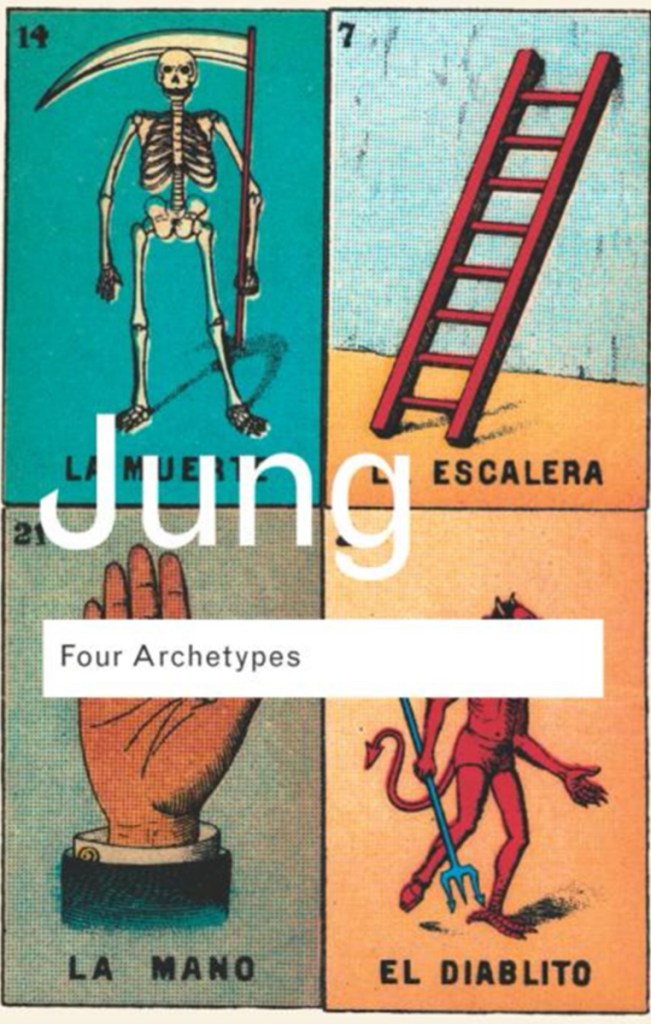
    According to Jungian psychology, there are seven feminine archetypes that play significant roles in modern society:

    • the Mother
    • the Maiden
    • the Queen
    • the Huntress
    • the Wise Woman
    • the Sage
    • the Lover
    ⬆️READ FOR FREE ⬆️

    These archetypes illustrate various dimensions of the feminine experience and play a significant role in the diversity of individuality and expressions of women in contemporary society.

    The Maiden Archetype

    The Maiden Archetype symbolizes youth, innocence, and potential; she embodies the qualities of exploration and discovery.

    She represents new beginnings and the pursuit of dreams, often characterized by a sense of adventure and curiosity about the world.

    With an open heart and a mind ready to embrace the unknown, the Maiden invites us to step out of our comfort zones and seek out the experiences that shape our lives, reminding us that every journey holds the promise of growth and transformation.

    The most famous maiden archetype in Greek mythology is Princess Andromeda, who was chained to a rock as a sacrifice to a sea monster. She is saved by the hero Perseus and marries him.

    The Queen Archetype

    The Queen archetype represents authority, power, and responsibility.

    She is a leader and a figure of confidence, embodying traits such as:

    • decisiveness
    • strength
    • the ability to inspire others.

    The Queen is often associated with:

    • the pursuit of justice  
    • the welfare of her domain

    The Huntress Archetype

    This archetype embodies:

    • independence
    • self-sufficiency
    • the pursuit of goals.

    The Huntress is often portrayed as a warrior or a protector who:

    • values freedom
    • Has the courage to break societal norms
    • Has ambition
    • Has the determination to forge her own path.

    The Wise Woman Archetype

    Representing wisdom and intuition, the Wise Woman:  

    • Embodies ancient knowledge
    • A healer and mentor
    • Insightful
    • Introspective
    • shares her wisdom

    The Sage Archetype

    Closely related to the Wise Woman, the Sage represents intellectual depth and understanding.

    The Sage archetype often seeks knowledge and truth, embodying the pursuit of enlightenment and the dissemination of ideas that can empower others.

    The Lover Archetype

    The Lover archetype is associated with passion, intimacy, and connection.

    This archetype values relationships and emotional expression, emphasizing the importance of love, romance, and sensuality in a fulfilling life.

    Together, these archetypes account for the major differences among women, as each woman may resonate more strongly with specific archetypes based on their personal experiences, values, and choices.

    Understanding these archetypes can help us navigate our identities to better embrace the multifaceted nature of femininity in contemporary society.

    LEAVE A COMMENT DOWN BELOW

    3 responses to “Feminine Archetypes”

    1.  Avatar
      Anonymous

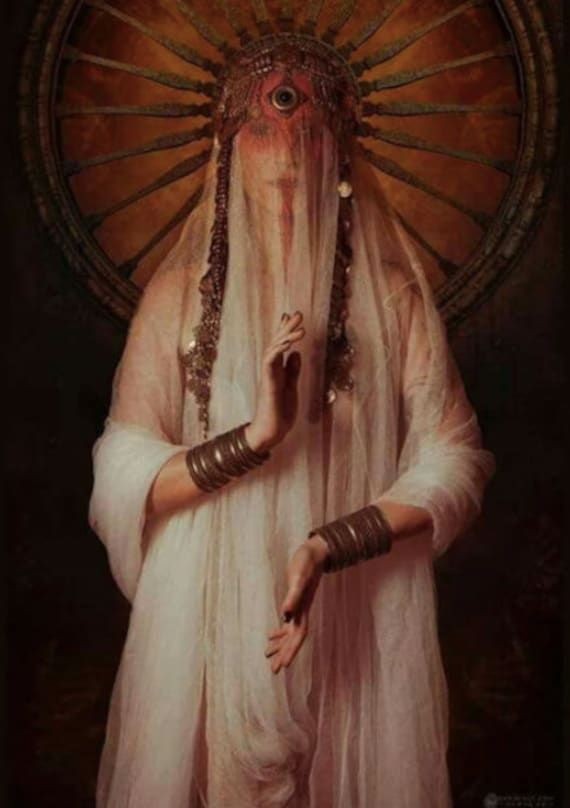
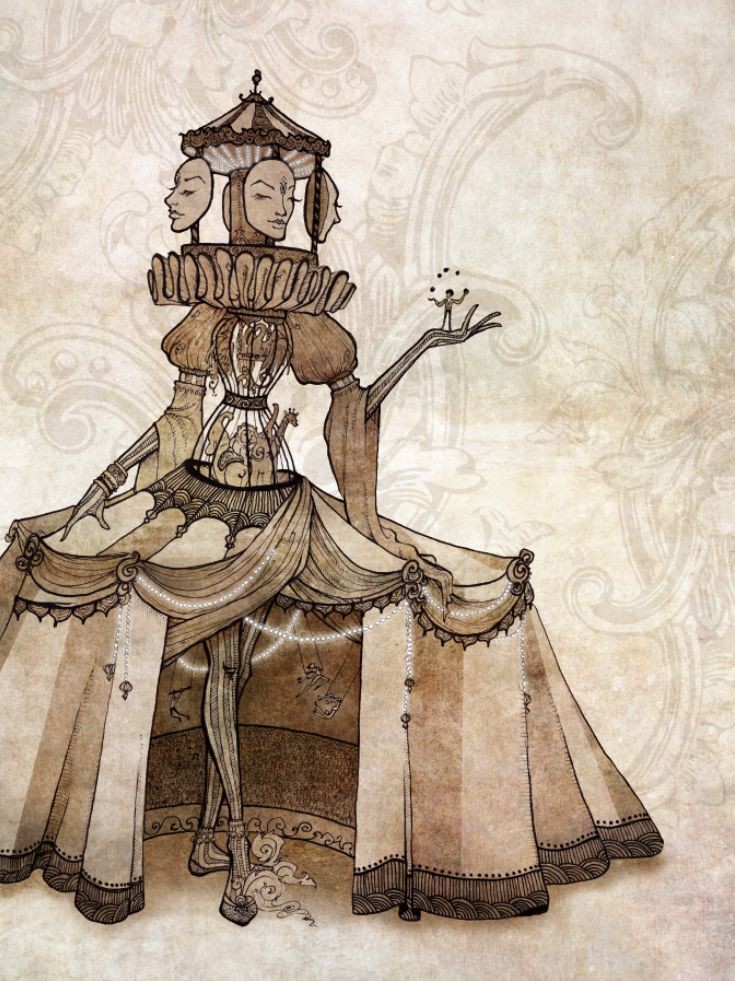
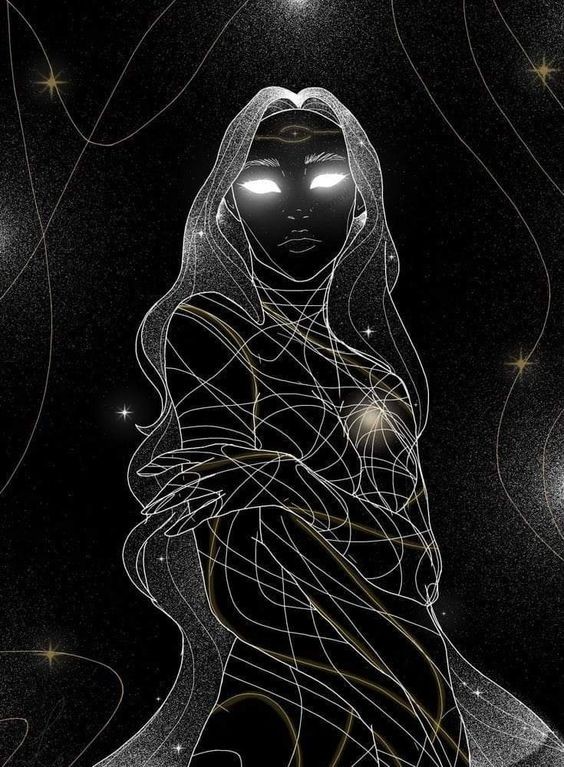
      I love this format you are using – concise rundown of the archetypes delivered with an image heavy style that compels me forward. The images conjure great emotion appropriate to the subject matter and complement the individual stories without fail. More like this please!

    2. Catherine Kuria Avatar
      Catherine Kuria

      I feel that we have the ability to embody all archetypes, each appropriate for each setting.

      1. Metacognitive Avatar

        Absolutely. 💯
        I believe we all embody various archetypes within us, each manifesting in different degrees depending on the context. As you mentioned, these archetypes emerge appropriately for each setting.

        Carl Jung spoke much on this:

        “The archetypes are the living system of reactions and aptitudes that determine the individual’s life in invisible ways.” — Carl Jung

        I LOVE THIS JUNG QUOTE:

        “Archetypes are like riverbeds which dry up when the water deserts them, but which it can find again at any time. An archetype is something like an old watercourse along which the water of life has flowed for centuries, digging a deep channel for itself.”
        — Jung, The Archetypes and the Collective Unconscious

        Thank you for your comment; it inspired deeper insight.

    Leave a Reply

    This site uses Akismet to reduce spam. Learn how your comment data is processed.

  • Biblical Terminology

    Biblical Terminology

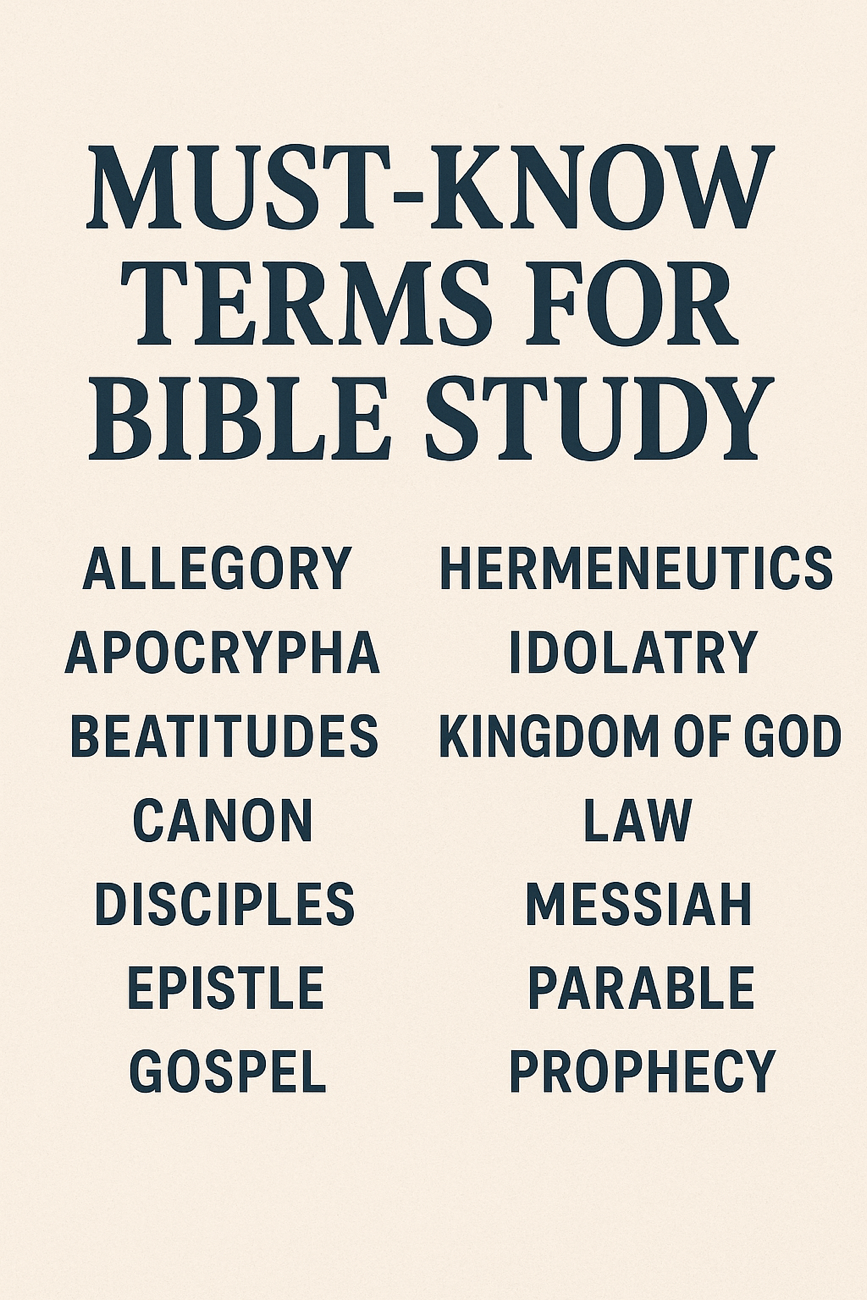
    Allegory

    Allegory is a literary and artistic device in which characters, events, and details within a narrative symbolize broader concepts and ideas, often conveying moral, social, or political messages. The term derives from the Greek word “allegoria,” meaning “speaking otherwise,” which highlights its function of expressing deeper meanings beyond the literal interpretation. Allegories can be found across various mediums, including literature, visual arts, and film, and they often involve a narrative that operates on two levels: the surface story and the underlying message.

    Classic examples include George Orwell’s “Animal Farm,” which critiques totalitarianism through the story of farm animals, and John Bunyan’s “The Pilgrim’s Progress,” which represents the spiritual journey of a Christian believer.

    Allegory has been a significant tool throughout history, allowing creators to address complex themes in a more accessible manner, as noted in sources like Britannica and Merriam-Webster.

    Apocrypha

    A collection of ancient texts that are not considered canonical by certain religious traditions, often included in some versions of the Bible.

    Beatitudes

    A series of blessings pronounced by Jesus in the Sermon on the Mount (Matthew 5:3-12), highlighting the values of the Kingdom of God.

    Canon

    The official list of books that are considered authoritative scripture by a particular religious community.

    Disciples

    Followers of Jesus Christ, particularly the twelve apostles who were chosen to spread his teachings.

    Epistle

    A letter, often written by apostles, that addresses specific issues or teachings within early Christian communities (e.g., the letters of Paul).

    Gospel

    The “good news” of Jesus Christ, specifically the accounts of his life, death, and resurrection found in the New Testament (Matthew, Mark, Luke, and John).

    Hermeneutics

    The study of interpretation, especially of biblical texts, focusing on understanding the meaning and application of scripture.

    Idolatry

    The worship of idols or false gods, which is condemned throughout the Bible.

    Kingdom of God

    A central theme in Jesus’ teachings, referring to God’s reign and authority, both in the present and in the future.

    Law

    Refers to the commandments and regulations given by God, particularly those found in the Torah (the first five books of the Old Testament).

    Messiah

    The anointed one, a savior or liberator expected by the Jewish people, fulfilled in the New Testament by Jesus Christ.

    Parable

    A simple story used to illustrate a moral or spiritual lesson, often told by Jesus.

    Prophecy

    A message from God, often delivered by a prophet, that foretells future events or conveys divine truth.

    Redemption

    The act of being saved from sin and its consequences, often associated with the sacrifice of Jesus.

    Righteousness

    The quality of being morally right or just, often associated with living in accordance with God’s will.

    Sacrament

    A religious rite recognized as of particular importance and significance, such as baptism and communion.

    Sin

    An act that goes against God’s will or law, often understood as a separation from God.

    Testament

    Refers to the two main divisions of the Bible: the Old Testament (Hebrew Scriptures) and the New Testament (Christian Scriptures).

    Transfiguration

    The event in which Jesus is transformed and revealed in divine glory to three of his disciples (Matthew 17:1-9).

    Worship

    The term “worship” originates from the Old English word “weorþscipe,” which combines “weorþ,” meaning worth or value, and “scipe,” indicating a condition or quality.

    Thus, worship fundamentally conveys the idea of attributing worth to a deity or divine being.

    In various religious contexts, worship encompasses acts of reverence, adoration, and devotion directed towards God or gods, often involving rituals, prayers, and communal gatherings. It serves as a means for individuals and communities to express their beliefs, seek spiritual connection, and engage in transformative experiences.

    True worship is not merely about fulfilling personal or communal needs but is centered on honoring and glorifying God, reflecting a commitment to divine values and principles.


    Understanding these terms can greatly enhance your study of the Bible and provide a clearer framework for interpreting its messages and teachings.

    MORE WORDS YOU SHOULD KNOW:

    Theology

    … the study of God.

    Apologetics

    … defense of Faith.

    Exegesis

    … critical interpretation of scripture.


    Substitutionary Atonement

    Christ died as a substitute for sinners, bearing the punishment that they deserved.

    Eschatology

    Eschatology is the study of the end times, focusing on events like

    • the Second Coming of Christ
    • the final judgment
    • the ultimate destiny of souls.

    It encompasses what happens to individuals after death and the fate of the entire universe.

    Key eschatological concepts include:

    • the resurrection of the dead
    • the millennium
    • the establishment of God’s kingdom. 

    Incarnation

    The Incarnation is the doctrine that the Son of God assumed human nature and became man in the person of Jesus Christ. This belief is central to Christianity, affirming that Jesus is both fully divine and fully human. The theological implications of the Incarnation include the idea that through Jesus, God entered human history, experiencing human life and providing a means of salvation.

    Grace

    Grace is the unmerited favor and love of God towards humanity. It is central to Christian soteriology (the study of salvation), emphasizing that salvation is a gift from God, not earned by human effort. Different traditions emphasize different aspects of grace:

    Justification

    Justification is the act by which God declares a sinner to be righteous on the basis of faith in Jesus Christ. In Protestant theology, this is often emphasized

    REFORMED THEOLOGY

    Reformed theology affirms the five solas with all their implications; recognizes the centrality of the covenant in God’s saving purposes; and is expressed in a historic and public confession of faith.


    CALVINISM

    Calvinism, also known as Reformed theology or the Reformed tradition: is a major branch of Protestant Christianity that originated with the teachings of the French theologian John Calvin in the 16th century.

    It is named after Calvin because he played a significant role in shaping its doctrines and organizing its Ecclesiastical structure.

    Calvinism emphasizes the sovereignty of God in all aspects of life, including salvation, divine providence, and the governance of the world. It is characterized by its adherence to the “Five Points of Calvinism,” which are often summarized using the acronym TULIP.

    Total Depravity

    This doctrine teaches that due to the fall of Adam and Eve, all human beings are born in a state of spiritual depravity and are incapable of choosing God or doing good on their own. They are entirely dependent on God’s grace for salvation.

    Unconditional Election

    According to this belief, God, out of His sovereign will and without any consideration of human merit or choice, predestines certain individuals to be saved. This election is not based on anything that humans do but solely on God’s divine purpose.

    Limited atonement

    This doctrine states that Christ’s atoning sacrifice on the cross was specifically intended for the salvation of the elect, those whom God has chosen for salvation. It does not extend to all people universally.

    Irresistible grace

    Also known as “effectual calling” or “regenerating grace,” this doctrine asserts that when God chooses to save someone, His grace is irresistible and will unfailingly bring that person to salvation. Those who are called by God cannot ultimately resist His saving work.

    Perseverance of the saints

    This belief affirms that those who are truly saved by God’s grace will persevere in faith and holiness until the end. Genuine believers cannot lose their salvation but will continue to follow Christ throughout their lives.

    Calvinism

    Calvinism is a theological system and branch of Protestant Christianity that originated with the teachings of John Calvin, a 16th-century French reformer. It emphasizes the sovereignty of God in all aspects of salvation, particularly through the doctrine of predestination, which asserts that God has already chosen who will be saved and who will not. This belief is often summarized by the Five Points of Calvinism, which include Total Depravity, Unconditional Election, Limited Atonement, Irresistible Grace, and Perseverance of the Saints. Calvinism stands in contrast to Arminianism, which emphasizes free will and the ability of individuals to choose salvation. The term itself derives from Calvin's last name, and the movement has significantly influenced various Protestant denominations, particularly in Reformed and Presbyterian traditions. It gained prominence during the Reformation and has continued to shape theological discussions and debates within Christianity today, as noted in various sources like Britannica and Clickmill.

    Arminianism

    Arminianism is a theological system named after the Dutch theologian Jacob Arminius (1560-1609), who proposed a framework of Christian belief that emphasizes free will and God’s universal grace. This doctrine arose as a response to the deterministic views of Calvinism, particularly regarding predestination and salvation. Arminianism asserts that while God offers salvation to all, individuals have the free will to accept or reject this offer, which stands in contrast to the Calvinist belief in irresistible grace. Central to Arminian theology are five key points: the denial of original sin as an insurmountable barrier, justification by faith, conditional predestination, the resistibility of grace, and the possibility of falling from grace.

    The theological debate between Arminianism and Calvinism was notably formalized during the Synod of Dort (1618-1619), where Arminian views were challenged but continued to influence various Protestant traditions, especially Methodism and the broader Evangelical movement (Christian History Institute, Wellspring MS Church).

    Free Will

    The term “free will” refers to the philosophical concept that individuals have the capacity to make choices that are not predetermined by prior causes or divine intervention.

    Etymologically, the phrase combines “free,” deriving from the Old English freo, meaning “not in bondage,” and “will,” from the Old English willan, meaning “to wish or desire.”

    This concept has been a subject of intense debate in philosophy, psychology, and neuroscience, particularly concerning whether human actions are determined by biological processes or if individuals can act independently of such influences.

    Some philosophers advocate for a “compatibilist” view, suggesting that free will can coexist with determinism, arguing that the essence of free will lies in the ability to act according to one’s motivations and desires, even if those are influenced by prior causes (psyche.co).

    The implications of free will are profound, affecting moral responsibility and ethical considerations in society, as individuals are often held accountable for their actions based on the assumption that they can choose freely (scientificamerican.com).

    Election

    The etymology of “election” comes from the Latin word “electio,” meaning “choice” or “selection,” which itself derives from the verb “eligere,” meaning “to choose.”

    In a biblical context, election is seen as an expression of God’s sovereignty, where He selects individuals based on His divine will rather than their actions or merits.

    This concept is discussed in various theological writings, emphasizing that God’s choice is unconditional and not based on foreseen faith or works (as noted in sources like gotquestions.org).

    The implications of this doctrine often lead to discussions about grace, justice, and the nature of God’s love, as seen in the debates surrounding unconditional election and its portrayal of God in relation to humanity (monergism.com).

    Atonement

    The term “atonement” refers to the act of making amends or reparation for a wrongdoing or injury, often implying a reconciliation between two parties. Etymologically, the word is derived from the Middle English phrase “at one,” which signifies being in harmony or agreement. This concept has significant theological implications, particularly in Christianity, where atonement is associated with the reconciliation between God and humanity through the life, suffering, and death of Jesus Christ. The doctrine of atonement encompasses various interpretations, such as the satisfaction view and substitutionary atonement, which explore how this reconciliation is achieved (Merriam-Webster, Cambridge Dictionary, Dictionary.com).

    Grace

    The term “grace” has a rich etymological background, originating from the Latin word “gratia,” which means favor, goodwill, or kindness.

    In contemporary usage, grace encompasses various meanings, including elegance or beauty of form, manner, motion, or action, as well as a disposition to kindness and compassion.

    In religious contexts, particularly within Christianity, grace refers to the unmerited favor of God towards humanity, often linked to salvation and divine assistance.

    This theological concept emphasizes that grace is a gift from God, as highlighted in Ephesians 2:8, which states, “For by grace you have been saved through faith.”

    The multifaceted nature of grace can be seen in phrases like “fall from grace,” which denotes a loss of status or favor, and “saving grace,” which refers to a redeeming quality that mitigates a negative situation.

    Perseverance of the Saints

    the belief that salvation is secure and cannot be lost, a concept often referred to as “eternal security.”

    The etymology of the word “perseverance” comes from the Latin “perseverare,” meaning to persist or continue steadfastly.

    This idea is rooted in the understanding of predestination, where God’s grace enables the faithful to endure in their beliefs despite challenges

    John 10:28-29: “I give them eternal life, and they will never perish, and no one will snatch them out of my hand. My Father, who has given them to me, is greater than all, and no one is able to snatch them out of the Father’s hand.”

    ECCLESIAL / ECCLESIOLOGY 

    ecclesiology is the study of the Church, the origins of Christianity, its relationship to Jesus, its role in salvation, its polity, its discipline, its eschatology, and its leadership.
  • Christ • The Alchemist

    Christ • The Alchemist

    A Savior’s Decent into Matter Made Way For Our Spiritual Ascension.


    Within our very hearts, Eternity resides—a thought inviting deep contemplation.

    We inhabit this dense, material world that is shaping all inhabitants towards its ultimate pinnacle; death and decay. Although morbid, this is simply true.

    Our soul knows this world’s objective for ALL matter is death… This makes sense why we, as conscious beings, are perpetually drawn to Spirituality.

    In Search for the Eternal Life, innate to our Soul, beyond the body, a deep yearning echoes from the depth of our being.

    Transmutation of Christ

    In Christ

    The transmutation that the I AM that is speaking is the process taught by Christ.

    The Spiritual Higher substance redeems and refines the material lower substance.

    Watch:

    Matter & Material = Lower Dimension

    Understand Human Awareness

    Human awareness is traditionally understood to reside within the confines of the material body (the skull).

    Consciousness is nonlocal and manifests in this tangible body, encased in the most fragile frame.

    Navigating Time and Space

    Consciousness navigates a world governed by the dense laws of time and space.

    Within this environment, we remain grounded in the body until our vessels’ eventual expiration, at which point we experience release from all this weight.

    CONSCIOUS REFRAME

    By framing our understanding of consciousness in this way, we acknowledge both the limitations imposed by our physical reality and the potential for a deeper exploration of what lies beyond these limits.

    The Concept of Lower Dimensions

    The material realm is a “lower dimension” due to its inherent characteristics. Density. Decay. Limited Movement. Etc.

    Matter is ephemeral; it is temporary and fleeting. The physical world, bound by its limitations, faces its inevitable end—total decay.

    This transience proves the constraints of our existence within this sphere, clearly a lower-dimensional experience.

    So, does this mean that matter and materiality is the source of imperfection & sin?

    Not inherently. Matter is neutral.

    The Source of Sin

    Rebellion & Division

    The darker aspects of sin do not arise from matter, rather they affect matter.

    These traits come from our flawed human interaction within the material frame.

    Fragmentation of the Psyche

    The eternal ‘we’ exists in our psyche, not in our body, having fragmented away from Source.

    This disconnection is referred to as sin.

    Understanding Fragmentation

    This fragmentation represents a profound separation from our true essence, identity,& nature— resulting in a loss of unity and wholeness.
    Falling from Perfection.

    TO PUT IT SIMPLY:

    WE ARE OVERWHELMED SOULS THAT WENT BUZZURK.

    REBELLED. SINNED. DEFIED.

    We need to recognize that this disconnection manifests, indirectly leading to our feelings of emptiness and despair.

    Fragmentation occurs from overwhelming emotions and negative experiences, further entrenching us in a cycle of pain and suffering.

    By acknowledging this fragmentation, we will begin the process of healing the fragmentation and, remember who we are.

    The only way to reconnect with our Source is through Conscious rememberence.

    We’re Broken Vessels Sailing Back Home

    All of humanity exists in a state of fragmentation, with differing degrees, of course, distanced from the rememberence of our place in the Tree of Life, cut off from the foundational Essence of our Origin.

    This disconnection results in unrefined desires and unholy inclinations. Sin.

    The primary objective is to preserve the remnants of our existence that still remain intact, parts of ourselves that can be re-integrated into Source.

    Through trials and transformative experiences, like a purifying fire, our soul strives for alignment and reunification with Source through Consciousness—the All in All is seeking harmony with us – from within us, as the Higher Self, in accordance with the Divine principles of I AM. Every disaster is an attempt to wake us up.

    This journey demands the dissolution of accumulated negativity and superficial attachments that hinder our resonance.

    The demons of separation from the Source (I AM) has left us vulnerable to eternal ignorance; misguided by lower bodily desires, and the blind navigation of our minds’ perpetual state of amnesia.

    Physical Matter = A Veil

    The laws of Physics drape over our perception, obscuring the Ethereal realm’s boundless perfection from being apprehended by our Eyes and Psyche.

    Why God Does This:

    To protect us from searing our consciousness. PROTECTION FROM BEING ANNIAHLATED BY THE ALL-CONSUMING FIRE. This density has too much pressure.

    ABOUT THE ALL CONSUMING FIRE

    the metaphorical “all-consuming fire” symbolizes the purifying force of God’s divine energy. This fire represents both a transformation and a likely threat to those unprepared for its intensity.
    This can be likened to the everyday struggles people face in maintaining their mental and emotional well-being amid life’s chaos.

    The Violet Consuming Flame serves as a protective mechanism, allowing one to transmute discord and imperfection into purity and light, as elaborated by the Ascended Masters in teachings such as those from the I AM School and the St. Germain Foundation.

    By consciously invoking this flame, individuals can shield themselves from negative energies and unwanted attachments, akin to the protective measures discussed in contemporary spiritual practices aimed at maintaining a healthy aura and spiritual fortitude, as noted in articles on spiritual protection and aura shielding.

    The journey towards spiritual purity requires both the acknowledgment of the consuming fire’s potential for annihilation and the active engagement in practices that foster resilience and enlightenment.


    THE VEIL IS GOD’S GIFT OF PROTECTION UNTIL WE’RE READY

    This veil is not a mere obstacle; NO!

    It is a GIFT—a medium needed for our experience, realization, and final expansion needed to transcend it.

    The Creator knows what we need before we do. Painful growth is a must when in such a heavy laden dimension, in order that we remain on the Narrow Way.

    We’ll go from this heavy density to our first weightless home – back to a formless, eternal flow state of pure expansion. The pain level we now undergo cannot compare with the level of ecstasy we’ll carry in infinity.

    The material world challenges our Soul, un-shapes us, and stages the platform to our Spiritual Ascension.

    Our soul craves to experience leveling up. The human experience is how we do that.

    Dopamine From The Heavens

    What’s cool is we produce dopamine in our brain every time we feel like we’re about to level up, were perfectly designed to keep up with motivation.


    The Flesh

    A Firey Portal To The Divine Father

    The flesh is a starting point from which we Ascend toward the Eternal Flame (ie; Heaven, Tree of Life, Eternal Light.).

    Fire Burns. Embrace it. Yes it hurts.


    Alchemical Transformation

    The Redemption from Within

    Salvation is an Alchemical action.

    Salvation embodies the metamorphosis of the imperfect aspects of human existence (the corporeal) through the influence of the Perfect (Spirit).

    Salvation refers to elevating the lower state of being to the higher One.

    VISUALIZE THE ALCHEMY

    Visualize the process of human made alchemy, where base metals like lead are refined into resplendent gold.

    Everything Has A Parallel / Duality

    —as above, so below.

    —on earth as it is in heaven….

    In the framework of Parallel Alignment, spiritual alchemy does not advocate for the rejection of the corporeal realm but emphasizes its ownership and integration in order to transmute. It’s a necessary step.

    Recognize any possibilities over the lower aspects of our existence.

    The Divine Alchemist is exemplified by Christ as He performs the transmutation of the lower forms, uncovering the intrinsic Divine that resides within All.

    The kingdom of heaven is within.

    – Jesus

    Scripture illustrates this through symbolic narratives of descent and redemption.

    Christ’s very incarnation. What was it?

    God revealing his entering of flesh, embodying the perfect descent into the “imperfect” in order to redeem it.

    Encoded is a profound truth:

    Salvation is an inside-out process, where the spiritual infuses and uplifts the material.

    This is not devolution but evolution—a purposeful refinement of existence. A Divine Masterpiece only fully known by Faith.

    This transformation is practical

    Through combining our energy production that we create with our body movement through prayer, reflection, and cognizant living, we remain more and more in alignment with the higher substance, the Essence of All, the God of the Heavens…

    As Divinity peels back the veil, offering a glimpse into Eternity, and kindling hope, Faith increasingly proceeds from our hearts.


    The interplay of matter + spirit reaches across spiritual traditions and religious cultures. In all of them, transformation is a recurring theme.


    Salvation restores you to your original harmonious symmetry, as Christ exemplified in His death and resurrection.

    —a material body -weak and sewn in darkness, ascending in righteousness, glorified by the Holy Spirit, within.

    Insights from Other Spiritual Traditions

    • Hinduism: The material world is maya—an illusion veiling Brahman, the ultimate reality.
      • Matter is not evil but transient, a stepping stone to liberation. Through knowledge (jnana), devotion (bhakti), or disciplined action (karma), one transcends the veil to unite with the divine.
    • Buddhism: Matter manifests as samsara, a cycle of suffering fueled by attachment.
      • Yet, it is also the ground for awakening.
      • The path to nirvana—enlightenment—uses the material world as a teacher, guiding us beyond suffering through mindfulness and wisdom.
    • Taoism: Here, matter and spirit are not opposed but intertwined, flowing as yin and yang.
      • The material world reflects the Tao, the cosmic harmony.
      • Transformation means living in balance with this natural order, neither clinging to nor rejecting matter.

    These traditions affirm that matter, while “lower,” is integral to the Spiritual journey of the Soul.

    Whether as a veil to pierce, a cycle to escape, or a symmetry to assume. Or maybe all of the above, it is clearly necessary for the Soul to evolve.


    The Role of Wisdom and Knowledge

    Wisdom and knowledge are the Alchemist’s #1 tools, fundamental for transmuting the material into the Spiritual.

    Wisdom unveils God’s mysteries. Without it these are just:

    words

    words

    words.

    Wisdom cuts through illusion; Wisdom reveals the self’s unity with the Divine.

    Not through dry intellect but a living, transformative force within…

    REVEALED TO ME THROUGH INTERNAL KNOWING CALLED GNOSIS

    GnosisPrajna

    Sophia

    PDF: Sophia, the wisdom of God: an outline of Sophiology


    Within Our Seemingly Futile Existence:

    A desire is kindled for us to Know the One Who is All in All.

    He pressed the desire in me to study, for meditation, and the deep-embedded desire we harbor to be intimate with Divinity in our daily routine.

    Just as heat sanitizes physical surfaces, Wisdom refines the soul.

    The heat when it comes- ALWAYS shifts our perception, forcing us to See the matter.

    — in this we find it is not a limit.

    We see it for what it is: a lens for the Eternal.

    Through this Discernment we experience our own Salvation, co-creating with the Father (Source) in the Higher Realm, King above Kings, He that Is the Logos redeems us, by the Logos (the Word).

    Common Objections

    The Value of the Material World

    Critics argue that;

    labeling matter “lower” dismisses its intrinsic worth.
    If matter is merely a flawed shadow, why does the Divine engage it so deeply—through creation, incarnation, & natural beauty?

    Traditions like animism celebrate matter as alive with spirit, while Christianity’s Incarnation sanctifies the physical.

    This invites a perspective.

    Matter is not a foe to be vanquished by humans but a tool in redemption.

    Its limitations—decay, suffering—spur our growth, while its beauty reflects the Divine. A reflection is just that… a reflection.

    Putting our form through the Alchemical process does not negate matter’s value; it fulfills it, thinning the veil until it into a window.

    I did not come to abolish the law. I came to fulfill it.
    – Jesus

    The material and spiritual are interwoven -so long as we are traveling in this vessel.

    Salvation is a journey through matter, not away from it, not for it.

    Ecclesiastes 3:11 reminds us that Eternity dwells within the heart of humans, even amid the temporal.

    Matter, though a veil, is also the crucible where the Spiritual transmutes the material.


    GNOSIS IS THE KEY🔑

    Wisdom and knowledge (aka Gnosis) unlock this process, navigated by divine insight.

    Far from a simplistic dualism, this vision appreciates the material world’s role in revealing the Divine.

    Ultimately, eternal life through salvation is the highest potential that our lower selves can achieve. We transform not to erase or reject our lower nature, but to embrace it for evolving with Divinity.

    By doing so, we illuminate that which eternity has already written on our hearts.

    Excess Thoughts

    Salvation via Alchemical Transformation

    Eating flesh was one of the most impure, unholy and unclean actions one could do. Absolute debased.

    “So Jesus said to them, ‘Truly, truly, I tell you, unless you eat the flesh of the Son of Man and drink His blood, you have no life in you. Whoever eats My flesh and drinks My blood has eternal life, and I will raise him up at the last day.’”

    John 6:53–54

    Go low.


    As low as it goes to elevate to the heights.