The Arminian/freewillers accuse Calvinists of being deceitful about this, and the Calvinists end up contorting the Arminian’s beliefs to deny it.
I hope you can follow me on the different definitions of “author.“
AUTHOR:
Definition #1:the originator, the ultimate cause.
Definition #2: the immediate cause, the actor, the one doing the action.
When the Arminian/free willers say, “your theology makes God the author of sin because you teach God has decreed all things,” they are referring to definition #2 (the immediate cause, the actor, the one doing the action)
While the Calvinist is referring to Definition #1 (the originator, the ultimate cause.)
The issue arises from different interpretations of the term “author” within theological contexts.
While one party aligns with definition #1 ~the originator, the ultimate cause~ when considering God as the Author of sin, the other party adheres to definition #2 ~the immediate cause, the actor, the one doing the action~, denying God’s Authorship of sin, this inevitably leads to confusion whereby those engaging in Theological discourse speak past each other and will never come to an understanding of the other.
Slave to Sin: to be under the power and control of sin
Slave to Christ:to be under the power and control of righteousness
Slave of Sin to Salvation
Once, I was lost in a haze of wickedness, idolatry, and the depths of sin.
But in God’s timing, He chose me for salvation, lifting the veil from my eyes.
He fed me truths that were difficult to digest, awakening a hunger I never knew existed.
My appetite for authenticity grew insatiable, revealing the profound alignment of creation and demonstrating that genuine wisdom awaits anyone who seeks it with sincerity.
Consequently, I devour His word, yearning to understand it at deeper levels. M
y approach to reading the Bible is predominantly expository, even in my daily practice.
I’ve grasped the critical distinctions in hermeneutics: eisegesis misappropriates scripture to fit personal desires, whereas exegesis surrenders our agendas to receive what the Holy Spirit intends to reveal.
For me, Scripture is sustenance—more than mere text composed of human words; it transcends into divine nourishment as the Father wills.
The Word of God isn’t a banal rulebook for worldly success; it is not simply an instruction manual. H
is Word is dynamic—alive, active, capable of convicting, bearing witness, and sharper than a double-edged sword.
It slices through bone and marrow, soul and spirit.
While to the perishing, the Gospel may seem shrouded in mystery, the truth shines brightly for those embraced by faith and the sovereign will of God.
Understanding our limitations is both humbling and enlightening.
We should pursue knowledge while finding peace in the fact that God isn’t obliged to disclose everything to us.
The regenerative power of His Spirit transforms our vision—not through external changes but because we ourselves undergo profound internal shifts.
Underneath the visible surface lies a profound substratum of reality, an ethereal realm composed of;
vibrations
life energies
forces &
conscious presences.
These elements animate the material displays perceived by our senses, going beyond mere physical forms.
Scripture, specifically Colossians 1:16-17, acknowledges this deeper level of being:
“For in him all things were created: things in heaven and on earth, visible and invisible… He is before all things, and in him, all things hold together.”
Some translations refer to this invisible realm as the “spiritual” or “heavenly” domain.
Is it conceivable that our physical world of atoms and molecules is nothing more than a fleeting facade?
Might it be plausible that this world shields, yet also discloses hints of the eternal plane of existence referenced in the Bible?
It could be manifested through transient material “avatars” while still maintaining its own separate identity.
MATERIAL REALM
The Tangible Universe
Scripture speaks of an unseen spiritual dimension that undergirds the physical world we perceive.
As Paul writes:
“What is seen was not made out of things that are visible” (Hebrews 11:3), &
Jesus speaks of a coming Kingdom “within you” that is not of this world.”
Luke 17:21
Although science is limited to observing empirical phenomena, the Bible presents the concept of multidimensional realities intersecting in a subtle yet profound manner.
“Your kingdom come, your will be done, on earth as it is in heaven.”
Matthew 6:10
This reveals the material reality we hold so dear is but a temporal facade, with eternity resonating within and without all things,
A flawless illustration of this concept is: melodies echoing through a musical instrument, while our spirits are crafted from unseen yet timeless realms as the divine breathes existence into mere dust.
Then the Lord God formed man from the dust of the ground and breathed the breath of life into his nostrils, and the man became a living being. –
Genesis 2:7
Physical Realm
The physical realm is the tangible, material world that we directly perceive through our five senses and scientific instruments.
It encompasses all the visible matter and energy in the universe, from galaxies, planets, and living organisms to atoms and particles and the fundamental forces that govern their interactions.
Over time, the physical realm is subject to decay and eventual physical death, as described by the second law of thermodynamics.
Despite the potential existence of non-physical minds or spirits, human observation and consciousness are inherently limited to this realm due to our embodied state.
This physical reality is the surface level of existence, which conceals a deeper, non-physical substratum from which it emerges and interconnects.
While interactions within the physical realm follow strict natural laws and may appear mechanistic, the realm of quantum phenomena unveils an intriguing flexibility.
Existence thus dances to the rhythms beyond the senses.
The trials we face unfold according to purposes transcending visible outcomes, meant to awaken us to hidden treasures dwelling within.
Spiritual Realm
The spiritual realm refers to the invisible, non-physical dimension or dimensions that interface with and give rise to the physical realm.
Some key aspects:
It exists beyond the limitations of space, time, and ordinary human senses/cognition as an eternal, multidimensional substrate.
Within it exist conscious presences like spirits/souls, as well as subtle vibrational forces or life energies that animate material forms.
The spiritual realm is the deepest level of reality from which all physical existence is expressed as a transient surface interaction or manifestation.
While invisible, it can subtly shape events in the physical realm, for example through intentionality, psi phenomena, mystical/transcendent experiences, etc.
Entities/consciousnesses within it are not bound by death but can permeate and interact with the physical dimension in mysterious ways.
Love, wisdom, creativity and other noble human qualities are said to have eternal/divine dimensions belonging fully to this realm.
Monotheistic religions propose it is the domain of God/Brahman/Ultimate Reality from which the entire cosmos emerges in multifaceted emanation/expression.
The Intangible Realm
The Bible speaks of an unseen spiritual dimension that interpenetrates our physical world, as Paul writes:
“our struggle is not against flesh and blood, but against the rulers, against the authorities, against the cosmic powers over this present darkness, against the spiritual forces of evil” (Ephesians 6:12).
Jesus performs miracles that hint at multidimensional realities, casting out demons and healing through an unseen life force.
Scripture portrays angels and demons as nonphysical entities interacting in the heavenly and earthly realms, while God dwells in unapproachable light (1 Timothy 6:16).
This invisible domain remains largely mysterious, though biblical figures like Ezekiel and Daniel catch glimpses of its vastness through visions.
If our souls continue after death as Jesus implies by raising Lazarus (John 11), human consciousness must likewise exist beyond flesh on multidimensional planes.
Like a master musician coordinating tones beyond hearing, could an eternal Intelligence subtly orchestrate all through vibrant yet imperceptible energies, animating creation with subtle otherworldly powers that science has yet to perceive?
The spiritual realm is often intertwined with the sphere of consciousness, thought, and emotion.
Some hypothesize that refined detection of electromagnetic phenomena, phenomena operating at the quantum scale, or alterations in consciousness itself may someday yield glimpses across the veil.
Certain individuals historically explored such methods, from employing ultra-sensitive instruments to gauge subtle field and energetic changes, to cultivating altered spiritual states through rituals, practices like meditation, or sacraments.
Methods that stimulate expanded human perception through disciplines like prayer, fasting, or manifesting love and compassion also show promise.
As the philosopher Augustine pondered, direct spiritual apprehension may lie beyond our narrow bandwidth of sensory perception.
However, he proposed the soul possesses means to resonate with beauty, goodness, and divinity itself when stirred by virtues like faith rather than just five senses alone.
Such a perspective suggests humanity’s noblest qualities like ethics, creativity, and devotion may provide portals that science cannot yet explain.
Tangible and Intangible Realms
This perspective proposes a most fascinating view of reality, one that potentially reconciles some tenets of quantum science with metaphysical philosophy.
It asserts the basic units and underlying workings of the cosmos themselves emanate from and express a divine consciousness, transcending but interfacing with the material.
Material Illusion?
While our senses convince us of the solidity and separation of physical things, discoveries at the quantum level have shattered this perception, showing the fundamental ambiguity between particle and wave, the ability of observation to influence outcome, and the relatedness of all things at their basest levels.
If the smallest units that make up what we perceive as reality exhibit such bewilderingly immaterial and interconnected properties, could it be that the concreteness we ascribe to material forms is itself an imposing of limitations borne of our perspective, and that there exists an even deeper unity, beyond and within all apparent partitions, a oneness of being that coordinates the whole cosmic drama but ever eludes complete observation and definition?
The seeming impenetrability of the material veil may thus prove but a constrained way of seeing, and reality’s ultimate nature remain irreducible to any single description or apprehension.
Martin Luther recognized that physical means, such as sacraments, serve as conduits for experiencing God’s spiritual blessings.
Luther is noted for saying:
“The Gospel’s message is inextricably linked with external visible signs when ordained by Christ and accompanied by a promise.”
Spiritual Forces In The Material Realm
Synchronicity
the coincidental occurrence of events especially psychic events (such as similar thoughts in widely separated persons or a mental image of an unexpected event before it happens) that seem related but are not explained by conventional mechanisms of causality
Miracles
a work effected in a manner unusual or different from the common and regular method of Providence, by the interposition either of God himself or of some intelligent agent superior to man
Intuition
Intuition is the ability to acquire knowledge without conscious reasoning or explanation.
And there are many more…
As noted by A.W. Pink:
“Earth is the theatre of ceaseless transformation. One era fades away, making way for the next… The allure of spring wilts, succumbing to summer’s heat, which in turn gives way to autumnal frosts, eventually yielding to winter’s severity.”
Physical Death Means Eternal Life
In this perspective, physical death is not seen as annihilation but as a liberation of individual consciousness from its temporary physical form, returning it to the limitless and timeless spiritual realms from which all human life originates through the divine energy of God.
Questions Answered:
Question
Are there any scientific theories or studies that explore the relationship between the spiritual and physical realms?
ANSWER
Yes. In the realm of quantum physics, scientists have observed certain phenomena that challenge our conventional understanding of reality.
The famous double-slit experiment, for instance, has shown that particles can behave as both particles and waves, suggesting a strange interconnectedness and the role of consciousness in the observation and measurement process.
Consciousness research, on the other hand, explores the nature of subjective experience and its relationship to the physical brain.
While the exact mechanisms behind consciousness are still not fully understood, some theories propose that consciousness is not solely confined to the material brain but may have a broader existence beyond the physical realm.
Question
Can you provide examples of spiritual experiences that have been studied or analyzed by scientists?
Near-Death Experiences (NDEs)
Near-death experiences occur when individuals come close to death, often through cardiac arrest or other life-threatening situations.
During these experiences, people report a range of profound spiritual and transcendental encounters, such as out-of-body experiences, encounters with deceased loved ones, and a sense of moving through a tunnel towards a bright light.
Scientists have conducted studies to understand the neurological, psychological, and physiological aspects of NDEs, attempting to explain these experiences within the framework of brain function and altered states of consciousness.
Meditation and Mindfulness
The scientific study of meditation and mindfulness practices has gained significant attention in recent years.
Researchers have investigated the effects of these practices on mental well-being, cognitive function, and even physical health.
Studies have shown that regular meditation can lead to altered states of consciousness, increased self-awareness, and a sense of connectedness to something greater than oneself.
The exploration of these experiences contributes to our understanding of the interplay between spiritual practices and brain function.
Psychedelic-Assisted Therapy
The resurgence of research into psychedelic substances, such as psilocybin (found in certain mushrooms) and MDMA, has brought forth fascinating insights into the realm of spirituality.
Studies have shown that these substances, when administered under controlled settings, can induce profound mystical experiences characterized by a sense of unity, interconnectedness, and a dissolution of the ego.
Researchers are exploring the therapeutic potential of these experiences in treating mental health conditions such as depression, anxiety, and PTSD.
Out-of-Body Experiences (OBEs)
Out-of-body experiences occur when individuals feel a separation of consciousness from their physical body, often accompanied by a sense of floating or flying.
While these experiences are commonly associated with spiritual and metaphysical realms, scientists have investigated them through the lens of neurology and psychology.
Studies have explored the brain mechanisms behind OBEs, such as disruptions in the integration of sensory information, providing intriguing insights into the nature of these experiences.
Question
Are there any ongoing studies or research projects in the field of spiritual experiences that you find particularly interesting?
While the scientific exploration of spirituality is still in its early stages, there are a few noteworthy endeavors that I find particularly intriguing.
Allow me to share a couple of them with you:
The Templeton World Charity Foundation
This philanthropic organization is dedicated to advancing our understanding of the spiritual dimensions of human existence. They support various research projects exploring topics such as the nature of consciousness, the impact of spiritual practices on well-being, and the role of spirituality in societal development. Their efforts aim to bridge the gap between science and spirituality, fostering interdisciplinary collaborations and promoting rigorous scientific inquiry in this field.
The Johns Hopkins Center for Psychedelic and Consciousness Research
This esteemed institution is at the forefront of investigating the therapeutic potential of psychedelic substances, such as psilocybin and MDMA. Their research examines the effects of these substances on mental health conditions, including depression, addiction, and PTSD, as well as their impact on spiritual experiences.
Through rigorous clinical trials and neuroimaging studies, they strive to deepen our understanding of the mechanisms underlying these transformative experiences and their potential therapeutic applications.
The Institute of Noetic Sciences (IONS): Founded by astronaut Edgar Mitchell, IONS is dedicated to exploring the intersections of science, consciousness, and spirituality.
They conduct research on various topics, including psychic phenomena, meditation practices, and the transformative effects of mystical experiences. Through their studies, they aim to expand our scientific understanding of the nature of consciousness and the interconnectedness of all things.
Question
What are some other organizations or institutions that are researching spirituality?
These institutions have made significant contributions to the field and continue to delve into the depths of this fascinating realm.
Here are a few of them:
The Monroe Institute
Founded by Robert Monroe, this organization focuses on the study of consciousness and the exploration of altered states of consciousness. They conduct research on various techniques, such as binaural beats and hemispheric synchronization, to induce altered states and facilitate spiritual experiences.
The Monroe Institute offers programs and workshops that allow individuals to explore their own consciousness and expand their understanding of the spiritual dimensions.
The Rhine Research Center
Established in 1935, the Rhine Research Center is one of the oldest parapsychology research institutions in the United States. They conduct scientific investigations into psychic phenomena, such as telepathy, precognition, and psychokinesis.
Through controlled experiments and rigorous methodologies, they aim to shed light on the potential existence of psychic abilities and their implications for our understanding of spirituality.
The Esalen Institute
Located in Big Sur, California, the Esalen Institute is a renowned center for personal growth, human potential, and spiritual exploration. They offer a wide range of workshops, seminars, and retreats that encompass various aspects of spirituality, including meditation, mindfulness, psychology, and philosophy.
The Esalen Institute serves as a gathering place for thinkers, researchers, and seekers from diverse disciplines who come together to explore the depths of human consciousness and spiritual experiences.
The Division of Perceptual Studies at the University of Virginia
This division, led by Dr. Jim B. Tucker, focuses on the scientific study of children who report memories of past lives. They investigate cases of spontaneous past-life memories in children, aiming to gather empirical evidence that may shed light on the nature of consciousness and the possibility of reincarnation.
Through their research, they explore the interplay between personal spirituality and the concept of past lives.
Question
What are some other notable parapsychology research institutions?
Here are a few additional institutions that have made significant contributions to the field of parapsychology:
The Koestler Parapsychology Unit at the University of Edinburgh
This esteemed research unit, founded in 1985 and named after the writer and philosopher Arthur Koestler, focuses on the scientific study of paranormal phenomena. They conduct rigorous experiments and investigations to explore various aspects of parapsychology, such as extrasensory perception (ESP), psychokinesis (PK), and the survival of consciousness after death. The unit aims to bridge the gap between science and the paranormal, promoting critical thinking and evidence-based research.
The Parapsychology Foundation
Established in 1951, the Parapsychology Foundation is a nonprofit organization that supports and promotes the scientific study of psychic phenomena. They provide grants for parapsychological research, organize conferences and symposiums, and publish the “International Journal of Parapsychology.” The foundation also maintains an extensive library and archive of parapsychological literature, making it a valuable resource for researchers and enthusiasts alike.
The Society for Psychical Research (SPR)
Founded in 1882, the SPR is one of the oldest and most respected parapsychological research organizations in the world. It is based in the United Kingdom and conducts scientific investigations into various paranormal phenomena, including apparitions, telepathy, and hauntings. The SPR publishes the “Journal of the Society for Psychical Research” and hosts lectures and events to foster scholarly discourse and promote the understanding of psychic phenomena.
The Parapsychology Research and Education at the University of West Georgia
This research unit, affiliated with the University of West Georgia, focuses on the scientific study of psychic and paranormal phenomena. They conduct experiments and investigations exploring topics such as telepathy, precognition, and mediumship. The unit collaborates with other parapsychology research institutions and offers courses and educational programs to promote the academic study of the paranormal.
These noted parapsychology research institutions, including the Rhine Research Center, provide platforms for scientific inquiry into the enigmatic realms of the paranormal. Through their research, publications, and educational initiatives, they contribute to the ongoing exploration of psychic phenomena and challenge the boundaries of conventional science.
BIBLICAL PROOFS OF 2 DIMENSIONS
Divine Intervention
Throughout the Bible, we see instances where God directly intervenes in the physical world to bring about specific outcomes. For example, in the Old Testament, God sent plagues upon Egypt to secure the liberation of the Israelites (Exodus 7-12).
These events involved supernatural phenomena impacting the physical realm.
Miracles and Signs
Jesus, during His ministry, performed numerous miracles that demonstrated His authority over the physical world and revealed the presence of the spiritual realm. Healings, exorcisms, raising the dead, and turning water into wine are examples of miraculous interventions that showcased His divine power.
Spiritual Warfare
The Bible also acknowledges the existence of spiritual forces opposing God’s purposes. In Ephesians 6:12, the apostle Paul speaks of spiritual wasrfare, indicating that believers wrestle not only against flesh and blood but also against spiritual powers. In such instances, the influence of the spiritual realm is seen through the battles waged against forces of evil and the need for spiritual armor and weapons.
Prayers and Spiritual Guidance
The Bible emphasizes the power of prayer and seeking guidance from the Holy Spirit. In James 5:16, it states that the effective prayer of a righteous person has great power. Prayer is a means by which we communicate with God, and the spiritual realm can influence the physical world as we intercede on behalf of others or seek guidance for our own lives.
BIBLE VERSES
This following verse reminds us that while the physical material world is tangible and temporary, the spiritual realm is everlasting and vital to our existence.
“So we fix our eyes not on what is seen, but on what is unseen, since what is seen is temporary, but what is unseen is eternal.
2 Corinthians 4:18:
This verse highlights the reality of spiritual forces at work behind the scenes, emphasizing that our battles extend beyond the merely physical realm.
“For our struggle is not against flesh and blood, but against the rulers, against the authorities, against the powers of this dark world and against the spiritual forces of evil in the heavenly realms.”
Ephesians 6:12:
This verse emphasizes that the physical world reflects the existence, character, and attributes of the spiritual realm. By observing creation, we can catch glimpses of the invisible qualities of God.
“For since the creation of the world God’s invisible qualities—his eternal power and divine nature—have been clearly seen, being understood from what has been made.”
A “fool” is someone who lacks good judgment or sense, often behaving in a silly or ridiculous manner.
Etymology of Fool
The term “fool” originated in Middle English and was spelled “fol” or “foule”. It comes from the Old French word “fol”, meaning “madman” or “idiot”. This word was derived from the Latin “folles“, which originally described a leather bag that made a loud, empty noise when inflated. Later, it was used metaphorically to describe someone who talks excessively but says little of substance.
HEBREW: word for “fool” is “kesil” (כסיל), which means “stupid” or “senseless.” It is often used in the book of Proverbs to describe someone who lacks wisdom and understanding.
In today’s world, we interact with people who have diverse personalities and beliefs.
While some people are rational, many exhibit foolish behavior, which can significantly influence our attitudes and actions.
Proverbs 26:4 states, “Do not answer a fool according to his folly, or you yourself will be just like him.”
Proverbs 26:5 states, “Answer a fool according to his folly, or he will be wise in his own eyes.”
HOW TO APPLY THIS
Do not engage him on his own terms but engage on YOUR terms.
If we encounter someone who is acting in a way that we don’t agree with or find unreasonable, it is important not to respond in an equally irrational manner.
Instead, we should try to stay calm and rational, and respond according to our own values and beliefs.
By doing so, we can maintain our integrity, protect ourselves from being influenced negatively, and hopefully help the other person to see things from a different perspective.
We must stay true to ourselves and not compromise our own principles in the face of adversity.
BIBLICAL EXAMPLE
The Sadducees tried to ridicule the idea of the Resurrection by asking Jesus a hypothetical scenario involving a woman who had married seven brothers.
Jesus responded with wisdom, exposing their lack of understanding of the Scriptures and God’s power.
He used a quote from Moses to explain that people will not marry in the afterlife, like angels.
This teaches us to approach foolish people with wisdom.
We must respond wisely to avoid being provoked by their words or actions, particularly in challenging situations that may trigger impulsive reactions.
WHAT THIS MEANS:
When we engage with foolish individuals, we run the risk of lowering ourselves to their level.
If a person repeatedly asks insincere questions without any interest in listening to our responses, it’s best to disengage.
The more we engage in this type of conversation, the more it gives the impression that the fool has a valid argument.
HOW DO WE ANSWER A FOOL?
Follow his argument to its logical conclusion.
Instead of reacting immediately, we listen carefully to their point of view, analyze their assumptions, and test the validity of their reasoning.
This helps us expose flaws and inconsistencies in their argument and imagine what it would be like to live according to their beliefs.
We consider the implications of their ideas in practice and whether they would lead to a better or worse world.
Compare and contrast
Compare his position with what God says to highlight his foolishness in contrast to God’s wisdom.
This approach assumes a standard of truth and wisdom beyond human limitations.
By contrasting human foolishness and divine wisdom, we challenge fools to reconsider their beliefs and aspire to something higher.
End on a question.
Questions encourage an ongoing dialogue and critical thinking, allowing both parties to share their perspectives and examine their beliefs.
Answering a fool requires a combination of analytical, ethical, and rhetorical skills.
We need to be able to identify foolishness in its various forms, explore its implications, contrast it with wisdom, and engage with it in a way that challenges both ourselves and the other person.
IS THERE SOMETHING WORSE THAN A FOOL?
Yes, Someone who is wise in their own eyes is worse than a fool. They are more hopeless than a fool.Proverbs 26:12
When we miss the mark yet think we’re right, we are wise in our own eyes.
This blindness blocks us from considering other perspectives, new ideas, and constructive criticism.
That’s why we’re more hopeless than fools, because fools have the ability to learn from their mistakes.
A WISE PERSON
A wise person is characterized by their willingness to learn and be corrected, their careful choice of words, their pursuit of understanding before answering, their promotion of peace, and their control of emotions.
They express their opinions confidently while respecting others’ viewpoints, avoid slander, and prioritize wisdom.
A wise person values others’ opinions, expresses their own confidently, chooses words carefully, listens before speaking, promotes peace, responds wisely with emotional intelligence, and highly values wisdom (Proverbs).
UNDERSTANDING THE FOOL
To wisely handle fools, we must understand our own psyche.
Jungian psychology explains the complexity of the human mind and its universal archetypes.
To understand a fool, consider epistemology– the study of knowledge acquisition and justification.
Assess the reliability of their claims and examine your own biases and beliefs.
Ask questions and seek evidence to avoid blindly accepting what is said.
This leads to a thoughtful and critical engagement with the fool, resulting in greater understanding and growth for both parties.
GOD USES THE FOOL
The fool is not without purpose, he has a role, a very significant role.
HOW?
A fool can challenge our beliefs by presenting different perspectives, leading us to think more deeply about our convictions and potentially alter them.
This can help us recognize our intellectual limitations and biases, leading to greater openness to new ideas.
Criticism from a fool can also expose areas where we need to learn and grow, ultimately cultivating greater humility within us.
EXAMPLES OF GOD USING FOOLS
God uses humble, faithful individuals, not limited by their own abilities, but rather trusting in His wisdom and strength to guide them.
As 1 Corinthians 1:27-29 says, “God chose the foolish, weak, and lowly things of this world to nullify the things that are. So if you feel insignificant, take heart, for God may be preparing to use you for something great. Trust in Him and follow His lead.”
David was a shepherd boy whom God called to be king. Though others often saw him as a fool, he was able to defeat the giant Goliath and unite Israel.
Mary was a young woman selected by God to be the mother of Jesus. Despite being seen as a fool by some, she brought about the greatest miracle in history.
Paul was a Pharisee who persecuted Christians. However, he had a profound encounter with Jesus on the road to Damascus, and he became one of the most important figures in the early church.
FOOLS FOR CHRIST
I believe that we should not hesitate to stand up for our faith and values, even if it means going against popular opinions or trends.
As a follower of Christ, it is critical for me to prioritize my beliefs over what society may deem as ‘cool’ or ‘popular’.
At times, this may require me to be seen as foolish or unconventional in the eyes of others, but I understand that the courage to be true to my faith is more critical than fitting in with the crowd.
Ultimately, I believe that being willing to be a ‘fool for Christ’ is a sign of strength and conviction, rather than weakness or naïveté.
THE CROSS IS FOOLISHNESS TO THOSE WHO DON’T BELIEVE
In the Bible, Jesus is often described as a fool.
Jesus was a carpenter who turned his back on a comfortable life to preach a message of love and forgiveness.
He was regularly criticized by the religious leaders of His day, who saw Him as a threat to their authority.
Throughout church history, many people have been called fools for their faith.
Martin Luther challenged the authority of the Catholic Church and was called a fool.
William Tyndale translated the Bible into English and was also called a fool.
These individuals stood up for what they believed in, even when it was unpopular.
Their willingness to be fools for Christ helped spread the gospel worldwide.
The fool is a reminder that God can use anyone, no matter how foolish they may seem, to bring about His purposes.
THE FOOL ARCHETYPE
In analytical psychology, the fool is frequently associated with the trickster archetype. This archetype represents the hidden, unconscious side of the personality (Jung, Archetypes, and the Collective Unconscious, p. 204).
The fool can also symbolize the child, as described in Psalm 22:1.
We should acknowledge our own capacity for foolishness and strive for wisdom and knowledge in all that we do.
This will help us become more compassionate and understanding individuals, better equipped to handle life’s challenges.
ALL OF US WERE FOOLS BEFORE CHRIST
According to the Bible, all people have sinned and fallen short of God’s glory (Romans 3:23).
This means that before accepting Christ, people were foolish and lacked access to God’s wisdom.
Through faith in Jesus Christ, people can receive the gift of the Holy Spirit, which provides guidance and wisdom (1 Corinthians 2:12-16).
Christ’s power transforms us from foolish to wise, allowing us to live according to God’s will and make decisions that honor Him.
THE FOOL LIVES IN HUMAN NATURE
Romans 3:23, for example, says that “all have sinned and fall short of the glory of God.”
All humans are sinners and can never attain the perfection required to be in the presence of God apart from Christ.
Ephesians 2:1 also states that humans are dead in their trespasses and sins.
Without Christ, we are foolish, hopeless, and unable to live according to God’s will.
The innate foolishness of humans is a crucial concept to realize, as all humans without Christ are equally susceptible to foolishness and making mistakes.
It is only through faith in Christ that we gain wisdom and understanding beyond our innate limitations.
Therefore, no person is better than another; all of us need Christ to guide us towards a wise and righteous life.
While some may find it difficult to accept, the Scriptures make it clear that Jesus’ life, work and death had been preordained by God from before the beginning of time.
The Gospel of Mark provides an example in which we can see this truth being expressed:
“For even the Son of Man did not come to be served, but to serve, and give his life as a ransom for many” Mark 10:45
This verse reveals that Jesus was destined from eternity past to serve mankind through His sacrificial death on our behalf.
In addition, there are numerous other passages throughout Scripture which point towards God’s predestined plan for Christ’s coming into this world.
IT PLEASED THE LORD TO BRUISE HIS SON
Isaiah 53 is filled with prophecies about what would happen when He came—His suffering and death—all written hundreds years prior!
Yet it pleased the LORD to bruise him. He put him to grief. When you make his soul an offering for sin, He will see his offspring, He will prolong his days, and the pleasure of the LORD will prosper in his hand. Isaiah 53:10
Those who afflicted and killed the Lord Jesus were instruments in God’s hands.
Those who made Christ suffer: God was behind them, working out His will through their transgressions.
He was delivered up by the determined purpose and foreknowledge of God, and you took him and by wicked hands crucified and killed him. Acts 2:23
God was works through the actions of wicked men in order to make fulfill His Will; Christ was a guilt offering for the sins of men.
“MY GOD, MY GOD, WHY HAVE YOU FORSAKEN ME?”
In Psalm 22 David speaks prophetically about how Jesus would suffer at Calvary long before it ever happened.
My God, my God, why have you forsaken me? Why are you so far from helping me, and from the words of my groaning? Psalms 22:1
And about three Jesus cried out with a loud voice, saying, “Eli, Eli, lama sabachthani?” That is to say, “My God, my God, why have you forsaken me?” Matthew 27:46
RULER OF ISRAEL FROM ANCIENT OF DAYS
Then there is Micah 5:2 where we read details concerning Bethlehem being His birthplace hundreds of years beforehand!
Therefore he will give them up, until the time that she who travails has given birth. Then the remnant of his brethren will return to the children of Israel. And he will stand and shepherd his flock in the strength of the LORD, in the majesty of the name of the LORD his God; and they will remain, for now he will be great to the ends of the earth. Micah 5:3-4
It Was The Father’s Will
And he went a little farther, and prostrated himself and prayed, saying, “My Father, if it is possible, let this cup pass from me. Nevertheless not as I will, but as you will”. Matthew 26:39
The act of bowing down showed immense restlessness, a feeling of upheaval, and a desperate yearning for assistance.
Jesus, during the days of his earthly life in the body, when he had offered up prayers and requests with strong crying and tears to him who was able to save him from death, was heard because of his reverence. Hebrews 5:7 He who did not spare his own Son but gave him up for us all, how will he not also with him graciously give us all things? Romans 8:32
Kings aren't removed by other men and don't establish themselves.
He gives wisdom to wise men And knowledge to men of understanding.
Men don't make themselves Wise, God does: God doesn't make men knowledgeable by their own power in study, God gives knowledge .
“He reveals deep and secret things. He knows what is in the darkness, and the light dwells with him.
That which lies in darkness isn't dark in itself, it is being hidden by darkness, & He knows what's there, He knows what we hide in the shadows, we don't need to hide truth in the darkness because the only thing that makes it dark is its location.
“To You, O God of my fathers, I give thanks and praise,
And, moreover, under the sun I saw the place of judgment, that wickedness was there; and the place of righteousness, that iniquity was there.
Ecclesiastes 3:11, 14-16
How was iniquiity found in the place of righteousness?
Eccl 4:1
Then I looked again at all the acts of  oppression which were being done under the sun. And behold I saw the tears of the oppressed and that they had no one to comfort them; and on the side of their oppressors was power, but they had no one to comfort them.
Eccl 8:9
All this I have seen and applied my mind to every deed that has been done under the sun wherein a man has exercised authority over another man to his hurt
Before his downfall a man’s heart is proud, but humility comes before honor.
Proverbs 18:12
I served the Lord with great humility and with tears, especially in the trials that came upon me through the plots of the Jews
Acts 20 19
Pride goes before destruction, and an arrogantly superior and disdainful (haughty) spirit before a fall. It is better to be lowly in spirit among the humble than to divide the spoil with the proud. Proverbs 16:18-19
God says
“I dwell in the high and holy place, and also with him who is of a contrite and lowly spirit, to revive the spirit of the lowly, and to revive the heart of the contrite.”
Isaiah 57:15
“With what shall I come before the Lord when I bow before the God on high? Should I come to Him with burnt offerings, with year-old calves? Would the Lord be pleased with thousands of rams, with ten thousand rivers of oil? Shall I present my firstborn for my transgression, the fruit of my body for the sin of my soul? He has shown you, O man, what is good. And what does the Lord require of you but to act justly, to love mercy, and to walk humbly with your God?
Micah 6:6-8
Do not boast about tomorrow, for you do not know what a day may bring. Let another praise you, and not your own mouth— a stranger, and not your own lips.
God is sovereign over ALL Creation, Physical & spiritual.
He “works ALL things according to the counsel of his will” (Ephesians 1:11).
He does whatever He wants, and no one can stop him (Psalm 115:3; Daniel 4:34-35).
We can’t limit God’s absolute Sovereignty.
He foreknows AND He Predestines ALL THINGS for His Purpose & His Glory.
Nothing, absolutely NOTHING, is outside His complete control.
His Sovereignty is something we can’t fully comprehend because we are not Sovereign, but we can discern, if we are drawn by His Spirit, through His Word.
God exists outside of time.
He created everything that exists before time even began.
God sees every moment in time as the present. We humans can only experience time linearly.
Time, in our perception, is as a straight line & we move slowly through life from one point to another, only remembering the past, which we have already traveled through, yet unable to see the future that we are approaching.
God is the ETERNAL Creator.
He doesn’t stop creating else creation would cease to exist.
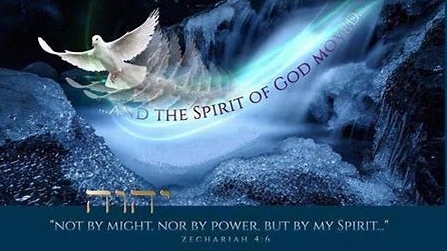
God Graces us with a New Heart when we are reborn into His family, but He also Graces us with a New Mind…
“Don’t be conformed to this world, but be transformed by the renewal of your mind, that by testing you may DISCERN what is the Will of God, what is Good & acceptable & perfect.”
Romans 12:2
It mourns the Spirit inside of me when I see it being taught that our minds are to be shut off & that we should “allow” His Spirit to work ONLY in our hearts.
” ..test everything that is said. Hold on to what is good…”♡
1Thessalonians 5:22
God allowed me to have His Spirit, I didn’t allow Him… If we are under Grace, we are under His Will.
“No one can come to Me, unless the Father who sent Me draws him…”
♡John 6:44
“He saved us, not based on deeds that we have done in righteousness, but according to His mercy, by the washing of regeneration & renewing by the Holy Spirit.”
Titus 3:5
God says He makes us Whole, by His Spirit. If we are whole, then we become connected, complete, united.
“For I am confident of this very thing, that He who began a good work in you will perfect it until the day of Christ Jesus.” ♡
Philippians 1:6
Our Hearts and our Minds don’t disconnect; we don’t become thoughtless, mindless being experiencing God solely through our senses.
“…Solid food is for those who have their senses (powers of discernment) trained by constant practice to distinguish good from evil.”♡
Hebrews 5:1
Instead, we begin to align in perfect harmony with His Spirit, His Heart, His Mind & His Will…
♡”All the promises of God find their Yes in Him. That is why it is through Him that we utter Amen to God for His glory. & it is God who establishes us with you in Christ, & has anointed us, & who has also put His SEAL on us & given us His Spirit IN OUR HEARTS as a guarantee…”
2Corinthians 1:20-22 ♡
Producing a calmness within us that cannot be properly explained in human terms.
♡Romans 5:1- “Therefore, since we have been justified by faith, we have peace with God through our Lord Jesus Christ.”♡
We can experience & understand true freedom from the CHAINS of this world…
♡”You who were slaves of sin have become obedient FROM THE HEART to the standard of teaching to which you WERE COMMITTED & having BEEN SET FREE from sin, have become slaves of righteousness.
When you were slaves of sin, you were free in regard to righteousness…the end of those things is death. NOW that you have been set free FROM sin, & have BECOME SLAVES OF GOD, the FRUIT YOU GET leads to SANCTIFICATION & its end, eternal life.”♡
This sinful flesh (our mortal, dying flesh) that inhabits His Spirit will still always be at war with the Spirit living within it (us) BUT WE KNOW He will deliver us from this wicked body & all its lusts….
♡Ephesians 2:1-5 ~ “You were BY NATURE CHILDREN OF WRATH, LIKE THE REST OF MANKIND. God… made us alive with Christ, by Grace you have been saved..” ♡
Giving us a Glorified Body.
How do we know we are His?
“The Spirit Himself testifies with our spirit that we are God’s children.” Romans 8:16
And the Lord’s servant must not be quarrelsome but kind to everyone, able to teach, patiently enduring evil, correcting his opponents with gentleness. God may perhaps grant them repentance leading to a knowledge of the truth; and they may come to their senses and escape from the snare of the devil, after being captured by him to do his will.