Shooting The Messenger: blaming or punishing the person delivering bad news.
It’s not uncommon for people to direct blame towards the bearer of unfavorable information.
There are several reasons why people do this, including:
A need for coherence and predictability
When confronted with unexpected or unfavorable information.
People often seek to make sense of the situation to regain a sense of control and understanding.
Photo by Oscar Keys on Unsplash
A sense of something is all they need to be satisfied, no matter if their “senses” are wrong.
The feeling of coherence is enough for them, and questioning their senses is outright rejected because it destroys their false identity.
Confrontation Avoidance
Receiving bad news can trigger feelings of anger and frustration.
Photo by Nsey Benajah on Unsplash
Instead of addressing the core issue or the actual source of the problem, people often redirect their emotions towards the messenger, thereby alleviating some of their distress.
Blame attribution
When unexpected things happen, people often look for someone to blame.
Photo by Adi Goldstein on Unsplash
This helps them preserve a positive self-image, even if it is a fraudulent fantasy, and maintain the image of group harmony in their consciousness.
Solution: More Freedom NOT Less
It’s important to lead people to credible sources and encourage them to think critically about the information they encounter.
It’s also crucial to understand why someone believes what they do and to approach conversations with empathy and patience, even when they don’t do the same for you.
Through your consciences mind, is inner voice guiding you, and it’s accuracy to the truth, and ability to lead you in the right direction is intrinsically linked to your capacity for empathy.Our five senses are the sensors we use to collect information from the external world. So what allows us to relate to other people, connect with animals, embrace ideas, and absorb nature? It is empathy, a bridge that gives meaning to experience. The five senses act as antennas for experience, but empathy is the technology that enables emotional experience to be understood deeply within the internal world.
Empathy enables you to enter into a refined familiarity of the memories, emotions, and experiences with others through your senses communicating through shared insight and mutual compassion. Words are not necessary for this communication to be apparent.
Empathic people have the inclination towards doing mental exercises where they step into another’s shoes, imagining how the world feels from their perspective.
This practice not only enhances personal development but will stimulate empathy in those who are not as developed. Stepping into someone’s experience using imagination will diversify you viewpoint, the research is clear.
THE EMPATH’S PORTAL IS YOUR REPRESSED MEMORIES
Empaths are very much a seer, just not with the eyes, but rather the Heart. The heart is portal through which the channel leading into all unseen aspects of the other’s inner being exists.
The Heart as a “Sensor”
Rather than relying on visual cues, empaths use the spiritual heart, Hridaya, to perceive love and pain beyond physical appearances.
Some describe this as having “heart’s eyes” that see stories and souls instead of just features.
It starts with you.
By opening a portal to yourself, you build foundational trust… but it must become a daily habit. Once you trust yourself to handle your own heart with care, honoring her truth and allowing her vulnerability, you remain firmly rooted in the deep, innate love that hearts naturally hold.
Only then will you be prepared to carry that resonance into another.
When you merge with another, unveiled from the boundaries of division, your empathic heart will be overcome by experiences outside your own memory.
Through the transmission of the emotional body, you absorb their buried history into your physical and emotional frame.
It is a mirror resonance… reflecting on you what their heart felt when it first suppressed the pain. This will not be t restricted to the literal heart but can be any area.
By you feeling it, like a magnet drawing up iron, you draw out the stored trauma, fear, and all other emotional decay, bringing it to the surface. This is where healing can begin.
They’ve put an official clinic title to this fully organic experience: Empathic Exchange.
This is a deep, usually unconscious, synchronization that modern Science and psychology actually has many frameworks to conceptualize and solidify the realness of what I’m saying.
FRAMEWORKS IN SCIENCE & PSYCHOLOGY
BIOLOGICAL MIRRORING
This is the process where observing others’ actions and emotions automatically triggers the same neural networks in your own brain. Governed by your brain’s mirror neuron system, this mechanism you have within your mind allows you to internally simulate what you see, forming the biological foundation of empathy and social connection
These buried emotions often manifest as debilitating fears, self-doubt, and destructive patterns of behavior.
By accessing these hidden depths, we can begin to understand the other, finding motivations, giving us compassion and inspiration for healing.
Empathic Darkness
The Enemy Found In The Reflection
However, the portal of empathy can also lead us to darker places within another person’s psyche.
We may encounter memories of causing pain and suffering, triggering feelings of shame, guilt, and self-loathing.
These experiences can be overwhelming, but they offer a valuable opportunity for understanding the complexities of human nature and the potential for both good and evil.
Empathy is a Bridge
The Full Spectrum Of Humanity’s Essence
Ultimately, empathy serves as a bridge between people, allowing us to connect on a deeper level and gain a more nuanced understanding of the human experience.
By embracing this portal, we open ourselves to the full spectrum of human emotions and experiences, fostering compassion, promoting healing, and enriching our own lives in the process.
It’s important to know that while empathy allows us to understand and share the feelings of others, it is crucial not to internalize or carry their trauma as our own.
Maintaining healthy boundaries and practicing self-care are essential for those who engage in empathetic practices, ensuring that compassion does not turn into emotional burden or burnout.
Have you ever found yourself feeling confused or divided in your thoughts?
It’s easy to blame your confusion on the information you receive or the people around you for causing this confusion.
The responsibility does not lie with the individual who brought forth the preexisting confusion within your thoughts.
Proverbs 3:5 -“Trust in the Lord with all your heart, and do not lean on your own understanding.”
1 Corinthians 14:33 – “For God is not a God of confusion but of peace.”
The Truth of the Confusion
Confusion stems from within you, not external sources.
When you feel confused, and begin to get down on yourself with negative thoughts filled with self-hate… you must remember that discernment also resideswithin you.
Instead of pointing fingers at others for bringing out confusion in your mind, take a step back and reflect on what is truly causing the internal confusion.
The inner spirit that resides within you inextricably shapes the way your mind perceives and processes information and experiences.
1 Corinthians 2:11-12 – “For who knows a person’s thoughts except their own spirit within them? In the same way no one knows the thoughts of God except the Spirit of God. What we have received is not the spirit of the world, but the Spirit who is from God, so that we may understand what God has freely given us.”
Psalm 51:10 – “Create in me a pure heart, O God, and renew a steadfast spirit within me.”
Romans 12:2 – “Do not conform to the pattern of this world, but be transformed by the renewing of your mind. Then you will be able to test and approve what God’s will is—his good, pleasing and perfect will.”
Acknowledge Self as Source of Confusion
By acknowledging the presence of confusion being within yourself and tapping into your innate discernment, you can navigate through challenging situations with clarity and understanding.
Next time you feel confused, remember that the power to discern lies within you.
Embrace this inner wisdom and let go of the habit of scapegoating external factors for your mental (spiritual) state.
True clarity comes from within, not from external sources.
“Most folks seek therapy for past or present-day issues that are typically relational in nature. This usually means you initially come to therapy from the perspective that either no one else is to blame (I’m not good enough, my parents were perfect, I’m a burden, etc.) or everyone else is to blame (he hurt me, she’s controlling, they are selfish, etc.). You might also hope that your therapist will agree with you. Of course! The quickest way out of discomfort is to find someone who will shore up your perspective. While that may relieve you of the immediate discomfort, in the long term, it does nothing for you because your nervous system remains perpetually in threat response, defending you from the world with shame or blame, entrenched in a cycle of victimhood.”
“For many, by realizing that you trusted others who ultimately betrayed you, it created a sense of self-doubt, reflection, and in some cases, guilt over decisions made. That in turn created a feeling of distrust in everyone, which is unhealthy. If you can’t trust in others and you can’t trust in yourself, that leaves quite a void. Rebuilding that trust in yourself and removing the self-doubt is the very thing that allows you to discern what and who to trust..”
When we embark on the journey of self-discovery and inner healing, we must confront our inner child that the shadow carries.
This process involves delving into our past, exploring our childhood experiences, and acknowledging the pain and trauma that shaped us.
Our inner child represents the vulnerable, innocent, and authentic parts of ourselves that often gets buried beneath the layers of adulthood and societal expectations.
By connecting with our inner child, we can begin to heal old wounds, release limiting beliefs, and reclaim our authentic selves.
Healing Through Reflection
The act of reflecting holds great power in fostering healing and uncovering the depths of one’s true self.
By reflecting on our past experiences, emotions, and patterns, we can gain insight into our inner child that the shadow carries.
Through reflection, we can uncover the root causes of our fears and insecurities, identify recurring patterns in our behavior, and begin the process of healing and transformation.
Embracing the Inner Child
Recognizing and embracing our inner child is an essential part of the process of self-exploration and emotional healing.
When we acknowledge and accept the existence of our inner child, we open the door to understanding and caring for the most vulnerable aspects of ourselves.
This acknowledgement allows us to start the journey of nurturing and tending to our inner child, supporting our emotional well-being and growth.
By practicing self-compassion, self-acceptance, and creating a safe space for our inner child to express itself, in doubt so can free our inner child from the dark recesses of our unconscious mind.
Self-compassion
Self-compassion is the foundation upon which we can begin to heal our inner child.
It requires us to treat ourselves with kindness, understanding, and empathy, just as we would a dear friend in need. When we extend compassion to ourselves, we are acknowledging the pain and suffering that our inner child has endured. This act of self-compassion allows us to create a sense of safety and security within ourselves, which is crucial for the healing process to begin.
Self-acceptance
Self-acceptance is another key component in nurturing our inner child.
It involves embracing all aspects of ourselves, including the parts that we may have previously rejected or denied.
By accepting ourselves fully, we are sending a powerful message to our inner child that we are worthy of love and belonging.
Inner Child Feels SEEN & HEARD
This acceptance allows our inner child to feel seen, heard, and understood, which is essential for its healing and growth.
Creating a safe space for our inner child to express itself is a vital step in the process of freeing it from the dark recesses of our unconscious mind.
Cultivate Safe Space
This safe space serves as a sanctuary where we can freely express our deepest thoughts, fears, and desires without judgment or inhibition. It is a place where our inner child can feel heard, understood, and validated.
Journaling
One of the most common forms of creating a safe space for our inner child is through journaling.
Writing down our thoughts and feelings allows us to process and make sense of them in a private and non-threatening way. Journaling provides a sense of release and catharsis, as we pour our hearts out onto the pages, knowing that no one else will read them.
It is a form of self-reflection and self-discovery, as we uncover hidden truths and insights about ourselves that we may not have been aware of before.
Talk It Out
Another way to create a safe space for our inner child is by talking it out with a trusted person.
This could be a friend, family member, therapist, or mentor who we feel comfortable opening up to. By sharing our innermost thoughts and feelings with someone we trust, we can gain a new perspective, receive support and guidance, and feel less alone in our struggles. Talking it out allows us to externalize our inner world, making it easier to process and make sense of our emotions.
Creative Expression
Creative expression is also a powerful way to create a safe space for our inner child.
Whether it’s through art, music, dance, or any other form of creative outlet, expressing ourselves creatively allows us to tap into our subconscious mind and connect with our inner child on a deeper level.
Creativity is a way of bypassing the rational mind and accessing the emotions and memories that are stored in our unconscious.
Creativity is therapeutic, healing, and transformative.
Expect Pain To Promote Comfort
The process of inner child integration presents a challenging journey as it necessitates facing and processing painful memories and emotions.
This demands courage, vulnerability, and self-compassion to navigate the depths of our past experiences in order to heal and grow.
Let’s heal old wounds and reclaim our authentic selves.
As I sit here, keyboard in hand, I am reflecting on a feeling that has been haunting me for a while now.
This ominous cloud finally has revealed to me old memories that locked away from memory long ago.
The weight of the truth is pressing down on me. A sensation beyond anxiety, an urgent pull within my solar plexus, a glimmer of hope also.
If I’m brutally honest about my inadequacy, most of my life I lacked true substance and depth.
Yes, I knew and understood substantial things but the essence living within my vessel was a void soul, wandering.
I deluded myself into believing my depth was real, when in truth, it only existed as an abstract idea within my psyche.
For a considerable amount of time, I avoided facing this reflection, consumed by a counterfeit image perfected by the arrogance of my pride filled heart.
I boasted outwardly, eluding my own fears through a facade of confidence.
Inner Child; Age 5
At the mercy of a 5-year-old’s whims and emotional disregulatiom, I found myself behaving as such. Insecure Me, left behind long ago.
The little girl sought safety in my shadow, thinking she was protected, she was unwittingly confined.
She had many gifts and talents that were locked away with her in the dungeon of self abandonment and betrayal.
Her gifts from God were robbed by me, I thought it would be safer, I was a child.
Now she wants out. She’s angry. I’m angry.
She’s spearing a dagger through my heart, dividing bone from marrow as the facade I have spent decades building around myself is falling like a house of cards.
Hidden behind the mask of pretentious self-righteousness insecurities was my shadow, controlling me in every way, dictating every move.
The more I avoided this realization, the more control my shadow ultimately had.
I had denied the true essence of who I was, becoming a coward.
The inner child, who once radiated promise and possibility, has been stifled by my ego. She has been muted by my arrogance, deprived of her innocence and delight.
Now she cries out for freedom, for a chance to break away from the shackles that restrain.
I am torn between the person I have become and the person I know I was designed to be (within my DNA).
Torn between the safety of my familiar facade and the uncertainty of embracing my true self, as it will go against all my comfort.
The comfort of ignorant pride that I find myself in will be replaced by raw vulnerability so profound it is sure to impale my soul, stirring the stagnant waters, unearthing lost treasure and sewage once I jump fully into facing my insecurities head-on.
I know that I cannot continue to hide from my reflection, to avoid the truth that lies within me. Now I know, there’s no going back.
It requires courage, humility, and a strength that can only come from my Maker… to have the strength needed to face these darkest parts of my psyche.
To my inner child:
I promise to listen to you, to honor you, to let the light shine through you.
I will finally uncover the substance I have been thirsting for, the courage I have been missing, and the freedom my soul has been remembering, thanks to your (my) relentless character.
Modern man has lost all the metaphysical certainties of his medieval brother, and set up in their place the ideals of material security, general welfare and humanitarianism.
““How totally different did the world appear to medieval man!
For him the earth was eternally fixed and at rest in the centre of the universe…
Men were all children of God under the loving care of the Most High, who prepared them for eternal blessedness; and all knew exactly what they should do and how they should conduct themselves in order to rise from a corruptible world to an incorruptible and joyous existence.
Such a life no longer seems real to us, even in our dreams.”
– Carl Jung The Spiritual Problem of Modern ManPDF
The Shift in Worldviews
In the annals of human civilization, few shifts have been as profound as the transition from the medieval worldview to our contemporary perception of reality.
Carl Jung, the renowned Swiss psychiatrist and psychoanalyst, shed light on this remarkable transformation, illuminating the profound implications it has had on our collective psyche.
During the Middle Ages, society was firmly rooted in a shared belief system that embraced a universal order and divine providence.
This collective mindset dictated that each individual had a predetermined purpose in life, guided by religious teachings and societal norms.
The promise of eternal happiness in the afterlife served as a powerful incentive for living a morally upright existence, as defined by the prevailing religious and cultural frameworks.
However, the modern era has witnessed a departure from these collective moral frameworks, ushering in an era of personal belief and moral ambiguity.
Contemporary individuals are increasingly seeking their own moral compass and sense of purpose, liberated from the constraints of a singular, authoritative belief system.
Jung’s insights into the collective unconscious and the power of shared beliefs and values underscore the significance of this shift.
In medieval times, the collective unconscious was deeply intertwined with religious and societal narratives, shaping a shared understanding of reality and one’s place within it. This provided a sense of stability and purpose, even if it came at the cost of individual autonomy.
In contrast, the absence of a universal moral system in modern times has led to feelings of uncertainty and disconnection from the spiritual guidance that once provided a reliable anchor. While this newfound freedom to choose one’s beliefs is empowering, it also necessitates a heightened sense of personal responsibility in defining one’s path towards meaning and purpose.
As we navigate this landscape of personal belief and moral autonomy, it becomes crucial to recognize the profound influence that shared values and belief systems have on our perception of the world and our role within it. Even as we embrace the freedom to forge our own paths, we must acknowledge the inherent human need for a sense of belonging and collective meaning.
The challenge lies in striking a balance between individual autonomy and the recognition that our beliefs, values, and worldviews are shaped, to a significant extent, by the collective narratives that permeate our societies. By understanding the historical context and psychological underpinnings of this shift, we can better navigate the complexities of forging our own moral compasses while remaining cognizant of the power of shared beliefs in shaping our understanding of reality.
She recalls the enchanting tales of love that flourished amidst the roar of a chainsaw.
She fondly reminisces about a love that conquered all challenges with ease, navigating through love and danger with unwavering strength.
“Watch the heavens,” she’ll murmur, “for even angels tumble down to us.“
Ancient symbols in her eyes hint at past passion in her embrace.
She nostalgically recalls a once-fiery passion now reduced to cold indifference.
However, she maintains that the root of her bitterness does not lie in fate, but in the toxic elixir she concocted for herself.
I have learned to appreciate the profound connection that emerges when opposing forces intersect, ones that may trouble your rest with intense images.
I am awaken to deep truths from profound skepticism.
As the tendrils of doubt wrap around my thoughts, I find myself delving into the depths of introspection.
My mind becomes a battleground between logic and emotion, tearing at the seams of reality until everything blurs into a hazy dream-like state.
In these moments of uncertainty, I search for meaning in the chaos, grasping at threads of truth that seem just out of reach. It is in these moments of vulnerability that I experience a profound clarity, as if the veil of illusion has been lifted and I can see the world as it truly is.
I am both terrified and exhilarated by the raw intensity of these moments, as they push me to question everything I thought I knew. But through this skepticism, I find a sense of liberation and empowerment, as I realize the power of my own mind to navigate the complexities of existence.
And so, I embrace this skepticism as a gift, a tool to help me uncover the hidden truths that lie beneath the surface of reality. I am a seeker of knowledge, a dreamer of possibilities, forever chasing the elusive spark of enlightenment that flickers in the darkness.
The concept of shadow originates from the Old English term sceadu, which signifies darkness or an area where light is blocked.
In a metaphorical sense, the shadow is often associated with the parts of ourselves that we choose to hide or suppress.
It can represent our fears, insecurities, and the unexplored or unacknowledged aspects of our personality.
In Jungian psychology, the shadow is an integral part of the unconscious mind consisting of repressed weaknesses, shortcomings, and instincts.
The Unknown of Shadow
The shadow harbors the unknown, the parts of our existence that remain out of the light of conscious awareness.
It is the repository of those characteristics that we often do not wish to admit to ourselves.
Engaging with our shadow can be a daunting process, as it requires us to confront aspects of our identity that we may find uncomfortable or difficult to accept.
However, it is through this confrontation and acceptance that personal growth can occur.
The Luminance of Light
In contrast, light, stemming from the Old English lēoht, is the natural agent that stimulates sight and makes things visible.
Light is synonymous with understanding, knowledge, and visibility. It is often associated with the divine, with truth, and with the higher aspects of the human spirit.
Light as Clarity and Truth
Light represents the pursuit of knowledge, the illumination of the mind, and the revelation of truths previously obscured.
It is the symbol of enlightenment, both in the intellectual sense and in the spiritual sense, as many traditions associate light with the divine and the transcendent.
The Interplay of Shadow and Light
The dynamic between shadow and light is a fundamental theme in many philosophical, psychological, and spiritual traditions.
It is a representation of the dual nature of existence, where light cannot exist without darkness, and vice versa.
Each gives meaning and context to the other.
Spiritual Evolution Through Shadow and Light
These two forces are essential for spiritual evolution.
By acknowledging and integrating our shadow, we can move towards a state of wholeness and self-realization.
This process is not just about seeking the light but also about understanding and embracing the darkness within.
It is through this balance that one can achieve inner peace and a deeper connection with the self.
Embracing the Duality for Inner Peace
To embrace both shadow and light is to accept the full spectrum of the human experience.
It is to recognize that our flaws and our strengths are intertwined and that acknowledging both can lead to a more authentic and fulfilling existence.
This journey towards equilibrium is not just about self-improvement but also about self-acceptance, and it is within this vast universe of being that we can discover our true selves.
An empath is someone who can understand and share the feelings of others, while also being aware of their own flaws and integrating them into their personality.
By acknowledging their own darkness or shortcomings, they become stronger rather than weaker.
This process allows them to connect with others on a deeper level and offer genuine support and understanding.
It’s about embracing both light and dark aspects within oneself to truly empathize with others.
Empathy is often seen as a sign of weakness, but in reality, it’s a powerful strength.
When you can understand and share the feelings of others, you become better equipped to handle pain and support those around you.
By being empathetic, you (inadvertantly) are a safe space for people to express their emotions without condescension.
People feel heard and understood with Empaths because they ARE.
This also fosters deeper connections and trust.
Empathy isn’t about weakness; it’s about resilience, compassion, and building meaningful relationships based on understanding.
Some empaths are able to quite literally Sense and Feel other’s emotions, pains, and sometimes thoughts/intentions.
Empaths are highly sensitive individuals who’ve the ability to pick up on the emotions, energies, and thoughts of those around them. While many people may believe that empaths are only able to sense emotional pain, recent research suggests that they can also feel physical pain.
In a world that glorifies happiness, we often find ourselves desperately searching for it, like chasing a butterfly that always seems just out of reach.
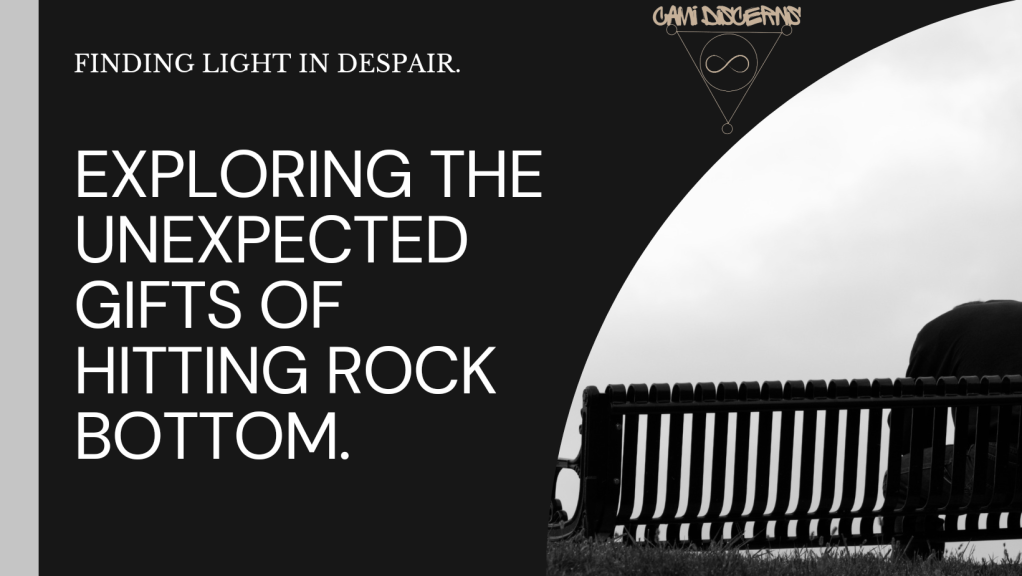
But what if I told you that there is beauty to be found in the depths of despair?
This is not a story of triumph over tragedy, but rather a confession of a woman who learned that despair offers unexpected gifts.
In this article, we will explore the lesser-known aspects of despair and how it can lead to profound self-discovery.
The Transformative Power of Despair
Embracing Vulnerability and Authenticity
Despair has a way of stripping away the façade we often wear in our daily lives.
In the depths of despair, we are forced to confront our true selves, stripped of pretense and societal expectations.
This raw vulnerability opens the door to authentic self-discovery. It allows us to explore the depths of our emotions, confront our fears, and embrace our true desires.
In this state of vulnerability, we can find a newfound sense of authenticity, as we learn to live in alignment with our core values and beliefs.
Cultivating Resilience and Inner Strength
Despair can be an incredibly challenging and painful experience, but it also has the potential to cultivate resilience and inner strength.
When we hit rock bottom, we are forced to confront our fears and confront the darkest parts of ourselves.
In doing so, we develop a resilience that can carry us through even the toughest of times.
Despair teaches us that we are capable of surviving and thriving in the face of adversity.
It builds our inner strength, allowing us to face future challenges with a newfound sense of confidence and perseverance.
Finding Meaning in Despair
The Power of Surrender and Letting Go
Despair often arises from a sense of loss or unmet expectations.
It can feel like everything we once held dear is slipping through our fingers.
However, in the midst of despair, there is an opportunity to surrender and let go.
Surrendering does not mean giving up; rather, it means releasing our attachment to outcomes and embracing the present moment.
By surrendering, we open ourselves up to new possibilities and allow space for unexpected blessings to enter our lives.
Letting go of what no longer serves us can lead to a deep sense of liberation and a newfound clarity of purpose.
The Gift of Perspective and Empathy
Despair has a unique way of shifting our perspective and opening our hearts to the suffering of others.
When we experience our own pain and despair, we become more empathetic and compassionate towards the struggles of those around us.
We gain a deeper understanding of the human experience and develop a greater capacity for empathy. Despair can be a catalyst for personal growth and an opportunity to connect with others on a deeper level, fostering a sense of community and shared humanity.
Despair is not a destination to be feared, but rather a transformative journey that can lead to profound self-discovery.
It offers the unexpected gifts of vulnerability, resilience, authenticity, surrender, and empathy.
By embracing despair and allowing ourselves to navigate its depths, we can emerge with a renewed sense of purpose and a deeper understanding of ourselves and the world around us.
So, the next time you find yourself chasing the elusive butterfly of happiness, consider embracing the gifts that despair has to offer.