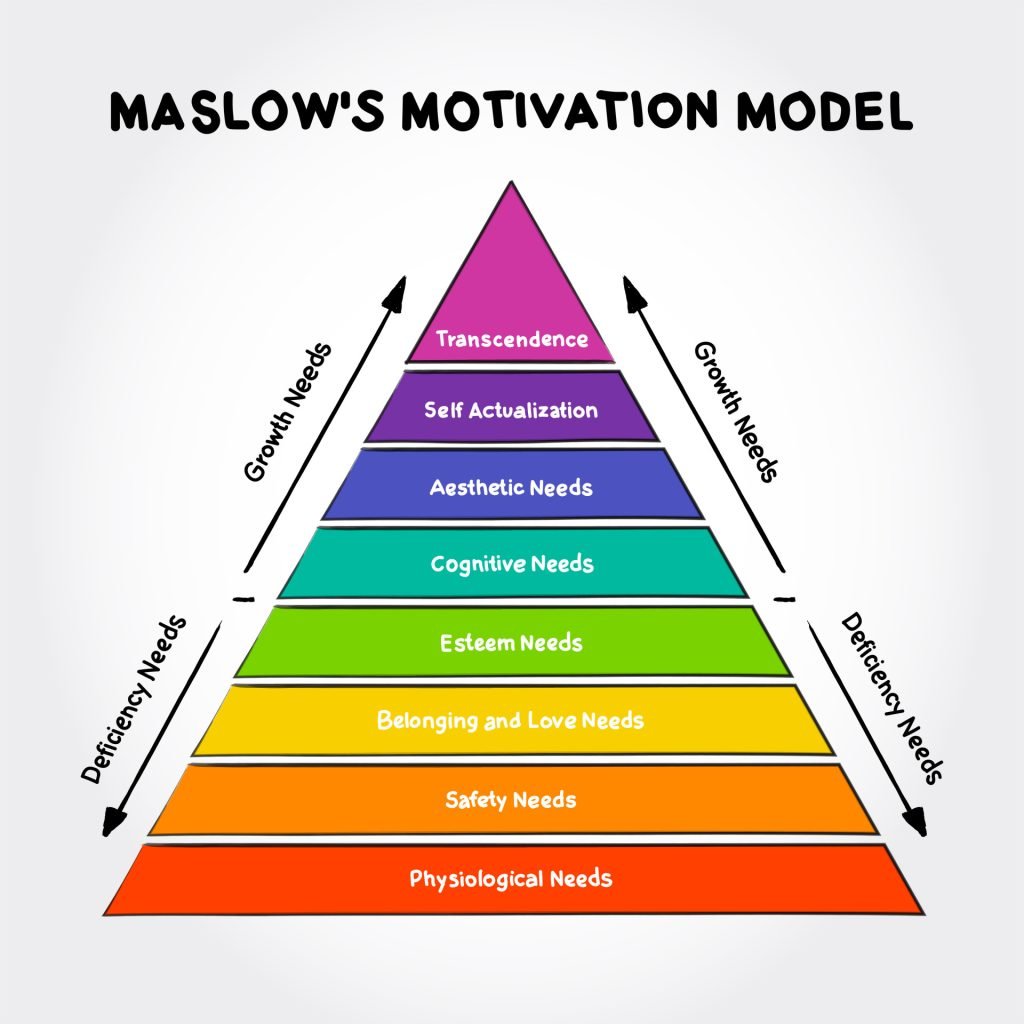
Abraham Maslow’s groundbreaking psychological theory, known as Maslow’s Hierarchy of Needs, offers a structured framework to comprehend human motivation and behavior.
This structure is used by those in power.
The theory lays out five levels of needs that people seek to meet in a step-by-step manner, beginning with the most essential physiological needs and advancing towards self-actualization, which is the pinnacle of psychological well-being.
1. Basic Needs
The first level, physiological needs, encompasses fundamental requirements for human survival such as air, water, food, shelter, sleep, and clothing.
Without meeting these basic needs, individuals may experience significant discomfort and distress, hindering their overall well-being.
Addressing physiological needs is crucial for laying the foundation for personal growth and self-actualization.
2. Safety and Security
The second level, safety needs, involves seeking physical safety, emotional security, financial stability, and protection from harm or danger.
Creating a stable and secure environment allows individuals to feel safe and secure in their daily lives, fostering a sense of stability and trust in their surroundings.
3. Human Connection
The third level, love and belonging needs, focuses on the desire for social connections, love, and a sense of belonging.
Forming meaningful relationships and experiencing affection contribute to emotional well-being and a sense of connection and support in life.
4. Self-love
The fourth level, esteem needs, encompasses the need for self-worth, recognition, and respect from oneself and others.
Developing a positive self-image, self-confidence, and receiving recognition and appreciation from others are essential for building self-esteem and fostering a sense of accomplishment.
5. Self- actualization
The fifth and highest level, self-actualization, represents the pursuit of personal growth, fulfillment of one’s unique potential, and the realization of one’s full capabilities.
Self-actualized individuals are driven by intrinsic motivation, self-awareness, and a deep understanding of their values and beliefs, actively seeking personal fulfillment and self-expression.
High vibration refers to a state of energy characterized by positive feelings, thoughts, and actions, in contrast to low vibration, which is linked to negativity and stress.
Vibrational Targets
People who resonate at a higher frequency often find themselves preyed upon by dark energies.
These negative forces can creep in, using manipulation and emotional depletion to exploit, brought about by those who carry unresolved pain.
This leaves a portal for a deep sense of weariness, causing emotional fatigue, as their bright light becomes a beacon for those who seek to drain their spirit.
PORTALS FOR LOW VIBRATIONAL FREQUENCIES TO ENTER:
1. Criticism & Gossip
High vibrational individuals, with their heightened awareness, can unintentionally stir unease in those around them.
As a result, they frequently endure harsh judgment and whispers behind their backs, feeling the weight of loneliness and misunderstanding.
This stems from deep-seated insecurity or a profound lack of understanding, as their genuine selves can seem like an unwelcome reminder to those who are not prepared to face their own inner struggles.
It’s a painful truth that the authenticity of some can evoke fear in others, revealing a heart-wrenching vulnerability that many are too afraid to acknowledge.
2. Isolation
Individuals with elevated vibrations frequently find themselves in a state of loneliness, as the profound depth of their awareness creates a chasm between them and others.
The struggle for connection leaves them feeling isolated and misunderstood, trapped in a world where their sensitivity and insight can be burdensome rather than a blessing.
3. Sadness
This profound disconnection weighs heavy on their hearts, leading to a sadness that lingers like a shadow, as they yearn for companionship that seems perpetually out of reach.
4. Naive Authenticity
Authentic energy forces others to face parts of themselves they may not want to see, leading to avoidance or rejection.
Their presence compels people to confront the darker corners of their souls, unearthing truths that are often too painful to acknowledge.
This can result in a heartbreaking tendency for others to turn away, retreating into denial or pushing them away in fear of vulnerability.
Protecting Energy
To maintain an elevated state of consciousness, you must prioritize self-care and boundary-setting.
This includes staying surrounded by those who share a similar energy and limiting interactions with those who drain or manipulate them.
While the journey of a high-vibrational person can lead to spiritual growth, it’s essential to acknowledge the difficulties they face, balancing their elevated state with the need for protection and self-preservation.
Perspective refers to a particular attitude or way of viewing something.
It can also mean the art of representing three-dimensional objects on a two-dimensional surface to give the right impression of their height, width, depth, and position relative to each other.
Trauma…
… is a deeply distressing or disturbing experience.
It can refer to emotional shock following a stressful event or physical injury.
Trauma’s impact on our perspective makes us vulnerable to manipulation.
In the past decade, increased exposure to traumatic experiences has intensified this issue, causing many to develop a strong attachment to their trauma.
It’s crucial to address this through personal growth, open dialogue, and professional support to create a healthier, more resilient society.
Trauma & Propaganda
Propaganda frequently capitalizes on pre-existing trauma or insecurity, skillfully manipulating the fears, anxieties, and emotional vulnerabilities of individuals who have endured distressing experiences.
WAR TIME PROPAGANDA USE
For example, in wartime, propaganda can intensify fears of adversaries to garner public backing for military initiatives.
FEAR MONGERING CAMPAIGNS
Similarly, political campaigns may employ fear-driven messaging to influence voters by emphasizing possible threats to their safety and well-being.
COERSION — EXPLOITATION — COMPLIANCE
By invoking intense negative emotions, propaganda seeks to coerce individuals into compliance and allegiance, exploiting their emotional reactions to fulfill its objectives.
Invokes deep rooted fears.
This strategy proves effective as it resonates with deeply rooted fears and insecurities, rendering individuals more amenable to persuasion.
Propaganda can itself CAN CAUSE TRAUMA
When propaganda is effective in spreading hatred, division, and misinformation on a wide scale, it can be psychologically traumatic for large groups of people.
Trauma can make people more susceptible to propaganda.
TRAUMA + PROPAGANDA
Individuals who have gone through traumatic experiences frequently find themselves feeling more distrustful of others.
They also have a strong desire for straightforward explanations and narratives that can make sense of their experiences.
They often have an intensified need for security and a sense of belonging to a group, which is something that propaganda can readily
Propaganda takes advantage of these vulnerabilities for its own purposes and objectives.
Both propaganda + traumatic events create :
short-circuit rational thinking
appeal to emotions
fan the flames of fear
trigger “us vs. them” tribal mentalities
With enough repetition, propaganda can start to feel indistinguishable from reality.
When a person becomes trauma-bonded:
When a civilization persistently follows a rigid path, without self-reflection, it can inadvertently lay the groundwork for its own subjugation, eroding its own liberties.
It is like constructing a theater where the civilization unknowingly acts out its own enslavement.
Each short-sighted decision and action incrementally shapes a future where external forces exert control and suppress freedom.
This serves as a sobering reminder of how profound an impact our choices can have on the fate of societies.
How Can This Happen?
The trauma bonding of a nation to its government is a gradual process, built through a combination of fear, hopelessness, manipulation and habit.
contributing factors
HOW A SOCIETY BECOMES TRAUMA BONDED:
OVERWHELMED BY CRISIS
Major crises that overwhelm citizens’ sense of security and control. These could be:
wars
economic disasters
natural catastrophes
pandemics.
The larger the crisis, the greater people’s need for protection and reassurance from authority.
EXPLOITING FEARS
Governments that actively exploit citizens’ fears and insecurities through
propaganda
threat exaggeration
misinformation,
governments condition people to see the state as the only source of security and order.
Citizens come to associate the government with survival.
The suppression of dissenting voices
As governments consolidate power in the wake of crises, they discourage opposition- making alternative perspectives seem non-existent, cementing the dominance of the official narrative. They accompany this through:
censorship
surveillance
imprisonment
coercion.
Gradual erosion of freedoms.
As citizens comply out of perceived necessity, governments expand their authority and weaken checks on their power.
Over time, these changes become normalized through repetition and habituation.
A diminishing of citizens’ sense of agency
Facing immense threats, people stop believing they can effect real political change.
They become passive subjects rather than active citizens.
This learned helplessness further traps them in the traumatic status quo.
We have been Placed Into Position
Every role we occupy seems to be carefully arranged, akin to performers in a grand theatrical production. Each individual has embraced their specific role, creating a harmonious ensemble that operates in perfect synchrony.
End Of America’s Great Experiement
The melancholy surrounding America’s decline is rooted in the recognition that the monumental experiment that has defined its principles and values is reaching a conclusion. This sadness emerges from the understanding that the American experiment, rich with aspirations and ideals, is moving into unfamiliar territory, evoking a complex mix of pride and trepidation.
Elite VS Citizens
This ongoing conflict can be seen as a significant struggle between the influential elite, who hold substantial power and resources, and the general public, who represent a much larger demographic.
At its core, this battle is fundamentally about control and influence within society. The elite are determined to preserve their privileged status and maintain their dominance, whereas the wider population is actively advocating for greater equality and justice.
This clash highlights the deep-seated tensions and disparities that exist between those at the top and those who seek to challenge the status quo in pursuit of a fairer and more equitable society.
Citizens Fighting With Opressors
This war encompasses physical clashes alongside ideological debates, as societal structures and hierarchies of power are fiercely contested.
The outcome of this war will determine the fate of the people and shape the future of society and the distribution of power.
Subtle yet imperative difference between discernment and nuance and it is of consequence showing the proof.
Discernment involves making sound judgments, while nuance focuses on perceiving subtle differences. If you claim to have discernment but do not truly understand, you may not grasp the meaning of your own words. Acknowledging our shortcomings is the first step toward improvement.
There’s Power in Simple Recognition
Recognizing the distinction allows the path way for critical thinking, allowing the analysis of information to be an objectively balanced perspective. If no distinction is made, and there is no discernment, just words, blah blah, blah You’ll find yourself having clearer communication, experiencing fewer misunderstandings. You’ll find yourself within a deeper intellectually advanced position. This causes an appreciation of complex complexities where confusion would prior be.
Essence of Nuance
Nuance refers to the subtle differences in meaning, sound, or appearance.
Nuance deals with fine details and gradations.
Nature of Discernment
Discerners have the ability to make wise judgments and see things clearly.
Discerning involves perception, insight, and understanding.
For example, “The critic showed great discernment in analyzing the film.”
Discernment encompasses the skill of evaluating & understanding the deeper implications of a thing or thought.
Linguistic Differences
While nuance is strictly a noun, discernment can function both as a noun and a verb.
One can describe something as having subtle nuances, but it’s often redundant since nuances are inherently subtle.
Discernment Requires Nuance
To offer righteous judgments one must be attuned to the subtle differences and complexities within the subject at hand. If not they simply cannot fit the definition of discerning.
Nuance
Void Discernment Paralysis
The overemphasis on fine details can hinder decisive action, especially in times of crisis.
Nuance is meticulously un contained without discernment to allow fordecisions to be made.
Navigating ambiguity and constructing considered sections is a Nuanced action.
NUANCE: Fine Detail
DISCERNMENT Ability to
Quality of Object vs Subject
Perceiving & Choosing pertains to the fine details and understanding the difference between subjective and objective qualities can be quite enlightening.
Objective Qualities ( nuance) are attributes inherent to an object, independent of personal feelings or opinions. For example, saying “The cake contains 250 calories per serving” is an objective statement; it’s a measurable fact.
Subjective Qualities, on the other hand, are based on personal perspectives, feelings, or opinions. For instance, stating “The cake is delicious” is subjective; it’s based on individual taste.
Objective qualities are about factual data that remain constant regardless of who observes them, while subjective qualities can vary from person to person based on individual experiences and feelings.
Narcissists are known for their adeptness at emotional manipulation.
This skill allows them to maintain control over others and ensure their desire are met.
One of the most prevalent tactics employed by narcissists is gaslighting.
Gaslighting
Gaslighting is a form of psychological manipulation in which the narcissist distorts the reality of their partner, causing them to doubt their own perceptions and sanity.
Invalidation
Through invalidating their partner’s emotions and experiences, narcissists establish a power imbalance and reinforce their dominance in the relationship.
Projection
Another manipulative tactic employed by narcissists is projection.
When confronted with their own flaws or shortcomings, narcissists deflectblame onto their partners by projecting their own negative traits onto them.
This not only shifts the focus away from their own behavior but also allows them to maintain their self-image as faultless and superior.
Stonewalling
Stonewalling is a behavior commonly exhibited by narcissists when faced with conflict or criticism.
It involves withdrawing emotionally and shutting down communication as a means of maintaining control and avoiding accountability.
When a partner attempts to express their feelings or concerns, the narcissist may dismiss and invalidate them, leaving the partner feeling unheard and invisible.
Stonewalling serves as a powerful weapon in the narcissist’s arsenal, as it not only denies the partner’s emotions but also denies their very existence.
By refusing to engage in meaningful dialogue, the narcissist effectively shuts down any potential for growth or resolution in the relationship.
The corporeal form functions as a siren, enticing the soul from the sanctity of the Spirit of Life embedded within the Soul.
The flesh engages in a systematic endeavor to ensnare and assert dominion over the fundamental essence of our existence—our souls.
Unmasking the Narcissistic Veil
The world’s narcissistic undercurrents are not hidden to the vigilant eye.
In a society where empathy and authenticity are endangered virtues, we find ourselves amidst a maelstrom of self-absorption, fueled by a media that champions egocentrism.
The Eclipse of Empathy
This self-centric ethos has infiltrated our collective consciousness to such an extent that encounters with true empathy are akin to finding oases in a desert.
Conversational Mirrors
Dialogues have transformed into monologues, with individuals lost in the reflection of their narratives, deaf to the stories of others.
The societal chorus chants a solipsistic hymn—self above all.
The Flesh’s Dominion
To live in servitude to the flesh’s desires is to be shackled by it.
The flesh transcends the corporeal, embodying the very act of erosion and decay.
The War Within
The battlefield is not the world around us, but the terrain of the self.
It is a crusade against the flesh’s cravings, the hubris of life, and the inherent sin of our genesis.
The Spirit stands in defiance of the flesh, for the flesh knows its end is nigh.
It yearns to possess what it has nurtured—your soul.
Your soul’s destiny is twofold: to be fused with the Spirit, liberated from sin and death, or to be bonded with the flesh, estranged from righteousness and life.
Enlightenment beckons a deeper communion with isolation, not out of irrationality, but from a yearning to unravel the mysteries of existence.
Virtue begets animosity, perhaps a consequence of confronting suppressed memories or resistance to spiritual exertion.
The Dismissal of Perception
From our earliest moments, the wisdom of elders has eclipsed our innate perceptions, relegating our experiences to the realm of fancy, subjugated by academic dogma.
The Unseen Empathic Bond
The empath’s ability to shoulder the emotional burdens of others often eludes the understanding of the others, like explaining the concept of sight to those in darkness.
The Tyranny of Conformity
The system indoctrinates us from youth, dismissing any deviation from the norm as a fallacy, severing our connection to our souls, and nudging us towards a life of passive consumption.
The Seeds of Discord
Demonic forces, birthed from the psyche’s abyss, manifest as unconscious archetypes, sowing seeds of trauma that aim to sever our lifeline to the Tree of Life.
These seeds germinate into neurosis and narcissism, fragmenting our psyche beyond recognition.
The Collective Awakening
In this era, a multitude is stirring from slumber, embarking on the initial steps of a quest for truth.
This awakening heralds a shift towards a higher consciousness and a reclamation of what is genuine and sacred.
DANGERS FOR EMPATHS WITH UNHEALED TRAUMA
Empaths with unhealed trauma are particularly vulnerable to being targeted by narcissists. This dynamic often occurs because empaths—who are naturally giving, attuned to others’ feelings, and may have a history of codependency from unresolved childhood trauma—attract narcissists who are looking for someone to manipulate and use for emotional “supply”.
Narcissists see the empath’s compassion and sensitivity as weaknesses they can exploit, especially if the empath has not healed from their own past wounds.
A common tactic narcissists use is called projection, where they accuse the empath of being the narcissist, effectively flipping the narrative. Since narcissists are skilled manipulators and frequently present themselves as the victim to outsiders, it often leads bystanders to believe their version of the story. This leaves the empath isolated and doubting themselves while the narcissist secures support and validation from others.
Narcissists also engage in gaslighting, causing empaths to question their own perceptions and reality, which deepens the empath’s confusion and vulnerability.
Some signs that an empath is being manipulated in this way include constant self-blame, loss of sense of identity, anxiety, making excuses for the narcissist’s behavior, and feeling misunderstood or unsupported by those around them.
Narcissists may use the empath’s past trauma to undermine their credibility, labeling them as unstable or “the real narcissist,” further perpetuating the cycle of emotional abuse.
For empaths to protect themselves, healing from trauma and developing strong boundaries are crucial. Understanding these manipulation tactics and seeking support from trusted allies or professionals can help empaths break free from such toxic dynamics.
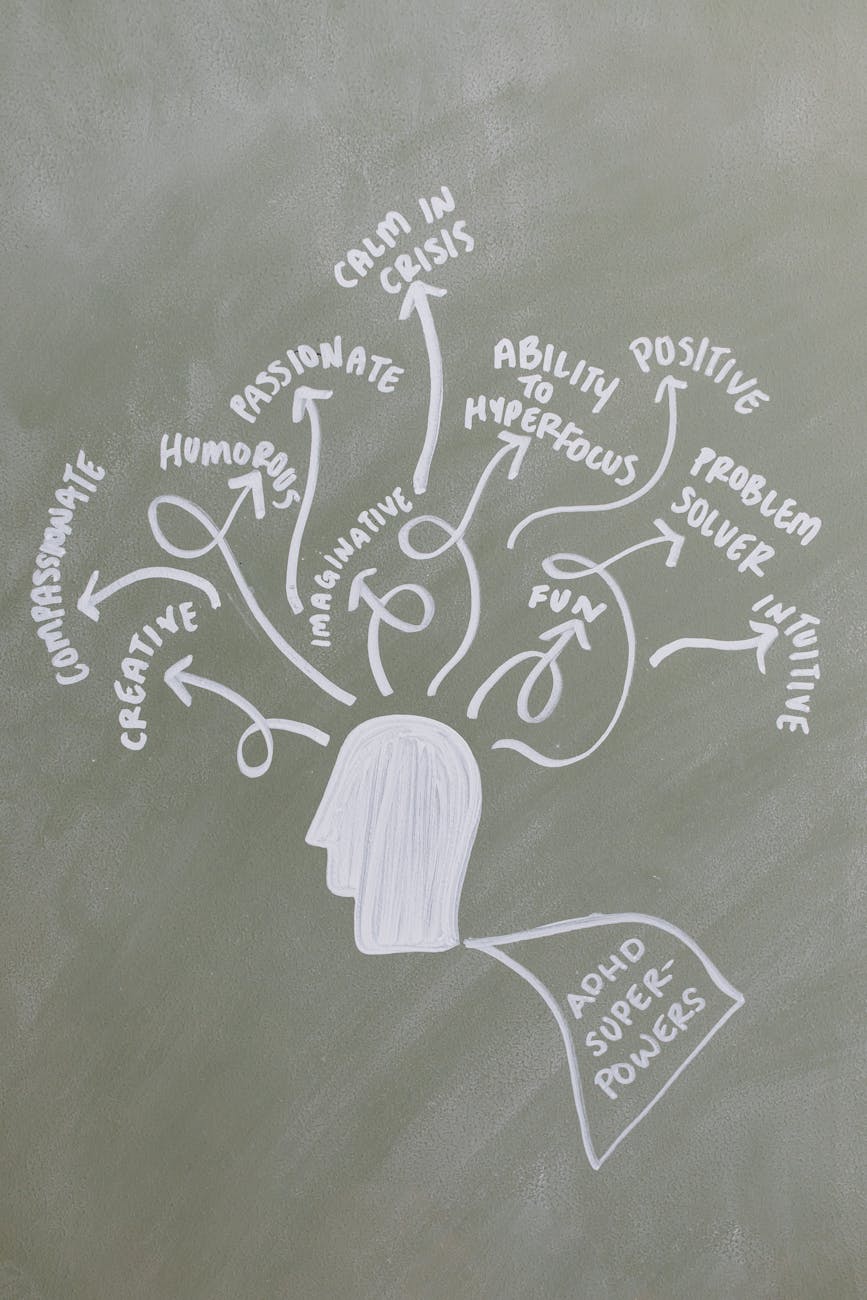
Introversion, often misunderstood and overlooked, holds a wealth of untapped potential.
In a world that values extroversion and sociability, it is more difficult to recognize and learn how to appreciate the unique strengths that introverts possess.
By embracing introversion as a natural part of some people’s personality, we open the doors to self-understanding and meaningful connections with others like never seen.
Self-Understanding Through Introversion
Introverts find solace and inspiration in solitude and reflection.
They recharge their energy through valuable alone time, allowing them to delve deep into their thoughts and emotions.
Introverts gain a true understanding of themselves when introspecting in solitude.
And when we understand ourselves truly, we understand others more deeply.
They have an important place in the world.
Meaningful Connections and Empathy
Introverts possess exceptional listening skills and a deep capacity for empathy.
They are attentive and genuinely interested in others, creating the perfect environment for meaningful connections.
Building strong relationships with introverted individuals enriches our lives in ways we never thought possible.
Their ability to empathize deeply allows for genuine understanding and support.
Historical Context and Misconceptions
It is critical to understand the historical context in which introversion has been misunderstood and stigmatized.
Western societies in the early to mid-20th century placed an unwavering emphasis on extroversion and sociability, associating these traits alone with success, popularity, and leadership.
Introverts were unjustly labeled as shy, lacking in social skills, and the worst– they’re sometimes labeled anti-social.
Thankfully, competent psychologists such as Carl Jung and Susan Cain challenged this view, highlighting the unique strengths of introverted individuals.
The Extroverted Ideal and Technology
In today’s world, the rise of technology and the prevalence of social media have further exacerbated the extroverted ideal.
The constant need for connectivity and self-promotion often overshadows the needs and strengths of introverts.
It is crucial that we acknowledge and appreciate the unique qualities of introverts and actively work towards creating a more inclusive and understanding environment for all individuals, regardless of their personality type.
Bridging the Gap and Celebrating Introversion
By recognizing and appreciating the strengths of introverts, we can create a more understanding world.
A Mind Game is nothing short of a GAME OF CONTROL.
A Mind Game is a psychological tactic used to manipulate, intimidate, & /or undermine someone else, often to shame & disqualify them to gain, preserve, or acquire control in some capacity.
How Mind Gamers Benefit
By exploiting psychological vulnerabilities, mind gamers seek to weaken their target’s sense of self-worth and create confusion. They intend to make you feel less confident or to question your perceptions so that they can avoid facing something within themselves that they are too cowardly to confront.
THE CORE OF THE MANIPULATOR
Fear. At the core of these manipulative tactics lies the mind gamer’s deep-seated fear and avoidance of self-confrontation and reflection.
They Need Smoke Screens
When they destabilize your sense of reality, they can shift the focus away from their vulnerabilities and insecurities and put it all on you.
Smoke screens enable them to remain hidden from the uncomfortable truths they are too fearful to face.
Learn how to spot them before they wreak havoc in your life, erode your self-perception, destabilize any sense of sanity while maintaining their facade of control.
Nine Most Common Mind Games People Play
Remember… it’s not about you.
It’s about them & their fear of facing themselves.
1. Gaslighting
The Art of Reality Distortion
Gaslighting, a deceptive and insidious tactic, employs the strategic twisting of reality to erode your trust in your perception and sanity.
Through denial, deceit, and contradictions, the gaslighter seeks to manipulate your understanding of the truth, leaving you questioning your experiences and instincts.
Telltale signs that someone might be gaslighting you:
Persistent Denial:If someone consistently denies events or facts you know to be true, they may be attempting to undermine your sense of reality.
Self-Contradiction:Frequent contradictions in their statements or actions can signal a deliberate effort to confuse and manipulate you.
Remain steadfast in your convictions, and don’t let anyone distort your understanding of the truth.
Trust Your Intuition!
Trust your intuition, seek support from trusted individuals, and refuse to be a pawn in the gaslighter’s manipulative game.
2. Projection:
Deflecting Blame and Avoiding Accountability
Projection is a deceptive technique that involves criticizing others for traits or behaviors they themselves possess, aiming to divert attention from their own shortcomings and vulnerabilities.
This manipulative method not only shifts blame but also leaves you feeling unjustly incriminated.
To identify projection, be wary of individuals who:
Levie Accusations:If someone accuses you of actions or characteristics that mirror their own, they might be projecting their flaws onto you.
Exhibit Defensive Behavior:By becoming overly defensive when confronted with their actions, they may reveal a tendency to project their guilt onto others.
Stay vigilant and don’t let anyone manipulate you into taking ownership of their transgressions.
3. Negative Humor:
When Laughter Becomes a Weapon
Negative humor is a covert manipulation tactic that exploits sarcasm and jokes to belittle and undermine your self-esteem.
These seemingly innocuous remarks may make you feel small or inadequate, thereby eroding your confidence and security.
Beware of individuals who consistently use humor in the following ways:
Persistent Sarcasm:If someone regularly employs sarcastic comments that make you question your worth, they might be weaponizing negative humor against you.
Hurtful Jokes:Jokes that consistently target your insecurities or vulnerabilities may be a calculated attempt to manipulate your emotions.
Protect your well-being by setting boundaries and calling out instances of negative humor.
4. Guilt-Tripping:
The Passive-Aggressive Trap
Guilt-tripping is a manipulative technique that preys on your sense of responsibility and compassion.
By subtly reminding you of your past mistakes or shortcomings, someone might attempt to coerce you into doing what they want, capitalizing on your desire to make amends.
Be wary of individuals who:
Play the Victim:If someone consistently portrays themselves as a victim, they might be employing guilt-tripping tactics to capitalize on your empathetic nature.
Evoke Past Errors:When someone regularly brings up your past mistakes or missteps, they could be strategically using guilt to manipulate your emotions.
Preserve your emotional well-being by recognizing these guilt-tripping tactics and establishing clear boundaries.
Remember, you cannot be held hostage by your past errors, and it is vital to prioritize your own needs and values.
5. Victimhood
Exploiting Compassion for Personal Gain
Victimhood is a cunning manipulation tactic that preys on your nurturing instincts, eliciting sympathy or absolving the individual of personal responsibility.
By portraying themselves as helpless or in need of constant support, someone might use this strategy to exploit your empathetic nature.
Be on the lookout for individuals who:
Consistently Portray Themselves as Victims:If someone regularly portrays themselves as a victim in various situations, they might be exploiting victimhood to gain sympathy or manipulate circumstances.
Deflect Responsibility:When an individual frequently adopts the victim role to avoid accountability for their actions, they may be using this tactic to dodge the consequences of their choices.
Protect yourself from the manipulative power of victimhood by establishing boundaries and being mindful of how your compassion might be exploited.
6. Silent Treatment
Uncovering Manipulative Withdrawal
The silent treatment is a manipulative tactic that exploits the power of non-communication to create uncertainty and self-doubt.
By deliberately ignoring messages, questions, or the person entirely, someone employing this strategy aims to punish or provoke a reaction through the calculated withdrawal of affection or attention.
Be wary of individuals who:
Frequently Resort to Silence:If someone regularly employs the silent treatment, recognize it as a potential form of manipulation designed to make you feel uncertain or anxious.
Use Silence as Punishment:When an individual uses non-communication as a means to inflict emotional pain or provoke a reaction, they may be weaponizing silence to control the situation.
Protect your mental and emotional well-being by acknowledging the silent treatment as a manipulative tactic and refusing to take it personally.
Prioritize your own self-worth and seek relationships that foster open communication, trust, and mutual respect.
7. Triangulation:
Fueling Insecurity and Competition
Triangulation is a manipulative tactic that pits individuals against one another, manufacturing competition and jealousy. By strategically mentioning others or insinuating the possibility of replacement, someone employing this method aims to keep you in a constant state of insecurity and uncertainty.
Be vigilant for signs of triangulation, such as:
Frequent Comparisons:If someone continually draws comparisons between you and others or emphasizes the achievements of others, they might be intentionally fostering a sense of competition and insecurity.
Hints of Replacement:When an individual subtly suggests the possibility of being replaced or having your role filled by someone else, they may be using triangulation to exploit your fear of abandonment.
Don’t succumb to the toxic dynamics of triangulation.
Strengthen your self-worth and cultivate relationships grounded in trust, security, and mutual support.
Recognize that your value isn’t determined by competition or comparison, and prioritize your well-being over manipulative power plays.
8. Baiting
Provoking Emotions to Gain Control
Baiting is a malicious manipulation tactic that involves intentionally triggering an emotional response through antagonistic or threatening behavior. Once a reaction is successfully provoked, the baiter then exploits that response to gain control or undermine your credibility.
Be aware of individuals who:
Instigate Conflict:If someone consistently engages in provocative behavior designed to elicit strong emotions, they may be using baiting to manipulate you.
Weaponize Your Reaction:When an individual uses your emotional response against you or employs it as a means to undermine your character or arguments, they are likely playing the bait-and-switch game.
Protect yourself by remaining calm and collected in the face of baiting tactics.
Recognize the intention behind these behaviors and refuse to engage in a predictable emotional reaction.
Focus on maintaining your composure, staying true to your values, and fostering relationships based on respect and understanding, not manipulation and control.
9. Love Bombing
From Excessive Adoration to Abrupt Abandonment
Love bombing is an insidious manipulation tactic that employs an overwhelming display of affection, adoration, and attention to gain control over you.
This strategy often involves excessive flattery, praise, gifts, and dedication, making you feel special and cherished.
However, once you’ve been hooked by the initial charm offensive, the love bomber abruptly withdraws their affection, causing emotional distress and confusion.
Be wary of individuals who:
Shower You with Excessive Affection:When someone overwhelms you with intense displays of admiration, love, and attention early on, they might be employing love bombing tactics to ensnare you.
Engage in a Drastic Emotional U-Turn:A sudden, unexpected withdrawal of affection after an initial period of intense love bombing can be an indicator that someone is using manipulation to control you.
Protect your heart and wellbeing by being aware of the potential dangers of love bombing.
Don’t let yourself be blinded by excessive flattery or attention, and maintain a healthy balance of independence and emotional distance.
Why It’s Important To Understand These Tactics?
Empowered through Awareness:
When armed with knowledge about common mind games, you can fortify yourself against manipulation and nurture healthier relationships.
3 THINGS TO REMEMBER
1. Knowledge is Power
Understanding manipulative tactics is the first step in defending against them.
2. Trust Your Instincts
Listen to your gut feelings when you suspect someone may be trying to manipulate you.
3. Establish Boundaries
Set clear limits and expectations in your relationships, and don’t hesitate to assert them.
Remember, your mental and emotional health should always be your top priority.
Factors That Play Into A Persons Capacity For MIND GAMES:
Narcissism: A heightened sense of self-importance can lead individuals to use mind games as a means of securing admiration and feeding their ego.
Insecurity: Underlying feelings of inadequacy or fear can drive some people to resort to manipulation, aiming to control their environment or relationships.
Past Trauma:Unresolved pain or emotional scars from past experiences may prompt individuals to develop unhealthy coping mechanisms, including the use of mind games.
Neuroticism: This personality trait, characterized by anxiety, moodiness, and emotional instability, can make someone more prone to resorting to manipulative tactics.
Antisocial Tendencies: Individuals with antisocial inclinations may have little regard for the well-being of others, making them more likely to employ manipulative strategies for personal gain.
THE CRYPTONITE?
EMOTIONAL INTELLIGENCE!
Understanding the reasons behind an individual’s use of mind games is essential for protecting oneself from manipulation.
By gaining insight into these tactics, one can develop self-awareness and resilience, maintaining autonomy and resisting their influence.
This knowledge empowers you to navigate relationships with a greater sense of control and clarity.
Strengthen your defense against manipulative mind games by cultivating emotional intelligence, honing your communication skills, and establishing healthy boundaries.
Maintain a firm grasp on your values and beliefs, and don’t allow others to undermine your self-worth or autonomy.
This is an unbelievably difficult feat I have yet to accomplish…
Mastering the nuance between perception and reality is not a passive philosophical exercise; it is the essential toolkit required to dismantle our own cognitive illusions and navigate our way out of profound hardship.
When you are in the trenches, survival depends on clarity.
By carefully distinguishing between seemingly identical ideas, you build an architecture of discernment… allowing you to separate the truth of a situation from the mental friction keeping you stuck.
Map vs. Territory
The first tool in this kit is recognizing that the crisis you are experiencing (the territory) is completely separate from the story you are telling yourself about it (the map).
The distinction between the map and the territory is a fundamental concept in rationality.
A map is a representation of reality, while the territory is the actual reality itself.
Why Does This Matter?
This distinction matters because it highlights the fact that our understanding of the world is always mediated through our mental models and representations.
We must be aware that our ‘maps‘ , no matter how detailed or accurate, are never identical to the ‘territory‘.
Recognizing that your map is flawed is the first step, but how does the map get drawn in the first place?
When we are struggling, our maps are rarely constructed from present reality. Instead, they are stitched together using outdated, unexamined assumptions.
To update your map, you must confront the difference between the mental debris you default to and the active awareness required to survive.
Cached Thoughts vs. Actual Thinking
CACHED THOUGHTS
Cached thoughts are the pre-existing beliefs and assumptions that we hold, gathering trash and holding into them like a computer holds onto cqche. This means these are thoughts that lack conscious awareness.
This Repository of ‘thoughts’ are mental shortcuts that we rely on to make sense of the world, with no thought as to if these thoughts are based in objective reality or not.
THINKING
In contrast, thinking involves actively questioning and challenging our cached thoughts, engaging in critical analysis, and seeking new information to refine our understanding.
When you rely on cached thoughts instead of active thinking, your internal world becomes an echo chamber. You begin to mistake your unexamined biases for universal laws. This is where hardship turns into self-sabotage—when you project your own internal friction onto the external territory and assume everyone else is navigating the same distortion.
Mind Projection Fallacy
The Mind Projection Fallacy is a cognitive bias that occurs when people assume that their personal beliefs, values, or perceptions are shared by others or represent objective reality. This fallacy suggests that people often confuse their own thoughts and feelings with universal truths and expect others to have the same thoughts and feelings.
The Mind Projection Fallacy can significantly distort one’s ability to discern.
When we project our own beliefs and emotions onto others, we fail to accurately discern their unique perspectives and experiences.
Here Are Some Examples Of How Mind Projection Impedes Ones Ability To Discern:
Overestimating Agreement: One may falsely believe that others share their opinions, leading to an overestimation of consensus and potentially causing miscommunication or conflict when differing perspectives are eventually revealed.
Inaccurate Assumptions: When projecting personal beliefs, individuals can make inaccurate assumptions about others’ thoughts and feelings, leading to misunderstandings and incorrect conclusions.
Inability to Empathize: By assuming that everyone thinks and feels similarly, individuals can struggle to put themselves in others’ shoes and empathize with their unique experiences and emotions.
Poor Decision-Making: Decision-making can become flawed when one assumes their perspective is universally shared, potentially leading to choices that are not inclusive or beneficial for all parties involved.
To overcome the Mind Projection Fallacy and improve discernment, it is crucial to foster empathy, seek out diverse perspectives, and practice open communication. By recognizing the influence of personal beliefs and emotions on perception, individuals can become more discerning and accurately understand the viewpoints of others.
The Halo Effect:

a cognitive bias where our overall impression of someone or something influences our judgments of their specific traits. This term, coined by psychologist Edward Thorndike in 1920, illustrates how positive perceptions in one area can positively affect our opinions in another.
Escaping this cycle of projection requires a radical shift in how you process information. You must start dissecting the narratives you encounter, both internal and external. To do this effectively and strip away the illusion, you have to separate the mere structure of a situation from its actual substance.
Syntax vs. Semantics
In the context of language and communication, syntax refers to the physical structure of a message.
Semantics refers to the meaning or intended relationship to the territory.
Understanding this distinction is crucial for effective communication.
Yet, grasping the intended meaning is only half the battle.
When you are fighting your way out of a difficult season, it is not enough to know what a situation means—you must understand its real-world impact.
You must discern the difference between the definition of a problem and the actual consequences it produces.
Semantics vs. Pragmatics
Semantics refers to the literal meaning of a message, while pragmatics refers to the intended result or effect of conveying that message.
This distinction is important because it highlights the fact that communication is not just about transmitting information, but also about influencing behavior and shaping outcomes.
Once you understand the practical effects of your situation, the next logical step is determining where to apply your energy to fix it.
This requires pinpointing your exact position on the battlefield.
Are you fighting the immediate symptom right in front of you, or the overarching system that created it?
Object-level vs. Meta-level
The object-level refers to the specific task or problem at hand, while the meta-level refers to the broader context or framework within which that task or problem is situated.
A good meta-level theory can help us get things right at the object level, but it is usually impossible to get things right at the meta level before making significant progress at the object level.
Ultimately, navigating through these layers of abstraction brings you to the core of all discernment.
When the mental debris is cleared, the projections are silenced, and the structure is separated from the impact, you are left with the final, most vital distinction required for true liberation.
Seeming vs. Being
We can only deal with how things seem to us, not how they are in absolute terms.
This is a humbling reminder of our limited perspective and the importance of maintaining a degree of epistemic humility.
If we optimize too hard for things that seem good rather than things that are actually good, we may end up with suboptimal outcomes.
Signal vs. Noise
Not all information is created equal.
We often desire certain types of information while seeking to ignore others.
The distinction between signal and noise helps us focus on the most relevant and valuable information while filtering out the irrelevant or distracting.
Selection Effects
Selection effects occur when the evidence we have access to is filtered or biased in a particular way.
This can lead to distorted conclusions and faulty decision-making.
Understanding selection effects requires modeling where our information comes from and accounting for the processes that shape what we see.
What You Mean vs. What You Think You Mean
People often claim to have meant something slightly different than what was originally stated when their original position is challenged or refuted.
This automatic response, generated by our brains without conscious control, can be dangerous for clear thinking.
It is important to be aware of this tendency and to strive for consistency and honesty in our communication.
What You Mean vs. What Others Think You Mean
The illusion of transparency and the double illusion of transparency highlight the gap between what we think we are communicating and what others actually understand.
We often overestimate how clearly we convey our thoughts and feelings, while underestimating the extent to which others misinterpret our messages.
Effective communication requires being mindful of these biases and seeking feedback to ensure mutual understanding.
What You Optimize vs. What You Think You Optimize
Our actions are often driven by hidden motives and incentives that we may not be fully aware of.
Evolution, for example, optimizes for reproduction, but in doing so creates animals with a variety of goals that are correlated with reproduction.
Intrinsic motivation is generally stronger and more effective than extrinsic motivation.
Understanding the difference between what we think we optimize for and what we actually optimize for can help us align our actions with our true values and goals.
Stated Preferences vs. Revealed Preferences
Stated preferences are the preferences we explicitly express, while revealed preferences are the preferences we can infer from our actions.
These two types of preferences are often misaligned, with our actions not matching our stated beliefs or desires.
Recognizing this distinction can help us identify and address inconsistencies in our decision-making.
What You Achieve vs. What You Think You Achieve
Most of the consequences of our actions are unknown to us.
We often overestimate our ability to predict and control the outcomes of our decisions.
Effective action requires humility, openness to feedback, and a willingness to learn from experience.
It is impossible to optimize without proper feedback, so we must be vigilant in seeking out information about the actual results of our efforts.
What You Optimize vs. What You Actually Achieve
Consequentialism focuses on the expected consequences of our actions, rather than the actual consequences.
While it is important to consider the potential outcomes of our decisions, we must also be prepared to adapt and adjust our course based on the real-world results.
Rigid adherence to a particular optimization strategy can lead to suboptimal outcomes if it fails to account for the actual effects of our actions.
What You Seem Like vs. What You Are
Our external appearance and behavior may not always reflect our true nature or inner experience.
We may present a certain image to the world while privately struggling with doubts, fears, or contradictory impulses. Recognizing this distinction can help us cultivate self-awareness, authenticity, and empathy in our relationships with others.
What Other People Seem Like vs. What They Are
Similarly, we often make assumptions about others based on their outward behavior or reputation, without fully understanding their inner lives or the complex factors that shape their actions.
Assuming that we understand others is a common mistake that can lead to misunderstandings, prejudice, and missed opportunities for connection and growth.
What People Look Like vs. What They Think They Look Like
People tend to underestimate the gap between their stated preferences and their revealed preferences. We may claim to value certain qualities or characteristics in ourselves or others, but our actions often tell a different story. Recognizing this discrepancy can help us align our self-perception with reality and make more authentic choices.
What Your Brain Does vs. What You Think It Does
Our brains are complex, powerful, and often mysterious. We are running on “corrupted hardware” in the sense that our thought processes are shaped by social and evolutionary factors that can distort the truth. The brain’s machinations are fundamentally social, automatically engaging in signaling, face-saving, and other behaviors that can lead to biased or irrational decisions. While we must be skeptical of the outputs of our thought processes, we must also strike a balance between skepticism and action, particularly in situations that require quick thinking or decisive action.
Clever Argument vs. Truth-seeking
People often believe what they want to believe, a phenomenon known as motivated cognition.
Giving a smart person more information and more methods of argument may actually make their beliefs less accurate, because it provides them with more tools to construct clever arguments for what they want to believe.
The actual reason for believing something determines how well that belief correlates with the truth.
If you believe something because you want to, any arguments you make for that belief, no matter how strong they may sound, are devoid of informational context about the truth of the belief and should be ignored by a genuine truth-seeker.
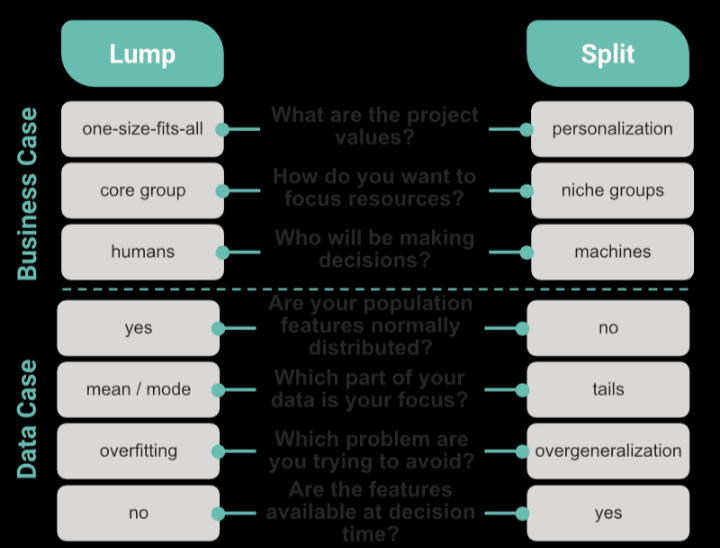
Lumpers vs. Splitters
Lumpers are thinkers who attempt to fit things into overarching patterns, while splitters are thinkers who make as many distinctions as possible, recognizing the importance of being specific and getting the details right. The lumper mindset can be useful for identifying broad trends and connections, while the splitter mindset is essential for accurate analysis and nuanced understanding.
Fox vs. Hedgehog
The fox knows many things, while the hedgehog knows one big thing. Closely related to the lumper-splitter distinction, the fox mindset involves a broad array of knowledge and the ability to draw insights from diverse sources. The hedgehog mindset, in contrast, focuses on a single big idea and applies it everywhere. According to Tetlock’s research, the fox mindset is generally better for making accurate judgments in complex, uncertain situations.
Traps vs. Gardens
Well-kept gardens die by pacifism, meaning that conversations, societies, systems, and even thermodynamic equilibrium tend to slide toward disorder, conflict, and decay unless actively maintained.
Recognizing this distinction can help us be proactive in defending and nurturing the things we value, whether it’s a productive dialogue, a thriving community, or a well-functioning organization.
Nuanced thinking involves carefully distinguishing between seemingly similar concepts and recognizing the subtle differences that shape our understanding of the world.
By engaging in this kind of discernment, we can make more informed decisions, communicate more effectively, and develop a richer, more accurate perspective on the complex realities we navigate every day.
Shadow:the unconscious part of the human psyche that consists of repressed thoughts, emotions, desires, and characteristics.
Avoidance:the act of keeping away from something or someone, often to prevent negative consequences or conflicts.
What causes shadow avoidance to occur?
Shadow avoidance occurs when we deny or refuse to see aspects of ourselves that make us feel uncomfortable, and instead attribute those unwanted qualities to others.
This defense mechanism allows us to avoid responsibility for how we’ve hurt others and ourselves by misdirecting blame onto external targets.
LETS GO DEEPER INTO SHADOW AVOIDANCE
FEAR OF KNOWING THE ‘SELF’
At a deeper level, shadow avoidance stems from the fear of truly knowing ourselves – afraid of our own…
flaws, unhealed wounds, rejected aspects, dark emotions, and all that fun stuff.
Facing the whole truth of who we are, and acknowledging our shared humanity is terrifying to unhealed people because it chips away at the façade; the false status & self-image.
It means confronting painful experiences from the past, uncomfortable tendencies in the present, and an uncertain future.
More threatening still …
Within the darkness of our shadow something in us knows what’s there.. our inner child – vulnerable, insecure, unloved.
This child holds the parts of our ‘self’ from early life.
If acknowledged, this inner child will demand our time and attention– we don’t have time for that.
The needed healing we carry upon our shoulders is something that we feel ill-equipped to give and the very thought of it, exhausting…
Their hurt (our hurt), having been buried deep for so long, sparks the complex reality behind of our inferioritycomplex .
This reminds us of our powerlessness, insufficiency, and sparks immense guilt.
A guilt that overwhelms us when it reveals the betrayal.
Betrayal of self is the worst kind, forcing us to face the angry disowned child we neglected long ago.
This Is Why We Project
To protect against such fears, it becomes easier to simply deny our shadows exist.
We project outward as a distraction. Projection protects us from facing what lies within.
Tap here for DEFINITION OF PROJECTION
In the field of psychology, projection is a defense mechanism that individuals often use to cope with their own feelings, thoughts, and impulses. This psychological phenomenon involves attributing one’s own undesirable traits, emotions, or thoughts onto another person. For example, if someone is feeling angry but finds it difficult to acknowledge that emotion within themselves, they might perceive others as being angry instead. This mechanism serves to protect the individual from facing uncomfortable truths about themselves, allowing them to avoid dealing with their own issues by externalizing them. Projection can manifest in various ways, affecting interpersonal relationships and one’s self-perception, and it is often explored in therapeutic settings to help individuals gain insight into their behaviors and emotional responses.
In doing so, unfortunately, we miss opportunities for wholeness, self acceptance and compassion – both for ourselves and others.
The lack of self-knowledge, to avoid suffering, keeps us trapped in a continual loop of suffering, and prevents genuine connection with anybody.
IN COMES SHADOW WORK
Shadow work provides a path of liberation. The truth is that -what seems too much to bear holds the most wisdom, but must be approached with care, empathy and non-condemnation.
Our inner child embodied truth- a truth that you know deeply but have not been able to find words to describe. Your inner child has those words.
With patience and compassion, we can listen for what who wants light, and love what who wants to be held.
FEAR TURNS INTO AN ALLY
Fear itself is a messenger. Each uncomfortable truth has a Gift – a peace needed for healing.
There is strength in the human Soul to face what feels too extensive to face.
YOU’RE NEVER ALONE
Remember: You’re not alone in the shadows.
You are there waiting for you to come and save yourself.
This is the thing you are longing for…
the hole in your heart that you have never been able to fill is waiting… in you & for you.
Proceed at your own pace and discover the inner guide that will steer you towards all that you believe you lack.