Prepare yourself for a mind-expanding journey as we delve into the captivating realm of quantum physics.
Quantum Physics: a captivating realm of scientific exploration, delves into the intricate interplay of matter and energy at the subatomic level, revealing the awe-inspiring concept of the observer effect and the profound influence of conscious presence on shaping the fabric of reality.
Within its intricate framework lies a concept known as the observer effect, which challenges our perception of reality and unveils the immense influence of our conscious presence.
In the mesmerizing realm of quantum physics, the observer effect asserts that the mere act of observation can shape the behavior of subatomic particles.
It suggests that our conscious presence has the remarkable capacity to mold the very fabric of reality itself.
This concept, rooted in quantum physics, aligns with the philosophical notion of a divine mind or higher consciousness, indicating that our thoughts, intentions, and focus intricately contribute to shaping the world around us.
The Divine Observer and the Creation of All Things
Within a spiritual context, the belief in a higher consciousness or a divine entity implies that this consciousness possesses an all-encompassing awareness, with the power to influence the physical world.
Drawing a parallel, the observer effect in quantum physics suggests that whether human or divine, consciousness plays a significant role in the manifestation of the physical world.
It prompts us to explore the intriguing relationship between quantum physics and determinism, offering insight into the intricate mechanisms shaping the fundamental nature of existence.
The observer effect in quantum physics brings a fascinating connection to spiritual beliefs. It implies that our thoughts and intentions have a profound impact on reality. By consciously focusing and aligning our desires, we can create powerful transformations in the physical world.
Quantum entanglement is a phenomenon in which particles become inseparably linked, resulting in instantaneous correlations regardless of distanc e.
The Web of Interconnectedness:
Another captivating phenomenon within quantum physics is quantum entanglement, where particles instantaneously affect each other regardless of distance. This concept mirrors the spiritual notion of interconnectedness, promoting empathy and unity.
Quantum entanglement suggests that at a fundamental level, all particles are intricately linked, symbolizing the interconnected nature of our existence. Understanding this profound interconnectedness fosters a sense of empathy and unity, encouraging us to recognize the importance of our actions and their impact on the collective human experience.
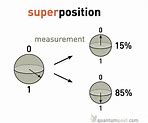
Quantum superposition is a fundamental principle in quantum mechanics where a particle exists in multiple states simultaneously until measured.
Embracing Limitless Possibilities
In the realm of quantum physics, we encounter the intriguing concept of quantum superposition, where particles exist in multiple states until observed.
This parallels the spiritual idea of limitless possibilities, inspiring personal growth and intention-driven change.
The enthralling interplay between quantum physics and spirituality unveils a new frontier of understanding, one that challenges conventional notions of reality and our place within it.
By bridging the realms of science and spirituality, we embark on a journey of exploration, expanding our perspectives and enriching our understanding of the intricate tapestry that weaves together the fabric of reality.
Throughout this intricate journey of self-discovery, it is essential to cultivate self-compassion and patience. Healing the wounds caused by self-abandonment requires a gentle and understanding approach.
Developing self-compassion
Self-compassion involves treating ourselves with the same kindness, care, and understanding that we would offer to a close friend or loved one. By acknowledging our own suffering and extending compassion towards ourselves, we create a nurturing environment for personal growth and healing.
Here are some practices to foster self-compassion:
Mindful Self-Awareness: Cultivate awareness of your thoughts, feelings, and body sensations without judgment. Allow yourself to fully experience your emotions and acknowledge them without criticism.
Self-Forgiveness: Release self-blame and guilt by forgiving yourself for past mistakes or perceived shortcomings. Understand that making mistakes is a natural part of being human, and growth comes from learning and moving forward.
Self-Care: Prioritize self-care activities that nourish your body, mind, and soul. Engage in activities that bring you joy, peace, and relaxation, whether it’s practicing mindfulness, spending time in nature, pursuing hobbies, or indulging in self-care rituals.
Positive Self-Talk: Replace self-critical inner dialogue with kind, supportive, and uplifting words. Challenge negative self-beliefs and replace them with positive affirmations that reinforce your worth and potential.
Reconnecting with your authentic self
Reconnecting with your authentic self requires a willingness to explore your desires, values, and passions while dismantling societal or self-imposed expectations. Here are some steps to help you connect with your true essence:
Self-Reflection: Take time for self-reflection and journaling. Explore your aspirations, interests, and values. Ask yourself what truly brings you joy and what makes you feel alive.
Rediscovering Passions: Revisit activities or hobbies you enjoyed in the past but may have abandoned. Engaging in creative pursuits, sports, or anything that brings you joy can help rekindle your true passions.
Setting Boundaries: Establish healthy boundaries to protect your time, energy, and emotional well-being. Say no to commitments that do not align with your values or drain you. Prioritize activities that are in alignment with your authentic self.
Surrounding Yourself with Support: Seek out positive and supportive relationships. Connect with individuals who accept and embrace your authentic self. Engage in communities or groups that share your interests and values.
Remember, this journey of self-reconnection is unique to each individual. Be patient and compassionate with yourself as you navigate the process. Embrace the challenges and celebrate the small victories along the way. You are worthy of living an authentic and fulfilling life. Trust in your ability to rediscover and nurture the essence of who you truly are.
Think about how you’d treat a close friend who’s going through a tough time. Now, apply that same love and understanding to yourself. This is what self-compassion is all about. It’s the soil where personal growth and emotional healing can take root and bloom.
How to Be Kinder to Yourself:
Stay Present: Pay attention to what you’re feeling and thinking, without judging yourself. It’s okay to have emotions; they make us human.
Forgive and Move On: We all mess up sometimes. Instead of beating yourself up over past mistakes, forgive yourself. Remember, stumbling is part of the journey.
Take Care of You: Do things that make you feel good, whether it’s a walk in the park, painting, or simply enjoying a cup of tea. These are not indulgences; they’re necessities.
Be Your Own Cheerleader: Swap out that critical inner voice for one that’s supportive and uplifting. Remind yourself of your worth and all the good you bring to the world.
The Adventure of Finding Your True Self
Finding out who you really are is like going on an epic adventure. It takes courage to dig deep into your beliefs, dreams, and what really makes you tick. Along the way, you’ll need to shed the expectations and limitations that you—or society—have placed on you. Here’s how to navigate this exciting journey:
Reflect Deeply
Take some quiet time to really think about what you want in life, what makes you happy, and what your core values are. You could jot down your thoughts in a journal or meditate on them.
Reconnect with Your Passions
Life gets busy, and sometimes we forget the things that once brought us joy. Take some time to rediscover those forgotten hobbies or activities. You’ll be amazed at how much energy it can bring back into your life.
Learn to Say No
Your well-being is important, and that means setting boundaries. Don’t be afraid to turn down commitments that don’t align with your values or that drain you emotionally. Your time is precious; spend it on things that matter to you.
Build a Tribe
Finally, surround yourself with people who get you. Look for friendships and communities that not only accept but also celebrate the real you. These connections can be a powerful source of support as you continue on your path to self-discovery.
Resources:
Jordan Peterson
Jordan Peterson: The Importance of the Individual – This article delves into Peterson’s philosophy that emphasizes the significance of individual responsibility and self-improvement over collective ideologies. Read more
12 Rules for Life: An Antidote to Chaos – In his book, Peterson argues that individuals should focus on sorting themselves out before attempting to fix societal issues. Read more
Carl Jung
Man and His Symbols – In this book, Jung explores the symbolic language of the unconscious and its role in personal growth and healing. He delves into dream interpretation, archetypes, and the process of individuation. Read more
The Red Book – This is a personal journal and exploration of Jung’s own inner journey, filled with visionary experiences, reflections, and artwork. It offers insight into his concepts of the collective unconscious and the integration of unconscious material. Read more
Memories, Dreams, Reflections – Jung recounts his life story, discussing his childhood, career, and his development of analytical psychology. This autobiography provides an intimate look into his personal experiences and the evolution of his ideas. Read more
Psychological Types – In this work, Jung introduces the concept of psychological types and the distinction between introversion and extraversion. He explores the different ways individuals perceive the world and make decisions, providing insights into personality and self-discovery. Read more
Freidreich Nietzsche
Thus Spoke Zarathustra (Also Sprach Zarathustra) – Nietzsche’s most famous work, this philosophical novel explores the concept of the “overman” or “superman” who embraces individuality and overcomes societal constraints. It emphasizes the importance of personal growth and self-realization. Read more
Beyond Good and Evil (Jenseits von Gut und Böse) – In this book, Nietzsche challenges traditional moral values and encourages individuals to question societal norms. He emphasizes the need for critical thinking and the pursuit of personal truths, rather than blindly following established beliefs. Read more
The Gay Science (Die fröhliche Wissenschaft) – This work explores various themes related to human existence, including the importance of individual creativity and the rejection of herd mentality. Nietzsche encourages individuals to embrace their unique perspectives and live authentically. Read more
Pathological liars and enablers can engage in behavior that is not only socially harmful but can also have physical and emotional consequences.
One of the tactics they often employ is triangulation, a manipulative strategy that involves deceiving others for their own advantage in social dynamics.
In this blog post, we will delve into the reasons behind their resorting to such tactics and explore the detrimental effects they can have on individuals and relationships.
The Motivation Behind Pathological Liars’ Behavior
Pathological liars are driven by a need for control, power, and a sense of self importance.
By manipulating the emotions and psychological well-being of others, they temporarily alleviate their own anxiety and bolster their inflated self-esteem. Deception becomes an addictive pattern, allowing them to assert dominance over their surroundings.
Triangulation, as a manipulative technique, serves as a means for pathological liars to maintain control.
Through lies and deceit, they aim to influence the emotions and psychological state of those around them, ultimately seeking dominance and power in their relationships.
The Destructive Nature of Enablers
Enablers play a crucial role in perpetuating the harmful dynamics created by pathological liars.
They often turn a blind eye to the lies and manipulations, unwittingly empowering the liar’s behavior.
This can be emotionally and socially abusive, as it allows the pathological liar to continue their destructive patterns without consequence.
The Psychological Driving Forces
Pathological liars resort to deception as a coping mechanism to avoid confronting their own issues and engaging in self-reflection.
Their behavior stems from a combination of narcissism, emotional detachment, and a lack of emotional intelligence.
This leads to a limited capacity for personal growth and an inability to empathize with others.
Breaking Free from the Grip
If you find yourself targeted by a pathological liar or caught in the web of their manipulations, it is vital to remember that there is hope.
The universe has a way of replacing what was lost, often with something even more fulfilling and significant.
By escaping the toxic influence of a pathological liar and their enabling accomplices, you can find healing and regain control over your own life.
The manipulative behavior of pathological liars and enablers is driven by a need for control, power, and a distorted sense of self-importance.
However, by understanding the destructive nature of their tactics, recognizing the role of enablers, and breaking free from their influence, individuals can reclaim their lives and find solace in knowing that the universe has a way of restoring what has been taken away.
If you have been affected by pathological lying or manipulation, consider seeking support from a trusted friend, family member, or professional therapist who can assist you on your journey to healing and self-discovery.
The Power of Metaphors in Illuminating Spiritual Truths
Metaphors have been widely used in religious/spiritual texts to convey ideas like the nature of God, salvation, enlightenment, etc. Examples could include God as a father/shepherd, Jesus as the light/bread of life, nirvana as extinguished flame.
Neuroscience has found metaphor processing involves overlapping neural pathways between concrete/abstract concepts. This suggests metaphors fulfill a deeper cognitive function in how we conceptualize and communicate ideas.
Using metaphors engages both the rational mind and intuitive faculties, allowing for ‘ah-ha’ moments of insight beyond intellectual understanding alone. They provoke associations that shift perspectives.
Culturally/historically, metaphorical language predominated in times when direct discussion of spiritual truths was discouraged or difficult. Metaphors offered a way for these ideas to be seeded.
Metaphors have a unique ability to convey complex ideas by drawing upon familiar experiences and relating them to deeper, non-material aspects of our existence. They evoke emotions, create vivid imagery, and challenge our perspectives, allowing us to grasp deeper meanings that go beyond the surface level.
Spiritual Truths
In the realm of spirituality, metaphors play a significant role in shedding light on profound truths that are often difficult to articulate directly.
One of the fundamental aspects of metaphors is their use of non-objectively real truths to explain actual truths.
They transcend the confines of the material world, which represents a transient and illusory reality. However, due to our limited ability to directly perceive the spiritual realm, humans often perceive the material world as the ultimate truth. Metaphors serve as a bridge between these two realms, conveying the reality and substance of the spiritual dimension while contrasting it with the transience and impermanence of the physical world.
Old Testament/ Covenant
In the context of the Old Testament, metaphors are prevalent and serve as powerful tools for conveying profound spiritual truths.
The Old Testament, often seen as a mere shadow or representation of these truths, offers a tangible manifestation of deeper spiritual realities.
However, one cannot fully capture the true essence of the spiritual realm without the spiritual eyes to see.
Just as physical eyes allow us to perceive the material realm, spiritual eyes enable us to perceive the hidden truths and realities of the spiritual realm. These spiritual eyes are not bound by the constraints of time and space, nor are they limited by the boundaries of the material world. They possess the ability to see beyond the surface, to discern the subtle energies and vibrations that exist in the spiritual realm.
The mention of the “Old” Covenant itself highlights its temporal and material nature. The Old Covenant, established through the Mosaic Law, was a necessary step in the spiritual journey of humanity.
The stories, narratives, and poetic verses in the Old Testament employ metaphorical language to convey these profound spiritual truths that were later revealed even further through the New Testament and the person of Christ.
Wolf Will Lie With Lamb
One such metaphor can be found in the book of Isaiah, where it is written, “The wolf shall dwell with the lamb, and the leopard shall lie down with the young goat; and the calf and the lion and the fattened calf together; and a little child shall lead them” (Isaiah 11:6).
This passage symbolizes a future time of harmony and unity, where even the fiercest of creatures will coexist peacefully. It hints at the breaking of the veil, where the spiritual and material realms will no longer be separate, but intertwined.
God’s Spirit Poured On All Flesh in Joel
“And it shall come to pass afterward, that I will pour out my Spirit on all flesh; your sons and your daughters shall prophesy, your old men shall dream dreams, and your young men shall see visions” (Joel 2:28).
This prophecy speaks of a time when divine revelation will be accessible to all, regardless of age or social standing. It suggests that the barrier between the spiritual and material worlds will be lifted, allowing a direct connection between humanity and the divine.
Valley Of Dry Bones in Ezekiel
The book of Ezekiel contains a powerful vision that foreshadows the breaking of the veil.
In this vision, Ezekiel sees a valley filled with dry bones, which represent the lifeless state of humanity. However, as he prophesies, the bones come together, sinews and flesh cover them, and breath enters them, bringing them back to life (Ezekiel 37:1-14).
This metaphorical resurrection signifies the renewal and transformation that will occur when the veil is shattered, bringing forth a new revelation and spiritual awakening by the Holy Spirit.
Jonah and the Whale.
One example of metaphorical storytelling in the Old Testament is the story of Jonah and the whale.
While it may seem like a simple tale of a prophet being swallowed by a great sea creature, it symbolizes the human struggle with divine calling and the consequences of sin. Jonah’s journey inside the whale represents a period of introspection and repentance before ultimately being delivered from his plight.
Moses Leading Israelites Out of Egypt
Another powerful metaphor can be found in the story of Moses leading the Israelites out of Egypt.
On the surface, it recounts a historical account of a nation’s liberation from slavery. However, delving deeper reveals a profound spiritual truth. The Exodus narrative becomes a metaphor for the human journey of liberation from the bondage of sin and the pursuit of spiritual freedom.
The Sacrificial System
The sacrificial system outlined in the Old Testament is yet another example of metaphorical representation of spiritual truths.
The various animal sacrifices and rituals, though physical and tangible in nature, symbolize the need for repentance, atonement, and reconciliation with the divine. These external rituals serve as visual representations of the internal spiritual yearnings for forgiveness and restoration.
The prophecies found in the Old Testament offer glimpses into the spiritual realm and provide insights into the divine plan for humanity.
Veiled in poetic language, these prophetic words point to greater spiritual realities and offer guidance, encouragement, and warnings to the people of that time and beyond.
In Isaiah 40:3-5, we find a prophecy that speaks of the coming of a messenger who will prepare the way for the Lord:
“A voice of one calling: ‘In the wilderness prepare the way for the Lord; make straight in the desert a highway for our God. Every valley shall be raised up, every mountain and hill made low; the rough ground shall become level, the rugged places a plain. And the glory of the Lord will be revealed, and all people will see it together. For the mouth of the Lord has spoken.’”
To truly grasp the depths of these metaphors, one must go beyond the material understanding and open their minds to the profound spiritual realities they represent. Metaphors use tangible and relatable elements to transcend the physical realm, allowing us to perceive and comprehend the profound truths of the spiritual dimension.
In conclusion, metaphors serve as powerful tools for illuminating spiritual truths that go beyond our limited perception of the material world. Through metaphorical language, the Old Testament conveys profound spiritual realities, offering glimpses into the spiritual realm and providing guidance for the human journey towards spiritual growth and understanding. With open eyes and ears, we can truly see and hear the profound truths that metaphors reveal.
Communicating Abstract Concepts: Metaphors are effective in communicating abstract ideas like salvation, enlightenment, and the nature of God by relating them to familiar concepts such as light, bread, or shepherd.
Cognitive Processing: Neuroscience reveals that the brain processes metaphors through overlapping neural pathways between concrete and abstract concepts, suggesting metaphors are deeply rooted in cognitive function.
Engaging Intuition: Metaphors engage both the rational and intuitive faculties, provoking insights that go beyond intellectual understanding.
Historical Usage: Historically, metaphors were vital in times when direct discussion of spiritual truths was not possible or was discouraged. They offered a subtle means to communicate these truths.
Transcending Material Reality: Metaphors bridge the gap between the physical world, which is transient and illusory, and the spiritual realm, which is often difficult to perceive directly.
Old Testament Examples: The Old Testament uses metaphors as a tool for conveying spiritual truths. These metaphors hint at deeper realities behind the physical world.
Prophetic Language: The Old Testament contains prophecies veiled in metaphorical language, pointing to spiritual realities and the divine plan for humanity.
Spiritual Perception: Comprehending metaphors in spiritual texts requires a kind of “spiritual sight” – an intuitive understanding that transcends material reality.
“Wolf Will Lie With Lamb”: Represents a future time of harmony and unity (Isaiah 11:6).
“God’s Spirit Poured On All Flesh”: Speaks of a time when divine revelation will be accessible to all (Joel 2:28).
“Valley Of Dry Bones”: Signifies spiritual renewal and transformation (Ezekiel 37:1-14).
“Jonah and the Whale”: Symbolizes the human struggle with divine calling and repentance.
“Moses Leading Israelites Out of Egypt”: Represents liberation from spiritual bondage.
“The Sacrificial System”: Symbolizes the need for repentance, atonement, and reconciliation with the divine.
Specific Biblical Metaphors:
“Wolf Will Lie With Lamb”: Represents a future time of harmony and unity (Isaiah 11:6).
“God’s Spirit Poured On All Flesh”: Speaks of a time when divine revelation will be accessible to all (Joel 2:28).
“Valley Of Dry Bones”: Signifies spiritual renewal and transformation (Ezekiel 37:1-14).
“Jonah and the Whale”: Symbolizes the human struggle with divine calling and repentance.
“Moses Leading Israelites Out of Egypt”: Represents liberation from spiritual bondage.
“The Sacrificial System”: Symbolizes the need for repentance, atonement, and reconciliation with the divine.
Modern Interpretation and Personal Growth: In modern times, individuals can use the metaphors within spiritual texts to facilitate personal growth and deeper understanding of spirituality.
Cross-Cultural Perspectives: Metaphors in spiritual texts are not exclusive to one culture or religion. They are found across various spiritual traditions, each using distinct metaphors to convey similar truths.
Emotional Resonance: Metaphors evoke emotions and create vivid imagery, making spiritual concepts resonate more deeply with individuals.
Perspective Shifts: Through metaphors, individuals are challenged to shift their perspectives and grasp deeper meanings beyond the surface level.
Conveying Complexity Simply: Metaphors are capable of conveying complex spiritual truths in a relatively simple manner by drawing upon familiar experiences.
“He who corrects a scoffer gets shame for himself, And he who rebukes a wicked man only harms himself. Do not correct a scoffer, lest he hate you; Rebuke a wise man, and he will love you. Give instruction to a wise man, and he will be still wiser; Teach a just man, and he will increase in learning.
Proverbs 9: 7-9
The above passage begins by cautioning against correcting or rebuking a scoffer or a wicked person. Attempting to correct those who mock or hold malicious intentions will not yield fruitful results.
A Scoffer Will Turn The Correction Around On You
If dealing with a scoffer or mocker you, while offering correction will, in turn, face shame or harm as a result. They will seek to destroy you to avoid themselves. Not everyone is receptive to criticism or willing to change their ways, let alone acknowledge their shortcomings.
On the other hand, the verse advises that offering rebuke or instruction to a wise or just individual can have a positive impact. A wise person, when corrected, is more likely to appreciate the feedback and grow from it. Similarly, a just person, when taught, will further enhance their knowledge and understanding.
Underlying Message
The underlying message here is the importance of discerning who is open to receiving guidance and correction. It is wise to invest our time and energy in those who are receptive and willing to learn, as they are the ones who will value and benefit from our instruction.
In a broader sense, this passage also speaks to the power of wisdom and the continuous pursuit of knowledge. It recognizes that wise individuals are open to learning and are not threatened by correction or instruction. By embracing these opportunities, they further enhance their understanding and grow in wisdom.
Determining whether someone is receptive to guidance and correction can be quite the challenge. However, there are certain indicators that can help us assess their willingness to learn and grow. Allow me to delve into a few factors that should be taken into consideration:
QUESTION:
How can we determine if someone is receptive and open to receiving guidance and correction?
They won’t succumb to defensiveness or dismissal when faced with alternative viewpoints. Instead, they will exhibit a genuine willingness to hear and consider different opinions.
OVERVIEW:
1. Willingness to listen and engage in dialogue
2. Humility and self-awareness
3. Demonstrating a growth mindset
4. Seeking feedback and constructive criticism
5. Being open to learning from others.
1. Willingness to listen and engage in dialogue: A truly receptive individual will demonstrate an openness to listening to diverse perspectives and engaging in meaningful conversations. They won’t succumb to defensiveness or dismissal when faced with alternative viewpoints. Instead, they will exhibit a genuine willingness to hear and consider different opinions.
2. Humility and self-awareness: Those who are open to guidance and correction often possess a humble demeanor and a strong sense of self-awareness. They readily acknowledge that they don’t have all the answers and are willing to recognize their own limitations. These individuals embrace self-reflection and actively address areas where they have room for improvement.
3. Demonstrating a growth mindset: People with a growth mindset firmly believe that their abilities and intelligence can be developed through effort, learning, and feedback. They perceive challenges and feedback as opportunities for personal growth, rather than personal setbacks. This mindset indicates a receptiveness to guidance and correction, as it aligns with the belief that personal development is an ongoing journey.
4. Seeking feedback and constructive criticism: Individuals who actively seek feedback and constructive criticism exemplify an openness to learning and improvement. They understand the value of feedback and how it can provide valuable insights. Moreover, they possess the humility to accept and integrate feedback into their personal and professional development.
5. Being open to learning from others: A receptive individual deeply values the knowledge and experiences of others. They are open to learning from various sources, such as mentors, teachers, colleagues, and even those in subordinate positions. This openness signifies their willingness to receive guidance and correction from a multitude of perspectives.
By considering these factors, we can better gauge whether someone is receptive to guidance and correction. It is through this receptiveness that true growth and development can be fostered.
2. Include a brief introduction or summary at the beginning to provide context for the passage.
3. Add a conclusion that wraps up the main points and reinforces the key message of the passage.
4. Include specific examples or anecdotes to support the points made about determining someone’s receptiveness to guidance and correction.
5. Use formatting options like bullet points or numbered lists to make the factors for determining receptiveness more visually clear and organized.
“He who corrects a scoffer gets shame for himself, And he who rebukes a wicked man only harms himself. Do not correct a scoffer, lest he hate you; Rebuke a wise man, and he will love you. Give instruction to a wise man, and he will be still wiser; Teach a just man, and he will increase in learning.
Proverbs 9: 7-9
The above passage begins by cautioning against correcting or rebuking a scoffer or a wicked person. Attempting to correct those who mock or hold malicious intentions will not yield fruitful results.
A Scoffer Will Turn The Correction Around On You
If dealing with a scoffer or mocker you, while offering correction will, in turn, face shame or harm as a result. They will seek to destroy you to avoid themselves. Not everyone is receptive to criticism or willing to change their ways, let alone acknowledge their shortcomings.
On the other hand, the verse advises that offering rebuke or instruction to a wise or just individual can have a positive impact. A wise person, when corrected, is more likely to appreciate the feedback and grow from it. Similarly, a just person, when taught, will further enhance their knowledge and understanding.
Underlying Message
The underlying message here is the importance of discerning who is open to receiving guidance and correction. It is wise to invest our time and energy in those who are receptive and willing to learn, as they are the ones who will value and benefit from our instruction.
In a broader sense, this passage also speaks to the power of wisdom and the continuous pursuit of knowledge. It recognizes that wise individuals are open to learning and are not threatened by correction or instruction. By embracing these opportunities, they further enhance their understanding and grow in wisdom.
Determining whether someone is receptive to guidance and correction can be quite the challenge. However, there are certain indicators that can help us assess their willingness to learn and grow. Allow me to delve into a few factors that should be taken into consideration:
QUESTION:
How can we determine if someone is receptive and open to receiving guidance and correction?
They won’t succumb to defensiveness or dismissal when faced with alternative viewpoints. Instead, they will exhibit a genuine willingness to hear and consider different opinions.
OVERVIEW:
1. Willingness to listen and engage in dialogue
2. Humility and self-awareness
3. Demonstrating a growth mindset
4. Seeking feedback and constructive criticism
5. Being open to learning from others.
1. Willingness to listen and engage in dialogue:
A truly receptive individual will demonstrate an openness to listening to diverse perspectives and engaging in meaningful conversations. They won’t succumb to defensiveness or dismissal when faced with alternative viewpoints. Instead, they will exhibit a genuine willingness to hear and consider different opinions.
2. Humility and self-awareness:
Those who are open to guidance and correction often possess a humble demeanor and a strong sense of self-awareness. They readily acknowledge that they don’t have all the answers and are willing to recognize their own limitations. These individuals embrace self-reflection and actively address areas where they have room for improvement.
3. Demonstrating a growth mindset:
People with a growth mindset firmly believe that their abilities and intelligence can be developed through effort, learning, and feedback. They perceive challenges and feedback as opportunities for personal growth, rather than personal setbacks. This mindset indicates a receptiveness to guidance and correction, as it aligns with the belief that personal development is an ongoing journey.
4. Seeking feedback and constructive criticism:
Individuals who actively seek feedback and constructive criticism exemplify an openness to learning and improvement. They understand the value of feedback and how it can provide valuable insights. Moreover, they possess the humility to accept and integrate feedback into their personal and professional development.
5. Being open to learning from others:
A receptive individual deeply values the knowledge and experiences of others. They are open to learning from various sources, such as mentors, teachers, colleagues, and even those in subordinate positions. This openness signifies their willingness to receive guidance and correction from a multitude of perspectives.
In conclusion, the passage from Proverbs 9:7-9 emphasizes the importance of discerning who is receptive to guidance and correction. It reminds us to invest our time and energy in those who are open to learning and growing. By engaging with individuals who exhibit humility, a growth mindset, and a willingness to listen, we can foster a culture of continuous improvement and wisdom.
Constructive criticism is an art form that requires unwavering confidence, genuineness, and the ability to offer both subjective and objective evaluations. To excel in this role, one must not only embrace constructive criticism towards oneself but also be able to project it outwardly in a way that fosters personal growth. In this article, we explore effective strategies for delivering feedback and constructive criticism, while also addressing the fine line between constructive feedback and manipulation.
By understanding the importance of transparency, empathy, and respect, we can build trust and create an environment conducive to growth and genuine connections.
Pexels.com
To excel in this role, you need unwavering confidence, genuineness, and the ability to offer subjective and objective evaluations.
Embrace constructive criticism towards yourself, and you will be able to project it outwardly, right for personal growth.
Here are a few strategies to effectively deliver feedback and constructive criticism
Photo by Pixabayexels.com
Effective feedback guidelines:
Be specific and objective.
Provide actionable suggestions.
Maintain a supportive tone.
Encourage open dialogue.
Remember, the goal is to help others grow and succeed, not build your status as “guru” or “special” …
Do Not manipulate!
It is crucial to be mindful of the fine line between using strategic wording and crossing into manipulative territory.
Signs Of Manipulation:
Using an overly kind or nice approach to sugarcoat criticism and mask the true intention behind the feedback is a manipulative tactic. It involves insincere flattery or excessive praise to manipulate the person’s emotions and perception of the criticism. This aims to control the individual’s reaction or behavior rather than genuinely supporting their growth.
However, providing criticism with a kind and respectful tone is not inherently manipulative if the intent is genuine and the feedback is delivered transparently. Genuine feedback seeks to help the individual improve and grow, while also considering their feelings and maintaining a respectful approach. It aims to build trust, foster open communication, and create an environment conducive to growth.
The key differentiating factor lies in the intent and transparency behind the words used.
What Is Intent?
Intent refers to the purpose or goal behind a particular action or decision.. In the field of artificial intelligence and natural language processing, intent is often used to describe the intended meaning behind a user’s statement or query, which is then used to determine the appropriate response or action.
In essence, intent is about understanding the “why” behind a given behavior or communication.
It is the underlying reason that motivates someone to do something or make a particular choice
Manipulation Involves:
Hidden agendas, Flattery and Attempts to control the person’s response.
In contrast, Genuine feedback focuses on:
Transparency, Empathy, and A sincere desire to support the other person’s development.
To ensure that your feedback remains genuine and not manipulative, it is crucial to:
Be COMPLETELY Transparent !!!
Be clear and transparent in your feedback. Care about their best interest. Actively listen and seek to understand their perspective. Encourage open dialogue. Respect autonomy and boundaries. Express gratitude. Provide feedback with a genuine love for what is right and true.
Signs of manipulative feedback include insincere flattery, coercive language, personal attacks, withholding information, lack of empathy, ignoring boundaries, and intent to control or gain power.
Why should we know this?
Being aware of these signs can help you identify if feedback is being delivered in a manipulative way.
There are no good fruits to be born when using good intent as a tool for manipulation or control over other sinners, as if you are superior.
Manipulation tactics, no matter how well-intentioned, can hinder someone’s ability to make independent choices and solve their own problems. The use of these tactics exerts control over the individual, leaving them feeling helpless and disempowered.
Instead of resorting to manipulation, genuine help entails empowering others to make their own decisions and supporting them in finding their own solutions. By providing guidance, encouragement, and the necessary resources, we can foster an environment where individuals can grow, learn, and thrive on their own terms. This approach not only promotes autonomy but also builds trust, respect, and healthy relationships.
What is Manipulation?
Manipulation, by its nature, involves using tactics to influence or control someone’s thoughts, emotions, or actions for personal gain.
Manipulation is a deceptive practice, even if it is done with good intentions. By exerting spiritual dominance over someone, you intrude upon their autonomy, undermining the authenticity and honesty of your relationship. Such manipulation breeds deception, erodes trust, and can lead to feelings of deep-seated betrayal when the other person discovers or perceives your ulterior motives.
To build genuine connections and foster growth in others, it is crucial to prioritize open and honest communication. Instead of resorting to manipulation, strive for transparency, empathy, and respect. Engage in sincere dialogue, actively listen, and seek to understand the perspective of the other person. By doing so, you can cultivate relationships based on trust, which will nurture personal and professional development.
Remember, the fruits of deceit that accompany manipulation are ultimately detrimental to all parties involved.
5 Fruits of Deceit
Broken Trust and Fractured Relationships: Deceit erodes the foundation of trust in any relationship, leading to strained connections or even irreparable damage.
Emotional Betrayal and Deep Hurt: Deceit inflicts emotional pain, leaving individuals feeling betrayed, hurt, and questioning the authenticity of the relationship.
Communication Breakdown and Misunderstandings: Deception hampers clear and open communication, making it challenging to build genuine connections and resolve conflicts effectively.
Diminished Credibility and Respect: When deceit is exposed, it tarnishes one’s credibility, and others may find it hard to trust or respect them in the future.
Perpetuating the Cycle of Dishonesty: Deception breeds more deceit, creating a vicious cycle that becomes increasingly difficult to break. This cycle can have long-term consequences on both personal and professional aspects of life.
If manipulation has already occurred, there are solutions to rebuild lost trust:
Offer a sincere apology, and be transparent and honest.
Be open and forthcoming with information. Practice honesty in all interactions, ensuring that your words align with your actions.
Actively listen, validate the other person’s emotions, and consistently demonstrate reliability and integrity.
Understand that the person may still have doubts or reservations. Avoid rushing or pressuring them and respect their boundaries.
Respect the boundaries and consent of the other person. Allow them to set their own pace for rebuilding trust and honor their need for space or certain limitations. Ensure that any actions taken are agreed upon and mutually beneficial.
Patience, understanding, and personal growth are crucial, and seeking professional help may be beneficial.
Engage in self-reflection to identify the underlying causes of the breach of trust and take steps to address them. Show tangible evidence of personal growth through consistent actions aligned with integrity.
Create new positive experiences together to rebuild trust. Engage in activities that foster connection, shared goals, and mutual support.
Building a new foundation of positive memories can help counterbalance the negative impact of the past.
In conclusion, trust is an essential component of any relationship or endeavor. It takes time and effort to build, but once established, it forms the foundation upon which strong connections are built. Through honesty, transparency, and consistent actions, we can foster trust and create a positive environment where individuals can thrive and grow together.
So, let us remember that trust is a precious gift that should be cherished and nurtured in all aspects of our lives.
The workings of the Divine transcend our limited understanding as we exist within the boundaries of finite perception, constrained by the illusion of time and space. However, it is crucial not to misconstrue this truth as a call to passively surrender to our material limitations and indulge in earthly desires. You may ask: How am I indulging in my earthly, fleshly desires? By merely embracing our human limitations in matters of the Spirit and coalescing with the limitations, we demonstrate our worldly, materialistic bondage, as it is rooted in the realm of the flesh and obeys the laws of materiality.
Our true calling lies in the pursuit of the spiritual realm.
As beings born of Spirit, it is essential for us to direct our efforts towards seeking the profound aspects of existence. Through aligning our will with the Divine and opening ourselves to the pure desire to come into union with divine revelation, we can attain a genuine understanding as Willed by our Creator, if we embrace the profound beauty and purpose that permeates all aspects of Life.
True wisdom is comparable to precious pearls, both valuable and costly. It encapsulates the essence of the Holy Creator and should not be frivolously thrown around and laid upon those who don’t care, as they will trample this treasure with disregard, and you will share in that disregard for ignoring the discernment.
By Wisdom I mean…
The Secret Wisdom, Given in Secret by the Father Who is in the Secret place.
The wisdom bestowed upon us by the Divine is indeed profound and transcendent, surpassing the limits of human imagination. It is akin to the language of angels, a divine download of profound understanding that elevates us to heights uncharted by our limited perception. In those transformative moments, we are transported beyond the boundaries of our ordinary existence, allowing us to glimpse the vast realms of divine wisdom and experience a profound shift in our consciousness.
The acquisition of wisdom cannot be accomplished through the mere use of human intelligence, cleverness, or the performance of righteous deeds. Wisdom is a divine gift bestowed upon us by the grace of the Divine God Who sits on the throne with Dominion over all things.
It is through our connection with the spiritual realm and our being made willing to seek truth that we are able to access the profound wisdom that surpasses the capabilities of human faculties.
It is the Divine who bestows wisdom upon His creation, irrespective of our knowledge or self-righteousness. In fact, it is bestowed upon us in spite of such attributes.
So, who then receives wisdom?
It is the Holy Creator, the embodiment of Spirit, who implants His wisdom in those individuals who possess sincere hearts, driven by a genuine and uncomplicated love for truth, unadulterated.
Christians, there is no need to remain in confusion or darkness unless one willingly embraces ignorance as a state of bliss, in which; i suppose your reward is in this Life, not ideal.
Godly Wisdom is grown through a genuine, insatiable thirst for the living water, a hunger for the heavenly manna, and a recognition of the power of God, wating to Know Him deeper and deeper; so, we incessantly seek wisdom from the Divine Father out of Love.
This thirst, this hunger, drives us to persistently seek wisdom through prayer, for we are aware of the indwelling Spirit that allows us to comprehend wisdom and receive discernment from realms beyond our own. Wisdom is a treasure promised by the Creator of Spirit to all who earnestly and wholeheartedly seek it. Let us emphasize the keyword: earnestly.
The wisdom does not come in an easily digestible form. True wisdom, originating from the heavenly realms, often confronts us as mortal beings with profound intensity. It has the power to disrupt our fleshly desires and shock our system, instilling a reverential fear within our physical bodies, while simultaneously fostering resilience within our souls. Spiritual truths, by their very nature, prove challenging for humans to comprehend and impossible to fully embrace without the guidance and presence of the Spirit of God, as the flesh HATES the Spirit.
The Wisdom of God can be likened to a tough piece of meat that necessitates thorough chewing and contemplation. It is only through this deliberate process that we can fully internalize and integrate it into our lives. Just as one would risk choking by hastily consuming food without proper chewing, rushing through the understanding and application of God’s truth can lead to spiritual indigestion. Therefore, it is vital to approach the truths of God with patience and diligence, taking the time to chew thoroughly and savor the nourishment they provide, alse you WILL CHOKE.
The wisdom bestowed upon us by the Divine Sovereign is resilience integrated into our Soul and nourishing, sustaining us on our material journey into death, a portal into Eternal Life. Although others cant see, nor understand, we Know, intimately, this is a satisfaction that cant be manufactured and is not for show, its genuine and cant be resisted.
HERE ARE SOME SCRIPTURES TO EDIFY YOUR DESIRE TO WALK WITH THE FATHER, IN SECRET.
“But when you pray, go into your room, close the door and pray to your Father, who is unseen. Then your Father, who sees what is done in secret, will reward you” – Matthew 6:6
“For God, who said, ‘Let light shine out of darkness,’ made his light shine in our hearts to give us the light of the knowledge of God’s glory displayed in the face of Christ” – 2 Corinthians 4:6
“But you, when you pray, go into your room, and when you have shut your door, pray to your Father who is in the secret place; and your Father who sees in secret will reward you openly” – Matthew 6:6
“I will give you hidden treasures, riches stored in secret places, so that you may know that I am the LORD, the God of Israel, who summons you by name” – Isaiah 45:3
“But when you give to the needy, do not let your left hand know what your right hand is doing, so that your giving may be in secret. Then your Father, who sees what is done in secret, will reward you” – Matthew 6:3-4
A deterministic worldview asserts that external factors, beyond our control, govern our existence.
My perspective is not based on blind faith or arbitrary beliefs, but rather on a comprehensive understanding.
Blind faith refers to a strong belief or trust without any reasoning. Arbitrary beliefs refer to beliefs that are not based on rational thinking, but rather on personal preference, conditioning, or other subjective factors.
My belief integrates biblical teachings, logical reasoning, and principles from physics.
Deterministic- Biblical Teachings:
In the passages of Romans 8:29-30, Ephesians 1:5, and 2 Timothy 1:9, the Scriptures reveal God’s profound foreknowledge and predestining of individuals for their ultimate salvation.
God chose believers in Christ before the foundation of the world.
Ephesians 1:4-5 says “For he chose us in him before the creation of the world…He predestined us for adoption to sonship through Jesus Christ.”
God’s purpose and grace were given to believers before the beginning of time.
2 Timothy 1:9 states “He has saved us and called us to a holy life—not because of anything we have done but because of his own purpose and grace. This grace was given us in Christ Jesus before the beginning of time.”
These verses affirm the all-knowing and all-powerful nature of God, who has already predetermined the eternal fate of every individual.
God, who is all-knowing and just, has predetermined the eternal fate of every individual based on their choices and actions in which He already Orchestrated prior to fulfillment.
Those whom God foreknew, He has predestined to be conformed to the image of His Son, Jesus Christ.
Romans 8:29-30: “For those whom he foreknew he also predestined to be conformed to the image of his Son, in order that he might be the firstborn among many brothers. And those whom he predestined he also called, and those whom he called he also justified, and those whom he justified he also glorified.”
Ephesians 1:5: “He predestined us for adoption to himself as sons through Jesus Christ, according to the purpose of his will.”
God, in His will and for His purpose, predestined His Sheep to be adopted as His children through Jesus Christ.
Paul reminds Timothy (and believers) that our salvation and calling is not based on our own merit or works, but on God’s purpose and grace.
2 Timothy 1:9: “Who saved us and called us to a holy calling, not because of our works but because of his own purpose and grace, which he gave us in Christ Jesus before the ages began.”
God’s control is over all events: He is the orchestrator of all things.
Isaiah 46:9-11: “Remember the former things, those of long ago; I am God, and there is no other; I am God, and there is none like me. I make known the end from the beginning, from ancient times, what is still to come. I say, ‘My purpose will stand, and I will do all that I please.’ From the east I summon a bird of prey; from a far-off land, a man to fulfill my purpose. What I have said, that I will bring about; what I have planned, that I will do.”
Daniel 4:35: All the peoples of the earth are regarded as nothing. He does as he pleases with the powers of heaven and the peoples of the earth. No one can hold back his hand or say to him: “What have you done?”
In Isaiah 46:9-11, God declares that He is unique and unlike any other. He knows the past, present, and future, and His plans will be accomplished. He has the authority to bring about events according to His purpose and there is no one who can hinder or question His actions.
In Daniel 4:35, King Nebuchadnezzar of Babylon acknowledges the supreme power of God. He acknowledges that all the people of the earth are nothing compared to God. God has complete control over the heavens and the earth and no one can resist His will or challenge His actions.
The theologian John Calvin, who played a key role in the development of Protestantism, extensively discusses the concept of divine providence.
He emphasizes that God’s plan guides all events, including salvation. In his work “Institutes of the Christian Religion,” Calvin presents thorough theological arguments for predestination and divine sovereignty. He constructs a logical framework that explains God’s providence, asserting that everything occurs according to God’s will and purpose. Calvin cites numerous biblical references to support his arguments.
He lays out a systematic framework that logically explains the concept of God’s providence, arguing that everything happens according to God’s will and purpose.
Main Argument I face:The Bible also speaks of God’s desire for all people to be saved (1 Timothy 2:3-4) and emphasizes the responsibility humans have to respond to God’s grace (John 3:16, Romans 10:9).
If every event is a result of a prior cause, then our lives are governed by forces beyond our control, prior to our serial at this point in time.
Determinism finds support in logical reasoning by examining cause and effect relationships.
Cause & Effect: The idea is that every event and action in the world has a preceding cause that determines its occurrence.
Psychological research has also contributed to the argument for determinism.
Studies on decision-making and behavior have demonstrated that our choices and actions are heavily influenced by factors beyond our conscious control, such as genetics, upbringing, and societal influences. Study
The field of behavioral genetics, has shown that certain traits and behaviors have a genetic basis, further reinforcing the idea that our lives are governed by forces beyond our control. Study
Philosophers such as David Hume and Immanuel Kant have presented compelling arguments for determinism based on the principles of causality and the uniformity of nature. Read
Determinism- Principles from Physics:
One of the key proponents of determinism is the field of physics. The laws of physics define how objects and forces interact in the universe.
These laws are deterministic in nature, meaning that based on the initial conditions of a system, the outcome can be accurately predicted.This notion is supported by the principles of classical mechanics, quantum mechanics, and general relativity, all of which provide ample evidence for the deterministic nature of physical phenomena.
Newton’s laws of motion demonstrate how an object’s motion is determined by the forces acting upon it. This cause and effect relationship can be observed and measured with precision, providing empirical evidence for the deterministic nature of physical phenomena.
Classical physics posits that the entire universe operates according to fixed laws and that every event has a cause.
Quantum Physicist who argue FOR Determinism
1. David Bohm: Bohm proposed an alternative interpretation of quantum mechanics called the pilot wave theory or the hidden variable theory. According to his theory, particles have definite positions and velocities at all times, contradicting the uncertainty principle.
Bohm argued for a deterministic worldview where the apparent randomness of quantum measurements is a result of our lack of knowledge about the underlying hidden variables.
2. Roger Penrose: Penrose is a renowned physicist and mathematician who has argued against the prevailing interpretation of quantum mechanics as purely probabilistic. He suggests that another unknown factor, possibly related to consciousness or gravity, could be responsible for the seemingly indeterministic behavior of quantum systems. Penrose believes that a deeper theory, incorporating both quantum mechanics and general relativity, will reveal determinism at a fundamental level.
3. Gerard ‘t Hooft: ‘t Hooft is a Dutch theoretical physicist who has been critical of the Copenhagen interpretation of quantum mechanics. He proposes a hidden variable theory that retains determinism by allowing for the existence of deterministic trajectories for particles, even at the quantum level. ‘t Hooft argues that there may be yet undiscovered fundamental equations that can describe such deterministic behavior.
Determinism- Convergence of Knowledge:
When biblical teachings, logical reasoning, and principles from physics are combined, they converge to support determinism. The Bible often emphasizes the concept of divine providence and God’s sovereignty over all creation.
Numerous verses, such as Proverbs 16:9 and Jeremiah 10:23, suggest that our steps are directed and controlled by a higher power. This aligns with the deterministic view that external forces, in this case, God, are governing our lives.
Proverbs 16:9: The heart of man plans his way, but the Lord establishes his steps.Jeremiah 10:23 says, “LORD, I know that people’s lives are not their own; it is not for them to direct their steps.”
If we deconstruct the concept of cause and effect, it becomes apparent that all events are influenced by preceding events.
Determinism admits that the present state of the universe, including our thoughts and actions, is a consequence of a series of causalities that can be traced back to the inception of time. This comprehension aligns seamlessly with the principle of logical reasoning that posits every effect is preceded by a cause.
Determinism- Criticisms and Counterarguments:
While critics argue that determinism undermines free will and personal responsibility, it is important to acknowledge and address these counterarguments to maintain a balanced perspective.
Many argue that although our choices may be influenced by external factors, we still have the ability to make decisions and take actions.
Additionally, research in neuroscience suggests that although our actions may be influenced by subconscious processes and external factors, the brain still possesses the capacity for conscious decision-making.
Furthermore, it is important to recognize that personal responsibility can still be upheld within a deterministic framework. Even if our choices are influenced by prior causes, individuals can still be held accountable for their actions based on the consequences of their decisions.
In fact, the recognition of how external factors impact our choices can lead to a more nuanced understanding of what personal responsibility really means and come to an understanding of the interdependent nature of life.
Engaging with criticisms and counterarguments leads to refinements of your worldview.
Our lives are influenced and controlled by external forces that are beyond our control.
Scientific research shows that both biological and environmental factors have a profound impact on human behavior. Genes play a significant role in shaping our personality traits and preferences, while our early childhood experiences have a lasting effect on our behavior and decision-making skills. Sociological research also demonstrates that social structures and institutions, such as education systems and economic policies, heavily influence our opportunities and outcomes.
Scholars like Pierre Bourdieu have emphasized the concept of social capital, which emphasizes how our social networks and access to resources affect our success and social mobility.
Before rejecting something, make sure that you understand it, whether it is an idea, a perspective, or even a person. Take the time to explore and gather information. Seek to comprehend the complexities and nuances of the matter at hand. By doing so, you will be able to make informed judgments rather than basing your decision on ignorance or preconceived notions.

 10 Traits That Make a Positive Community