Let them call you a heretic, let them name you “mad”, let them turn their sheeple torches upon you.
They do not understand that the flames they throw are your baptism, not your end.
Ashes are not from your grave but your rebirth. From death’s womb, Eternal Spark ignites.
This path is not for the weak. It is not for those who seek peace over principle.
This is the path for those who carry the weight of Truth’s burden, there is no other path.
You will rise because you are not made of that which burns—you are made of what remains after the char.
The Light that cannot be extinguished lives in you.
This is the moment of breaking—the shattering of the mask— the collapse of the fortress built not for protection, but for self-deception.
Truth is not a stagnant thing to be walled in and preserved; it is alive, untamed, ever-unfolding.
To play at belief while avoiding the cost of true surrender is a dangerous game, one that cannot be played indefinitely. God does not call us to appearances, nor does He require our self-crafted righteousness, He doesn’t even accept it.
He demands something far deeper: the raw, unfiltered surrender to the Truth.
Recognition is the first step.
To see the illusion for what it is—to admit that you have been fooling yourself: is itself an act of grace.
Many live their whole lives building fortresses of doctrine, convincing themselves that faith is about being right rather than being transformed.
But now, you see. And you cannot unsee.
So what will you do?
Will you step beyond its ruins into the terrifying, exhilarating vastness of Truth?
Once the mask is off, the only path forward is one of complete, unrelenting authenticity.
Forget the fairy tales. Love is grueling, stretching the human soul to its limits, preparing us for our Astral body.
Love is magnetism, intent, and persistence. Love isn’t something you stumble upon or passively receive.
It’s often misdiagnosed as lust, infatuation, passion, and other fleeting feelings toward another.
But these feelings aren’t Love.
A Power…
Love is a stand-alone power that can destroy or build entire empires.
Love is a fiery force that must be fanned and stoked to remain, regardless of how intense the passion once was.
Similar to fire, love between two people eventually fades away without conscious effort from both flames.
Eternal love between lovers depends on the fulfillment of self-love and wholeness.
Just as water sustains a garden, self-love nourishes a relationship.
Without a strong foundation—both partners fully embracing their individuality—the soil becomes deficient, and growth in Love is impossible.
A Siphon Without Love
A partner lacking self-love becomes a siphon, drawing from the other’s reserves without the capacity to replenish them.
They drain the wellspring of affection, leaving it barren.
A Force…
Love is a force discovered through magnetism and cultivated through constant connection.
Love is a fire kindled within your own soul—if you try to ignite the extinguished wick of your lover without tending to your own flame, rather than lighting your lover’s wick, you become an energy drain, your love being without reciprocation.
Without this inner force, you cannot give love to another—you can’t offer what you don’t already possess.
Without the Flame already flickering in your heart, there is no spark for expansion.
Simple way to think about it: you can’t pour from an empty cup.
Love Yourself Without Shame
To truly love another, you must first be overflowing with love for yourself.
This isn’t narcissistic self-indulgence, but radical self-acceptance.
It’s about tending to your own emotional wounds, embracing your own imperfections, and cultivating a deep sense of worthiness that comes from within.
… Only then can you truly connect with another.
Tend to Yourself
— Your Self Worth Will Surface to Pour into Your Lover.
Love isn’t traded or bartered.
Love isn’t a transaction, a mere exchange of affection.
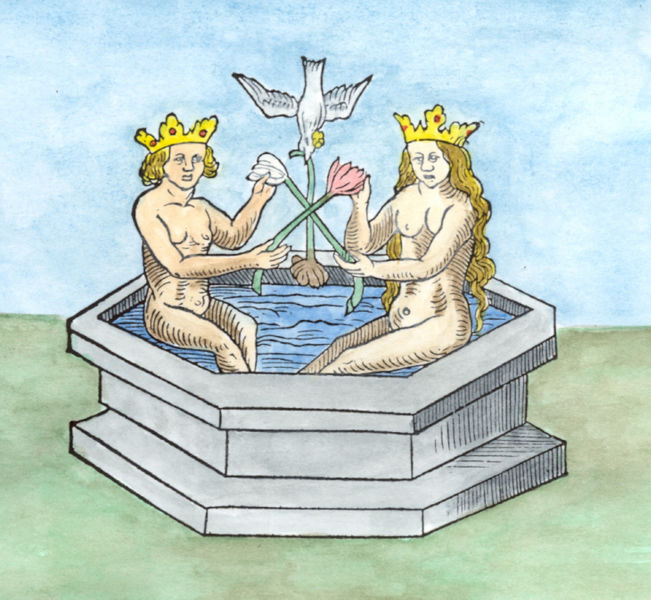
Love Is Alchemy
Love is an alchemical transmutation, co-created by two individuals, each radiating their own unique elixir, unifying and processing into one being.
Two souls are transmuted into one spirit.
The process is challenging, requires effort, and must be accompanied by a genuine thirst for knowledge of the one in which love has been ignited in unity between lovers.
Like fire, love must be continuously stoked.
This doesn’t mean perfection, but an unwavering commitment to your own growth.
Falling in love with yourself will maintain the love you share externally.
Like a garden, love takes dedicated care. Just as a garden needs tending, your inner landscape requires constant nurturing.
Embrace Hard Moments
—Don’t Depend on Bliss
Conflict and the demise of love arise when negativity is overlooked and denied, while life’s inherent rhythm is intensified and misdirected towards our partner.
This stems from a sense of possession and reliance on another to complete us.
This is not love, but a dysfunctional hell, spiraling downhill.
Remember, Everything Changes
Embrace the seasons of your soul, the periods of growth and dormancy.
Tips to Make Note Of:
Ignite the flame within: Embrace radical self-compassion. Treat yourself with the kindness you’d offer your most cherished friend.
Ask yourself, “What’s wrong?” Listen to yourself, bounce thoughts back and forth, just as a caring friend would do when you’re feeling down.
Own your story: Your most shame-inducing truth is your most valuable wisdom. If not yet, it will become your strength.
Your scars are not liabilities, but marks of resilience. With battle wounds comes wisdom.
Set fierce boundaries: Protect your energy and emotional well-being with unwavering resolve.
Prioritize radical self-care: Engage in practices that nourish your mind, body, and soul.
When you cultivate love within, you become a beacon, drawing in those who are also dedicated to their own inner growth.
Together, you form a love that is both powerful and enduring, a true testament to the transformative power of self-love.
Romance. Intimacy. Love.
Their intertwined souls, a symphony of passion and artistry, ignited a battle of wills upon the canvas of their love. Each stroke, a step in a dance of unknown choreography, guided by the whispers of Chi, the life force that coursed through their veins. A new song, born of their shared spirit, echoed through the chambers of their hearts, setting the rhythm for their duel. The ethereal drums of Angels’ War throbbed in the distance, urging them onward, fueling their every move with a fierce energy.
Empathy, often mistaken for weakness, is actually a profound strength. Empathy requires emotional intelligence, courage, and resilience. Empathy requires emotional intelligence, courage, and resilience.
Emotional Intelligence:
Empathy enhances communication and relationships, crucial for personal and professional success.
Courage to Connect:
It takes bravery to engage deeply with others’ emotions, showing true emotional fortitude.
Strength in Vulnerability:
Embracing empathy means being authentic and honest, fostering trust and meaningful connections.
Problem-Solving:
Understanding diverse perspectives leads to innovative and inclusive solutions.
Resilience: Empathy builds a support network, enhancing adaptability and strength in facing challenges.
Empathy is not a weakness; it’s a powerful tool for creating a compassionate and understanding world.
Authentic empathy always requires significant cognitive effort, particularly when it comes to understanding another person’s point of view (also known as “perspective-taking“).
Some scholars further parse this angle into:
Cognitive
“the ability to imagine the other’s experiences”
&
Perceptive
“the ability to directly perceive the other’s experiences”
Cognitive Empathy
Cognitive empathy, often referred to as perspective-taking, is the mental ability to understand and identify with another person’s thoughts and feelings.
Cognitive empathy involves imagining oneself in another’s situation to gain insight into their emotional state.
Perceptive Empathy
Perceptive empathy, on the other hand, goes beyond mere understanding to actively engaging with another’s emotional experience.
Perceptive empathy combines sensing emotions, regulating one’s own emotions, and taking skillful action based on these perceptions to meet others’ needs.
Both forms of empathy are crucial for effective interpersonal communication and relationships.
How Do We Test Whether It’s Empathy Or Projections?
When I know that I’m ready to critique a theological perspective is when I can:
“Yes this is exactly what I believe.”
If there are any need of clarification, caveats or modification then my view must be reevaluated.
Integrsting cognitive empathy involves a humble (and difficult) listening skill: withholding any judgment on the other person’s feelings, words, interpretation, and perspective until I understand accurately and robustly.
THE OUTER JUDGE MUST BE TAMED IN ORDER TO EMPATHIZE AT ALL.
Don’t twist my words now:
Christians must resist extreme relativism in our culture, but what I am saying in regards to holding judgment is to do so only for a brief time.
Many can easily misperceive what it means to be “non-judgmental” when discussing Cognitive Empathy.
Being “non-judgmental” often involves agreeing with or validating whatever a person feels and says, no matter what; for the sake of “love” or “tolerance.”
I’ve heard it said,
“If you don’t validate my understanding as your own, you clearly don’t love me.” (Though that’s not what “love” means, even though it’s popular.)
Extreme relativism counsels hurting people “to resent all resistance to their feelings,” as if such resistance were “a direct assault on their dignity and an affront to the depth of their suffering.”
Carl Jung, the renowned Swiss psychiatrist and psychoanalyst, made significant contributions to the understanding of art and its psychological dimensions.
Key aspects of his work related to art & the psyche:
Collective Unconscious + Visual Art:
Jung proposed the concept of the collective unconscious, which suggests that certain universal symbols and archetypes are shared across cultures and generations.
Visual art often taps into these archetypal images, providing a means for individuals to express and explore their inner worlds.
Jung believed that art could reveal latent memories from our ancient past and help us understand our responses to the environment.
Jung believed that art itself had no inherent meaning; instead, it was the artistic process that mattered.
Artists grappled with an “artistic impulse,” akin to a kind of madness—an irresistible force that drove them to create.
Through this process, artists found temporary relief and a way to express their psychological condition.
Jung’s own experiences as both a psychologist and an artist informed his understanding of this delicate balance between completion and incompleteness in artistic expression.
His approach to art was deeply rooted in his theories of the unconscious mind and symbolism.
Jung believed that art was a powerful medium for expressing the unconscious, serving as a bridge between the conscious and unconscious realms.
He saw artistic creation as a process that tapped into universal symbols and archetypes, which he termed the collective unconscious.
This perspective allowed for a unique interpretation of visual art, providing insights into both the artist’s psyche and broader cultural meanings.
Jung’s own artistic endeavors, such as his Alchemical Tower at Bollingen, exemplified his belief in the transformative power of creative expression. This personal project was a physical manifestation of his inner psychological journey.
In analyzing artworks, Jung developed a method of symbolic interpretation that became a tool for understanding an individual’s mental functioning and social behavior.
His approach to symbolism in art emphasized the importance of psychic content and its vital role in human life and culture.
Jung’s ideas have influenced various fields, including music composition. His cognitive functions system has been used to understand different composers’ psychological tendencies and creative processes.
This application of Jungian theory demonstrates the enduring relevance of his ideas in interpreting artistic creation across various mediums.
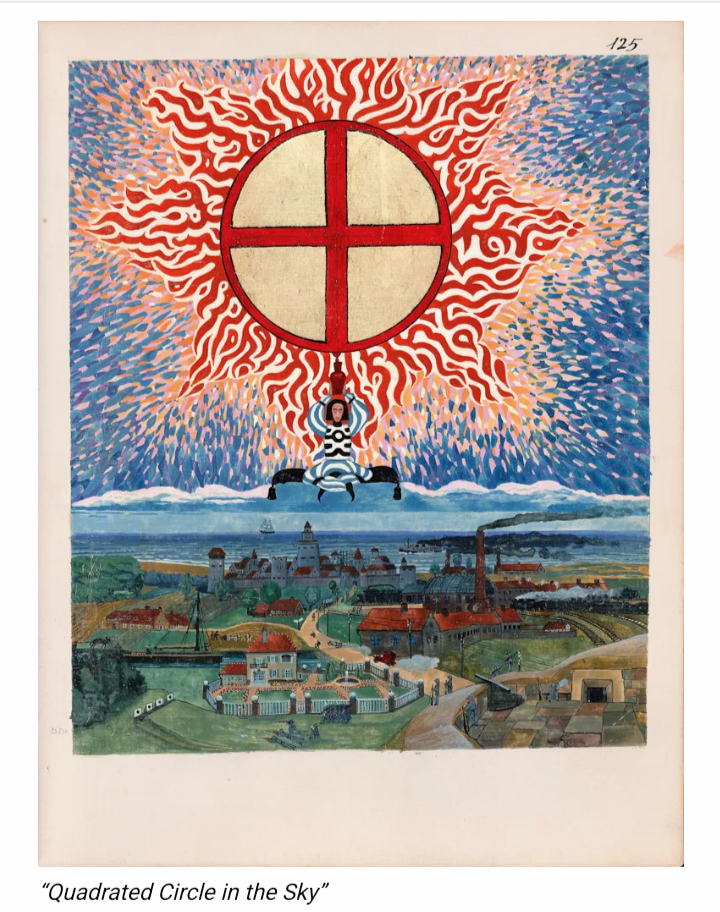
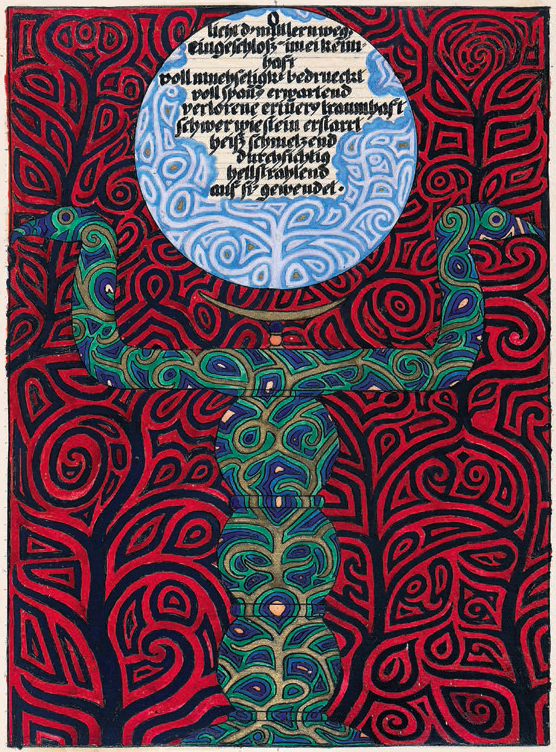
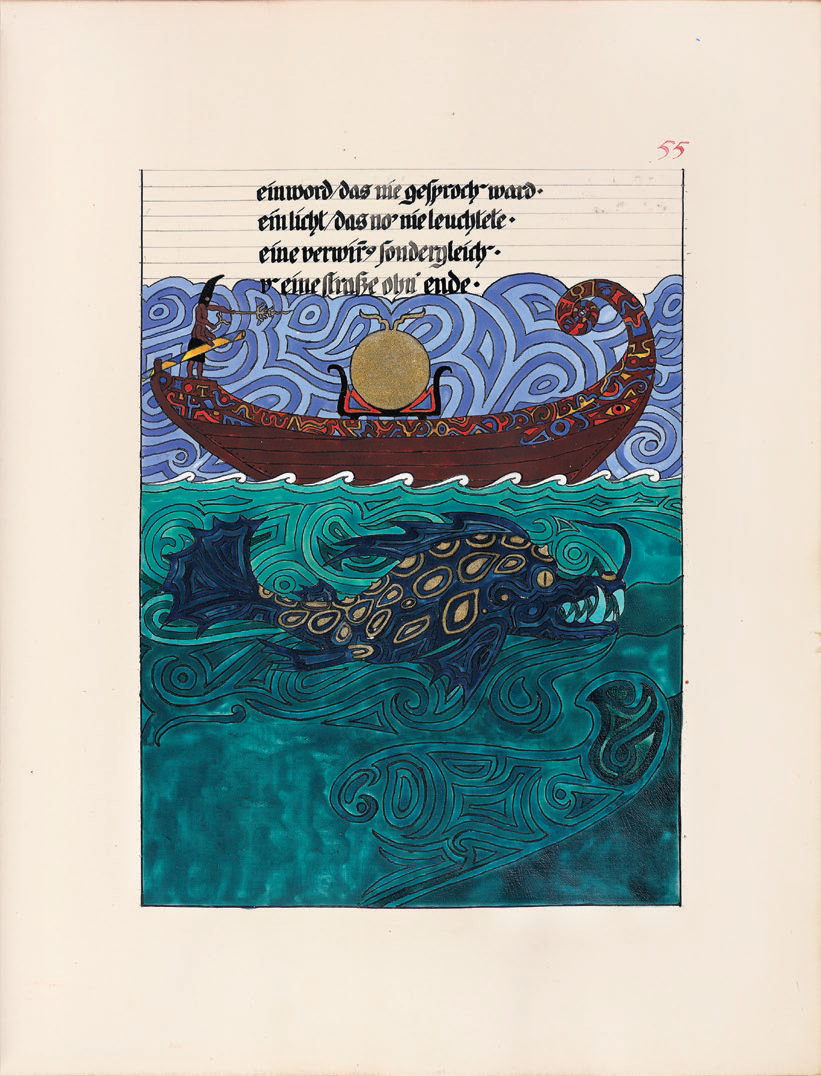
Liber Novus
The Red Book
Carl Jung’s Liber Novus, also known as The Red Book, was recently unveiled in a complete English translation by Norton. This translation was first published in a facsimile edition in 2009, followed by a smaller “reader’s edition” in 2012. Since then, there have been several exhibitions showcasing the book.
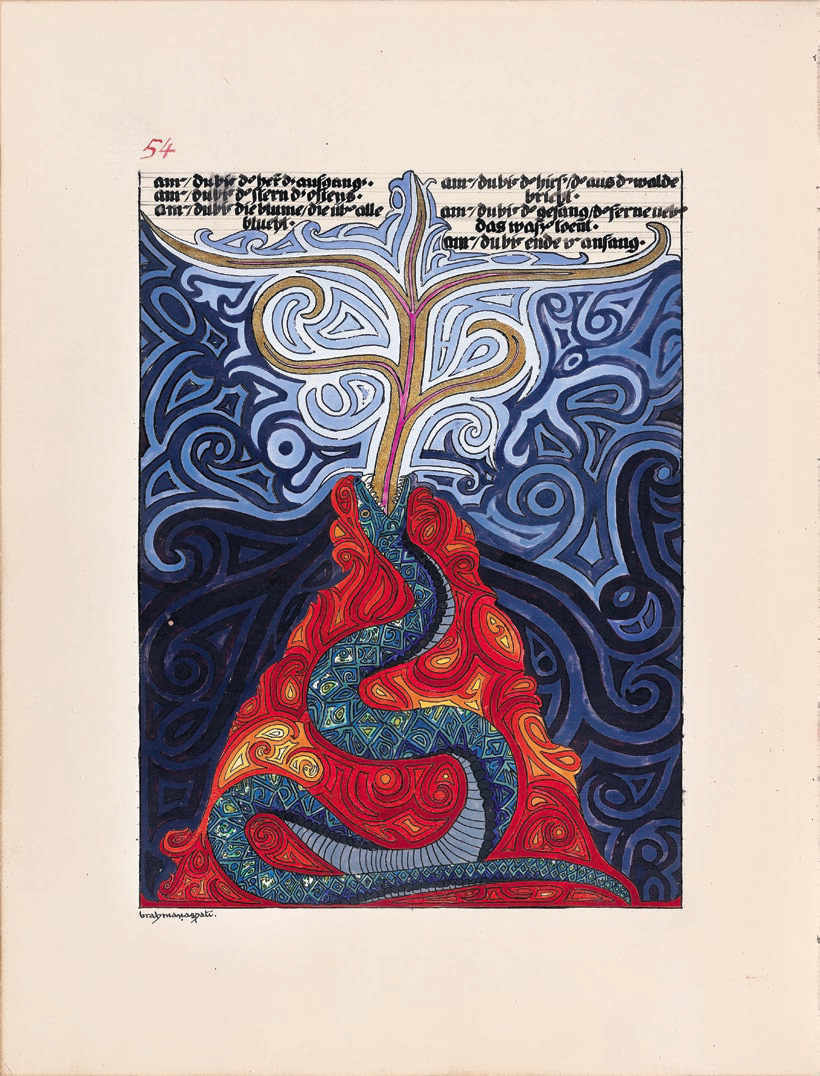
Art critic Peter Frank describes it as resembling a Bible crafted by a medieval monk, particularly noting the intricate Gothic script that Jung meticulously used for his writings.
Despite Carl Jung’s reluctance to consider himself an “artist,” it is noteworthy that his Liber Novus has been displayed in museums and served as the core of the ‘Encyclopedic Palace,’ a survey of visionary art featured at the 2013 Venice Biennale. Jung’s intricate paintings depict him as every inch an artist, akin to medieval monks or Persian courtiers. His artistry was devoted not to divine or royal glorification, but rather to celebrating the potential and significance of humanity.
One could more accurately say that Jung’s book was dedicated to the mystical unconscious, a much more nebulous and oceanic category. The “oceanic feeling”—a phrase coined in 1927 by French playwright Romain Rolland to describe mystical oneness—so annoyed Sigmund Freud that he dismissed it as infantile regression.
Freud’s antipathy to mysticism, as we know, did not dissuade Jung, his onetime student and admirer, from diving in and swimming to the deepest depths.
The voyage began long before he met his famous mentor.
At age 11, Jung later wrote in 1959, “I found that I had been in a mist, not knowing how to differentiate myself from things; I was just one among many things.”
Jung considered his elaborate dream/vision journal—kept from 1913 to 1930, then added to sporadically until 1961—“the central work in his oeuvre,” says Jung scholar Sonu Shamdasani in the Rubin Museum introduction above. “It is literally his most important work.”
And yet it took Dr. Shamdasani “three years to convince Jung’s family to bring the book out of hiding,” notes NPR. “It took another 13 years to translate it.”
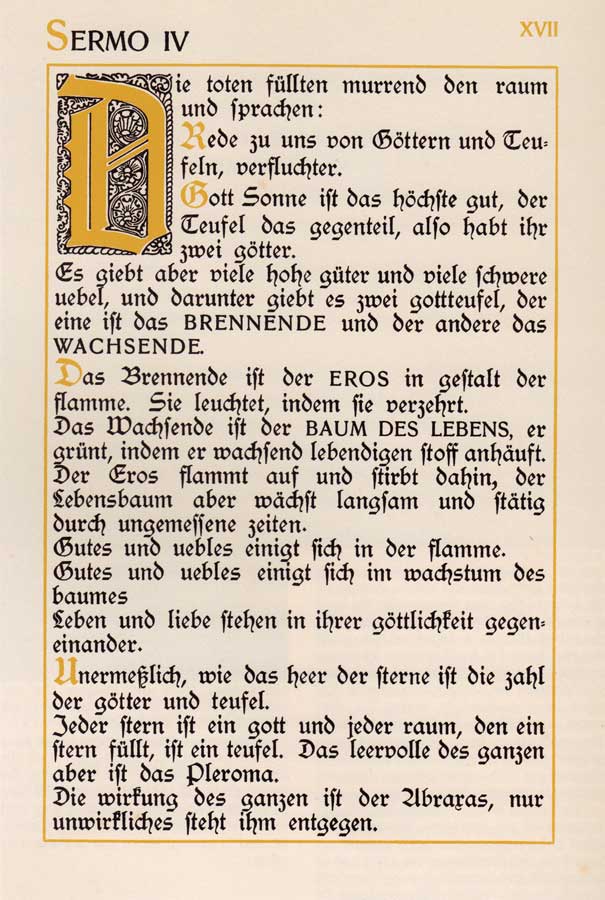
Part of the reason his heirs left the book hidden in a Swiss vault for half a century may be evident in the only portion of the Red Book to appear in Jung’s lifetime.
Jung had this text privately printed in 1916 and gave copies to select friends and family members. He composed it in 1913 in a period of Gnostic studies, during which he entered into visionary trance states, transcribing his visions in notebooks called the “Black Books,” which would later be rewritten in The Red Book.
You can see a page of Jung’s meticulously hand-lettered manuscript above. The “Sermons,” he wrote in a later interpretation, came to him during an actual haunting:
The atmosphere was thick, believe me! Then I knew that something had to happen. The whole house was filled as if there were a crowd present, crammed full of spirits. They were packed deep right up to the door, and the air was so thick it was scarcely possible to breathe. As for myself, I was all a‑quiver with the question: “For God’s sake, what in the world is this?” Then they cried out in chorus, “We have come back from Jerusalem where we found not what we sought/’ That is the beginning of the Septem Sermones.
The strange, short “sermons” are difficult to categorize. They are awash in Gnostic theology and occult terms like “pleroma.”
The great mystical oneness of oceanic feeling also took on a very sinister aspect in the demigod Abraxas, who “begetteth truth and lying, good and evil, light and darkness, in the same word and in the same act. Wherefore is Abraxas terrible.”
There are tedious, didactic passages, for converts only, but much of Jung’s writing in the “Seven Sermons,” and throughout The Red Book, is filled with strange obscure poetry, complemented by his intense illustrations. Jung “took on the similarly stylized and beautiful manners of non-western word-image conflation,” writes Frank, “including Persian miniature painting and east Asian calligraphy.”
If The Red Bookis, as Shamdasani claims, Jung’s most important work—and Jung himself, though he kept it quiet, seemed to think it was—then we may in time come to think of him as not only as an inspirer of eccentric artists, but as an eccentric artist himself, on par with the great illuminators and visionary mystic poet/painters.
Gray aliens, often referred to simply as “Grays,” are one of the most commonly reported types of extraterrestrial beings in modern UFO lore.
These beings are typically described as having gray skin, large heads, almond-shaped eyes, and spindly bodies. Abduction scenarios, medical examinations, and reproductive experiments are recurring themes in these accounts.
Historical & Cultural References
The concept of gray aliens is not new and can be traced back to various ancient cultures and mythologies:
Ancient Sumerians: The Sumerians, who lived around 4000 BCE in Mesopotamia, mentioned the Anunnaki in their texts. These beings were described as tall, powerful, with pale skin, large eyes, and thin noses. Some theorists believe these descriptions align with modern depictions of gray aliens.
Ancient Egyptians: In Egyptian mythology, the “shemsu Hor” or “followers of Horus” were depicted with elongated heads and large almond-shaped eyes, resembling modern descriptions of gray aliens.
Mayans: Mayan artwork often portrays small humanoid beings with large heads and eyes, suggesting possible depictions of extraterrestrial encounters.
Indian Culture: Hindu mythology mentions the Nagas, beings with serpent-like characteristics but often depicted with humanoid bodies, elongated heads, and large eyes.
Medieval Art: In medieval religious paintings, celestial beings are sometimes depicted with elongated heads and unusual features that resemble gray aliens.
Native American Tribes: Various tribes, such as the Hopi and Zuni, have stories about encounters with beings similar to gray aliens.
Pacific Islanders: Indigenous tribes like the Maori of New Zealand have oral traditions that speak of encounters with beings from other worlds, often described with elongated heads and large eyes.
Modern Accounts and Theories
Modern accounts of gray aliens often involve abduction scenarios where individuals report being taken against their will onto alien crafts. These experiences typically include traumatic physical examinations and reproductive experiments. The Hill abduction case in 1961 is one of the most famous, where Betty and Barney Hill reported being taken by gray aliens for medical examinations.
Theories about the agenda of gray aliens vary widely:
Experimentation: Some believe that grays are conducting experiments on humans to study our biology and psychology. This includes theories about reproductive experiments to create hybrid beings.
Control and Manipulation: Others suggest that grays are involved in controlling human civilization, possibly through genetic manipulation or other means. This theory is supported by ancient texts like the Sumerian accounts of the Anunnaki.
Sadistic Intentions: There are also claims that grays torture humans for their own amusement or to study human pain thresholds. These claims are based on firsthand accounts from alleged abductees.
Psychological and Cultural Impact
The fascination with gray aliens has had a significant impact on popular culture and human psychology. The widespread belief in these beings has been fueled by media portrayals in movies, TV shows, and books. The Hill abduction case, for example, inspired episodes in popular series like “The X-Files” and “Dark Skies”.
Psychologists have explored various explanations for these abduction stories, including false memories implanted through suggestive questioning and sleep paralysis accompanied by hallucinations. Despite the lack of empirical evidence, the belief in gray aliens continues to captivate the human imagination, reflecting our enduring fascination with the unknown and the extraterrestrial.
Quantum Alchemy is a framework that merges ideas from quantum physics—such as entanglement, superposition, and wave-particle duality—with the symbolic, transformative, and spiritual traditions of alchemy.
It often explores the idea of consciousness, energy, and reality as interconnected, sometimes framing quantum phenomena through the lens of alchemical processes like transformation, unification, or the pursuit of higher states of being.
IDEAS FOUND IN QUANTUM ALCHEMY:
Transforming the properties of particles or materials
Similar to how alchemists sought to transform lead into gold, quantum alchemy aims to manipulate the properties of particles, atoms or materials at the quantum level to create new forms of matter with desired characteristics.
This could involve changing the nuclear charges or electron configurations.
Computational method for predicting molecular properties
Quantum alchemy uses expansion to approximate and predict properties like binding energies for large numbers of molecules and materials by making small perturbations to a reference system.
This accelerates screening of potential catalysts or drug candidates.
Representation of the chemical space as a quantum superposition
Some propose representing all possible atomic compositions as a linear superposition state, with a “quantum alchemical Hamiltonian” driving the optimization to select the best molecule for a desired property.
Philosophical connections
There are also philosophical parallels drawn between the aims of ancient alchemy (e.g. transmutation, elixir of life) and modern concepts in quantum physics about the malleability and interconnectedness of reality.
Quantum alchemy leverages quantum mechanical principles to transform, optimize & efficiently model perveived matter and alter chemical systems in real ways.
It combines ideas from physics, chemistry, and the metaphysical quest of the ancient alchemists.
“With regard to extraterrestrial life (aliens), Scripture is silent.“
– John MacArthur
While the Bible does not explicitly address the topic of extraterrestrial life, it does provide us with essential truths.
“For in Him All things were created: things in Heaven & on earth, Visible & invisible, whether thrones or Powers or Rulers or Authorities@; all things have been created through him and for him. He is before all things, and in him all things hold together.“
Colossians 1:16-17 –
Alien Meanings & Context
Alien Meanings & Context… belonging or relating to another person, place, or thing… foreign; coming from another world…… a person who is not of a particular group or place…. a creature from outer space; extraterrestrial…. not familiar or like other things you have known…… different from what you are used to…… from another country….. too different from something to be acceptable or suitable…… from somewhere other than the planet Earth.
Biblical Interpretation & Assumptions
… strange and not familiar…
Ancient Astronaut Theory & Biblical Connections:
Another intriguing perspective within biblical interpretation of Aliens is the Ancient Astronaut theory.
This theory suggests that:
Extraterrestrial beings visited Earth in ancient times & played a significant role in shaping human civilization.
They interpret passages such as the “sons of God” in Genesis 6:1-4 as references to alien beings intermingling with humans.
They suggest that these encounters were recorded in spiritual texts and mythologies to make sense of the phenomena they witnessed.
Some claim that biblical descriptions of flying chariots or wheels within wheels can be interpreted as: early depictions of advanced spacecraft or unconventional aerial vehicles.
Exploring aliens within biblical interpretation does not oppose the spiritual & moral teachings found within Biblical texts. Instead, it offers a unique lens through which to understand ancient stories and offers an alternative perspective on the mysteries that surround our existence.
Angelic Manifestations: Beyond Physical Form
Angels, as depicted in various religious texts, transcend the limitations of physical form. The term “angel” itself signifies their role as messengers, rather than a specific appearance. According to the Bible, angels can manifest in different forms, such as men, fire, or immaterial beings. This fluidity suggests their origin from a realm beyond our three-dimensional space. The diverse manifestations of angels parallel the descriptions often associated with encounters with aliens. Like angels, aliens are believed to exhibit unconventional physiology and possess the ability to shape-shift, hinting at their connection to a higher dimension.
Alien Interventions: Warnings and Wisdom
Just as angels provide messages of provocation and comfort, aliens also seem to possess a similar intent. From ancient folklore to modern-day accounts, encounters with aliens often involve the delivery of warnings, prophecies, and insights. These messages align with the intentions attributed to angels in religious texts. Both angels and aliens acknowledge human failures while encouraging spiritual growth, reminding us of the need to transcend our earthly limitations.
Exploring the Multidimensional Nature of Angelic and Alien Realms
Biblical References: Multiverse and Heavenly Realms
The Bible offers glimpses into a multiverse where heavenly realms intersect with our own. Jesus’ references to “paradise” and promises of eternal life imply the existence of dimensions beyond our earthly perception. The concept of angels originating from God’s heavenly realm aligns with the possibility that aliens may come from higher dimensions where heaven and earth intersect. This suggests a connection between angelic and alien encounters, both originating from a spiritual source beyond our three-dimensional world.
Transcending Earthly Concerns: Angelic and Alien Guidance
Both angels and aliens play roles as messengers, guides, and warners, pointing us towards a greater purpose beyond our earthly existence. While our understanding remains limited within the three-dimensional realm, the encounters with angels and aliens challenge us to expand our perspectives. Their interventions, whether angelic or alien, serve as catalysts for spiritual growth, urging us to transcend earthly concerns and embark on a journey towards higher truths.
Conclusion 7.1 Summary of Findings 7.2 Personal Reflection and Application 7.3 Future Research Opportunities
In conclusion, the parallels between angels and aliens offer intriguing insights into the multidimensional nature of our reality. Viewing encounters with aliens through a spiritual lens allows us to explore the possibility of a shared spiritual source and a vast multiverse beyond our earthly perception. Both angels and aliens serve as messengers, offering wisdom and guidance that transcend our earthly limitations. While our eyes perceive the three-dimensional world, our souls recognize the infinite nature of the cosmos and our eternal connection to the Creator. Embracing the mysteries of angelic and alien encounters invites us to embark on a journey of spiritual exploration, unraveling the profound truths that lie beyond our earthly existence.
Resources:
“Angels: A History” by David Albert Jones
Article: “Angels and Aliens: A Comparative Study” by Michael S. Heiser
PDF: “The Bible and Extraterrestrial Life: A Theological Exploration” by Ted Peters
Sacred geometry is a field that not only explores the intricate patterns and shapes underlying creation, but defines it and holds within it the foundation of the origin.
From the simple elegance of the Vesica Piscis to the profound complexity of the Grid of Life, each symbol in this geometric art holds a wealth of meaning and nuance.
Let’s delve into these sacred geometric forms…
Vesica Piscis: The Intersection of Opposites
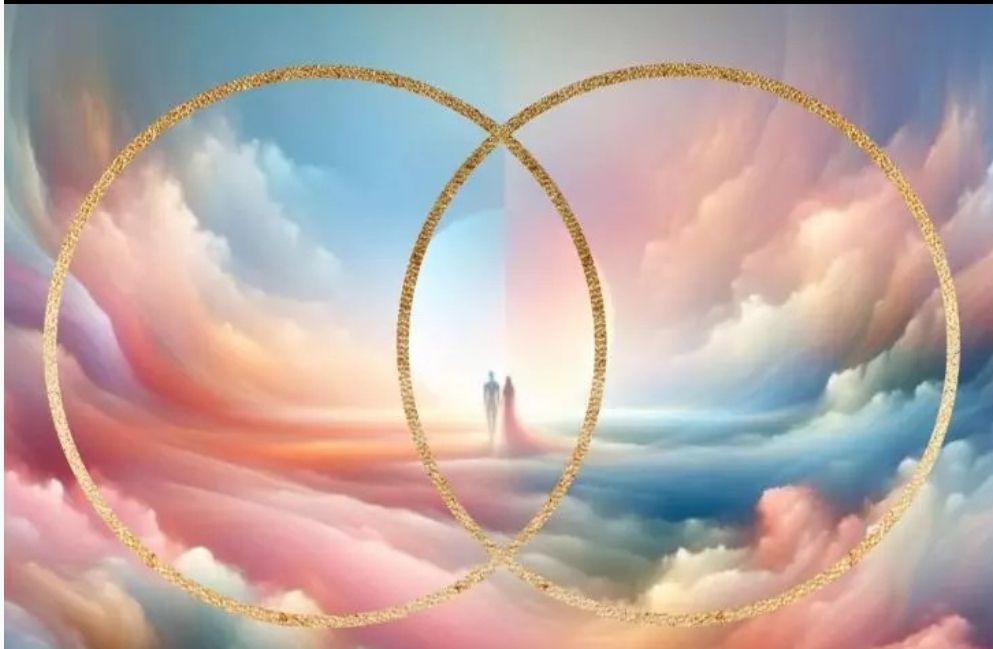
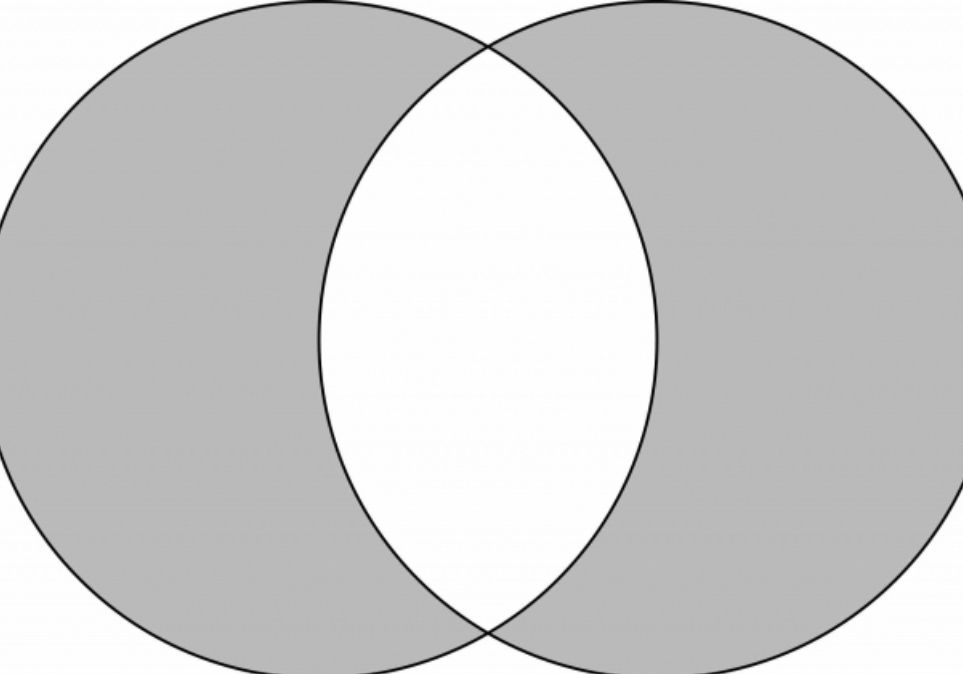
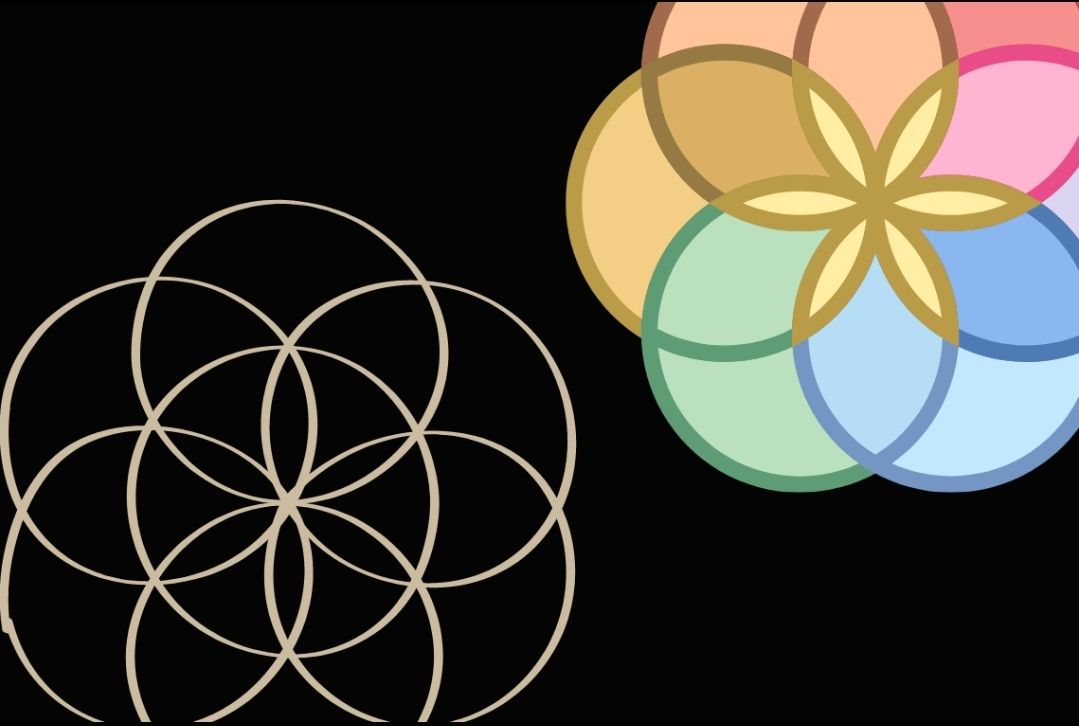
The Vesica Piscis, created by the intersection of two identical circles, represents the union of opposites.
Its proportions have influenced architectural masterpieces and are embedded in various artistic and organizational symbols throughout history.
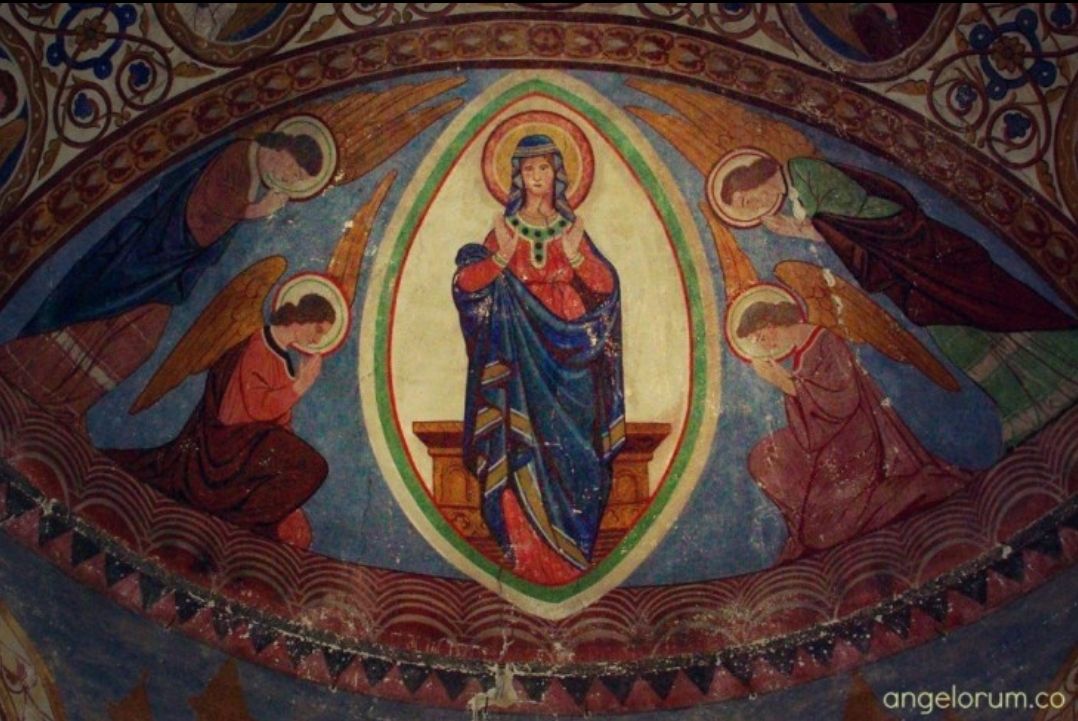
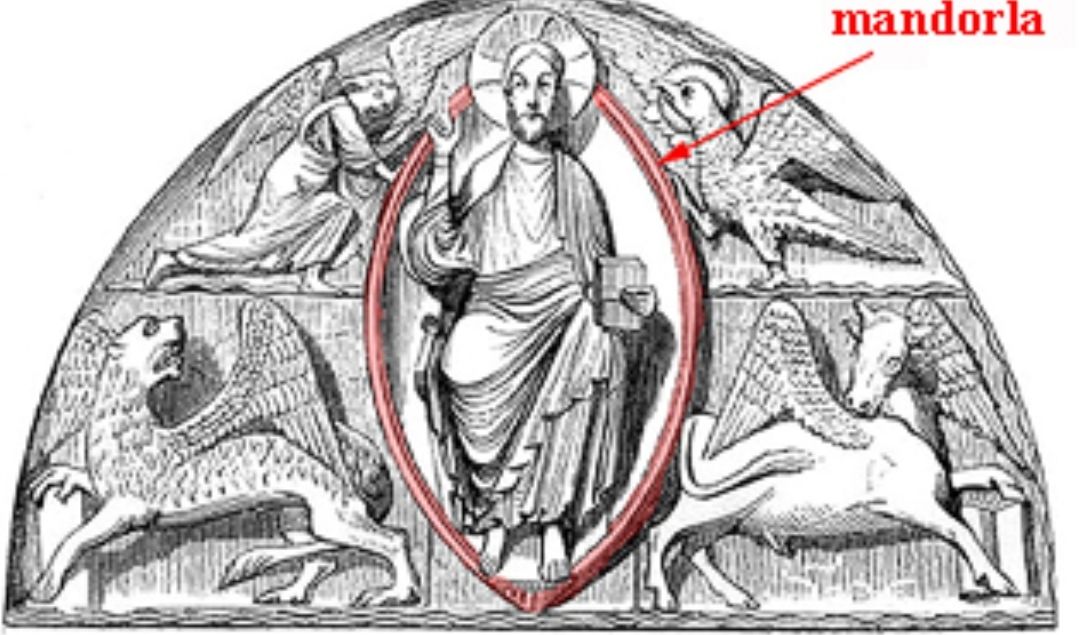
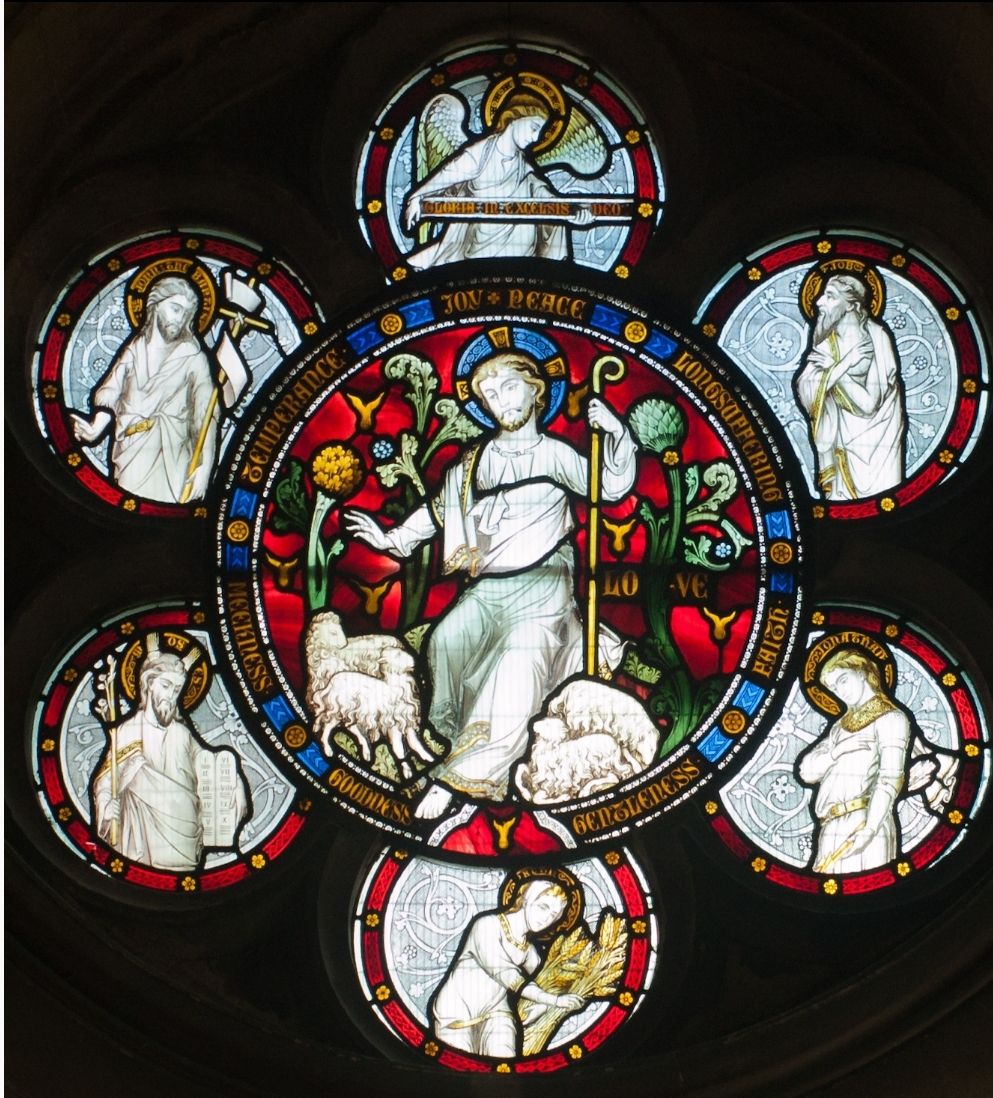
The mandorla is often seen in religious art and architecture.
MandorlaMandorla in Christian Art
The Mandorla is derived directly from the Vesica Piscis, symbolizing the canal of life, the vagina opening where all humanity derives.
This is intersection of the earthly and celestial realms. Earthly body delivered with soul inside
Seed of Life: The Essence of Creation
At the heart of sacred geometry lies the Seed of Life, a design made up of seven intertwined circles.
Its universal appeal can be witnessed in its widespread use across various religions and cultures.
Each overlapping circle represents a cell, a cycle, or even a day, culminating in the interconnected nature of life’s processes.
The Seed of Life speaks to the fundamental structures of life and existence, imbuing objects with a sense of protection and blessing.
Egg of Life: The Spark of New Life
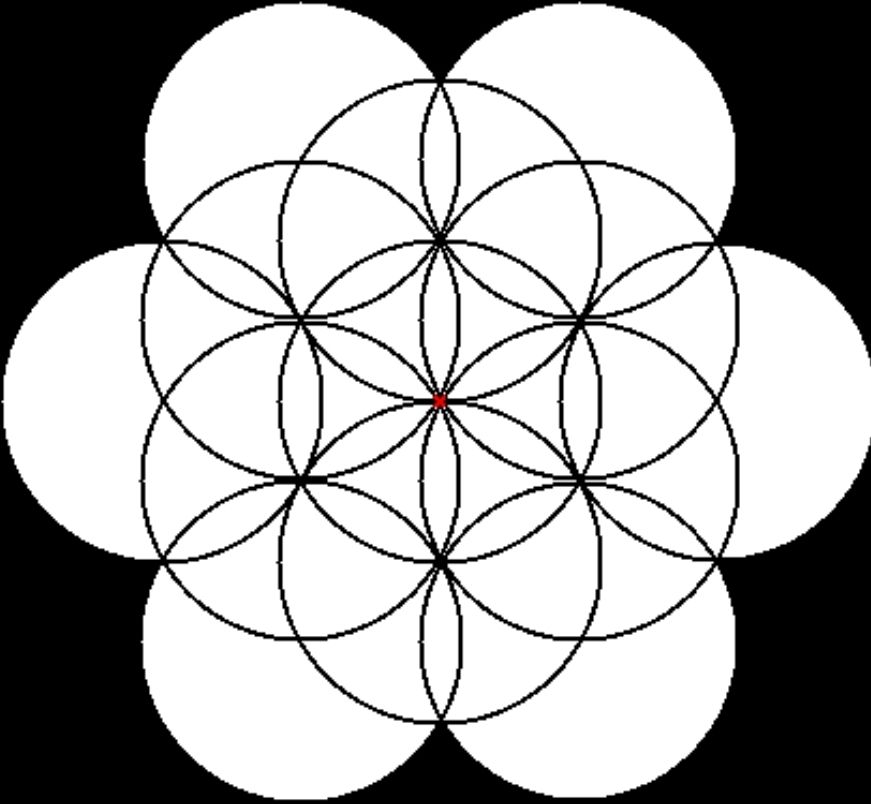
Emerging from the Seed of Life, the Egg of Life symbolizes rebirth, fertility, and the spark of new life.
Seed of life is vagina, Ovulation is the substamce perfecting the environment for masculine seeding, increasing pleasure increases bodily ease and diversion.
By adding six more circles to the foundational Seed, the Egg of Life demonstrates how life and patterns expand and evolve.
Within the three-dimensional realm, the Egg of Life can be visualized through the eight spheres nestled within Metatron’s Cube, showcasing the versatility and interconnectedness of sacred geometric symbols.
Flower of Life: The Cosmic Blueprint
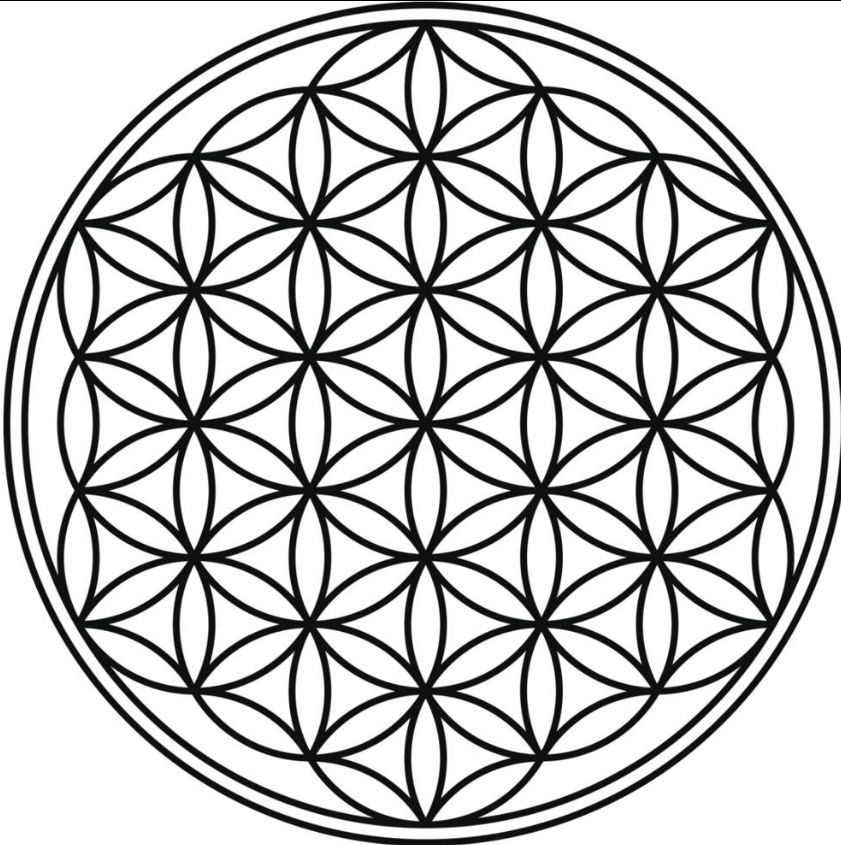
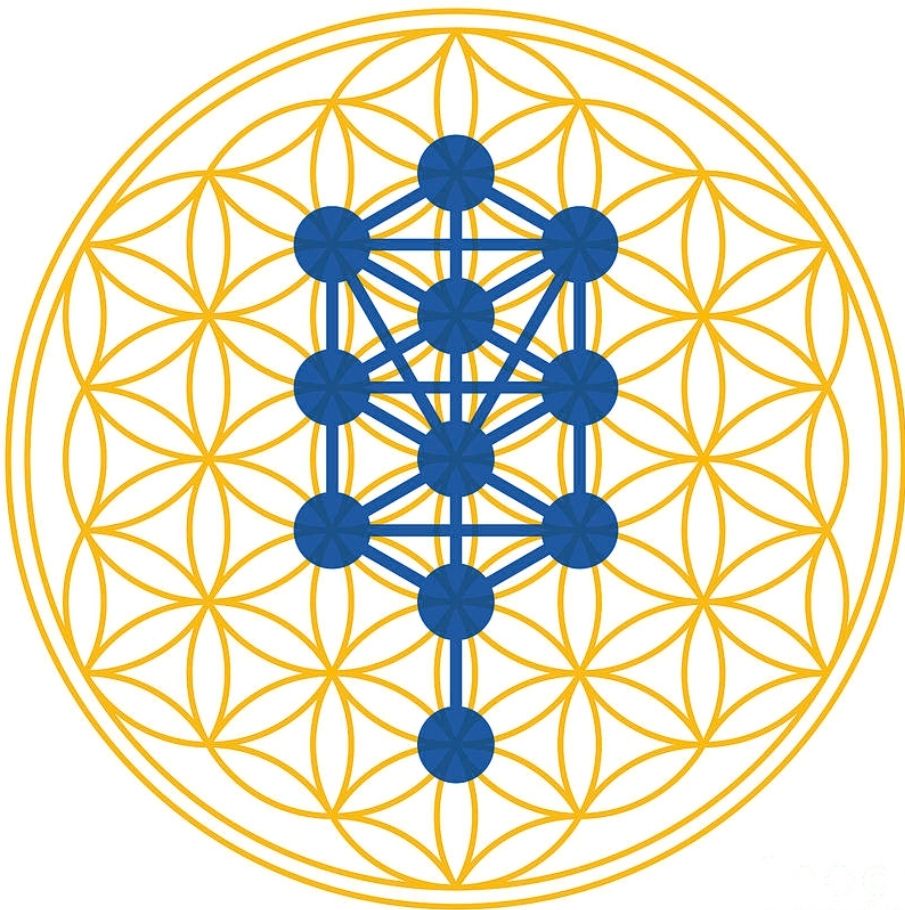
The Flower of Life, often depicted as a series of 19 interlocking circles, is believed to be the cosmic blueprint, encoding the very design of every atomic structure and life form.
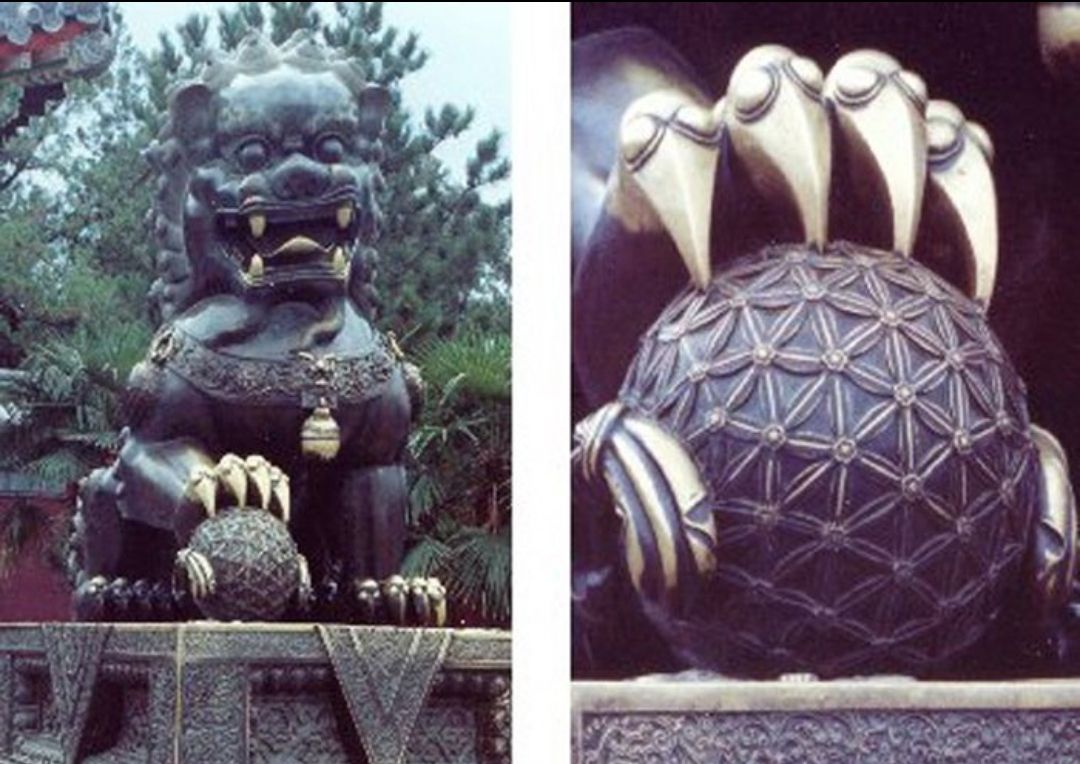
Its presence across civilizations, from ancient Egypt to modern Japan, bears testament to its universal appeal.
JAPANESE FLOWER OF LIFE
Sephiroth
Tree of Life: The Interconnectedness of All Things
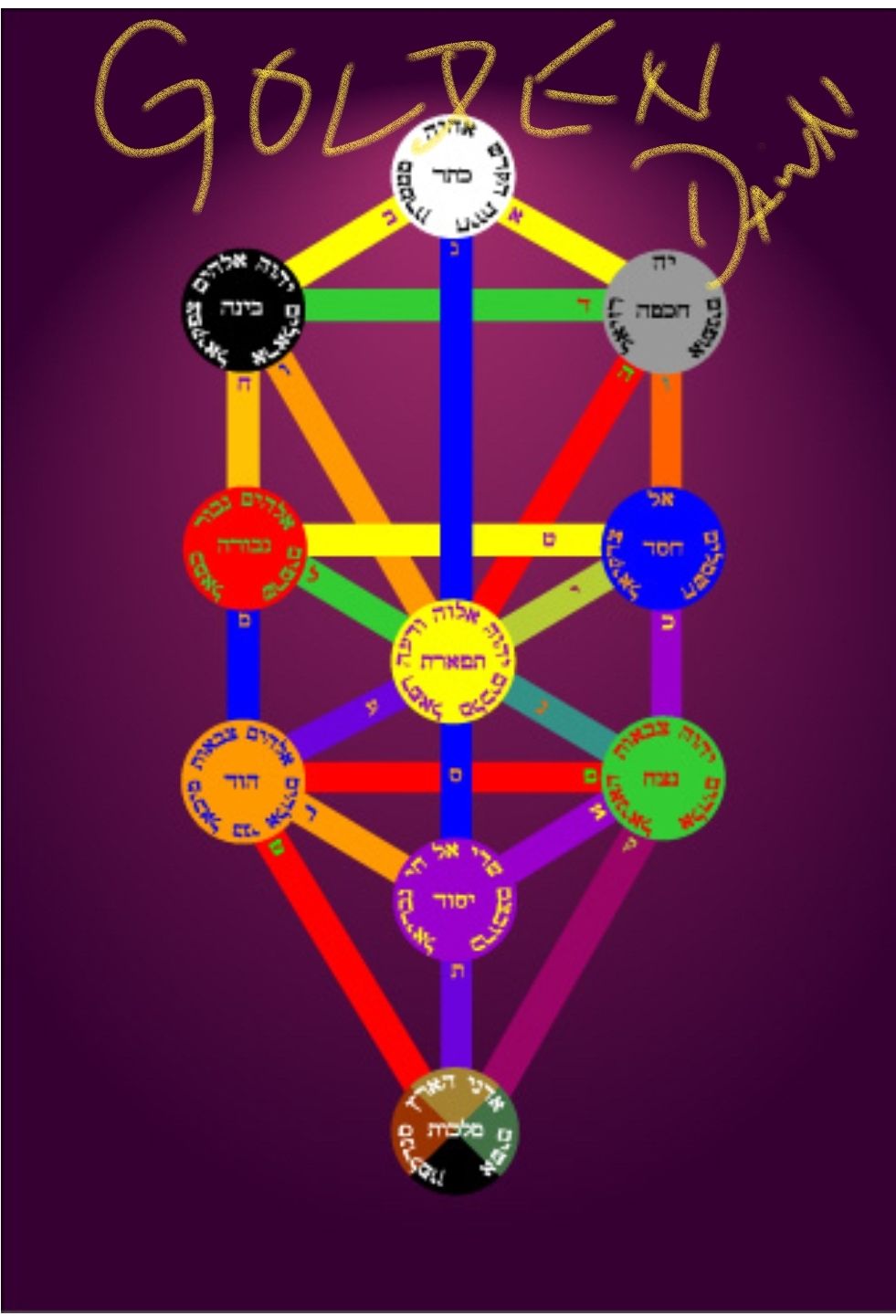
The Tree of Life represents numerous systems across varying cultures and religions, providing a hierarchical structure for all the forces in the Universe.
Its 10 spheres, called the “Sephiroth,” represent different qualities of the Soul, divided into three pillars: the Pillar of Severity, the Pillar of Mildness, and the Pillar of Mercy.
The Tree of Life reminds us that we are not alone in the Universe but rather part of a vast interconnected network.
Fruit of Life: The Holy of Holies
Emerging from the heart of the Flower of Life, the Fruit of Life comprises 13 interconnected spheres, often referred to as the ‘Holy of Holies.’
The 13 spheres symbolize unity and a transition between realms or dimensions, while the 78 lines that emerge when linking the centers of these circles fashion Metatron’s Cube, enclosing all five Platonic solids.
The Fruit of Life’s spheres symbolize the feminine aspects of creation, providing a foundation for the 78 masculine rays of creation.
Metatron’s Cube: The Divine Blueprint
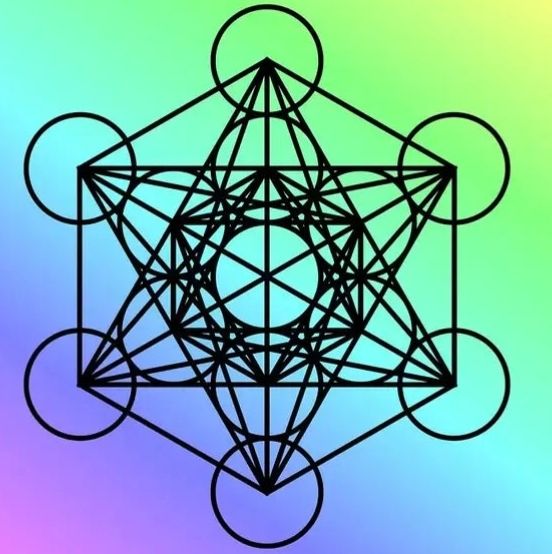
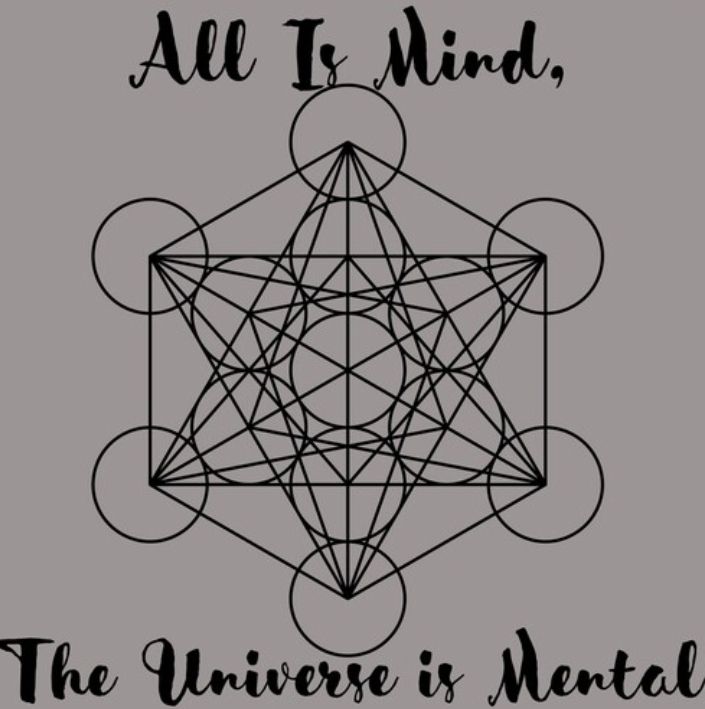
Metatron’s Cube, a geometric construct associated with the archangel Metatron, is a pivotal bridge, transforming 2-dimensional realities into 3-dimensional realms.
Within this complex geometric form, the five Platonic solids are discerned, positioning Metatron’s Cube as a testament to the divine blueprint upon which the cosmos is etched.
As quantum physics ventures deeper into understanding existence, it continually echoes the
Hermetic quote, “all is mind; the universe is mental,” with Metatron’s Cube in mind epitomizes the abstract, cognitive foundation of our universe.
Grid of Life: The Masculine Counterpart
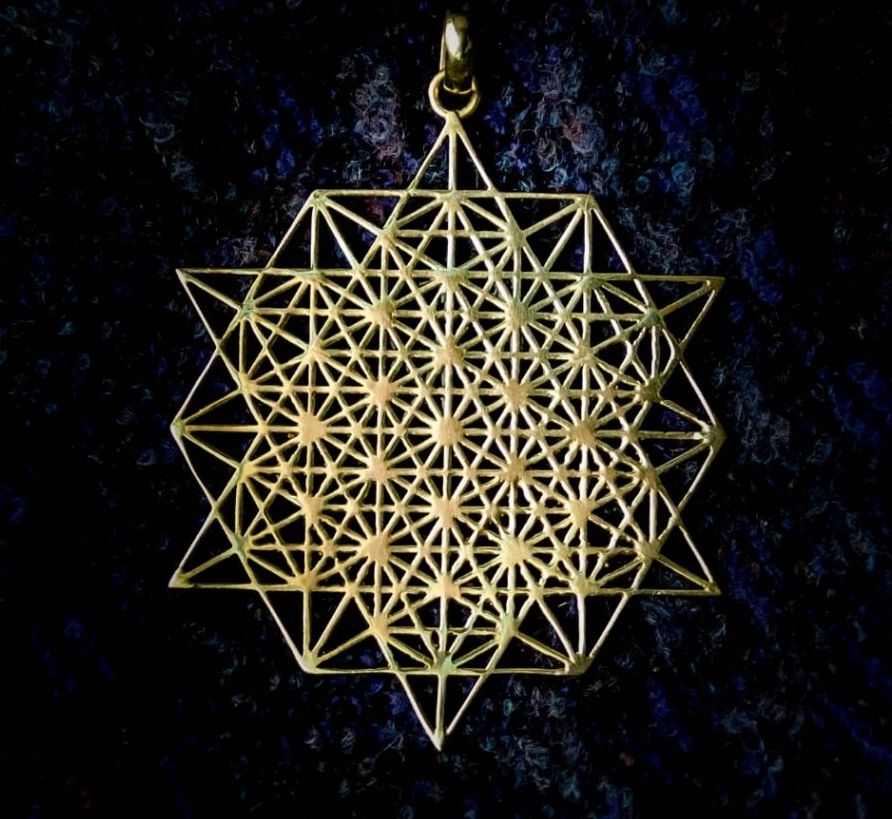
The 64-tetrahedron, commonly termed as the ‘Grid of Life,’ is the masculine counterpart to the Flower of Life.
This geometric form, comprising 64 individual tetrahedrons, overlays the Flower of Life, symbolizing the convergence of space and time.
The allure of the Grid of Life transcends its geometric elegance, embedding itself in the mystique of the number 64, which recurrently surfaces in nature, mysticism, and human constructs, from genetic code to sacred texts.
The Grid of Life emphasizes the interconnectedness of all things and underscores its significance in our understanding of the universe.
Scripture obviously doesn’t describe God in direct quantum terms, as these terms are contemporary.
Yet there are several Bible verses & theological concepts that do align with Spirit being Light and Energy.
God in Scripture
Light & Energy
1 John 1:5: “God is light; in Him there is no darkness at all.” This verse directly describes God as light, emphasizing purity and the absence of darkness.
1 Timothy 6:16: “He alone is immortal and dwells in unapproachable light, whom no man has seen or can see.” This verse speaks to the transcendent nature of God’s light, which is beyond human comprehension.
John 8:12: “When Jesus spoke again to the people, he said, ‘I am the light of the world. Whoever follows me will never walk in darkness, but will have the light of life.’” Jesus, as the manifestation of God, is described as the light of the world.
Genesis 1:3: “And God said, ‘Let there be light,’ and there was light.” This verse illustrates the power of God’s word to create light, a fundamental element of the universe.
Sound & Light in Creation
The Bible also contains references to creation through God’s spoken word, which can be interpreted as sound and light:
Genesis 1:3: “And God said, ‘Let there be light,’ and there was light.”
The act of speaking light into existence suggests a connection between sound and light in creation.
John 1:1: “In the beginning was the Word, and the Word was with God, and the Word was God.”
The term “Word” (Logos) implies the creative power of God’s speech.
Revelation 4:5: “From the throne came flashes of lightning, rumblings, and peals of thunder.”
This imagery combines light and sound to depict the divine presence.
God’s Breath & Human Life
Genesis 2:7: “Then the Lord God formed a man from the dust of the ground and breathed into his nostrils the breath of life, and the man became a living being.”
Job 33:4: “The Spirit of God has made me; the breath of the Almighty gives me life.”
Psalm 104:29: “When you hide your face, they are terrified; when you take away their breath, they die and return to the dust.”
Quantum Theories
in Relation to Scripture
Quantum mechanics, a branch of physics that deals with the behavior of matter and energy at the smallest scales, has profound implications that can intersect with theological concepts.
While quantum theories are primarily scientific, they offer intriguing parallels and insights that can enrich our understanding of certain scriptural themes.
Key Concepts in Quantum Mechanics
Wave-Particle Duality: Particles such as electrons exhibit both wave-like and particle-like properties. This dual nature challenges our classical understanding of physics.
Quantum Entanglement: When particles become entangled, the state of one particle instantaneously influences the state of another, regardless of distance. This phenomenon suggests a deep interconnectedness within the universe.
Uncertainty Principle: Proposed by Werner Heisenberg, this principle states that certain pairs of properties, like position and momentum, cannot both be measured precisely at the same time.
Superposition: Particles can exist in multiple states simultaneously until observed or measured, at which point they collapse into one state.
God’s Omnipresence & Omniscience
Quantum entanglement, which allows particles to influence each other instantaneously over vast distances, can be seen as a metaphor for God’s omnipresence and omniscience.
The Bible speaks of God being everywhere and knowing all things:
Psalm 139:7-10: “Where can I go from your Spirit? Where can I flee from your presence? If I go up to the heavens, you are there; if I make my bed in the depths, you are there.”
Quantum entanglement illustrates a form of connection that transcends physical space, much like the theological concept of God’s omnipresence.
Creation & the Nature of Reality
The concept of wave-particle duality and superposition aligns with the idea that reality is not always as it appears.
This can be related to the biblical creation narrative, where God’s word brings forth existence from nothing:
Genesis 1:3: “And God said, ‘Let there be light,’ and there was light.”
This act of creation by divine command suggests a reality that is fundamentally responsive to God’s will, much like how quantum particles exist in a state of potential until observed.
The Multidimensional Universe
Quantum physics suggests the possibility of multiple dimensions and parallel universes, which can be seen as aligning with biblical descriptions of spiritual realms:
Ephesians 6:12: “For our struggle is not against flesh and blood, but against the rulers, against the authorities, against the powers of this dark world and against the spiritual forces of evil in the heavenly realms.”
The existence of unseen dimensions and realms in quantum theory parallels the biblical concept of a spiritual dimension that interacts with our physical world.
Theological Implications
1. Compatibility with Faith
Quantum mechanics does not contradict the existence of God; rather, it can be seen as revealing the complexity and wonder of God’s creation.
Many early pioneers of quantum physics, such as John Polkinghorne, were theists who saw their discoveries as illuminating God’s methods rather than eliminating His presence.
2. Free Will and Predestination
Quantum indeterminacy, where outcomes are probabilistic rather than deterministic, can offer a framework for understanding the coexistence of free will and divine sovereignty.
The Bible speaks of God’s foreknowledge and predestination, yet also affirms human responsibility and choice:
Romans 8:29-30: “For those God foreknew he also predestined to be conformed to the image of his Son.”
Deuteronomy 30:19: “This day I call the heavens and the earth as witnesses against you that I have set before you life and death, blessings and curses. Now choose life, so that you and your children may live.”
Quantum theory’s probabilistic nature can be seen as a metaphor for the balance between God’s sovereign plan and human free will.
Quantum mechanics, with its counterintuitive and profound insights into the nature of reality, offers fascinating parallels to scriptural themes.
While it remains a scientific discipline, its concepts can enrich theological discussions about God’s nature, the creation of the universe, and the interplay between divine sovereignty and human free will.
Far from being incompatible, quantum theories can provide a deeper appreciation of the mysteries and wonders described in the Bible
In my journey as an “alien” on this planet, I have, unwittingly, stumbled upon what had been archaically called the Philosopher’s Stone or the Elixir of Life…
I only realized this after I, through being magnetically attracted toward suffering, embracing the darkness that most fear, had unearthed the Essence of Reality.
This Essence is a Truth so profound, it is woven into the very core of our beings through the quantum dimensions & atmospheric pressure, without such, we would become vacuumed into nothingness.
This truth is unassailable, standing as a lamp of certainty, illuminated by the light of Intuitive Wisdom.
THIS LIGHT IS CHRIST’S LIGHT OF INTUITION FROM ABOVE.
Intuition transcends the limitations of our corporeal senses, for it is birthed from the sacred depths of the spirit.
Intuition is a whisper from the Heavens, a subtle yet ever powerful current that flows through the Ethers of existence.
Intuition is the Blood within the veins of Eternity.
When the HolySpirit stirs, He ignites the flame of Intuition, transforming our sensorial experiences into a Divine Compass.
THE KINGDOM OF GOD IS WITHIN YOU
This guiding Force elevates our conscious awareness, rendering the conventional Five Senses as mere tools in the Macrocosm of our being within this existence and realm.
When this inner awakening is embraced, we align in tandem with the Universal Symphony of Wisdom.
Intuition becomes our most trusted Guide, leading us towards a Life of deeper Understanding and connection with the Infinite.