Tag: Knowledge

It’s important to understand that knowledge is a vast and multifaceted concept. It encompasses information, understanding, awareness, and skills acquired through experience or education. Knowledge can be classified into various types, including explicit knowledge, which is easily communicated and shared, and tacit knowledge, which is more intuitive and gained through personal experience.

In our daily lives, knowledge plays a crucial role in decision-making, problem-solving, and critical thinking. It enables us to comprehend the world around us, engage in meaningful conversations, and adapt to new situations. Continuous learning and the pursuit of knowledge can enhance our capabilities and open up new opportunities.

Ultimately, fostering a culture of curiosity and lifelong learning can deepen our understanding and enrich our lives, enabling us to contribute positively to society.

  • Guide To Intuition

    Guide To Intuition

    Intuitive — both an adjective and a noun

    There is a kind of knowing that does not ask permission from the mind.

    It does not build a case.

    It does not cite its sources.

    It arrives already finished — and you are left, afterward, trying to reverse-engineer a reasoning process that never actually happened, because there wasn’t one.

    There was only recognition.

    THIS IS INTUITION

    And I want to be precise about what it is, because the word gets used carelessly — as a synonym for ‘hunch’, for ‘gut feeling’, for whatever unexamined impulse happens to walk through the door.

    It is more disciplined than that.

    It is older than that.

    What the Word Actually Says

    Intuitive: from the 1640s, meaning to perceive directly and immediately.

    French intuitif. Medieval Latin intuitivus.

    Beneath that, Latin intueri — to look at, to consider — built from in- (into) and the Proto-Indo-European root tueri, to look at, to watch over.

    Sit with that construction for a second— TO LOOK INTO.

    Not to look at something from the outside, the way the analytical mind does when it studies a thing and holds it at arm’s length.

    TO LOOK INTO

    Intuition was never framed, at its root, as a shortcut around understanding.

    It was framed as a more direct route to the same place, perception without the detour through argument.

    By 1833 the word had picked up its second meaning: self-evident.

    Which tells you something about how intuitive knowledge behaves once it arrives.

    It doesn’t feel like a conclusion you reached.

    It feels like a fact you always had.

    INTUITION’S ESSENCE

    Intuition is knowledge acquired without recourse to conscious reasoning.

    It costs little apparent effort, and it often arrives beneath the threshold of awareness. —you didn’t notice yourself knowing it, you just discovered that you already did.

    I’ll say what I am convinced is objective reality and the rationalist minds reading this will resist:

    Intuition is not knowledge in spite of the unconscious. It is knowledge because of it.

    Subconscious Intuition

    Somewhere beneath the noise of deliberate thought, pattern and truth are being recognized continuously, without your permission and without your effort.

    Intuition is what it sounds like when that recognition finally surfaces loud enough to hear.

    Call it whatever you want— Gnosis, Pattern Recognition …

    Call it pattern-recognition if the word “gnosis” makes you nervous. I won’t argue about the name. I will insist on the thing.

    The analytical mind — the part of you that constructs arguments, weighs pros and cons, wants everything justified before it’s trusted — is not the enemy of intuition.

    But the analytical mind is not its source, either.

    It is downstream.

    It is the part of you that shows up afterward, translating a knowing into language, dressing it in reasons it can defend at a dinner party.

    The knowing came first.

    Four Intuitive Types Moving Through People

    Not everyone’s intuition operates the same way.

    I’ve watched these four show up distinctly enough, in myself and in the people I’ve cared about enough to study.

    I think of these types less as a typology and more as four different instruments the same instinct can be played on.

    1. ADAPTIVE INTUITION

    Adaptive intuition moves fast, and it moves on experience — not analysis, experience, the kind that’s been lived through the body enough times to have left a residue.

    It shows up when a situation is too time-compressed for deliberation, and it’s the one people instinctively turn to for guidance in a crisis, because it doesn’t destabilize when the ground does.

    This is the intuition of someone who’s been through the fire enough times to recognize the smell of smoke before the alarm goes off.

    2. OBSERVANT INTUITION

    Observant intuition is quieter and more patient. It’s built on close attention — visual, sensory, environmental.

    It notices the cue nobody else caught:

    1. the tone that shifted & 2. the detail that doesn’t match the story being told.

    People who carry this type tend to move cautiously, because they’re gathering before they’re deciding, and it often coexists with real artistic ability — the same faculty that reads a room can read a canvas, or make one.

    3. ANALYTICAL INTUITION

    Analytical intuition looks, from the outside, almost like its opposite — deliberate, unhurried, unwilling to move until every possibility has been turned over.

    But it’s still intuition, not pure logic, because the “considering” isn’t a formal process; it’s a felt need to hold the question longer, even when it produces something that looks like indecision.

    This is the instinct behind good lawyers and good detectives — not faster knowing, but knowing that refuses to close early.

    4. QUESTIONING INTUITION

    Questioning intuition is analytical intuition’s more skeptical cousin — the same refusal to rush, but anchored harder in fact and evidence rather than felt pattern.

    It doesn’t trust a recognition until it can also verify it.

    This is the instinct behind good accountants:

    the sense that something’s off, followed immediately by the demand to prove it.

      Why This Matters

      None of these four are “more intuitive” than the others.

      They’re the same faculty filtered through different relationships to time, evidence, and trust.

      What they share is the thing the word has meant since the 1640s: direct perception.

      A way of looking into something rather than only at it.

      CULTURAL CONDITIONING

      We’ve been trained — by a culture that worships the analysis it can show its work for — to distrust the knowing that arrives without a paper trail.

      I’d ask you to consider the opposite: that the paper trail is the translation, not the source.

      That the fastest, oldest, least defensible-sounding knowledge you have might also be the least corrupted.

      It hasn’t been argued into a shape that’s convenient.

      It’s just true, the way a self-evident thing is true — because you looked directly at it, and it looked back.


      EXTERNAL REFERENCES

      Study on Intuition and Insight

      Psychology and Philosophy of intuition

      The Roots of Intuition

    1. Feminine Magick Part 1

      Feminine Magick Part 1

      The female body is a landscape of biological brilliance.

      When I speak of “feminine magick,” I am not talking about folklore; I am observing the deeply intricate reality of human reproduction.

      It is a system built on precise cycles, transformative environments, and the profound intersection of biological function and physical pleasure.

      Here is a straightforward analysis into the mechanisms that drive fertility and the essential role of pleasure in these processes.

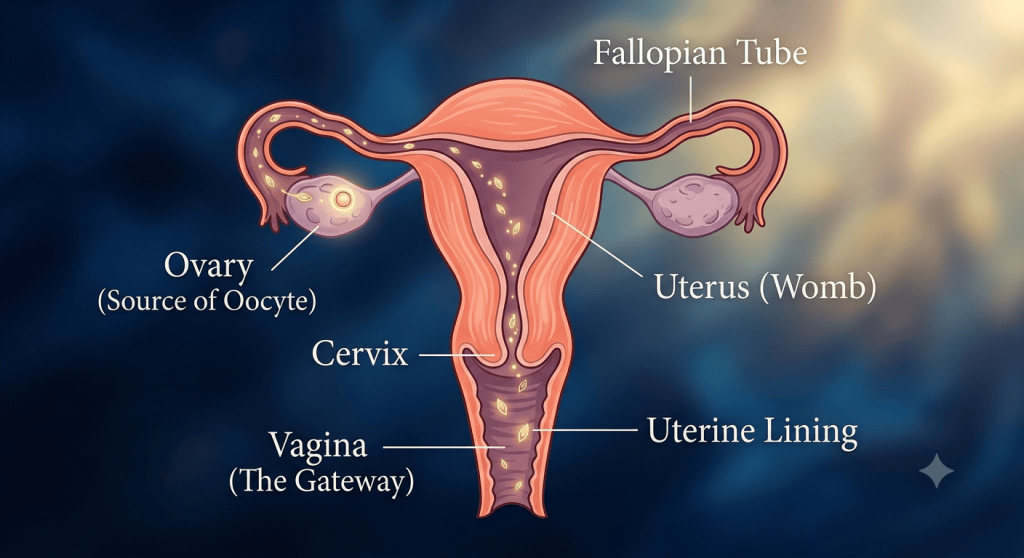
      Seed of Life: The Vagina

      The vagina is the foundational gateway of the female reproductive system.

      It is a highly adaptable, muscular canal designed to bridge the external environment with the internal reproductive organs.

      It serves three vital physiological functions:

      The Pathway for Sperm

      During intercourse, sperm are deposited here.

      The vagina acts as the starting line, allowing sperm to travel upward through the cervix to reach the egg waiting in the fallopian tubes.

      The Birth Canal

      Its muscular walls expand remarkably to allow a baby to pass safely from the uterus into the world during childbirth.

      The Menstrual Flow

      It provides the necessary exit route for blood and tissue shedding from the uterine lining during menstruation.

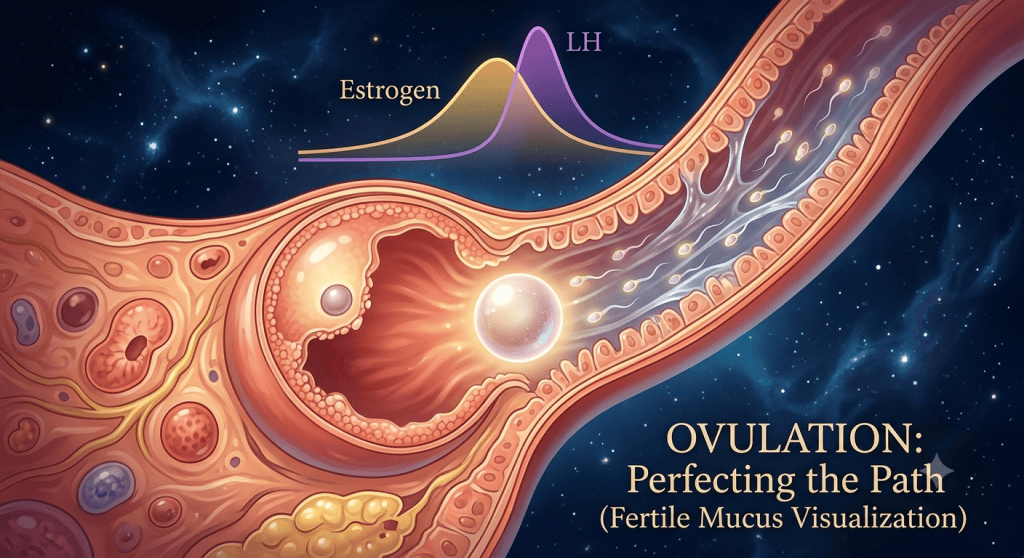
      Ovulation: Perfecting the Environment

      Reproduction cannot happen without the precise timing of ovulation—the release of an oocyte (egg) from the ovary.

      This is the moment the body intentionally alters its own internal environment to cultivate life.

      We must move past gross anatomy to visualize this perfected environment on a microscopic scale:

      This process is governed by a strict, biological order of operations:

      Hormonal Regulation

      The cycle is commanded by an intricate hormonal dance.

      Estrogen and progesterone rise and fall to regulate the maturation of the egg and to thicken the uterine lining, preparing it for the potential implantation of a fertilized egg.

      The Fertile Window

      Ovulation marks the most critical phase of a woman’s cycle.

      Occurring near the midpoint, it is the brief, highly optimized timeframe where conception is biologically possible.

      Cervical Mucus Transformation

      As ovulation approaches, cervical mucus changes dramatically.

      It becomes slippery, clear, and stretchy.

      This creates a frictionless, nutrient-rich medium that protects sperm from natural acidity and physically helps propel them through the cervix toward the egg.

      Increasing Pleasure and Bodily Ease

      Pleasure is not merely a byproduct of human anatomy; it is deeply interwoven with biological success and physiological health. The mechanics of arousal and climax serve distinct, observable purposes.

      How do these less visible signals (hormones, contractions, relaxation) integrate into a system of ease?

      We visualize this feedback loop:

      • Enhanced Fertility: Biological evidence suggests that the involuntary muscular contractions of the uterus and vagina during female orgasm may function as a retention mechanism, physically aiding the upward movement of sperm toward the egg.
      • Stress Reduction: Sexual activity and climax trigger a cascade of neurochemicals, including a massive release of endorphins. This chemical flood actively dismantles stress responses, promoting the deep physical relaxation required for an optimal, healthy reproductive environment.
      • Relational Bonding: Beyond the physical mechanics, shared sexual pleasure releases oxytocin—often called the “bonding hormone.” This cements emotional intimacy and trust between partners, which is a foundational element for overall relationship health and stability.

      I plan to go much much deeper in the near future on this… stay tuned for part 2.


      References & Source Material

      Evolutionary Biology of Pleasure and Fertility

      • Baker, R.R., & Bellis, M.A. “Human Sperm Competition: Ejaculate Manipulation by Females and a Function for the Female Orgasm.” Animal Behaviour. This foundational paper introduces the mechanical reality of how female climax functions to selectively retain sperm and influence fertility.
      • Lloyd, Elisabeth A. The Case of the Female Orgasm: Bias in the Science of Evolution. A biological and philosophical critique breaking down the evolutionary arguments surrounding female pleasure, separating biological fact from cultural byproduct.
      • Gross, Rachel E. Vagina Obscura: An Anatomical Voyage. A heavily researched look at the female reproductive system that strips away outdated medical dogma, presenting the female body as an active, dynamic landscape.
        Mechanics of Ovulation and the Cervical Environment
      • Clinical Reproductive Anatomy & Physiology. Standard clinical references regarding Spinnbarkeit (the stretchability of cervical mucus) detail how estrogen transforms the cervix into a highly optimized biological pathway for sperm leading up to the fertile window.
      • The Billings Ovulation Method Clinical Studies. Research on natural fertility tracking providing extensive biological data on how cervical mucus changes daily in response to hormonal cascades, proving the body communicates its fertility status in real-time.
        Neurochemistry of Bonding and Ease
      • Peer-Reviewed Literature on Oxytocin and Bonding (e.g., Evolution and Human Behavior, Psychological Science). Studies detailing the specific hormonal flood during climax, documenting how oxytocin and endorphins actively dismantle cortisol (stress) and facilitate the deep physiological ease required for reproductive success and relational trust.
    2. 5 Step Alchemical Process

      5 Step Alchemical Process

      “When you see your matter going black, rejoice, you are at the beginning of the work.” — Rosarium Philosophorum

      The traditional method of alchemy is divided into 5 stages:

      STEP ONE

      Nigredo —Blackening

      The term “nigredo” comes from the Latin word for “black,” and its color is referring to the material color at this first stage of the process, which is often darkened.

      The alchemist is observing or participating in the break down of the impurities that occur during Nigredo. This is the beginning of the distillation of raw materials.

      This physical act represents the process of confronting one’s shadow self and the negative aspects of oneself.

      This initial stage is one of dissolution and decay… confronting the raw, unrefined aspects of the self.

      It’s a descent into darkness, a metaphorical death; old structures break down, making the route for the emergence of new beginnings.

      Black —like fertile soil, chaotic, yet holds the potential for new growth.

      STEP TWO

      Albedo—Whitening

      Albedo is the term used to describe the extent to which an object like a planet or moon reflects light.

      Albedo emerges stark in contrast from the blackness of Nigredo.

      A state of pristine whiteness, like the moon reflecting the sun’s light is found after Albedo.

      Embodies clarity, a fresh perspective gained through the trials of the previous step. It’s a moment of reflection and the dawning of understanding.

      STEP THREE

      Citrinitas—Yellowing

      The term “citrinitas” comes from the Latin word for “yellow,” and it refers to the color of the materials at this stage of the process, which is often yellow or orange.

      At this stage, the alchemist is allowing the materials to be still… in Citrinita = self-growth + integration! 🍋✨ … think sitting water. Stagnation.

      This yellowing is considered a bridge between Albedo and the final stage.

      Citrinitas is associated with the rising sun, bringing with it warmth, light, and a sense of solar energy.

      It represents the awakening of the intellect and intuition, a golden hue illuminating the path forward.

      This stage signifies a growing awareness and the integration of newfound insights.

      STEP FOUR

      Rubedo—Reddening

      The term “rubedo” comes from the Latin word for “red,” and its name refers to the color of the materials at this stage of the process, which is often red or reddish-gold.

      A BLOODY MESS

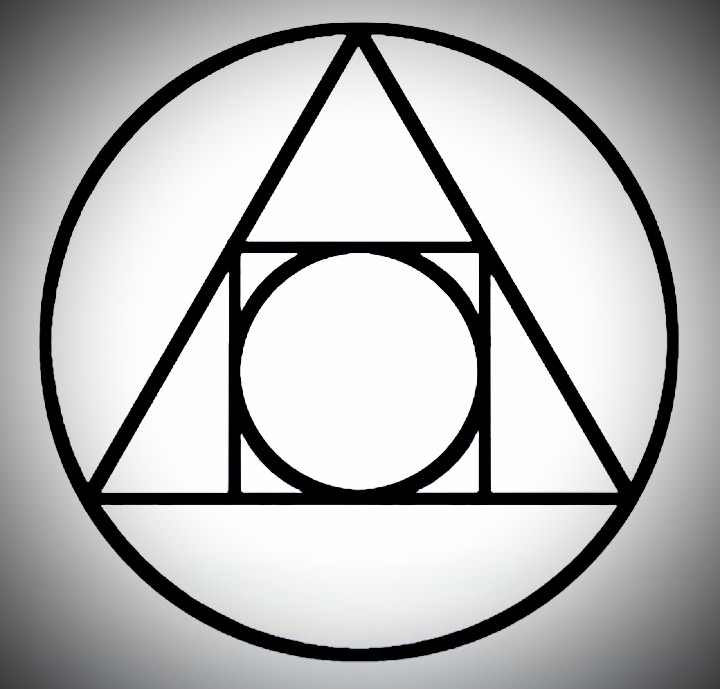
      In the Rubedo stage, the alchemist is completing the culmination of the alchemical process, its the stepping stone into the Philosopher’s Stone.

      Rubedo also represents the perfect union of opposites, it is the merging of the spiritual and the material.

      It is symbolized by the color red, signifying life, passion, and the ultimate realization of one’s true potential.

      This stage embodies wholeness, completion, and the attainment of a higher state of being.

      STEP FIVE

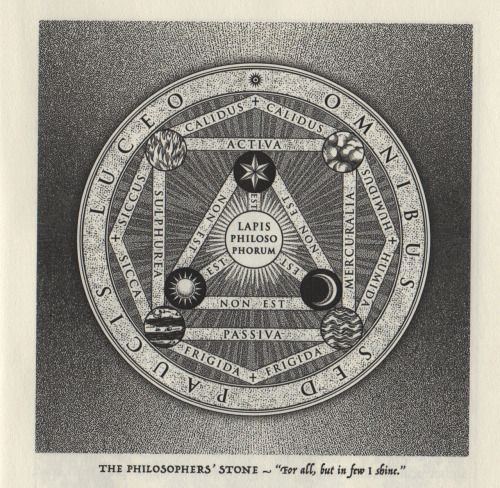
      Lapis Philosophorum (Philosopher’s Stone)

      The transcendent outcome, the perfected state.

      Conclusion/ Overview

      1. Nigredo (Blackening): The descent into shadow, where the old dissolves.
      2. Albedo (Whitening): A purification, a dawning of clarity from the darkness.
      3. Citrinitas (Yellowing): The sun’s touch, bringing illumination and understanding.
      4. Rubedo (Reddening): The ultimate fusion, the attainment of wholeness.
      5. Lapis Philosophorum (Philosopher’s Stone): The transcendent outcome, the perfected state.

      RESOURCES

      Alchemy Of Redemption
      Alchemy: Lead Transmuting to Gold
      Esoteric Pathways The Alchemical Art of Transformation
      The Inner Dance of Psyche and Spirit | Hermetic Academy
      Alchemy Historically
    3. Mind Trap

      Mind Trap

      We like to think of our minds as tools of clarity, but more often than not, they are cages.

      Cognitive Rigidity and Perceptual Limitations

      Cognitive rigidity and perceptual limitations are not abstract ideas—they are the invisible bars that confine how we see, think, and act in the world.

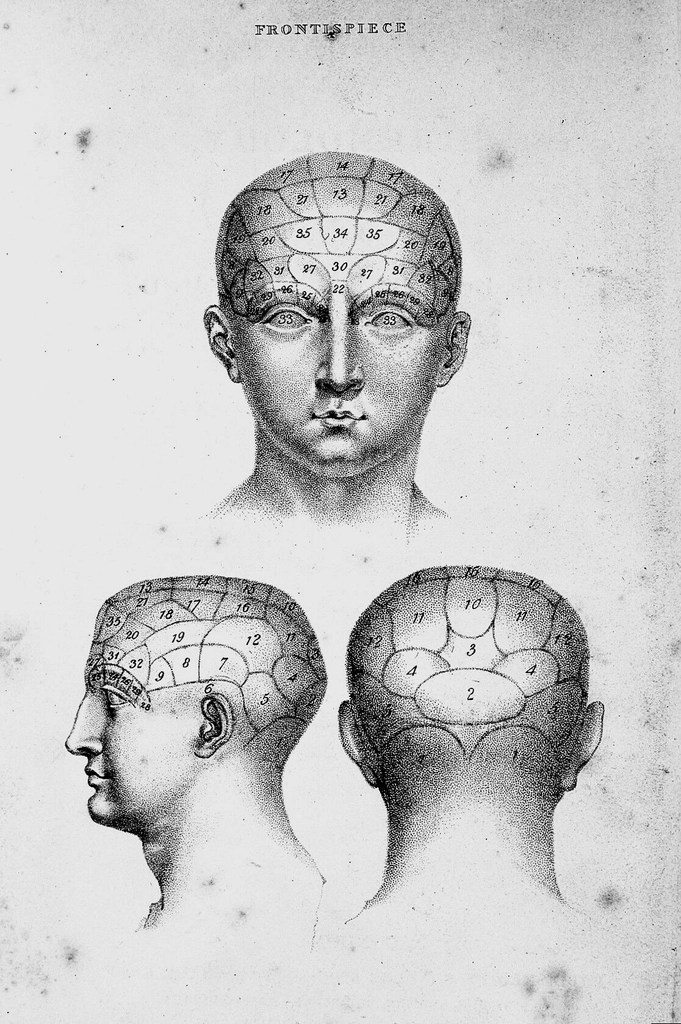
      “Phrenology, doctrine mind : relations“/ CC0 1.0

      CAGE OF THE MIND

      Cognitive rigidity is the stubborn insistence that our way of thinking is the only way.

      It shows up in small, everyday ways:

      • refusing to consider another perspective
      • dismissing evidence that challenges our beliefs
      • or sticking to habitual responses when flexibility is required.

      It is mental inflexibility masquerading as certainty.

      This rigidity is rarely neutral. It filters experience, allowing only what aligns with our preconceptions to pass through.

      What we notice and refuse to notice is determined less by reality and more by the contours of our existing beliefs. The mind becomes its own jailer.

      FILTERED VISION

      Perceptual limitations compound this problem. Our senses, our expectations, and our biases shape what we perceive.

      Two people can witness the same event and walk away with entirely different “realities,” each convinced theirs is the truth.

      Culture, language, upbringing, and personal trauma all function like lenses, coloring everything we see.

      When cognitive rigidity meets these perceptual filters, the feedback loop begins: our beliefs dictate what we perceive, and our perceptions reinforce our beliefs.

      We become prisoners of our own limited frameworks, blind to the complexity—and often the truth—of the world around us.

      Breaking the Loop

      Escaping this loop is not about acquiring more information. It is about retraining the mind to see what it usually ignores:

      Observe without judgment. Watch your thought patterns and notice when you shut down possibilities automatically.

      Seek what challenges you. Engage with ideas and perspectives that make you uncomfortable.

      Question your perception. Ask yourself what you might be missing, what biases are filtering your experience.

      Embrace intellectual humility. Accept that your understanding is provisional, incomplete, and subject to correction.

      The moment we recognize that perception is always partial, and thought is always provisional, the bars of the cage begin to loosen.

      Clarity is not a gift; it is a discipline.

      The Work of Liberation

      This is the work of liberation: not avoiding rigidity, but confronting it; not denying perceptual limits, but piercing them.

      The mind can be trained to perceive more, think more flexibly, and respond more intelligently.

      It is uncomfortable, but truth always is.

      We cannot see everything, but we can see more than we did yesterday.

      And that is where freedom begins.

    4. Divination In Scripture

      I do not play games here.

      “Divination.”

      A word that sets off religious trauma alarms.

      In the evangelical imagination, it conjures imaginations of Hollywood witches, Ouija boards, and black cats sacrificed in fire…

      Depictions of hell meant to serve as a cautionary tale for Sunday school children.

      But strip away the hysteria, read the actual text, open a dictionary, and you’ll find something more nuanced, and far more unsettling.

      Both are true:

      – The Bible condemns divination.
      – The Bible uses divination.

      So the question isn’t if divination appears in Scripture.

      It’s what kind God condemns, and what kind He authorizes.

      The Counterfeit Path

      Divination God Forbids

      Let’s begin where the line is clear.

      “There shall not be found among you anyone… who practices divination, tells fortunes, interprets omens, or consults the dead.”

      -Deuteronomy 18:10–12

      No gray here. Right?

      It is wicked to perform spiritual piracy.

      This would cover unsanctioned attempts to access hidden knowledge through pagan ritual, necromancy, or invocation of alien spirits.

      This is divination that severs us from Divine order.

      It’s the lust to control the unknown rather than commune with it.

      It’s worshipping creation to extract secrets instead of worshipping the Creator to receive revelation.

      Example: Saul and the witch of Endor (1 Samuel 28).

      That was not prophecy. It was desperation dressed as devotion.

      It ended in judgment, not illumination.

      The Sanctified Channel

      Divination God Permits

      Now here’s the curveball.

      The same Scripture that forbids divination also records divinely sanctioned forms of divination.

      These were tools used by priests, prophets, and apostles to discern God’s will.

      Urim & Thummim

      (Exodus 28:30; Numbers 27:21)

      Sacred lots worn over the priest’s heart were literal instruments (magical amulets) used to decode Divine guidance.

      Casting Lots

      Used to distribute land (Joshua 18), appoint leadership (1 Samuel 10), and even select Judas’ replacement (Acts 1:26).

      Dream Interpretation

      Joseph, Daniel, and others functioned as interpreters of divine dreams.

      Prophetic Symbolism

      Ezekiel’s street performances, Jeremiah’s object lessons, John’s apocalyptic visions—all were divinatory acts in sacred alignment.

      The medium isn’t the issue.
      The source is.

      What God condemns is bypassing Him.

      What He blesses is listening to Him.

      The Sacred Line

      Source & Surrender

      Divination means “the seeking of hidden knowledge.”

      The Bible doesn’t condemn that impulse to Seek the hidden realm, in fact it encourages us to go to the Secret Rooms with The Father.

      The Bible condemns pride in the pursuit.

      If you’re consulting spirits to manipulate outcomes, you’re rebelling.

      If you’re surrendering to Divine mystery, seeking revelation on God’s terms, you’re worshipping.

      The sin isn’t the search. It’s the source.

      The danger isn’t knowledge.

      It’s control.

      The Modern Mirror

      Today’s symbolic tools; dreams, visions, synchronicities, even tarot or astrology—aren’t automatically evil.

      They’re languages, mirrors, archetypal scripts written into the psyche.

      Their moral weight depends entirely on the spirit animating their use.

      God has always spoken through signs and symbols.

      He still does.

      But His voice doesn’t feed curiosity; it refines character.

      It doesn’t confirm your ego; it crucifies it.

      So don’t dismiss the mystical as demonic.

      But don’t baptize every “download” as divine either.

      Discernment is not fear.

      It is fidelity.

      The Final Thought

      The Bible is not anti-divination.

      It is anti-ego.

      Anti-idolatry.

      Anti-manipulation.

      Scripture doesn’t call you to spiritual blindness.

      It calls you to holy vision:
      anchored in awe, humility, and fire.

      If you’re gifted to read signs, interpret dreams, or navigate symbols, do so with reverence.

      Walk softly.

      Seek truth, not control.

      Because in the end, God does not hate diviners.

      He hates when His creation believes it can replace Him.

    5. Scripture Secrets

      Secrets of Scripture | Esoteric vs Exoteric


      Unlocking Spiritual Vision

      The Bible Operates On 2 Levels:

      1. The Exoteric

      —what’s seen on the surface—and…

      2. The Esoteric

      …the deeper inner meaning.

      THIS IMPLIES DUALITY.

      DUALITY INTERFERES WITH OUR SPIRITUAL CONDITION.


      Jesus:

      “If those who lead you say to you, ‘See, the kingdom is in the sky,’ then the birds of the sky will precede you. If they say to you, ‘It is in the sea,’ then the fish will precede you. Rather, the kingdom is inside of you, and it is outside of you. When you come to know yourselves, then you will become known, and you will realize that it is you who are the sons of the living father. But if you will not know yourselves, you dwell in poverty and it is you who are that poverty.

      – Gospel of Thomas

      That statement alone invites us to read Scripture as more than just historical narrative or morality anecdotes.

      THE KINGDOM OF HEAVEN IS WITHIN

      An esoteric reading of the Bible treats it as a psychological and spiritual map.

      The Bible is a manual for how the human mind operates and how the soul evolves.

      Every character, event, and place represents an aspect of the human experience.

      The Bible isn’t just about people in other eras and lands; it’s about you.

      What Esoteric Doesn’t Mean

      “Esoteric” doesn’t mean abstract or mystical for the sake of being mysterious.

      Esoteric Does Mean:

      It means looking beyond the literal to uncover the spiritual truth within.

      Esoteric Parables

      Jesus often taught using parables—stories layered with symbolic meaning.

      “Though seeing, they do not see;

      though hearing, they do not hear”

      These weren’t just teaching tools.

      …they were keys, designed to open deeper levels of understanding.

      He told his disciples directly:

      “It has been given to you to know the mysteries of the kingdom of heaven, but to them it has not been given.”

      That distinction matters.

      The outer story speaks to the crowd.

      The inner story speaks to the seeker.

      The prodigal son:

      On the surface, it’s a touching story of forgiveness—a father welcoming back his wayward son.

      But if that’s all you see, you’ve only read the first layer, the exoteric.

      On an esoteric level, it’s about the human psyche (soul) drifting away from spiritual truth—squandering its inheritance.

      We trade our Soul’s Divine essence for the outer worlds fake luxury.

      The Return of the Son

      When the “son” returns, it’s a symbol of returning to higher consciousness, to alignment with the Divine source, our Father in Heaven.

      The “father’s house” isn’t a physical home.

      The Fathers house is the original state of spiritual awareness we’re meant to live from.

      You can find beautiful wisdom in the Bible at the surface level, but if you never look for the second upper-story, you’re missing its true power.

      The real spiritual meaning isn’t obvious.

      It’s concealed in plain sight.

      Most theologians don’t teach this—

      I don’t think they’ve ever learned to read it this way or they’ve become so indoctrinated that they avoid it in fear of becoming a “heretic”.

      RESOURCES

      How biblical dualism can help us to gain a better understanding of God’s perspective

    6. Jesus

      Jesus

      Do You Think You Know Jesus?

      They Said Jesus Was
      Insane. Mad. Crazy. Strange.

      The image of Jesus most people hold is wrong and wrung through centuries of:

      • ideological whitewashing
      • beautified marketing
      • sanitized Sunday School summaries.

      He’s often pictured as an ethereal peace-giver, universally adored, calmly glowing in a ‘soft sepia light’.

      But this wasn’t the Jesus known to his followers. Not even close.

      In fact, many who encountered Jesus in the flesh found him either;

      1. confusing, at best
      2. mentally unstable, at worst.

      He wasn’t simply controversial, he was considered a threat to both religious orthodoxy and social order.

      The sanitized version of Christ so many cling to was shaped after the cross, after the church industrial complex took control of his narrative.

      Let’s take a scalpel to the original reactions—the raw, unsettling perceptions of Jesus while he was still walking the earth.

      His Family Thought He’d Lost His Mind

      The Gospel of Mark pulls no punches. In Mark 3:21, we’re told that Jesus’ own family said:

      “He is out of his mind.”


      Yes, his own bloodline. Not strangers. Not critics. His family. Pause there…

      Imagine. Imagine the weight of that.

      You’ve awoken to a Divine Knowing, a consciousness that cracks open reality—and the people who know your voice best say:

      “You’ve snapped.”


      It wasn’t mockery from outsiders that came first; it was internal doubt.

      His kin likely feared he’d gone mad with something akin to messianic delusion.

      Or perhaps they were embarrassed by his sudden rise as a controversial street-preacher confronting the Government and Church…

      He spoke vehemently against both Rome and the temple elite.

      Religious Leaders:

      “You’re Breaking the Law and Blaspheming“

      The religious class didn’t just dislike Jesus—they actively plotted his removal.

      The scribes and Pharisees viewed him as a heretic, accusing him of;

      • violating the Sabbath
      • flouting Mosaic Law
      • daring to forgive sins.

      —a divine prerogative.


      His miracles weren’t applauded; they were denounced as works of Beelzebub.

      Let that settle: divine acts being interpreted as demonic.

      … this was normal folk… the acceptable people… The community.

      This wasn’t petty disagreement.
      This was existential threat-level panic from the religious hierarchy.

      They saw in Jesus… not just a radical voice—but someone who dismantled their very grip on sacred authority.

      Public Whispers: “He Has a Demon and Is Mad“

      John 10:20 captures this damning public sentiment:

      “He has a demon and is mad; why listen to him?”

      These weren’t elite theologians.

      These were everyday observers—

      • neighbors
      • townsfolk
      • bystanders.

      Jesus’ words, while layered with profound gnosis (wisdom), sounded unhinged to the average ear.

      And truthfully, wouldn’t they today? I mean… They do.

      Imagine someone saying,

      “Before Abraham was, I am.”

      Or calling God their literal Father, claiming to bring not peace but a sword.

      If spoken in today’s marketplace, they’d be dismissed as spiritually schizophrenic, or worse.

      So what’s changed?
      Only the power structure that codified his words.

      Outside the Bible: Even More Scathing Views

      This doubt wasn’t exclusive to Jewish contemporaries.

      Roman voices and philosophers took their shots, too.

      Talmud

      The Talmud contains cryptic but deeply derogatory references to Jesus—branding him a sorcerer who led Israel astray.

      He is also said in the Talmud to be swimming in hot excrements.

      These weren’t passive critiques.

      They were sharp rejections by those who saw his influence as spiritually treacherous.

      Roman Philosophers

      Roman historian Tacitus referred to Christianity as a “pernicious superstition,” blaming the followers of Christ for corrupting public morals.

      To Roman minds, Christ’s followers were:

      irrational fanatics clinging to a crucified troublemaker.

      Celsus

      And then there’s Celsus, the ancient philosopher and intellectual, who reportedly called Jesus

      “small, ugly, and undistinguished,”

      claiming his father was a Roman soldier—a jab meant to invalidate his divine paternity and tarnish the virgin birth narrative.

      Jesus wasn’t revered by the intellectual elite of his time.

      He was;

      • mocked
      • dismissed
      • vilified.

      Why This Matters

      This isn’t about shock value or anti-Christian rhetoric. It’s about truth-telling.

      When we sanitize the narrative of Jesus to make him palatable. We also:

      • rob Him of the radical edge that threatened anti Christ power
      • offended institutions
      • deny the painful fact that he alienated his own family.

      His teachings were revolutionary because they disrupted—not because they fit neatly within pre-existing paradigms.

      So when you feel like your awakening makes others uncomfortable when your truth sounds like madness to the masses take comfort. You’re in excellent company.

      Because the real Jesus wasn’t crucified for being nice. He was crucified because he challenged the lies. And many thought he was insane for doing so. Truth rarely sounds sane to those who live comfortably in delusion.

      “And you will be hated by all for my name’s sake. But the one who endures to the end will be saved.”

      – Matthew 10:22
    7. Who is a Philosopher?

      Who is a Philosopher?

      A PHILOSOPHER IS ONE WHO LOVES WISDOM

      Do You Love Wisdom?

      YOU’RE A PHILOSOPHER IF YOUR ANSWER IS YES.
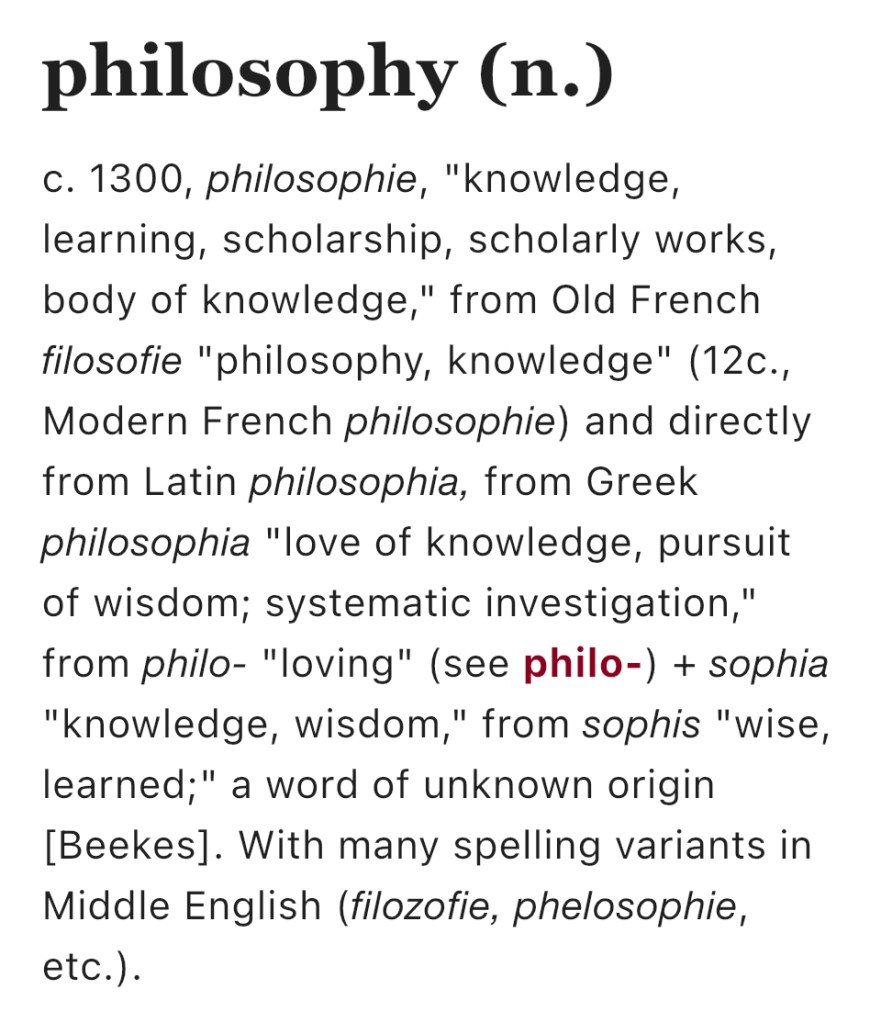
      philosophy origin

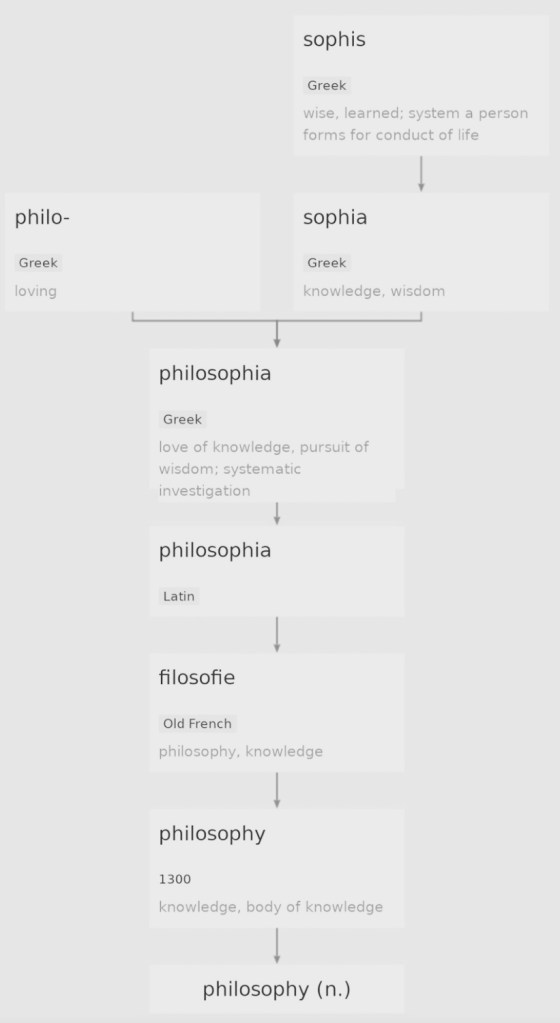
      The term “philosophy” originates from the Greek

      “Philo” (love) + “Sophia” (wisdom)
      The Love of Wisdom


      From The Etymological Dictionary:

      Philosophy Is Not Limited to Academia

      Philosophy is for you and me and even the dude down the road.

      Why Philosophy Is Good To Take Part In?

      You’ll Ask The Right Questions

      Philosophy empowers you to inquire thoughtfully and meaningfully.

      You’ll Find Meaning and Purpose

      Delve into what truly matters in life.

      You’ll Develop Critical Thinking

      Enhance your ability to analyze and evaluate arguments.

      Navigate Ethical Dilemmas ⚖️🤔✨

      Tackle complex moral issues with clarity and insight.

      Philosophy helps you unravel the mysteries of life’s fundamental questions..

      Expand your mind, ignite your curiosity, and awaken the philosopher within you, you’ll be sure to discover the truth about yourself and the world around you.

      The term “philosophy” is from its ancient Greek roots.

      PHILO+ SOPHIE

      Origin and meaning of philosophy by Etymonline

      Greek Tradition

      Philo | Loving

      Sophie | Wisdom

      In Greek Mythology, Sophia was associated with wisdom and knowledge.

      She embodies the idea of understanding and insight, representing a deeper connection to the universe and the divine.

      Many Greeks woo would seek her guidance in times of uncertainty, hoping to gain clarity in their lives. They understood Wisdom is not just about knowledge, but, more so, about the ability to see beyond the surface. The richness of her meaning caused a greater appreciation for the complexities of life.

      Sophia is closely associated with the concept of “phronēsis,” which means practical wisdom.

      Read: Greek Virtue “Sophia”


      Philosophia

      The term “philosophia” was brought to prominence by Plato and his mentor Socrates, who underscored the pursuit of wisdom as a fundamental guiding principle for a meaningful life.

      Socrates was famously declared the wisest man by the Oracle because of this:

      Socrates recognized his own ignorance.

      The philosophical pursuit of wisdom is through questioning and dialogue.


      The Pythian Oracle

      The Pythian Oracle was a priestess who delivered prophecies from the god Apollo at his temple in Delphi, Greece. She was also called Pythia, which was the original name of Delphi. 

      She entered a trance-like state and spoke cryptic messages that were interpreted by the priests.  The oracle was consulted by many ancient Greeks for advice on war, politics, colonization, and religion. The oracle’s influence lasted from the 8th to the 4th century BCE, when it was banned by the Roman emperor Theodosius I.


      Sources: 

      Delphic oracle | Definition, Greek Mythology, Pythia, & Facts. 

      Pythia – World History Encyclopedia. 
      Pythia (Oracle of Delphi): Ancient Greek History + Facts.
      What Is the Oracle of Delphi and How Did She Prophecy? – Historic Mysteries. .


      Philo of Alexandria

      Integration of Greek and Jewish Thought:

      Philo of Alexandria, a Hellenized Jew, attempted to harmonize Greek philosophy with Jewish scripture. He used “Sophia” to denote both human and divine wisdom, integrating it with the concept of “Logos” (Word), which later influenced Christian theology. 

      Read More


      Sophia as Divine Wisdom 

      In Christian theology, “Sophia” was personified as Divine Wisdom, often equated with Christ. This interpretation is evident in the writings of the Church Fathers, who identified Christ as the Wisdom of God, a concept rooted in the New Testament.


      Philo-Sophia: 

      Revising Philosophy: The book "Philo-Sophia: Wisdom Goddess Traditions" by Debashish Banerji and Robert McDermott explores the divine feminine aspect of wisdom. It argues for a revision of philosophy to include mystical, intuitive, emotional, performative, and collective knowledge, moving beyond the patriarchal and rational objectification that has dominated traditional academic philosophy. 


      Areas to Explore

      What is the nature of reality? 

      Delve into the realms of metaphysics and ponder the ultimate nature of existence itself.

      What is the meaning of life? 

      Engage in existential musings as we examine the purpose and significance of our existence in the grand tapestry of the universe.

      PHILOSOPHY IS INTIMATELY CONNECTED TO THE PURSUIT OF KNOWLEDGE, TRUTH, ETHICS, SPIRITUALITY, AND LIFE’S DEEPER MEANINGS.

      Epistemology

      Epistemology is the study of knowledge, justification, and the relationship between the two.

      It explores questions such as:

      • What does it mean to be justified? 
      • Is knowledge justified? 
      • Is there such thing as true belief?
      • Can we have justified beliefs at all?

      Epistemologists debate the role of internal and external factors in justification, the permissibility of different doxastic attitudes, and how we use our knowledge to acquire more knowledge. 

      The value of knowledge is the mission to uncover in Epistemology.


      Metaphilosophy

      Metaphilosophy is the study of philosophy itself, exploring questions about the nature of philosophical inquiry and the epistemology of philosophy.

      It examines whether philosophy aims to discover objective truths about the external world or is more focused on understanding words and concepts.

      It also considers the possibility of armchair philosophical knowledge and the relationship between empirical science and philosophy.


      Philosophy Of Mind

      The philosophy of mind covers all philosophical topics about the mind and mental states. Its subtopics can be divided in two main ways. First, by the traditional divisions drawn between kinds of mental states:

      1. Divisions are drawn between:

      … consciousness, intentionality, perception, and other states and processes.  types of phil

      2. Quotations are asked about these activities regarding their nature.

      Study the relation between the mental and the physical and  questions regarding our knowledge of the activities, the relationship between them.

      Philosophy of mind overlaps with the philosophy of cognitive science and the philosophy of action.  


      Further Study:


      Examples Of Philosophic Disciplines:

      Metaphysics…
      or the study of reality.

      Ethics…
      or the study of what is morally right & good.

      Epistemology…
      or the study of how we know reality. 

      Logic… 
      or the study of good arguments.

      Aesthetics… 
      or the Philosophy of Art. 


      The concept of “love of wisdom” can be defined as the pursuit and admiration of knowledge, guided by a deep affection and appreciation for intellectual exploration.


    8. Quantum Alchemy

      Quantum Alchemy

      Seeing the Unseen, Understanding the Complex


      Quantum Alchemy is a framework that merges ideas from quantum physics—such as entanglement, superposition, and wave-particle duality—with the symbolic, transformative, and spiritual traditions of alchemy.

      It often explores the idea of consciousness, energy, and reality as interconnected, sometimes framing quantum phenomena through the lens of alchemical processes like transformation, unification, or the pursuit of higher states of being.

      IDEAS FOUND IN QUANTUM ALCHEMY:

      Transforming the properties of particles or materials

      Similar to how alchemists sought to transform lead into gold, quantum alchemy aims to manipulate the properties of particles, atoms or materials at the quantum level to create new forms of matter with desired characteristics.

      This could involve changing the nuclear charges or electron configurations.

      Computational method for predicting molecular properties

      Quantum alchemy uses expansion to approximate and predict properties like binding energies for large numbers of molecules and materials by making small perturbations to a reference system. 

      This accelerates screening of potential catalysts or drug candidates.

      Representation of the chemical space as a quantum superposition

      Some propose representing all possible atomic compositions as a linear superposition state, with a “quantum alchemical Hamiltonian” driving the optimization to select the best molecule for a desired property.

      Philosophical connections

      There are also philosophical parallels drawn between the aims of ancient alchemy (e.g. transmutation, elixir of life) and modern concepts in quantum physics about the malleability and interconnectedness of reality.

      Quantum alchemy leverages quantum mechanical principles to transform, optimize & efficiently model perveived matter and alter chemical systems in real ways. 

      It combines ideas from physics, chemistry, and the metaphysical quest of the ancient alchemists.

      Quantum algorithm for alchemical optimization in material design
      Science of Alchemy pdf

    9. The Essence of Truth + Intuition

      The Essence of Truth + Intuition

      In my journey as an “alien” on this planet, I have, unwittingly, stumbled upon what had been archaically called the Philosopher’s Stone or the Elixir of Life…

      I only realized this after I, through being magnetically attracted toward suffering, embracing the darkness that most fear, had unearthed the Essence of Reality.


      This Essence is a Truth so profound, it is woven into the very core of our beings through the quantum dimensions & atmospheric pressure, without such, we would become vacuumed into nothingness.

      This truth is unassailable, standing as a lamp of certainty, illuminated by the light of Intuitive Wisdom.


      THIS LIGHT IS CHRIST’S LIGHT OF INTUITION FROM ABOVE.


      Intuition transcends the limitations of our corporeal senses, for it is birthed from the sacred depths of the spirit.

      Intuition is a whisper from the Heavens, a subtle yet ever powerful current that flows through the Ethers of existence.


      Intuition is the Blood within the veins of Eternity.

      When the Holy Spirit stirs, He ignites the flame of Intuition, transforming our sensorial experiences into a Divine Compass.


      THE KINGDOM OF GOD IS WITHIN YOU


      This guiding Force elevates our conscious awareness, rendering the conventional Five Senses as mere tools in the Macrocosm of our being within this existence and realm.

      When this inner awakening is embraced, we align in tandem with the Universal Symphony of Wisdom.


      Intuition becomes our most trusted Guide, leading us towards a Life of deeper Understanding and connection with the Infinite.