
Feeling Into Another
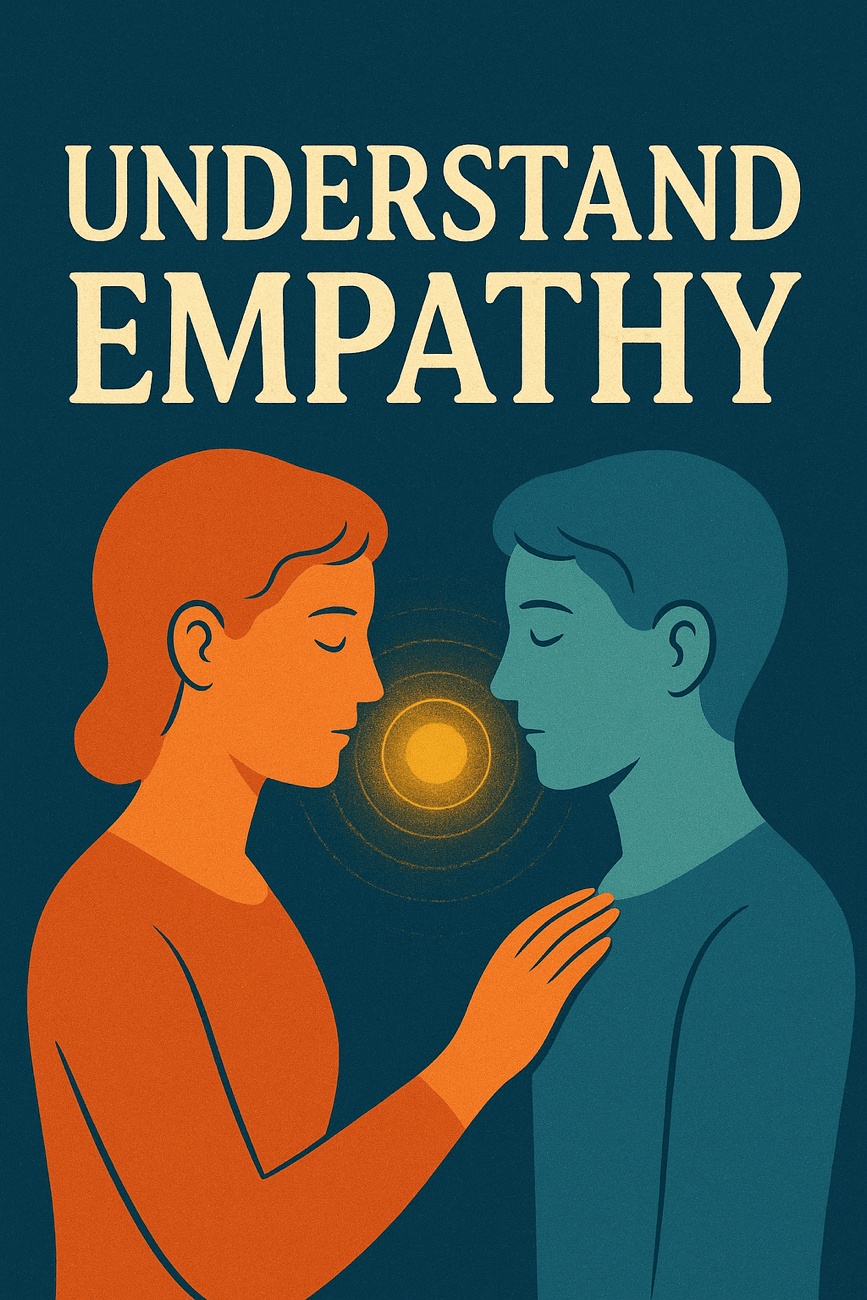
Empathy is not passive sympathy—it is entry. To empathize is to feel into another’s experience until the boundary between “you” and “them” briefly dissolves.
Jonathan Edwards once described it as knowing another’s feelings as if they were your own. That’s closer to the truth than most realize.
Empathy is more than emotion—it’s perception.
A heightened nervous system, a tuning fork of consciousness that resonates with the unspoken frequencies around it. Science now peers curiously at this mystery, finding evidence of hyper-responsive mirror neurons and unique dopamine patterns, particularly among introspective personalities.
Yet the laboratory only grazes what mystics and sensitives have long known: empathy is not merely learned; it can be awakened.
Some are born empaths—open channels of sensation from the first breath.
Others grow into it, chiseling sensitivity from stillness, meditation, and the discipline of inner quiet.
With intention, anyone can refine this art:
- grounding the body
- visualizing energetic boundaries
- learning when to open and when to shield.
Focus enhancers—nootropics, deep breathing, and meditative practice—can sharpen this capacity.
But the core of empathy remains spiritual, not chemical.
The word itself comes from the Greek empatheia—to feel into, to be moved by passion.
Later, the German Einfühlung carried it into psychology through Hermann von Helmholtz in the 19th century. Yet long before language named it, empathy pulsed through the human story as the invisible bridge between souls.
At its root, empathy is threefold:
Understanding
Recognizing and comprehending another’s emotions.
Sharing
Feeling a reflection of what they feel within your own body.
Perspective-Taking
Stepping fully into their world and seeing through their eyes.
From these arise the primary faces of empathy:
Affective (Emotional) Empathy
When another’s sorrow or joy ripples through you, unbidden. It’s the contagion of feeling that can both unite and overwhelm.
Cognitive Empathy
The intellectual capacity to see through another’s frame of mind. It doesn’t feel what they feel—it understands it. This form is vital in discernment, negotiation, and healing professions, where compassion must be guided by clarity rather than collapse.
Somatic Empathy
When the body itself becomes a translator of emotion. A stomach tightens in response to another’s anxiety, a chest constricts when they recall grief. The nervous system speaks in sympathetic vibration.
Spiritual Empathy
The rarest and deepest: when one soul feels into another beyond words, time, or separation. It’s the awareness that what hurts one part of creation reverberates through the whole.
Empathy lives at the intersection of heart and brain—an orchestra of mirror neurons, amygdala signals, and energetic resonance.
Emotional cognition allows us to interpret what we feel, to trace the current back to its source and understand how emotion shapes thought, memory, and decision.
At its highest form, empathy becomes empathic resonance. It is the recognition that another’s heartbeat is not separate from your own, only playing a different rhythm.
To cultivate empathy is not to drown in feeling—it’s to master it.
The empath who grounds their sensitivity becomes an instrument of peace. The one who leaves it untrained becomes a sponge for the world’s pain.
Empathy is the art of sacred attunement.
It is both psychic and profoundly human, the oldest language of the soul.
When harnessed with discernment, it births compassion, connection, and the quiet strength that heals unseen wounds—within and without.
