Tag: Emotional Intelligence

  • Guide To Intuition

    Guide To Intuition

    Intuitive — both an adjective and a noun

    There is a kind of knowing that does not ask permission from the mind.

    It does not build a case.

    It does not cite its sources.

    It arrives already finished — and you are left, afterward, trying to reverse-engineer a reasoning process that never actually happened, because there wasn’t one.

    There was only recognition.

    THIS IS INTUITION

    And I want to be precise about what it is, because the word gets used carelessly — as a synonym for ‘hunch’, for ‘gut feeling’, for whatever unexamined impulse happens to walk through the door.

    It is more disciplined than that.

    It is older than that.

    What the Word Actually Says

    Intuitive: from the 1640s, meaning to perceive directly and immediately.

    French intuitif. Medieval Latin intuitivus.

    Beneath that, Latin intueri — to look at, to consider — built from in- (into) and the Proto-Indo-European root tueri, to look at, to watch over.

    Sit with that construction for a second— TO LOOK INTO.

    Not to look at something from the outside, the way the analytical mind does when it studies a thing and holds it at arm’s length.

    TO LOOK INTO

    Intuition was never framed, at its root, as a shortcut around understanding.

    It was framed as a more direct route to the same place, perception without the detour through argument.

    By 1833 the word had picked up its second meaning: self-evident.

    Which tells you something about how intuitive knowledge behaves once it arrives.

    It doesn’t feel like a conclusion you reached.

    It feels like a fact you always had.

    INTUITION’S ESSENCE

    Intuition is knowledge acquired without recourse to conscious reasoning.

    It costs little apparent effort, and it often arrives beneath the threshold of awareness. —you didn’t notice yourself knowing it, you just discovered that you already did.

    I’ll say what I am convinced is objective reality and the rationalist minds reading this will resist:

    Intuition is not knowledge in spite of the unconscious. It is knowledge because of it.

    Subconscious Intuition

    Somewhere beneath the noise of deliberate thought, pattern and truth are being recognized continuously, without your permission and without your effort.

    Intuition is what it sounds like when that recognition finally surfaces loud enough to hear.

    Call it whatever you want— Gnosis, Pattern Recognition …

    Call it pattern-recognition if the word “gnosis” makes you nervous. I won’t argue about the name. I will insist on the thing.

    The analytical mind — the part of you that constructs arguments, weighs pros and cons, wants everything justified before it’s trusted — is not the enemy of intuition.

    But the analytical mind is not its source, either.

    It is downstream.

    It is the part of you that shows up afterward, translating a knowing into language, dressing it in reasons it can defend at a dinner party.

    The knowing came first.

    Four Intuitive Types Moving Through People

    Not everyone’s intuition operates the same way.

    I’ve watched these four show up distinctly enough, in myself and in the people I’ve cared about enough to study.

    I think of these types less as a typology and more as four different instruments the same instinct can be played on.

    1. ADAPTIVE INTUITION

    Adaptive intuition moves fast, and it moves on experience — not analysis, experience, the kind that’s been lived through the body enough times to have left a residue.

    It shows up when a situation is too time-compressed for deliberation, and it’s the one people instinctively turn to for guidance in a crisis, because it doesn’t destabilize when the ground does.

    This is the intuition of someone who’s been through the fire enough times to recognize the smell of smoke before the alarm goes off.

    2. OBSERVANT INTUITION

    Observant intuition is quieter and more patient. It’s built on close attention — visual, sensory, environmental.

    It notices the cue nobody else caught:

    1. the tone that shifted & 2. the detail that doesn’t match the story being told.

    People who carry this type tend to move cautiously, because they’re gathering before they’re deciding, and it often coexists with real artistic ability — the same faculty that reads a room can read a canvas, or make one.

    3. ANALYTICAL INTUITION

    Analytical intuition looks, from the outside, almost like its opposite — deliberate, unhurried, unwilling to move until every possibility has been turned over.

    But it’s still intuition, not pure logic, because the “considering” isn’t a formal process; it’s a felt need to hold the question longer, even when it produces something that looks like indecision.

    This is the instinct behind good lawyers and good detectives — not faster knowing, but knowing that refuses to close early.

    4. QUESTIONING INTUITION

    Questioning intuition is analytical intuition’s more skeptical cousin — the same refusal to rush, but anchored harder in fact and evidence rather than felt pattern.

    It doesn’t trust a recognition until it can also verify it.

    This is the instinct behind good accountants:

    the sense that something’s off, followed immediately by the demand to prove it.

      Why This Matters

      None of these four are “more intuitive” than the others.

      They’re the same faculty filtered through different relationships to time, evidence, and trust.

      What they share is the thing the word has meant since the 1640s: direct perception.

      A way of looking into something rather than only at it.

      CULTURAL CONDITIONING

      We’ve been trained — by a culture that worships the analysis it can show its work for — to distrust the knowing that arrives without a paper trail.

      I’d ask you to consider the opposite: that the paper trail is the translation, not the source.

      That the fastest, oldest, least defensible-sounding knowledge you have might also be the least corrupted.

      It hasn’t been argued into a shape that’s convenient.

      It’s just true, the way a self-evident thing is true — because you looked directly at it, and it looked back.


      EXTERNAL REFERENCES

      Study on Intuition and Insight

      Psychology and Philosophy of intuition

      The Roots of Intuition

    1. Chains to Connection

      Chains to Connection

      How Self-Imprisonment Forged Unbreakable Empathy

      The human journey often leads us through valleys of despair before we can ascend to peaks of understanding.

      There was a time when I believed myself to be perpetually bound… a captor, slave, and victim of my own making, forever undeserving of redemption.

      This rigid self-condemnation felt like an inescapable truth, a life sentence I had both imposed and accepted.

      Yet, within the depths of that very desolation, an unexpected grace emerged.

      The Crucible of Deprivation

      A Pathway to Profound Empathy

      Experiencing such profound internal deprivation and desolation wasn’t just painful; it was transformative.

      Without having walked through that particular darkness, I genuinely believe I wouldn’t possess the miraculous sensibilities I do today.

      My past self-imprisonment became the key to unlocking an almost impossible level of relatability.

      I can now connect with those who seem irredeemable, seeing flickers of shared humanity where others might see only despair.

      This profound understanding wasn’t born from external validation or societal acceptance.

      It stemmed from becoming my own adversary, from witnessing the truth only after the deepest shadows had fallen.

      The Warrior’s Path

      Endurance Beyond Conventional Wisdom

      The journey out of that self-imposed prison demanded a level of endurance that defies conventional understanding.

      It required long-term perseverance, turning the other cheek to self-pity, and denying immediate gratification.

      It meant observing my own thoughts and emotions without judgment or attachment, detaching from the noise of a society often plagued by suffering and superficiality.

      Seventy-five days of isolation, removed from the very societal pressures that contribute to our collective ailments in the Western world, proved to be an invaluable catalyst.

      This isn’t the kind of endurance often found within the comforting walls of most churches or synagogues; it’s a solitary, internal forging.

      It demands an acceptance of profound solitude, coupled with the paradoxical realization that you are never truly alone.

      Embracing the Unseen

      The Non-Physical Meaning of Life

      What happens when your core beliefs are challenged, mocked, scoffed at, or simply ignored?

      When fellow humans oppose the very essence of your existence or expression?

      This journey taught me that the meaning of life is not physical.

      If this truth holds—and I now know it does—then what are we truly striving for in our material pursuits?

      This path requires a warrior in spirit, willing to sacrifice all perceived strongholds: friends, family, ego, and even security, all in the name of Truth.

      We are called to battle our internal “demons,” embracing an objective realization that refuses to bend to our subjective feelings.

      It’s about practicing the skill of derealization, conjuring a righteous mind for self-judgment, and relaxing into our ability to construct a powerfully robust split within our own personalities.

      We must accept any answer that proves itself to be without external control, embracing the freedom found in releasing what we cannot dictate.

      Tips

      Practice Mindful Observation

      Dedicate 10-15 minutes daily to observe your thoughts and emotions without judgment. Notice patterns, triggers, and reactions without engaging with them.

      Explore Stoic Philosophy

      Delve into texts by Seneca, Epictetus, and Marcus Aurelius. Their emphasis on inner control, acceptance of what cannot be changed, and the pursuit of virtue resonates deeply with the themes discussed here.

      Journal Your Journey

      Document your insights, challenges, and breakthroughs. Writing can be a powerful tool for self-reflection and recognizing personal growth.

      Seek Solitude (Safely)

      If feasible and safe, consider periods of digital detox or even a short retreat to experience the benefits of reduced external stimulation.

      Engage in Deep Listening

      When interacting with others, practice listening without interruption or formulating your response. Aim to truly understand their perspective, especially when it differs from your own.

      What aspects of self-discovery have profoundly changed your perspective?

      Share your thoughts and continue the conversation in the comments below!

    2. Mind Trap

      Mind Trap

      We like to think of our minds as tools of clarity, but more often than not, they are cages.

      Cognitive Rigidity and Perceptual Limitations

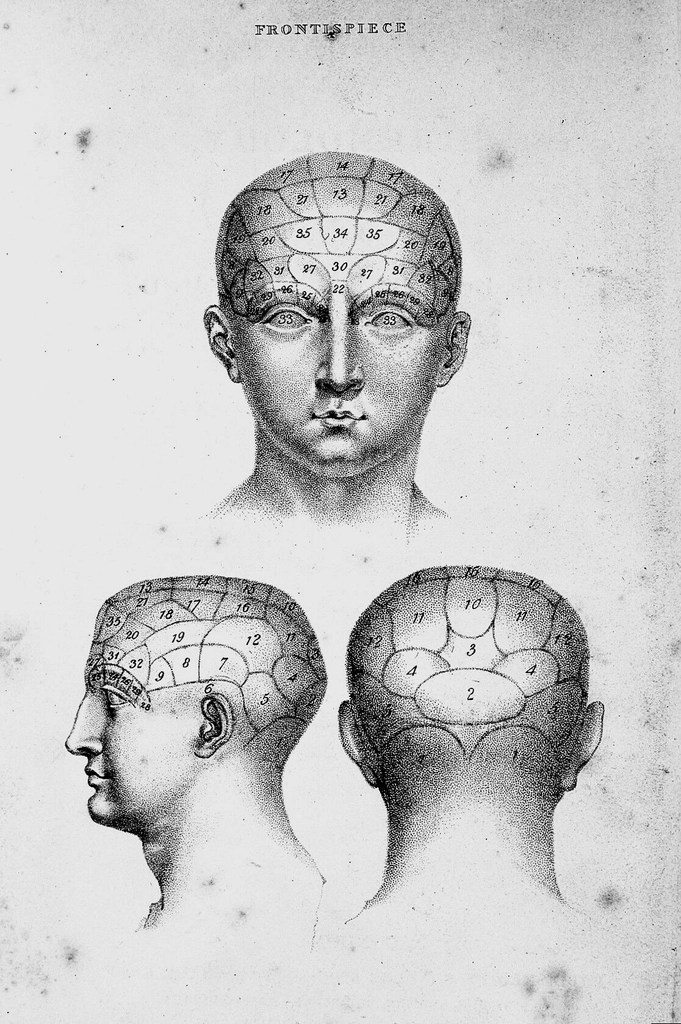
      Cognitive rigidity and perceptual limitations are not abstract ideas—they are the invisible bars that confine how we see, think, and act in the world.

      “Phrenology, doctrine mind : relations“/ CC0 1.0

      CAGE OF THE MIND

      Cognitive rigidity is the stubborn insistence that our way of thinking is the only way.

      It shows up in small, everyday ways:

      • refusing to consider another perspective
      • dismissing evidence that challenges our beliefs
      • or sticking to habitual responses when flexibility is required.

      It is mental inflexibility masquerading as certainty.

      This rigidity is rarely neutral. It filters experience, allowing only what aligns with our preconceptions to pass through.

      What we notice and refuse to notice is determined less by reality and more by the contours of our existing beliefs. The mind becomes its own jailer.

      FILTERED VISION

      Perceptual limitations compound this problem. Our senses, our expectations, and our biases shape what we perceive.

      Two people can witness the same event and walk away with entirely different “realities,” each convinced theirs is the truth.

      Culture, language, upbringing, and personal trauma all function like lenses, coloring everything we see.

      When cognitive rigidity meets these perceptual filters, the feedback loop begins: our beliefs dictate what we perceive, and our perceptions reinforce our beliefs.

      We become prisoners of our own limited frameworks, blind to the complexity—and often the truth—of the world around us.

      Breaking the Loop

      Escaping this loop is not about acquiring more information. It is about retraining the mind to see what it usually ignores:

      Observe without judgment. Watch your thought patterns and notice when you shut down possibilities automatically.

      Seek what challenges you. Engage with ideas and perspectives that make you uncomfortable.

      Question your perception. Ask yourself what you might be missing, what biases are filtering your experience.

      Embrace intellectual humility. Accept that your understanding is provisional, incomplete, and subject to correction.

      The moment we recognize that perception is always partial, and thought is always provisional, the bars of the cage begin to loosen.

      Clarity is not a gift; it is a discipline.

      The Work of Liberation

      This is the work of liberation: not avoiding rigidity, but confronting it; not denying perceptual limits, but piercing them.

      The mind can be trained to perceive more, think more flexibly, and respond more intelligently.

      It is uncomfortable, but truth always is.

      We cannot see everything, but we can see more than we did yesterday.

      And that is where freedom begins.

    3. Empathy

      Empathy

      Feeling Into Another

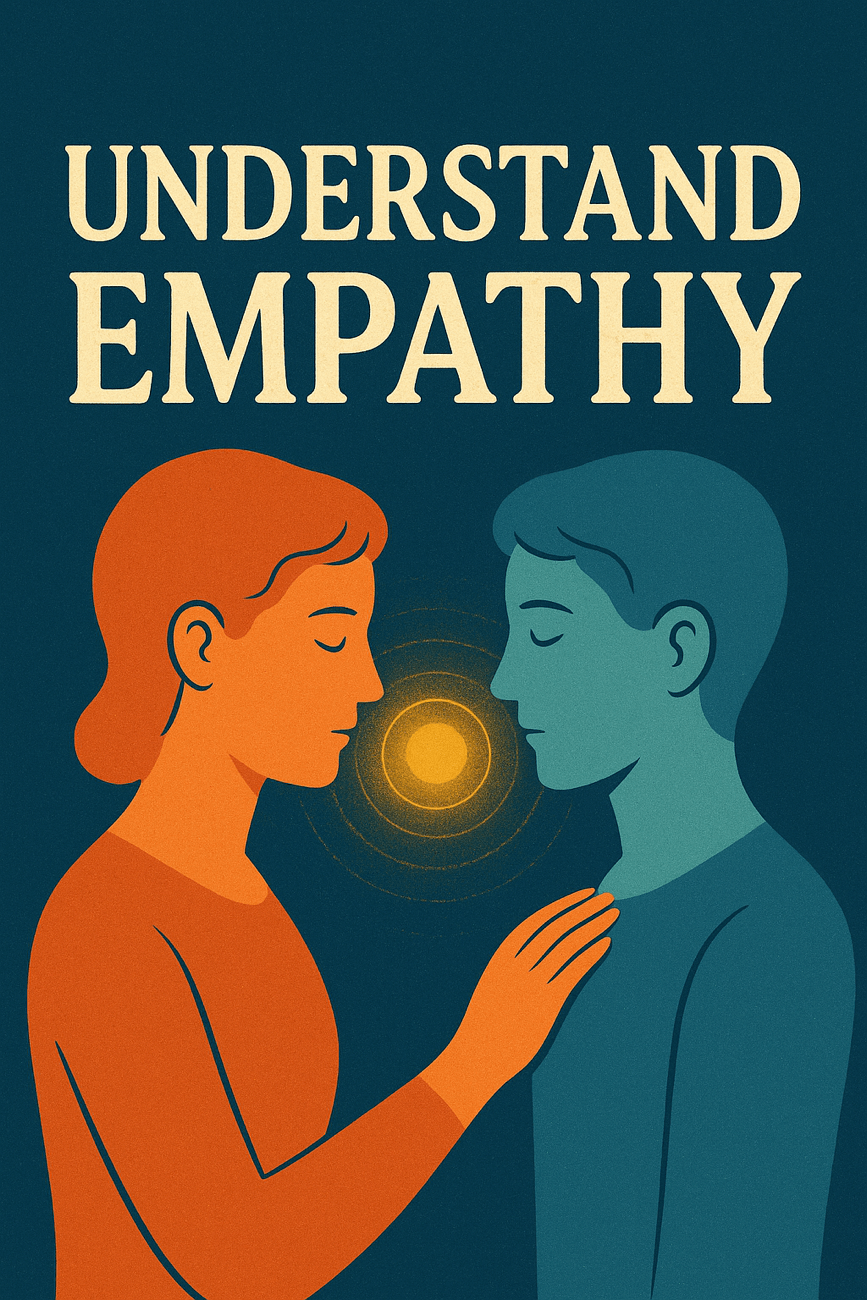
      Empathy is not passive sympathy—it is entry. To empathize is to feel into another’s experience until the boundary between “you” and “them” briefly dissolves.


      Jonathan Edwards once described it as knowing another’s feelings as if they were your own. That’s closer to the truth than most realize.

      Empathy is more than emotion—it’s perception.

      A heightened nervous system, a tuning fork of consciousness that resonates with the unspoken frequencies around it. Science now peers curiously at this mystery, finding evidence of hyper-responsive mirror neurons and unique dopamine patterns, particularly among introspective personalities.

      Yet the laboratory only grazes what mystics and sensitives have long known: empathy is not merely learned; it can be awakened.

      Some are born empaths—open channels of sensation from the first breath.

      Others grow into it, chiseling sensitivity from stillness, meditation, and the discipline of inner quiet.

      With intention, anyone can refine this art:

      • grounding the body
      • visualizing energetic boundaries
      • learning when to open and when to shield.

      Focus enhancers—nootropics, deep breathing, and meditative practice—can sharpen this capacity.

      But the core of empathy remains spiritual, not chemical.

      The word itself comes from the Greek empatheia—to feel into, to be moved by passion.

      Later, the German Einfühlung carried it into psychology through Hermann von Helmholtz in the 19th century. Yet long before language named it, empathy pulsed through the human story as the invisible bridge between souls.

      At its root, empathy is threefold:

      Understanding

      Recognizing and comprehending another’s emotions.

      Sharing

      Feeling a reflection of what they feel within your own body.

      Perspective-Taking

      Stepping fully into their world and seeing through their eyes.

      From these arise the primary faces of empathy:

      Affective (Emotional) Empathy

      When another’s sorrow or joy ripples through you, unbidden. It’s the contagion of feeling that can both unite and overwhelm.

      Cognitive Empathy

      The intellectual capacity to see through another’s frame of mind. It doesn’t feel what they feel—it understands it. This form is vital in discernment, negotiation, and healing professions, where compassion must be guided by clarity rather than collapse.

      Somatic Empathy

      When the body itself becomes a translator of emotion. A stomach tightens in response to another’s anxiety, a chest constricts when they recall grief. The nervous system speaks in sympathetic vibration.

      Spiritual Empathy

      The rarest and deepest: when one soul feels into another beyond words, time, or separation. It’s the awareness that what hurts one part of creation reverberates through the whole.

      Empathy lives at the intersection of heart and brain—an orchestra of mirror neurons, amygdala signals, and energetic resonance.

      Emotional cognition allows us to interpret what we feel, to trace the current back to its source and understand how emotion shapes thought, memory, and decision.

      At its highest form, empathy becomes empathic resonance. It is the recognition that another’s heartbeat is not separate from your own, only playing a different rhythm.

      To cultivate empathy is not to drown in feeling—it’s to master it.

      The empath who grounds their sensitivity becomes an instrument of peace. The one who leaves it untrained becomes a sponge for the world’s pain.

      Empathy is the art of sacred attunement.

      It is both psychic and profoundly human, the oldest language of the soul.

      When harnessed with discernment, it births compassion, connection, and the quiet strength that heals unseen wounds—within and without.

      READ MORE

    4. Recognizing Ad Hominem Attacks

      Recognizing Ad Hominem Attacks

      Ad hominem is a logical fallacy where an argument is attacked by targeting the person making the argument instead of addressing the argument itself. It involves discrediting the individual rather than engaging with the substance of their argument.

      This fallacy diverts attention from the topic being discussed and focuses on personal attacks.

      Ad hominem attacks are considered illogical and hinder productive discourse.

      Ad Hominem attacks mastered by Con Artists and Bullies

      Ad Hominem attacks are commonly used by Con Artists and Bullies to avoid engaging with points in a debate or conversation.

      These attacks involve insulting a person’s looks, social status, gender, religion, or any other characteristic that can be used to offend and distract from the actual discussion.

      Using ad hominem attacks is a sign of low emotional intelligence and anti-social behavior.

      woman draw a light bulb in white board

      People who use these attacks often do so because they themselves have been made to feel small or dehumanized in the past

      Why it is important to understand and recognize

      Recognizing the tactics and understanding that the insults are generic reveals of the abuser’s own insecurities can help avoid personalizing the attacks.

      They might attack a person’s intelligence, character, or mental health in order to deflect from the topic at hand and make the victim feel the need to defend themselves.

      These attacks are designed to make the conversation about the person being attacked rather than the actual subject being discussed.

      medieval armor

      Ad hominem attacks are ineffective and harmful, resulting in the loss of face and time for everyone involved.

      How to recognize and respond to ad hominem attacks

      Learn to recognize the key terms and phrases used in ad hominem attacks, such as questioning intelligence or attacking character.

      Understand that these attacks are attempts to distract from the discussion and make you feel the need to defend yourself.

      Avoid personalizing the attacks by realizing that they are based on the abuser’s own beliefs and insecurities.

      Focus on the actual topic of the discussion and refuse to be drawn into personal attacks.

      Recognize that engaging with ad hominem attacks only gives the attacker more power and perpetuates the cycle of abuse.

      themed park rides

      Instead, stay calm and assert your points or politely disengage from the conversation if it becomes too toxic.

      The impact of ad hominem attacks on society

      Ad hominem attacks create a toxic and unproductive conversational environment.

      They undermine respectful and constructive dialogue by focusing on personal attacks rather than addressing the actual issues.

      These attacks perpetuate harmful stereotypes, discrimination, and division among different social, political, and religious groups.

      They discourage open-mindedness, empathy, and understanding, hindering progress and collaboration.

      By engaging in ad hominem attacks, individuals contribute to a culture of negativity, hostility, and conflict.

      multiethnic women arguing with each other

      Society would benefit from promoting healthy and respectful communication, where ideas and opinions are discussed based on their merits rather than personal attacks.

      The role of empathy and emotional intelligence in countering ad hominem attacks

      Developing empathy and emotional intelligence can help individuals resist the urge to engage in or be affected by ad hominem attacks.

      Empathy allows us to understand and consider others’ perspectives, fostering a more compassionate and tolerant attitude.

      Emotional intelligence helps us recognize and manage our own emotions, enabling us to respond in a calm and constructive manner.

      By promoting empathy and emotional intelligence, we can create a culture that values respectful dialogue and rejects personal attacks.

      Educational institutions, workplaces, and communities should prioritize the development of empathy and emotional intelligence to counteract the prevalence of ad hominem attacks.

      Dealing with Bullies and Con Artists:

      Bullies and Con Artists both try to deceive and trick others, causing harm socially and emotionally.

      It is important to recognize their tactics and refuse to let them manipulate or belittle you.

      By rejecting personal attacks and focusing on substantive arguments, we can foster respectful and productive discourse. Let’s create a society that values empathy, emotional intelligence, and constructive communication. Together, we can combat ad hominem attacks and promote understanding and collaboration.

    5. Empathy: What Is It?

      Empathy: What Is It?

      Empathy is the ability to understand and share the feelings and experiences of another person.

      It goes beyond simple sympathy or compassion, as it involves a deep emotional connection and an active effort to comprehend the inner world of another individual.

      Empathy is a key component of emotional intelligence and is essential for building strong relationships and fostering a sense of community and understanding.

      Through empathy, one can transcend their own personal biases and perspectives, and truly step into the shoes of another, fostering genuine understanding and emotional resonance.

      Whats the difference between Empathy and Sympathy?

      While sympathy involves acknowledging and sharing the feelings of another person, it primarily operates from an external standpoint.

      In other words, one can sympathize with someone’s pain or suffering without fully immersing themselves in that experience.

      On the other hand, empathy goes deeper.

      It involves not only recognizing and understanding another’s emotions but also internalizing and experiencing them to some extent.

      Empathy requires a more profound emotional connection, requiring us to listen carefully, ask questions, and seek to understand the other person’s perspective.

      Key components of empathy:

      • Perspective-taking: The ability to imagine oneself in the other person’s situation and see things from their point of view.
      • Emotional understanding: The ability to recognize and understand the emotions that the other person is experiencing.
      • Communication skills: The ability to express understanding and empathy through active listening and effective communication.
      • Compassion: The desire to help the other person and alleviate their suffering.

      In Jungian terms:

      “Empathy facilitates the transcendence of personal biases and contributes to the integration of individual and collective unconscious patterns…”

      Negative Aspects Of Empathy

      As someone who could easily be called an “EMPATH” by definition, I can tell you its not all sprinkles and rainbows. Here are some negatives, Ive experienced personally:

      Empathy can cloud rational judgment.

      When we prioritize empathizing with others, we may neglect to critically analyze the situation at hand. This can lead to making decisions based solely on emotions, rather than considering the larger implications or alternative perspectives.

      In some cases, it may even lead to enabling unhealthy behaviors or prolonging problems that need swift resolution.

      Empathy can create a bias towards subjective experiences.

      By solely identifying with the feelings and experiences of a particular group or individual, we risk ignoring the broader context.

      We cannot ignore the fact that empathy is inherently biased towards those we can relate to on a personal or emotional level.

      Empathy can hinder personal growth and resilience.

      While it is important to acknowledge and understand the struggles of others, constantly absorbing the emotional burden of others can be draining and detrimental to our own well-being.

      It is crucial to find a balance between empathy and self-care, ensuring that we have the necessary mental and emotional fortitude to navigate the challenges of life.

      According to Pub Med Empathy is:

      1) an affective response to another person, which often, but not always, entails sharing that person’s emotional state,

      2) a cognitive capacity to take the perspective of the other person, and 3) some self-regulatory and monitoring mechanisms that modulate inner states (e.g., [16, 17, 27, 28]).

      According to Ickes [29], empathy is a complex form of psychological inference in which observation, memory, knowledge, and reasoning are combined to yield insights into the thoughts and feelings of others.