The real Merlin, often identified as Myrddin Wyllt, was a 6th-century figure from Welsh legend.
Myrddin Wyllt was a legendary figure in medieval Welsh literature, who was also known as
Merlin the Wild
Merdhyn Gwyls &
Marzhin Gouez.
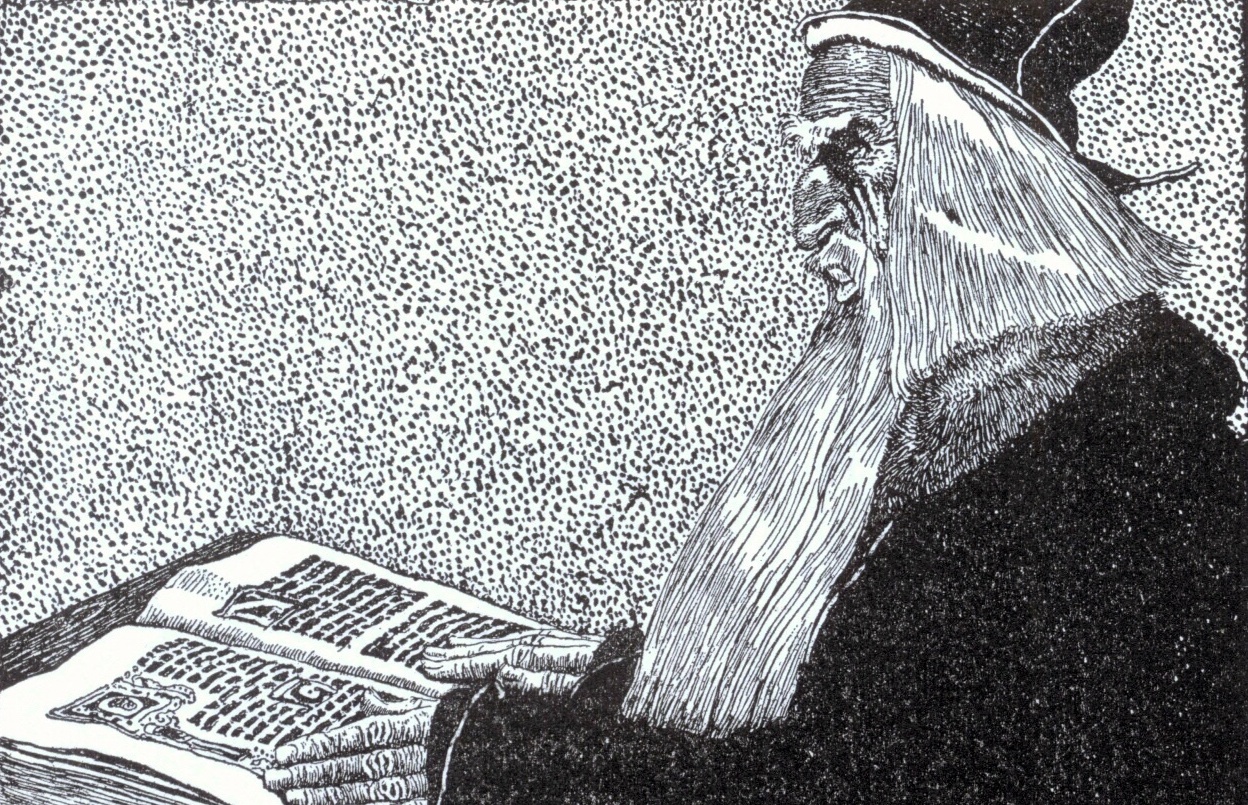
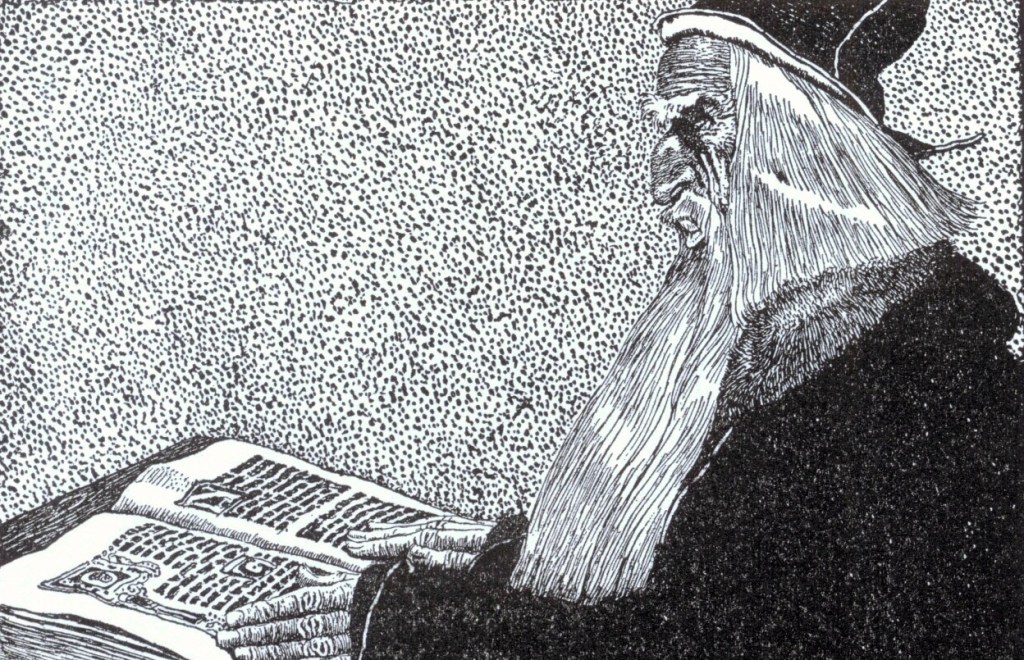
He was a chief bard and a prophet, who went mad after witnessing a bloody battle and fled into the forest, where he lived among the animals and received visions of the future.
He was the inspiration for the character of Merlin in Arthurian legend, but he was originally a separate and independent figure from the Merlinus Ambrosius who was associated with King Arthur.
According to some sources, Myrddin Wyllt was born in Scotland in the 6th century CE, and he was a magician and a healer as well as a poet. He was able to predict the outcomes of battles and other events, and many people sought his advice and guidance.
He was also interested in alchemy, symbolism, and esoteric knowledge, and he drew inspiration from diverse traditions such as Platonism, Hermeticism, Rosicrucianism, and Eastern philosophies.
“It might be said that the secret of Merlin was carried on by alchemy…”
C.G. Jung
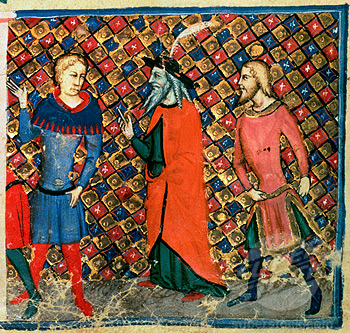
Myrddin Wyllt’s legend is closely related to that of Lailoken, a wild man of the woods who was also a prophet and a madman in Scottish folklore.
Some scholars believe that they were the same person, while others argue that they were different but influenced by each other.
Myrddin Wyllt’s grave is said to lie near the River Tweed in the village of Drumelzier near Peebles, although nothing remains above ground level at the site.

Myrddin Wyllt is the speaker of several poems in The Black Book of Carmarthen and The Red Book of Hergest, two of the most important manuscripts of Welsh literature.
In these poems, he expresses his sorrow and regret for the loss of his friends and his former life, and he also reveals his prophetic insights and his mystical experiences.
Here is an example of one of his poems, translated from Middle Welsh into English:
I am Myrddin; and Myrddin is my name; I know what is, and what will be, and what has been. I converse with the stars, and the wind whispers to me; I have been in the depths of the sea, and in the heights of the sky; I have seen the secrets of the sun, and the mysteries of the moon; I have heard the song of the earth, and the music of the spheres; I have been a bard in the court of a king, a wild man in the forest; I have loved and lost, and suffered and rejoiced; I am Myrddin; and Myrddin is my name.
Ask British historian Nikolai Tolstoy and he’ll tell you without hesitation:
“Merlin was indeed an historical figure, living in what are now the Lowlands of Scotland at the end of the sixth century A.D. … he was an authentic prophet, most likely a druid surviving in a pagan enclave of the North. Much of the early poetry attributed to him in Welsh manuscripts is drawn, it seems most likely, from an earlier body of authentic prophetic verse uttered by Merlin himself.”
source: The Quest for Merlin
Resources
https://en.wikipedia.org/wiki/Myrddin_Wyllt
https://folklore.wales/myrddin-wyllt/
https://listverse.com/2016/09/11/10-reasons-the-legendary-merlin-could-be-real/
