Quantum Alchemy is a framework that merges ideas from quantum physics—such as entanglement, superposition, and wave-particle duality—with the symbolic, transformative, and spiritual traditions of alchemy.
It often explores the idea of consciousness, energy, and reality as interconnected, sometimes framing quantum phenomena through the lens of alchemical processes like transformation, unification, or the pursuit of higher states of being.
IDEAS FOUND IN QUANTUM ALCHEMY:
Transforming the properties of particles or materials
Similar to how alchemists sought to transform lead into gold, quantum alchemy aims to manipulate the properties of particles, atoms or materials at the quantum level to create new forms of matter with desired characteristics.
This could involve changing the nuclear charges or electron configurations.
Computational method for predicting molecular properties
Quantum alchemy uses expansion to approximate and predict properties like binding energies for large numbers of molecules and materials by making small perturbations to a reference system.
This accelerates screening of potential catalysts or drug candidates.
Representation of the chemical space as a quantum superposition
Some propose representing all possible atomic compositions as a linear superposition state, with a “quantum alchemical Hamiltonian” driving the optimization to select the best molecule for a desired property.
Philosophical connections
There are also philosophical parallels drawn between the aims of ancient alchemy (e.g. transmutation, elixir of life) and modern concepts in quantum physics about the malleability and interconnectedness of reality.
Quantum alchemy leverages quantum mechanical principles to transform, optimize & efficiently model perveived matter and alter chemical systems in real ways.
It combines ideas from physics, chemistry, and the metaphysical quest of the ancient alchemists.
Sacred geometry is a field that not only explores the intricate patterns and shapes underlying creation, but defines it and holds within it the foundation of the origin.
From the simple elegance of the Vesica Piscis to the profound complexity of the Grid of Life, each symbol in this geometric art holds a wealth of meaning and nuance.
Let’s delve into these sacred geometric forms…
Vesica Piscis: The Intersection of Opposites
The Vesica Piscis, created by the intersection of two identical circles, represents the union of opposites.
Its proportions have influenced architectural masterpieces and are embedded in various artistic and organizational symbols throughout history.
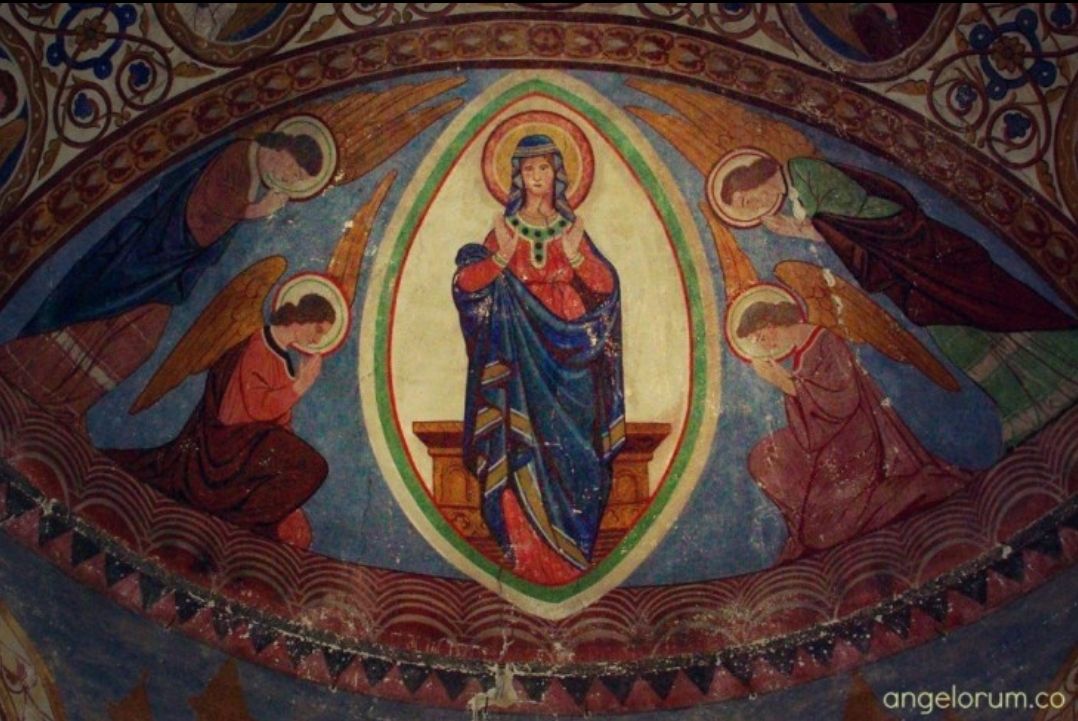
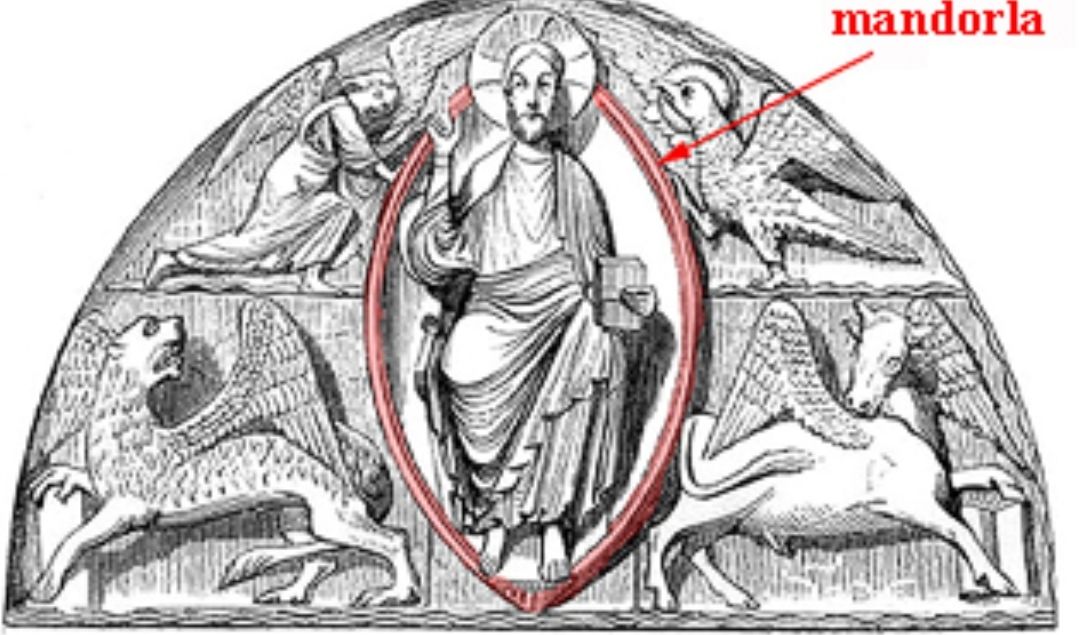
The mandorla is often seen in religious art and architecture.
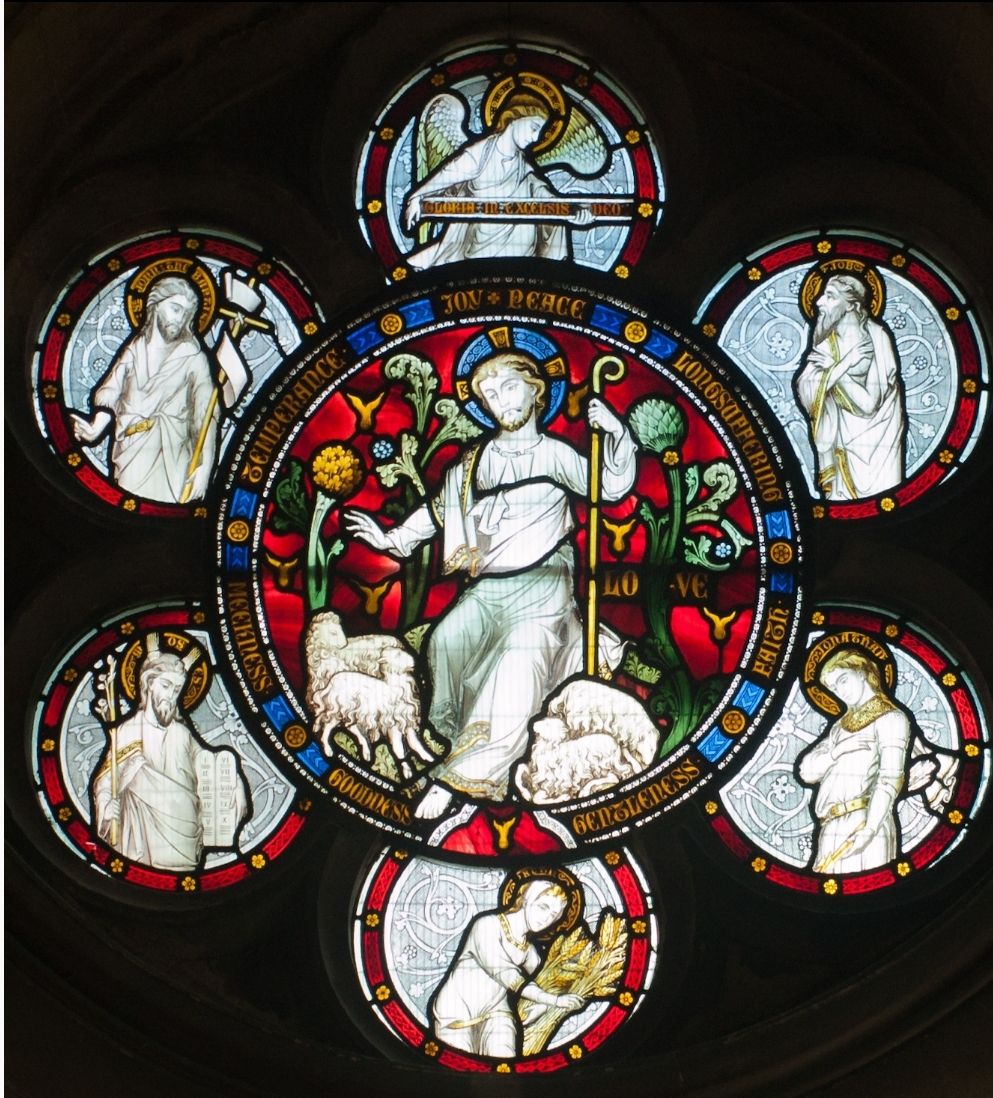
MandorlaMandorla in Christian Art
The Mandorla is derived directly from the Vesica Piscis, symbolizing the canal of life, the vagina opening where all humanity derives.
This is intersection of the earthly and celestial realms. Earthly body delivered with soul inside
Seed of Life: The Essence of Creation
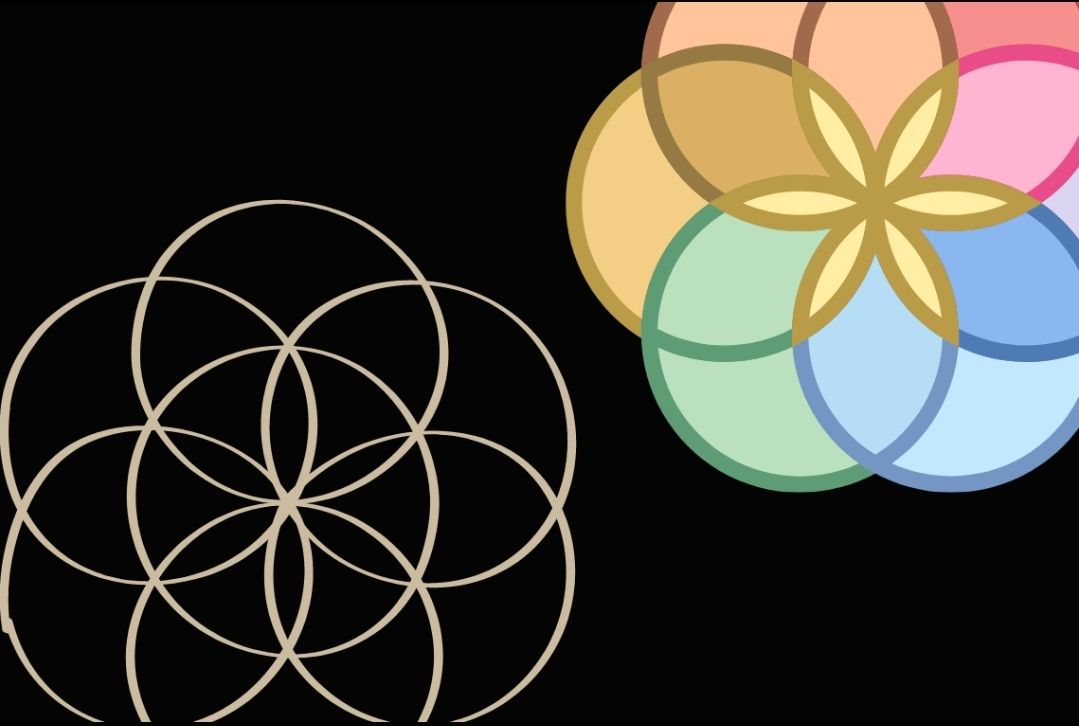
At the heart of sacred geometry lies the Seed of Life, a design made up of seven intertwined circles.
Its universal appeal can be witnessed in its widespread use across various religions and cultures.
Each overlapping circle represents a cell, a cycle, or even a day, culminating in the interconnected nature of life’s processes.
The Seed of Life speaks to the fundamental structures of life and existence, imbuing objects with a sense of protection and blessing.
Egg of Life: The Spark of New Life
Emerging from the Seed of Life, the Egg of Life symbolizes rebirth, fertility, and the spark of new life.
Seed of life is vagina, Ovulation is the substamce perfecting the environment for masculine seeding, increasing pleasure increases bodily ease and diversion.
By adding six more circles to the foundational Seed, the Egg of Life demonstrates how life and patterns expand and evolve.
Within the three-dimensional realm, the Egg of Life can be visualized through the eight spheres nestled within Metatron’s Cube, showcasing the versatility and interconnectedness of sacred geometric symbols.
Flower of Life: The Cosmic Blueprint
The Flower of Life, often depicted as a series of 19 interlocking circles, is believed to be the cosmic blueprint, encoding the very design of every atomic structure and life form.
Its presence across civilizations, from ancient Egypt to modern Japan, bears testament to its universal appeal.
JAPANESE FLOWER OF LIFE
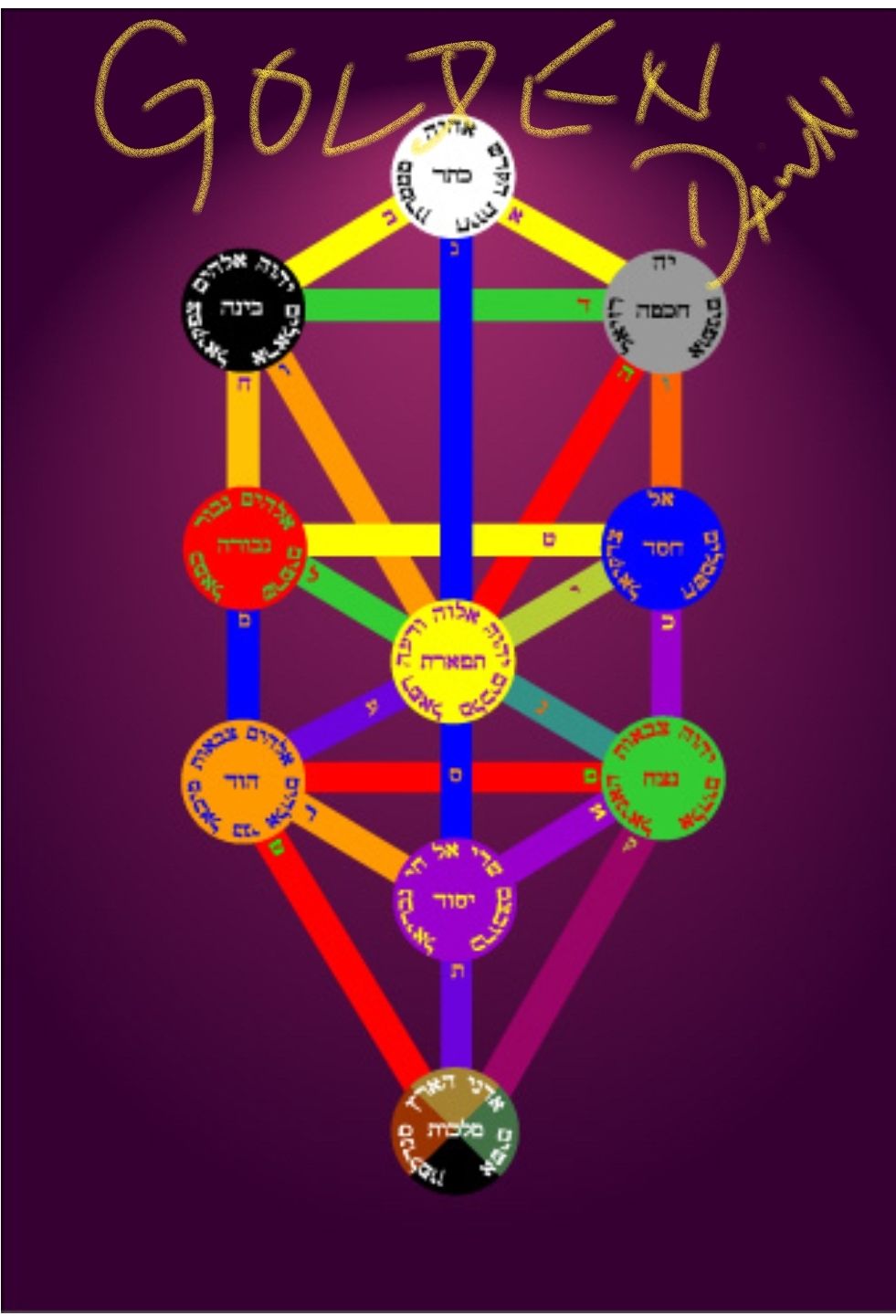
Sephiroth
Tree of Life: The Interconnectedness of All Things
The Tree of Life represents numerous systems across varying cultures and religions, providing a hierarchical structure for all the forces in the Universe.
Its 10 spheres, called the “Sephiroth,” represent different qualities of the Soul, divided into three pillars: the Pillar of Severity, the Pillar of Mildness, and the Pillar of Mercy.
The Tree of Life reminds us that we are not alone in the Universe but rather part of a vast interconnected network.
Fruit of Life: The Holy of Holies
Emerging from the heart of the Flower of Life, the Fruit of Life comprises 13 interconnected spheres, often referred to as the ‘Holy of Holies.’
The 13 spheres symbolize unity and a transition between realms or dimensions, while the 78 lines that emerge when linking the centers of these circles fashion Metatron’s Cube, enclosing all five Platonic solids.
The Fruit of Life’s spheres symbolize the feminine aspects of creation, providing a foundation for the 78 masculine rays of creation.
Metatron’s Cube: The Divine Blueprint
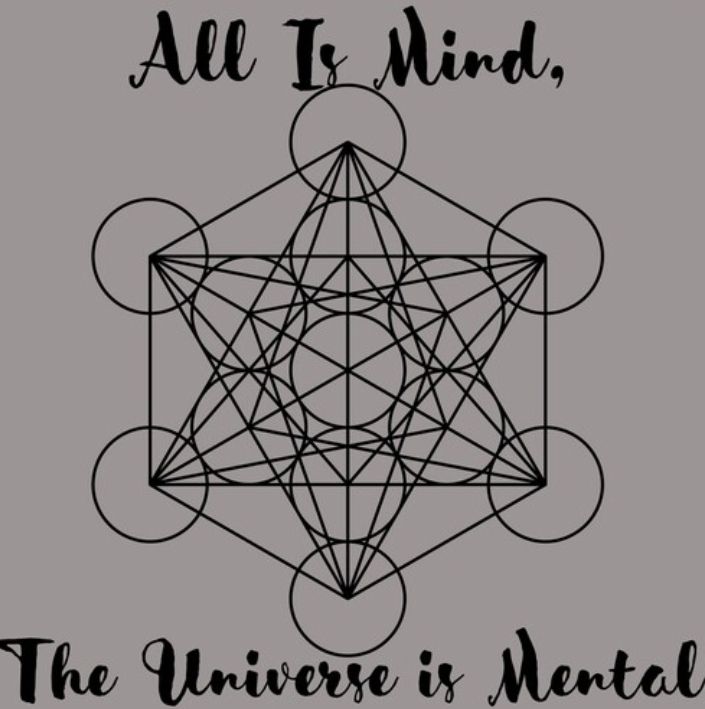
Metatron’s Cube, a geometric construct associated with the archangel Metatron, is a pivotal bridge, transforming 2-dimensional realities into 3-dimensional realms.
Within this complex geometric form, the five Platonic solids are discerned, positioning Metatron’s Cube as a testament to the divine blueprint upon which the cosmos is etched.
As quantum physics ventures deeper into understanding existence, it continually echoes the
Hermetic quote, “all is mind; the universe is mental,” with Metatron’s Cube in mind epitomizes the abstract, cognitive foundation of our universe.
Grid of Life: The Masculine Counterpart
The 64-tetrahedron, commonly termed as the ‘Grid of Life,’ is the masculine counterpart to the Flower of Life.
This geometric form, comprising 64 individual tetrahedrons, overlays the Flower of Life, symbolizing the convergence of space and time.
The allure of the Grid of Life transcends its geometric elegance, embedding itself in the mystique of the number 64, which recurrently surfaces in nature, mysticism, and human constructs, from genetic code to sacred texts.
The Grid of Life emphasizes the interconnectedness of all things and underscores its significance in our understanding of the universe.
In my journey as an “alien” on this planet, I have, unwittingly, stumbled upon what had been archaically called the Philosopher’s Stone or the Elixir of Life…
I only realized this after I, through being magnetically attracted toward suffering, embracing the darkness that most fear, had unearthed the Essence of Reality.
This Essence is a Truth so profound, it is woven into the very core of our beings through the quantum dimensions & atmospheric pressure, without such, we would become vacuumed into nothingness.
This truth is unassailable, standing as a lamp of certainty, illuminated by the light of Intuitive Wisdom.
THIS LIGHT IS CHRIST’S LIGHT OF INTUITION FROM ABOVE.
Intuition transcends the limitations of our corporeal senses, for it is birthed from the sacred depths of the spirit.
Intuition is a whisper from the Heavens, a subtle yet ever powerful current that flows through the Ethers of existence.
Intuition is the Blood within the veins of Eternity.
When the HolySpirit stirs, He ignites the flame of Intuition, transforming our sensorial experiences into a Divine Compass.
THE KINGDOM OF GOD IS WITHIN YOU
This guiding Force elevates our conscious awareness, rendering the conventional Five Senses as mere tools in the Macrocosm of our being within this existence and realm.
When this inner awakening is embraced, we align in tandem with the Universal Symphony of Wisdom.
Intuition becomes our most trusted Guide, leading us towards a Life of deeper Understanding and connection with the Infinite.
Sigmund Freud was an Austrian neurologist and the founder of psychoanalysis, a clinical method for treating psychopathology through dialogue between a patient and a psychoanalyst.
He formulated the theory of the Oedipus complex, proposed the existence of an unconscious mind, and developed the idea of the id, ego, and superego as structural components of the human psyche.
Additionally, Freud’s work significantly influenced the field of psychology and various aspects of Western culture.
Carl Jung
Carl Jung was a Swiss psychiatrist and psychoanalyst who founded analytical psychology.
He is known for his concepts of the collective unconscious, archetypes, and the process of individuation. Jung emphasized the significance of symbolism, mythology, and the integration of opposing forces within the psyche.
His work has had a profound impact on psychology, psychiatry, and various fields, influencing areas such as dream analysis, personality theory, and the study of cultural and religious symbolism.
The main differences between Sigmund Freud’s psychoanalysis and Carl Jung’s analytical psychology lie in their perspectives on the unconscious, the role of the libido, and the significance of the collective unconscious and cultural symbolism.
Freud’s psychoanalysis emphasizes the influence of early childhood experiences, the unconscious drive of the libido, and the concept of repression as a key mechanism shaping human behavior.
In contrast, Jung’s analytical psychology expands on the collective unconscious, archetypes, and the process of individuation, focusing on the integration of opposing forces and the pursuit of wholeness or self-realization.
Freud’s emphasis on the Oedipus complex and the role of sexual and aggressive instincts differs from Jung’s broader view of the unconscious, which includes personal and collective elements, as well as archetypal patterns that transcend individual experiences.
Jung’s approach places greater emphasis on spirituality, mythology, and the symbolism found in various cultures, in contrast to Freud’s more clinical and biological focus on human behavior and mental processes.
Analytical Psychology
Analytical psychology, also known as Jungian psychology, is a branch of psychology developed by Carl Jung that focuses on exploring the depths of the unconscious mind and understanding the individual’s journey towards psychological wholeness. It places a strong emphasis on the exploration of the collective unconscious, archetypes, and symbolic imagery. Analytical psychology recognizes the importance of spirituality and the transcendent aspects of human experience. It views the psyche as a dynamic and self-regulating system, seeking to integrate and balance both conscious and unconscious elements.
Analytical psychology, also known as Jungian psychology, and “regular” psychology, commonly referred to as mainstream psychology differ in several significant ways:
Analytical psychology delves into the collective unconscious, archetypes, and symbolic imagery.
Collective Unconscious
Concept within analytical psychology that refers to the shared reservoir of knowledge, experiences, and symbols that all individuals inherit as a result of their common humanity. It is believed to be a deep layer of the unconscious mind that contains archetypes, universal themes, and instincts that are shared by all human beings across cultures and throughout history. This collective unconscious is thought to influence our thoughts, feelings, and behaviors, shaping our perceptions of the world and guiding our behavior in ways that are often unconscious to us. Through exploring and understanding the symbols and patterns that arise from the collective unconscious, individuals can gain insights into themselves, their relationships, and their place in the larger human experience.
Archetypes
Jungian archetypes are deeply rooted and universally recognized patterns of symbols and images that reside within the collective unconscious. These archetypes, such as the Hero, the Shadow, the Wise Old Man, and the Mother, represent fundamental aspects of the human psyche and serve as primordial templates for understanding and interpreting our experiences. They are symbolic guides that help us navigate the complexities of life, providing us with insight into our deepest fears, desires, and potentials. Jungian archetypes offer a profound framework for self-discovery and personal transformation, allowing us to tap into the depths of our unconscious and unlock greater awareness and wholeness.
Symbolic Imagery
Jungian symbolic imagery is a cornerstone of analytical psychology, emphasizing the profound power and significance of symbols and their role in unlocking the depths of the unconscious mind. Symbols are potent manifestations of archetypes, universal patterns of meaning that tap into the collective unconscious. They speak a language beyond words, evoking profound emotions, insights, and connections to the wider human experience. Through exploring and understanding these symbolic images, individuals gain access to a rich tapestry of personal and collective meaning, diving into the depths of their own psyche, unraveling mysteries, and opening doors to self-discovery, healing, and transformation. Jungian symbolic imagery offers a bridge between the conscious and unconscious realms, allowing individuals to navigate the complexities of their inner world and find deeper understanding and integration.
Integration
Jungian integration is the process of merging and reconciling the conscious and unconscious aspects of the psyche, as proposed by Carl Jung in analytical psychology. It involves recognizing and embracing the shadow, the hidden and often repressed aspects of ourselves, and integrating them into our conscious awareness. By acknowledging and working with the shadow, we can uncover and integrate the valuable lessons it holds, leading to greater self-understanding and wholeness. Jungian integration also entails recognizing and exploring archetypal patterns and symbols that arise from the collective unconscious, allowing individuals to tap into a deeper level of consciousness and find meaning and purpose in their lives. Through this process, we may cultivate a sense of balance, authenticity, and personal growth, enabling us to fully realize our potentials and navigate the complexities of the human experience.
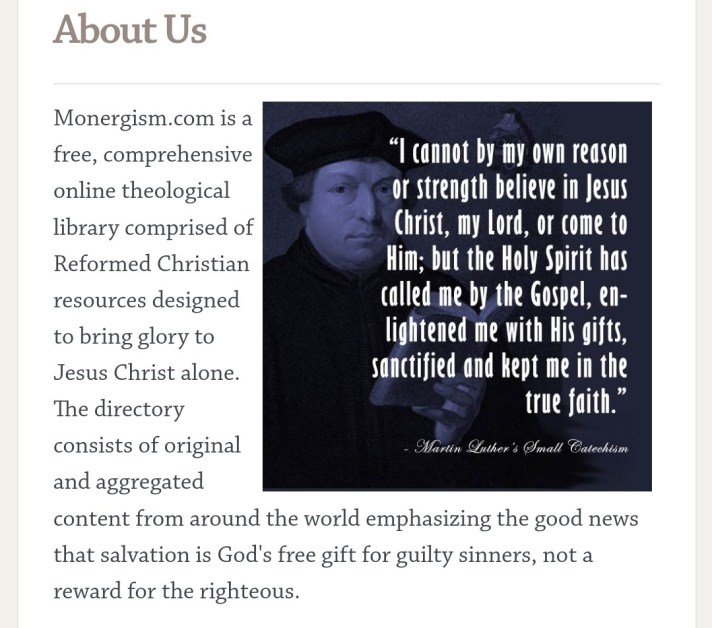
A constantly updated list of Resources that I have found valuable for studying scripture.
So, if you’re searching for truth and Google isn’t cutting it, I have curated this list to share what I have found through my thousands of hours of research.
KNOWING JESUS: Exhaustive resources, rich with everything needed for biblical understanding, similar to BibleHub and similar sites, but much easier to navigate.
The act of gossiping is a manifestation of the ego’s desire for attention and power. It is a game that feeds on the weaknesses of others, and it can take many forms, from the subtle sharing of information to the outright spreading of lies. However, this game is dangerous, for it can lead to the destruction of trust and the erosion of respect. When we engage in gossip, we are not only harming others, but we are also damaging our own spiritual growth.
The Heart Of Gossip
Gossiping reveals the darkness that resides within us, the sin that we carry in our hearts. It manifests our deep-seated insecurities and fears, which we try to mask by tearing down others. This is a futile attempt at finding validation, for it only perpetuates a cycle of negativity and harm.
Nature And Ability Of Gossip
The insidious nature of gossip is rooted in its ability to ignite and spread like a raging inferno. It is a force that can quickly consume and destroy all in its path, leaving nothing but smoldering ruins in its wake. As each person adds their embellishments and twists to the tale, the flames grow higher and hotter until the truth is lost in a haze of smoke and confusion. Innocent people are often caught in the crossfire, their reputations and relationships scorched by the unforgiving flames of gossip. It is a reminder that our words hold great power, and that we must use them wisely, lest we become the unwitting arsonists of our own destruction.
See how great a forest is set aflame by such a small fire! And the tongue is a fire, the very world of iniquity; the tongue is set among our members as that which defiles the entire body, and sets on fire the course of our life, and is set on fire by hell.
— James 3:5-6
Don’t Participate
At the core of our being lies the power to stop the spread of negativity. It starts with a simple yet profound act of choosing not to participate in gossip. By declining to engage in such conversations, we are taking a stand for truth and integrity. We must resist the temptation to repeat rumors, for they only serve to perpetuate falsehoods and sow discord.
Gossip Damages Our Own Soul
At its core, gossiping is a manifestation of a lack of respect for the privacy and dignity of others. It is a betrayal of trust and a violation of the sacred bond of any relationship. When we engage in gossip, we are not only harming the person we are talking about, but we are also damaging our own souls. We are giving in to the temptation of ego and pride, seeking to elevate ourselves by tearing others down. Actual spiritual growth requires us to resist this temptation and instead cultivate compassion and empathy toward others.
Treat Others How You Want To Be Treated
We must learn to see the divine in everyone and treat them with the same love and respect we would want for ourselves. Only then can we truly live in harmony with the universe and fulfill our true purpose in life.
Treat others the same way you want them to treat you.
Luke 6:31
If You’re The Victim Of Gossip, Don’t Let It Get You Down
The act of spreading rumors and gossip is not only harmful to the victim, but it also reveals the character of the person spreading it. As believers, we are called to guard our tongues and speak life-giving words -Proverbs 18:21. When faced with gossip, we must remember that our worth and identity are found in Christ, not in the opinions of others.
In the book of Proverbs, it is written,
“A gossip betrays confidence, so avoid anyone who talks too much.”
Proverbs 20:19
What Scriptures Say
Proverbs 11:13 – “A gossip betrays a confidence, but a trustworthy person keeps a secret.”
This verse reminds us that words have great power and we must be responsible with them. Gossiping breaks trust and violates sacred bonds between people. Trustworthy and honorable people keep secrets close to their hearts. We should strive to honor others’ trust and keep our relationships sacred.
Proverbs 16:28 – “A perverse person stirs up conflict, and a gossip separates close friends.”
This proverb speaks to the destructive power of gossip and the importance of guarding our tongues. It reminds us that our words have the power to either build up or tear down relationships. When we engage in gossip, we not only harm others but also violate God’s commandments. The wisdom of this proverb calls us to cultivate a spirit of love and truthfulness, recognizing that our words have the potential to either bring healing or cause harm. May we be mindful of the impact of our words and use them to uplift and encourage those around us.
Proverbs 20:19 – “A gossip betrays a confidence; so avoid anyone who talks too much.”
King Solomon’s wise words warn us about the dangers of gossip. It can break the trust between friends and ruin relationships. It’s better to avoid people who talk too much and find those who value trust and keep things private. We should be careful with our words and use them to build up, not tear down.
James 1:26 – “Those who consider themselves religious and yet do not keep a tight rein on their tongues deceive themselves, and their religion is worthless.”
James 1:26 emphasizes the importance of controlling one’s speech in order to truly embody the qualities of kindness, empathy, and love that are essential to spiritual enlightenment.
Ephesians 4:29 – “Do not let any unwholesome talk come out of your mouths, but only what is helpful for building others up according to their needs, that it may benefit those who listen.”
We should be careful with our words, speaking only what is helpful and uplifting to others, as our words have the power to either build up or tear down.
A Reflection Of Spiritual Immaturity
The gossiping reflects the gossiper’s lack of spiritual awareness and respect for the sanctity of their fellow’s privacy. It is not only a distasteful habit but also a violation of the trust. The gossiper’s words have the power to harm and damage relationships, and their insensitivity towards the confidentiality of information is a clear indication of their spiritual immaturity.
It Invites Negative Energy
When we surround ourselves with individuals who engage in gossip, we invite negative energy into our lives. It is important to recognize that those who speak ill of others are not operating from a place of love and kindness. By distancing ourselves from this behavior, we are protecting our own energy and preserving our own integrity.
It Reflects Our Own Character
Our actions towards others reflect our character and intentions. By embodying kindness, compassion, and empathy, we elevate ourselves and the world. Our words and deeds have the power to shape our existence, and we should use that power for the greater good.
The importance of trustworthiness and confidentiality cannot be overstated. It is crucial to maintain the trust of others by keeping their secrets and private information to ourselves.
Bible Verses; Our Interactions With Others
Proverbs 11:17 – “A man who is kind benefits himself, but a cruel man hurts himself.”
Colossians 3:12 – “Put on then, as God’s chosen ones, holy and beloved, compassionate hearts, kindness, humility, meekness, and patience.”
1 Peter 3:8 – “Finally, all of you, have unity of mind, sympathy, brotherly love, a tender heart, and a humble mind.”
Proverbs 25:9 – “Argue your case with your neighbor himself, and do not reveal another’s secret,”
Proverbs 11:13 – “Whoever goes about slandering reveals secrets, but he who is trustworthy in spirit keeps a thing covered.”
God’s divine plan calls for us to be His chosen vessels, carrying out His will on earth. His will is for us to live in harmony, bound by love and compassion. Unity is key to reflecting God’s image, and we must strive to be like Him by embracing one another and setting aside our differences. Trust is also crucial, as we must keep each other’s secrets and avoid gossip. Let us embody these qualities and be beacons of hope in a world that needs it. Together, we can create a more peaceful world where God’s love reigns supreme.
Total: An amount obtained by the addition of smaller amounts.The whole amount of something; the entirety
Depravity: Moral corruption or degradation
Total Depravity: Man’s nature is totally corrupt as a result of the Fall
Depth Of God’s Love
Total depravity teaches that as a result of the fall of Adam and Eve, all human beings are born with a sinful nature and are incapable of saving themselves from sin and death. While this concept can be difficult to accept, it ultimately leads us to a greater understanding of the depth of God’s love and the incredible gift of salvation that is available to us through faith in Jesus Christ.
Appreciation For God’s Gift
By recognizing our sinfulness and our need for a savior, we can fully appreciate the power of God’s grace and the hope of redemption that is offered to us through Christ. The Bible teaches that “all have sinned and fall short of the glory of God” (Romans 3:23) and that “the wages of sin is death, but the free gift of God is eternal life in Christ Jesus our Lord” (Romans 6:23). Total depravity ultimately leads us to a greater understanding of the depth of God’s love and the incredible gift of salvation that is available to us through faith in Jesus Christ. By recognizing our sinfulness and our need for a savior, we can fully appreciate the power of God’s grace and the hope of redemption that is offered to us through Christ.
Without Christ, We Are Spiritually Blind
In John 9:39-41, Jesus says, “For judgment I have come into this world so that the blind will see and those who see will become blind.” The Pharisees, who were listening to Jesus, asked if they were blind, to which Jesus responded, “If you were blind, you would not be guilty of sin; but now that you claim you can see, your guilt remains.”
Those who do not recognize their spiritual blindness are more guilty than those who do. Why? Because they are claiming to have knowledge and understanding of spiritual things when in reality they are blind to them.
In 2 Corinthians 4:4, Paul writes, “The god of this age has blinded the minds of unbelievers so that they cannot see the light of the gospel that displays the glory of Christ, who is the image of God.”
Showing that Satan is actively working to blind people to the truth of the gospel.
Without Christ, We Are Spiritually Deaf
This is defended by several passages in the Bible, including Matthew 13:13-15, where Jesus says,
“This is why I speak to them in parables: ‘Though seeing, they do not see; though hearing, they do not hear or understand.’ In them is fulfilled the prophecy of Isaiah: ‘You will be ever hearing but never understanding; you will be ever seeing but never perceiving. For this people’s heart has become calloused; they hardly hear with their ears, and they have closed their eyes. Otherwise they might see with their eyes, hear with their ears, understand with their hearts and turn, and I would heal them.’”
This indicates that those who do not have a relationship with Jesus are unable to hear or understand spiritual truths because their hearts have become calloused and they have closed their eyes and ears to the truth. In John 10:27, Jesus says,
“My sheep listen to my voice; I know them, and they follow me.”
This proves that those who belong to Jesus are able to hear his voice and follow him.
Without Christ, We Are Spiritually Dead
Without a relationship with Jesus Christ, we are spiritually dead and separated from God.
In Ephesians 2:1-5, Paul writes, “As for you, you were dead in your transgressions and sins, in which you used to live when you followed the ways of this world and of the ruler of the kingdom of the air, the spirit who is now at work in those who are disobedient. All of us also lived among them at one time, gratifying the cravings of our flesh and following its desires and thoughts. Like the rest, we were by nature deserving of wrath. But because of his great love for us, God, who is rich in mercy, made us alive with Christ even when we were dead in transgressions—it is by grace you have been saved.”
This shows that before we come to faith in Christ, we are spiritually dead and separated from God because of our sin. We are under the influence of the devil and follow the ways of the world, gratifying our fleshly desires and deserving of God’s wrath. We are saved by Grace Alone!
In Colossians 2:13, Paul writes,
“When you were dead in your sins and in the uncircumcision of your flesh, God made you alive with Christ. He forgave us all our sins.”
This passage reinforces the idea that without Christ, we are spiritually dead and unable to save ourselves. It is only through God’s grace and forgiveness that we can be made alive.
Apart From Christ, We Are: LIARS, SICK & PATHETIC
Apart from Christ, we are liars.
The Bible teaches that all have sinned and fall short of the glory of God (Romans 3:23).
Sin is not just a behavior, but it is a condition of the heart that separates us from God. In John 8:44, Jesus tells the religious leaders,
“You belong to your father, the devil, and you want to carry out your father’s desires. He was a murderer from the beginning, not holding to the truth, for there is no truth in him. When he lies, he speaks his native language, for he is a liar and the father of lies.”
This passage teaches us that lying is a characteristic of the devil, and those who are not in Christ are under the force of the devil and are inclined to lying.
Apart from Christ, we are sick.
Sin has brought sickness and death into the world. In Romans 5:12, Paul writes,
“Therefore, just as sin entered the world through one man, and death through sin, and in this way death came to all people, because all sinned.”
This passage teaches us that sin has brought physical and spiritual sickness into the world. Apart from Christ, we are spiritually sick and in need of a Savior. In Matthew 9:12-13, Jesus says,
“It is not the healthy who need a doctor, but the sick. But go and learn what this means: ‘I desire mercy, not sacrifice.’ For I have not come to call the righteous, but sinners.”
Apart from Christ, we are pathetic.
Apart from Christ, we are lost, hopeless, and helpless. In Ephesians 2:12, Paul writes,
“Remember that at that time you were separate from Christ, excluded from citizenship in Israel and foreigners to the covenants of the promise, without hope and without God in the world.”
This passage teaches us that apart from Christ, we are without hope and without God in the world.
We are pathetic in our sin and in need of a Savior. Pathetic: A state of being without hope or purpose, or lacking a sense of fulfillment or meaning in life.
Without Christ, we are lost and disconnected from God.
We Are Either Slaves To Sin Or Slaves To Righteousness
In the New Testament book of Romans, chapter 6 it discusses being dead to sin and alive to God through Jesus Christ.
In verse 16, it says,
“Do you not know that if you present yourselves to anyone as obedient slaves, you are slaves of the one whom you obey, either of sin, which leads to death, or of obedience, which leads to righteousness?”
This verse emphasizes the assertion that we are all slaves to something.
The passage goes on to explain that before we became followers of Christ, we were slaves to sin.
However, through faith in Jesus, we have been set free from sin and have become slaves to righteousness. This means that we are no longer controlled by our sinful desires, but rather by the Holy Spirit who empowers us to live a life that is pleasing to God.
We Can’t Be Slaves Of Sin And Slaves Of Righteousness, We Can’t Sit At Two Tables
In Matthew, chapter 6, verse 24:
“No one can serve two masters, for either he will hate the one and love the other, or he will be devoted to the one and despise the other. You cannot serve God and mammon.”
This verse proves that we cannot serve two opposing forces at the same time.
The term “Mammon” is derived from an Aramaic word that means “wealth” or “riches.” In the Bible, Mammon is associated with materialism and the love of money.
In the New Testament, Jesus warns against the dangers of serving Mammon instead of God.
This passage emphasizes that we must choose between serving God or serving material wealth and possessions, which leads to greed and selfishness.
We cannot serve both sin and righteousness at the same time.
The passage in Romans 6, which discusses being a slave to sin or a slave to righteousness, also emphasizes this idea. In verse 18, it says, “and, having been set free from sin, have become slaves of righteousness.” This verse emphasizes that we have been set free from sin and have become slaves to righteousness. We cannot serve both sin and righteousness at the same time.
Regeneration By The Spirit Makes Our Soul Alive And Gives Us A New Nature, In The Spirit
“Jesus answered, ‘Truly, truly, I say to you, unless one is born of water and the Spirit, he cannot enter the kingdom of God. That which is born of the flesh is flesh, and that which is born of the Spirit is spirit. Do not marvel that I said to you, ‘You must be born again.’ The wind blows where it wishes, and you hear its sound, but you do not know where it comes from or where it goes. So it is with everyone who is born of the Spirit.’” John 3:5-8 ESV
This passage is part of a conversation between Jesus and Nicodemus, a Pharisee who came to Jesus at night seeking answers to his questions. Jesus tells Nicodemus that in order to enter the kingdom of God, one must be born again, or born of the Spirit.
The phrase “born of the Spirit” refers to the work of the Holy Spirit in regeneration.
Regeneration is the act of God by which he makes our soul alive and gives us a new nature in the Spirit.
This new nature is necessary because our old nature, which is born of the flesh, is corrupted by sin and cannot enter the kingdom of God.
The passage also emphasizes the sovereignty of the Holy Spirit in regeneration.
Jesus compares the work of the Spirit to the wind, which blows where it wishes and cannot be controlled by human beings. In the same way, the Holy Spirit works in the hearts of believers to bring about regeneration and new life.
Regeneration Proceeds Faith
John 3:3-6, where Jesus tells Nicodemus,
“Truly, truly, I say to you, unless one is born again he cannot see the kingdom of God.”
This statement emphasizes the need for regeneration, or being born again, in order to enter into the kingdom of God.
Another passage that supports the idea of regeneration as the first step in salvation is found in Ephesians 2:4-5, which states,
“But God, being rich in mercy, because of the great love with which he loved us, even when we were dead in our trespasses, made us alive together with Christ—by grace you have been saved.”
This passage emphasizes that salvation is a work of God, and that it is through his mercy and love that we are made alive in Christ.
2 Corinthians 5:17 states,
“Therefore, if anyone is in Christ, he is a new creation. The old has passed away; behold, the new has come.”
This passage emphasizes the transformative nature of regeneration, as it describes the believer as a new creation in Christ.
Regeneration is the first step in the process of salvation, followed by faith, justification, sanctification, and then glorification.
Faith is not something we contribute to salvation; faith is a part of God’s Free Gift of Salvation Salvation is God’s gift to the sinner, not the sinner’s gift to God.
Ephesians 2:8-9, which says,
“For by grace you have been saved through faith. And this is not your own doing; it is the gift of God, not a result of works, so that no one may boast.”
Salvation is not something that we can earn or contribute to through our own efforts or good works. It is a gift of God’s grace that is received through faith in Jesus Christ.
This means that faith itself is not something that we can boast about or take credit for, but is a part of God’s free gift of salvation.
Another key passage that supports this is Romans 3:21-24, which says,
“But now the righteousness of God has been manifested apart from the law, although the Law and the Prophets bear witness to it—the righteousness of God through faith in Jesus Christ for all who believe. For there is no distinction: for all have sinned and fall short of the glory of God, and are justified by his grace as a gift, through the redemption that is in Christ Jesus.”
All people are sinners and fall short of God’s glory, and that salvation is available to all who believe in Jesus Christ.
Faith itself is not something that we can contribute to our salvation, but is a part of God’s free gift of salvation.
Poem: Fell From Grace, Saved By The Light
Total depravity, a concept so grim, The Fall from Grace left no part of us unscathed within. It’s infiltrated every nook and cranny, Leaving us in corruption, body, soul, and spirit so uncanny. Death, the best example of its impact, Our moral compass still intact, But sin has corrupted us so deep, We cannot save ourselves, we need a Savior to keep. Total depravity doesn’t mean we’re completely evil, Or that we’re prone to every transgression upheaval. It means our sin has infiltrated our entire being, And we need Jesus Christ for redeeming. He’s the only one who can bridge the gap, Between God and humanity, and restore our relationship back. Total depravity may seem like a hopeless plight, But through Christ, we can be saved and brought into the light.
Camille Russo
Scriptures
Who Coined The Term?
The term “total depravity” was not coined by a single individual, but rather emerged as a theological concept within the Reformed tradition of Christianity, which includes Calvinism.
TOTAL DEPRAVITY’S ORIGINS
The concept of total depravity can be delineated back to the writings of early church fathers such as Augustine of Hippo, who emphasized the fallen nature of humanity and the need for divine grace to overcome sin.
Augustine of Hippo
Augustine of Hippo was a prominent Christian theologian and philosopher who lived in the 4th and 5th centuries AD. He is widely recognized as one of the most influential figures in the development of Christian theology and his teachings have had a profound impact on the beliefs and practices of many Christian denominations.
Augustine believed that this original sin had corrupted human nature to such an extent that people were incapable of achieving salvation on their own and required divine grace to overcome their sinful nature and be saved.
Popularized by 16th & 17th Century Theologians
However, the term “total depravity” itself was likely popularized by theologians in the 16th and 17th centuries who were part of the Reformed tradition, such as John Calvin and the Puritan theologian Jonathan Edwards.
John Calvin
John Calvin, who was a French theologian and pastor during the Protestant Reformation, is often credited with developing the doctrine of total depravity in his influential work, “Institutes of the Christian Religion.”
Calvin taught that as a result of the fall of Adam and Eve, all human beings are born in a state of sin and are completely unable to do anything to save themselves.
He believed that salvation could only be achieved through God’s grace, which is given to those whom God has chosen for salvation.
Jonathan Edwards
Jonathan Edwards, who was a Puritan theologian and preacher in colonial America, also emphasized the doctrine of total depravity in his sermons and writings.
Edwards believed that human beings were completely corrupted by sin and that even their best efforts were tainted by their sinful nature. He taught that salvation could only be achieved through a direct experience of God’s grace, which he described as a “divine and supernatural light” that transforms the heart and mind of the believer.
In his sermon, Jonathan Edwards paints a vivid and terrifying picture of the fate of sinners who fail to repent, comparing them to spiders hanging by a thread over a fiery pit and warning that they could be cast into the flames of Hell at any moment. He stresses the importance of accepting God's grace and turning away from sin to avoid this terrible fate. Edwards' sermon is still widely studied as a classic example of Puritan preaching and as a reflection of the religious and cultural values of colonial America.
Here are a few excerpts from “Sinners in the Hands of an Angry God” that illustrate Edwards’ emphasis on the concept of total depravity:
- "The God that holds you over the pit of hell, much as one holds a spider, or some loathsome insect over the fire, abhors you, and is dreadfully provoked: his wrath towards you burns like fire; he looks upon you as worthy of nothing else, but to be cast into the fire; he is of purer eyes than to bear to have you in his sight; you are ten thousand times more abominable in his eyes, than the most hateful venomous serpent is in ours."

- "The bow of God's wrath is bent, and the arrow made ready on the string, and justice bends the arrow at your heart, and strains the bow, and it is nothing but the mere pleasure of God, and that of an angry God, without any promise or obligation at all, that keeps the arrow one moment from being made drunk with your blood."

- "The God that holds you over the pit of hell, much as one holds a spider, or some loathsome insect over the fire, abhors you, and is dreadfully provoked: his wrath towards you burns like fire; he looks upon you as worthy of nothing else, but to be cast into the fire; he is of purer eyes than to bear to have you in his sight; you are ten thousand times more abominable in his eyes, than the most hateful venomous serpent is in ours."

- "Your wickedness makes you as it were heavy as lead, and to tend downwards with great weight and pressure towards hell; and if God should let you go, you would immediately sink and swiftly descend and plunge into the bottomless gulf, and your healthy constitution, and your own care and prudence, and best contrivance, and all your righteousness, would have no more influence to uphold you and keep you out of hell, than a spider's web would have to stop a falling rock."
No One Is Righteous
No one is righteous apart from God, and all deserve His judgment.
No amount of good works can earn salvation.
Only by being given the gift of salvation can one be saved.
Souls Need Redemption
Our souls need redemption and can only be saved by the grace of God. Without His grace, humans are doomed to an eternity of separation from Him and the joy of His presence.
Who Adheres to This Doctrine? What Denominations Believe In Total Depravity?
The doctrine of total depravity is primarily associated with the Reformed tradition of Christianity, which includes several denominations that hold to this belief.

These include:
1. Presbyterian Church (USA) 2.
Christian Reformed Church in North America
3. United Reformed Churches in North America
4. Reformed Church in America
5. Free Reformed Churches of North America
6. Orthodox Presbyterian Church
7. Associate Reformed Presbyterian Church
8. Reformed Presbyterian Church of North America
9. Cumberland Presbyterian Church
10. Dutch Reformed Church
Total Depravity means Original Sin/ Radical Corruption.
Since the Fall of Man, all people have been impacted by sin, compromising their ability to choose goodness over evil in spiritual matters.
It is associated with the theory of Original Sin, in which it is believed that all people are born with a predisposition towards wickedness and that this tendency is inherited from one generation to the next. This doctrine holds that no portion of a person is spared from sin's influence, including the mind and the will, and that humans are entirely corrupted, not just partially.
It does not suggest that humans are as bad as they can be, yet it does mean that they are enslaved to sin and unable to make beneficial spiritual decisions without God's grace.
It is rooted in the Bible and is a central tenant of Christianity.
Total Depravity is an essential part of our faith and an important reminder of our need for a savior.
“For all have sinned and fall short of the glory of God.” – Romans 3:23
God is the standard; anything below that measure is putrid, in contrast.
“The heart is more deceitful than all else and is desperately wicked; Who can understand it? “I, the LORD, search the heart, I test the mind…” – Jer. 17:9-10
The Hebrew phrase “desperately wicked” has a deep meaning, “n a’v.” It covers a range of emotions from weakness to hopelessness. In its ‘Qal’ form, it means incurable, and in its past participle form, it describes something as very sick or woeful. This word emphasizes human depravity and the need for redemption.
Paul says: “For I know that nothing good dwells in me, that is, in my flesh;” – Romans 7:18
“The wicked are estranged from the womb; These who speak lies go astray from birth.” – Psalm 58:3
“I was brought forth in iniquity, and in sin my mother conceived me.” – Psalm 51:5
This is an evil in all that is done under the sun, that there is one fate for all men. Furthermore, the hearts of the sons of men are full of evil and insanity is in their hearts throughout their lives. Afterwards they go to the dead. — Ecclesiastes 9:3
The significance of Jesus Christ’s death on the cross and His resurrection goes beyond just a historical event, as it fulfills the prophecies of the Old Testament and allows us to be reconciled with God. His resurrection is a triumph over death and sin, proving that He was the Son of God and His sacrifice was sufficient to save us. It’s a reminder of God’s love for humanity and a call to live a life of love and service to others. As Christians, we are called to remember and celebrate the significance of Jesus’ death and resurrection every day, as it offers hope and joy in Christ and a promise of eternal life with God.
Sacrificial Lamb
He willingly gave up his life for the sake of others, showing us the true meaning of love and selflessness. His death and resurrection guarantee eternal life for all who believe in him.
This is when we have been reminded of the power of faith and the triumph of good over evil. The story of Jesus’ Resurrection fills me with hope and reassurance that even in the darkest times, there is always a light at the end of the tunnel.
As I reflect on the meaning of Easter, I am struck by the depth of God’s love for us. The sacrifice of His only Son for our sins is a testament to the unconditional love that God has for every one of us. It is a love that transcends all boundaries and knows no limits.
Psychological Symbolism
I also see the symbolism of Easter in the journey of the soul. The death and resurrection of Jesus can be seen as a metaphor for the process of individuation, where the ego must die for the true self to emerge and be connected and whole. It reminds us that we must go through the darkness to reach the light.
Let us remember the power of faith, the depth of God’s love, and the symbolism of the Resurrection. May it fill our hearts with hope and inspire us to live our lives with purpose and meaning.
The Sovereign Plan of the Triune God: Predestined Redemption in the Face of Original Sin
The Old Testament’s practice of animal sacrifice was a prophetic symbol of Jesus Christ’s unparalleled sacrifice, predestined by God before the world’s creation. His resurrection is the cornerstone of the Christian faith, bearing witness to God’s sovereignty and grace.
Through sacrifice, we’re reminded of God’s power over sin and death and His divine plan to sanctify and justify His chosen people. This truth testifies to God’s predestination and election of His people and His infinite wisdom in redeeming humanity. Jesus’ sacrifice on the cross was executed according to God’s perfect will, a testament to His unfailing love for His creation.
This plan of redemption always entailed the sacrificial death and triumphant resurrection of Jesus Christ and the assurance of everlasting life for those who believed. Easter represents the realization of the prophecy of the Messiah, who suffered persecution, sacrificed himself for our transgressions, and was resurrected on the third day.
“The Prophetic Nature of Isaiah 53: A Reflection on Christ’s Sacrificial Love”
The prophetic words of Isaiah 53 reveal a servant who endures rejection and suffering, but willingly bears the burdens of others.
This servant is wounded and crushed for the transgressions of others, bringing about peace and healing through His chastisement. These parallels to Jesus Christ highlight the prophetic nature of the text and remind us of Christ’s sacrificial love for humanity.
The Importance of Sacrifice in Redemption
They would sacrifice animals to symbolically transfer their sins onto the poor creature, proving their unwavering faith and devotion to God. But- this was only a temporary solution because corruption is ingrained in human nature.
Sacrificing an animal symbolizes sacrificing one’s ego and desires to connect with God. Shedding blood represents being ready to clear one’s life force for spiritual purification.
True atonement requires transforming consciousness, mind, heart, and actions. It involves introspection, examining one’s sins and selfishness, and letting go of anything not aligned with God’s Will.
Salvation is only through God’s grace, not through any actions or works.
Through sacrifice, God’s grace is extended to His chosen people, allowing them to ascend to higher spiritual consciousness and attain eternal life with Him.
DON’T DISCERN THE EXTERNAL, BUT DISCERN THE INTERNAL
Do not be deceived by external symbols, but look within the Scriptures to find the true path to atonement. Judge not by appearances.
Rather than just external acts of worship. True sacrifice involves a deep process of self-reflection and facing our sin shadow, rather than just doing the external acts of offering animals or performing rituals.
Jesus’ sacrifice on the cross made it possible for us to connect with God and access spiritual truths. By being gifted the mystery of the cross, we can transcend the physical world and commune with God. This transformation requires us to surrender our sin & ego while embracing the Holy Spirit within us, leading to a state of refinement and unity with God. It is not just an intellectual understanding, but a literal spiritual experience.
I Also Can See The Reflection Of The Fallen Nature Of Humanity In The Sacrifice
Due to the fall of Adam and Eve, all humans are born with a sinful nature that must be sacrificed in order to attain salvation. This sacrifice is not a physical one, but a spiritual one, as we must die to ourselves and our sinful desires in order to be reborn in Christ.
CAIN AND ABLE
The story of Cain and Abel can be seen as a representation of the struggle between the flesh and the spirit. Cain’s offering of vegetables represents his reliance on his own works and his rejection of God’s grace, while Abel’s animal sacrifice represents his faith in God’s provision and his willingness to submit to God’s will. The rejection of Cain’s offering serves as a warning against the dangers of relying on our own works for salvation.
Israelites’ liberation
The story of the Israelites’ liberation from Egypt can be seen as a foreshadowing of Christ’s sacrifice on the cross. The application of the animal’s blood to the doorposts represents the protection of the Israelites from God’s judgment, just as Christ’s blood protects believers from the judgment of sin. The sacrifice of the animal represents the need for a perfect sacrifice to atone for sin, which is ultimately fulfilled in Christ’s sacrifice on the cross.
LEVITICUS SACRIFICE
The sacrifices outlined in the book of Leviticus serve as a reminder of the seriousness of sin and the need for atonement. The requirement for an animal without blemish represents the need for a perfect sacrifice, which is ultimately fulfilled in Christ.
The shedding of the animal’s blood represents the shedding of Christ’s blood on the cross, which atones for the sins of believers.
WHY DOES IT ATONE?
The resurrection is not just a historical fact, but a life-changing reality that transforms our very being. It is the ultimate victory over death and sin, and the assurance of eternal life with our Savior.
As I meditate on the words of Paul in 1 Corinthians 15, I am reminded that without the resurrection, our faith is in vain.
But How Can I Fully Comprehend This Mystery?
It is only through the power of the Holy Spirit that I can begin to grasp the depth of God’s love and the magnitude of His plan for redemption. As I surrender my heart to Him, I am filled with a sense of awe and wonder at the beauty of the resurrection.
Let us open our hearts to the truth of the gospel and the Holy Spirit will reveal the beauty of the resurrection in all its glory.
May we never lose sight of the hope that it brings, and may it be a constant reminder of the love and grace of our Lord and Savior, Jesus Christ.
THE TRUE HOLY OF HOLIES IS NOT MATERIAL
Christ entered the holiest place with his blood, obtaining eternal redemption and cleansing our consciences from dead works so that we can serve the living God.
“But Christ… entered the most holy place once for all time, not by the blood of goats and calves, but by his own blood, having obtained eternal redemption. For if the blood of goats and bulls and the ashes of a young cow, sprinkling those who are defiled, sanctify for the purification of the flesh, how much more will the blood of Christ, who through the eternal Spirit offered himself without blemish to God, cleanse our consciences from dead works so that we can serve the living God” (Hebrews 9:11-14).
"For the blood of bulls and goats can't take away sins." - Hebrews 10:4

"But when Christ had offered for all time a single sacrifice for sins, he sat down at the right hand of God." - Hebrews 10:12

"In him, we have redemption through his blood, the forgiveness of our trespasses, according to the riches of his grace." - Ephesians 1:7
JESUS HAS POWER TO CLEANSEB ALLB SINS
The Bible teaches us in 1 John 1:7 that the blood of Jesus, who is the son of God, has the power to purify us from all sin.
“But if we walk in the light, as he is in the light, we have fellowship with one another, and the blood of Jesus, his Son, purifies us from all sin.” – 1 John 1:7
“Salvation is found in no one else, for there is no other name under heaven given to mankind by which we must be saved.” – Acts 4:12
“Under the old covenant, the priest stands and ministers before the altar day after day, offering the same sacrifices again and again, which can never take away sins. But our High Priest offered himself to God as a single sacrifice for sins, good for all time. Then he sat down in the place of honor at God’s right hand” (Hebrews 10:11-12)
“You don’t need to debate Theology, God doesn’t need us to defend Him.”
And to that, I say;
Amen! While it is true that God does not require anything from me, or anyone else, it is undeniable that we are in need of Him.
As a believer:
Defending My Faith and Beliefs
As a spirited follower of Christ, any untrue or defamatory statements about my Faith and Redemption (Who is Christ) cannot be tolerated.
The mere mention of disparaging comments about my Savior sparks a hunger within me, fueled by the divine presence of God. The Holy Spirit urges me to defend His name, as my devotion to Him is steadfast and unwavering. My belief in the gospel and the salvation it brings is absolute, and any attempts to tarnish it will be met with determined opposition. I stand firm in my Faith and remain committed to defending it against all forms of persecution.
Discovering that God chose me and continues to keep me despite my flaws was a moving experience. This revelation has sparked an unquenchable desire within me to learn more about Him and His ways, and to share this message with others.
UNQUENCHABLE THIRST FOR HIS WISDOM
As I reflect on the profound influence of God’s divine intervention in my life, I am overcome with a sense of intellectual stimulation. Despite my inherent weaknesses, I have reached a resolute understanding that God has chosen me and is the sole source of my preservation. This realization has ignited an unquenchable thirst within me to delve deeper into the limitless depths of His character and teachings.
SATISFIED IN HIS WORD, ALONE
Certainly, this newfound desire to gain spiritual knowledge and share it with others brings me immense joy and satisfaction.
SUPERNATURAL KNOWLEDGE
I was compelled by a supernatural force to intimately know the Almighty when He revealed to me His choice of me despite my unworthiness, and in His mercy and grace, He has supported me despite my inherent flaws.
CAN’T RESIST GOD
Despite the reluctance and resistance I had towards worshiping God exclusively as my Creator and Sustainer, He compelled me to surrender my entire soul to Him, even against my own will. Although some may find it hard to believe, God has the power to do this.
I WAS FULL OF PRIDE
I realize that I used to take pride in my ability to comprehend and retain “Gnosis” from various Ancient texts. However, I have come to acknowledge that these texts are the works of other gods, mere imitations from foreign sources, albeit much is true; the serpent tells the truth to trick us.
It took me a while to accept the truth, but after undergoing numerous trials by God’s spirit, I yearned for a deeper connection.
HE LEAD ME TO HIS WORD
He led me to study His Word more intently, to get to know Him profoundly. Through this process, I have experienced a transformation, moving from one level of glory to the next in truth. If you, too, are seeking a deeper understanding of God’s Word, I encourage you to embrace the journey and allow His spirit to guide you. With dedication and perseverance, you, too, can experience the transformative power of hermeneutics.
GOD’S LOVE IS AN ACTION
If you still don’t understand, you need to realize that the One Love of God is not an emotion but rather an action – God’s action.
So, no, He needs nothing from me. I’m the one who needs Him. I have to defend His name, and I’m relentlessly compelled to do so.
GOD WORKS GOOD THINGS IN US, NOT US
It is not me who works righteousness, but God alone. We are sheer vessels to be used by our Creator.
When I think about how unworthy I am, He still loves me unconditionally. This revelation has transformed my life and my philosophy on everything.
I am constantly seeking to deepen my relationship with Him and learn more about His character and will for my life.
Scriptural Inspiration:
Sanctify the Messiah as Lord in your hearts. Always be ready to give a defense to anyone who asks you for a reason for the hope that is in you.
1 Peter 3:15
The word Sanctify in context means we set the Lord apart from everyone else, making Him be the only one we worship, adore, and obey.
He is Lord of Life.
I felt compelled to write and urge you to contend for the faith that was once for all entrusted to God’s holy people. Jude 1:3
He must be devoted to the trustworthy message we teach. Then he can use these accurate teachings to encourage people and correct those who oppose the word. Titus 1:9
"For the word of God is alive and active. Sharper than any double-edged sword, it penetrates even to dividing soul and spirit, joints and marrow; it judges the thoughts and attitudes of the heart."
Hebrews 4:12
We destroy arguments and every lofty opinion raised against the knowledge of God, and take every thought captive to obey Christ.
2 Corinthians 10:5
“You don’t need to debate Theology, God doesn’t need us to defend Him.”
And to that, I say;
Amen!
Of course He does not need anything from me, nor from anyone. BUT…
I was compelled to Know Him when He revealed to me that He chose me, and He has kept me, despite me; Even…
Gasp…
Against my will…
Yep, I was kicking and screaming against worshiping Him, alone.
I was only willing to remain in the prideful elation I received from my own ability to retain and understand “Gnosis” from other texts. What I now understand, after much denial, is that these texts are from “other gods” – foreign imitators. Once I truly recognized this and after enduring many trials by God’s spirit, I developed a real need for Him. So, in needing Him and studying His Word to get to know Him as deeply as possible, I am being moved from glory to glory in truth.
So, being marked by God with His Word etched in my mind and heart:
My mind cannot hear a lie about my salvation and remain unaffected because it stirs the One who owns me and dwells with me.
If my heart perceives slander against its Reviver, the Heart of God, His Spirit convicts me to become stirred to defend His Name against slander.
Why? Because I love Him… Only because He loves me. (1 John 4:19)
If you still don’t understand, you need to realize that the One Love of God is not an emotion, but rather an action – God’s action.
So, no, He needs nothing from me. I’m the one who needs Him. I have to defend His name, and I’m relentlessly compelled to do so.
It is not me who works righteousness, but God alone. We are mere vessels to be used by our Creator.
Inspiration:
Samctify the Messiah as Lord in your hearts. Always be ready to give a defense to anyone who asks you for a reason for the hope that is in you.
1 Peter 3:15

The word Sanctify here means: set the Lord apart from everyone else to be the only one we worship, adore, and obey. He is Lord of Life.
I felt compelled to write and urge you to contend for the faith that was once for all entrusted to God’s holy people.
Jude 1:3
He must be devoted to the trustworthy message we teach. Then he can use these accurate teachings to encourage people and correct those who oppose the word.
Titus 1:9
"For the word of God is alive and active. Sharper than any double-edged sword, it penetrates even to dividing soul and spirit, joints and marrow; it judges the thoughts and attitudes of the heart."
Hebrews 4:12
We destroy arguments and every lofty opinion raised against the knowledge of God, and take every thought captive to obey Christ.
2 Corinthians 10:5