Tag: Soul

  • 5 Step Alchemical Process

    5 Step Alchemical Process

    “When you see your matter going black, rejoice, you are at the beginning of the work.” — Rosarium Philosophorum

    The traditional method of alchemy is divided into 5 stages:

    STEP ONE

    Nigredo —Blackening

    The term “nigredo” comes from the Latin word for “black,” and its color is referring to the material color at this first stage of the process, which is often darkened.

    The alchemist is observing or participating in the break down of the impurities that occur during Nigredo. This is the beginning of the distillation of raw materials.

    This physical act represents the process of confronting one’s shadow self and the negative aspects of oneself.

    This initial stage is one of dissolution and decay… confronting the raw, unrefined aspects of the self.

    It’s a descent into darkness, a metaphorical death; old structures break down, making the route for the emergence of new beginnings.

    Black —like fertile soil, chaotic, yet holds the potential for new growth.

    STEP TWO

    Albedo—Whitening

    Albedo is the term used to describe the extent to which an object like a planet or moon reflects light.

    Albedo emerges stark in contrast from the blackness of Nigredo.

    A state of pristine whiteness, like the moon reflecting the sun’s light is found after Albedo.

    Embodies clarity, a fresh perspective gained through the trials of the previous step. It’s a moment of reflection and the dawning of understanding.

    STEP THREE

    Citrinitas—Yellowing

    The term “citrinitas” comes from the Latin word for “yellow,” and it refers to the color of the materials at this stage of the process, which is often yellow or orange.

    At this stage, the alchemist is allowing the materials to be still… in Citrinita = self-growth + integration! 🍋✨ … think sitting water. Stagnation.

    This yellowing is considered a bridge between Albedo and the final stage.

    Citrinitas is associated with the rising sun, bringing with it warmth, light, and a sense of solar energy.

    It represents the awakening of the intellect and intuition, a golden hue illuminating the path forward.

    This stage signifies a growing awareness and the integration of newfound insights.

    STEP FOUR

    Rubedo—Reddening

    The term “rubedo” comes from the Latin word for “red,” and its name refers to the color of the materials at this stage of the process, which is often red or reddish-gold.

    A BLOODY MESS

    In the Rubedo stage, the alchemist is completing the culmination of the alchemical process, its the stepping stone into the Philosopher’s Stone.

    Rubedo also represents the perfect union of opposites, it is the merging of the spiritual and the material.

    It is symbolized by the color red, signifying life, passion, and the ultimate realization of one’s true potential.

    This stage embodies wholeness, completion, and the attainment of a higher state of being.

    STEP FIVE

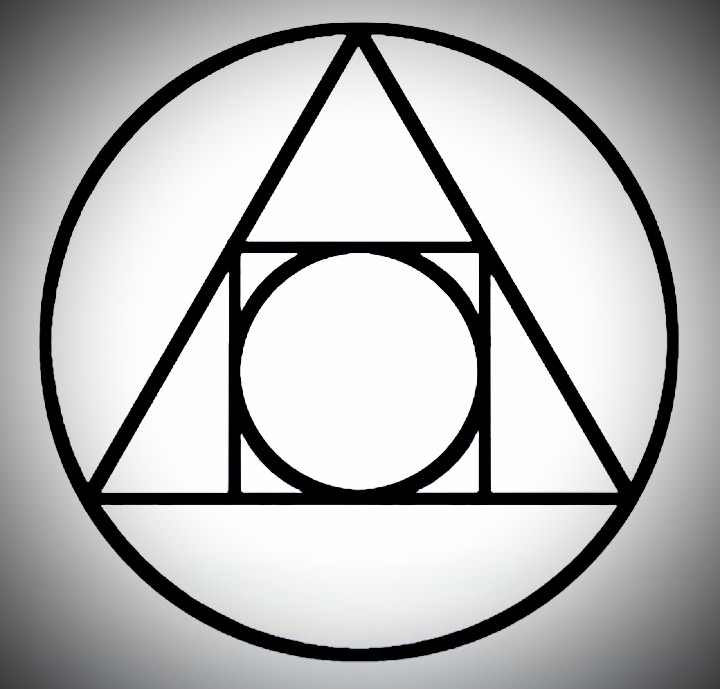
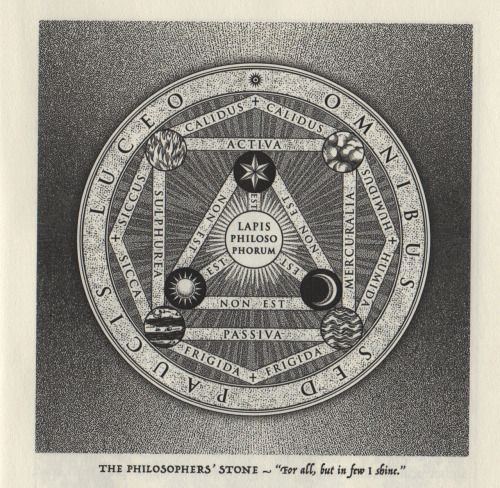
    Lapis Philosophorum (Philosopher’s Stone)

    The transcendent outcome, the perfected state.
    Conclusion/ Overview

    1. Nigredo (Blackening): The descent into shadow, where the old dissolves.
    2. Albedo (Whitening): A purification, a dawning of clarity from the darkness.
    3. Citrinitas (Yellowing): The sun’s touch, bringing illumination and understanding.
    4. Rubedo (Reddening): The ultimate fusion, the attainment of wholeness.
    5. Lapis Philosophorum (Philosopher’s Stone): The transcendent outcome, the perfected state.
    RESOURCES

    Alchemy Of Redemption
    Alchemy: Lead Transmuting to Gold
    Esoteric Pathways The Alchemical Art of Transformation
    The Inner Dance of Psyche and Spirit | Hermetic Academy
    Alchemy Historically
  • The Soul

    The Soul

    The Soul is the immaterial, spiritual essence of a human being.

    It is the part of us that exists beyond flesh and blood—the spark fashioned by God before creation, known and willed into being with purpose.

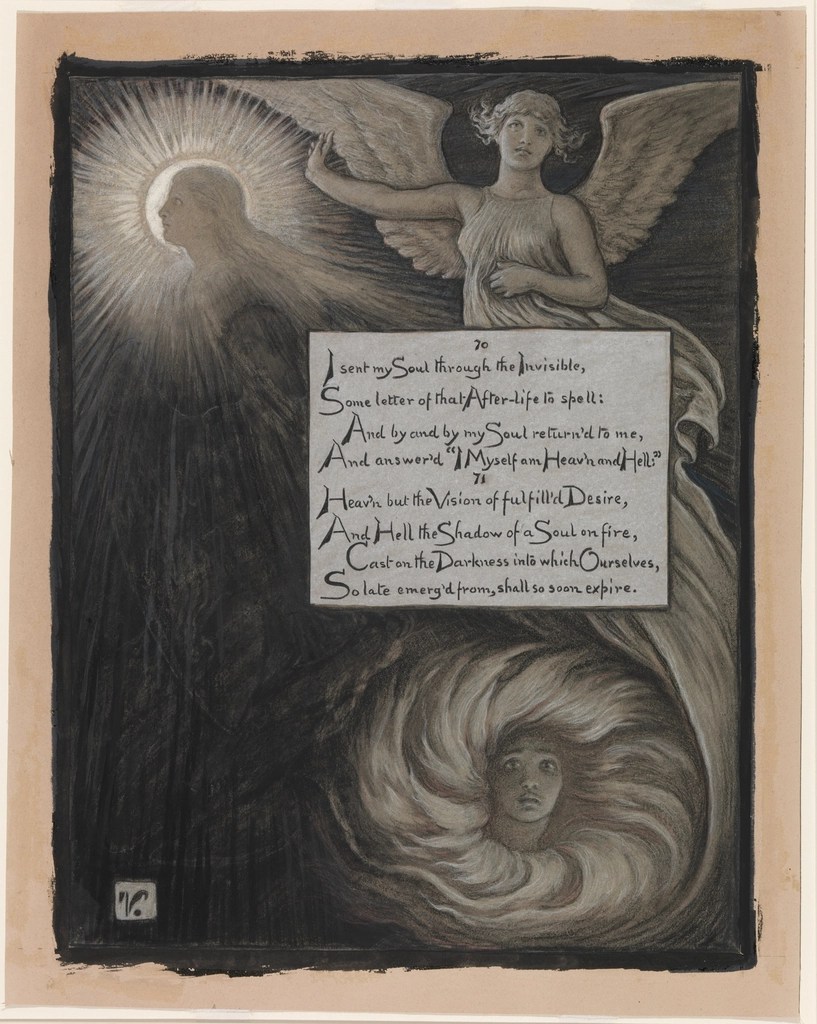
    “(Illustration Rubáiyát Omar Khayyám) Soul’s“/ CC0 1.0

    Etymology

    “Soul” comes from the Old English sawol and the Germanic saiwalo, signifying life itself—the principle that separates the living from the inanimate.

    The Soul as Our Inner Nature

    The soul is the core of human spiritual nature, capable of longing, thirsting, and reaching for truths that transcend the visible world.

    It hungers for God, for understanding, for the “solid food” of deeper wisdom embedded in scripture.

    Soul Hunger and Awakening

    When God opens the eyes of the spirit, the soul awakens. It senses a void that can only be filled by divine truth.

    This hunger is not fleeting desire—it is a gnosis-driven recognition of what the soul was made to receive.

    Growth Through Discernment

    As the soul engages with God’s word, it matures. Discernment sharpens. Understanding deepens.

    The soul is not static—it evolves as it drinks from the well of spiritual nourishment, separating truth from illusion.

    Transformation in the Human Being

    The soul is the locus of change. Surrendering to God’s word, allowing His living message to permeate the inner being, renews and transforms the soul.

    This is the ongoing work of sanctification: a refining fire that shapes the heart and mind, aligning them with divine purpose.

    The soul is more than life—it is the canvas upon which God paints His eternal image.

    To nourish it is to participate in the work of transformation that echoes in eternity.

  • Jesus

    Jesus

    Do You Think You Know Jesus?

    They Said Jesus Was
    Insane. Mad. Crazy. Strange.

    The image of Jesus most people hold is wrong and wrung through centuries of:

    • ideological whitewashing
    • beautified marketing
    • sanitized Sunday School summaries.

    He’s often pictured as an ethereal peace-giver, universally adored, calmly glowing in a ‘soft sepia light’.

    But this wasn’t the Jesus known to his followers. Not even close.

    In fact, many who encountered Jesus in the flesh found him either;

    1. confusing, at best
    2. mentally unstable, at worst.

    He wasn’t simply controversial, he was considered a threat to both religious orthodoxy and social order.

    The sanitized version of Christ so many cling to was shaped after the cross, after the church industrial complex took control of his narrative.

    Let’s take a scalpel to the original reactions—the raw, unsettling perceptions of Jesus while he was still walking the earth.

    His Family Thought He’d Lost His Mind

    The Gospel of Mark pulls no punches. In Mark 3:21, we’re told that Jesus’ own family said:

    “He is out of his mind.”


    Yes, his own bloodline. Not strangers. Not critics. His family. Pause there…

    Imagine. Imagine the weight of that.

    You’ve awoken to a Divine Knowing, a consciousness that cracks open reality—and the people who know your voice best say:

    “You’ve snapped.”


    It wasn’t mockery from outsiders that came first; it was internal doubt.

    His kin likely feared he’d gone mad with something akin to messianic delusion.

    Or perhaps they were embarrassed by his sudden rise as a controversial street-preacher confronting the Government and Church…

    He spoke vehemently against both Rome and the temple elite.

    Religious Leaders:

    “You’re Breaking the Law and Blaspheming“

    The religious class didn’t just dislike Jesus—they actively plotted his removal.

    The scribes and Pharisees viewed him as a heretic, accusing him of;

    • violating the Sabbath
    • flouting Mosaic Law
    • daring to forgive sins.

    —a divine prerogative.


    His miracles weren’t applauded; they were denounced as works of Beelzebub.

    Let that settle: divine acts being interpreted as demonic.

    … this was normal folk… the acceptable people… The community.

    This wasn’t petty disagreement.
    This was existential threat-level panic from the religious hierarchy.

    They saw in Jesus… not just a radical voice—but someone who dismantled their very grip on sacred authority.

    Public Whispers: “He Has a Demon and Is Mad“

    John 10:20 captures this damning public sentiment:

    “He has a demon and is mad; why listen to him?”

    These weren’t elite theologians.

    These were everyday observers—

    • neighbors
    • townsfolk
    • bystanders.

    Jesus’ words, while layered with profound gnosis (wisdom), sounded unhinged to the average ear.

    And truthfully, wouldn’t they today? I mean… They do.

    Imagine someone saying,

    “Before Abraham was, I am.”

    Or calling God their literal Father, claiming to bring not peace but a sword.

    If spoken in today’s marketplace, they’d be dismissed as spiritually schizophrenic, or worse.

    So what’s changed?
    Only the power structure that codified his words.

    Outside the Bible: Even More Scathing Views

    This doubt wasn’t exclusive to Jewish contemporaries.

    Roman voices and philosophers took their shots, too.

    Talmud

    The Talmud contains cryptic but deeply derogatory references to Jesus—branding him a sorcerer who led Israel astray.

    He is also said in the Talmud to be swimming in hot excrements.

    These weren’t passive critiques.

    They were sharp rejections by those who saw his influence as spiritually treacherous.

    Roman Philosophers

    Roman historian Tacitus referred to Christianity as a “pernicious superstition,” blaming the followers of Christ for corrupting public morals.

    To Roman minds, Christ’s followers were:

    irrational fanatics clinging to a crucified troublemaker.

    Celsus

    And then there’s Celsus, the ancient philosopher and intellectual, who reportedly called Jesus

    “small, ugly, and undistinguished,”

    claiming his father was a Roman soldier—a jab meant to invalidate his divine paternity and tarnish the virgin birth narrative.

    Jesus wasn’t revered by the intellectual elite of his time.

    He was;

    • mocked
    • dismissed
    • vilified.

    Why This Matters

    This isn’t about shock value or anti-Christian rhetoric. It’s about truth-telling.

    When we sanitize the narrative of Jesus to make him palatable. We also:

    • rob Him of the radical edge that threatened anti Christ power
    • offended institutions
    • deny the painful fact that he alienated his own family.

    His teachings were revolutionary because they disrupted—not because they fit neatly within pre-existing paradigms.

    So when you feel like your awakening makes others uncomfortable when your truth sounds like madness to the masses take comfort. You’re in excellent company.

    Because the real Jesus wasn’t crucified for being nice. He was crucified because he challenged the lies. And many thought he was insane for doing so. Truth rarely sounds sane to those who live comfortably in delusion.

    “And you will be hated by all for my name’s sake. But the one who endures to the end will be saved.”

    – Matthew 10:22
  • What is Time?

    From scientific models to ancient myths, humanity has long sought to unravel the mystery of time.

    THEORIES THROUGH HISTORY

    The concept of time has been a subject of intense interest for thinkers throughout history.

    Time as a Measure of Change:

    Aristotle argued that time is not a thing in itself, but rather a way of measuring change and motion. 

    Time, in essence, is a measure of change, and without change, there would be no way to perceive or measure the passage of time. 

    We experience time through changes in our surroundings like:

    • the sun rising and setting
    • the seasons changing
    • growing older

    Time & Motion

    Aristotle claimed that time is dependent on motion, meaning that time only exists in relation to and as a consequence of change occurring in the world. 

    Time is “Now”

    Aristotle considers the present moment, now, as a point of transition between the past and the future, a kind of “nothingness” that divides the two. 

    Richard Muller’s Theory

    Muller, a physicist at the University of California, Berkeley, posits that the expansion of the universe, starting with the Big Bang, constantly creates new space and, consequently, new time. 

    “Now” as the Leading Edge

    He argues that the “now” is the boundary, the shock front, or the leading edge of time, where new time is constantly being created. 

    Implications for Time Travel

    This theory has implications for our understanding of time travel, suggesting that the future is not predetermined, and that the “now” is the only reality that truly exists. 

    Eternalism vs. Presentism

    This concept contrasts with the block universe or eternalism, which suggests that all moments in time exist equally, and the presentism, which holds that only the present moment is real. 

    Einstein’s Relativity

    Muller’s theory builds on Einstein’s theory of general relativity, which views space and time as intertwined in a four-dimensional spacetime. 

    “Now” as a Relative Concept

    According to the American Museum of Natural History, time is relative, meaning the rate at which time passes depends on the observer’s frame of reference. 

    Time as a Dimension

    Some forms of eternalism view time as a dimension, similar to space, where different times are as real as different place.

    Time & Soul

    Aristotle and Time’s Dependence on the Soul: 

    • Aristotle argued that time, as a concept, depends on the soul’s ability to perceive and count it. 
    • He suggested that if there were no souls to “count” time, there might still be change, but not time itself. 
    • This view implies that time is not just countable but also essentially counted, meaning it requires a conscious entity to exist as a measurable concept. 

    Plato & the Soul’s Immortality

    • Plato’s theory of the soul, influenced by Socrates, considered the soul (psyche) as the essence of a person, an incorporeal and eternal entity. 
    • He believed the soul exists even after death and is able to think, and that as bodies die, the soul is continually reborn (metempsychosis) in subsequent bodies. 
    • Plato divided the soul into three parts: logistikon (reason), thymoeides (spirit), and epithymetikon (appetite or desire). 

    The World Soul (Anima Mundi)

    • Some philosophical traditions, like Neo-Platonism, explored the concept of a world soul (anima mundi) or soul of the world,suggesting an intrinsic connection between all living beings and that the world is animated by a soul. 
    • This concept posits that the world is animated by a soul much like the human body. 

    Quantum Theory of Soul

    This perspective suggests that the soul is not limited by space or time. 

    Some theories, like the Quantum Theory of Soul, propose that the soul, as defined as information stored in the quantum field, can extend over space and time, potentially transcending the limitations of the physical body. 

    Time as a Number

    Aristotle describes time as a “number of motion with respect to the before and after,” suggesting that we can count or measure time by counting instances of change. 

    Descartes on Time

    Time as a Foundation for Diversity and Motion

    Descartes’s mechanistic view of the world, where diversity and motion are fundamental, requires time for these phenomena to occur. 

    Time as Proof for God’s Existence

    Descartes uses the concept of “parts of time” in his Meditation III proof for God’s existence, emphasizing the role of time in our understanding of God’s attributes. 

    Time as a “Mode of Thought”

    In his Principles of Philosophy, Descartes also states that time is a mere attribute and “mode of thought”. 

    Time & Duration

    Descartes distinguishes between time as the measure of motion and duration as an attribute of things. 

    Time & the Span of Life

    Descartes sees no differentiation between the span of a life and the span of time itself. 

    Descartes’s Method

    Descartes’s method, which he later formulated in Discourse on Method (1637) and Rules for the Direction of the Mind (written by 1628 but not published until 1701), consists of four rules:

    1. Accept nothing as true that is not self-evident
    2. Divide problems into their simplest parts
    3. Solve problems by proceeding from … 

    Descartes’s dualism

    Descartes introduced the concept of dualism, which argued that reality or existence is divided into two parts.

    He argued that humanity could be divided into two parts as well: the mind and the body.

    TIME AS MOMENTS

    Time as a Series of Moments

    This perspective suggests that time can be broken down into a sequence of unique, distinct moments, each representing a specific point in the timeline. 

    Moment as a Point in Time

    A moment, in this context, is an instantaneous point, a “now,” rather than a duration. 

    Philosophical and Scientific Perspectives

    Philosophers and scientists debate whether time is a real, objective thing or a human way of conceptualizing changing events. Some theories, like the

    Static Theory of Time

    suggest that time is like space, with no passage.

    Dynamic Theory of Time

    view time as a real phenomenon. 

    Kairos vs Chronos

    Kairos refers to an opportune or significant moment, while chronos refers to a specific amount of time, such as a day or an hour. 

    Examples of “Moments in Time”

    Think of memorable events, like a wedding, a birth, or a historical turning point. 

    These are all “moments in time” that stand out as distinct points in the flow of time. 

    Time as Absolute

    Newtonian Time

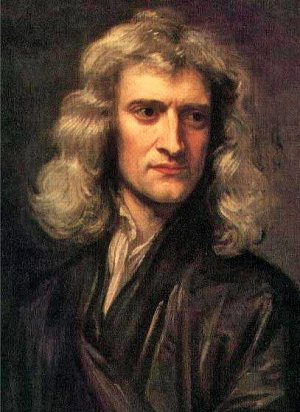
    According to its most famous proponent, Sir Isaac Newton, for example, absolute time (which is also sometimes known as “Newtonian time”) exists independently of any perceiver, progresses at a consistent pace throughout the universe, is measurable but imperceptible, and can only be truly understood mathematically.

    For Newton, absolute time and space were independent and separate aspects of objective reality, and not dependent on physical events or on each other.

    Time as a Product of the Mind

    Whitehead | Heidegger—Time as the Form of Becoming

    Whitehead and Heidegger described time as the process of things changing and becoming.

    They believed that time is essential for things to happen and transform.

    Theory of Relativity

    SPACETIME

    According to modern science, particularly the theories of relativity and quantum mechanics, time is considered a part of a larger concept called spacetime.

    Spacetime includes all the events in the past, present, and future, and is interconnected with space.

    Time as the Fourth Dimension

    In physics, time is often considered the fourth dimension, alongside the three spatial dimensions, used to describe events in space. 

  • Fragments of a Shattered Soul – Poetry

    Fragments of a Shattered Soul – Poetry

    Caught between the pursuit of desires and obligations throughout life, I found myself traversing a delicate tightrope—struggling to maintain my sanity while striving for success.

    My intense focus on maintaining balance ultimately became my undoing, causing me to tumble into the depths of despair. Paradoxically, the cautiousness that was meant to secure my future became the root of my life’s unraveling.

    – Camille

    Poem:

    The depths of her shattered soul
    Lie fragments of a love untold.
    Rejected, they lay abandoned, cold,
    A tapestry of dreams that could not unfold.

    Each piece a memory, etched in pain,
    A heart’s longing, now in vain.
    Whispered promises, once so dear,
    Now a haunting echo, she cannot hear.

    Her tears, like rivers, silently flow,
    As she gathers the rejected, piece by piece, slow.
    No matter how hard she tries to mend,
    The fragments remain broken, unable to blend.

    She walks through life, a ghostly shade,
    Haunted by the love that could have been made.
    In her eyes, a flicker of hope remains,
    But deep inside, her heart forever stained.

    Rejected fragments of her, scattered wide,
    A mosaic of despair, she cannot hide.
    For in the wreckage of her shattered heart,
    She finds solace in the pieces torn apart.

    Cami
  • The Three Realms of The Human Mind

    The Three Realms of The Human Mind

    The Conscious, the Subconscious, and the Unconscious.

    Each plays a pivotal role in shaping our thoughts, emotions, and actions, contributing to the complexity of our cognitive landscape.

    1. Conscious

    In a state of consciousness, heightened awareness allows us to discern and differentiate our thoughts, feelings, and actions with precision.

    This heightened state of alertness enables a focused engagement with the present moment.

    2. Subconscious

    The subconscious, akin to a nuanced filter, operates beyond immediate awareness.

    It harbors both adaptive and maladaptive coping frameworks, influencing our reactions and actions.

    This hidden domain holds the key to deciphering events and emotions, with manifestations surfacing in both conscious and subconscious realms.

    It serves as a reservoir housing memory banks, thought and emotion generators, sensory input control, and a repository for habitual patterns.

    3. Unconscious

    Delving into the deep recesses of our past, the unconscious constitutes a reservoir of automatic mental processes.

    Within its depths lie repressed interpretations, decoding the thoughts and feelings associated with past events, including psychological trauma.

    The unconscious mind intricately weaves these elements into the fabric of our eveyday conscious and subconscious frameworks.

    FOREFATHERS OF MIND SCIENCES

    Sigmund Freud

    Sigmund Freud was an Austrian neurologist and the founder of psychoanalysis, a clinical method for treating psychopathology through dialogue between a patient and a psychoanalyst.

    He formulated the theory of the Oedipus complex, proposed the existence of an unconscious mind, and developed the idea of the id, ego, and superego as structural components of the human psyche.

    Additionally, Freud’s work significantly influenced the field of psychology and various aspects of Western culture.

    Carl Jung

    Carl Jung was a Swiss psychiatrist and psychoanalyst who founded analytical psychology.

    He is known for his concepts of the collective unconscious, archetypes, and the process of individuation. Jung emphasized the significance of symbolism, mythology, and the integration of opposing forces within the psyche.

    His work has had a profound impact on psychology, psychiatry, and various fields, influencing areas such as dream analysis, personality theory, and the study of cultural and religious symbolism.

    The main differences between Sigmund Freud’s psychoanalysis and Carl Jung’s analytical psychology lie in their perspectives on the unconscious, the role of the libido, and the significance of the collective unconscious and cultural symbolism.

    Freud’s psychoanalysis emphasizes the influence of early childhood experiences, the unconscious drive of the libido, and the concept of repression as a key mechanism shaping human behavior.

    In contrast, Jung’s analytical psychology expands on the collective unconscious, archetypes, and the process of individuation, focusing on the integration of opposing forces and the pursuit of wholeness or self-realization.

    Freud’s emphasis on the Oedipus complex and the role of sexual and aggressive instincts differs from Jung’s broader view of the unconscious, which includes personal and collective elements, as well as archetypal patterns that transcend individual experiences.

    Jung’s approach places greater emphasis on spirituality, mythology, and the symbolism found in various cultures, in contrast to Freud’s more clinical and biological focus on human behavior and mental processes.

    Analytical Psychology

    Analytical psychology, also known as Jungian psychology, is a branch of psychology developed by Carl Jung that focuses on exploring the depths of the unconscious mind and understanding the individual’s journey towards psychological wholeness. It places a strong emphasis on the exploration of the collective unconscious, archetypes, and symbolic imagery. Analytical psychology recognizes the importance of spirituality and the transcendent aspects of human experience. It views the psyche as a dynamic and self-regulating system, seeking to integrate and balance both conscious and unconscious elements.

    Analytical psychology, also known as Jungian psychology, and “regular” psychology, commonly referred to as mainstream psychology differ in several significant ways:

    Analytical psychology delves into the collective unconscious, archetypes, and symbolic imagery.

    Collective Unconscious

    Concept within analytical psychology that refers to the shared reservoir of knowledge, experiences, and symbols that all individuals inherit as a result of their common humanity. It is believed to be a deep layer of the unconscious mind that contains archetypes, universal themes, and instincts that are shared by all human beings across cultures and throughout history. This collective unconscious is thought to influence our thoughts, feelings, and behaviors, shaping our perceptions of the world and guiding our behavior in ways that are often unconscious to us. Through exploring and understanding the symbols and patterns that arise from the collective unconscious, individuals can gain insights into themselves, their relationships, and their place in the larger human experience.

    Archetypes

    Jungian archetypes are deeply rooted and universally recognized patterns of symbols and images that reside within the collective unconscious. These archetypes, such as the Hero, the Shadow, the Wise Old Man, and the Mother, represent fundamental aspects of the human psyche and serve as primordial templates for understanding and interpreting our experiences. They are symbolic guides that help us navigate the complexities of life, providing us with insight into our deepest fears, desires, and potentials. Jungian archetypes offer a profound framework for self-discovery and personal transformation, allowing us to tap into the depths of our unconscious and unlock greater awareness and wholeness.

    Symbolic Imagery

    Jungian symbolic imagery is a cornerstone of analytical psychology, emphasizing the profound power and significance of symbols and their role in unlocking the depths of the unconscious mind. Symbols are potent manifestations of archetypes, universal patterns of meaning that tap into the collective unconscious. They speak a language beyond words, evoking profound emotions, insights, and connections to the wider human experience. Through exploring and understanding these symbolic images, individuals gain access to a rich tapestry of personal and collective meaning, diving into the depths of their own psyche, unraveling mysteries, and opening doors to self-discovery, healing, and transformation. Jungian symbolic imagery offers a bridge between the conscious and unconscious realms, allowing individuals to navigate the complexities of their inner world and find deeper understanding and integration.

    Integration

    Jungian integration is the process of merging and reconciling the conscious and unconscious aspects of the psyche, as proposed by Carl Jung in analytical psychology. It involves recognizing and embracing the shadow, the hidden and often repressed aspects of ourselves, and integrating them into our conscious awareness. By acknowledging and working with the shadow, we can uncover and integrate the valuable lessons it holds, leading to greater self-understanding and wholeness. Jungian integration also entails recognizing and exploring archetypal patterns and symbols that arise from the collective unconscious, allowing individuals to tap into a deeper level of consciousness and find meaning and purpose in their lives. Through this process, we may cultivate a sense of balance, authenticity, and personal growth, enabling us to fully realize our potentials and navigate the complexities of the human experience.

    Related Work:

    Carl Jung –Art – Archetypes

    Carl Jung Was An Alchemist

    set of shiny transparent amethysts grown together
  • Dark Night of the Soul: God’s Light A Purifying Fire

    Dark Night of the Soul: God’s Light A Purifying Fire

    A dark night of the soul is a period of intense spiritual or emotional distress, typically characterized by feelings of emptiness, despair, and a loss of meaning or purpose in life.

    REVELATION

    The Dark Night reveals all of our fundamental attachments; the purpose of the Dark Night is the very liberation of your soul.

    A dark night calls you into a true baptism.

    A dark night sears away pretense, dragging all – beliefs, motives, coping mechanisms – into hell’s white heat.

    Entering the Refiner’s Fire

    The dark night starts with desolation, a profound sense of abandonment and emptiness. All that you trust in our depend on more than Him will become your opposition, you will feel despised, you will be deserted.

    My God, my God, why have you forsaken me? Why are you so far from saving me, so far from my cries of anguish? -Psalm 22:1

    And there, in that crucible of flames, the essence meets its agonizing winnow:

    “Put to death, therefore, whatever belongs to your earthly nature” – Colossians 3:5

    What forms the core, what residue to ash… He’ll burn away ego and attachments that distance us from Himself…

    “For if you live according to the flesh, you will die; but if by the Spirit you put to death the misdeeds of the body, you will live.” Romans 8:13

    Here darkness holds no delicacy.

    Its firebrands flay hope from writhing flesh, strip sanity bare till only raw nerve remains. Reason fragments under pounding torture, oozing through mind’s fissures in diarrhea of doubt.

    “Those who belong to Christ Jesus have crucified the flesh with its passions and desires. Galatians 5:24

    In the darkness, we’re moulded by God alone. But like gold in a furnace, we don’t break—we’re transformed by the Alchemist, The great Architect – God Himself!

    Our false identity sloughs away, peeling off in scorched layers as even (the pronoun) “I” dissolves.

    Yet into this nuclear hell-mouth descends the Divine, wielding flames to burn away death’s shroud from our encrusted soul.

    Far from punishment, the dark night is a clear display of Divine love placing us into intense spiritual refinement.

    “Every branch in me that does not bear fruit he takes away, and every branch that does bear fruit he prunes, that it may bear more fruit. John 15:2

    You find that you contain many branches, we are each branches containing many branches, and fragments of branches.

    Fallen man is in sin which equals (=) separation, hence fragmented, sinful, broken, no longer a branch but a fractured, pile of branches.

    Emerging with renewed vision

    Though form disintegrates at such intimacy with cosmic conflagration, the heart’s diamond emerges purified.

    Through suffering, we experience greater union with Christ who understands our pain. He was despised and rejected by mankind, a man of suffering, and familiar with pain.

    Like one from whom people hide their faces he was despised, and we held him in low esteem.” -Isaiah 53:3-5

    What emerges is not the same substance.

    Spirit is born from the sacrifice of the flesh. The old is still attached, this is why St Paul States:

    “Yes, we are of good courage, and we would rather be away from the body and at home with the Lord.” -Corinthians 5:8

    When blackened flesh falls from whitened bones and darkness swallows the final scream, deep-bedded Spirit leaps forth on New Wings, reconstituted through Sacred Fire’s Cataclysm.

    Detached from the fleeting,

    “God is our refuge and strength, an ever-present help in trouble…” Psalm 46:1

    The dark night readies our soul to receive Divine wisdom in humility, lighting our path ahead.

    But the path of the righteous is like the light of dawn,which shines brighter and brighter until full day. Proverbs 4:18

    A journey of joy through darkness

    Though the dark night terrifies, its end brings relief and peace infinitely deeper than before the fall …

    Jesus said:

    “Very truly, I tell you, you will weep and mourn, but the world will rejoice; you will have pain, but your pain will turn into joy. ” John 16:20-22

    Freed from fear of trial by fire, we walk joyfully toward the Light which the darkness could not overcome (John 1:5).

    We see then how God strategically uses all things for good.

    The darkness isn’t a sign of His absence but preparation for an intimacy closer than ever dreamed.

    I will lead the blind by ways they have not known, along unfamiliar paths I will guide them; I will turn the darkness into light before them and make the rough places smooth. These are the things I will do; I will not forsake them. Isaiah 42:16.

    How can God guide you if you already know the way? God delights to guide us into new places, new paths, take us on new adventures and lead us in new ways.

    But first, He wants us to trust Him and depend on him even though we feel “blind” and “in the dark.”

    Things become clear only in the place of following Him into the unknown.

    This is the Way: through hell’s annihilating forge, past all fears, to new creation’s dawn.

    “And we know that all things work together for good to those who love God, to those who are the called according to His purpose.” – Romans 8:28

    For those called to this sacred spiritual process, take heart—the way is made straight, and dawn follows.

    “I will go before you and make the crooked places straight; I will break in pieces the gates of bronze and cut the bars of iron . . . That you may know that I, the Lord, Who call you by your name, Am the God of Israel” –Isaiah 45: 2, 3“

    A voice of one calling in the desert:

    ‘Prepare the way for the Lord, make straight paths for Him. Every valley shall be filled in, every mountain and hill made low. The crooked roads shall become straight, the rough ways smooth. And all mankind will see God’s salvation’ Luke 3: 5, 6

    Steadfast Faith sees us through.

    May those navigating these waters find strength, by the strength of our substitute, protected in God who doesn’t put is in the out valley without going with us into the deepest valley…

    Even though I walk through the valley of the shadow of death, I fear no evil, for You are with me; Your rod and Your staff, they comfort me. Psalm 23:4

    St. John of the Cross ORIGINAL

  • Your Eye Is The Light Of Your Body

    Your Eye Is The Light Of Your Body

    The eye is a sacred gateway to the soul. If your vision is pure and filled with love, your entire being will radiate with divine light. But if your eye is clouded with negativity and darkness, your whole being will be consumed by shadows. If the light within you is obscured by night, the depths of that darkness are immeasurable.

    “The eye is the lamp of the body. If then your eye is healthy, your whole body will be full of light. But if your eye is diseased, your whole body will be full of darkness. If then the light in you is darkness, how great is the darkness!
    Matthew 6:22‭-‬23

    Your eye is the lamp of your body. When your eye is healthy, your whole body is full of light, but when it is diseased, it is full of darkness. Therefore see to it that the light in you is not darkness. If your whole body is full of light, with no part in the dark, it will be as full of light as when the light of a lamp shines on you.”
    Luke 11:34‭-‬36
    In this passage, Jesus uses a metaphor to teach about the significance of spiritual discernment.
    He compares the eye to a lamp, suggesting that what we focus on and allow into our lives will bring light or darkness to our entire being. If we have a healthy eye and a clear and focused perspective, our whole body will be full of light. However, if our eye is diseased, meaning we have a distorted or unhealthy view, our whole body will be full of darkness.
    Jesus then warns his listeners to be careful that the light within them is not darkness. This could be interpreted as a warning against false teachings or beliefs that may seem light but lead them astray. He motivates them to confirm that their whole being is full of light, with no part in the dark so that they may experience the fullness of spiritual illumination.
    This passage emphasizes the importance of spiritual discernment and the need to guard our minds and hearts against anything that may lead us away from the truth.

    The eye is essential for gathering information. Unfortunately, some heathen societies had a cruel practice of blinding enemies or rivals to weaken their power (Judges 16:21; 2 Kings 25:7; Jeremiah 39:7). This act of blinding, especially of the right eye, was seen as a great humiliation as it robbed the victim of their beauty and ability to fight in a war (1 Samuel 11:2; Zechariah 11:17).

    The “Eye” Must be single.

    In Matthew 6:22 and Luke 11:34. The text discusses the concept of the eye being “single,” which means that it is not giving a double or uncertain vision. This is important because if the eye is not single, it can lead to confusion and uncertainty.

    Figurative: The eye of the heart or mind, the organ of spiritual perception, which may be enlightened or opened ( Psalms 119:18 ). This is done by the law of God (Psalms 19:8 ) or by the spirit of God (Ephesians 1:18 ), or it may be “darkened” and “holden” (Luke 24:16; compare Matthew 13:13; 2 Corinthians 4:4 ).

    The eye is an index of the mind and disposition of man. The Bible speaks of the “good” margin, or “bountiful” eye, i.e., the kindly disposition (Proverbs 22:9 ); of “proud,” arrogant,” “lofty eyes” (Psalms 18:27; Psalms 131:1; Proverbs 6:17 ); of the ‘lowly eyes’ of the humble (Job 22:29 margin; also compare Luke 18:13 ); of ‘adulterous eyes,’ “eyes which play the harlot” (Ezekiel 6:9, in the sense of idolatrous inclinations; 2 Peter 2:14 ). Rage or anger is shown by the “sharpening” of the eyes (Job 16:9 ).

    (4) The eyes of God, as well as the “seven eyes” of the Lamb (Revelation 5:6 ) and the ‘many eyes’ of the four living creatures of the Apocalypse (Revelation 4:6; also Ezekiel 1:18; Ezekiel 10:12 ), are figurative expressions for the omniscience of God (compare Hebrews 4:13; Psalms 139:16 ) and of His watchfulness and loving care (Jeremiah 32:19 ). As the human eye may, with the slightest glance or motion, give an indication, a command. Hence, God can “guide” or “counsel” His obedient child “with his eye” (Psalms 32:8 ).

    3 Hebrew expressions are translated by “apple of the eye”:

    ( a ) אישׁון, ‘ı̄shōn, literally, “the little man,” which probably means the “pupil of the eye,” it being part of the eye in which the close onlooker may see his image reflected in miniature. Several oriental languages have very similar expressions (Deuteronomy 32:10; Psalms 17:8; Proverbs 7:2 ).

    (b ) בּבה, bābhāh, literally, “the gate of the eye” (Zechariah 2:8 ).

    (c ) בּת־עין, bath -‘ ayin, literally, “the daughter of the eye” (Psalms 17:8; Lamentations 2:18 ). All these three phrases seem to indicate the pupil rather than the “apple of the eye” and designate the sensitive part of the eye, which we protect with the most excellent care. Thus the Scriptures declare, for our great comfort, that God will protect and care for those that are His own.

    The symbolism of the eye in the Bible is rich and complex. It is a physical organ and a metaphor for human emotions and behavior. As we saw in 1 Samuel 18:9, Saul’s envious gaze upon David illustrates how the eye can express negative feelings such as envy and malice. Additionally, the “evil eye” concept warns us about the destructive power of jealousy and covetousness. Thus, the eye is a powerful reminder of the importance of wisely using our sight and emotions. As we navigate life, we should be mindful of how our gaze and intentions can impact those around us and strive to cultivate positive and compassionate attitudes toward others.

  • DARK NIGHT OF THE SOUL {St. John Of The Cross intro}

    DARK NIGHT OF THE SOUL {St. John Of The Cross intro}

    To read the original text online I have created a weblink so you don’t have to download it. 🔗St. John Dark Night Of The Soul

    ST JOHN OF THE CROSS OVERVIEW

    St. John of the Cross was not only a Spanish mystic from the Middle Ages but also a prominent figure in the Catholic Church. He was a Carmelite friar and a close friend of St. Teresa of Avila, another mystic and reformer of the Church.

    However, his views and teachings were not always well-received by the Church authorities, and he was eventually captured and tortured for his beliefs.

    During his imprisonment, St. John of the Cross experienced a profound spiritual crisis, which he later described as the “night of the soul.” This phrase has since become interchangeable with a period of severe spiritual struggle and doubt, often characterized by a feeling of desertion by God.

    Despite his suffering, St. John of the Cross continued to write and teach, and his works profoundly influenced Christian spirituality. His most famous work, “The Dark Night of the Soul,” is a poetic and philosophical exploration of the nature of God and the human soul and has been praised for its profound insights into the mysteries of faith. Today, St. John of the Cross is recognized as one of the greatest mystics and spiritual writers in the Christian tradition. His teachings continue to inspire and challenge believers worldwide.

    “In the twilight of life, God will not judge us on our earthly possessions and human successes, but on how well we have loved.” – John of the Cross

    He coined a phrase to depict a moment when a person confronts agonizing trials that shake the core of their being.

    My Experience

    I have some firsthand experience with existence and consciousness. Nothing is more devastating than realizing what you thought you had was never really yours, leaving you at square one. It feels like death. Rebuilding is excruciating, especially with unsympathetic people around you who aren’t self-aware enough to care. During a dark night of the soul, escape and hopelessness can seem impossible.

    Don’t lose hope in the dark night. It’s not punishment, it’s just the start of something new.

    A DARK NIGHT CALLS YOU IN TO CHANGE

    “We are afflicted in every way, but not crushed; perplexed, but not driven to despair; persecuted, but not forsaken; struck down, but not destroyed; always carrying in the body the death of Jesus, so that the life of Jesus may also be manifested in our bodies”(2 Cor. 4:7–10)

    The dark night doesn’t just call for a reassessment, it forces you to question everything – who you are, what you know, and what you have. You may find that material possessions mean nothing at all.

    I form light and create darkness; I make well-being and create calamity; I am the LORD, who does all these things. “Shower, O heavens, from above, and let the clouds rain down righteousness; let the earth open, that salvation and righteousness may bear fruit; let the earth cause them both to sprout; I the LORD have created it. Woe to him who strives with him who formed him, a pot among earthen pots! Does the clay say to him who forms it, ‘What are you making?’ or ‘Your work has no handles’? Isaiah 45:7–9

    The dark night of the soul can be a spiritual death, leading some to resort to suicide. However, for those who endure, it can be a doorway to a freer, more self-realized existence with a stronger faith and clearer understanding of sin.

    “Very truly I tell you Pharisees, anyone who does not enter the sheep pen by the gate, but climbs in by some other way, is a thief and a robber… The one who enters by the gate is the shepherd of the sheep… Therefore Jesus said again, “Very truly I tell you, I am the gate for the sheep. John 10:1,2,7

    To navigate the dark night of the soul, one must persist and surrender. It’s akin to being “baptized in fire” as Scripture suggests – either we are consumed or refined, with no other options. There’s no sugar-coating or avoiding this experience, and even finding the strength to try can be a challenge. The only way to move forward is to go through it, or risk being stuck in it indefinitely.

    Questions To Ask Yourself If You Are Experiencing A Dark Night Of The Soul

    What subjective beliefs do you hold about life? What entitlements do you feel? What surface beliefs and personas do you identify with that may not align with your core self? What beliefs do you fear questioning because they conflict with your support system?

    The Enigmatic Allure of a Dark Night

    The allure of a dark night beckons you to delve into the depths of life and access profound wisdom. It challenges you to tap into the Mind of God and rely solely on the Word of God, all by the Will of God. From the darkness, you have the opportunity to catch a tiny glimpse of the incredible feat that God accomplished over the face of the deep. It’s mind-boggling to fathom how God, through the Power of His Word, created something out of nothing and declared it GOOD. Even the mere prospect of a dark night can make us shed our skin and leap into the unknown.

  • The Dark Night Of The Soul: Lamentation Edition

    The Dark Night Of The Soul: Lamentation Edition

    Arise, cry aloud in the night
    At the beginning of the night watches;
    Pour out your heart like water
    Before the presence of the Lord;
    Lift up your hands to Him
    For the life of your little ones
    Who are faint because of hunger
    At the head of every street.”
    — Lamentations 2:19

    I am the man who has seen affliction
    Because of the rod of His wrath.
    He has driven me and made me walk
    In darkness and not in light.
    Surely against me He has turned His hand
    Repeatedly all the day.
    He has caused my flesh and my skin to waste away,
    He has broken my bones.
    He has besieged and encompassed me with bitterness and hardship.
    In dark places He has made me dwell,
    Like those who have long been dead.
    He has walled me in so that I cannot go out;
    He has made my chain heavy.
    Even when I cry out and call for help,
    He shuts out my prayer.
    He has blocked my ways with hewn stone;
    He has made my paths crooked.
    He is to me like a bear lying in wait,
    Like a lion in secret places.
    He has turned aside my ways and torn me to pieces;
    He has made me desolate.
    He bent His bow
    And set me as a target for the arrow.
    He made the arrows of His quiver
    To enter into my inward parts.
    I have become a laughingstock to all my people,
    Their mocking song all the day.
    He has filled me with bitterness,
    He has made me drunk with wormwood.
    He has broken my teeth with gravel;
    He has made me cower in the dust.
    My soul has been rejected from peace;
    I have forgotten happiness.
    So I say, “My strength has perished,
    And so has my hope from the Lord.”

    Remember my affliction and my wandering, the wormwood and bitterness.
    Surely my soul remembers
    And is bowed down within me.
    This I recall to my mind,
    Therefore I have hope.
    The Lord’s lovingkindnesses indeed never cease,
    For His compassions never fail.
    They are new every morning;
    Great is Your faithfulness.
    “The Lord is my portion,” says my soul,
    “Therefore I have hope in Him.”
    The Lord is good to those who wait for Him,
    To the person who seeks Him.
    It is good that he waits silently
    For the salvation of the Lord.
    — Lamentations 3:1-26

    For the Lord will not reject forever,
    For if He causes grief,
    Then He will have compassion
    According to His abundant lovingkindness.
    — Lamentations 3:31-32

    How dark the gold has become,
    How the pure gold has changed!
    The sacred stones are poured out
    At the corner of every street.
    The precious sons of Zion,
    Weighed against fine gold,
    How they are regarded as earthen jars,
    The work of a potter’s hands!
    — Lamentations 4:1-2