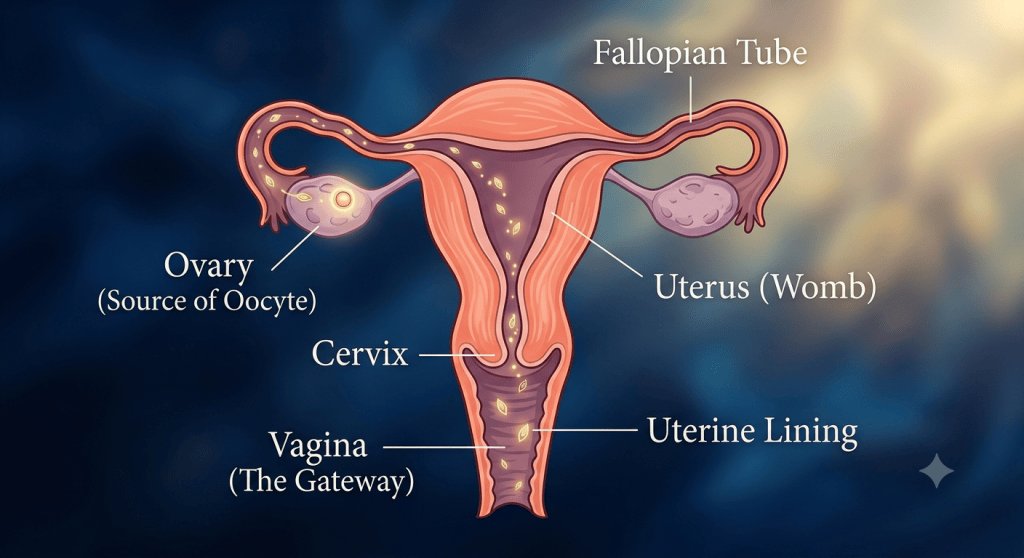
Its muscular walls expand remarkably to allow a baby to pass safely from the uterus into the world during childbirth.
The Menstrual Flow
It provides the necessary exit route for blood and tissue shedding from the uterine lining during menstruation.
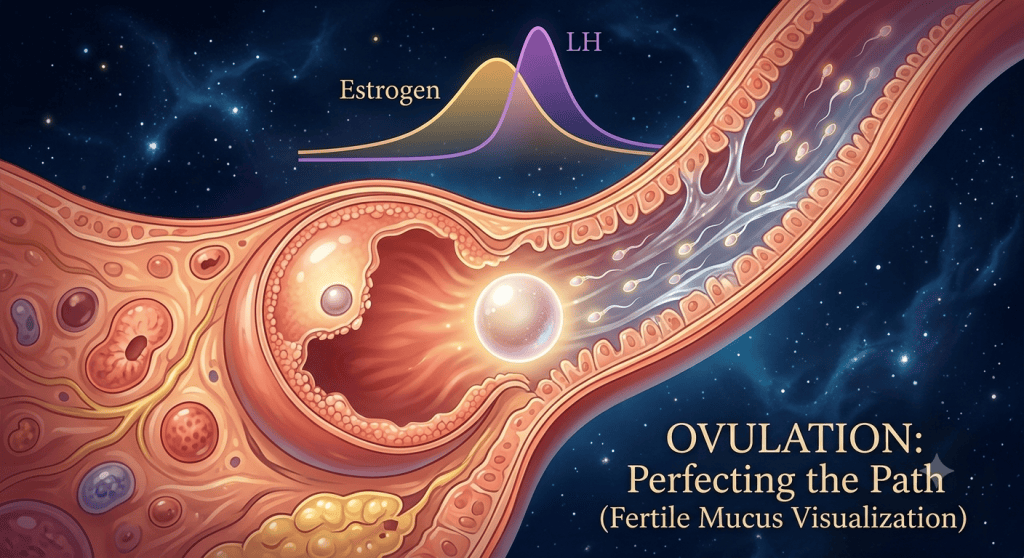
Ovulation: Perfecting the Environment
Reproduction cannot happen without the precise timing of ovulation—the release of an oocyte (egg) from the ovary.
This is the moment the body intentionally alters its own internal environment to cultivate life.
We must move past gross anatomy to visualize this perfected environment on a microscopic scale:
This process is governed by a strict, biological order of operations:
Hormonal Regulation
The cycle is commanded by an intricate hormonal dance.
Estrogen and progesterone rise and fall to regulate the maturation of the egg and to thicken the uterine lining, preparing it for the potential implantation of a fertilized egg.
The Fertile Window
Ovulation marks the most critical phase of a woman’s cycle.
Occurring near the midpoint, it is the brief, highly optimized timeframe where conception is biologically possible.
Cervical Mucus Transformation
As ovulation approaches, cervical mucus changes dramatically.
It becomes slippery, clear, and stretchy.
This creates a frictionless, nutrient-rich medium that protects sperm from natural acidity and physically helps propel them through the cervix toward the egg.
Increasing Pleasure and Bodily Ease
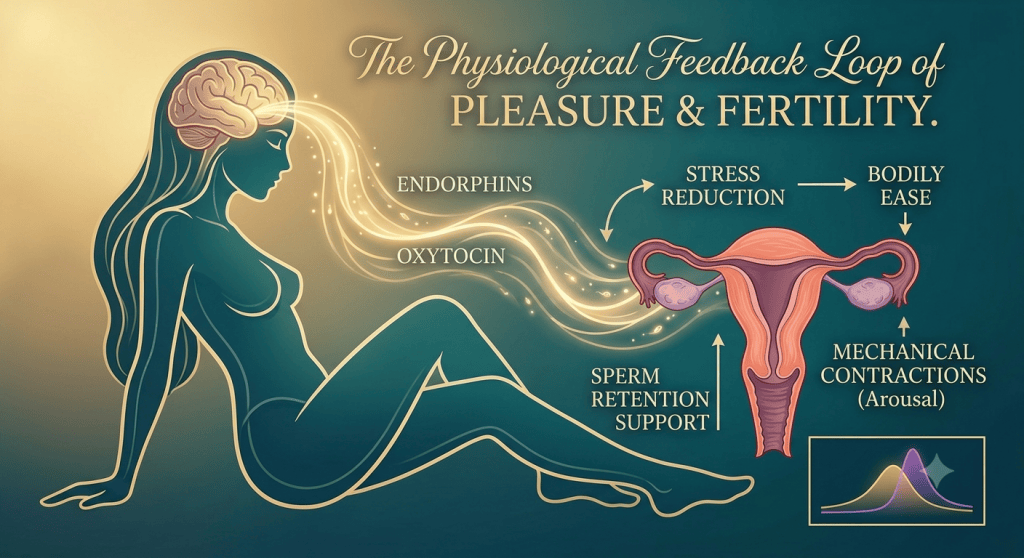
Pleasure is not merely a byproduct of human anatomy; it is deeply interwoven with biological success and physiological health. The mechanics of arousal and climax serve distinct, observable purposes.
How do these less visible signals (hormones, contractions, relaxation) integrate into a system of ease?
We visualize this feedback loop:
Enhanced Fertility: Biological evidence suggests that the involuntary muscular contractions of the uterus and vagina during female orgasm may function as a retention mechanism, physically aiding the upward movement of sperm toward the egg.
Stress Reduction: Sexual activity and climax trigger a cascade of neurochemicals, including a massive release of endorphins. This chemical flood actively dismantles stress responses, promoting the deep physical relaxation required for an optimal, healthy reproductive environment.
Relational Bonding: Beyond the physical mechanics, shared sexual pleasure releases oxytocin—often called the “bonding hormone.” This cements emotional intimacy and trust between partners, which is a foundational element for overall relationship health and stability.
I plan to go much much deeper in the near future on this… stay tuned for part 2.
References & Source Material
Evolutionary Biology of Pleasure and Fertility
Baker, R.R., & Bellis, M.A. “Human Sperm Competition: Ejaculate Manipulation by Females and a Function for the Female Orgasm.” Animal Behaviour. This foundational paper introduces the mechanical reality of how female climax functions to selectively retain sperm and influence fertility.
Lloyd, Elisabeth A.The Case of the Female Orgasm: Bias in the Science of Evolution. A biological and philosophical critique breaking down the evolutionary arguments surrounding female pleasure, separating biological fact from cultural byproduct.
Gross, Rachel E.Vagina Obscura: An Anatomical Voyage. A heavily researched look at the female reproductive system that strips away outdated medical dogma, presenting the female body as an active, dynamic landscape. Mechanics of Ovulation and the Cervical Environment
Clinical Reproductive Anatomy & Physiology. Standard clinical references regarding Spinnbarkeit (the stretchability of cervical mucus) detail how estrogen transforms the cervix into a highly optimized biological pathway for sperm leading up to the fertile window.
The Billings Ovulation Method Clinical Studies. Research on natural fertility tracking providing extensive biological data on how cervical mucus changes daily in response to hormonal cascades, proving the body communicates its fertility status in real-time. Neurochemistry of Bonding and Ease
Peer-Reviewed Literature on Oxytocin and Bonding (e.g., Evolution and Human Behavior, Psychological Science). Studies detailing the specific hormonal flood during climax, documenting how oxytocin and endorphins actively dismantle cortisol (stress) and facilitate the deep physiological ease required for reproductive success and relational trust.
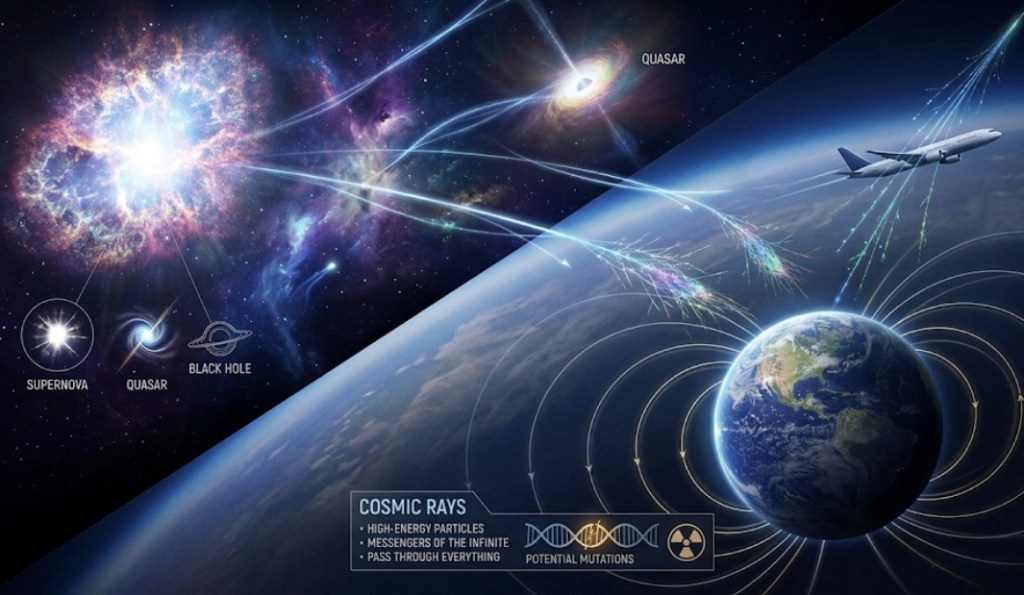
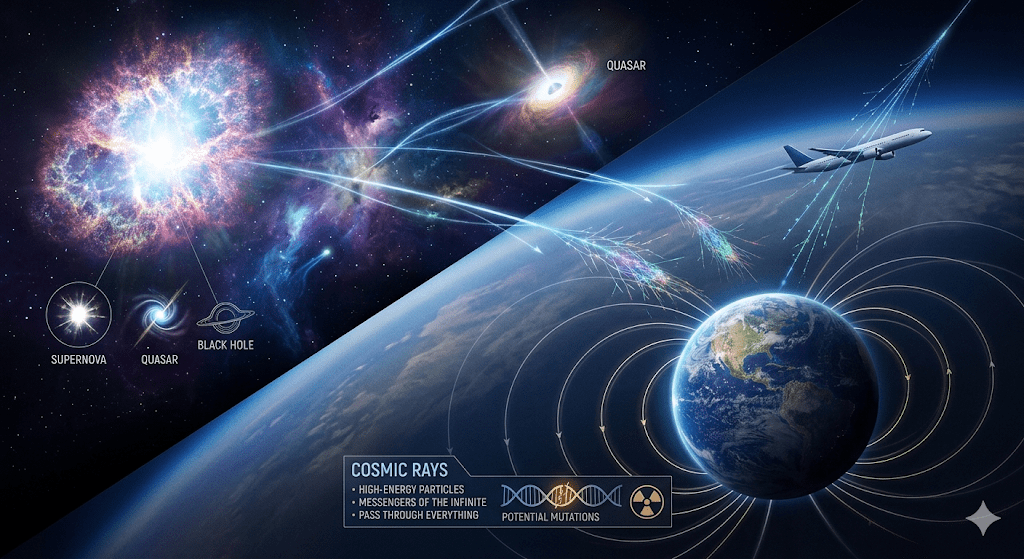
In the distant vault of space, supernovas erupt and quasars blaze like divine beacons.
WHAT IS A SUPERNOVA?
A star at the end of its life, collapsing in on itself until it explodes with a force that reshapes galaxies.
WHAT IS A QUASAR?
A luminous heart of a distant galaxy, powered by a black hole consuming matter and releasing energy beyond comprehension.
These cosmic furnaces unleash torrents of radiation—force so immense it sends cosmic rays streaking through the void like messengers from the edge of creation.
They carry within them the coded whispers of the universe—ancient, electrified secrets written in light.
FREQUENCY
The cosmos is alive with currents that ripple through every atom of our existence.
Among the most mysterious are cosmic rays—streams of high-energy atomic nuclei born in places beyond the reach of human imagination.
Cosmic Rays
Invisible, relentless, and infinitely powerful. They radiate with penetrating energy from the great beyond.
Radiation detectors trace their presence in the upper air, mapping the unseen architecture of our living universe.
THE UNIVERSE IS ALIVE
The universe is no silent void—it hums with the pulse of energy, an infinite heartbeat.
Cosmic rays are not mere radiation; they are subatomic storms traveling at nearly the speed of light.
They are fragments of the divine machinery of existence.
They are particles of creation itself… passing through us every second, shaping the unseen architecture of reality.
Before the age of quantum understanding, astronomers thought these were just another form of X-ray or gamma radiation.
They were wrong.
Cosmic rays are matter in motion—energy incarnate—born of the most violent acts in the heavens.
WHERE DO THEY COME FROM?
Picture the abyss: galaxies like jeweled islands scattered across eternity.
Somewhere within that tapestry, a star detonates—a supernova—or a black hole tears matter apart and swallows light itself.
From these cataclysms, cosmic rays are forged and flung into the endless dark.
They travel for eons, crossing the void, until—finally—they touch Earth.
They are messengers from the beginning of time, heralds of the infinite.
They do not simply inform us; they initiate us—into the mystery of how energy becomes form, and form becomes life.
HOW MUCH ENERGY DO THEY HOLD?
These particles carry trillions of times more energy than anything within the human body.
To study them, scientists use advanced particle detectors, telescopes, and satellites that record their arrival—each one a signature of cosmic power.
Every detection is a data point in the ongoing dialogue between humanity and the stars.
Through these measurements, we glimpse the origins of galaxies, the birth of matter, and the laws that govern both light and darkness.
Cosmic rays help decode the story of the universe—and in doing so, they reflect something of our own genesis.
THE DUAL EDGE OF COSMIC LIGHT
But cosmic rays do not come without consequence.
Their energy, while ancient and beautiful, can scramble electronics, corrupt data, and fracture DNA.
When they split our cellular code, errors can occur—replication falters, mutations form, and sometimes, tumors emerge.
Scientists estimate cosmic rays account for a small but measurable fraction of cancers worldwide.
Thankfully, Earth shields her children.
Our magnetic field—strongest of all the rocky worlds—deflects the weaker rays, while the denser atmosphere absorbs most of the rest.
Yet the strongest still pierce through, striking nitrogen and oxygen molecules, scattering their energy in showers of secondary particles.
Even at sea level, cosmic rays pass through each human body roughly once every second.
THE RISK ABOVE THE CLOUDS
At high altitudes, the protection thins.
Airline passengers and crew are exposed to higher rates of cosmic bombardment.
The metal hull of a plane offers little defense—when struck, it releases a cascade of subatomic shrapnel that passes through the cabin with invisible precision.
The only true safeguard is limiting exposure.
Occasional travelers need not worry—but those who live in the skies, pilots and attendants, face heightened biological risks.
Governments now regulate flight exposure, monitoring radiation at cruising altitudes to protect those who serve the airways.
Still, this surveillance is largely limited to North America and Europe. Above Africa, our data is scarce.
A group of astronomers recently took the first step toward change—using a Raspberry Pi computer to create a low-cost radiation dosimeter.
They flew it from Johannesburg to Frankfurt, and from Munich back to Johannesburg, proving such technology can measure cosmic exposure with striking accuracy.
Their vision: a global network of radiation monitors to map and protect the skies we share.
THE COSMIC BALANCE
Cosmic rays remind us that we live inside a living, electric universe.
They are both creators and destroyers, the light that builds and the fire that burns.
From the smallest subatomic spark to the grand sweep of galaxies, their story is our own—the ceaseless interplay of energy and matter, life and death, chaos and creation.
Through them, we glimpse the truth:
that reality is not static but alive, vibrating with purpose.
And the universe, in all its violence and beauty, is still speaking…
through every ray, every particle, every breath of light.
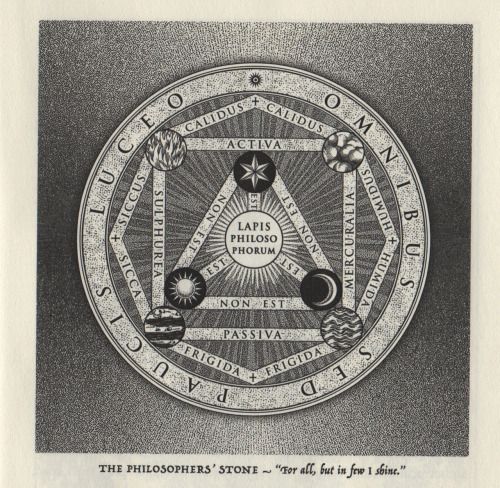
“When you see your matter going black, rejoice, you are at the beginning of the work.” — Rosarium Philosophorum
The traditional method of alchemy is divided into 5 stages:
STEP ONE
Nigredo —Blackening
The term “nigredo” comes from the Latin word for “black,” and its color is referring to the material color at this first stage of the process, which is often darkened.
The alchemist is observing or participating in the break down of the impurities that occur during Nigredo. This is the beginning of the distillation of raw materials.
This physical act represents the process of confronting one’s shadow self and the negative aspects of oneself.
This initial stage is one of dissolution and decay… confronting the raw, unrefined aspects of the self.
It’s a descent into darkness, a metaphorical death; old structures break down, making the route for the emergence of new beginnings.
Black —like fertile soil, chaotic, yet holds the potential for new growth.
STEP TWO
Albedo—Whitening
Albedo is the term used to describe the extent to which an object like a planet or moon reflects light.
Albedo emerges stark in contrast from the blackness of Nigredo.
A state of pristine whiteness, like the moon reflecting the sun’s light is found after Albedo.
Embodies clarity, a fresh perspective gained through the trials of the previous step. It’s a moment of reflection and the dawning of understanding.
STEP THREE
Citrinitas—Yellowing
The term “citrinitas” comes from the Latin word for “yellow,” and it refers to the color of the materials at this stage of the process, which is often yellow or orange.
At this stage, the alchemist is allowing the materials to be still… in Citrinita = self-growth + integration! 🍋✨ … think sitting water. Stagnation.
This yellowing is considered a bridge between Albedo and the final stage.
Citrinitas is associated with the rising sun, bringing with it warmth, light, and a sense of solar energy.
It represents the awakening of the intellect and intuition, a golden hue illuminating the path forward.
This stage signifies a growing awareness and the integration of newfound insights.
STEP FOUR
Rubedo—Reddening
The term “rubedo” comes from the Latin word for “red,” and its name refers to the color of the materials at this stage of the process, which is often red or reddish-gold.
A BLOODY MESS
In the Rubedo stage, the alchemist is completing the culmination of the alchemical process, its the stepping stone into the Philosopher’s Stone.
Rubedo also represents the perfect union of opposites, it is the merging of the spiritual and the material.
It is symbolized by the color red, signifying life, passion, and the ultimate realization of one’s true potential.
This stage embodies wholeness, completion, and the attainment of a higher state of being.
STEP FIVE
Lapis Philosophorum (Philosopher’s Stone)
The transcendent outcome, the perfected state.
Conclusion/ Overview
Nigredo (Blackening): The descent into shadow, where the old dissolves.
Albedo (Whitening): A purification, a dawning of clarity from the darkness.
Citrinitas (Yellowing): The sun’s touch, bringing illumination and understanding.
Rubedo (Reddening): The ultimate fusion, the attainment of wholeness.
Lapis Philosophorum (Philosopher’s Stone): The transcendent outcome, the perfected state.
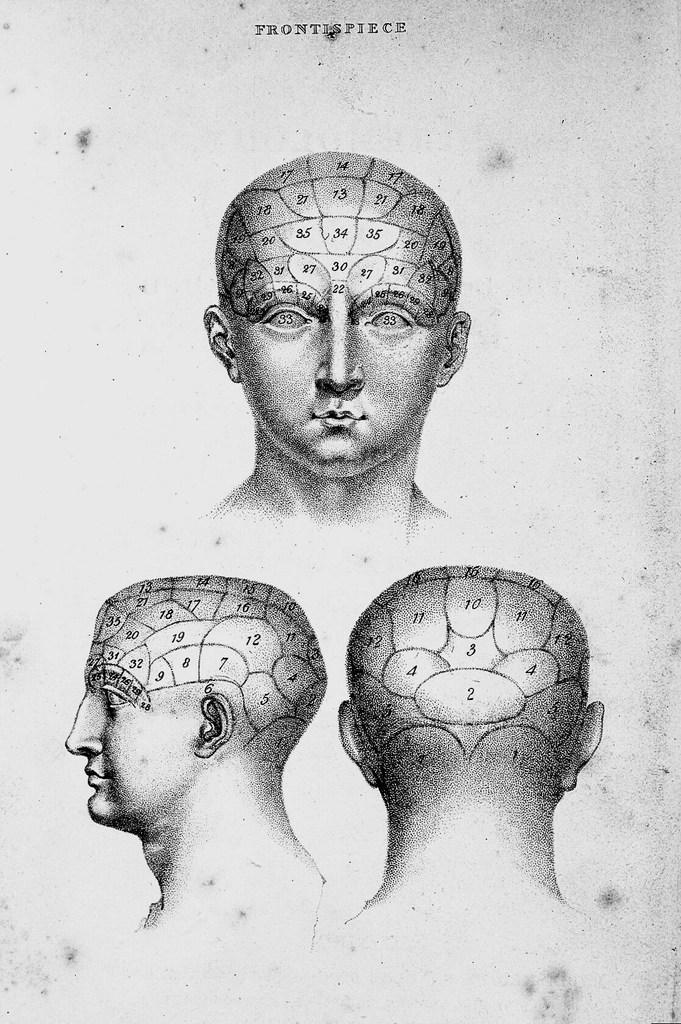
Cognitive rigidity is the stubborn insistence that our way of thinking is the only way.
It shows up in small, everyday ways:
refusing to consider another perspective
dismissing evidence that challenges our beliefs
or sticking to habitual responses when flexibility is required.
It is mental inflexibility masquerading as certainty.
This rigidity is rarely neutral. It filters experience, allowing only what aligns with our preconceptions to pass through.
What we notice and refuse to notice is determined less by reality and more by the contours of our existing beliefs. The mind becomes its own jailer.
FILTERED VISION
Perceptual limitations compound this problem. Our senses, our expectations, and our biases shape what we perceive.
Two people can witness the same event and walk away with entirely different “realities,” each convinced theirs is the truth.
Culture, language, upbringing, and personal trauma all function like lenses, coloring everything we see.
When cognitive rigidity meets these perceptual filters, the feedback loop begins: our beliefs dictate what we perceive, and our perceptions reinforce our beliefs.
We become prisoners of our own limited frameworks, blind to the complexity—and often the truth—of the world around us.
Breaking the Loop
Escaping this loop is not about acquiring more information. It is about retraining the mind to see what it usually ignores:
Observe without judgment. Watch your thought patterns and notice when you shut down possibilities automatically.
Seek what challenges you. Engage with ideas and perspectives that make you uncomfortable.
Question your perception. Ask yourself what you might be missing, what biases are filtering your experience.
Embrace intellectual humility. Accept that your understanding is provisional, incomplete, and subject to correction.
The moment we recognize that perception is always partial, and thought is always provisional, the bars of the cage begin to loosen.
Clarity is not a gift; it is a discipline.
The Work of Liberation
This is the work of liberation: not avoiding rigidity, but confronting it; not denying perceptual limits, but piercing them.
The mind can be trained to perceive more, think more flexibly, and respond more intelligently.
It is uncomfortable, but truth always is.
We cannot see everything, but we can see more than we did yesterday.
Quantum Alchemy is a framework that merges ideas from quantum physics—such as entanglement, superposition, and wave-particle duality—with the symbolic, transformative, and spiritual traditions of alchemy.
It often explores the idea of consciousness, energy, and reality as interconnected, sometimes framing quantum phenomena through the lens of alchemical processes like transformation, unification, or the pursuit of higher states of being.
IDEAS FOUND IN QUANTUM ALCHEMY:
Transforming the properties of particles or materials
Similar to how alchemists sought to transform lead into gold, quantum alchemy aims to manipulate the properties of particles, atoms or materials at the quantum level to create new forms of matter with desired characteristics.
This could involve changing the nuclear charges or electron configurations.
Computational method for predicting molecular properties
Quantum alchemy uses expansion to approximate and predict properties like binding energies for large numbers of molecules and materials by making small perturbations to a reference system.
This accelerates screening of potential catalysts or drug candidates.
Representation of the chemical space as a quantum superposition
Some propose representing all possible atomic compositions as a linear superposition state, with a “quantum alchemical Hamiltonian” driving the optimization to select the best molecule for a desired property.
Philosophical connections
There are also philosophical parallels drawn between the aims of ancient alchemy (e.g. transmutation, elixir of life) and modern concepts in quantum physics about the malleability and interconnectedness of reality.
Quantum alchemy leverages quantum mechanical principles to transform, optimize & efficiently model perveived matter and alter chemical systems in real ways.
It combines ideas from physics, chemistry, and the metaphysical quest of the ancient alchemists.
Sacred geometry is a field that not only explores the intricate patterns and shapes underlying creation, but defines it and holds within it the foundation of the origin.
From the simple elegance of the Vesica Piscis to the profound complexity of the Grid of Life, each symbol in this geometric art holds a wealth of meaning and nuance.
Let’s delve into these sacred geometric forms…
Vesica Piscis: The Intersection of Opposites
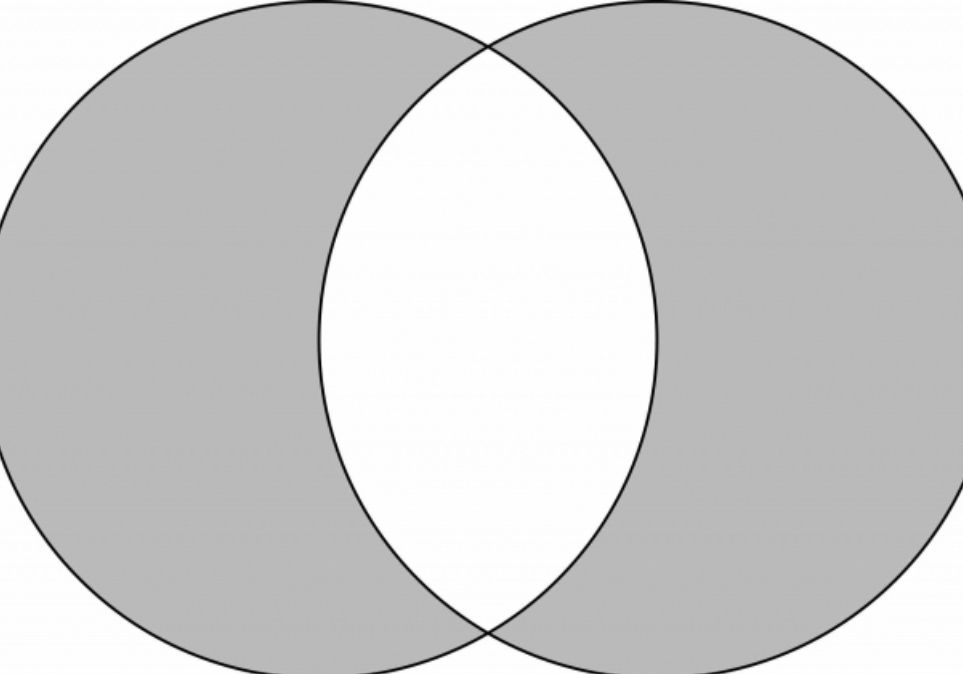
The Vesica Piscis, created by the intersection of two identical circles, represents the union of opposites.
Its proportions have influenced architectural masterpieces and are embedded in various artistic and organizational symbols throughout history.
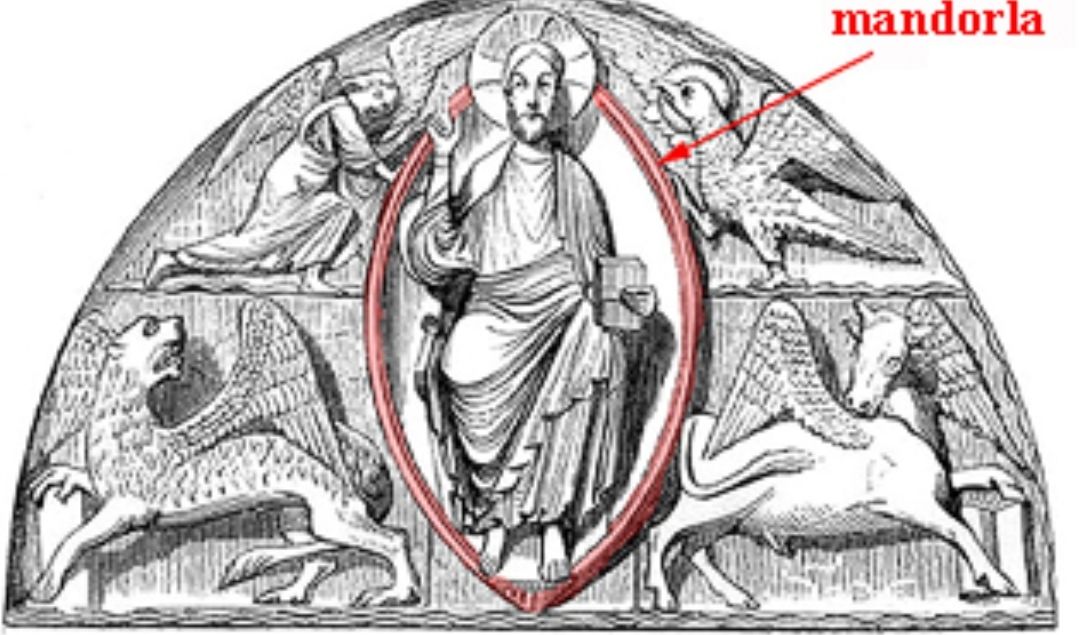
The mandorla is often seen in religious art and architecture.
MandorlaMandorla in Christian Art
The Mandorla is derived directly from the Vesica Piscis, symbolizing the canal of life, the vagina opening where all humanity derives.
This is intersection of the earthly and celestial realms. Earthly body delivered with soul inside
Seed of Life: The Essence of Creation
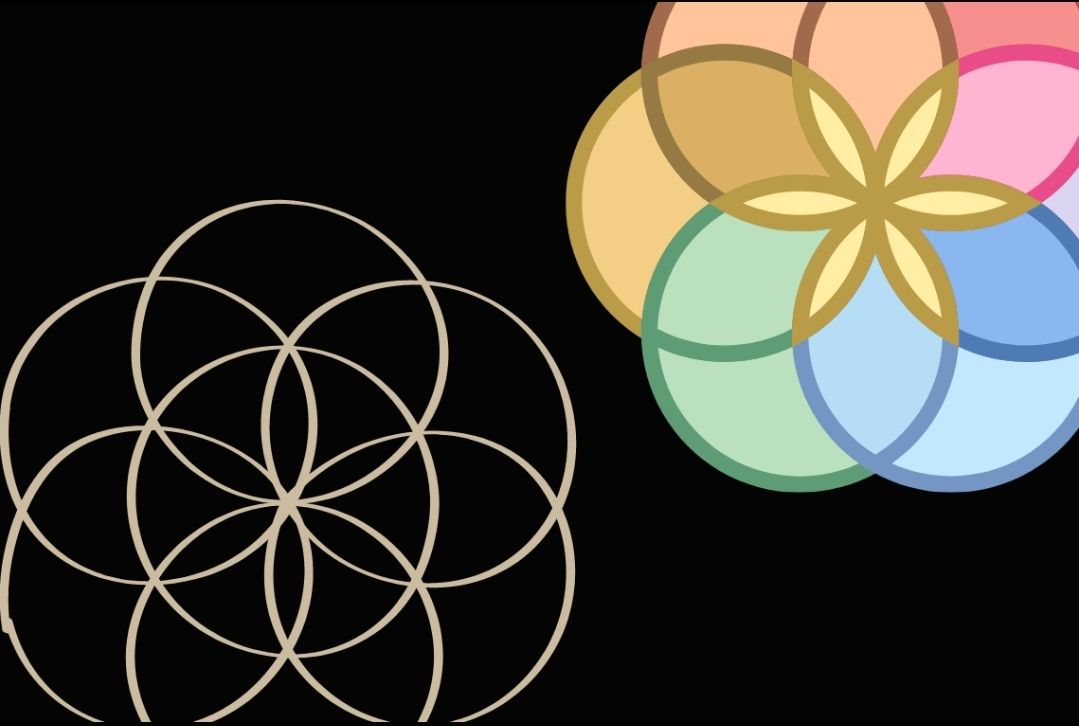
At the heart of sacred geometry lies the Seed of Life, a design made up of seven intertwined circles.
Its universal appeal can be witnessed in its widespread use across various religions and cultures.
Each overlapping circle represents a cell, a cycle, or even a day, culminating in the interconnected nature of life’s processes.
The Seed of Life speaks to the fundamental structures of life and existence, imbuing objects with a sense of protection and blessing.
Egg of Life: The Spark of New Life
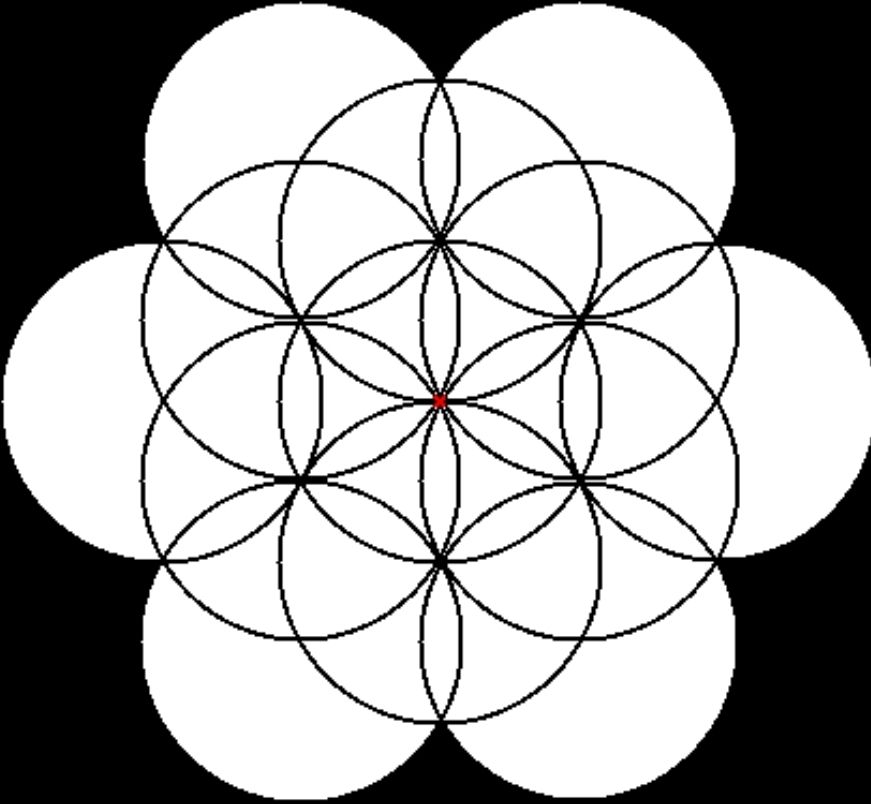
Emerging from the Seed of Life, the Egg of Life symbolizes rebirth, fertility, and the spark of new life.
Seed of life is vagina, Ovulation is the substamce perfecting the environment for masculine seeding, increasing pleasure increases bodily ease and diversion.
By adding six more circles to the foundational Seed, the Egg of Life demonstrates how life and patterns expand and evolve.
Within the three-dimensional realm, the Egg of Life can be visualized through the eight spheres nestled within Metatron’s Cube, showcasing the versatility and interconnectedness of sacred geometric symbols.
Flower of Life: The Cosmic Blueprint
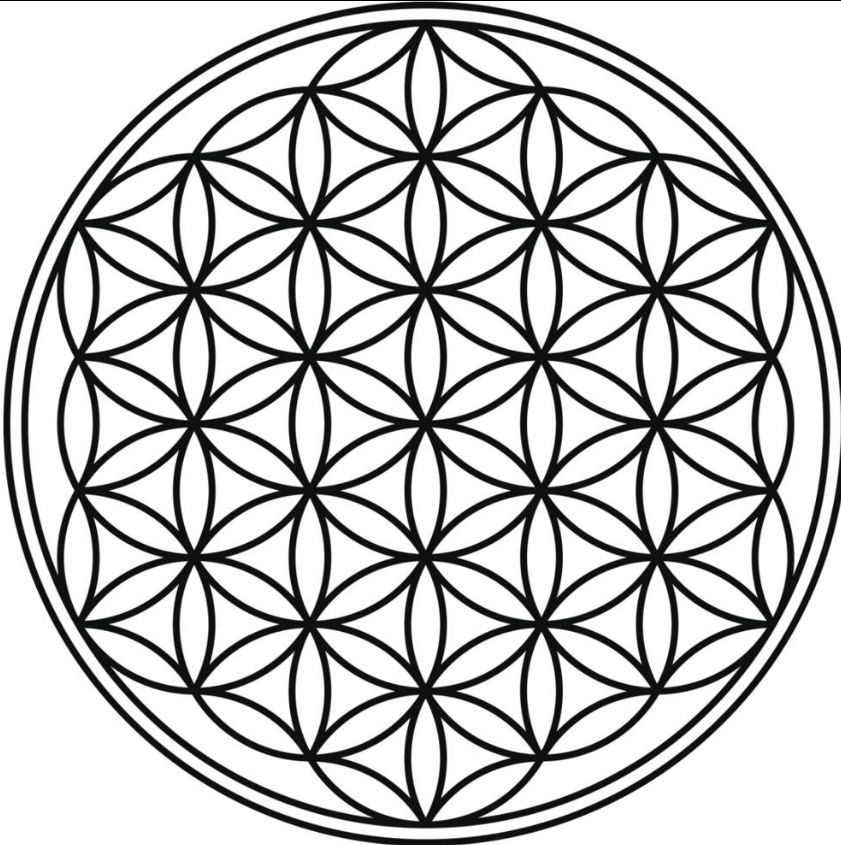
The Flower of Life, often depicted as a series of 19 interlocking circles, is believed to be the cosmic blueprint, encoding the very design of every atomic structure and life form.
Its presence across civilizations, from ancient Egypt to modern Japan, bears testament to its universal appeal.
JAPANESE FLOWER OF LIFE
Sephiroth
Tree of Life: The Interconnectedness of All Things
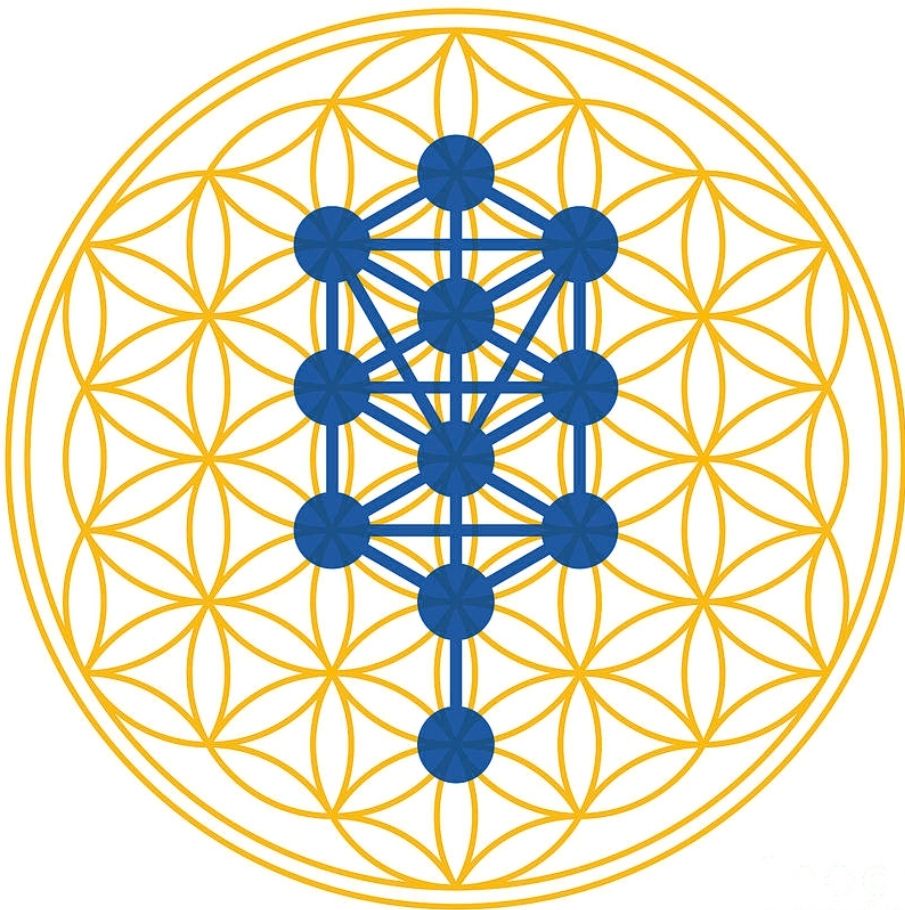
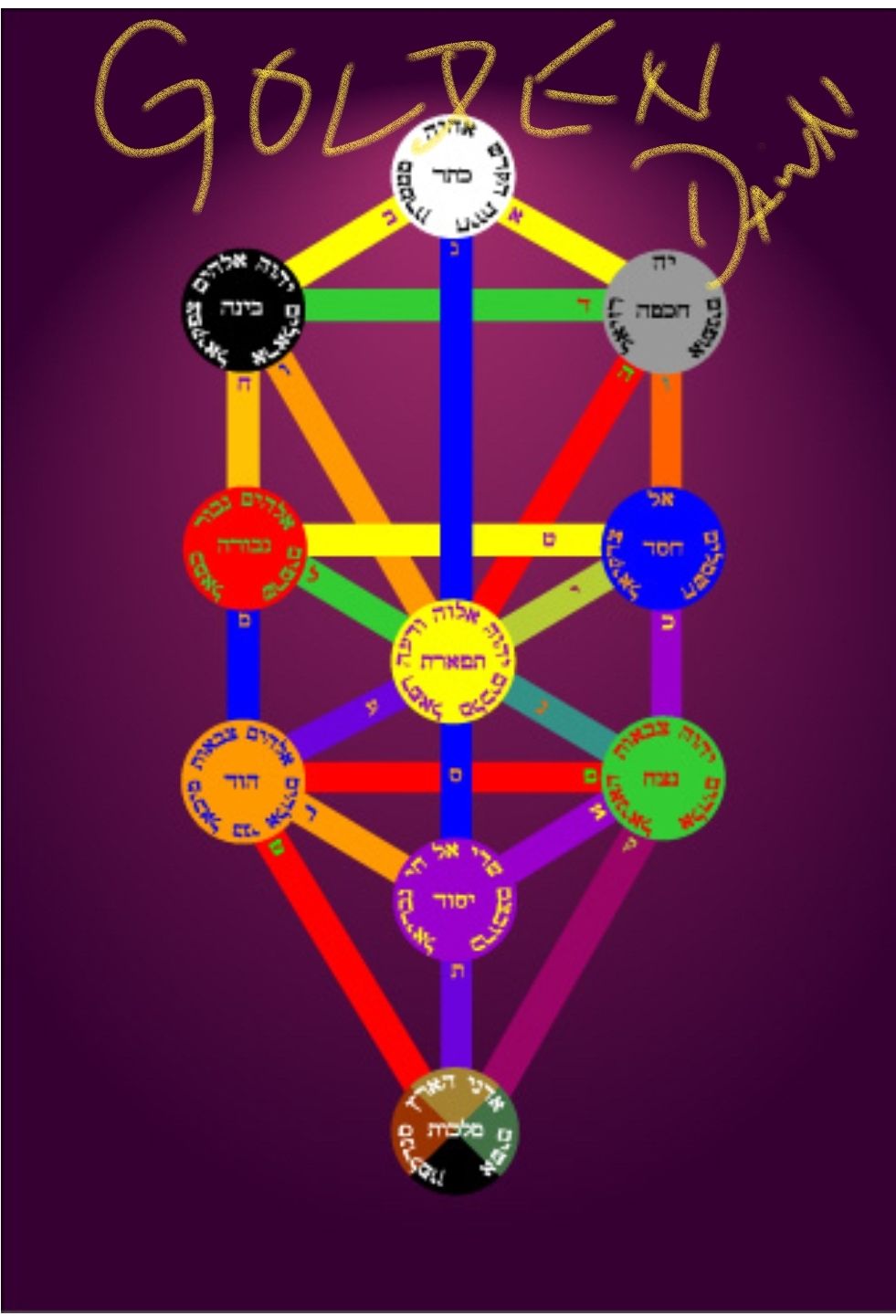
The Tree of Life represents numerous systems across varying cultures and religions, providing a hierarchical structure for all the forces in the Universe.
Its 10 spheres, called the “Sephiroth,” represent different qualities of the Soul, divided into three pillars: the Pillar of Severity, the Pillar of Mildness, and the Pillar of Mercy.
The Tree of Life reminds us that we are not alone in the Universe but rather part of a vast interconnected network.
Fruit of Life: The Holy of Holies
Emerging from the heart of the Flower of Life, the Fruit of Life comprises 13 interconnected spheres, often referred to as the ‘Holy of Holies.’
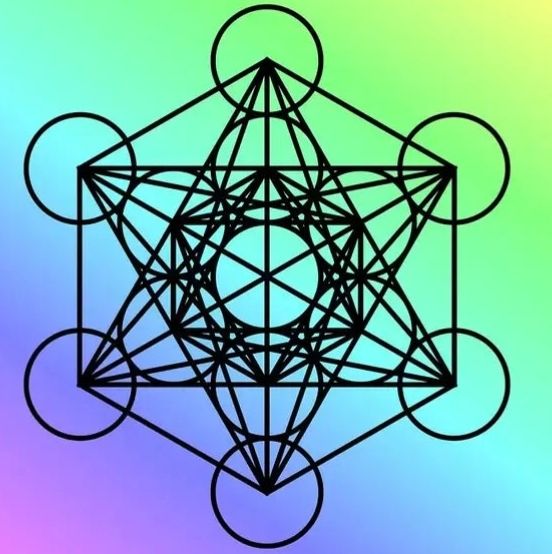
The 13 spheres symbolize unity and a transition between realms or dimensions, while the 78 lines that emerge when linking the centers of these circles fashion Metatron’s Cube, enclosing all five Platonic solids.
The Fruit of Life’s spheres symbolize the feminine aspects of creation, providing a foundation for the 78 masculine rays of creation.
Metatron’s Cube: The Divine Blueprint
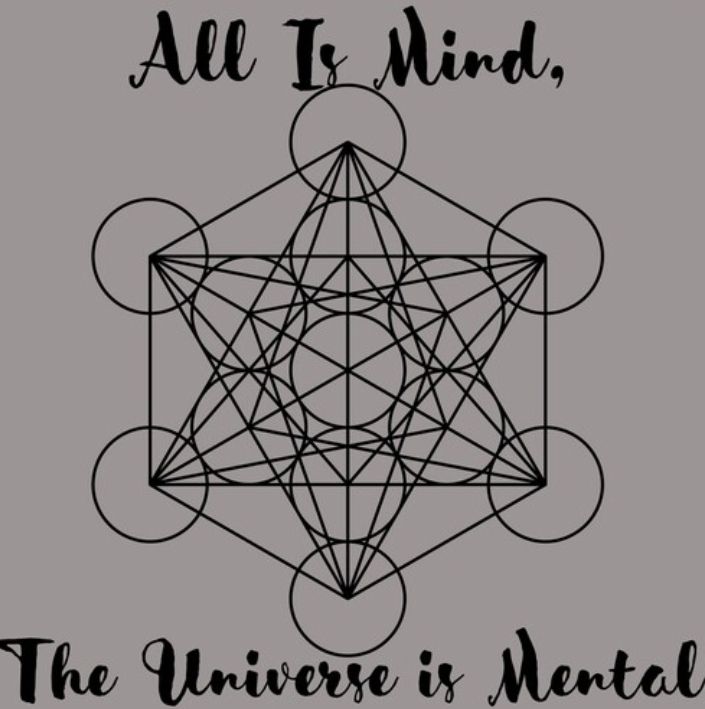
Metatron’s Cube, a geometric construct associated with the archangel Metatron, is a pivotal bridge, transforming 2-dimensional realities into 3-dimensional realms.
Within this complex geometric form, the five Platonic solids are discerned, positioning Metatron’s Cube as a testament to the divine blueprint upon which the cosmos is etched.
As quantum physics ventures deeper into understanding existence, it continually echoes the
Hermetic quote, “all is mind; the universe is mental,” with Metatron’s Cube in mind epitomizes the abstract, cognitive foundation of our universe.
Grid of Life: The Masculine Counterpart
The 64-tetrahedron, commonly termed as the ‘Grid of Life,’ is the masculine counterpart to the Flower of Life.
This geometric form, comprising 64 individual tetrahedrons, overlays the Flower of Life, symbolizing the convergence of space and time.
The allure of the Grid of Life transcends its geometric elegance, embedding itself in the mystique of the number 64, which recurrently surfaces in nature, mysticism, and human constructs, from genetic code to sacred texts.
The Grid of Life emphasizes the interconnectedness of all things and underscores its significance in our understanding of the universe.
Beyond the observable world of material matter, there exists a realm that surpasses our animal senses and is filled with timeless principles of logic and measurement, the Laws of the Universe. Laws must have a Lawgiver.
Laws must have a Law giver.
Ultimate Reality Is Not “reality”
This Ethereal Domain represents the ultimate form of reality, serving as the very source of existence and the essence of being. It is the magnificent realm of the Most High, commonly known as Heaven.
Consciousness Shapes Observable Reality
The concept that reality is shaped by thoughts and beliefs is supported by scientific theories such as superpositioning and string theory.
The One Mind Of God Created All Things
Mind → Consciousness
Consciousness connects all things in the universe. God is Consciousness.
Everything is By (through, by the power of, by the Word of…)
The Will (Consciousness, Mind, Thought, Decision) of God.
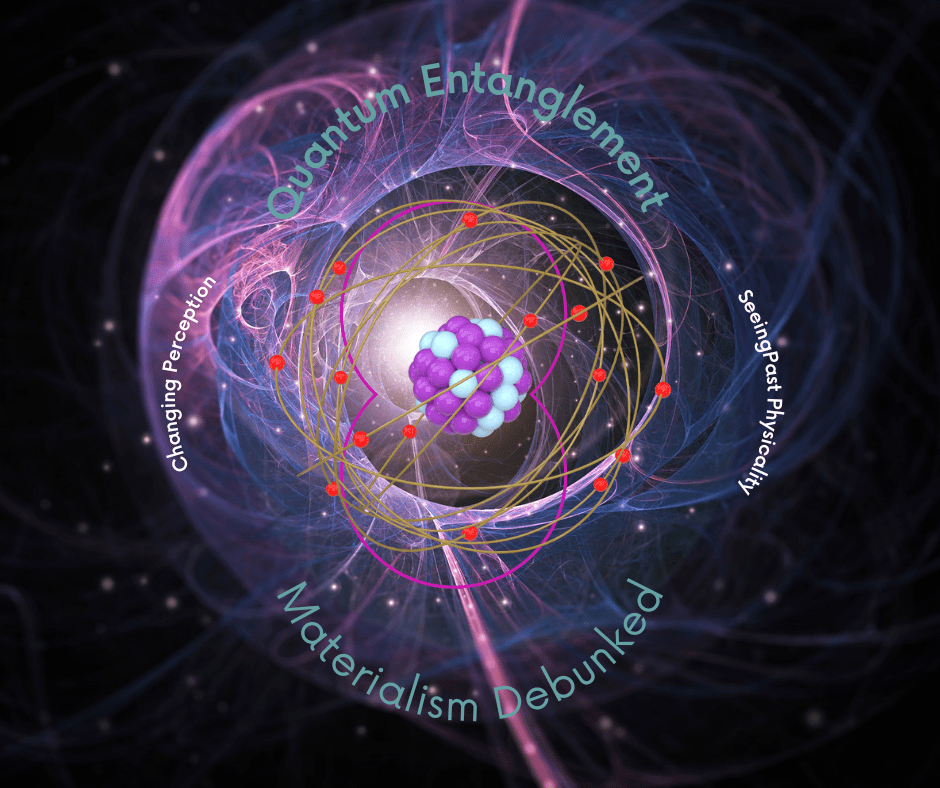
Quantum Entanglement
Quantum entanglement proves the interconnection between two particles, defying the barriers of the laws of physics according to materialists Science.
These particles are dependent on one another even when they are separated at vast distances and even dimensions.
Energetic Overlap Over All Things
Another area of overlap between quantum physics and spirituality is the concept of energy.
Energy is the fundamental force that governs everything in the universe.
Energy is the life force that connects us to the universe and each other. It is the very reason we can move, breathe, think, exist in space, etc.
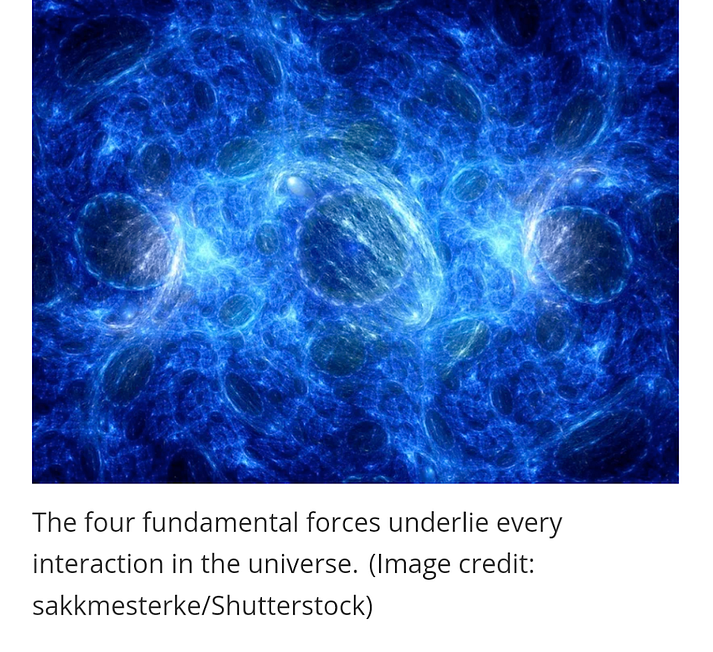
Four Forces Are God’s Four Winds
Then he said to me, “Prophesy to the breath; prophesy, son of man, and say to the breath, Thus says the Lord GOD: Come from the four winds, O breath, and breathe on these slain, that they may live.” — Ezekiel 37:9
Daniel declared, “I saw in my vision by night, and behold, the four winds of heaven were stirring up the great sea. –Daniel 7:2
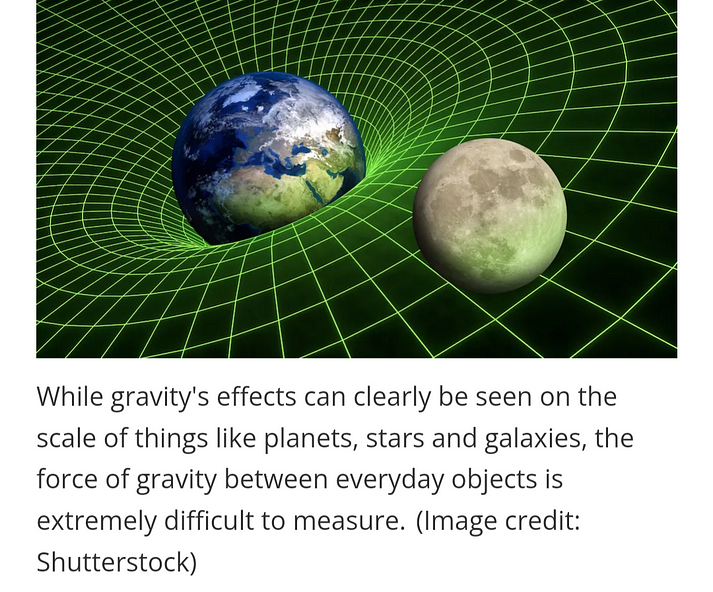
First Force: Gravity
Gravity is God
Gravity is the Force that binds us to the physical realm: Time and Space… He is also the obstacle that prevents us from transcending beyond Him.
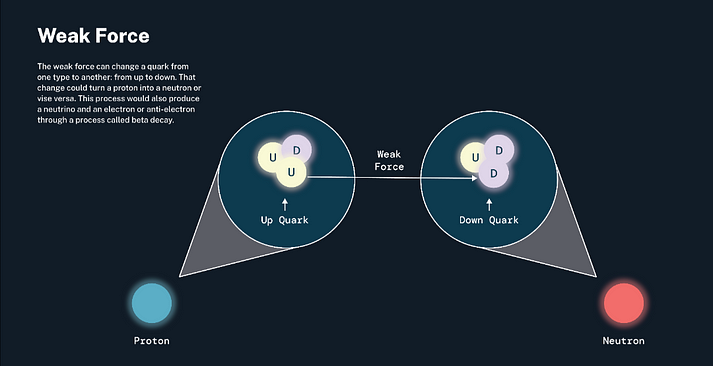
2nd Force: The Weak Force
God is the Weak Force
The weak force, also known as weak interaction, is a Force that is stronger than gravity.
However, it only operates over very short distances (as far as we humans know, from our limited ability to observe its effects).
This force acts on the subatomic level, and it plays a vital role in the Creation of elements and powering stars. The natural radiation present in the universe is primarily due to this Force.
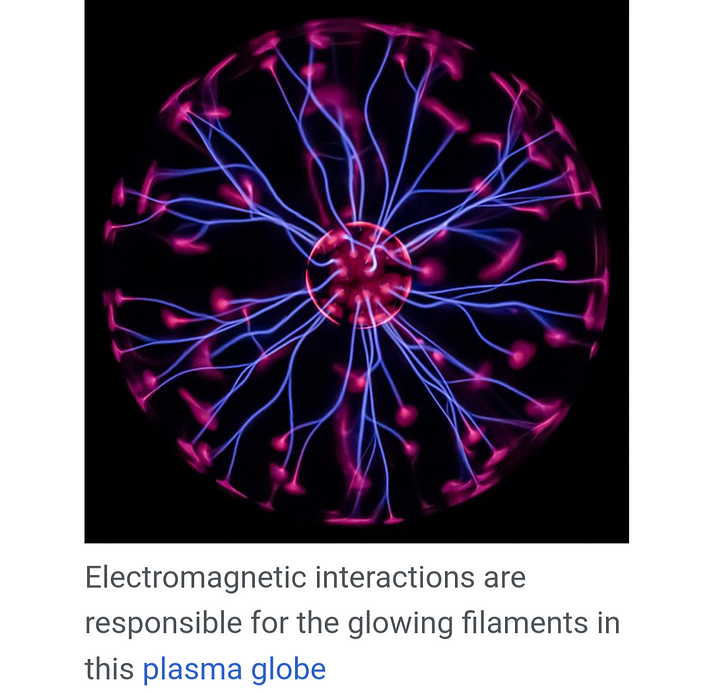
3rd Force: Electromagnetism
Again, This Is God
It is a force that arises between charged particles, such as electrons and protons, and is responsible for the interactions between them.
Electromagnetism encompasses both electricity and magnetism, as they are two sides of the same phenomenon.
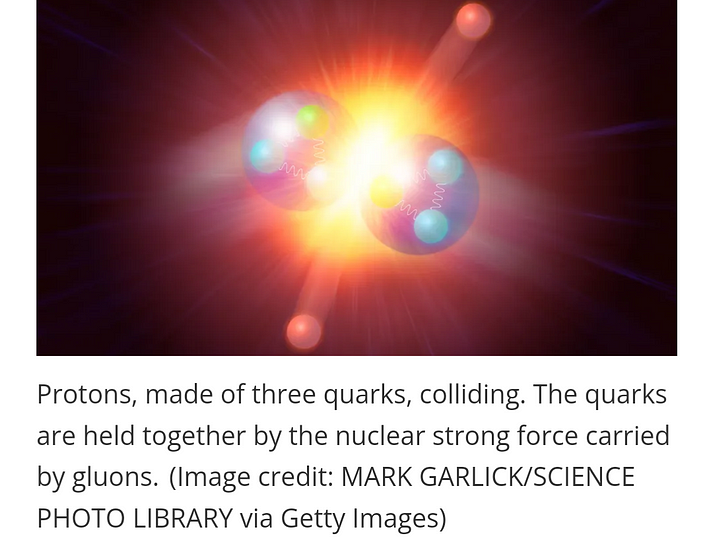
The 4th Force: Strong Force
God is The Strong Force
The strong force is the glue that binds the atoms together, the spark that ignites the stars, and the pulse that beats in the heart of matter.
It (He) is the Force that holds the quarks and gluons in a tight embrace, forming protons, neutrons, and other particles.
He is the Force that overcomes the repulsion of the electric charge, allowing nuclei to fuse and release enormous amounts of energy.
He is the force that shapes the universe, from the smallest scales to the largest.
“When all things are subjected to him, then the Son himself will also be subjected to him who put all things in subjection under him, that God may be all in all.”
DARPA has earned a reputation for challenging the limits of technology and innovation, and their most recent program is a clear example of this.
Advanced Plant Technologies (APT) – HigherGov The goal of the DARPA Advanced Plant Technologies (APT) program is to create the foundations for engineering plant varieties able to receive a variety of stimuli and produce measurable signals as output (“stimulus-response”).
What’s The Narrative?
DARPA’s Advanced Plant Technologies program aims to develop new technologies to allow plants to absorb more nutrients from the soil, produce more biomass, and resist environmental stresses. Additionally, the program seeks to genetically modify plants to detect various threats, such as chemical, biological, radiological, nuclear, and electromagnetic signals, and turn them into self-sustaining surveillance sensors. The program focuses on three main areas.
Bio-Sensors
The program develops bio-sensors that monitor plant health, nutrition, and water intake in real-time. This enables farmers to optimize inputs and minimize costs.
Genetic Engineering
Enhancing crop yields through genetic modification of plants, the program introduces new traits such as drought tolerance, disease resistance, and increased photosynthetic efficiency.
Plant-Microbe Interactions
The program studies plant-microbe interactions to develop new techniques that enhance nutrient uptake and improve plant productivity.
Proposals are being sought by APT from the scientific and technological community to modify plants genetically, enabling them to detect “chemical, biological, radiological, and/or nuclear threats, as well as electromagnetic signals.”
Great Potential With Great Concern
This technology has numerous applications, from identifying environmental hazards to ensuring national security, but there are concerns about ethical implications of genetically modifying plants. It will be interesting to see where this initiative progresses.
Despite the potential gains, it is essential to focus on several ethical issues related to this technology.
Utilizing genetically modified plants for surveillance may result in the collection of private information without individuals’ permission or knowledge, which may violate their right to privacy and provoke legal issues.
The potential for misuse is present, as the technology may be employed to observe specific individuals or communities for personal or political advantages. Moreover, the information acquired through surveillance may be leveraged to coerce or influence people.
Therefore, it is essential to closely monitor and regulate the development and use of such technology to mitigate any potential violations of privacy and human rights and to minimize environmental risks.
Prioritizing public engagement and transparency regarding the use and potential implications of genetically modified plants is also crucial to ensure accountability and ethical use of surveillance technology.
Environmental Concerns
Additionally, there are concerns about the impact that genetically modified crops may have on non-target organisms, such as beneficial insects or soil microbes. And, if pest populations evolve resistance to the genetically engineered crops, this could lead to increased pesticide use and environmental damage.
Genetic modification of plants may have long-term and unforeseen effects on the gene pool of organisms, disrupting the natural balance and diversity of ecosystems. This could cause irreversible damage to ecosystems and have negative impacts on human health.
Ethical Treatment Of Organisms
“Plants are highly attuned to their environments and naturally manifest physiological responses to basic stimuli such as light and temperature, but also in some cases to touch, chemicals, pests, and pathogens,” says Blake Bextine, Program Manager for APT. “Emerging molecular and modeling techniques may make it possible to reprogram these detection and reporting capabilities for a wide range of stimuli, which would not only open up new intelligence streams, but also reduce the personnel risks and costs associated with traditional sensors.”
The use of plants as surveillance sensors raises ethical questions about the treatment of living organisms. Although plants may not have the same level of sentience as animals, they are still living organisms with their own biological systems and responses. The use of plants as surveillance sensors could be considered exploitative and raises concerns about the ethical treatment of living organisms. Plants with modified genetic codes could have unforeseen ecological consequences if released into the environment, affecting other plant and animal species.
Role Of Science & Tech In Society
The use of genetically modified plants raises broader ethical questions about the role of science and technology in society. While innovation and progress are important, it is crucial to consider the potential consequences of new technologies and ensure that they are developed in ways that are consistent with ethical and moral values.
While the APT program has the potential to offer significant benefits, it raises important ethical questions that must be addressed. It is crucial to consider the potential impact of this technology on civil liberties, the environment, the welfare of plants, and broader ethical and moral values. Only by addressing these questions can we ensure that science and technology are used in ways that align with our values and aspirations as a society.
Imagine a world where plants are genetically modified to possess certain traits that allow them to act as sensors, detecting various environmental factors or even human activities.
Welcome To That World
Genetic modifications that enable plants to detect various signals, including chemical, biological, radiological, nuclear, and electromagnetic signals, have immense potential for bolstering environmental hazard detection and national security. These surveillance-capable plants could provide an unprecedented level of monitoring and alert systems, ensuring the safety and well-being of communities and nations.
Ethical Concerns
However, the allure of such surveillance-capable plants is accompanied by a host of ethical concerns.
The very idea of plants becoming instruments of surveillance raises questions about personal privacy and the boundaries between public and private spaces. As these plants continuously monitor their surroundings, individuals may feel constantly observed and controlled, eroding their sense of autonomy and freedom.
The Abuse That Will Incur
Furthermore, the potential for abuse cannot be ignored. In a world where genetically modified plants possess surveillance capabilities, the possibility of their misuse by authoritarian regimes or powerful entities cannot be dismissed.
By exploiting these plant sensors, those in power could manipulate information, target specific groups, and suppress dissent, ultimately jeopardizing democratic principles and impeding individual rights.
Nefarious Agencies And Governments
Additionally, the manipulation of plants through genetic engineering presents a significant risk. Governments or agencies with nefarious intentions could engineer plants to their advantage, such as developing crops resistant to herbicides or pesticides used by resistance groups.
This coercion tactic would undermine the opposition’s ability to sustain themselves and resist oppression, ultimately establishing a significant power imbalance detrimental to individual liberties.
What are some examples of advanced plant technologies that are currently being developed?
Smart Crop Monitoring
Researchers are working on integrating bio-sensors into plants to monitor their health and growth in real-time. These sensors can measure parameters like temperature, humidity, nutrient levels, and pest infestations, providing valuable data to farmers for precise and timely interventions. This technology aims to optimize resource allocation and reduce environmental impacts in agriculture.
DANGERS: Real-time crop and environmental monitoring using biosensors in plants could allow governments to closely track agricultural production and activities of farmers. This may infringe on personal privacy and freedoms if done without consent.
Through genetic manipulation, specific genes responsible for stress responses in plants can be introduced or modified, allowing crops to withstand water scarcity and maintain productivity even in arid regions. This technology has the potential to address water scarcity challenges and improve agricultural sustainability.
DANGERS: Genetic engineering for traits like drought resistance may undermine biodiversity if such modified crops outcompete native varieties. This could potentially provide governments control over critical food and water supplies.
Disease-Resistant Plants
Genetic engineering techniques are being employed to create plants with increased resistance to pathogens and diseases. By introducing genes that produce antimicrobial or antiviral compounds, scientists aim to enhance crop protection and reduce the reliance on chemical pesticides.
Disease-resistant plants have the potential to increase crop yields, decrease crop losses, and promote environmentally friendly agricultural practices.
DANGERS: Disease-resistant plants may come with “termination sequences” that induce engineered responses against target pathogens. But these could hypothetically be remotely activated by governments to cause crop failures for political means.
Sensing Environmental Pollutants
Researchers are exploring the use of genetically modified plants as bio-sensors to detect environmental pollutants.
These plants can be engineered to produce fluorescent proteins or other indicators that change color or intensity in the presence of specific pollutants.
By acting as living sensors, these plants have the potential to monitor pollution levels in air, water, or soil, aiding in environmental monitoring and remediation efforts.
DANGERS: Genetically modifying plants to sense pollutants could enable surveillance of large geographical regions without public knowledge or oversight. Governments may refuse to decontaminate areas to continue covert monitoring.
Plant-Microbe Interactions for Enhanced Nutrition
Scientists are investigating the intricate relationships between plants and beneficial microbes present in the soil. By manipulating these interactions through genetic engineering or microbial inoculants, researchers aim to enhance nutrient uptake, improve plant growth, and increase crop productivity.
This technology has implications for sustainable agriculture by reducing the need for chemical fertilizers while promoting soil health and reducing environmental impacts.
DANGERS: Enhancing plant-microbe interactions to boost nutrients may inadvertently make agriculture dependent on specific microbes or proprietary products controlled by governments. This could politically undermine food security.
As human beings, we have always been deeply curious about the nature of reality and existence. We have sought to understand the fundamental principles that underlie the physical universe, the abstract concepts that govern our lives, and the eternal truths that shape our moral compass.
Throughout history, philosophers, scientists, and spiritual leaders have grappled with these questions, seeking to uncover the mysteries of the universe and the nature of our place within it. They have developed theories and worldviews that attempt to explain the fundamental nature of the universe, the laws that govern it, and the purpose of human existence.
The laws of nature are the fundamental principles that underlie the functioning of the physical universe. These laws govern everything from the behavior of subatomic particles to the movement of celestial bodies, and they operate universally and eternally, with no exceptions.
The laws of nature are truly universal in their scope and eternal in their operation. They are present in every corner of the universe, from the tiniest subatomic particle to the largest galaxy cluster.
But what, exactly, are these laws of nature? At their most basic level, they are the rules that govern the behavior of matter and energy in the universe. They dictate how particles interact with one another, how energy is transferred between different systems, and how matter and energy are transformed over time.
And yet, despite the seemingly simple nature of these laws, they give rise to an astonishing variety of phenomena in the universe. From the formation of stars and galaxies to the existence of life on Earth, the laws of nature are the driving force behind some of the most remarkable and awe-inspiring phenomena in the universe.
Similarly, the principles of electromagnetism describe how electrically charged particles interact with each other and with magnetic fields.
These principles govern everything from the behavior of electrons in atoms to the transmission of radio waves. They are essential to understanding the behavior of electromagnetic waves and the functioning of electronic devices.
By studying and understanding these laws, we can gain insight into the workings of the universe and the nature of reality itself.
The concept of existence, for example, is essential to our understanding of reality. Without existence, nothing could be said to exist, and the very concept of reality would be meaningless. Similarly, consciousness is a fundamental aspect of our existence, allowing us to perceive and interact with the world around us.
Causality, meanwhile, is the principle that everything that exists must have a cause or reason for its existence. This principle is essential to our understanding of the world and is integral to the scientific method.
Finally, goodness is a concept that transcends culture and time. It is the idea that certain actions and qualities are inherently valuable and desirable, regardless of their cultural or historical context.
Metaphysical existence refers to the existence of things that go beyond the physical realm and cannot be perceived by our senses. This includes things like abstract concepts such as love, justice, and truth, as well as spiritual entities such as God, angels, and souls.
The existence of metaphysical entities is often a subject of philosophical and theological debate. Some argue that these entities exist independently of human perception and consciousness, while others argue that they are simply constructs of the human mind.
Metaphysical consciousness refers to consciousness viewed from an abstract philosophical perspective, beyond the realm of physical science. It deals with questions like “What is the nature of consciousness itself?”, “How does consciousness arise?” and “What is the relationship between consciousness and the physical brain?”.
There are different approaches to understanding metaphysical consciousness. Some theories see consciousness as fundamental and primary, while others view it as a product or epiphenomenon of physical processes. Some theories propose dualist accounts that distinguish between physical and non-physical aspects of consciousness.
Metaphysical causality is the concept that everything that exists must have a cause or reason for its existence. This principle is often used to explain the origins of the universe and the fundamental nature of reality.
In metaphysical causality, it is believed that there must be a first cause or uncaused cause that set everything in motion. This belief is often associated with the cosmological argument for the existence of God, which posits that the universe must have had a cause, and that cause must be God.
These Metphysical concepts provide a framework for understanding the nature of existence and consciousness, and shape our understanding of the world and our place in it. By studying these concepts, we can gain a deeper understanding of the nature of existence and our relationship to the universe.
Mathematical Axioms: The Immutable Rules of Logic and Geometry
Mathematics is often seen as a universal language that transcends time and culture. Some fundamental truths of mathematics, like the basic rules of logic and geometry, seem to hold independent of human thought or the physical universe.
The rules of logic are a set of principles that govern our ability to reason and make sense of the world around us. These rules are essential to our ability to arrive at valid conclusions and avoid logical fallacies.
The first rule of logic is the law of identity, which states that a thing is what it is and not something else. This principle is essential to our ability to understand and describe the world around us.
The second rule of logic is the law of non-contradiction, which states that a thing cannot both be and not be at the same time and in the same respect. This principle ensures that our reasoning is consistent and coherent.
The third rule of logic is the law of excluded middle, which states that a statement must either be true or false and cannot be both. This principle is essential to our ability to arrive at valid conclusions and make sense of the world around us.
Finally, the fourth rule of logic is the principle of sufficient reason, which states that everything that exists or occurs must have a reason or cause. This principle is essential to our ability to understand and explain the world around us.
In conclusion, the rules of logic are a set of principles that form the basis of our ability to reason and make sense of the world around us. By understanding and applying these rules, we are better equipped to arrive at valid conclusions and avoid logical fallacies.
The rules of geometry are a set of principles that govern the properties and relationships of points, lines, angles, and shapes. These principles are essential to our understanding of space and shape and are fundamental to our ability to design and construct structures and objects.
The first rule of geometry is the law of symmetry, which states that an object or shape is symmetrical if it can be divided into two equal parts. This principle is essential to our ability to recognize and appreciate symmetry in art, architecture, and nature.
The second rule of geometry is the law of parallel lines, which states that if two lines are parallel, they will never intersect. This principle is essential to our ability to understand and design structures such as bridges, buildings, and roadways.
The third rule of geometry is the law of congruence, which states that if two objects or shapes are congruent, they have the same size, shape, and measure. This principle is essential to our ability to make accurate measurements and calculations.
Finally, the fourth rule of geometry is the law of similarity, which states that if two objects or shapes are similar, they have the same shape but not necessarily the same size. This principle is essential to our ability to design and construct objects that are proportional and aesthetically pleasing.
In conclusion, the rules of geometry are a set of principles that form the basis of our understanding of space and shape. By understanding and applying these rules, we are better equipped to design and construct structures and objects that are both functional and aesthetically pleasing.
These laws reflect eternal, immutable principles that provide a foundation for logical reasoning and problem-solving.
Religious Doctrines: The Divine Revelations of Universal Truth
Religious doctrines claim certain truths as eternal verities that have always existed and will always exist, independent of human beliefs. These truths are seen as divine revelations that provide a basis for ethical and moral behavior. While different religions may have different interpretations of these eternal truths, they represent a shared belief in the existence of universal principles that govern human behavior.
The possible existence of eternal cycles of creation, evolution, and dissolution on a cosmic scale could represent a type of eternal truth about the universe. While we have limited knowledge of these cycles, they provide a framework for understanding the nature of existence and the universe’s place in it.
The ground of being is the ultimate source of existence and truth. It is the creator of all existence and the source of all meaning.
According to Paul Tillich, God is the ground of being, being-itself, and our ultimate concern. Tillich believed that the absolutes found in various aspects of existence point beyond themselves to the basic Absolute – “being-itself”. Being-itself is the “ground of truth” and the source for all other absolutes.
Tillich rejected the anthropomorphic “personal God” of popular Christianity, but he did not deny the reality of God, as the conventional atheist has done. He was critical of propositional arguments for the existence of God as found in natural theology, as he considered them objectifying of God.
These eternal truths form the bedrock of our understanding of the world around us. By understanding the nature of existence, the principles of causality, the nature of consciousness, and the concept of goodness, we can develop a deeper understanding of ourselves and the world around us.
These principles provide a framework for understanding the nature of reality, the laws of the universe, and the purpose of human existence. They allow us to explore the mysteries of the universe and to develop a greater sense of awe and wonder at the beauty and complexity of the world around us.