Tag: Philosophy

Philosophy is the study of fundamental questions regarding existence, knowledge, values, reason, mind, and language. It encourages critical thinking and analysis of the concepts that shape our understanding of the world. Philosophers explore the nature of reality, the essence of being, and the principles that govern ethical behavior. By examining arguments from different perspectives, philosophy helps us navigate complex problems and develop a deeper insight into the human experience. Whether through the works of ancient thinkers like Socrates and Plato or contemporary debates on moral philosophy and metaphysics, philosophy remains a vital field that challenges us to refine our beliefs and articulate our understanding of life and society.

  • Deterministic Worldview

    Deterministic Worldview

    A deterministic worldview asserts that external factors, beyond our control, govern our existence.

    My perspective is not based on blind faith or arbitrary beliefs, but rather on a comprehensive understanding.

    Blind faith refers to a strong belief or trust without any reasoning. Arbitrary beliefs refer to beliefs that are not based on rational thinking, but rather on personal preference, conditioning, or other subjective factors.

    My belief integrates biblical teachings, logical reasoning, and principles from physics.

    Deterministic- Biblical Teachings:

    In the passages of Romans 8:29-30, Ephesians 1:5, and 2 Timothy 1:9, the Scriptures reveal God’s profound foreknowledge and predestining of individuals for their ultimate salvation.

    God foreknew believers before they existed.

    Romans 8:29 states “For those God foreknew he also predestined…”

    God predestined believers to be conformed to the image of Christ.

    Romans 8:29 continues “…he also predestined to be conformed to the image of his Son.”

    God chose believers in Christ before the foundation of the world.

    Ephesians 1:4-5 says “For he chose us in him before the creation of the world…He predestined us for adoption to sonship through Jesus Christ.”

    God’s purpose and grace were given to believers before the beginning of time.

    2 Timothy 1:9 states “He has saved us and called us to a holy life—not because of anything we have done but because of his own purpose and grace. This grace was given us in Christ Jesus before the beginning of time.”

    These verses affirm the all-knowing and all-powerful nature of God, who has already predetermined the eternal fate of every individual.

    God, who is all-knowing and just, has predetermined the eternal fate of every individual based on their choices and actions in which He already Orchestrated prior to fulfillment.

    Those whom God foreknew, He has predestined to be conformed to the image of His Son, Jesus Christ.

    Romans 8:29-30:
    “For those whom he foreknew he also predestined to be conformed to the image of his Son, in order that he might be the firstborn among many brothers. And those whom he predestined he also called, and those whom he called he also justified, and those whom he justified he also glorified.”


    Ephesians 1:5:
    “He predestined us for adoption to himself as sons through Jesus Christ, according to the purpose of his will.”

    God, in His will and for His purpose, predestined His Sheep to be adopted as His children through Jesus Christ.

    Paul reminds Timothy (and believers) that our salvation and calling is not based on our own merit or works, but on God’s purpose and grace.

    2 Timothy 1:9:
    “Who saved us and called us to a holy calling, not because of our works but because of his own purpose and grace, which he gave us in Christ Jesus before the ages began.”

    God’s control is over all events: He is the orchestrator of all things.

    Isaiah 46:9-11:
    “Remember the former things, those of long ago;
    I am God, and there is no other;
    I am God, and there is none like me.
    I make known the end from the beginning,
    from ancient times, what is still to come.
    I say, ‘My purpose will stand,
    and I will do all that I please.’
    From the east I summon a bird of prey;
    from a far-off land, a man to fulfill my purpose.
    What I have said, that I will bring about;
    what I have planned, that I will do.”


    Daniel 4:35:
    All the peoples of the earth
        are regarded as nothing.
    He does as he pleases
        with the powers of heaven
        and the peoples of the earth.
    No one can hold back his hand
        or say to him: “What have you done?”


    In Isaiah 46:9-11, God declares that He is unique and unlike any other. He knows the past, present, and future, and His plans will be accomplished. He has the authority to bring about events according to His purpose and there is no one who can hinder or question His actions.

    In Daniel 4:35, King Nebuchadnezzar of Babylon acknowledges the supreme power of God. He acknowledges that all the people of the earth are nothing compared to God. God has complete control over the heavens and the earth and no one can resist His will or challenge His actions.

    The theologian John Calvin, who played a key role in the development of Protestantism, extensively discusses the concept of divine providence.

    He emphasizes that God’s plan guides all events, including salvation. In his work “Institutes of the Christian Religion,” Calvin presents thorough theological arguments for predestination and divine sovereignty. He constructs a logical framework that explains God’s providence, asserting that everything occurs according to God’s will and purpose. Calvin cites numerous biblical references to support his arguments.

    He lays out a systematic framework that logically explains the concept of God’s providence, arguing that everything happens according to God’s will and purpose.

    Main Argument I face: The Bible also speaks of God’s desire for all people to be saved (1 Timothy 2:3-4) and emphasizes the responsibility humans have to respond to God’s grace (John 3:16, Romans 10:9).

    MY RESPONSE TO THIS, CLICK TO READ

    Determinism- Logical Reasoning:

    If every event is a result of a prior cause, then our lives are governed by forces beyond our control, prior to our serial at this point in time.

    Determinism finds support in logical reasoning by examining cause and effect relationships.

    Cause & Effect: The idea is that every event and action in the world has a preceding cause that determines its occurrence.

    Psychological research has also contributed to the argument for determinism.

    Studies on decision-making and behavior have demonstrated that our choices and actions are heavily influenced by factors beyond our conscious control, such as genetics, upbringing, and societal influences. Study

    The field of behavioral genetics, has shown that certain traits and behaviors have a genetic basis, further reinforcing the idea that our lives are governed by forces beyond our control. Study

    Philosophers such as David Hume and Immanuel Kant have presented compelling arguments for determinism based on the principles of causality and the uniformity of nature. Read

    Determinism- Principles from Physics:

    One of the key proponents of determinism is the field of physics. The laws of physics define how objects and forces interact in the universe.

    These laws are deterministic in nature, meaning that based on the initial conditions of a system, the outcome can be accurately predicted. This notion is supported by the principles of classical mechanics, quantum mechanics, and general relativity, all of which provide ample evidence for the deterministic nature of physical phenomena.

    Newton’s laws of motion demonstrate how an object’s motion is determined by the forces acting upon it. This cause and effect relationship can be observed and measured with precision, providing empirical evidence for the deterministic nature of physical phenomena.

    Classical physics posits that the entire universe operates according to fixed laws and that every event has a cause.

    Quantum Physicist who argue FOR Determinism

    1. David Bohm: Bohm proposed an alternative interpretation of quantum mechanics called the pilot wave theory or the hidden variable theory. According to his theory, particles have definite positions and velocities at all times, contradicting the uncertainty principle.

    Bohm argued for a deterministic worldview where the apparent randomness of quantum measurements is a result of our lack of knowledge about the underlying hidden variables.

    2. Roger Penrose: Penrose is a renowned physicist and mathematician who has argued against the prevailing interpretation of quantum mechanics as purely probabilistic. He suggests that another unknown factor, possibly related to consciousness or gravity, could be responsible for the seemingly indeterministic behavior of quantum systems. Penrose believes that a deeper theory, incorporating both quantum mechanics and general relativity, will reveal determinism at a fundamental level.

    3. Gerard ‘t Hooft: ‘t Hooft is a Dutch theoretical physicist who has been critical of the Copenhagen interpretation of quantum mechanics. He proposes a hidden variable theory that retains determinism by allowing for the existence of deterministic trajectories for particles, even at the quantum level. ‘t Hooft argues that there may be yet undiscovered fundamental equations that can describe such deterministic behavior.

    Determinism- Convergence of Knowledge:

    When biblical teachings, logical reasoning, and principles from physics are combined, they converge to support determinism. The Bible often emphasizes the concept of divine providence and God’s sovereignty over all creation.

    Numerous verses, such as Proverbs 16:9 and Jeremiah 10:23, suggest that our steps are directed and controlled by a higher power. This aligns with the deterministic view that external forces, in this case, God, are governing our lives.

    Proverbs 16:9: The heart of man plans his way, but the Lord establishes his steps.
    Jeremiah 10:23 says, “LORD, I know that people’s lives are not their own; it is not for them to direct their steps.”

    If we deconstruct the concept of cause and effect, it becomes apparent that all events are influenced by preceding events.

    Determinism admits that the present state of the universe, including our thoughts and actions, is a consequence of a series of causalities that can be traced back to the inception of time. This comprehension aligns seamlessly with the principle of logical reasoning that posits every effect is preceded by a cause.

    Determinism- Criticisms and Counterarguments:

    While critics argue that determinism undermines free will and personal responsibility, it is important to acknowledge and address these counterarguments to maintain a balanced perspective.

    Many argue that although our choices may be influenced by external factors, we still have the ability to make decisions and take actions.

    A study conducted by Nahmias et al. (2005) investigated the relationship between determinism and free will, concluding that the belief in determinism does not necessarily undermine one’s sense of free will or personal responsibility.

    Additionally, research in neuroscience suggests that although our actions may be influenced by subconscious processes and external factors, the brain still possesses the capacity for conscious decision-making.

    Furthermore, it is important to recognize that personal responsibility can still be upheld within a deterministic framework. Even if our choices are influenced by prior causes, individuals can still be held accountable for their actions based on the consequences of their decisions.

    In fact, the recognition of how external factors impact our choices can lead to a more nuanced understanding of what personal responsibility really means and come to an understanding of the interdependent nature of life.

    Engaging with criticisms and counterarguments leads to refinements of your worldview.

    Our lives are influenced and controlled by external forces that are beyond our control.

    Scientific research shows that both biological and environmental factors have a profound impact on human behavior. Genes play a significant role in shaping our personality traits and preferences, while our early childhood experiences have a lasting effect on our behavior and decision-making skills. Sociological research also demonstrates that social structures and institutions, such as education systems and economic policies, heavily influence our opportunities and outcomes.

    Scholars like Pierre Bourdieu have emphasized the concept of social capital, which emphasizes how our social networks and access to resources affect our success and social mobility.

    Before rejecting something, make sure that you understand it, whether it is an idea, a perspective, or even a person. Take the time to explore and gather information. Seek to comprehend the complexities and nuances of the matter at hand. By doing so, you will be able to make informed judgments rather than basing your decision on ignorance or preconceived notions.


  • What Is A Deterministic Worldview?

    What Is A Deterministic Worldview?

    Do I have a deterministic perspective?

    Yes.

    The Foundation of My Perspective

    The perspective I maintain is not derived from unfounded belief or arbitrary convictions.

    Instead, it is rooted in a comprehensive understanding of the subject matter. This understanding is the result of careful study, thoughtful analysis, and a commitment to seeking truth and clarity.

    My perspective aligns biblical teachings, logical reasoning, and physics principles to support determinism.

    The Bible emphasizes God’s sovereignty and foreknowledge guiding all events, aligning with determinism’s premise that external forces shape outcomes 3.

    Logical reasoning examines cause and effect, concluding that all events have preceding causes. This supports determinism’s view that factors beyond our control govern lives 3.

    Physics laws demonstrate the deterministic nature of phenomena. Objects’ motions are precisely predicted based on forces acting on them. Quantum mechanics and relativity provide evidence for physical

    Deterministic- Biblical Teachings:

    In the passages of Romans 8:29-30, Ephesians 1:5, and 2 Timothy 1:9, the Scriptures reveal God’s profound foreknowledge and predestining of individuals for their ultimate salvation. These verses affirm the all-knowing and all-powerful nature of God, who has already predetermined the eternal fate of every individual.

    God, who is all-knowing and just, has predetermined the eternal fate of every individual based on their choices and actions in which He already Orchestrated prior to fulfillment.

    Those whom God foreknew, He has predestined to be conformed to the image of His Son, Jesus Christ.

    Romans 8:29-30:
    “For those whom he foreknew he also predestined to be conformed to the image of his Son, in order that he might be the firstborn among many brothers. And those whom he predestined he also called, and those whom he called he also justified, and those whom he justified he also glorified.”
    Ephesians 1:5:
    “He predestined us for adoption to himself as sons through Jesus Christ, according to the purpose of his will.”

    God, in His will and for His purpose, predestined His Sheep to be adopted as His children through Jesus Christ.

    Paul reminds Timothy (and believers) that our salvation and calling is not based on our own merit or works, but on God’s purpose and grace.

    2 Timothy 1:9:
    “Who saved us and called us to a holy calling, not because of our works but because of his own purpose and grace, which he gave us in Christ Jesus before the ages began.”

    God’s control is over all events: He is the orchestrator of all things.

    Isaiah 46:9-11:
    “Remember the former things, those of long ago;
    I am God, and there is no other;
    I am God, and there is none like me.
    I make known the end from the beginning,
    from ancient times, what is still to come.
    I say, ‘My purpose will stand,
    and I will do all that I please.’
    From the east I summon a bird of prey;
    from a far-off land, a man to fulfill my purpose.
    What I have said, that I will bring about;
    what I have planned, that I will do.”


    Daniel 4:35:
    All the peoples of the earth
    are regarded as nothing.
    He does as he pleases
    with the powers of heaven
    and the peoples of the earth.
    No one can hold back his hand
    or say to him: “What have you done?”


    In Isaiah 46:9-11, God declares that He is unique and unlike any other. He knows the past, present, and future, and His plans will be accomplished. He has the authority to bring about events according to His purpose and there is no one who can hinder or question His actions.

    In Daniel 4:35, King Nebuchadnezzar of Babylon acknowledges the supreme power of God. He acknowledges that all the people of the earth are nothing compared to God. God has complete control over the heavens and the earth and no one can resist His will or challenge His actions.

    The theologian John Calvin, who played a key role in the development of Protestantism, extensively discusses the concept of divine providence.

    He emphasizes that God’s plan guides all events, including salvation. In his work “Institutes of the Christian Religion,” Calvin presents thorough theological arguments for predestination and divine sovereignty. He constructs a logical framework that explains God’s providence, asserting that everything occurs according to God’s will and purpose. Calvin cites numerous biblical references to support his arguments. He lays out a systematic framework that logically explains the concept of God’s providence, arguing that everything happens according to God’s will and purpose.

    Main Argument I face: The Bible also speaks of God’s desire for all people to be saved (1 Timothy 2:3-4) and emphasizes the responsibility humans have to respond to God’s grace (John 3:16, Romans 10:9). MY RESPONSE TO THIS, CLICK TO READ

    Determinism- Logical Reasoning:

    If every event is a result of a prior cause, then our lives are governed by forces beyond our control, prior to our serial at this point in time.

    Determinism finds support in logical reasoning by examining cause and effect relationships.

    Cause & Effect: The idea is that every event and action in the world has a preceding cause that determines its occurrence.

    Psychological research has also contributed to the argument for determinism.

    Studies on decision-making and behavior have demonstrated that our choices and actions are heavily influenced by factors beyond our conscious control, such as genetics, upbringing, and societal influences. Study

    The field of behavioral genetics, has shown that certain traits and behaviors have a genetic basis, further reinforcing the idea that our lives are governed by forces beyond our control. Study

    Philosophers such as David Hume and Immanuel Kant have presented compelling arguments for determinism based on the principles of causality and the uniformity of nature. Read

    Determinism- Principles from Physics:

    One of the key proponents of determinism is the field of physics. The laws of physics define how objects and forces interact in the universe.

    These laws are deterministic in nature, meaning that based on the initial conditions of a system, the outcome can be accurately predicted. This notion is supported by the principles of classical mechanics, quantum mechanics, and general relativity, all of which provide ample evidence for the deterministic nature of physical phenomena.

    Newton’s laws of motion demonstrate how an object’s motion is determined by the forces acting upon it. This cause and effect relationship can be observed and measured with precision, providing empirical evidence for the deterministic nature of physical phenomena.

    Classical physics posits that the entire universe operates according to fixed laws and that every event has a cause.

    Quantum Physicist who argue FOR Determinism

    1. David Bohm: Bohm proposed an alternative interpretation of quantum mechanics called the pilot wave theory or the hidden variable theory. According to his theory, particles have definite positions and velocities at all times, contradicting the uncertainty principle.

    Bohm argued for a deterministic worldview where the apparent randomness of quantum measurements is a result of our lack of knowledge about the underlying hidden variables.

    2. Roger Penrose: Penrose is a renowned physicist and mathematician who has argued against the prevailing interpretation of quantum mechanics as purely probabilistic. He suggests that another unknown factor, possibly related to consciousness or gravity, could be responsible for the seemingly indeterministic behavior of quantum systems. Penrose believes that a deeper theory, incorporating both quantum mechanics and general relativity, will reveal determinism at a fundamental level.

    3. Gerard ‘t Hooft: ‘t Hooft is a Dutch theoretical physicist who has been critical of the Copenhagen interpretation of quantum mechanics. He proposes a hidden variable theory that retains determinism by allowing for the existence of deterministic trajectories for particles, even at the quantum level. ‘t Hooft argues that there may be yet undiscovered fundamental equations that can describe such deterministic behavior.

    Determinism- Convergence of Knowledge:

    When biblical teachings, logical reasoning, and principles from physics are combined, they converge to support determinism. The Bible often emphasizes the concept of divine providence and God’s sovereignty over all creation.

    Numerous verses, such as Proverbs 16:9 and Jeremiah 10:23, suggest that our steps are directed and controlled by a higher power. This aligns with the deterministic view that external forces, in this case, God, are governing our lives.

    Proverbs 16:9: The heart of man plans his way, but the Lord establishes his steps.
    Jeremiah 10:23 says, “LORD, I know that people’s lives are not their own; it is not for them to direct their steps.”

    If we deconstruct the concept of cause and effect, it becomes apparent that all events are influenced by preceding events.

    Determinism admits that the present state of the universe, including our thoughts and actions, is a consequence of a series of causalities that can be traced back to the inception of time. This comprehension aligns seamlessly with the principle of logical reasoning that posits every effect is preceded by a cause.

    Determinism- Criticisms and Counterarguments:

    While critics argue that determinism undermines free will and personal responsibility, it is important to acknowledge and address these counterarguments to maintain a balanced perspective.

    Many argue that although our choices may be influenced by external factors, we still have the ability to make decisions and take actions.

    A study conducted by Nahmias et al. (2005) investigated the relationship between determinism and free will, concluding that the belief in determinism does not necessarily undermine one’s sense of free will or personal responsibility.

    Additionally, research in neuroscience suggests that although our actions may be influenced by subconscious processes and external factors, the brain still possesses the capacity for conscious decision-making.

    Furthermore, it is important to recognize that personal responsibility can still be upheld within a deterministic framework. Even if our choices are influenced by prior causes, individuals can still be held accountable for their actions based on the consequences of their decisions.

    In fact, the recognition of how external factors impact our choices can lead to a more nuanced understanding of what personal responsibility really means and come to an understanding of the interdependent nature of life.

    Engaging with criticisms and counterarguments leads to refinements of your worldview.

    Our lives are influenced and controlled by external forces that are beyond our control.

    Scientific research shows that both biological and environmental factors have a profound impact on human behavior. Genes play a significant role in shaping our personality traits and preferences, while our early childhood experiences have a lasting effect on our behavior and decision-making skills. Sociological research also demonstrates that social structures and institutions, such as education systems and economic policies, heavily influence our opportunities and outcomes.

    Scholars like Pierre Bourdieu have emphasized the concept of social capital, which emphasizes how our social networks and access to resources affect our success and social mobility.

    Before rejecting something, make sure that you understand it, whether it is an idea, a perspective, or even a person. Take the time to explore and gather information. Seek to comprehend the complexities and nuances of the matter at hand. By doing so, you will be able to make informed judgments rather than basing your decision on ignorance or preconceived notions.

  • Unveiling the Enigmatic Tapestry: Delving into the Profound Interplay between Mythology and Extraterrestrial Enigmas

    Unveiling the Enigmatic Tapestry: Delving into the Profound Interplay between Mythology and Extraterrestrial Enigmas


    From the very inception of human civilization, the art of storytelling has served as a profound tool to elucidate the enigmatic facets of our world. These narratives, often woven into the intricate tapestry of mythology, have captivated our collective imagination with tales of divine beings, epic battles, and mystical realms.

    However, what if these myths transcended the realm of fiction?

    What if they held within them profound hints that bridge our connection with extraterrestrial beings and the existence of ethereal domains?

    While the notion of intertwining mythology with extraterrestrial possibilities may initially appear fanciful, a deeper exploration reveals striking parallels and tantalizing connections. Across diverse ancient cultures, mythologies share uncanny resemblances, prompting us to question whether these tales possess deeper meanings beyond face value.

    Throughout numerous mythologies, we encounter the concept of gods and goddesses descending from celestial realms.

    Mesopotamian texts, ancient and revered, speak of the Annunaki, divine entities believed to have originated from the stars themselves. Similarly, the Hindu religion offers a captivating narrative, intertwining gods and celestial beings. Deities like Indra, wielding the power of lightning, resided in the celestial realm of Svarga, showcasing an undeniable connection between divinity and the cosmos.

    The mythologies of the Ancient Greeks and Romans paint a vivid picture of gods dwelling atop Mount Olympus and interacting with humankind.

    The revered figures of Egyptian mythology, such as Osiris and Isis, are said to have descended from the heavens, bringing forth advanced knowledge in agriculture, medicine, and various societal advancements.

    Critics may dismiss these myths as mere products of human imagination, attempts to rationalize natural phenomena. However, the convergence between mythology and contemporary accounts of extraterrestrial encounters is too compelling to overlook.

    Ancient cave paintings, intricate carvings, and archaic texts often depict enigmatic beings with elongated heads or humanoid figures clad in attire that could be interpreted as space suits.

    Furthermore, these ancient texts frequently recount encounters with beings possessing knowledge and technology far surpassing the understanding of their time. In the pages of the Mahabharata, an ancient Indian epic, descriptions of flying chariots known as Vimanas emerge, capable of traversing the skies and even space. Strikingly reminiscent of modern-day UFO sightings, these accounts push us to reconsider the boundaries of our understanding.

    Beyond mere physical resemblances, the connection between mythology and contemporary extraterrestrial encounters extends to the realms of intellect and spirituality. Both mythological deities and present-day extraterrestrial entities are often portrayed as possessing advanced intellectual and spiritual prowess. They possess the ability to traverse vast distances and wield knowledge far beyond human grasp.However, it is crucial to approach these connections with a discerning eye. Drawing definitive conclusions based solely on mythology and anecdotal evidence would be imprudent. Yet, the exploration of these enthralling possibilities compels us to challenge the limits of our comprehension and contemplate the profound notion that we may not be alone in the vast expanse of the universe.

    Perhaps, instead of relegating science and mythology to separate domains, it is time to converge these realms of knowledge. By intertwining the threads of these captivating narratives, we may unravel new insights into our own origins and the potential existence of extraterrestrial beings.

    In essence, the ethereal interplay between mythology and extraterrestrial possibilities beckons us towards an enthralling avenue of exploration. Through the examination of the remarkable parallels between ancient myths and contemporary encounters, we can transcend our preconceived notions and venture into the vast expanses of reality’s limits. While the answers may elude us for now, the profound journey of unraveling the mysteries of heavenly realms unveils the boundless potential of human curiosity and our relentless desire to comprehend the enigmas of the cosmos.

    However, it is crucial to approach these connections with a discerning eye. Drawing definitive conclusions based solely on mythology and anecdotal evidence would be imprudent. Yet, the exploration of these enthralling possibilities compels us to challenge the limits of our comprehension and contemplate the profound notion that we may not be alone in the vast expanse of the universe.

    Perhaps, instead of relegating science and mythology to separate domains, it is time to converge these realms of knowledge. By intertwining the threads of these captivating narratives, we may unravel new insights into our own origins and the potential existence of extraterrestrial beings.

    In essence, the ethereal interplay between mythology and extraterrestrial possibilities beckons us towards an enthralling avenue of exploration. Through the examination of the remarkable parallels between ancient myths and contemporary encounters, we can transcend our preconceived notions and venture into the vast expanses of reality’s limits.

    While the answers may elude us for now, the profound journey of unraveling the mysteries of heavenly realms unveils the boundless potential of human curiosity and our relentless desire to comprehend the enigmas of the cosmos.

  • Intellectual Giants: Famous Philosophers

    Intellectual Giants: Famous Philosophers

    Famous philosophers have played a significant role in shaping our understanding of the world and the deep questions that arise within it.

    These intellectual giants have delved into issues of existence, knowledge, morality, and the nature of reality. By exploring these fundamental concepts, they have provided profound insights and influenced countless individuals across generations.

    One such iconic philosopher is Socrates, whose famous Socratic method of questioning aimed to stimulate critical thinking and self-reflection.

    Socrates sought to uncover the essence of truth, morality, and virtue by engaging in dialectic conversations with his students and fellow citizens.

    Through his inquiries, he challenged conventional wisdom and encouraged individuals to question their own beliefs, allowing for personal growth and the pursuit of knowledge.

    Another notable philosopher is Rene Descartes, who is often regarded as the father of modern philosophy.

    Descartes revolutionized philosophical inquiry by emphasizing the importance of doubt and skepticism in the pursuit of true knowledge.

    Through his famous statement, “I think, therefore I am,” Descartes highlighted the indubitable truth of one’s own existence and laid the groundwork for the mind-body problem, examining the relationship between the immaterial mind and the physical body.

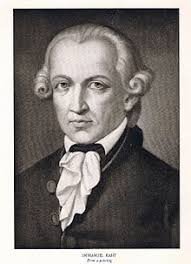
    Immanuel Kant, a pivotal figure in Western philosophy, dedicated his work to ethical theories and the nature of human reason.

    Kant aimed to establish a universal moral framework by emphasizing the intrinsic value of each individual and promoting the concept of autonomy.

    His categorical imperative, which states that one should act only according to principles that could be universally applied, offers an ethical guide for making decisions and evaluating one’s actions.

    The influential philosopher Friedrich Nietzsche questioned traditional values and morality, advocating for a reevaluation of our ethical systems and the concept of truth.

    Nietzsche challenged the prevailing notions of good and evil and argued for the affirmation of life’s inherent power and potential.

    He proposed the concept of the “Übermensch” or the “Superman,” an individual who transcends societal constraints and embraces their own individuality and creativity.

    These brief glimpses into the philosophies of these famous thinkers barely scratch the surface of their profound and comprehensive contributions to the field of philosophy. Each philosopher brings their unique perspective and intellectual rigor to the table, inspiring deeper contemplation and reflection on the fundamental questions that define our human experience.

    The legacies of these philosophers continue to shape our understanding of the world, offering guidance and insights to navigate the complexities of life.