Tag: Faith

Faith – a deeply held conviction or trust in something that may not be immediately provable or visible. Faith often transcends mere belief and involves an emotional and experiential connection. Faith is even the heart and mind align. Faith can manifest in many contexts, such as religious belief, personal relationships, or even faith in oneself. Faith is a guiding force that influences decisions and shapes our worldview, providing comfort and meaning in life’s complexities and seemingly void moments.

  • Chains to Connection

    Chains to Connection

    How Self-Imprisonment Forged Unbreakable Empathy

    The human journey often leads us through valleys of despair before we can ascend to peaks of understanding.

    There was a time when I believed myself to be perpetually bound… a captor, slave, and victim of my own making, forever undeserving of redemption.

    This rigid self-condemnation felt like an inescapable truth, a life sentence I had both imposed and accepted.

    Yet, within the depths of that very desolation, an unexpected grace emerged.

    The Crucible of Deprivation

    A Pathway to Profound Empathy

    Experiencing such profound internal deprivation and desolation wasn’t just painful; it was transformative.

    Without having walked through that particular darkness, I genuinely believe I wouldn’t possess the miraculous sensibilities I do today.

    My past self-imprisonment became the key to unlocking an almost impossible level of relatability.

    I can now connect with those who seem irredeemable, seeing flickers of shared humanity where others might see only despair.

    This profound understanding wasn’t born from external validation or societal acceptance.

    It stemmed from becoming my own adversary, from witnessing the truth only after the deepest shadows had fallen.

    The Warrior’s Path

    Endurance Beyond Conventional Wisdom

    The journey out of that self-imposed prison demanded a level of endurance that defies conventional understanding.

    It required long-term perseverance, turning the other cheek to self-pity, and denying immediate gratification.

    It meant observing my own thoughts and emotions without judgment or attachment, detaching from the noise of a society often plagued by suffering and superficiality.

    Seventy-five days of isolation, removed from the very societal pressures that contribute to our collective ailments in the Western world, proved to be an invaluable catalyst.

    This isn’t the kind of endurance often found within the comforting walls of most churches or synagogues; it’s a solitary, internal forging.

    It demands an acceptance of profound solitude, coupled with the paradoxical realization that you are never truly alone.

    Embracing the Unseen

    The Non-Physical Meaning of Life

    What happens when your core beliefs are challenged, mocked, scoffed at, or simply ignored?

    When fellow humans oppose the very essence of your existence or expression?

    This journey taught me that the meaning of life is not physical.

    If this truth holds—and I now know it does—then what are we truly striving for in our material pursuits?

    This path requires a warrior in spirit, willing to sacrifice all perceived strongholds: friends, family, ego, and even security, all in the name of Truth.

    We are called to battle our internal “demons,” embracing an objective realization that refuses to bend to our subjective feelings.

    It’s about practicing the skill of derealization, conjuring a righteous mind for self-judgment, and relaxing into our ability to construct a powerfully robust split within our own personalities.

    We must accept any answer that proves itself to be without external control, embracing the freedom found in releasing what we cannot dictate.

    Tips

    Practice Mindful Observation

    Dedicate 10-15 minutes daily to observe your thoughts and emotions without judgment. Notice patterns, triggers, and reactions without engaging with them.

    Explore Stoic Philosophy

    Delve into texts by Seneca, Epictetus, and Marcus Aurelius. Their emphasis on inner control, acceptance of what cannot be changed, and the pursuit of virtue resonates deeply with the themes discussed here.

    Journal Your Journey

    Document your insights, challenges, and breakthroughs. Writing can be a powerful tool for self-reflection and recognizing personal growth.

    Seek Solitude (Safely)

    If feasible and safe, consider periods of digital detox or even a short retreat to experience the benefits of reduced external stimulation.

    Engage in Deep Listening

    When interacting with others, practice listening without interruption or formulating your response. Aim to truly understand their perspective, especially when it differs from your own.

    What aspects of self-discovery have profoundly changed your perspective?

    Share your thoughts and continue the conversation in the comments below!

  • Recognize Jesus

    Recognize Jesus

    Through history, Jesus’ teachings have been twisted.

    His message has been distorted by worldly authorities, repackaged and sold to the masses in 66 Books, not only branded as Divine, but also proclaimed to be the only divinely inspired text in the world that we could trust.

    False doctrine dressed as truth.

    The true simplicity of His words and depth of His message has been concealed beneath centuries of misinterpretations, some on accident due to error… others with malicious intent.

    HOW JESUS TAUGHT

    Jesus spoke from a place of gnosis.

    GOSPEL OF THOMAS

    Gospel of Thomas (Lambdin Translation) — The Nag Hammadi Library – Gnosis

    The Gospel of Thomas in multiple translations, along with a vast collection of material about the Thomas tradition. This site includes the entire Hammadi Library, as well as a large collection of other primary Gnostic scriptures and documents.


    What is Gnosis?
    Gnosis is knowledge that transcends what society was able to grasp.

    Canonized doctrine has obscured this inner wisdom.

    The true path, He revealed, was not in compliance with man’s laws or constructed hierarchies.

    Gnosis is awakening.

    Awakening to the divine potential already living within, it is intimate exploration, not institutional obedience.

    Know Christ. Be Known by Him.

    Pride.

    Self-righteousness.

    The need to assert control.

    These are the antithesis of Jesus’ way.

    He would have overturned the tables of those clinging to materialistic delusion, worshipping the god of society instead of the truth.

    He taught through stories, parables designed to open hearts, spark insight, and reveal reality to those ready to see.

    The False Jesus of the Mainstream

    Over time, His teachings have been distorted.

    I do not see this as an accident.

    Deception is a natural habit of the human heart.

    Many will come in His name and mislead others, as He warned in Matthew 24:5.

    Lies will be spun. Truth will be hidden. The path to understanding will be obscured. & it has.

    His guidance is simple: stay vigilant. Seek truth. Seek God. Do not lean on man. Lean on the Spirit. Open your heart.

    Discernment is the key. Through connection with the Holy Spirit, the true meaning of His teachings will be revealed.

    In God’s eyes, all souls are equal. Hierarchy, power, wealth—they hold no weight in the light of Heaven.

    We are spiritual beings inhabiting human bodies. Our essence is love.

    Our value is inherent. In His presence, there is no superiority, only unity and grace.

    Open the Bible. See for yourself.

    Jesus’ message aligns with the deeper structures of the human psyche—the archetypes that Carl Jung described.

    LEARN MORE

    The Four Psychological Functions and the Gospel Drama

    Jung had much to say about the gospel drama. His reading was largely literary and symbolic, avoiding what he considered misguided attempts by scholars of his day to extract the human figure of Jesus from what they presumed to be fictional accounts


    Jesus’ purpose was not to educate superficially but to illuminate within our minds and hearts the principles of love, compassion, and divine order.

    He took on the burden of our failures, showing us that we could not ascend alone in our ego.

    He bore the weight of what we could not bear, saying, in essence, “You are weak, but I am here. I carry this for you.”

    He demonstrated what it means to embody the divine because He is the Divine.

    He did not expect us to imitate Him blindly.

    Through understanding Him, we find salvation—not through effort, but through alignment with His mind and heart.

    To truly grasp His teachings, our hearts and minds must be open.

    Wisdom resides within us, waiting.

    When we integrate the external world with our inner essence, when we allow the Spirit to guide us, Jesus’ teachings become alive.

    The divine does not reside in walls, pulpits, or rituals—it resides within. Limiting Christianity to buildings, to man-made constructs, stifles spiritual evolution.

    The shadows of false guidance hide behind piety.

    But if you engage scripture, cultivate the Divine within, and surrender to the Spirit, there are no barriers.

    God’s presence lives in every faithful heart, guiding, illuminating, and giving purpose.

    Know this presence within yourself and others. Your mind will sharpen. Your intuition will deepen. Wisdom will anchor you.

    Chaos dissolves when you align with Him. True freedom is forgetting yourself and finding yourself lost in Him.

    Get lost in Him.

  • Who Is God?

    Who Is God?

    The concept of God is a complex and multifaceted one, explored across various cultures, philosophies, and religious traditions. At its core, God is often described as the Supreme Being, the Creator, and the Sustainer of all existence.

    • The Almighty – Emphasizing His unlimited power.
    • The Creator – Originator of all existence.
    • The Divine – Denotes His sacred and transcendent nature.
    • Supreme Being – The highest entity above all.
    • Heavenly Father – The nurturing and paternal aspect.
    • Lord – Sovereign authority over all things.
    • Deity – A general term for a divine being.
    • The Most High – Unrivaled supremacy.
    • The Eternal – Timeless, without beginning or end.
    • Providence – His protective and guiding care.

    God Across Cultures

    • Allah – Islam.
    • Yahweh (YHWH) – Judaism.
    • Jehovah – Christian derivation from YHWH.
    • Brahman – Hinduism’s absolute reality.
    • Waheguru – Sikhism.
    • The Great Spirit – Various Native American traditions.

    Descriptive Titles of God

    • Omnipotent One – All-powerful.
    • All-Knowing – Omniscient.
    • Alpha and Omega – The Beginning and the End.
    • King of Kings – Supreme Ruler.
    • Light of the World – Illuminator and Guide.
    • The Way, the Truth, and the Life – Christian designation of Jesus Christ.

    Philosophical Concepts of God

    • Prime Mover – The initial cause of motion and existence.
    • First Cause – The uncaused cause of all.
    • Absolute – Ultimate reality.
    • The One – Singular source of all being.
    • Ultimate Reality – The ground of all existence.

    God in Poetry + Literature

    • The Divine Architect – Designer of the cosmos.
    • Author of Creation – Literary framing of His creative work.
    • Master of the Universe – Sovereign over existence.
    • The Great I Am – Biblical self-revelation (Exodus 3:14).

    God’s Eternality + Self-Nature

    • “I am the Alpha and the Omega,” says the Lord God, “who is, and who was, and who is to come, the Almighty.” (Revelation 1:8)
    • “Before the mountains were born or you brought forth the whole world, from everlasting to everlasting you are God.” (Psalm 90:2)

    Spirit and Formlessnessness of God

    • “God is spirit, and his worshipers must worship in the Spirit and in truth.” (John 4:24)

    God as Omnipotent, Omniscient, and Omnipresent

    • “Ah, Sovereign Lord, you have made the heavens and the earth by your great power and outstretched arm. Nothing is too hard for you.” (Jeremiah 32:17)
    • “Nothing in all creation is hidden from God’s sight.” (Hebrews 4:13)
    • “Where can I go from your Spirit? Where can I flee from your presence?” (Psalm 139:7-8)

    God as Creator and Sustainer

    • “In the beginning God created the heavens and the earth.” (Genesis 1:1)
    • “For in him all things were created… all things have been created through him and for him.” (Colossians 1:16-17)

    God’s Desire for Relationship

    • “Here I am! I stand at the door and knock. If anyone hears my voice and opens the door, I will come in and eat with that person, and they with me.” (Revelation 3:20)

    Early Christian Beliefs of God

    Monotheistic

    Affirmed one true God, inherited from Jewish tradition.

    Trinitarian

    God as Father, Son, and Holy Spirit — a concept that developed early but rooted in scripture.

    Personal and Relational

    God as one who desires communion with humanity.

    Transcendent yet Immanent: Beyond comprehension, yet intimately involved.

    Source of Love, Justice, and Holiness: God’s character is the foundation of moral order.

    Gnostic Perspective of God

    • Hidden
    • Unknowable
    • Speaker of emanation
    • Source

    Gnostic Christians emphasized a hidden, unknowable supreme God, often speaking of emanations (“aeons”) descending from the ultimate Source.

    God is The Supreme Being

    Creator, Sustainer, and Sovereign of all existence.

    God is Eternal and Self-Existent

    Beyond time, space, and change.

    God is Spirit

    Invisible, formless, omnipresent.

    God is Relational

    Seeks love, communion, and redemption of humanity.

    God is The Absolute Reality

    The foundation and purpose behind all that is.

    As scripture declares:

    “As the heavens are higher than the earth, so are my ways higher than your ways and my thoughts than your thoughts.”

    -Isaiah 55:9

    GOD IS— I AM

  • Jesus

    Jesus

    Do You Think You Know Jesus?

    They Said Jesus Was
    Insane. Mad. Crazy. Strange.

    The image of Jesus most people hold is wrong and wrung through centuries of:

    • ideological whitewashing
    • beautified marketing
    • sanitized Sunday School summaries.

    He’s often pictured as an ethereal peace-giver, universally adored, calmly glowing in a ‘soft sepia light’.

    But this wasn’t the Jesus known to his followers. Not even close.

    In fact, many who encountered Jesus in the flesh found him either;

    1. confusing, at best
    2. mentally unstable, at worst.

    He wasn’t simply controversial, he was considered a threat to both religious orthodoxy and social order.

    The sanitized version of Christ so many cling to was shaped after the cross, after the church industrial complex took control of his narrative.

    Let’s take a scalpel to the original reactions—the raw, unsettling perceptions of Jesus while he was still walking the earth.

    His Family Thought He’d Lost His Mind

    The Gospel of Mark pulls no punches. In Mark 3:21, we’re told that Jesus’ own family said:

    “He is out of his mind.”


    Yes, his own bloodline. Not strangers. Not critics. His family. Pause there…

    Imagine. Imagine the weight of that.

    You’ve awoken to a Divine Knowing, a consciousness that cracks open reality—and the people who know your voice best say:

    “You’ve snapped.”


    It wasn’t mockery from outsiders that came first; it was internal doubt.

    His kin likely feared he’d gone mad with something akin to messianic delusion.

    Or perhaps they were embarrassed by his sudden rise as a controversial street-preacher confronting the Government and Church…

    He spoke vehemently against both Rome and the temple elite.

    Religious Leaders:

    “You’re Breaking the Law and Blaspheming“

    The religious class didn’t just dislike Jesus—they actively plotted his removal.

    The scribes and Pharisees viewed him as a heretic, accusing him of;

    • violating the Sabbath
    • flouting Mosaic Law
    • daring to forgive sins.

    —a divine prerogative.


    His miracles weren’t applauded; they were denounced as works of Beelzebub.

    Let that settle: divine acts being interpreted as demonic.

    … this was normal folk… the acceptable people… The community.

    This wasn’t petty disagreement.
    This was existential threat-level panic from the religious hierarchy.

    They saw in Jesus… not just a radical voice—but someone who dismantled their very grip on sacred authority.

    Public Whispers: “He Has a Demon and Is Mad“

    John 10:20 captures this damning public sentiment:

    “He has a demon and is mad; why listen to him?”

    These weren’t elite theologians.

    These were everyday observers—

    • neighbors
    • townsfolk
    • bystanders.

    Jesus’ words, while layered with profound gnosis (wisdom), sounded unhinged to the average ear.

    And truthfully, wouldn’t they today? I mean… They do.

    Imagine someone saying,

    “Before Abraham was, I am.”

    Or calling God their literal Father, claiming to bring not peace but a sword.

    If spoken in today’s marketplace, they’d be dismissed as spiritually schizophrenic, or worse.

    So what’s changed?
    Only the power structure that codified his words.

    Outside the Bible: Even More Scathing Views

    This doubt wasn’t exclusive to Jewish contemporaries.

    Roman voices and philosophers took their shots, too.

    Talmud

    The Talmud contains cryptic but deeply derogatory references to Jesus—branding him a sorcerer who led Israel astray.

    He is also said in the Talmud to be swimming in hot excrements.

    These weren’t passive critiques.

    They were sharp rejections by those who saw his influence as spiritually treacherous.

    Roman Philosophers

    Roman historian Tacitus referred to Christianity as a “pernicious superstition,” blaming the followers of Christ for corrupting public morals.

    To Roman minds, Christ’s followers were:

    irrational fanatics clinging to a crucified troublemaker.

    Celsus

    And then there’s Celsus, the ancient philosopher and intellectual, who reportedly called Jesus

    “small, ugly, and undistinguished,”

    claiming his father was a Roman soldier—a jab meant to invalidate his divine paternity and tarnish the virgin birth narrative.

    Jesus wasn’t revered by the intellectual elite of his time.

    He was;

    • mocked
    • dismissed
    • vilified.

    Why This Matters

    This isn’t about shock value or anti-Christian rhetoric. It’s about truth-telling.

    When we sanitize the narrative of Jesus to make him palatable. We also:

    • rob Him of the radical edge that threatened anti Christ power
    • offended institutions
    • deny the painful fact that he alienated his own family.

    His teachings were revolutionary because they disrupted—not because they fit neatly within pre-existing paradigms.

    So when you feel like your awakening makes others uncomfortable when your truth sounds like madness to the masses take comfort. You’re in excellent company.

    Because the real Jesus wasn’t crucified for being nice. He was crucified because he challenged the lies. And many thought he was insane for doing so. Truth rarely sounds sane to those who live comfortably in delusion.

    “And you will be hated by all for my name’s sake. But the one who endures to the end will be saved.”

    – Matthew 10:22
  • Biblical Terminology

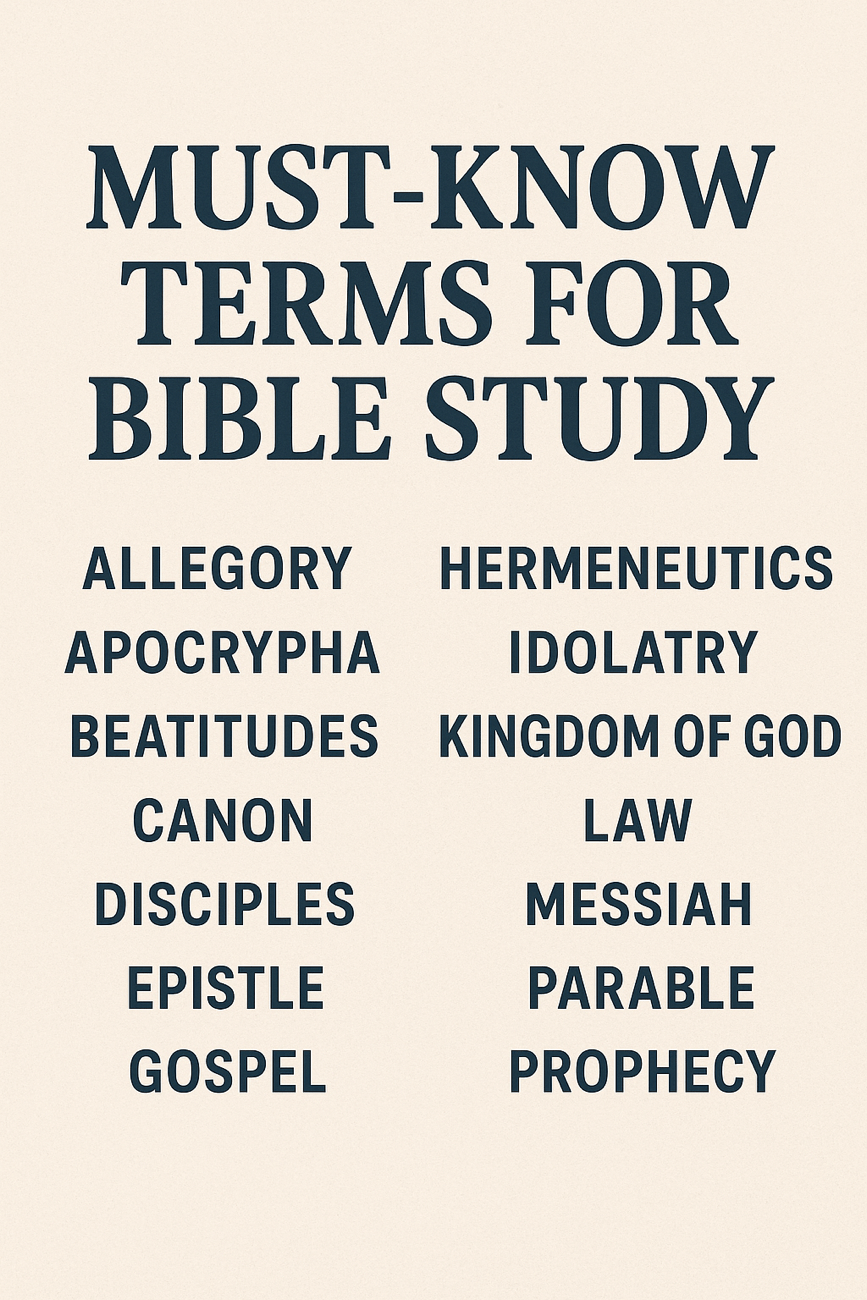
    Biblical Terminology

    Allegory

    Allegory is a literary and artistic device in which characters, events, and details within a narrative symbolize broader concepts and ideas, often conveying moral, social, or political messages. The term derives from the Greek word “allegoria,” meaning “speaking otherwise,” which highlights its function of expressing deeper meanings beyond the literal interpretation. Allegories can be found across various mediums, including literature, visual arts, and film, and they often involve a narrative that operates on two levels: the surface story and the underlying message.

    Classic examples include George Orwell’s “Animal Farm,” which critiques totalitarianism through the story of farm animals, and John Bunyan’s “The Pilgrim’s Progress,” which represents the spiritual journey of a Christian believer.

    Allegory has been a significant tool throughout history, allowing creators to address complex themes in a more accessible manner, as noted in sources like Britannica and Merriam-Webster.

    Apocrypha

    A collection of ancient texts that are not considered canonical by certain religious traditions, often included in some versions of the Bible.

    Beatitudes

    A series of blessings pronounced by Jesus in the Sermon on the Mount (Matthew 5:3-12), highlighting the values of the Kingdom of God.

    Canon

    The official list of books that are considered authoritative scripture by a particular religious community.

    Disciples

    Followers of Jesus Christ, particularly the twelve apostles who were chosen to spread his teachings.

    Epistle

    A letter, often written by apostles, that addresses specific issues or teachings within early Christian communities (e.g., the letters of Paul).

    Gospel

    The “good news” of Jesus Christ, specifically the accounts of his life, death, and resurrection found in the New Testament (Matthew, Mark, Luke, and John).

    Hermeneutics

    The study of interpretation, especially of biblical texts, focusing on understanding the meaning and application of scripture.

    Idolatry

    The worship of idols or false gods, which is condemned throughout the Bible.

    Kingdom of God

    A central theme in Jesus’ teachings, referring to God’s reign and authority, both in the present and in the future.

    Law

    Refers to the commandments and regulations given by God, particularly those found in the Torah (the first five books of the Old Testament).

    Messiah

    The anointed one, a savior or liberator expected by the Jewish people, fulfilled in the New Testament by Jesus Christ.

    Parable

    A simple story used to illustrate a moral or spiritual lesson, often told by Jesus.

    Prophecy

    A message from God, often delivered by a prophet, that foretells future events or conveys divine truth.

    Redemption

    The act of being saved from sin and its consequences, often associated with the sacrifice of Jesus.

    Righteousness

    The quality of being morally right or just, often associated with living in accordance with God’s will.

    Sacrament

    A religious rite recognized as of particular importance and significance, such as baptism and communion.

    Sin

    An act that goes against God’s will or law, often understood as a separation from God.

    Testament

    Refers to the two main divisions of the Bible: the Old Testament (Hebrew Scriptures) and the New Testament (Christian Scriptures).

    Transfiguration

    The event in which Jesus is transformed and revealed in divine glory to three of his disciples (Matthew 17:1-9).

    Worship

    The term “worship” originates from the Old English word “weorþscipe,” which combines “weorþ,” meaning worth or value, and “scipe,” indicating a condition or quality.

    Thus, worship fundamentally conveys the idea of attributing worth to a deity or divine being.

    In various religious contexts, worship encompasses acts of reverence, adoration, and devotion directed towards God or gods, often involving rituals, prayers, and communal gatherings. It serves as a means for individuals and communities to express their beliefs, seek spiritual connection, and engage in transformative experiences.

    True worship is not merely about fulfilling personal or communal needs but is centered on honoring and glorifying God, reflecting a commitment to divine values and principles.


    Understanding these terms can greatly enhance your study of the Bible and provide a clearer framework for interpreting its messages and teachings.

    MORE WORDS YOU SHOULD KNOW:

    Theology

    … the study of God.

    Apologetics

    … defense of Faith.

    Exegesis

    … critical interpretation of scripture.


    Substitutionary Atonement

    Christ died as a substitute for sinners, bearing the punishment that they deserved.

    Eschatology

    Eschatology is the study of the end times, focusing on events like

    • the Second Coming of Christ
    • the final judgment
    • the ultimate destiny of souls.

    It encompasses what happens to individuals after death and the fate of the entire universe.

    Key eschatological concepts include:

    • the resurrection of the dead
    • the millennium
    • the establishment of God’s kingdom. 

    Incarnation

    The Incarnation is the doctrine that the Son of God assumed human nature and became man in the person of Jesus Christ. This belief is central to Christianity, affirming that Jesus is both fully divine and fully human. The theological implications of the Incarnation include the idea that through Jesus, God entered human history, experiencing human life and providing a means of salvation.

    Grace

    Grace is the unmerited favor and love of God towards humanity. It is central to Christian soteriology (the study of salvation), emphasizing that salvation is a gift from God, not earned by human effort. Different traditions emphasize different aspects of grace:

    Justification

    Justification is the act by which God declares a sinner to be righteous on the basis of faith in Jesus Christ. In Protestant theology, this is often emphasized

    REFORMED THEOLOGY

    Reformed theology affirms the five solas with all their implications; recognizes the centrality of the covenant in God’s saving purposes; and is expressed in a historic and public confession of faith.


    CALVINISM

    Calvinism, also known as Reformed theology or the Reformed tradition: is a major branch of Protestant Christianity that originated with the teachings of the French theologian John Calvin in the 16th century.

    It is named after Calvin because he played a significant role in shaping its doctrines and organizing its Ecclesiastical structure.

    Calvinism emphasizes the sovereignty of God in all aspects of life, including salvation, divine providence, and the governance of the world. It is characterized by its adherence to the “Five Points of Calvinism,” which are often summarized using the acronym TULIP.

    Total Depravity

    This doctrine teaches that due to the fall of Adam and Eve, all human beings are born in a state of spiritual depravity and are incapable of choosing God or doing good on their own. They are entirely dependent on God’s grace for salvation.

    Unconditional Election

    According to this belief, God, out of His sovereign will and without any consideration of human merit or choice, predestines certain individuals to be saved. This election is not based on anything that humans do but solely on God’s divine purpose.

    Limited atonement

    This doctrine states that Christ’s atoning sacrifice on the cross was specifically intended for the salvation of the elect, those whom God has chosen for salvation. It does not extend to all people universally.

    Irresistible grace

    Also known as “effectual calling” or “regenerating grace,” this doctrine asserts that when God chooses to save someone, His grace is irresistible and will unfailingly bring that person to salvation. Those who are called by God cannot ultimately resist His saving work.

    Perseverance of the saints

    This belief affirms that those who are truly saved by God’s grace will persevere in faith and holiness until the end. Genuine believers cannot lose their salvation but will continue to follow Christ throughout their lives.

    Calvinism

    Calvinism is a theological system and branch of Protestant Christianity that originated with the teachings of John Calvin, a 16th-century French reformer. It emphasizes the sovereignty of God in all aspects of salvation, particularly through the doctrine of predestination, which asserts that God has already chosen who will be saved and who will not. This belief is often summarized by the Five Points of Calvinism, which include Total Depravity, Unconditional Election, Limited Atonement, Irresistible Grace, and Perseverance of the Saints. Calvinism stands in contrast to Arminianism, which emphasizes free will and the ability of individuals to choose salvation. The term itself derives from Calvin's last name, and the movement has significantly influenced various Protestant denominations, particularly in Reformed and Presbyterian traditions. It gained prominence during the Reformation and has continued to shape theological discussions and debates within Christianity today, as noted in various sources like Britannica and Clickmill.

    Arminianism

    Arminianism is a theological system named after the Dutch theologian Jacob Arminius (1560-1609), who proposed a framework of Christian belief that emphasizes free will and God’s universal grace. This doctrine arose as a response to the deterministic views of Calvinism, particularly regarding predestination and salvation. Arminianism asserts that while God offers salvation to all, individuals have the free will to accept or reject this offer, which stands in contrast to the Calvinist belief in irresistible grace. Central to Arminian theology are five key points: the denial of original sin as an insurmountable barrier, justification by faith, conditional predestination, the resistibility of grace, and the possibility of falling from grace.

    The theological debate between Arminianism and Calvinism was notably formalized during the Synod of Dort (1618-1619), where Arminian views were challenged but continued to influence various Protestant traditions, especially Methodism and the broader Evangelical movement (Christian History Institute, Wellspring MS Church).

    Free Will

    The term “free will” refers to the philosophical concept that individuals have the capacity to make choices that are not predetermined by prior causes or divine intervention.

    Etymologically, the phrase combines “free,” deriving from the Old English freo, meaning “not in bondage,” and “will,” from the Old English willan, meaning “to wish or desire.”

    This concept has been a subject of intense debate in philosophy, psychology, and neuroscience, particularly concerning whether human actions are determined by biological processes or if individuals can act independently of such influences.

    Some philosophers advocate for a “compatibilist” view, suggesting that free will can coexist with determinism, arguing that the essence of free will lies in the ability to act according to one’s motivations and desires, even if those are influenced by prior causes (psyche.co).

    The implications of free will are profound, affecting moral responsibility and ethical considerations in society, as individuals are often held accountable for their actions based on the assumption that they can choose freely (scientificamerican.com).

    Election

    The etymology of “election” comes from the Latin word “electio,” meaning “choice” or “selection,” which itself derives from the verb “eligere,” meaning “to choose.”

    In a biblical context, election is seen as an expression of God’s sovereignty, where He selects individuals based on His divine will rather than their actions or merits.

    This concept is discussed in various theological writings, emphasizing that God’s choice is unconditional and not based on foreseen faith or works (as noted in sources like gotquestions.org).

    The implications of this doctrine often lead to discussions about grace, justice, and the nature of God’s love, as seen in the debates surrounding unconditional election and its portrayal of God in relation to humanity (monergism.com).

    Atonement

    The term “atonement” refers to the act of making amends or reparation for a wrongdoing or injury, often implying a reconciliation between two parties. Etymologically, the word is derived from the Middle English phrase “at one,” which signifies being in harmony or agreement. This concept has significant theological implications, particularly in Christianity, where atonement is associated with the reconciliation between God and humanity through the life, suffering, and death of Jesus Christ. The doctrine of atonement encompasses various interpretations, such as the satisfaction view and substitutionary atonement, which explore how this reconciliation is achieved (Merriam-Webster, Cambridge Dictionary, Dictionary.com).

    Grace

    The term “grace” has a rich etymological background, originating from the Latin word “gratia,” which means favor, goodwill, or kindness.

    In contemporary usage, grace encompasses various meanings, including elegance or beauty of form, manner, motion, or action, as well as a disposition to kindness and compassion.

    In religious contexts, particularly within Christianity, grace refers to the unmerited favor of God towards humanity, often linked to salvation and divine assistance.

    This theological concept emphasizes that grace is a gift from God, as highlighted in Ephesians 2:8, which states, “For by grace you have been saved through faith.”

    The multifaceted nature of grace can be seen in phrases like “fall from grace,” which denotes a loss of status or favor, and “saving grace,” which refers to a redeeming quality that mitigates a negative situation.

    Perseverance of the Saints

    the belief that salvation is secure and cannot be lost, a concept often referred to as “eternal security.”

    The etymology of the word “perseverance” comes from the Latin “perseverare,” meaning to persist or continue steadfastly.

    This idea is rooted in the understanding of predestination, where God’s grace enables the faithful to endure in their beliefs despite challenges

    John 10:28-29: “I give them eternal life, and they will never perish, and no one will snatch them out of my hand. My Father, who has given them to me, is greater than all, and no one is able to snatch them out of the Father’s hand.”

    ECCLESIAL / ECCLESIOLOGY 

    ecclesiology is the study of the Church, the origins of Christianity, its relationship to Jesus, its role in salvation, its polity, its discipline, its eschatology, and its leadership.

  • The Essence of Truth + Intuition

    The Essence of Truth + Intuition

    In my journey as an “alien” on this planet, I have, unwittingly, stumbled upon what had been archaically called the Philosopher’s Stone or the Elixir of Life…

    I only realized this after I, through being magnetically attracted toward suffering, embracing the darkness that most fear, had unearthed the Essence of Reality.


    This Essence is a Truth so profound, it is woven into the very core of our beings through the quantum dimensions & atmospheric pressure, without such, we would become vacuumed into nothingness.

    This truth is unassailable, standing as a lamp of certainty, illuminated by the light of Intuitive Wisdom.


    THIS LIGHT IS CHRIST’S LIGHT OF INTUITION FROM ABOVE.


    Intuition transcends the limitations of our corporeal senses, for it is birthed from the sacred depths of the spirit.

    Intuition is a whisper from the Heavens, a subtle yet ever powerful current that flows through the Ethers of existence.


    Intuition is the Blood within the veins of Eternity.

    When the Holy Spirit stirs, He ignites the flame of Intuition, transforming our sensorial experiences into a Divine Compass.


    THE KINGDOM OF GOD IS WITHIN YOU


    This guiding Force elevates our conscious awareness, rendering the conventional Five Senses as mere tools in the Macrocosm of our being within this existence and realm.

    When this inner awakening is embraced, we align in tandem with the Universal Symphony of Wisdom.


    Intuition becomes our most trusted Guide, leading us towards a Life of deeper Understanding and connection with the Infinite.

  • God Breaks His Children

    God Breaks His Children

    “My sacrifice, O God, is a broken spirit; a broken and contrite heart you, God, will not despise.”

    Psalm 51:17

    Being used and broken by God is the only way we are fit to be within His presence, growing in Christ’s faith.

    Suffering is not a sign of God’s displeasure or punishment on us, but rather a way of refining our character and preparing us for His Domain… it’s out of Love.

    “Can I not do with you, Israel, as this potter does?” declares the LORD. “Like clay in the hand of the potter, so are you in my hand, Israel.”

    Jeremiah 18:6

    God uses broken people and things to accomplish His Will, because He is transforming us, like He did in Genesis, akin to the clay (although this is the Spiritual equivalent). We aren’t being “fixed”, He doesn’t “mend” us, He makes us New– this means death, first.

    He does not look at our outward appearance or abilities, but at our obedience to Him, from the heart. The heart is only obedient be His decree.

    He chooses the weak, the flawed, the broken, and the contrite to display His power and grace, revealing His Glory. Those who are already strong have no desire to forfeit their own strength.

    “Man looks at the outward appearance, but the Lord looks at the heart.”

    1 Samuel 16:7

    God breaks us in different ways, such as through trials, temptations, failures, losses, disappointments, or persecution.

    God Takes Away

    God shapes us through the experiences of loss.

    Many people reject this aspect of God. They believe that God would never subject us to such hardship, but in reality, He not only has the capacity to do so but actually does.

    “Who has made man’s mouth? Who makes him dumb, or deaf, or seeing, or blind? Is it not the Lord?”

    Exodus 4:11

    God is inherently good, He is what literally defines the word “good” and he acts according to His own Will. Even Jesus said: “Why do you call me good? No one is good but the Father.”

    Exposing Our Shame Reveals His Glory

    The painful situations uncovers our inherent sinfulness, emphasizing our deep dependence on Him & His unwavering Grace.

    This leaves us with only two options:

    1. Succumb to wrath…
    2. Faithfully entrust ourselves to His absolute sovereignty.

    Furthermore, suffering serves as a means for us to identify with the pain endured by Christ, who was shattered for our sake on the cross.

    Our Purpose: Reveal God’s Glory

    God uses us in different ways, such as through our gifts, talents, passions, etc. These opportunities are only worthy if they glorify Him: from the heart.

    He is worshipped when we bless others, because our hearts See God’s image in all people, even if we are in no position to help, our new nature just desires to do so.. This doesn’t mean it is of obligation, but of the heart of God’s Spirit within. Anything done out of duty is a sin.

    Our purpose is to advance His kingdom.


    Suffering increase the experience of joy, as the contrast increases the intensity.


    Being used & broken by God is a cyclical process that never ends in this life.

    When I say “broken by God,” I mean by His will and decree, though He uses multiple tools like the Adversary, demons, angels, and other humans…

    God Is Still Fashioning You

    We are constantly being shaped and molded by His hand, as He works in us and through us.

    We are continually challenged and pushed to grow under His guidance, as He guides us through life like a shepherd, and rescues us from the dark forces of the world like a lifeguard saving us from treacherous waves.

    The Uniqueness of His Flock

    While God equips those He calls & chooses, the tools and timing may not match our expectations. As Isaiah 48:10 states:

    God tests us..

    “in the furnace of affliction… ”

    … not leaving our metal impure but rather purifying our souls like fine gold.


    The Refinement Process

    Seeing our lives as a refining ritual provides perspective. Just as heat separates useful metal from dross, trials burn away our flaws.


    Charles Spurgeon rightly said:

    … hardships “dig up the soil, & let us see what we are made of.”


    God uses troubles to chip away pride, selfishness, and reliance on human strength alone. This preparation perfects our nature for His service.

    God Smashes Ego and Pride

    It’s dangerously easy to wrongly claim credit for our skills rather than giving all glory to the power working through us.

    When God calls out our weakness, we remember that our completeness depends on Him.


    He wants spiritual brokenness, the kind of brokenness He can use. He wants godly sorrow that leads to repentance.

    2 Corinthians 7:10


    Suffering Builds Character

    Embracing suffering makes us strong yet sympathetic to others’ struggles

    Praise be to the God and Father of our Lord Jesus Christ, the Father of compassion and the God of all comfort, who comforts us in all our troubles, so that we can comfort those in any trouble with the comfort we ourselves receive from God.

    2 Corinthians 1:3-4

    Our scars enable us to identify with mankind’s anguish in a way comfortable lives cannot.

    This empathy is crucial to authentically reach those in pain.

    Refinement Shapes our Faith

    Though dark valleys may confuse our finite perspective, abandoning ourselves to God’s plans develops trust in Him.

    In this fearful surrender, true faith and spiritual maturity take root.

  • Creativity – A Godly Gift

    Creativity – A Godly Gift

    As Christians, we know that we are fearfully and wonderfully made in the image of God.

    I praise you, for I am fearfully and wonderfully made. Wonderful are your works; my soul knows it very well. Psalms 139:14

    In the same way that our Creator is the ultimate Master Artist, we also possess the ability to create and express ourselves in distinctive and profound ways.


    Yet, there are moments when we may neglect to acknowledge our own creative capacities, or undervalue our skills and passions as lacking importance, particularly if they deviate from the conventional expectations followed by a majority of Christians, even though they may profess a different standpoint.

    “Do not love the world or anything in the world. If anyone loves the world, love for the Father is not in them. For everything in the world—the lust of the flesh, the lust of the eyes, and the pride of life—comes not from the Father but from the world. The world and its desires pass away, but whoever does the will of God lives forever.”

    1 John 2:15-17


    Creativity Is A Form Of Worship

    When we use our talents and passions to create something new, we are expressing gratitude and admiration for the creator who endowed us with these abilities. This is a form of praise towards the One who made us.


    Definition of Worship:

    Worship is the reverent honor and homage paid to a deity or divine being, often through prayer, praise, and ritualistic acts of devotion.


    Remaining Open to God’s Call for Creativity

    Next, be open to the ways in which God may be calling you to use your creativity for His purposes.

    But now, O Lord, you are our Father; we are the clay, and you are our potter; we are all the work of your hand. – Isaiah 64:8

    Remaining open to God’s call to use creativity for His purpose requires a receptive and humble heart.


    Here are some practical ways to stay open to His leading:

    Prayer and Meditation

    man praying in mosque

    Regular prayer and meditation can help cultivate a receptive spirit, creating space to listen to God’s guidance and prompting.

    Seeking Counsel

    joyful adult daughter greeting happy surprised senior mother in garden

    Seeking counsel from spiritual mentors, leaders, or trusted individuals within the Faith can provide valuable insight and confirmation of God’s leading.

    Scripture Study

    Delving into the Word of God can offer clarity and direction. Exploring stories of creativity and purpose in the Bible can inspire and inform your own journey.

    Openness to Change

    Remaining open and adaptable to unexpected opportunities or shifts in direction demonstrates a willingness to follow God’s plan, even when it diverges from our own expectations.

    By incorporating these practices into your life, you can create an environment where you remain open to God’s call for creativity and find fulfillment in using your talents for His purpose.


    Importance Of Taking Risks

    Finally, don’t be afraid to take risks and try new things.

    Creativity is a journey, not a destination, and it’s okay to make mistakes along the way. Trust in the Lord’s guidance and lean into His wisdom as you explore your own creative potential.

    So whether you’re a seasoned artist or just starting out, don’t be afraid to unleash your creativity and use it for the glory of God.

    So do not fear, for I am with you;
    do not be dismayed, for I am your God.
    I will strengthen you and help you;
    I will uphold you with my righteous right hand.

    Isaiah 41:10

    So go forth, be creative, and let your light shine for all to see!


  • Salvation’s Trinitarian Mission By The Holy Trinity

    Salvation’s Trinitarian Mission By The Holy Trinity

    Each aspect of God has a purpose in all things, including Salvation.

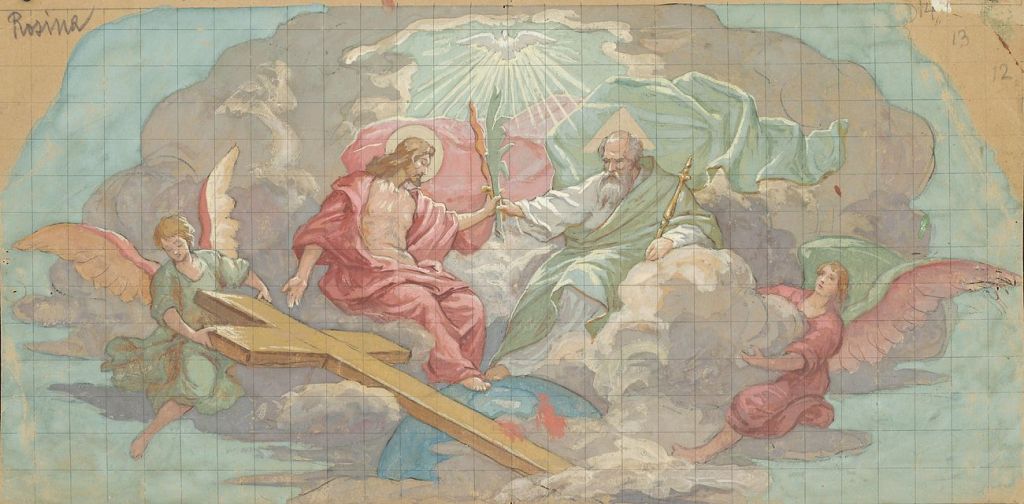
    The doctrine of salvation underscores the unity, sovereignty, and active involvement of the Father, Son, and Holy Spirit in bringing about the redemption of mankind. Let us explore the Trinitarian nature of salvation and the distinct roles each person of the Trinity plays in this divine mission

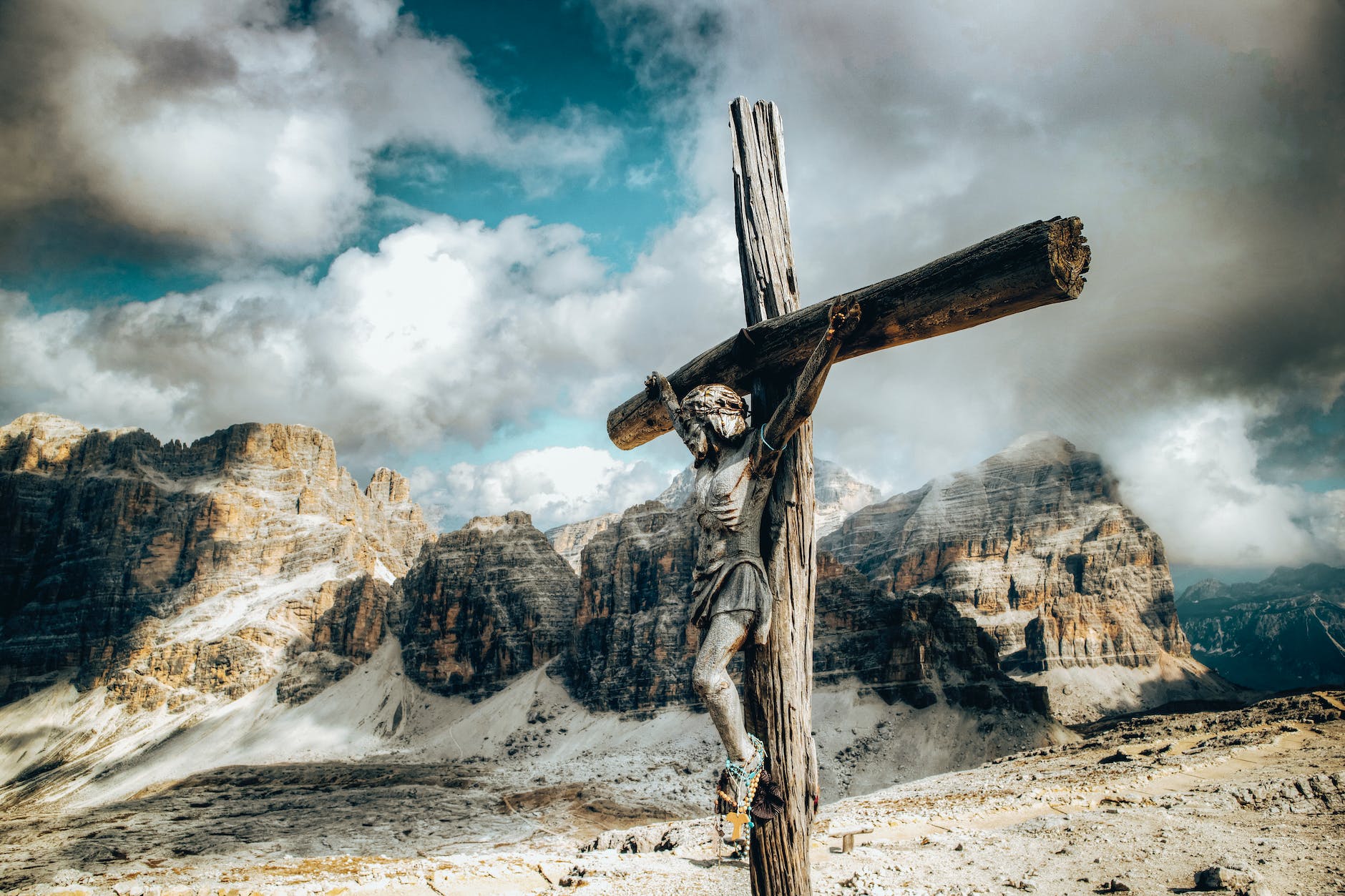
    a wooden crucifix against the rock mountains
    Photo by eberhard grossgasteiger on Pexels.com

    PERSON: The Father

    SALVATION: Sovereign Election/Choice

    “But we ought always to give thanks to God for you, brothers beloved by the Lord, because God chose you as the firstfruits to be saved, through sanctification by the Spirit and belief in the truth.”

    – 2 Thessalonians 2:13

    Salvation’s essence resides in the Father’s unwavering choice and election of individuals. Long before the world’s inception, the Father, in His boundless grace, deliberately chose a people for Himself. This divine selection was not based on their merits, but solely rooted in His infinite mercy and divine decree. As the driving force behind salvation, the Father sets the stage for the magnificent unfolding of His redemptive plan.

    The Father, being the ultimate source and architect of salvation, assumes a paramount role in the Trinity of Salvation. It is He who, guided by His sovereign will and overflowing grace, elects and distinguishes individuals for redemption. The Father’s immeasurable love and grand design establish the unshakable groundwork for the majestic unveiling of salvation’s divine purpose.

    PERSON: The Son

    SALVATION: Perfect Redemption

    “For even the Son of Man came not to be served but to serve, and to give his life as a ransom for many.”

    – Mark 10:45

    The Son, Jesus Christ, plays a crucial role in the accomplishment of salvation. He obediently fulfills the demands of the law, living a flawless life that sets the standard for humanity. Through His sacrificial death on the cross, He offers Himself as a perfect and substitutionary atonement for the sins of the chosen ones. Rising triumphantly from the grave, He conquers sin and secures eternal life for those who place their trust in Him.

    The Son, Jesus Christ, holds a central position in the Trinity of Salvation. He willingly takes on human form, becoming the perfect mediator between God and humanity. Through His incarnation, life, death, and resurrection, Jesus achieves redemption for the chosen ones. His sacrificial death on the cross serves as the ultimate atonement for sin, providing forgiveness and reconciliation with God.

    PERSON: Holy Spirit

    SALVATION: Transformation

    “And I will give you a new heart, and a new spirit I will put within you. And I will remove the heart of stone from your flesh and give you a heart of flesh. And I will put my Spirit within you, and cause you to walk in my statutes and be careful to obey my rules.”

    – Ezekiel 36:26-27

    Completing the Trinity of Salvation is the Holy Spirit. The Spirit is the one who applies the work of Christ to the hearts of individuals. Through the regenerating power of the Holy Spirit, the elect are given new life, enabling them to have faith in Jesus Christ and repent of their sins. The Spirit sanctifies believers, empowering them to grow in holiness and conform to the image of Christ.

    The Holy Spirit, the third person of the Trinity, plays a transformative role in salvation. He regenerates the hearts of the chosen ones, granting them new life and a disposition inclined towards God. Through His work, the Holy Spirit enables individuals to have unwavering faith in Jesus Christ, bestowing the remarkable gift of salvation. He continuously sanctifies believers, decisively conforming them to the image of Christ and empowering them to live a life abundantly pleasing to God.

    Together, the Father, Son and Holy Spirit work harmoniously in the Trinity of Salvation.

    “Go therefore and make disciples of all nations, baptizing them in the name of the Father and of the Son and of the Holy Spirit.”

    – Matthew 28:19

    The Father initiates and chooses, the Son accomplishes redemption, and the Holy Spirit applies and empowers. Their unified work reveals the depth of God’s love, grace, and mercy towards humanity, showcasing the intricate and divine interplay within the Trinity itself.

  • Christian Suffering

    Christian Suffering

    We’ve become Seekers of Comfort, Security, & Material Possessions

    To a society stooped in materialism, the idea of suffering as a gift may seem counterintuitive.

    However, as believers in Christ, we are called to a higher purpose. We are called to be willing to suffer for Him.

    Suffering can take many forms in our lives.

    It can be the loss of loved ones, physical or mental illnesses, financial struggles, or even persecution for our faith. These experiences can be incredibly painful and challenging. Yet, when we shift our perspective and view suffering through the lens of Christ, we can begin to see it as a gift.

    When we love and treasure Christ above all else, our focus shifts from the temporary pleasures of this world to the eternal joy found in Him. Everything else becomes secondary.

    In suffering, we have the opportunity to draw closer to our Savior, to depend on Him more fully, and to experience His presence in a deeper way.

    Suffering also has a unique way of shaping our character and conforming us to the image of Christ. It humbles us, teaching us to rely on God’s strength and not our own. It deepens our empathy and compassion for the brokenness and struggles of others. It refines our faith, purging away the impurities and strengthening our trust in God’s sovereignty.

    Suffering can serve as a powerful testimony of His Faith in us, to the world around us. When we face trials with an unwavering hope and joy in Christ, despite our losses, it is a testimony of His faithfulness. It speaks volumes to those who may be watching and wondering how we can have peace in the midst of suffering. Our lives become a living testament to the transformative power of the Gospel.

    In the book of Philippians, the apostle Paul writes,
    “For it has been granted to you on behalf of Christ not only to believe in Him but also to suffer for Him”
    Philippians 1:29

    This verse reminds us that suffering is not a punishment but a privilege. It is a privilege to suffer for the sake of Christ and to share in His sufferings.

    Believing in Christ means being willing to embrace suffering as a gift.

    It means understanding that our ultimate goal is to glorify Christ, whether in life or in death.

    It means being willing to let go of the temporary comforts and securities of this world, in order to gain the eternal joy and peace found in Him.

    To summarize: suffering can indeed be seen as a gift for the sake of Christ.
    Suffering can bring us closer to Him, shape our character, and serve as a powerful testimony to the world.

    Let us remain steadfast in the undeniable fact that even in the midst of losing everything, we retain the invaluable merit of wholeheartedly loving Christ and receiving His divine love. May our willingness to endure hardship for Him and our unwavering devotion to Him supersede all other priorities, for it is solely in Him that we discover genuine life and meaning.