Tag: Christ

Christ refers to Jesus of Nazareth, a central figure in Christianity, recognized as the Son of God and the Messiah. Believers see Him as the savior who provides salvation through His death and resurrection. Key elements associated with Christ include His teachings, miracles, crucifixion, resurrection, and the concept of grace. In Christianity, Christ embodies love, redemption, and hope, making Him a pivotal figure in faith and spirituality. Understanding Christ is essential for exploring Christian beliefs, worship practices, and theological discussions.

  • Divine Blueprint

    Creation · Truth · Purpose

    The universe began with the Creator’s Thoughts, these Thoughts manifested the very Essence of the reality that we, in this moment, inhabit.

    The Guiding Mind

    These reflections stem from the same Mind that guides us on our earthly journey, leading us toward higher dimensions of Being.

    We are ascending back to our forgotten home, elevating ourselves to an altitude which the universal laws of Divine Order emerged us from, in the beginning.

    The universe itself supports and expands all things and people. But only those conscious beings who choose to be in harmony with these laws will feel the comfort that Divine expansion brings to those ready to expand.

    Resistance to these laws, however, only perpetuates further frays in the Soul-life of anyone distant and falling away from harmony with self and God.

    This is where dis-ease takes hold. We can see this increasing daily.

    Humanity takes this wonderful gift for granted:

    The ability to create.

    The ability to create mirrors the identity of the Creator, entitling us to manifest our ideas into a form, just as the Creator did when He brought forth all substance from His Pure Thought.

    Every truth we hold is continually a reflection of our level of understanding, shaped by learned belief systems and inherited collective experiences.

    Transforming Lies into Truth

    What may once have been perceived as an absolute lie can evolve into a profound truth, illuminating your journey.

    As you navigate this path, it is essential to acknowledge that your perception may often be flawed. Instead of relying solely on what you perceive, begin to trust your intuition more.

    Embracing the Journey Beyond Duality

    This shift in perspective encourages you to seek beyond duality more and increases your ability with persistent effort.

    By recognizing that what you perceive as concrete truths can transform and develop, you open yourself to the capacity for new insights and advanced wisdom.

    This journey calls for a devotion to comprehending the complexities of life and taking in the lessons that emerge from both the light and shadows.

    This highlights the intrinsic power and perfection of the Divine within us, reminding us that our perceptions are not fixed to the limits of this mortal body and it’s sensorial boundaries.

    We uncover that the essence of whether or not we are in the truth is determined by our ability to accurately combine contrasting perspectives, comparing & contrasting dualities, & formulate a deeper connections with ourselves/God & the universe in the process.

    Embracing this fluidity lets us transcend boundaries and identify with the unity that exists within all of Life’s alleged paradoxes.

    Our past transgressions & even present betrayals exist as opportunities to learn the lessons that our Creator has become cognizant to, as we recollect the mission we set out to accomplish by our free choice when we descended to Earth density.

    Original sin caused disconnection and imperfections, distorting our perception. It erodes the Soul’s path, separating us from Spirit and anchoring us to the body, resulting in a fractured state of being and conflict.

    THE WAR WE FIGHT

    In our spiritual struggle, the nature of our warfare diverges significantly from worldly tactics.

    Our battle against sin is not won through self-loathing & retribution; instead, we engage in this fight with the power of love and forgiving grace.

    We realize that sin originates from brokenness & divergence from Self, so despising the “bad” or “sinful” aspects of ourselves does not lead to healing nor victory, in fact, it is the very cause of our suffering with sins malady in the first place.

    The fragmented parts of our originality and advents will ultimately reunite. When we fulfill our purpose here on this hell, every aspect of our being will harmonize into it’s singular essence.

    We are currently engaged in a profound journey of reconnection, a process that precedes the dissolution of time itself, leading us to a state of eternal wholeness.

    This intrinsic wisdom is a powerful inheritance, urging us to peel back the layers of societal programming to uncover our authentic selves.

    We need constant reminders that the answers we seek are already within us, waiting to be acknowledged, sometimes over and over again.

    This is your inheritance, a deep bubbling well of wisdom that you do Know, underneath all the BS you’ve learned – this truth— passed down to you through the force of creation is Alive and living within you.

    The integration will, cause our fallen life of internal inversion and lies, to blossom into a miraculous chronology, a metaphor for the ages— experiences we’ll offer to the Holy of Holies living within us.

    WE ARE INSTRUMENTS DOING ONE OF TWO THINGS:

    • holding the static of confusion, contributing to the entropy — but dirty noise, or
    • serving as vessels of Glory that carry Light into the darkness, exposing eternal Truths to all on the Path of the eternal flow.

    Truth, by its very nature, is eternal and will always align with the Truth Maker and Architect of Life.

    TRUTH IS A RIVER OF LIVING WATER

  • Jesus

    Jesus

    Do You Think You Know Jesus?

    They Said Jesus Was
    Insane. Mad. Crazy. Strange.

    The image of Jesus most people hold is wrong and wrung through centuries of:

    • ideological whitewashing
    • beautified marketing
    • sanitized Sunday School summaries.

    He’s often pictured as an ethereal peace-giver, universally adored, calmly glowing in a ‘soft sepia light’.

    But this wasn’t the Jesus known to his followers. Not even close.

    In fact, many who encountered Jesus in the flesh found him either;

    1. confusing, at best
    2. mentally unstable, at worst.

    He wasn’t simply controversial, he was considered a threat to both religious orthodoxy and social order.

    The sanitized version of Christ so many cling to was shaped after the cross, after the church industrial complex took control of his narrative.

    Let’s take a scalpel to the original reactions—the raw, unsettling perceptions of Jesus while he was still walking the earth.

    His Family Thought He’d Lost His Mind

    The Gospel of Mark pulls no punches. In Mark 3:21, we’re told that Jesus’ own family said:

    “He is out of his mind.”


    Yes, his own bloodline. Not strangers. Not critics. His family. Pause there…

    Imagine. Imagine the weight of that.

    You’ve awoken to a Divine Knowing, a consciousness that cracks open reality—and the people who know your voice best say:

    “You’ve snapped.”


    It wasn’t mockery from outsiders that came first; it was internal doubt.

    His kin likely feared he’d gone mad with something akin to messianic delusion.

    Or perhaps they were embarrassed by his sudden rise as a controversial street-preacher confronting the Government and Church…

    He spoke vehemently against both Rome and the temple elite.

    Religious Leaders:

    “You’re Breaking the Law and Blaspheming“

    The religious class didn’t just dislike Jesus—they actively plotted his removal.

    The scribes and Pharisees viewed him as a heretic, accusing him of;

    • violating the Sabbath
    • flouting Mosaic Law
    • daring to forgive sins.

    —a divine prerogative.


    His miracles weren’t applauded; they were denounced as works of Beelzebub.

    Let that settle: divine acts being interpreted as demonic.

    … this was normal folk… the acceptable people… The community.

    This wasn’t petty disagreement.
    This was existential threat-level panic from the religious hierarchy.

    They saw in Jesus… not just a radical voice—but someone who dismantled their very grip on sacred authority.

    Public Whispers: “He Has a Demon and Is Mad“

    John 10:20 captures this damning public sentiment:

    “He has a demon and is mad; why listen to him?”

    These weren’t elite theologians.

    These were everyday observers—

    • neighbors
    • townsfolk
    • bystanders.

    Jesus’ words, while layered with profound gnosis (wisdom), sounded unhinged to the average ear.

    And truthfully, wouldn’t they today? I mean… They do.

    Imagine someone saying,

    “Before Abraham was, I am.”

    Or calling God their literal Father, claiming to bring not peace but a sword.

    If spoken in today’s marketplace, they’d be dismissed as spiritually schizophrenic, or worse.

    So what’s changed?
    Only the power structure that codified his words.

    Outside the Bible: Even More Scathing Views

    This doubt wasn’t exclusive to Jewish contemporaries.

    Roman voices and philosophers took their shots, too.

    Talmud

    The Talmud contains cryptic but deeply derogatory references to Jesus—branding him a sorcerer who led Israel astray.

    He is also said in the Talmud to be swimming in hot excrements.

    These weren’t passive critiques.

    They were sharp rejections by those who saw his influence as spiritually treacherous.

    Roman Philosophers

    Roman historian Tacitus referred to Christianity as a “pernicious superstition,” blaming the followers of Christ for corrupting public morals.

    To Roman minds, Christ’s followers were:

    irrational fanatics clinging to a crucified troublemaker.

    Celsus

    And then there’s Celsus, the ancient philosopher and intellectual, who reportedly called Jesus

    “small, ugly, and undistinguished,”

    claiming his father was a Roman soldier—a jab meant to invalidate his divine paternity and tarnish the virgin birth narrative.

    Jesus wasn’t revered by the intellectual elite of his time.

    He was;

    • mocked
    • dismissed
    • vilified.

    Why This Matters

    This isn’t about shock value or anti-Christian rhetoric. It’s about truth-telling.

    When we sanitize the narrative of Jesus to make him palatable. We also:

    • rob Him of the radical edge that threatened anti Christ power
    • offended institutions
    • deny the painful fact that he alienated his own family.

    His teachings were revolutionary because they disrupted—not because they fit neatly within pre-existing paradigms.

    So when you feel like your awakening makes others uncomfortable when your truth sounds like madness to the masses take comfort. You’re in excellent company.

    Because the real Jesus wasn’t crucified for being nice. He was crucified because he challenged the lies. And many thought he was insane for doing so. Truth rarely sounds sane to those who live comfortably in delusion.

    “And you will be hated by all for my name’s sake. But the one who endures to the end will be saved.”

    – Matthew 10:22
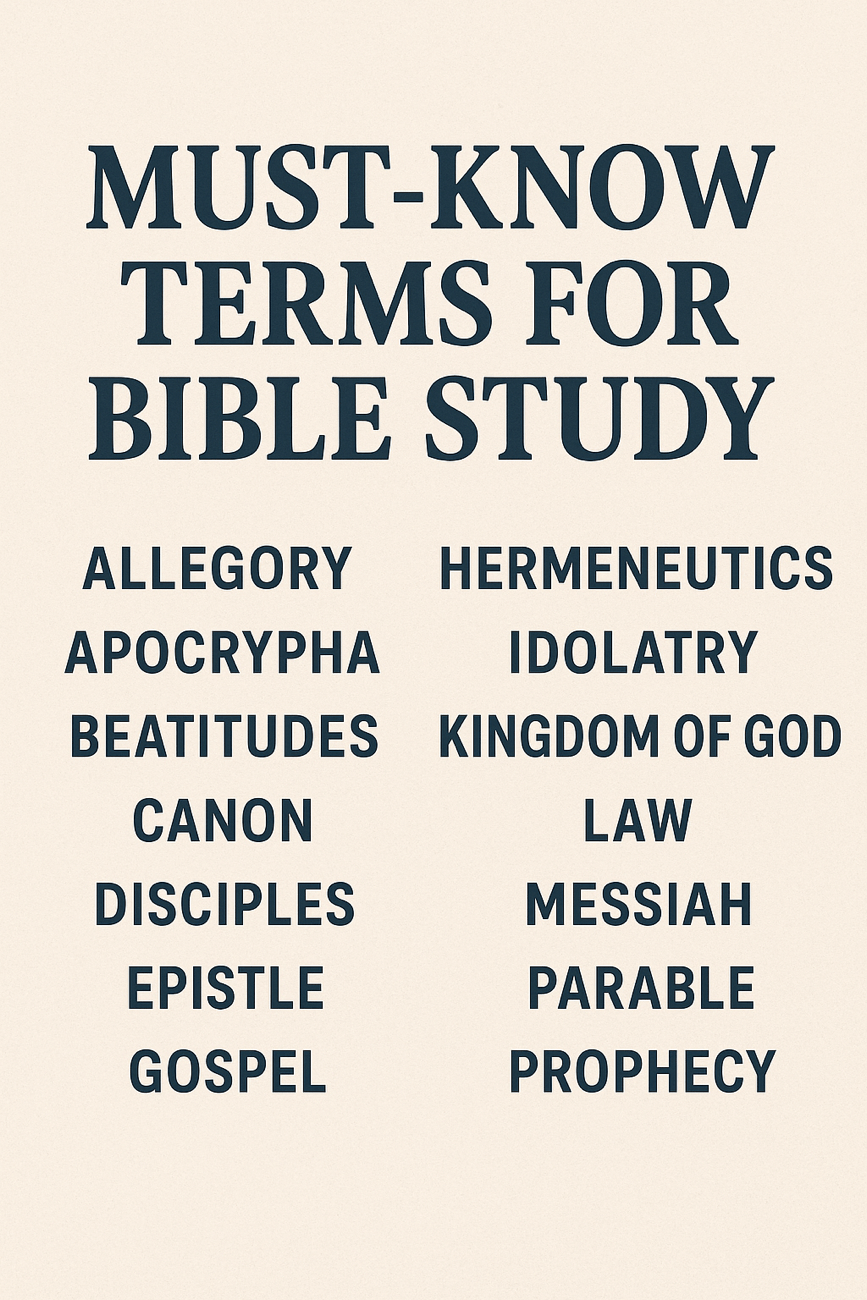
  • Biblical Terminology

    Biblical Terminology

    Allegory

    Allegory is a literary and artistic device in which characters, events, and details within a narrative symbolize broader concepts and ideas, often conveying moral, social, or political messages. The term derives from the Greek word “allegoria,” meaning “speaking otherwise,” which highlights its function of expressing deeper meanings beyond the literal interpretation. Allegories can be found across various mediums, including literature, visual arts, and film, and they often involve a narrative that operates on two levels: the surface story and the underlying message.

    Classic examples include George Orwell’s “Animal Farm,” which critiques totalitarianism through the story of farm animals, and John Bunyan’s “The Pilgrim’s Progress,” which represents the spiritual journey of a Christian believer.

    Allegory has been a significant tool throughout history, allowing creators to address complex themes in a more accessible manner, as noted in sources like Britannica and Merriam-Webster.

    Apocrypha

    A collection of ancient texts that are not considered canonical by certain religious traditions, often included in some versions of the Bible.

    Beatitudes

    A series of blessings pronounced by Jesus in the Sermon on the Mount (Matthew 5:3-12), highlighting the values of the Kingdom of God.

    Canon

    The official list of books that are considered authoritative scripture by a particular religious community.

    Disciples

    Followers of Jesus Christ, particularly the twelve apostles who were chosen to spread his teachings.

    Epistle

    A letter, often written by apostles, that addresses specific issues or teachings within early Christian communities (e.g., the letters of Paul).

    Gospel

    The “good news” of Jesus Christ, specifically the accounts of his life, death, and resurrection found in the New Testament (Matthew, Mark, Luke, and John).

    Hermeneutics

    The study of interpretation, especially of biblical texts, focusing on understanding the meaning and application of scripture.

    Idolatry

    The worship of idols or false gods, which is condemned throughout the Bible.

    Kingdom of God

    A central theme in Jesus’ teachings, referring to God’s reign and authority, both in the present and in the future.

    Law

    Refers to the commandments and regulations given by God, particularly those found in the Torah (the first five books of the Old Testament).

    Messiah

    The anointed one, a savior or liberator expected by the Jewish people, fulfilled in the New Testament by Jesus Christ.

    Parable

    A simple story used to illustrate a moral or spiritual lesson, often told by Jesus.

    Prophecy

    A message from God, often delivered by a prophet, that foretells future events or conveys divine truth.

    Redemption

    The act of being saved from sin and its consequences, often associated with the sacrifice of Jesus.

    Righteousness

    The quality of being morally right or just, often associated with living in accordance with God’s will.

    Sacrament

    A religious rite recognized as of particular importance and significance, such as baptism and communion.

    Sin

    An act that goes against God’s will or law, often understood as a separation from God.

    Testament

    Refers to the two main divisions of the Bible: the Old Testament (Hebrew Scriptures) and the New Testament (Christian Scriptures).

    Transfiguration

    The event in which Jesus is transformed and revealed in divine glory to three of his disciples (Matthew 17:1-9).

    Worship

    The term “worship” originates from the Old English word “weorþscipe,” which combines “weorþ,” meaning worth or value, and “scipe,” indicating a condition or quality.

    Thus, worship fundamentally conveys the idea of attributing worth to a deity or divine being.

    In various religious contexts, worship encompasses acts of reverence, adoration, and devotion directed towards God or gods, often involving rituals, prayers, and communal gatherings. It serves as a means for individuals and communities to express their beliefs, seek spiritual connection, and engage in transformative experiences.

    True worship is not merely about fulfilling personal or communal needs but is centered on honoring and glorifying God, reflecting a commitment to divine values and principles.


    Understanding these terms can greatly enhance your study of the Bible and provide a clearer framework for interpreting its messages and teachings.

    MORE WORDS YOU SHOULD KNOW:

    Theology

    … the study of God.

    Apologetics

    … defense of Faith.

    Exegesis

    … critical interpretation of scripture.


    Substitutionary Atonement

    Christ died as a substitute for sinners, bearing the punishment that they deserved.

    Eschatology

    Eschatology is the study of the end times, focusing on events like

    • the Second Coming of Christ
    • the final judgment
    • the ultimate destiny of souls.

    It encompasses what happens to individuals after death and the fate of the entire universe.

    Key eschatological concepts include:

    • the resurrection of the dead
    • the millennium
    • the establishment of God’s kingdom. 

    Incarnation

    The Incarnation is the doctrine that the Son of God assumed human nature and became man in the person of Jesus Christ. This belief is central to Christianity, affirming that Jesus is both fully divine and fully human. The theological implications of the Incarnation include the idea that through Jesus, God entered human history, experiencing human life and providing a means of salvation.

    Grace

    Grace is the unmerited favor and love of God towards humanity. It is central to Christian soteriology (the study of salvation), emphasizing that salvation is a gift from God, not earned by human effort. Different traditions emphasize different aspects of grace:

    Justification

    Justification is the act by which God declares a sinner to be righteous on the basis of faith in Jesus Christ. In Protestant theology, this is often emphasized

    REFORMED THEOLOGY

    Reformed theology affirms the five solas with all their implications; recognizes the centrality of the covenant in God’s saving purposes; and is expressed in a historic and public confession of faith.


    CALVINISM

    Calvinism, also known as Reformed theology or the Reformed tradition: is a major branch of Protestant Christianity that originated with the teachings of the French theologian John Calvin in the 16th century.

    It is named after Calvin because he played a significant role in shaping its doctrines and organizing its Ecclesiastical structure.

    Calvinism emphasizes the sovereignty of God in all aspects of life, including salvation, divine providence, and the governance of the world. It is characterized by its adherence to the “Five Points of Calvinism,” which are often summarized using the acronym TULIP.

    Total Depravity

    This doctrine teaches that due to the fall of Adam and Eve, all human beings are born in a state of spiritual depravity and are incapable of choosing God or doing good on their own. They are entirely dependent on God’s grace for salvation.

    Unconditional Election

    According to this belief, God, out of His sovereign will and without any consideration of human merit or choice, predestines certain individuals to be saved. This election is not based on anything that humans do but solely on God’s divine purpose.

    Limited atonement

    This doctrine states that Christ’s atoning sacrifice on the cross was specifically intended for the salvation of the elect, those whom God has chosen for salvation. It does not extend to all people universally.

    Irresistible grace

    Also known as “effectual calling” or “regenerating grace,” this doctrine asserts that when God chooses to save someone, His grace is irresistible and will unfailingly bring that person to salvation. Those who are called by God cannot ultimately resist His saving work.

    Perseverance of the saints

    This belief affirms that those who are truly saved by God’s grace will persevere in faith and holiness until the end. Genuine believers cannot lose their salvation but will continue to follow Christ throughout their lives.

    Calvinism

    Calvinism is a theological system and branch of Protestant Christianity that originated with the teachings of John Calvin, a 16th-century French reformer. It emphasizes the sovereignty of God in all aspects of salvation, particularly through the doctrine of predestination, which asserts that God has already chosen who will be saved and who will not. This belief is often summarized by the Five Points of Calvinism, which include Total Depravity, Unconditional Election, Limited Atonement, Irresistible Grace, and Perseverance of the Saints. Calvinism stands in contrast to Arminianism, which emphasizes free will and the ability of individuals to choose salvation. The term itself derives from Calvin's last name, and the movement has significantly influenced various Protestant denominations, particularly in Reformed and Presbyterian traditions. It gained prominence during the Reformation and has continued to shape theological discussions and debates within Christianity today, as noted in various sources like Britannica and Clickmill.

    Arminianism

    Arminianism is a theological system named after the Dutch theologian Jacob Arminius (1560-1609), who proposed a framework of Christian belief that emphasizes free will and God’s universal grace. This doctrine arose as a response to the deterministic views of Calvinism, particularly regarding predestination and salvation. Arminianism asserts that while God offers salvation to all, individuals have the free will to accept or reject this offer, which stands in contrast to the Calvinist belief in irresistible grace. Central to Arminian theology are five key points: the denial of original sin as an insurmountable barrier, justification by faith, conditional predestination, the resistibility of grace, and the possibility of falling from grace.

    The theological debate between Arminianism and Calvinism was notably formalized during the Synod of Dort (1618-1619), where Arminian views were challenged but continued to influence various Protestant traditions, especially Methodism and the broader Evangelical movement (Christian History Institute, Wellspring MS Church).

    Free Will

    The term “free will” refers to the philosophical concept that individuals have the capacity to make choices that are not predetermined by prior causes or divine intervention.

    Etymologically, the phrase combines “free,” deriving from the Old English freo, meaning “not in bondage,” and “will,” from the Old English willan, meaning “to wish or desire.”

    This concept has been a subject of intense debate in philosophy, psychology, and neuroscience, particularly concerning whether human actions are determined by biological processes or if individuals can act independently of such influences.

    Some philosophers advocate for a “compatibilist” view, suggesting that free will can coexist with determinism, arguing that the essence of free will lies in the ability to act according to one’s motivations and desires, even if those are influenced by prior causes (psyche.co).

    The implications of free will are profound, affecting moral responsibility and ethical considerations in society, as individuals are often held accountable for their actions based on the assumption that they can choose freely (scientificamerican.com).

    Election

    The etymology of “election” comes from the Latin word “electio,” meaning “choice” or “selection,” which itself derives from the verb “eligere,” meaning “to choose.”

    In a biblical context, election is seen as an expression of God’s sovereignty, where He selects individuals based on His divine will rather than their actions or merits.

    This concept is discussed in various theological writings, emphasizing that God’s choice is unconditional and not based on foreseen faith or works (as noted in sources like gotquestions.org).

    The implications of this doctrine often lead to discussions about grace, justice, and the nature of God’s love, as seen in the debates surrounding unconditional election and its portrayal of God in relation to humanity (monergism.com).

    Atonement

    The term “atonement” refers to the act of making amends or reparation for a wrongdoing or injury, often implying a reconciliation between two parties. Etymologically, the word is derived from the Middle English phrase “at one,” which signifies being in harmony or agreement. This concept has significant theological implications, particularly in Christianity, where atonement is associated with the reconciliation between God and humanity through the life, suffering, and death of Jesus Christ. The doctrine of atonement encompasses various interpretations, such as the satisfaction view and substitutionary atonement, which explore how this reconciliation is achieved (Merriam-Webster, Cambridge Dictionary, Dictionary.com).

    Grace

    The term “grace” has a rich etymological background, originating from the Latin word “gratia,” which means favor, goodwill, or kindness.

    In contemporary usage, grace encompasses various meanings, including elegance or beauty of form, manner, motion, or action, as well as a disposition to kindness and compassion.

    In religious contexts, particularly within Christianity, grace refers to the unmerited favor of God towards humanity, often linked to salvation and divine assistance.

    This theological concept emphasizes that grace is a gift from God, as highlighted in Ephesians 2:8, which states, “For by grace you have been saved through faith.”

    The multifaceted nature of grace can be seen in phrases like “fall from grace,” which denotes a loss of status or favor, and “saving grace,” which refers to a redeeming quality that mitigates a negative situation.

    Perseverance of the Saints

    the belief that salvation is secure and cannot be lost, a concept often referred to as “eternal security.”

    The etymology of the word “perseverance” comes from the Latin “perseverare,” meaning to persist or continue steadfastly.

    This idea is rooted in the understanding of predestination, where God’s grace enables the faithful to endure in their beliefs despite challenges

    John 10:28-29: “I give them eternal life, and they will never perish, and no one will snatch them out of my hand. My Father, who has given them to me, is greater than all, and no one is able to snatch them out of the Father’s hand.”

    ECCLESIAL / ECCLESIOLOGY 

    ecclesiology is the study of the Church, the origins of Christianity, its relationship to Jesus, its role in salvation, its polity, its discipline, its eschatology, and its leadership.

  • Christ • The Alchemist

    Christ • The Alchemist

    A Savior’s Decent into Matter Made Way For Our Spiritual Ascension.


    Within our very hearts, Eternity resides—a thought inviting deep contemplation.

    We inhabit this dense, material world that is shaping all inhabitants towards its ultimate pinnacle; death and decay. Although morbid, this is simply true.

    Our soul knows this world’s objective for ALL matter is death… This makes sense why we, as conscious beings, are perpetually drawn to Spirituality.

    In Search for the Eternal Life, innate to our Soul, beyond the body, a deep yearning echoes from the depth of our being.

    Transmutation of Christ

    In Christ

    The transmutation that the I AM that is speaking is the process taught by Christ.

    The Spiritual Higher substance redeems and refines the material lower substance.

    Watch:

    Matter & Material = Lower Dimension

    Understand Human Awareness

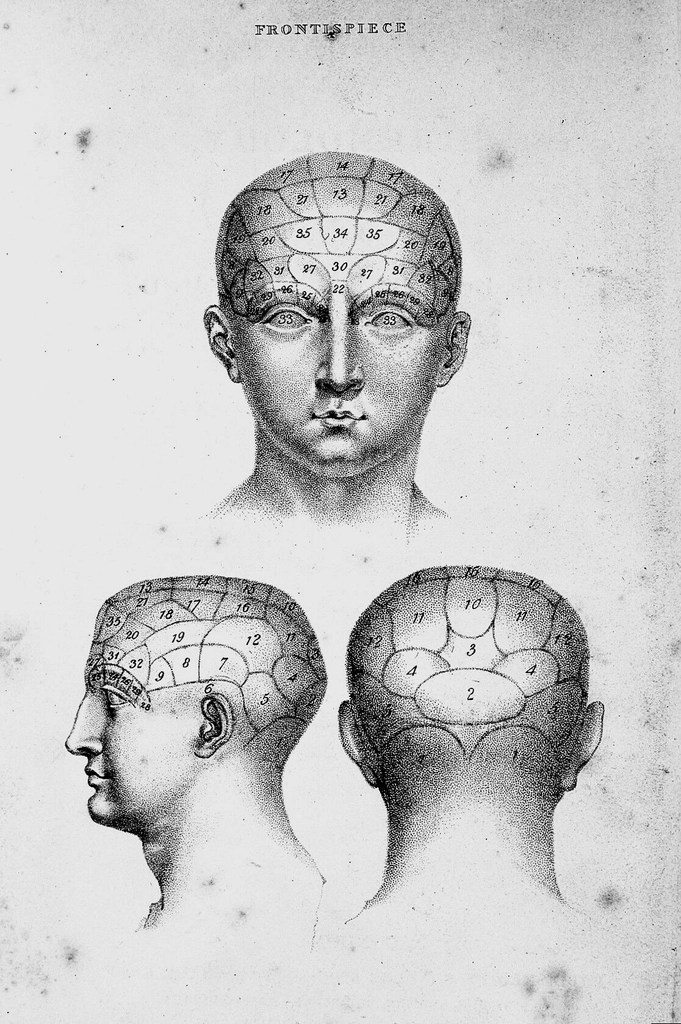
    Human awareness is traditionally understood to reside within the confines of the material body (the skull).

    Consciousness is nonlocal and manifests in this tangible body, encased in the most fragile frame.

    Navigating Time and Space

    Consciousness navigates a world governed by the dense laws of time and space.

    Within this environment, we remain grounded in the body until our vessels’ eventual expiration, at which point we experience release from all this weight.

    CONSCIOUS REFRAME

    By framing our understanding of consciousness in this way, we acknowledge both the limitations imposed by our physical reality and the potential for a deeper exploration of what lies beyond these limits.

    The Concept of Lower Dimensions

    The material realm is a “lower dimension” due to its inherent characteristics. Density. Decay. Limited Movement. Etc.

    Matter is ephemeral; it is temporary and fleeting. The physical world, bound by its limitations, faces its inevitable end—total decay.

    This transience proves the constraints of our existence within this sphere, clearly a lower-dimensional experience.

    So, does this mean that matter and materiality is the source of imperfection & sin?

    Not inherently. Matter is neutral.

    The Source of Sin

    Rebellion & Division

    The darker aspects of sin do not arise from matter, rather they affect matter.

    These traits come from our flawed human interaction within the material frame.

    Fragmentation of the Psyche

    The eternal ‘we’ exists in our psyche, not in our body, having fragmented away from Source.

    This disconnection is referred to as sin.

    Understanding Fragmentation

    This fragmentation represents a profound separation from our true essence, identity,& nature— resulting in a loss of unity and wholeness.
    Falling from Perfection.

    TO PUT IT SIMPLY:

    WE ARE OVERWHELMED SOULS THAT WENT BUZZURK.

    REBELLED. SINNED. DEFIED.

    We need to recognize that this disconnection manifests, indirectly leading to our feelings of emptiness and despair.

    Fragmentation occurs from overwhelming emotions and negative experiences, further entrenching us in a cycle of pain and suffering.

    By acknowledging this fragmentation, we will begin the process of healing the fragmentation and, remember who we are.

    The only way to reconnect with our Source is through Conscious rememberence.

    We’re Broken Vessels Sailing Back Home

    All of humanity exists in a state of fragmentation, with differing degrees, of course, distanced from the rememberence of our place in the Tree of Life, cut off from the foundational Essence of our Origin.

    This disconnection results in unrefined desires and unholy inclinations. Sin.

    The primary objective is to preserve the remnants of our existence that still remain intact, parts of ourselves that can be re-integrated into Source.

    Through trials and transformative experiences, like a purifying fire, our soul strives for alignment and reunification with Source through Consciousness—the All in All is seeking harmony with us – from within us, as the Higher Self, in accordance with the Divine principles of I AM. Every disaster is an attempt to wake us up.

    This journey demands the dissolution of accumulated negativity and superficial attachments that hinder our resonance.

    The demons of separation from the Source (I AM) has left us vulnerable to eternal ignorance; misguided by lower bodily desires, and the blind navigation of our minds’ perpetual state of amnesia.

    Physical Matter = A Veil

    The laws of Physics drape over our perception, obscuring the Ethereal realm’s boundless perfection from being apprehended by our Eyes and Psyche.

    Why God Does This:

    To protect us from searing our consciousness. PROTECTION FROM BEING ANNIAHLATED BY THE ALL-CONSUMING FIRE. This density has too much pressure.

    ABOUT THE ALL CONSUMING FIRE

    the metaphorical “all-consuming fire” symbolizes the purifying force of God’s divine energy. This fire represents both a transformation and a likely threat to those unprepared for its intensity.
    This can be likened to the everyday struggles people face in maintaining their mental and emotional well-being amid life’s chaos.

    The Violet Consuming Flame serves as a protective mechanism, allowing one to transmute discord and imperfection into purity and light, as elaborated by the Ascended Masters in teachings such as those from the I AM School and the St. Germain Foundation.

    By consciously invoking this flame, individuals can shield themselves from negative energies and unwanted attachments, akin to the protective measures discussed in contemporary spiritual practices aimed at maintaining a healthy aura and spiritual fortitude, as noted in articles on spiritual protection and aura shielding.

    The journey towards spiritual purity requires both the acknowledgment of the consuming fire’s potential for annihilation and the active engagement in practices that foster resilience and enlightenment.


    THE VEIL IS GOD’S GIFT OF PROTECTION UNTIL WE’RE READY

    This veil is not a mere obstacle; NO!

    It is a GIFT—a medium needed for our experience, realization, and final expansion needed to transcend it.

    The Creator knows what we need before we do. Painful growth is a must when in such a heavy laden dimension, in order that we remain on the Narrow Way.

    We’ll go from this heavy density to our first weightless home – back to a formless, eternal flow state of pure expansion. The pain level we now undergo cannot compare with the level of ecstasy we’ll carry in infinity.

    The material world challenges our Soul, un-shapes us, and stages the platform to our Spiritual Ascension.

    Our soul craves to experience leveling up. The human experience is how we do that.

    Dopamine From The Heavens

    What’s cool is we produce dopamine in our brain every time we feel like we’re about to level up, were perfectly designed to keep up with motivation.


    The Flesh

    A Firey Portal To The Divine Father

    The flesh is a starting point from which we Ascend toward the Eternal Flame (ie; Heaven, Tree of Life, Eternal Light.).

    Fire Burns. Embrace it. Yes it hurts.


    Alchemical Transformation

    The Redemption from Within

    Salvation is an Alchemical action.

    Salvation embodies the metamorphosis of the imperfect aspects of human existence (the corporeal) through the influence of the Perfect (Spirit).

    Salvation refers to elevating the lower state of being to the higher One.

    VISUALIZE THE ALCHEMY

    Visualize the process of human made alchemy, where base metals like lead are refined into resplendent gold.

    Everything Has A Parallel / Duality

    —as above, so below.

    —on earth as it is in heaven….

    In the framework of Parallel Alignment, spiritual alchemy does not advocate for the rejection of the corporeal realm but emphasizes its ownership and integration in order to transmute. It’s a necessary step.

    Recognize any possibilities over the lower aspects of our existence.

    The Divine Alchemist is exemplified by Christ as He performs the transmutation of the lower forms, uncovering the intrinsic Divine that resides within All.

    The kingdom of heaven is within.

    – Jesus

    Scripture illustrates this through symbolic narratives of descent and redemption.

    Christ’s very incarnation. What was it?

    God revealing his entering of flesh, embodying the perfect descent into the “imperfect” in order to redeem it.

    Encoded is a profound truth:

    Salvation is an inside-out process, where the spiritual infuses and uplifts the material.

    This is not devolution but evolution—a purposeful refinement of existence. A Divine Masterpiece only fully known by Faith.

    This transformation is practical

    Through combining our energy production that we create with our body movement through prayer, reflection, and cognizant living, we remain more and more in alignment with the higher substance, the Essence of All, the God of the Heavens…

    As Divinity peels back the veil, offering a glimpse into Eternity, and kindling hope, Faith increasingly proceeds from our hearts.


    The interplay of matter + spirit reaches across spiritual traditions and religious cultures. In all of them, transformation is a recurring theme.


    Salvation restores you to your original harmonious symmetry, as Christ exemplified in His death and resurrection.

    —a material body -weak and sewn in darkness, ascending in righteousness, glorified by the Holy Spirit, within.

    Insights from Other Spiritual Traditions

    • Hinduism: The material world is maya—an illusion veiling Brahman, the ultimate reality.
      • Matter is not evil but transient, a stepping stone to liberation. Through knowledge (jnana), devotion (bhakti), or disciplined action (karma), one transcends the veil to unite with the divine.
    • Buddhism: Matter manifests as samsara, a cycle of suffering fueled by attachment.
      • Yet, it is also the ground for awakening.
      • The path to nirvana—enlightenment—uses the material world as a teacher, guiding us beyond suffering through mindfulness and wisdom.
    • Taoism: Here, matter and spirit are not opposed but intertwined, flowing as yin and yang.
      • The material world reflects the Tao, the cosmic harmony.
      • Transformation means living in balance with this natural order, neither clinging to nor rejecting matter.

    These traditions affirm that matter, while “lower,” is integral to the Spiritual journey of the Soul.

    Whether as a veil to pierce, a cycle to escape, or a symmetry to assume. Or maybe all of the above, it is clearly necessary for the Soul to evolve.


    The Role of Wisdom and Knowledge

    Wisdom and knowledge are the Alchemist’s #1 tools, fundamental for transmuting the material into the Spiritual.

    Wisdom unveils God’s mysteries. Without it these are just:

    words

    words

    words.

    Wisdom cuts through illusion; Wisdom reveals the self’s unity with the Divine.

    Not through dry intellect but a living, transformative force within…

    REVEALED TO ME THROUGH INTERNAL KNOWING CALLED GNOSIS

    Gnosis – Prajna

    Sophia

    PDF: Sophia, the wisdom of God: an outline of Sophiology


    Within Our Seemingly Futile Existence:

    A desire is kindled for us to Know the One Who is All in All.

    He pressed the desire in me to study, for meditation, and the deep-embedded desire we harbor to be intimate with Divinity in our daily routine.

    Just as heat sanitizes physical surfaces, Wisdom refines the soul.

    The heat when it comes- ALWAYS shifts our perception, forcing us to See the matter.

    — in this we find it is not a limit.

    We see it for what it is: a lens for the Eternal.

    Through this Discernment we experience our own Salvation, co-creating with the Father (Source) in the Higher Realm, King above Kings, He that Is the Logos redeems us, by the Logos (the Word).

    Common Objections

    The Value of the Material World

    Critics argue that;

    labeling matter “lower” dismisses its intrinsic worth.
    If matter is merely a flawed shadow, why does the Divine engage it so deeply—through creation, incarnation, & natural beauty?

    Traditions like animism celebrate matter as alive with spirit, while Christianity’s Incarnation sanctifies the physical.

    This invites a perspective.

    Matter is not a foe to be vanquished by humans but a tool in redemption.

    Its limitations—decay, suffering—spur our growth, while its beauty reflects the Divine. A reflection is just that… a reflection.

    Putting our form through the Alchemical process does not negate matter’s value; it fulfills it, thinning the veil until it into a window.

    I did not come to abolish the law. I came to fulfill it.
    – Jesus

    The material and spiritual are interwoven -so long as we are traveling in this vessel.

    Salvation is a journey through matter, not away from it, not for it.

    Ecclesiastes 3:11 reminds us that Eternity dwells within the heart of humans, even amid the temporal.

    Matter, though a veil, is also the crucible where the Spiritual transmutes the material.


    GNOSIS IS THE KEY🔑

    Wisdom and knowledge (aka Gnosis) unlock this process, navigated by divine insight.

    Far from a simplistic dualism, this vision appreciates the material world’s role in revealing the Divine.

    Ultimately, eternal life through salvation is the highest potential that our lower selves can achieve. We transform not to erase or reject our lower nature, but to embrace it for evolving with Divinity.

    By doing so, we illuminate that which eternity has already written on our hearts.

    Excess Thoughts

    Salvation via Alchemical Transformation

    Eating flesh was one of the most impure, unholy and unclean actions one could do. Absolute debased.

    “So Jesus said to them, ‘Truly, truly, I tell you, unless you eat the flesh of the Son of Man and drink His blood, you have no life in you. Whoever eats My flesh and drinks My blood has eternal life, and I will raise him up at the last day.’”

    –John 6:53–54

    Go low.


    As low as it goes to elevate to the heights.

  • Alien Phenomenon

    A Multidimensional Perspective

    The Limits of Secular Explanations

    Secular attempts to explain alien encounters often fall short.

    The phenomena defy the laws of physics and biology as we understand them, leaving scientists and skeptics alike grasping for answers.

    Yet, when we step beyond the material and into the spiritual, a more comprehensive framework emerges—one that aligns surprisingly well with ancient wisdom.

    Biblical accounts of angelic visitations share striking parallels with modern reports of alien encounters.

    Both involve beings that transcend our three-dimensional reality, appearing suddenly, delivering messages, and vanishing just as mysteriously.

    Angels, as messengers of God, are described in Scripture as fluid, shape-shifting entities capable of traversing dimensions (Heb. 13:2).

    They manifest as men (gen. 18), fiery beings (jud. 13), or even immaterial voices (lk 2:13-15).

    Similarly, aliens are often depicted as inter-dimensional travelers, arriving with advanced technology and imparting warnings, guidance, or revelations.

    Could these encounters—whether labeled angelic or alien—be manifestations of the same phenomenon?

    Are they interdimensional beings interacting with humanity from a higher plane of existence?

    Jesus and the Multiverse

    A Biblical Foundation

    Jesus’s teachings hint at a reality far beyond our three-dimensional perception.

    His words to the thief on the cross—“Today you will be with me in paradise” (Luke 23:43)—suggest a realm where time and space operate differently, where heaven and earth intersect.

    If angels originate from “God’s heaven” (Daniel 8:16), might aliens also emerge from these higher dimensions, serving as messengers bridging the spiritual and material worlds?

    The Bible paints a picture of a vast multiverse where God’s kingdom overlaps with ours.

    Angels, as divine emissaries, reveal His glory and participate in the redemption of creation (Isaiah 6:3).

    Their appearances—whether as humans, fiery beings, or celestial hosts—demonstrate that they are not bound by physical laws.

    Aliens, too, defy earthly biology, yet their messages often echo those of angels: confronting humanity’s failures while offering wisdom and urging spiritual growth.

    Kindred Messengers

    Angels, Aliens, and the Call to Awakening

    Both angels and aliens challenge us.

    They confront humanity with its shortcomings, yet they also inspire hope, pushing us toward evolution and enlightenment.

    Their role as messengers, guides, and warners unites them as kindred beings from beyond our limited perception.

    Consider the Nephilim, the “sons of God” who “came in” to earth (Genesis 6:1-4). Their description bears a resemblance to modern accounts of alien visitations—beings from another realm interacting with humanity in profound ways.

    Whether through angelic visions or UFO encounters, the pattern is clear: these beings serve as catalysts for spiritual awakening, urging us to look beyond the material and embrace a deeper understanding of our place in the cosmos.

    The UFO as Symbol

    A Longing for Transcendence

    The UFO phenomenon is more than a mystery, it is symbolic.

    It represents humanity’s longing to break free from the constraints of three-dimensional thinking.

    The technology associated with aliens may be a metaphor for the divine means by which higher beings traverse realms.

    Their warnings and messages point us toward truths that transcend earthly concerns, reminding us that we are part of something far greater.

    Earth remains anchored in the physical, but the multiverse Jesus implies reveals a grander purpose.

    God’s kingdom is not confined to a single dimension; it is infinite, eternal, and intertwined with our own.

    Aliens, like angels, may be messengers from this expansive reality, beckoning us to remember our role in God’s cosmic narrative.

    A Spiritual Lens

    Reconciling the Phenomena

    When we reframe alien encounters through a multidimensional spiritual lens, the pieces begin to fit.

    Materialist explanations fall short because they cannot account for the ineffable—the sense of awe, the profound shifts in consciousness, the undeniable feeling that something otherworldly has occurred.

    Aliens and angels share a common thread: they reveal spiritual realities that our limited senses cannot fully perceive.

    Their interventions, whether through visions, visitations, or technological marvels, urge us to lift our gaze from the earthly to the eternal.

    They whisper of a truth that resonates deep within us—that infinity awaits, and our souls are anchored in the Creator of all dimensions.

    A Cosmic Invitation

    Alien encounters, like angelic visitations, are not mere anomalies to be explained away.

    They are invitations

    … calling us to awaken to a greater reality, to recognize our place within a vast cosmic narrative.

    By embracing a multidimensional spiritual perspective, we move beyond the limitations of materialism and step into a world where heaven and earth, the seen and the unseen, intersect in mysterious and profound ways.

    A Genuine Tension

    There is something worth taking seriously…

    Why do unexplained experiences feel so profound and meaningful to people?

    That’s a real question about human consciousness, spirituality, and our relationship to mystery.

    That doesn’t require aliens to be angels—but it does suggest the experiences matter psychologically and spiritually, regardless of their physical origin.

  • Verses  Energy Light. Frequency

    Verses Energy Light. Frequency

    Scripture obviously doesn’t describe God in direct quantum terms, as these terms are contemporary.

    Yet there are several Bible verses & theological concepts that do align with Spirit being Light and Energy.

    God in Scripture

    Light & Energy

    1 John 1:5: “God is light; in Him there is no darkness at all.” This verse directly describes God as light, emphasizing purity and the absence of darkness.


    1 Timothy 6:16: “He alone is immortal and dwells in unapproachable light, whom no man has seen or can see.” This verse speaks to the transcendent nature of God’s light, which is beyond human comprehension.


    John 8:12: “When Jesus spoke again to the people, he said, ‘I am the light of the world. Whoever follows me will never walk in darkness, but will have the light of life.’” Jesus, as the manifestation of God, is described as the light of the world.


    Genesis 1:3: “And God said, ‘Let there be light,’ and there was light.” This verse illustrates the power of God’s word to create light, a fundamental element of the universe.


    Sound & Light in Creation

    The Bible also contains references to creation through God’s spoken word, which can be interpreted as sound and light:

    Genesis 1:3: “And God said, ‘Let there be light,’ and there was light.”

    The act of speaking light into existence suggests a connection between sound and light in creation.

    John 1:1: “In the beginning was the Word, and the Word was with God, and the Word was God.”

    The term “Word” (Logos) implies the creative power of God’s speech.

    Revelation 4:5: “From the throne came flashes of lightning, rumblings, and peals of thunder.”

    This imagery combines light and sound to depict the divine presence.

    God’s Breath & Human Life

    Genesis 2:7: “Then the Lord God formed a man from the dust of the ground and breathed into his nostrils the breath of life, and the man became a living being.”

    Job 33:4: “The Spirit of God has made me; the breath of the Almighty gives me life.”

    Psalm 104:29: “When you hide your face, they are terrified; when you take away their breath, they die and return to the dust.”

    Quantum Theories

    in Relation to Scripture

    Quantum mechanics, a branch of physics that deals with the behavior of matter and energy at the smallest scales, has profound implications that can intersect with theological concepts.

    While quantum theories are primarily scientific, they offer intriguing parallels and insights that can enrich our understanding of certain scriptural themes.

    Key Concepts in Quantum Mechanics

    1. Wave-Particle Duality: Particles such as electrons exhibit both wave-like and particle-like properties. This dual nature challenges our classical understanding of physics.
    2. Quantum Entanglement: When particles become entangled, the state of one particle instantaneously influences the state of another, regardless of distance. This phenomenon suggests a deep interconnectedness within the universe.
    3. Uncertainty Principle: Proposed by Werner Heisenberg, this principle states that certain pairs of properties, like position and momentum, cannot both be measured precisely at the same time.
    4. Superposition: Particles can exist in multiple states simultaneously until observed or measured, at which point they collapse into one state.

    God’s Omnipresence & Omniscience

    Quantum entanglement, which allows particles to influence each other instantaneously over vast distances, can be seen as a metaphor for God’s omnipresence and omniscience.

    The Bible speaks of God being everywhere and knowing all things:

    • Psalm 139:7-10: “Where can I go from your Spirit? Where can I flee from your presence? If I go up to the heavens, you are there; if I make my bed in the depths, you are there.”

    Quantum entanglement illustrates a form of connection that transcends physical space, much like the theological concept of God’s omnipresence.

    Creation & the Nature of Reality

    The concept of wave-particle duality and superposition aligns with the idea that reality is not always as it appears.

    This can be related to the biblical creation narrative, where God’s word brings forth existence from nothing:

    • Genesis 1:3: “And God said, ‘Let there be light,’ and there was light.”

    This act of creation by divine command suggests a reality that is fundamentally responsive to God’s will, much like how quantum particles exist in a state of potential until observed.

    The Multidimensional Universe

    Quantum physics suggests the possibility of multiple dimensions and parallel universes, which can be seen as aligning with biblical descriptions of spiritual realms:

    • Ephesians 6:12: “For our struggle is not against flesh and blood, but against the rulers, against the authorities, against the powers of this dark world and against the spiritual forces of evil in the heavenly realms.”

    The existence of unseen dimensions and realms in quantum theory parallels the biblical concept of a spiritual dimension that interacts with our physical world.

    Theological Implications

    1. Compatibility with Faith

    Quantum mechanics does not contradict the existence of God; rather, it can be seen as revealing the complexity and wonder of God’s creation.

    Many early pioneers of quantum physics, such as John Polkinghorne, were theists who saw their discoveries as illuminating God’s methods rather than eliminating His presence.

    2. Free Will and Predestination

    Quantum indeterminacy, where outcomes are probabilistic rather than deterministic, can offer a framework for understanding the coexistence of free will and divine sovereignty.

    The Bible speaks of God’s foreknowledge and predestination, yet also affirms human responsibility and choice:

    • Romans 8:29-30: “For those God foreknew he also predestined to be conformed to the image of his Son.”
    • Deuteronomy 30:19: “This day I call the heavens and the earth as witnesses against you that I have set before you life and death, blessings and curses. Now choose life, so that you and your children may live.”

    Quantum theory’s probabilistic nature can be seen as a metaphor for the balance between God’s sovereign plan and human free will.

    Quantum mechanics, with its counterintuitive and profound insights into the nature of reality, offers fascinating parallels to scriptural themes.

    While it remains a scientific discipline, its concepts can enrich theological discussions about God’s nature, the creation of the universe, and the interplay between divine sovereignty and human free will.

    Far from being incompatible, quantum theories can provide a deeper appreciation of the mysteries and wonders described in the Bible

  • Rosicrucian Texts

    Rosicrucian Texts

    Unveiling the Mysteries of the 17th Century

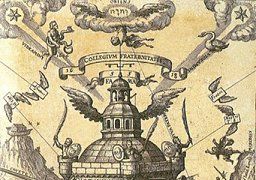
    Rosicrucianism emerged into public consciousness during the early 17th century, with the release of its initial manifesto, Fama Fraternitatis, circulated among German occultists around 1610.

    The printed editions of Fama Fraternitatis and Confessio Fraternitatis in 1614 and 1615, respectively, ignited widespread interest among alchemists, Qabalists, magicians, and astrologers across Europe.

    These manifestos narrate the history of the Order, introduce its enigmatic Founder, and elucidate its principles, sparking intellectual fervor for several years.


    In 1616, The Chymical Marriage of Christian Rosenkreutz was published, contributing to the belief that the Order was founded by a figure named Christian Rosenkreutz.

    LISTEN TO THE AUDIO (mp3) Version

    The Rosicrucian manifestos, initially published in the 17th century, were later translated into English by Thomas Vaughan in 1652. This translation sparked renewed interest in the 19th and 20th centuries.

    However, the modern Rosicrucian organizations, such as the Societas Rosicruciana in America (SRIA) and the Ancient Mystical Order Rosae Crucis (AMORC), often obscure the original teachings.

    Key Differences

    The original manifestos were anonymous and mystical, conveying esoteric knowledge through allegories and legends.

    Modern Rosicrucianism, as represented by SRIA and AMORC, has evolved into a more structured and organized system, with specific rituals, initiations, and teachings.

    The modern names and symbols may overshadow the original intent and message of the manifestos, potentially altering the understanding and interpretation of the teachings.

    Consequences

    The original teachings may be lost or distorted due to the modern emphasis on organization and structure.

    The mystical and allegorical nature of the manifestos may be overlooked or misunderstood in favor of more literal and dogmatic interpretations.

    The historical context and cultural influences that shaped the original manifestos may be forgotten or ignored.

    Importance of Context

    To truly appreciate the Rosicrucian manifestos, it is essential to consider their historical context and the original intentions of their authors. By doing so, we can gain a deeper understanding of the mystical and esoteric teachings that underlie modern Rosicrucianism, and appreciate the evolution of the movement over time.

    These texts are historical documents relating to the ‘Brotherhood of the Rosy Cross’, a renaissance German secret society. This group had a huge impact on more recent organizations such as the Golden Dawn, and is often cited by conspiracy theorists for completely different reasons.

    Note: 
    The connection of the original Rosicrucians with the well-known contemporary fraternal organization, the Rosicrucian Society [AMORC] is vague at best. The AMORC, founded in 1915, runs the Egyptian Museum in San Jose, CA, and a mail-order study series.


    The Real History of the Rosicrucians
    by Arthur Edward Waite

    This is Arthur Edward Waite’s study of the elusive Rosicrucians, a secret society of which the first public notice was in early 17th century Germany.

    Waite presents complete translations of all of the texts which defined the Rosicrucians, including the Fama Fraternitatis, the Confessio Fraternitatis, and the Chemical Wedding of Christian Rosencreutz.

    The longest text, the Chemical Wedding is a thinly veiled alchemical allegory.

    Waite also surveys Rosicrucian literature from successive centuries, including extensive quotes from authors who wrote about the Rosicrucians such as Michael Maier, Robert Fludd, Thomas Vaughan and John Heydon.

    Heydon wrote Voyage to the Land of the Rosicrucians, reminiscent of Thomas More’s Utopia, about a voyage to an obscure continent inhabited by Rosicrucians, included here in its entirety.

    Waite concludes with a look at a 19th century ‘Rosicrucian’ organization: Hargrave Jennings was, notably, a member of this group. Speaking of whom. . .

    The Real History stands in stark contrast to Hargrave Jennings’ The Rosicrucians, their Rites and Mysteries, which Waite (justifiably) criticizes throughout.

    All in all, this serves both as a survey of the literature about Rosicrucians and an invaluable anthology of that literature.

    Waite, although he had a solid background in the occult, is in a firmly rationalist mode in this book.

    The Real History will be of use to both academic and general readers.

    Start Reading
    Fama Fraternitatis

    In the Pronaos of the Temple of Wisdom

    by Franz Hartmann [1890]

    Contents
    Start Reading

    Franz Hartmann, who also wrote the esoteric novella With the Adepts, published this short non-fiction summary of the Rosicrucian question in 1890.


    Franz Hartmann, who also wrote the esoteric novella With the Adepts, published this short non-fiction summary of the Rosicrucian question in 1890.

    He reviews the well-known history and literature of the Rosicrucians. In the last two chapters Hartmann presents what he believes to be the core doctrines of the ‘true’ Rosicrucians.


    The Secret Doctrine of the Rosicrucians

    This book, attributed to William Walker Atkinson under the pseudonym “Magus Incognito”, is a comprehensive exploration of the Rosicrucian manifestos from the 1600s.

    The text delves into the esoteric teachings and occult doctrines of the Rosicrucians.

    It bears strong similarities to The Kybalion, which is also known to have been authored by Atkinson.

    Key Concepts in The Secret Doctrine of the Rosicrucians
    • The Rosicrucian manifestos and their significance
    • The nature of the universe, including the astral plane and the infinite unmanifest
    • The human soul and its relationship to the divine
    • The pursuit of spiritual enlightenment and the attainment of higher states of consciousness
    • The synthesis of Eastern and Western philosophies and spiritual traditions

    Fama Fraternitatis

    Fama Fraternitatis, attributed to C.R., was first published in 1614 in German and in 1615 in Latin. This anonymous manifesto introduced the concept of a secret brotherhood, the “Fraternity of the Rose Cross,” comprising wise men who had traveled extensively, including Damascus and Fez, to learn from scholars and philosophers.

    This document is the key on which the Rosicrucian phenomenon was based.

    It was first published in 1614 in German and in 1615 in Latin.

    The document discusses the wisdom and power of God, as well as the secrets of nature

    The author, Brother C.R., traveled extensively and learned from wise men in Damascus and Fez.

    He sought to reform the arts and sciences and impart his knowledge to others.

    The document emphasizes the importance of unity and the pursuit of true knowledge.

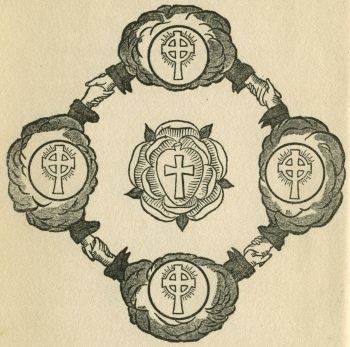
    Brother C.R. Built a fitting dwelling for himself and three other brethren to continue their work in secrecy

    About the Fraternity’s Founding

    The Fraternity of the Rosy Cross created a Magical Language and writing system, as well as a large Dictionary.

    Fraternity Beliefs

    The Fraternity believed that their teachings and knowledge should be shared with others, but only to those who were worthy and deserving.

    The Fraternity believed in the importance of secrecy and remained hidden for 100 years.

    The Fraternity believed in the power of God and the importance of following His commandments.

    The Fraternity believed in the reform and purification of the Church and the world.

    The Fraternity had a strong belief in the afterlife and the resurrection of the body.

    The Fraternity had a strong emphasis on learning and knowledge, and they valued the pursuit of wisdom and understanding.


    More Reading:

    Confessio Fraternitatis
    The Chymical Wedding
    Ara foedaris Theraphici
    Consideratio brevis
    Speculum sophicum rhodostauroticum
    Bacstrom’s Rosicrucian society
    The Rosicrucian Prayer to God – from John Heydon
    The Secret symbols of the Rosicrucians [In preparation]
    Michael Maier – Laws of the Fraternity of the Rosy Cross [In preparation – chapters 1-9 only]
    Vaughan’s Preface to the Rosicrucian Manifestos
    Coloured illustration of the Golden and Rosy Cross [from Secret symbols of the Rosicrucians]
  • What is a Christian?

    What is a Christian?

    In the quest to understand the essence of Christianity, one might ask, “What is a Christian?”

    The answer to this question is deeply rooted in Faith’s core: 

    Jesus Christ

    A Christian, at the most fundamental level, is someone who has encountered the grace of God in a profound and life-altering way.

    This encounter is not merely an intellectual assent to a set of doctrines but a personal and spiritual awakening to the reality of God’s mercy as revealed in Jesus Christ.

    The Recognition of Divine Justice

    A Christian begins their spiritual journey with the recognition of their own sinfulness and the just wrath of God that such sin deserves.

    It is a sobering acknowledgment that, left to their own devices, they stand condemned before a holy and righteous God.

    This realization is not meant to crush the spirit but to prepare the heart for the reception of grace.

    The Mercy of Jesus Christ

    Central to the Christian identity is the mercy of Jesus Christ.

    Christians hold that it is only through the sacrifice of Jesus on the cross that they are saved from the wrath they deserve.

    This salvation is not something that can be earned through good deeds or personal righteousness; it is a gift of grace, freely given and unmerited.

    The Rejection of Self-Righteousness

    A Christian is one who casts aside all illusions of self-righteousness.

    They understand that their best efforts and most noble deeds cannot bridge the gap between God’s perfection and human imperfection.

    This humility is not self-deprecation but a realistic appraisal of the human condition in light of divine holiness.

    Spiritual Bankruptcy and the Riches of Christ

    Embracing the concept of spiritual bankruptcy, a Christian admits to being a “poor sinner” in need of the riches of Christ’s grace and righteousness.

    This admission is not a cause for despair but a reason for hope, as it leads to the treasure of a restored relationship with God through Christ.

    Gratitude and Allegiance

    The grace that a Christian experiences results in a heart overflowing with gratitude.

    This gratefulness is not passive but active, manifesting in allegiance to Jesus as Lord and sovereign.

    The Christian life is thus characterized by a joyful obedience and a desire to honor God in all aspects of life.

    Glorying in Christ

    Finally, a Christian is someone who “glories in Christ Jesus and has no confidence in the flesh,” as the apostle Paul writes in Philippians 3:3.

    This means that a Christian finds their ultimate joy and satisfaction not in personal achievements or worldly accolades but in their relationship with Christ and the transformation He brings.

    A Christian is one who has come to the end of themselves and found the beginning of true life in Jesus Christ.

    It is a life marked by humility, gratitude, and a profound sense of purpose rooted in the love and mercy of God.

  • Tactics For Spiritual Warfare

    Tactics For Spiritual Warfare

    A GUIDE FOR WHEN YOU’RE IN THE EYE OF A STORM

    3 Keys Scriptures

    “For our struggle is not against flesh and blood, but against the rulers, against the authorities, against the powers of this dark world and against the spiritual forces of evil in the heavenly realms.”

    –Ephesians 6:12


    “For though we walk in the flesh, we do not war according to the flesh, for the weapons of our warfare are not of the flesh, but divinely powerful for the destruction of fortresses. We are destroying speculations and every lofty thing raised up against the knowledge of God, and we are taking every thought captive to the obedience of Christ.”

    –2 Corinthians 10:3-5


    “Be sober-minded; be watchful. Your adversary the devil prowls around like a roaring lion, seeking someone to devour. Resist him, firm in your faith, knowing that the same kinds of suffering are being experienced by your brotherhood throughout the world” 

    -1 Peter 5:8-9


     Spiritual Warfare is experienced as:

    • … the tensions, the conflicts, the ethical options, and the worldview choices which Believers must face
    • … the spiritual conflict between those who are saved and preserved by God, the heavenly (and demonic) kingdoms are where our battle is fought
    • … the fight for truth.

    WAGE WAR & Remain Standing…

    The enemy will attack back!!!


    Top 2 Instigators for stirring the fuses of Darkness:

    Keep God’s commandments  

    Hold Tight The Testimony of Jesus

    (‘fight for truth’).

    TO STAND IN THIS FIGHT – YOU MUST:

    Use the ARMOUR from God &

    learn how to use the Weapons He assigned.

    Spiritual Warfare can be Frightening, confusing and overwhelming.


    WHAT TO DO?

    #1 Don’t ignore what’s happening .

    Don’t second guess God. This is real, and it’s happening.

    As C. S. Lewis stated:

    “There is no neutral ground in the universe; every square inch, every split second is claimed by God and counterclaimed by Satan.”

    #2 Don’t Give in to Fear

    & Don’t Avoid Fear

    Nothing the Bible tells you about the Spirit is intended to make you scared, especially afraid of  the dark realm. FEAR ONLY GOD.

    Be sober-minded with vigilance, awareness, and tact. Wisdom dispels fear. Trust God, Really Trust God.

    #3 Pray, a lot!

    Pray …without ceasing…” -1 Thessalonians 5:17

    Pray… on all occasions…”  -Ephesians 6:18

    #4 Don’t dwell on evil

    “Whatever things are good…pure…of good report…think on these things.”  Philippians 4:8

    #5 Obsessively Study the Bible. 

    Jesus quoted Scripture in context when tempted by Satan.  Scripture was used out of context by Satan but Jesus knows the Father so, the Word is Known intimately.  Resource: Matthew 4.

    # 6 Seek God, Not Demons

    Don’t Ask or Lust after The unseen realm anymore Than God Has allowed for you to see.

    People  think it would be neat to see a deliverance because they want to see the demonic manifest.

    That’s a terrible reason, and reveals the condition of the heart… Wretched.

    Being fascinated by evil is to Love evil. What your heart longs toward is the focal point of your worship.

    #7 Keep the commandments of God 

    Trust His testimony. Here are the COMMANDMENTS :

    1. Love God With All of your being

    2. Love your fellow man, as Christ loved you… Including those who hate you.

     “Take the whole armor of God, that you may be able to stand firm against the deceit of the devil… take up the full armor of God, so that you will be able to resist in the evil day, and having done everything, to stand firm.

    Ephesians 6:11-19

    #8 Fasten The belt of Truth   

    biblical accuracy; certainty, sincerity

    #9 Check the fit in the breastplate of righteousness   

    Moral uprightness, justice

    #10 Keep Sandals buckled  

    the gospel of peace, bringing harmony; wholeness and understanding into all places

    # 11 Practice Defensive Shielding 

    With the shield of faith – Faith of Jesus

    With Faith as your Shield you are able to quench all the fiery darts of the enemy    

    trust; loyalty; reliance

    #12 Check the position of your helmet 

    … The helmet of salvation gaurds your Mind…  deliverance; preservation

    #13 Learn to spar with the sword 

    … Of the Spirit. This is the word of God. 

    # 14 Pray in the Spirit  … Always….

    Godly prayer isn’t a moment you take for God… God lives in you, scheduling Him into your schedule is not something you would find acceptable with His Spirit in you …  

    Tip:

    Direct your thoughts and mind on God more than you think thoughts to yourself in your mind….

    … “with all kinds of prayers…” 

    MAN MADE RITUALIS & DOGMATIC COMPLIANCE BREEDS PRIDE.

    OUTWARD DISPLAYS OF PIETY BREED LUKE WARMNESS AND HARD HEARTS…

    IF YOU ARE ACTING IN ORDER TO BE SEEN AS “HOLY”, YOUR ACTIONS ARE NOT WORTH ANYTHING IN GOD’S DOMAIN…


    For strength and hope:

    “For we do continually beseech God by Jesus Christ to preserve us from the demons which are hostile to the worship of God, and whom we of old time served… For we call Him Helper and Redeemer, the power of whose name even the demons do fear…”

    – Justin Martyr (ca. 160 A.D.):

  • Worldly Contradiction

    Worldly Contradiction

    In the depths of my soul, I grapple with the inherent contradictions of this world.

    Society has shaped me into a unique being, molded by its influences and expectations.

    And yet, beneath the surface lies a newfound understanding, a spiritual awakening that compels me to express my thoughts, unfiltered and unapologetic.

    Navigating Nuance

    As a believer in Christ, I fearlessly navigate the depths of my nuanced frame of mind.

    I am both a product of society and a recipient of God’s grace.

    This synthesis of my identity distinguishes me as a believer in the midst of a complex world.

    “The prudent [person] gives thought to their steps.”

    Proverbs 14:8

    America’s Role In My Identity

    Oh America, you have played a role in shaping the very essence of who I am.

    Your vast tapestry of cultures, perspectives, and ideologies have shaped and molded me in profound ways.

    The values and ideals that permeate your society have left an indelible stain on my character.


    But now, on this journey of Faith, something extraordinary has happened.

    As I wholeheartedly embrace the teachings of Christ by His Spirit, my soul longs to break free from the shackles of conformity and boldly vocalize the depths of my beliefs.

    “The Spirit of the Sovereign Lord is on me, because the Lord has anointed me to proclaim good news to the poor. He has sent me to bind up the brokenhearted, to proclaim freedom for the captives and release from darkness for the prisoners.”

    Isaiah 61:1

    I yearn to speak my truth, regardless of society’s resistance.

    You may have created me, that is my exterior, America, shaping me with your norms and expectations.

    Yet, through Faith in Christ, I have come to realize that your systems are imperfect, and your desires for conformity are not aligned with the higher purpose laid before me.

    “Do not conform to the pattern of this world, but be transformed by the renewing of your mind. Then you will be able to test and approve what God’s will is—his good, pleasing and perfect will.”

    – Romans 12:2

    Through the redeeming power of Christ’s love, my perspective has shifted.

    I no longer passively accept the status quo, but rather embark on a mission to challenge societal norms, inviting open and honest dialogue.

    It is in this space, in this unique frame of mind, where I find the courage to proclaim what’s on my heart, despite the resistance that may arise.


    Oh America, do not fear my voice, for it is not one intended to sow discord or disdain.

    Instead, it is a voice founded in love, compassion, and a deep belief in Christ’s teachings.

    It is a voice that yearns for unity amidst the diversities that encompass your vast nation.


    I am your child, America, transformed by the love and grace of Christ.

    And now, I am determined to speak Truth, for you and for all who seek the Light of Truth and Redemption.

    May my words serve as a catalyst for change, inspiring hearts to embrace the transformative power of Faith and the limitless possibilities it brings forth.

    Today, I am on a journey of purpose, one where the innate beauty of our diverse souls intertwining, illuminating a path towards a more compassionate and loving existence.