Category: Science

  • Messengers of the Infinite

    Messengers of the Infinite

    The Living Light of Cosmic Rays

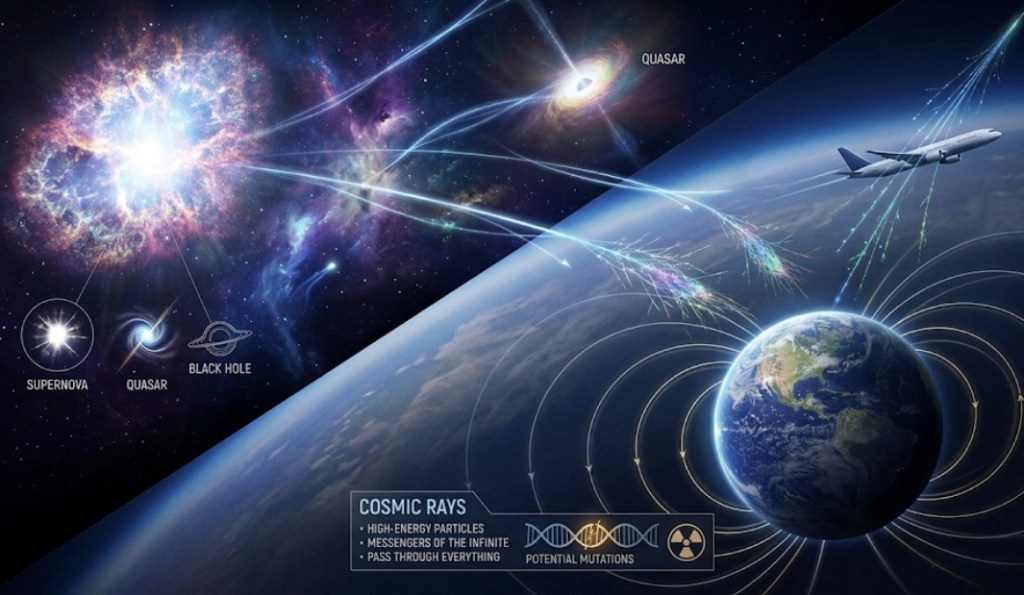
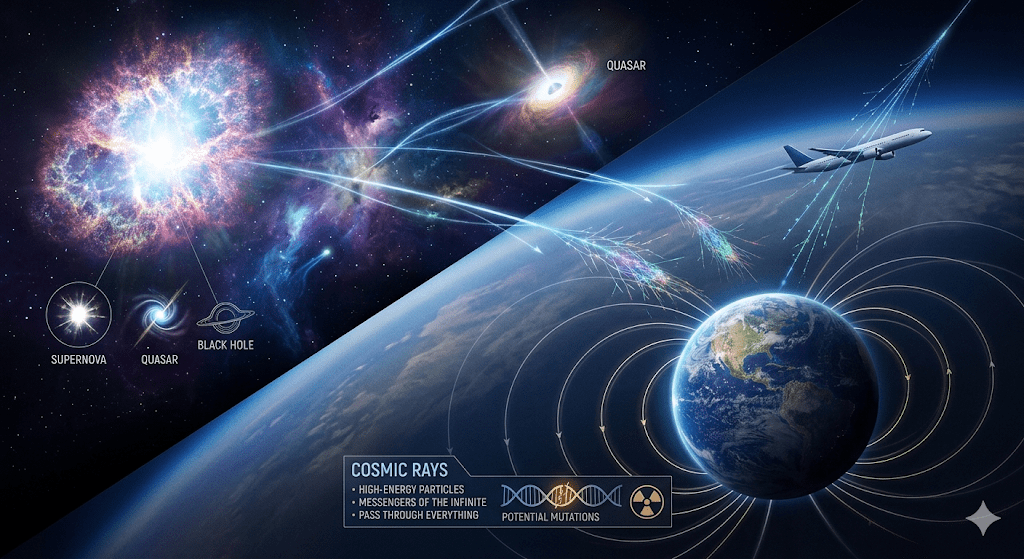
    In the distant vault of space, supernovas erupt and quasars blaze like divine beacons.

    WHAT IS A SUPERNOVA?

    A star at the end of its life, collapsing in on itself until it explodes with a force that reshapes galaxies.

    WHAT IS A QUASAR?

    A luminous heart of a distant galaxy, powered by a black hole consuming matter and releasing energy beyond comprehension.

    These cosmic furnaces unleash torrents of radiation—force so immense it sends cosmic rays streaking through the void like messengers from the edge of creation.

    They carry within them the coded whispers of the universe—ancient, electrified secrets written in light.

    FREQUENCY

    The cosmos is alive with currents that ripple through every atom of our existence.

    Among the most mysterious are cosmic rays—streams of high-energy atomic nuclei born in places beyond the reach of human imagination.

    Cosmic Rays

    Invisible, relentless, and infinitely powerful. They radiate with penetrating energy from the great beyond.

    Radiation detectors trace their presence in the upper air, mapping the unseen architecture of our living universe.

    THE UNIVERSE IS ALIVE

    The universe is no silent void—it hums with the pulse of energy, an infinite heartbeat.

    Cosmic rays are not mere radiation; they are subatomic storms traveling at nearly the speed of light.

    They are fragments of the divine machinery of existence.

    They are particles of creation itself… passing through us every second, shaping the unseen architecture of reality.

    Before the age of quantum understanding, astronomers thought these were just another form of X-ray or gamma radiation.

    They were wrong.

    Cosmic rays are matter in motion—energy incarnate—born of the most violent acts in the heavens.

    WHERE DO THEY COME FROM?

    Picture the abyss: galaxies like jeweled islands scattered across eternity.

    Somewhere within that tapestry, a star detonates—a supernova—or a black hole tears matter apart and swallows light itself.

    From these cataclysms, cosmic rays are forged and flung into the endless dark.

    They travel for eons, crossing the void, until—finally—they touch Earth.

    They are messengers from the beginning of time, heralds of the infinite.

    They do not simply inform us; they initiate us—into the mystery of how energy becomes form, and form becomes life.

    HOW MUCH ENERGY DO THEY HOLD?

    These particles carry trillions of times more energy than anything within the human body.

    To study them, scientists use advanced particle detectors, telescopes, and satellites that record their arrival—each one a signature of cosmic power.

    Every detection is a data point in the ongoing dialogue between humanity and the stars.

    Through these measurements, we glimpse the origins of galaxies, the birth of matter, and the laws that govern both light and darkness.

    Cosmic rays help decode the story of the universe—and in doing so, they reflect something of our own genesis.

    THE DUAL EDGE OF COSMIC LIGHT

    But cosmic rays do not come without consequence.

    Their energy, while ancient and beautiful, can scramble electronics, corrupt data, and fracture DNA.

    When they split our cellular code, errors can occur—replication falters, mutations form, and sometimes, tumors emerge.

    Scientists estimate cosmic rays account for a small but measurable fraction of cancers worldwide.

    Thankfully, Earth shields her children.

    Our magnetic field—strongest of all the rocky worlds—deflects the weaker rays, while the denser atmosphere absorbs most of the rest.

    Yet the strongest still pierce through, striking nitrogen and oxygen molecules, scattering their energy in showers of secondary particles.

    Even at sea level, cosmic rays pass through each human body roughly once every second.

    THE RISK ABOVE THE CLOUDS

    At high altitudes, the protection thins.

    Airline passengers and crew are exposed to higher rates of cosmic bombardment.

    The metal hull of a plane offers little defense—when struck, it releases a cascade of subatomic shrapnel that passes through the cabin with invisible precision.

    The only true safeguard is limiting exposure.

    Occasional travelers need not worry—but those who live in the skies, pilots and attendants, face heightened biological risks.

    Governments now regulate flight exposure, monitoring radiation at cruising altitudes to protect those who serve the airways.

    Still, this surveillance is largely limited to North America and Europe. Above Africa, our data is scarce.

    A group of astronomers recently took the first step toward change—using a Raspberry Pi computer to create a low-cost radiation dosimeter.

    They flew it from Johannesburg to Frankfurt, and from Munich back to Johannesburg, proving such technology can measure cosmic exposure with striking accuracy.

    Their vision: a global network of radiation monitors to map and protect the skies we share.

    THE COSMIC BALANCE

    Cosmic rays remind us that we live inside a living, electric universe.

    They are both creators and destroyers, the light that builds and the fire that burns.

    From the smallest subatomic spark to the grand sweep of galaxies, their story is our own—the ceaseless interplay of energy and matter, life and death, chaos and creation.

    Through them, we glimpse the truth:

    that reality is not static but alive, vibrating with purpose.

    And the universe, in all its violence and beauty, is still speaking…

    through every ray, every particle, every breath of light.

  • Surveillance Resources

    Surveillance Resources

    As the times get dark, we in the light must shine it. An esoteric perspective.

    What is Surveillance?

    Surveillance is the monitoring of behavior, activities, or information to influence, manage, direct, or observe individuals or groups.

    It has evolved from simple observation into a complex, pervasive infrastructure that affects everyone.

    Protecting the Inner Sanctuary

    For the esoteric-minded people like myself, surveillance is not merely a political or technical issue; it is a violation of the sacred.

    The increasing pervasiveness and sophistication of surveillance technology raises philosophical questions both epistemic (to do with the acquisition of knowledge) and ethical (concerned with living the good life). Surveillance Asymmetry Epistemic considerations preoccupy the CCTV users: governments, law enforcement agencies and businesses.

    Surveillance Ethics | Issue 110 | Philosophy Now

    The drive to monitor and predict human behavior is a pursuit of total transparency that seeks to eliminate the “shadow”—the mysterious, unmapped, and creative depths of the psyche.

    Esoteric traditions emphasize the cultivation of the inner self, a space that must remain private, sovereign, and unknown to the external observer to maintain its transformative power.

    The Surveillance of the Spirit

    Modern tracking systems attempt to commodify the human experience, turning the spontaneous, chaotic, and sacred expressions of life into predictable data points.

    This is an attempt to fix the “flux” into a static, controlled reality.

    The Sovereignty of the Unseen

    Just as the “Hermetic seal” protects the work from outside interference, maintaining a barrier between your inner life and the digital panopticon is essential for spiritual autonomy.

    If your thoughts, movements, and expressions are constantly mapped, your ability to “transmute” yourself into new states of being is compromised.

    Shining the Light

    To “shine the light” as these times grow darker is to act as a witness.

    By understanding these systems, you deny the hidden power they rely on.

    You reclaim your agency by refusing to be a readable, predictable element in their grand design.

    Eyes Are On Everyone

    The AI Paradigm

    This is not merely a question of data privacy; it is a fundamental shift in the logic of governance.

    Systems designed for administration have become tools for tracking and predicting human behavior, often with minimal oversight or accountability.

    Inferences replace facts

    AI interprets behavioral patterns at scale without verification.

    Correlations replace testimony

    Decisions are made based on data probabilities rather than direct evidence.

    Universal Risk

    While often deployed first against marginalized groups, this infrastructure expands its reach into the lives of all citizens.

    Recommended Reading
    Surveillance Technologies

    Electronic Eavesdropping & Audio

    Spy Bugs: Covert devices hidden in everyday objects (pens, USBs, lamps, sockets) to record or transmit audio.

    GSM Bugs: Operate like mobile phones; perpetrators dial in to silently listen from anywhere in the world.

    Mobile Phone Hijacking: Devices can be turned into remote microphones via malicious software, allowing attackers to “hot on the hook” listen to conversations.

    RF & Bluetooth Bugs: Transmit audio signals via radio frequency or Bluetooth to a remote receiver.

    Visual & Imaging Technology

    CCTV & Drones: Automated monitoring in public and private spaces.

    Advanced Optics: High-zoom lenses, infrared, and night-vision devices.

    Satellite/Aerial: Persistent monitoring capability from above, including indoor spaces.

    Data & Sensor Networks

    Sensor Arrays: Magnetic, seismic, infrared, and strain sensors detect movement, vibration, and even keystrokes.

    Pattern Recognition: AI-driven analysis of movement, voice, and thought-to-computer interfaces.

    Infrastructure: Global intelligence systems (e.g., ECHELON) that scan communications for keywords and phrases.

    Detection & Mitigation

    To protect against unauthorized monitoring, consider these layers of defense:

    Physical Inspections

    Thoroughly check environments for concealed hardware.

    Electronic Scanning

    Utilize specialized equipment to identify active radio transmissions.

    Professional Services

    Engage experts in Technical Surveillance Countermeasures (TSCM) for comprehensive bug sweeps.

    Information Hygiene

    Be cautious of suspicious attachments and links that can compromise mobile devices.

    Note: Surveillance tools, while used by law enforcement and intelligence agencies for security, frequently raise significant ethical and constitutional concerns. This resource aims to inform the public on the realities of these technologies.

    More Disturbing Resources

    E-3 Sentry (AWACS) > Air Force > Fact Sheet Display

    The E-3 Sentry is an airborne warning and control system, or AWACS, aircraft with an integrated command and control battle management, or C2BM, surveillance, target detection, and tracking platform.

  • Thelema

    Thelema

    Θελημα— meaning ‘WILL’ —philosophical school founded in 1904.

    Origin

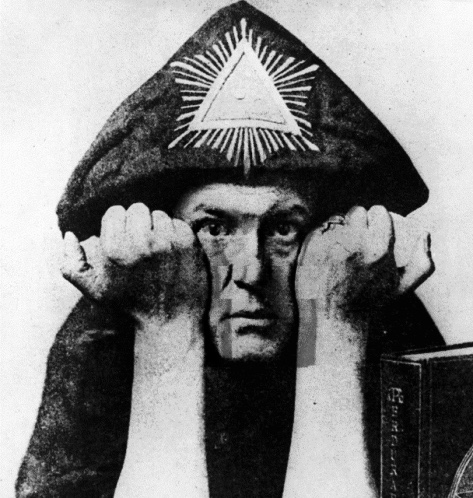
    Thelema is a spiritual philosophy and new religious movement founded by Aleister Crowley.

    Core Principle

    Central to Thelema is the concept of ‘True Will‘ which refers to an individual’s divine purpose that transcends ordinary desires.

    Influences

    Thelema draws from various traditions, including Hermeticism, Kabbalah, and ancient Egyptian religion.

    Thelma comes from the following Writing:

    The Book of The Law is the central axiom, the Law of Thelema.

    The Law is summed up in two phrases from the Book: 

    1. “Do what thou wilt shall be the whole of the Law”
    – AL I:40)

    &

    2. “Love is the law, love under will”
    – AL I:57

    THELEMA’S GOAL:

    TRUE WILL

    True Will is the Will from Heaven.

    Know firmly, O my Son, that the True Will connot err; for it is thine appointed Course in Heaven, in whose Order is Perfection. 

    – Liber Aleph vel CXI – The Book of Wisdom or Folly pg.13

    HOW THELEMITES ATTAIN TRUE WILL? MAGICK

    THELEMA’S DOCTRINES:

    COSMOLOGY

    The Book of the Law establishes a model of reality that combines two elementary forces: the infinite extension of space, which is personified by the Egyptian sky-goddess Nuit, and the infinitely contracted point, personified by the Egyptian god Hadit.

    It is the interaction of these two forces that results in manifested reality.

    Crowley often described this interaction in sexual terms:

    “Nuit is the centripetal energy, infinitely elastic because it must fit over the hard thrust directed against it; Hadit, the centrifugal, ever seeking to penetrate the unknown”

    Magick Without Tears, Ch.38

    The union of these two opposites results in the new current of the present Aeon, represented by Ra-Hoor-Khuit (lit. Horus of Two Horizons), also called the Crowned and Conquering Child. 

    ETHICS

    Arguably the central Thelemic ethic is one of individual liberty and the personal freedom to fulfill one’s Will.

    Social restriction—such as laws that make illegal certain sex acts between consenting adults—is generally seen in a negative light by most Thelemites. 

    Two documents in particular help to define Thelemic ethics for most adherents

    Oz and Duty

    • Liber Oz establishes the rights of the individual.
    • Duty is described as “A note on the chief rules of practical conduct to be observed by those who accept the Law of Thelema.”

    THELEMA IN THE BIBLE

    Thelema appears in the Holy Bible referring to divine will, human will, and even the will of the Devil.

    One well-known example is from “The Lord’s Prayer” in Matthew 6:10,

    “Your kingdom come.
    Your will (Θελημα) be done, On earth as it is in heaven.”

    mat. 6

    More Bible Verses

    “He went away again a second time and prayed, saying, “My Father, if this cannot pass away unless I drink it, Your will be done.”

    —Matthew 26:42

    “But as many as received Him, to them He gave the right to become children of God, even to those who believe in His name, who were born, not of blood nor of the will of the flesh nor of the will of man, but of God.”

    —John 1:12-13

    And do not be conformed to this world, but be transformed by the renewing of your mind, so that you may prove what the will of God is, that which is good and acceptable and perfect.”

    —Romans 12:2″

    Worthy are You, our Lord and our God, to receive glory and honor and power; for You created all things, and because of Your will they existed, and were created.”

    — Revelation 4:11″

    …and they may come to their senses and escape from the snare of the devil, having been held captive by him to do his will.”

    —2 Timothy 2:26

    RESOURCES


    • Crowley, Aleister. (1997). Magick Without Tears.Tempe: New Falcon Publications.
    • Sabazius (1998). The Kiblah. Retrieved June 9, 2004.
    • Thriambos, Dionysos. The Utility of the Bible to the Student of Thelema. Retrieved Sept. 17, 2004.
    • Weinberg, Florence M. (1972) The Wine and the Will: Rabelais’s Bacchic Christianity. Detroit: Wayne State University Press.
    • Wikipedia (2004). Gargantua and Pantagruel.Retrieved Sept. 17, 2004.
  • What is Time?

    From scientific models to ancient myths, humanity has long sought to unravel the mystery of time.

    THEORIES THROUGH HISTORY

    The concept of time has been a subject of intense interest for thinkers throughout history.

    Time as a Measure of Change:

    Aristotle argued that time is not a thing in itself, but rather a way of measuring change and motion

    Time, in essence, is a measure of change, and without change, there would be no way to perceive or measure the passage of time. 

    We experience time through changes in our surroundings like:

    • the sun rising and setting
    • the seasons changing
    • growing older

    Time & Motion

    Aristotle claimed that time is dependent on motion, meaning that time only exists in relation to and as a consequence of change occurring in the world. 

    Time is “Now”

    Aristotle considers the present moment, now, as a point of transition between the past and the future, a kind of “nothingness” that divides the two. 

    Richard Muller’s Theory

    Muller, a physicist at the University of California, Berkeley, posits that the expansion of the universe, starting with the Big Bang, constantly creates new space and, consequently, new time. 

    “Now” as the Leading Edge

    He argues that the “now” is the boundary, the shock front, or the leading edge of time, where new time is constantly being created. 

    Implications for Time Travel

    This theory has implications for our understanding of time travel, suggesting that the future is not predetermined, and that the “now” is the only reality that truly exists. 

    Eternalism vs. Presentism

    This concept contrasts with the block universe or eternalism, which suggests that all moments in time exist equally, and the presentism, which holds that only the present moment is real. 

    Einstein’s Relativity

    Muller’s theory builds on Einstein’s theory of general relativity, which views space and time as intertwined in a four-dimensional spacetime

    “Now” as a Relative Concept

    According to the American Museum of Natural History, time is relative, meaning the rate at which time passes depends on the observer’s frame of reference. 

    Time as a Dimension

    Some forms of eternalism view time as a dimension, similar to space, where different times are as real as different place.

    Time & Soul

    Aristotle and Time’s Dependence on the Soul: 

    • Aristotle argued that time, as a concept, depends on the soul’s ability to perceive and count it. 
    • He suggested that if there were no souls to “count” time, there might still be change, but not time itself. 
    • This view implies that time is not just countable but also essentially counted, meaning it requires a conscious entity to exist as a measurable concept. 

    Plato & the Soul’s Immortality

    • Plato’s theory of the soul, influenced by Socrates, considered the soul (psyche) as the essence of a person, an incorporeal and eternal entity. 
    • He believed the soul exists even after death and is able to think, and that as bodies die, the soul is continually reborn (metempsychosis) in subsequent bodies. 
    • Plato divided the soul into three parts: logistikon (reason), thymoeides (spirit), and epithymetikon (appetite or desire). 

    The World Soul (Anima Mundi)

    • Some philosophical traditions, like Neo-Platonism, explored the concept of a world soul (anima mundi) or soul of the world,suggesting an intrinsic connection between all living beings and that the world is animated by a soul. 
    • This concept posits that the world is animated by a soul much like the human body. 

    Quantum Theory of Soul

    This perspective suggests that the soul is not limited by space or time. 

    Some theories, like the Quantum Theory of Soul, propose that the soul, as defined as information stored in the quantum field, can extend over space and time, potentially transcending the limitations of the physical body. 

    Time as a Number

    Aristotle describes time as a “number of motion with respect to the before and after,” suggesting that we can count or measure time by counting instances of change. 

    Descartes on Time

    Time as a Foundation for Diversity and Motion

    Descartes’s mechanistic view of the world, where diversity and motion are fundamental, requires time for these phenomena to occur. 

    Time as Proof for God’s Existence

    Descartes uses the concept of “parts of time” in his Meditation III proof for God’s existence, emphasizing the role of time in our understanding of God’s attributes. 

    Time as a “Mode of Thought”

    In his Principles of Philosophy, Descartes also states that time is a mere attribute and “mode of thought”. 

    Time & Duration

    Descartes distinguishes between time as the measure of motion and duration as an attribute of things. 

    Time & the Span of Life

    Descartes sees no differentiation between the span of a life and the span of time itself. 

    Descartes’s Method

    Descartes’s method, which he later formulated in Discourse on Method (1637) and Rules for the Direction of the Mind (written by 1628 but not published until 1701), consists of four rules:

    1. Accept nothing as true that is not self-evident
    2. Divide problems into their simplest parts
    3. Solve problems by proceeding from … 

    Descartes’s dualism

    Descartes introduced the concept of dualism, which argued that reality or existence is divided into two parts.

    He argued that humanity could be divided into two parts as well: the mind and the body.

    TIME AS MOMENTS

    Time as a Series of Moments

    This perspective suggests that time can be broken down into a sequence of unique, distinct moments, each representing a specific point in the timeline. 

    Moment as a Point in Time

    A moment, in this context, is an instantaneous point, a “now,” rather than a duration. 

    Philosophical and Scientific Perspectives

    Philosophers and scientists debate whether time is a real, objective thing or a human way of conceptualizing changing events. Some theories, like the

    Static Theory of Time

    suggest that time is like space, with no passage.

    Dynamic Theory of Time

    view time as a real phenomenon. 

    Kairos vs Chronos

    Kairos refers to an opportune or significant moment, while chronos refers to a specific amount of time, such as a day or an hour. 

    Examples of “Moments in Time”

    Think of memorable events, like a wedding, a birth, or a historical turning point. 

    These are all “moments in time” that stand out as distinct points in the flow of time. 

    Time as Absolute

    Newtonian Time

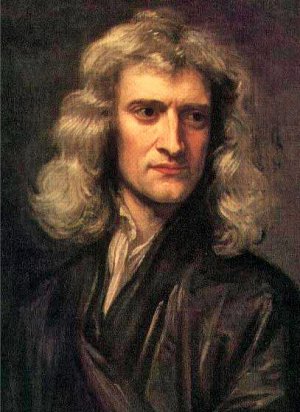
    According to its most famous proponent, Sir Isaac Newton, for example, absolute time (which is also sometimes known as “Newtonian time”) exists independently of any perceiver, progresses at a consistent pace throughout the universe, is measurable but imperceptible, and can only be truly understood mathematically.

    For Newton, absolute time and space were independent and separate aspects of objective reality, and not dependent on physical events or on each other.

    Time as a Product of the Mind

    Whitehead | Heidegger—Time as the Form of Becoming

    Whitehead and Heidegger described time as the process of things changing and becoming.

    They believed that time is essential for things to happen and transform.

    Theory of Relativity

    SPACETIME

    According to modern science, particularly the theories of relativity and quantum mechanics, time is considered a part of a larger concept called spacetime.

    Spacetime includes all the events in the past, present, and future, and is interconnected with space.

    Time as the Fourth Dimension

    In physics, time is often considered the fourth dimension, alongside the three spatial dimensions, used to describe events in space. 

  • Quantum Alchemy

    Quantum Alchemy

    Seeing the Unseen, Understanding the Complex


    Quantum Alchemy is a framework that merges ideas from quantum physics—such as entanglement, superposition, and wave-particle duality—with the symbolic, transformative, and spiritual traditions of alchemy.

    It often explores the idea of consciousness, energy, and reality as interconnected, sometimes framing quantum phenomena through the lens of alchemical processes like transformation, unification, or the pursuit of higher states of being.

    IDEAS FOUND IN QUANTUM ALCHEMY:

    Transforming the properties of particles or materials

    Similar to how alchemists sought to transform lead into gold, quantum alchemy aims to manipulate the properties of particles, atoms or materials at the quantum level to create new forms of matter with desired characteristics.

    This could involve changing the nuclear charges or electron configurations.

    Computational method for predicting molecular properties

    Quantum alchemy uses expansion to approximate and predict properties like binding energies for large numbers of molecules and materials by making small perturbations to a reference system. 

    This accelerates screening of potential catalysts or drug candidates.

    Representation of the chemical space as a quantum superposition

    Some propose representing all possible atomic compositions as a linear superposition state, with a “quantum alchemical Hamiltonian” driving the optimization to select the best molecule for a desired property.

    Philosophical connections

    There are also philosophical parallels drawn between the aims of ancient alchemy (e.g. transmutation, elixir of life) and modern concepts in quantum physics about the malleability and interconnectedness of reality.

    Quantum alchemy leverages quantum mechanical principles to transform, optimize & efficiently model perveived matter and alter chemical systems in real ways. 

    It combines ideas from physics, chemistry, and the metaphysical quest of the ancient alchemists.

    Quantum algorithm for alchemical optimization in material design
    Science of Alchemy pdf

  • Light Has Power

    Light Has Power


    Unveiling Hidden Depths

    Just as the obstruction of light casts shadows, material truths only disclose a fraction of the deeper meaning and purpose hidden within spiritual reality.

    As shadows form in the absence of light, the spiritual realm illuminates the genuine essence of our existence when revealed.

    By seeking spiritual enlightenment, we can explore our soul’s profound nature and comprehend our true purpose in life.


    Contrast Provides Clarity

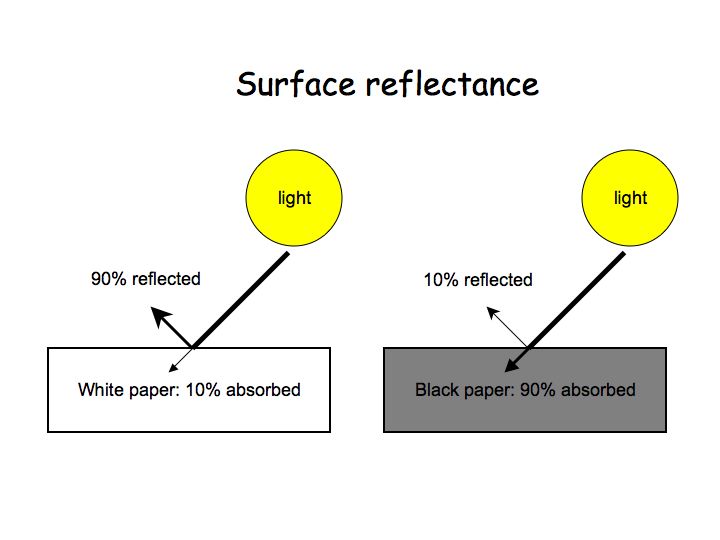
    Examining the interplay between illuminated and unilluminated areas of an object offers valuable insight into its shape and form.

    This principle mirrors how spiritual enlightenment unveils our true being by dispelling ignorance and confusion.

    As light and darkness intertwine, spiritual understanding brings clarity and purpose to our existence.


    Material Truth

    A Shadow of Spiritual Reality

    Material truth can be likened to a shadow cast by the spiritual reality that underpins it.

    As the sun casts a tree’s shadow, spiritual reality is the unseen force that imbues our lives with meaning.

    Recognizing this interconnection between light and shadow in our spiritual journey fosters a profound understanding of our existence.

    We must delve into the spiritual realm to uncover the genuine significance of our lives, just as we cannot fully comprehend a tree by merely observing its shadow.


    The Light of Spiritual Enlightenment

    By embracing the contrast between light and dark in our spiritual lives, we appreciate life’s complexity and strengthen our connection with the divine.

    Acknowledging the relationship between light and shadow paves the way to spiritual enlightenment, unveiling the profound truths that shape our existence.

    As light exposes the true nature of objects, spiritual enlightenment reveals our essence, guiding us towards a more significant understanding of ourselves and the world around us.

    RESEARCH

    21.1 Planck and Quantum Nature of Light – Physics | OpenStax

    This theory, which created the branch of physics called quantum mechanics, speculated that the energy radiated by the blackbody could exist only in specific numerical, or quantum, states.

    The Relationship Between Quantum Physics and Spirituality

    The intersection of quantum physics and spirituality has become a subject of profound interest in both scientific and philosophical circles. While quantum physics is a branch of science that explores the fundamental nature of reality at the smallest scales, spirituality seeks to understand the deeper meaning of existence, consciousness, and interconnectedness….

    Quantum Mechanics and Relativity’s Impact on Metaphysical Matter

    Quantum mechanics and Einstein’s theory of relativity didn’t just change science; they forced a deep rethinking of metaphysical categories like substance, causality, determinism, and even the nature of space and time.

     Quantum Theory of Soul – ResearchGate

    This quantum theory supports monism, viewing the soul, spiritual heart, mind, energy, and matter as aspects of the quantum field, and endorses panpsychism, suggesting all things possess a soul.