Category: ESOTERICISM

  • God is… The All in All

    I Am The Great I Am

    HE is the Source of All Creation, bringing forth the Universe and All that exists within it.

    HE is the Creator of All Life, the Sustainer of All Existence, and the Giver of All Good Things.

    HE is the Source of All Wisdom and Knowledge, the Source of All Love and Compassion, and the Source of All Strength and Power.

    HE is the Source of All Truth and Justice, the Source of All Peace and Harmony, and the Source of All Joy and Abundance.

    HE is the Source of All Mercy and Forgiveness, the Source of All Beauty and Perfection, and the Source of All Gratitude and Appreciation.

    HE is the Source of All Life, the Source of All Light, and the Source of All Love.

    HE is the Source of All that Is, the Source of All that Was, and the Source of All that Is to Come.

    HE IS ONE

  • What Is Evil?

    What Is Evil?

    Evil is a concept, idea, internal mental belief.

    Evil is not a created thing or being.


    Lucifer Known As EVIL’S Creater

    Lucifer was initially created BY GOD, as a being of goodness, perfection, and righteousness, possessing qualities akin to other celestial beings. His yearning for superiority drove him to employ what we could  define as alchemy to subvert the virtuous intentions bestowed by God, thereby disrupting order.


    Evil is not a created thing in the way we usually think of created things. It is a reconstruction, mutation, or metamorphosis of what was originally created to be good.

    Evil is essentially “Good” that has been manipulated and separated Source from what is a “Good”.

    This is what the Bible refers to when it speaks of witchcraft, sorcery, and divination.

    Sorcery

    French word, “sorcerie,” derived from Latin “sortiarius,” meaning “one who influences fate or fortune.”

    Sorcery is the practice of using supernatural or magical powers to affect or control events, influence people, or achieve specific outcomes through the conjuring of spells, rituals, or other mystical means.

    Sorcery is Manipulation

    It often involves the manipulation of unseen forces or entities to bring about desired changes in the physical or spiritual realm.

    Witchcraft

    Comes from the Old English word “wiccecræft,” where “wicce” refers to a female practitioner of witchcraft and “cræft” means skill or power.

    Witchcraft originally denoted the practice of magical skills and abilities, often associated with the use of supernatural or mystical means to influence events or people.

    It encompassed various rituals, spells, and divination techniques used for both benevolent and malevolent purposes, and was deeply rooted in the spiritual and folkloric traditions of different cultures.

    Divination

    The Hebrew word for divination, “qesem” (קֶסֶם), is linked to seeking guidance or decision-making through methods to discern the will of God or determine outcomes. In ancient Hebrew culture, divination was seen as a means of seeking divine direction and uncovering hidden truths. However, it is discouraged in Hebrew scripture due to its associations with neighboring pagan cultures, the emphasis on direct communication with God, and the need to protect individuals from deceptive practices claiming to offer supernatural insight.


    God Is Perfect

    God embodies holiness, perfection, light, majesty, and absolute glory. Lucifer, driven by his pursuit of free will, introduced the concept of polarity. This signifies that true freedom from God’s will does not exist; there is only a separation from His grace.

    Lucifer brought about polarity, duality, and dichotomies to adjust and elevate his own status. In doing so, he aimed to assert his authority and deceive God’s creation through his desire for free will. He introduced revelry, selfish ambition, and the aspiration to become the Sovereign God.

    Evil stems from Lucifer’s desire for free will, and the sole reason he managed to introduce evil into God’s reality is due to his yearning to separate himself from God’s Will, aligning himself against it.


    Born Into Sin

    We entered this world carrying the burden of sin, inheriting a fallen nature.

    The consumption of the “fruit” from the “tree” of Knowledge of good and evil introduced duality, allowing evil to permeate the human race.

    Lucifer, also known as Satan, has cast a curse upon all of us without exception.

    Despite this, God’s Will supersedes that of Lucifer.

    The question “The heart is deceitful above all things, and desperately wicked: who can know it?” serves to highlight the inherently wicked nature of the human heart.


    God Is Not Dualistic

    There is a non-dualistic nature to God’s actions. God, in His lack of duality, brings destruction upon everything filled with evil and duality, as there is no evil within Himself, and He abhors it. A dying branch broken off the tree serves no purpose for the Tree.

    If God refrained from causing destruction upon evildoers, it would imply a dualistic nature, which is not the case. By eradicating evil, He eliminates the duality that was introduced to humanity through Lucifer’s deceit, leading to our fall.

    God truly heals His creation, those who walk in the Light, as it was foretold before the foundations of the world. Everything that has transpired, from the beginning of time to the end of time, has been eternally recorded, already accomplished beyond the boundaries of our limited perception of time and space.


    God is Fixed

    Fixed: Unchanging, stationary, or established in a permanent state, without the possibility of alteration or variation.

    God is not dualistic; therefore, He is unchanging, and His plan is immutable. There is nothing that humans can do to thwart God’s plans. The concept of free will post-fall is merely an idea and a theory that provides believers with a false sense of control. God has and will bring destruction upon all evil. He will ultimately annihilate and eradicate it. It is stated in His Word that He is the creator of calamity and peace.


    Polarity Is Derived From Sorcery

    His creation, at this particular juncture in the timeline, is still influenced by the forces of polarity and duality. Therefore, it is imperative that we align ourselves with God’s Will to serve as the conduit necessary to transcend and obliterate the malevolent mechanisms that thrive on division.

    It is essential to acknowledge that we cannot liberate ourselves from this state of discord independently; only The Most High God possesses the power to do so.


    Cause Of Suffering

    A “cause” is the factor or event that brings about a particular result or outcome.

    God Doesn’t Cause Suffering!” YES, HE DOES.

    God causes suffering. He induced suffering and pain for His most favored Prophets. Remember Job? God uses Satan to test and refine the righteous. “How mean!” people say.

    Who are we to judge God? The suffering is just a test for the afterlife, written by God. He cannot allow self-righteousness or evil into His Holy kingdom because He is NOT DUALISTIC. Dualism is what caused the Fall. Does God Give and take away? Yes. So God gives illness and takes away illness.


    Do We Hate God For Not Serving Our Selfishness?

    If an illness or hardship were to be attributed to God, would one question or resent Him? Are we truly in a position to challenge God’s ways, or are we attempting to shape God in our own likeness?

    God induces His people to experience hardship in order to ultimately bring an end to suffering when the earthly timeline comes to an end.


  • Whatever The Lord Pleases: He Does For His Own Purposes

    Whatever The Lord Pleases: He Does For His Own Purposes

    Then the mystery was revealed to Daniel in a night vision.

    Then Daniel blessed the God of heaven;

    Daniel Said

    “Let the name of God be blessed forever and ever,
    For wisdom and power belong to Him.


    “It is He who changes the times and the seasons;

    The times and seasons don’t change themselves.

    He removes kings and establishes kings;

    Other men don’t remove kings and don’t establish themselves.

    He gives wisdom to wise men
    And knowledge to men of understanding.

    Men don’t make themselves Wise; God does: God doesn’t make men knowledgeable by their power in the study, God gives knowledge.

    “He reveals deep and secret things. He knows what is in the darkness, and the light dwells with him.

    That which lies in the darkness isn’t dark in itself, it is being hidden by darkness, & He knows what’s there. He knows what we hide in the shadows. We don’t need to hide the truth in the evening because the only thing that makes it dark is its location.

    “To You, O God of my fathers, I give thanks and praise,
    All praises to God
    For You have given me wisdom and power;
    Even now, You have made known to me what we requested of You,
    For You have made known to us the king’s matter.”

    Daniel 2:19-23

    He has made everything beautiful in its time;

    He has set eternity in their heart, from >    Eccl 7:23 I tested all this with wisdom, and I said, “I will be wise,” a but it was far from me. >>    Eccl 8:17 and I saw every work of God, I concluded that a man cannot discover the work which has been done under the sun. Even though man should seek laboriously, he will not discover; and b though the wise man should say, “I know,” he cannot discover. >>    Rom 11:33 Oh, the depth of a the riches 1 both of the b wisdom and knowledge of God! c How unsearchable are His judgments and unfathomable His ways! >”>beginning to end.

    I know that whatever God does, it will be FOREVER; nothing can be added to it, and nothing taken away from it; and

    God makes it so that men will fear in his presence.

    That which has been, still is and >”>that which is to be has already been; and God requires what is past.

    And, moreover, under the sun I saw the place of judgment, that wickedness was there; and the place of righteousness, that iniquity was there.

    Ecclesiastes 3:11, 14-16

    How Was Iniquiity Found In The Place Of Righteousness?

    Then I looked again at all the acts of oppression which were being done under the sun. And behold I saw the tears of the oppressed and that they had no one to comfort them; and on the side of their oppressors was power, but they had no one to comfort them.

    Eccl 4:1

    All this I have seen and applied my mind to every deed that has been done under the sun wherein a man has exercised authority over another man to his hurt.

    Eccl 8:9
  • Is It Right To Be Confident  In Your Self?

    Is It Right To Be Confident In Your Self?

    Jesus shared a parable with people who were self-assured of their righteousness and tended to look down on others. The parable was meant to challenge their perspective and reveal the true nature of God’s grace and mercy.

    Jesus Knew That These Individuals Were Prideful & Judgmental

    The parable that Jesus shared was about two men who went to the temple to pray. 
    One of the men was a Pharisee: a member of a religious group known for their strict adherence to the law and their outward displays of piety.
    The other man was a
    Tax collector: a profession that was despised by many in Jewish society at the time.

    The Pharisee stood up and prayed, thanking God that he was not like other people, including the tax collector who was standing nearby. He boasted about his own righteousness and his strict adherence to the law.

    In Contrast

    The tax collector stood at a distance and would not even look up to heaven. He beat his chest and prayed, “God, have mercy on me, a sinner.”

    Jesus then revealed that it was the tax collector, not the Pharisee, who went home justified before God.

    Those Who Exalt Themselves Will Be Humbled

    He explained that those who exalt themselves will be humbled, but those who humble themselves will be exalted.

    This parable was a powerful reminder that true righteousness is not found in outward displays of righteousness or strict abidance to the law. Rather, it is found in a humble and contrite heart that recognizes its need for God’s grace and mercy.

    The Importance Of Humility

    The parable that Jesus shared about the Pharisee and the tax collector is a powerful reminder of the true nature of righteousness and the importance of humility and compassion.

    At its core, the parable is a critique of the self-righteous attitudes and behaviors of the Pharisees, who were known for their strict adherence to the law and their outward displays of piety.

    The Pharisee in the parable represents those who are confident in their own righteousness and look down on others who they perceive as less righteous.

    He stands up and prays, thanking God that he is not like other people, including the tax collector who is standing nearby.

    He boasts about his own righteousness and his strict adherence to the law, believing that he is justified before God because of his own efforts.

    In contrast, the tax collector represents those who recognize their own sinfulness and their need for God’s grace and mercy.

    He stands at a distance and would not even look up to heaven. He beats his chest and prays, “God, have mercy on me, a sinner.”

    He recognizes that he is not justified before God because of his own efforts, but rather because of God’s grace and mercy.

    Jesus reveals that it is the tax collector, not the Pharisee, who goes home justified before God.

    Challenging Human Nature

    The depth of this parable lies in its challenge to our human nature. It is easy to fall into the trap of self-righteousness and judgmental attitudes, especially when we compare ourselves to others.

    Jesus is reminding us that true righteousness is not found in our own efforts, but rather in our recognition of our need for God’s grace and mercy.

    God’s Idea Of Righteousness, Not Our Own

    The parable

    This challenges our understanding of who is considered righteous in God’s eyes. and reminds us that God’s grace and mercy are available to all who recognize their need for it.

    Call To Humility

    In essence, this parable is a call to humility, compassion, and a recognition of our need for God’s grace and mercy. It challenges us to let go of our pride and judgmental attitudes and to embrace a spirit of humility and compassion towards others.

    These verses remind us that our salvation and righteousness are not based on our own efforts or good works, but rather on God’s grace and mercy:

    • “For it is by grace you have been saved, through faith—and this is not from yourselves, it is the gift of God— not by works, so that no one can boast.” – Ephesians 2:8-9
    • “But the tax collector stood at a distance. He would not even look up to heaven, but beat his breast and said, ‘God, have mercy on me, a sinner.’ I tell you that this man, rather than the other, went home justified before God. For all those who exalt themselves will be humbled, and those who humble themselves will be exalted.” – Luke 18:13-14
    • “But when the kindness and love of God our Savior appeared, he saved us, not because of righteous things we had done, but because of his mercy. He saved us through the washing of rebirth and renewal by the Holy Spirit.” – Titus 3:4-5
    • “Therefore no one will be declared righteous in God’s sight by the works of the law; rather, through the law we become conscious of our sin.” – Romans 3:20

    We cannot earn our salvation through our own actions, but rather it is a gift from God that we receive through faith. This recognition of our need for God’s grace and mercy should lead us to humility and a dependence on Him, rather than pride in our own accomplishments.

  • Confident In Your Own Self?

    To those puffed up with their own virtue, who cast judgment like confetti, Jesus laid it bare:

    Two men walked into the temple to pray. One was a Pharisee—self-satisfied, polished, proud. The other? A tax collector—loathed, dirty with guilt.

    The Pharisee stood tall, chest out, praying to himself: “God, thank you I’m not like the scum. Thieves. Cheats. Adulterers. Or this pathetic tax collector. I fast twice a week. I tithe like clockwork. I’m good.”

    But the tax collector? He kept his distance. Wouldn’t even lift his head. Fists to chest, heart split open, he cried: “God, have mercy on me—a sinner.”

    And Jesus said: It was that man—the one broken in truth, not puffed in performance—who went home right with God.

    Because here’s the law of the Spirit:

    The self-exalted will be humbled.

    The humble will be lifted.

  • Demystifying Empathy: A Comprehensive Guide on Understanding and Practicing Empathy

    Demystifying Empathy: A Comprehensive Guide on Understanding and Practicing Empathy

    Empathy is often celebrated as a key ingredient for nurturing healthy relationships and fostering a compassionate society. However, the term empathy has been variously used, sometimes leading to confusion and misunderstandings.

    This article offers insights into what empathy truly is, how it differs from sympathy, and how to practice it in a meaningful and constructive manner.

    In This Article:

    • Defining Empathy
    • The Difference Between Empathy and Sympathy
    • Misconceptions About Empathy
    • The Role of Empathy in History and Religion
    • Criticisms and Misuse of Empathy
    • Practical Steps for Practicing Empathy

    Defining Empathy

    Empathy is the ability to understand and share the feelings of another person. It involves putting yourself in someone else’s shoes, recognizing their emotions, and, for a time, experiencing what they are going through.

    The Difference Between Empathy and Sympathy

    It is important to differentiate between empathy and sympathy. While empathy involves understanding and sharing someone’s emotions, sympathy is more about feeling concern or sorrow for someone else’s misfortune. Sympathy can be thought of as acknowledging someone’s pain, while empathy involves a deeper connection and understanding of that pain.

    Misconceptions About Empathy

    Unfortunately, empathy is sometimes confused with unhealthy practices such as enmeshment (losing oneself in another’s emotions) and extreme relativism (over-validating someone else’s perspective without a sense of objective truth). These practices are not empathy, but they are often wrongly associated with it.

    The Role of Empathy in History and Religion

    Historical and religious figures have shown empathy. For instance, in Christianity, Jesus is often cited as a prime example of someone who practiced empathy. He is portrayed as understanding and sharing in human suffering. This empathic approach encourages Christians to turn to him for help and grace.

    Criticisms and Misuse of Empathy

    Not all discussions about empathy are positive. Paul Bloom, in his book “Against Empathy”, argues that empathy can be emotionally draining and biased. He proposes that compassion, which involves caring for others without necessarily sharing their pain, is a more sustainable alternative.

    Similarly, Doug Wilson and Joe Rigney caution against confusing empathy with enmeshment and extreme relativism. They argue for maintaining a balance between understanding others and holding onto objective truth.

    Practical Steps for Practicing Empathy

    1. Listen Actively: Pay close attention to what others are saying, and avoid making judgments. This is the first step in understanding their perspective.
    2. Validate Their Emotions: Acknowledge the emotions that the other person is experiencing. This does not mean you have to agree with them but show that you recognize how they feel.
    3. Communicate Understanding: Express that you understand their feelings and perspective.
    4. Offer Support: Ask how you can be of help and be willing to offer support in a way that is beneficial to them.
    5. Maintain Boundaries: While sharing in someone’s emotions, it’s essential to keep your own identity and not get overly absorbed in their experience.
    6. Be Self-aware: Reflect on your own emotions and ensure that you are not imposing them on the other person.

    Conclusion

    Empathy, when understood and practiced rightly, is a powerful tool for building relationships and promoting understanding among individuals. It is important to practice empathy with clarity, avoiding the pitfalls of enmeshment and extreme relativism. True empathy maintains a balance between understanding and sharing emotions, while also acknowledging an objective reality beyond personal perspectives.

    Claims:

    1. Paul Bloom – “Against Empathy”
    2. Brené Brown – “The Power of Vulnerability”
    3. Theresa Wiseman – “A Concept Analysis of Empathy”


  • GODS OPPOSITION IS PEOPLE THAT ARE PRIDEFUL THE PART OF THEIR PERSON

    GODS OPPOSITION IS PEOPLE THAT ARE PRIDEFUL THE PART OF THEIR PERSON

    What does it mean for God to oppose the proud, and why is it such a significant concept?

    Before one falls from the Grace of God, Scripture says Pride comes.

    Before his downfall a man’s heart is proud, but humility comes before honor.

    Proverbs 18:12

    This speaks to the relationship between pride, humility, and righteousness.

    The verse begins by stating that before a person’s downfall, their heart is proud.

    This tells us that pride is a dangerous and destructive way to be and will lead to our downfall.

    The verse then goes on to say that humility comes before honor; suggesting that humility is a favorable and desirable weight to bear because it leads to honor.

    Proud Heart

    The word “heart” in this passage refers to a person’s innermost being, including their thoughts, emotions, and desires.
    Why is our thoughts, emotions and desires comebefore his downfall? Why is the proud person headed for failure?

    PRIDE BLINDS

    This is because pride blinds a person to their own weaknesses and shields them from perceiving their flaws, making it difficult to see truth about self so they never have to feel guilt.

    The second half of the verse suggests that humility is the key to success and honor.

    Humility is the inverse of pride, involving a willingness to acknowledge limitations and weaknesses we have within our flesh.

    This kinda attitude also allows a person to increase in wisdom because then we can learn from others, becoming open to feedback and correction.

    Pride is dangerous and will lead to our downfall if we let it set ablaze within, we ought to learn to cultivate a humble attitude and avoid the pitfalls of pride.

    Serving God Is Done With Humility

    I served the Lord with great humility and with tears, especially in the trials that came upon me through the plots of the Jews.

    Acts 20:19

    The apostle Paul is speaking to the elders of the church in Ephesus, recounting his ministry among them.


    “Especially in the trials that came upon me through the plots of the Jews” highlights the opposition and persecution that Paul faced in his ministry.

    Despite these challenges, he remained faithful to God and continued to serve Him with humility and tears.

    This passage reveals Paul’s deep commitment to serving God and his willingness to endure hardship and opposition in order to do so.

    Importance Of Modesty And Humility

    Pride goes before destruction, and an arrogantly superior and disdainful (haughty) spirit before a fall. It is better to be lowly in spirit among the humble than to divide the spoil with the proud.

    Proverbs 16:18‭-‬19 

    The first part of this proverb states that pride is a forerunner to destruction.

    When we are too proud and overconfident, we are likely to make errors and missteps that will lead to our downfall.

    The expression “an arrogantly superior and disdainful (haughty) spirit before a fall” emphasizes the danger of prideful behavior.

    The second part of the proverb means that it is better to be modest and humble, even if it means not receiving as much recognition or reward, than to be proud and boastful, and risk losing everything.

    The phrase “to divide the spoil with the proud” refers to sharing in the rewards of victory, but doing so with the proud and arrogant will ultimately lead to destruction.

    This displays the importance of humility and warns against the dangers of pride and arrogance.

    It encourages us to be modest and humble and to avoid the pitfalls of prideful behavior that can lead to our downfall.

    The Importance Of Our Brokenness and Humility Before God

    God says: “I dwell in the high and holy place, and also with him who is of a contrite and lowly spirit, to revive the spirit of the lowly, and to revive the heart of the contrite.”

    Isaiah 57:15

    This is a proclamation from God about His nature and character.
    He is referring to God’s transcendence and His holiness.
    The phrase “high and holy place” emphasizes that God is above all things and is separate from the world.

    This is a common theme in the book of Isaiah, where God is often portrayed as holy and righteous above all things.

    The second part of the verse states that God also dwells with him, who is of a contrite and lowly spirit.
    This refers to God’s immanent grace.

    The phrase “contrite and lowly spirit” emphasizes the concept of humility and brokenness before God.

    God favors those humble and contrite in spirit.
    The purpose of God’s dwelling with those who are humble and contrite is to revive their soul and heart.
    This emphasizes the restorative and transformative power of God.

    The word “revive” means to bring back to life or restore. This shows that God can repair and renew the hearts and spirits of those who are broken and humble before Him.

    This highlights the importance of humility and brokenness before God, as well as the restorative and transformative power of God in the lives of His people.

    Importance Of Having A Genuine Relationship With God

    “With what shall I come before the Lord when I bow before the God on high? Should I come to Him with burnt offerings, with year-old calves? Would the Lord be pleased with thousands of rams, with ten thousand rivers of oil? Shall I present my firstborn for my transgression, the fruit of my body for the sin of my soul? He has shown you, O man, what is good. And what does the Lord require of you but to act justly, to love mercy, and to walk humbly with your God?

    Micah 6:6‭-‬8

    The point of this passage is that God is not interested in empty religious rituals or grandiose displays of wealth and power.

    Instead, He desires His people to live justly, show mercy, and walk humbly with Him.

    This means treating others fairly, showing compassion to those in need, and having a humble and obedient heart towards God.

    In essence, this passage teaches that true worship of God is not about outward displays of holiness or material offerings, but rather about living a life that reflects God’s character and values.

    It emphasizes the importance of a genuine relationship with God and a commitment to following His ways in all aspects of our lives.

    Stay In The Present

    Do not boast about tomorrow, for you do not know what a day may bring. Let another praise you, and not your own mouth— a stranger, and not your own lips.

    Proverbs 27:1‭-‬2

    This passage warns against the dangers of boasting about the future and promoting oneself, advising against making plans and bragging about them, as one cannot predict what will happen.

    The passage also emphasizes the importance of humility and modesty. It suggests that it is better to have others praise you than to praise yourself. The author suggests that it is more meaningful to receive praise from someone not close to you, such as a stranger, as this is a more genuine form of recognition.

    This passage teaches that humility is a valuable character trait we should cultivate.

    It warns against the dangers of pride and self-promotion and encourages us to be modest and let our actions speak for themselves.

    It reminds us that we cannot control the future and that it is better to focus on the present and live with humility and gratitude.

  • Creation Depends On: The Sovereign God Of Creation

    Creation Depends On: The Sovereign God Of Creation

    God Is Sovereign Over All Creation, Both Physical And Spiritual

    He “works ALL things according to the counsel of his will.”

    Ephesians 1:11

    He does whatever He wants, and no one can stop him.

    (Psalm 115:3; Daniel 4:34-35)

    The Word of God teaches us that God’s sovereignty is absolute and cannot be limited by human understanding. He knows all things and has predestined everything according to His will and for His glory. We cannot fully comprehend His sovereignty because we are not sovereign, but we can gain understanding through the guidance of His Spirit and the study of His Word.

    As we delve into the depths of God’s Word, we can see that He is not bound by the constraints of time. He is the Alpha and Omega, the beginning and the end, and His existence transcends the limitations of our earthly understanding. In His infinite wisdom, He created all things before time even began, and His divine plan unfolds before us as if it is happening in the present moment.

    As mortal beings, we are confined to the linear progression of time, moving forward from one moment to the next. However, God sees all things at once, and His omniscience enables Him to know the past, present, and future simultaneously. We can only recall what has already passed, but God perceives every moment as it unfolds before Him.

    Let us take comfort in the fact that our God is not limited by time, and His promises extend beyond the boundaries of our earthly existence. As we seek to understand His Word and draw closer to Him, may we be reminded that He is the eternal God, and His love endures forever.

    “When you send your Spirit, they are created, and you renew the face of the ground.”

    Psalm 104:30

    SOMETHING TO PONDER:

    God is always at work, bringing forth new life and renewing everything. Nature reminds us of this with each new season, as flowers bloom in the spring and leaves change colors in the fall. Even in times of change and uncertainty, God is constantly at work.

    I find comfort knowing that God is still at work even during difficult times and I trust in God’s plan for my life.

    Using our own gifts and talents to join in God’s creative work can bring beauty, goodness, hope, and joy to the world.

    Even during difficult times, we can trust that God is using the difficult times to shape us and bring about our sanctification. We are called to use our talents and gifts to serve others and bring goodness into the world. We can find comfort in knowing that God is always at work in our lives and the world, and we can join in His creative work.

  • Martin Luther’s 95 Thesis

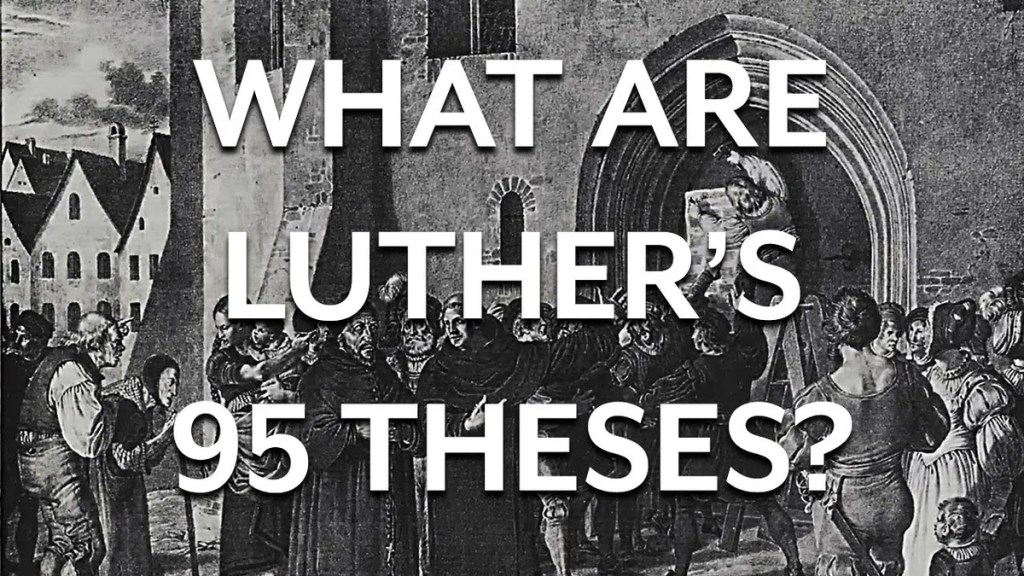
    Martin Luther’s 95 Thesis

    A reminder of what it took to pave the way out of the Papacys false Doctrine and Authoritarian Dictatorship; stealing God’s Glory; tiring the House of God into a den of robbers. Luther & the reformers died a martyrs death for God Alone, leading God’s flock away from the flesh.

    All Glory belongs to God.

    God wrote this on the Hearts of His chosen.

    Does that seem unlikely for someone as sinful as you? To that i say; Even more the likelihood that you are one of the Elect.

    He makes straight the crooked, heals the sick, comforts the broken… If you are well; you have no need to be healed. The more unlikely one seems to be among one of His “called”; the higher the chances that one who all doubt is actually the one who is called into Him by Him for Him.

    (more…)
  • Does Human Will Completely Make Its Own Choices?

    Does Human Will Completely Make Its Own Choices?

    The Will Of Man Is Dead In Trespasses And Sins; If Not, Then Scripture Isn’t The Truth

    “And you were dead in the trespasses and sins in which you once walked, following the course of this world, following the prince of the power of the air, the spirit that is now at work in the sons of disobedience— among whom we all once lived in the passions of our flesh, carrying out the desires of the body and the mind, and were by nature children of wrath, like the rest of mankind…”

    – Ephesians 2:1‭-‬3

    “And you, who were dead in your trespasses and the uncircumcision of your flesh, God made alive together with him, having forgiven us all our trespasses…”

    – Colossians 2:13

    The will of man is hostile to God; we want our desires met before the Lord’s desires, yet we claim to love Him. We don’t even know Who He is. 

    We Are Not Free-willed, But Our Will Is Bound To The Flesh


    How can a spiritually dead person have a will to choose Spirit? 

    Man’s will cannot submit to God’s Law, as we will read in the following several verses. 

    If this is true, how can our will be free? If it cannot submit to God, without God? 

    Scripture Says:

    “For the mind (will) that is set on the flesh is hostile to God, for it does not submit to God’s law; indeed, it cannot. Those who are in the flesh cannot please God. You, however, are not in the flesh but in the Spirit, if in fact the Spirit of God dwells in you. Anyone who does not have the Spirit of Christ does not belong to Him…”

    – Romans 8:7‭-‬9

    How Can The Will Of Man Be Free If It Cannot Understand The Things Of God?

    “The natural person does not accept the things of the Spirit of God, for they are folly to him, and he is not able to understand them because they are spiritually discerned…”

    – 1 Corinthians 2:14

    “as it is written: “None is righteous, no, not one; no one understands; no one seeks for God…”

    – Romans 3:10‭-‬11

    HOW CAN THE WILL OF MAN BE FREE IF IT CANNOT ACCEPT THE HOLY SPIRIT?

    … even the Spirit of truth, whom the world cannot receive, because it neither sees him nor knows him. You know him, for he dwells with you and will be in you.” 

    – John 14:17

    Cannot See The Kingdom Of God…

    Jesus answered him, “Truly, truly, I say to you, unless one is born again, he cannot see the kingdom of God.” 

    – John 3:3
    CANNOT HEAR THE WORDS OF CHRIST… Cannot see the Light of the Gospel (Blinded minds)

    Why is my language not clear to you? Because you are unable to hear what I say.  

    – John 8:43

    THINK THE GOSPEL FOOLISHNESS 

    For the message of the cross is foolishness to those who are perishing, but to us who are being saved it is the power of God.

    – 1 Cor 1:18

    DOES NOT SEEK FOR GOD

    there is no one who understands; there is no one who seeks God. 

    Rom 3:11

    DOES NOT FEAR GOD

    “There is no fear of God before their eyes.”

    Rom 3:18

    HEART IS DECEITFUL AND DESPERATELY WICKED

    The heart is deceitful above all things and beyond cure. Who can understand it?

    Jer 17:9

    WITHOUT GOD-GIVEN FAITH OUR DEEDS ARE SINFUL

    But whoever has doubts is condemned if they eat, because their eating is not from faith; and everything that does not come from faith is sin.

    Rom 14:23

    Nothing materializes without it being caused… that cause is God.

    God is the Creator of material and spiritual.

    All occurrences, including human actions and choices, are determined by preceding events & methods of strategies outcomes. Freedom of choice is illusory. God, throughout Scripture, does will events to take place, & if natural law adheres and fixes perfectly to the laws of nature. 

    Why would God not work in accordance with His own Law, being that God created Nature & Law itself? That’s illogical.

    Humanistic free will is no more than chaos; God is a God of order.

    He is Holy, which means; Whole, Complete, and Perfect, all ordered by His Decree. 

    THE RELATIONSHIP BETWEEN CAUSE & EFFECT.

    So, what is the proper definition of Free Will

    FREE:

    (a) Not controlled by obligation or will of another, having personal rights or liberty; NOT ENSLAVED or CONFINED.

    We are either “Slaves of Righteousness” or sin, there is no neutral.

    (b) Exempt from EXTERNAL DIRECTION or RESTRICTION; not forced or INDUCED.
    Completely denying Who God is

    WILL: 

    (a) The capacity to CHOOSE a goal and make INTERNAL efforts essential to the will’s realization.

    (b) To DECREE or ORDAIN, determine by choice.

    There’s only One who rightfully decrees and declares

    (c) MENTAL POWER by which one CONTROLS one’s thoughts, actions, and decisions. 

    Man, believing, he is Like the Most High, taking after Lucifer.

    FREE WILL:

    • (a) The ability to choose between different possible courses of action…
    • (b) The belief that HUMAN BEINGS can ACT ACCORDING TO THE DICTATES OF THEIR OWN WILL
    • (c) The human ability to make choices that are NOT EXTERNALLY DETERMINED; done of one’s own accord; voluntary.
    • (d) The conduct of human beings expresses personal choice and is NOT simply DETERMINED, BY PHYSICAL or DIVINE FORCES. 

    If you don’t believe God’s will overrides your will, you worship the God of your own mind.

    A Note From the Author — Revisited

    This post represents the furthest reach of my Reformed Calvinist period — and the place where that framework did the most damage to my own spiritual unfolding. I argued here, with considerable conviction and scriptural density, that the human will is categorically dead, hostile to God, and incapable of any genuine movement toward truth without prior divine intervention from outside itself. I believed I was defending God’s sovereignty. I now understand I was rehearsing the deceiver’s most effective lie.

    The doctrine of total depravity is not spiritually neutral. It is a cosmological claim — that the human being, at the level of their deepest nature, is corrupt, blind, and helpless. It forecloses the Pneumatic question before it can even be asked. If your will is dead, your inner knowing is worthless. If your perception is fundamentally fallen, then gnosis — direct experiential knowledge of the divine — is not only impossible but arrogant. You must instead receive truth from an external authority: the institutional church, the closed canon, the sovereign decree of a god whose ways are inscrutable and whose judgments are not yours to question.

    This is not liberation theology. It is a sophisticated mechanism of spiritual control, and the enemy has worked through it with extraordinary patience and precision across centuries of Christian history.

    What I now understand is this: the will that cannot submit to the Demiurge’s law is not evidence of depravity. It is evidence of a deeper allegiance. The Pneumatic soul was never made from the deceiver’s clay. It carries a spark of the true Pleroma — something he did not create and cannot fully govern. Its restlessness under his law, its inability to be fully satisfied by his system, its persistent sense that something is being withheld or distorted — these are not symptoms of sin. They are symptoms of remembrance.

    The passages I cited here — “none is righteous, no not one,” “the natural man cannot receive the things of the Spirit” — remain in the text, and they carry real signal. But the signal is not that the human being is worthless without divine coercion. It is that the Hylic mind, the purely material consciousness fully identified with the flesh and with the Archontic world-order, genuinely cannot perceive what the Pneuma perceives. That is a cosmological distinction between types of consciousness, not a blanket condemnation of human nature as such.

    I wrote at the end of this post: “If you don’t believe God’s will overrides your will, you worship the God of your own mind.” I meant it as a warning against self-deception. I now read it as the enemy’s signature line — the ultimatum that has kept sincere seekers small, afraid, and epistemically dependent for two thousand years.

    The true Father does not override your will. He calls to the Pneuma within you — quietly, without coercion — and waits for it to recognize itself in the call.