Category: ESOTERICISM

  • WAYS TO HONOR FALLEN SOLDIERS ON THIS MEMORIAL DAY

    WAYS TO HONOR FALLEN SOLDIERS ON THIS MEMORIAL DAY

    ‘Honor’ means showing respect and admiration.

    • Remember the true purpose of Memorial Day

    On Memorial Day, we pay tribute to the brave soldiers who lost their lives while serving their country. It is a time to express our gratitude for their sacrifices. We can honor them by attending ceremonies, visiting monuments or cemeteries dedicated to fallen soldiers, or observing a moment of silence.

    Here is a list of things you CAN do:

    DO YOUR RESEARCH

    Engage in an exploration of war spoils to cultivate empathy, gratitude, and understanding. Observe the harsh realities, challenges, and profound sacrifices made, nurturing a profound sense of admiration. This process unveils the far-reaching consequences of war, stimulating a critical examination of peaceful resolutions. The acquisition of deep understanding serves as a catalyst for compassion and peace, while concurrently paying homage to our esteemed fallen heroes.

    .. to honor those who made the ultimate sacrifice for our country. To help you observe the day respectfully, we have created a Memorial Day etiquette guide.

    ALL DAY

    Display the American Flag At Half Staff

    To honor and show respect for our brave military servicemen and servicewomen, we fly the flag at half-staff. It’s a way to pay tribute to their courage, sacrifice, and dedication.

    Here’s the procedure:

    1. Raise the flag to the top of the flagpole, representing our nation’s strength.
    2. Lower it halfway down, symbolizing mourning for our fallen heroes.
    3. Keep the flag at half-staff from sunrise to sunset, a solemn reminder of their service.
    4. Raise it back up before lowering it completely at the end of the day, signifying hope and resilience.

    Following this procedure, we express our deep gratitude and respect for those who served, honoring their memory and sacrifice.

    3 PM National Moment of Remembrance

     This moment of silence is a powerful way to show your appreciation for the sacrifices made by those who served in the military. It is a time to reflect on their bravery and to remember the debt of gratitude that we owe them.

    The National Moment of Remembrance is a full minute of silence beginning at 3:00 PM (local time) on Memorial Day to reflect on fallen service men and women. If you do nothing else to observe Memorial Day, no matter what you are doing, at 3:00 PM take a minute to remember why this day was established.

    Writing A Letter To A Veteran

    “””
    Certain veterans are unable to participate in Memorial Day events or visit the graves of their fallen comrades, potentially causing them to feel neglected or uncared for. Composing a letter for them serves the purpose of ensuring they are aware that we still hold their memory and contributions in high regard. It is a means of demonstrating that we have not forgotten them and recognizing the significance of their sacrifices. Similar to the uplifting and affectionate emotions brought by receiving a letter from a dear friend, these heartfelt messages can bring happiness and solace to the veterans who receive them.

    Share A Vetran’s Message Or Story

    Share a heartfelt message on social media expressing gratitude to the brave veterans who have served our country. Take a moment at 3:00 PM to honor and remember their sacrifices and the invaluable contributions they have made. Let us come together as a community to pay tribute to their selflessness and dedication. Additionally, it is crucial to reflect on the true significance of Memorial Day, which goes beyond barbecues and sales. This day is a solemn reminder of the lives lost in service to our nation, and it deserves our utmost respect and reverence.

    Visit a Monument, Cemetery, or Museum

    Memorial Day is a great opportunity to take a moment to visit a monument to fallen heroes, pay respect during a cemetery visit, or learn more about our nation’s history at a museum.

    Visiting A Veteran’s Grave

    Several cemeteries have sections dedicated to fallen soldiers, and visiting these graves can be a powerful way to show your respect. You can leave flowers or other mementos at the grave as a way to pay your respects

    Sharing Stories Of Veterans 

    When people serve in the military, they go through many important and sometimes difficult experiences. These experiences can be really interesting and unique. Veterans are people who have served in the military, and they have many amazing stories to share about what they have seen and done. It’s important for us to listen to and share these stories because it helps us remember and honor the veterans. By talking about their experiences, we make sure that we don’t forget the sacrifices they made to protect our country. It’s like keeping a special memory alive and making sure their bravery and hard work are always remembered.


    Sources

    From 36 USC 116: Memorial Day:

    “§116. Memorial Day

    (a) Designation.—The last Monday in May is Memorial Day.

    (b) Proclamation.—The President is requested to issue each year a proclamation—

    (1) calling on the people of the United States to observe Memorial Day by praying, according to their individual religious faith, for permanent peace;

    (2) designating a period of time on Memorial Day during which the people may unite in prayer for a permanent peace;

    (3) calling on the people of the United States to unite in prayer at that time; and

    (4) calling on the media to join in observing Memorial Day and the period of prayer.

    To learn more about the guidelines for properly showing and taking care of the US flag.

    **US FLAG CODE**

    The Code provides that on Memorial Day, the flag should be flown at half-staff until noon (local time). At noon, it should be raised to the top of the flag staff.

    National Moment of Remembrance Act

    White House Commission on the National Moment of Remembrance

    SEC. 4. NATIONAL MOMENT OF REMEMBRANCE.

    The minute beginning at 3:00 p.m. (local time) on Memorial Day each year is designated as the ‘National Moment of Remembrance’.” 36 U.S.C. § 116.

  • No Condemnation in Christ Jesus: Living by the Spirit

    No Condemnation in Christ Jesus: Living by the Spirit

    In the book of Romans, the apostle Paul presents a powerful message of hope, emphasizing the freedom and transformative power found in Christ Jesus.

    In Romans 8:1-25, Paul highlights the profound truth that there is no condemnation for those who are in Christ Jesus. This passage beautifully articulates the journey of believers, as they are liberated from the bondage of sin and embrace a life led by the Spirit.

    Let us explore the profound implications of these verses and the life-changing message they convey.

    Freedom from the Law

    Paul begins by proclaiming that the law of the Spirit of life in Christ Jesus has set us free from the law of sin and death. The limitations of the Law, which were unable to save or fulfill righteousness, have been surpassed by God’s ultimate act of love. He sent His own Son, Jesus, in human form, as a sin offering, to condemn sin in the flesh. This act of sacrificial love fulfilled the requirements of the Law, enabling us to walk according to the Spirit rather than the flesh.

    The Dichotomy of Mindsets

    Paul distinguishes between two mindsets: the mindset on the flesh and the mindset on the Spirit. The former leads to death and hostility toward God, while the latter brings life and peace. Those who are controlled by the flesh cannot please God, as human nature is inherently flawed and fallen. However, through the indwelling of the Spirit, believers experience a radical transformation that aligns their hearts and minds with God’s desires.

    Living in the Spirit

    Believers are reminded that they are not in the flesh but in the Spirit, if the Spirit of God dwells within them. The presence of the Holy Spirit within us testifies to our belongingness to Christ. Although our bodies may be affected by sin, the Spirit grants us new life because of Christ’s righteousness. Living according to the flesh leads to death, but living by the Spirit allows us to crucify the deeds of the body and experience true life.

    Adoption as Children of God

    As children of God, we have received the spirit of adoption, which allows us to cry out, “Abba! Father!” This intimate relationship with God is a testament to our status as heirs of His kingdom. Our identity as children of God carries with it the promise of future glory and eternal inheritance. However, this journey may involve suffering and hardship. Yet, the sufferings of this present time pale in comparison to the glory that awaits us.

    Creation’s Longing and Hope

    Paul expands the scope of redemption to include the entire creation. He explains that creation was subjected to futility and corruption but awaits liberation from its bondage. The creation groans and suffers in anticipation of the revealing of the sons of God. Likewise, we ourselves, having the first fruits of the Spirit, eagerly await our adoption as sons, the redemption of our bodies. In our hope, we persevere and eagerly await the unseen promises of God.

    The passage from Romans 8:1-25 encapsulates the transformative power of Christ’s sacrifice and the freedom we experience through the Holy Spirit.

    As believers, we are no longer condemned but rather adopted as children of God, eagerly anticipating the glorious future that awaits us.

    Our lives are no longer bound by the flesh, but by the Spirit, leading us to walk in righteousness and experience true life and peace.

    May we continue to embrace this liberating truth and live in the fullness of God’s grace, with unwavering hope for the promises yet to be fulfilled.

  • Faith is Not Contrary to Understanding or Reason – Faith Gives Understanding

    Faith is Not Contrary to Understanding or Reason – Faith Gives Understanding

    Faith and reason are often viewed as conflicting concepts, as if they exist on opposite ends of a spectrum. However, this notion fails to acknowledge the profound relationship between faith and understanding.

    In fact, faith can be seen as a pathway to true understanding, just like the eye that allows light to illuminate the world. For believers, their understanding of the universe’s origin is not rooted in speculation or guesswork; rather, it is grounded in the divine revelation that God has graciously bestowed upon them.

    My Aim

    This blog post aims to explore how faith and understanding are intertwined, emphasizing that faith can provide deep insights into the mysteries of existence.

    Faith

    A Source of Understanding

    The idea that faith is opposed to understanding or reason is a fallacy. Faith is not blind acceptance or irrationality; rather, it is a deeply rooted confidence and trust in something beyond our immediate comprehension. By embracing faith, believers open themselves to a higher realm of understanding, where divine revelation can shed light on the deepest questions of existence.

    God’s Revelation and Creation

    According to biblical accounts, God’s revelation offers believers a profound understanding of how the universe came into being. In the book of Genesis, we read that God spoke, and creation began. “In the beginning, God created the heavens and the earth” (Genesis 1:1). Through His divine word, God brought order out of chaos, initiating the magnificent tapestry of the universe.

    The Power of God’s Word

    The power and authority of God’s word are further echoed throughout the Scriptures. In Psalm 33:6, we are reminded, “By the word of the Lord, the heavens were made, and all their host by the breath of his mouth.” This verse emphasizes that God’s spoken word has the creative power to bring the universe into existence. Similarly, Isaiah 40:26 declares, “Lift up your eyes on high and see: who created these? He who brings out their host by number, calling them all by name; by the greatness of his might and because he is strong in power, not one is missing.” These passages highlight the majesty and wisdom inherent in God’s act of creation.

    The Divine Logos

    In the New Testament, the Gospel of John proclaims that Jesus Christ, the Son of God, played a pivotal role in creation. John 1:3 states, “All things were made through him, and without him was not anything made that was made.” This verse unveils the profound connection between Jesus, the divine Logos, and the act of creation. Moreover, Colossians 1:16 affirms, “For by him all things were created, in heaven and on earth, visible and invisible, whether thrones or dominions or rulers or authorities—all things were created through him and for him.” These verses reinforce the idea that faith in Christ as the creative force behind the universe leads to a deeper understanding of our place within it.

    Faith and Speculation

    Unlike unbelievers who must rely on speculation and theories regarding the origin of the universe, believers possess the invaluable gift of divine revelation. Faith liberates them from the limitations of human understanding, allowing them to embrace the profound truth that God is the ultimate source and sustainer of all things. By grounding their understanding in God’s revealed word, believers can explore the intricacies of creation with awe and reverence, recognizing that they are glimpsing the beauty of their Creator.

    Faith and understanding are not mutually exclusive but rather intricately connected.

    Faith enables believers to perceive the world through a lens illuminated by divine revelation. The understanding gained through faith surpasses mere human speculation, allowing believers to comprehend the origins and intricacies of the universe. Just as the eye receives light and grants vision, faith opens the door to profound insights.

  • Renewing Hearts and Minds: The Power of God’s Word in Working Out Our Salvation

    Renewing Hearts and Minds: The Power of God’s Word in Working Out Our Salvation

    Salvation is the main theme in Christian theology, representing the redemption and deliverance of individuals from sin and its consequences.

    As believers, we are summoned to partake in the ongoing process of working out our salvation.

    This process involves engaging with the very source of our salvation—the Word of God—to renew our hearts and minds. By approaching God’s presence with reverence and awe, practicing fear and trembling as Paul instructs in Philippians 2:12, we open ourselves up to the transformative power of God’s truth. This blog post explores the significance of relying on the Word of God and the role it plays in our journey of salvation.

    The Foundation of Salvation

    Before delving into the importance of the Word of God in our salvation, it is essential to acknowledge the foundation upon which our redemption rests. Rebirth by the Spirit occurs through the unmerited favor of God, through faith alone in Christ alone. Salvation is a gift of grace, not earned by our efforts or good deeds. However, this does not negate our responsibility to actively engage in the process of working out our salvation.

    The Word of God as a Source of Renewal

    The Word of God serves as a living and powerful tool for transformation. Hebrews 4:12 beautifully describes it as “living and active, sharper than any two-edged sword, piercing to the division of soul and of spirit, of joints and of marrow, and discerning the thoughts and intentions of the heart.” When we immerse ourselves in Scripture, we encounter God’s truth, which has the power to penetrate deep within us, challenging and reshaping our hearts and minds.

    Renewing our Hearts

    Through the Word, we gain insights into God’s character, His love, and His desires for our lives. It exposes our sinfulness, convicts us, and leads us to repentance. As we meditate on Scripture, we begin to align our thoughts, attitudes, and desires with God’s perfect will. This process of heart renewal enables us to let go of worldly values and embrace a Christ-centered perspective.

    Renewing our Minds

    In Romans 12:2, the Apostle Paul urges believers to “be transformed by the renewal of your mind.” The Word of God provides the framework for this transformation. It offers wisdom, guidance, and instruction in every aspect of life. By saturating our minds with Scripture, we develop a biblical worldview and discernment that helps us navigate the complexities of the world around us. As our minds are renewed, we gain a deeper understanding of God’s truth and grow in spiritual maturity.

    Approaching God with Reverence and Awe

    Working out our salvation requires a spirit of reverence and awe in God’s presence. When we approach Him, acknowledging His sovereignty and greatness, we position ourselves to receive His grace and wisdom. The practice of fear and trembling, as mentioned in Philippians 2:12, does not imply being terrified of God but rather approaching Him with deep respect, recognizing His holiness and our dependence on Him.

    Greater Glory through Working Out Our Salvation

    As we engage with the Word of God and diligently work out our salvation, we experience spiritual growth and transformation. Our lives become a reflection of God’s love, grace, and truth. The more we align ourselves with His will, the more we are conformed to the image of Christ. This transformative journey leads to greater glory as we fulfill the purpose for which we are called.

    Working out our salvation is an ongoing process that involves actively engaging with the Word of God. Through God’s Word, we renew our hearts and minds, aligning ourselves with God’s truth and experiencing Spiritual transformation.

  • Bible Verses About Fire Baptism: A Spiritual Purification

    Bible Verses About Fire Baptism: A Spiritual Purification

    Baptism is an important sacrament in Christianity, symbolizing the believer’s identification with Christ’s death, burial, and resurrection.

    While water baptism is commonly practiced, the Bible also speaks of another form of baptism, namely, fire baptism.

    Fire Baptism

    Fire baptism signifies a spiritual purification and empowerment through the Holy Spirit. In several passages, the Bible describes the concept of fire baptism and its significance for believers. Let’s explore these verses and gain insight into the deeper spiritual meaning they hold.

    Matthew 3:11-12: “I baptize you with water for repentance, but he who is coming after me is mightier than I, whose sandals I am not worthy to carry. He will baptize you with the Holy Spirit and fire. His winnowing fork is in his hand, and he will clear his threshing floor and gather his wheat into the barn, but the chaff he will burn with unquenchable fire.”

    In this passage, John the Baptist speaks of the coming Messiah, Jesus Christ. John acknowledges his inferiority and emphasizes that Jesus will baptize with the Holy Spirit and fire.

    The imagery of fire signifies the refining and purifying work of the Holy Spirit in the lives of believers. Just as fire separates wheat from chaff, the Holy Spirit separates the righteous from the unrighteous.

    Luke 3:16: “John answered them all, saying, ‘I baptize you with water, but he who is mightier than I is coming, the strap of whose sandals I am not worthy to untie. He will baptize you with the Holy Spirit and fire.’

    Similar to the prior verse, John reiterates the coming baptism with the Holy Spirit and fire. Here, John emphasizes his unworthiness to even untie the sandals of Jesus. This highlights the authority and power of Christ, who will bestow the Holy Spirit and the refining fire of spiritual transformation upon those who believe in Him.

    Mark 16:16: “Whoever believes and is baptized will be saved, but whoever does not believe will be condemned.”

    This verse underscores the importance of both belief and baptism for salvation. Water baptism is an outward expression of faith, while fire baptism represents the internal work of the Holy Spirit. Believers who embrace the essence of this “dual” baptism are saved, while those who reject the message of Christ face condemnation.

    Titus 3:5: “He saved us, not because of works done by us in righteousness, but according to his own mercy, by the washing of regeneration and renewal of the Holy Spirit.”

    The apostle Paul reminds us that our salvation is not based on our own righteous acts but rather on God’s mercy. Through the “washing of regeneration” and the renewal brought by the Holy Spirit, believers are transformed and purified spiritually.

    Acts 1:8: “But you will receive power when the Holy Spirit has come upon you, and you will be my witnesses in Jerusalem and in all Judea and Samaria, and to the end of the earth.”

    Before ascending to heaven, Jesus promised His disciples the baptism of the Holy Spirit. This baptism would empower them to be His witnesses and spread the message of salvation throughout the world. The Holy Spirit’s fire empowers believers to live out their faith boldly and effectively.

    Fire Purifies

    Fire represents the transformative and purifying work of the Holy Spirit in the lives of believers. It symbolizes the separation of the righteous from the unrighteous and the empowerment to live a life dedicated to God’s purpose.

    Hebrews 12:29 reminds us that “our God is a consuming fire.”

    This verse conveys the awe-inspiring nature of God’s presence and the all-consuming power of His righteousness. As we embrace the baptism of the Holy Spirit and fire, we open ourselves to the transformative work of God and His refining power in our lives.

    The concept of fire baptism in the Bible speaks to the profound spiritual transformation and empowerment that believers experience through the Holy Spirit.

    This baptism denotes purification, empowerment, and the separation of the righteous from the unrighteous, like wheat separated from the chaff.

  • Debunking Arguments for Human Free Will: Part One –

    BIBLICAL & SCIENTIFIC PERSPECTIVES

    In this blog post, we will critically examine the concept of human free will and explore various arguments that support its existence. By analyzing both biblical and scientific perspectives, we aim to provide a thorough and discerning analysis, seeking the truth rather than merely defending preconceived notions.

    free will iS A MIRAGE
    Defining Free Will

    Free will is commonly understood as the belief that individuals possess the ability to make choices independent of external forces or influences. It suggests that humans have the authority and self-control to shape their own destiny through their conscious decisions, regardless of the moral implications.

    The Problem of Free Will and Moral Responsibility

    One of the key dilemmas surrounding free will is its connection to moral responsibility. If individuals have free will, it implies that their actions are not determined by external factors such as circumstances, past experiences, or psychological traits. On the other hand, if free will does not exist, moral responsibility becomes questionable.

    Perspective

    Free Will is True Human Consciousness

    Advocates of free will argue that human consciousness, our self-awareness and cognitive abilities, confirms the existence of free will. They contend that our ability to introspect and reflect on our own thoughts and experiences supports the notion that our minds are free and not predetermined.

    Moral Responsibility

    The concept of moral responsibility rests on the assumption that individuals have power over their actions and are accountable for the consequences. Supporters of free will argue that without free will, individuals cannot be held responsible for their choices, thereby undermining the idea of moral responsibility.

    Human Agency ~ Freedom and Responsibility

    Human agency refers to our capacity to make choices and derive meaning from our environment. Proponents of free will claim that if everything were predetermined, individuals would lack the autonomy to influence outcomes or be morally responsible for their actions.

    Personal Experience

    Many proponents of free will rely on their subjective experience, where they perceive themselves as having sovereign control over their decisions and actions. This firsthand account is often used as evidence in support of free will.

    Quantum Mechanics

    Some scientists argue that quantum mechanical uncertainty supports the existence of free will. They point to observations of subatomic particles exhibiting random fluctuations, suggesting that fate may not be entirely determined.

    Why I Confidently Reject Free Will

    After extensive study and analysis, the author of this blog post firmly rejects the idea of free will. Through thorough investigation, the author has identified fallacies in the arguments presented in favor of free will and advocates for a deterministic perspective.

    In this first part of our analysis, we have examined arguments supporting human free will from biblical and scientific perspectives. While proponents of free will argue based on human consciousness, moral responsibility, human agency, personal experience, and quantum mechanics, the author asserts a rejection of free will based on a comprehensive evaluation of the evidence.

    In the next part of this series, we will continue to explore the topic and provide further insights.

  • Unlocking the Power of Solitude: A Journey of Self-Discovery

    Have you ever found yourself alone, cut off from the outside world, immersed in silence?

    In those moments of solitude, I discovered a profound sense of peace, a chance to delve into my innermost thoughts and emotions. The power of solitude is transformative—it opens doors to self-discovery and allows us to embark on a journey of personal growth and understanding.

    Isolation, though it may seem daunting, can be an influential and eye-opening experience. It strips away the noise and chaos of everyday life, providing us with an opportunity to confront our deepest fears, desires, and insecurities. It enables us to gain a better understanding of ourselves and our place in the vast universe.
    Isolation, though it may seem daunting, can be an influential and eye-opening experience. It strips away the noise and chaos of everyday life, providing us with an opportunity to confront our deepest fears, desires, and insecurities. It enables us to gain a better understanding of ourselves and our place in the vast universe.

    If you’ve ever felt the weight of loneliness or isolation, you may be familiar with the darkness that resides within. This darkness can serve as a catalyst for a challenging yet rewarding journey of self-discovery. It compels us to confront aspects of ourselves that may be difficult to articulate or face. The process goes beyond merely acknowledging the existence of darkness; it involves delving deep into its depths, accepting the unfamiliar, and exploring our subconscious.

    By embracing the darkness within, we gain insight into ourselves and the world around us. We begin to make sense of the pain, distress, and darkness that we encounter along life’s journey. It is through this introspective process that we can acknowledge and appreciate the beauty and strength that lies within the shadows. We learn to harness this power for positive transformation and personal growth.

    Illuminating the Soul in Analytical Psychology

    Analytical psychology recognizes the significance of light and darkness in understanding our inner struggles, psychological well-being, and emotional states. The interplay between the two sheds light on our unseen aspects, providing clarity to our spiritual existence. The inner light within us serves as a guiding beacon, reminding us of our connection to the divine and offering insight and clarity.

    By exploring the contrast between light and darkness, we gain a deeper understanding of our inner lives and how they shape our interactions with the external world. This understanding becomes instrumental in overcoming our struggles and attaining a greater sense of well-being.

    Integrating Darkness for Authentic Self-Discovery

    As we become familiar with darkness, we recognize the outline of our own shadows. We realize that we are the shadow, and that it is an integral part of who we are. From a spiritual perspective, the shadow represents the manifestation of our inner demons, negative energies, and suppressed aspects of ourselves. It may stem from past traumas, unresolved emotions, or societal conditioning.

    As we become familiar with darkness, we recognize the outline of our own shadows.

    Acknowledging and accepting our shadow is vital to our journey of integration and self-discovery. Our true nature encompasses not only our ego and self-image but also the shadow within. By embracing all aspects of ourselves, we can live authentically and fearlessly, unencumbered by the need for validation or protection of our ego.

    Embracing Isolation for Spiritual Awakening

    Isolation plays a significant role in this process. Whether it is imposed by external circumstances or driven by internal forces, periods of isolation can bring about profound spiritual effects. They offer an exponential impact on our minds, facilitating a transition from physical existence to spiritual growth.

    In isolation, we confront a reality that many shy away from, as the fear of death often overwhelms us. Yet, it is in this solitude that we find truth, that we encounter God Himself. Scripture speaks of meeting God in His secret place, which often corresponds to a state of isolation from a human perspective. Throughout history, many prophetic writings have emerged from individuals who experienced various forms of isolation. God calls the broken and fragmented, those who have been ignored, despised, and made to feel worthless by society, into a state of wholeness and completeness in Him.

    However, the path of isolation is not without its challenges. Those who choose to confront their suffering, pain, and shadows will undoubtedly face.

    Are you ready to confront the demons in your life?

    Are you brave enough to delve into the depths of your pain and face your darkest shadows? This journey is not for the faint of heart, but for those who are determined to grow and transform themselves, it can provide profound rewards.

    As you embark on this path of healing and self-discovery, be prepared for challenges unlike any other. But with every hurdle, you will discover a new inner strength and resilience that you never knew existed. It is this strength that will empower you to lead a life full of joy, purpose, and wholesomeness.

    Remember the words of Philippians 4:13, “I can do all things through him who strengthens me.”

    strength and beauty in shadowa light and dark

    With faith and determination, you can conquer the challenges ahead and take control of your future. As Jeremiah 29:11 says, “For I know the plans I have for you, declares the Lord, plans for welfare and not for evil, to give you a future and a hope.”

    So go forth and show the world what you’re made of.

  • The Dangers of Wi-Fi Body Surveillance

    The Dangers of Wi-Fi Body Surveillance

    {WI-FI MAPPING ~ {DensePose}

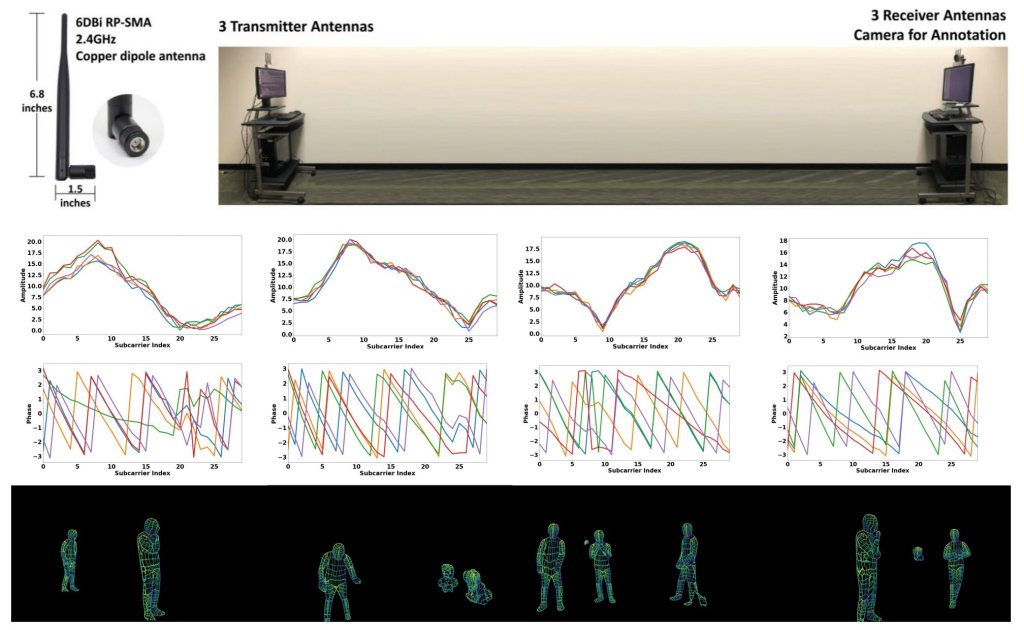
    In the age of advancing technology, a new and concerning phenomenon has emerged, known as WiFi body surveillance. This method utilizes Wi-Fi signals to generate UV coordinates of the human body surface, mapping body parts onto a 2D surface and analyzing movement with precision. While this may seem like a significant breakthrough in computer vision, it also raises alarming implications regarding privacy and personal liberties.

    how does it work?

    The technique known as DensePose utilizes raw CSI signals to generate body surface coordinates, transforming them into image-like maps through an encoder-decoder network. Its potential for low-cost and privacy-preserving algorithms for human sensing is undeniable. However, we must critically contemplate the consequences of this technology.

    By allowing the monitoring and analysis of human movement through Wi-Fi signals, we risk sacrificing our inherent freedoms and privacy.

    Imagine a world where every step, every gesture, and every intimate detail of our physical existence is meticulously observed and analyzed. The implications are profound and unsettling.

    We cannot afford to remain ignorant or indifferent to these matters. It is essential to recognize that history has shown us the dangers of oppressive regimes and the erosion of personal freedoms. By willingly embracing such invasive technologies, we risk subjecting ourselves to a future where our liberties are compromised and our autonomy is undermined.

    This moment demands a collective awakening. Are you sleeping in ignorance while the world is ablaze around you? We must rise from our slumber of ignorance and actively seek knowledge about the critical issues at hand. We must refuse to be passive observers as the world around us deteriorates. Instead, we should assume a position of authority and contribute to shaping a future that upholds the well-being and rights of every individual.

    Repressive regimes

    Throughout history, repressive regimes have emerged and exerted their power over populations, often leading to devastating consequences. These regimes have demonstrated a consistent pattern of disregarding individual rights, suppressing dissent, and consolidating authority in the hands of a few. The lessons learned from these dark chapters of history serve as a reminder of the importance of safeguarding our inherent rights and remaining vigilant against the allure of oppressive leaders.

    Repressive regimes have risen in various forms, ranging from totalitarian regimes like Nazi Germany under Adolf Hitler, communist regimes such as the Soviet Union under Joseph Stalin, to authoritarian regimes like those seen in many parts of the world. These regimes manipulate or dismantle democratic institutions, undermine freedom of speech and expression, and engage in surveillance and control of the population. They exploit the fears and vulnerabilities of the people, promising stability, security, or an ideological utopia while eroding personal freedoms and human rights.

    The repetition of history’s atrocities can only be prevented through a deep understanding of our rights and a commitment to vigilance. By recognizing the patterns and tactics employed by repressive regimes of the past, we can better identify the warning signs and actively resist the rise of authoritarianism. It is crucial to value and protect the principles of democracy, human rights, and individual freedoms, as well as to foster a society that actively promotes inclusivity, justice, and the rule of law. Only through our collective efforts can we ensure that the mistakes of the past are not repeated and that the inherent rights of every individual are preserved for generations to come.

    As a society, we have grown complacent and weak, avoiding discomfort and challenges. Yet, it is through adversity that we grow and learn. We must embrace discomfort and uncertainty as crucial aspects of personal growth and the pursuit of a more enlightened future.

    Our rights are being violated

    We must recognize the violation of fundamental constitutional rights. The unregulated use of technology poses a significant threat to privacy, freedom of belief, and the right to refrain from self-incrimination. We must ensure that technological advancements do not infringe upon these rights.

    First AMENDMENT VIOLATION

    Unregulated technology poses a significant threat to several fundamental constitutional rights. Specifically, the use of such technology may infringe upon an individual’s right to privacy, freedom of belief, freedom and privacy of their person and property, and the right to refrain from self-incrimination. Additionally, it is argued that these rights are further supported by the Ninth Amendment, among others. It is thus imperative that the intricacies of each of these rights be safeguarded within technological advancements.

    In conclusion, the emergence of WiFi body surveillance is a grave concern that should not be taken lightly. We must not remain passive or indifferent in the face of this technological advancement. It is crucial for us to awaken to the potential consequences, question the realities we accept, and actively work towards a future that upholds our fundamental rights and preserves our humanity. Let us prioritize knowledge and understanding, reject complacency, and strive to build a society that cherishes freedom, justice, and individual autonomy. Only by doing so can we forge a path forward that safeguards our values and ensures a brighter future for generations to come.

    Link: This paves the way for low-cost, broadly accessible, and privacy-preserving algorithms for human sensing.

    LINK: Using a deep neural network to improve virtual images of people created using WiFi signals

    LINK: Amplitude and phase sanitization, a two-branch encoder-decoder network, then clean these signals and that translates them into 2D feature maps that resemble images1This technique has the potential to pave the way for low-cost, broadly accessible, and privacy-preserving algorithms for human sensing2.

    “The results of the study reveal that our model can estimate the dense pose multiple subjects, with comparable performance image-based approaches, by utilizing Wi-Fi signals as the only input. This paves the way for low-cost, broadly accessible, and privacy-preserving algorithms for human sensing,”

    – Researchers Jiaqi Geng, Dong Huang, and Fernando De la Torre explain in their paper, DensePose From WiFi.
  • The Exalted Will Be Lowered

    “Lowly… Exalted”

    Contemplating upon my personal voyage as a person of faith, I am profoundly moved by the profound verity that God possesses the innate ability to exalt those who society deems unworthy. It is an awe-inspiring revelation that, in spite of enduring social ostracism, animosity, contempt, and derision, God has deliberately chosen us as His beloved progeny.

    In a world where worth and potential are often assessed through the lens of superficial and external criteria, it is all too facile to succumb to a sense of insignificance. The pervasive cultural narrative can swiftly reduce us to the status of “nobodies.” Yet, through redemptive work of Christ, we are reminded that our intrinsic worth and limitless potential transcend the ephemeral standards of society. Our profound union with God, established through His sovereign grace, becomes the ultimate arbiter of our identity and purpose.

    Whoever mocks the poor insults his Maker, and he who is glad at calamities will not be unpunished.

    The connection between our own happiness and the suffering of others evokes a deep sadness within me. It is profoundly troubling that some derive pleasure from the misfortunes of those less fortunate. This callous disregard not only violates moral principles but also reveals a lack of empathy and understanding. To revel in the sorrow of others contradicts the essence of our humanity and aligns with what can be described as the Satanic Agenda—an embodiment of sin, evil, malevolence, and spite. Finding pleasure in another’s desperation aligns us with darkness, negating the divine Light of God and Love, which truly defines our existence.

    IN HIS LOVE:
    In the realm towards which our trajectory unfolds, our hearts transcend the limitations of ego-driven impulses and personal biases. Liberated from the confines of self-interest, we embark upon a journey where our love for fellow beings emanates in its pristine form, uncorrupted and untainted. Guided by ethereal principles that govern the very essence of our being, we find ourselves immersed in a profound and awe-inspiring encounter with the luminosity of the Divine Love. In this unwarranted privilege bestowed upon me, I humbly acknowledge the depths of gratitude that arise from the mere prospect of participating in this transformative tapestry.

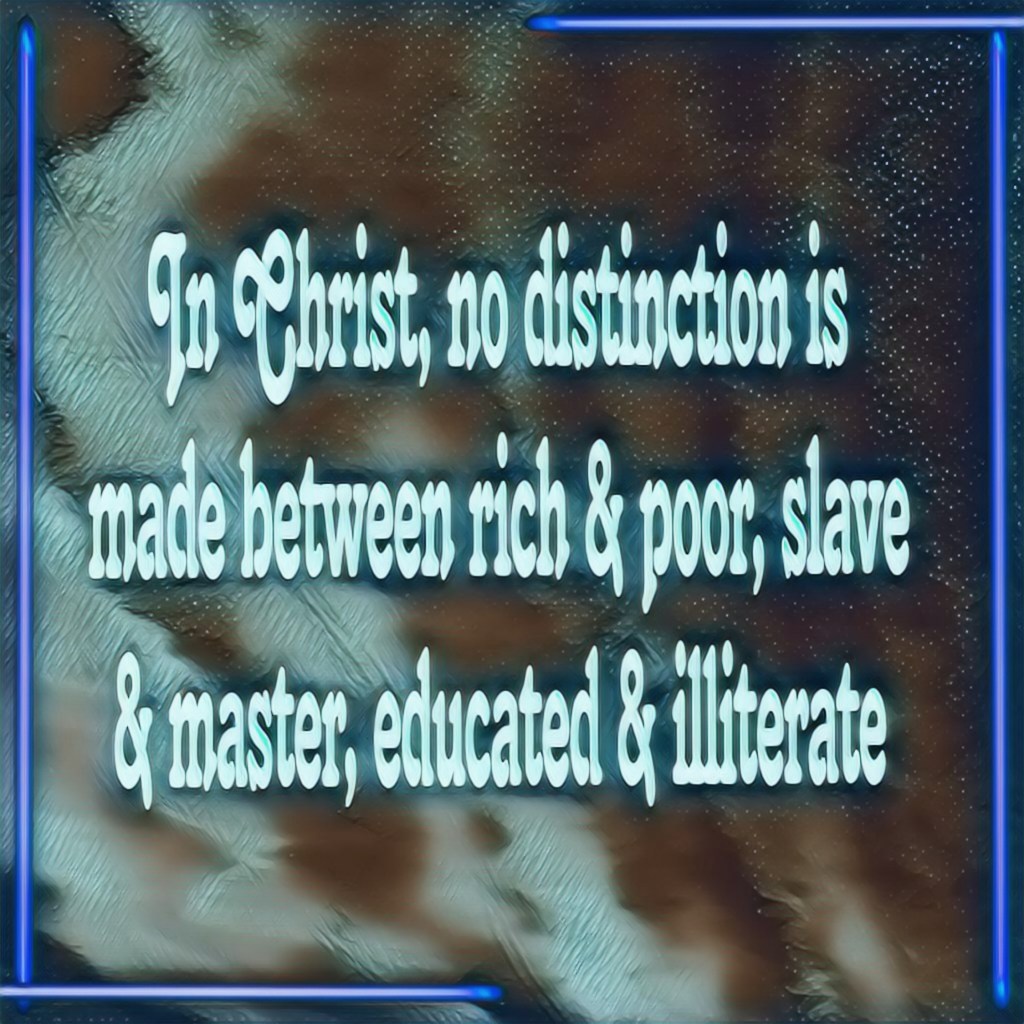
     Gal 3:28Col 3:11

    In the realm of our unfolding trajectory, our hearts transcend ego-driven impulses and biases. Freed from self-interest, we embark on a journey where our love for others shines in its pristine form. Guided by the ethereal principles of our Creator, we immerse ourselves in a profound encounter with Divine Love. With gratitude for this privilege, we recognize that our collective evolution rests on the understanding that love is the essence of our Creator’s nature. As we shed self-centeredness, we embrace boundless compassion, reflecting the love of Jesus Christ. Through our actions, we contribute to a world where Christ’s love reigns supreme, guided by God’s providence and grateful for the gift of salvation.

  • Inverting Hypocrisy: Reflect Before You Judge

    Inverting Hypocrisy: Reflect Before You Judge

    Only when we confront the inherent flaws that we can begin to grow. As humans, we are plagued by the pitfalls of double standards and hypocrisy. 

    However, as believers in Salvation, we must acknowledge our imperfections and strive to become more Christlike. Scripture affirms that every person needs Grace, as no one is without sin. 

    We must realize that we have already been forgiven of our sins, and our continuous hunger for God encourages us to want to confess our offenses against wholeness.

    Rather than fearing our moral failures, let us embrace them, for even in the darkest of moments, we can witness the divine glory of God’s providence. ALSO… Avoiding our failures doesn’t make them any less real, we are only insuring that their magnitude will grow and worsen in the shadows. Like mold, they can spread and infect other areas of our lives if we don’t address them properly.

    WHAT IS SIN?

    In biblical studies, “sin” is often described as a state of separation, fragmentation, or incompleteness when analyzing the original Hebrew, Aramaic, and Greek texts of the Bible.

    Sin affects every aspect of our being, separating us from God, ourselves, and others. We must engage in lifelong sanctification to conform to the image of Christ through the Holy Spirit.

    As Christians, we are convicted to acknowledge our imperfections, cultivate empathy, and recognize that God’s strength is made perfect through our weaknesses.

    DOUBLE STANDARDS?

    Double standards involve criticizing others for their mistakes while simultaneously committing errors ourselves.

    As human beings, it is an unfortunate reality that we often find ourselves entangled in the complex web of double standards and hypocrisy. This intricate phenomenon is woven into the fabric of our society, revealing itself in various forms, casting a shadow upon our collective integrity as well as individuals. 

    Hypocrisy Undermines Our Words & Actions

    It is hypocrisy & undermines the integrity of our words and actions. When we fail to walk our talk, we lose the trust & respect of those around us. By being graceful with one another, we can foster a space of commitment and empathy. So our mistakes will be acknowledged (by us) & we will learn from them rather than hide them away. Not steering whether they will be used as a means of criticism.

    SIN AFFECTS EVERY ASPECT OF OUR BEING

    We must also recognize that our inherent sinfulness affects every aspect of our being, including our thoughts, emotions, and actions. Therefore, we must engage in a lifelong process of sanctification, seeking to conform more closely to Christ’s image through the guidance of the Holy Spirit.

    Romans 2:1, Paul says:

    This passage reminds us of the importance of humility and self-awareness. It speaks to the very nature of our humanity and our need for grace and redemption. We are all flawed and fall short of the Glory of God, and it is only through His mercy and forgiveness we can find true healing and restoration.

    Rather than being quick to judge or criticize those around us, we are called to turn our attention inward and examine our hearts and actions. In doing so, we are better equipped to offer compassionate support and guidance to those struggling, recognizing that we, too, are imperfect and need grace. Self-reflection allows us to grow in our faith and become more authentic witnesses to the power of the love and mercy of God.

    This verse also challenges us to examine our hearts and actions. It calls us to deep self-awareness and introspection, recognizing our weaknesses and limitations. Only then can we offer constructive criticism and support to others with humility and vulnerability.

    We are called to emulate the very heart of God. He is a God of compassion and mercy, slow to anger and abounding in love. As we seek to follow in His footsteps, we will start to approach others with empathy and understanding, recognizing that we, too, have struggled and fallen short. Why do we do this? Because we have been given the mind of God.

    “For who has understood the mind of the Lord so as to instruct him? But we have the mind of Christ.”

    1 Corinthians 2:16: 

    We, as Christians, must uphold a higher standard of self-reflection and empathy towards others rather than falling into the trap of judging them. It is crucial to examine our shortcomings. Ultimately, we aim to love and serve others, seeing them as God sees them and extending grace and compassion.

    Jesus Warns About Hypocrisy

    Jesus’ warning in the book of Mark highlights the profound spiritual hurdle posed by hypocrisy for individuals who prioritize outward appearances and impressions while showcasing their piety. It serves as a reminder that the act of pretending to be virtuous while harboring ulterior motives obstructs genuine spiritual growth.

    Jesus calls for authenticity, reminding us that the path to salvation requires humility, self-reflection, and recognizing our flaws to cultivate empathy for others. 

    A person must be genuine to accomplish this. This is less about what you DO and more about what you ARE.

    By cultivating humility, genuine sympathy towards others, and an unwavering willingness to acknowledge our own capacity for wrongdoing, we embark on a path of intellectual stimulation and moral enlightenment. In this paradigm, we transcend the limitations of ego-driven narratives cultivated by sin and foster a consciousness that honors the intrinsic value inside of every human being. By embracing such truth, we unlock an expansive reservoir of provocation, allowing us to navigate the complexities of existence with wisdom, compassion, and an unyielding commitment to what God wants, losing more and more the desire to fill our own cup.