
Blog

  • The Nuance Of Nuance

    The Nuance Of Nuance

    Mastering the nuance between perception and reality is not a passive philosophical exercise; it is the essential toolkit required to dismantle our own cognitive illusions and navigate our way out of profound hardship.

    When you are in the trenches, survival depends on clarity.

    By carefully distinguishing between seemingly identical ideas, you build an architecture of discernment… allowing you to separate the truth of a situation from the mental friction keeping you stuck.

    Map vs. Territory

    The first tool in this kit is recognizing that the crisis you are experiencing (the territory) is completely separate from the story you are telling yourself about it (the map).

    The distinction between the map and the territory is a fundamental concept in rationality.

    A map is a representation of reality, while the territory is the actual reality itself.

    Why Does This Matter?

    This distinction matters  because it highlights the fact that our understanding of the world is always mediated through our mental models and representations.

    We must be aware that our ‘maps‘ , no matter how detailed or accurate, are never identical to the ‘territory‘.

    Recognizing that your map is flawed is the first step, but how does the map get drawn in the first place?

    When we are struggling, our maps are rarely constructed from present reality. Instead, they are stitched together using outdated, unexamined assumptions.

    To update your map, you must confront the difference between the mental debris you default to and the active awareness required to survive.

    Cached Thoughts vs. Actual Thinking

    CACHED THOUGHTS

    Cached thoughts are the pre-existing beliefs and assumptions that we hold, gathering trash and holding into them like a computer holds onto cqche. This means these are thoughts that lack conscious awareness.

    This Repository of ‘thoughts’ are mental shortcuts that we rely on to make sense of the world, with no thought as to if these thoughts are based in objective reality or not.

    THINKING

    In contrast, thinking involves actively questioning and challenging our cached thoughts, engaging in critical analysis, and seeking new information to refine our understanding.

    When you rely on cached thoughts instead of active thinking, your internal world becomes an echo chamber. You begin to mistake your unexamined biases for universal laws. This is where hardship turns into self-sabotage—when you project your own internal friction onto the external territory and assume everyone else is navigating the same distortion.

    Mind Projection Fallacy

    The Mind Projection Fallacy is a cognitive bias that occurs when people assume that their personal beliefs, values, or perceptions are shared by others or represent objective reality. This fallacy suggests that people often confuse their own thoughts and feelings with universal truths and expect others to have the same thoughts and feelings.

    The Mind Projection Fallacy can significantly distort one’s ability to discern.

    When we project our own beliefs and emotions onto others, we fail to accurately discern their unique perspectives and experiences.

    Here Are Some Examples Of How Mind Projection Impedes Ones Ability To Discern:

    Overestimating Agreement: One may falsely believe that others share their opinions, leading to an overestimation of consensus and potentially causing miscommunication or conflict when differing perspectives are eventually revealed.

    Inaccurate Assumptions: When projecting personal beliefs, individuals can make inaccurate assumptions about others’ thoughts and feelings, leading to misunderstandings and incorrect conclusions.

    Inability to Empathize: By assuming that everyone thinks and feels similarly, individuals can struggle to put themselves in others’ shoes and empathize with their unique experiences and emotions.

    Poor Decision-Making: Decision-making can become flawed when one assumes their perspective is universally shared, potentially leading to choices that are not inclusive or beneficial for all parties involved.

    To overcome the Mind Projection Fallacy and improve discernment, it is crucial to foster empathy, seek out diverse perspectives, and practice open communication. By recognizing the influence of personal beliefs and emotions on perception, individuals can become more discerning and accurately understand the viewpoints of others.

    The Halo Effect:

    a cognitive bias where our overall impression of someone or something influences our judgments of their specific traits. This term, coined by psychologist Edward Thorndike in 1920, illustrates how positive perceptions in one area can positively affect our opinions in another.

    Escaping this cycle of projection requires a radical shift in how you process information. You must start dissecting the narratives you encounter, both internal and external. To do this effectively and strip away the illusion, you have to separate the mere structure of a situation from its actual substance.

    Syntax vs. Semantics

    In the context of language and communication, syntax refers to the physical structure of a message.

    Semantics refers to the meaning or intended relationship to the territory.

    Understanding this distinction is crucial for effective communication.

    Yet, grasping the intended meaning is only half the battle.

    When you are fighting your way out of a difficult season, it is not enough to know what a situation means—you must understand its real-world impact.

    You must discern the difference between the definition of a problem and the actual consequences it produces.

    Semantics vs. Pragmatics

    Semantics refers to the literal meaning of a message, while pragmatics refers to the intended result or effect of conveying that message.

    This distinction is important because it highlights the fact that communication is not just about transmitting information, but also about influencing behavior and shaping outcomes.

    Once you understand the practical effects of your situation, the next logical step is determining where to apply your energy to fix it.

    This requires pinpointing your exact position on the battlefield.

    Are you fighting the immediate symptom right in front of you, or the overarching system that created it?

    Object-level vs. Meta-level

    The object-level refers to the specific task or problem at hand, while the meta-level refers to the broader context or framework within which that task or problem is situated.

    A good meta-level theory can help us get things right at the object level, but it is usually impossible to get things right at the meta level before making significant progress at the object level.

    Ultimately, navigating through these layers of abstraction brings you to the core of all discernment.

    When the mental debris is cleared, the projections are silenced, and the structure is separated from the impact, you are left with the final, most vital distinction required for true liberation.

    Seeming vs. Being

    We can only deal with how things seem to us, not how they are in absolute terms.

    This is a humbling reminder of our limited perspective and the importance of maintaining a degree of epistemic humility.

    If we optimize too hard for things that seem good rather than things that are actually good, we may end up with suboptimal outcomes.

    Signal vs. Noise

    Not all information is created equal.

    We often desire certain types of information while seeking to ignore others.

    The distinction between signal and noise helps us focus on the most relevant and valuable information while filtering out the irrelevant or distracting.

    Selection Effects

    Selection effects occur when the evidence we have access to is filtered or biased in a particular way.

    This can lead to distorted conclusions and faulty decision-making.

    Understanding selection effects requires modeling where our information comes from and accounting for the processes that shape what we see.

    What You Mean vs. What You Think You Mean

    People often claim to have meant something slightly different than what was originally stated when their original position is challenged or refuted.

    This automatic response, generated by our brains without conscious control, can be dangerous for clear thinking.

    It is important to be aware of this tendency and to strive for consistency and honesty in our communication.

    What You Mean vs. What Others Think You Mean

    The illusion of transparency and the double illusion of transparency highlight the gap between what we think we are communicating and what others actually understand.

    We often overestimate how clearly we convey our thoughts and feelings, while underestimating the extent to which others misinterpret our messages.

    Effective communication requires being mindful of these biases and seeking feedback to ensure mutual understanding.

    What You Optimize vs. What You Think You Optimize

    Our actions are often driven by hidden motives and incentives that we may not be fully aware of.

    Evolution, for example, optimizes for reproduction, but in doing so creates animals with a variety of goals that are correlated with reproduction.

    Intrinsic motivation is generally stronger and more effective than extrinsic motivation.

    Understanding the difference between what we think we optimize for and what we actually optimize for can help us align our actions with our true values and goals.

    Stated Preferences vs. Revealed Preferences

    Stated preferences are the preferences we explicitly express, while revealed preferences are the preferences we can infer from our actions.

    These two types of preferences are often misaligned, with our actions not matching our stated beliefs or desires.

    Recognizing this distinction can help us identify and address inconsistencies in our decision-making.

    What You Achieve vs. What You Think You Achieve

    Most of the consequences of our actions are unknown to us.

    We often overestimate our ability to predict and control the outcomes of our decisions.

    Effective action requires humility, openness to feedback, and a willingness to learn from experience.

    It is impossible to optimize without proper feedback, so we must be vigilant in seeking out information about the actual results of our efforts.

    What You Optimize vs. What You Actually Achieve

    Consequentialism focuses on the expected consequences of our actions, rather than the actual consequences.

    While it is important to consider the potential outcomes of our decisions, we must also be prepared to adapt and adjust our course based on the real-world results.

    Rigid adherence to a particular optimization strategy can lead to suboptimal outcomes if it fails to account for the actual effects of our actions.

    What You Seem Like vs. What You Are

    Our external appearance and behavior may not always reflect our true nature or inner experience.

    We may present a certain image to the world while privately struggling with doubts, fears, or contradictory impulses. Recognizing this distinction can help us cultivate self-awareness, authenticity, and empathy in our relationships with others.

    What Other People Seem Like vs. What They Are

    Similarly, we often make assumptions about others based on their outward behavior or reputation, without fully understanding their inner lives or the complex factors that shape their actions.

    Assuming that we understand others is a common mistake that can lead to misunderstandings, prejudice, and missed opportunities for connection and growth.

    What People Look Like vs. What They Think They Look Like

    People tend to underestimate the gap between their stated preferences and their revealed preferences. We may claim to value certain qualities or characteristics in ourselves or others, but our actions often tell a different story. Recognizing this discrepancy can help us align our self-perception with reality and make more authentic choices.

    What Your Brain Does vs. What You Think It Does

    Our brains are complex, powerful, and often mysterious. We are running on “corrupted hardware” in the sense that our thought processes are shaped by social and evolutionary factors that can distort the truth. The brain’s machinations are fundamentally social, automatically engaging in signaling, face-saving, and other behaviors that can lead to biased or irrational decisions. While we must be skeptical of the outputs of our thought processes, we must also strike a balance between skepticism and action, particularly in situations that require quick thinking or decisive action.

    Clever Argument vs. Truth-seeking

    People often believe what they want to believe, a phenomenon known as motivated cognition.

    Giving a smart person more information and more methods of argument may actually make their beliefs less accurate, because it provides them with more tools to construct clever arguments for what they want to believe.

    The actual reason for believing something determines how well that belief correlates with the truth.

    If you believe something because you want to, any arguments you make for that belief, no matter how strong they may sound, are devoid of informational context about the truth of the belief and should be ignored by a genuine truth-seeker.

    Lumpers vs. Splitters
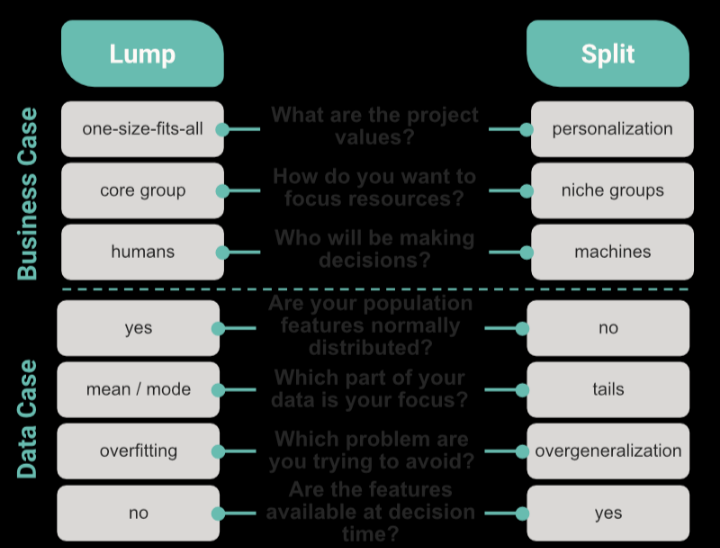
    Lumpers are thinkers who attempt to fit things into overarching patterns, while splitters are thinkers who make as many distinctions as possible, recognizing the importance of being specific and getting the details right. The lumper mindset can be useful for identifying broad trends and connections, while the splitter mindset is essential for accurate analysis and nuanced understanding.

    Fox vs. Hedgehog

    The fox knows many things, while the hedgehog knows one big thing. Closely related to the lumper-splitter distinction, the fox mindset involves a broad array of knowledge and the ability to draw insights from diverse sources. The hedgehog mindset, in contrast, focuses on a single big idea and applies it everywhere. According to Tetlock’s research, the fox mindset is generally better for making accurate judgments in complex, uncertain situations.

    Traps vs. Gardens

    Well-kept gardens die by pacifism, meaning that conversations, societies, systems, and even thermodynamic equilibrium tend to slide toward disorder, conflict, and decay unless actively maintained.

    Recognizing this distinction can help us be proactive in defending and nurturing the things we value, whether it’s a productive dialogue, a thriving community, or a well-functioning organization.

    Nuanced  thinking involves carefully distinguishing between seemingly similar concepts and recognizing the subtle differences that shape our understanding of the world.

    By engaging in this kind of discernment, we can make more informed decisions, communicate more effectively, and develop a richer, more accurate perspective on the complex realities we navigate every day.


    Less Wrong – NUANCE

  • The Strength of Gossip

    The Strength of Gossip

    In the darkest corners of existence, where shadows writhe and despair takes hold, there lies a world consumed by the insidious power of gossip.

    Our world.

    Gossips’ tendrils, malevolent spirits is what they are, slither through the hearts of human-kind, leaving behind destruction & despair.

    gossip reaps only death, in the end…

    The very essence of Life is snuffed out by each whispered tale.

    Gossips are Murderers

    Imagine, if you will, a realm where demons dance gleefully, feasting on the souls of those who indulge to the temptation of backbiting and gossip.

    Whenever someone speaks malicious or idle words to another person, the Spirit of God is not within the expansion of those involved.

    He withdraws, taking away the sweetness of their speech because they’ve fallen into entropy. .

    Left to their own devices, continuing in destructive actions without realizing the error of their ways.

    Blinded.

    Flickering Divine Light – Darkened

    The once bright Divine Light now flickers, weakening it’s memory in their minds: as gossip spreads and consumes everything.

    Lives are shattered, dreams obliterated, as the poison of gossip seeps into every crevice of the human experience.

    What could have been salvaged, gossip obliterated.

    Families are ripped apart by harsh words, causing their love and unity to crumble away.

    A Feast For Demons

    Oh, the demons love to feast upon the soul of the gossiper.

    They revel in the chaos they sow, multiplying the minds’ desires, the host; nonethewiser.

    Demons revel in the pain and suffering inflicted upon the unsuspecting.

    As each backbiting whisper escapes the lips of man, a piece of humanity’s collective soul rots, cut off forever and thrown into the void of outer darkness.

    The Black Hole.

    God’s Tears Snuff the Flames of Compassion

    The darkness grows, entwining around the hearts of the gossipmongers, suffocating the light of compassion and empathy from the once Holy temple.

    The Spirit of God weeps…

    They use their neighbors and brothers broken heart and tears as mere stones for entertainment. Judging all while overlooking their own wicked and judgmental hearts. Proudly, they persist in their lack of discernment.

    So the Spirit of God’s mercy and grace falls on deaf ears.

    But the victims are truly heard and will be avenged, lest the aggressors repent from the heart.

    HOPE EMERGES

    Revelations of Secret Schemes

    In the midst of this bleak landscape, a glimmer of hope will emerge.

    He already has.

    A singular figure, not cloaked in Light, but is Light Himself.

    He stands amidst this lower chaos as pur, in a world enslaved by darkness.

    He Wields the Sword of Righteousness

    Ready to strike down the liars and deceitful-hearted, as the Father commands…

    They blindly consume humanity’s purity with washed hands, foolishly  destroying all in their wake, pretending all is OK.

    The Guardian of Truth moves with purpose and determination.

    Hope Swings His Sword, Fiercely

    With each swing of His Sword, a wave of Truth washes into  the souls of rebellious haters, dispelling the illusion of the  shadows clouding their judgment, awakening their Eyes.

    Awakening the dead.

    He irons all the crooked things straight, disposing of all the broken pieces that crumble.

    God is no respector of persons.

    Victory Over Demons

    The demons, once gleeful in their malevolence, now cower in fear at the sight of the Guardian’s radiant presence. His mission will be fulfilled.

    The Guardian of Truth Continues on His Salvific Quest.

    The gossipmongers, once consumed by their own darkness & tickled by the shameless cruelty, begin to see the error of their ways, deeper into God, they can contrast the wickedness of self.

    They begin to receive His Grace, forming Mercy  to develop in their once jaded hearts, revenge transmuting into love .

    The tendrils of gossip that once ensnared their heart and mind begin to loosen as the Light of Grace and Mercy force its way in, according to Creation’s Blueprint founded on the Word.

    Them who are Saved will mourn, they’ll lament over their wickedness, shame saves them.

    Friendships, once lost to the ravages of gossip’s savagery, begin to mend.

    In every slice of division by His  wielding sword, His creation is  opened… cracked wide, laid bare, vulnerable and weak.

    His strength is  made perfect in weakness.

    The demons, sensing the loosening grip they have upon the decedents of Adam.

    The delusional belief in the control they had over humanity slips away, out of their control.

    The demons will launch one final, desperate assault.

    The Guardian of Truth stands firm as the Lion of Judah  Savior, not permitting a single soul within His flock to stray.

    In Him, the soul can never be touched by the flesh’s defilement and foolish disposition.

    His sword is raised high, ready to defend the innocent chosen ones from the low degenerates.

    He avenges the blood that cries out to God from the ground.

    He will vanquish the darkness from His sheep once and for all, Never again blind not mute, all duality expelled from our consciousness, eternally free from this matrix.

    Demons Banished

    With a mighty swing, the demons are banished to the dense and heavy Realm, desending lower and lower, falling into the permant realm of nothingness, the laughter silenced eternally.

    Banned from absorbing any more light from the ethers, never to feel the expansion of Physical LAW nor experience the of evolution again.

    And so, in the aftermath of the coming battle, a new era will dawn, a new Earth and a new Heaven.

    All succumb to the reward of their works. Secure in their ways of gossip and backbiting, no room is available in their hearts for God, false Gods they became.

    Truth Prevails

    For in the end, it is the truth that prevails, the light that conquers the darkness shines forever.

    The Spirit of God guides us in His ways, being attuned to His frequency.

    He keeps us on the path to salvation, keeping us in the way.

    The Lord of Truth, through His sacrifices made in our very hearts, speaks what is into being.

    Making our bodies His Temple, as He remains seated on His Throne.

    We are initiated by the Word of the Creator, in the Name of Righteousness, we are kept and preserved by His faith through His grace and mercy.

    A Poem Of Hope

    In every heart, His presence resides,
    A beacon of hope that never subsides,
    Each step we take, our faith amplified,
    His love is our anchor, in Him, we abide.

    Let us be the light amidst despair,
    Spreading His message of infinite care,
    For in His love, we can not be ensnared,
    Our course is clear, in His embrace, we are spared.

    As beacons of His love, we must shine bright,
    Illuminating the soul’s darkest of night,
    His guidance is our unwavering Light,
    In Him we conquer every shadow and fright.

    In times of fear, let us not be afraid,
    His love is our armor, His word our aid,
    His grace, a path through darkness, has paved,
    Through Him, all obstacles can be allayed.

    So let us trust in His eternal embrace,
    His presence within each heart, a saving grace,
    With faith as our compass, we’ll win this race,
    For in His light, we’ll find our rightful place.


  • Rosicrucian Texts

    Rosicrucian Texts

    Unveiling the Mysteries of the 17th Century

    Rosicrucianism emerged into public consciousness during the early 17th century, with the release of its initial manifesto, Fama Fraternitatis, circulated among German occultists around 1610.

    The printed editions of Fama Fraternitatis and Confessio Fraternitatis in 1614 and 1615, respectively, ignited widespread interest among alchemists, Qabalists, magicians, and astrologers across Europe.

    These manifestos narrate the history of the Order, introduce its enigmatic Founder, and elucidate its principles, sparking intellectual fervor for several years.


    In 1616, The Chymical Marriage of Christian Rosenkreutz was published, contributing to the belief that the Order was founded by a figure named Christian Rosenkreutz.

    LISTEN TO THE AUDIO (mp3) Version

    The Rosicrucian manifestos, initially published in the 17th century, were later translated into English by Thomas Vaughan in 1652. This translation sparked renewed interest in the 19th and 20th centuries.

    However, the modern Rosicrucian organizations, such as the Societas Rosicruciana in America (SRIA) and the Ancient Mystical Order Rosae Crucis (AMORC), often obscure the original teachings.

    Key Differences

    The original manifestos were anonymous and mystical, conveying esoteric knowledge through allegories and legends.

    Modern Rosicrucianism, as represented by SRIA and AMORC, has evolved into a more structured and organized system, with specific rituals, initiations, and teachings.

    The modern names and symbols may overshadow the original intent and message of the manifestos, potentially altering the understanding and interpretation of the teachings.

    Consequences

    The original teachings may be lost or distorted due to the modern emphasis on organization and structure.

    The mystical and allegorical nature of the manifestos may be overlooked or misunderstood in favor of more literal and dogmatic interpretations.

    The historical context and cultural influences that shaped the original manifestos may be forgotten or ignored.

    Importance of Context

    To truly appreciate the Rosicrucian manifestos, it is essential to consider their historical context and the original intentions of their authors. By doing so, we can gain a deeper understanding of the mystical and esoteric teachings that underlie modern Rosicrucianism, and appreciate the evolution of the movement over time.

    These texts are historical documents relating to the ‘Brotherhood of the Rosy Cross’, a renaissance German secret society. This group had a huge impact on more recent organizations such as the Golden Dawn, and is often cited by conspiracy theorists for completely different reasons.

    Note: 
    The connection of the original Rosicrucians with the well-known contemporary fraternal organization, the Rosicrucian Society [AMORC] is vague at best. The AMORC, founded in 1915, runs the Egyptian Museum in San Jose, CA, and a mail-order study series.


    The Real History of the Rosicrucians
    by Arthur Edward Waite

    This is Arthur Edward Waite’s study of the elusive Rosicrucians, a secret society of which the first public notice was in early 17th century Germany.

    Waite presents complete translations of all of the texts which defined the Rosicrucians, including the Fama Fraternitatis, the Confessio Fraternitatis, and the Chemical Wedding of Christian Rosencreutz.

    The longest text, the Chemical Wedding is a thinly veiled alchemical allegory.

    Waite also surveys Rosicrucian literature from successive centuries, including extensive quotes from authors who wrote about the Rosicrucians such as Michael Maier, Robert Fludd, Thomas Vaughan and John Heydon.

    Heydon wrote Voyage to the Land of the Rosicrucians, reminiscent of Thomas More’s Utopia, about a voyage to an obscure continent inhabited by Rosicrucians, included here in its entirety.

    Waite concludes with a look at a 19th century ‘Rosicrucian’ organization: Hargrave Jennings was, notably, a member of this group. Speaking of whom. . .

    The Real History stands in stark contrast to Hargrave Jennings’ The Rosicrucians, their Rites and Mysteries, which Waite (justifiably) criticizes throughout.

    All in all, this serves both as a survey of the literature about Rosicrucians and an invaluable anthology of that literature.

    Waite, although he had a solid background in the occult, is in a firmly rationalist mode in this book.

    The Real History will be of use to both academic and general readers.

    Start Reading
    Fama Fraternitatis

    In the Pronaos of the Temple of Wisdom

    by Franz Hartmann [1890]

    Contents
    Start Reading

    Franz Hartmann, who also wrote the esoteric novella With the Adepts, published this short non-fiction summary of the Rosicrucian question in 1890.


    Franz Hartmann, who also wrote the esoteric novella With the Adepts, published this short non-fiction summary of the Rosicrucian question in 1890.

    He reviews the well-known history and literature of the Rosicrucians. In the last two chapters Hartmann presents what he believes to be the core doctrines of the ‘true’ Rosicrucians.


    The Secret Doctrine of the Rosicrucians

    This book, attributed to William Walker Atkinson under the pseudonym “Magus Incognito”, is a comprehensive exploration of the Rosicrucian manifestos from the 1600s.

    The text delves into the esoteric teachings and occult doctrines of the Rosicrucians.

    It bears strong similarities to The Kybalion, which is also known to have been authored by Atkinson.

    Key Concepts in The Secret Doctrine of the Rosicrucians
    • The Rosicrucian manifestos and their significance
    • The nature of the universe, including the astral plane and the infinite unmanifest
    • The human soul and its relationship to the divine
    • The pursuit of spiritual enlightenment and the attainment of higher states of consciousness
    • The synthesis of Eastern and Western philosophies and spiritual traditions

    Fama Fraternitatis

    Fama Fraternitatis, attributed to C.R., was first published in 1614 in German and in 1615 in Latin. This anonymous manifesto introduced the concept of a secret brotherhood, the “Fraternity of the Rose Cross,” comprising wise men who had traveled extensively, including Damascus and Fez, to learn from scholars and philosophers.

    This document is the key on which the Rosicrucian phenomenon was based.

    It was first published in 1614 in German and in 1615 in Latin.

    The document discusses the wisdom and power of God, as well as the secrets of nature

    The author, Brother C.R., traveled extensively and learned from wise men in Damascus and Fez.

    He sought to reform the arts and sciences and impart his knowledge to others.

    The document emphasizes the importance of unity and the pursuit of true knowledge.

    Brother C.R. Built a fitting dwelling for himself and three other brethren to continue their work in secrecy

    About the Fraternity’s Founding

    The Fraternity of the Rosy Cross created a Magical Language and writing system, as well as a large Dictionary.

    Fraternity Beliefs

    The Fraternity believed that their teachings and knowledge should be shared with others, but only to those who were worthy and deserving.

    The Fraternity believed in the importance of secrecy and remained hidden for 100 years.

    The Fraternity believed in the power of God and the importance of following His commandments.

    The Fraternity believed in the reform and purification of the Church and the world.

    The Fraternity had a strong belief in the afterlife and the resurrection of the body.

    The Fraternity had a strong emphasis on learning and knowledge, and they valued the pursuit of wisdom and understanding.


    More Reading:

    Confessio Fraternitatis
    The Chymical Wedding
    Ara foedaris Theraphici
    Consideratio brevis
    Speculum sophicum rhodostauroticum
    Bacstrom’s Rosicrucian society
    The Rosicrucian Prayer to God – from John Heydon
    The Secret symbols of the Rosicrucians [In preparation]
    Michael Maier – Laws of the Fraternity of the Rosy Cross [In preparation – chapters 1-9 only]
    Vaughan’s Preface to the Rosicrucian Manifestos
    Coloured illustration of the Golden and Rosy Cross [from Secret symbols of the Rosicrucians]
  • Embracing Vulnerability

    Embracing Vulnerability

    Through Faith, I cherish the ability to feel genuine human emotions and show vulnerability during life’s challenging moments.

    It is through the strength of the Lord that I can embrace my weaknesses and recognize my need for His support.

    Gratitude for God’s Grace

    I am profoundly thankful to God for allowing me to experience deep emotions, to not shy away from pain and anguish until my final moments.

    My hatred for sin stems from a deep understanding of its nature.

    The Righteous Anger of Repentance

    The consequences of my sins incite rage within me, a righteous anger that leads to repentance and growth.

    This anger, when directed appropriately, ignites an ever-growing passion for the Lord with each trial He guides me through, fulfilling His promise.

    The Honor of Divine Discipline

    Being pruned by God is an honor; it signifies that I am His legitimate child.

    If one does not face God’s discipline in this life, it may indicate they are not His child and are instead awaiting judgment in the next.

    Seeing with the Eye of The Lord

    When you see with the Eye of The Lord, which is Light, you move beyond mere belief; you know that eternity is real and that the Lord reigns.

    This knowledge confirms that nothing impure can enter the Holy of Holies.

    The Intrinsic Holiness of God

    God’s holiness is intrinsic to His being.

    He cannot desire anything but holiness because it is not merely what He does or how He acts—it is who He is: THE GREAT “I AM.”

    The Choice of Pain Over Numbness

    I would choose to feel pain over becoming numb.

    Numbness, a state I’ve experienced, leads to detachment from genuine feelings.

    It’s a defense against the mental and emotional pain of realizing we are not who we thought we were.

    The Journey from Egotism to Self-Realization

    Egotism, rooted in childhood shame, persists into adulthood as a denial of our own shortcomings.

    But recognizing your worth and the extent of God’s love for you is far more astounding than any self-delusion of grandeur.

    The Heart Turned to Stone

    When numbness prevails for years, the senses we once had become dormant, leading to a heart that turns to stone.

    Rejecting one’s sinful nature or accountability, denying the wickedness within, prevents us from experiencing the true relief and comfort that Christ offers.

    The Power of Repentance

    It is only by denying oneself and following Jesus that we can begin to comprehend His sacrifice and the mercy He extends—a mercy beyond our understanding.

    The Dark Fraction of Our Being

    The inner child of a toxic family is a dark fraction of our being, a fragment of consciousness pushed into the shadows, resurfacing in moments of weakness.

    Facing My Iniquities

    In closing, remember the adage: “What you resist, persists.”

    It’s time to face our iniquities and embrace the transformative power of God’s grace.

  • Just in: Julian Assange Released

    Just in: Julian Assange Released

    Julian Assange has been released from Belmarsh prison in London, where he had been held for more than five years.

    He is now on his way to enter a plea deal with the U.S. Justice Department.

    The agreement is expected to end the yearslong legal battle over the publication of classified documents by WikiLeaks.

    Assange is anticipated to return to Australia following the proceedings.

  • FREE DIGITAL LIBRARIES

    FREE DIGITAL LIBRARIES

    1. Open Library

    OpenLibrary.org is a digital library project operated by the non-profit Internet Archive. It aims to create “one web page for every book ever published”.

    2. Digital Occult Library

    The site aims to foster learning, intellectual exchange, and growth by integrating different disciplines and perspectives on occult topics.

    3. Christian Classic Library

    Classic Christian books are enduring works of literature that have significantly influenced Christian thought, theology, and spiritual practice.

    These texts often explore themes of faith, morality, and the human relationship with the divine, providing insights that have transcended generations.

    Some of the most notable classic Christian books include “The Pilgrim’s Progress” by John Bunyan, an allegorical novel about a Christian’s journey towards spiritual enlightenment and salvation, and “Institutes of the Christian Religion” by John Calvin, a foundational work of Protestant theology.
    You can find more about these works on Gospel eBooks and Goodreads.

    Publishers like Ave Maria Press continue to release new editions of these classic works, ensuring their availability for contemporary readers. Their collection includes writings by influential figures such as Origen, Thomas à Kempis, and Teresa of Avila, among others avemariapress.com.

    4. Library Genesis

    Library Genesis (Libgen) is a comprehensive digital library offering free access to a vast collection of full-text content across various topics, including technology, art, biology, business, chemistry, and computers, aimed at democratizing knowledge by bypassing traditional access barriers associated with academic and literary resources.


    5. Many Books

    ManyBooks is a digital library providing access to a vast collection of free eBooks in multiple genres, catering to a wide range of reader interests.

    The platform features a diverse selection of titles, from fantasy and science fiction to romance and mystery, with options for both free and discounted books.

    Some highlighted titles include “The Show Must Go On” by Jonathon Kelley and “Do You Believe in Magic?” by Jim Melvin, showcasing the variety available to readers seeking new literary adventures.

  • Understanding the Supernatural

    Understanding the Supernatural

    The supernatural refers to phenomena that cannot be explained by conventional understandings of natural laws nor by mainstream science.

    This phenomena can include ghosts, spirits, psychic abilities, and other paranormal occurrences.

    Paranormal refers to occurrences or phenomena that are beyond the scope of scientific understanding or explanation. These events are often attributed to supernatural forces or powers that exist outside of the natural world. Examples of paranormal phenomena include ghosts, UFOs, telekinesis, and other unexplained phenomena.

    The word, Supernatural is derived from the Latin word “supernaturalis“.

    The term “Supernatural” refers to phenomena that are beyond the natural laws or understanding.

    The concept of the supernatural has existed throughout human history, with beliefs in gods, spirits, and otherworldly beings prevalent in various cultures and societies.

    Supernatural also includes premonitions, psychic dreams, and hauntings.

    In some cultures, the supernatural is embraced and celebrated, while in others it is feared and avoided.

    Scientific Perspectives on the Supernatural

    Some scientists believe that supernatural phenomena can be explained through psychology and neuroscience.

    Others argue that the supernatural is beyond the realm of scientific understanding.

    Over time, the exploration and interpretation of the supernatural have influenced mythology, religion, folklore, and literature, shaping our understanding of the unknown and the mystical.

    The development of supernatural beliefs has evolved alongside advancements in science and philosophy, sparking debates about the existence of the supernatural and its impact on human experience.

    Delving Beyond Mere Visual Observations

    Supernatural phenomenon goes beyond just what meets the eye.

    It delves into the realms of inner healing and divine intervention, offering a deeper understanding of a reality that surpasses the limits of our mortal existence.

    Exploring the supernatural opens up discussions on spirituality, consciousness, and the mysteries of the universe, challenging us to think beyond the tangible and consider the profound implications of forces beyond our understanding.

    Requirements Supernatural Perception

    Perceiving the supernatural requires individuals to open their minds to possibilities beyond the tangible realm.

    It goes beyond what can be easily explained or understood by conventional means, pushing us to contemplate the existence of forces and energies beyond our comprehension.

    The supernatural challenges the status quo and invites us to question our beliefs, leading to a deeper understanding of the mysteries of life.

    Spiritual Growth and Worldly Pursuits

    Individuals fixated solely on worldly pursuits risk neglecting their spiritual growth and ultimate destiny.

    The lure of material possessions and immediate gratification can blind individuals to the profound journey of self-discovery and spiritual awakening.

    By shifting our focus beyond this earthly existence, we can embrace realms beyond typical perception.

    Transcendence and Divine Intervention

    The supernatural offers a pathway of connection with the Creator offering a deeper understanding of our place in the grand scheme of existence.

    Divine intervention acts as a catalyst guiding us towards a more meaningful and purposeful life.

    Comprehending the supernatural realm requires a shift in perspective, opening the gateway of consciousness to understand profound insights and experience reality beyond the ordinary.

    It is through this exploration that we may uncover new insights into the mysteries of life and our place in the universe.

  • The Quantum Revolution

    The Quantum Revolution

    A Paradigm Shift in Physics

    The term “paradigm shift” (in the realm of physics) can be traced back to the work of Thomas Kuhn, a renowned philosopher of science.

    In his book: “The Structure of Scientific Revolutions,” published in 1962, Kuhn introduced the concept of a paradigm shift as a fundamental change in the basic assumptions and framework within a scientific discipline operates.


    Quantum Revolution

    The Quantum Revolution began in the early 20th century.

    This revolution led to a profound transformation in our understanding of the physical world, particularly on the atomic and subatomic scales.

    Key Figures such as Max Planck, Albert Einstein, Niels Bohr, and Werner Heisenberg played crucial roles in developing the principles of quantum mechanics.

    These principles upended classical physics and introduced a probabilistic view of the The Quantum Revolution, challenging long-held beliefs about the nature of reality.

    This paved the way for groundbreaking discoveries and technological advancements, such as quantum computing and quantum teleportation, that continue to shape the field of physics today.

    Historical Context leading up to the Quantum Revolution

    The Quantum Revolution had its roots in the early 20th century with the emergence of quantum theory.


    Prior to this revolutionary shift:

    Physics was dominated by classical mechanics established by Newton and others.

    However, scientists began to observe phenomena at the atomic and subatomic levels that could not be explained by classical physics alone.

    Key Event Leading To Quantum Revolution

    One key event leading up to the Quantum Revolution was Max Planck’s groundbreaking work on blackbody radiation in 1900, which introduced the concept of quantized energy.

    This laid the foundation for further developments in quantum theory by scientists like Albert Einstein, Niels Bohr, and Erwin Schrödinger.

    As research progressed, the wave-particle duality of light and matter, the uncertainty principle, and the concept of quantum superposition were all established, challenging traditional views of determinism in physics.

    These developments culminated in the quantum revolution, which fundamentally transformed our understanding of the physical world and paved the way for modern quantum mechanics.

    Challenges & Controversies surrounding the Quantum Revolution

    The Quantum Revolution has brought about a myriad of challenges and controversies that have sparked debates within the scientific community.

    Superpositioning

    One of the key educational facts surrounding this revolution is the concept of superposition, where quantum particles can exist in multiple states simultaneously.

    This idea challenges traditional notions of binary states and posed significant implications for computing and technologies.

    The controversy surrounding entanglement also touches on the concept of “spooky action at a distance,” coined by Albert Einstein, who initially dismissed the idea as incompatible with his theory of relativity.

    However, subsequent experiments have consistently confirmed the phenomenon, demonstrating that entanglement is a fundamental aspect of quantum mechanics.

    The debate surrounding entanglement has led to various interpretations, including:
    1. Quantum non-locality: The idea that information can be transmitted instantaneously between entangled particles, challenging classical notions of space and time.
    2. Hidden variables: The proposal that there are underlying variables governing the behavior of entangled particles, which could potentially explain the correlations without requiring non-locality.
    3. Copenhagen interpretation: The view that the act of measurement itself determines the outcome, effectively collapsing the wave function and eliminating any possibility of non-local information transfer.

    The controversy surrounding quantum entanglement serves as a catalyst for ongoing research and philosophical inquiry, driving us to reexamine our understanding of reality and the interconnectedness of the universe.

    As our knowledge and understanding of entanglement continue to evolve, we may uncover new insights into the fundamental nature of reality, ultimately reshaping our comprehension of the cosmos and our place within it.

    Quantum feat: physicists observe entangled quarks for first time
    Magnetic whirlpools creep and flow in response to emergent electrodynamics
    LHC experiments observe quantum entanglement at the highest energy yet

    These concepts highlight the complexities and intriguing possibilities of the Quantum Revolution, pushing the boundaries of our knowledge and reshaping the way we perceive the world.

  • Contrite Spirit

    Contrite Spirit

    A contrite spirit refers to a heart that is truly repentant, remorseful, and humble before God over one’s sins.

    Psalm 51 goes deeper…

    In Psalm 51:17, David declares:

    “The sacrifices of God are a broken spirit; a broken and contrite heart, O God, you will not despise.”

    A Contrite Spirit involves genuine brokenness, sorrow and acknowledgment of one’s sinfulness before a holy God.

    A Contrite Spirit is the attitude God desires more than mere outward religious rituals or sacrifices.

    “You do not delight in sacrifice…You do not take pleasure in burnt offerings.”

    A contrite spirit recognizes one’s utter need for God’s mercy and forgiveness.

    David pleads:

    “Have mercy on me, O God…blot out my transgressions.”

    A Contrite Spirit is characterized by humility, repentance, and a desire to turn from sin to obedience.

    “Create in me a pure heart, O God, and renew a steadfast spirit within me.”

    God promises not to “despise” or reject a truly contrite and repentant heart, but to forgive and restore the repentant sinner.

    In essence, a contrite spirit represents the broken, humble, and repentant attitude that God desires and responds to with mercy, rather than empty religious performances.

    Resources:

  • Why Face your shadow?

    Why Face your shadow?

    Shadow: the unconscious part of the human psyche that consists of repressed thoughts, emotions, desires, and characteristics.

    Avoidance: the act of keeping away from something or someone, often to prevent negative consequences or conflicts.

    What causes shadow avoidance to occur?

    Shadow avoidance occurs when we deny or refuse to see aspects of ourselves that make us feel uncomfortable, and instead attribute those unwanted qualities to others.

    This defense mechanism allows us to avoid responsibility for how we’ve hurt others and ourselves by misdirecting blame onto external targets.

    LETS GO DEEPER INTO SHADOW AVOIDANCE

    FEAR OF KNOWING THE ‘SELF’

    At a deeper level, shadow avoidance stems from the fear of truly knowing ourselves – afraid of our own…

    flaws, unhealed wounds, rejected aspects, dark emotions, and all that fun stuff.

    Facing the whole truth of who we are, and acknowledging our shared humanity is terrifying to unhealed people because it chips away at the façade; the false status & self-image.

    It means confronting painful experiences from the past, uncomfortable tendencies in the present, and an uncertain future.

    More threatening still …

    Within the darkness of our shadow something in us knows what’s there..
    our inner child –
    vulnerable, insecure, unloved.

    This child holds the parts of our ‘self’ from early life.

    If acknowledged, this inner child will demand our time and attention– we don’t have time for that.

    The needed healing we carry upon our shoulders is something that we feel ill-equipped to give and the very thought of it, exhausting…

    Their hurt (our hurt), having been buried deep for so long, sparks the complex reality behind of our inferiority complex .

    This reminds us of our powerlessness, insufficiency, and sparks immense guilt.

    A guilt that overwhelms us when it reveals the betrayal.

    Betrayal of self is the worst kind, forcing us to face the angry disowned child we neglected long ago.

    This Is Why We Project

    To protect against such fears, it becomes easier to simply deny our shadows exist.

    We project outward as a distraction. Projection protects us from facing what lies within.

    Tap here for DEFINITION OF PROJECTION

    In the field of psychology, projection is a defense mechanism that individuals often use to cope with their own feelings, thoughts, and impulses. This psychological phenomenon involves attributing one’s own undesirable traits, emotions, or thoughts onto another person. For example, if someone is feeling angry but finds it difficult to acknowledge that emotion within themselves, they might perceive others as being angry instead. This mechanism serves to protect the individual from facing uncomfortable truths about themselves, allowing them to avoid dealing with their own issues by externalizing them. Projection can manifest in various ways, affecting interpersonal relationships and one’s self-perception, and it is often explored in therapeutic settings to help individuals gain insight into their behaviors and emotional responses.

    In doing so, unfortunately, we miss opportunities for wholeness, self acceptance and compassion – both for ourselves and others.

    The lack of self-knowledge, to avoid suffering, keeps us trapped in a continual loop of suffering, and prevents genuine connection with anybody.

    IN COMES SHADOW WORK

    Shadow work provides a path of liberation. The truth is that -what seems too much to bear holds the most wisdom, but must be approached with care, empathy and non-condemnation.

    Our inner child embodied truth- a truth that you know deeply but have not been able to find words to describe. Your inner child has those words.

    With patience and compassion, we can listen for what who wants light, and love what who wants to be held.

    FEAR TURNS INTO AN ALLY

    Fear itself is a messenger. Each uncomfortable truth has a Gift – a peace needed for healing.

    There is strength in the human Soul to face what feels too extensive to face.

    YOU’RE NEVER ALONE

    Remember: You’re not alone in the shadows.

    You are there waiting for you to come and save yourself.

    This is the thing you are longing for…

    the hole in your heart that you have never been able to fill is waiting… in you & for you.

    Proceed at your own pace and discover the inner guide that will steer you towards all that you believe you lack.

    Allow it to emerge in its own time.

    But STOP blocking it.

Intuitive Data

Intuition, Decoded

Skip to content ↓