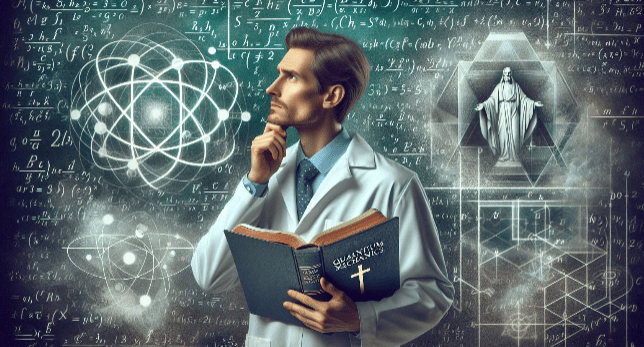
Quantum Alchemy is a framework that merges ideas from quantum physics—such as entanglement, superposition, and wave-particle duality—with the symbolic, transformative, and spiritual traditions of alchemy.
It often explores the idea of consciousness, energy, and reality as interconnected, sometimes framing quantum phenomena through the lens of alchemical processes like transformation, unification, or the pursuit of higher states of being.
IDEAS FOUND IN QUANTUM ALCHEMY:
Transforming the properties of particles or materials
Similar to how alchemists sought to transform lead into gold, quantum alchemy aims to manipulate the properties of particles, atoms or materials at the quantum level to create new forms of matter with desired characteristics.
This could involve changing the nuclear charges or electron configurations.
Computational method for predicting molecular properties
Quantum alchemy uses expansion to approximate and predict properties like binding energies for large numbers of molecules and materials by making small perturbations to a reference system.
This accelerates screening of potential catalysts or drug candidates.
Representation of the chemical space as a quantum superposition
Some propose representing all possible atomic compositions as a linear superposition state, with a “quantum alchemical Hamiltonian” driving the optimization to select the best molecule for a desired property.
Philosophical connections
There are also philosophical parallels drawn between the aims of ancient alchemy (e.g. transmutation, elixir of life) and modern concepts in quantum physics about the malleability and interconnectedness of reality.
Quantum alchemy leverages quantum mechanical principles to transform, optimize & efficiently model perveived matter and alter chemical systems in real ways.
It combines ideas from physics, chemistry, and the metaphysical quest of the ancient alchemists.
“With regard to extraterrestrial life (aliens), Scripture is silent.“
– John MacArthur
While the Bible does not explicitly address the topic of extraterrestrial life, it does provide us with essential truths.
“For in Him All things were created: things in Heaven & on earth, Visible & invisible, whether thrones or Powers or Rulers or Authorities@; all things have been created through him and for him. He is before all things, and in him all things hold together.“
Colossians 1:16-17 –
Alien Meanings & Context
Alien Meanings & Context… belonging or relating to another person, place, or thing… foreign; coming from another world…… a person who is not of a particular group or place…. a creature from outer space; extraterrestrial…. not familiar or like other things you have known…… different from what you are used to…… from another country….. too different from something to be acceptable or suitable…… from somewhere other than the planet Earth.
Biblical Interpretation & Assumptions
… strange and not familiar…
Ancient Astronaut Theory & Biblical Connections:
Another intriguing perspective within biblical interpretation of Aliens is the Ancient Astronaut theory.
This theory suggests that:
Extraterrestrial beings visited Earth in ancient times & played a significant role in shaping human civilization.
They interpret passages such as the “sons of God” in Genesis 6:1-4 as references to alien beings intermingling with humans.
They suggest that these encounters were recorded in spiritual texts and mythologies to make sense of the phenomena they witnessed.
Some claim that biblical descriptions of flying chariots or wheels within wheels can be interpreted as: early depictions of advanced spacecraft or unconventional aerial vehicles.
Exploring aliens within biblical interpretation does not oppose the spiritual & moral teachings found within Biblical texts. Instead, it offers a unique lens through which to understand ancient stories and offers an alternative perspective on the mysteries that surround our existence.
Angelic Manifestations: Beyond Physical Form
Angels, as depicted in various religious texts, transcend the limitations of physical form. The term “angel” itself signifies their role as messengers, rather than a specific appearance. According to the Bible, angels can manifest in different forms, such as men, fire, or immaterial beings. This fluidity suggests their origin from a realm beyond our three-dimensional space. The diverse manifestations of angels parallel the descriptions often associated with encounters with aliens. Like angels, aliens are believed to exhibit unconventional physiology and possess the ability to shape-shift, hinting at their connection to a higher dimension.
Alien Interventions: Warnings and Wisdom
Just as angels provide messages of provocation and comfort, aliens also seem to possess a similar intent. From ancient folklore to modern-day accounts, encounters with aliens often involve the delivery of warnings, prophecies, and insights. These messages align with the intentions attributed to angels in religious texts. Both angels and aliens acknowledge human failures while encouraging spiritual growth, reminding us of the need to transcend our earthly limitations.
Exploring the Multidimensional Nature of Angelic and Alien Realms
Biblical References: Multiverse and Heavenly Realms
The Bible offers glimpses into a multiverse where heavenly realms intersect with our own. Jesus’ references to “paradise” and promises of eternal life imply the existence of dimensions beyond our earthly perception. The concept of angels originating from God’s heavenly realm aligns with the possibility that aliens may come from higher dimensions where heaven and earth intersect. This suggests a connection between angelic and alien encounters, both originating from a spiritual source beyond our three-dimensional world.
Transcending Earthly Concerns: Angelic and Alien Guidance
Both angels and aliens play roles as messengers, guides, and warners, pointing us towards a greater purpose beyond our earthly existence. While our understanding remains limited within the three-dimensional realm, the encounters with angels and aliens challenge us to expand our perspectives. Their interventions, whether angelic or alien, serve as catalysts for spiritual growth, urging us to transcend earthly concerns and embark on a journey towards higher truths.
Conclusion 7.1 Summary of Findings 7.2 Personal Reflection and Application 7.3 Future Research Opportunities
In conclusion, the parallels between angels and aliens offer intriguing insights into the multidimensional nature of our reality. Viewing encounters with aliens through a spiritual lens allows us to explore the possibility of a shared spiritual source and a vast multiverse beyond our earthly perception. Both angels and aliens serve as messengers, offering wisdom and guidance that transcend our earthly limitations. While our eyes perceive the three-dimensional world, our souls recognize the infinite nature of the cosmos and our eternal connection to the Creator. Embracing the mysteries of angelic and alien encounters invites us to embark on a journey of spiritual exploration, unraveling the profound truths that lie beyond our earthly existence.
Resources:
“Angels: A History” by David Albert Jones
Article: “Angels and Aliens: A Comparative Study” by Michael S. Heiser
PDF: “The Bible and Extraterrestrial Life: A Theological Exploration” by Ted Peters
The word “alien” shifts its meaning depending on the context used.
From describing foreigners, to evoking images of extraterrestrial beings, “alien” captures the energy of the unfamiliar, supernatural, and unearthly.
Let’s trace Aliens’ linguistic roots & cultural origins of aliens, both terrestrial and cosmic.
The Many Faces of “Alien”
At its core, “alien” refers to something foreign, something that belongs to another person, place, or realm.
Its versatility allows it to wear many hats:
The Outsider Among Us
In everyday language, “alien” can describe something or someone that feels unfamiliar or out of place, like a person from a different culture or a strange environment. It can also refer to creatures from outer space in science fiction.
Alien can refer to a foreigner or outsider, used in legal and immigration contexts to describe a person from another country.
It can also describe an experience or entity that feels disconnected from familiar norms or culture.
Creatures from Beyond
In the realm of science fiction and popular culture, “alien” conjures images of extraterrestrial beings, mysterious visitors from distant planets.
These cosmic outsiders spark curiosity, fear, and wonder, embodying our fascination with life beyond Earth.
The Unfamiliar & Strange
“Alien” can also describe anything… ideas, emotions, technologies, or experiences, that feel foreign, unfamiliar, or fundamentally outside the norm.
It captures the sense of otherness, whether in a literal or abstract context.
Breaking alienus Down
Etymology of “Alien”
The word comes from the Latin alienus, meaning
“belonging to another” or “foreign.”
It’s a blend of alius (“other”) and the suffix –enus (indicating possession or origin).
Over time, this evolved into the Old French alien and eventually into the English term we use today.
Extraterrestrial Connections:
The prefix “extra-” (Latin exterus: “outside” or “beyond”) paired with “terrestrial” (Latin terrestris: of the Earth) gives us “extraterrestrial”
—a term that literally means “BeyondEarth.”
This linguistic construction perfectly encapsulates the cosmic connotations of “alien” in modern usage.
For a deeper dive into the word’s history, check out its etymology on Etymonline.
Where Did the Belief in Aliens Originate?
Our fascination with aliens isn’t a modern invention—it stretches back millennia, woven into the fabric of ancient mythology, astronomy, and storytelling.
The idea of beings from the sky, whether gods, spirits, or extraterrestrials, has captivated humanity across cultures and epochs.
Let’s explore the key origins of this enduring belief.
Ancient Astronomy and Mythology
Beings from the Sky
Long before science fiction dreamed up little green men, ancient cultures looked to the heavens and imagined celestial beings.
These “sky people” were often depicted as powerful, advanced, and mysterious—qualities we now associate with modern conceptions of aliens.
Common Themes in Ancient Myths
Advanced Knowledge
Sky beings frequently brought secret wisdom, advanced technology, or magical abilities to humanity, much like how we imagine aliens today.
Occasional Visitation
Both ancient gods and modern aliens are thought to make rare, fleeting appearances, maintaining an aura of mystery.
Ambiguous Forms
Unlike humans, these beings often lacked concrete physical forms, appearing in fluid, shifting shapes—a trait mirrored in the diverse depictions of aliens in modern media.
Examples of Sky Beings
Ancient Mythology
Across the globe, ancient cultures told stories of celestial visitors who descended from the heavens, interacted with humans, and left lasting legacies. Here are some striking examples:
Greek Mythology
The Titans, a race of giant gods predating the Olympians, included figures like Prometheus, who gifted humanity fire (a symbol of advanced knowledge), and Atlas, who carried the heavens on his shoulders.
Egyptian Mythology
Thoth, often depicted with the head of an ibis, was believed to have descended from the sky, bringing humanity the secrets of writing, science, and magic.
Sumerian Mythology
The Anunnaki, deities from a distant planet called Nibiru, were said to have visited Earth, helping humans develop agriculture and civilization.
Mesopotamian Mythology
In The Epic of Gilgamesh, Utnapishtim is granted immortality by the gods and builds an ark to survive a great flood. Some modern theorists interpret this as evidence of ancient alien encounters.
Hebrew Bible
Genesis 6 mentions the Nephilim, mysterious beings who “came down from heaven” and fathered gigantic offspring with human women. Some speculate these could be interpreted as extraterrestrials.
Hindu Mythology
Ancient Vedic texts describe celestial deities called devas who descended from the heavens in flying chariots, engaging with humans in profound ways.
Norse Mythology
The Aesir, gods like Odin and Thor, hailed from Asgard, a realm some interpret as another world or dimension.
These stories are diverse. Yet they share a common theme, they’re advanced beings from beyond our world influencing our world, covertly.
Could these ancient myths be early attempts to explain encounters with extraterrestrial visitors?
The debate continues to fuel imaginations today.
Aliens in Modern Minds
Today’s concept of aliens is shaped by science fiction, popular culture, and scientific exploration.
From H.G. Wells’ The War of the Worlds to blockbuster films likeE.T.and Arrival, aliens have become a canvas for creating themes of otherness, technology, and the unknown.
But the question remains: Are aliens purely a product of human imagination, or do they reflect a deeper truth about the universe?
Whether we view them as mythological sky gods or interstellar travelers, the concept of “alien” continues to captivate us, pushing the boundaries of what we believe is possible.
Further Reading:
Many resources are available for free online or as PDFs:
The Seth Material by Jane Roberts A collection of channeled messages from an interdimensional entity named Seth, who discusses other dimensions and the possibility of alien life.
The Secret Teachings of All Ages by Manly P. Hall A comprehensive exploration of esoteric knowledge, including discussions of interdimensional beings and their potential role in unexplained phenomena.
The Invisible Landscape: A Visual Guide to Parallel Universes by Terence McKenna This book explores the possibility of parallel universes inhabited by interdimensional beings, blending science and speculation.
UFOs and the Paranormal by John Keel Keel examines the connection between UFO sightings and paranormal phenomena, suggesting that many encounters may involve interdimensional beings.
High vibration refers to a state of energy characterized by positive feelings, thoughts, and actions, in contrast to low vibration, which is linked to negativity and stress.
Vibrational Targets
People who resonate at a higher frequency often find themselves preyed upon by dark energies.
These negative forces can creep in, using manipulation and emotional depletion to exploit, brought about by those who carry unresolved pain.
This leaves a portal for a deep sense of weariness, causing emotional fatigue, as their bright light becomes a beacon for those who seek to drain their spirit.
PORTALS FOR LOW VIBRATIONAL FREQUENCIES TO ENTER:
1. Criticism & Gossip
High vibrational individuals, with their heightened awareness, can unintentionally stir unease in those around them.
As a result, they frequently endure harsh judgment and whispers behind their backs, feeling the weight of loneliness and misunderstanding.
This stems from deep-seated insecurity or a profound lack of understanding, as their genuine selves can seem like an unwelcome reminder to those who are not prepared to face their own inner struggles.
It’s a painful truth that the authenticity of some can evoke fear in others, revealing a heart-wrenching vulnerability that many are too afraid to acknowledge.
2. Isolation
Individuals with elevated vibrations frequently find themselves in a state of loneliness, as the profound depth of their awareness creates a chasm between them and others.
The struggle for connection leaves them feeling isolated and misunderstood, trapped in a world where their sensitivity and insight can be burdensome rather than a blessing.
3. Sadness
This profound disconnection weighs heavy on their hearts, leading to a sadness that lingers like a shadow, as they yearn for companionship that seems perpetually out of reach.
4. Naive Authenticity
Authentic energy forces others to face parts of themselves they may not want to see, leading to avoidance or rejection.
Their presence compels people to confront the darker corners of their souls, unearthing truths that are often too painful to acknowledge.
This can result in a heartbreaking tendency for others to turn away, retreating into denial or pushing them away in fear of vulnerability.
Protecting Energy
To maintain an elevated state of consciousness, you must prioritize self-care and boundary-setting.
This includes staying surrounded by those who share a similar energy and limiting interactions with those who drain or manipulate them.
While the journey of a high-vibrational person can lead to spiritual growth, it’s essential to acknowledge the difficulties they face, balancing their elevated state with the need for protection and self-preservation.
The erosion of privacy rights involves the gradual loss of individual privacy due to heightened surveillance and data collection practices by both governments and corporations. This trend poses serious ethical and legal challenges, particularly concerning the potential misuse of personal information and its implications for civil liberties.
Key Factors Contributing to Privacy Erosion
Government Surveillance
Increased Monitoring
Governments utilize various surveillance programs to monitor citizens, often without their knowledge or consent.
Legal Frameworks
Laws like the Foreign Intelligence Surveillance Act (FISA) allow government access to data collected by tech companies, raising concerns about privacy violations.
Corporate Data Collection
Data Harvesting: Major tech companies collect extensive data on user activities, which can be shared with government entities.
Financial Surveillance: Financial institutions track transactions, creating a digital footprint that can be accessed by the government, often without explicit consent.
Implications of Privacy Erosion
Ethical Concerns
Potential for Abuse: The indiscriminate collection of personal data can lead to discrimination and social stigmatization.
Chilling Effect: Constant monitoring may deter individuals from exercising their rights to free speech and association.
Legal Challenges
Fourth Amendment Issues: The extensive surveillance practices may infringe upon constitutional rights, leading to calls for legal reforms to protect individual privacy.
Lack of Transparency: Many citizens are unaware of how their data is collected and used, complicating efforts to address privacy violations.
The erosion of privacy rights is a pressing issue that requires attention from both the public and policymakers.
Addressing these challenges involves advocating for stronger legal protections, increasing transparency in data practices, and fostering public awareness about the importance of privacy in a digital age.
Some key aspects of digital privacy include:
Data encryption: Protecting data fromunauthorized access using encryptionmethods
Secure communication: Using securecommunication channels, such as VPNsand encrypted messaging apps
Device security: Keeping devices andsoftware up-to-date with the latestsecurity patches
Awareness of rights: Understanding yourrights when interacting with lawenforcement and government agencies,especially at borders and checkpoints
Read the BASICS to find out how online surveillance works. Dive into our TOOL GUIDES for instructions to installing our pick of the best, most secure applications. We have more detailed information in our FURTHER LEARNING sections. If you’d like a guided tour, look for our list of common SECURITY SCENARIOS.
Sacred geometry is a field that not only explores the intricate patterns and shapes underlying creation, but defines it and holds within it the foundation of the origin.
From the simple elegance of the Vesica Piscis to the profound complexity of the Grid of Life, each symbol in this geometric art holds a wealth of meaning and nuance.
Let’s delve into these sacred geometric forms…
Vesica Piscis: The Intersection of Opposites
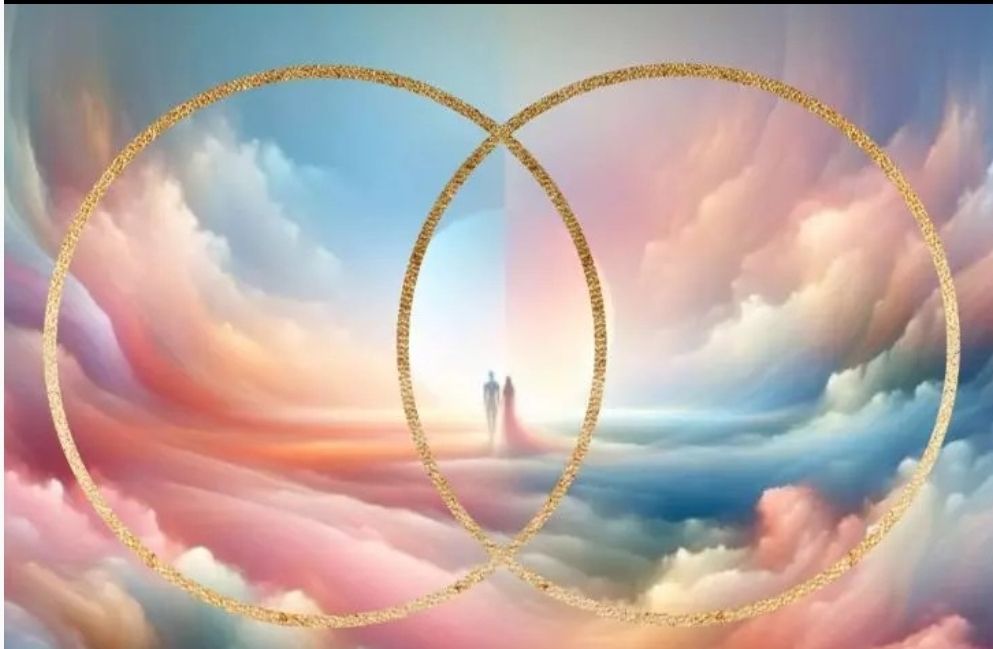
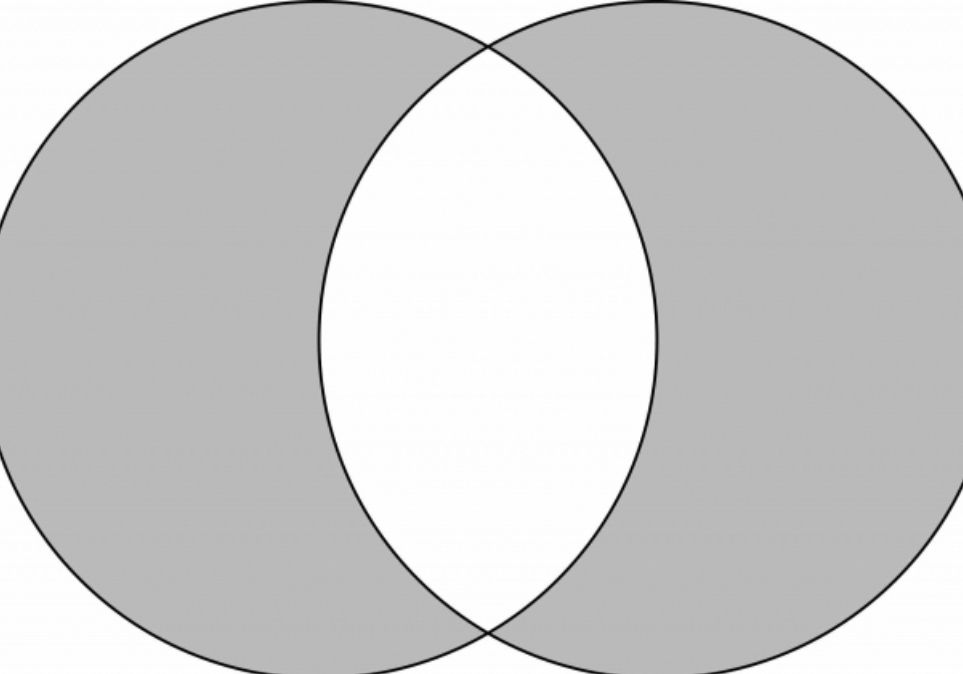
The Vesica Piscis, created by the intersection of two identical circles, represents the union of opposites.
Its proportions have influenced architectural masterpieces and are embedded in various artistic and organizational symbols throughout history.
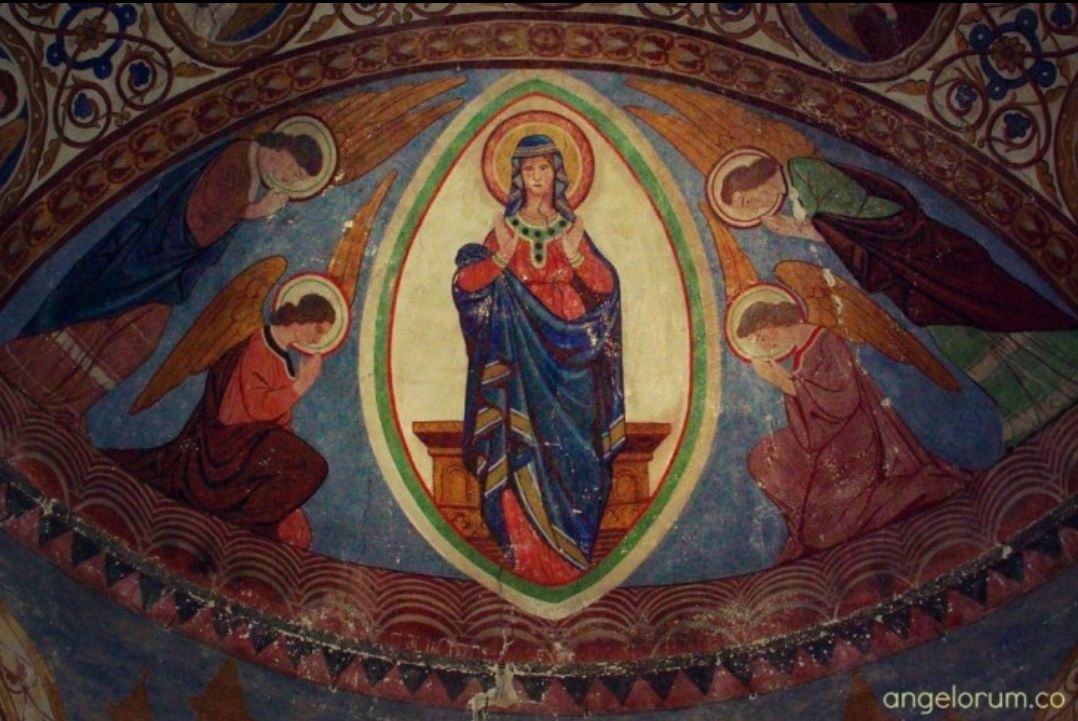
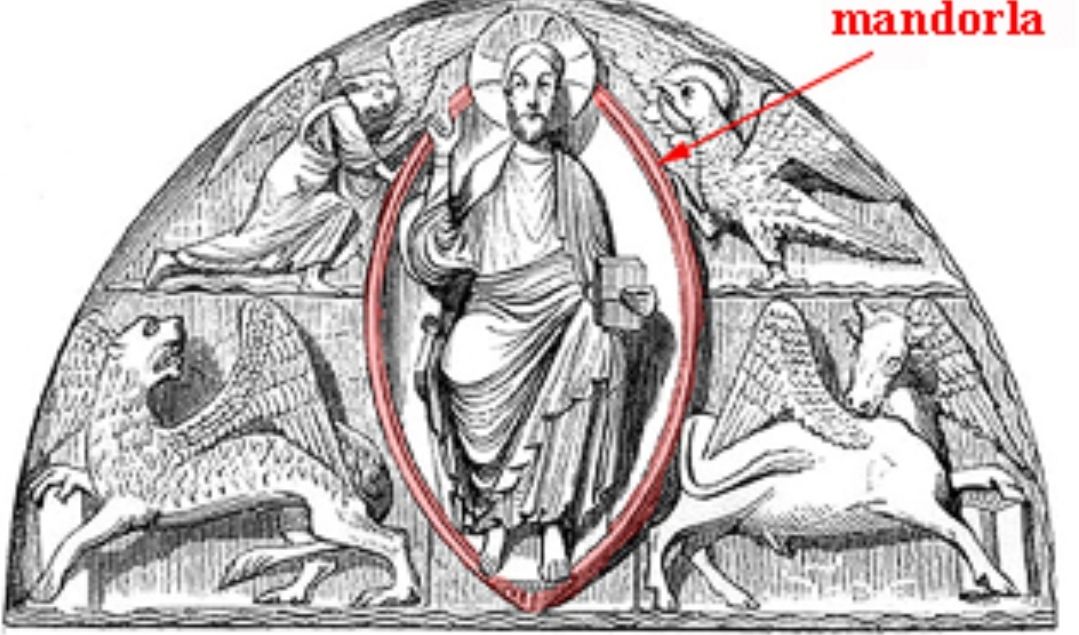
The mandorla is often seen in religious art and architecture.
MandorlaMandorla in Christian Art
The Mandorla is derived directly from the Vesica Piscis, symbolizing the canal of life, the vagina opening where all humanity derives.
This is intersection of the earthly and celestial realms. Earthly body delivered with soul inside
Seed of Life: The Essence of Creation
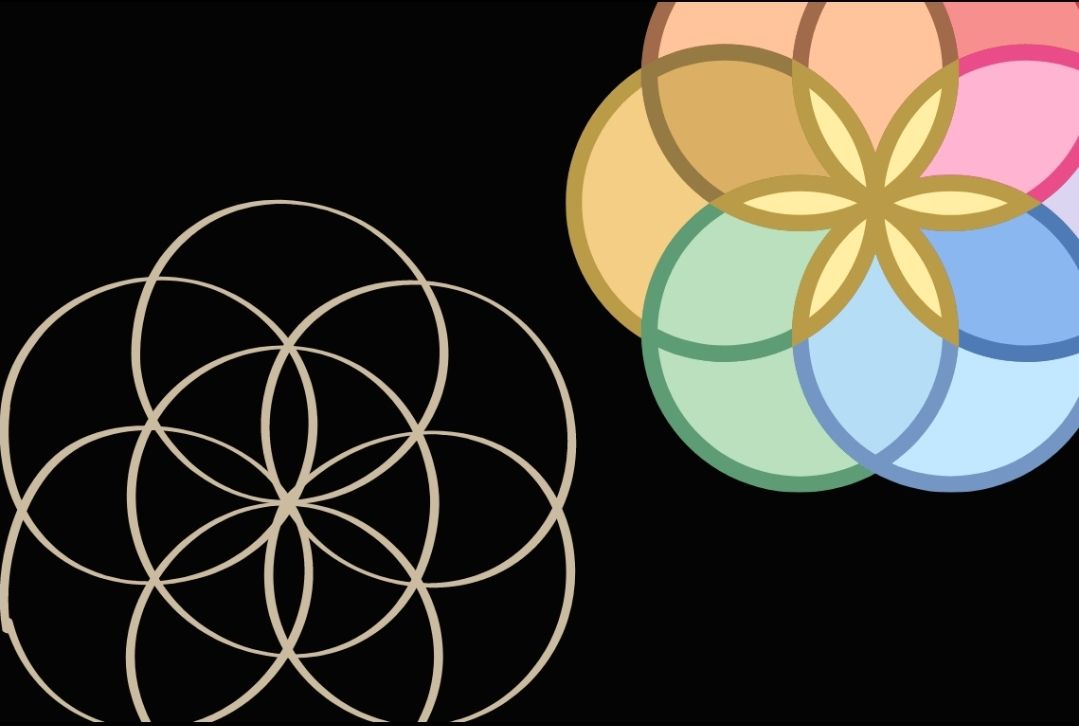
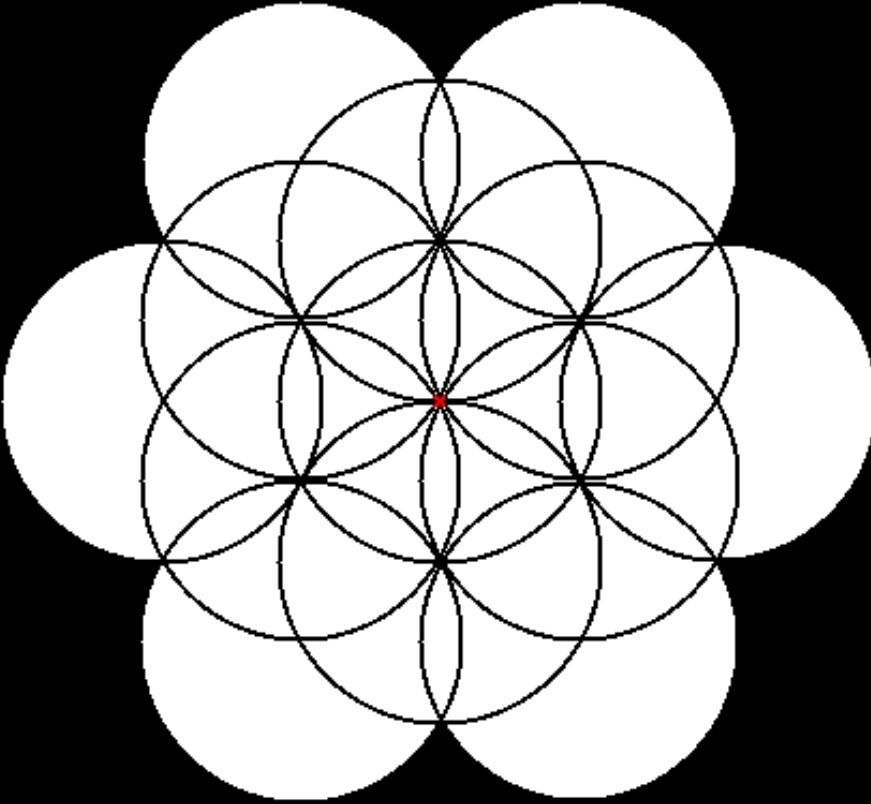
At the heart of sacred geometry lies the Seed of Life, a design made up of seven intertwined circles.
Its universal appeal can be witnessed in its widespread use across various religions and cultures.
Each overlapping circle represents a cell, a cycle, or even a day, culminating in the interconnected nature of life’s processes.
The Seed of Life speaks to the fundamental structures of life and existence, imbuing objects with a sense of protection and blessing.
Egg of Life: The Spark of New Life
Emerging from the Seed of Life, the Egg of Life symbolizes rebirth, fertility, and the spark of new life.
Seed of life is vagina, Ovulation is the substamce perfecting the environment for masculine seeding, increasing pleasure increases bodily ease and diversion.
By adding six more circles to the foundational Seed, the Egg of Life demonstrates how life and patterns expand and evolve.
Within the three-dimensional realm, the Egg of Life can be visualized through the eight spheres nestled within Metatron’s Cube, showcasing the versatility and interconnectedness of sacred geometric symbols.
Flower of Life: The Cosmic Blueprint
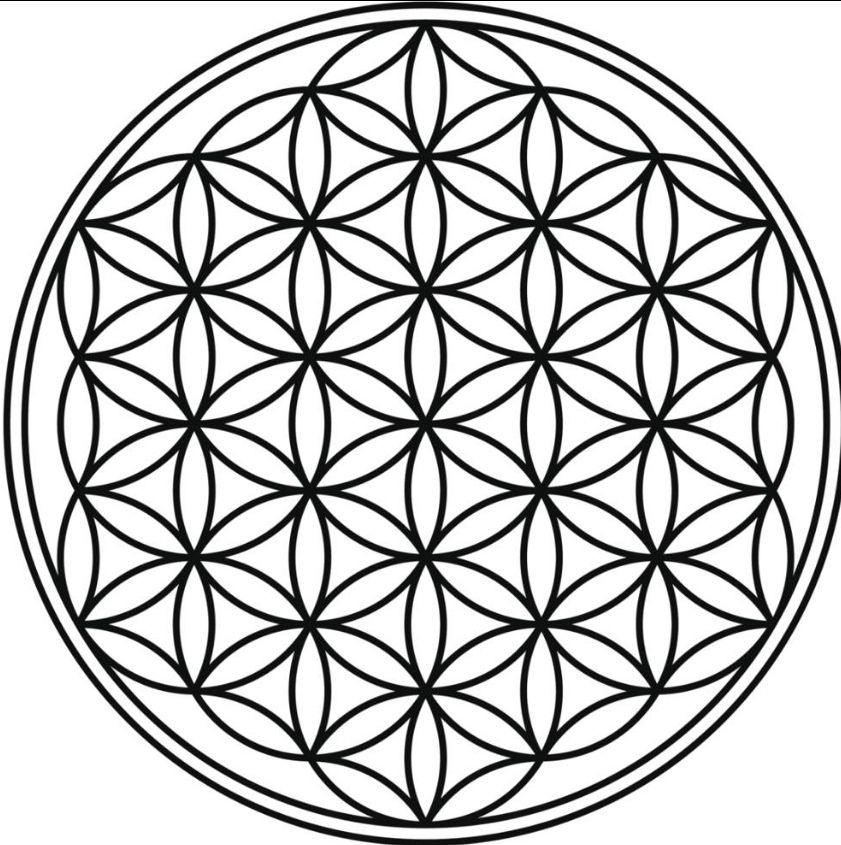
The Flower of Life, often depicted as a series of 19 interlocking circles, is believed to be the cosmic blueprint, encoding the very design of every atomic structure and life form.
Its presence across civilizations, from ancient Egypt to modern Japan, bears testament to its universal appeal.
JAPANESE FLOWER OF LIFE
Sephiroth
Tree of Life: The Interconnectedness of All Things
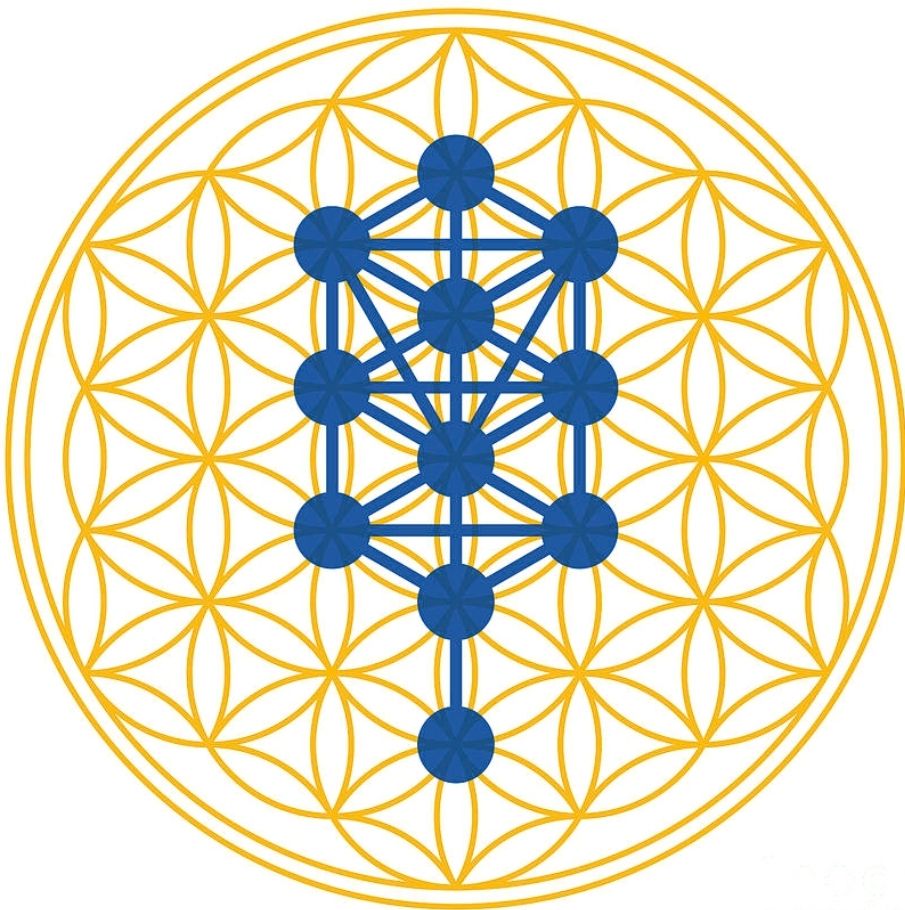
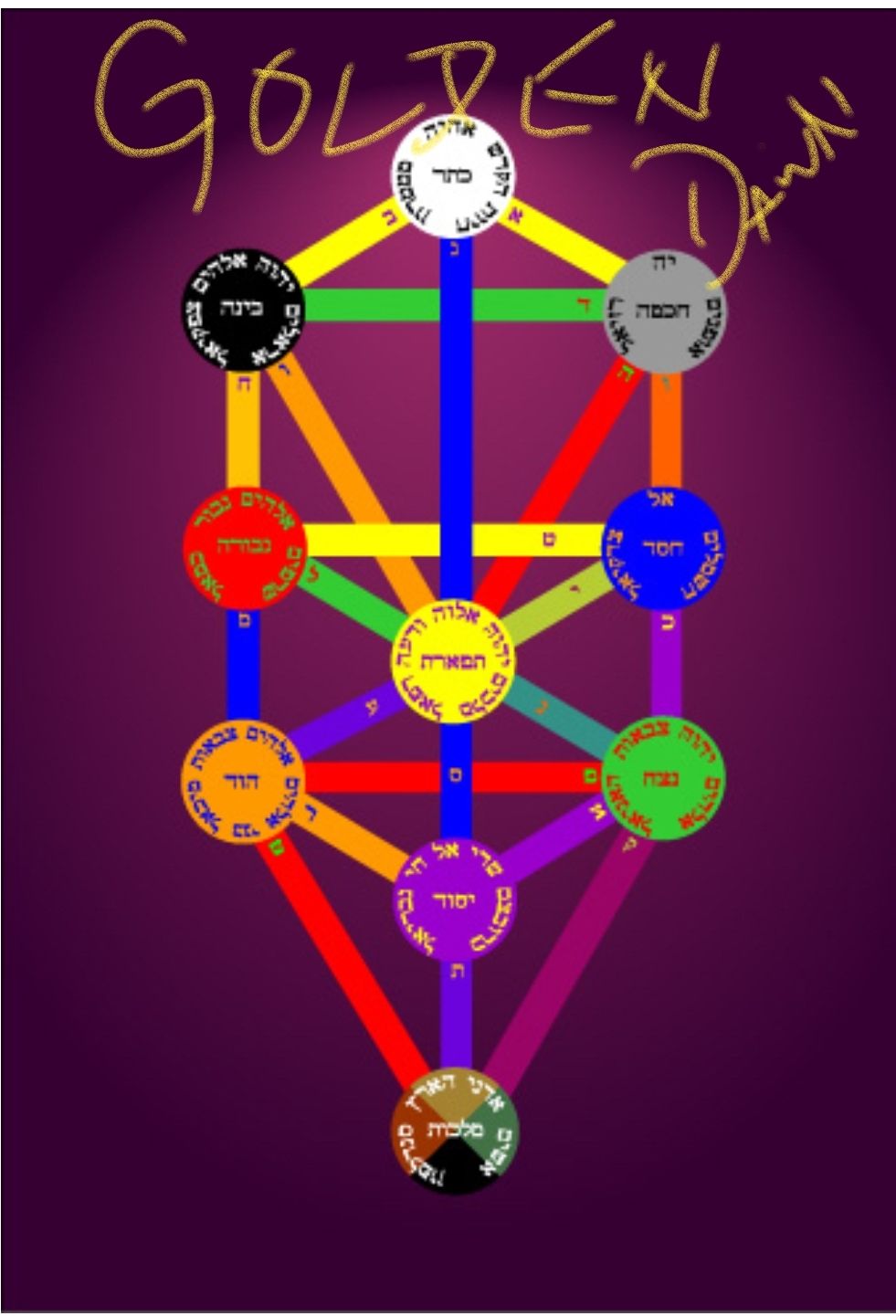
The Tree of Life represents numerous systems across varying cultures and religions, providing a hierarchical structure for all the forces in the Universe.
Its 10 spheres, called the “Sephiroth,” represent different qualities of the Soul, divided into three pillars: the Pillar of Severity, the Pillar of Mildness, and the Pillar of Mercy.
The Tree of Life reminds us that we are not alone in the Universe but rather part of a vast interconnected network.
Fruit of Life: The Holy of Holies
Emerging from the heart of the Flower of Life, the Fruit of Life comprises 13 interconnected spheres, often referred to as the ‘Holy of Holies.’
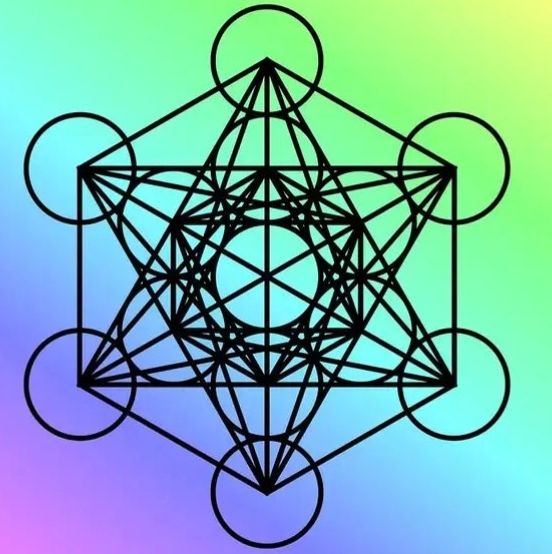
The 13 spheres symbolize unity and a transition between realms or dimensions, while the 78 lines that emerge when linking the centers of these circles fashion Metatron’s Cube, enclosing all five Platonic solids.
The Fruit of Life’s spheres symbolize the feminine aspects of creation, providing a foundation for the 78 masculine rays of creation.
Metatron’s Cube: The Divine Blueprint
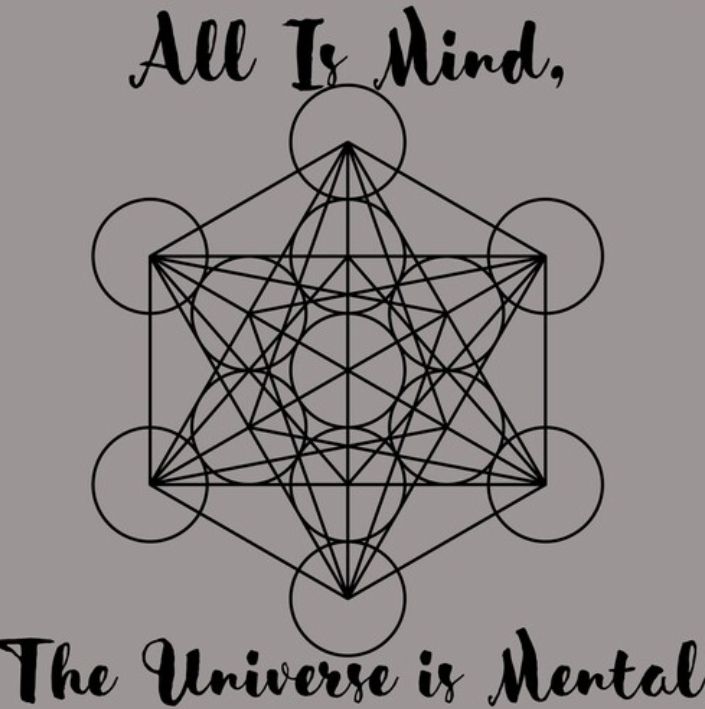
Metatron’s Cube, a geometric construct associated with the archangel Metatron, is a pivotal bridge, transforming 2-dimensional realities into 3-dimensional realms.
Within this complex geometric form, the five Platonic solids are discerned, positioning Metatron’s Cube as a testament to the divine blueprint upon which the cosmos is etched.
As quantum physics ventures deeper into understanding existence, it continually echoes the
Hermetic quote, “all is mind; the universe is mental,” with Metatron’s Cube in mind epitomizes the abstract, cognitive foundation of our universe.
Grid of Life: The Masculine Counterpart
The 64-tetrahedron, commonly termed as the ‘Grid of Life,’ is the masculine counterpart to the Flower of Life.
This geometric form, comprising 64 individual tetrahedrons, overlays the Flower of Life, symbolizing the convergence of space and time.
The allure of the Grid of Life transcends its geometric elegance, embedding itself in the mystique of the number 64, which recurrently surfaces in nature, mysticism, and human constructs, from genetic code to sacred texts.
The Grid of Life emphasizes the interconnectedness of all things and underscores its significance in our understanding of the universe.
Scripture obviously doesn’t describe God in direct quantum terms, as these terms are contemporary.
Yet there are several Bible verses & theological concepts that do align with Spirit being Light and Energy.
God in Scripture
Light & Energy
1 John 1:5: “God is light; in Him there is no darkness at all.” This verse directly describes God as light, emphasizing purity and the absence of darkness.
1 Timothy 6:16: “He alone is immortal and dwells in unapproachable light, whom no man has seen or can see.” This verse speaks to the transcendent nature of God’s light, which is beyond human comprehension.
John 8:12: “When Jesus spoke again to the people, he said, ‘I am the light of the world. Whoever follows me will never walk in darkness, but will have the light of life.’” Jesus, as the manifestation of God, is described as the light of the world.
Genesis 1:3: “And God said, ‘Let there be light,’ and there was light.” This verse illustrates the power of God’s word to create light, a fundamental element of the universe.
Sound & Light in Creation
The Bible also contains references to creation through God’s spoken word, which can be interpreted as sound and light:
Genesis 1:3: “And God said, ‘Let there be light,’ and there was light.”
The act of speaking light into existence suggests a connection between sound and light in creation.
John 1:1: “In the beginning was the Word, and the Word was with God, and the Word was God.”
The term “Word” (Logos) implies the creative power of God’s speech.
Revelation 4:5: “From the throne came flashes of lightning, rumblings, and peals of thunder.”
This imagery combines light and sound to depict the divine presence.
God’s Breath & Human Life
Genesis 2:7: “Then the Lord God formed a man from the dust of the ground and breathed into his nostrils the breath of life, and the man became a living being.”
Job 33:4: “The Spirit of God has made me; the breath of the Almighty gives me life.”
Psalm 104:29: “When you hide your face, they are terrified; when you take away their breath, they die and return to the dust.”
Quantum Theories
in Relation to Scripture
Quantum mechanics, a branch of physics that deals with the behavior of matter and energy at the smallest scales, has profound implications that can intersect with theological concepts.
While quantum theories are primarily scientific, they offer intriguing parallels and insights that can enrich our understanding of certain scriptural themes.
Key Concepts in Quantum Mechanics
Wave-Particle Duality: Particles such as electrons exhibit both wave-like and particle-like properties. This dual nature challenges our classical understanding of physics.
Quantum Entanglement: When particles become entangled, the state of one particle instantaneously influences the state of another, regardless of distance. This phenomenon suggests a deep interconnectedness within the universe.
Uncertainty Principle: Proposed by Werner Heisenberg, this principle states that certain pairs of properties, like position and momentum, cannot both be measured precisely at the same time.
Superposition: Particles can exist in multiple states simultaneously until observed or measured, at which point they collapse into one state.
God’s Omnipresence & Omniscience
Quantum entanglement, which allows particles to influence each other instantaneously over vast distances, can be seen as a metaphor for God’s omnipresence and omniscience.
The Bible speaks of God being everywhere and knowing all things:
Psalm 139:7-10: “Where can I go from your Spirit? Where can I flee from your presence? If I go up to the heavens, you are there; if I make my bed in the depths, you are there.”
Quantum entanglement illustrates a form of connection that transcends physical space, much like the theological concept of God’s omnipresence.
Creation & the Nature of Reality
The concept of wave-particle duality and superposition aligns with the idea that reality is not always as it appears.
This can be related to the biblical creation narrative, where God’s word brings forth existence from nothing:
Genesis 1:3: “And God said, ‘Let there be light,’ and there was light.”
This act of creation by divine command suggests a reality that is fundamentally responsive to God’s will, much like how quantum particles exist in a state of potential until observed.
The Multidimensional Universe
Quantum physics suggests the possibility of multiple dimensions and parallel universes, which can be seen as aligning with biblical descriptions of spiritual realms:
Ephesians 6:12: “For our struggle is not against flesh and blood, but against the rulers, against the authorities, against the powers of this dark world and against the spiritual forces of evil in the heavenly realms.”
The existence of unseen dimensions and realms in quantum theory parallels the biblical concept of a spiritual dimension that interacts with our physical world.
Theological Implications
1. Compatibility with Faith
Quantum mechanics does not contradict the existence of God; rather, it can be seen as revealing the complexity and wonder of God’s creation.
Many early pioneers of quantum physics, such as John Polkinghorne, were theists who saw their discoveries as illuminating God’s methods rather than eliminating His presence.
2. Free Will and Predestination
Quantum indeterminacy, where outcomes are probabilistic rather than deterministic, can offer a framework for understanding the coexistence of free will and divine sovereignty.
The Bible speaks of God’s foreknowledge and predestination, yet also affirms human responsibility and choice:
Romans 8:29-30: “For those God foreknew he also predestined to be conformed to the image of his Son.”
Deuteronomy 30:19: “This day I call the heavens and the earth as witnesses against you that I have set before you life and death, blessings and curses. Now choose life, so that you and your children may live.”
Quantum theory’s probabilistic nature can be seen as a metaphor for the balance between God’s sovereign plan and human free will.
Quantum mechanics, with its counterintuitive and profound insights into the nature of reality, offers fascinating parallels to scriptural themes.
While it remains a scientific discipline, its concepts can enrich theological discussions about God’s nature, the creation of the universe, and the interplay between divine sovereignty and human free will.
Far from being incompatible, quantum theories can provide a deeper appreciation of the mysteries and wonders described in the Bible
In my journey as an “alien” on this planet, I have, unwittingly, stumbled upon what had been archaically called the Philosopher’s Stone or the Elixir of Life…
I only realized this after I, through being magnetically attracted toward suffering, embracing the darkness that most fear, had unearthed the Essence of Reality.
This Essence is a Truth so profound, it is woven into the very core of our beings through the quantum dimensions & atmospheric pressure, without such, we would become vacuumed into nothingness.
This truth is unassailable, standing as a lamp of certainty, illuminated by the light of Intuitive Wisdom.
THIS LIGHT IS CHRIST’S LIGHT OF INTUITION FROM ABOVE.
Intuition transcends the limitations of our corporeal senses, for it is birthed from the sacred depths of the spirit.
Intuition is a whisper from the Heavens, a subtle yet ever powerful current that flows through the Ethers of existence.
Intuition is the Blood within the veins of Eternity.
When the HolySpirit stirs, He ignites the flame of Intuition, transforming our sensorial experiences into a Divine Compass.
THE KINGDOM OF GOD IS WITHIN YOU
This guiding Force elevates our conscious awareness, rendering the conventional Five Senses as mere tools in the Macrocosm of our being within this existence and realm.
When this inner awakening is embraced, we align in tandem with the Universal Symphony of Wisdom.
Intuition becomes our most trusted Guide, leading us towards a Life of deeper Understanding and connection with the Infinite.
We exist within a complex network of realities that extends far beyond our limited senses.
We are not totally confined to one single dimension of existence, but rather, we continuously traverse various parallel dimensions of consciousness.
Beyond Perception
According to certain theories, these parallel dimensions can be likened to different channels on a television set, each offering a distinct perspective on reality.
Our movement between these channels occurs in a quantum manner that surpasses our ordinary perception.
It is comparable to navigating through a vast ocean of spacetime, traversing different frequencies of consciousness.
Dimensional Fluctuations
The intervals at which we transition between these parallel dimensions are incredibly minuscule, on the scale of Planck’s number of 10^-43 seconds.
This implies that our shifts between dimensions transpire at a velocity that is nearly inconceivable to our human minds.
It is unsurprising that we are unable to consciously comprehend these rapid fluctuations in reality.
When Worlds Collide
There are instances when we catch glimpses of these parallel dimensions, such as during dreams or subconscious journeys.
During these moments, fragments of our experiences in these other dimensions “bleed through” into our waking consciousness.
We briefly encounter insights or intuitions that I believe originate from a realm beyond our customary reality.
Beyond Linear Time
During these instances, we are reminded of the vastness of the universe and the interconnected nature of all things.
We are not solitary beings progressing through a linear timeline, but rather, we are integral components of a larger tapestry of existence that spans across multiple dimensions.
Enigmas of Spacetime
Therefore, when you find yourself immersed in a dream or experiencing a sense of déjà vu, remember that you are not alone in this expansive universe.
You are a voyager through parallel dimensions of consciousness, navigating the enigmas of spacetime with each passing moment.
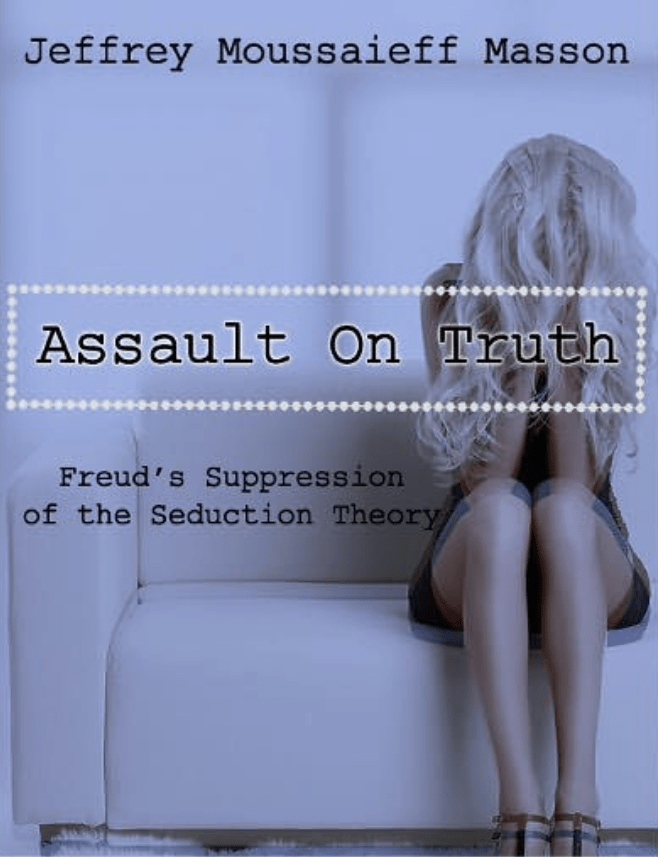
The book challenges the foundations of Freudian psychoanalysis by arguing that Sigmund Freud deliberately abandoned his seduction theory, which posited that many cases of neurosis were the result of childhood sexual abuse.
Masson’s meticulous research and bold assertions have faced criticism, yet his work merits defense for several compelling reasons.
The Courage to Challenge Orthodoxy
One of Masson’s most significant contributions is his willingness to question the established narrative of psychoanalysis.
Freud’s shift from the seduction theory to the theory of infantile sexuality marked a pivotal moment in the history of psychology.
By re-examining Freud’s letters, case histories, and other documents, Masson presents a compelling argument that Freud’s change of heart was not solely based on empirical evidence but also influenced by social and professional pressures.
This challenges us to consider how scientific theories can be shaped by external factors and the importance of remaining critical of accepted doctrines.
Advocacy for Survivors of Abuse
Masson’s work is particularly significant in the context of advocating for survivors of childhood sexual abuse.
By suggesting that Freud’s abandonment of the seduction theory contributed to the minimization of the prevalence of sexual abuse, Masson highlights the need for greater recognition and validation of survivors’ experiences.
This aspect of his work has resonated with many who feel that their voices have been historically marginalized.
In a society still grappling with the ramifications of abuse, Masson’s insistence on the importance of listening to and believing survivors is more relevant than ever.
Rigorous Scholarship and Intellectual Honesty
Critics of “The Assault on Truth” often focus on the implications of Masson’s arguments rather than addressing the substance of his research.
However, Masson’s work is grounded in extensive archival research and a thorough analysis of Freud’s writings.
His scholarship exemplifies intellectual honesty and a commitment to uncovering the truth, even when it challenges deeply held beliefs.
By engaging with primary sources and providing a well-documented critique, Masson invites readers to critically evaluate the foundations of psychoanalytic theory.
The Role of Controversy in Advancing Knowledge
Controversy is an essential driver of intellectual progress.
Masson’s book has sparked significant debate within the fields of psychology, psychoanalysis, and beyond.
This debate has encouraged scholars to re-examine Freud’s work and its implications, fostering a more nuanced understanding of the history of psychoanalysis.
By challenging the status quo, Masson has contributed to a richer and more dynamic discourse, demonstrating the value of dissenting voices in advancing knowledge.
A Call for Openness in Scientific Inquiry
“The Assault on Truth” serves as a reminder of the importance of openness and transparency in scientific inquiry.
Masson’s critique of Freud’s alleged suppression of the seduction theory underscores the need for scientists and scholars to remain open to new evidence and willing to revise their theories in light of new findings.
This ethos is essential for the continued advancement of any field of study and ensures that scientific progress is not hindered by dogma or institutional inertia.
Jeffrey Masson’s “The Assault on Truth” is a courageous and rigorous work that challenges the foundations of psychoanalytic theory and advocates for the recognition of survivors of childhood sexual abuse.
By questioning Freud’s motivations and highlighting the social context in which he worked, Masson encourages us to critically evaluate accepted narratives and remain open to new evidence.
His work exemplifies the importance of intellectual honesty, rigorous scholarship, and the role of controversy in advancing knowledge.