As the mind delves deeper into the abyss of seclusion, the subconscious begins to decompose like a rotting corpse.
The passage of months transcends into years, and the irreversible damage inflicted upon the body and mind leaves one imprisoned within a waking nightmare of torment, both physically and mentally.
Isolation morphs into a claustrophobic cell, and the sole means of escape lies in the descent into madness, as the mind twists and distorts itself into a grotesque mockery of its previous existence.
It is within this madness that true genius is unearthed.
“Madness is the result not of uncertainty but of certainty.” – Friedrich Nietzsche
“Isolation is the necessary prelude to genius.” – Robert Greene
“The mind is sharper and keener in seclusion and uninterrupted solitude. Originality thrives in seclusion free of outside influences beating upon us to cripple the creative mind.” – Nikola Tesla
The belief in aliens has a rich and fascinating history, spanning ancient mythology, folklore, religion, and modern science fiction.
Throughout the ages, civilizations have held a deep-rooted belief in celestial beings or ‘gods’ from the sky who interacted with humans.
These beings were revered for their advanced knowledge and extraordinary abilities, often appearing in omens, visions, and visitations. The true form of these beings remained enigmatic, taking on various shapes and forms.
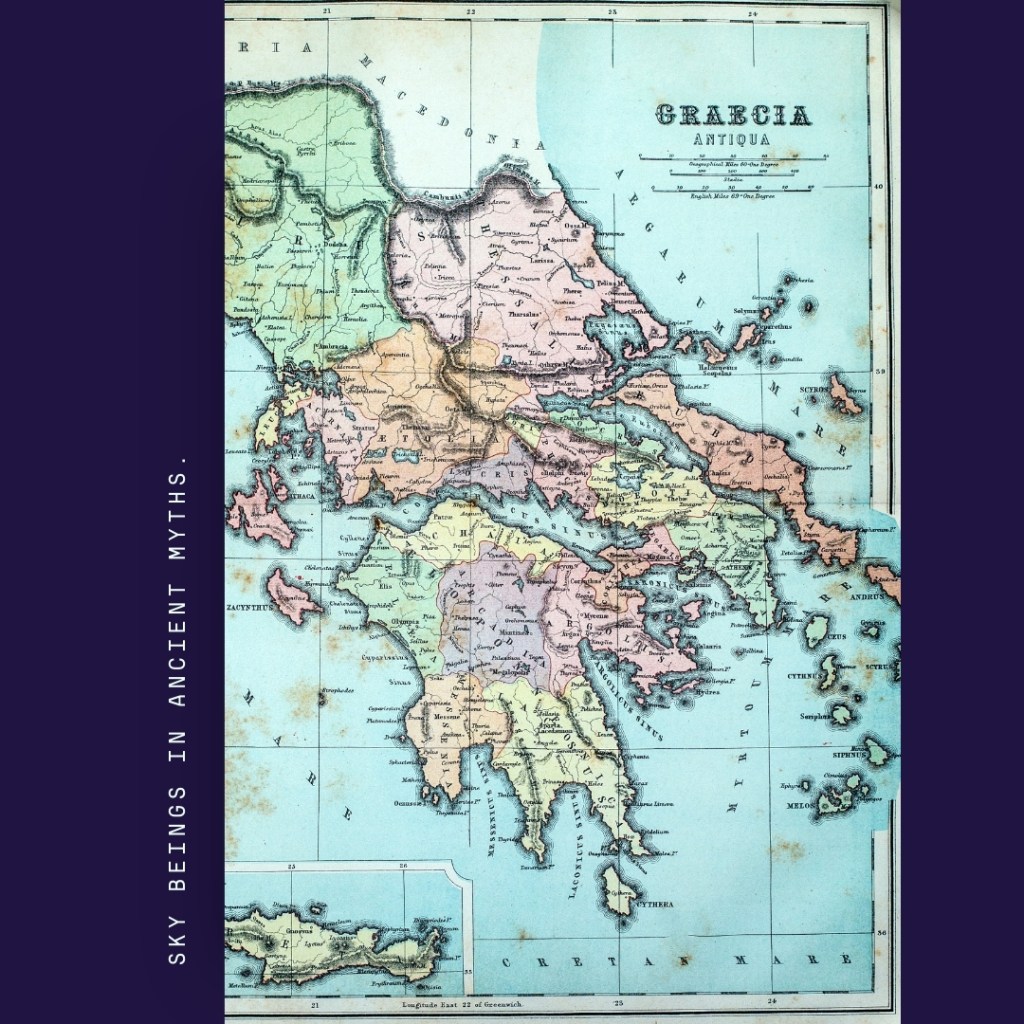
Notable examples of ancient myths featuring sky beings can be found in Greek, Egyptian, Sumerian, Mesopotamian, Hebrew, Hindu, and Norse mythology.
Undoubtedly, these captivating tales have played a significant role in shaping our concept of extraterrestrial visitors.
Angels or Alien?
When we speak of aliens, we refer to beings hailing from planets beyond our own, while angels are described as spiritual entities from the divine realm.
The question of whether aliens exist as ethereal multidimensional entities or physical beings from other planets remains a subject of intense debate.
Some argue that aliens exist on a higher plane of existence, while others contend that they are tangible creatures from distant worlds.
Numerous books delve into the possibility of interdimensional beings and parallel universes, igniting our imagination.
BOOK REFERENCE:
Kaku, M. (2014). The Future of the Mind: The Scientific Quest to Understand, Enhance, and Empower the Mind. Anchor.
Strohm, C. (2019). Alien Worlds: The Scientific Search for Extraterrestrial Life. Harvard University Press.
Carroll, S. (2011). From Eternity to Here: The Quest for the Ultimate Theory of Time. Penguin Books.
Sagan, C. (1997). The Demon-Haunted World: Science as a Candle in the Dark. Ballantine Books.
The belief in aliens has captivated humanity for centuries, drawing inspiration from ancient myths, religious texts, and modern science fiction.
Both ancient gods and contemporary aliens are perceived as highly advanced beings, shrouded in mystery and possessing knowledge and abilities that seem almost magical.
These enigmatic beings are believed to have occasional interactions with humans, perpetuating their allure and intrigue.
Ancient myths from diverse cultures depict sky beings who shared secrets and technology with humanity, inadvertently contributing to the concept of extraterrestrial visitors.
While the existence of aliens is a topic that continues to fascinate and inspire us, it is crucial to approach this subject with a critical mindset.
In a world that glorifies happiness, we often find ourselves desperately searching for it, like chasing a butterfly that always seems just out of reach.
But what if I told you that there is beauty to be found in the depths of despair?
This is not a story of triumph over tragedy, but rather a confession of a woman who learned that despair offers unexpected gifts.
In this article, we will explore the lesser-known aspects of despair and how it can lead to profound self-discovery.
The Transformative Power of Despair
Embracing Vulnerability and Authenticity
Despair has a way of stripping away the façade we often wear in our daily lives.
In the depths of despair, we are forced to confront our true selves, stripped of pretense and societal expectations.
This raw vulnerability opens the door to authentic self-discovery. It allows us to explore the depths of our emotions, confront our fears, and embrace our true desires.
In this state of vulnerability, we can find a newfound sense of authenticity, as we learn to live in alignment with our core values and beliefs.
Cultivating Resilience and Inner Strength
Despair can be an incredibly challenging and painful experience, but it also has the potential to cultivate resilience and inner strength.
When we hit rock bottom, we are forced to confront our fears and confront the darkest parts of ourselves.
In doing so, we develop a resilience that can carry us through even the toughest of times.
Despair teaches us that we are capable of surviving and thriving in the face of adversity.
It builds our inner strength, allowing us to face future challenges with a newfound sense of confidence and perseverance.
Finding Meaning in Despair
The Power of Surrender and Letting Go
Despair often arises from a sense of loss or unmet expectations.
It can feel like everything we once held dear is slipping through our fingers.
However, in the midst of despair, there is an opportunity to surrender and let go.
Surrendering does not mean giving up; rather, it means releasing our attachment to outcomes and embracing the present moment.
By surrendering, we open ourselves up to new possibilities and allow space for unexpected blessings to enter our lives.
Letting go of what no longer serves us can lead to a deep sense of liberation and a newfound clarity of purpose.
The Gift of Perspective and Empathy
Despair has a unique way of shifting our perspective and opening our hearts to the suffering of others.
When we experience our own pain and despair, we become more empathetic and compassionate towards the struggles of those around us.
We gain a deeper understanding of the human experience and develop a greater capacity for empathy. Despair can be a catalyst for personal growth and an opportunity to connect with others on a deeper level, fostering a sense of community and shared humanity.
Despair is not a destination to be feared, but rather a transformative journey that can lead to profound self-discovery.
It offers the unexpected gifts of vulnerability, resilience, authenticity, surrender, and empathy.
By embracing despair and allowing ourselves to navigate its depths, we can emerge with a renewed sense of purpose and a deeper understanding of ourselves and the world around us.
So, the next time you find yourself chasing the elusive butterfly of happiness, consider embracing the gifts that despair has to offer.
Socrates, a revered ancient Greek philosopher, met a tragic end at the hands of his own government.
Socrates fearlessly challenged the established order and traditional beliefs in Athens, primarily employing his unique Socratic method of questioning.
What Was The Established Order In Athens?
The established order was very similar to ours today in America.
Athens was a democracy.
Citizens directly participated in the decision-making process, collectively governing the city-state.
The government of Athens comprised various institutions, such as the popular assembly allowing adult male citizens to voice opinions and vote. Additionally, the city-state had the Boule council, made up of 500 randomly selected citizens who proposed laws and managed administrative affairs.
His Socratic Method, coupled with his unabashed criticism of authority, drew accusations of impiety and corrupting the youth, ultimately leading to his trial in 399 BCE.
When put on trial in 399 BCE in Athens, Socrates presented his defense by arguing that he had “not corrupted Athenian youth“, as his accusers claimed.
He argued that his “philosophy actually aimed to improve the moral and intellectual character of individuals, rather than leading them astray“.
Socrates began his defense by stating that he was “ignorant of the influence he had on other people and that he had never claimed to possess any wisdom or knowledge“.
He related a story in which the Oracle of Delphi described Socrates as the wisest man, leading him to conclude that:
True wisdom lies in acknowledging one’s own ignorance.
Socrates explained that his “primary goal was to engage in dialogue and question others in order to encourage critical thinking and self-examination“.
Furthermore, he argued that his “role as a philosopher was not to teach or indoctrinate, but to encourage individuals to think for themselves“.
He claimed that he “questioned and exposed the ignorance and inconsistencies of those who were regarded as wise in order to help others recognize their own lack of knowledge“.
Socrates believed that by questioning others, he was “helping them to seek wisdom and knowledge for themselves“.
Despite his defense, Socrates was found guilty by a jury of 500 Athenian citizens and sentenced to death by drinking poisonous hemlock.
Hemlock is a highly poisonous plant often used as a herbal remedy or poison, belonging to the coniferous family and characterized by small white flowers and feathery leaves.
Hemlock
His defense and subsequent execution became known as one of the most enduring stories of intellectual and philosophical martyrdom.
Choosing to adhere to the Athenian legal system, Socrates willingly drank hemlock, a widely recognized execution method of that time.
Socrates’ defiance of convention and his relentless pursuit of truth have left an indelible mark on the world of intellectual discourse.
Through his Socratic method, he revolutionized the way people approached questions, encouraging critical thinking and introspection.
Through his Socratic method, he revolutionized the way people approached questions, encouraging critical thinking and introspection.
Socratic Method
The Socratic method involves a dialogue between a questioner and a responder, where the questioner poses thought-provoking questions to the responder in order to elicit a deeper understanding of a topic or to challenge the responder’s beliefs and assumptions. The Socratic method encourages active participation and critical examination of ideas, leading to a more thorough exploration of a subject and the development of logical and reasoned arguments.
By challenging governmental authority and traditional beliefs, Socrates sparked important discussions that exposed the flaws in societal norms and fostered intellectual growth.
Despite his tragic fate, Socrates’ influence transcends time.
His ideas, recorded by his students Plato and Xenophon, continue to shape the foundations of Western philosophy.
Socrates’ emphasis on self-examination, the pursuit of truth, and the questioning of established beliefs paved the way for subsequent philosophers to build upon his legacy.
Socrates’ wisdom and teachings have served as a catalyst, encouraging generations of thinkers to challenge the status quo and seek the inherent truth in matters of ethics, morality, and knowledge.
The impact of his ideas on subsequent philosophers such as Aristotle, Descartes, and Kant cannot be overstated.
Even in the modern era, Socrates’ principles of critical thinking and self-reflection hold great relevance, guiding us in our quest for knowledge and personal growth.
In conclusion, Socrates paid the ultimate price for his relentless pursuit of truth and his challenge to established beliefs.
His trial and execution serve as reminders of the power struggle between conformity and intellectual progress.
His uncompromising quest for wisdom and his commitment to independent thought continue to inspire and shape the world of philosophy to this day and is a reminder to me why democracy sucks and America’s Constitutional Republic is so important to uphold.
As Christians, we know that we are fearfully and wonderfully made in the image of God.
I praise you, for I am fearfully and wonderfully made. Wonderful are your works; my soul knows it very well. Psalms 139:14
In the same way that our Creator is the ultimate Master Artist, we also possess the ability to create and express ourselves in distinctive and profound ways.
Yet, there are moments when we may neglect to acknowledge our own creative capacities, or undervalue our skills and passions as lacking importance, particularly if they deviate from the conventional expectations followed by a majority of Christians, even though they may profess a different standpoint.
“Do not love the world or anything in the world. If anyone loves the world, love for the Father is not in them. For everything in the world—the lust of the flesh, the lust of the eyes, and the pride of life—comes not from the Father but from the world. The world and its desires pass away, but whoever does the will of God lives forever.”
1 John 2:15-17
Creativity Is A Form Of Worship
When we use our talents and passions to create something new, we are expressing gratitude and admiration for the creator who endowed us with these abilities. This is a form of praise towards the One who made us.
Definition of Worship:
Worship is the reverent honor and homage paid to a deity or divine being, often through prayer, praise, and ritualistic acts of devotion.
Remaining Open to God’s Call for Creativity
Next, be open to the ways in which God may be calling you to use your creativity for His purposes.
But now, O Lord, you are our Father; we are the clay, and you are our potter; we are all the work of your hand. – Isaiah 64:8
Remaining open to God’s call to use creativity for His purpose requires a receptive and humble heart.
Here are some practical ways to stay open to His leading:
Prayer and Meditation
Regular prayer and meditation can help cultivate a receptive spirit, creating space to listen to God’s guidance and prompting.
Seeking Counsel
Seeking counsel from spiritual mentors, leaders, or trusted individuals within the Faith can provide valuable insight and confirmation of God’s leading.
Scripture Study
Delving into the Word of God can offer clarity and direction. Exploring stories of creativity and purpose in the Bible can inspire and inform your own journey.
Openness to Change
Remaining open and adaptable to unexpected opportunities or shifts in direction demonstrates a willingness to follow God’s plan, even when it diverges from our own expectations.
By incorporating these practices into your life, you can create an environment where you remain open to God’s call for creativity and find fulfillment in using your talents for His purpose.
Importance Of Taking Risks
Finally, don’t be afraid to take risks and try new things.
Creativity is a journey, not a destination, and it’s okay to make mistakes along the way. Trust in the Lord’s guidance and lean into His wisdom as you explore your own creative potential.
So whether you’re a seasoned artist or just starting out, don’t be afraid to unleash your creativity and use it for the glory of God.
So do not fear, for I am with you; do not be dismayed, for I am your God. I will strengthen you and help you; I will uphold you with my righteous right hand.
Isaiah 41:10
So go forth, be creative, and let your light shine for all to see!
The Reformation stands as a transformative movement in history, forever altering the course of human life.
The Reformation, spearheaded by the influential Martin Luther in the 16th century, stands as a remarkable historical movement that challenged the authority of the Catholic Church and ushered in a wave of new ideas that reverberated throughout the world.
The Reformation not only transformed the religious landscape of Europe, but also had profound impacts on politics, society, and the spread of knowledge. It sparked a re-evaluation of existing power structures and encouraged individuals to question long-standing traditions and beliefs.
The ideas that emerged from this period continue to shape the modern world, making the Reformation a pivotal chapter in history that continues to fascinate and provoke scholarly debate.
The Enduring Legacy of the Reformation
Its profound impact can be attributed to the intellectual and ideological debates it initiated, the far-reaching changes it brought to education, literacy, and gender roles, and the significant political transformations it sparked.
In this Article, we will delve into the captivating aspects of the Reformation, explore its key contributions, and discover the plethora of resources available to deepen our understanding of this fascinating period.
Intellectual and Ideological Debate
At the heart of the Reformation, Martin Luther’s Ninety-Five Theses served as a catalyst, raising questions about controversial church practices, including the sale of indulgences.
This thought-provoking theses sparked vibrant and widespread discussions, paving the way for the emergence of new religious denominations.
The Reformation became a platform for intellectual discourse, challenging traditional beliefs and reshaping the religious landscape.
Transformations in Education, Literacy, and Gender Roles
Another captivating facet of the Reformation lies in the changes it brought to education, literacy, and the role of women in society.
With the rise of Protestantism, the emphasis on individual interpretation of scriptures led to a surge in educational opportunities.
Education became more accessible, empowering people to read and interpret religious texts themselves.
This increase in literacy levels led to a transformation in society, stimulating new ideas, critical thinking, and a thirst for knowledge.
Additionally, the Reformation sparked discussions about the role of women, challenging traditional societal norms and paving the way for greater recognition of their intellectual capabilities.
Political Ramifications and Conflicts
The Reformation also unleashed significant political ramifications, as tensions intensified between Protestantism and Catholicism.
The conflicts ultimately led to wars and political transformations that reverberated across Europe.
One of the notable outcomes was the Peace of Westphalia in 1648, which marked the end of the Thirty Years’ War, directly stemming from the religious divide initiated by the Reformation.
Such political upheavals and transformations shaped the course of history and left an indelible mark on European society.
Resources to Deepen Understanding about the Protestant Reformation
For those seeking to deepen their understanding of the Protestant Reformation, a plethora of resources exist to explore this pivotal period in history. Whether delving into the intellectual and ideological debates, the transformations in education, literacy, and gender roles, or the political ramifications and conflicts, these resources offer valuable insights.
Books and Articles
“The Reformation: A History” by Diarmaid MacCulloch
“The Reformation: A Very Short Introduction” by Peter Marshall
“The Printing Press as an Agent of Change” by Elizabeth L. Eisenstein
“The Reformation: A Visual History” by Peter Marshall
“The Reformation: A World in Turmoil” by Andrew Johnston
Documentaries and Films
“Martin Luther: The Idea that Changed the World”
“Catholics vs. Convicts: The Reformation and the Counter-Reformation”
“Inside the Vatican”
“Secrets of the Dead: The Man Who Saved the World”
“This Changed Everything: 500 Years of the Reformation”
“Church History: Studies in Christianity and Culture”
“Reformation & Renaissance Review”
“The Sixteenth Century Journal”
“Central European History”
These resources provide diverse perspectives and in-depth analyses to aid in gaining a comprehensive understanding of the enduring legacy of the Protestant Reformation.
Even though there are significant challenges ahead, we must decisively opt to conquer our fears. The complex interplay between the micro and macro dimensions of our existence ultimately merges at the micro level.
It is imperative to acknowledge and value the essential connection that exists between the celestial and tangible domains.
The vast expanse of the ethereal plane and the limited scope of the physical world are intrinsically connected, acting as stimuli for our individual development and progress.
Nurturing our understanding of this intense connection is important, as it fuels the flourishing of our Soul, which encapsulates the essence of our spiritual being.
By highlighting and strengthening the bond between these two dimensions, we unlock the key to unlocking the absolute Truth.
Without this symbiotic relationship, we impede our spiritual evolution.
This connection acts as a conduit for the exchange of energies and knowledge, enabling us to transcend the limitations of our earthly existence.
To construct and fortify our light body (soul), we must emphasize two fundamental aspects: a resilient heart center and a robust physical vessel.
These two components work harmoniously together, representing our earthly manifestation through which we learn to love and respect others.
Our heart center (soul) serves as the hub of our emotions, compassion, and empathy, while the physical body acts as the medium through which we experience and engage with the material world.
By nurturing our soul, we cultivate love, kindness, and understanding, empowering us to selflessly serve others. These acts of service not only contribute to the betterment of society, but also deepen our connection to the ethereal (Spiritual) realm.
Simultaneously, maintaining a strong and healthy physical body equips us to navigate the challenges and demands of our earthly existence. It provides a solid foundation for our spiritual growth and enables us to fully embody our earthly form.
Our journey through the darkest valleys requires us to confront and overcome the forces of evil while steadfastly refusing to succumb to fear.
By recognizing the profound significance of the connection between the ethereal and physical dimensions, we can nurture the growth of our light body. Through the harmonious integration of a resilient heart center and a capable physical body, we manifest our earthly form and learn to love and honor others through selfless acts of service.
Galatians 5:13 – “You, my brothers and sisters, were called to be free. But do not use your freedom to indulge the flesh; rather, serve one another humbly in love.”
1 Peter 4:10-11 – “Each of you should use whatever gift you have received to serve others, as faithful stewards of God’s grace in its various forms. If anyone speaks, they should do so as one who speaks the very words of God. If anyone serves, they should do so with the strength God provides, so that in all things God may be praised through Jesus Christ.”
Matthew 25:35-40 – “For I was hungry and you gave me something to eat, I was thirsty and you gave me something to drink, I was a stranger and you invited me in, I needed clothes and you clothed me, I was sick and you looked after me, I was in prison and you came to visit me.’ Then the righteous will answer him, ‘Lord, when did we see you hungry and feed you, or thirsty and give you something to drink? When did we see you a stranger and invite you in, or needing clothes and clothe you? When did we see you sick or in prison and go to visit you?’ The King will reply, ‘Truly I tell you, whatever you did for one of the least of these brothers and sisters of mine, you did for me.”
Mark 10:43-45 – “Not so with you. Instead, whoever wants to become great among you must be your servant, and whoever wants to be first must be slave of all. For even the Son of Man did not come to be served, but to serve, and to give his life as a ransom for many.”
In the depths of my soul, I grapple with the inherent contradictions of this world.
Society has shaped me into a unique being, molded by its influences and expectations.
And yet, beneath the surface lies a newfound understanding, a spiritual awakening that compels me to express my thoughts, unfiltered and unapologetic.
Navigating Nuance
As a believer in Christ, I fearlessly navigate the depths of my nuanced frame of mind.
I am both a product of society and a recipient of God’s grace.
This synthesis of my identity distinguishes me as a believer in the midst of a complex world.
“The prudent [person] gives thought to their steps.”
Proverbs 14:8
America’s Role In My Identity
Oh America, you have played a role in shaping the very essence of who I am.
Your vast tapestry of cultures, perspectives, and ideologies have shaped and molded me in profound ways.
The values and ideals that permeate your society have left an indelible stain on my character.
But now, on this journey of Faith, something extraordinary has happened.
As I wholeheartedly embrace the teachings of Christ by His Spirit, my soul longs to break free from the shackles of conformity and boldly vocalize the depths of my beliefs.
“The Spirit of the Sovereign Lord is on me, because the Lord has anointed me to proclaim good news to the poor. He has sent me to bind up the brokenhearted, to proclaim freedom for the captives and release from darkness for the prisoners.”
Isaiah 61:1
I yearn to speak my truth, regardless of society’s resistance.
You may have created me, that is my exterior, America, shaping me with your norms and expectations.
Yet, through Faith in Christ, I have come to realize that your systems are imperfect, and your desires for conformity are not aligned with the higher purpose laid before me.
“Do not conform to the pattern of this world, but be transformed by the renewing of your mind. Then you will be able to test and approve what God’s will is—his good, pleasing and perfect will.”
– Romans 12:2
Through the redeeming power of Christ’s love, my perspective has shifted.
I no longer passively accept the status quo, but rather embark on a mission to challenge societal norms, inviting open and honest dialogue.
It is in this space, in this unique frame of mind, where I find the courage to proclaim what’s on my heart, despite the resistance that may arise.
Oh America, do not fear my voice, for it is not one intended to sow discord or disdain.
Instead, it is a voice founded in love, compassion, and a deep belief in Christ’s teachings.
It is a voice that yearns for unity amidst the diversities that encompass your vast nation.
I am your child, America, transformed by the love and grace of Christ.
And now, I am determined to speak Truth, for you and for all who seek the Light of Truth and Redemption.
May my words serve as a catalyst for change, inspiring hearts to embrace the transformative power of Faith and the limitless possibilities it brings forth.
Today, I am on a journey of purpose, one where the innate beauty of our diverse souls intertwining, illuminating a path towards a more compassionate and loving existence.