The etymological definition of “opinion” refers to the origin and historical development of the term. The word “opinion” derives from the Latin “opinio,” which means “belief” or “judgment.” Over time, it has evolved to encompass a range of meanings related to personal views or thoughts about a particular subject.
“When you see your matter going black, rejoice, you are at the beginning of the work.” — Rosarium Philosophorum
The traditional method of alchemy is divided into 5 stages:
STEP ONE
Nigredo —Blackening
The term “nigredo” comes from the Latin word for “black,” and its color is referring to the material color at this first stage of the process, which is often darkened.
The alchemist is observing or participating in the break down of the impurities that occur during Nigredo. This is the beginning of the distillation of raw materials.
This physical act represents the process of confronting one’s shadow self and the negative aspects of oneself.
This initial stage is one of dissolution and decay… confronting the raw, unrefined aspects of the self.
It’s a descent into darkness, a metaphorical death; old structures break down, making the route for the emergence of new beginnings.
Black —like fertile soil, chaotic, yet holds the potential for new growth.
STEP TWO
Albedo—Whitening
Albedo is the term used to describe the extent to which an object like a planet or moon reflects light.
Albedo emerges stark in contrast from the blackness of Nigredo.
A state of pristine whiteness, like the moon reflecting the sun’s light is found after Albedo.
Embodies clarity, a fresh perspective gained through the trials of the previous step. It’s a moment of reflection and the dawning of understanding.
STEP THREE
Citrinitas—Yellowing
The term “citrinitas” comes from the Latin word for “yellow,” and it refers to the color of the materials at this stage of the process, which is often yellow or orange.
At this stage, the alchemist is allowing the materials to be still… in Citrinita = self-growth + integration! 🍋✨ … think sitting water. Stagnation.
This yellowing is considered a bridge between Albedo and the final stage.
Citrinitas is associated with the rising sun, bringing with it warmth, light, and a sense of solar energy.
It represents the awakening of the intellect and intuition, a golden hue illuminating the path forward.
This stage signifies a growing awareness and the integration of newfound insights.
STEP FOUR
Rubedo—Reddening
The term “rubedo” comes from the Latin word for “red,” and its name refers to the color of the materials at this stage of the process, which is often red or reddish-gold.
A BLOODY MESS
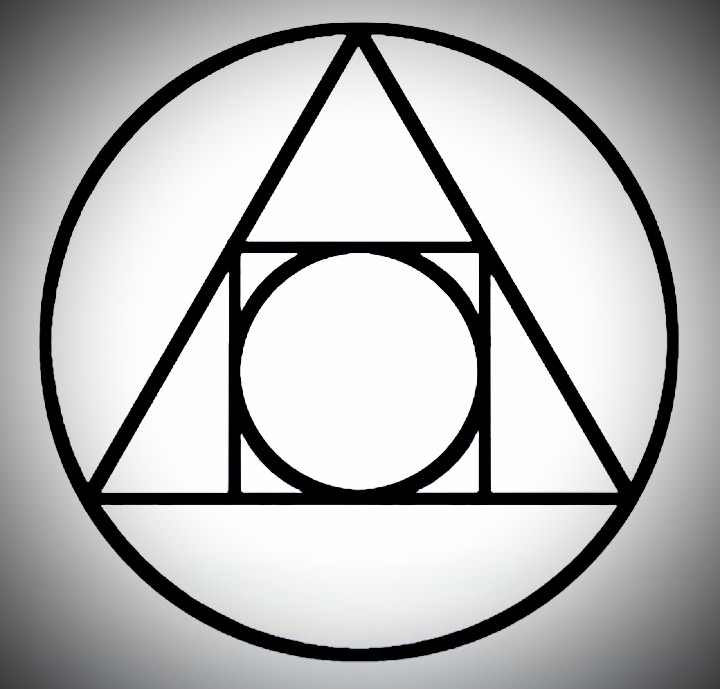
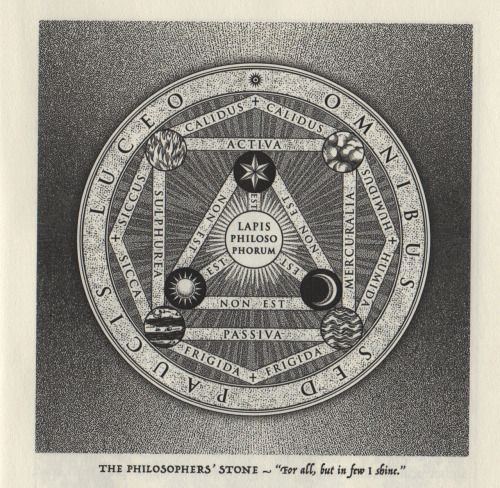
In the Rubedo stage, the alchemist is completing the culmination of the alchemical process, its the stepping stone into the Philosopher’s Stone.
Rubedo also represents the perfect union of opposites, it is the merging of the spiritual and the material.
It is symbolized by the color red, signifying life, passion, and the ultimate realization of one’s true potential.
This stage embodies wholeness, completion, and the attainment of a higher state of being.
STEP FIVE
Lapis Philosophorum (Philosopher’s Stone)
The transcendent outcome, the perfected state.
Conclusion/ Overview
Nigredo (Blackening): The descent into shadow, where the old dissolves.
Albedo (Whitening): A purification, a dawning of clarity from the darkness.
Citrinitas (Yellowing): The sun’s touch, bringing illumination and understanding.
Rubedo (Reddening): The ultimate fusion, the attainment of wholeness.
Lapis Philosophorum (Philosopher’s Stone): The transcendent outcome, the perfected state.
Cognitive rigidity is the stubborn insistence that our way of thinking is the only way.
It shows up in small, everyday ways:
refusing to consider another perspective
dismissing evidence that challenges our beliefs
or sticking to habitual responses when flexibility is required.
It is mental inflexibility masquerading as certainty.
This rigidity is rarely neutral. It filters experience, allowing only what aligns with our preconceptions to pass through.
What we notice and refuse to notice is determined less by reality and more by the contours of our existing beliefs. The mind becomes its own jailer.
FILTERED VISION
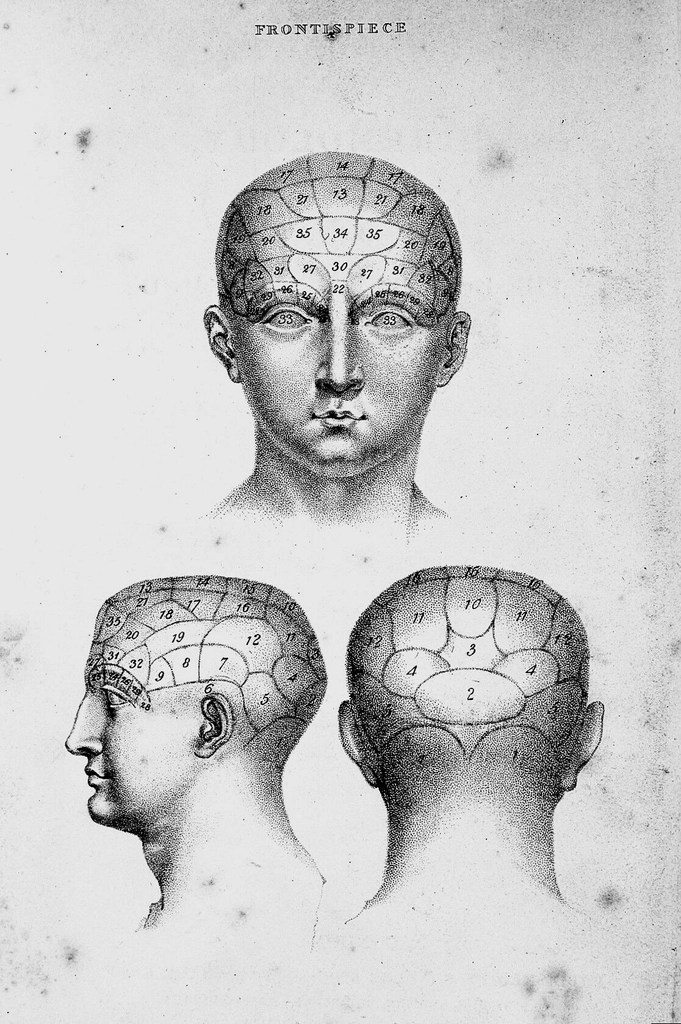
Perceptual limitations compound this problem. Our senses, our expectations, and our biases shape what we perceive.
Two people can witness the same event and walk away with entirely different “realities,” each convinced theirs is the truth.
Culture, language, upbringing, and personal trauma all function like lenses, coloring everything we see.
When cognitive rigidity meets these perceptual filters, the feedback loop begins: our beliefs dictate what we perceive, and our perceptions reinforce our beliefs.
We become prisoners of our own limited frameworks, blind to the complexity—and often the truth—of the world around us.
Breaking the Loop
Escaping this loop is not about acquiring more information. It is about retraining the mind to see what it usually ignores:
Observe without judgment. Watch your thought patterns and notice when you shut down possibilities automatically.
Seek what challenges you. Engage with ideas and perspectives that make you uncomfortable.
Question your perception. Ask yourself what you might be missing, what biases are filtering your experience.
Embrace intellectual humility. Accept that your understanding is provisional, incomplete, and subject to correction.
The moment we recognize that perception is always partial, and thought is always provisional, the bars of the cage begin to loosen.
Clarity is not a gift; it is a discipline.
The Work of Liberation
This is the work of liberation: not avoiding rigidity, but confronting it; not denying perceptual limits, but piercing them.
The mind can be trained to perceive more, think more flexibly, and respond more intelligently.
It is uncomfortable, but truth always is.
We cannot see everything, but we can see more than we did yesterday.
Are we propelled by fate, driven by choice, or guided by a delicate dance between the two?
Each path offers its own mystique, summoning us to dissect the interplay of destiny, fate, and free-will in shaping our lives and reality as a whole.
The Emergence of Fate
Fate represents the unseen architecture of our lives—a cosmic design that envelopes every step we take.
It is the orchestrator of synchronicities and signs, suggesting that our experiences might be part of a grand laid out structure, initiated by a higher intelligence.
This invisible thread forms the backdrop of our existence, like a silent script written in the stars that sometimes we see how it dictates our journey.
The Empowerment of Choice
Contrasting fate is the power of choice—
our conscious ability to deliberate
decide
and act.
In every fleeting moment, we stand at a crossroads, armed with the power to transform potentiality into reality.
Our choices…
…whether deliberate
…or spontaneous.
Choice carves new pathway, through a predetermined framework, affirming our unique role as co-creators of our destinies.
The Synthesis
A Cosmic Dance
The truth, as I perceive it, lies not in the isolated domains of fate or choice, but in their connection, no matter how chaotic or volatile it appears.
FATE IS AN ALREADY SET STAGE
Fate sets the stage by placing us in a world of infinite complexities, yet within this arena, our choices illuminate the power of agency.
Within fate your decisions become the act in the play that redefine the script with each break in line, as sin aka duality, causes is to forget choosing this character… MORE ON THAT IN ANOTHER ARTICLE…
Fate merges the predetermined decision we made with the human self in all our duality.
Embracing The Interplay
Every decision— it can be a choice of…
love
defiance
surrender or
inquiry…
These decisions serve as compelling evidence of the capacity for transformation. The inherent power within us shapes the circumstances we encounter, establishing a structure of cause and effect that upholds duality and sin.
While the forces of fate may direct the overarching narrative, it is within our responses that true freedom is forged.
DESTINY + CONSCIOUS AWARENESS
The co-operation between destiny and conscious choice is…
where meaning is born
where chaos finds order
where wisdom is ultimately distilled.
We have a profound power to navigate the realms of existence.
We are neither bound by the currents of destiny nor are we lost in the illusion of unbridled freedom.
We are the artisans of our own lives, crafting purpose from the interplay of the inevitable and the intentional as they are One.
In my journey as an “alien” on this planet, I have, unwittingly, stumbled upon what had been archaically called the Philosopher’s Stone or the Elixir of Life…
I only realized this after I, through being magnetically attracted toward suffering, embracing the darkness that most fear, had unearthed the Essence of Reality.
This Essence is a Truth so profound, it is woven into the very core of our beings through the quantum dimensions & atmospheric pressure, without such, we would become vacuumed into nothingness.
This truth is unassailable, standing as a lamp of certainty, illuminated by the light of Intuitive Wisdom.
THIS LIGHT IS CHRIST’S LIGHT OF INTUITION FROM ABOVE.
Intuition transcends the limitations of our corporeal senses, for it is birthed from the sacred depths of the spirit.
Intuition is a whisper from the Heavens, a subtle yet ever powerful current that flows through the Ethers of existence.
Intuition is the Blood within the veins of Eternity.
When the HolySpirit stirs, He ignites the flame of Intuition, transforming our sensorial experiences into a Divine Compass.
THE KINGDOM OF GOD IS WITHIN YOU
This guiding Force elevates our conscious awareness, rendering the conventional Five Senses as mere tools in the Macrocosm of our being within this existence and realm.
When this inner awakening is embraced, we align in tandem with the Universal Symphony of Wisdom.
Intuition becomes our most trusted Guide, leading us towards a Life of deeper Understanding and connection with the Infinite.
Mastering the nuance between perception and reality is not a passive philosophical exercise; it is the essential toolkit required to dismantle our own cognitive illusions and navigate our way out of profound hardship.
When you are in the trenches, survival depends on clarity.
By carefully distinguishing between seemingly identical ideas, you build an architecture of discernment… allowing you to separate the truth of a situation from the mental friction keeping you stuck.
Map vs. Territory
The first tool in this kit is recognizing that the crisis you are experiencing (the territory) is completely separate from the story you are telling yourself about it (the map).
The distinction between the map and the territory is a fundamental concept in rationality.
A map is a representation of reality, while the territory is the actual reality itself.
Why Does This Matter?
This distinction matters because it highlights the fact that our understanding of the world is always mediated through our mental models and representations.
We must be aware that our ‘maps‘ , no matter how detailed or accurate, are never identical to the ‘territory‘.
Recognizing that your map is flawed is the first step, but how does the map get drawn in the first place?
When we are struggling, our maps are rarely constructed from present reality. Instead, they are stitched together using outdated, unexamined assumptions.
To update your map, you must confront the difference between the mental debris you default to and the active awareness required to survive.
Cached Thoughts vs. Actual Thinking
CACHED THOUGHTS
Cached thoughts are the pre-existing beliefs and assumptions that we hold, gathering trash and holding into them like a computer holds onto cqche. This means these are thoughts that lack conscious awareness.
This Repository of ‘thoughts’ are mental shortcuts that we rely on to make sense of the world, with no thought as to if these thoughts are based in objective reality or not.
THINKING
In contrast, thinking involves actively questioning and challenging our cached thoughts, engaging in critical analysis, and seeking new information to refine our understanding.
When you rely on cached thoughts instead of active thinking, your internal world becomes an echo chamber. You begin to mistake your unexamined biases for universal laws. This is where hardship turns into self-sabotage—when you project your own internal friction onto the external territory and assume everyone else is navigating the same distortion.
Mind Projection Fallacy
The Mind Projection Fallacy is a cognitive bias that occurs when people assume that their personal beliefs, values, or perceptions are shared by others or represent objective reality. This fallacy suggests that people often confuse their own thoughts and feelings with universal truths and expect others to have the same thoughts and feelings.
The Mind Projection Fallacy can significantly distort one’s ability to discern.
When we project our own beliefs and emotions onto others, we fail to accurately discern their unique perspectives and experiences.
Here Are Some Examples Of How Mind Projection Impedes Ones Ability To Discern:
Overestimating Agreement: One may falsely believe that others share their opinions, leading to an overestimation of consensus and potentially causing miscommunication or conflict when differing perspectives are eventually revealed.
Inaccurate Assumptions: When projecting personal beliefs, individuals can make inaccurate assumptions about others’ thoughts and feelings, leading to misunderstandings and incorrect conclusions.
Inability to Empathize: By assuming that everyone thinks and feels similarly, individuals can struggle to put themselves in others’ shoes and empathize with their unique experiences and emotions.
Poor Decision-Making: Decision-making can become flawed when one assumes their perspective is universally shared, potentially leading to choices that are not inclusive or beneficial for all parties involved.
To overcome the Mind Projection Fallacy and improve discernment, it is crucial to foster empathy, seek out diverse perspectives, and practice open communication. By recognizing the influence of personal beliefs and emotions on perception, individuals can become more discerning and accurately understand the viewpoints of others.
The Halo Effect:

a cognitive bias where our overall impression of someone or something influences our judgments of their specific traits. This term, coined by psychologist Edward Thorndike in 1920, illustrates how positive perceptions in one area can positively affect our opinions in another.
Escaping this cycle of projection requires a radical shift in how you process information. You must start dissecting the narratives you encounter, both internal and external. To do this effectively and strip away the illusion, you have to separate the mere structure of a situation from its actual substance.
Syntax vs. Semantics
In the context of language and communication, syntax refers to the physical structure of a message.
Semantics refers to the meaning or intended relationship to the territory.
Understanding this distinction is crucial for effective communication.
Yet, grasping the intended meaning is only half the battle.
When you are fighting your way out of a difficult season, it is not enough to know what a situation means—you must understand its real-world impact.
You must discern the difference between the definition of a problem and the actual consequences it produces.
Semantics vs. Pragmatics
Semantics refers to the literal meaning of a message, while pragmatics refers to the intended result or effect of conveying that message.
This distinction is important because it highlights the fact that communication is not just about transmitting information, but also about influencing behavior and shaping outcomes.
Once you understand the practical effects of your situation, the next logical step is determining where to apply your energy to fix it.
This requires pinpointing your exact position on the battlefield.
Are you fighting the immediate symptom right in front of you, or the overarching system that created it?
Object-level vs. Meta-level
The object-level refers to the specific task or problem at hand, while the meta-level refers to the broader context or framework within which that task or problem is situated.
A good meta-level theory can help us get things right at the object level, but it is usually impossible to get things right at the meta level before making significant progress at the object level.
Ultimately, navigating through these layers of abstraction brings you to the core of all discernment.
When the mental debris is cleared, the projections are silenced, and the structure is separated from the impact, you are left with the final, most vital distinction required for true liberation.
Seeming vs. Being
We can only deal with how things seem to us, not how they are in absolute terms.
This is a humbling reminder of our limited perspective and the importance of maintaining a degree of epistemic humility.
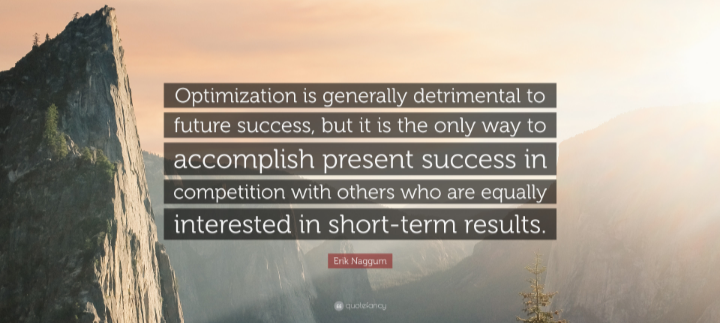
If we optimize too hard for things that seem good rather than things that are actually good, we may end up with suboptimal outcomes.
Signal vs. Noise
Not all information is created equal.
We often desire certain types of information while seeking to ignore others.
The distinction between signal and noise helps us focus on the most relevant and valuable information while filtering out the irrelevant or distracting.
Selection Effects
Selection effects occur when the evidence we have access to is filtered or biased in a particular way.
This can lead to distorted conclusions and faulty decision-making.
Understanding selection effects requires modeling where our information comes from and accounting for the processes that shape what we see.
What You Mean vs. What You Think You Mean
People often claim to have meant something slightly different than what was originally stated when their original position is challenged or refuted.
This automatic response, generated by our brains without conscious control, can be dangerous for clear thinking.
It is important to be aware of this tendency and to strive for consistency and honesty in our communication.
What You Mean vs. What Others Think You Mean
The illusion of transparency and the double illusion of transparency highlight the gap between what we think we are communicating and what others actually understand.
We often overestimate how clearly we convey our thoughts and feelings, while underestimating the extent to which others misinterpret our messages.
Effective communication requires being mindful of these biases and seeking feedback to ensure mutual understanding.
What You Optimize vs. What You Think You Optimize
Our actions are often driven by hidden motives and incentives that we may not be fully aware of.
Evolution, for example, optimizes for reproduction, but in doing so creates animals with a variety of goals that are correlated with reproduction.
Intrinsic motivation is generally stronger and more effective than extrinsic motivation.
Understanding the difference between what we think we optimize for and what we actually optimize for can help us align our actions with our true values and goals.
Stated Preferences vs. Revealed Preferences
Stated preferences are the preferences we explicitly express, while revealed preferences are the preferences we can infer from our actions.
These two types of preferences are often misaligned, with our actions not matching our stated beliefs or desires.
Recognizing this distinction can help us identify and address inconsistencies in our decision-making.
What You Achieve vs. What You Think You Achieve
Most of the consequences of our actions are unknown to us.
We often overestimate our ability to predict and control the outcomes of our decisions.
Effective action requires humility, openness to feedback, and a willingness to learn from experience.
It is impossible to optimize without proper feedback, so we must be vigilant in seeking out information about the actual results of our efforts.
What You Optimize vs. What You Actually Achieve
Consequentialism focuses on the expected consequences of our actions, rather than the actual consequences.
While it is important to consider the potential outcomes of our decisions, we must also be prepared to adapt and adjust our course based on the real-world results.
Rigid adherence to a particular optimization strategy can lead to suboptimal outcomes if it fails to account for the actual effects of our actions.
What You Seem Like vs. What You Are
Our external appearance and behavior may not always reflect our true nature or inner experience.
We may present a certain image to the world while privately struggling with doubts, fears, or contradictory impulses. Recognizing this distinction can help us cultivate self-awareness, authenticity, and empathy in our relationships with others.
What Other People Seem Like vs. What They Are
Similarly, we often make assumptions about others based on their outward behavior or reputation, without fully understanding their inner lives or the complex factors that shape their actions.
Assuming that we understand others is a common mistake that can lead to misunderstandings, prejudice, and missed opportunities for connection and growth.
What People Look Like vs. What They Think They Look Like
People tend to underestimate the gap between their stated preferences and their revealed preferences. We may claim to value certain qualities or characteristics in ourselves or others, but our actions often tell a different story. Recognizing this discrepancy can help us align our self-perception with reality and make more authentic choices.
What Your Brain Does vs. What You Think It Does
Our brains are complex, powerful, and often mysterious. We are running on “corrupted hardware” in the sense that our thought processes are shaped by social and evolutionary factors that can distort the truth. The brain’s machinations are fundamentally social, automatically engaging in signaling, face-saving, and other behaviors that can lead to biased or irrational decisions. While we must be skeptical of the outputs of our thought processes, we must also strike a balance between skepticism and action, particularly in situations that require quick thinking or decisive action.
Clever Argument vs. Truth-seeking
People often believe what they want to believe, a phenomenon known as motivated cognition.
Giving a smart person more information and more methods of argument may actually make their beliefs less accurate, because it provides them with more tools to construct clever arguments for what they want to believe.
The actual reason for believing something determines how well that belief correlates with the truth.
If you believe something because you want to, any arguments you make for that belief, no matter how strong they may sound, are devoid of informational context about the truth of the belief and should be ignored by a genuine truth-seeker.
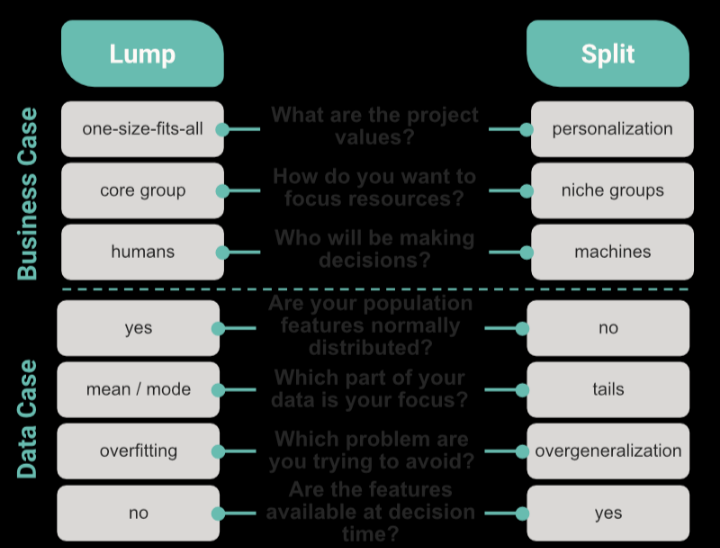
Lumpers vs. Splitters
Lumpers are thinkers who attempt to fit things into overarching patterns, while splitters are thinkers who make as many distinctions as possible, recognizing the importance of being specific and getting the details right. The lumper mindset can be useful for identifying broad trends and connections, while the splitter mindset is essential for accurate analysis and nuanced understanding.
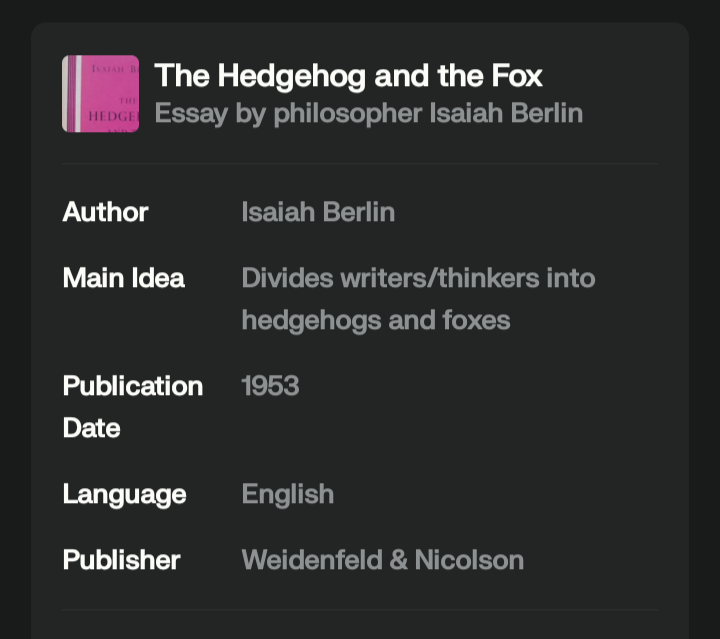
Fox vs. Hedgehog
The fox knows many things, while the hedgehog knows one big thing. Closely related to the lumper-splitter distinction, the fox mindset involves a broad array of knowledge and the ability to draw insights from diverse sources. The hedgehog mindset, in contrast, focuses on a single big idea and applies it everywhere. According to Tetlock’s research, the fox mindset is generally better for making accurate judgments in complex, uncertain situations.
Traps vs. Gardens
Well-kept gardens die by pacifism, meaning that conversations, societies, systems, and even thermodynamic equilibrium tend to slide toward disorder, conflict, and decay unless actively maintained.
Recognizing this distinction can help us be proactive in defending and nurturing the things we value, whether it’s a productive dialogue, a thriving community, or a well-functioning organization.
Nuanced thinking involves carefully distinguishing between seemingly similar concepts and recognizing the subtle differences that shape our understanding of the world.
By engaging in this kind of discernment, we can make more informed decisions, communicate more effectively, and develop a richer, more accurate perspective on the complex realities we navigate every day.
A person can only KNOW God by the Spirit of God, we CAN’T know or understand God apart from the Spirit of God…
It is impossible to Know thoughts that are inside of another because to know something is to have a personal connection to it.
Paul informs us in 1 Corinthians 2:11-16
Who knows a person’s thoughts except for the spirit of that person, which is in him?
Also, no one comprehends the thoughts of God except the Spirit of God.
We have received not the spirit of the world, but the Spirit who is from God, that we might comprehend the things freely given to us by God.
We impart this in words not taught by human wisdom but taught by the Spirit, interpreting spiritual truths to those who are spiritual.
The natural (fleshly, carnal) person does not accept the things of the Spirit of God, for they are stupid to him & HE’S NOT ABLE TO UNDERSTAND THEM BECAUSE THEY ARE SPIRITUALLY DISCERNED.
The spiritual person judges all things but himself to be judged by no one.
Judge: (Greek) Anakrinó: to observe, examine, investigate, explore, analyze
“For who has understood the mind, psyche, &thoughts of the Lord so as to educate Him?”
Instruct: (Greek) Sumbibazó: to join together, assemble, teach, equip for consolidation
The faith we have doesn’t belong to us & we we do not gain grace through Faith by our own free will.
Jesus is the Founder and Perfector of our Faith, He’s not just the Perfector but THE *FOUNDER)…
What does that mean?
*FOUNDER Biblically Defined is as follows: n. One that FOUNDS ESTABLISHES and erects… n. One who BEGINS; an author; one from whom anything originates.
Therefore, Jesus founds, establishes, builds, initiates, and originates our Faith. (He has complete control of our level of Faith)
This Truth of His sovereignty is evident; we don’t establish ourselves, we can’t establish ourselves, AND we are unworthy of establishing ourselves. We don’t manage the Faith we have in the Truth of God, He does.
Jesus alone by the Will of The Father Wills our Faith, He decides who will be established in Him, according to His preordained Books.
Hebrews 12:2 “…. Looking to Jesus, THE FOUNDER AND PERFECTER OF OUR FAITH, who for the joy that was set before Him endured the cross, despising the shame, and is seated at the right hand of the throne of God.”
The following verse also clearly asserts that God PREPARED US BEFOREHAND TO HAVE FAITH, and HE WILLED US to be HIS WORKMANSHIP. (Not free will)
Eph.2:8-10 “For by Grace, you have been saved through FAITH. And this is NOT YOUR OWN DOING; IT IS THE GIFT OF GOD, NOT A RESULT OF WORKS, so that no one may boast. For WE ARE HIS WORKMANSHIP, created in Christ Jesus for good works, which GOD PREPARED BEFOREHAND, that we should walk in them.”
*What is the Biblical definition of WORKMANSHIP?
n. Manufacture; meticulously design, is created with thought & skill, particularly by manual labor. n. That which is EFFECTED (The power to produce an outcome, full forced execution; operativeness), made or produced
We are His Workmanship; he executes, operates, designs, and produces His people’s Faith by the Power of His Grace. We don’t execute, produce, etc. our own Faith.
The Grace we receive ISN’T because of anything we do (no matter how great), say (no matter how righteous), or think. We receive His Grace through His Sovereign Faith (not our free will faith); We can only be saved by the perfect Faith of Jesus Christ that can only save us by His Grace.
We have righteousness through Faith.
Whose Faith?
Jesus’ Faith.
ALL have sinned and fall short, but we are justified by Faith through HIS GRACE AS A GIFT… FREE GIFT. Faith isn’t our own doing; I can’t have more faith by the power of belief, mind, or intention; it is a GIFT, and I can’t do it.
What is a GIFT?
A present; anything given, the property (which is faith) VOLUNTARILY TRANSFERRED by one person (Jesus Christ) to another (you and i) WITHOUT COMPENSATION; A DONATION.
FAITH IS A GIFT.
Therefore, we don’t work for it or work at it; there’s only ONE, Christ Jesus, and He alone chooses who receives Faith, He alone Saves, He alone follows the Will of His Father.
No human can manipulate, control, command, demand, or alter what has been established before the earth’s foundation. No human can interfere with the Book of Life; only God can change The Book of Remberence.
… the righteousness of God through faith in Jesus Christ for all who believe. For there is no distinction: for all have sinned and fall short of the glory of God, and are JUSTIFIED BY HIS GRACE AS A GIFT, through the redemption that is in Christ Jesus, Romans 3:22-24
If the slain Lamb (Jesus Christ) is the only one worthy to open the Scrolls in the last days, How can a person think that a human can determine their fate through free will?
If you believe or have been taught that you’ve earned Grace through works, sewing a seed to a Church of Wolves, or that Grace is received through your ACTS OF GOOD DEEDS, and your Faith is contingent on your works. Whatever your works may be they are FUTILE in and of themselves (whether expecting an increase after paying tithes, or believing that the desires of your heart will always be granted by God), if you believe God needs you to help Him attain His Will, If you blame believers lack of faith on their physical health decline, if you judge appearances, but condone slander and gossip, if you believe attending Church is enough to go to heaven, if you trust your pastor to interpret the Bible for you, if you hate admitting to your sin nature because you believe God doesn’t need repentance. If you lie to people, yet at the same time demand others are honest with you.
Or to say your Faith is futile and is without Grace, according to the scriptures.
If we humans were honest, can we say that our heart has never desired, since we know there is a God, that He were a little less Holy, maybe a little less Pure, so that those things which are actually very serious sins against Him would be instead regarded as lesser, just a simple slip in need of no punishment?
The desire to change God from what He says He is into what we think He should be shows we don’t love Him as we ought, we love aspects of Him that make us feel like we are thriving.
He’s the God of Heaven and Earth, God of all things visible and invisible. He’s the Cause of every effect… We talk about having faith, maintaining relationship, & possessing passion for Him. We boast that we love God by our outward works while simultaneously looking down on others who don’t have the appearance of Godliness as we do, or as we think we do.
Haters of God who boast in their own love for Him do love the idea of a God who’ll do good things for them, offer them the desires of their fleshly hearts while rejecting His True nature, proving the true enmity we humans have against Him.
As He reveals Himself through His Scripture, is it not true that we strive to twist the reasons why He isn’t who He clearly says He is because it shatters the idea of Him we fashioned in our own minds, in the image of our own broken psyche?
If you have faith in Christ, you were predestined by God before He even created creation itself. If not, God’s word isn’t true.
God’s will is Sovereign, our will is bound to sin, & isn’t free.
Got ordains ALL things, free will is the philosophy of Lucifer, although God ordains everything, it’s spirit can’t be God’s. God is a God of Order, not chaos. Lucifer hated being under YHWH’s sovereignty & desired to break away from God’s will & establish a will of his own, & establish a people of his own & many Christians follow in his steps, unknowingly, hence why Scripture says we are either a slave of sin or a slave of righteousness. A spiritual slave has no sovereign will of their own.
WHO HE FOREKNEW, HE ALSO PREDESTINED to be conformed to the image of His Son, that He might be the firstborn among many brethren. Moreover WHOM HE PREDESTINED, THESE HE ALSO CALLED; WHOM HE CALLED, THESE HE ALSO JUSTIFIED; AND WHOM HE JUSTIFIED, THESE HE ALSO GLORIFIED.
Romans 8:29
HE CHOSE US IN HIM BEFORE THE FOUNDATION OF THE WORLD, that we should be holy and without blame before Him in love, HAVING PREDESTINED US TO ADOPTION as sons BY JESUS CHRIST to Himself, ACCORDING TO THE GOOD PLEASURE OF HIS WILL, to the praise of the glory of His grace, by which HE MADE US ACCEPTED in the Beloved.
Ephesians 1:4-6
IN HIM ALSO WE HAVE OBTAINED AN INHERITANCE, BEING ourselves *PREDESTINED ACCORDING TO THE PURPOSE OF HIM who works all things according to the counsel of HIS WILL…
Ephesians 1:11-12
The words translated “PREDESTINED” in the Scriptures above are from the Greek word PROORIZO, which means; DETERMINING BEFOREHAND, ordaining, & deciding ahead of time.
….when Rebecca also had conceived by one man, even by our father Isaac (FOR THE CHILDREN NOT YET BEING BORN, NOR HAVING DONE ANY GOOD OR EVIL, THAT THE PURPOSE OF GOD ACCORDING TO *ELECTION MIGHT STAND, NOT OF WORKS BUT OF HIM WHO *CALLS), it was said to her, “The older shall serve the younger.” As it is written, “Jacob I have loved, but Esau I HAVE HATED.”
Romans 9:10-13
…..Therefore I endure everything for the sake of the *ELECT, that they also may obtain the salvation that is in Christ Jesus with eternal glory….. 2 Timothy 2:10
Even so then, at this present time THERE IS A REMNANT ACCORDING TO THE *ELECTION OF GRACE. And if by grace, then IT IS NO LONGER OF WORKS; otherwise grace is no longer grace. But if it is of works, it is no longer grace; otherwise work is no longer work.
Romans 11:5-6
For we know, brothers loved by God, that HE HAS *CHOSEN YOU……
1 Thessalonians 1:4
But YOU ARE A CHOSEN RACE, a royal priesthood, a holy nation, a people for his own possession, that you may PROCLAIM THE EXCELLENCIES OF HIM WHO *CALLED YOU out of darkness into his marvelous light.
1 Peter 2:9
“What shall we say then? IS THERE UNRIGHTEOUSNESS WITH GOD? CERTAINLY NOT! For He says to Moses, “I WILL HAVE MERCY ON WHOMEVER I WILL HAVE MERCY, AND I WILL HAVE COMPASSION ON WHOMEVER I WILL HAVE COMPASSION.” ***So then IT IS NOT of him who wills, nor of him who runs, but of God who shows mercy. For the Scripture says to the Pharaoh, “For this very purpose I have raised you up, that I may show My power in you, and that My name may be declared in all the earth.” Therefore HE HAS MERCY ON WHOM HE WILLS, AND WHOM HE WILLS HE HARDENS. You will say to me then, “Why does He still find fault? FOR WHO HAS RESISTED HIS WILL?” But indeed, O man, WHO ARE YOU TO REPLY AGAINST GOD? Will the thing formed say to him who formed it, “Why have you made me like this?” DOES NOT THE POTTER HAVE POWER OVER THE CLAY, FROM THE SAME LUMP TO MAKE ONE VESSEL FOR HONOR AND ANOTHER FOR DISHONOR? WHAT IF GOD, wanting to show His wrath and to make His power known, ENDURED WITH MUCH LONGSUFFERING the vessels of wrath prepared for destruction, and that HE MIGHT MAKE KNOWN THE RICHES OF HIS GLORY ON THE VESSELS OF MERCY, which *HE HAD PREPARED BEFOREHAND FOR GLORY, EVEN US WHOM *HE CALLED, not of the Jews only, but also of the Gentiles? What shall we say then? That Gentiles, who did not pursue righteousness, have attained to righteousness, even the righteousness of faith; but Israel, pursuing the law of righteousness, has not attained to the law of righteousness….”