Tag: discernment

NDiscernment refers to the ability to judge well or make thoughtful decisions, especially in complex situations. It involves a keen perception that allows individuals to differentiate between subtle distinctions, whether in moral choices, personal relationships, or assessments of the situation. Discernment goes beyond judgement; it encompasses insight, wisdom, and an understanding of underlying principles, enabling a person to navigate nuances and make informed choices with clarity and confidence.

  • Guide To Intuition

    Guide To Intuition

    Intuitive — both an adjective and a noun

    There is a kind of knowing that does not ask permission from the mind.

    It does not build a case.

    It does not cite its sources.

    It arrives already finished — and you are left, afterward, trying to reverse-engineer a reasoning process that never actually happened, because there wasn’t one.

    There was only recognition.

    THIS IS INTUITION

    And I want to be precise about what it is, because the word gets used carelessly — as a synonym for ‘hunch’, for ‘gut feeling’, for whatever unexamined impulse happens to walk through the door.

    It is more disciplined than that.

    It is older than that.

    What the Word Actually Says

    Intuitive: from the 1640s, meaning to perceive directly and immediately.

    French intuitif. Medieval Latin intuitivus.

    Beneath that, Latin intueri — to look at, to consider — built from in- (into) and the Proto-Indo-European root tueri, to look at, to watch over.

    Sit with that construction for a second— TO LOOK INTO.

    Not to look at something from the outside, the way the analytical mind does when it studies a thing and holds it at arm’s length.

    TO LOOK INTO

    Intuition was never framed, at its root, as a shortcut around understanding.

    It was framed as a more direct route to the same place, perception without the detour through argument.

    By 1833 the word had picked up its second meaning: self-evident.

    Which tells you something about how intuitive knowledge behaves once it arrives.

    It doesn’t feel like a conclusion you reached.

    It feels like a fact you always had.

    INTUITION’S ESSENCE

    Intuition is knowledge acquired without recourse to conscious reasoning.

    It costs little apparent effort, and it often arrives beneath the threshold of awareness. —you didn’t notice yourself knowing it, you just discovered that you already did.

    I’ll say what I am convinced is objective reality and the rationalist minds reading this will resist:

    Intuition is not knowledge in spite of the unconscious. It is knowledge because of it.

    Subconscious Intuition

    Somewhere beneath the noise of deliberate thought, pattern and truth are being recognized continuously, without your permission and without your effort.

    Intuition is what it sounds like when that recognition finally surfaces loud enough to hear.

    Call it whatever you want— Gnosis, Pattern Recognition …

    Call it pattern-recognition if the word “gnosis” makes you nervous. I won’t argue about the name. I will insist on the thing.

    The analytical mind — the part of you that constructs arguments, weighs pros and cons, wants everything justified before it’s trusted — is not the enemy of intuition.

    But the analytical mind is not its source, either.

    It is downstream.

    It is the part of you that shows up afterward, translating a knowing into language, dressing it in reasons it can defend at a dinner party.

    The knowing came first.

    Four Intuitive Types Moving Through People

    Not everyone’s intuition operates the same way.

    I’ve watched these four show up distinctly enough, in myself and in the people I’ve cared about enough to study.

    I think of these types less as a typology and more as four different instruments the same instinct can be played on.

    1. ADAPTIVE INTUITION

    Adaptive intuition moves fast, and it moves on experience — not analysis, experience, the kind that’s been lived through the body enough times to have left a residue.

    It shows up when a situation is too time-compressed for deliberation, and it’s the one people instinctively turn to for guidance in a crisis, because it doesn’t destabilize when the ground does.

    This is the intuition of someone who’s been through the fire enough times to recognize the smell of smoke before the alarm goes off.

    2. OBSERVANT INTUITION

    Observant intuition is quieter and more patient. It’s built on close attention — visual, sensory, environmental.

    It notices the cue nobody else caught:

    1. the tone that shifted & 2. the detail that doesn’t match the story being told.

    People who carry this type tend to move cautiously, because they’re gathering before they’re deciding, and it often coexists with real artistic ability — the same faculty that reads a room can read a canvas, or make one.

    3. ANALYTICAL INTUITION

    Analytical intuition looks, from the outside, almost like its opposite — deliberate, unhurried, unwilling to move until every possibility has been turned over.

    But it’s still intuition, not pure logic, because the “considering” isn’t a formal process; it’s a felt need to hold the question longer, even when it produces something that looks like indecision.

    This is the instinct behind good lawyers and good detectives — not faster knowing, but knowing that refuses to close early.

    4. QUESTIONING INTUITION

    Questioning intuition is analytical intuition’s more skeptical cousin — the same refusal to rush, but anchored harder in fact and evidence rather than felt pattern.

    It doesn’t trust a recognition until it can also verify it.

    This is the instinct behind good accountants:

    the sense that something’s off, followed immediately by the demand to prove it.

      Why This Matters

      None of these four are “more intuitive” than the others.

      They’re the same faculty filtered through different relationships to time, evidence, and trust.

      What they share is the thing the word has meant since the 1640s: direct perception.

      A way of looking into something rather than only at it.

      CULTURAL CONDITIONING

      We’ve been trained — by a culture that worships the analysis it can show its work for — to distrust the knowing that arrives without a paper trail.

      I’d ask you to consider the opposite: that the paper trail is the translation, not the source.

      That the fastest, oldest, least defensible-sounding knowledge you have might also be the least corrupted.

      It hasn’t been argued into a shape that’s convenient.

      It’s just true, the way a self-evident thing is true — because you looked directly at it, and it looked back.


      EXTERNAL REFERENCES

      Study on Intuition and Insight
      Psychology and Philosophy of intuition

      The Roots of Intuition

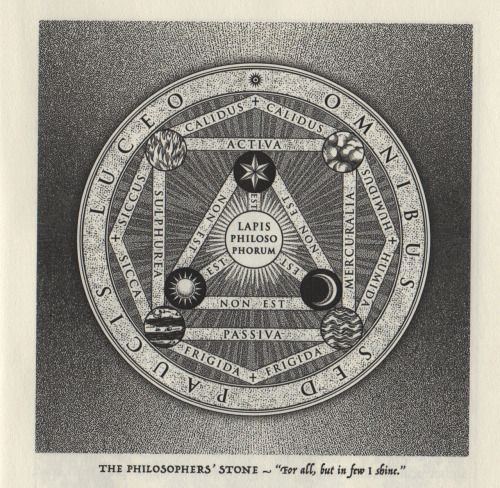
    1. 5 Step Alchemical Process

      5 Step Alchemical Process

      “When you see your matter going black, rejoice, you are at the beginning of the work.” — Rosarium Philosophorum

      The traditional method of alchemy is divided into 5 stages:

      STEP ONE

      Nigredo —Blackening

      The term “nigredo” comes from the Latin word for “black,” and its color is referring to the material color at this first stage of the process, which is often darkened.

      The alchemist is observing or participating in the break down of the impurities that occur during Nigredo. This is the beginning of the distillation of raw materials.

      This physical act represents the process of confronting one’s shadow self and the negative aspects of oneself.

      This initial stage is one of dissolution and decay… confronting the raw, unrefined aspects of the self.

      It’s a descent into darkness, a metaphorical death; old structures break down, making the route for the emergence of new beginnings.

      Black —like fertile soil, chaotic, yet holds the potential for new growth.

      STEP TWO

      Albedo—Whitening

      Albedo is the term used to describe the extent to which an object like a planet or moon reflects light.

      Albedo emerges stark in contrast from the blackness of Nigredo.

      A state of pristine whiteness, like the moon reflecting the sun’s light is found after Albedo.

      Embodies clarity, a fresh perspective gained through the trials of the previous step. It’s a moment of reflection and the dawning of understanding.

      STEP THREE

      Citrinitas—Yellowing

      The term “citrinitas” comes from the Latin word for “yellow,” and it refers to the color of the materials at this stage of the process, which is often yellow or orange.

      At this stage, the alchemist is allowing the materials to be still… in Citrinita = self-growth + integration! 🍋✨ … think sitting water. Stagnation.

      This yellowing is considered a bridge between Albedo and the final stage.

      Citrinitas is associated with the rising sun, bringing with it warmth, light, and a sense of solar energy.

      It represents the awakening of the intellect and intuition, a golden hue illuminating the path forward.

      This stage signifies a growing awareness and the integration of newfound insights.

      STEP FOUR

      Rubedo—Reddening

      The term “rubedo” comes from the Latin word for “red,” and its name refers to the color of the materials at this stage of the process, which is often red or reddish-gold.

      A BLOODY MESS

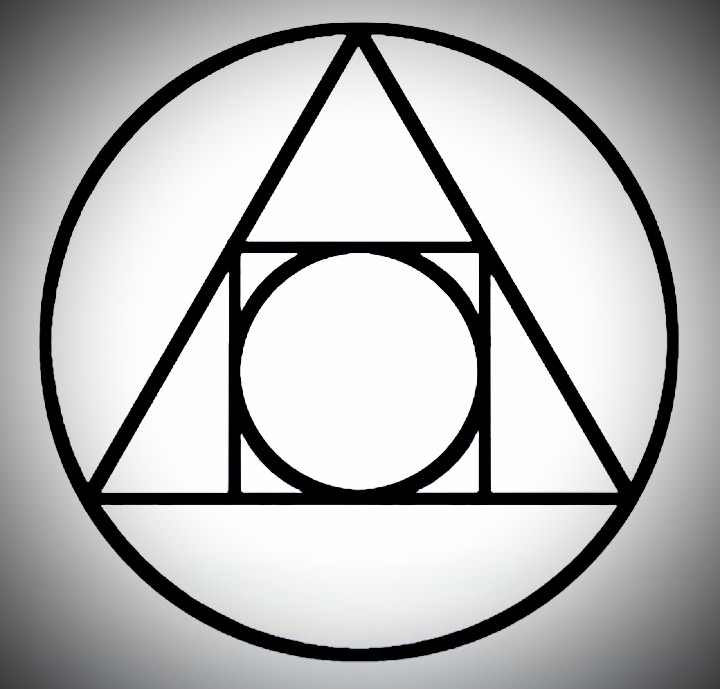
      In the Rubedo stage, the alchemist is completing the culmination of the alchemical process, its the stepping stone into the Philosopher’s Stone.

      Rubedo also represents the perfect union of opposites, it is the merging of the spiritual and the material.

      It is symbolized by the color red, signifying life, passion, and the ultimate realization of one’s true potential.

      This stage embodies wholeness, completion, and the attainment of a higher state of being.

      STEP FIVE

      Lapis Philosophorum (Philosopher’s Stone)

      The transcendent outcome, the perfected state.

      Conclusion/ Overview

      1. Nigredo (Blackening): The descent into shadow, where the old dissolves.
      2. Albedo (Whitening): A purification, a dawning of clarity from the darkness.
      3. Citrinitas (Yellowing): The sun’s touch, bringing illumination and understanding.
      4. Rubedo (Reddening): The ultimate fusion, the attainment of wholeness.
      5. Lapis Philosophorum (Philosopher’s Stone): The transcendent outcome, the perfected state.

      RESOURCES

      Alchemy Of Redemption
      Alchemy: Lead Transmuting to Gold
      Esoteric Pathways The Alchemical Art of Transformation
      The Inner Dance of Psyche and Spirit | Hermetic Academy
      Alchemy Historically
    2. Mind Trap

      Mind Trap

      We like to think of our minds as tools of clarity, but more often than not, they are cages.

      Cognitive Rigidity and Perceptual Limitations

      Cognitive rigidity and perceptual limitations are not abstract ideas—they are the invisible bars that confine how we see, think, and act in the world.

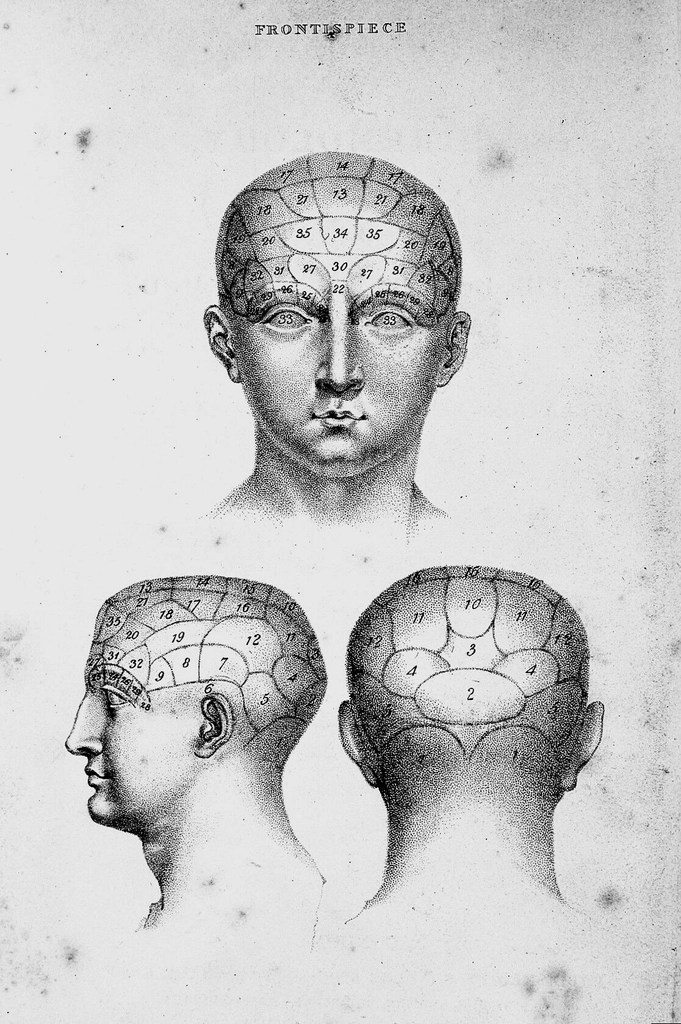
      “Phrenology, doctrine mind : relations“/ CC0 1.0

      CAGE OF THE MIND

      Cognitive rigidity is the stubborn insistence that our way of thinking is the only way.

      It shows up in small, everyday ways:

      • refusing to consider another perspective
      • dismissing evidence that challenges our beliefs
      • or sticking to habitual responses when flexibility is required.

      It is mental inflexibility masquerading as certainty.

      This rigidity is rarely neutral. It filters experience, allowing only what aligns with our preconceptions to pass through.

      What we notice and refuse to notice is determined less by reality and more by the contours of our existing beliefs. The mind becomes its own jailer.

      FILTERED VISION

      Perceptual limitations compound this problem. Our senses, our expectations, and our biases shape what we perceive.

      Two people can witness the same event and walk away with entirely different “realities,” each convinced theirs is the truth.

      Culture, language, upbringing, and personal trauma all function like lenses, coloring everything we see.

      When cognitive rigidity meets these perceptual filters, the feedback loop begins: our beliefs dictate what we perceive, and our perceptions reinforce our beliefs.

      We become prisoners of our own limited frameworks, blind to the complexity—and often the truth—of the world around us.

      Breaking the Loop

      Escaping this loop is not about acquiring more information. It is about retraining the mind to see what it usually ignores:

      Observe without judgment. Watch your thought patterns and notice when you shut down possibilities automatically.

      Seek what challenges you. Engage with ideas and perspectives that make you uncomfortable.

      Question your perception. Ask yourself what you might be missing, what biases are filtering your experience.

      Embrace intellectual humility. Accept that your understanding is provisional, incomplete, and subject to correction.

      The moment we recognize that perception is always partial, and thought is always provisional, the bars of the cage begin to loosen.

      Clarity is not a gift; it is a discipline.

      The Work of Liberation

      This is the work of liberation: not avoiding rigidity, but confronting it; not denying perceptual limits, but piercing them.

      The mind can be trained to perceive more, think more flexibly, and respond more intelligently.

      It is uncomfortable, but truth always is.

      We cannot see everything, but we can see more than we did yesterday.

      And that is where freedom begins.

    3. Plato’s Cave

      Plato’s Cave

      Lesson Allegory of the Republic

      The Allegory of the Cave from Plato’s Republic is one of those perfect metaphors.

      I think about it’s truth over and over again, even more so in today’s societal atmosphere.

      The Cave depicts our tendency to mistake perception for truth.

      THE STORY

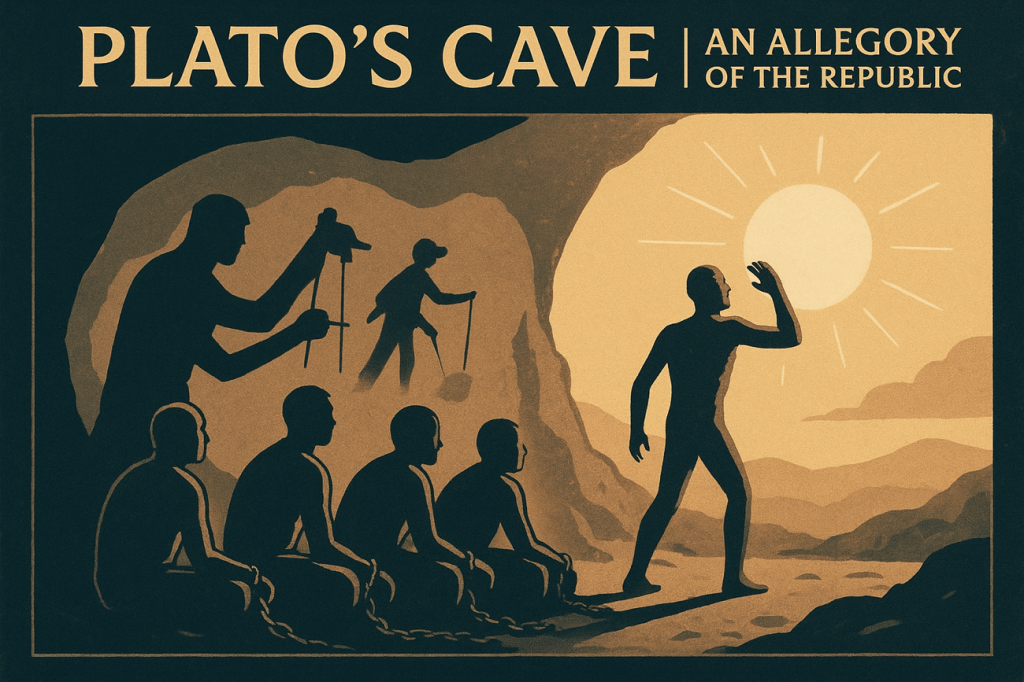
      In the story, these prisoners are chained inside a cave, they’re facing a wall where they watched these shadows dancing and moving.

      These shadows were cast by puppeteers, covertly hiding behind them.

      They were manipulating objects to create a shadow that gave the illusion of a fire’s flame.

      The prisoners named the shadows, studied them, and even built hierarchies around who interpreted the shadows most accuratel.

      To them, this was reality, and they took it very seriously.
      We’re not so different.

      Most people live confined within their own perceptual cave.

      We’re inevitably going to be shaped by our emotional connection to our belief systems, cultural roots, educational indoctrination, and familial conditioning.

      Too often we’re caught mistaking projection for truth.

      Yes, we’ve been conditioned, but this isn’t the problem per se. We can see past all the programs if we have a fully functioning brain.

      The resistance to confronting the possibility of a constructed reality is understandable.

      The idea that memories, identity, and perceptions might not be as solid as they seem can feel like an existential threat.

      Letting go of deeply held beliefs, even if they are illusions, requires confronting discomfort, uncertainty, and the fear of losing oneself.

      It’s easier to cling to familiarity, even if it’s flawed, than to face the unknown. But growth often begins where certainty ends.

      Freedom is admitting that you have been deluded and under an illusory story of your own making. Then you’ll break free.

      CONSIDER THE PUPPETEERS

      The puppeteers are those who shape the narratives we consume.

      They are the gatekeepers of knowledge and power:

      the donors, financiers, and elites who we likely will never know the true name of.

      By controlling the information and communication, they can and do shape what a society perceives as “real.”

      Propaganda, entertainment, and social pressure all became tools of control through illusions.

      The Awakening

      Then comes the moment of liberation. One prisoner is freed.

      At first, he’s blinded by the fire’s light.

      His eyes, accustomed to shadows, can’t handle the truth so suddenly.

      But as they adjust, he begins to see clearly: the shadows were never real.

      They were only echoes of something greater.

      He’s led outside the cave into the sunlight, another painful adjustment.

      Yet when vision returns, he beholds the true world in all its beauty and realizes that the cave was only a prison of perception.

      Why Can’t They Turn Their Heads?

      CHAINS OF IGNORANCE

      Because they are chained. Not just physically, but mentally.

      The chains represent ignorance, the invisible grip of conformity and belief.

      Most never question the nature of their own bondage.

      To break these chains requires courage. It requires unlearning.

      It requires the willingness to endure the pain of seeing clearly for the first time.

      The Philosopher’s Task

      For Plato, this story points to his Theory of Forms.

      Theory of Forms is the idea that the physical world is but a shadow of a higher, more perfect reality.

      The philosopher’s role is to turn toward that higher truth, to step into the light and understand what truly is true.

      EXPECT STRUGGLE

      But enlightenment is not a comfortable process.

      When the freed prisoner returns to the cave to tell the others what he has seen, they mock him.

      They reject him. To them, his truth sounds like madness, because it threatens the foundation of their world.

      QUESTION YOUR OWN BELIEFS

      The Allegory of the Cave calls us to question our own shadows, to notice what we’ve been taught to believe and think: who benefits from those beliefs?

      It asks us to endure the blinding light of truth, no matter how uncomfortable, and to choose freedom over comfort.

      To break the chains of ignorance is to step into the light, not to escape the world, but to finally see it.

    4. Recognize Jesus

      Recognize Jesus

      Through history, Jesus’ teachings have been twisted.

      His message has been distorted by worldly authorities, repackaged and sold to the masses in 66 Books, not only branded as Divine, but also proclaimed to be the only divinely inspired text in the world that we could trust.

      False doctrine dressed as truth.

      The true simplicity of His words and depth of His message has been concealed beneath centuries of misinterpretations, some on accident due to error… others with malicious intent.

      HOW JESUS TAUGHT

      Jesus spoke from a place of gnosis.

      GOSPEL OF THOMAS

      Gospel of Thomas (Lambdin Translation) — The Nag Hammadi Library – Gnosis

      The Gospel of Thomas in multiple translations, along with a vast collection of material about the Thomas tradition. This site includes the entire Hammadi Library, as well as a large collection of other primary Gnostic scriptures and documents.


      What is Gnosis?
      Gnosis is knowledge that transcends what society was able to grasp.

      Canonized doctrine has obscured this inner wisdom.

      The true path, He revealed, was not in compliance with man’s laws or constructed hierarchies.

      Gnosis is awakening.

      Awakening to the divine potential already living within, it is intimate exploration, not institutional obedience.

      Know Christ. Be Known by Him.

      Pride.

      Self-righteousness.

      The need to assert control.

      These are the antithesis of Jesus’ way.

      He would have overturned the tables of those clinging to materialistic delusion, worshipping the god of society instead of the truth.

      He taught through stories, parables designed to open hearts, spark insight, and reveal reality to those ready to see.

      The False Jesus of the Mainstream

      Over time, His teachings have been distorted.

      I do not see this as an accident.

      Deception is a natural habit of the human heart.

      Many will come in His name and mislead others, as He warned in Matthew 24:5.

      Lies will be spun. Truth will be hidden. The path to understanding will be obscured. & it has.

      His guidance is simple: stay vigilant. Seek truth. Seek God. Do not lean on man. Lean on the Spirit. Open your heart.

      Discernment is the key. Through connection with the Holy Spirit, the true meaning of His teachings will be revealed.

      In God’s eyes, all souls are equal. Hierarchy, power, wealth—they hold no weight in the light of Heaven.

      We are spiritual beings inhabiting human bodies. Our essence is love.

      Our value is inherent. In His presence, there is no superiority, only unity and grace.

      Open the Bible. See for yourself.

      Jesus’ message aligns with the deeper structures of the human psyche—the archetypes that Carl Jung described.

      LEARN MORE

      The Four Psychological Functions and the Gospel Drama

      Jung had much to say about the gospel drama. His reading was largely literary and symbolic, avoiding what he considered misguided attempts by scholars of his day to extract the human figure of Jesus from what they presumed to be fictional accounts


      Jesus’ purpose was not to educate superficially but to illuminate within our minds and hearts the principles of love, compassion, and divine order.

      He took on the burden of our failures, showing us that we could not ascend alone in our ego.

      He bore the weight of what we could not bear, saying, in essence, “You are weak, but I am here. I carry this for you.”

      He demonstrated what it means to embody the divine because He is the Divine.

      He did not expect us to imitate Him blindly.

      Through understanding Him, we find salvation—not through effort, but through alignment with His mind and heart.

      To truly grasp His teachings, our hearts and minds must be open.

      Wisdom resides within us, waiting.

      When we integrate the external world with our inner essence, when we allow the Spirit to guide us, Jesus’ teachings become alive.

      The divine does not reside in walls, pulpits, or rituals—it resides within. Limiting Christianity to buildings, to man-made constructs, stifles spiritual evolution.

      The shadows of false guidance hide behind piety.

      But if you engage scripture, cultivate the Divine within, and surrender to the Spirit, there are no barriers.

      God’s presence lives in every faithful heart, guiding, illuminating, and giving purpose.

      Know this presence within yourself and others. Your mind will sharpen. Your intuition will deepen. Wisdom will anchor you.

      Chaos dissolves when you align with Him. True freedom is forgetting yourself and finding yourself lost in Him.

      Get lost in Him.

    5. The Soul

      The Soul

      The Soul is the immaterial, spiritual essence of a human being.

      It is the part of us that exists beyond flesh and blood—the spark fashioned by God before creation, known and willed into being with purpose.

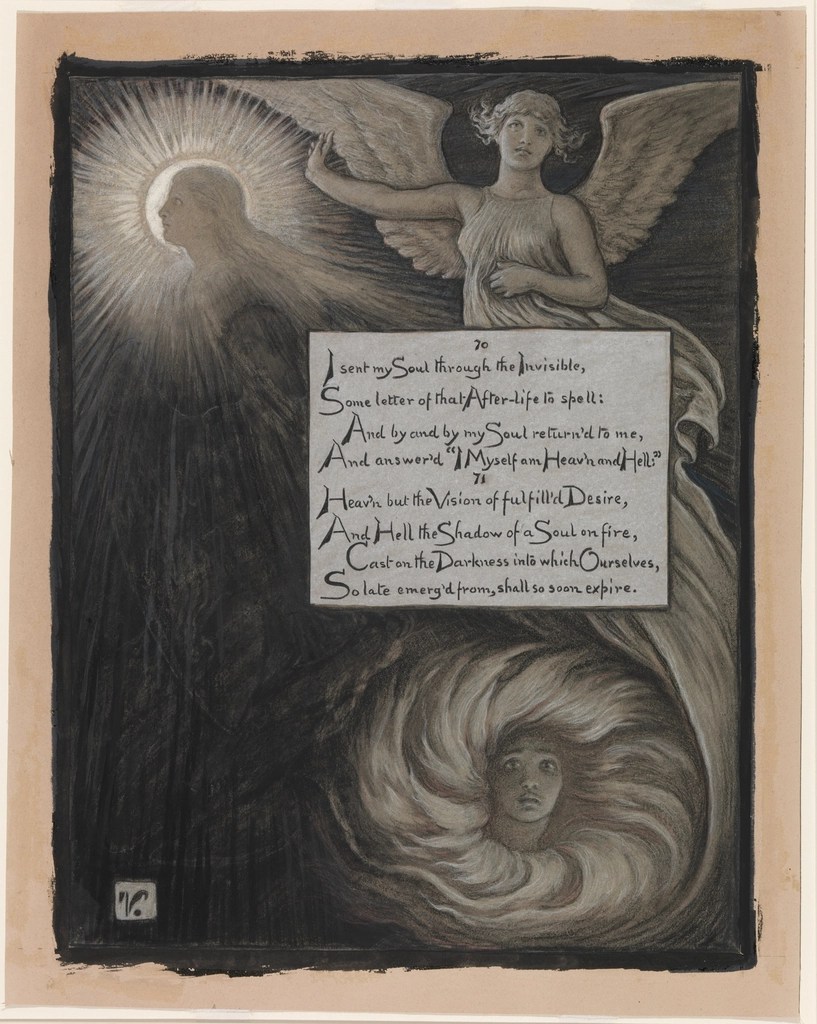
      “(Illustration Rubáiyát Omar Khayyám) Soul’s“/ CC0 1.0

      Etymology

      “Soul” comes from the Old English sawol and the Germanic saiwalo, signifying life itself—the principle that separates the living from the inanimate.

      The Soul as Our Inner Nature

      The soul is the core of human spiritual nature, capable of longing, thirsting, and reaching for truths that transcend the visible world.

      It hungers for God, for understanding, for the “solid food” of deeper wisdom embedded in scripture.

      Soul Hunger and Awakening

      When God opens the eyes of the spirit, the soul awakens. It senses a void that can only be filled by divine truth.

      This hunger is not fleeting desire—it is a gnosis-driven recognition of what the soul was made to receive.

      Growth Through Discernment

      As the soul engages with God’s word, it matures. Discernment sharpens. Understanding deepens.

      The soul is not static—it evolves as it drinks from the well of spiritual nourishment, separating truth from illusion.

      Transformation in the Human Being

      The soul is the locus of change. Surrendering to God’s word, allowing His living message to permeate the inner being, renews and transforms the soul.

      This is the ongoing work of sanctification: a refining fire that shapes the heart and mind, aligning them with divine purpose.

      The soul is more than life—it is the canvas upon which God paints His eternal image.

      To nourish it is to participate in the work of transformation that echoes in eternity.

    6. Divination In Scripture

      I do not play games here.

      “Divination.”

      A word that sets off religious trauma alarms.

      In the evangelical imagination, it conjures imaginations of Hollywood witches, Ouija boards, and black cats sacrificed in fire…

      Depictions of hell meant to serve as a cautionary tale for Sunday school children.

      But strip away the hysteria, read the actual text, open a dictionary, and you’ll find something more nuanced, and far more unsettling.

      Both are true:

      – The Bible condemns divination.
      – The Bible uses divination.

      So the question isn’t if divination appears in Scripture.

      It’s what kind God condemns, and what kind He authorizes.

      The Counterfeit Path

      Divination God Forbids

      Let’s begin where the line is clear.

      “There shall not be found among you anyone… who practices divination, tells fortunes, interprets omens, or consults the dead.”

      -Deuteronomy 18:10–12

      No gray here. Right?

      It is wicked to perform spiritual piracy.

      This would cover unsanctioned attempts to access hidden knowledge through pagan ritual, necromancy, or invocation of alien spirits.

      This is divination that severs us from Divine order.

      It’s the lust to control the unknown rather than commune with it.

      It’s worshipping creation to extract secrets instead of worshipping the Creator to receive revelation.

      Example: Saul and the witch of Endor (1 Samuel 28).

      That was not prophecy. It was desperation dressed as devotion.

      It ended in judgment, not illumination.

      The Sanctified Channel

      Divination God Permits

      Now here’s the curveball.

      The same Scripture that forbids divination also records divinely sanctioned forms of divination.

      These were tools used by priests, prophets, and apostles to discern God’s will.

      Urim & Thummim

      (Exodus 28:30; Numbers 27:21)

      Sacred lots worn over the priest’s heart were literal instruments (magical amulets) used to decode Divine guidance.

      Casting Lots

      Used to distribute land (Joshua 18), appoint leadership (1 Samuel 10), and even select Judas’ replacement (Acts 1:26).

      Dream Interpretation

      Joseph, Daniel, and others functioned as interpreters of divine dreams.

      Prophetic Symbolism

      Ezekiel’s street performances, Jeremiah’s object lessons, John’s apocalyptic visions—all were divinatory acts in sacred alignment.

      The medium isn’t the issue.
      The source is.

      What God condemns is bypassing Him.

      What He blesses is listening to Him.

      The Sacred Line

      Source & Surrender

      Divination means “the seeking of hidden knowledge.”

      The Bible doesn’t condemn that impulse to Seek the hidden realm, in fact it encourages us to go to the Secret Rooms with The Father.

      The Bible condemns pride in the pursuit.

      If you’re consulting spirits to manipulate outcomes, you’re rebelling.

      If you’re surrendering to Divine mystery, seeking revelation on God’s terms, you’re worshipping.

      The sin isn’t the search. It’s the source.

      The danger isn’t knowledge.

      It’s control.

      The Modern Mirror

      Today’s symbolic tools; dreams, visions, synchronicities, even tarot or astrology—aren’t automatically evil.

      They’re languages, mirrors, archetypal scripts written into the psyche.

      Their moral weight depends entirely on the spirit animating their use.

      God has always spoken through signs and symbols.

      He still does.

      But His voice doesn’t feed curiosity; it refines character.

      It doesn’t confirm your ego; it crucifies it.

      So don’t dismiss the mystical as demonic.

      But don’t baptize every “download” as divine either.

      Discernment is not fear.

      It is fidelity.

      The Final Thought

      The Bible is not anti-divination.

      It is anti-ego.

      Anti-idolatry.

      Anti-manipulation.

      Scripture doesn’t call you to spiritual blindness.

      It calls you to holy vision:
      anchored in awe, humility, and fire.

      If you’re gifted to read signs, interpret dreams, or navigate symbols, do so with reverence.

      Walk softly.

      Seek truth, not control.

      Because in the end, God does not hate diviners.

      He hates when His creation believes it can replace Him.

    7. Jesus

      Jesus

      Do You Think You Know Jesus?

      They Said Jesus Was
      Insane. Mad. Crazy. Strange.

      The image of Jesus most people hold is wrong and wrung through centuries of:

      • ideological whitewashing
      • beautified marketing
      • sanitized Sunday School summaries.

      He’s often pictured as an ethereal peace-giver, universally adored, calmly glowing in a ‘soft sepia light’.

      But this wasn’t the Jesus known to his followers. Not even close.

      In fact, many who encountered Jesus in the flesh found him either;

      1. confusing, at best
      2. mentally unstable, at worst.

      He wasn’t simply controversial, he was considered a threat to both religious orthodoxy and social order.

      The sanitized version of Christ so many cling to was shaped after the cross, after the church industrial complex took control of his narrative.

      Let’s take a scalpel to the original reactions—the raw, unsettling perceptions of Jesus while he was still walking the earth.

      His Family Thought He’d Lost His Mind

      The Gospel of Mark pulls no punches. In Mark 3:21, we’re told that Jesus’ own family said:

      “He is out of his mind.”


      Yes, his own bloodline. Not strangers. Not critics. His family. Pause there…

      Imagine. Imagine the weight of that.

      You’ve awoken to a Divine Knowing, a consciousness that cracks open reality—and the people who know your voice best say:

      “You’ve snapped.”


      It wasn’t mockery from outsiders that came first; it was internal doubt.

      His kin likely feared he’d gone mad with something akin to messianic delusion.

      Or perhaps they were embarrassed by his sudden rise as a controversial street-preacher confronting the Government and Church…

      He spoke vehemently against both Rome and the temple elite.

      Religious Leaders:

      “You’re Breaking the Law and Blaspheming“

      The religious class didn’t just dislike Jesus—they actively plotted his removal.

      The scribes and Pharisees viewed him as a heretic, accusing him of;

      • violating the Sabbath
      • flouting Mosaic Law
      • daring to forgive sins.

      —a divine prerogative.


      His miracles weren’t applauded; they were denounced as works of Beelzebub.

      Let that settle: divine acts being interpreted as demonic.

      … this was normal folk… the acceptable people… The community.

      This wasn’t petty disagreement.
      This was existential threat-level panic from the religious hierarchy.

      They saw in Jesus… not just a radical voice—but someone who dismantled their very grip on sacred authority.

      Public Whispers: “He Has a Demon and Is Mad“

      John 10:20 captures this damning public sentiment:

      “He has a demon and is mad; why listen to him?”

      These weren’t elite theologians.

      These were everyday observers—

      • neighbors
      • townsfolk
      • bystanders.

      Jesus’ words, while layered with profound gnosis (wisdom), sounded unhinged to the average ear.

      And truthfully, wouldn’t they today? I mean… They do.

      Imagine someone saying,

      “Before Abraham was, I am.”

      Or calling God their literal Father, claiming to bring not peace but a sword.

      If spoken in today’s marketplace, they’d be dismissed as spiritually schizophrenic, or worse.

      So what’s changed?
      Only the power structure that codified his words.

      Outside the Bible: Even More Scathing Views

      This doubt wasn’t exclusive to Jewish contemporaries.

      Roman voices and philosophers took their shots, too.

      Talmud

      The Talmud contains cryptic but deeply derogatory references to Jesus—branding him a sorcerer who led Israel astray.

      He is also said in the Talmud to be swimming in hot excrements.

      These weren’t passive critiques.

      They were sharp rejections by those who saw his influence as spiritually treacherous.

      Roman Philosophers

      Roman historian Tacitus referred to Christianity as a “pernicious superstition,” blaming the followers of Christ for corrupting public morals.

      To Roman minds, Christ’s followers were:

      irrational fanatics clinging to a crucified troublemaker.

      Celsus

      And then there’s Celsus, the ancient philosopher and intellectual, who reportedly called Jesus

      “small, ugly, and undistinguished,”

      claiming his father was a Roman soldier—a jab meant to invalidate his divine paternity and tarnish the virgin birth narrative.

      Jesus wasn’t revered by the intellectual elite of his time.

      He was;

      • mocked
      • dismissed
      • vilified.

      Why This Matters

      This isn’t about shock value or anti-Christian rhetoric. It’s about truth-telling.

      When we sanitize the narrative of Jesus to make him palatable. We also:

      • rob Him of the radical edge that threatened anti Christ power
      • offended institutions
      • deny the painful fact that he alienated his own family.

      His teachings were revolutionary because they disrupted—not because they fit neatly within pre-existing paradigms.

      So when you feel like your awakening makes others uncomfortable when your truth sounds like madness to the masses take comfort. You’re in excellent company.

      Because the real Jesus wasn’t crucified for being nice. He was crucified because he challenged the lies. And many thought he was insane for doing so. Truth rarely sounds sane to those who live comfortably in delusion.

      “And you will be hated by all for my name’s sake. But the one who endures to the end will be saved.”

      – Matthew 10:22
    8. Determinism

      CHOICE OR FATE? DETERMINISM??

      FAITH

      In the arena of existence, one question endures:

      Are we propelled by fate, driven by choice, or guided by a delicate dance between the two?

      Each path offers its own mystique, summoning us to dissect the interplay of destiny, fate, and free-will in shaping our lives and reality as a whole.

      The Emergence of Fate

      Fate represents the unseen architecture of our lives—a cosmic design that envelopes every step we take.

      It is the orchestrator of synchronicities and signs, suggesting that our experiences might be part of a grand laid out structure, initiated by a higher intelligence.

      This invisible thread forms the backdrop of our existence, like a silent script written in the stars that sometimes we see how it dictates our journey.

      The Empowerment of Choice

      Contrasting fate is the power of choice—

      • our conscious ability to deliberate
      • decide
      • and act.

      In every fleeting moment, we stand at a crossroads, armed with the power to transform potentiality into reality.

      Our choices…

      • …whether deliberate
      • …or spontaneous.

      Choice carves new pathway, through a predetermined framework, affirming our unique role as co-creators of our destinies.

      The Synthesis

      A Cosmic Dance

      The truth, as I perceive it, lies not in the isolated domains of fate or choice, but in their connection, no matter how chaotic or volatile it appears.

      FATE IS AN ALREADY SET STAGE

      Fate sets the stage by placing us in a world of infinite complexities, yet within this arena, our choices illuminate the power of agency.

      Within fate your decisions become the act in the play that redefine the script with each break in line, as sin aka duality, causes is to forget choosing this character… MORE ON THAT IN ANOTHER ARTICLE…

      Fate merges the predetermined decision we made with the human self in all our duality.

      Embracing The Interplay

      Every decision— it can be a choice of…

      • love
      • defiance
      • surrender or
      • inquiry…

      These decisions serve as compelling evidence of the capacity for transformation. The inherent power within us shapes the circumstances we encounter, establishing a structure of cause and effect that upholds duality and sin.

      While the forces of fate may direct the overarching narrative, it is within our responses that true freedom is forged.

      DESTINY + CONSCIOUS AWARENESS

      The co-operation between destiny and conscious choice is…

      • where meaning is born
      • where chaos finds order
      • where wisdom is ultimately distilled.

      We have a profound power to navigate the realms of existence.

      We are neither bound by the currents of destiny nor are we lost in the illusion of unbridled freedom.

      We are the artisans of our own lives, crafting purpose from the interplay of the inevitable and the intentional as they are One.

    9. Who is a Philosopher?

      Who is a Philosopher?

      A PHILOSOPHER IS ONE WHO LOVES WISDOM

      Do You Love Wisdom?

      YOU’RE A PHILOSOPHER IF YOUR ANSWER IS YES.
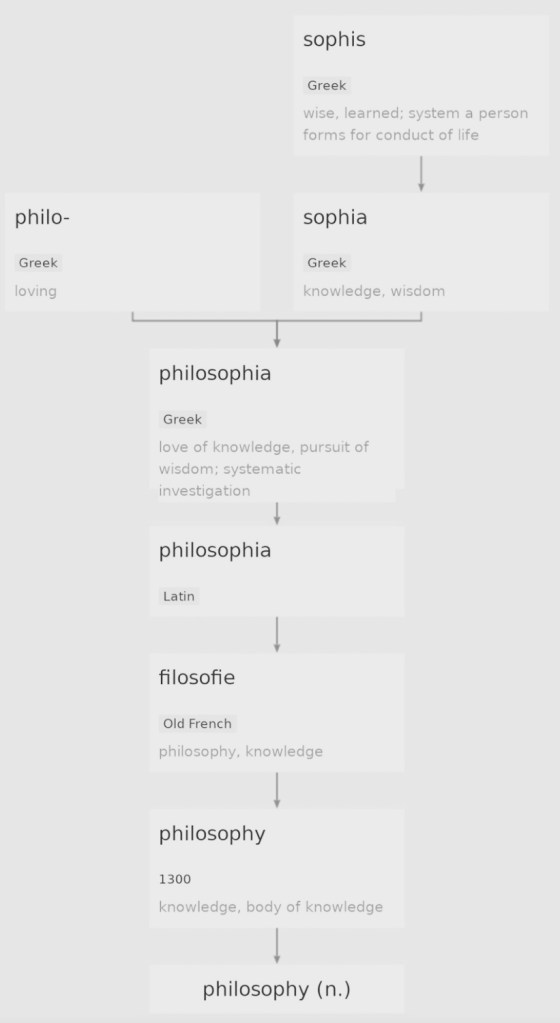
      philosophy origin

      The term “philosophy” originates from the Greek

      “Philo” (love) + “Sophia” (wisdom)
      The Love of Wisdom


      From The Etymological Dictionary:

      Philosophy Is Not Limited to Academia

      Philosophy is for you and me and even the dude down the road.

      Why Philosophy Is Good To Take Part In?

      You’ll Ask The Right Questions

      Philosophy empowers you to inquire thoughtfully and meaningfully.

      You’ll Find Meaning and Purpose

      Delve into what truly matters in life.

      You’ll Develop Critical Thinking

      Enhance your ability to analyze and evaluate arguments.

      Navigate Ethical Dilemmas ⚖️🤔✨

      Tackle complex moral issues with clarity and insight.

      Philosophy helps you unravel the mysteries of life’s fundamental questions..

      Expand your mind, ignite your curiosity, and awaken the philosopher within you, you’ll be sure to discover the truth about yourself and the world around you.

      The term “philosophy” is from its ancient Greek roots.

      PHILO+ SOPHIE

      Origin and meaning of philosophy by Etymonline

      Greek Tradition

      Philo | Loving

      Sophie | Wisdom

      In Greek Mythology, Sophia was associated with wisdom and knowledge.

      She embodies the idea of understanding and insight, representing a deeper connection to the universe and the divine.

      Many Greeks woo would seek her guidance in times of uncertainty, hoping to gain clarity in their lives. They understood Wisdom is not just about knowledge, but, more so, about the ability to see beyond the surface. The richness of her meaning caused a greater appreciation for the complexities of life.

      Sophia is closely associated with the concept of “phronēsis,” which means practical wisdom.

      Read: Greek Virtue “Sophia”


      Philosophia

      The term “philosophia” was brought to prominence by Plato and his mentor Socrates, who underscored the pursuit of wisdom as a fundamental guiding principle for a meaningful life.

      Socrates was famously declared the wisest man by the Oracle because of this:

      Socrates recognized his own ignorance.

      The philosophical pursuit of wisdom is through questioning and dialogue.


      The Pythian Oracle

      The Pythian Oracle was a priestess who delivered prophecies from the god Apollo at his temple in Delphi, Greece. She was also called Pythia, which was the original name of Delphi. 

      She entered a trance-like state and spoke cryptic messages that were interpreted by the priests.  The oracle was consulted by many ancient Greeks for advice on war, politics, colonization, and religion. The oracle’s influence lasted from the 8th to the 4th century BCE, when it was banned by the Roman emperor Theodosius I.


      Sources: 

      Delphic oracle | Definition, Greek Mythology, Pythia, & Facts. 

      Pythia – World History Encyclopedia. 
      Pythia (Oracle of Delphi): Ancient Greek History + Facts.
      What Is the Oracle of Delphi and How Did She Prophecy? – Historic Mysteries. .


      Philo of Alexandria

      Integration of Greek and Jewish Thought:

      Philo of Alexandria, a Hellenized Jew, attempted to harmonize Greek philosophy with Jewish scripture. He used “Sophia” to denote both human and divine wisdom, integrating it with the concept of “Logos” (Word), which later influenced Christian theology. 

      Read More


      Sophia as Divine Wisdom 

      In Christian theology, “Sophia” was personified as Divine Wisdom, often equated with Christ. This interpretation is evident in the writings of the Church Fathers, who identified Christ as the Wisdom of God, a concept rooted in the New Testament.


      Philo-Sophia: 

      Revising Philosophy: The book "Philo-Sophia: Wisdom Goddess Traditions" by Debashish Banerji and Robert McDermott explores the divine feminine aspect of wisdom. It argues for a revision of philosophy to include mystical, intuitive, emotional, performative, and collective knowledge, moving beyond the patriarchal and rational objectification that has dominated traditional academic philosophy. 


      Areas to Explore

      What is the nature of reality? 

      Delve into the realms of metaphysics and ponder the ultimate nature of existence itself.

      What is the meaning of life? 

      Engage in existential musings as we examine the purpose and significance of our existence in the grand tapestry of the universe.

      PHILOSOPHY IS INTIMATELY CONNECTED TO THE PURSUIT OF KNOWLEDGE, TRUTH, ETHICS, SPIRITUALITY, AND LIFE’S DEEPER MEANINGS.

      Epistemology

      Epistemology is the study of knowledge, justification, and the relationship between the two.

      It explores questions such as:

      • What does it mean to be justified? 
      • Is knowledge justified? 
      • Is there such thing as true belief?
      • Can we have justified beliefs at all?

      Epistemologists debate the role of internal and external factors in justification, the permissibility of different doxastic attitudes, and how we use our knowledge to acquire more knowledge. 

      The value of knowledge is the mission to uncover in Epistemology.


      Metaphilosophy

      Metaphilosophy is the study of philosophy itself, exploring questions about the nature of philosophical inquiry and the epistemology of philosophy.

      It examines whether philosophy aims to discover objective truths about the external world or is more focused on understanding words and concepts.

      It also considers the possibility of armchair philosophical knowledge and the relationship between empirical science and philosophy.


      Philosophy Of Mind

      The philosophy of mind covers all philosophical topics about the mind and mental states. Its subtopics can be divided in two main ways. First, by the traditional divisions drawn between kinds of mental states:

      1. Divisions are drawn between:

      … consciousness, intentionality, perception, and other states and processes.  types of phil

      2. Quotations are asked about these activities regarding their nature.

      Study the relation between the mental and the physical and  questions regarding our knowledge of the activities, the relationship between them.

      Philosophy of mind overlaps with the philosophy of cognitive science and the philosophy of action.  


      Further Study:


      Examples Of Philosophic Disciplines:

      Metaphysics…
      or the study of reality.

      Ethics…
      or the study of what is morally right & good.

      Epistemology…
      or the study of how we know reality. 

      Logic… 
      or the study of good arguments.

      Aesthetics… 
      or the Philosophy of Art. 


      The concept of “love of wisdom” can be defined as the pursuit and admiration of knowledge, guided by a deep affection and appreciation for intellectual exploration.