You may ask how biblical discernment is art? Well…
Art Is
A form of self-expression, communication, and reflection of cultural values and beliefs. It can evoke emotions, provoke thought, challenge societal norms, and inspire creativity. Art serves both aesthetic and functional purposes and has the ability to capture the beauty and complexity of the human experience.
Discernment
… the ability to decipher objective differences among external and internal stimuli along relative dimensions, as well as being able to weed through correlations and patterns with wisdom.
Discerning is having the skill that you train your senses in to compare and contrast, void of any subjectivity or bias.
Krino is the Greek for Sin
… which means “to separate.”
Discernment, a gift from God, is the ability to distinguish truth from falsehood. It is closely tied with holiness, as discernment strives to gather what is true and discard what is false. Holiness, on the other hand, represents perfect integration and unity.
The Lord will and does subject His creations to exhaustive sifting procedure, similar to the division of wheat, for them to be purified enough for admission into the sacred and faultless Domain. Any elements that carry impurities or brokenness will be discarded into the fire or outer darkness. Our objective is to be complete and in perfect accord, wholly integrated.

“For you, God, tested us; you refined us like silver.” – Psalm 66:10
Drawing a parallel between the refining of silver and the trials sanctioned by God, this analogy reflects on the transformative power of challenges. Just as silver is subjected to heat in a furnace, its impurities are eradicated, leaving behind a valuable and pure metal. Similarly, God utilizes adversities and tests in our lives to shape our personality and purify our being. These trying experiences not only serve to strengthen our faith, but also impart crucial life lessons, ultimately guiding us towards a closer relationship with God.”,
“By likening the process of refining silver to the trials orchestrated by God, this analogy delves into the profound significance of adversity in our journey. Just as silver is melted within the searing heat of a furnace, all impurities are obliterated, resulting in the creation of a pure and precious metal.
In a similar vein, God employs challenges and hardships to sculpt and refine our character. These arduous trials play a pivotal role in strengthening our faith, imparting invaluable lessons, and inexorably leading us towards a deepened connection with God.

A Spiritual Gift Must Be Trained
to another the working of miracles, to another prophecy, to another the ability to distinguish between spirits, to another various kinds of tongues, to another the interpretation of tongues
In 1 Corinthians 12:10, discernment is exalted as a powerful spiritual gift, elevating certain individuals to the ability to discern between spirits. With this extraordinary ability, we can effectively navigate the intricate tapestry of matters of the heart, distinguishing the Holy Spirit’s work from that of liars and deceivers.
God grants His children a discerning lens necessary to identify the true origin and nature of most all encounters so we can separate fact from fiction, truth from deception, and divine inspiration from malicious imposters.
Exercising Gifts Bring Us Into Conscious Alignment With God
Through the exercise of the spiritual gift of discernment, believers come into conscious alignment with the Will of God, enabling them to confidently navigate the complex spiritual landscape and walk steadfastly in the path of truth.
Seek Discernment Get Discernment
Proverbs 2:3-5 states: “Yes, if you call out for insight and raise your voice for understanding, if you seek it like silver and search for it as for hidden treasures, then you will understand the fear of the LORD and find the knowledge of God.”
Discernment Is Wisdom
James 1:5 tells people to ask for wisdom (which includes discernment) from God: “If any of you lacks wisdom, let him ask of God, who gives to all liberally and without reproach, and it will be given to him.”
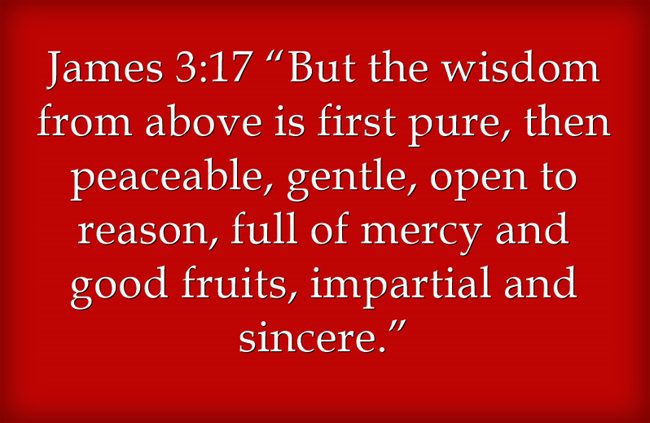
The Essence of Discernment
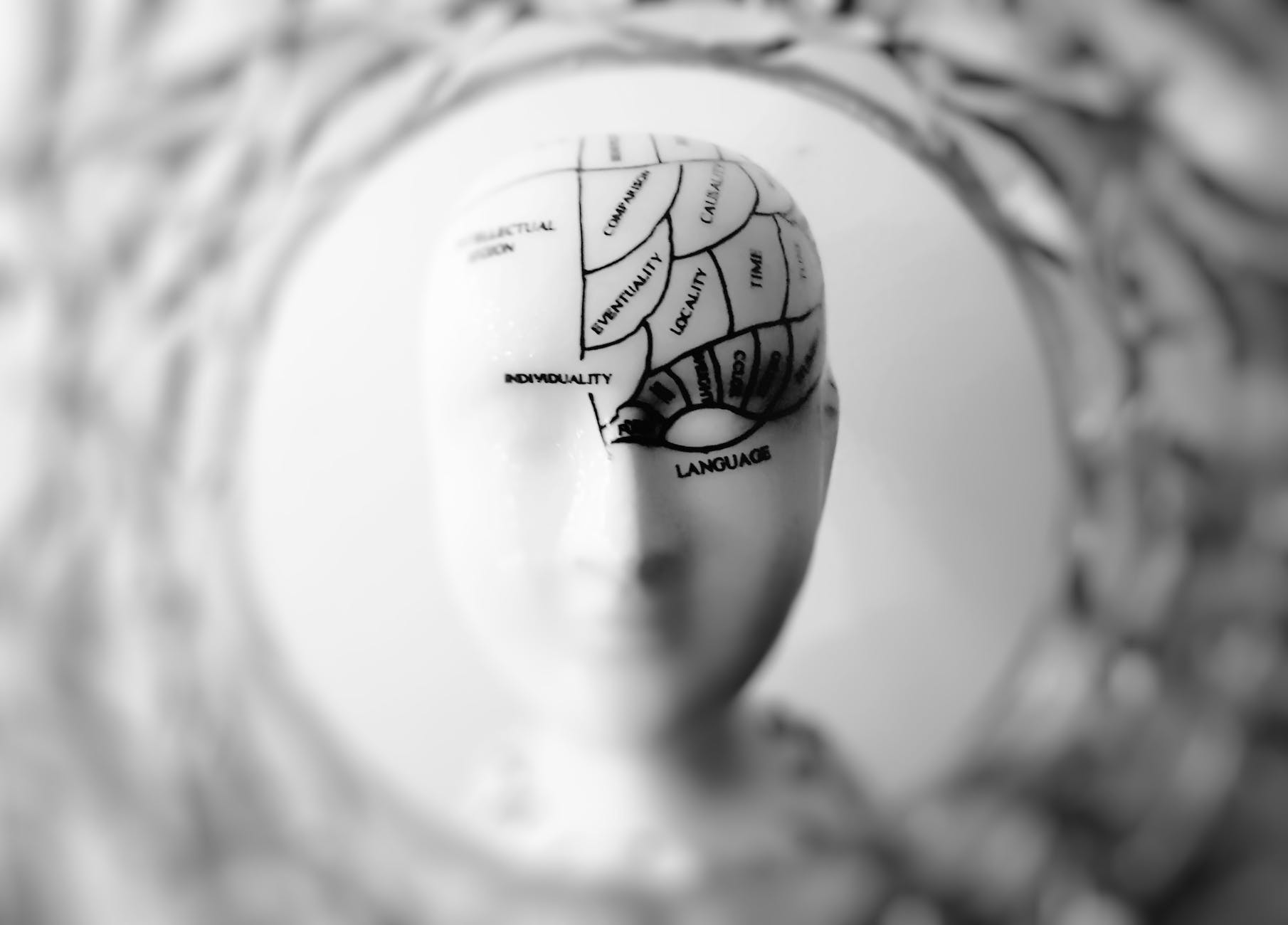
I will reiterate this defining factor of discernment:
Discernment is not just about making distinctions; it’s about making informed distinctions.
Sinclair Ferguson states: “True discernment means more than distinguishing right from wrong.”
Discernment also means distinguishing: The primary from the secondary, The permanent from the transient, The good from the better The better from the best
Discernment, as beautifully expressed in Psalm 119:66, plays a crucial role in our lives, empowering us to make wise and moral judgments. It enables us to carefully evaluate individuals, groups, or movements, discerning their moral and spiritual aspects.
Following the teachings of Jesus, we are encouraged to develop discernment while being mindful not to fall into the trap of judgmentalism, as emphasized in Matthew 7:1 and 7:6.
” …As a result, we are no longer to be children, tossed here and there by waves and carried about by every wind of doctrine, by the trickery of men, by craftiness in deceitful scheming..,. ” Ephesians 4:14
Discernment Gets Directly To Root
It allows us to sift through the complexities of any issue and get to the root of what really matters. Discernment liberates us from the constraints of dogmatic beliefs, societal expectations, and biased views. It brings into focus the subtle nuances that often get lost in the noise.
The Lord Is Our Wisdom
Proverbs 2:6-8: “For the Lord gives wisdom; from his mouth come knowledge and understanding; he stores up sound wisdom for the upright; he is a shield to those who walk in integrity, guarding the paths of justice and watching over the way of his saints.”
The Cognitive Framework of Discernment

At its core, discernment is cognitive in nature. It combines clear judgment with an ability to understand the subtleties or nuances of complex matters.
With discernment, you’re not merely separating things into neat categories of “right” and “wrong,” or “true” and “false.” You’re delving deeper to grasp the objective truth that might lie somewhere in between those simplistic binaries.
How to Practice Discernment

Experience:
Engage in different situations to gather a wide range of experiences. The more you see and do, the better you get at assessing future situations.
Proverbs 18:13: “To answer before listening— that is folly and shame.”
Reflect
Take time to think about your choices and their outcomes. Analyze what you could have done differently and why.
Proverbs 25:2: “It is the glory of God to conceal a matter; to search out a matter is the glory of kings.”
Seek Wisdom
Read widely, consult experts, and consider various perspectives to make well-informed decisions.
Proverbs 18:17: “The one who states his case first seems right, until the other comes and examines him.
Be Objective
Try to remove emotional bias and look at situations objectively. This can help you make better judgments.
Romans 12:2 – “Do not conform to the pattern of this world, but be transformed by the renewing of your mind. Then you will be able to test and approve what God’s will is—his good, pleasing and perfect will.”
Ask Questions
Always ask “why” and “how” to dig deeper into the matter at hand.
Proverbs 4:7: “Wisdom is the principal thing; therefore get wisdom: and with all thy getting get understanding.”
Listen
Be an active listener. This not only applies to conversations but also to your internal dialogue.
James 1:19: “Know this, my beloved brothers: let every person be quick to hear, slow to speak, slow to anger.”
Practice Mindfulness
Being present helps you absorb details that you might otherwise overlook.
Matthew 6:34: “Therefore do not worry about tomorrow, for tomorrow will worry about itself. Each day has enough trouble of its own.”
Consult and Collaborate
Surround yourself with people of different skills and perspectives. Their input can help refine your own discernment.
Proverbs 11:14: “Where there is no guidance, a people falls, but in an abundance of counselors there is safety.”
Test and Adjust
Don’t be afraid to make decisions. If you make a mistake, learn from it and adjust your approach.
2 Timothy 1:7: “For God has not given us a spirit of fear, but of power and of love and of a sound mind.”
Repeat
Consistently apply these steps to hone your discernment skills over time.
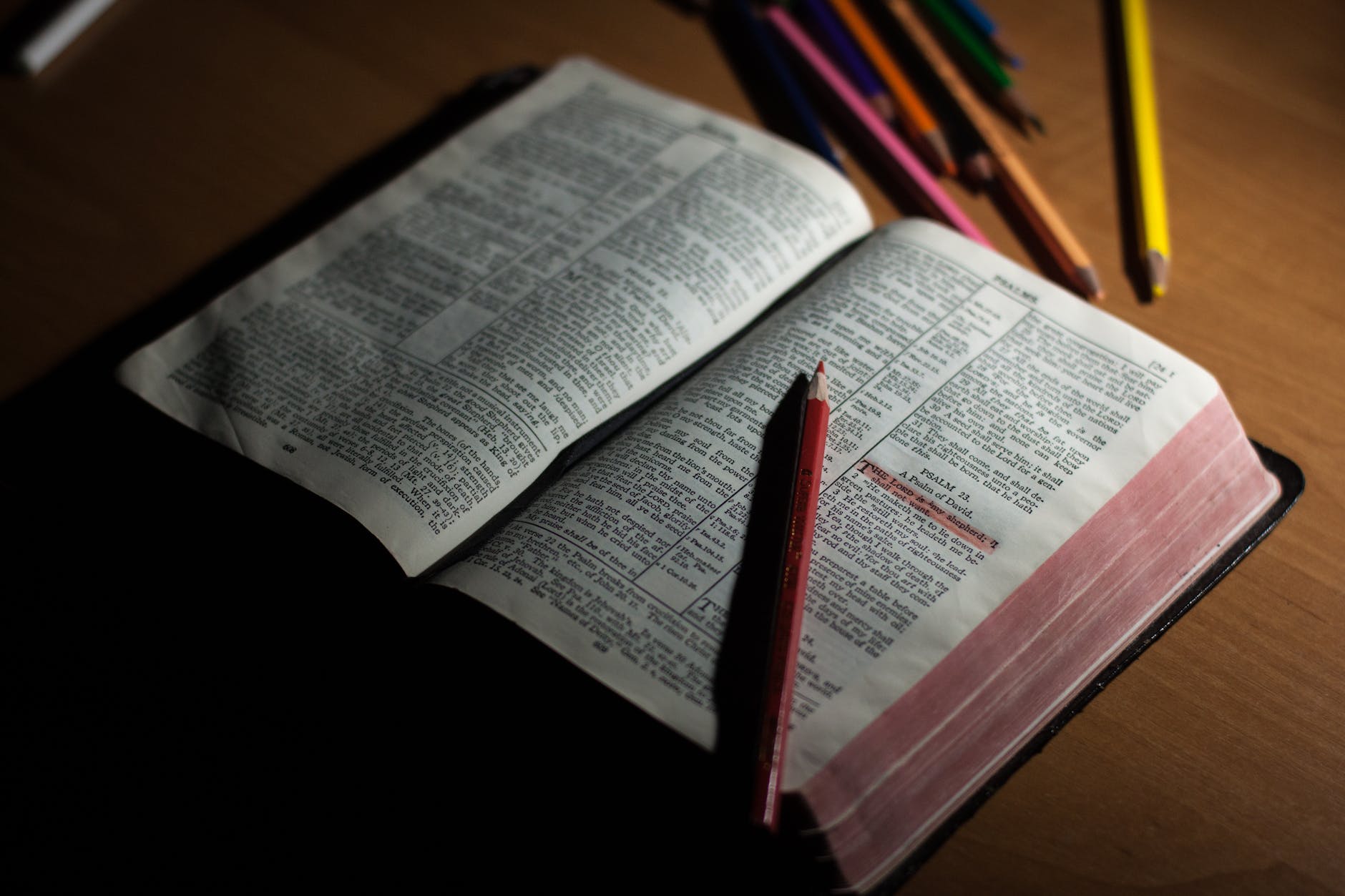
Proverbs 18:13: “He who answers before listening—that is his folly and his shame.”
Mark 4:24: “Consider what you hear: with the measure you use, it will be measured to you, and still more will be added to you.”
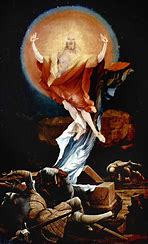
The Unveiling
Once discernment has been applied, and the “veil” lifted, there is a certain finality to your understanding.
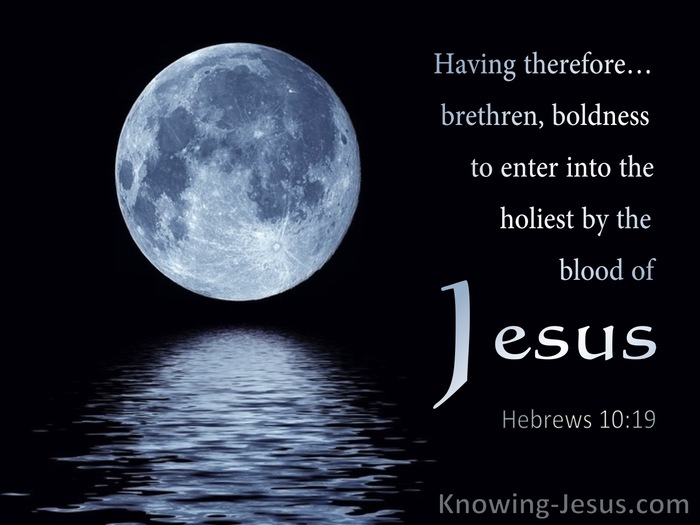
2 Corinthians 3:16: “But whenever anyone turns to the Lord, the veil is taken away.”
What Is This Veil?
And behold, the veil of the temple was torn in two from top to bottom; and the earth shook and the rocks were split. -Matthew 27:51
The torn curtain holds profound significance as it symbolizes the separation between humanity and the divine presence of God.
In the Old Testament, the curtain that was torn was the barrier leading into the Most Holy Place, where God’s throne on earth resided, symbolized by the Ark of the Covenant. This sacred space was inaccessible except for the High Priest, who could enter once a year. The first curtain separated the Holy Place from the courtyard, which could be entered daily.
This symbolism carries immense weight. After the fall of Adam and Eve, they were expelled from the original dwelling of God, Eden. However, even then, God promised a Savior who would undo the consequences of the Fall. As instructed by God, Moses constructed a dwelling place, but it remained unapproachable except by the High Priest on the designated day.
I believe the temple is a symbol, representing the unavailability of direct access to the presence of God.
Yet, when Jesus came, the Divine became flesh and “tabernacled among us” (John 1:14). Through the breaking of Christ’s body, all barriers and separations were shattered.
Now, despite our unworthiness, arrogance, and impurity, we can enter into the very presence of the Living God, not just once a year, but at any moment.
1 Corinthians 2:14: “The natural person does not accept the things of the Spirit of God, for they are folly to him, and he is not able to understand them because they are spiritually discerned.”
Proverbs 29:2: “When the righteous thrive, the people rejoice; when the wicked rule, the people groan.”
2 Corinthians 3:16-18: “But whenever anyone turns to the Lord, the veil is taken away. Now the Lord is the Spirit, and where the Spirit of the Lord is, there is freedom. And we all, who with unveiled faces contemplate the Lord’s glory, are being transformed into his image with ever-increasing glory, which comes from the Lord, who is the Spirit.”
Discernment, while complex, becomes more intuitive with practice.
1 John 4:1: “Beloved, do not believe every spirit, but test the spirits to see whether they are from God, for many false prophets have gone out into the world.”
The word used for “test” (δοκιμάζω) conveys the idea of examination, scrutiny, or proving. It implies an active process of evaluating whether something aligns with truth or not. The term “spirits” (πνεύματα) refers to not only human spirits but also supernatural beings or ideologies.
By urging believers to test these spirits, the verse emphasizes the need to critically discern the origin, authenticity, and alignment of spiritual claims and teachings.
John warns that many false prophets, or deceivers, have emerged in the world, advocating distorted beliefs.
Philippians 1:9-10: “And this is my prayer: that your love may abound more and more in knowledge and depth of insight, so that you may be able to discern what is best and may be pure and blameless for the day of Christ.”
Greek Meaning Philippians 1:9-10
Philippians 1:9-10, written in Greek, expresses the Apostle Paul’s prayer for the Philippians to have their love grow in both knowledge (epignosis) and depth of insight (aisthesis). The use of “epignosis” implies a deep and experiential knowledge, emphasizing a profound understanding of Christ’s teachings. “Aisthesis” underscores the idea of discernment and perception, suggesting the ability to make wise decisions. Paul’s aim is for their love to be grounded in this rich knowledge and insight, enabling them to distinguish what is excellent and to live with moral purity, ultimately preparing them for the return of Christ, a central theme in his writings.
Paul links discernment to having our minds renewed in Romans 12:1-2: Do not conform to the pattern of this world, but be transformed by the renewing of your mind. Then you will be able to test and approve what God’s will is — his good, pleasing and perfect will.
As stated in Hebrews 5:14, ‘But solid food is for the mature, for those who have their powers of discernment trained by constant practice to distinguish good from evil.’ This profound wisdom reminds us of the importance of cultivating discernment in our lives. By honing our ability to distinguish between what is good and what is evil, we empower ourselves to navigate the complexities of our ever-evolving world

Leave a Reply