In the profound and captivating exploration of the human psyche, Swiss psychiatrist and psychoanalyst Carl Gustav Jung delved into the enigmatic realm of alchemy.
His groundbreaking work on the interconnection between alchemy, Christian dogma, and psychological symbolism, as detailed in “Psychology and Alchemy,” offers a compelling journey into the depths of the collective unconscious and the transformative power of symbolic imagery.
Jung’s work on alchemy is found in his book “Psychology and Alchemy,” as well as l, my favorite book… “Alchemical Studies”

Carl Gustav Jung
Who was he? He was a Swiss psychiatrist and psychoanalyst who founded analytical psychology, was known for his deep commitment to understanding the human psyche and helping his patients achieve a greater sense of wholeness.
Carl Gustav Jung delved into the realm of alchemy.
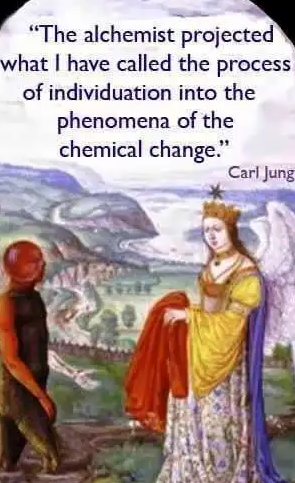
Jung saw alchemical processes as a metaphor for inner transformations and individuation, the process of becoming one’s true self. Alchemists sought to transmute base metals into gold, but Jung believed that this quest for material transformation represented a deeper desire for spiritual and psychological transformation.
Jung’s interest in alchemy stemmed from his realization that alchemical symbolism suggested a process in the unconscious with a goal beyond discharging tension and hiding pain.
He saw alchemy as a symbolic representation of the individuation process, where processes arising from the individual psyche are described and encoded.
Jung’s Emphasis On Individuation’s Importance
He viewed individuation as the process of self-realization, the discovery and experience of meaning and purpose in life, and how one finds oneself and becomes one’s own self.
Jung considered individuation to be a natural, organic process, inherent to human nature, and a key drive in all individuals. He also connected the individuation process to spirituality, emphasizing the development of wholeness by integrating all the various parts of the psyche.
Paralleles In Alchemy and Religion
Jung’s work on alchemy explores the parallels between alchemy and religion and how alchemy still influences our lives.
In “Psychology and Alchemy,” Jung outlines the process and aims of psychotherapy as seen by him, works out the analogies between alchemy,
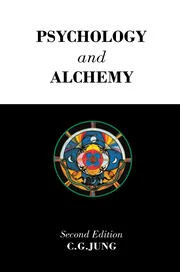
In “Psychology and Alchemy,” Carl Jung explores the analogies between alchemy, Christian doctrine, and psychological symbolism, and discusses his understanding of the analytic process.
He emphasizes the dual nature of alchemy, comprising both the chemical process and a parallel mystical component.
Jung’s study stresses the importance of the Christ symbol as an expression of the healing process or the solution for the individual. He also attempts to introduce the symbolism of alchemy and relate it to Christianity, Gnosticism, and the psychotherapeutic process.
Jung’s profound exploration of alchemy persisted during the final decades of his lifetime, as he recognized alchemy as a vital wellspring for depth psychology.
In alchemy, he discovered symbols and concepts perfectly aligned with his understanding of the intricacies of the human psyche. These revelations not only reinforced his belief in the dynamic nature and purposeful workings of the unconscious mind, but also enriched his profound insights in the field.
Union Of Opposites
One of Jung’s central ideas was the concept of the “coniunctio oppositorum,” or the union of opposites. This principle suggests that the integration of opposing forces within ourselves leads to a more complete and balanced psyche. In alchemical terms, this union was often represented by the marriage of the Sun (symbolizing the masculine principle) and the Moon (symbolizing the feminine principle), resulting in the creation of the “Philosopher’s Stone” or the “ultimate goal” of the alchemical process.
Moreover, Jung saw alchemy as a language of symbols and archetypes that could help individuals connect with the deepest parts of their unconscious. He believed that the alchemical symbols and images reflected universal patterns of human experience and could be powerful tools for personal growth and understanding. By working with these symbols in therapy and dreams, individuals could gain insights into their own psychological processes and move towards wholeness.
Read More:

The International Association for Analytical Psychology (IAAP) serves as a certifying and regulatory organization for all professional analytical psychologists’ groups.
Volume 12 of the Collected Works of C.G. Jung focuses on the relationship between psychology and alchemy. It explores the psychological problems of alchemy and aims to address the mysteries of the psyche. The study emphasizes the importance of discovering the whole man and the potential for wholeness through the psychotherapeutic process, drawing parallels with the true Christian “imitatio Christi.”
The volume discusses the relationship between religion and the psyche, highlighting the religious nature of the soul and the contribution psychology can make to understanding religious truths. It compares the archetypes of the unconscious with religious dogmas, emphasizing the significance of the Christ symbol as an expression of the union of opposites.
Furthermore, it presents the alchemic view of the soul and the Godhead and contrasts it with the Christian view. The alchemical search is likened to the psychotherapeutic process, both aimed at discovering the seed of unity. The goal of the psychotherapeutic process is enabling the patient to be alone with the self, which involves methods, dangers, and difficulties.
Additionally, the volume explores individual dream symbolism in relation to alchemy, focusing on the unconscious processes at work in dreams. It introduces the concept of mandala symbolism and presents a study of symbols of the individuation process gathered from dream material. The study emphasizes the need for unprejudiced observation and interpretation of dreams and explains the significance of interpreting the initial dreams and visual impressions obtained from the analysis of a young man.
In conclusion, Volume 12 of the Collected Works of C.G. Jung delves into the profound connections between psychology and alchemy, shedding light on the mysteries of the psyche, the process of individuation, dream symbolism, and the importance of unprejudiced interpretation of dreams.

One response to “Carl Jung Was An Alchemist”
[…] shadow, as coined by Swiss psychiatrist Carl Jung, refers to the unconscious aspects of our personality that we repress or […]