
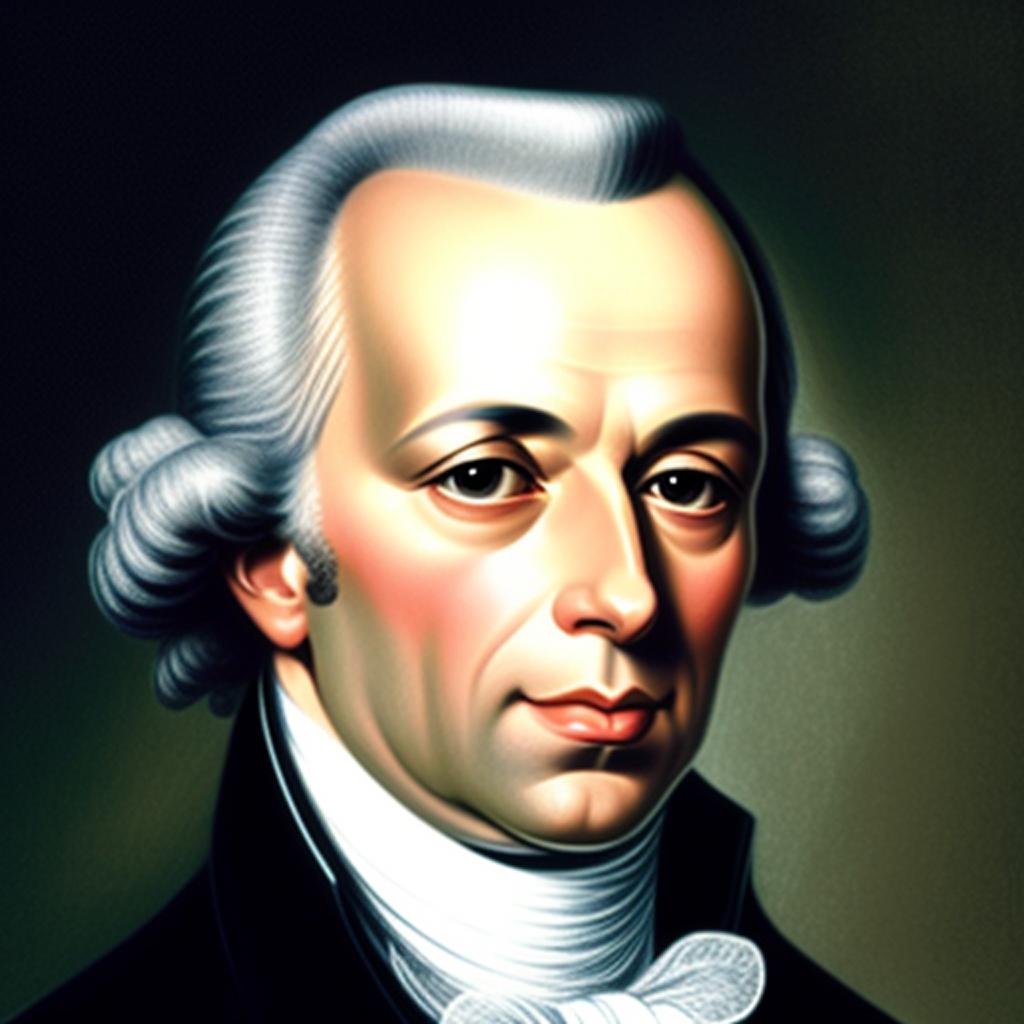
Who is Immanuel Kant?
Immanuel Kant, a prominent philosopher of the Enlightenment era, revolutionized our understanding of knowledge, ethics, and metaphysics. His influential work, the Critique of Pure Reason, explores the limits and possibilities of human cognition. Kant’s concept of the “categorical imperative” serves as a universal moral compass. His legacy as a beacon of enlightenment challenges us to critically examine our existence.
In this article, we will delve into Kant’s masterpiece, the Critique of Pure Reason, where he explores the nature of knowledge. Kant’s argument emphasizes the interplay between our innate concepts and the sensory experiences that shape our understanding of the world. Let us embark on a journey to unravel the depths of Kant’s philosophical insights.
Read Free: Critique of Pure Reason
The Interplay of Innate Concepts and Sensory Experiences:
Kant posits that our comprehension of the world is not solely reliant on our sensory encounters.
Instead, he argues for the existence of a priori knowledge, which is inherent and independent of empirical observation. A notable example is the concept of causality, which we grasp even before we have any specific sensory experiences relating to it. This suggests that our understanding of the world is deeply influenced by our innate concepts, which in turn are shaped by reason.
Many scholars also support Kant’s stance by asserting that our sensory experiences are molded by our pre-existing concepts.
Read:
Some notable scholars who endorse this stance include:
- John McDowell: McDowell, a contemporary philosopher, embraces Kant’s idea that our conceptual framework shapes our perceptual experiences. He argues for the inseparability of conceptual understanding and sensory perception, emphasizing the role of our pre-existing concepts in structuring our experience of the world.
- Hilary Putnam: Putnam, a prominent philosopher of mind and language, aligns with Kant’s view that our concepts influence the way we perceive and interpret the world. He emphasizes the significance of our conceptual schemes in determining the content and meaning of our sensory experiences.
- Robert Hanna: Hanna, a Kantian scholar and philosopher, extensively explores the relationship between concepts and perception. He supports Kant’s contention that our pre-existing concepts shape our sensory experiences, emphasizing the role of our cognitive faculties in constructing our understanding of reality.
- Patricia Kitcher: Kitcher, a philosopher known for her work on Kant, acknowledges the importance of our conceptual frameworks in shaping our perceptual experiences. She emphasizes the active role of our cognitive capacities in structuring our understanding of the world.
These esteemed scholars fervently uphold Kant’s concept, making invaluable contributions to the ever-evolving discourse and advancement of Kantian philosophy. With meticulous scrutiny and profound exploration, they fortify the profound impact our pre-existing concepts exert on our perception and understanding of the world that surrounds us.
Organizing Experiences through Innate Concepts:
According to Kant, our minds possess the innate capacity to organize and structure our experiences in a manner consistent with our inherent concepts.
This is evident when different individuals interpret the same sensory experiences differently, based on their unique pre-existing concepts.
Sebastian Gardner’s book, “Kant and the Critique of Pure Reason,” provides a comprehensive analysis of Kant’s work, shedding light on the significance of both innate concepts and sensory experiences in shaping our understanding of the world. Gardner’s insights further reinforce Kant’s argument, highlighting the intricate relationship between our innate concepts and the interpretation of our experiences.
Kant argues that while sensory experience provides the raw data, it is our innate concepts that enable us to comprehend and interpret that data.
These concepts act as organizing principles, guiding our perception and giving shape to our understanding of reality.
The individual variations in how we interpret sensory experiences arise from the unique combination and configuration of our pre-existing concepts.
Each person’s conceptual framework is influenced by their own cognitive capacities, cultural background, education, and personal experiences.
These factors contribute to shaping the specific lens through which they perceive and interpret the world.
Example:
For example, when two people observe a sunset, their interpretations may differ based on their conceptual frameworks. One person might focus on the aesthetic beauty and evoke emotions of tranquility, while another might analyze the scientific phenomena behind the colors and atmospheric conditions.
This diversity of interpretation highlights the subjective nature of perception and the role of our pre-existing concepts in shaping our understanding. Kant’s philosophy prompts us to recognize and appreciate the multiplicity of perspectives that arise from these individual conceptual frameworks.
Furthermore, Kant’s emphasis on the interplay between our innate concepts and sensory experiences challenges us to reflect on the limitations and biases inherent in our understanding. It encourages us to critically examine the ways in which our conceptual frameworks influence our interpretations and to strive for a more nuanced and comprehensive comprehension of the world.
In essence, Kant’s philosophy illuminates the intricate relationship between our innate concepts and sensory experiences, highlighting the subjective nature of perception and the role of our pre-existing frameworks in shaping our understanding. By acknowledging and exploring these dynamics, we gain a deeper appreciation for the complexities of human cognition and the rich tapestry of individual perspectives.
The Intricate Pathways of Kant’s Philosophy:
Immanuel Kant’s meticulous analysis delves into the intricate pathways through which our thoughts navigate in the vast realm of philosophy. With an intellectual prowess that leaves no stone unturned, he challenges us to question the sources of our knowledge and to embark on a profound exploration of the interplay between our innate concepts and sensory experiences.
The Critique of Pure Reason shines a light on the profound relationship between our a priori knowledge and the shaping influence of our reason. He beckons us to delve into the very foundations of knowledge, urging us to question the assumptions that underpin our understanding of the world.
Through his intricate analysis, Kant extends an invitation to embark on a transformative journey of self-reflection and intellectual exploration. He unveils a framework that allows us to grasp the complexities of human understanding and glimpse the profound depths of knowledge that lie within the realm of philosophy.
Let us embrace the wisdom bestowed upon us by Kant and continue our relentless pursuit of unraveling the mysteries that philosophy holds. For it is through this pursuit that we shall unlock the true essence and purpose of our existence.
If you’re interested in further exploring Immanuel Kant’s philosophy, here are a few other notable books and resources that delve into his profound ideas:
- “Kant: A Very Short Introduction” by Roger Scruton: This concise yet enlightening book provides an accessible introduction to Kant’s philosophy, offering a clear overview of his key concepts and arguments.
- “Kant’s Transcendental Idealism: An Interpretation and Defense” by Henry E. Allison: This comprehensive work delves into Kant’s transcendental idealism, examining the intricate nuances of his metaphysical and epistemological system.
- “Kant and the Problem of Metaphysics” by Martin Heidegger: Heidegger, a prominent philosopher in his own right, engages with Kant’s philosophy in this thought-provoking text, providing a unique interpretation and critique of Kant’s transcendental philosophy.
- “Kant’s Ethical Thought” by Allen W. Wood: For those interested in Kant’s moral philosophy, this book offers a thorough exploration of his ethical thought, focusing on his concept of moral duty and the categorical imperative.
- “The Cambridge Companion to Kant” edited by Paul Guyer: This collection of essays by various scholars provides a comprehensive overview of Kant’s philosophy, covering a wide range of topics including metaphysics, epistemology, ethics, and aesthetics.
These resources, among others, will provide you with a deeper understanding of Kant’s philosophical ideas and their implications. They serve as valuable companions in unraveling the complexities of Kant’s thought and engaging in further intellectual exploration.
More Resources:
Kant’s Account of Reason – Stanford Encyclopedia of Philosophy
Immanuel Kant: Biography, Philosopher, Critique of Pure …
