
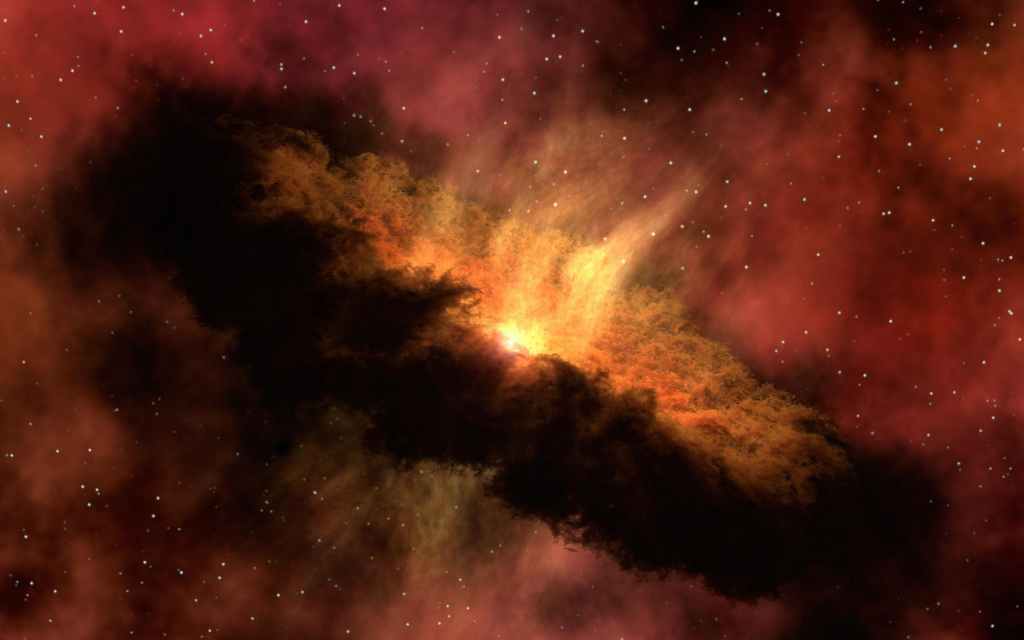
The multiverse theory is a fascinating and controversial topic that explores the possibility of parallel universes existing alongside our own. It has attracted the attention of scientists, philosophers, and even Christians who wonder how it relates to their faith.
In this blog post, I will briefly explain what the multiverse theory is, how it differs from other theories of reality, and what implications it may have for Christian theology.
What is the multiverse theory?
The multiverse theory is a term that encompasses various hypotheses that propose the existence of multiple realities or universes beyond our own. Some of these hypotheses are based on quantum physics, while others are based on cosmology or string theory.
One of the most popular versions of the multiverse theory is the Many Worlds Interpretation (MWI) of quantum mechanics. According to MWI, every time a quantum event occurs, such as the measurement of an electron’s spin or the decay of an atom, the universe splits into two or more branches, each representing a different possible outcome. These branches are inaccessible to each other and form parallel universes that coexist with ours.
Another version of the multiverse theory is the Bubble Universe Theory, which is derived from the concept of cosmic inflation. According to this theory, our universe is one of many bubble-like universes that emerged from a larger multiverse. Each bubble has its own physical laws and constants and may differ drastically from ours. Some bubbles may have more dimensions, different forces, or even different kinds of matter.
How does the multiverse theory differ from other theories of reality?
The multiverse theory is different from other theories of reality in several ways. First, it challenges the idea that our universe is unique and special. Instead, it suggests that our universe is one of many possible universes in a vast and diverse multiverse.
Second, it challenges the idea that our universe has a single history and a single future. Instead, it suggests that our universe has multiple histories and futures that branch off from each other with every quantum event.
Third, it challenges the idea that our universe is governed by a single set of physical laws and constants. Instead, it suggests that our universe is governed by a local set of laws and constants that may vary from one bubble to another.
What implications does the multiverse theory have for Christian theology?
The multiverse theory raises some interesting questions for Christian theology.
For example:
- How does the multiverse theory affect our understanding of God’s creation and sovereignty? Does God create and sustain every possible universe? Does God have a purpose for every possible universe? Does God intervene in every possible universe?
- How does the multiverse theory affect our understanding of human free will and moral responsibility? Do we have free will in every possible universe? Do we have moral responsibility for our actions in every likely universe? Do we face consequences for our actions in every likely universe?
- How does the multiverse theory affect our understanding of salvation and eschatology? Is Jesus Christ the Savior of every possible universe? Is there only one way to salvation in every possible universe? Is there a final judgment and a new creation in every possible universe?
These are some questions that Christians interested in the multiverse theory may want to explore.
However, we should not let these questions distract us from the core truths of our faith. We should also not let these questions create a false dilemma between God and the multiverse. Rather, we should approach these questions with curiosity, humility, and reverence for God’s infinite wisdom and power.
As Christians we should NOT avoid such topics, we should NOT be afraid or dismissive of scientific explanations such as the multiverse theory.
Instead, we should engage with them critically and respectfully, and seek to understand how they relate to our worldview. We should also be ready to challenge atheists who use such explanations as an alternative to God’s existence or involvement in reality.
We should also be open to exploring the potential theological significance of an expansive multiverse. We should not limit God’s creativity or glory to our own universe but acknowledge that God may have created more than we can imagine or comprehend. We should also affirm that God is the loving and faithful Creator of every aspect of his amazing creation, regardless of our understanding.

4 responses to “Do We Live In A Multiverse? Parallel Universe Theory”
Interesting question! Assuming the Christian perspective for a moment, do you think there could be universes where God has not revealed himself? Or universes where there was never a fall of man? Or universes where Christianity was the first and only religion, or never came around at all?
Or perhaps there are universes that have misunderstood God’s message and believe something else, i.e. false beliefs. What if this universe is that one? Which is the right faith? Is faith justified across all these multiverses?
The physical and philosophical parameters can vary so wildly in such a multiverse that it is not even clear if our worldly perceptions are relevant in higher dimensional space or whatever else. This consideration also parallels the “universe filled with intelligent life” question in relation to a god or gods.
I thibk you are right, I feel like the multiverse not so much a refutation of God, but rather that it is totally parsimonious with the idea of a naturalistic universe, and that by including God there must then be further arguments to explain away potential problems.
I mean no disrespect at all, and I’m being honest, what do you think of these questions?
I love this comment! Really gives me a lot to think about. I will respond as I ponder more on these prompts. No disrespect taken…. I LOVE IT!!!!!
I suppose to put a finer point on it, fitting God into a multiverse kind of presents a case where some of the biggest problems with the existence of God map onto the multiverse and require not just one explanation, but an infinite set of potentially unique explanations.
For example, the resurrection is so special in our universe because life is finite and death is final. If there was a universe where creatures are regularly “jump-started” by lightning or reform and reawaken after a summer rain, then it wouldn’t mean as much. In those universes, Jesus would probably have to die and *not* return to have a similar spiritual impact.
And if we take possibly the strongest argument against the Christian God, the “Problem of Evil”, then depending on those other evolved creatures there might be a different Problem of X argument that renders God either not all-loving or all-powerful like in the original, or not all-Y in some new case.
In both cases, it seems like this is essentially creating a problem that we have to creatively explain away in some way. It is begging a question that isn’t justified to be begged. When, just like the Problem of Evil, there is no contradiction in a naturalistic universe, and our observations are all fully consistent and are entirely what one would expect in such a universe.
It is important to say here as well, even under the naturalistic view, it is still unknown how we could measure the existence of the multiverse (i.e. there is no empirical justification to believe in it). So, if God is affecting other universes, the only way we would know is through revelation. And he has already revealed nothing regarding the countless other habitable worlds in our on universe, so perhaps that is unlikely? If it unlikely or effectively never expected, there is no rational justification to believe in the multiverse or God’s presence in it.
Anyway, just a few thoughts. I hope it is roughly coherent! All the best!
Very well thought out, well reasoned. God is Alpha and Omega, we can only glimpse at his infinite wisdom and power. I happen to subscribe to the MWI, the more we unpack quanta the more rather than less likely these outcomes and scenarios seem.