
Misconception:
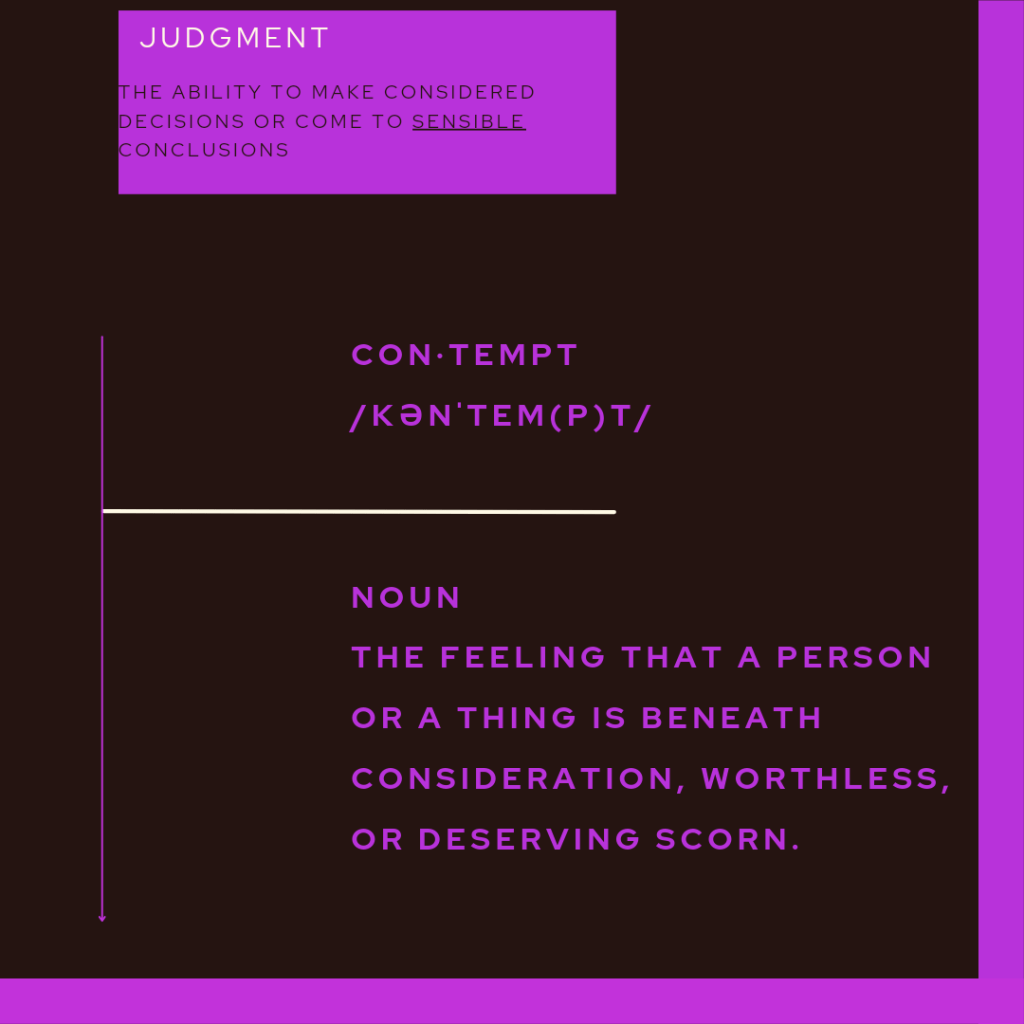
Judgment is often misunderstood as synonymous with contempt in Westernized Christian society. However, judgment simply means forming an opinion or making a decision based on careful consideration of available information. Contempt, on the other hand, involves a deep-seated feeling of dislike or disrespect towards someone. It is important to distinguish between these two concepts in order to promote healthy communication and relationships.
Judgment
Judgment is the act of evaluating someone’s behavior or actions to form an opinion or make a decision. The Bible promotes the use of judgment, with Jesus urging his followers to judge righteously in John 7:24. This means that judgment can be a valuable tool for making thoughtful and empathetic choices.
Judgment VS Contempt
While judgment can be constructive and positive, contempt is a harmful emotion characterized by feelings of disrespect or disdain for others. It can be destructive to relationships and the Bible warns against it. Jesus himself cautioned against contempt when he said, “Do not judge, or you too will be judged” (Matthew 7:1).
Contempt is a harmful emotion and can be destructive to relationships.
Contempt can manifest itself in various ways, such as through insults, belittling, and dismissive behavior. It often stems from a sense of superiority or a desire to assert dominance over others. However, its negative effects can be far-reaching and long-lasting.
Contempt In Personal Relationships
Contempt in personal relationships can take different forms like insults, sarcasm, eye-rolling, dismissive behavior, and criticism. It can lead to a breakdown in communication and emotional connection, which is damaging in romantic relationships where love and mutual respect are crucial.
A Vicious Cycle
Contempt can lead to a negative cycle in a relationship and make it hard to resolve conflicts. In extreme cases, it can cause the relationship to end completely.
Rehash
To further illustrate the differences between judgment and contempt, let’s take a look at each concept in more detail.
Judgment is the process of forming an opinion or making a decision through careful consideration or analysis. It involves making a rational and objective assessment of a situation or person based on available information. We use judgment every day to make decisions that affect our lives, such as which job to apply for or who to trust.
Contempt Is Disrespect
On the other hand, contempt is a feeling of disrespect or disgust towards someone or something. It is a negative emotion that arises when we perceive someone or something as inferior, unworthy, or despicable. Unlike judgment, which is based on information and logic, contempt is driven by emotions and can be irrational.
While judgment can be helpful in making informed decisions, contempt can be damaging to relationships and create a negative environment. It can lead to resentment, anger, and an overall breakdown of communication and trust. When we feel contempt towards someone, we are less likely to listen to them, show empathy, or work towards a resolution.
How To Use Judgment Righteously
In order to use judgment effectively and avoid contempt, it’s important to approach situations with empathy, curiosity, and an open mind. Rather than jumping to conclusions or dismissing alternative viewpoints, we can seek to understand different perspectives and evaluate evidence objectively. By doing so, we can make informed decisions while maintaining positive relationships with others.
